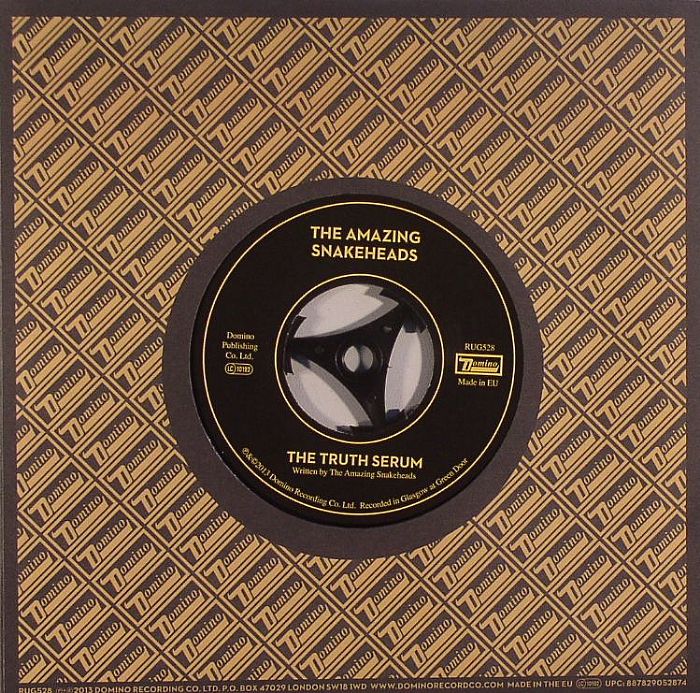
The Amazing Snakeheads are a proper rough ‘n ready rock ‘n roll band. Unlike any number of fellow Glasgow contemporaries, there’s no pose, no preen, no pretence. Just a short, sharp shock of sweaty, sweary in-yer-face claustrophobic riffs. They’ve just released The Best Single Of 2013 (fact) on Domino Records. It’s called Testifying Time and you can buy it here.
You might have heard it already on 6 Music. They’ve been playing it a lot recently. On Lamacq’s Round Table a couple of weeks ago, the panel waxed lyrical about both record and band so much so that it was played twice before the end of the show. Mind you, the whole record is done and dusted in 1 minute 5 seconds. They could probably have squeezed another play in before the news headlines if they’d really tried. By the time the news headlines had been read out, I’d bought my copy online.
And here’s a thing…
The b-side is even better.
Carrying more implied menace than a dog-eared copy of No Mean City, it would be the ideal soundtrack to kicking off a Mad Dog-induced square go, big style. Y’know those Pixies tracks where a demented Frank Black barks ‘n yelps his way through all sorts of nonsense in pidgin schoolboy Spanish, just him and Kim on bass, playing in front of a garage band drum beat and the odd reverbed clatter? Vamos. That’s the track I’m thinking of.
That’s what The Truth Serum is like. It’s wild-eyed and wired. It’s the sound of throwing an out of control mental wee bam into a wardrobe before sticking a broom, cartoon-style, between the handles as a temporary lock. Thump! Thump! Thump! Let! Me! Out! Ya! Bass! It’s like a sweary Nyah Fearties covering Pixies, and it sounds every bit as good as that suggests. A broad Scots’ tongue lashing of the highest order. Feral, ferocious and effin’ fantastic.
You know that the guitars are going to come crashing in like a pair of size 10 DMs anytime soon, and it’s all going to kick off, but you’re not sure exactly when. The trick they’ve perfected here is the art of making sure the tension builds and builds until it can’t be contained any more and. Must. Be. Released. Here’s that Pixies track:
“Estaba pensando sobreviviendo con mi sister en New Jersey!” goes Frank, all menace and snarl. “We’ll go to California!!!” he screams. Screeeeeeeeeeeee!
“Geordie? Geordie?! Geordie?!? GEORDIE!!! TELL THUM!” Screeeeeeeeeeeeeeee! go The Amazing Snakeheads. Terrific stuff.
With their jagged, juddering, short, sharp, post-punk riffs, Wire were always ripe for rip-off. And so, along came Elastica…
Three girls, one guy and a couple of borrowed Wire tunes:
Justine Frischmann. Brash, floppy-fringed, posh-parented and on/off squeeze of both Damon Albarn and Brett Anderson simultaneously. Charmingly, one would leave love bites on her backside for the other to find. But you knew that already.
Donna Matthews. Pouting, doe-eyed indie-boy poster girl who’s guitar always looked a bit too big for her. Partook in way too much heroin.
Annie Holland. Razor-cheekboned bass player. The quiet one.
Justin Welch. Clem Burke-esque drummer who belched his way through Top 20 hit Line Up. Also partook in too many pills ‘n powders.
With their classic 2 guitars, bass and drums set-up and songs pilfered from post-punk’s recent past, Elastica were no different at all from any other provincial rehearsal room band. They were formed by Frischmann after she advertised for musicians ‘influenced by The Fall, The Stranglers, and Wire’, (something that would come back to haunt them) and when they came on the scene, the London-centric media held them up as the next big thing, helped in no small way through an endorsement by King Steve of Lamacq, Radio 1 DJ, label boss and indie uberlord. Elastica received far more column inches in the music press than any new band really had the right to. Rave review followed rave review. Cover followed cover. The public bought it and before you knew it, Elastica were the next big thing.
They couldn’t handle it though. The simple ratio of too many drugs and not enough songs caused the band to implode. For Elastica, it would be a long stretch (aye!) before their second, long-since forgotten about LP. 5 years it took them to release it (a lifetime in the fickle, fad-dominated world of pop music), hot on the heels of a gap-filling mini LP of sorts. Then nothing.
Back to the debut album though. It fizzes with gay punk-pop abandon. Choc-full of those jagged, juddering, short, sharp post-punk riffs. Connection was the biggy. Number 17 with a bullet and proof, if any were needed, that Elastica were a bona fide chart success.
Proof, too, that Wire‘s Pink Flag LP was a regular rotator on the Elastica turntable. Here’s Three Girl Rhumba. The thieving mapgpies.
The belching drummer-enhanced opener Line Up was another.
Ever heard I Am the Fly by Wire? (Wait for the chorus…)
Elastica certainly had. The thieving magpies.
Another crime was committed in the name of biggest hit single Waking Up, it’s twanging see-saw riff and chord structure totally ripping off The Stranglers‘ No More Heroes.
Elastica just about stopped short of adding a bouncing Farfisa, but they were fooling no-one.
And there are others. The album’s S.O.F.T. somehow manages to sound like most of The Pixies‘ Doolittle LP in less than 4 minutes. Vaseline‘s chorus could be Debbie Harry’s finest moment. Pop pilferers who got lucky. That just about sums Elastica up. Both The Stranglers and Wire secured out-of-court settlements for all of Elastica’s sticky-fingered troubles. Quite rightly too. it just goes to show, recycle any old tosh from the past and if it’s presented as the best thing ever since the last best thing ever, the gullible will buy it. You should seek out Wire’s Pink Flag if you haven’t heard it, though. You’d like it. S’a cracker.
*Elastica Trivia!
Countdown fans may be able to work this out quicker than others, but who d’you think played keyboards on half the tracks on the first album? T’was none other than Dan Abnormal. Think about it…
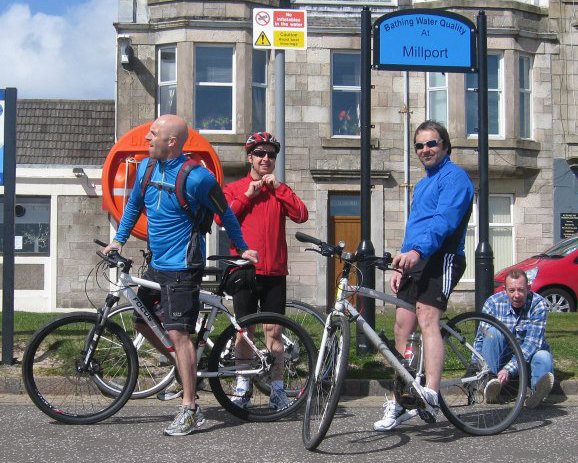
I’ve been doing a lot of cycling recently, up and down Ayrshire’s sun-baked coast, and much of it has been soundtracked by Neu! I’ve become a bit fed up of my self-compiled iPod ‘Cycling‘ playlist, a playlist that was put together a year ago with great care and attention, added to sporadically since and been sequenced and resequenced numerous times to reflect the ebbs and flows of an average 30 mile ride – a blood-pumping fast one to start (a track by the essential yet horribly-named Fuck Buttons, the name of which escapes me at the moment), before settling into the groove and rhythm of cycling to the combined output of Underworld, Land Observations, Kraftwerk and the likes. And Mogwai’s The Sun Smells Too Loud. That’s always a good one when it pops up. But I got fed up with all of it and started listening to complete albums instead. Searching for the ideal cycling companion. Did you know, you can cycle from Prestwick to Kilwinning in exactly the time it takes London Calling to play? If it’s not too windy…
Klaus Dinger and Michael Rother of Neu!
As much as I love my guitar bands though, I prefer to cycle to electronic music. Music with a pulse beat. Music that plays repetitively. Music that is enhanced when, between the gaps in the tunes, you catch the whirr of a well-oiled chain snaking through the sprocket. Which is where Neu! come in. Not really pure electronic music, Neu! They play guitars and stuff. It’s just that, in amongst the found sounds and random ambient noises they’ve commited to tape, the band have a knack of locking into a good groove and can go at it for ages. Proper head-nodding music. But you knew that already.
Their track Hallogallo has been a cycling staple for over a year. Rhythmic, repetitive and driven by that very motorik, Krauty pulsebeat that’s required for my type of cycling (“I wanted to be carried on a wave like a surfer”, said Rother, explaining his music a few years back), it’s almost as if it was made with me in mind. Which is frankly ridiculous. If someone had told the band in 1972 that their 10 minute opus would be able to be freely listened to on a portable device whilst someone wheezed their way along the highways and byways of the national cycle network, they’d have accused you of smoking something more potent than the jazz cigarettes they were willingly ingesting.
Imagine if after leaving The Beatles, Pete Best had gone on to form The Rolling Stones. Not content with being the founding father in one extremely influential group, he goes on to build another. Dinger and Rother did just this. Both were in a prototype Kraftwerk, before splitting and forming Neu! To paraphrase an old joke, I’d say Neu! play both types of music – arty and farty. The three albums they released in the 70s – 1972’s Neu!, ’73’s Neu! 2 and ’75’s Neu! 75 are hugely influential (not then, of course, but now) and greatly important in the development of the Krautrock sound – “an ambient bassless White-light Pop-rock mantra,” as Julian Cope described it in his excellent (and recently reprinted) Krautrocksampler. Remarkably, I picked up an original in a book sale in Kilwinning library for 25p!
If you’re expecting to hear verse/chorus/verse/chorus/bridge/chorus/fade to end, look away now. If you’re made of sterner stuff, jump right in. It’s a bit like drinking alcohol for the first time. Initially, you pretend to like it, but secretly find it hard to stomach, but before long you wondered how you got by without it.
Für Immer is the opening track from Neu! 2. “A greener richer Hallogallo“, to quote Julian Cope again. It’s another terrific example of the Neu! sound – a relentless, motorik driving pulse with textured layer upon layer of chiming, ambient guitar and occasional whooshing flung in for good measure. I think you’ll like it.
*Bonus Track!
The Sun Smells Too Loud by Mogwai. Cut from the same Krauty kloth, but with a heavier guitar. S’a cracker.
And, hey! If you go here, you can download Krautrocksampler as a PDF, for free. Danke schön!
Six Of The Best is a semi-regular feature that pokes, prods and persuades your favourite bands, bards and barometers of hip opinion to tell us six of the best tracks they’ve ever heard. The tracks could be mainstream million-sellers or they could be obfuscatingly obscure, it doesn’t matter. The only criteria set is that, aye, they must be Six of the Best. Think of it like a mini, groovier version of Desert Island Discs…
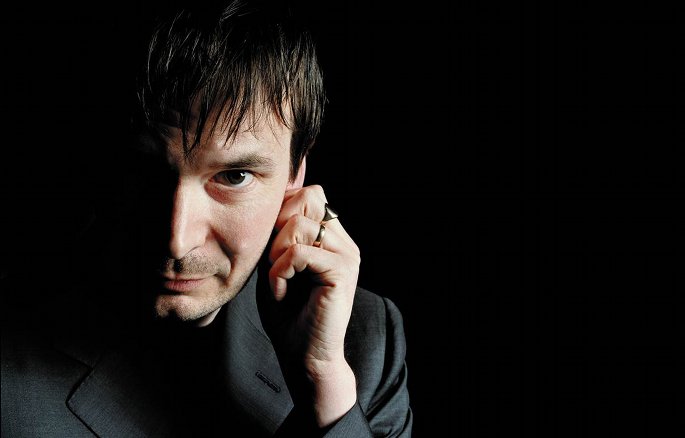
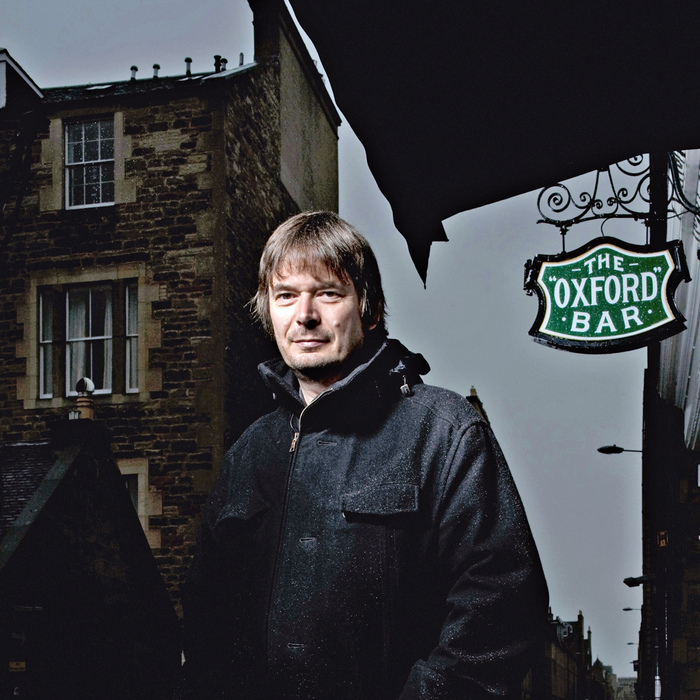
Ian Rankin barely needs any introduction at all. An East Coaster schooled in Cowdenbeath and at the University of Edinburgh, he’s most famously the internationally renowned creator of the Inspector Rebus novels. Like the best literary heroes, Rebus is a bender of rules, a doer of wrong in the pursuit of right, and his malt whisky-soaked character flaws and imperfections have captured the imagination of many a reader. Translated into numerous languages, each Rebus novel will casually shift in excess of half a million copies in its first 3 or 4 months of publication. According to Wikipedia (I know, I know…) they account for 10% of all crime fiction sales in the UK. Many of the stories have successfully made the transition from printed word to celluloid. People, many thousands of people, have discovered the work of Ian Rankin not only from the library but also from the television. With an OBE for services to literature, countless honorary doctorates and more Crime Writers Association Daggers than an end of the pier act on Britain’s Got Talent, Ian Rankin is, in short, a dead famous author.
Ian is also a well-known music fan. Follow him on Twitter and you’ll discover just how regularly he visits his favourite record shops, goes to gigs and enthuses about new music. With a nod and a wink and an eyebrow permanently arched, his writing is liberally peppered with music references and trainspotters like myself enjoy looking for them all, silently hoping that it’s only us and the author who are in on the secret but knowing full well that half the population gets it too. Off the top of my head, his various novels have been titled Let It Bleed, Black And Blue, Beggars Banquet (all Rolling Stones LPs), The Hanging Garden (A Cure track, more of which later), Exit Music (A Radiohead track)and Dead Souls (Joy Division). There’s also the Heartache Cafe in The Black Book that sells Blue Suede Choux for dessert. Read the novels and you’ll find many more.
I came late to Ian Rankin’s books. Fortunately as it turned out, you don’t need to have been with him from the start. Yes, Rebus novels have wee themes going through them and they regularly refer back to previous characters and cases that Rebus has worked on, but you don’t necessarily need to start at the beginning (1987’s Knots And Crosses) and work forwards from there. You can start anywhere. Just jump in and you’ll quickly get the measure of the man.
Somehow, for reasons I don’t really know, I’d missed out on all of Rankin’s books until my father-in-law handed me a couple, telling me to read them because I’d like them. He was right. And so, during the summer holidays a couple of years ago I found myself in the midst of a Rebus marathon. The first one I read was Mortal Causes, about the tattooed body of a gangster being discovered, and where I met Big Ger Cafferty for the first time.
You probably know already, but it’s dead easy to get hooked on a Rebus investigation. I was going through a Rebus novel every couple of days and found myself totally immersed in his tangled life of complicated relationships and petty workplace politics. Although an Ayrshireman, I could still pick out recognisable Edinburgh landmarks and streets (Mary King’s Close, Fleshmarket Close, The Oxford Bar) that helped place the stories in the real world, in the here and now, as opposed to some made-up fantasy land a million miles from reality. I’d find myself desperate to revisit Edinburgh and perhaps stumble upon the corners and closes where many of the crimes Rebus was investigating had taken place.
During this self-induced Rebusathon I happened to be channel-hopping late one night, past BBCs 3 and 4 where nothing of interest was on, past Sky Arts where a repeat of a Smiths concert was on (Rockpalast – it’s very good, but I’d seen it half a dozen times already), past Channel 4 movies, past the shopping channels, past Al Jazeera TV until I rested on some short-lived channel that may or may not have been called Sleuth TV. I’m not making this up. On Sleuth TV was an adaptation, I quickly realised, of Strip Jack, the Rebus story I was currently half-way through. I started watching but immediately, just as I was thinking, “Turn over! You don’t want to know how the story ends!” the killer was very clearly being unmasked, and the scene played out loudly and unavoidably on the telly in front of me. Unfortunate timing. To this day, Strip Jack remains the only one of Ian Rankin’s Rebus novels I have never finished.
Anyway. Enough flim-flam from me. Ian’s ‘Six of the Best‘ is right up Plain Or Pan’s street. Over to the man himself…
When Desert Island Discs asked me several years back for my top 8 songs, I started with a Shortlist of 40. So I’ve decided here to go with six tracks that may not be all-time favourites but mean something to me and should be listened to more often.
‘Silver Machine’ by Hawkwind.
I probably want this played at my funeral. It was one of the first records I bought, and I still own and play that original 45. To me it means rock, and sci-fi, danger and otherworldliness. Smashing.
‘You Can’t Always Get What You Want’ by the Rolling Stones.
I remember hearing this when I was 10 or 11 and not being impressed. By the age of 30 Let It Bleed was my favourite album and it’s still up there. A beautiful piece of music with a lyric that captures a moment in social history. A really hopeful song to round off a great album. Mourners may leave my funeral service with Hawkwind ringing in their ears, but as they walk into the chapel this is what they might hear.
‘Theme from Shaft’ by Isaac Hayes.
When I was a kid I loved this tune, especially the wah-wah guitar. I was too young to see the film, so I bought the book. I was amazed that a kid was allowed to read anything and everything. Books became exciting to me. And I got a taste for crime fiction. My whole career starts with John Shaft.
‘The Hanging Garden’ by The Cure.
So good I named one of my novels after it. Then used quotes from Cure songs throughout the text. Robert Smith was gracious enough to grant permission. The fee? A signed book. Always loved The Cure, and Joy Division, and Bauhaus, and… All those dark, atmospheric post-punk pre-Goth groups. I sang in one myself. They were called the Dancing Pigs and weren’t good enough. So I put them in one of my novels, too.
‘Exit Wound’ by Jackie Leven.
Jackie was a fan of my books. I didn’t know that. But I was a fan of his music and so was Inspector Rebus. Eventually we became friends, made an album, toured together. And then Jackie was gone, dead too soon. I saw him do this song many times. It’s moving, powerful, classic Jackie.
‘Ankle Shackles’ by King Creosote.
There wasn’t much of a music scene in Fife when I was growing up. Nazareth in the early 70s, The Skids a bit later. But then came KC and his Fence Collective colleagues. Love his stuff. Wrote the sleeve notes for one album. This track is quite new, and only appeared on CD this year. I saw him do it live in Edinburgh’s Queen’s Hall last year. It is a pulsing, driving, bitter tale, enlivened by cello and a terrific vocal. Dude’s a dude, bless him.
Bonus Track!
As mentioned earlier, Ian toured with Jackie Leven in 2005. Here’s a live version of the pair of them doing Exit Wound.
In 2006, Ian was the featured castaway on Desert Island Discs. There are a couple of crossover artists/records from his Six of the Best list above. You can read more about it here. Or give yourself 45 minutes and listen to an edited version of the broadcast below;
Also worth a listen is this wee curio – Tim Burgess of Charlatans fame asked Ian to write him a short story that could be set to music. The resultant record, A Little Bit Of Powder, was read in spoken word form by actor Craig Parkinson (he plays Tony Wilson in Ian Curtis biopic Control) and given away by Tim to his fans as a Christmas present. Rather frustratingly, the Soundcloud track fades out before the story has finished. Like all good Ian Rankin stories, you’ll need to track down your own copy to find out how it ends. After all, A Little Bit Of Powder is unlikely to be shown on Sleuth TV anytime soon.
Ian Rankin‘s next Rebus novel (the 20th) Saints Of the Shadow Bible is published in November 2013.
You can find out more about Ian Rankin at his official website here.
Some content on this page was disabled on September 30, 2016 as a result of a DMCA takedown notice from PRS for Music. You can learn more about the DMCA here:
It starts slow and understated, and remains so for 15 spine-tingling minutes. Vintage synths hold down eee-long-gated chords as a nylon-stringed acoustic guitar picks out little arpeggios underneath. A wee chiming bit of pitched percussion tinkles away in the foreground, announcing itself like a far-off ice cream van shimmering in the haze. There’s a faint whiff of 1970s BBC library music, of the sort you might hear while the girl played noughts and crosses with the clown as you waited impatiently for something to happen through the arched window. A beautiful wee melodica pops up now and again, backed by the same guitar arpeggios, this time chiming away on a clean electric guitar. Then a polite banjo, picking out that same melody. By the time the flutes flutter in, your world has turned beige and tan and orange, you’ve styled yourself a side parting and the beginnings of a moustache have appeared on your top lip. An Open University degree beckons…
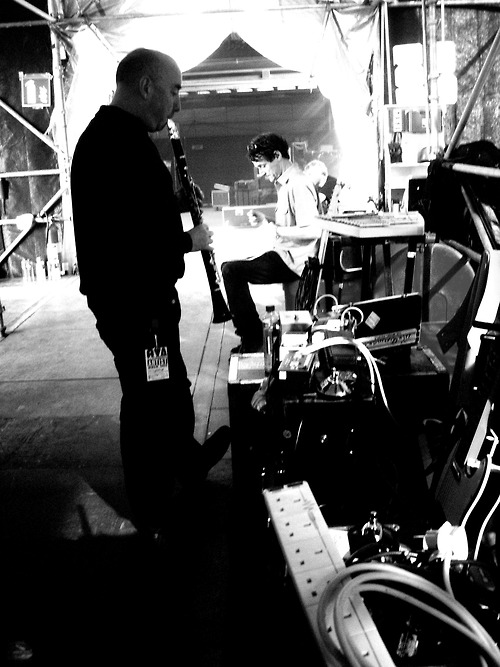
Gerard Love. Happy to take a back seat when there’s a clarinet around.
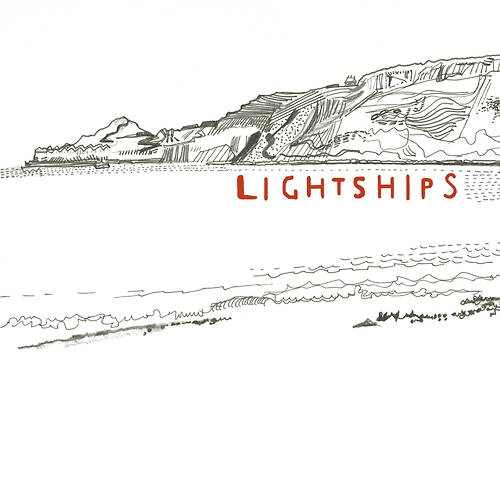
Motorhead it ain’t. It’s called All I Have To Do Is Sit And Wait and it’s from a five year old, buried-in-time and long-since forgotten about project of Teenage Fanclub’s Gerard Love. Made to accompany a film about a place called Abbey View, it’s designed to be listened to on the bus from Dunfermline to Abbey View, a journey that takes 18 minutes and 43 seconds, the exact length of the original pice of music. You can find out more about it here. Somehow, I only have it in a slightly edited form, but I’m sure you get the idea. Music for a long summers day, or a short bus journey, if the driver put his foot down a wee bit, or skipped a stop or two, he’d have you in Abbey View before the edited version has faded away.
Of course, this was all a precursor to Love’s excellent Lightships album from last year. It’s just that no-one had really heard it until it sneaked out online for 5 minutes then sneaked itself back in again. Grab it quick.
Above is the aforementioned Lightships doing University Avenue from their Fear And Doubt EP. Sprung from the same DNA as the above track, with added singing, it‘s a beauty. Stop The Clocks, sings Gerry. Aye, stop the clocks indeed. Sit down, relax, play on repeat. And if you haven’t heard Lightships……………….
Well. This piece is causing all sorts of debate over at Louder Than War. Shoot me down….
Stone Roses, Glasgow Green
Saturday June 15th, 2013
“The music business is a cruel and shallow money trench, a long plastic hallway where thieves and pimps run free, and good men die like dogs. There’s also a negative side.”
Gonzoid observationalist Hunter S Thomson said this 30 odd years ago. It’s never been more relevant today. The Stone Roses know all about the money trench and the thieves. For any good men and women attending their show at Glasgow Green, they will now, unfortunately, know all about the negative side.
At a gig of this magnitude, you expect all walks of life to be present; the good, the bad and the downright ugly, but this was something else entirely. Brad Pitt was in town a year or so ago filming zombie slopfest World War Z, and as the afternoon turned to evening, the Green resembled a lost cut of the movie. Had Brad been here, he’d have been looking for direction. Or a way out. It was as if every mental health establishment in the West of Scotland had simply shipped every one of its patients up the Clyde and into the park before flinging the key down the nearest, darkest well and doing a runner. Inside, the park was a human cesspit, a giant soup of slurring, slevering stupids in splatted bucket hats, barely able to stand or sit or stagger. It was horrible.
This isn’t supposed to sound snobbish, but it will invariably be taken that way in any case. So shoot me down. Music fans, the ‘real’ music fans who are regular gig goers and album buyers and live and breathe music like it’s some all-encompassing need for survival will be now be reflecting on a gig where more of the focus was on what was happening around them than what was happening on the big stage in front of them. Music is for all, and you can’t deny anyone’s right to like a band, but why is it The Stone Roses seem to attract the wrong element?
The ones in wee huddles, backs to the stage and openly sniffing and snorting their Class As off of credit cards and keys and whatever else provided a flat surface. Not there for the music, are they?
The ones pilled, powdered and poppered off the planet who, by default, created their own wee exclusive zone amongst the decent people where they could foam at the mouth and loll around, indifferent or oblivious to the sounds coming from the stage. Not there for the music, are they?
The ones tossing cups and bottles containing overpriced beer (and worse) with joyful abandon into the air and onto the crowd in front of them. Throwing pissiles is, I think, the phrase I’m looking for. There were hundreds of these cretins everywhere. Not there for the music, are they?
And the thugs. The 40-something year-old grown-up hooligans in expensive sports wear, pent-up aggression evidently at boiling point, perpetuating the underlying threat of violence if you happen to glance at them the wrong way. Not there for the music, are they?
With all this distraction it might’ve been difficult to focus on the stage. Just for the record, The Stone Roses were terrific. But you probably knew that already. I’ve seen them live a handful of times since 1989 and this was easily the most full-on, the most fluid, I’ve ever seen them.
If the sound of the first album is the sound of a band effortlessly gliding their own meandering way across 60s-tinged psychedelic pop, Glasgow Green was the sound of a band dive-bombing their own material with napalm bombs of funk – the muscled-up Second Coming band giving the first album the workout it didn’t even know it needed.
Bobby Gillespie had earlier invited us to Kick Out The Jams, but if anything, the Roses were hell-bent on doing the exact opposite. The 17 song set was packed full of add-ons, cheeky Beatles riffs when Squire thought no-one was looking and enough improvisation required if anyone still doubted this band’s ability to play. I Wanna Be Adored was given a coda akin to Sly Stone going 15 rounds with Jimmy Page. Standing Here’s Hendrixian hysterics gave way to a beautifully extended and elongated chiming guitar part that ebbed and flowed like the tide on the Firth of the Clyde. Fools Gold, misplaced (to these ears at least) in mid-set was an astonishing exercise in 10? 15? 20? minute motorik, precision funk, its lazy Krautrock groove underpinned by Mani’s outrageously switched-on bass playing and Reni’s octopus-limbed polyrhythms. The best rhythm section around? I think so. Brown’s vocals, so often the brunt of ridicule and mirth sounded fairly decent. In tune, even. Although it could be hard at times to hear him amongst the out of tune voices barking approximations of the right words back at him.
The gig, the actual musical part of the gig was an absolute triumph. You’ll read lots of testimonies to that over the next few days and weeks as writers trip over superlatives in an attempt to help you fully appreciate it. In fact, I won’t be surprised if/when the Stone Roses let slip that Glasgow Green 2013 really is the best gig they’ve ever played. They simply were that outstanding. It’s just a shame that it was all played out in such shitty conditions.
The Music
Here’s two versions of I Am The Resurrection, one , a faithful to the album version from Rooftops in Glasgow, June 1989 that I recorded myself on my Dad’s wee dictaphone….
The other , below, is from the last time they played Glasgow Green, in the big tent. By this time, the band had stretched it out to almost 11 minutes long. At the weekend, it was even longer. You can read about the first Glasgow Green gig here.
And here’s I Am The Resurrection from Saturday night in all its 12 minutes glory.
Barry Adamson, baritone booming bass player with Magazine has a terrific back catalogue of albums released under his own name. Successfully walking the tightrope that straddles imagined film noir soundtracks on the one side with spoken word, sample-packed beat happenings on the other, they’re the sort of albums that would and should (and maybe even have) appeared on those Mercury lists every September. Perfect for late night/early morning listening, hip to the jive advertisers and marketers have used his music to great effect over the past 15 or so years.
For me, the jewel in a particularly shining crown is 1996’s Oedipus Schmoedipus, an excellent assortment of Tom Waits-ish gravelly Gauloises rumbles, Massive Attack samples and other borrowed jazzy interludes that might’ve fallen into the ‘trip-hop’ pigeonhole all those years ago, Miles Davis covers and big, fat, beat-driven affairs that swing like the John Barry 7 on steroids. There are a number of stellar contributions from a just-famous Jarvis Cocker, an almost dead Billy MacKenzie and Adamson’s old band mate from Bad Seeds days, the perennial Nick Cave.
Gliding by on a rush of gospel hysterics, jigsawed-together old soul records and whispered Cocker vocals, the Jarvis contribution (above) isn’t particularly Pulpish, but with its talk of damp beds and asthma inhalers and the suggestion of afternoon you-know-what bubbling under the surface, the lyrics certainly are. Set The Controls For The Heart Of The Pelvis indeed. Equally superb, but poles apart in terms of sound, the Billy MacKenzie track, Achieved In The Valley Of The Dolls places Mackenzie’s high falsetto alongside twanging guitars, bubbling synths and none-more-90s-drums, creating a highly polished piece of slick AOR pop.
Without being glib or anything, the Nick Cave track sounds well, just like Nick Cave. Fine if you like that kind of thing, although to be honest, Nick Cave has never really been my kind of thing. I know, I know, shoot me…..Here‘s the Massive Attack-sampling Something Wicked This way Comes instead.
Barry’s best remains his re-interpretation of the Bond theme. From 1992’s Soul Murder LP, 007, A Phantasy Bond Theme alternates between skanking blue-beat rhythms, twanging Bond guitars, Jamaican spoken word patois and a brassy, swingin’ big band. How that idea ever formed in Adamson’s head we’ll never know, but somehow he managed to create an absolute belter of a record. If you only download one thing this week….etc, etc….
*Bonus Track!
No excuse required really, but here‘s Magazine’s debut single Shot By Both Sides. Written by Pete Shelley and Howard Devoto and featuring a terrific lead guitar riff. But you knew that already….
Beatles For Sale wouldn’t be many people’s choice of favourite Beatles album, but it’s by far my favourite Beatles album cover. You can marvel at the druggy, warped close-up that heralds Rubber Soul, and Klaus Voormann’s pen and ink collage on the front of Revolver, and it’s hard not to appreciate the vision behind Peter Blake’s Sgt Pepper concept, but no album cover then or since probably froze the zeitgeist of a precise moment in time quite like the Robert Freeman shot for Beatles For Sale. Taken in London’s late Autumn Hyde Park, it cryogenically captures the band in the clothes they turned up in, battered, brusied and bloodied by Beatlemania, baggy-eyed and bored of it all, desperate for their beds and a bit of peace and quiet. Great hair though.
Beatles For Sale was the 4th Beatles album in 21 months. That’s four LPs. In less than two years. Coming hot on the heels of the phenomenal A Hard Day’s Night LP (their first to feature all-original material), Beatles For Sale represented something of a dip in quality for the band. And, as outlined above and below, no wonder why…
In late 1964, Beatles found themsleves in the unenviable position of requiring material to release in time for the lucrative Christmas market. EMI suddenly owned the biggest, fattest cash cow of them all and, what with this pop music lark being a short-lived affair and whatnot, were keen to milk it for all it was worth. Recording started only one month after A Hard Day’s Night was released and many of the songs were written in the studio and recorded there and then during any free days between shows. All associated with The Beatles (including the band themselves) knew they were being somewhat exploited.
George Martin: “They were rather war-weary during Beatles for Sale. One must remember that they’d been battered like mad throughout ’64, and much of ’63. Success is a wonderful thing, but it is very, very tiring.”
Paul McCartney: “We would normally be rung a couple of weeks before the recording session and they’d say, ‘We’re recording in a month’s time and you’ve got a week off before the recordings to write some stuff.“
Neil Aspinall: “No band today would come off a long US tour at the end of September, go into the studio and start a new album, still writing songs, and then go on a UK tour, finish the album in five weeks, still touring, and have the album out in time for Christmas. But that’s what the Beatles did at the end of 1964. A lot of it was down to naivety, thinking that this was the way things were done. If the record company needs another album, you go and make one.“
And to think Prince had the cheek to scrawl ‘Slave‘ on his face in protest at how Warner Music treated him.
Stuck for material, the band resorted to Cavern Club cover versions of yore. Indeed, almost half the LP (6 out of 14 songs) is made up of twanging country rockers and raucous rockabilly re-hashes. Not bad, all the same, just not the great leap forward you might’ve expected following A Hard Day’s Night. Of the original material, Lennon is in full-on Dylan mode (he met him around the same time in New York), harmonica wheezing like an asthmatic tramp, acoustic guitar high in the mix, and McCartney treads water slightly, looking for the inspiration to guide him towards Help and Rubber Soul. In the UK, no singles were taken from the LP, although I Feel Fine (written when Lennon riffed along to a playback of Eight Days A Week) and She’s A Woman, recorded at the same Beatles For Sale sessions were released on the one single, which duly rocketed to the toppermost of the poppermost just before Christmas. Despite the mood surrounding The Beatles at this time, I Feel Fine remains a defiant high point of early-mid period Fabness.
Ever since I heard it (and bought it) on that terrible, none-more-eighties Stars On 45 single, I’ve always had a something of a soft spot for No Reply. Maybe it’s because it reminds of BB discos when, loaded up on Kwenchy Kups and cheap maize-based crisps, I’d slide across the church hall floor from one end to the other while the ‘DJ’ played all 15 minutes of the terrible non-stop pumping Beatles karaoke just to annoy all of us who wanted Baggy Trousers and Stand & Deliver.
Contrast and Compare:
No Reply (Mono)
No Reply (Stereo)
Anyway. No Reply. As done by The Beatles. I like how Lennon starts it straight away, before breaking into the hysterical “I nearly died!” section. And I like McCartney’s bridge, with its rush of handclaps and Little Richardisms in the backing vocals. Over and done with in little over 2 minutes, it’s a muted melancholy masterpiece.
*Bonus Track(s)!
Elliott SmithI’ll Be Back
Here‘s Elliott Smith‘s terrific version of A Hard Day’s Night‘s I’ll Be Back, all double-tracked vocals and sparkling electric guitar. Nice nod to John, Paul, George and Ringo at the end. Super-rare, I’ve featured it before. But it’s worth giving it the space again. And for entirely different reasons, a great cover too.
Och, go on then…
(Stars on 45, all 15 minutes of it. Download available only on request. You don’t need it.)
This could be a never-ending pub argument amongst (mainly middle-aged) men who should know better, but let’s cut to the chase here – Stoned Love by The Supremesis the best pop/soul 7″ ever.
It’s in the measured intro – Jean Terrell’s Diana-aping whispered cooing that gives way to the insistent four-to-the-floor snare ‘n tambourine Motown beat. It’s in the stinging fuzz guitar riff (fuzz guitar!!) that plays like the demented half brother of Ernie Isley throughout the whole thing. It’s in the boot stomps and handclaps that give it that talcummed Northern whiff. It’s in the backing vocal performance, with all the ooos and aaaahs and vocal gymnastics that alone confirms it as a whole mini Motown symphony in itself. But most of all it’s in that wee breakdown around 48 seconds, when everything bar the vocals and kick drum drop out momentarily before it all comes back in again in fantastic, glorious technicolour, strings sweeping in life-affirming joy. Don’t you hear the wind blowin‘? The best pop/soul 7″ ever.
Released in 1970, Stoned Love was essentially The Supremes’ American swansong, albeit a high-charting and successful one, much to Motown mogul Berry Gordy’s disgust. With Diana Ross long-since solo, and Berry Gordy focussed on her and her alone, the 3 Supremes – Jean Terrell, Cindy Birdsong and Mary Wilson – were able to record without the interference of the hit-obsessed Gordy. Both Birdsong and Wilson had rarely featured on previous Supremes records, their vocals instead being sung by anonymous but greater talented sessioneers. Not here. Stoned Love features both their vocals much more prominently. You could argue that Stoned Love is slightly less-polished than the other more well-known Supremes material, but that would surely be nit-picking of the highest order. The vocals soar like a bird on a summer breeze, although, having listened to the media player above, you’ll know that by now. If you don’t want to handclap like a mains-wired marionette and cry even the tiniest tears of joy whenever this record comes on you might as well bunker down with your crap beard and your Biffy Clyro records and fester forever.
Written by Detroit teenager Kenny Thomas as Stone Love and misheard along the way (despite The Supremes singing Stone Love, someone decided it was called Stoned Love, and it stuck) before being fashioned into the best pop/soul 7″ ever by Frank ‘Do I Love You (Indeed I Do)‘ Wilson, Stoned Love is essentially a plea for peace and love. The general sway of the times may have been towards living and loving in harmony, the hippy movement, the ‘legalize it’ campaign, not to mention the war raging in Vietnam (A love for each other will bring fighting to an end, Forgiving one another, time after time…) but the censors heard things differently. Stoned Love was clearly about D.R.U.G.S. drugs! TV appearances were cancelled. Radio stations dropped it from their playlists, although not before the record had charted and gone to #1 on the RnB charts and #7 on the Hot 100 (and #3 in the UK). Berry Gordy washed his hands completely of it and The Supremes were left to limp on a few more months, to ever-decreasing returns.
For such a sacred cow, there have been mercifully few butcherings of Stoned Love over the years. There was a terrible Motown Remixed album that came out a few years back (possibly for a Motown landmark anniversary, though I can’t be sure) where Stoned Love was remixed, rejigged and extended to within an inch of its life, but apart from that there seems to be a healthy respect for it and it’s so far been left otherwise untouched. The Stone Roses last year chose to use it as their intro music, the ‘love between our brothers and sisters‘ seeming to be pretty apt for the event. They play Glasgow in little over 2 weeks and if it’s anything like the last time they played Glasgow Green, this writer will be praying that the audience of grown-up neds and nedettes heed the words wisely. You can read all about that particular event here. Poignant and Beautifully Written were John Robb’s words to me. Just sayin’.
Baby What You Want Me To Do was written at the tail end of the 50s by blues guitarist Jimmy Reed.
Not that he’d have known at the time, but Reed penned something of a blues standard. In its 50+ years amongst the canon of popular song, Baby What You Want Me To Do has been recorded in a whole range of styles by a whole range of artists. Here are some of the better ones.
Ol’ Elvis Himselvis was Jimmy Reed daft, and by the time of the ’68 Comeback Special, after he’d strapped on a guitar for the first time in ages, was intent on sneaking the Jimmy Reed riff into as many parts of the set as his band would allow. Every time rehearsals stopped, The King would find his sweaty fingers forming around the swampy tune. With quiff collapsed and lip curled high, he’d be off and running, his band of A-list sessioneers falling in behind him with a forced goofiness and much hootin’ and hollerin’. “We’re goin’ up, we’re goin’ down…” and off they’d go once again….
Rehearsal:
The Live Show:
Elvis, dressed head to toe in Wild Ones leather and looking like a Texas oil slick played his guitar with a twanging punk ferocity not heard since Gene Vincent Raced With The Devil almost a decade earlier. That he and his band were playing inside a boxing ring rather than a stage only added to the pugilistic undertones eminating from the Presley 6 string. Terrific. There are a couple of ’68 Comeback albums worth looking out for – the edited essentials Tiger Man and the warts ‘n all Memories; The ’68 Comeback Special album, which features more versions of Baby What You Want Me To Do than you could possibly ever need. Or perhaps not. If you buy one record this month…etc etc…
Delectus ‘Dee‘ Clark was a ten-a-penny soul/RnB singer. Most famous for having fronted Little Richard’s band after the real Richard had his calling from the Lord, Dee Clark would’ve romped the 1958 series of Stars In Their Eyes, such are the carbon-copy facsimiles of Little Richard in his earlier records.
But Dee could turn his vocals to many styles, and inbetween the high camp quiff Richardisms and duh-duh-duh-duh doo-wop stylings, he found time to cut a version (above) of Baby What You Want Me To Do that instantly conjures up lazy images of the deep south and makes me want to pour a decent measure of sour mash, fire up a crawfish gumbo and let the good times roll. Terrific too.
Everyone should clear 5 minutes a week to hear an Everly Brothers record – you’ll feel better for it. Battlin’ brothers Don and Phil cut a version that is classic Everlys – a polite country-ish rockin’ guitar, some barrelhouse piano and enough good time vibes that belies the fact that they hated one another with a passion. You can imagine them in the studio sharing the mike, just as Lennon & McCartney would do a few years later, their close-knit harmonies fusing together like honeyed glue, all the while angling for greater personal share of the spoils, Don doing the low parts, Phil the outrageous highs.
Likewise Dion. Not Celine, just Dion. Clear 5 minutes a week etc. No stranger to Plain Or Pan, Dion’s take comes from the suitably named Bronx In Blue LP, a somewhat laid-back affair, all twangin’ acoustics and groin-botherin’ bass. It was nominated for a Grammy, dontchaknow? Unusually for a Dion record, his version was cut in the mid 2000s, when he wasn’t smacked off his face on Class A’s, and he doesn’t quite break into that doo-wop falsetto of his, but don’t let that put you off.