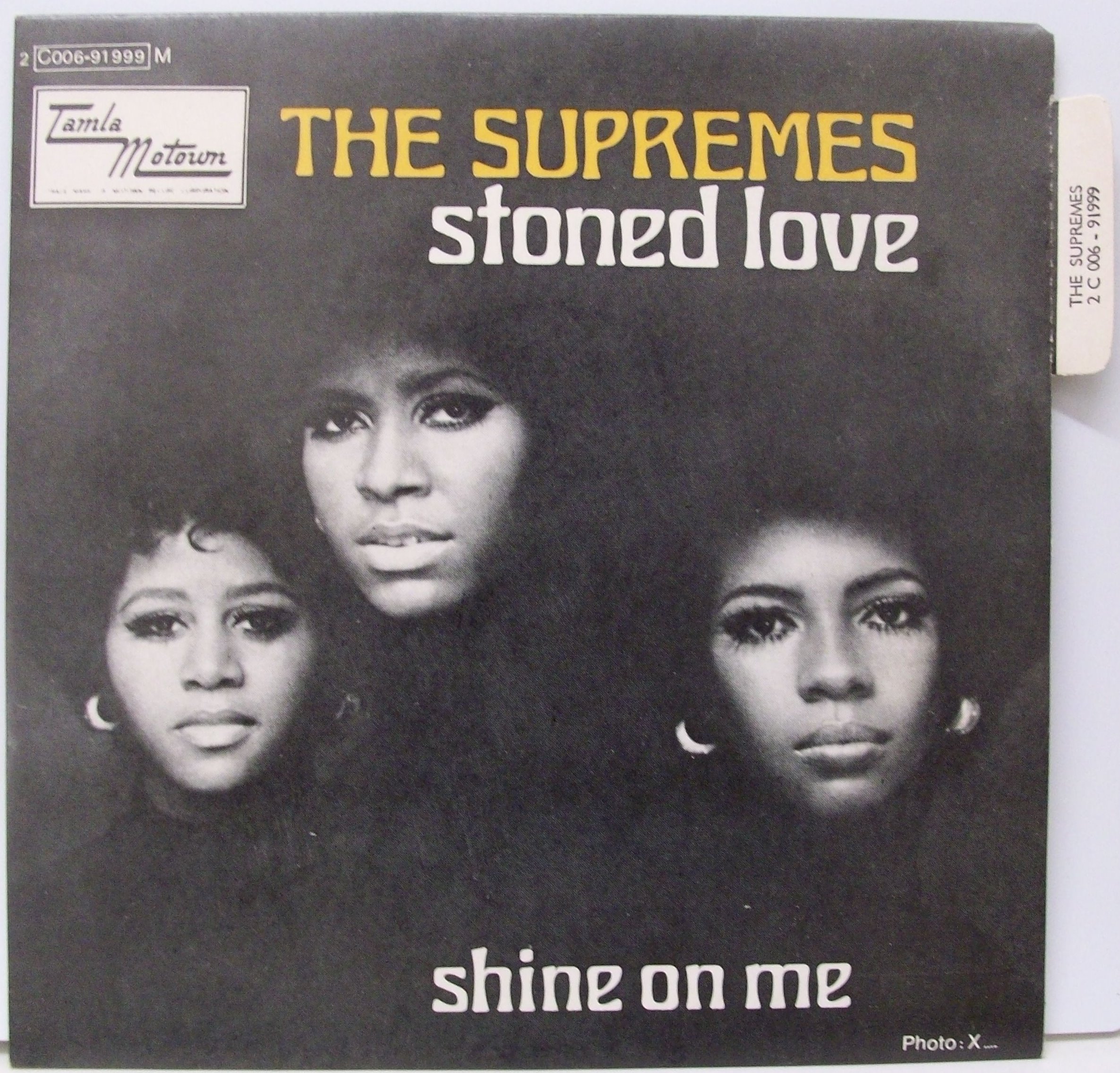
So the new Primal Scream album’s here and before a note had been heard, the knives in this house were already being sharpened. From the rubbish cover that looks as if the work experience boy was given a generic shot of Bobby and 10 minutes with a laptop, to the list of cliches masquerading as song titles on the back – River Of Pain, Culturecide, Tenement Kid, Invisible City, Goodbye Johnny, Elimination Blues – I had this album down as a stinker, another one of those disappointing albums the Scream have been turning out with increasingly diminishing returns since the high watermark of the double decade-old Screamadelica.
But y’know what……..?
It’s not all bad. In fact, some of it’s pretty good. And bits of it are really very good indeed. Opener (and lead single) 2013 seems to have split opinion amongst the critics, and at 9 minutes long, it’s not perfect radio fodder, but I like it. Bobby’s clearly determined to write an era-defining chronological anthem (think Stooges1969, or Stooges1970 come to that, or 1977 by The Clash). It reminds me of golden-age Psychedelic Furs, if they ever actually had a golden age, replete with a rasping saxophone line not heard since The Waterboys‘ A Girl Called Johnny. Very similar, Bobby. Very similar indeed. Elsewhere, vocals are whispered where previously they were mangled into that accent that was more yer actual Florida then Mount Florida. Acoustic guitars flutter against a backdrop of We Love You-era Stones psychedelia. Keyboard swells and electro bloopery compete with Zeppelin drums and turned-up-to-11 Les Pauls through Marshall stacks. Textured. That’s the word I’m looking for. More Light is a textured album. A textured album that’s about 4 tracks too long, but never mind. Is it obtuse of me to say that, for me, the best tracks are the bonus tracks? They’re certainly the most interesting by far.
Nothing Is Real/Nothing Is Unreal (above) is terrific – a proper motorik, Krauty groover that really benefits from David Holmes’ polished sheen. If the whole album was like this, we may be saying it’s the best Primal Scream album since Screamadelica. Actually, the publicity surrounding the album would have you believe that, but this track is truly wonderful.
For Record Shop/Store Day this year, Primal Scream brought out a 12″ of them doing Sonic’s Rendezvous Band‘s City Slang. Sonic’s Rendezvous Band was a mid 70s alt-supergroup, formed by Fred ‘Sonic’ Smith of the MC5 and featuring Scott ‘Stooges’ Asheton amongst other garage band no-hit wonders. City Slang is a pretty intense piece of proto-punk, full of elastic band bass, cheesegrater-thin guitar solos and a stu-stu-stuttering chorus, a testifyin’ punk rock call to arms. Heard once, never forgotten. Heard for the first time, it’s one you’ll want to play again and again. Just as well the original 7″ has the same song on both sides – wear out one set of grooves and you’ve still got another to batter the hell out of. That SRB had only one track was neither here nor there, City Slang remains something of a masterpiece. It also happens to be one of Alan McGee’s favourite records, as he told Plain Or Pan a year or so ago.
Best ever punk rock single, as he so succinctly put it. You can read more about Alan McGee’s favourite records (something of a Plain Or Pan scoop at the time, though you wouldn’t know from reading it) here.
Anyway, Primal Scream’s versionĀ is a faithful-to-the-original, full-on heads down punk rocker. For men pushing 50 and more, this is either admirable or rather sad. I’ll let you be the judge on that one.
The Great Pyramid of Giza. The Hanging Gardens of Babylon. The Statue of Zeus at Olympia. The Temple of Artemis at Ephesus. The Mausoleum at Halicarnassus. The Colossus of Rhodes. The Lighthouse of Alexandria. The Seven Wonders of the World. You’d think that by now, the 21st Century, someone somewhere might fancy updating that list. I think I missed the appeal when they were asking folk to write in with their suggestions for the 8th wonder, but if it’s not too late, I’m putting forward the Glasgow Barrowlands for inclusion.
To be more specific, I’m putting forward the Barrowlands when it’s packed-to-the-gunnels full and the band on stage is on fire. I’ve been to the Barras plenty of times. It’s always good. Often, it’s great. Other times, it’s really great. Last night, the second night of The Specials double header, it was electric; right there and then the best place to be on the entire planet. It was packed-to-the-gunnels full. The band was on fire. You didn’t want it to end. A greatest hits and more was played out to a mongrel swill of a crowd; from old suedeheads in too-tight Fred Perrys and braces, spit-shiny Docs and straining-at-the-waist Levis, to ageing mohican’d punks and punkettes, to 40-something numpties in pork pie hats, the weekend rude boys who really should know better, the same guys who take their tops off and still chant “We are the mods!” at Who gigs, to the young team in misguided Liam Gallagher feathercuts and Superdry mod parkas. Punks, teds, natty dreads, mods, rockers, hippies and skinheads, as Do The Dog says, all united on the famous sprung dancefloor that, to paraphrase that Scandinavian football commentator from way back when The Specials first mattered, took one hell ofĀ a beating.
Grainy Terry
It’s life-affirming when you realise at the age of 43 you still want to get involved at a gig, that you’re not content standing at the side debating the merits of the setlist with yourself, but you’d rather go for it, jump right in and get into it. I lost a stone and a half in the first 20 minutes alone. My polo shirt stank of other people’s beer on the way home. As I type, I’m looking at my battered desert boots, who look like they’ve been in the trenches at the Somme. The opening four numbers came at you like a breathless, skanking Ramones – Bam! Bam! Bam! Bam!Ā I can’t be certain what was played, or in what order (it might’ve been Do The Dog and Concrete Jungle and Rat Race and Gangsters). One into another, a storm of ricocheting pistol cracks from the snare and Roddy Radiation’s spaghetti western twang, glued together by the Hall hangdog vocal. Then the brass section came on. Then the strings. And the band cherry-picked their way through a back catalogue rich in dubby textures and exotica flourishes. Pinch yourself for a minute. That’s The Specials! Playing International Jet Set! I took a particular shine to the three pouting string players, bobbing their heads from side to side in perfect unison whenever the dub swelled and the need for strings reduced.
Picture courtesy of Cameron Mackenzie. Cheers!
This clearly isn’t some half-arsed in-it-for-the-money Stones tour. This is a band playing better than ever to an audience somewhat largely made up of people too young to have seen them first time around (I was 10 when I bought Do Nothing for 99p with my Ā£1 pocket money). The Specials are on fire right now and demand your attention. We were lucky enough to get an extra, unplanned encore, a Terry-free Guns Of Navarone, played by a band who’d wandered on after the outro music had begun and some of the audience had filtered off towards the exits and Central Station. Nae luck, non-believers.
There’s no youth culture anymore. Cast your eye over the appearance of any youngster and you wouldn’t know if they were into Pink or Pink Floyd. Last night showed why tribal music matters. If you do one thing this year, go and see The Specials.
The Music
The Trojan-loving DJ at the start’ll play The Skatalite‘s Guns Of Navarone:
You might be lucky and hear the band do their own version in the encore:Ā
You’ll certainly get Too Much Too Young. Here‘s the slower, dubbier album version, not the more widely-known knee-trembler from The Specials Live EP.
And here‘s Lloyd Charmers‘ Birth Control, the main influence on Too Much Too Young. It’s all in the riddim (method).
It was those opening words of his review that got Greil Marcus fired from Rolling Stone magazine in 1970 following his slaying of Bob Dylan’s Self Portrait. A hotchpotch of bewildering cover versions, syrupy reworkings of his own back catalogue and bizarre odds ‘n sodds so far removed from the Bob of 2/3/4 years earlier as to place the 1970s Bob firmly in the ‘has-been’ category, we can, with the benefit of hindsight apprecaite Marcus’ review for what it really was – a passionate attack on an act once so revered and vital but now finding themselves in the midst of creative meltdown. If you’ve ever experienced the disappointment of your favourite band so spectacularly failing to deliver, you should take the time to read it.
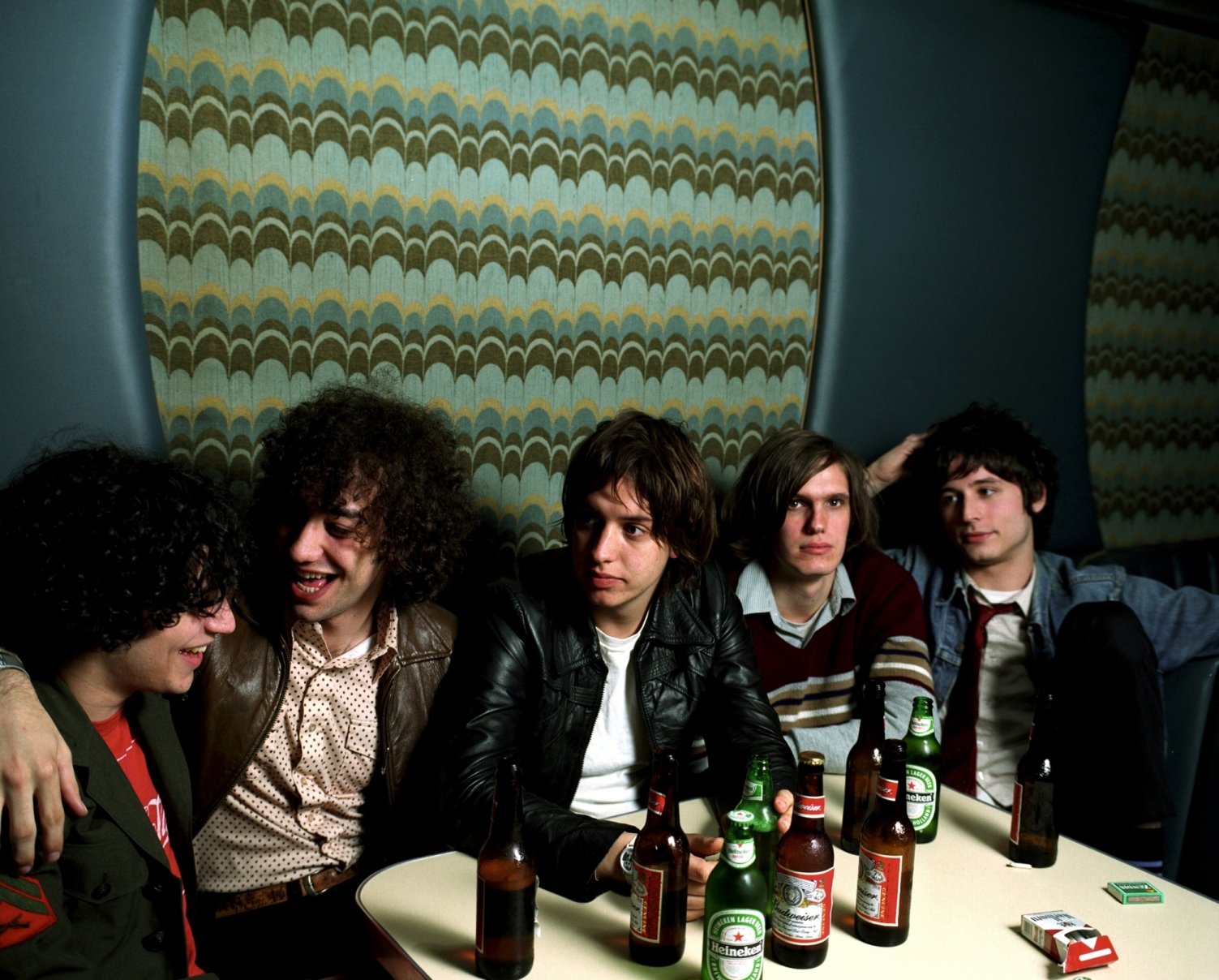
And so to The Strokes. Is This It came out 11 and a half years ago (the day of the 9/11 bombings, same day as the Zim’s Love And Theft, if I remember correctly) and was a perfect summation of everything The Strokes had worked to by that point. NYC rich kids, a contradiction of expensive continental schooling and extensive dress-down grooming, they took the blueprint of all that was great with mid 70s Noo Yoik noo wave and ran with it in a scramble of battered Converse and 28″ waists. A garage band, a proper we-can-play-our-chops garage band, they burned their way through a handful of lean, mean, rattlin’ and rollin’ tracks, every one more vital than the previous one. Their look, their sound was nothing new. It was nothing clever. But it was terrific. Last Nite was my favourite.
Last Nite (from debut The Modern Age ep):
Last Nite came complete with the sound a million bands who’ve ever played live in front of a ghetto blaster set to ‘record’ will recognise – that of the sound of the snare drum rattling from the vibrations from the ambience in the room. It takes me right back to ear-splitting band rehearsals at Shabby Road even as I type. With doe-eyed Julian and his Benylin-through-a-bullhorn vocal and fab drummer Fab Moretti about to embark on a relationship with A-lister Drew Barrymore, they fairly set the loins alight of many an impressionable female. They had the licks. They had the looks. They had it all and the world was their oyster.
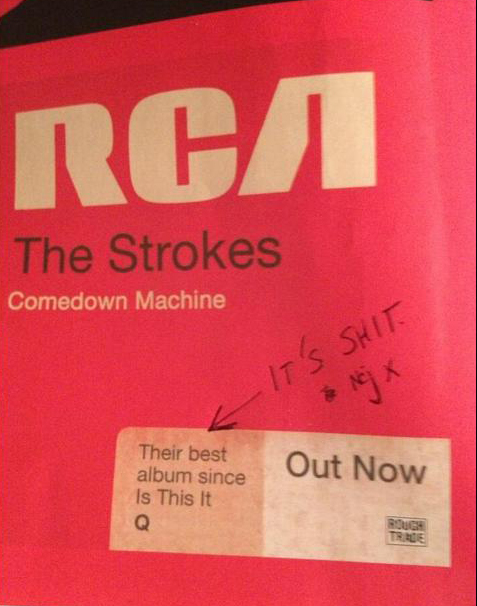
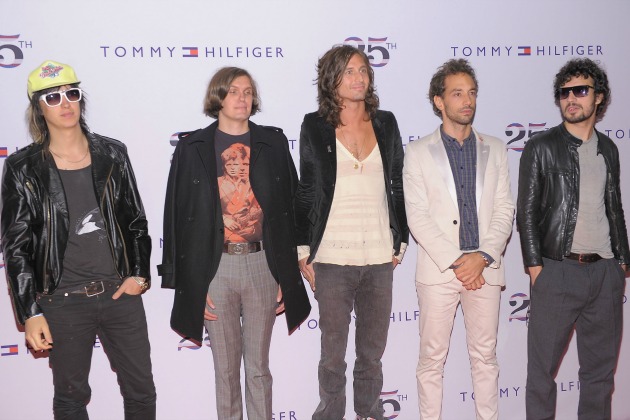
Fast forward to 2013. The Strokes’ 5th album, Comedown Machine, has just been released. I’ve lived with it since the end of March and, well, Letdown Machine would perhaps have been a more appropriate title. It’s not exactly a surprise – the last couple of albums have been nothing but weak filler propped up by the occasional FM-shiny belter, but Comedown Machine has no redeemable features. None at all. Leaving behind the myriad of 70s influences that made The Strokes what they are, they seem to have discovered the 80s. And not an 80s where demi Gods such as John McGeoch and Julian Cope and Ian Curtis and (insert your own idol here) provided a real alternative to the rubbish filling the airwaves, but an 80s of Gloria Estefan and Miami Sound Machine and Linn drums and Rubik’s Cubes and shitty day-glo socks. It wasn’t very good then and it isn’t very good now.Ā In short, it’s a horrible car crash of electro bleeps and synthesized drums (synthesized drums! Poor Fab – whatever happened to the Clem Burkeisms he was so good at?)
Looking at this, whatever you’re thinking, I’m thinking it too.
Before any singing starts, the opening track sounds like a demo of Beyonce’s Bootylicious, all pitter pattering drum machines, jerky Super Mario melodies and FX heavy guitars. On paper, that might sound interesting. Good, even. It’s not. Lead single OneWay Trigger shamelessly appropriates the hook from A-Ha’s Take On Me and petres out in a cascade of falsetto singing and electro handclaps. Gads. Throughout, you’ll hear the sound of a band as bloated and insignificant as Duran Duran, playing Strokes by numbers with diminishing returns. I’ve tried hard to like it, I really have. But, nah, The Strokes have lost it. The most interesting track 50/50, with its backwards effects and repetitive computerised guitar parts sounds an awful lot like Penguin Cafe Orchestra’s Music For A Found Harmonium. Penguin! Cafe! Orchestra! Now there’s something you never thought you’d read. What is this shit indeed.
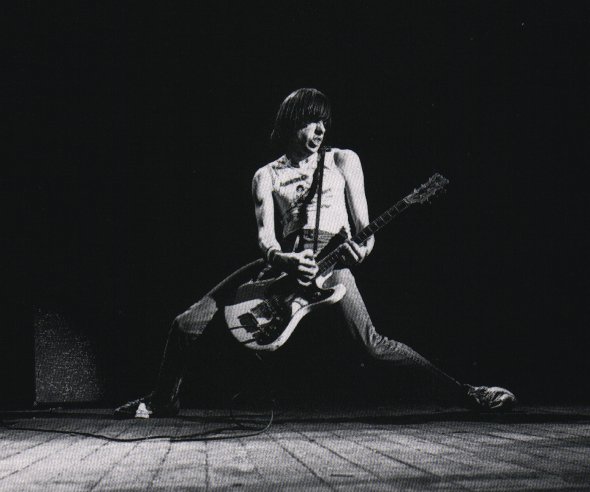
When I first picked up the plank of wood I had the cheek to call a guitar, I hadn’t yet mastered changing from a D to an A and back again before I realised something was missing. I needed something, anything, to disguise the bum notes from the badly-played chords I was trying to strangle out of my instrument at parent-bothering volume through my wee practice amp. That something was the fuzzbox. What a revelation! I could play along to most of The Buzzcocks‘ What Do I Get and mangle a passable version of Everybody’s Happy Nowadays, fire off Janie Jones from the first Clash LP and play almost all of The Ramones‘ It’s Alive LP, riff for riff and legs akimbo, just like Johnny. Look at me, I can play guitar! 1! 2! 3! 4! Gggzzzzzssss! Hey ho and indeed, let’s go. The intricacies of Some Girls Are Bigger Than Others and Blackbird were a long, painful way off, but that fuzzbox was the thing that spurred me on to those greater things.
Nasty Punks, Funk Off
Eventually tired of the fuzz and with ears open to a wider variety of music, that wee pedal was retired from duty, to be ressurected a couple of years later by better musicians. If you listen very carefully to One At A Time on the Trash Can Sinatras‘ I’ve Seen Everything album, that same Ā£20 fuzzbox gets a good workout from Davy Hughes’ bass guitar. Or so they tell me.
But that’s another story for another day. After mastering the complete works of Johnny Ramone and the odd Beatles tune and sickening myself by tying my fat fingers in knots whilst trying to unsuccessfully learn Johnny Marr’s best riffs, I spent a great many hours poring over the guitar parts on James Brown records.
The guys who played the best of them (Catfish (brother of Bootsy) Collins and Jimmy Nolen) were as yet unknown to me, but they were just as vital and exciting and talented as the three Johns. I could sit for hours and listen to I’ll Go Crazy but I’ve never yet quite mastered the fluidity of the riff. Sex Machine was the big one. The one chord groove was a bee aye tee see aitch to learn in those pre-internet days. Starting with the top string and working backwards to the bass, I held down all sorts of permutations of strings and frets until one day the funk planets aligned and my fingers fell on the strings and frets in the correct position. For any technically-minded musicians amongst you, the chord I was playing was an Eb9 (with a hammer-on on the 8th fret), although I was yet to know that. To me, it was the chord that unlocked the funk.
Using the 9th chord, Jimmy Nolen laid the foundation of funk. Stop/start slides from the 4th to 5th fret, pinky hammer-ons 2 frets above, muting the strings with his right hand to get the distinctive chicken-scratch sound, he’s the guitarist who anyone who’s ever played a note of funk guitar owes a debt to. James Brown changed his guitar players as regularly as you or I change our underwear, but from listening to the records you’d never know. All guitarists after Jimmy Nolen followed his distinctive chordings and ryhthm. Got a guitar to hand? Try it! Slide the same chord shape (above/below) up and down the frets and you’ll find all sorts of James Brown songs –Ā Papa’s Got A Brand New Bag. I Feel Good. Super Bad. Talkin’ Loud & Sayin’ Nothing. Soul Power. Persevere, you’ll find them all.
Get Up (Feel Like Being A Sex Machine)
e|--(start with an upstrum)----6-6----6---8--6----------6-6----6---8--6-----------------|
B|-----------------------------6-6----6-----------------6-6----6------------------------|
G|-----------------------------6-6----6-----------------6-6----6------(and repeat!)-----|
D|-----------------------------5-5----5-----------------5-5----5------------------------|
A|-----------------------------6-6----6-----------------6-6----6------------------------|
E|--------------------------------------------------------------------------------------|
Stick on the wah-wah pedal and you can riff your way to funky oblivion like an extra in a 1975 episode of Starsky & Hutch. Sly Stone, no stranger himself to a 3-in-a-bed romp with a wah-wah and a 9th chord,got in on the act. His Sing A Simple Song is an absolute monster of E9 riffing (see tab below. S’easy!). Booker T and The MGs did their own Hammond ‘n 9th-heavy version. And Ike Turner quite blatantly/beautifully ripped it off for his ‘own’ Bold Soul Sister, a young Tina coming across like the less-vulgar wee sister of Betty Davis. I think even Led Zeppelin used it on Houses of the Holy‘s The Crunge, such is the chicken-scratching Jimmy Nolen-ness of it all. The 9th. It’s a well travelled chord. Kick out the jams and play it, brothers and sisters. Now that’s an order.
This Record Store Day thing really grates eh? Who’s at fault? The record companies, who see the event as a way to fleece the record buyers out of every last penny they have and set sky-high dealer prices, thus forcing retailers to charge daft prices for (mainly) old records? Or the record buyers themselves, who see the event as a way to fleece less-fortunate record buyers who have neither the means required nor the availability of a local record shop to go to in order to buy what they want and are forced to take to the internet in a desperate attempt to secure the objects of their desire from people who neither know about or care about the records they are punting?
Five minutes after the shops opened and eBay’s suddenly full of the things everyone wants, available from twenty five different private sellers at twenty five times the original prices, and the internet is bulging at the virtual seams with sob stories from seething, seasoned record buyers unable to get their sticky fingers on the records they so desired.Ā They’ve scanned the lists in March and written and re-written their wishlist into 3 columns; ‘Ideally…’, ‘Hopefully…’ and ‘I cannot leave without this…’ but still ended up only with the last sticker from the acoustic act playing in the corner and a crumbly cup cake from the beardy guy behind the counter who’s job it is to say, “Sorry mate, that’s sold out too,” over and over and over and over until the end of the day. They’ve even emptied the kids’ piggy banks and forced them to eat beans on toast for a month, but that counts for nothing. Come April and the Day itself, they got up half an hour after going to bed in an effort to get as close to the front of the snaking line outside Shady Dave’s Second-Hand Sounds as they possibly could, to no avail. It’s a long line, but the ‘good-time vibe’ in the queue (“Aye, I’m after the Elliott Smith 7″ and the Pulp 12″ and the Big Star outtakes LP too, pal…”) is such that standing hunched up in the rain and the cold with Angry Birds and a quickly-decreasing battery charge on the phone for company are just about tolerable, as hopeful prayers of over-priced, limited edition bits of plastic are messaged to the great vinyl god above.
By the time the doors are unlocked by Shady Dave himself (who knows that only today, this one day of the year, is the make-or-break that might allow him to trade until next year’s big day), wads of money are jumping out the pockets of middle aged men and being flung towards the counter in exchange for a one-off Flaming Lips LP or a White Stripes coloured vinyl or an old Paul McCartney track re-pressed in glorious retro fashion. It’s ridiculous. Especially as that guy in the expensive puffa jacket and beige chinos (not yer average Wedding Present fan, you muse), who happened to be at the front of the queue was royally loaded and bought every copy of the German language 10″ And whatever else he thought he could off-load for a profit. “How many Bowie did you get? I’ll take them all.” It’s the new model for the spineless, the shallow and the touts who already rake it in from selling high-demand concert tickets. Have you checked those eBay sellers addresses? Sorry for the sweeping generalisation, but are they all in Merseyside? Call the cops…
Anyway, for what it’s worth, I’d have quite liked the live Stephen Malkmus does Can thingy. And the Elliott Smith 7″ and the Pulp 12″ and the Big Star outtakes LP too, pal, but I was nowhere near a decent record shop and was being Dad for the day while the missus went off for a belated birthday afternoon with her pal. Plus I don’t have the spare Ā£40 or so that would’ve been necessary to procure them, had I been game enough to try and buy them. A quick scroll through eBay tonight and the Elliott Smith 7″ is selling for Ā£15, as is the Pulp 12″ . The Big Star LP? That’s currently around the £40 mark, but given that almost 20 folk are after it, it’ll probably take a bid of around Ā£100 to secure the bloody thing. That Malkmus/Can album has attracted a dozen or so bids and is already pushing Ā£40 itself. The vinyl would be nice, but I’m just as happy for the moment with the illicit mp3s I found whilst poking around the darker corners of the internet. It’s not ‘real’. It’s not holdable. It’s not warm and friendly analogue. But it was cheaper than cheap. I’ve always preferred Can at their grooviest and Malkmus does a good job. Contrast and compare…
Some content on this page was disabled on May 18, 2016 as a result of a DMCA takedown notice from PRS for Music. You can learn more about the DMCA here:
The name Television has popped up here a couple of times recently. James Brooks from Land Observations name-checked them in his Six Of The Bestarticle and a couple of weeks ago I was comparing the laconic vocals and snaking guitar sound of Charlie Boyer & the Voyeurs latest single to that of Tom Verlaine and Richard Lloyd. All this has coincided with the old iPod (well, it’s not that old – 3 and a half years – but I suppose that’s ancient in tech-speak) refusing to sync any new additions to my iTunes library and, worse than that, wiping itself clean of all the 140+GB of crap that was on there originally and deciding it’s just not going to work any more. Even the (cough) ‘Genius’ at the Apple store in Glasgow had to somewhat disappointingly concede defeat. As the iPod goes everywhere with me at all times this has proven nothing short of a disaster. So much so that I’ve gone all end-of-the-millenium retro and started playing CDs again. Real, shop-bought CDs in the car and on the stereo at home (I had to dust itĀ a wee bit first, I’m ashamed to admit). Having exhausted the CanLost Tapes box set that fell into my hands for less than Ā£18 in a destined-to-die HMV store, the one album I’ve had on constant repeat for a fortnight is Marquee Moon, the debut album by Television.
It’s now considered something of a (yawn) seminal classic or something, so far out of step/ahead of the pack when first released that it sounds fresh, ageless and timeless when you listen to it now. But you knew that already. In mid 70s America, Television found themselves roped in with the NYC punk lot, seemingly by virtue of having a regular gig at CBGBs. Original bass player Richard Hell, with his penchant for ripped jeans, safety pins andĀ home-made spiky haircut is considered the true originator of the punk style, but by the time of Marquee Moon‘s release, he had long since left the band to form The Voidoids and invent the Stray Cat Strut with their I Belong To The Blank Generation single…
Anyway. Where were we? Oh aye, Television. Where did they fit in? Not for them the 3 chords-in-platform-heel Stonesy glam slam so beloved of the New York Dolls. Not for them the legs akimbo cartoon buzzbomb of the brothers Ramone. Not for them the high-brow beat poetry set to the low-brow beat music of Patti Smith. Television set themselves apart from the off. With an approach to their individual instruments bordering on muso, and a healthy disregard for the two and a half minute pop song, they were so far out of step/ahead of the pack that they still sound fresh, ageless and timeless today. Guitars intertwined like psychic snakes, riffing off one another creating astonishing Fender Jag ‘scuse me while I kiss the sky melodies and counter melodies seemingly at will. Not quite free jazz, but certainly free from the straight-jacketed constraints of their 3 chord loving peers. Learn an F chord, barre it and move it up and down the frets. Play it loud, play it fast, there you go, you’re a band.Ā Television were so far ahead of this, it’s not hard to understand why, 35 years later they were 1) seen as misfits and 2) sound as now as the latest daft haircutted, snake-hipped gang of teenagers straight off the cover of the NME.
First single (not on the album) Little Johnny Jewelwas a taste of things to come. 7 minutes of art rock, all cheese-grater strings and rake-thin bass, slightly out of tune chords, random blips and blops and clattering, carefree jazz drumming, with a more spoken-word than singing approach to the vocals, the pre-pubescent seeds for Marquee Moon were sown. After an aborted session with Brian Eno, and balls duly dropped, the band started fashioning the music that would grace the album. Tougher, meatier, more aggressive yet airy, effeminate and even effete when compared to the band’s contemporaries, the alt. mix of the title track is the aural equivalent of watching Picasso sketch Guernica. Or something less pretentious than that. Friction, with its galloping elastic band riff andĀ ‘Eff! Are! Aye! See! Tea-Eye-Oh-Enn!’ refrain is a personal favourite amongst an LP full of personal favourites. If you’ve never heard Television, rectify that now!
Just as The Velvet Underground before them and The Beta Band since (I digress, but believe me, one day The Beta Band will come to be as revered as the truly great originators they were. They will!), Television never really got their dues at the time. But their influence is writ large in any twin guitar band with a penchant for razor-sharp riffs and meandering solos. Scratch just under the surface of all the usual suspects (you know who they are) and you’ll find a well-worn copy of Marquee Moon rotating ad infinitum between the grooves. The coolest part of it all? Well, rumour has it that around the time of recording the Blue Sky Blue album, Wilco’s Jeff Tweedy received the ultimate birthday present from his wife- a guitar lesson from Richard Lloyd. Not the first band that springs to mind at the mention of meandering solos and disregard for a well constructed pop song, Wilco did indeed adopt a more Verlaine/Lloyd approach on some of Sky Blue Sky‘s less structured tracks. Impossible Germany, for example, features a pair of clean, chiming guitars wrapping themselves around one another for 6 shimmering minutes. The solo alone is pure Lloyd. Or Verlaine. I can never tell the difference. If you’ve never heard it, rectify once more.
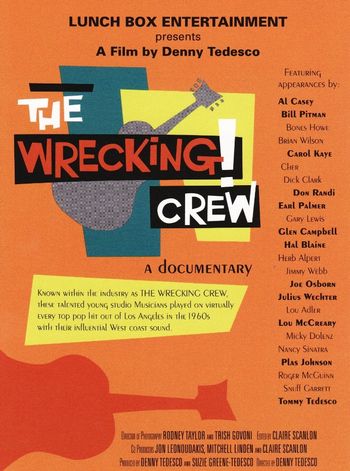
Last summer I went to the Glasgow screening of the above film about The Wrecking Crew, the crack bunch of LA sessioneers who played anonymously on a whole host of things, from film and TV scores via advertising jingles to some of the biggest-selling and best-loved songs of that golden period in early-mid 60s pop music. Tommy Tedesco was a jazz guitarist, and somehow found himself part of that inner-circle of session men and women. Made by Tommy’s son Denny, the film is a celebration of the life and work of his father and The Wrecking Crew. It’s terrific. Denny has, for the past couple of years, been touring the world showing his movie at Film Festivals and special screenings in a bid to drum up the finance required to support the publishing rights of the film. It’s impossible to make a movie about such great music without actually featuring that same music, and seemingly it costs a whole lot of money to negotiate the publishing minefield that the lawyers and money men have put in front of him. If you ever win the lottery and want to help someone out, I’m sure Denny would be more than happy to take your call. If you ever get a chance to see his film, grab it with both hands. Much of the music featured throughout the years on Plain Or Pan is a product of The Wrecking Crew, so if you’re a regular on here, I’d even go so far as to say it’s right up your street.
The Wrecking Crew were the go-to guys in the LA recording industry. Slicker than the Brycleem covering Bing Crosby’s bald bits and packing more swing than Sinatra with a six iron, they swept aside the old shirt ‘n tied brigade with little regard for history or unwritten rules.
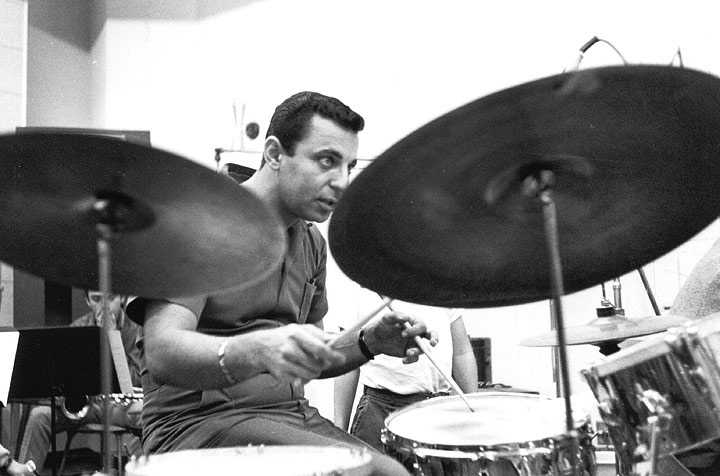
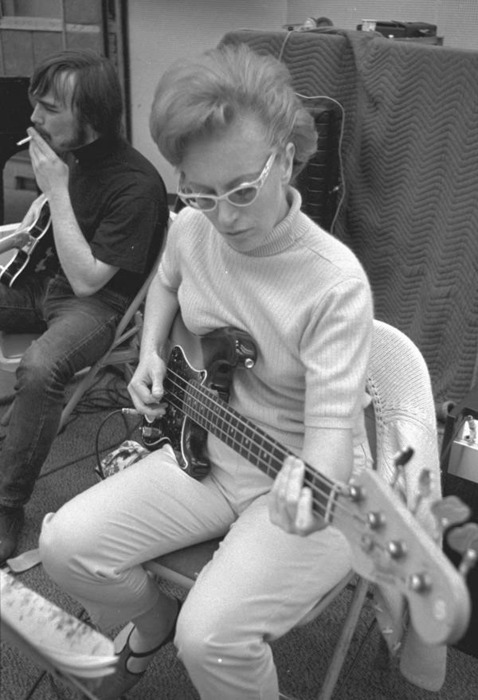
āI coined the name The Wrecking Crew,ā explains ace drummer Hal Blaine. āWe came into the studio with our Levis and t-shirts, smokin’ cigarettes, and the older guys were sayin’ ‘They’re gonna wreck the music business!'”
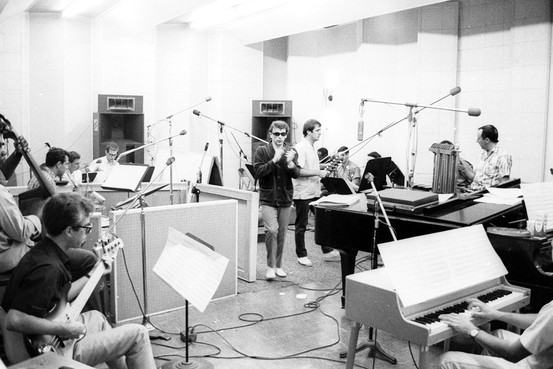
Working quickly and cheaply, and with the ability to read charts and scores of music at the drop of a cocked hat (they had backgrounds in jazz and classical) they were able to turn their hand to anything at all. Often, they came up with the licks and riffs that we all still whistle and hum today. Uncredited. The intro to Wichita Lineman? The intro to These Boots Were Made For Walkin‘? Plucked from thin air by The Wrecking Crew. Working on flat union fees rather than the gamble of percentage royalties, each musician knew that if they played more than one session a day, by the end of the week after they’d multiplied up the standard session fee, they’d be rich. They were so much in demand that playing only one session a day was not ever likely. Producers would request The Wrecking Crew, then hold off the recording session until the Crew could fit them in. The Wrecking Crew did them all. In and out the studio in the time it took to learn the part and record it before going off to the next one. And the next. And the next.
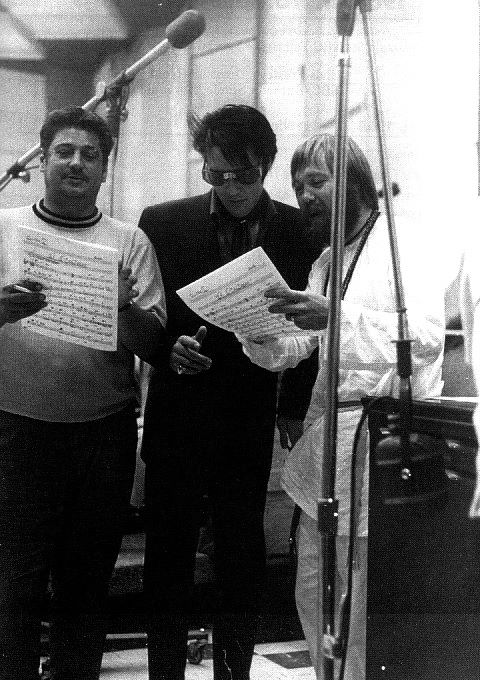
Without the benefit of hindsight of course, they had no idea that this music they were playing would shape the sound of popular music forever. The roll call of records and groups bearing The Wrecking Crew’s stamp is a super-long embarrassment of riches. Off the top of my head – all of Phil Spector‘s epoch-defining Wall Of Sound records, many Beach Boys records, including the sessions that would produce Pet Sounds and Smile, the Elvis ’68 Comeback Special for TV, The Byrds first album (only Roger McGuinn was considered good enough to play on it. The other Byrds sang, but the rest of the music was provided by The Wrecking Crew), a ton of Dean Martin stuff, Frank Sinatra‘s Summer Wind, the Pink Panther theme, Aquarius by the 5th Dimension, most of The Monkees records (Mike Nesmith was The Monkees’ version of Roger McGuinn), Somebody Groovy, California Dreamin’, Monday Monday and countless other Mamas And Papas tracks, Harry Nilsson‘s Everybody’s Talkin‘, Sonny & Cher‘s And the Beat Goes On. And on. And on. And on. You get the idea?
The Wrecking Crew were seemingly involved in everything. Hal Blaine alone estimates he’s played on 35,000 sessions. Thirty five! Thousand! Playing 3 sessions a day for 7 days a week, that’d take him about 30 years going by my calculations. At the height of their activity, I reckon The Wrecking Crew must’ve been doing 50 sessions a week, easy. One day alone might produce The More I See You for Chris Montez and Coconut Grove for The Lovin’ Spoonful before lunch, Dizzy with Tommy Roe and It Never Rains In Southern California with Albert Hammond in the afternoon and a longer session with Simon & Garfunkel in the evening – Homeward Bound and off to tuck the kids into bed. (In the chronology of it all, doing these 5 particular records might’ve been impossible, but you know what I mean). Not a bad day’s work, and, it seemed, every day in The Wrecking Crew calender was like that.
Of course, sadly, frustratingly sadly for some, without the benefit of hindsight, who knew that they’d be involved in so many solid-gold standards? Taking the gamble of percentage royalties would clearly have been the smart thing to do. Every member of The Wrecking Crew would still be a millionaire now. Hal Blaine knew the value in working hard and to paraphrase from the film wanted to make the ride to success as quick as possible and the inevitable decline as slow as could be. By the mid 60s, artists would want to play on their own records. Crucially, the record companies would allow them to play on their own records, and the slow demise of The Wrecking Crew was set in motion. But at the time, The Wrecking Crew were coining it in. As super-cool bass player Carol Kaye points out, “I was making more money than the President of the United States!” Hal Blaine was also earning enough to have a huge house and a yacht, but divorce saw to the end of that. When the sessions dried up, he ended up taking a job as a security guard, spending his days listening to the radio blaring out the countless hits he had played on. The irony was not lost on him.Ā Go and see the film when you get the chance, it’s all in there. Check the website for details: http://www.wreckingcrewfilm.com
The Music
You know all the biggies, so here’sĀ a few less well-known selections from the absolute embarrassment of Wrecking Crew riches…
Written by Sonny Bono, the title is inscribed on his gravestone. Later covered in a big band jazz stylee by Buddy Rich, with his 10 year old daughter doing the Cher parts.
Kind of a post-demo, if there is such a thing, Lee’s version takes the same backing track from Nancy Sinatra’s hit single, but he tells the story of how they recorded it. Essential listening!
—————————————————————
The Curios (neither of these were recorded wham! bam! thank you, maam!, that’s for certain)
Brian Wilson haranguing Hal Blaine and co. during the recording of Wouldn’t It Be Nice.Ā Quiet please, genius at work.
Phil Spector haranguing Hal Blaine and co. during the recording of Be My Baby. Wonderful!
According to some so-far-unconfirmed sources, Richard Hawley, in his National Health milk bottle thick Gregory Pecks and greasy collpased 1950s quiff has Sleepwalk by Brooklyn brothers Santo & Johnny Farina playing on a constant loop inside his head, and, when stuck for inspiration, reaches out and grabs whatever twangy part happens to float past and recycles it under his own name. Cleverly, he also adds his own bottom of the bottle of whisky vocals to it, but disregard them if you can and it all becomes clear.
Nothing evokes that fuzzy, fuggy end of the prom waltz into the wee small hours quite like Sleepwalk. A shuffling, twanging instantly recognisable piece of late 50s melancholia, it’s got the minor key melodrama down to a tee; The slide guitars streeeeeeeeeeetch off out into the ether. The steel guitars weep like jilted boyfriends who’ve just come off second best in the game of love to the star quarterback. There’s a tiny bit of stand-up slapback bass underpinning the soft-shoe shuffle of the brushed drums and really, that’s about it. Two brothers. Two jobbing sessioneers. Four instruments. No overdubs. Recorded at the famous Trinity Sound studios in New York for $35 during Bing Crosby’s lunch break. Quite possibly.
It’s since become something of a graduation piece for budding bedroom guitarists the world over. Master some chords (3 majors and a minor should do) then move onto the tricky pickin’. Sleepwalk is perfect for this, as is borne out by the number of early 60s (and beyond) cover versions by nascent young whippersnappers eager to show off their chops. The Shadows and The Ventures, between them the finest purveyors of the guitar instrumental (with apologies to Dick Dale) both released versions early into their recording careers. Chet Atkins fancy-panted his up somewhat with some jazzy-inflected country licks and none-more-50s rasping saxophone. Jeff Beck’s version is a soulful, we’re-not-worthy bow-down to the original, and even I have been known to dust off the old Telecaster, fire up the Orange amp and crank out my fat-fingered approximation of the tune. King of them all though is Brian Setzer’s respectful yet mental Grammy winning version. A man who out-Hawleys the Hawley and clearly spends even more time than the Sheffield Shinatra dreaming about the good old days of pre-TV households and cars as wide as they were long, his version knocks all others for six. Here’s how to do it:
Six Of The Best is a semi-regular feature that pokes, prods and persuades your favourite bands, bards and barometers of hip opinion to tell us six of the best tracks theyāve ever heard. The tracks could be mainstream million-sellers or they could be obfuscatingly obscure, it doesnāt matter. The only criteria set is that, aye, they must be Six of the Best. Think of it like a mini, groovier version of Desert Island Discsā¦
Regular readers will be aware that most of the music that appears here is from before, say, 1985. Anything else more up to date than that must past strict and stringent tests to ensure the quality of the fare on offer does not drop too far down on the old Tune-O-Meter. The artist featured here is so achinghly hip and happening and cutting edge and NOW that I fear my keyboard may temporarily freeze over, such is the ice-cold coolness he and his band of East London renegades appear to have.
Charlie Boyer and The Voyeurs have been played a lot on 6 Music. So thanks to the BBC, and Marc Riley in particular, who’s super-enthusiastic about their music and has had them in for sessions, Charlie and his Voyeurs have become my new favourite band.
If I was 18 or 22 or even 25, I’d go so far as to say they’re the best band ever. At that age, you’ve perhaps still to hear the influences that so clearly seep into their music.
But, by my age, you’ve pretty much heard it all. It was the singing that got me first. “That sounds like Television!” The Tom Verlaine-esque lazy drawl. The snaking, intertwinedĀ guitar riffage. Pure Television.
Then it was the tunes. “That sounds like something off a Nuggets LP!” Short ‘n sharp ‘n full of Farfisa. If you dug it, it’s a Nugget, as someone once said.
Then it was the sound. “That sounds kinda like Horrors and Toy and all those new-psyche bands. Or like The Strokes back when they were cool and vital and everything.”
The Voyeurs look like them too. Or to be more accurate about it, they look like the Velvet Underground in 1967. Lean, mean and looking pristine, they’re all black leather and skinny jeans and bowl cuts, with pointy boots comin’ at you like the Krays wielding a pair of snooker cues.
If you haven’t yet watched the video, look again at the promo shot at the top, and new single (their 2nd) Things We Be sounds exactly as you’d expect it to. Following on from debut release I Watch You, it’s out this week. You should buy it. A scuzzy, scuffed garage band affair over and out in 3 chords and 3 minutes,Ā it has a real chance of scraping yer actual charts (whatever they are these days) and should see Charlie and his four Voyeurs primed for pole position come summer festivals time. The debut album Clarietta is released at the end of May and it wouldn’t surprise me if that goes Top 10 before June. You heard it here first, boys ‘n girls.
I started writing this piece before Charlie had agreed to contribute to it, so it was pleasantly surprising when a) he agreed to do it, and b) his choices by and large mirrored my ideas of what his band’s influences might be. Amongst the 17+ minutes avant-garde New York cool of the Velvets and Edwyn Collins’ nascent, knee trembling, clattering dub reggae-by-way-of-Bearsden, you’ll find the dumb fun, fun, fun, of early Beach Boys, the effortless, unparalleled BIG sound of the Big O (an influence in the shades dept. at least), The Fall covering a bona fide Nugget and the new-psyche sounds of labelmates Toy.
It’s a great list…..it’s a great listen:
1. The Velvet Underground Sister Ray It has excited and amazed me since I was 15. It has 3 chords and is completely magical.
2. Roy Orbison You Got It
I love his Sun/Nashville period…some of the best songs I’ve ever heard. But for some reason this is the one that gets me at the moment.
3. Orange Juice Breakfast Time
We recently recorded with Edwyn Collins and this has always been my favourite. It’s the B-side of Simply Thrilled Honey. The structure and the lyrics are really interesting together.
(Plain Or Pan says: I always preferred the version on the Rip It Up LP – full-on dub reggae by way of Bearsden)
(Plain Or Pan says: Younger readers may be interested in the original version by The Other Half. It’s pretty essential.)
5. The Beach Boys Little Honda
One of their best rock n’ roll songs. Really good naive lyrics. And I think one of Brian’s first productions for the band?
(Plain Or Pan says: Aye – possibly Brian’s first ever production at that.)
6. Toy My Heart Skips A Beat
Their new single. And my favourite song on their album. The string/synth bit at the end is wonderful. Sounds like something from Lou Reed’s Berlin.
Magic, eh? Every Six Of the Best compilation comes in a handy RAR download file. GetCharlie Boyer‘sĀ here. Or here.
Now go and buy some real records and bask in the I-told-you-so glory when …the Voyeurs sell out at a venue near you later on this year.
Focus. Surely the reason punk had to happen. They’re not a band I’ve ever mentioned on these pages before. And they’re not a band likely to ever feature on these pages again. Hoary old 70s prog rockers, with their fuzzy faces and parted-curtains hair-dos, Focus might’ve looked like any one of those uber-cool purveyors of the German Kosmische Musik, but they eschewed that minimal motorik groove in favour of an altogether less savoury sound. Technically super-proficient players, Focus had an alarmingĀ tendency to fling 94 ultra-slick 2 bar arpeggios in the space where most contemporaries would rattle out a blues riff copied from any old Chuck Berry record. Focus would also regularly yodel like castrated cats on their records, records that careered from a post-blues/pre punk squealing guitar abandon to neo-classical and medieval lampoonery, by way of a side order of jazz fusion. In many ways then, a Dutch Spinal Tap…
The Be-de-le-be-de-le-be-de-le-be-de-le-be-de-le-be-de-le-scree lead guitar in Focus was provided by Jan Akkerman. Jan is something of a hero to 60-year old physics teachers who wear their hair a wee bit too long at the back and still harbour hopes of making it with their band. He tours regularly and mentions of his name in the right circles can elicit the same sort of reaction you’d get when talking about Johnny Marr to half the folk who are reading this now.
HeĀ began playing in The Hunters, a beat-boom inspired garage band from the Netherlands who had one minor hit in 1966 with Russian Spy And I. A terrific record, it sounds equal parts Yardbirds, Animals and (really) The Ukrainians, the short-lived world music off-shoot of the Wedding Present. All hand-claps, shouty “oi!s” and chicken dance-inspiring rythym guitar,Ā Russian Spy And I is a record you could happily smash plates to, Greek wedding-style. Listen to it and underneath the frenzied stomp of it all you just might spot Jan Akkerman’s ever-so subtle and understated guitar parts.
The Stares
Russian Spy And I first came to my attention not from The Hunters but via The Stairs and their Woman Gone And Say Goodbye single. A band forever out of sync with the times (too late for the 60s, too early for that mid 90s boom in guitar bands), the Merseyside revivalists did a faithful version of Russian Spy… on the b-side, for extra authenticity recording it in mangled mono glory and unwittingly inventing The Coral in the process, who took The Stairs sound and polished it up until it was shiny and chart friendly. Nothing wrong with that, of course. The Stairs were a magic wee band. They had soul and funk and the riffs and could play like delta bluesmen and swing like Sinatra at the Sands. I’ve written about them and their genius leader, Edgar ‘Jones’ Jones before. Take 5 minutes and reacquaint yourself with them here. And listen to their version of Russian Spy And I while you’re at it. Oi!