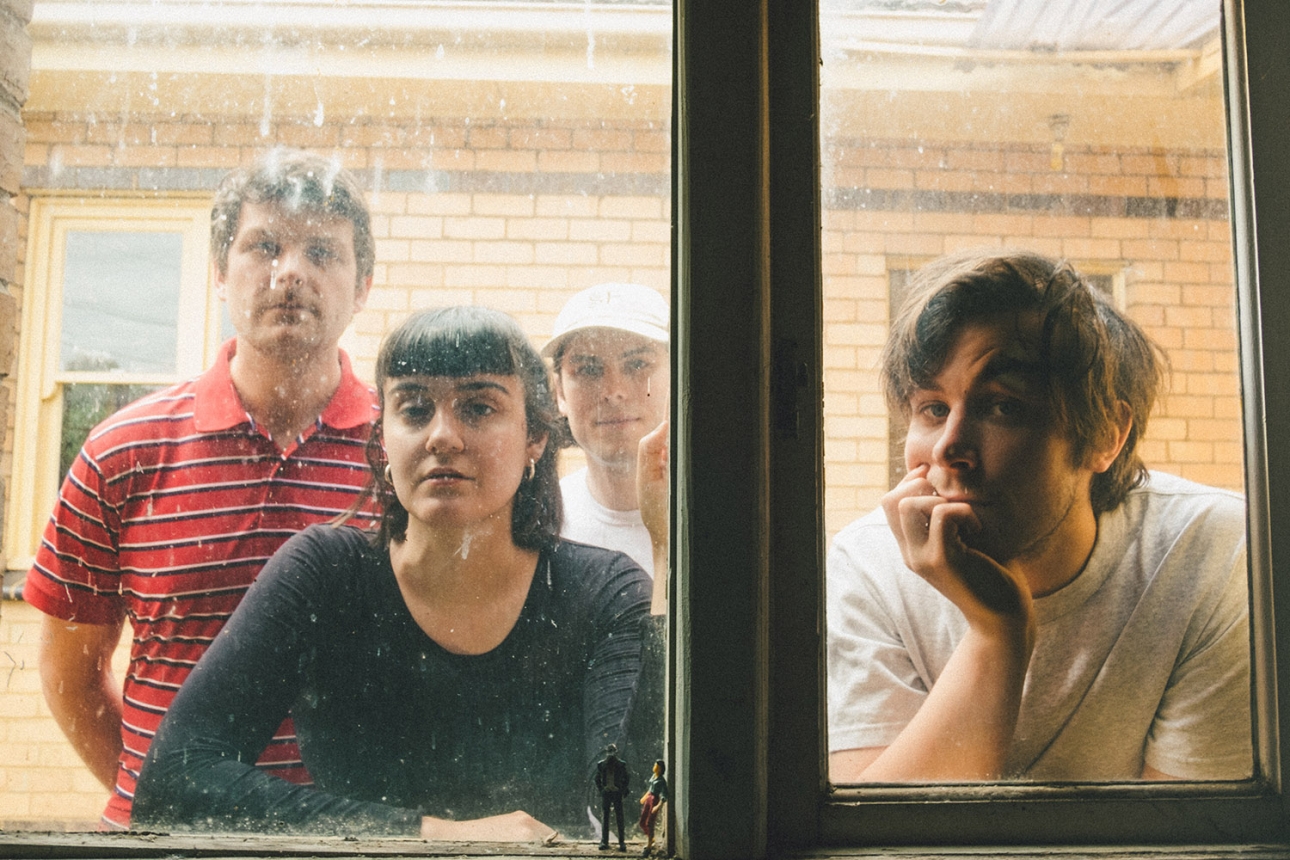
The mixed bag of unsolicited – but very welcome – mp3s that currently clutter my inbox contain a couple of bona fide right here right now, on the pulse indie rock ‘records’, the kinda tracks that in a pre-internet era I might’ve spent aeons tracking down. Last week, the Working Men’s Club single was the track to rock my (in)box. This week it’s the sound of The Stroppies.
A confession: The Stroppies’ label sent me a press bio and a link to current single Cellophane Car about 3 weeks ago. One look at the band’s name and I thought, nah, I’m not having that. Who names their band The Stroppies? It’s the twee-est, most cutesy-cute, indie-ish name going, is it not? I remember reading an interview with Michael Stipe where he said that you had to imagine your band’s name in lights above the door of the biggest venue you knew. Only then could you consider what you might be called.
Anyway. A track popped up on 6 Music last week on the commute to work and frustratingly the station ID listed it as ‘Deep Blue Day’ by Brian Eno, when it clearly wasn’t. Fast forward to yesterday and it was played again. The Stroppies. Cellophane Car. The Stroppies?!? Where do I know that name from? And then earlier tonight, Marc Riley opened his show with them. They’re a hot thing, these Stroppies. Riding the crest of some zeitgeist or other. Daft name though, but great tunes.
Cellophane Car has all the right reference points you could wish for; an underlying Felt-like feyness, jangling 12 strings, a forever-on-the-verge of being out of tune one chord Velvets riff, wobbly Antipodean male/female vocals last heard on any number of Go-Betweens records and an arch, eyebrow aloft nod to Jonathan Richman. You can practically sing Roadrunner over the top of it.
Nowt wrong with that, of course. On Cellophane Car, the band are stretched to their very limits. There are no flash solos or tumbling toms in the middle eight. The music is lean, pared back and designed to run and run. Where most bands would finish on a crashing oomph or a squeal of feedback, The Stroppies lure you in with a false ending before the parping Farfisa and swirling keys lead the track on an extended slightlydelic coda.
The best guitar music, from, oh, I dunno, Orange Juice to Jellyfish is made when bands step out of their comfort zones. At any minute things might unravel. Band members eyeball one another between swift glances at the frets, shonky nods are aimed in the direction of the beat keeper at the back. Those Stroppies are forever on the verge of unravel.
Coming hot on the heels of fellow hot-hitting Australian Courtney Barnett, The Stroppies have an album – Whoosh – due for release in March, after which they’ll be zig-zagging their way around the less-than-glorious venues of our cities in July; you’ll find them in Glasgow, York and Brighton amongst others. You should probably go.
Follow The Stroppies on all the usual forums (apart from Twitter, it would seem) or visit here for tour dates, music and more.
The new 6 Music schedule has taken a fair bit of bashing since the turn of the year. I used to enjoy my morning commute to the languid sighs of Shaun Keaveny and was mildly irked when he was shunted to an afternoon slot that I rarely have the chance to listen to, but I must admit to a growing fondness for Lauren Laverne’s replacement show. She has a great morning radio voice and while initially her playlist was a bit beige – a never-ending conveyor belt of close-miked singer-songwriters and glossy electro-infused indie from the moment I started the car until I pulled up at work, the past couple of weeks has seen some more interesting stuff creep in.
She played a track on Friday morning though that made my heart sink to depths last felt around the second week in January. The Specials’ new LP was the Album of the Day and Lauren played their version of The Equals’ Black Skinned Blue Eyed Boys, a terrific early 70s stomper and lyrically, right up The Specials’ street.
By comparison, The Specials’ version was too polite, too lite and sounded like a graduate from the Glen Ponder school of insignificant incidental music. It’s always a nail-biting time when old bands fanfare a return with a slightly altered line-up and brand new album and most of the time you’re left feeling nothing other than disappointed (see also The Clash or REM) and on this evidence, I fear one of our most important bands has taken a bit of a tumble. A mere blip, I hope.
That Equals’ version though kicks like a mule, an aggressive and confrontational record that’s equal (arf) parts Slade and Led Zeppelin fed through a Brixton blender and left to run like a feral delinquent. The ‘solo’ alone is almost avant garde in execution. . Listen up now people….
The Equals –Black Skinned Blue Eyed Boys
Recorded in 1970, its fist-pumping socio-political message was at odds with the band’s previous hits – you’ll be familiar with Baby Come Back – and is miles away from guitarist Eddy Grant’s future hits – and is all the better for it.
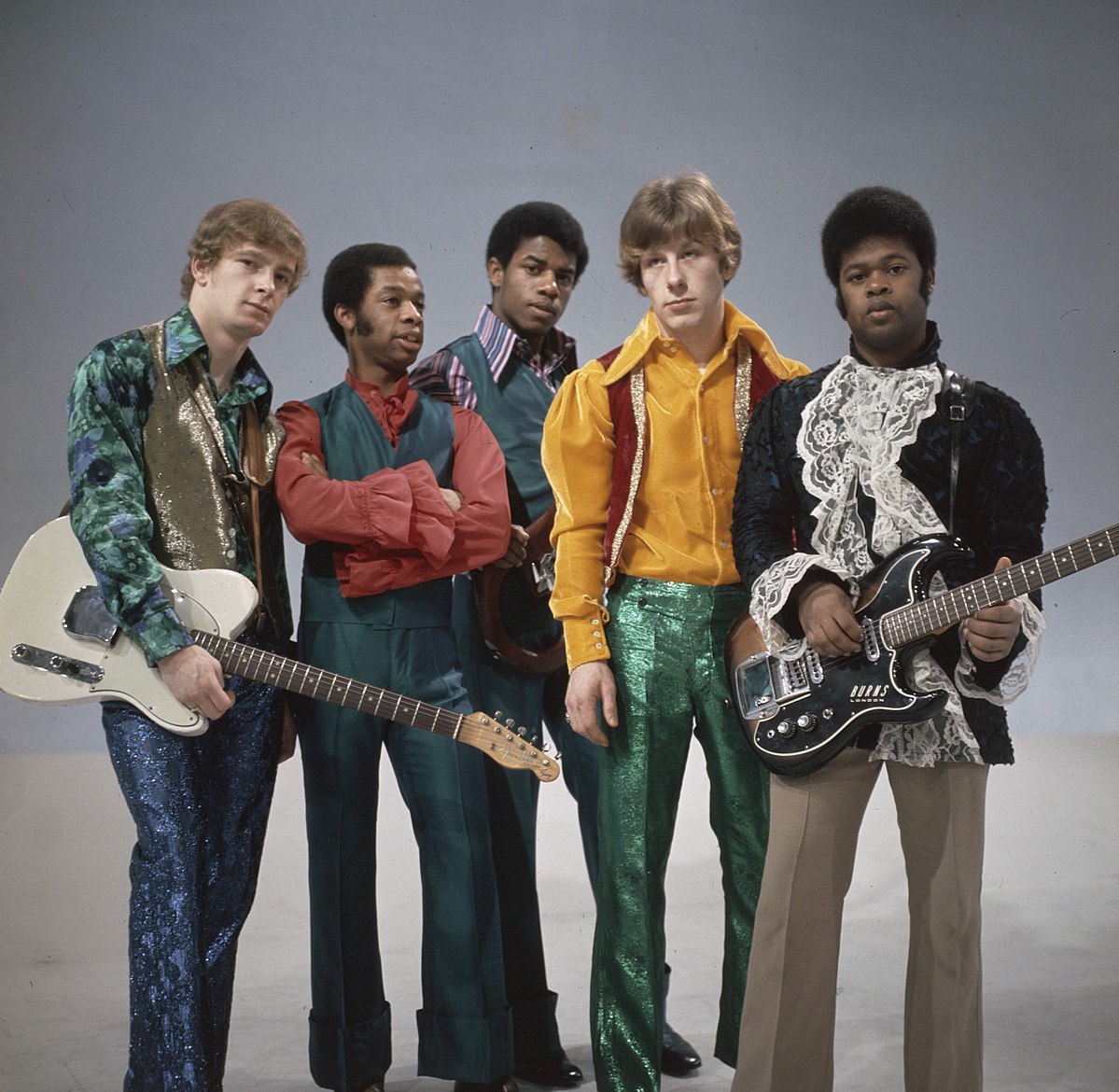
Dressed like Sly & The Family Stone and employing a set of vintage guitars that would have Orange Juice frothing with jealousy, Black Skinned Blue Eyed Boys sets the tone for the sound of the seventies; a toughed-up, roughed-up riffing groove, egged on by the hardest kicking of kick drums.
Those Specials really should have paid more attention.
Try googling Working Men’s Club. Go on. I’ll wait for you.
Chances are you didn’t land on the band of the same name, which is bad planning on their part because had you alighted on the northern English act you’d have been pleasantly surprised by what you’d hear. I imagine other acts will have equally Google-unfriendly names, but then I can’t name any as I haven’t found them yet(!) Thankfully, the good folk at Melodic Records in Manchester saw fit to point the band in my direction.
From the Calder Valley area, a belt of old industrial mill towns located somewhere between the white and red roses of Leeds and Manchester, Working Men’s Club are named after the clubs they once sneaked into as underage drinkers. Pleasingly, they’ve eschewed the normal Oasis-by-numbers rentarock that many young bands fall into.
Theirs is a twisted take on the angular scratches of post punk; a bit of Wire here, a stroppy Fall vocal there, a Gang Of Four thunk in the chorus…..bitter old cynics will easily trace the lineage from there to the Manics at their angriest or The Futureheads at their most obtuse, but taken at face value, Working Men’s Club are worth further investigation. My favourite album of last year came from Parquet Courts and a track like Bad Blood could sit happily in the grooves within that record.
Regular touring partners with the excellent Orielles, the next few months will see Working Men’s Club play a handful of shows across the Manchester area as guests of both Pip Blom and The Limananas, as well as striking out for headline shows of their own.
I’m keen to see if they make it further north and across the border into this fine and pleasant land. If and when they make it to Glasgow there’s a good chance I’ll be first in the queue for tickets and *down the front come showtime. I fully expect too that someone with a finger on the pulse of what’s a-happenin’ – a Marc Riley, perhaps – will afford them the opportunity of a session, so if they don’t fancy their chances of (cough) foreign travel in this era of pre-Brexit uncertainty, there’s a good chance I’ll get to hear them live, if not see them live.
*at the side, bobbing my head slightly whilst taking mental notes and hoping I don’t miss the last train home.
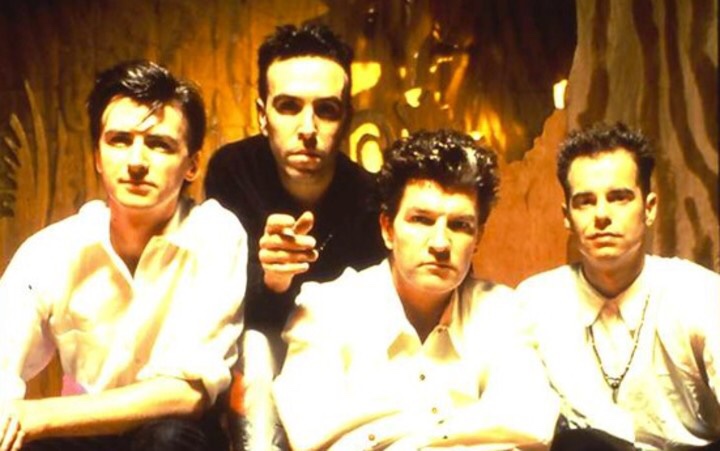
Crowded House‘s Into Temptation is a slow shuffling, McCartney-esque cheatin’ song, all minor chords and lilting vocals that carry the heavy weight of a clandestine world.
Crowded House – Into Temptation
It’s a terrific wee song, played, like its subject matter, with a hesitant and delicate touch, necessary for allowing the melody to tip-toe in the gaps in between.
“The guilty get no sleep in the last slow hours of morning,” offers Neil Finn, as the creeping chord progression ascends in the way a guilty party might sneak back up the stairs in the wee hours.
“As I turn to go, you looked at me for half a second
With an open invitation for me to go into temptation.”
Wow. There’s no denying what the song’s about, a 4 minute wonder that was inspired after a knock on Finn’s hotel room door one night. Staying there in the middle of a Crowded House tour, Finn had noticed a men’s rugby team and a women’s volleyball team were also residents. On opening, he realised the knock had been on the door of the room next to his and he caught a quick glimpse of a female volleyball player going (into temptation) into the room of the rugby player who was staying there. What goes on on tour stays on tour ‘n all that….
A fairly insignificant track from the band’s second album, Into Temptation benefits from being on Crowded House’s Best Of compilation, Recurring Dream where it remains as a slow-burning standout on an album packed full of great songs. Anyone with a liking for guitar based melodic pop should look no further. Never particularly hip or happening (never mind the AOR leanings of the music, they could’ve done with a decent barber and tailor), Crowded House nonetheless endure, a more straight-laced Go Betweens for folk who’ve never heard the Go Betweens, a safer bet than the edgier Del Amitri. It’s hip to be square, as someone once sang.
Like all the best Neil Finn compositions, Into Temptation features a brilliantly technicoloured chiming bridge where ringing arpeggiated guitars sparkle and the melody soars before returning once again to the unmentionable matter in hand. As far as songs of unfaithfulness go, it’s second only to James Carr’s Dark End Of The Street, another post for another day, for sure.
Temptation by New Order is a steam-powered, clattering industrial racket, the result of maverick programming and experimentation from a band keen to break free from their previous sound and take on a brave new direction.
Coming a year after a debut album that the band struggled to like – Bernard Sumner in particular hated its unavoidable debt to Joy Division, Temptation plugged the gap between the propulsive Everything’s Gone Green and the ubiquitous Blue Monday. Like all the great bands, New Order were (are?) great at releasing stand-alone singles; bold statements of intent and hints to future direction, and made sure Temptation was seen as such. It’s the perfect marker, taking the cold, robotic greyisms of the Movement album and dressing them up in learn-as-you-go proto sequencers and asthmatic guitars that wheeze and rattle away like Nile Rodgers had he lived in a Whalley Range bedsit.
Incredibly, the two versions that make up the 7″ and 12″ releases were recorded in one 15 minute take. On the longer version, the band crash in as if they’ve really hit the ground running, a multi-layered palette of pulsing sequencers, Peter Hook’s signature bass-as-lead and those ‘woo-oo-oo-ah-oo‘ vocals, a notion which only makes sense once you know that the 7″ edit fades at the same point the 12″ begins. Of the session, the first 5 or so minutes were given over to the 7″ version, the track that would secure enough radio play to get New Order inside the top 30, and the rest (just shy of 9 minutes) was where the band allowed themselves to fly. Cue both tracks up and see for yourself;
New Order – Temptation (7″ version)
New Order – Temptation (12″ version)
See?!?
The 12″ version is notable for the wee yelp that Barney lets out just off-mike as the track limbers its way into its free-form groove, the result of a snowball being shoved down the back of his shirt by an errant band mate as he prepares to sing and drive his band forward from the constraints of the past into a technology-inspired future. As the snowball works its way down Barney’s back he mixes up a few of those ‘green eyes, blue eyes, grey eyes‘ lines but recovers in time before anyone save the most trainspottery of listeners has noticed. I first picked up on that wee slip way back when while trying to unbend the corner of the beautiful Peter Saville-designed sleeve, bashed and bent from being hidden in my school bag to avoid the disapproving eyes of my mum who lectured me regularly on the evils of spending all my paper round money on records.
Temptation is a track New Order hold dear. Not only does it have the honour of being their most-played live track, the band would go on to re-record it on at least two further occassions. The most popular version of Temptation is arguably the one that graces Substance, the collection famously commisioned by Tony Wilson as he wanted all the New Order singles in the one place for listening to in his car.
New Order – Temptation (’87 version)
Blue eyes, green eyes, grey eyes. Photo by Kevin Cummins
Not remixed from the original, but recorded as a brand new track 5 years after the original, it’s a big, bold, pop record, sunshine-bright with a spring in its step and as far removed from the original as Salford is from the Seychelles. Does it lack something because of this? Soul, perhaps? Or the mis-placed wonky, seat of the pants programmed percussion? Maybe, but the Substance version of Temptation is the glossy sound of a band finally free from its monochrome past and confident in its own skin. They’d record the evergreen True Faith around this time, the melancholy-drenched beauty that went a long way to cementing New Order’s status as one of our greatest bands. Temptation though….give in to it. It’s a cracker.
Affiliating yourself to tribal youth culture was once the be all and end all for musically-inclined teenagers, but you don’t need me to tell you that. Pre Stone Roses, the teenage Ian Brown was at various times a scooter boy, a northern soul disciple, a mod and a punk (a ‘monk’?!). When the future king of the swingers heard a local rumour that The Clash were in a Manchester recording studio he and his pal dropped any immediate plans they might’ve had and set about tracking down the only band that mattered to them. Unbelievably, they happened past a local music shop just as Topper Headon was trying out one of their kits. Even more unbelievably, after standing around watching The Clash’s heartbeat thrash seven shades from the kit, Brown and his pal were invited back to the studio by Headon to watch The Clash in action.
What unfolded was not any old recording session. The Clash were in the studio to record Bankrobber with reggae artist (and Clash support act) Mikey Dread in the producer’s chair. On the band’s timeline, the track would be released between the ubiquitous double London Calling and hotch-potch triple Sandanista! albums, a stand alone single that CBS originally refused to release. “It sounds like David Bowie playing backwards,” they argued stupidly. Only after import copies began selling in chart-bothering quantities did the label relent and release.
The Clash – Bankrobber/Robber Dub
It’s a terrific single, a million miles from the tinny, phlegm-spittled ramalama of their early stuff and a surprising left turn from some of London Calling‘s more arena-ready and FM-friendly tracks.
Bankrobber is epic, widescreen Clash; dub-inflected, full of twanging spaghetti western guitars and never-ending. Those doom-laden backing vocals went on for so long they ended up on The Specials’ Ghost Town the following year.
Bankrobber was the next logical step in dub for The Clash, coming a few months after their faithful attempt at Willie Williams’ Armagideon Time which appeared on the b-side of London Calling‘s lead single. In an unlikely instance of punk karaoke, the original plan for recording Armagideon Time involved the band visiting the famous Studio 1 in Kingston to record their vocals on top of William’s backing track. This was nixed straight away but as Mick Jones lamented, “they were happy enough to sell us the publishing for it though.”
Recorded (and renamed) with Kosmo Vinyl in London, The Clash’s version is free-form and ad-libbed after the 3 minute mark. Vinyl’s instruction for them to stop after ‘the perfect length for a pop single’ was roundly ignored, with Strummer shouting, “don’t push us when we’re hot!” Listen for Kosmo Vinyl’s voice and revel in The Clash’s musicianship and spontaneity from then on in.
The Clash – Justice Tonight/Kick It Over
Willie Williams‘ ‘original’ version was itself built around the backing track for Real Rock, an early Coxsone Dodd/Sound Dimension release (and a future posting for sure), drawing a direct line from the pioneers of roots reggae to the trailblazers of punk.
I wonder if Ian Brown and his pal were aware of that back then in that recording studion in Manchester.
As is the way at this time of year, lists, polls and Best Of countdowns prevail. Happily stuck in the past, the truth of it is I’m not a listener of much in the way of new music. Idles seem to dominate many of the lists I’ve seen, and I want to like them, but I can’t get past the singer’s ‘angry ranting man in a bus shelter’ voice. I’ve liked much of the new stuff I’ve heard via 6 Music and some of the more switched-on blogs I visit, but not so much that I’ve gone out to buy the album on the back of it.
If you held a knife to my throat though, I might admit to a liking for albums by Parquet Courts and Arctic Monkeys, both acts who are neither new nor up and coming. I listened a lot to the Gwenno album when it was released and I should’ve taken a chance on the Gulp album when I saw it at half price last week, but as far as new music goes, I think that’s about it. Under his Radiophonic Tuckshop moniker, Glasgow’s Joe Kane made a brilliant psyche-infused album from the spare room in his Dennistoun flat – released on the excellent Last Night From Glasgow label – so if I were to suggest anything you might like, it’d be Joe’s lo-fi McCartney by way of Asda-priced synth pop that I’d direct you to. Contentiously, it’s currently a tenner on Amazon which, should you buy it via them, is surely another nail in the HMV coffin.
2018 saw the readership of Plain Or Pan continue to grow slowly but steadily in a niche market kinda style, so if I may, I’d like to point you and any new readers to the most-read posts of the year. You may have read these at the time or you may have missed them. Either way, here they are again;
This slideshow requires JavaScript.
An article on the wonder of The Specials‘ b-sides.
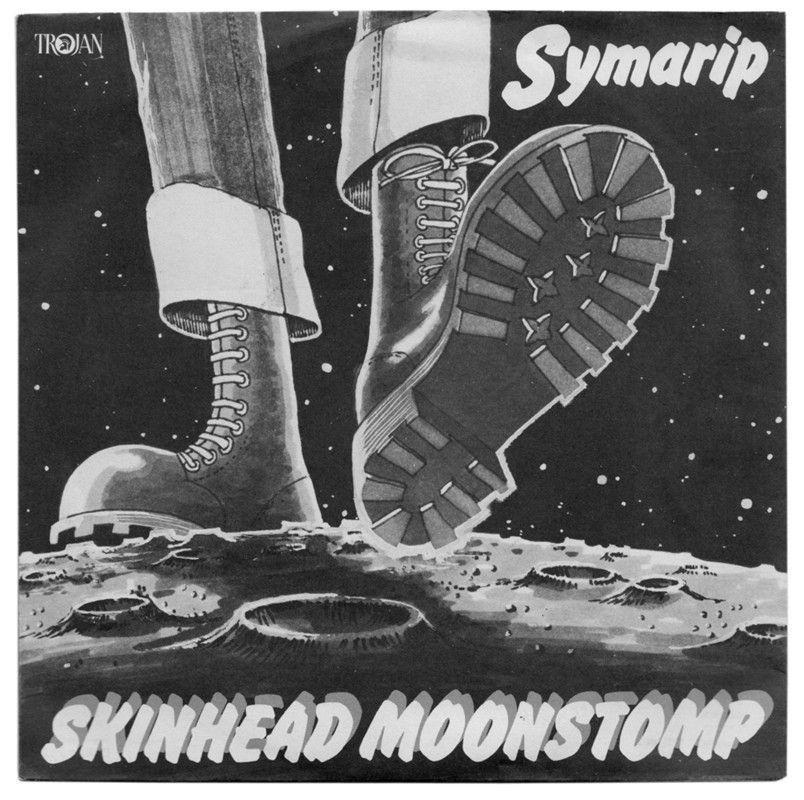
Skinhead Moonstomp by Symarip is like a rocksteady Slade; a 14 hole high bovver-booted ‘n braces metaphorical boot to the haw maws, all squeaky organ and call and response football terracing vocals. If it fails in its mission to have you skanking awkwardly from the waist down you should take yourself immediately to your nearest A&E and ask for a shot of something even more uplifting, should such a thing exist. And if you do find anything more uplifting than this terrific record, say now.
Symarip – Skinhead Moonstomp
Released on Trojan in 1970, Skinhead Moonstomp was nothing more than a cult classic, a grinding, two chord call to arms to take to the dancefloor with all like-minded brethren of the subculture. It would be the 2 Tone craze at the end of the decade that brought the record to wider attention when on its re-release the record crept inside the Top 60. It was even packaged in a suedehead-friendly picture sleeve.
Skinhead Moonstomp‘s popularity continues to this day, belying the lowly chart position and being ever-present on ska and reggae playlists. If you ever find yourself at a ska night, you can be certain you’ll hear it before the night is out. You might also hear Derrick Morgan‘s Moon Hop played immediately before it.
Derrick Morgan – Moon Hop
As is the way with many reggae hits, Skinhead Moonstomp is based around an older record. If you were being kind you might suggest Symarip recorded their version in strict homage to the original. If you were being cynical you might suggest they unearthed a hidden gem of the genre and released ‘their’ record to an uneducated public. The Specials Too Much Too Young is simply a sped-up take on Lloyd Terrell’s Birth Control, after all. You knew that already though.
The Specials – Skinhead Moonstomp
As is also the way with great reggae records, Symarip’s version provided the gateway for the next generation. Those self-same Specials on that self-same Too Much Too Young EP stuck a live medley on the b-side that was based around their take on Skinhead Moonstomp. I’d wager the more sussed and streetsmart Specials’ fans quickly tracked down those two tracks that The Specials had been listening to. Me? I was too busy getting my burgundy Sta-Prest and Y cardigan from Irvine market to consider anyone but The Specials had written such a stomping, marginally violent track. Imagine the baffled confusion of discovering many years later that Madness didn’t in fact write One Step Beyond and then the thrill of discovering Prince Buster on the back of it.
Elastica tend not to appear on many of the lists that constitute the Best Christmas Songs In The World…Ever. Back in 1995, only a year or so since they’d been ever-regulars on the covers of the music press yet long enough to have found them residing in the same ‘remember them?‘ category previously kept warm for them betwixt debut and follow-up album by the Stone Roses, they recorded a BBC Session for Mark Radcliffe that included a loose cover of Ding Dong Merrily On High.
It’s loose in all manner of the word. A band plagued by serious, secretive drug addiction could hardly put their name to a song called Ding Dong Merrily On High. And rather than run through a facsimile of the winter favourite, they instead rewrote most of the words, played the recognisable Christmas carol melody on gnarly bass and, with a nod and a wink to Patti Smith, kept the Latin chorus intact and renamed their version Gloria.
Elastica – Gloria
It’s not bad in an arty, angular sort of way. Guitar strings scrape, the drummer keeps enthisiastic metronomic precision and Justine sulks her way through it doing her best Mark E Smith impression from behind her swinging, shining indie fringe. I wonder if they’d heard The Fall’s Christmas Peel Session by this point?
That’s a rhetorical question by the way. Of course they had.
Recorded around the same time as Elastica were the hot new thing, The Fall‘s Peel Session from December ’94 was notable for two things; One: The band did not one but two faithful, in a Fall kinda way, versions of Christmas standards. Two: The expanded line-up of The Fall at the time featured the glam-tastic sight and sound of two drummers, a shrivelled liver Glitter band for old post-punkers everywhere. Karl Burns was welcomed back into the fold and onto the drum stool after a 9 year absence alongside Brix, last seen on Fall duty 6 years previously.
Like malt whisky, that other great festive favourite, I find my appreciation for The Fall grows with each passing year. I discovered them around the time of Extricate and flirted with their back catalogue from thereon in, but it never really grabbed me in the way that I know it grabbed others. I admire them greatly though, whether they’re sawing their way through Eat Y’Self Fitter or going full-on garage band for their essential take on Mr Pharmacist or keeping it sparse and minimal on Hip Priest or spitting their way through Spoilt Victorian Child or….y’get the idea. There’s a Fall that’s suitable for everyone. It just takes some folk a while to find it.
The larger line-up in 1994 fairly suits the music. They bite and snarl their way through a daft version of Jingle Bell Rock, one-fingered keyboard parping the melody, lyrics changed to suit Captain Mark’s mood, the groop bottling the Christmas spirit in barely over a minute.
Hang on a minute! Christmas song done in band style? Rewritten lyrics?! BBC sesssion?!? I wonder where Elastica got that idea? They even nicked the snappy rattle of The Fall’s drum beat for their Christmas tune. They were never the most original of bands, Elastica, but then, you knew that already.
The Fall – Jingle Bell Rock
Post Office rot in hell, Friday night on Oxford Street,
All walking with green M&S bags, join them up with old beef and sprouts,
That’s the Jingle Bell Rock.
Not quite yer finger-poppin’, frost dusted holiday hit first crooned by bobby soxxer favourite Bobby Helms. That’s the Jingle Bell Rock indeed. And who’s complaining?
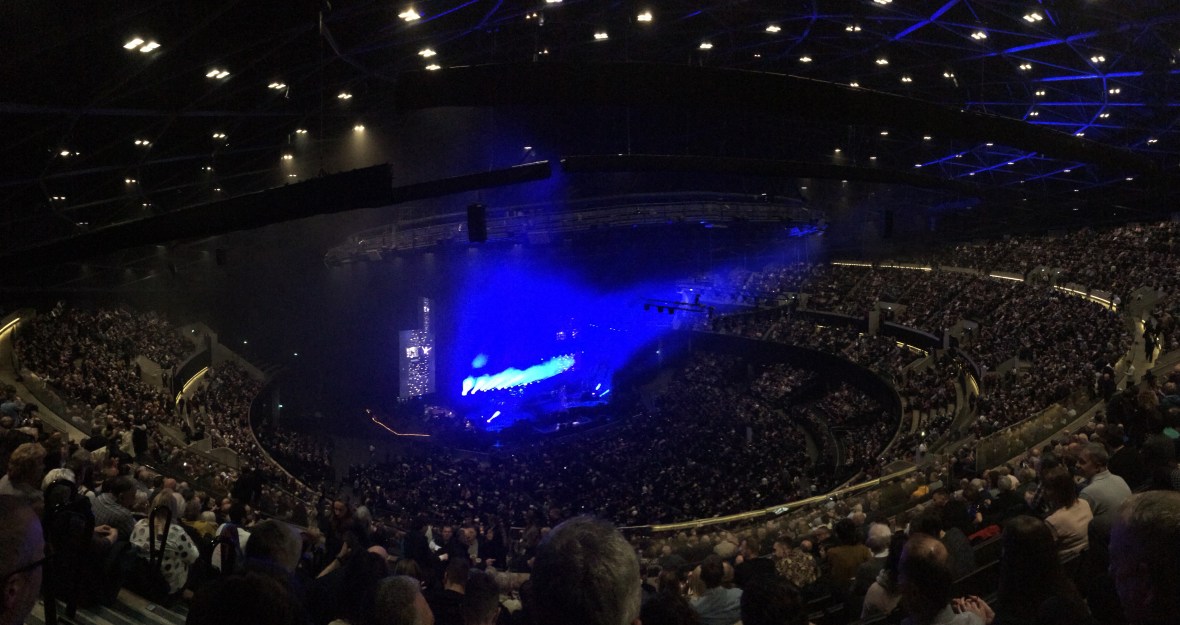
There’s a dilemma whenever a superstar rolls into town. Do you suck up the high ticket price in order to be in the same room as one of the greats or do you steadfastly refuse to pay over the odds to be sat in a seat so far from the stage that they share different post codes? Let’s face it. Paul McCartney is never going to play King Tuts. And bar the highly unlikely event of there being a BBC-endorsed ticket-ballot for a gig at the Barrowlands, the only way you’ll get (cough) up close and personal with McCartney is at a venue like the vast Hydro, the 3rd busiest concert venue on the planet. So, earlier in the year when the McCartney show was announced, I grouched and grumbled about the venue and the ticket prices…..then grouched and grumbled when I was placed on a waiting list to get on the pre-sale list and grouched and grumbled some more when I received an email to tell me due to ‘unexpected demand’ I’d been unlucky in securing tickets. In other words, it was sold out and I wasn’t going.
Thanks then to the unexpected bonus of a pal being invited to a family wedding the same night. His tickets were snapped up quicker than you can say “Fab!“, even if his seats were in the actual back row of the highest tier in the largest indoor venue in the land. The High-dro, as I nicknamed it for the night. We were so high up, the fake snow that fell on the audience during the seasonal Wonderful Christmastime fell from below us. Really! I’m sure I caught site of McCartney’s private helicopter at one point, hovering underneath us as the last loving notes of The End faded off and out into the ether.
Had it been an all-standing affair on the ground floor, it might’ve been very different. I’d hatched a plan to blag my way into the standing area by fair means or foul, a ‘plan’ that involved waiting until the ticket checker(s) on the door of the ground floor were distracted before dashing in and vanishing amongst the crowd. In the event, we were able to saunter through to the ground floor area unhindered (and man, once clear inside did we swagger with gallus abandon), only to be met with the surprising site of the whole area covered in seats. There was no standing area at all, not even a golden circle-type affair at the very front. A hike to the third floor it was.
Photo copyright of Stuart Westwood*, used by permission.
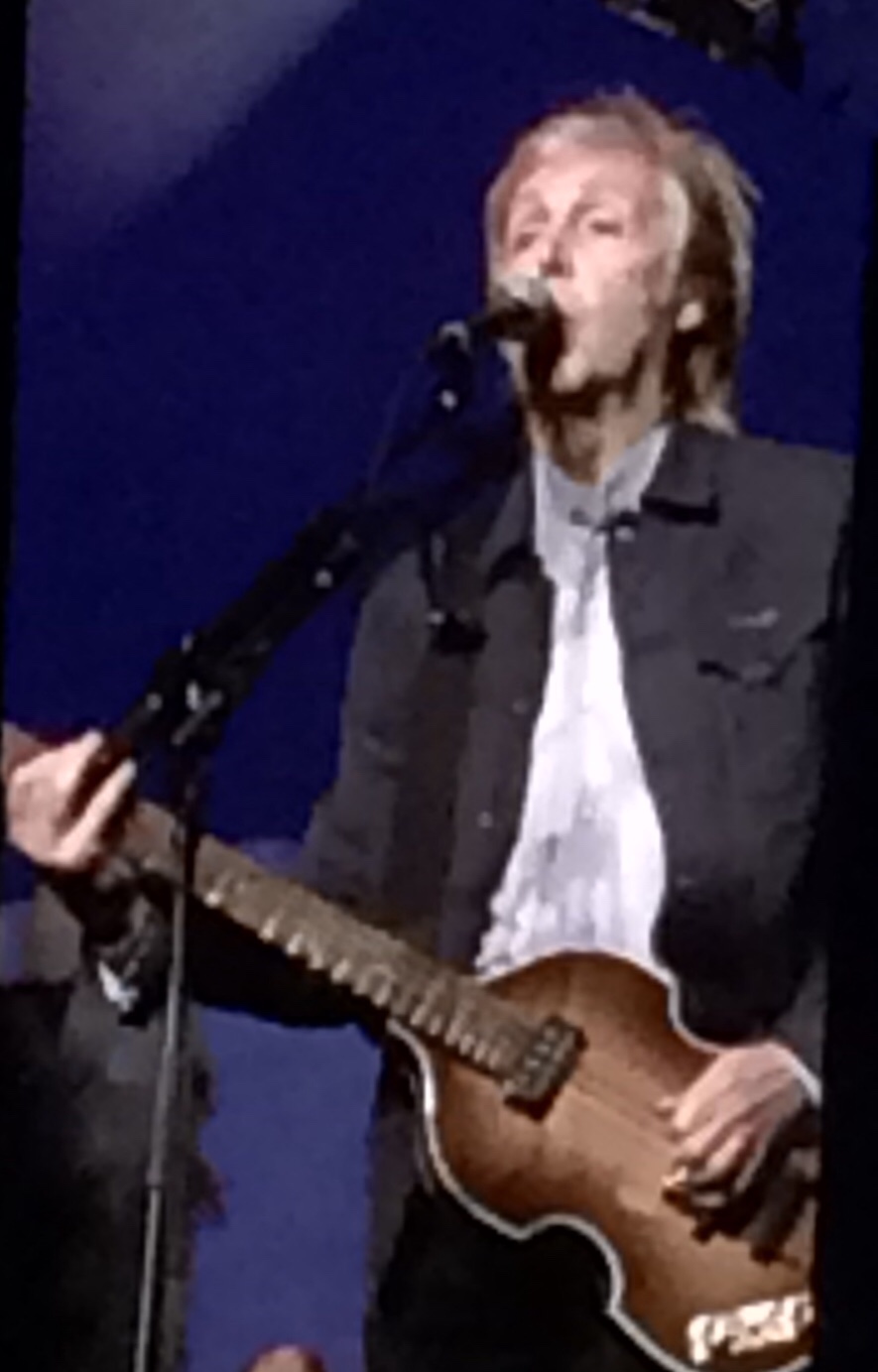
Not to matter. As Beatle Paul in his Beatle boots stomps his way through a rattlin’ and rollin’ A Hard Day’s Night, he doesn’t seem that far away. With his ‘tween song patter; all Beatles memories and moist-eyed tributes to his former bandmates, and video projections; a mix of goofy Beatles moments, swirling psychedelics and the occasional Rock Band graphic, he has the uncanny knack of making you feel he’s right there in front of you. Well, he is, but not actually right there. He’s down there. Waaaaay down there. We’re in the Cavern(ous) Club and he’s more Small McCartney than Paul McCartney, but man!, he’s on such great form that it hardly matters.
“I know you’re here for the Beatles’ numbers,” he says mid set. “…as the venue goes all twinkly with yer mobile phones. When we play our new stuff…..” he pauses for comic effect, “Black hole!”
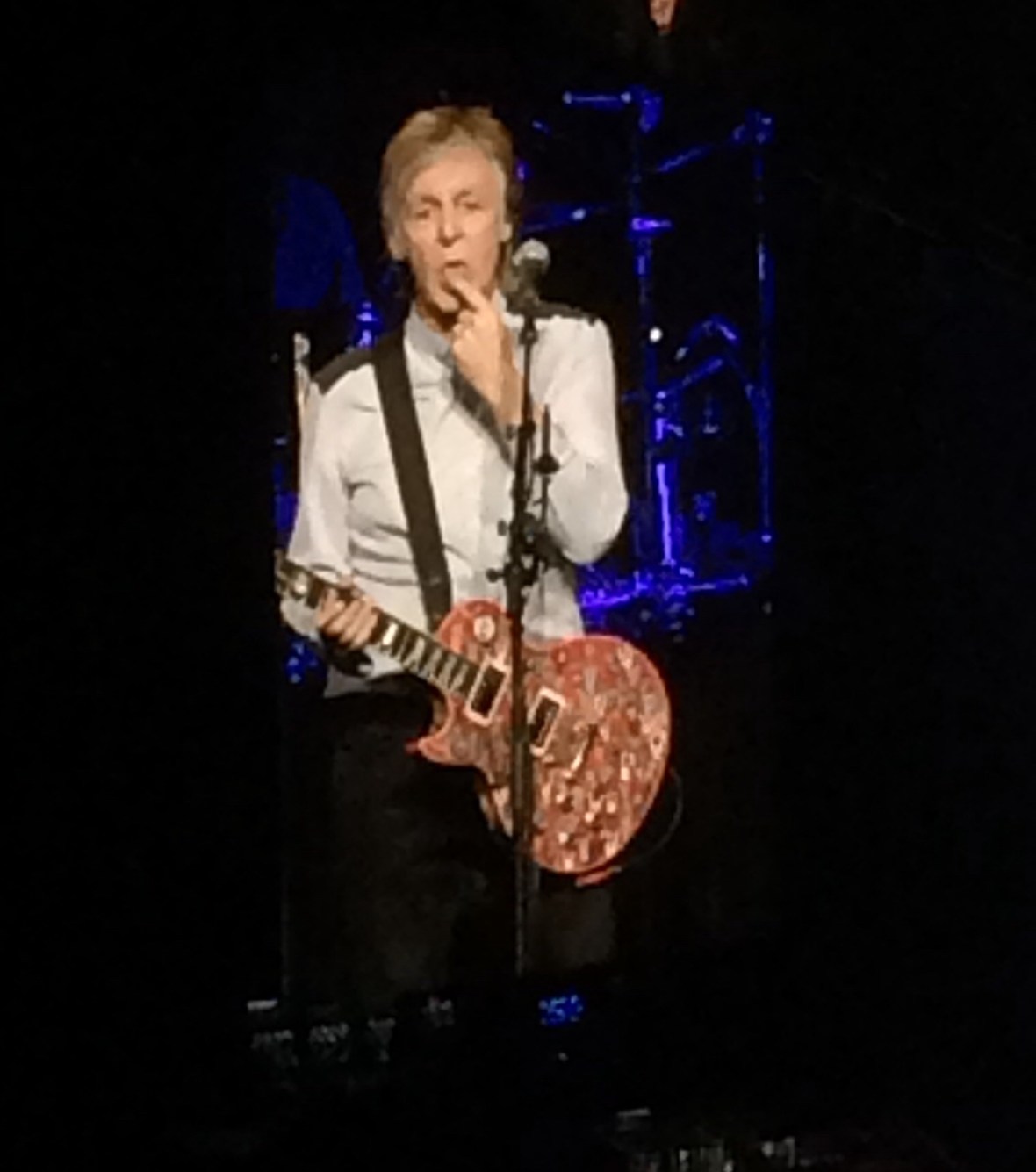
McCartney indeed knows exactly what his audience is here for and for 3 hours, he unwraps a 39-song set that’s heavy on the hits from all eras of his career. His band is basically a beat band; two guitars, keys and drums, with occassional augmentation from a brass section, and they’ve got those Beatles harmonies and Beatles riffs down to a tee. They share mics, Beatles-fashion on Can’t Buy Me Love. They trade bluesy licks and John and Paul call-and-response vocals on a fantastic I’ve Got A Feeling. They huddle around a small drum kit for a mid-set run through of Love Me Do, sounding as fresh as the besuited moptops did on the day they recorded it. There’s a surprising, excellent In Spite Of All The Danger, the track demoed by The Quarrymen that ignited the Lennon/McCartney partnership. And there’s tons more; mid-period Beatles is represented by a sprightly Got To Get You Into My Life and a faithful Eleanor Rigby. Then there’s Blackbird…..We Can Work It Out….Lady Madonna…..Being For The Benefit Of Mr Kite…..Back In The USSR…..Birthday……a majestic Something, started on one of George’s old ukeleles and finished in arena-friendly soft rock fashion…….an incredible selection of songs, all played exactly as you’d expect them to sound. McCartney’s voice may be a little shot here and there (and gone completely on the odd high note) but his band (and audience) more than cover with warm harmonies and killer musicianship.
McCartney in Glasgow. Photographer in Ayrshire.
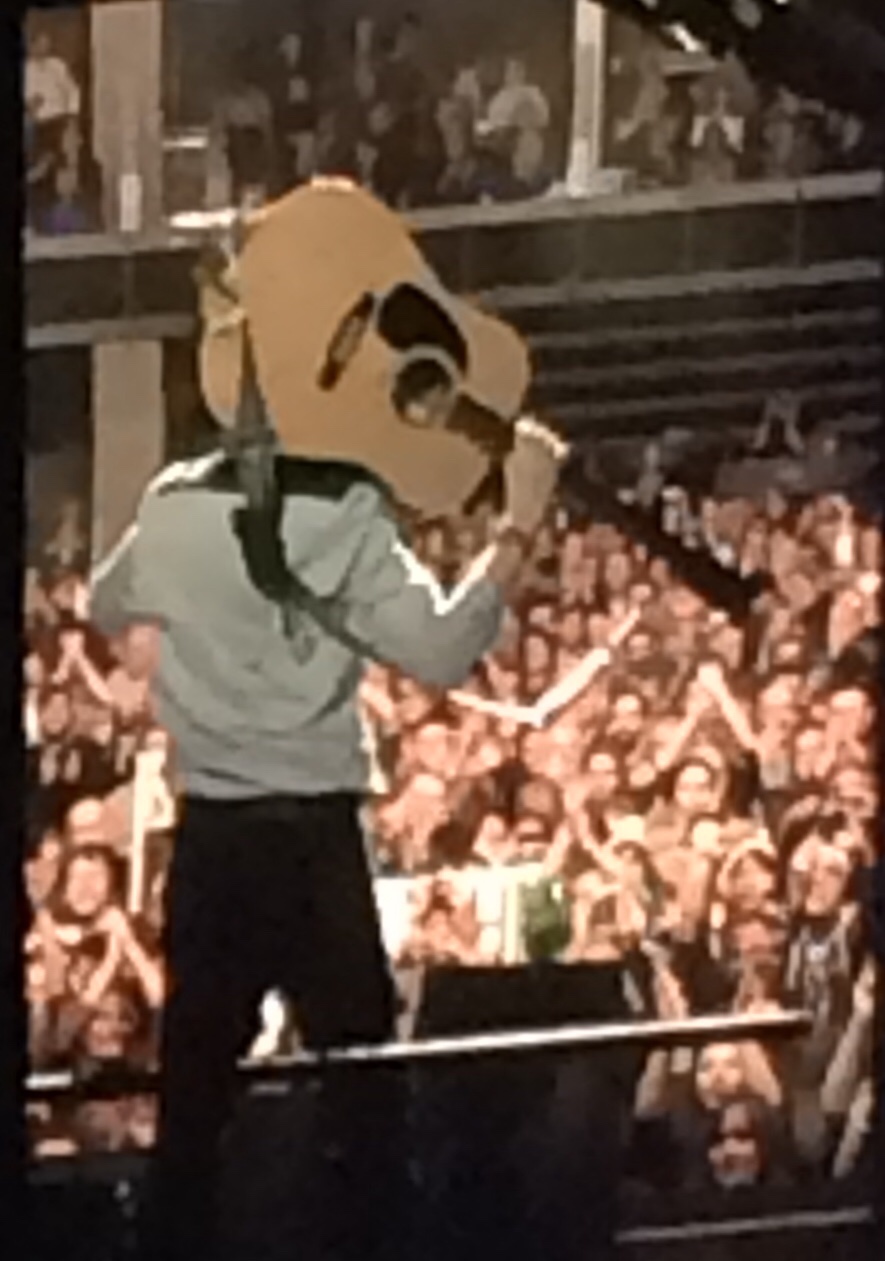
Arguably, the Wings material is even stronger. The band The Beatles coulda been indeed. Longer, drawn out and more suited to arena rock than those early days Beatles’ numbers, they sizzle. Literally in the case of Live And Let Die whose indoor fireworks caused great excitement. The slow-creeping firework smoke finally found us midway through Hey Jude‘s na-na-na-nana-na-nas, a welcome smokescreen for the sudden tears that had caught me off-guard midway through a rollicking Band On The Run and hadn’t quite abated. Who knew ol’ 76 year old Paul, the groovy grandad in tight-fitting bespoke denim jacket with double thumbs aloft after every song could have such an effect?!? The effect continues through the spectacular ending. Following a rockin’ Sgt Pepper’s Reprise and a rollin’ Helter Skelter, McCartney returns to the piano for a heartstring-pulling Golden Slumbers. The Abbey Road medley follows, McCartney pulling on his Les Paul for a rocktastic triple guitar salvo in The End. It’s the perfect finish to a perfect show.
McCartney in Glasgow. Photographer still in Ayrshire.
Given his age and given the fact that entire bands’ careers have come and gone since the last time he played Glasgow, it’d be a brave person who’d suggest they’ll see another Paul McCartney show in Scotland any time soon. It was a thrill to be present last night. Haste ye back, Paul.
Paul’s back!
* Unlike me, Stuart Westwood takes some of the best gig photos you’ll ever see. He was permitted to snap during just the first two songs last night then had to leave to get his shots to the agency who syndicates them around the world. That’s dedication for ye. He has been nominated for a Gold Award by the Society of Photographers in their Photos of the Year category. Look out for his name in the credits whenever a great gig shot grabs your attention.








 Plain Or Pan