Alternative Version, Live!

Is Not Was

Now not then.

Are not were.

Is not was.

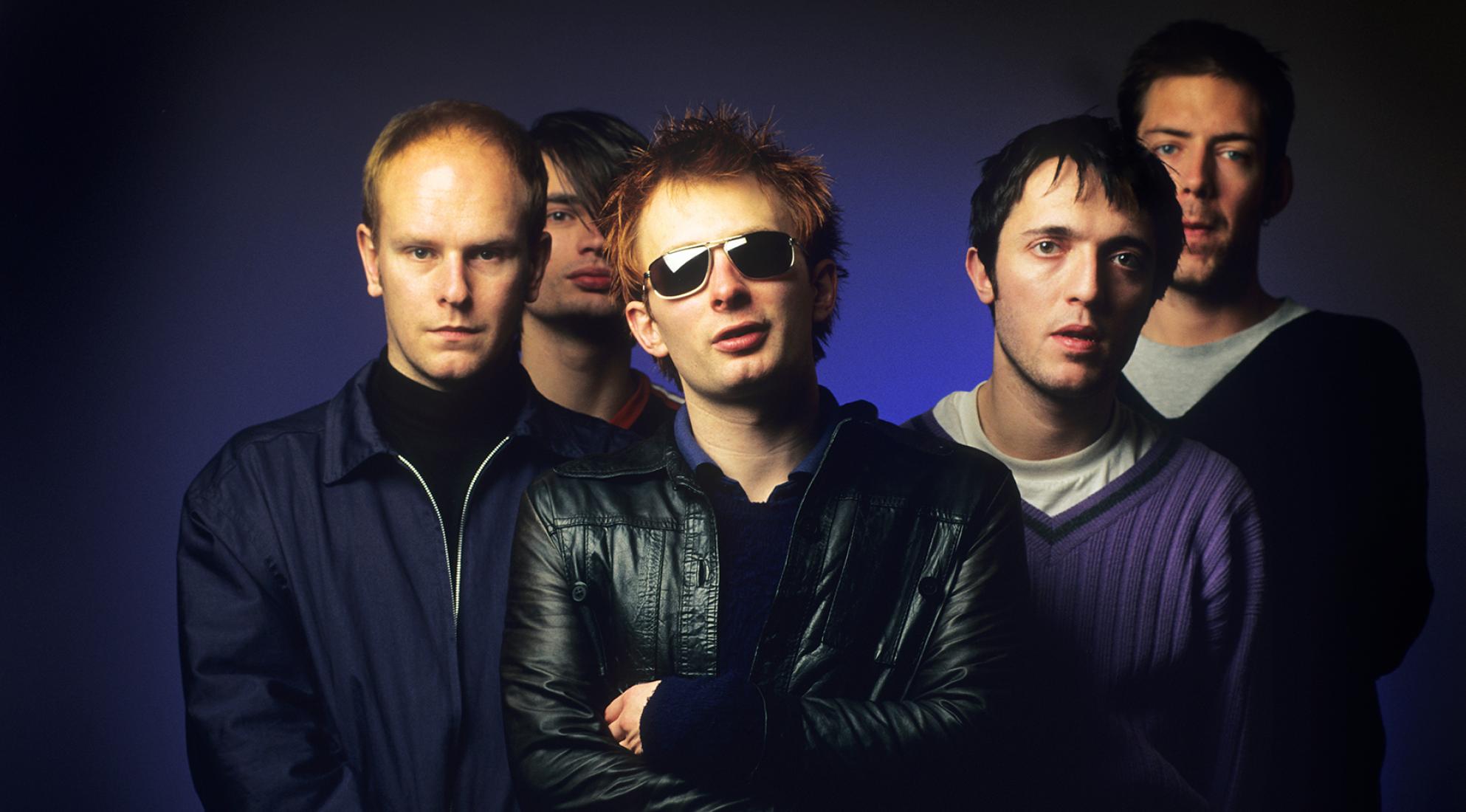
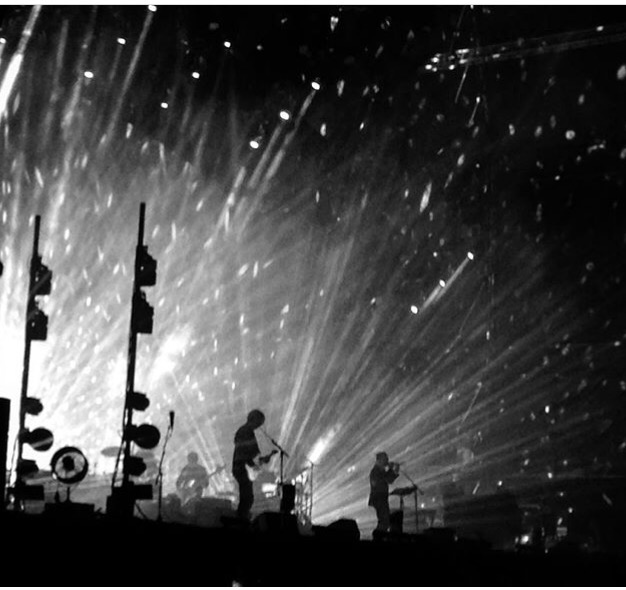
It seems that Radiohead is back, to be spoken of in the present tense once again. Since their last shows a million years ago in 2017, there have been solo albums, side projects, film scores, even, thanks to The Bear‘s use of Let Down in a key scene, tunes trending for the millennials on Tik Tok. Significantly though, there has been no new Radiohead music since A Moon Shaped Pool. But out of the blue, they’re here again. The fanfare-free announcement a week or so ago of a series of live shows across selected European capital cities created high excitement and mild panic amongst their army of fans, and a scurrying for tickets – or for the right to queue for tickets (sheesh) – began, a sort of Oasis-lite feeding frenzy for the No Logo generation…and, as it turns out, their children.
My two made us all sign up for the presale registration, desperate as they were to see the band that their old dad regularly has playing around the house. I was ambivalent about it all. I despise, I mean totally hate, the trend for any and all pre-registration schemes that let the lucky ones elbow others out of the road and out of the queue so that they can maybe, maybe, buy a ticket for a show. I appreciate it’s to minimise touting and all of that, but still. Get back to the days of lining up outside Virgin Argyle Street in the pouring autumn rain, that’s what I say.

And of all the shows they are playing, and that includes Berlin and Copenhagen and what have ye, there’s only one date that I can fit in around work – the Saturday night in London, which is surely the most popular date in the run of shows. So the chances of securing a ticket, let alone 3 or 4, is gotta be slim you’d think.

And I’ve seen Radiohead a handful of times before anyway.

Besides, they’re bound to pencil in more shows for next year, maybe to support a new record that has very possibly been recorded already. Y’never know with Radiohead. It’s quite something in the rumour milling scrolling news feed of the modern age for a band to maintain an element of mystique, yet Radiohead has consistently done so.

But the boy, already coasting through 2025 like a king, gets The Code (of course he does) and so, come the pre-sale date, he and his sister log on while I’m at work, muttering quietly to myself about dynamic pricing and the percentage likelihood of snagging the briefs. They don’t get them, of course. They had them. Four of the little gold dust blighters. They were in the basket, £85 seated tickets inexplicably ramped up to £125 a pop (there’s yr dynamic pricing) and in the split second it took the kids to press ‘Buy’, the website had kicked them out on account of them being bots. This happened three, four, eighteen times until they gave up and admitted defeat. A quick trawl through the Radiohead forums later on unearthed dozens and hundreds of stories exactly the same. It seems the touts and dynamic pricing won the day after all, and now I’m pissed off that I won’t be going to a show that a) I didn’t expect to be at in the first place and 2) would grudge paying over the odds for anyway and 3) would’ve meant me paying Saturday night in London hotel prices for a family of four (2 rooms, thanks) the month before Christmas.

Let Down or Lucky? I dunno.

I’ll wait in keen anticipation for further, and more local, dates in 2026.

Present Tense is one of A Moon Shaped Pool‘s highlights. Ghostly and spectral, it carries itself on a deftly-picked minor key guitar pattern and unusual time signature.

RadioheadPresent Tense

There’s some lovely shuffling percussion in the background, a sandpaper rubbed against guitar strings and looped kinda effect and Thom’s voice harmonises against itself spectacularly. It’s all so intense and pretty, the climbing strings, wordless backing vocals and understated synthetic symphony carrying it gently to its pseudo bossa nova conclusion.

Sandwiched between the sprawling Talk Talk-isms of The Numbers and Tinker Tailor Soldier Sailor etc etc‘s glitchy ambient techno (all the tracks on A Moon Shaped Pool are sequenced alphabetically – but you knew that already), Present Tense might have benefited from being closer to the front of the album. Shoulda called it Aardvark, Radiohead. An opportunity missed, I think. But then, all the best bands have, to use modern parlance, deep cuts that require digging out to be held up like prize root vegetables for an unsuspecting public, and Present Tense is one of Radiohead’s very best.

The late-dusk, campfire version that Thom and Johnny filmed in the Californian desert a few years back is The One. Two men, one in a vest, two guitars, both played with the lightest of touch, a pitter-pattering drum machine and a host of fantastic interplay makes for a great listen, the outcome far greater than the sum of its parts. Treat yr ears to this:
Hard-to-find, Kraut-y

Ill-Thought-Out

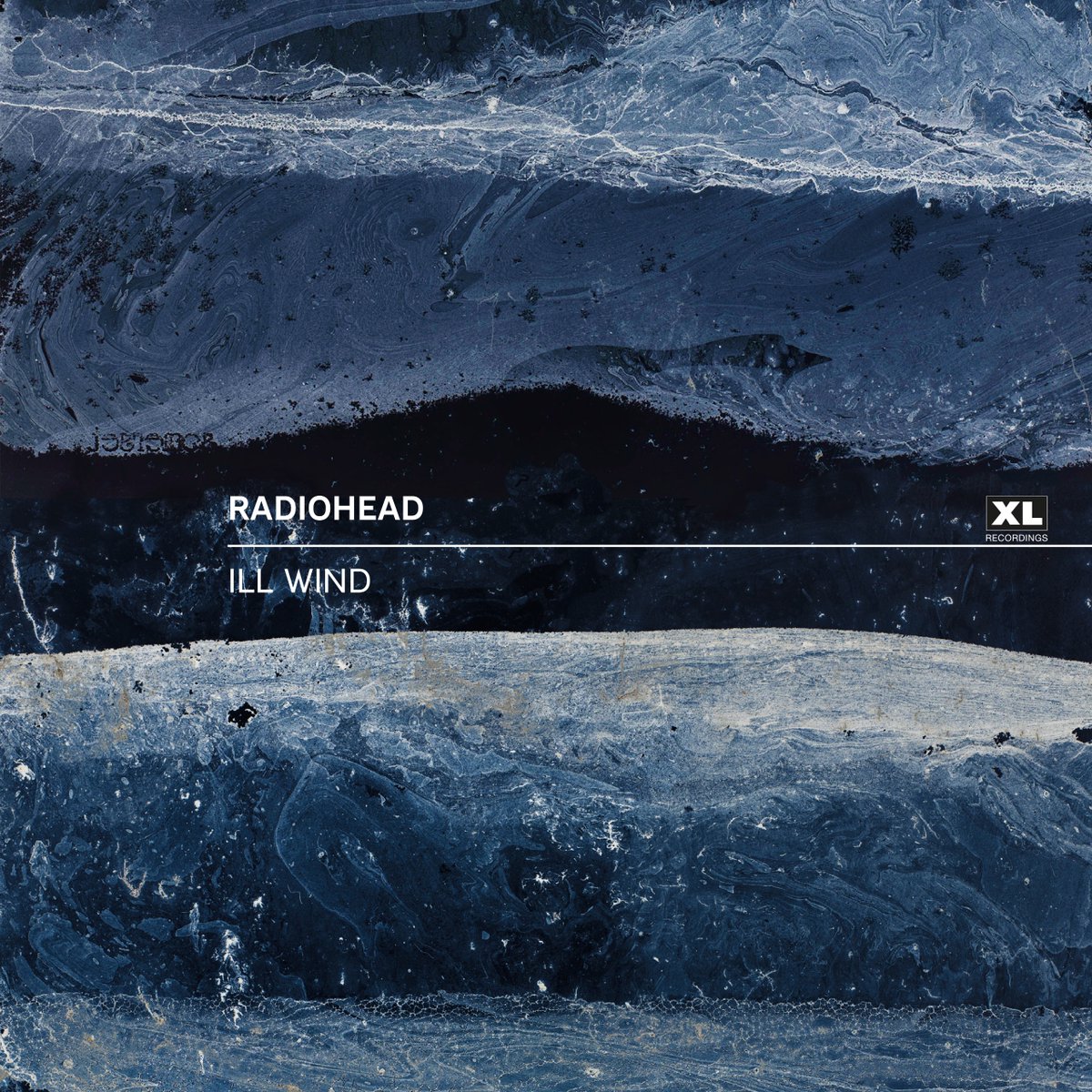
Ill Wind by Radiohead is, to use the parlance of the day, a particularly deep cut. Recorded during the sessions for what would make up the last Radiohead LP, A Moon Shaped Pool, it was ultimately shelved and saw the light only as a fleece-the-fans cash-grab bonus track on the album’s deluxe edition.

RadioheadIll Wind

It’s a pity that, out with a fervent fan base, Ill Wind isn’t wider known. Being a late-era Radiohead track, it bounces along on the jazziest Fender Rhodes ‘n Fender Tele groove this side of the Krautrock-heavy ’70s and has, in its rolling and tumbling paradiddles, a particularly spectacular and free-form drum pattern. Eerie Star Trek-y keys (or is it Ed on ambient space guitar?) and sequenced bleeps begin to to lift the whole thing skywards, Jonny’s tapestry of vintage synths fizzing to a crescendo midway through before eventually falling by the wayside as Thom’s super-falsetto maunders its way back to the fore. The Radiohead rhythm section is doing all the heavy lifting here, wee Colin wrestling with his bass and gnarling his way up and down those wide and woody frets, Phil’s drums ka-bamming and ker-planting like a stone skillfully skiffing across still waters. Great stuff.

In a statement of equity and uniformity, the tracks on A Moon Shaped Pool were, as I’m sure you know, sequenced alphabetically. Ill Wind could’ve easily slotted its way on there between the glitchy Identikit and the unspooling The Numbers without upsetting the balance or flow of an album which has, over time, slowly grown to be a far more substantive record than these ears perhaps first gave it credit for. Time for reappraisal, I think.

As if proof were needed that the Radiohead vaults harbour many of the band’s greatest tracks, here’s another session track that only saw the light of day as a, yes!, fleece-the-fans cash-grab bonus track on the album’s deluxe edition.

RadioheadIf You Say The Word

If You Say The Word was recorded in the sessions that brought the two-album wham-bam of Kid A and Amnesiac to unsuspecting masses but only appeared on 2021’s Kid A Mnesia set. Hindsight has been kinder to these albums than many of the critics at the time, but back then both records left many fans high and, er, dry at the unexpected embracing of jazz and electronica and uneasy listening effect of it all. I know this to be true as I was a foot soldier on the counter of Our Price at the time and Kid A especially saw record returns – no pun intended (it was all CD sales back then) from quizzical fans looking for yr more anthemic guitar anthem version of the ‘Head. By the time of Amnesiac, Radiohead’s audience had shrunk to the hardcore and the more open-minded of folks and those people were, of course, rewarded with some fairly spectacular music; challenging at times, hard to wrap your head around at first, but interesting in a soundscapey and proggy way and with great tunes that eventually showed themselves after a few listens. Pay yr dues as a listener and you’ll be rewarded ten-fold. Today’s instant world of skip, delete, next… would find this era of Radiohead a real challenge were it to be newly released in 2025.

I don’t know if If You Say The Word would’ve been more appealing or not to those who never bought into Kid A, but it shows itself to be a fantastic piece of Radiohead mood music. Lush, melancholic, ambient and jazzy (there’s the ‘j’ word again) it slowly envelopes itself around the lugs, worming its way in there after a few plays like all the best tracks do. And it’s a track, not a song in the traditional sense. Thom Yorke’s voice, coated in reverb and echo and sounding like it’s being sung from high and right down a wind tunnel, is an instrument here in the same way that the percussion and the strings and the ambient electronica are constituent instrumental parts of the track; understated in the verses, soaring and stretching in the chorus, wandering free and taking you to new places.

There’s a Radiohead immersion coming my way. Can’t stop it. Wouldn’t want to anyway.

Get This!

Free Speech

It begins churchlike, funereal almost, a lone organ blowing the dust off its keys as a skittering snare rattles the conscience awake and synthetic beats provide the heartbeat for what follows. It’s slow and stately, the ideal bed upon which Thom Yorke can waft his wonky-eyed falsetto. A guitar line snakes in, unusual of time signature, creatively arpeggiated and clean, an excellent woody tone, you think, and a glimmering shimmer of strings (possibly an arcane instrument I am ignorant of – Jonny likes an unusual instrument for creating his soundscapes, as you well know) – sees the melody take a gorgeous and unexpected turn.

Devastation has come, sings Thom. Left in a station with a note of poems. Now there’s never anywhere to put my feet back down.

I don’t pretend to know what particular heartbreaking ruin he’s singing about, but the whole melody that follows is amazing. In slo-mo, and right in front of your eyes, it untwines and unravels, unspools itself free and starts to wander. As your ears follow its sinuous path, you’re aware that the drums have picked up in emphasis, freeform and jazz-like, and they are also wandering independently, fluttering rapidly like Kingfishers’ feathers by the softly flowing Afton.

Then… the brass section! It gently blows its way in, stately and creeping, just like that advert for Castrol GTX that you’ll remember from the 1980s, the thick golden yellow substance easing and oozing its way into the head of the mechanic’s misplaced spanner. Speech Bubbles, for that is the name of the track, would make a great soundtrack were they ever to reboot the original and cast aside Mahler’s imperial Nachtmusic.

The SmileSpeech Bubbles


I am in no way a tastemaker or some barometer of hip opinion – the tagline at the top of the blog there would suggest that – but for what it’s worth, The Smile‘s A Light For Attracting Attention is, by some way, my album of the year. Speech Bubbles may not even be the best track on it, but it most definitely is this week.

Whereas Jonny and Thom’s day job takes months, years, to evolve to the point a record is made, The Smile seems spontaneous, almost guerilla-like by comparison. Constant touring for the past few months has seen them regularly drop brand new songs into their set, much to the frenzy of the fan community for whom even a Thom Yorke recorded sneeze might find itself overanalysed and quite possibly remixed before he’s made it back to the hotel from the show.

Radiohead may be on permanent sabbatical, they may even have already dissolved, but The Smile more than makes up for their absence. I can’t wait to hear what they come up with next.

Get This!, Hard-to-find

The Milk-It Marketing Board

Reissues. Man! All those albums you bought 10, 20, 30, 40, 50 (even) years ago are back out again in a dazzling array of coloured vinyl, with extra sets of alt. takes, outtakes and half-arsed half-takes, all boxed up in tactile packaging, with hardback coffee-table books to accompany almost every one of them (yes, the irony is not lost on this particular author of one of those very books). The music fan – not yr Spotify streaming, playlist loving, iPhone blasting freeloader – but yr forever record-buying, empty walleted polyvinyl addict is being mugged on a weekly basis.

Let It Be. Screamadelica. Nevermind. New Adventures In Hi-Fi. Sunflower/Surfs Up. Urban Hymns. All have recently been afforded (afforded being something of an oxymoron) the privilege of the deluxe treatment. ‘kin Urban Hymns?!? At what point is an album considered such a classic that it needs a 6 LP box set? Urban Hymns is a good album ‘n that, but only good, and very of its time; Spandau Ballet in a bucket hat – some killer, some filler, hey ho. How they’ve managed to fill 6 LPs – 12 sides! – is dazzlingly baffling.

Even Radiohead are at it. When they recorded the tracks that made up Kid A and Amnesiac back in the early ’00s, they chose to release them as two separate albums, with Amnesiac following Kid A by six months or so. A brave new direction for the band, Kid A took a while to grow on many and, just as it was beginning to unravel and make sense, along came Amnesiac which, despite being recorded at the same time, is a very different record. Together they would have made for a very sprawling and very difficult double album.

Many would argue that this is exactly what these brave new pioneers of music should’ve done at the time, so they must now be thrilled that Radiohead have repackaged both records as one, and not as a double album, but a triple – on white or red vinyl if you were quick enough (and plenty of you were, as it’s now all over eBay at silly prices) – with a third record of alternative versions, forgotten oddities and the odd dangly carrot of an unreleased beauty to hook you in. Madness, silliness and of course, you need it all. The record companies know it. They buff it up. You shell it out. And everyone’s a winner.

That lost Radiohead track is a beauty, right enough. Sparse, atmospheric and unravelling, If You Say The Word is neither electronic enough for Kid A nor obtuse enough for Amnesiac. Folk who tell you they liked Radiohead until they got weird (yawn) will love it. It sounds as if it was recorded in the big, airy Capitol Studios in LA, Sinatra at the lectern, Hal Blaine playing jazz paradiddles on the kit and the ghost of Nelson Riddle arranging it all behind the scenes.

RadioheadIf You Say The Word

Forget strings and orchestration though. The ‘Heid do things differently. Where Nelson Riddle might write a string line, Jonny Greenwood plays understated, minimalist Fender Rhodes. Where Sinatra might look to the brass for the melody, Radiohead ride in on the back of Ed O’Brien’s complex, wonkily-timed guitar arpeggios. Where a sweeping orchestral line can pick you up and carry you off, Radiohead coat their symphonies in icy blasts of Radiophonic Workshop found sound and arctic ambience.

Underpinned by subtly wandering bass lines (think Holger Czukay playing Andy Rourke on Stars In Their Eyes) and layer upon layer of counter melodies, a centre-stage Thom sings his angsty, existential lullaby in a swirl of space dust and atmosphere. You must wonder what other beauties Radiohead have hidden in the vaults, queuing up to be drip-fed with every subsequent super-deluxe release. The crafty bastards.


Get This!, Live!

Just Dragonflies

Codex by Radiohead is, to these ears, the greatest track the band recorded in the decade just gone. A bold claim given the kite mark of quality assurance that comes with each Radiohead release, but given the briefness and brevity of the Radiohead back catalogue in the tenties I’m struggling to name another track from the two records and small handful of one-off releases in that period that still sounds as fresh and timeless and, well, just plain classic with each listen – and I’ve listened to it, them, a lot over the years.

RadioheadCodex

Codex is suspended, slo-mo, flotation tank music, a song about being immersed in water that sounds exactly like its subject matter. Starting off on a wonkily-edited snippet of vocal, it ambles in on a repetitive three chord piano motif (C-Bb-Dm, if y’were wondering) before a flugel horn? A trumpet? makes itself known, the distant cousin of Johnny Marr’s eerie slide part on How Soon Is Now?, elongated and understated, the perfect precursor to one of Thom Yorke’s greatest vocals. Bathed in pathos and regret, it’s just so spot on and faultless. Those finger pointers who stab accusingly towards ol’ wonky eye and claim he can’t sing would be stopped dead in their tracks if they’d made it this far into the Radiohead ouvre.

What Yorke’s actually singing about is open to interpretation. You don’t have to look too far into the internet’s abyss to find thousands of theories regarding the lyrics, where references abound to spirituality and soul cleansing and suicide.

Sleight of hand
Jump off the end
Into a clear lake
No one around
Just dragonflies
Fantasise
No one gets hurt

You’ve done nothing wrong
Slide your hand
Jump off the end
The water’s clear
And innocent
The water’s clear
And innocent


A quietly heart-beating drum thumps its muffled way throughout the track as the horns build and the piano is soaked in an ambience last heard on Eno’s Music For Films album. Gentle strings emerge from the fog, the heartbeat louder by now and then, suddenly….it’s over. Did he jump? Did he turn around? Quietly chirping birds bring the track to a close and you’re left to make up your own mind. It’s an incredibly sad track, as filmic as Fellini and just as beautiful and timeless.

Here’s the version Radiohead did when they played the entirety of King Of Limbs on Nigel Godrich’s From The Basement show.

RadioheadCodex (TKOL From The Basement)


The King Of Limbs was something of a slow burner of a record to begin with; self-indulgent, insular, moody…. but like all the best albums by all the best artists, you benefit through continual listening and reappraisal. Perseverance even. Codex pops up between the glitchy, jerky dubstep of the superb Lotus Flower and the pastoral, acoustic Give Up The Ghost – a potted distillation of everything that’s great about Radiohead in three successive tracks, a triumvirate on an album that’s without a doubt a top 3 Radiohead record.


Get This!, Gone but not forgotten, Live!, Most downloaded tracks

2018 (Slight Return)

As is the way at this time of year, lists, polls and Best Of countdowns prevail. Happily stuck in the past, the truth of it is I’m not a listener of much in the way of new music. Idles seem to dominate many of the lists I’ve seen, and I want to like them, but I can’t get past the singer’s ‘angry ranting man in a bus shelter’ voice. I’ve liked much of the new stuff I’ve heard via 6 Music and some of the more switched-on blogs I visit, but not so much that I’ve gone out to buy the album on the back of it.

If you held a knife to my throat though, I might admit to a liking for albums by Parquet Courts and Arctic Monkeys, both acts who are neither new nor up and coming. I  listened a lot to the Gwenno album when it was released and I should’ve taken a chance on the Gulp album when I saw it at half price last week, but as far as new music goes, I think that’s about it. Under his Radiophonic Tuckshop moniker, Glasgow’s Joe Kane made a brilliant psyche-infused album from the spare room in his Dennistoun flat – released on the excellent Last Night From Glasgow label – so if I were to suggest anything you might like, it’d be Joe’s lo-fi McCartney by way of Asda-priced synth pop that I’d direct you to. Contentiously, it’s currently a tenner on Amazon which, should you buy it via them, is surely another nail in the HMV coffin.

2018 saw the readership of Plain Or Pan continue to grow slowly but steadily in a niche market kinda style, so if I may, I’d like to point you and any new readers to the most-read posts of the year. You may have read these at the time or you may have missed them. Either way, here they are again;

This slideshow requires JavaScript.

  • An article on the wonder of The Specials‘ b-sides.
  • Songs about snow and inclement weather.
  • Some words on the punk Beatles. Pete Shelley was very much still alive at the time of writing and retweeted the article.
  • A look at how the best reggae musicians steal the best soul tunes and make them their own.
  • Lush’s Miki Berenyi talks us through some of her favourite music. The most-read thing wot I wrote this year.
  • Stephen Sondheim , Leonard Bernstein, Tom Waits and Pet Shop Boys. Here.
  • First thoughts on Arctic MonkeysTranquility Base Hotel & Casino.
  • Why Eno‘s Here Come The Warm Jets should be in everyone’s record collection. Here.
  • Skids’ Richard Jobson waxes lyrical about Bowie. Here.
  • Some words on the quiet majesty of Radiohead‘s How To Disappear Completely.
  • Brendan O’Hare, loon drummer and all-round public entertainer in Teenage Fanclub chooses his favourite Teenage Fanclub tracks. Here.
  • The punk poetry and free scatting jazz of Patti Smith. Here.
  • A first-timer’s guide to Rome.
  • Johnny Marr live at the Barrowlands.

Feel free to re-read, Retweet, share etc.


See you next year.

Get This!

Float On

How To Disappear Completely by Radiohead is a sensational track. It creeps up on you like a slow-crawling leak of treacle, oozing sticky melody, slowing down everything in its path. When it gets to you you’ll forget where you were driving to and what you’re going there for, forget what it was you were talking about before it came on. All your attention will be given over to the music; plaintif, shuffling acoustic guitars, a jarring, juddering string section, Barry Bond brass and a bass line that might’ve walked itself straight off the edges of an Astral Weeks session and onto the pages of Radiohead’s most accomplished track to date. That eerie wail that accompanies the end of every few bars makes it come across like a waltzing, minor key How Soon Is Now. It’s that long, that good, that important.

RadioheadHow To Disappear Completely

It must be said – it never hit me just as hard in the first place. Sequenced as the 4th track on 4th album Kid A, I first heard How To Disappear Completely on a play of the pre-release album from behind the counter of Our Price. Actually, I’m not entirely convinced that I heard it then at all. After the first couple of glitchy, twitchy, guitar-free tracks that heralded Radiohead’s brave new world of rhythm over melody, the album was ejected to great fanfare by our most vocal team member – “What the fuck is this shit?” etc etc –  and the CD found itself frisbeed to the back of the ‘Now Playing’ pile, never to be played again until I got to take it home on the day of release. From then on it was played, played and played again until the melodies, counter-melodies and subtleties had wormed their way into my head.

It’s a daring album, that’s for sure, Trout Mask Replica for Gen X even. The standout then, as now, was How To Disappear Completely. I suppose that’s because it sounds most like a song in the traditional sense – verse, chorus, refrains, etc – especially following the loud skronking free jazz that compromises most of the preceeding track, The National Anthem. Yet it’s far from traditional. I’d love to know how the song developed from genesis to finished article. I mean, how d’you go about writing a track as rich and complex as this?

That eerie repetitive sound mentioned earlier is played on an ondes Martenot, a primitive electronic instrument that pre-dates the theremin by a couple of decades. Johnny Greenwood turned to it after discovering French composer Olivier Messiaen. The string part was written after Johnny (again) had fallen in love with the music of “Poland’s greatest living composer” Krzysztof Penderecki. It’s a far cry from being influenced by Pixies and Radiohead, that’s for sure. In the hands of a lesser band, How To Disappear Completely would well have become an unlistenable, boring 6 minute dirge. It’s the unlikely influences in the sonic architecture that’s wrapped around the tune that allows the music to expand. It’s flotation tank-paced; mesmeric, woozy and other-worldly. And once Thom Yorke adds his vocals the whole thing soars.

“I’m not here….this isn’t happening….I float down the Liffey….in a little while I’ll be gone…”

You might well look on it as a metaphor for Radiohead’s status at the time of Kid A, with Yorke totally unimpressed by the trappings of stardom, the plethora of Radiohead-lite bands that followed in their wake and suffering from a mental breakdown as a result.

The album sessions were famous for inducing band paranoia. Captain Yorke instructed there’d be no drums on this track, no guitar parts on that one. He’d present completed tracks to the band for their approval where most of the group hadn’t played a note on them. Musicians’ egos are fragile at the best of times, but musicians who’ve just played on two of the defining albums of an era suddenly discovering they won’t feature much on their band’s new record must hurt a wee bit.

Where they did feature, they took their chances. Ed O Brien adds fantastic looped guitar riffs throughout How To Disappear Completely. And Phil Selway on drums makes the whole track sound cavernous. When the band emerge from the depths of that flotation tank, he’s there to carry it off and up into the mountains. Much must be made too of NIgel Godrich’s production. He allows the strings to swell in strange new ways before reigning them in. He gives the go ahead for the brass players to counter the strings in the final flourish. And it’s he who drops them all out at crucial points, giving the whole track the dynamic it deserves.

If you’ve never really listened to How To Disappear Completely, rectify that now. Listen. Really listen! It’ll amaze you.

Kraut-y, Live!

“Radio(head)! Live TRNSMTN”

Dance, dance, dance, dance, dance to the Radio(head).

I saw Radiohead for only the 4th time in 24 years on Friday night. Hardly the most regular of touring bands, it was either stand in a field at day 1 of Scotland’s newest festival, TRNSMT, and wait patiently for the only band worth shelling out £60 for, or watch edited highlights on the telly later that night and mutter silently to myself that I should’ve been there. After failing to secure a coveted press pass – lack of credentials, they said – I shelled out the £60 and went. Which was the correct decision, of course.

Their Glastonbury set a couple of weeks previously fairly split my Facebook feed in half. For every friend purring over their set, there were others spitting venom.”They’re tuneless!” “They don’t play the old stuff!” “They’re just like (spit) this generation’s Pink Floyd!“, shouted as if Pink Floyd were/are the anti-christ or something. The reason John Lydon wore an ‘I Hate Pink Floyd’ t-shirt in 1976 was clear – the progressive, noodling dinosaurs were required to be extinct in order for the new musical youth to crash the party and shake things up somewhat. It’s worth reflecting on the fact that Pink Floyd were barely 10 years into a 40+ year career when Johnny first sported his shirt. And it’s worth noting that until today’s musical youth get their arse in gear and produce a musical movement worthy of shaking up the current regime, your super soaraway Radiohead is as good as it gets.

There are a number of unspoken rules when it comes to headlining a festival. A headliner should play to the crowd. Feature a generous helping of all the big hits. Engage with the audience. Maybe pull a nice-looking girl out of the crowd and dance with her. Radiohead find themselves in the enviable position of being able to do whatever they like and still remain numero uno. They are a walking, talking example of that well worn band cliche of we play what we like and if anyone else likes it, it’s a bonus. Lucky for Radiohead, hundreds and thousands and millions of folk love ’em. So they take the festival rule book and bin it. They don’t have big hits to begin with. Crowd-favourites, aye, but no real hits. And don’t for one minute think you’ll be pulled from the crowd and serenaded with Creep. Second-on-the-bill Belle & Sebastian did the honours for them when they pulled half the front row out to dance on-stage during their finale, waved off by a cheery Stuart Murdoch saying, “Thanks for coming up and dancing. You do realise you’ve lost your spot for Radiohead though?!?

And as for audience engagement, Thom is certainly not going to say much to a crowd who, for all their love of the band, are shoving Palestinian flags in his face wherever he looks. Glasgow and Scotland, currently the oppressed by the UK Government’s policies on Europe, know a political cause when they see one and they aren’t too taken by Yorke’s stance with the Israeli oppressors. Politics aside though, this was a fantastic show.

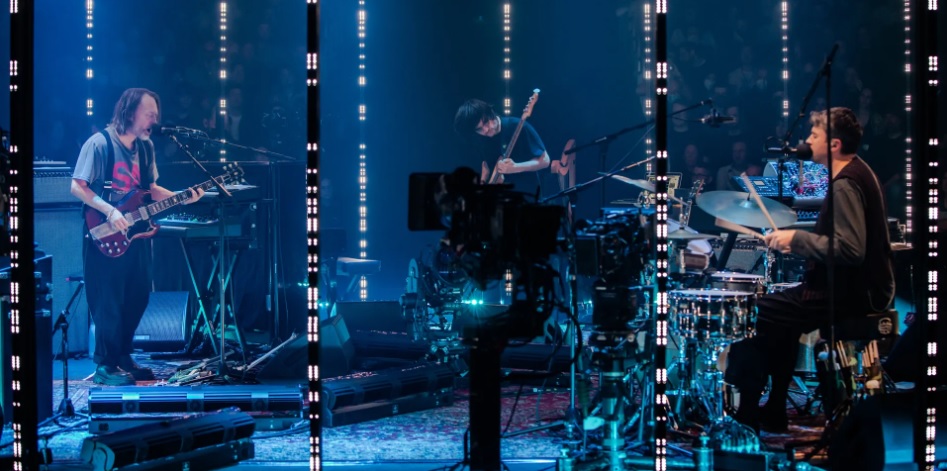
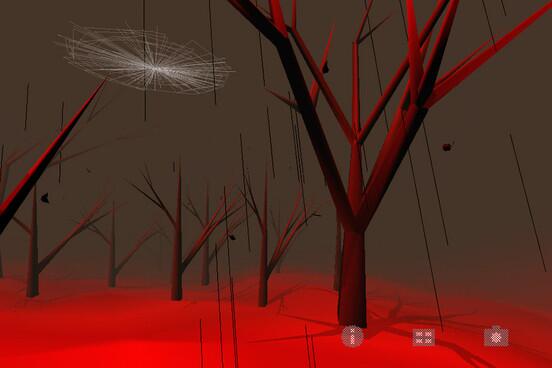
Bursts of discordant, eerie music punctuated the air for the half hour or so before Radiohead took the stage. Had one of the band left their Polyfauna app running on random through the PA? It sounded like it. When the band arrive, there’s no fanfare. They stroll on, plug in and begin with the sublime double whammy of Let Down and Lucky. Where Let Down soars, Lucky actually sounds like the slow-motion plane crash that’s sung about in the lyrics. It’s a brilliant opener and when, for the first time tonight a posse of black-clad roadies wheel on a console of the sort the BBC Radiophonic Workshop might’ve worked up some futuristic soundcscapes on, expectations are high for something special. Ful Stop careers into action, all wobbling, juddering, claustrophobic paranoia. “This is a foul-tasting medicine,” mutters Yorke and not for the last time tonight, whole sections of the crowd are looking  a wee bit lost. These’ll be the same people who were moaning about the ‘hit-free’ Glastonbury set. It’s fantastic of course.

Modern Radiohead swap instruments and whole genres as effortlessly as a magician pulling rabbits out of a hat. Ed’s additional vocals and subtle percussive touches keep the music sounding as real as the recorded versions. Johnny – we’re right in front of him and witness up close his skills on a whole array of instruments – is the one who adds splashes of exotic colour to the sound. He goes for the full Spinal Tapisms of bowing the strings on his guitar during Pyramid Song before switching to a string-based contraption played on the keyboard for the song’s coda. Elsewhere, he wrings seven shades of hell from his trusty Telecaster; white noise, chiming, echoing triplets, thunderous power chords, piercing guitar solos, often all in the same song. He’s all jaggy elbows and fringe, but go Johnny go! He’s terrific.

It’s the rhythm section though that is most impressive. Colin wrestles with his bass guitar for a full two and a half hours, noodling the sort of meandering riffs Holger Czukay might’ve employed during his time with Can. For most of the set an addditional drummer skitters along, perfectly complementing Phil’s polyrhythms. At one point, Johnny joins in for some additional percussion that drives the whole thing along towards jazz. Half the audience are thinking ‘pure Mingus’. The other half, the ones that are moving to the sides (“We’ll come back when they play ‘Creep'” I hear one man say to his partner. I hate to be the bearer of bad news, but…) are thinking ‘pure mingin”. Lotus Flower sounds immense. Thom’s got out his 3 maracas and is shaking them like the anti-Bez – if Bez was all boggle-eyed and limbs akimbo, Thom is a gammy-eyed, hunched up Albert Steptoe in a man-bun – and despite its weird time signature and stop/start clatter, the heads in the audience are bobbing up and down in time to the beat. Everything In It’s Right Place is all cut ‘n paste techno, Johnny sampling Thom’s voice and chopping it up before looping it to eternity via some fancy pants handheld gizmo, the sound skiffling across and out into the ether like some particuarly skilled flat stone skimmer on a west of Scotland beach.


When the guitars come out, the Radiohead juggernaut flies. There There, a brutal 2+2=5, a groovy Bodysnatchers, all examples of why Radiohead are like no other act on the planet. The second half of the set starts with Daydreaming, the set lit up in silvery-white lights. It’s plain and simply breathtaking. Paranoid Android is ridiculously self-indulgent and insular, yet hard rockin’. Not in a Biffy, tops off ‘n tattooes way. Radiohead rock way harder than that particular version of turned up to 11 pop music. They also do subtle. Fake Plastic Trees is understated and fragile before bursting into white noise with the ‘she looks like a ray of sun‘ bit. No Surprises receives a massive cheer right after the ‘Bring down the Government, they don’t speak for us‘ line. And, while we don’t get Creep, we do get a slightly slowed-down Bends, massive power chords ebbing out across the crowd and into the Glasgow night sky. We’re left with Karma Police, Thom and Ed staying back after the rest of the band has gone to conduct the crowd in an acapella rendition of the song’s climax. For a minute there, or two and a half hours to be precise, we lost oursleves.


Debating the setlist in the car on the way home, you could write another 20+ song set of the tracks Radiohead didn’t play. But that’s nit picking. Here’s what they did play:


1) Let Down

2) Lucky

3) Ful Stop

4) 15 Step

5) Myxomatosis

6) There, There

7) All I Need

8) Pyramid Song

9) Everything In Its Right Place

10) Reckoner

11) Bloom

12) Identikit

13) Weird Fishes

14) Idioteque

15) The Numbers

16) Bodysnatchers

17) 2 + 2 = 5

[ENCORE 1]
18) Daydreaming

19) No Surprises

20) Lotus Flower

21) Paranoid Android

22) Fake Plastic Trees

[ENCORE 2]

23) Nude

24) The Bends

25) Karma Police


*A phone catastrophe on Friday night meant I lost not only all my contacts, but also the dozen or so Radiohead pictures I’d taken for inclusion here. The images I’ve used are all borrowed from Twitter, Instagram and various news sources. If you’d prefer me not to use your image please get in touch and I’ll remove it. Also, if you would like a photo credit please get in touch and I’ll amend. Cheers.


Alternative Version, Gone but not forgotten, Hard-to-find

Premium Bonds

Whatever happened to Bond themes? Save the fairly recent Adele effort, Skyfall (which at least attempted to recreate the 60’s heyday of lush orchestration, big vocals and bigger hair), pretty much every Bond theme since A-Ha’s The Living Daylights has been as sexy as yesterday’s Daily Mail.

Radiohead’s recent statement that the Bond franchise people had preferred Sam Smith’s idea of the Spectre theme to their own kinda sums it all up. It’s now lowest common denominator, appeal to the masses stuff, rather than edgy and out there. Perhaps this is a reflection, a metaphor for Bond himself. Once edgy and out there, he’s now lowest common denominator action hero, appealing to the masses with his suits, gadgets and beautiful women, just like yer Farrells, Damons and the rest of them.

radiohead rainbow

Radiohead‘s theme is fantastic. Released for free on Christmas day without fanfare or prior warning, as is the Radiohead way, it’s edgy and paranoid, Thom Yorke’s falsetto surfing over the top of a heavily orchestrated backing track. “I’m lost, I’m a ghost. Dispossesed, taken host,” he wails, right eye no doubt twitching uncontrollably on the off beat.

RadioheadSpectre

It fades in on a sweep of Bond-ish strings, not quite but almost playing that well-ingrained Barry motif. A piano holds the rhythm as a set of jazz drums straight outta the John Barry 7 skitter around the background. There’s the dramatic part in the middle when the strings soar and stab and jar until its brought back to earth with Yorke’s vocals about ‘bullet holes‘ and ‘mortal souls‘ and so on. Then, just as you’re getting the measure of it, it’s gone in a sudden brass stab and some wind tunnel effects. “The only truth that I can see is when you put your lips to these.” It’s by far the most Bondish of Bond themes in recent years and it was rejected.

Radiohead weren’t the only ones to fall foul of the rejection slip. Tom Jones’ brassy hip-swingin’ theme to Thunderball was chosen over a clip-clopping Johnny Cash effort. Considering the era, the producers got this spot on. Bond. Brass. Swinging London. Or the Man In Black singing roll ’em, roll ’em, roll ’em rockabilly country?

Blondie felt the sting of rejection when they submitted their theme for For Your Eyes Only. Sheena Easton’s at times out of tune and none-more-80s syrupy wallow got the nod ahead of the Noo Yoikers’ twangingly pedestrian (and frankly forgettable) mid-paced clunker. You can find it if you wish on late-era Blondie LP ‘The Hunter‘. Again, you have to say the producers got this spot on. You’re probably singing Sheena Easton’s version to yourself right now. And that’s something I never thought I’d be typing on Plain Or Pan.

By the mid 90s, anyone popular in music seemed to be draped in the Union Jack and aligned to some establishment-friendly updated idea of Swinging London. All manner of bands were discovering trumpets and strings and enhancing their weedy indie with overblown orchestration. I’m fond of some of it – Blur’s To The End, for example, and the opening track to Mansun’s debut album, but much of it was totally irrelevant.

jarvis

Masters of the era were Pulp and Saint Etienne, both acts steeped in pop culture and history, with subtle nods to the unfashionable corners of the 70s, eyebrows permanently arched. Both submitted tracks for consideration as the theme to Tomorrow Never Dies. Both were rejected. Pulp’s was retitled Tomorrow Never Lies and found its way onto the b-side of the Help The Aged single. It’s not a bad tune, but alongside the stellar catalogue of existing Bond themes, it’s weedy and thin and very mid 90s indie by comparison.

PulpTomorrow Never Lies

Incidentally, Help The Aged‘s parent album This Is Hardcore featured the track Seductive Barry. Either it was a song in celebration of the great arranger’s soundtracking or it was about a brown ‘n beige bri-nylon clad 2 up/2 down boy about town. With Jarvis you never know.

saint etienne

Saint Etienne‘s effort is more in keeping with the idea of a Bond theme; sweeeping orchestration, some wah-wah, breathy vocals, tinkling keyboards. Unfortunately it also suffers from sounding very of its time. A Bond theme should be timeless, peerless and ageless. Saint Etienne’s track most certainly isn’t. In fact, it sounds like something Dubstar might’ve rejected on the grounds of being too flimsy and wishy washy. The track has made just the most fleeting of appearances, being included only on 1999 fan club compilation Built On Sand.

Saint EtienneTomorrow Never Dies

The band claim that Bond du jour Pierce Brosnan owns the master tape of the track, saying it’s “seven times better than Sheryl Crow“, who’s song went on to lead the film. Really?!? Pinch of salt, surely. I’d have thought the Bond people could’ve found someone better than Sheryl Crow at the time. David McCalmont perhaps, who certainly knew a thing or two about a Bassey-inflected vocal range.

amy-winehouse

The one that really did get away though was Amy Winehouse. She was in the middle of lurching from one personal crisis to another and was passed over in favour of Jack White & Alicia Keys, who were chosen to duet the lead for the Quantum Of Solace film. Had Amy got herself together, she’d have been perfect for such a job. Composer David Arnold had worked out a contemporary orchestrated sixties-influenced piece for her and Mark Ronson sat patiently in the producer’s chair, golden touch unused. Amy’s ongoing problems meant that track was never completed.

They should’ve used Amy’s Love Is A Losing Game instead. Richly orchestrated, full of clipped guitar and bathed in pathos and heartbreak, it was the Bond theme wot got away. Amy’s voice is superb throughout.

Amy WinehouseLove Is  A Losing Game

Imagine it playing as those famous images of the silhouetted naked girls float and swim across the silver screen, then ‘see’ the camera pan downwards at the final string flourish to reveal Bond in some far-off desert or window ledge or hotel bedroom, licensed to kill and licensed to thrill. The best of the Bond themes that never were.

Get This!, Hard-to-find, Kraut-y

‘Head Music

Radiohead play both types of music – arty and farty, and they’re still the band by which all others must be measured. In comparison, everyone else just doesn’t sound like they’re really trying, do they?

Radiohead haven’t stood still. The left-field rock double whammy of The Bends and its more adventurous follow-up, OK Computer would’ve been the pinnacle of many a band’s career – lesser bands would maybe even have stopped after such an explosive one-two. Other bands (hello Coldplay, we’re looking at you) took lowest common denominator Radiohead and churned out the Asda price version, to much ringing of cash registers around the world. How could you improve on two great albums? Not many could. For some people, Radiohead couldn’t either. But you know better…..

radiohead2

I like the experimental, itchy, claustrophobic Radiohead. The static bursts. The skittering drums. The are-they-guitars-or-are-they-keyboards? The cut ‘n paste approach to the vocals. The way everything is wrapped, womb-like in its own wee Radiohead bubble. Recent Radiohead has been all about the sonic textures. The ebbing and flowing. The peaks and troughs. The grooves rather than the grunge.

These Are My Twisted Words was put up for free download a few years back on the band’s website. I’m sure you’ve heard it;

From the warped intro via the chiming, falling-down-a-hole guitar riff that surfs across the top, the whole thing jerks and twitches away like Thom Yorke’s gammy eye whilst maintaining an actual tune – the perfect amalgamation of all that makes Radiohead great. Lots of people moan that the ‘Heid have lost their way with a tune. Sit them down and play them this. The only way it could be better was if it was three times the length.

yorke

Where I End And You Begin is all swirling ambience and one chord groove. Hip hop drums and phat bass. But still slightly wonky and weird. It’s on Hail To The Thief, a quiet contender for title of Best Radiohead Album. I’m sure you’ve heard it too;

simple minds early

Post-rock Radiohead remind me an awful lot of pre-rock Simple Minds, back when they were releasing arty, Eastern European influenced glacial soundscapes. Equal parts post-punk snottiness and Bowie metallic art punk with a Kraftwerk man machine-like muscle, this was not music to punch fists in the air to. It was cerebral yet danceable. It aimed for basslines rather than headlines.  Perfect headphone music. Mandela Day and Belfast Child were somewhere in Western Europe, a million light years away.

Here’s a couple of early Simple Minds tracks. Note the influence on mid-period Radiohead. They won’t deny it.

Theme For Great Cities

This Earth That You Walk Upon


Have you got Polyfauna, the Radiohead app yet? What d’you think?

radiohead app