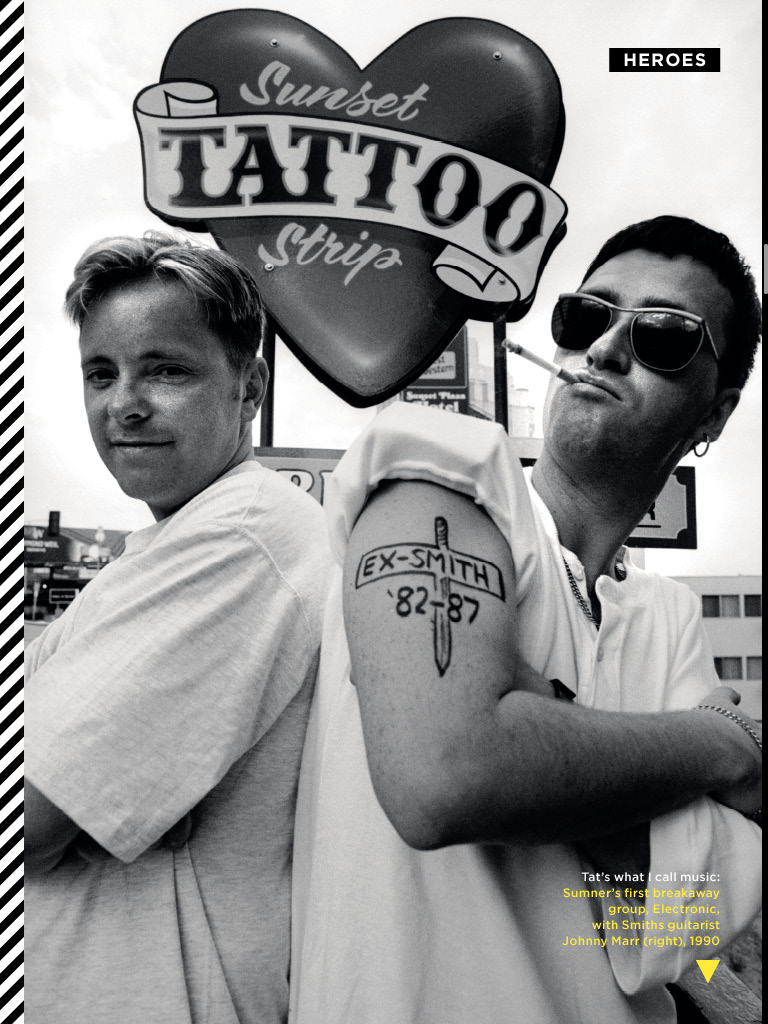
It’s an accepted truth that Electronic was very much a bit-part project, an occasional coming-together of alternative music royalty in the gaps of downtime between their respective day jobs; Bernard and New Order, Johnny and The The…and The Healers…and The Cribs… and whoever else was looking for a six-string gunslinger for hire. The reality is much different.
Although conceived by the duo of Sumner and Marr as a collaborative and ever-shifting line-up of guest musicians and vocalists, Electronic was an active and going concern for almost every year of the ’90s. The self-titled debut album was worked on quietly in the background for months at a time before seeing the light of day in 1991. The follow-up, Raise The Pressure, took two years to put together. 1999’s Twisted Tenderness, the third and presumably final album in Electronic’s discography took a similar time to conceive. Johnny has oft-debunked the notion that he and his pals reconvened for a couple of weeks now and again to throw an album together; a studio head since the earliest days of The Smiths, to him, being part of a group is a 24-hour thing. Bernard, with his patience and dedication to programming and getting the most out of ever-changing technology, is cut from a similarly dedicated cloth.
1996’s Raise The Pressure was written during interesting times. Conceived in 1994, it began life just as Noel Gallagher was borrowing guitars from Johnny to use on the first Oasis recordings (look on the cover of Supersonic and you’ll spot Johnny’s famous black and white Rickenbacker) and was released just as Noel’s band (and Johnny’s Les Paul) were getting ready to headline Knebworth. For one of these acts (and it ain’t Electronic), that’s quite a trajectory.
Raise The Pressure was a product of the last great fertile period for UK guitar bands, yet it never quite made its mark. Here’s an album recorded by two of music’s leading lights, one of whom at least, with his moddish hair and Clarks shoes – and uncanny ability to wring seven shades of melody from six strings – could be considered the uber-cool uncle of the entire movement…and no-one is all that bothered about it.
Lead single Forbidden City is a much under-appreciated track. Despite coming gift-wrapped in New Order melancholy and ever-evolving Marr riffage, it clunked its way to number 14 before vanishing for good. Just what was wrong with the record-buying public?!
Electronic – Forbidden City
The track runs the whole range of Johnny’s guitar styles; layers of sparkling electrics sprinkled across a bed of ringing acoustics…open chorded majors in the verse…barre chorded minors in the refrain…lovely complementary run downs between vocal lines in the third verse…the up the frets dazzling stuff during the choruses…the groaning, multi-layered (and sometimes backwards) feedback solo in the middle… Forbidden City really has it all. In an era of retro bores who were happily rehashing their way into the charts and getting folk to part with their money in Our Price seven days a week, thanks to their Who and Stones and freakin’ Herman’s Hermits rip-offs, (Hello Power! Hello Ashcroft! Hello Fowler ‘n Cradock!) Forbidden City deserved so much more.
Even an appearance on prime time telly couldn’t really help it.
On TFI Friday, Bernard ‘n Johnny are backed by Doves’ Jimi Goodwin on bass, with Black Grape’s Ged Lynch keeping Karl Bartos’ drum stool warm. Bernard is a ball of on the spot sprung energy, punching the air between lines, doing his trademark whoops when he needs to take a breath, gurning indiscriminately at an audience equally hopped up on the good vibes of the times. By the looks of it, Johnny hasn’t yet discovered running and is in the midst of his fat Elvis phase. Unruly hair, jawline as loose as the jeans he’s wearing and dressed in some sort of fleece/fur overcoat, he chews gum while stomping on and off his pedal board, giving, as he always does, good camera. There’s more than a whiff of chemical enhancement to the whole thing – it is the mid 90s after all – and it’s all rather fantastic.
A chart smash though? A definitive track of its era? A firm favourite amongst the masses? There’s not a hope, as the song goes.
We’re night four into a two week Vegas residency. An option for a third week has been pencilled in, but not yet committed to. The audio-visual wonderland that is The Sphere was mentioned from the outset, but by opening night we’re in the Colosseum inside Caesar’s Palace, its stage decked out in the most ostentatious floral display that can be mustered in a city not known for the understatement. 4000 hopped-up Anglophiles in cardigans and suit jackets stand on its velvet seats in a vulgar display of phoney rebellion, the turn-ups on their jeans almost as brazen as the bare-faced front of the singer they’re here to idolise.
Early reviews have been mixed, and that’s being kind. ‘Lumpen drums’, a bass player ‘devoid of the original’s flair and fluidity’ and, most damning of all, guitars that are ‘far more darkle than sparkle’. The singer too is getting it tight. His once collapsing quiff has collapsed to the point of thinning. He has a noticeable paunch, tucked into the high waistband of a shit pair of parallel jeans and his voice is gone gone gone. ‘Miserable Lie‘, a brave addition to nights’ one and two’s setlists has been swiftly dropped for the easier to reach ‘Jeane‘, but the guitar player – a hired LA rock guy and most definitely not Johnny Marr – can’t resist soloing between Morrissey’s lines. The knives are out and being sharpened by the encore. Johnny watches from across the Atlantic and shakes his head, his Ron Wood mod crop flopping in frustration. This is The ‘Smiths’ reunion and it stinks.
Back in his 2016 autobiography, Johnny Marr mentioned that he and Morrissey had met up and, over a pint or two, tip-toed delicately around the idea of a Smiths reunion. It was Johnny’s idea seemingly, and while Morrissey was initially on board, Morrissey being Morrissey then broke contact. Ghosted Johnny, as the young folk say these days.
If you’ve even half an eye on music, you’ll know that in the near-decade since, Johnny has built quite the profile. His live shows are sold out and celebratory, he pops up with a near Grohl-esque regularity – can we still mention him? – on the stages of his peers (James, Pearl Jam, The Pretenders, The Killers et al) and he’s collated a coffee table book featuring well-chosen words and arty shots of his arsenal of guitars. He’s often on hand to lend a quote on a matter of cultural or political importance. He even popped up on one particularly memorable edition of Would I Lie To You?
Johnny, should you need confirmation, is a Good Guy.
It seems that in far more recent times – in June just gone – Morrissey returned to his old sparring partner, suggesting that their previously-discussed Smiths reunion might in fact be (ker-ching!) not a bad idea after all. Corporate behemoth AEG, an umbrella company that owns multiple sports teams, the Coachella brand and many arenas across the globe had put an offer of a 2025 Smiths World Tour to Morrissey and Marr, and ol’ Moz, he of the ever-decreasing record sales and ever-increasing right wing tendencies, was quite keen on the idea.
It turns out that Johnny was somewhat less than enthused. It’s not for nothing that when asked by a fan on Twitter if he’d consider doing an Oasis and get The Smiths back together, Johnny simply Tweeted a shot of Nigel Farage. Matter closed.
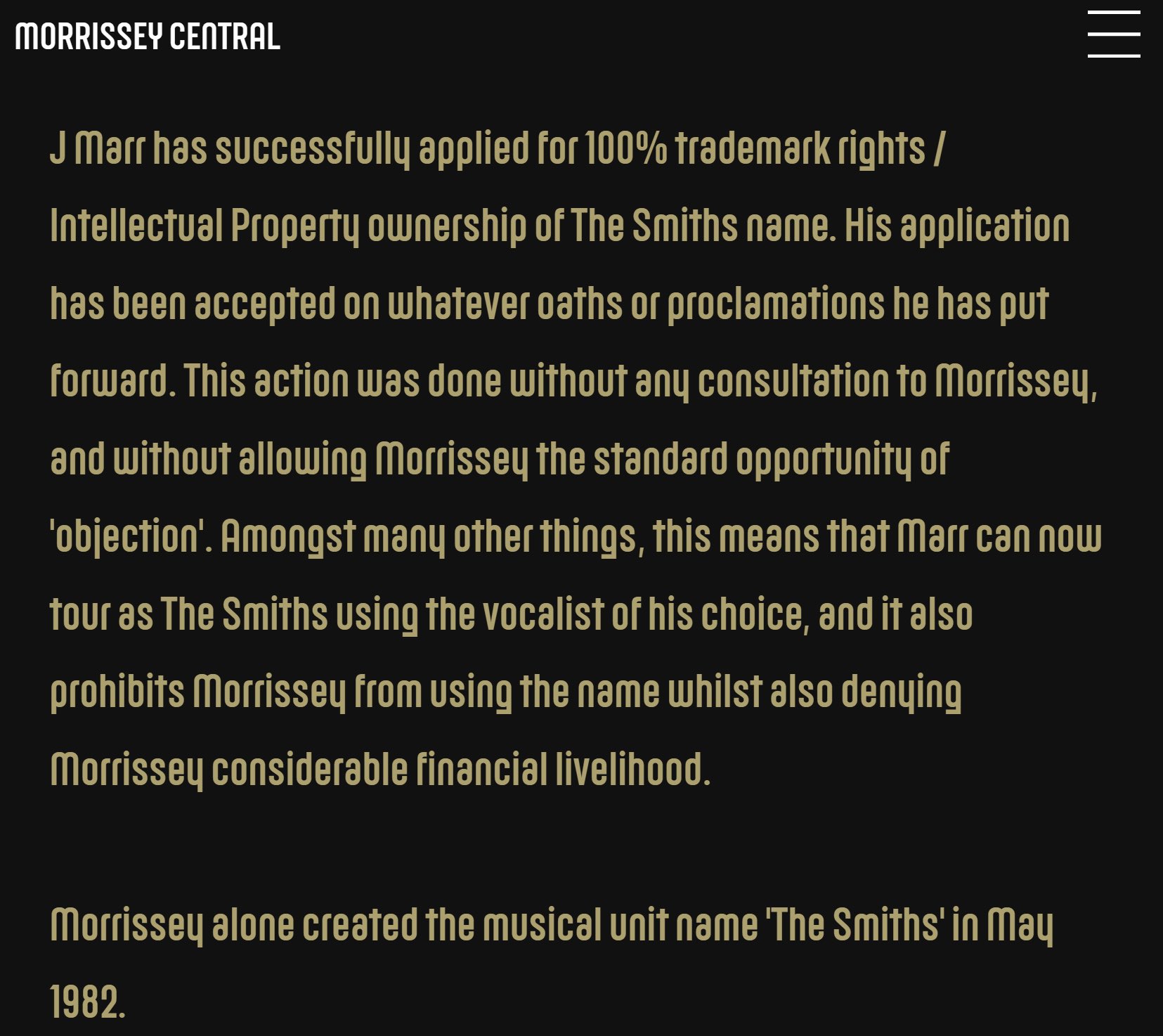
Cue pissed off Morrissey and a statement.
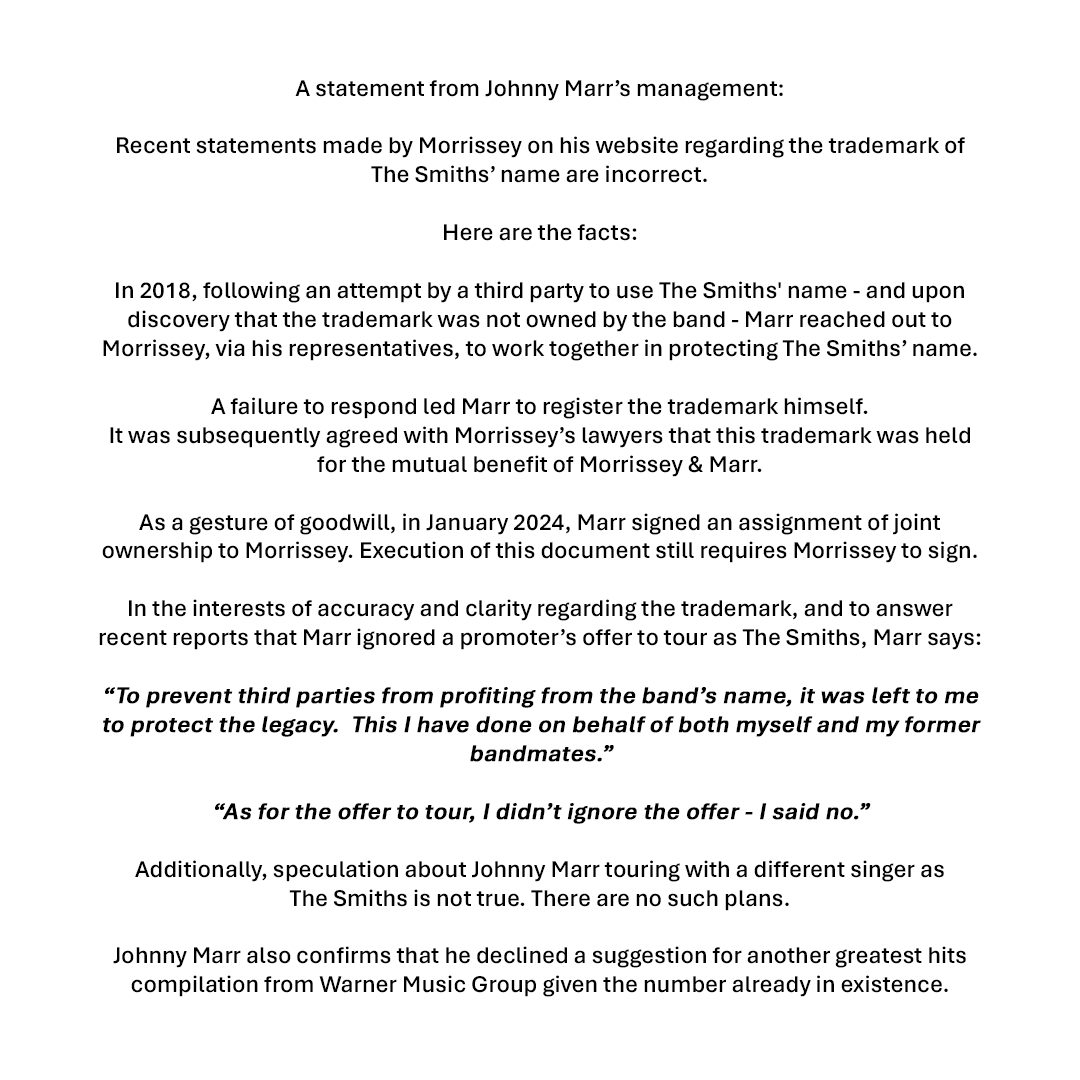
And cue retaliatory statement from Johnny.
Until Johnny’s management released these words, the internet had been in a daft panic over the thought of a Johnny-fronted Smiths heading out on tour. Complete nonsense of course. That just wouldn’t ever happen. We both know that no Johnny or Morrissey = no Smiths. And there’s already no Andy. Mike? I’m not sure which horse he’d back in this one horse race. There’s no doubt at all that Johnny Marr had got wind of the possibility of Morrissey rounding up any old gang of bequiffed janglers and goose-stepping them across Europe and the States next year to celebrate the return of ‘The Smiths’. Johnny, wisely, has made moves to ensure this never happens.
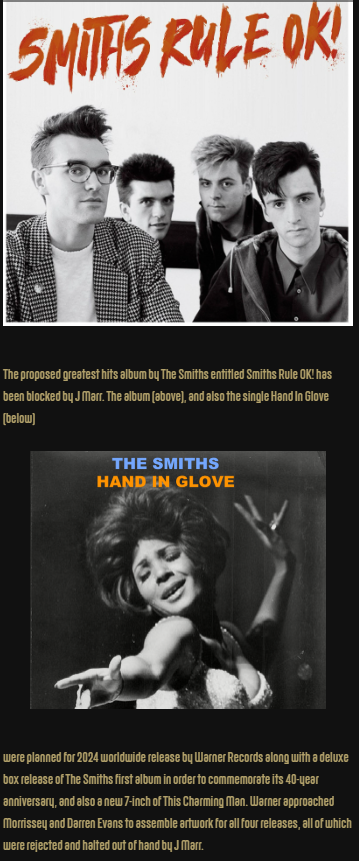
The tour would have come on the back of a box set and Shirley Bassey-housed Hand In Glove reissue celebrating The Smiths debut album plus that crappily-titled ‘Smiths Rule OK‘ compilation, and Johnny, as the statement goes, has put his foot down at that idea too. How many Smiths compilations does one household need anyway? (Bizarre fact – there are more Greatest Hits compilations of boy band Blue than there are studio albums by them. Reissue, revalue, repackage ‘n all that jazz.)
Look at any Smiths record, be it 7″, 12″ or LP, and you’ll recognise it as a work of art in its own right. Old movie stars tinted in turquoise and gilded in greens, heroes and heroines presented in burnt umbers and off-yellows. The fonts stately and bold, the back sleeves always listing the principle Smiths and what they’ve played on it. Never mind what they sound like, that Smiths catalogue is one of the most iconic-looking collections in guitar-driven pop.
The Smiths – This Night Has Opened My Eyes (June ’84 demo, unreleased)
In any case, the artwork for the intended new Best Of is, by any stretch of the imagination, a disaster. It just wouldn’t do. How Morrissey, with such an eye for detail and the importance of the seemingly small stuff that folk like us obsess over could give the green light to a proposed sleeve that looks like a ten minute rush job at the end of a long Friday is anyone’s guess. It’s just as well Johnny is switched on and still cares about his band’s legacy.
This might come at a cost though. With one key Smith keen to improve his already-handsome income and the other happy to ensure his group’s back catalogue isn’t tainted, that debut album box set looks set to be shelved. For obsessives that’s a bit of a disaster. The Troy Tate tapes in fabulous hi-fi. That Cookies’ cover. An early live show with the young feral Smiths stamping their mark on guitar-driven pop. Whatever was lined up for the box set may now be confined to the dusty library shelves of the archives.
That reunion idea though. Absolutely vile, as the song goes.
One last thing before I go. That third party in 2018. The one who tried to take control of The Smiths name. Who was it?
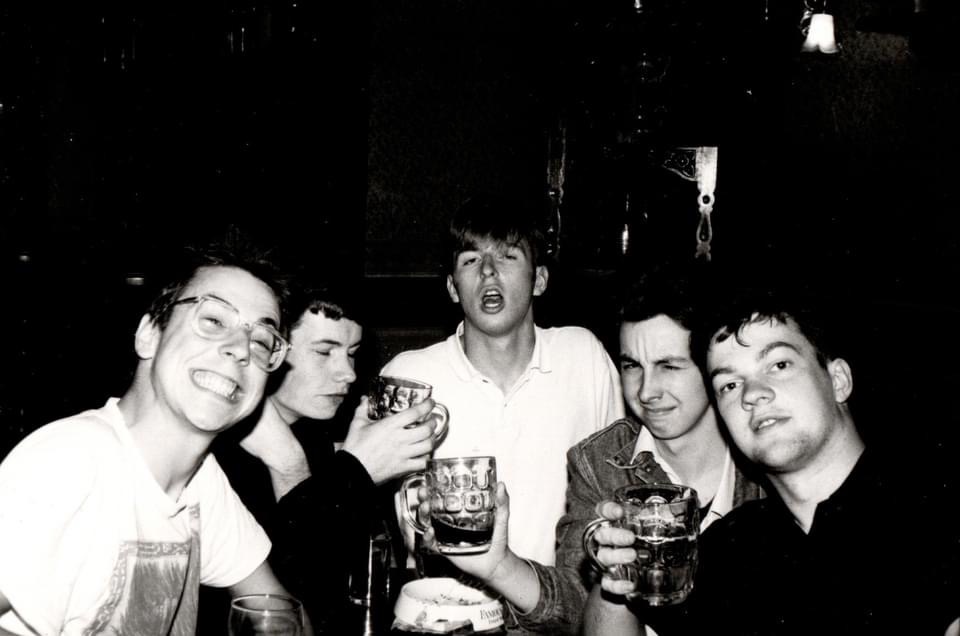
It’s 1990. Or maybe 1989. Maybe even 1991. That kinda timeframe though. It’s a Wednesday night. Not a night we’d normally be in the Crown, but there we were. I’m guessing it was during the holidays, when some of us were free of studies and had a decent stretch of summer ahead of us. Or maybe it was in the middle of winter but we had a gig looming and had squeezed in an extra rehearsal in addition to our usual Monday night slot. Either way, and for whatever reason, we were wedged in around one of the Crown’s circular tables, up there at the back, in our usual spot with all the other like-minded Irvine hipsters of the day, pints in hand and conversation flowing around the exclusive subjects of music, films and football.
Assorted Surf Nazis and Sunday Drivers in the back of the Crown, 1989.
One of us comes back from the pub’s spartan toilets with the unlikely but true news that none other than Feargal Sharkey is presently at the bar. Nowadays Feargal is everyone’s favourite political activist, but back then he was Fucking! Feargal! Sharkey!, parka-clad vocalist in The Undertones, laterally the suave, Ferry-haired-and-suited crooner of A Good Heart and (even better) You Little Thief; a genuine pop star and hero to every single one of Irvine’s assembled guitar stranglers and tune botherers that frequented the Crown. Why would Feargal Sharkey be in the Crown? In Irvine? On a random Wednesday night? A rumour creeps up to our table and taps us on the shoulder.
“Apparently, he’s up to check out a band for Polygram. I’ve been told they want to sign the Surf Nazis.” The rumour looks at me with a smirk. “It won’t be the fucking Sunday Drivers, I can tell you that for nothing.” Everyone is watching Feargal, supping his pint at the bar with all the casual indifference of any of the hardened locals. “It might be the Thin Men he’s after. They say loads of labels are after them.” The Thin Men are from Stewarton, not Irvine, and that prickles. As it goes, a few years down the line, they’d change line-up and name and become Baby Chaos. Happy Mondays’ manager Nathan McGough would look after them, Warners would sign them and they’d have minor success. But anyway. Back to Feargal.
No sooner has the rumour sloped off to the next table, than the bold Paul Forde, always on the right side of being slightly pished, makes his way to Feargal. We watch as our self-appointed diplomat and representative strikes up a conversation that’s over and done with between two sips of Feargal’s pint.
“I told him that Wednesdays weren’t particularly good for him,” says smart-arsed Paul, referencing The Undertones’ Wednesday Week, “and then asked him what the fuck he was doing in Irvine.”
As he finishes telling us this, Feargal downs the last of his pint and vanishes, ghosting out just as invisibly as he ghosted in. We never did find out why the fuck he was in Irvine, in our pub, in the middle of the week, in a room full of eager musicians but with no live band playing. Sorry if you were expecting a punchline. Not much of a story really, but a big story for Irvine.
Fast forward to 2015. It’s a Thursday night this time. October 15th. But that’s not important. I’m in Kilmarnock’s Grand Hall. The sainted Johnny Marr has finished a storming gig and I’m given the job of taking pictures on all his fans’ cameras as they line up to meet him. His tour manager has set up a wee wireless Bose speaker and cued up a playlist, carefully curated by Johnny himself. Chic’s rinky dink disco rattles out of it. Some early Talking Heads. Wire. Johnny patiently pouts and preens for his people, occasionally nodding his head in time to the beat in the background. Clang! A Hard Day’s Night rushes past in a riot of melody and guitars and vocals and Fabness. Next, Buzzcocks cut loose. “I hate Fast Cars,” sneers Pete Shelley, the iPhone in my hand silently click-click-clicking as Johnny pulls plectrums from the wee right hand pocket in his jeans and gives them to the girls.
Then, a brief 5 note electric guitar riff, edged in feedback and promise eases in, and even before the drummer’s clatter has signified the true start of the song, both Johnny and myself have been stopped in our tracks.
The Undertones – You Got My Number (Why Don’t You Use It)
Must dust this
“Oh yeah!” says Johnny with a smile and, like any true fan of music, indulges in a little unexpected air guitar as the song’s punkish riff runs its way across the fretboard. Within seconds, his enthusiasm has caught on and I’m bobbing along to the bounce of the beat, Johnny grinning at me with his recently-whitened teeth. ‘Well, this is all quite surreal and magic,‘ I’m thinking.
It’s a great track, full of hooklines and riffs, dumb-but-essential ‘duh-dit‘ backing vocals and that terrific call and response ‘if you wanna wanna wanna wanna wanna have someone to talk to‘ line between the singing Feargal Sharkey and John O’Neill on guitar. It’s stoppy-starty, it has just the merest hint of Louie Louie-type stabbing keyboard towards the end and it’s all over in a metallic crash of symbols and Feargal’s definitive “WHY DON’T YOU USE IT!” shout at the climax.
Listen and repeat. Listen and repeat.
Listen and repeat.
Listen.
Repeat.
When you tire of The Undertones, you tire of life.
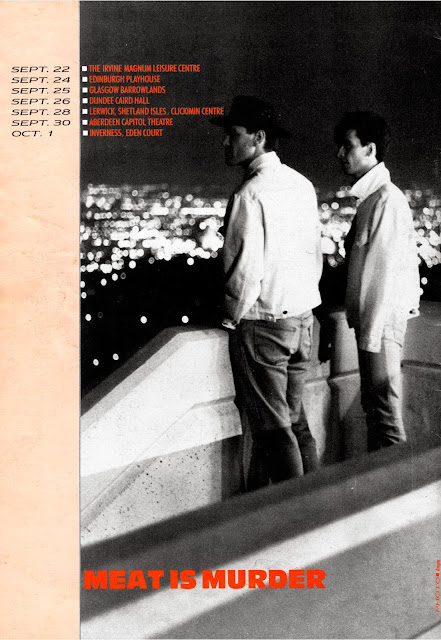
Let’s call it here and now: Meat Is Murder is The Smiths best album.
It’s certainly not the debut, the band’s unsatisfactory attempt to chase a sound worthy of the songs. Compared to the Brasso-bright, spit ‘n polish, ring-a-ding-ding of those early Peel versions, the debut album weighs heavy; lumpen, and one-dimensional. The drums sound leaden and lifeless. The guitars – it’s always about the guitars with The Smiths – sound as if someone has taken a fat thumb to their edges and rubbed the sparkle clean off. Flat and uninspiring, the production doesn’t do those fabulous riffs any justice at all. Unique, extraordinary songs, but assembled badly.
Don’t even consider The Queen Is Dead. Those songs…man, great, great songs…but whoever signed off the running order needs their head examined. The title track aside, every other song is misplaced. Side one collapses from the music hall titter of Frankly, Mr Shankly into the death doublet of I Know It’s Over/Never Had No One Ever – undeniably serious mood music pieces, yes, but totally misplaced. Stick I Know It’s Over at the end of side 1 instead and you’ve got a great closing track. Never Had No One Ever? That’s totally ripe for the graveyard slot of second last track on side 2. Pick any ten records from your collection and look at the running order and then tell me that the second-to-last track isn’t the weakest on the album. It’s certainly not where There Is A Light That Never Goes Out should be hiding. That should be sitting up front with Bigmouth… and the big boys, or maybe even afforded the honour of being the big statement closing track. Good as Some Girls Are Bigger Than Others is – and it’s one of their very best – go out on a romantic, swaying high, Smiths. Don’t relegate your best songs to the twilight zone.
Yeah, and the smart money (even Johnny’s, they say) might be on Strangeways Here We Come, but for every crashing gothic masterpiece (Last Night I Dreamt...) there’s The Smiths-by-numbers (Stop Me If You Think…), for every barely-disguised love letter from singer to guitarist (I Won’t Share You) there’s the instantly skippable Death At One’s Elbow. It’s a good album, Strangeways, probably even great, but it isn’t their greatest. That honour goes to Meat Is Murder. Here are half a dozen reasons why.
Reason 1. Little elfin Johnny, in his blown-up Keith Richards hair-do and diamante clutter, is on fire across every bit of Meat Is Murder. He runs the whole gamut of his nimble-fingered arsenal; alternative tuning on the title track…alternative tuning and Nashville tuning on the cosmic and zinging Headmaster Ritual…that fine, layered coating of acoustic liquid mercury across Well I Wonder…the Stooges Metallic KO of What She Said, the rockabilly knee-tremble of Rusholme Ruffians…the proud Chic-isms that give way to those great, ringing discordant jazz chords near the end of Barbarism Begins At Home…the clattering chatter he conjures up across Nowhere Fast‘s multiple overlapping tracks and kaleidoscope of chords…
Johnny came up with them all. On Meat Is Murder he is barely 22 and he’s not yet reached a peak that his peers, never mind his guitar-strangling lessers in bedrooms up and down the country, can only dream of.
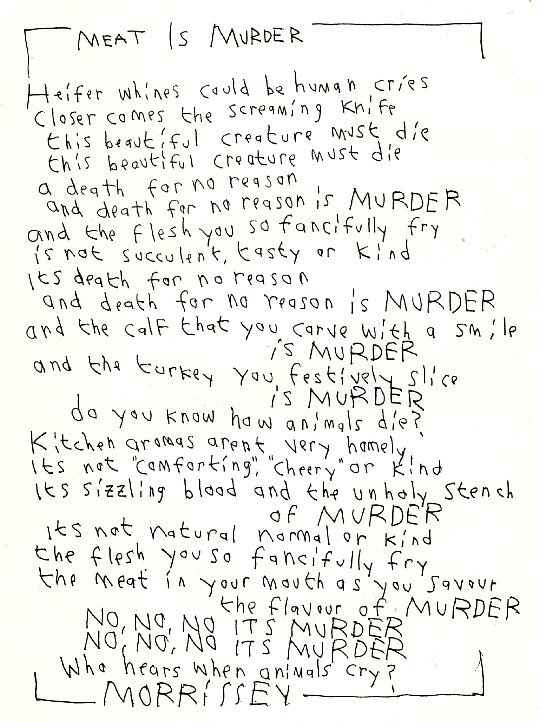
Reason 2. Morrissey. Separating the art of the 26 year-old singer from the 63 year-old artist is necessary here. Look, not at what he’s become, but at what he was once capable of. With every lyric on the album, he’s extremely funny and articulate and political and opinionated and principled and, above all else, loveable. ‘I’d like to drop my trousers to the Queen,’ ‘heifer whines could be human cries,’ ‘belligerent ghouls run Manchester schools, spineless bastards all,’ ‘What she read, all heady books, she’d sit and prophesise, it took a tattooed boy from Birkenhead to really, really open her eyes.’
Even if he pinched large chunks of Rusholme Ruffians from Victoria Wood, no one was crowbarring lyrics like this into pop songs in 1985. Arguably, no one has crowbarred stuff as unique and searing and insightful and right-on since.
Reason 3. That Joke Isn’t Funny Anymore is one of The Smiths’ finest torch songs. From its bright-as-brass-buttons opening to its layered and textured false ending, it’s a beauty. It’s the perfect marriage of Morrissey’s moping introspection and Marr’s guitarchestra, the singer identifying with those who are kicked when they are down, the guitarist going to town with studio effects and multi-layered riffs.
The Smiths – That Joke Isn’t Funny Anymore
Those little echoing triplets that fall from his fingers to create rippling pools on still pond water still tingle the back of my neck when they come in (around the minute mark at first, then forever after) – an ear-opening epiphany in 1985 when I realised that guitar players enhanced their electric sound with gizmos and wizardry to create the sounds they imagined in their heads. The haunting (and haunted) backwards effects he weaves through the ‘happening in mine‘ section before the fade out are ace.
Johnny has since said (OK, he told me, right?) that The Smiths never quite managed to do it justice live, but with the technology available today, That Joke Isn’t Funny Anymore would have undoubtedly been the centrepeice of The Smiths live experience. We’ll never know.
Reason 4. The Smiths changed lives. Saved lives, even. Like, literally. The title track is responsible for a whole swathe of impressionable teenagers – and at least two Smiths besides Morrissey – to forego eating meat and adopt vegatariansim as a way of life.
“As soon as we had recorded this song, I became a vegetarian,” Mike Joyce told me in 2017. “Morrissey’s argument was rock solid. I couldn’t even be that bullish to say, ‘…but I like meat.’ The cruelty involved is reason enough. You wouldn’t eat your cat or your dog, so why eat a sheep or a pig? Whatever Morrissey argued, you could only reply with, “You’re right, you’re right.” There was no counteract to it. It should be illegal, there’s just no argument for it. ‘Meat Is Murder’ is a sheer political statement. It shaped my life and my kids’ too, who’ve all been brought up vegetarian.
Accompanying the lyric, all sorts of magic is going on. Suitably doomy and disconcerting for the words being sung, Johnny plays around on an open D riff, cyclical and repetitive, hynpotic and ethereal.
The Smiths – Meat Is Murder
It’s matched by a jangling piano – not noticeable on first listen, buried as it is underneath the abattoir grinding and cattle cries, but it’s there, tinkling along like springtime Manchester rain while studio-treated guitars echo and scrape and scratch their way through the murk, Andy’s bass as elastic and stretchy as tendons.
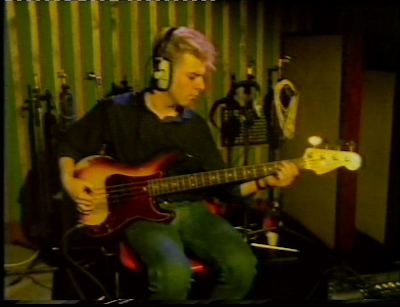
Reason 5. Ah. Andy’s bass. The unsung hero of the band, the thinking man’s favourite Smith, Andy Rourke can play the fuck out of that thing. While Johnny gets all the spotlight, Andy quietly goes about creating tunes within tunes, fret-surfing melodic runs that could easily stand on their own two feet (or four strings).
The Smiths – Nowhere Fast (Peel Session, 1984)
The trampolining rubber bandisms that carry the aforementioned Rusholme Ruffians…the counterparts he plays to Johnny’s guitar in The Headmaster Ritual…the driving force in Nowhere Fast that allows Johnny to fly off-piste and back again…Andy is a key ingredient here.
The rather-too obvious track to highlight is the extreme funkability of Barbarism Begins At Home, all slap ‘n thunk, an old tune of his and Johnny’s from pre-Smiths days that wouldn’t have worked on that debut album, but here, on Meat Is Murder‘s inclusive, catholic patina, it shines brightly.
Reason 6.The Headmaster Ritual. Rusholme Ruffians. I Want The One I Can’t Have. What She Said. That Joke Isn’t Funny Anymore. Nowhere Fast. Well I Wonder. Barbarism Begins At Home. Meat Is Murder.
Perfectly sequenced, perfectly pitched, it is, rare for the era, an album of few single releases; Headmaster and Barbarism in foreign countries only, That Joke in the UK (a chart-busting number 49 with a bullet). The Americans couldn’t handle an album with no hit singles though, so they crassly wedged How Soon Is Now? right before Nowhere Fast at the start of side 2. They have form for spoiling perfectly perfect albums, the Americans – look at what they did to some of The Beatles’ catalogue for proof – and while How Soon Is Now? is an undoubted Smiths classic, it should remain standing alone as the greatest 3-track Smiths single ever. But that’s an argument for another time.
There’s nary a wasted line on The Pretenders‘ Kid. Lean and low-fat yet packed full of melody and mood, it still sounds out-of-the-box fresh 41 years later. Riding along on a breeze of glistening, chiming, ringing guitars, it’s a heady amalgam of countryish punky jangle and street-sussed Chrissie Hynde sass. Listen as you read, won’t you?
The Pretenders – Kid
It’s the guitar riff that makes it, of course, James Honeyman-Scott taking his guitar for a twangin’ walk up and down the frets; bending, sliding, hammering on and pulling off one of new wave’s greatest guitar lines.
He takes a back seat during the singing, happy to answer Chrissie’s softly crooned, conversational vocals with lovely thick tremeloed chords between the gaps. First chance he gets though, and he’s back to a reprise of that riff. After the second verse there’s a crashing, tumbling middle eight before the whole band sets him up for the solo. And what a solo!
In just a dozen seconds, Honeyman-Scott fires off the perfect musical interlude. He’s further up the frets now, not too high – certainly not as high as those other uncultured guitar stranglers and string manglers who aim for the 15th fret and leap off from there – and his guitar rattles and rolls with a Mr Sheen-like Byrdsian jangle, all slurry pull-offs and bending 3rd strings, before finishing off on an audacious and perfectly executed pinging harmonic.
With little time to catch breath we’re back into the breakdown where the band drops out save for some thumping toms and accompanying bass. A high in the mix jud-jud-juddering Townshendesque acoustic chord signifies we’re on the run home. The jangle is free-form now, the band loosening their collective collar and undoing the top button of their super-tight jeans, relaxing into the multi-layered silvery mercurial brew they’ve created out of thin air as Chrissie reprises the chorus and Honeyman-Scott plays another sublime variation of the solo.
The engineer or producer or whoever it was who thought it was a good idea to fade him/them out needs their stoopid head examined, they really do. Three minutes of post-punk new wave pop joy undoubtedly deserved to stretch its skinny legs for a good half minute more, even if that meant taking it, like Chrissie’s fringe, to just about beyond the considered optimum length. I doubt anyone would’ve complained.
Flashy without being arrogant, the guitar playing on Kid is something that, given equal measures of practice and patience, any dedicated guitar player could work their way up to replicating. Just ask that other king o’ the six string, Johnny Marr…
Like many of the tracks released by the constituent parts of the group that created it, Disappointed by Electronic was released as a standalone single, a gap-plugger that sated the appetite of their fans in the period between the first two albums. A fantastic gap-plugger it was too.
Bernard Sumner’s New Order were awfully fond of (perhaps even hell-bent on) ensuring singles stayed off of albums. Ceremony, Temptation and Everything’s Gone Green didn’t make it to Movement and Blue Monday, Confusion and Thieves Like Us didn’t appear on the chronologically closest Power, Corruption And Lies, although by the time of Low-Life, lead single The Perfect Kiss was a central part of the album and from then-on in, a good proportion all of their singles were used to promote a parent album.
Johnny Marr’s Smiths gave great value for money, regularly releasing one-off singles that would eventually appear as 33 rpm tracks on compilation albums further down the line; How Soon Is Now? (originally a b-side), Shakespeare’s Sister, Heaven Knows…, William…, Panic, Ask. All started life spinning at 45rpm.
Pet Shop Boys were perhaps the more conventional of the trio. On a major label they maybe didn’t have the same clout that an indie band might have on a small label (though what do I know?) and accordingly, almost all of their singles, in that imperial run from West End Girls and Love Comes Quickly through So Hard and Being Boring to 1991’s DJ Culture and Was It Worth It? were taken from their studio albums of the time.
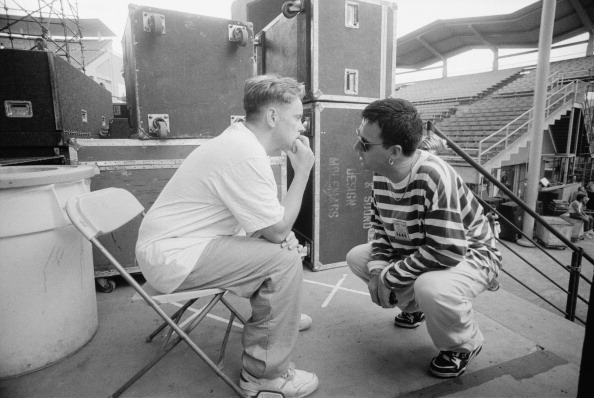
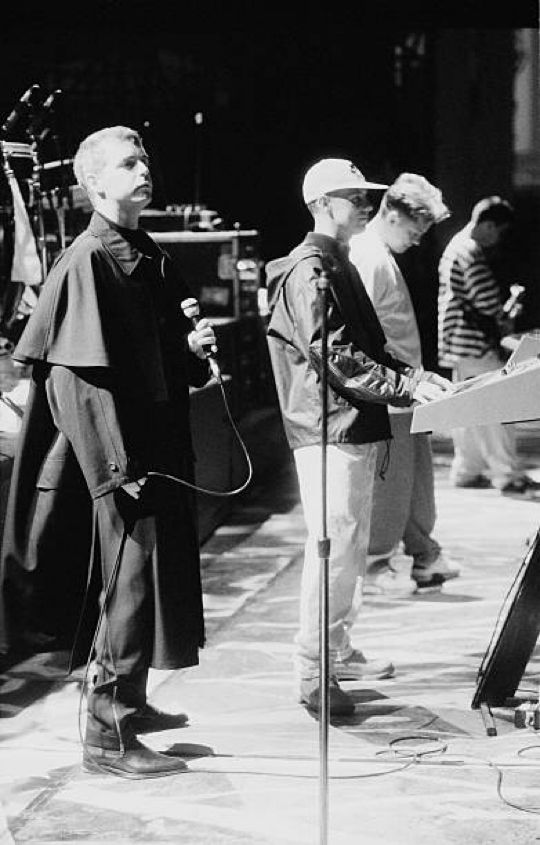
(Photo by Kevin Cummins/Getty Images)
Disappointed is very much a product of its time and place. Chronologically, it was written around the end of 1991, when Johnny was between The The projects and just before Bernard returned to New Order to record Republic. Despite being patchy in parts (and that’s a whole other blog post), the last decent album in New Order’s original form gave us Regret, arguably the last truly great New Order single; soaring and melancholic, built on a bed of asthmatic guitar and hard-wired technology, and, from the negatively-leaning titles in, you can draw a straight line between that New Order track and Electronic’s 4th single.
Electronic – Disappointed (7″ mix)
By the end of 1991, Pet Shop Boys had amassed 19 hit singles to their name (pop quiz – name them!) Anything they touched turned to sold and gold. They were the masters at minor key pop, “The Smiths you can dance to,” as Tennant famously said at the time. Arriving on a bed of synth washes and era-defining Italo house piano – conceived by Johnny’s brother Ian – Disappointed‘s hookiness (not Hooky-ness) is immediate and immersive, mainly due to Neil Tennant’s cooing ah-ah-aah refrain.
Three seconds in and it sounds like the greatest Pet Shop Boys hit that never was. Tennant employed all the best PSB tricks; minor key melancholy, smoothed-out spoken word in the verses, flying like a kite in the chorus, those earworming ah-ah-aahs and pulsing glacial synths to the fore.
It worked. On release in July ’92, the single climbed to number 6 on the UK charts, kept out of the top 5 by Mariah Carey’s helium-voiced take on the Jackson’s I’ll Be There. Ironically enough, the b-side to Disappointed was a remix of Idiot Country.
If you know your Euro-pop, and I’m sure many of you do, you’ll be aware that Tennant tips more than the brim of his trilby to Mylène Farmer’s Désenchantéesingle, a massive hit on the continent in 1991. It’s there in the smoothed-out synthesizers and mid-paced feel, the down-played vocal delivery in the verses and restrained euphoria in the chorus. I don’t think it’s a coincidence either that Tennant ‘borrowed’ her ‘Désenchantée/Disenchanted‘ lyric for his own chorus. Most of us in the UK would’ve been oblivious of this at the time (perhaps even Bernard and Johnny too), a fact I’m sure the pop boffin Neil would’ve been banking on.
Seemingly content to take more of a back seat at the time, Johnny has an understated role in the single. He breaks into full-on Nile Rodgers funk for most of it, riffing across the top 3 strings like he hadn’t done since 1985’s Boy With The Thorn In His Side, his right hand rattlin’ the rhythm while his left shapes the funk, but contribution-wise, Disappointed is probably 45% Neil, 35% Bernard and 20% Johnny. The sum is greater than its parts though. It’s a great single, almost a lost single really, given the ubiquity of Getting Away With It and its not-quite-as-good follow-up Get The Message, but one that deserves reappraisal.
As is the way at this time of year, lists, polls and Best Of countdowns prevail. Happily stuck in the past, the truth of it is I’m not a listener of much in the way of new music. Idles seem to dominate many of the lists I’ve seen, and I want to like them, but I can’t get past the singer’s ‘angry ranting man in a bus shelter’ voice. I’ve liked much of the new stuff I’ve heard via 6 Music and some of the more switched-on blogs I visit, but not so much that I’ve gone out to buy the album on the back of it.
If you held a knife to my throat though, I might admit to a liking for albums by Parquet Courts and Arctic Monkeys, both acts who are neither new nor up and coming. I listened a lot to the Gwenno album when it was released and I should’ve taken a chance on the Gulp album when I saw it at half price last week, but as far as new music goes, I think that’s about it. Under his Radiophonic Tuckshop moniker, Glasgow’s Joe Kane made a brilliant psyche-infused album from the spare room in his Dennistoun flat – released on the excellent Last Night From Glasgow label – so if I were to suggest anything you might like, it’d be Joe’s lo-fi McCartney by way of Asda-priced synth pop that I’d direct you to. Contentiously, it’s currently a tenner on Amazon which, should you buy it via them, is surely another nail in the HMV coffin.
2018 saw the readership of Plain Or Pan continue to grow slowly but steadily in a niche market kinda style, so if I may, I’d like to point you and any new readers to the most-read posts of the year. You may have read these at the time or you may have missed them. Either way, here they are again;
This slideshow requires JavaScript.
An article on the wonder of The Specials‘ b-sides.
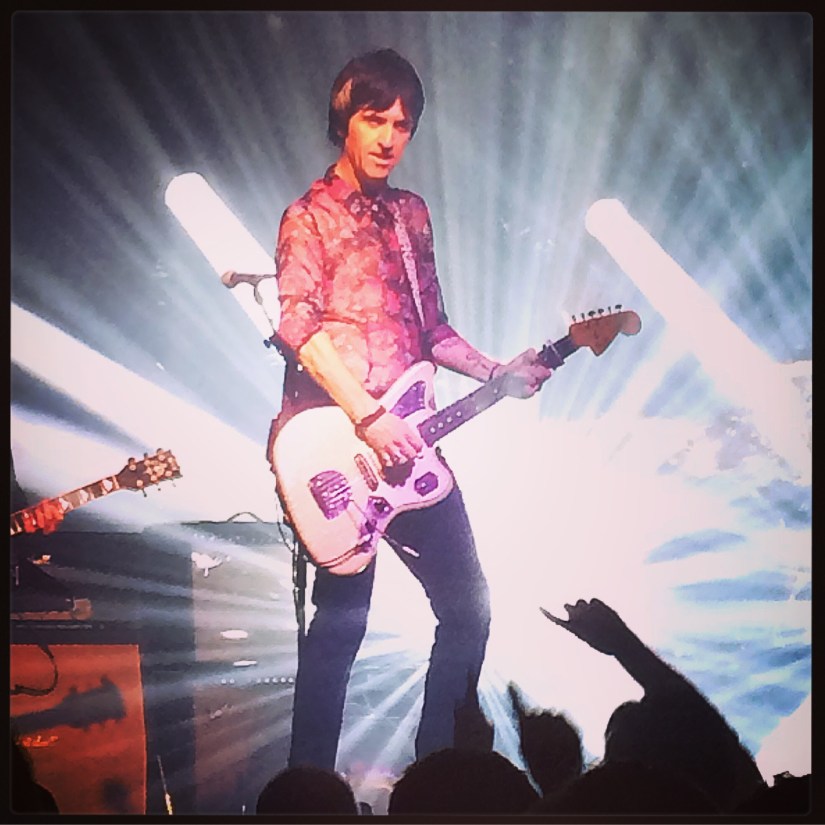
Such is the depth of his catalogue, Johnny Marr can put together a 20 song set that has something for everyone. From the opening new wave sheen of Tracers, all electrified twang and icy synths via a giddy, galloping Bigmouth Strikes Again and a choice selection of Smiths tracks that, let’s be honest, is what the majority of the audience came to hear, a Johnny show is wholly entertaining and, in an era of triple-figure ticket prices, reassuringly recession-friendly and value for money.
An early set dip focuses too closely on tracks from current album Call The Comet but when he breaks into the perennial evergreen Getting Away With It – “a disco song from England,” – the show goes into orbit. Mid-way through, white hot strobes switch to sparkling glitter ball, perfect given the Barrowland’s history, and the band’s electro disco throb gives way to Marr’s chiming guitar, little arpeggios of untamed joy ricocheting out across the heads of an ecstatic audience. He gives good face, does Johnny. Whether he’s pulling guitar hero poses from atop the monitor or fixing his eyes on the array of smartphones in the audience or leaning back with his eyes closed as his fingers coax unstoppable melody from his fretboard, he does so knowing full-well his image will be shared on social media platforms the world over.
“Any requests?” he teases before he leads his band into an impromptu run-through of Kylie’s Can’t Get You Out Of My Head. A snippet of the riff from This Charming Man causes 1800 folk of a certain age to go heart-stoppingly weak at the knees before he slides into an imperial take on Electronic’s Get The Message. On this tour, Marr is fast becoming the indie version of his good pal Nile Rodgers, building a set of crowd pleasing hits and choice cuts from across his back catalogue and it’s the second hour of the show that truly sparkles; A brooding, gothic Last Night I Dreamt Somebody Loved Me. A trippy How Soon Is Now?, bathed in a blue and green fug with Marr wringing merry hell from his vintage Jaguar.
More Smiths follows in the encore, ensuring no-one goes home disappointed. A beautiful, lilting Please Please Please Let Me Get What I Want harks back to the heady days of Smithdom, the entire audience wrung out and hung out to dry. It’s followed by an incredible There Is A Light That Never Goes Out, Johnny dedicating it to “everyone in here and no-one else” before leading a euphoric call and response mass communion in the chorus. He rounds things off with a breakneck run-through of You Just Haven’t Earned It Yet, Baby, pulls another guitar pose, holds his hands aloft like a prize fighter– a featherweight, in his case, and skips off stage to rapturous applause. For generations who never saw and will never see The Smiths, this is as close as it gets. Spectacular stuff.
*this article was intended for publication in a national newspaper who were happy to run it but informed me there’d be no payment. It’s on here instead.
A dozen or so years ago, a concert celebrating the life and work of Robert Burns took place at Culzean Castle on the South West coast of Scotland, not far from where I’m typing. I’m quite into Burns, in an enthusiastic amateur kinda way. I get involved when it’s that time of year in the schools and organise the school Burns Supper. I’ll put together wee groups of kids who’ll eagerly sing Green Grow The Rashes (the Michael Marra arrangement) while I get to rock out gently with some well-rehearsed finger picking on my guitar. At home, we’ve done Burns Suppers celebrating the bawdier side o’ Rabbie that they don’t teach at school, helped along by the sort of food and drink you’d be hard-pushed to find in a school dinner hall. There are tons of Burns scholars out there who take it far more seriously and who could bore the breeks off most of us with their ability to recite his most obscure work which is why, when the concert was announced at Culzean – with headliners Lou Reed and Patti Smith – I thought I’d give it a miss. “I don’t really fancy hearing Lou ‘n Patti pretend they know the inner workings of Burns’ songbook when they could be doing their own stuff instead,” I reasoned. Big mistake as it turned out, as Lou and Patti by and large did their own stuff, regardless or not of what the promoters had signed them up for. Patti even made the Scottish news on TV the next night for gobbing on the side of the stage, offending those stuffy, ancient scholars I’ve just mentioned. Old punks, eh. What’re they like?
Oor ain Eddi Reader, herself a mad Burns fanatic, was on the bill and in the encore she sang the famous ‘doot-di-doo’ backing vocals for Walk On The Wild Side alongside Patti Smith. I know people who’ll be reading this that have wide-eyed stage-side footage of the moment. Why did I not go? Why?
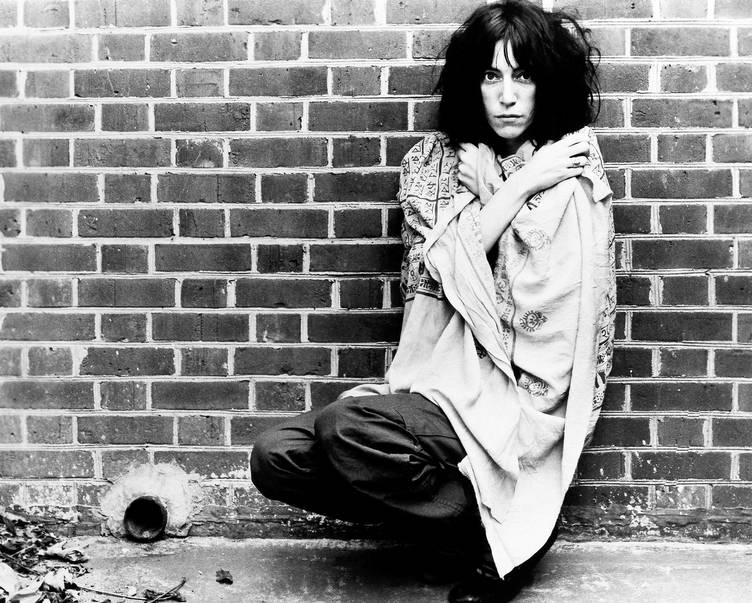
I’ve grown into Patti Smith in a big way. She was always there, a trailblazer for the strong, bloody-minded women from Chrissie Hynde to PJ Harvey who have a place in my record collection, but in recent years I’ve really come to acknowledge her as one of the greats. Morrissey, Michael Stipe and any Maconie-voiced BBC4 documentary will all tell you this of course, but unless you were lucky enough to be there at the time, I’m not sure her importance shines through for generations of mine and since.
Horses is her biggie, of course. A raucous brew of poetry set to music, it’s the sound of flared nostrils and itchy, twitchy jangling nerves riffing on French existentialists, Jesus and the futility of existence – the big stuff, in other words. Wrapped in monochrome with bird’s nest hair, it’s a challenging listen, certainly more difficult to get into than, say, Patti’s contemporaries The Ramones and Blondie who were street suss enough to add some pop to their schlock. The centrepiece of the album is, wonkily, mid way through side 2.
Patti Smith – Land
Land is a free-flowing example of all that Patti does best, over 9 carefully metered minutes of what musicologists might call a triptyche, with 3 parts of music played under the one theme. Every word is enunciated precisely and clearly, given equal gravitas. She howls, she whispers, she duets with herself. She’ll rap on something deeply esoteric one moment and then she’ll be singing about the watusi and Bonie Moronie the next. The words come in floods; pretentious, populist and pure. I can’t pretend to know exactly what she’s on about and I’m not certain that the young Patti in 1975 could’ve told you either. It sounds fantastic though.
Patti has a crack band behind her, rising and falling, ebbing and flowing in time to her carefully-written prose, yet for the entire track they keep it simple. At any moment, Richard Sohl on keys could break into the most heart-stopping piano run, but he doesn’t. Lenny Kaye could easily let fly with an electric burst of pop/punk bloooze, but he doesn’t. There’s ample opportunity over 9 minutes for an Animal-esque freak out on the drums, yet Jay Dee Doherty reigns himself in. With Patti Smith, it’s all about the vocal. The words are everything.
Here’s Piss Factory, her early b-side documenting her time working a crappy job for crappier money.
Patti Smith – Piss Factory
Just Kids, Patti’s autobiography about her life with Robert Mapplethorpe continues this theme. It’s a literary ride on the A Train, taking the reader right into the centre of a mid 70s New York that most of us can only imagine. Their story is played out against a backdrop of the Chelsea Hotel, Max’s Kansas City and Coney Island and features walk-on parts from Andy Warhol, Alan Ginsberg and William Burroughs. Art, music and fashion explode and fuse together and everything and anything is possible, doable and done. Mapplethorpe struggles with a sexual identity that would eventually tear the couple apart but (or perhaps because of this) it’s a beautiful read; a love letter to and for Mapplethorpe and the city that brought them together. There they are up there, an androgynous Keef ‘n Mick for the Blank Generation. Even without the music, Patti’s words are powerful. Read it.
Footnote
It was a conversation with Johnny Marr a few years ago that made me go home and re-evaluate Patti Smith until her genius really sank in. I was charged with taking photos of Johnny and his fans after a gig. The waiting line snaked around long enough that half the folk in it ended up missing their last connection home. At the front of the line was a girl who might’ve been 13 and might’ve been 33. Small, disheveled and unkempt, she’d been first to queue outside the venue at lunchtime on the day of the show and as soon as the doors had opened she’d ran for the front of the stage where she stood holding onto the barrier and never letting go until it was time to meet Johnny at the end. Johnny recognised her straight away. “Hello again darlin’!” he greeted with a hug. “How are we today? Listen – hey, listen! – make sure you get a bed tonight, eh? No more sleeping in doorways, eh?”
“Once, I bunked off the school,” he told me afterwards, “and skipped the train to Liverpool to catch Patti Smith. Sneaked in the stage door! That night I slept in Liverpool Bus Station and it was the most terrifying night of my life. That girl at the front comes to all the shows. She comes alone, leaves alone and always turns up the next day. I kinda worry for her, y’know?”
If artists have such a hold on folk that they’re prepared to forfeit a roof over their head for the night so that they can see them in concert, they’re worth listening to.
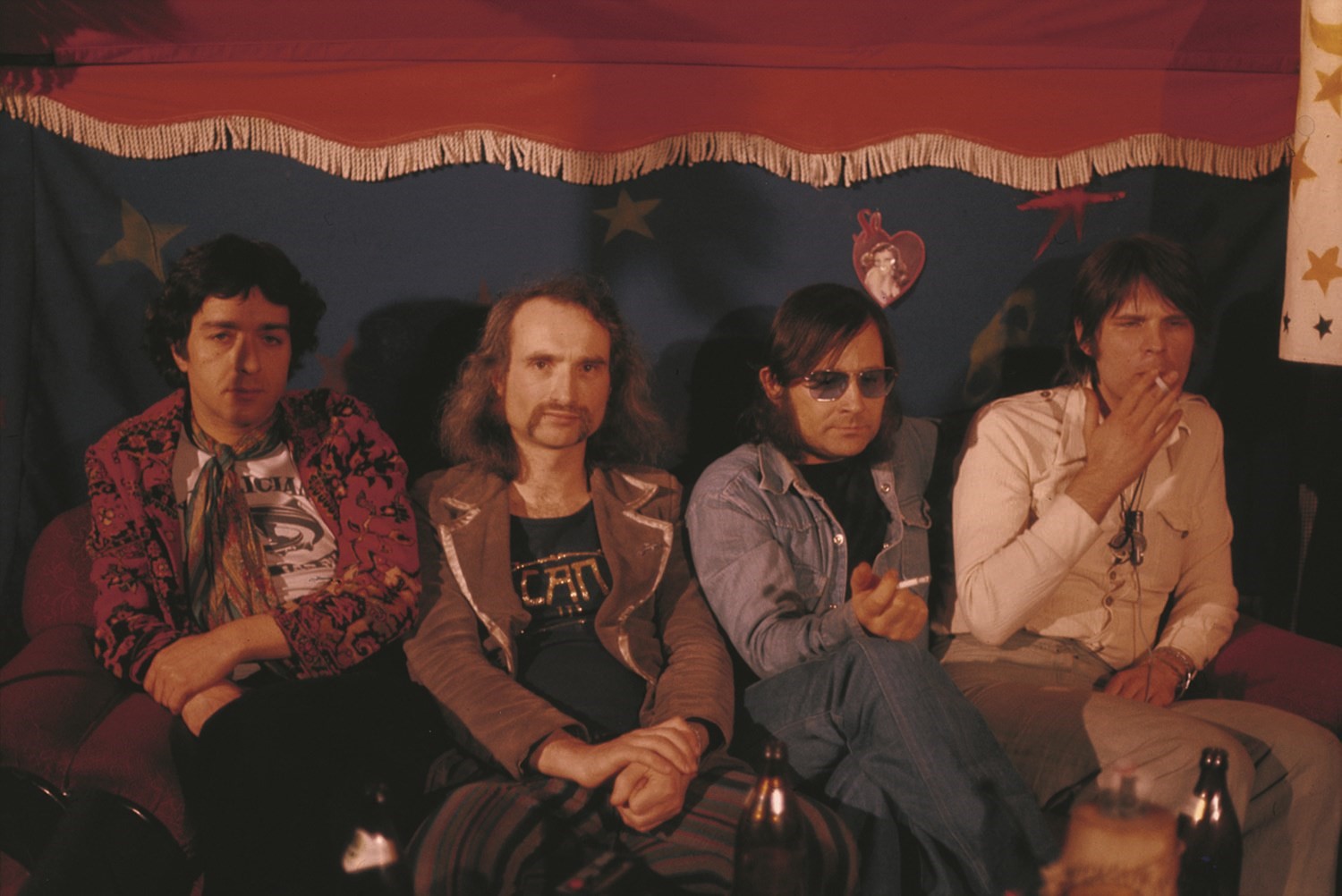
If anyone can do long, meandering self-indulgence, Can can. For a while there it was almost de rigeur for bands to name drop them ahead of a new release. The very mention of the Germans being an influence would appear to somehow validate that band’s own music, which is nonsense, of course. For what it’s worth, I can take them more than I can leave them. When they’re good, they’re great. They soar with a fluidity and ease that’s quite extraordinary; Mother Sky, Halleluhwah, Vitamin C, Dizzy Dizzy, Soup….all feature the classic Can trademarks of skittering drums, repetitiveness, whispered chanting and weird background effects.
The problem for me starts when those background effects creep ever further forward into the foreground of the mix. Sometimes, they can be just a wee bit too out there, just a tad too hippy, just a bass solo short of full-on prog for my delicate palate. I like Can best when they’re fluid and groovy and forever on the verge of danceability…..
….Flow Motion for example.
Can – Flow Motion
It’s classic, groovy, mid 70s Can. Beyond 10 minutes long, the groove slinks slower than a tranquilised slug traversing a large leaf. Indeed, tectonic plates have more go about them than the track. Yet somehow, somewhere around the 4 minute mark it starts to take effect.
Sneaking in on a cod reggae rhythm, Flow Motion is slow motion. It doesn’t really go anywhere, but when it’s finished you’ll realise that’s the whole point. Other bands might’ve used the same aimless wandering as incidental music, the perfect between-track filler on a concept album maybe, or the ideal opener before the wham of the real opening number. Can stick to the tune and streeeeeetch it out.
The whole thing is held together brilliantly by the rhythm section. Holger Czukay’s repetitive bassline is sparse, yet non-stop. Jaki Liebezeit’s propulsive drums skitter underneath, somewhere between a Studio 1 sessioneer and a jazz club veteran. Irmin Schmidt’s keyboards weave in and out, coming in waves before disappearing and reappearing at key points. Michael Karoli has free reign on his heavily wah-wah’d electric guitar, adding texture rather than tune, feedback instead of fretplay. He’s all over it, snaking between his bandmates like an avante garde Hendrix. Even a blind man could join the dots between this and Captain Beefheart’s Clear Spot album before arriving at PiL’s Albatross.
Flow Motion is the last track on the album of the same name. The album opener I Want More was an actual, bona fide chart hit for the band, Top Of The Pops appearance ‘n all.
Can – I Want More
The young Johnny Marr recalls a time being in the back of the family car, driving to Wales for a holiday, listening to I Want More on the radio. When he was writing How Soon Is Now, the sticky fingered Johnny channelled the rhythm and feel of Can’s hit for his own means. I’m sure you knew that already though.
It’s a strange album, is Flow Motion. On release, fans hated the numerous nods to disco and reggae, lamenting the loss of the ambience that made albums such as Tago Mago, Ege Bamyasi and Future Days so special. Listening to it as I type, I’d suggest it’s better than it may have been given credit for. Of course, I was only 6 when it was released, so I come to the album from a different time and place. That last track though……s’a cracker. Everyone agrees on that.












 Plain Or Pan