Alternative Version, Cover Versions, demo, Double Nugget, Dylanish, Get This!, Gone but not forgotten, Hard-to-find, Kraut-y, Most downloaded tracks, Sampled, Six Of The Best

We Are 9

Somehow, some way, Plain Or Pan has turned 9. Or, to be more accurate, is just about to turn 9. But at this time of year, when you can never be entirely sure if it’s Sunday morning or Thursday night and inspiration goes out the window along with routine and work ethic, it’s tradition that I fill the gap between Christmas and Hogmany with a potted ‘Best Of‘ the year compilation, so I’ve always made this period in time the unofficial birthday for the blog.

i am nine

Not that anyone but myself should care really; blogs come and go with alarming regularity and I’ve steadfastly refused to move with the times (no new acts here, no cutting edge hep cats who’ll be tomorrow’s chip paper, just tried ‘n tested old stuff that you may or may not have heard before – Outdated Music For Outdated People, as the tagline goes.) But it’s something of a personal achievement that I continue to fire my wee articles of trivia and metaphorical mirth out into the ether, and even more remarkable that people from all corners of the globe take the time out to visit the blog and read them. From the bottom of my heart, I thank you, one and all.

Since starting Plain Or Pan in January 2007, the articles have become less frequent but more wordy – I may have fired out a million alliterative paragraphs in the first year, whereas nowadays I have less time to write stuff and when I do, it takes me three times as long to write it. To use an analogy, I used to be The Ramones, (1! 2! 3! 4! Go!) but I’ve gradually turned into Radiohead; (Hmmm, ehmm, scratch my arse…) Without intending it, there are longer gaps between ‘albums’ and I’ve become more serious about my ‘art’. Maybe it’s time to get back to writing the short, sharp stuff again. Maybe I’ll find the time. Probably I won’t.

The past 9 years have allowed me the chance to interview people who I never would’ve got close to without the flimsy excuse that I was writing a blog that attracted in excess of 1000 visitors a day (at one time it was, but I suspect Google’s analytics may well have been a bit iffy.) Nowadays, it’s nowhere near that, but I still enthusiastically trot out the same old line when trying to land a big name to feature. Through Plain Or Pan I’ve met (physically, electronically or both) all manner of interesting musical and literary favourites; Sandie Shaw, Johnny Marr, Ian Rankin, Gerry Love, the odd Super Furry Animal. Quite amazing when I stop to think about it. You should see the list of those who’ve said they’ll contribute then haven’t. I won’t name them, but there are one or two who would’ve made great Six Of the Best articles. I’m not Mojo, though, so what can I expect?
pop9

A quick trawl through my own analytics spat out the Top 24 downloaded/played tracks on the blog this year, two for each month:

  1. Michael MarraGreen Grow the Rashes
  2. Wallace CollectionDaydream
  3. Jacqueline TaiebSept Heures du Matin
  4. The TemptationsMessage From A Black Man
  5. New OrderTrue Faith
  6. Bobby ParkerWatch Your Step
  7. Jim FordI’m Gonna Make Her Love Me
  8. DorisYou Never Come Closer
  9. Ela OrleansDead Floor
  10. Mac De MarcoOde To Viceroy
  11. Teenage FanclubGod Knows It’s True
  12. Iggy PopNightclubbing
  13. George HarrisonWah Wah
  14. MagazineThank You Falletinme Be Mice Elf Again
  15. Future Sound Of LondonPapua New Guinea
  16. Bob DylanSad Eyed Lady Of the Lowlands (mono version)
  17. Richard BerryLouie Louie
  18. REMRadio Free Europe (HibTone version)
  19. The CribsWe Share The Same Skies
  20. Johnny MarrThe Messenger
  21. McAlmont & ButlerSpeed
  22. Talking HeadsI Zimbra (12″ version)
  23. Style CouncilSpeak Like A Child
  24. Darlene LoveJohnny (Please Come Home)

And there you have it – the regular mix of covers, curios and forgotten influential classics, the perfect potted version of what Plain Or Pan is all about. A good producer would’ve made the tracklist flow a bit better. I just took it as I came to them; two from January followed by two from February followed by two from etc etc blah blah blah. You can download it from here.

See you in the new year. First up, Rufus Wainwright. Cheers!


Alternative Version, Cover Versions, Get This!, Hard-to-find, Sampled

The Steal Council

There were a few Whistle Test repeats on BBC4 last week, one of which jumped out at me. Nick Lowe was leading Brinsley Schwarz through a great, soulful version of Surrender To The Rhythm, a track from their 1972 ‘Nervous On The Road’ LP. I’d never knowingly heard Brinsley Schwarz before and I was getting into the song’s groove when it hit me: That wee occasional keyboard riff! The phrasing in Nick Lowe’s delivery! I’ve heard this song before!

Placed in time somewhere post glam and pre punk, Brinsley Schawrz were part of the pub-rock movement, a gritty, back-to-basics scene where ‘real’ musicians were more concerned with the make-up of their songs than the make-up on their face. Keen and earnest, the scene nonetheless spawned Kilburn & The High Roads, who would morph into the Blockheads, the 101ers (who featured a pre-Joe Strummer John Mellor on guitar) and Dr Feelgood, a major influence on the young, impressionable Paul Weller (to this day, Weller still plays From The Floorboards Up without a plectrum, choosing instead to adopt the open-handed Wilko strum whenever he plays it live).

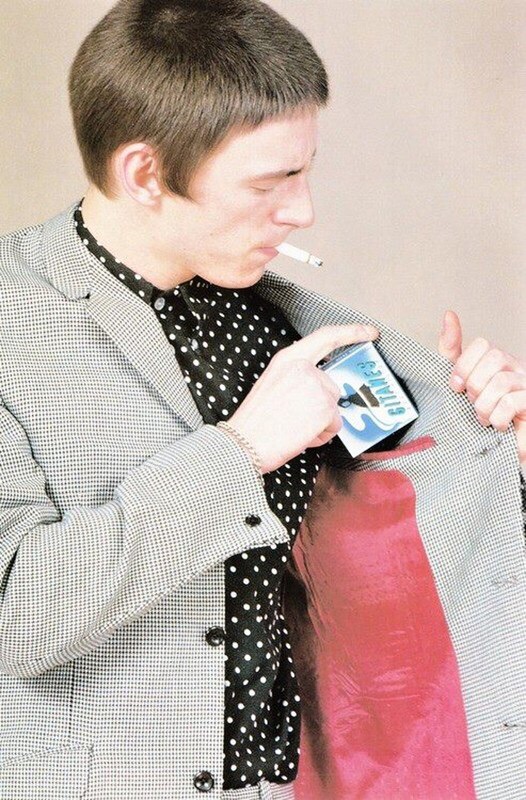
Weller, as it turns out, is more brazen about stealing things than you maybe realise. He has form – not only a strumming pattern from Wilko Johnson but also a career-long vocal delivery cribbed from Steve Marriott, a haircut half-inched from everyone from Worzel Gummidge to Muriel Gray and, more blatantly than any of this, the riff for Changingman that he heartilyappropriated from ELO’s 10538 Overture, something I’ve pointed out before. But long before the heady days of Brit Awards and Stanley Road etc, he was borrowing the mood, the feel and sometimes the chords and melody from more obscure tracks and passing them off as his own work.

style council

Time has been kinder to the much maligned Style Council than the dissenters might have thought back in the day (C’mon! This might cause a row down in Slough, but some of those tracks are ace – pretentious, aye! Ludicrous, aye! But ace – check out Weller’s recent tour for unarguable proof!) They were a deliberate move away from the Jam’s laddism; cricket jumpers, cycling gear, blokes with arms draped around one another, Weller at the back, pastel sweater hanging off his shoulders like a C&A catalogue model. All reference points lay somewhere between Dusty In Memphis, Curtis in Chicago and tongue firmly in cheek, and you either got it or you harked back to a time when Eton Rifles was the only thing that mattered.

Their debut single Speak Like A Child (in itself the title of a Herbie Hancock LP on Blue Note) is to this day a high point in The Style Council’s back catalogue, even if (as if turns out) you really have heard it before. With its breathy vocal delivery and airy Hammond lead, it isn’t entirely a million miles away from Brinsley’s Surrender To The Rhythm. Contrast and compare:

Brinsley SchwarzSurrender To The Rhythm

The Style CouncilSpeak Like A Child


Not content with pilfering blatantly from the past for his more soulful numbers, Weller went on the rampage through the more obscure parts of sunshine pop, alighting at Harper & Rowe’s 1967 bossanova boogaloo The Dweller and stealing the best bits for Have You Ever Had It Blue? This track was a highlight of the recent tour, the band kicking out the jams to play their blue notes under blue lighting, an inward-looking circle of nodding, noodling jazz-heads, but how many of the appreciative audience knew they were in effect listening to a carefully restructured cover version?

I’ve always loved The Style Council’s track, with its Gil Evans-arranged trumpet motif, the non-rock time signature and wordless Dee C Lee doo-be-doo backing vocals. As a 16 year-old, I thought Weller was a bit of a genius for having ‘written’ something so finger clickingly jazz. Great tune ‘n all that, Paul, but really, how did you manage to get away with it?

Harper & RoweThe Dweller

The Style CouncilHave You Ever Had It Blue?

*Bonus Track!

Here‘s The Style Council‘s With Everything To Lose, essentially the first version of the above track. No brass, different words, carefree flute etc etc


Cover Versions, Double Nugget, Get This!, Gone but not forgotten

Hang On Sloppy

Louie Louie by The Kingsmen is the basest, crassest, lowest-level, stoopidest rockist frat-boy thunk ever committed to vinyl. Which happens to make it just about the best record ever. But you knew that already. The fact that it is sloppiness in excelsis; badly played and full of mumbled, mistimed vocals only heightens its appeal.

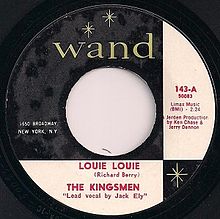
louie label

Louie Louie was written and recorded in 1955 by Richard Berry, who, along with his band The Pharaohs released it as a single to mass indifference. Shame, as it‘s a mighty fine piece of skronking, doo-wop inflected rock ‘n roll.

Louie LouieRichard Berry

The Kingsmen first became aware of Louie Louie not via Richard Berry’s original, but from another cover. Rockin’ Robin Roberts‘ version was a regular on the jukebox in Seattle’s Pypo Club where the band often gigged.

Louie LouieRockin’ Robin Roberts & The Wailers

They quickly spotted it was a guaranteed floor filler, so The Kingsmen began incorporating it into their sets of lounge standards and easy listening classics.

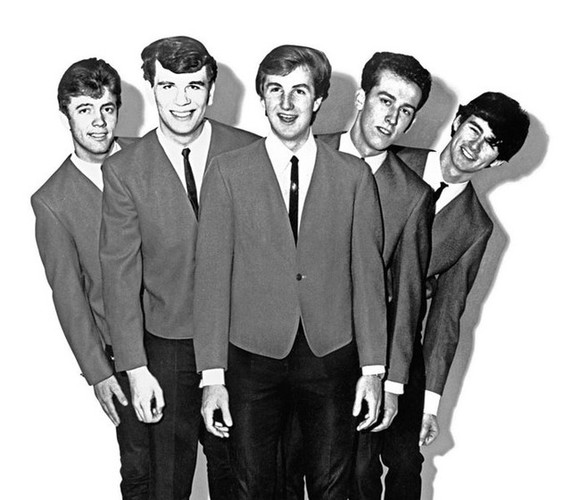
kingsmenAll the King’s horses and all The Kingsmen

To say the recorded version was a departure from their usual sound would not be an exaggeration. Look at the band. Hardly The Stooges, or even The Troggs, are they? But with this one record they unwittingly created the caveman stomp of the Garage Band movement. Three chords? Check! Farfisa organ? Check! Nagging, repetitive chorus? Check, and check! Those Troggs’ and future Stooges’ ears pricked attentively at the hot-wired sound emanating from their AM radios.

Louie LouieThe Kingsmen

In order to give the record a live feel, the one vocal mike was hung suspended from the ceiling of the small studio and singing guitarist Jack Ely was forced to shout into it over the noise of the band. Just after the scratchy solo, he comes in to the verse a bar too early, checks himself and is saved by an on-the-ball drummer who casually flings in a recording-saving drum fill.

The fact that the teenage Ely was wearing braces on his teeth meant that when he wasn’t coming in on the wrong cue, he was mumbling his way through much of the song, a point that lead to the band and record being investigated for obscenity by the FBI. They were even banned from playing live in some States. As has been proven time and time again, this is exactly the sort of promotion a record needs in order to scale the charts.

If you listen carefully, more carefully then the FBI as it would appear, at the 54 seconds mark you’ll hear the crystal clear exclamation of Lynn Easton the drummer shouting “Fuck!” as he fumbles his sticks mid fill. Check it out.

Shock, horror: the Kingsmen performing live, possibly singing Loui Louie.

The whole record took as long to record as it does to listen to – done and dusted for $50 in one imperfect take and sent to the pressing plant before the band had any time to object.

The Kingsmen hated the version that was put out, although they mellowed slightly when it finally settled in the number 2 slot of the actual Billboard Hot 100 –  a somewhat bittersweet tale, as by this point they had split up. To promote the single, drummer Lynn Easton (who named the original band and therefore ‘owned’ the name – although I’m sure a Drifter or a Bay City Roller or 2 could contest this in court) put together The Kingsmen Mark 2 for all promotional work around the single. As long as they played it with the required loose limbed sloppiness, who would even have noticed?

*Bonus Tracks!

toots

Here’s Toots & The Maytals skanking take, all clipped guitars, tippy-tappy hi-hat and stoned Jamaican harmonies. At 5 and a half minutes long, it kinda outstays its welcome, but it’s beautiful all the same.

Louie LouieToots & The Maytals

oj zeke

And here, with eyebrow permanently arched, is the typographically mischievous Louise Louise by Orange Juice. Shimmering, jangling and all the way fae fey Bearsden, it‘s a totally different song. Methinks the band had the title before the song.

Louise LouiseOrange Juice

Cover Versions, Double Nugget, Get This!, Hard-to-find

Rods & Mockers

I Wish You Would by The Yardbirds is a nagging, insistent blast of garage blues from 1964.

The YardbirdsI Wish You Would

yardbirds 64

It was their debut single, lifted hook, line and sinker from Billy Boy Arnold‘s 1955 track of the same name and re-sold as the hot new thing. It’s the sort of track that wouldn’t sound out of place on a Nuggets or Pebbles compilation.

When David Bowie heard it and/or saw The Yardbirds at the Ricky Tick or Marquee or whatever venue was most hip and most happening that week, something stuck with him. In 1973, pre-dating Lenny Kaye’s Nuggets theme by a good few years, he put together Pin Ups, a fine fine album of parochial r’n’ b stompers from his formative years; The Kinks, The Who, The Pretty Things…. all corners of the Brit beat group movement were covered, including The Yardbird’s Chelsea-booted stomper.

David BowieI Wish You Would

bowie 73

In typical Bowie fashion, his version sounds less like the original and more like a wired, paranoid blues from outer space.

Just a few short months on from the Ziggy album and tour, The Spiders From Mars band are all over it like a glam-slamming racket, Mick Ronson’s Gold Top set to boogie before wigging out in a brief Eastern ragga towards the end. I used to think it was the definitive version until I heard this…

glittery rod

Rod StewartI Wish You Would

He’s an easy target, is Rod. He’s certainly had his knockers (arf) but believe me, this is terrific from start to finish! Mock Rod at your peril.

Rod’s version is a full-on mic swinging, hip swiveling, spandex clad romp. It‘s proof that, despite the nickname he was always more rocker than mod. It recalls a prime-time loose ‘n lairy Faces. Listen to him bark out the commands in that voice that’s equal parts sandpaper and sawdust; “First verse!” “Second verse!” “Bridge!” “Sow-low!” You can picture him, strutting across some Mid-Western balloon-filled stage or other, chest puffed, leaning back into the mic the way he does.

Rod’s voice is superb, all mock cockney and nary a hint of the Scots blood that he’s so proud of. He carries the track from start to finish, his band doing the best bar-room blues that can be coaxed out of them. “And away we go! Whatever happens happens! Let’s just do it!” he instructs, his band hanging on in there right until the end, dive-bombing bass runs, runaway harmonica solo, 3-note riff and all. It’s crackin’!

What’s all the more amazing is that Rod’s take on I Wish You Would is from a long-forgotten studio session sometime in the mid 80s, when he really had no right at all to be recording stuff as thrillingly essential as this. See when he was jumping about in his videos wearing a pink tracksuit and a yellow sun visor on his head? He coulda been filing the charts with dumb rock ‘n roll like this instead. What a wasted opportunity.

Alternative Version, Cover Versions, demo, Gone but not forgotten, Live!

Sound Affects

The Small Faces were the perfect group; a pint-sized pocket dynamo of r’n’b and soul, windmilling guitars and swirling Hammond. They dressed the same, sported the same haircuts and were a walking, talking, living and breathing advert for Carnaby Street and Swinging London. None of the four of them stood taller than 5′ 6″ (it was the 60s, therefore imperial units of measurement counted) and were mod to the core. In the street parlance of the day, a ‘face’ was the most respected, sharpest looking mod about town. The band name wrote itself. 

small faces

With disparate roots in American blues and soul and cockney music hall (thanks in part to Steve Marriott’s training at the Italia Conti stage school), The Small Faces cooked up an original brew of heady mod pop.

As the sixties progressed and trouser legs widened, The Small Faces’ sound drifted away from the cor blimey Pearly stomp of the mid phase Faces to a more pastoral, whimsical and expansive psychedelic sound, but by 1968 the band were brought back to terra firma when Marriott penned Tin Soldier.

tin soldier 7

Small Faces  – Tin Soldier

Tin Soldier was a no quibbles return to their r’n’b roots – an off-mic count-in gives way to piano and Hammond before Marriott’s stinging electric guitar and rallying cry of “Come on!” lead into the verses. It builds and drops before building again into a wonderful crescendo of tumbling toms, grinding riffs, gritty soul adlibs and a hysterical female (PP Arnold) hell bent on raising the roof. If The Small Faces are the perfect group, this is the perfect record. If you listen really carefully, you’ll hear a little scratching noise in the background – that’s Paul Weller writing his crib notes.

Sound affects, indeed.

Jenny RylanceJenny Rylance. Whatever did Rod Stewart see in her?

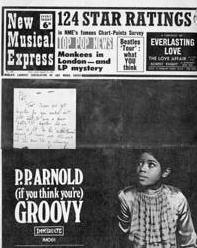
Steve Marriott wrote Tin Soldier for the beautiful yet unattainable Jenny Rylance, a leggy model who was at the time Rod Stewart’s girlfriend. He intended to give the song to his current beau PP Arnold, but on completion, realising he’d created such a brilliant track, he gave Arnold If You Think You’re Groovy instead and kept Tin Soldier for The Small Faces. A wise move, as it turned out. When Randy Rod finished with Rylance, Marriott ended up wooing her and married her a year later. Like the Artful Dodger he once played on stage,  Marriott ended up with both the song and the girl. The perfect ending.

I usually steer clear of sticking YouTube clips in posts, but this is fantastic – a top of their game Small Faces on French telly, live vocals, mimed instruments and with a little help from a somewhat sparkled PP Arnold. Check the eyes! Oh to have seen them in concert.


* Bonus Track 1!

Here‘s a live version of Tin Soldier from Newcastle City Hall in November 1968.

I get the impression the screaming and incidental crowd noise has been mixed in afterwards to create a more ‘live’ sound, though I may be wrong. Either way it sounds like The Small Faces are playing in a cave to 20,000 appreciative ace faces, and not the sweaty box bedroom-sized r’n’b club you might’ve expected. (Newcastle City Hall being neither, as it turns out.)

* Bonus Track 2!

Here‘s PP Arnold doing If You Think You’re Groovy

pp arnold nme

Cover Versions, Hard-to-find

Rhys Is The Word

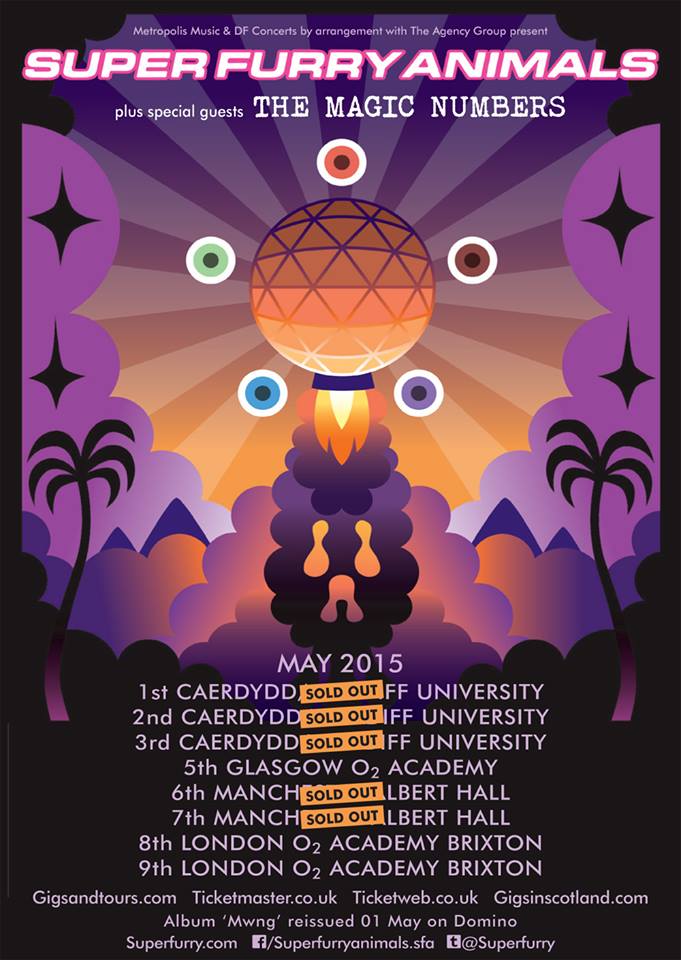
It’s the mid 90s all over again! Chris Evans is back on the telly soon with a one-off TFI Friday. Blur have a new LP out – a bit of a grower, I’ve found, equal parts skewed pop noise and languid, lethargic Damon downers. More excitingly than any of that though is that next week there’ll be Super Furry fever the length and breadth of the country. Or in my house at least, and possibly yours too. Super Furry Animals are back together after 6 long years lost in a wilderness of solo projects, side projects, family issues and a generally lazy, can’t-be-arsed attitude to their group’s music to go out on a tour around the Academies and O2s of the land.

sfa logo pete fowler

Most bands reform (have the Super Furries ‘reformed’? Who really knows?) and play the various enormodomes and arenas with a set comprising all the big hits and fan favourites. These bands, ever thoughtful to their fans’ requirements, even stick in a couple of new tracks to allow folk to disappear to the bar or the toilet or wherever.  Not the Super Furry Animals.  The tour is on the back of the reissue of their Mwng LP, an album sung entirely in their mother tongue, an album that somehow made its way to the dizzy heights of Number 11 on yer actual charts. Given the stellar quality of the rest of the band’s back catalogue, this is just about as un-comeback like as possible. Think of a Bizarro-era Wedding Present who reform to play a set of Ukrainians material and you’re half way there.

sfa tour 2015

Due to can’t-get-out-of work commitments I’m going to miss the Glasgow show (just about the only one not yet advertised with a Sold Out! sign), which I’m doubly miffed at now that The Magic Numbers have been added as the support act. Two great bands at what will be one (very) smokin’ gig, in every sense of the word.

As much as Mwng is unintelligible to the average listener outside of native-speaking Wales, (“Don’t sing your songs in Welsh,” instructed Creation boss Alan McGee. “Sing them in English.” “We do,” replied a puzzled Gruff Rhys) it’s still a terrific record – noisy and thrashing one minute, warped and wobbly and lightly dusted in a fuzzy haze the next (often within the first 2 minutes of the same song) and will no-doubt sound out of this world when it makes its way into the live arena. You have to presume that the shows will be two-parters, with the album being the yin to a greatest hits-type yang, but in the world of the SFA who really knows? All I do know is that I’m irked that I can’t go.

SFA_15

On the Mwng LP you’ll find this, Y Teimlad, a slow burning beauty of a track that combines lovely descending guitar figures with Beach Boys harmonies and the odd lightly toasted guitar riff – Super Furry Animals in miniature, if you will.

Super Furry AnimalsY Teimlad

Y Teimlad is a cover of a track by obscure Welsh experimentalists Datblygu. Datblygu were self-sufficient, releasing album after album on cassette only, singing their heavy, pastoral psychedlia in Welsh and receiving the bare minimum of airplay (although this included 5 Peel Sessions) before crashing to a halt in the early 90s. They were clearly a big influence on the next wave of Welsh bands, particularly the Super Furries and Gorky’s Zygotic Mynci. But you knew that already.

DatblyguY Teimlad

If you’re off to one of those Super Super Furry shows, make sure you enjoy it for me.

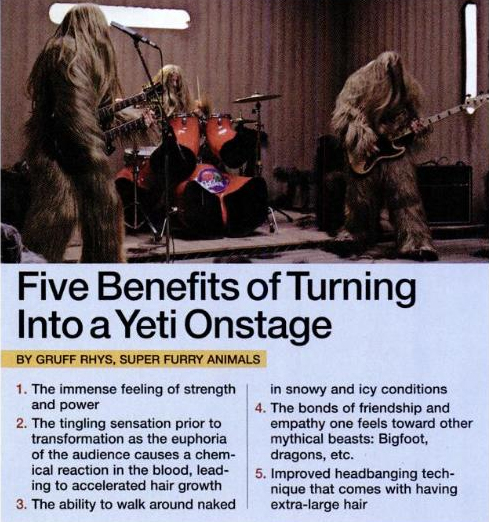
sfa yeti


Cover Versions, Gone but not forgotten, Hard-to-find, Kraut-y, Sampled

Good Felas

What a shitty few weeks. The previous post below will fill you in if you’re an infrequent visitor. Thanks for taking the time to leave your comments. I read them all, even if I couldn’t face replying. Truly, thanks.

Anyway, what better way to get back on track than by digging out some slick Nigerian Afrobeat from 1977?

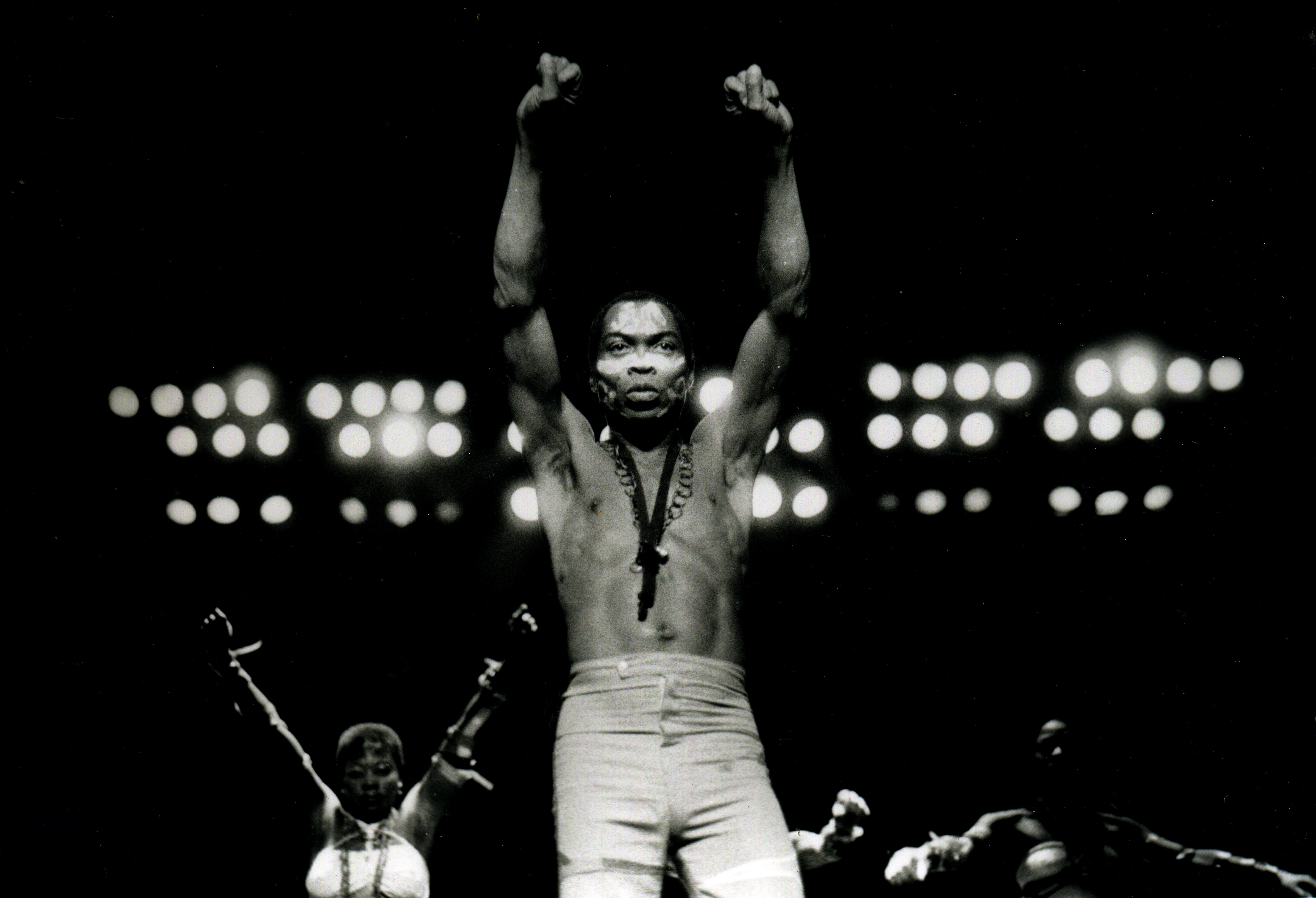
fela kuti

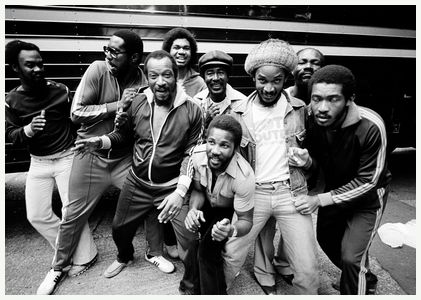
Fela Kuti is a real musicians’ musician. A multi-instrumentalist, equally at home on sax, keys, trumpet, drums….you name it, between 1960 and his death in 1997 he was responsible for around 60 LP releases. Perhaps only The Fall would appear to be able to top that. Much like The Fall, many of his albums are live affairs. A few are also dubious-looking compilations of indeterminate origin. Amongst the regular studio recordings, there are whole LPs of collaborations with other musicians (‘Stratavarious‘ with Ginger Baker, ‘Music Of Many Colours‘ with Roy Ayers.)  All Fela’s albums are tight and taut, superbly played and full of meandering grooves underneath the politicised lyrics.

In the 70s, Fela changed his middle name. Ransome, he said, was a slave name.  And Fela was nobody’s slave. He was a folk singer. The Nigerian equivalent of Woody Guthrie, singing the songs of the ordinary man.  He took to singing in his own unique pidgin English as a way of ensuring Africans throughout the continent would understand his message – they all spoke in their own native tongue, but they also all understood basic English. He sang of the barbaric Nigerian Government and had a smash hit (‘Zombie‘) on the back of it. This resulted in him barely surviving with his life after a severe beating from government flunkies whilst his studio was burned to the ground. More than just a fly in the ointment, Fela galvanised his fellow countrymen into action, a real anti-establishment hero.

fela kuti 2

Fela’s music is terrific. There’s a real discipline to the playing. Much of it is simple and  repetitive. The musicians could easily break out and rattle off a little lick or two, and sometimes they do. His brass section in particular (sometimes just Fela) are fond of the odd up-the-garden-path solo. But mostly to Fela, the rhythm is King. It’s a bit like Can at their grooviest – hypnotic, shamanistic, designed to subconsciously affect the limbs. Feet will tap. Hips will sway. Heads will bob. Before you know it you’ll be on your feet and wondering how you got there.

1977’s Sorrow, Tears and Blood LP is typical of his work at the time. The title track formed the entire first side, a relentless guitar ‘n sax-led tour de force, all polyrhythms and funk bass, lightly toasted with electric piano.

Fela KutiSorrow, Tears And Blood

Atop the non-stop one chord groove is a lyric worthy of Joe Strummer at his authority-baiting best;

Everybody run….Police they come….Army they come….confusion everywhere…..someone nearly died….Police don’t go away….Army don’t disappear….them leave sorrow, tears and blood….

Fela’s work is absolutely ripe for sampling and reinterpretation. Mr Mendel has done this excellent remix of Sorrow, Tears And Blood:

Fela KutiSorrow, Tears And Blood (Mr Mendel mix)

fe la soul

….and a couple of years ago, someone came up with the brilliant concept of Fe La Soul, where they took the Daisy Agers raps and placed them on top of Fela’s funkiest fills. There are whole albums of the stuff if you look in all the right places. Here‘s one of my favourites;

Fe La SoulItsoweezee

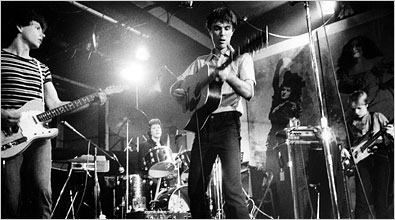
….and no doubt inspired by the relentless, driving grooves of Fela, during the sessions for 1980’s Remain In Light, Talking Heads recorded Fela’s Riff, a terrific piece of instrumental New York, new wave funk. I really need to do a Talking Heads feature at some point…

t heads

Cover Versions, Get This!, Gone but not forgotten, Sampled

Step Brothers

In the latest Mojo, the one with the big piece on Physical Graffiti, Jimmy Page throws away a comment about The Beatles stealing an old r’n’b riff and fashioning it into their own I Feel Fine. Pots ‘n kettles, Jimmy! Pots ‘n kettles!

What Jimmy omitted to reveal is how the same riff more than informed Led Zep’s own Moby Dick.

bobby parker

The track in question is Bobby Parker‘s smokin’ hot 1961 r’nb stomper, Watch Your Step;

Bobby Parker’s story is the classic struggling musician versus the world tale of rip-offs, bad management and lack of recognition. Mention his name ’round these parts and folk like my father-in-law will wax lyrical about the Rangers and Everton player with the same name. The Bobby Parker we’re concerned with earned his chops tackling the music business and playing alongside Bo Diddley, Sam Cooke and Jackie Wilson. He toured extensively, sharing stages with rock ‘n roll’s founding fathers – Chuck Berry, Little Richard and Buddy Holly to name but a few. We’re all well aware of those names, but Bobby Parker? He remains niche, known only by contemporary musicians and musos, waiting to be discovered and elevated to his rightful place amongst the greats. An early b-side of his, You Got What It Takes, was recorded by Marv Johnson as one of the first singles for Motown, but upon release, to Parker’s dismay his name had been wiped from the credits and replaced, not for the last time, by that of the ever-canny Berry Gordy.

Stung by this, (“What was I to do? Fight Motown?!?“) Bobby Parker wrote what has since become his signature tune, Watch Your Step. Unlike the movers and shakers over at Hitsville USA, Parker was quick to acknowledge his references – the 12 bar blues, the similar riff and structure of Ray Charles’ What’d I Say;

and also to Dizzy Gillespie’s Manteca, a skronking, relentlessly driving riff-laden jazz instrumental;

When asked about this a few years ago, he was admirable in his honesty.

I started playing Gillespie’s riff on my guitar and decided to make a blues out of it. What came out was ‘Watch Your Step.’

john lennon ukelele

Also admirably honest was John Lennon.

“‘Watch Your Step’ is one of my favourite records. The Beatles have used the lick in various forms.”

Most noticeably, as Jimmy Page was quick to point out, Watch Your Step‘s taut, snappy riff and structure lends itself quite well to I Feel Fine.

I was flattered,” said Parker later on. “I thought it was a cool idea. But I still had, in the back of my mind, the idea that I should have gotten a little more recognition for that.”

Sound familiar?

Listen closely and you’ll hear little flashes of what could be Day Tripper too;

led zep

The big baddies in the whole thing though are Led Zeppelin. For the record, I love Led Zeppelin. For the rocking, the rolling and the riff-riff-riffing there was no-one better, but they have nowhere to hide when it comes to this sort of thing. They’re certainly no strangers to the rape and pillage of the blues. Jimmy brazenly ‘borrows’ little riffs, indeed whole songs from blues’ back catalogue. I’ve written about this before, but much of the Zep’s entire recorded career was based on long-forgotten blues standards, arriving fully formed but twisted and turned into fantastically sounding ear-crunching slabs of heavy blooze rock. But nicked all the same. If they’d been more honest in their sticky fingerdness they might have been given more leeway, but it’s the deception and the credits to Page/Plant that rankle. Anyway, there are entire books and websites dedicated to uncovering such things, but this isn’t one of them.

When Jimmy was pointing out the similarities between Watch Your Step and I Feel Fine, he might, after all these years, have admitted to basing his own riff for Moby Dick on Bobby Parker’s single.

But he didn’t. Perhaps the pangs of guilt were such that at the start of the 70s Parker was offered a paltry $2000 to record a demo for the nascent Swan Song label, but nothing came to pass of this. If Jimmy truly felt guilty, he’d have given Parker a credit on Moby Dick.

Not for the first time, Jimmy got away with it. And not for the first time, Parker missed out on the credit.

Trivial post-script!

Have you ever heard the dogs barking during the fade out of I Feel Fine? The smart money is on Paul doing the yelping, but you never know…

You can hear tons of this sort of stuff over at What Goes On – The Beatles Anomalies List. It’s great!

Cover Versions, Gone but not forgotten, Hard-to-find, Live!

Readers And Writers

It’s the 25th January. If you’re an Ayrshire man or woman, that date is indelibly stamped on you subconscious. It’s a date that’s as easily remembered as Guy Fawkes Day, Christmas Day and your own birthday. The 25th January. Robert Burns’ birthday.

burns

If Rabbie was alive today he’d be 256 years young. His poems and songs are read and recited at Burns Suppers the world over. This weekend alone, an estimated 150,000 Burns Suppers will take place in countries as far afield as Russia, Japan, India and the United States. You might even be attending one yourself.

Not everyone attending those suppers will know exactly what’s taking place – weird rituals involving knives and haggis. The bagpipes, fiddles and occasional kilts – not something worn in Burns’ time, but now seemingly the de-rigueur dress code for the event. People talking in a strange language. People singing while holding hands in an unusual manner – by the way, it’s Auld Land Syne, as in ‘sign‘, not ‘zine‘. Only English folk, Americans in movies and Brian Wilson pronounce it with a zed.

A Burns Supper is a very Scottish thing, yet the content of Burns’ work is universal – he was a nationalist yet is loved internationally. He could paint a picture with the words he wrote. It doesn’t matter if you’re in Moscow, Russia or Moscow, Ayrshire, we all understand the thoughts and feelings in the words he writes; whether it’s the feeling of love for someone dear or the feeling of despair at man’s attack on nature or simply complaining about a bad dose of the toothache. Burns was both a romantic and a realist, something that even the most hardened of Calvinist Scots are at some times in their lives.

His songs can be a strange breed. In the best traditions of folk music, the tunes were passed down from his mother, and once learned, he added his own poetic twists and melodic turns to them. Organic and ever changing, he’d probably be horrified at the more traditional readings of his songs. Burns Suppers can be awfy stuffy affairs. Don’t sing the song in the ‘right’ way, and a thousand sniffy noses turn upwards in disgust.

Two folk who’ve kept the tradition alive while remaining true to themselves are Michael Marra and Eddi Reader.

michael marra

As is often the way, Michael Marra is probably now more appreciated in death than he was when he was with us. That’s certainly the case in my house. I am ashamed at how little attention I paid to him when he was a jobbing, gigging musician. I now think of him as the Scottish Tom Waits – uncompromising, totally unique and each song a little rough diamond packed full of soul. Why was I wasting my time with the latest Primal Scream album when I coulda been discovering Michael Marra? He’d often turn up to play Irvine Folk Club with an old ironing board taking the place of his keyboard stand. The sparse audience would be warmly welcomed into his Dundonian world sung in that coarse voice of his. Like Burns, Michael Marra could be romantic one minute, unbelievably sad the next and ridiculously funny when you least expected it.

Michael MarraHamish

His song Hamish, named after Dundee United’s goalie Hamish McAlpine and written about the time Princess Grace of Monaco turned up to watch a European game at Tannadice between United and Monaco is typical of his work.

Gus Foy pointed to the side of the goal and said

‘There’s Grace Kelly by ‘Taylor Brothers’ Coal’

Michael MarraGreen Grow The Rashes

Green Grow The Rashes is almost standard fare at a Burns Supper. One of Burns’ most popular songs, it’s been sung by many people in many ways. Michael’s version comes from the Celtic Connections Festival in Glasgow a few years back. Pin-drop quiet, he hammers out the tune on a grand piano and sings it superbly. Not an ironing board in sight. The thunderous applause at the end tells you all you need to know.

One singer one song? Not quite…

eddi and john

Oor ain Eddi Reader, Ayrshire by way of Glasgow, does a terrific version of Green Grow The Rashes.

 Eddi ReaderGreen Grow The Rashes

Fronting an assembled stellar cast of folkies that includes John McCusker, Phil Cunningham, Heidi Talbot and Mr Eddi Reader, John ‘Trashcans’ Douglas, this live version of Green Grow The Rashes fairly skips along, the band playing the sort of arrangement that wouldn’t sound out of place on Led Zep III while Eddi’s voice floats above the melody like a bird on a breeze.

A bit like haggis, I know she can be a bit of an acquired taste for some, but give this a listen. Then go and catch yourself one of our wee furry friends and have your own Burns Supper to yourself.

haggis

Cover Versions, Hard-to-find, Sampled

Beta Blockers

Please the press in Belgium“, once sang Morrissey at his most withering, in such a way as to suggest the Flemish outpost was the last place on Earth you’d want to be trying to please the staff of Snoecks Magazine. Belgium isn’t a country high on the cool-o-meter when it comes to pop. It’s given the world Poirot and a seriously strong lager that induces the propensity to batter one’s spouse, neither of which are much to do with music at all. Plastique Bertrand would appear to be the jewel in their flimsy crown.  “Ca plane pour moi, moi, moi, moi, moi!” Instant cool points ‘n all that, but then, that’s about it. Almost…

wallace collection

Wallace Collection were a late 60s/early 70s smooth vocal group, seemingly formed in order that the words ‘easy‘ and ‘listening‘ could be glued together with a dollop of saccharine-sweet syrupy gloop to create a brand new genre. By comparison, they make The Carpenters sound like Motorhead. Look at them – you might never have heard them, but you know how they sound. Wallace Collection’s musical arrangements featured lots of strings, lots of flutes and lots of whispered, half-spoken vocals.

Their track Daydream is their best known track.

Gently descending (and owing a large debt to Isaac Hayes’ Ike’s Mood), with a chanting choral refrain, it proved to be ripe for samplers. Hip hop acts such as The Pharcyde stole the bassline and turned it inside out and back to front on their own records. If you’ve been playing it as you read, no doubt you’ll recognise it.

Somewhat freakishly, two acts sampled the track and released respective records built upon it almost on the same day.

i monster

I MonsterDaydream In Blue

In June 2001, Sheffield’s I Monster put out Daydream In Blue, a record that jigsawed the vocal refrain and descending strings from the original onto a contemporary vocodered piece of what the style press had probably stopped calling trip-hop by that point in time. Mid paced and slightly plodding, you can’t have escaped hearing this record at the time. It was everywhere. I have a memory of hearing it wafting out of Iain Beale’s cafe on the Eastenders omnibus one hungover Sunday afternoon. It’s held the test of time quite well, although I much prefer The Beta Band’s ‘version’.

beta band

The Beta BandSquares

Initially named Daydream (I have a promo single so named) it was to be the lead single and first track on the band’s follow up to their first LP proper, but as the band were pressing Hot Shots II, I Monster’s track was on its way to the shops and onto the radio. By the time the first versions of Hot Shots II had been boxed and ready to go, The Beta Band were coming to the realisation that the hottest new track on the radio was a track featuring the self-same obscure sample that they were about to unleash on the world. More than a wee bit ticked off, the initial copies of the LP were withdrawn, plans to release the single were shelved and the album came out with the first track re-named Squares. The track was released as a single after I Monster’s track had disappeared off the radar, but the potential ‘hit’ impact for The Beta Band’s single was no more.

There’s a promo-only version of Squares that features *Don ‘Magic’ Juan, a former pimp, preacher and hip-hop personality. It‘s kinda bizarre…

The Beta BandSquares (Bloah Remix)

I must do a proper Beta Band piece one day – one of the great under-appreciated bands.

*I think. There are quite a few Don Juans in the world of underground rap.