Cover Versions, Hard-to-find

Rhys Is The Word

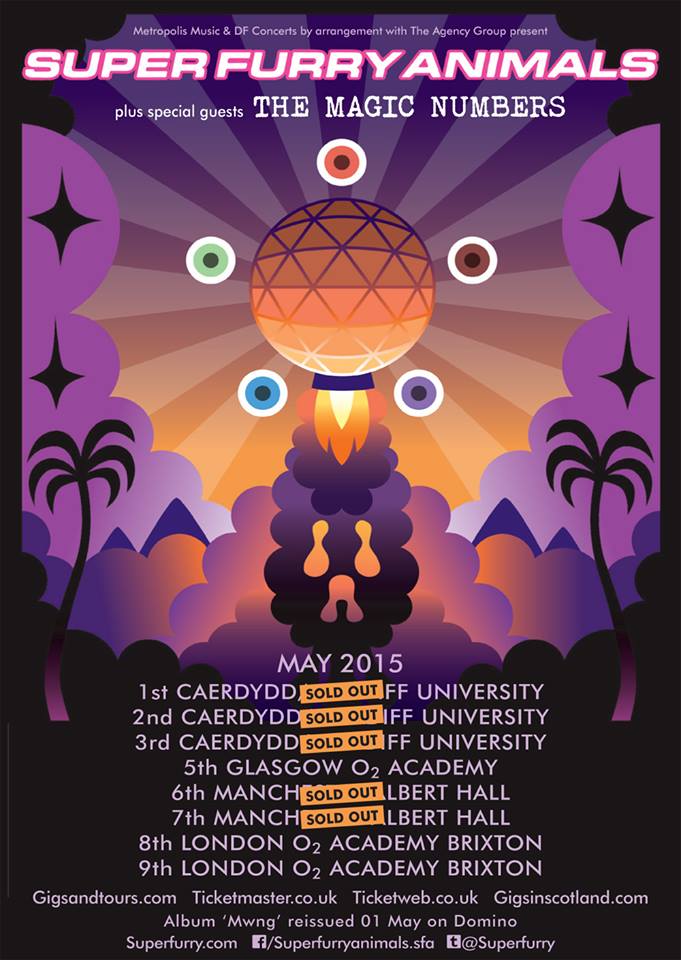
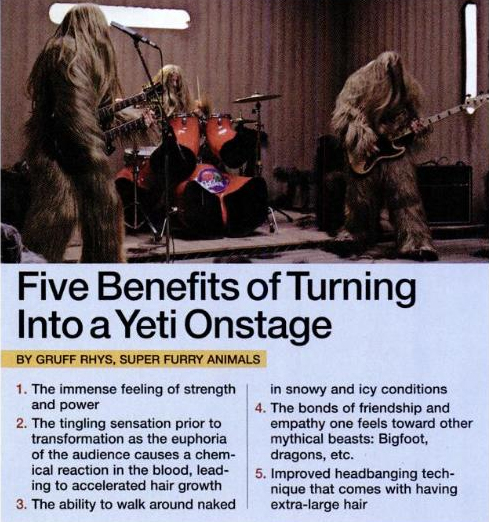
It’s the mid 90s all over again! Chris Evans is back on the telly soon with a one-off TFI Friday. Blur have a new LP out – a bit of a grower, I’ve found, equal parts skewed pop noise and languid, lethargic Damon downers. More excitingly than any of that though is that next week there’ll be Super Furry fever the length and breadth of the country. Or in my house at least, and possibly yours too. Super Furry Animals are back together after 6 long years lost in a wilderness of solo projects, side projects, family issues and a generally lazy, can’t-be-arsed attitude to their group’s music to go out on a tour around the Academies and O2s of the land.

sfa logo pete fowler

Most bands reform (have the Super Furries ‘reformed’? Who really knows?) and play the various enormodomes and arenas with a set comprising all the big hits and fan favourites. These bands, ever thoughtful to their fans’ requirements, even stick in a couple of new tracks to allow folk to disappear to the bar or the toilet or wherever.  Not the Super Furry Animals.  The tour is on the back of the reissue of their Mwng LP, an album sung entirely in their mother tongue, an album that somehow made its way to the dizzy heights of Number 11 on yer actual charts. Given the stellar quality of the rest of the band’s back catalogue, this is just about as un-comeback like as possible. Think of a Bizarro-era Wedding Present who reform to play a set of Ukrainians material and you’re half way there.
sfa tour 2015

Due to can’t-get-out-of work commitments I’m going to miss the Glasgow show (just about the only one not yet advertised with a Sold Out! sign), which I’m doubly miffed at now that The Magic Numbers have been added as the support act. Two great bands at what will be one (very) smokin’ gig, in every sense of the word.

As much as Mwng is unintelligible to the average listener outside of native-speaking Wales, (“Don’t sing your songs in Welsh,” instructed Creation boss Alan McGee. “Sing them in English.” “We do,” replied a puzzled Gruff Rhys) it’s still a terrific record – noisy and thrashing one minute, warped and wobbly and lightly dusted in a fuzzy haze the next (often within the first 2 minutes of the same song) and will no-doubt sound out of this world when it makes its way into the live arena. You have to presume that the shows will be two-parters, with the album being the yin to a greatest hits-type yang, but in the world of the SFA who really knows? All I do know is that I’m irked that I can’t go.

SFA_15

On the Mwng LP you’ll find this, Y Teimlad, a slow burning beauty of a track that combines lovely descending guitar figures with Beach Boys harmonies and the odd lightly toasted guitar riff – Super Furry Animals in miniature, if you will.

Super Furry Animals – Y Teimlad

Y Teimlad is a cover of a track by obscure Welsh experimentalists Datblygu. Datblygu were self-sufficient, releasing album after album on cassette only, singing their heavy, pastoral psychedlia in Welsh and receiving the bare minimum of airplay (although this included 5 Peel Sessions) before crashing to a halt in the early 90s. They were clearly a big influence on the next wave of Welsh bands, particularly the Super Furries and Gorky’s Zygotic Mynci. But you knew that already.

Datblygu – Y Teimlad

If you’re off to one of those Super Super Furry shows, make sure you enjoy it for me.
sfa yeti


Cover Versions, Gone but not forgotten, Hard-to-find, Kraut-y, Sampled

Good Felas

What a shitty few weeks. The previous post below will fill you in if you’re an infrequent visitor. Thanks for taking the time to leave your comments. I read them all, even if I couldn’t face replying. Truly, thanks.

Anyway, what better way to get back on track than by digging out some slick Nigerian Afrobeat from 1977?

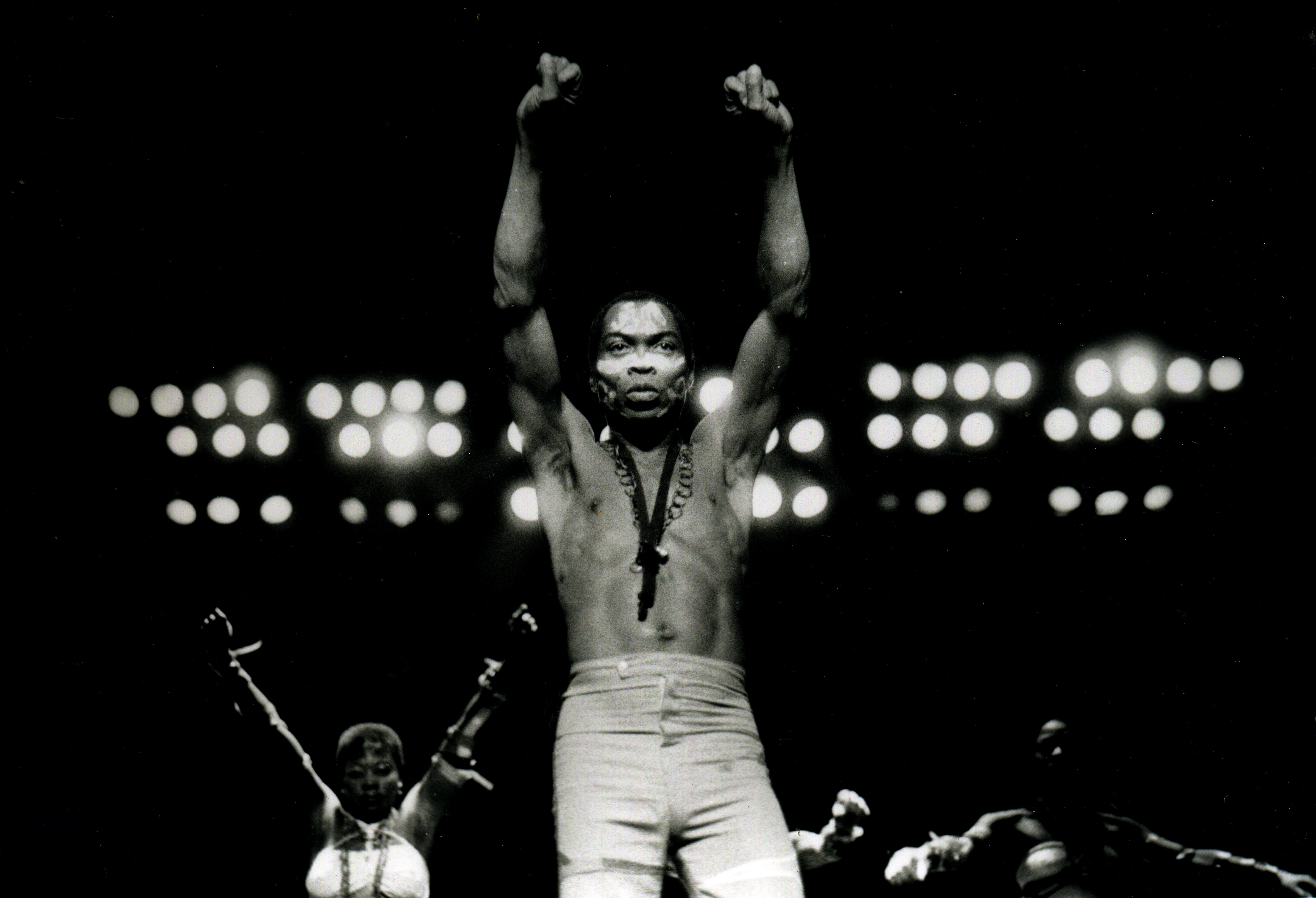
fela kuti

Fela Kuti is a real musicians’ musician. A multi-instrumentalist, equally at home on sax, keys, trumpet, drums….you name it, between 1960 and his death in 1997 he was responsible for around 60 LP releases. Perhaps only The Fall would appear to be able to top that. Much like The Fall, many of his albums are live affairs. A few are also dubious-looking compilations of indeterminate origin. Amongst the regular studio recordings, there are whole LPs of collaborations with other musicians (‘Stratavarious‘ with Ginger Baker, ‘Music Of Many Colours‘ with Roy Ayers.)  All Fela’s albums are tight and taut, superbly played and full of meandering grooves underneath the politicised lyrics.

In the 70s, Fela changed his middle name. Ransome, he said, was a slave name.  And Fela was nobody’s slave. He was a folk singer. The Nigerian equivalent of Woody Guthrie, singing the songs of the ordinary man.  He took to singing in his own unique pidgin English as a way of ensuring Africans throughout the continent would understand his message – they all spoke in their own native tongue, but they also all understood basic English. He sang of the barbaric Nigerian Government and had a smash hit (‘Zombie‘) on the back of it. This resulted in him barely surviving with his life after a severe beating from government flunkies whilst his studio was burned to the ground. More than just a fly in the ointment, Fela galvanised his fellow countrymen into action, a real anti-establishment hero.

fela kuti 2

Fela’s music is terrific. There’s a real discipline to the playing. Much of it is simple and  repetitive. The musicians could easily break out and rattle off a little lick or two, and sometimes they do. His brass section in particular (sometimes just Fela) are fond of the odd up-the-garden-path solo. But mostly to Fela, the rhythm is King. It’s a bit like Can at their grooviest – hypnotic, shamanistic, designed to subconsciously affect the limbs. Feet will tap. Hips will sway. Heads will bob. Before you know it you’ll be on your feet and wondering how you got there.

1977’s Sorrow, Tears and Blood LP is typical of his work at the time. The title track formed the entire first side, a relentless guitar ‘n sax-led tour de force, all polyrhythms and funk bass, lightly toasted with electric piano.

Fela Kuti – Sorrow, Tears And Blood

Atop the non-stop one chord groove is a lyric worthy of Joe Strummer at his authority-baiting best;

Everybody run….Police they come….Army they come….confusion everywhere…..someone nearly died….Police don’t go away….Army don’t disappear….them leave sorrow, tears and blood….

Fela’s work is absolutely ripe for sampling and reinterpretation. Mr Mendel has done this excellent remix of Sorrow, Tears And Blood:

Fela Kuti – Sorrow, Tears And Blood (Mr Mendel mix)

fe la soul

….and a couple of years ago, someone came up with the brilliant concept of Fe La Soul, where they took the Daisy Agers raps and placed them on top of Fela’s funkiest fills. There are whole albums of the stuff if you look in all the right places. Here‘s one of my favourites;

Fe La Soul – Itsoweezee

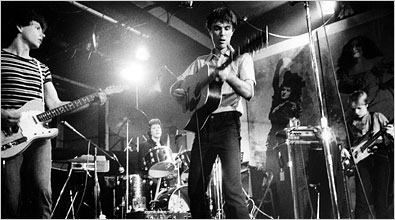
….and no doubt inspired by the relentless, driving grooves of Fela, during the sessions for 1980’s Remain In Light, Talking Heads recorded Fela’s Riff, a terrific piece of instrumental New York, new wave funk. I really need to do a Talking Heads feature at some point…

t heads

Cover Versions, Get This!, Gone but not forgotten, Sampled

Step Brothers

In the latest Mojo, the one with the big piece on Physical Graffiti, Jimmy Page throws away a comment about The Beatles stealing an old r’n’b riff and fashioning it into their own I Feel Fine. Pots ‘n kettles, Jimmy! Pots ‘n kettles!

What Jimmy omitted to reveal is how the same riff more than informed Led Zep’s own Moby Dick.

bobby parker

The track in question is Bobby Parker‘s smokin’ hot 1961 r’nb stomper, Watch Your Step;

Bobby Parker’s story is the classic struggling musician versus the world tale of rip-offs, bad management and lack of recognition. Mention his name ’round these parts and folk like my father-in-law will wax lyrical about the Rangers and Everton player with the same name. The Bobby Parker we’re concerned with earned his chops tackling the music business and playing alongside Bo Diddley, Sam Cooke and Jackie Wilson. He toured extensively, sharing stages with rock ‘n roll’s founding fathers – Chuck Berry, Little Richard and Buddy Holly to name but a few. We’re all well aware of those names, but Bobby Parker? He remains niche, known only by contemporary musicians and musos, waiting to be discovered and elevated to his rightful place amongst the greats. An early b-side of his, You Got What It Takes, was recorded by Marv Johnson as one of the first singles for Motown, but upon release, to Parker’s dismay his name had been wiped from the credits and replaced, not for the last time, by that of the ever-canny Berry Gordy.

Stung by this, (“What was I to do? Fight Motown?!?“) Bobby Parker wrote what has since become his signature tune, Watch Your Step. Unlike the movers and shakers over at Hitsville USA, Parker was quick to acknowledge his references – the 12 bar blues, the similar riff and structure of Ray Charles’ What’d I Say;

and also to Dizzy Gillespie’s Manteca, a skronking, relentlessly driving riff-laden jazz instrumental;

When asked about this a few years ago, he was admirable in his honesty.

“I started playing Gillespie’s riff on my guitar and decided to make a blues out of it. What came out was ‘Watch Your Step.’”

john lennon ukelele

Also admirably honest was John Lennon.

“‘Watch Your Step’ is one of my favourite records. The Beatles have used the lick in various forms.”

Most noticeably, as Jimmy Page was quick to point out, Watch Your Step‘s taut, snappy riff and structure lends itself quite well to I Feel Fine.

“I was flattered,” said Parker later on. “I thought it was a cool idea. But I still had, in the back of my mind, the idea that I should have gotten a little more recognition for that.”

Sound familiar?

Listen closely and you’ll hear little flashes of what could be Day Tripper too;

led zep

The big baddies in the whole thing though are Led Zeppelin. For the record, I love Led Zeppelin. For the rocking, the rolling and the riff-riff-riffing there was no-one better, but they have nowhere to hide when it comes to this sort of thing. They’re certainly no strangers to the rape and pillage of the blues. Jimmy brazenly ‘borrows’ little riffs, indeed whole songs from blues’ back catalogue. I’ve written about this before, but much of the Zep’s entire recorded career was based on long-forgotten blues standards, arriving fully formed but twisted and turned into fantastically sounding ear-crunching slabs of heavy blooze rock. But nicked all the same. If they’d been more honest in their sticky fingerdness they might have been given more leeway, but it’s the deception and the credits to Page/Plant that rankle. Anyway, there are entire books and websites dedicated to uncovering such things, but this isn’t one of them.

When Jimmy was pointing out the similarities between Watch Your Step and I Feel Fine, he might, after all these years, have admitted to basing his own riff for Moby Dick on Bobby Parker’s single.

But he didn’t. Perhaps the pangs of guilt were such that at the start of the 70s Parker was offered a paltry $2000 to record a demo for the nascent Swan Song label, but nothing came to pass of this. If Jimmy truly felt guilty, he’d have given Parker a credit on Moby Dick.

Not for the first time, Jimmy got away with it. And not for the first time, Parker missed out on the credit.

Trivial post-script!

Have you ever heard the dogs barking during the fade out of I Feel Fine? The smart money is on Paul doing the yelping, but you never know…

You can hear tons of this sort of stuff over at What Goes On – The Beatles Anomalies List. It’s great!

Cover Versions, Gone but not forgotten, Hard-to-find, Live!

Readers And Writers

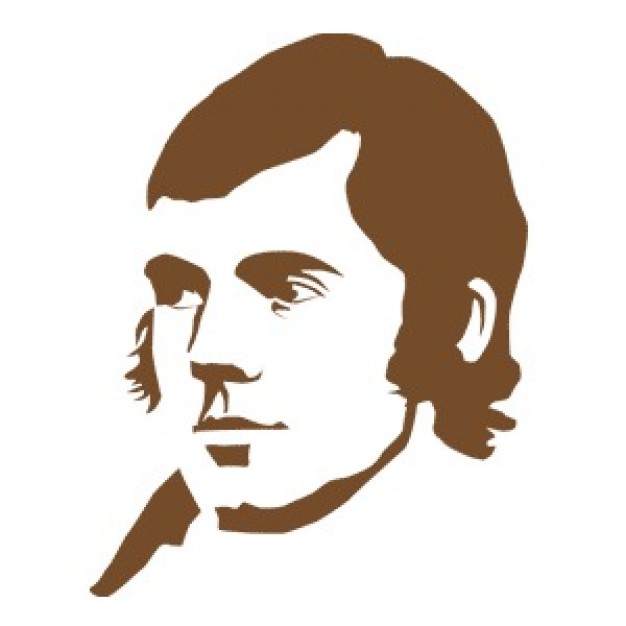
It’s the 25th January. If you’re an Ayrshire man or woman, that date is indelibly stamped on you subconscious. It’s a date that’s as easily remembered as Guy Fawkes Day, Christmas Day and your own birthday. The 25th January. Robert Burns’ birthday.

burns

If Rabbie was alive today he’d be 256 years young. His poems and songs are read and recited at Burns Suppers the world over. This weekend alone, an estimated 150,000 Burns Suppers will take place in countries as far afield as Russia, Japan, India and the United States. You might even be attending one yourself.

Not everyone attending those suppers will know exactly what’s taking place – weird rituals involving knives and haggis. The bagpipes, fiddles and occasional kilts – not something worn in Burns’ time, but now seemingly the de-rigueur dress code for the event. People talking in a strange language. People singing while holding hands in an unusual manner – by the way, it’s Auld Land Syne, as in ‘sign‘, not ‘zine‘. Only English folk, Americans in movies and Brian Wilson pronounce it with a zed.

A Burns Supper is a very Scottish thing, yet the content of Burns’ work is universal – he was a nationalist yet is loved internationally. He could paint a picture with the words he wrote. It doesn’t matter if you’re in Moscow, Russia or Moscow, Ayrshire, we all understand the thoughts and feelings in the words he writes; whether it’s the feeling of love for someone dear or the feeling of despair at man’s attack on nature or simply complaining about a bad dose of the toothache. Burns was both a romantic and a realist, something that even the most hardened of Calvinist Scots are at some times in their lives.

His songs can be a strange breed. In the best traditions of folk music, the tunes were passed down from his mother, and once learned, he added his own poetic twists and melodic turns to them. Organic and ever changing, he’d probably be horrified at the more traditional readings of his songs. Burns Suppers can be awfy stuffy affairs. Don’t sing the song in the ‘right’ way, and a thousand sniffy noses turn upwards in disgust.

Two folk who’ve kept the tradition alive while remaining true to themselves are Michael Marra and Eddi Reader.

michael marra

As is often the way, Michael Marra is probably now more appreciated in death than he was when he was with us. That’s certainly the case in my house. I am ashamed at how little attention I paid to him when he was a jobbing, gigging musician. I now think of him as the Scottish Tom Waits – uncompromising, totally unique and each song a little rough diamond packed full of soul. Why was I wasting my time with the latest Primal Scream album when I coulda been discovering Michael Marra? He’d often turn up to play Irvine Folk Club with an old ironing board taking the place of his keyboard stand. The sparse audience would be warmly welcomed into his Dundonian world sung in that coarse voice of his. Like Burns, Michael Marra could be romantic one minute, unbelievably sad the next and ridiculously funny when you least expected it.

Michael Marra – Hamish

His song Hamish, named after Dundee United’s goalie Hamish McAlpine and written about the time Princess Grace of Monaco turned up to watch a European game at Tannadice between United and Monaco is typical of his work.

Gus Foy pointed to the side of the goal and said

‘There’s Grace Kelly by ‘Taylor Brothers’ Coal’

Michael Marra – Green Grow The Rashes

Green Grow The Rashes is almost standard fare at a Burns Supper. One of Burns’ most popular songs, it’s been sung by many people in many ways. Michael’s version comes from the Celtic Connections Festival in Glasgow a few years back. Pin-drop quiet, he hammers out the tune on a grand piano and sings it superbly. Not an ironing board in sight. The thunderous applause at the end tells you all you need to know.

One singer one song? Not quite…

eddi and john

Oor ain Eddi Reader, Ayrshire by way of Glasgow, does a terrific version of Green Grow The Rashes.

 Eddi Reader – Green Grow The Rashes

Fronting an assembled stellar cast of folkies that includes John McCusker, Phil Cunningham, Heidi Talbot and Mr Eddi Reader, John ‘Trashcans’ Douglas, this live version of Green Grow The Rashes fairly skips along, the band playing the sort of arrangement that wouldn’t sound out of place on Led Zep III while Eddi’s voice floats above the melody like a bird on a breeze.

A bit like haggis, I know she can be a bit of an acquired taste for some, but give this a listen. Then go and catch yourself one of our wee furry friends and have your own Burns Supper to yourself.

haggis

Cover Versions, Hard-to-find, Sampled

Beta Blockers

“Please the press in Belgium“, once sang Morrissey at his most withering, in such a way as to suggest the Flemish outpost was the last place on Earth you’d want to be trying to please the staff of Snoecks Magazine. Belgium isn’t a country high on the cool-o-meter when it comes to pop. It’s given the world Poirot and a seriously strong lager that induces the propensity to batter one’s spouse, neither of which are much to do with music at all. Plastique Bertrand would appear to be the jewel in their flimsy crown.  “Ca plane pour moi, moi, moi, moi, moi!” Instant cool points ‘n all that, but then, that’s about it. Almost…

wallace collection

Wallace Collection were a late 60s/early 70s smooth vocal group, seemingly formed in order that the words ‘easy‘ and ‘listening‘ could be glued together with a dollop of saccharine-sweet syrupy gloop to create a brand new genre. By comparison, they make The Carpenters sound like Motorhead. Look at them – you might never have heard them, but you know how they sound. Wallace Collection’s musical arrangements featured lots of strings, lots of flutes and lots of whispered, half-spoken vocals.

Their track Daydream is their best known track.

Gently descending (and owing a large debt to Isaac Hayes’ Ike’s Mood), with a chanting choral refrain, it proved to be ripe for samplers. Hip hop acts such as The Pharcyde stole the bassline and turned it inside out and back to front on their own records. If you’ve been playing it as you read, no doubt you’ll recognise it.

Somewhat freakishly, two acts sampled the track and released respective records built upon it almost on the same day.

i monster

I Monster – Daydream In Blue

In June 2001, Sheffield’s I Monster put out Daydream In Blue, a record that jigsawed the vocal refrain and descending strings from the original onto a contemporary vocodered piece of what the style press had probably stopped calling trip-hop by that point in time. Mid paced and slightly plodding, you can’t have escaped hearing this record at the time. It was everywhere. I have a memory of hearing it wafting out of Iain Beale’s cafe on the Eastenders omnibus one hungover Sunday afternoon. It’s held the test of time quite well, although I much prefer The Beta Band’s ‘version’.

beta band

The Beta Band – Squares

Initially named Daydream (I have a promo single so named) it was to be the lead single and first track on the band’s follow up to their first LP proper, but as the band were pressing Hot Shots II, I Monster’s track was on its way to the shops and onto the radio. By the time the first versions of Hot Shots II had been boxed and ready to go, The Beta Band were coming to the realisation that the hottest new track on the radio was a track featuring the self-same obscure sample that they were about to unleash on the world. More than a wee bit ticked off, the initial copies of the LP were withdrawn, plans to release the single were shelved and the album came out with the first track re-named Squares. The track was released as a single after I Monster’s track had disappeared off the radar, but the potential ‘hit’ impact for The Beta Band’s single was no more.

There’s a promo-only version of Squares that features *Don ‘Magic’ Juan, a former pimp, preacher and hip-hop personality. It‘s kinda bizarre…

The Beta Band – Squares (Bloah Remix)

I must do a proper Beta Band piece one day – one of the great under-appreciated bands.

*I think. There are quite a few Don Juans in the world of underground rap.


Cover Versions, Get This!, Gone but not forgotten, Hard-to-find

Under The Influence

It’s 1987 in San Francisco. Or maybe L.A. Bono, atop a building, perhaps a hotel, it doesn’t really matter, his arms outstretched in messianic fashion, has just informed the crowd of unwitting gatherers below that “Rock ‘n roll stops the traffic!” If I was on my morning commute, I’d be mightily pissed off at this uncalled-for inconvenience. The traffic is indeed stopped. Lights change from red to green and back again, but the procession of buses, cabs and sedans is gridlocked. A huge crowd swells, folk in suits and ties, briefcase-carrying urban professionals, crane their necks and squint in the morning sunshine at the spectacle above them. “OK Hedge, play the blues!”

u2 roof

The Hedge, so-named because of that thick thatch of collar-baiting pony-tailed hair, thinning rapidly on top but hidden underneath a carefully perched cowboy hat rattles off one of his trademark ticka-ticka-ticka-ticka guitar riffs, and the most unbluesy guitar solo ever echoes out across California. “All you need is three chords and the truth!” spouts Bono, who by this time is halfway up a water tower and totally unaware of the long arm of the mirror-shaded law lurking behind Larry Mullen Jnr’s drum kit. It’s U2’s Saville Row moment, just one more example of them (literally) elevating themselves into rock’s lofty position as premier league players. The nitwits that they had just become.

I don’t know about the truth, but all you need is indeed just three chords. You don’t need me to tell you that. The foundations of rock ‘n roll were formed on such base ideals. Silly old Bono dressed the fact up in grandiose, wankery fashion. Punk bible, Sniffin’ Glue said it best;

sniffin glue chordsMany a band was formed with the guitarist having an arsenal of two chords, with that tricky third still in production.

eddie cochraneKing of the Swingers

Eddie Cochran was there at rock ‘n roll’s birth. If Ike Turner was pushing and grunting for all he was worth, Eddie was there at the end of the bed, holding the towels and hot water. Or more likely, he was fighting off Little Richard for mirror space as he greased his hair into that spectacular D.A. of his.

Eddie only knew three chords. “There are three steps to heaven,” he sang.

Step 1, you play a C. Step 2, you play that tricky F. Step 3, you play a G. And that sure sounds like heaven to me.

Eddie Cochran – Three Steps To Heaven

Actually, Eddie knew far more than just three chords. A quick listen to a couple of his records will tell you that. But he was an economical guitar player, never frilly, never flashy. He played what his songs demanded. A minor chord here perhaps, a 7th there, all rhythmically skirling toe-tappers. And his songs sound more honest, more soulful than the entire output of Bono and his rooftop singers.

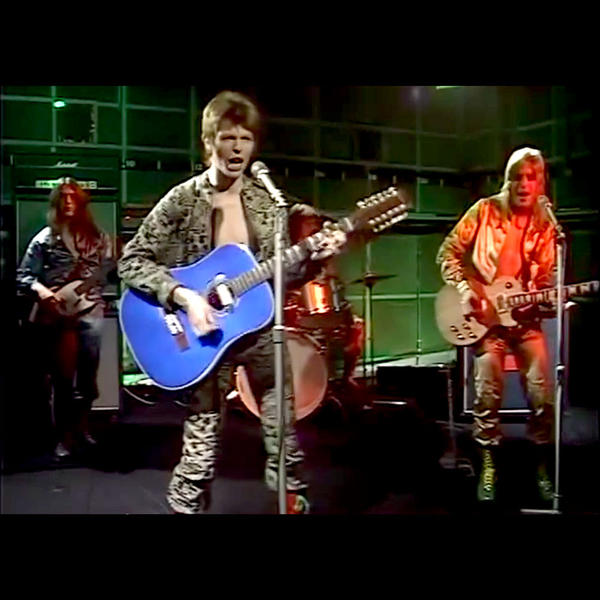
bowie beeb

When David Bowie ditched the theatrics, the miming and the long, long hair on the road to Ziggy‘s straight-ahead guitar boogie, the spirit of Eddie Cochran loomed large.

David Bowie – Queen Bitch

Queen Bitch from Hunky Dory is Three Steps To Heaven in a funky jump suit with added sneer and a good dollop of Les Paul courtesy of Mick Ronson. Listen carefully. The moaning and groaning you hear in the background is the sound of Ziggy being conceived.

Broncho“We’ve played some right toilets in our time…”

New (wave) kids on the block Broncho know a thing or two about the simplicity of the three chord song. Their own What sounds like a glammed-up mix of Queen Bitch and Lou Reed’s Vicious, as sung by Marc Bolan. And there ain’t nothin’ wrong with that;

Broncho – What

Taken from their Just Enough Hip To Be A Woman LP, it’s an album that escaped my attention earlier last year, but one that could do with further investigation.

Rock ‘n roll – it’s dead easy, isn’t it?

Alternative Version, Cover Versions, demo, Double Nugget, Dylanish, Get This!, Gone but not forgotten, Hard-to-find, Live!, Most downloaded tracks, Six Of The Best, studio outtakes

P.O.P. B.O. ’14

Somehow, this is the end of the 8th year of this blog. 8 years! I never for a minute thought I’d be down this road for so long, but here I am, slowing down slightly, but still writing whenever the muse takes me. In the past, I used to write loads over the Christmas period and store it all up like a squirrel hiding nuts in trees, so that when I was busy with my real work I could drip-feed my wee articles online at regular intervals when time was of the essence. These days, holidays mean holidays. For the past week or so I’ve done sweet F.A. apart from sit around in my underwear eating cheese until 3 in the afternoon. Occasionally I’ve tidied up a bit, but that’s only after the Applewood smoked or Wensleydale and cranberry has run out.

This slideshow requires JavaScript.

It’ll be good to get back to the old routine in January and, along with work, get back to writing about music on a (hopefully) more regular basis. Until then, here’s the annual end of December post.

Around this time of year I employ a team of stat monkeys to sift through everything published on Plain Or Pan over the last 12 months. Numbers are fed into a specially-constructed silver machine, crunched and spat back out. Amongst the stainless steel saliva lie the 25 most listened to and/or downloaded tracks of the year.

Below is that list, a CD-length collection of covers, curios and hard-to-find classics. Download the rar file, sequence as you please and burn away.


pop8

Baby Huey – Listen To Me

The Lovin’ Spoonful – Do You Believe In Magic?

French Fries – Danse a la Musique

Oscar Brown – The Snake

Al Brown – Here I Am Baby

Radiohead – These Are My Twisted Words

Bob Dylan – Boots Of Spanish Leather

Ian Dury & the Blockheads – Hit Me With Your Rhythm Stick

Michael Marra – Hamish

Paul Weller – Flame-Out

Bo Diddley – She’s Fine, She’s Mine

Barbara & the Browns – You Don’t Love Me

Tommy James & the Shondells – Crimson & Clover

Lightships – Do Your Thing

The Beatles – It’s All Too Much (Much Too Much bootleg version)

Les Negresses Vertes – Zobi la Mouche

Trash Can Sinatras – Ghosts Of American Astronauts (Live at Fez, NYC 2004)

Eddie Floyd – I’ve Never Found A Girl

The Smiths – There Is A Light That Never Goes Out (demo)

Curtis Liggins Indications – What It Is

Them – I Can Only Give You Everything

Kim Fowley – Bubblegum

A Camp – Boys Keep Swinging

The Slits – I Heard It Through The Grapevine (demo)

Madness – Un Paso Adelante


And here’s to health, wealth and happiness to you all for 2015. All the best!

Alternative Version, Cover Versions, Hard-to-find

Un Paso Adelante!!!

Hey you! Don’t read that, read this! This is the heavy heavy monster read! The nuttiest read around!

One! Step! Beyoooooond!

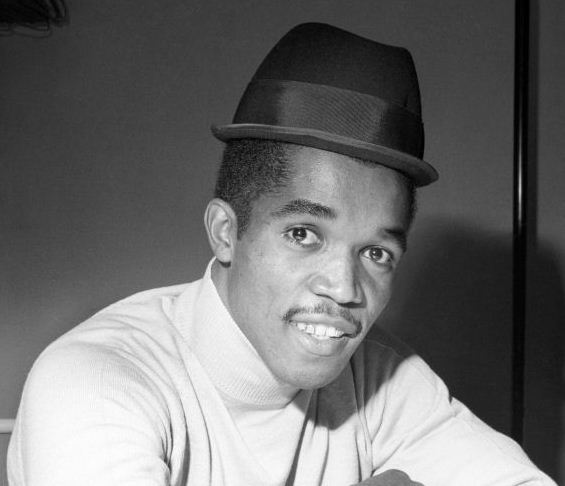
 Prince-Buster

One Step Beyond is a skankin’ slice of primo Jamaican ska written by Prince Buster. It first appeared on the b-side of his single Al Capone, itself the blueprint for The Specials Gangsters.

One Step Beyond – Prince Buster


It’s largely instrumental, a rasping saxophone-led knees-up, occasionally punctuated by some frantic chickaboom-chickaboom-chickaboom-chickaboom-chick ska-tting and Prince Buster’s titular cry.

But you knew all that already. Thanks to Madness, you’ll be more than familiar with the tune. If you’re of a similar age to myself, you’ll be well aware of how important the tune was to your formative years. It was one of the first tracks I heard that made me appreciate the power of music. It was loud, catchy and novel enough to grab the ears of young listeners everywhere. We didn’t know it wasn’t an original, we just loved doing the primary 7 approximation of the nutty dance to One Step Beyond by Madness.

madness

Madness owe a lot to Prince Buster. After a brief flirtation as The North London Invaders, they named themselves after one of his tracks, which they themselves covered on the b-side of their first single, a single they called ‘The Prince‘.

Prince Buster – Madness

To further cement the Prince Buster connection, Chas Smash’s opening vocal earthquake on One Step Beyond is hotwired and paraphrased directly from another Prince Buster track, The Scorcher.

Prince Buster – The Scorcher

The Madness take on One Step Beyond is practically a photocopy of Prince Buster’s version (why would you try and improve perfection?) but if you listen closely, really closely, you’ll maybe catch the incessant thuggish background chant of “Here We Go! Here We Go!” that plays throughout most of the track.

The released Madness version was actually a demo that originally lasted all of 70 seconds. Madness knob twiddlers of choice Langer and Winstanley looped the original track to double the length, but before they were able to mix it properly, the track had been sent off to the pressing plant and was skanking its way up the charts by the time anyone else had noticed.

Realising they had a multi-national hit on their hands, the people in charge of such things thought it’d be a good idea to have Madness release language-specific versions for various territories.

Hence the Spanish version, Un Paso Adelante


..and the Italian version, Un Passo Avanti

What a great idea! I love these versions!

two tone

*Bonus tracks!

Prince Buster – Al Capone

The Specials – Gangsters


Cover Versions, demo, Dylanish, Gone but not forgotten, Hard-to-find

Band Aid

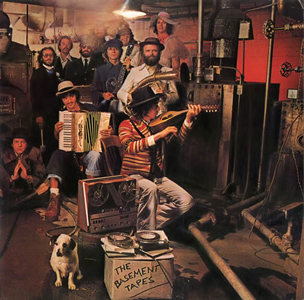
I’ve been enjoying the recent latest release in the Bob Dylan Bootleg Series. Number 11 shines a light on the Basement Tapes, the name given to the set of landmark recordings Bob did with The Band in 1967 in the basement of Big Pink, the cabin in the woods that served as a commune/writing/rehearsal space for The Band.

As any music scholar knows, the Basement Sessions unwittingly became the first bootleg LP, when some tracks were spirited out of Big Pink, into the ether and onto a record titled ‘The Great White Wonder’. Bob fans lucky enough to lay their hands on a copy marvelled at the down-home, rootsy feel of it all. Taken in context, the musical world was ingesting heaps of hallucinogens, dressing up in silly clothes and humping anything that moved, under the guise of ‘free love’.

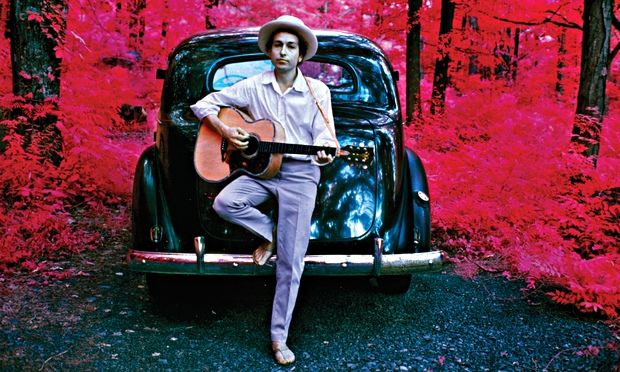
 Bob Dylan

A burnt-out Dylan eschewed all this nonsense by totalling his Triumph in a motorbike crash and taking to time to convalesce at his own speed. The recording at Big Pink found him running loosely through a set of songs that had their roots in long-forgotten Americana, creating an arcane set of mystical wonder.

For years it’s been easy enough to uncover complete sets of this stuff in the darkest corners of the internet, but much of it is poor quality and while you might be of the notion that the song is key, a lot of it is unlistenable.

The official release comes in a couple of formats – the eye-wateringly expensive Complete Sessions that I’d assume is just that, though I’m certain that some Bob Cat somewhere has a version of Yea! Heavy And a Bottle Of Bread or Don’t You Tell Henry sung by Rick Danko’s dog that the compilers missed for some reason or other. Look in the darkest corners of the internet and you can no doubt find it too. I went for the recession-friendly 2CD set, which compiles all the essential stuff at a far better sound quality than my old CD bootleg from years ago.

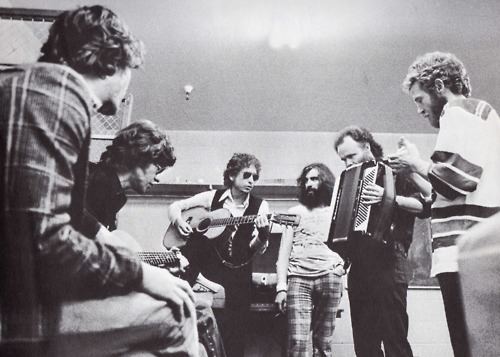
bob and band bw

Recorded on a mobile recording unit loaned to them by Dylan’s manager Albert Grossman through microphones borrowed from Peter, Paul and Mary, it’s terrific stuff, with Bob leading The Band through first versions of never-since played originals and exhumed olde worlde tunes. It’s not music Dylan intended for mass consumption. It’s him and The Band (and the occasional dog at their feet) merrily running through whatever the hell they like, however often they feel like it. Had they known it would become the stuff of legend, it’s possible the group would’ve tried to make it more contemporary. Thankfully, this music remains as pure and clean as the air around Big Pink. Nowhere on the Basement Tapes will you hear the sound of the beat group, nor will you hear “the sun’s not yellow it’s a chicken”-type lyrics.

Following the constant record/tour/release schedule that had eaten up all of his time for the previous 2 years, Bob essentially used the sessions as a way of recording new stuff that could be somewhat cynically sent to other artists to have hits with, ensuring Bob’s pockets stayed healthily full whilst maintaining a low public profile. Much of the stuff from the sessions did indeed do this;

Both The Band and The Box Tops put out versions of I Shall Be Released. The Mighty Quinn became a hit for Manfred Mann. The Byrds made You Ain’t Goin’ Nowhere the lead track on their Sweethearts Of the Rodeo LP.

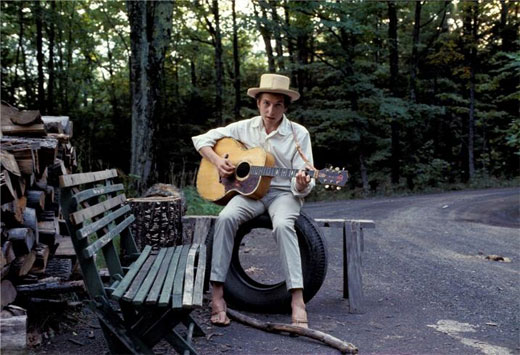
My favourite is This Wheel’s On Fire, a weird ‘n wonky slice of claustrophobic nonsense, all walking basslines and odd chords.
Bob Dylan & The Band – This Wheel’s On Fire

bob basement

Even better than Bob’s one take wonder is Brian Auger and Julie Driscoll’s, who released the definitive version in 1967; all swirling psychedelia and phased vocals, with shimmering Hammonds and eerie mellotron.
Brian Auger and Julie Driscoll – This Wheel’s On Fire


No stranger to a Bob tune, Rod Stewart wraps his gravelled tones around a version that is too rock for solo Rod but not swaggering enough for The Faces. A rather misplaced cover, if y’ask me. As a ballad singer, he did Mama, You Been On My Mind far, far better. Worth searching for.
Rod Stewart– This Wheel’s On Fire


Siouxsie & the Banshees had a good stab at it too, going for an eastern gothic feel more in tune with Auger and Driscoll than Dylan’s, 12 string guitars competing with both a rattling snare and Siouxsie’s ice maiden vocals for attention.
Siouxsie & the Banshees – This Wheel’s On Fire


Predictably, both The Band and The Byrds had a go at it. You’ll know where to look if you need to hear them.

basement cover

Alternative Version, Cover Versions, demo, Gone but not forgotten

Ari Styles

I Heard It Through The Grapevine was first committed to vinyl by Gladys Knight & The Pips, although it’d be Marvin Gaye who would have the first hit with the song. But you know all that already. If not, I’ve written about it before. For me, the most interesting (but not necessarily the best) version of  …Grapevine comes from The Slits.

  slits

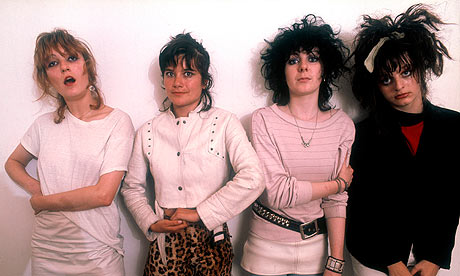
In ye olden days of punk rock, Slits stood out. A female 4-piece, their lead singer was a 15 year-old German girl whose mother would later marry John Lydon. Guitarist Viv Albertine lived in a squat and was Mick Jones’ girlfriend. Drummer Palmolive was born in Spain and lived for 2 years with Joe Strummer. Not at all like the ‘typical girls’ they sang of on their debut single.

They under-rehearsed, they dithered over releases and they supported The Clash on a couple of tours (To quote Joe Strummer – “They need to do thirty gigs in thirty days and they would be a different group. Then they’d be great.”)

Formed in 1976 at the birth of punk, it took The Slits 3 years to release their debut LP. In those three short years, music progressed by several light years but Slits stuck at it, honing their talents in a couple of John Peel sessions. It’s been said that Slits couldn’t play their instruments, but that’s clearly punk talk from the blinkered few who wanted to keep them authentically ‘4 Real’.

The Slits could play! They eschewed all forms of rock music (a dirty word in Slits’ world) preferring instead to form a unique sound built from reggae and the more interesting musical corners of the world. Itchy, scratchy, claustrophobic and defiantly dubby new wave pop music. Nowadays, lazy writers would call it ‘angular’, a term thrown at everyone from Franz Ferdinand to the Kaiser Chiefs. But at the tail-end of the 70s, no-one sounded like The Slits.

the slits

Their demo version of I Heard It Through The Grapevine is terrific – in equal parts quirky, jerky, punky and funky.

The Slits – I Heard It Through The Grapevine (demo)

Like an aural sharp elbow to the gut, it’s designed to irritate, grate and annoy. It’s very uncomfortable – twitching away like Thom Yorke’s gammy eye in the midday sun. The scratchy guitar and dubby bass, coupled with the rat-a-tat percussion is as far removed from ‘punk rock’ as you’d care to imagine, making it a west London cousin to Talking Heads, its catholic musical policy a precursor to that band’s Tom Tom Club alter ego.

By the time Island Records had enlisted Dennis Bovell to produce the album, the band’s sound had rounded out slightly. He took the blueprint of the demos and added a cavernous, bottom-of-the-well booming reverb to it all, enhancing bits here and there with wonky, skanking keyboards and banshee wailing backing vocals. I Heard It Through The Grapevine comes out of all the whole process sounding mightily fine. Indeed, if you pay close attention, that sound you can hear in the background is the sound of a thousand soul boys wailing in despair at what The Slits have done to the Marvin version.

The Slits – I Heard It Through The Grapevine (LP version)

The album and associated singles still stand up to repeated listens today, a bona fide alternative classic in a Mojo-endorsed world of Dylans ‘n Beatles ‘n Zeppelins ‘n Stones. You should investigate further….


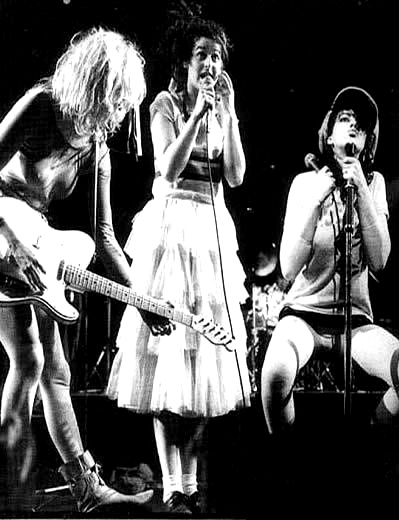
Slits play the Electric Circus, Manchester, in 1977.