Cover Versions, demo, Gone but not forgotten, Live!

Bathed In Light Of Love

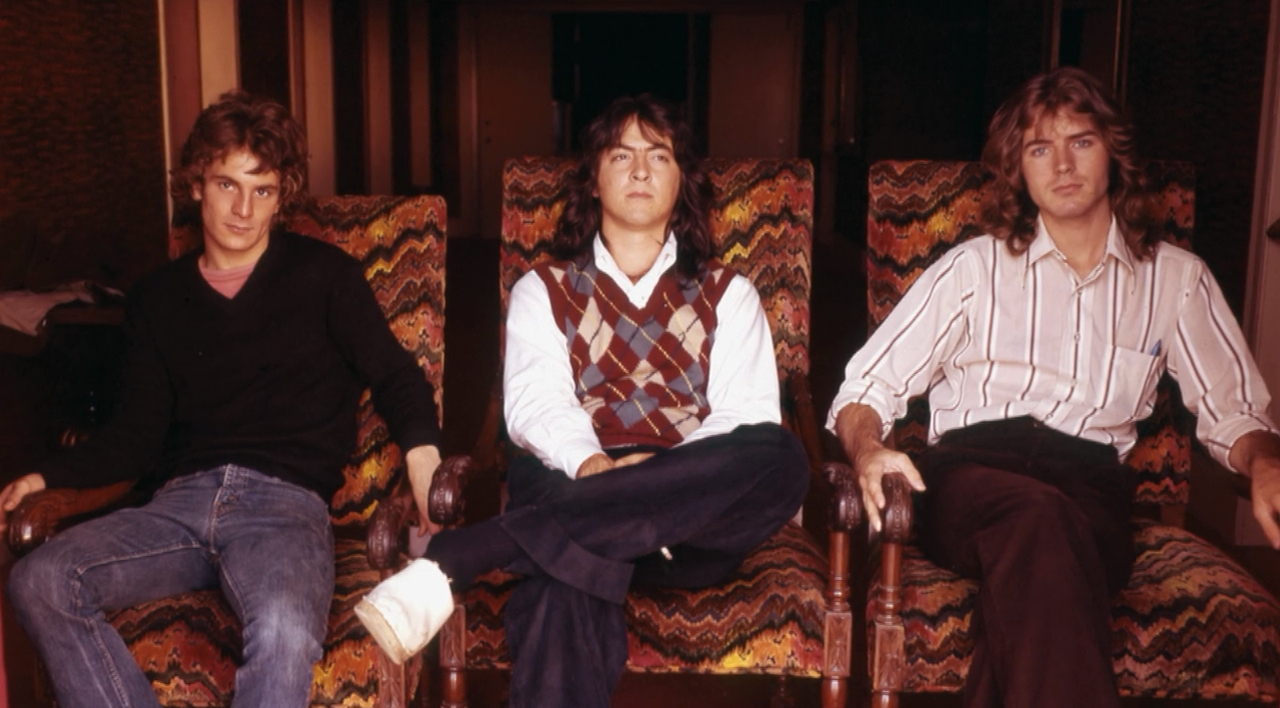
Dubiety surrounds the release of Big Star‘s third album, ‘Third’. Was it a true Big Star album in the way #1 Record and Radio City were? Given that the recordings were enhanced by an ever-revolving rotation of session musicians who’d play around the axis of Alex Chilton and Jody Stephens – Steve Cropper on the version of the VU’s Femme Fatale, for example, and given that Chilton wrote the lion’s share of the original music, it’s oft been considered the first real Chilton solo album. Studio tracking sheets from the time show references to Sister Lovers (Chilton and Stephens were in relationships with a pair of sisters at the time) which may or may not have been the intended name for the new record, or indeed, a new name for a band far-removed from its original identity. Despite the poor sales of the first two albums though, Ardent were dead keen to market it as a Big Star release and so, with little fuss or fanfare, Third was sent out into the world, Big Star’s ‘difficult’ third album with unfinished songs and little of the sparkling power-pop jangle that dusted the first two.

Big StarJesus Christ

Towards the end of side 2 you’ll find Jesus Christ, a mid-paced, straightforward celebration of the birth of the baby Jesus. On top of the occasional Spectorish tumbling toms and a honeyed Stax sax break that gives birth to Clarence Clemons and the E Street Band, you’ll spot references to angels and stars and Royal David’s City. The song is carried by Chilton’s instantly recognisable guitar style and sound, a welcome relief following the bleak and self explanatory Holocaust that precedes it on the record.

It’s a properly great Christmas tune, uplifting and joyful, yet as far-removed from the normal records that get played ad infinitum in shops, cafes, taxis, bars, wherever at this time of year. Indeed, the only time you’re liable to hear Jesus Christ in the changing rooms at TK Maxx will be from my mouth as I recoil in horror at the ill-fitting shirt from last season’s Katharine Hamnett collection that I struggled to get on and struggled to get off again. Jesus Christ, it was tight. Forgive me father etc etc…

Big StarJesus Christ (demo)

Chilton’s demo of Jesus Christ is great. Just Alex and a finely strummed acoustic 12 string, it has all the hallmarks of high watermark Big Star; Chilton’s ad libbed ooh-oohs, cracked, at the end of his range vocals on the high notes and the requisite sparkling jangle. What a great canvas for the other musicians to paint on.

Teenage Fanclub (of course) do a terrific version of Jesus Christ. Released on one of the two CD singles to promote Ain’t That Enough, the lead single from the gold standard Songs From Northern Britain album, TFC were in a rich vein of writing form at the time, firing out guitar-fuelled and harmony-filled songs with ridiculous ease. That Ain’t That Enough was released in June with a cover of an obscure Christmas song as an extra track (the other was a nod and a wink cover of the VU’s Femme Fatale, funnily enough) mattered not a jot. Recorded at perfect head-nodding pace and employing the twin vocals of Norman and Gerry, it’s proper, vintage Fanclub. A heady sheen of fuzzed-at-the-edge electric guitar, a tastefully twangin’ Raymond solo and a heartfelt, sympathetic take on the original make this one of TFC’s best covers.

Teenage FanclubJesus Christ

My job in education has changed in recent years, meaning that nowadays I don’t get to drag my class up to sing a Christmas song in the church. I always liked the challenge of this. It was the one time of year I could put my guitar skills to proper use and I was always on the lookout for a left-of-centre song to tackle. Jesus Christ was one I often considered, but it was forever overlooked in favour of something else.

The arrangement was going to be a full-on Phil Spector epic too; some tinkling pitched percussion at the start, eking out the melody against my plaintive strums, a single voice – probably the quietest girl in the class – singing the opening lines, the whole class coming in on the ‘Jesus Christ was born today! Jesus Christ was born!‘ Then there’s my bit – “MY BIT, BOYS ‘N GIRLS!” – where I do my Alex/Norman run up and down the frets before the second solo voice – this time a boy – “And o! They did rejoice!” brings us back to the whole point of the song.

By the second chorus, the entire group is swaying side to side in time to the guitar’s rhythm. By the third, they’ve added handclaps, like a peely wally west of Scotland gospel choir. They’ve lost most of their self-consciousness by this point too. Jack at the back is still fidgeting with the zip on his school trousers and Chloe, front row and centre, has still to lift her eyes from the rich red carpet in the vestry, but look! One or two of them are even smiling. And I’m in my element, pushing it towards the end.

The chorus is repeated a couple more times before we finish in a blaze of frantically scrubbed acoustics, clashing glockenspiel and rapturous applause from the assembled parents in the pews upstairs. The head teacher, as usual, fails to acknowledge both the effort and the spectacle and we move swiftly on to the next class who shamble their awkward way through Santa Baby to the embarrassment of all in attendance. I miss these times most of all.

*Christmas Bonus!

Here’s Alex Chilton’s fantastically louche take on TFC’s Alcoholiday. Teenage Fanclub have never hidden their love for all things Chilton-related, but on this tune the gamekeeper turns poacher. He just about steals the show too.

Alex ChiltonAlcoholiday

Master/Apprentices

Get This!

Hot-Wired Punk Blooze

Ferox

1. Latin word: for strong, courageous, wild.

2. Can be used to describe Wilko Johnson (b. John  Wilkinson, England, 1947. Guitarist with Dr Feelgood, ’73 – ’77)

Words in the English language that borrow their root from ferox include fierce, ferocious, feral, ferment, fertile. When pre-punk guitar hero and latter-day cancer survivor Wilko Johnson straps on that Telecaster, these words also apply to him.

Plugged in, he’s the conduit for 2000 volts of white-hot electricity, half of it flowing from his guitar and out through his amp as freely as the tide in the Thames Estuary, the other half reserved for jolting the player, sparking wildly from fingers to fretboard and back again.

He wields that Tele like James Cagney with a Tommy Gun; waist height, held to the side, pointing straight ahead, and he fires off lightning-fast bolts of ferocious punk blooze, his eyes as feral as Marty Feldman’s without the squint, his gurning lips curled into a pout that’s half way between rebellious Elvis and self-satisfied “I told you so“, his thousand yard stare focused somewhere off in the distance as he concentrates on fermenting his open-handed riffs. His legs seem to work independently of the rest of him, juddering him this way then that, left and right, forward and backwards, a National Grid-powered, bowl-cut Frankenstein’s monster of six-string stupendousness.

When Wilko and his band Dr Feelgood crank into Roxette, it’s the sound of a car being hot-wired and stolen. The frantic part towards the end, when it goes double-time and the wailing harmonica clashes with the Animal-like drums and Wilko’s F-shaped riffing, is the sound of a Ford Cortina going from zero to 60 in 3 seconds flat, a screech of burning rubber and revving engine, tyre marks indelibly burned to the asphalt. Oh! To have seen this live in ’75! Play it and play it again.

Dr FeelgoodRoxette

Recorded (as is the whole of Down By The Jetty, its parent album) in pistol-packin’ mono, Roxette has a punchy, barely-contained self-restraint. Reminiscent of those great Who and Kinks and Stones singles of the 60s that seemed to leap off the grooves one louder than everyone else, it’s straight out the traps and into your ears. Wilko’s simple choppy riff is centre-stage, a standard 3 chord progression employed before and since by all the greats. It cuts like a knife, cheese-grater thin, razor sharp and fat-free. Wilko doesn’t feel the need to break into flashy fretboard wankery. It’s all in that fantastic knuckle-dusted rhythm, sparks flying as wildly and furiously as the sparks from a welder’s blow torch.

Have you ever watched Paul Weller doing From the Floorboards Up in concert? Really watched? In tribute to his hero, PW dispenses with his plectrum for the one song, riffing away like Wilko in ’78. Jings, he even employed a Telecaster on the original recording to cut through the backing band bluster of what was essentially Ocean Colour Scene at the time. Save for the boomeranging sound effects midway through (a terrific touch), it’s a slashing, ringing carbon copy of Wilko’s best bits. Artists will always pay tribute to their heroes. Weller’s is perhaps the most touching and subtle…and best for it.

Paul WellerFrom The Floorboards Up

Get This!

I’ll Tell You One Thing, He’s Not Building A Playhouse For The Children

Tom Waits was 70 at the end of last week. On the one hand this was quite surprising. Tom Waits?! 70?! No way! On the other though, Waits has looked at least 103 since the first time I set eyes and ears on him, round about the time they played a clip of In The Neighbourhood or some suchlike off of Swordfishtrombones on Whistle Test, or perhaps even the Oxford Road Show. This was back in the mid 80s when pop was shiny and bright with clean hair and cleaner teeth and here was Waits, crumpled and tramp-like with an electric shock of hair that even Keith Richards might’ve taken a comb to, his rough hewn chin and sharp cheekbones giving him the look of a werewolf on the verge of an asthma attack, attacking, not playing his upright piano. Cool as the proverbial fuck.


Waits really perfected that beatnik bum look, looking like the hobo in a Rockwell painting that had managed to peel himself free from the canvas and flop onto the nearest flat surface. It was in place for Closing Time, his first album, and he sort of grew into it with each subsequent release.

Delivered with a voice that’s equal parts gravel and gasoline, Waits sings bourbon-soaked mini operas of loving and losing, of romance and heart-break – Grapefruit Moon, for example, or Martha, or the astonishingly brilliant and Desolation Row-like Kentucky Avenue, yet he can be laugh-out-loud-funny when the mood needs lifting. Seek out All My Friends Are Married on Nighthawks At The Diner for a prime slice of all-bases-covered Waits’ melancholic pathos. In fact, listen to the whole album, it might just change your life. That’s an instruction, by the way, not a recommendation.

Tom WaitsMartha

As his back catalogue grew to be as wild and varied as the bottle selection behind a Bowery bar, so too did his approach to music. Waits’ anything goes attitude meant that accordions played polkas while bits of metal clanged rudimentary rhythms, skewed blues flipped and flopped underneath funereal Salvation Army band dirges, spoken word sections fought for your attention with ambient jazz….fantastically unpigeonholeable, that’s yer Waits.

This slideshow requires JavaScript.

Regardless of the style, the substance is always there. Taken as music-free words on a page, a Tom Waits’ lyric is a work of art in its own right, as essential a read as Bukowski or Kerouac, wonderful beat-influenced poetry that will be subjected to wonky actual beats once inside a recording studio. On 1999’s Mule Variations – 20 years ago – jeez! – you’ll find two of Waits’ most incredible tracks.

Tom Waits What’s He Building?

On What’s He Building?, Waits snarls a fantastic spoken word account of a mysteriously sinister neighbour who’s piqued the irk of the singer. Static squelches its way across the band waves. Heavy tools clank. Bandsaws whine and whir. The menace creeps as Waits lays out his problems with his neighbour. Or should that be neighbor?

What’s he building in there?
What the hell is he building in there?
He has subscriptions to those magazines
He never waves when he goes by
And he’s hiding something from the rest of us
He’s all to himself, I think I know why
He took down the tire-swing from the pepper tree
He has no children of his own, you see
He has no dog, he has no friends
And his lawn is dying
And what about those packages he sends?
What’s he building in there?
With that hook light on the stairs
What’s he building in there?
I’ll tell you one thing, he’s not building a playhouse for the children
What’s he building in there?
Now what’s that sound from underneath the door?
He’s pounding nails into a hardwood floor
And I swear to God I heard someone moaning low
And I keep seeing the blue light of a TV show
He has a router and a table saw
And you won’t believe what Mr. Sticha saw
There’s poison underneath the sink, of course
There’s also enough formaldehyde to choke a horse
What’s he building in there?
What the hell is he building in there?
I heard he has an ex-wife in some place called Mayor’s Income, Tennessee
And he used to have a consulting business in Indonesia
But what’s he building in there?
He has no friends but he gets a lot of mail
I bet he spent a little time in jail
I heard he was up on the roof last night, signalling with a flashlight
And what’s that tune he’s always whistling?
What’s he building in there?
We have a right to know

It’s the perfect soundtrack to a still-to-be-written Stephen King short story, a modern-day gothic horror tale of untold holy terrors behind suburban curtains. I wonder if Stephen King has heard it?

Rubbing uncomfortable shoulders with the creeping menace of What’s He Building? is the plaintive Take It With Me, a song so small and sad you wouldn’t believe it was the same artist who’d done both.

Tom WaitsTake It With Me

It’s a sweeping-up song, end of the night barroom jazz, a long look back on a love lost. We’ve all been there but, as usual, Waits puts it best.

Oceans as blue as your eyes,” “We lived in Coney Is-land,” “It felt just like the old days….

The memories linger, like the tendrils of tobacco and whiskey curling around the mouth of the piano player, playing to no-one but you in the corner of the bar.

In a land there’s a town, and in that town there’s a house
And in that house there’s a woman
And in that woman there’s a heart I love
I’m gonna take it with me when I go

This isn’t one of Tom Waits’ best-known songs, but it should be. Listen. Repeat. Share. Thanks.

Cover Versions, Get This!, Gone but not forgotten

Sledgehammers

There are many great sounds in music; that jazz-inflected major 6th “Yeah!” at the tail end of The Beatles’ She Loves You for one. The vibrating air as Miles Davis leans into So What on Kind Of Blue. Johnny Greenwood’s stuttering pre-chorus crunch as he tries to mess with Creep. John Lydon’s phlegmy Fagin-by-way-of-Steptoe “‘Allo? ‘Allo! ‘Allo!! Heurgh-heurgh-heurgh!” announcement on PIL’s eponymous debut single. The eerie slide guitar that punctuates the juddering How Soon Is Now?…the Cuban-heeled stomp of London Calling… Adam & the Ants Burundi beat…Clarence’ Clemons’ honey-coated sax….. You’ll have your own no doubt, hearing them in your head right now as you read this. Those sounds are what separates you, me and the rest of us from other people who consider music no more than background colour, something that happens to be on as the dishes are washed or the ironing tackled. Obsessives like us listen to music and revel in the small stuff. The minutae. The little bits that you miss when the iron is hissing steam at you while you press next week’s workwear. The important stuff.

Just about my favourite sound in music is the sound of Nile Rodgers‘ guitar interlocking with Bernard Edwards‘ bass. When they hit their stride and find the groove, they’re unbeatable. Like a pair of old ladies clacking away at the bingo, the combined sound is instantly recognisable, totally danceable and, while often copied, it’s a sound that’s never been bettered. When Nile and Bernard formed Chic, the idea was to write songs for different groups. Chic themselves were modelled on Roxy Music’s basic vision of style; smart dress and street-smart females, elements that were to them as important as the songs they were selling.

Chic employed female vocalists and had success on their own terms – you know all the hits – but as the Chic Organization, Bernard and Nile penned hits for others. Diana Ross, Sister Sledge, Carly Simon, Madonna, Bowie….all benefitted, and all came gift-wrapped in the same smoothly-clattering funk that coloured Chic’s biggest hits. Bowie’s Let’s Dance was a 12 string skifflish blues until Nile added those familiar massive rattling chords. Like A Virgin, with its keyboard and up the neck guitar stabs could’ve been a Chic hit rather than the smash that elevated Madonna into the conscience of half the world.

I’ve always had a thing for Carly Simon‘s Why. Hearing it out of context on Ibiza as an impressionable 18 year old perhaps helped. Here, it was no longer AOR radio fodder, it was late night/early morning comedown music, long, loping and lightly toasted reggae. In the right context, it made a whole lotta sense.

It’s what Nile and Bernard did for Sister Sledge on Thinking Of You that tops the lot. The chord progression is fantastic, an itchy and scratchy four chord progression from minor 7th to major 7th and back again, played between the 10th and 5th frets while the bassline bounces with fluid funk below. The staccato riffing as Kathy Sledge sings, “Everybody, let me tell you ’bout my love…” (the perfect opening line for the song, by the way – it really sets it up the anticipation for what’s to follow) “...brought to you by an angel from above,” is god-like. Nile takes the basic chords, ignores his bass strings then builds hook upon hook upon hook with just the top 3 strings. Your man-in-the-street’s idea of what might constitute a Guitar ‘Great’ could never comprehend why Nile is such a brilliant player. He’s the perfect example of less is more, a fat-free, lean and mustard-keen guitarist.

Behind all of this the strings sweep and swell. Brass parps in all the right places. Unfussy drums maintain the beat. And that’s about it. You can identify every instrument on Thinking Of You. The perfect example, again, of less is more.

Sister SledgeThinking Of You (Dimitri From Paris mix)

Dimitri From Paris took the original and, unsurprisingly, saw the beauty in what was already there and stayed faithful to it. No need for this remixer to strip a good song of its basic components and twist it out of all recognition. Dimitri’s mix is twice as long, allowing space for the breathy vocals to take centre stage before giving way to Rodgers’ incessant Strat, until he drops out and Edwards’ bassline is allowed to buckle and bend in the middle of the track. It’s a showcase not for Dimitri but for Chic, six and a half minutes long and not a moment wasted.

In 2004 Paul Weller took his stripped back, tastefully scrubbed acoustic version of Thinking Of You into the charts, proof, if it were needed, that Rodgers and Edwards songs transfer to all styles. It’s not a patch on the original, but the newly in love Weller’s vocal is pretty soulful and genuine and, given he was spare of decent self-penned material at the time, it was the perfect song to tide him over until his next visit from the song gods.

Paul WellerThinking Of You

Gone but not forgotten

Words-Worth

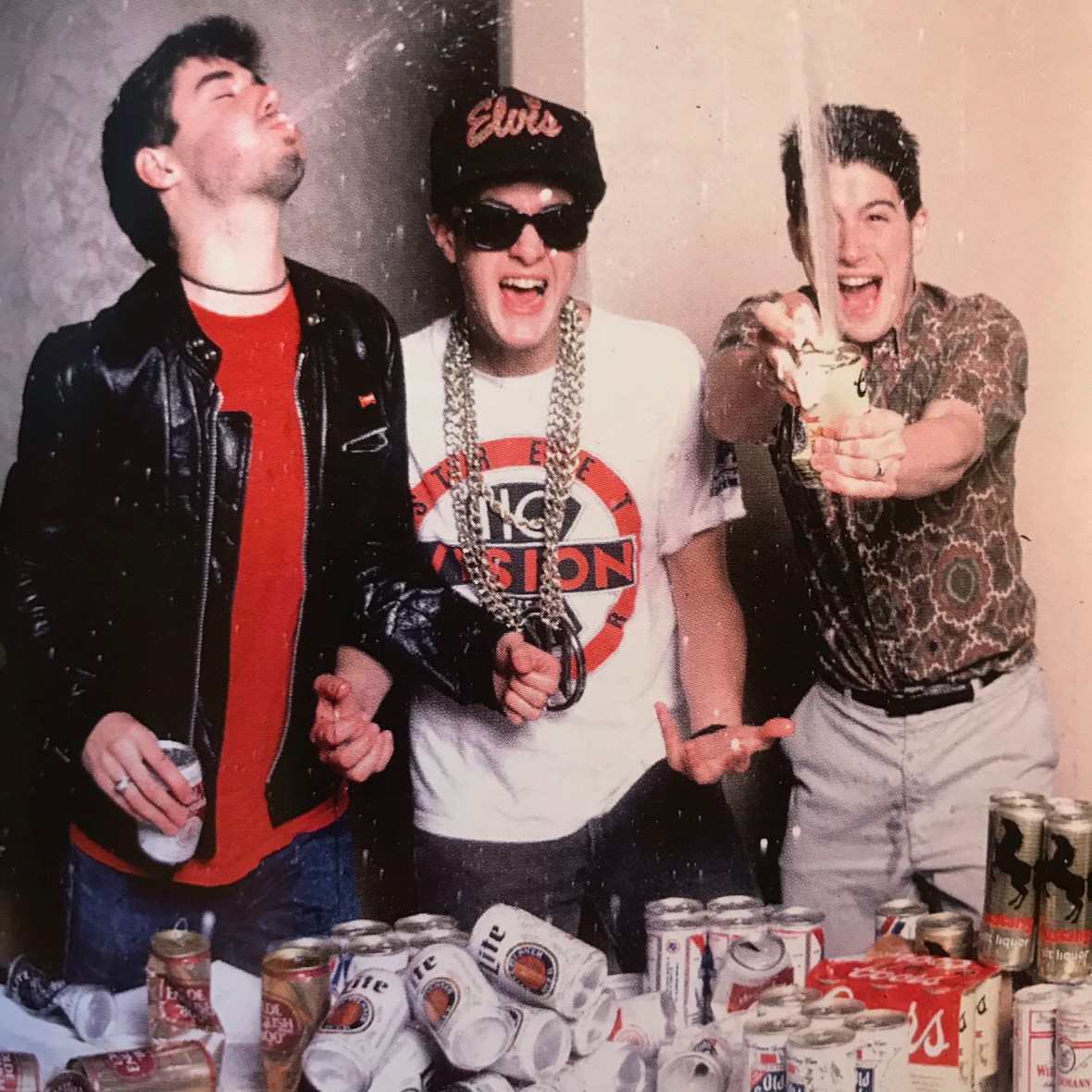
I’ve been reacquainting myself with the excellent Beastie Boys Book. Published a year ago, I got stuck into it almost immediately and, despite its chunky, clunky, half-brick size, I had finished it well before Christmas. Set out chronologically, it tells the story of the band, from their thrash punk beginnings, to meeting Rick Rubin and their reinvention as a three piece white rap act and the brilliantly eclectic, electric albums that followed, to their sudden, unexpected end following Adam Yauch’s death from cancer.

Rather like their music, it’s all-encompassing, full of unexpected turns, warm, funny and brilliantly informative; alongside lengthy and very humorous sections where Ad Rock and Mike D discuss music (their own, but frequently others’ – there are mix tape suggestions – the ‘Toyota Corolla Mixtape’, for example, that’ll have you off down an internet wormhole for a whole night or more), you’ll find superbly written chapters on such diverse subjects as Manhattan’s clubscene in the early 80s, the merits of on-tour catering, brushes with London bobbies, Charlie Chaplin impersonators, a recipe section, 70s clothes, and amongst it all, a never-ending roll-call of the great and the good in music and popular culture who cross paths with the band over the years; Mick Jones, Madonna, Perry Farrell, Lee Perry, slam dunking with Billy Corgan….it’s all in there.

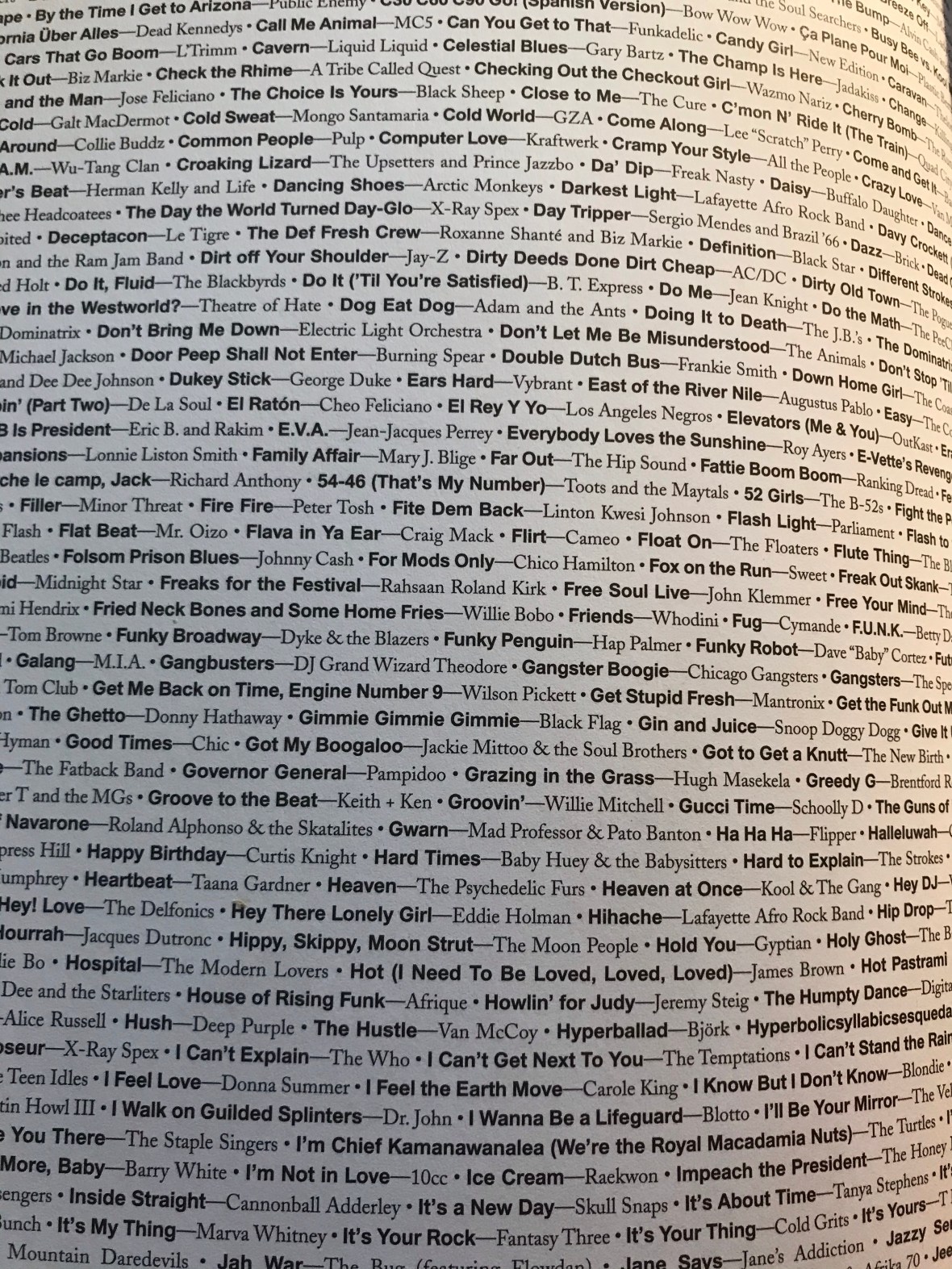
It’s music though that runs through the book as liberally and majestically as the Hudson River meanders through New York State – Beastie Boys are music obsessives and they’re liable to point you in the direction of some of the best tunes you’ve never heard on every other page. Whatever the genre, they’ll happily recommend a handful of records you simply need to hear. There’s no pigeonholing with the Beasties – a record’s either good or it isn’t. Check the list below and tell me there aren’t at least a dozen tracks you haven’t heard. And tell me again tomorrow if it hasn’t sent you off on an enlightening mission to wherever it is you find your music. And tell me the day after if you haven’t found your ‘new jam’, or whatever it is folk say nowadays.

I signed up for one of those free 3 months trials of Audible – which I’m now paying for a year down the line and haven’t quite got round to cancelling – purely to hear the book in all its Brooklyn’d drawl, but never actually got round to listening to it until recently.

The audio version is the book in 3D. It’s fantastic.

The words fly off the page, often delivered in the same gobby sneer as the guys who made the records but always delivered with honesty and candour. It pours a whole new light on what was already an impressive book and for the past few weeks, it’s been sound-tracking the commute from work at the end of the day, with each spoken chapter just about the perfect length for the drive home; 12 hours and 42 seconds of total listening time that knocks the Shaun Keaveney 6 Music Show for six.

The two remaining Beasties read their own chapters just as if they were setting the record straight whilst sitting with you in the car. Occasionally, just as would happen in real life, the other will interject from the back seat to counter a ‘fact’ or set the record straight. It makes for a highly entertaining and very funny journey. There’s a clear warmth and love for one another. Adam Yauch is held in very high esteem as ‘Chief Beastie’, the one the others looked to for guidance and advice, the multi-talented quiet guy who could turn his hand to anything; creating tape loops in a pre-digital age, being the factor in his apartment block, booking Tibetan monks to open Lollapalooza, jumping out of planes to snowboard down mountainsides, and so on. The odd guest reader takes over duties now and again. I don’t have a good enough frame of American culture reference to appreciate some of the orators, but amongst the basketball players (?) actors (?) film makers (?) the occasional A-Lister appears behind the mic; Snoop Dogg. Chuck D, Kim Gordon. Spike Jonze. It makes for a varied and interesting listen.

None other than Elvis Costello reads a few chapters towards the end. It’s funny to hear him say very Beasties phrases such as, “they were so pissed at us,” and, “I mean, fuuu-uuck!” in his languid, natural voice, with none of the pent-up energy that you know so well from his records. Thrillingly, Jarvis Cocker pops up quite unexpectedly to read the chapter on the Beasties’ visit to London, when they visited Mick Jones and John “It’s Johnny fucking Rotten!” Lydon happened to pop round for a visit in the middle of it all.

Naturally, both versions of the book have led me back to the Beastie Boys’ own music and I’ve discovered a proper love for Hot Sauce Committee Part 2 (there’s no Part 1, as you’ll discover if you read/hear the book), the group’s last album and one which, unlike the holy trinity of Paul’s Boutique, Check Your Head and Ill Communication, I rarely played until the book nudged me towards a gentle reappraisal. As it turns out, it has all the essential Beastie hallmarks on it; phat beats and phatter bass, clever wordplay, fantastic playing and obscure samples. Or so you’d think.

Recording the album, Beastie Boys set out to play the greatest in-joke they possibly could. They deliberately set out to create an album that was full of fake samples, a record collector’s unattainable nightmare designed to mess with the minds of every crate digger who ever sought out an obscure break. They wanted you to think it was built around samples, but rather than the band lift a break from an obscure 70s record, they themselves went to incredible lengths by writing and playing the break then filtering it through studio trickery before building whole tracks around what appeared to be a sample. They went so far as to create fake writing and publishing credits in the sleevenotes. They even wrote a whole song – Long Burn The Fire – based around their own fake sample and included it in the middle of the record, “a totally backward way of sampling, an experiment in experimenting.”

Beastie BoysMake Some Noise

The big tracks on it stand with the very best of the Beasties; coming across like the long-lost half-cousin of Hello Nasty‘s Intergalactic, Make Some Noise, with its vocodered vocals and wasp-in-a-jar synth line is the brilliant show closer that the band never got to do in concert.

Beastie BoysToo Many Rappers (ft. Nas)

Too Many Rappers was built around one of Yauch’s drum loops. A terrible, sloppy drummer by all accounts, Yauch persevered until he had nailed the perfect section that could be chopped, looped and turned into a Zeppelinesque backbeat upon which the trio plus guest vocalist Nas could wind and weave their vocals.

Best of all is Don’t Play No Game That I Can’t Win, a fantastically dubby reggae track that introduces itself like The Orb’s Perpetual Dawn before taking a turn uptown with a guest vocal from Santigold.

Beastie Boys – Don’t Play No Game That I Can’t Win (ft. Santigold)

Coasting along on a fluid groove of kangarooing up-the-frets bass married to pistol crack snares, room-rattling rim shots and hissing hi hats, it spotlights just how great the Beastie Boys were as musicians. Santigold floats across the top while the three Beasties jump in and out in the way they do, every last word in each line emphasised for effect by having the trio shout it OUT!, a technique stolen from Run DMC and still being employed to great effect on their final album.

20 bonus points are on their way to the first person to spot the Dylan lyric appropriation, one of at least two on the album.


Double Nugget, Peel Sessions, Six Of The Best

Read It In Books

So the big milestone birthday came and went in a week of extended celebrations, Indian food, mislabelled birthday cupcakes and enforced fun with the family who found themselves gathered in the living room last Saturday night with no chance of escape until they’d participated in argumentative games of Family Fortunes and something called ‘Shout Out’, a rapid-fire general knowledge game that, we all agreed, had all the makings of a prime time Danny Dyer-fronted quiz show. “Shaaaaat Aaaaaht!

My sister Shona and her husband Terry pulled out all the stops on the presents front. The week previously, Shona had been at the run of 3 Billy Bragg shows in Glasgow and hung around afterwards to grab a photo opportunity and a quick chat with old Bill. In one photo he was wearing a customised Smiths t-shirt, replete with the logo ‘Morrissey Sucks‘. It’s a cracker of course, reflecting the fact that these days Steven Patrick very much does indeed suck, not only for his increasingly watered-down records and hideous parallel jeans, but mainly for his questionable and indefensible political views.

After a bit of persuading, yer actual Billy Bragg offered to email Shona the digital artwork for what was a one-off t-shirt and so it came to be that I now have my own Billy-fashioned Morrissey Sucks t-shirt, only the second of its kind in the world. I’m very much looking forward to sporting it wherever it might get under the skin of the most vocal of Morrissey apologists.

Perhaps even better than this – actually, definitely better than this – was the book Shona had published. Going back to the beginning of Plain Or Pan, she very methodically picked out the highlights from almost 13 years of writing and had them complied into a coffee table-sized hardback book – definitely the only one of its kind in the world; coloured pages, the odd collage of pictures, but mainly the best of the writing about outdated music for outdated people, ordered non-chronologically, with sections on some of the more-regularly featured bands – there’s plenty on Teenage Fanclub, The Smiths, The Trashcan Sinatras, a decent selection of Six Of The Bests (an almost extinct feature these days, given how difficult it now appears to be to hook in a second division pop star and have them yap away about their favourite records) and more than a few forgotten-about articles that have aged pretty well.

Of course, there are a handful pieces that cause me to wince slightly when I re-read them a decade on from when they were first fired off and out into the ether, and there are maybe 2? 3 at most articles (OK, there are another 16 articles!) that I’d have looked to include had I done this myself, but over all its an absolutely fantastic thing – a really brilliant present – and it’s extremely impressive to see your own work in such tangible form as this.

Best present ever? Aye, it’s certainly right up there.

Echo & The BunnymenRead It In Books (Peel Session, 22.8.79)

This slideshow requires JavaScript.


Football

Playing For Scotland

Man. Folk go on and on about milestone birthdays. 40 is the new 30 and all that nonsense. I was OK with 30. I was even OK with 40. Heck, I got a trip to New York out of it, so who was complaining? For me, it was turning 27 that hit me hard. It wasn’t the thankful realisation that I’d managed to outlive a handful of over-indulgent rock stars and dodge membership of the 27 Club, it was the sudden, sobering dawning that I’d never get to play for Scotland.

I’ll explain.

When I was a wee boy I collected football cards. My hero was Kenny Dalglish and this card below was my favourite.

It shows a proud Kenny, arms aloft as he celebrates scoring in the dark blue of his country, possibly after he’s beaten Ray Clemence in the England goal at Wembley in 1977, when Scotland won 2-1 and a large handful of over-enthusiastic supporters returned up the road with half the Wembley pitch stuffed into their sporrans. The Wembley turf was originally taken from the Bogside flats, a good 5 iron from where I’m typing, so in effect, they were bringing the grass back to its, eh, roots.

Kenny Dalglish, Forward, it reads. And on the back it continued; Kenny Dalglish: Age 27, Clubs: Celtic and Liverpool. Scotland Caps 35 (or so, I can’t remember the actual number.) I wonder what I’ll be doing when I’m 27? I pondered as an 8 year old. I wonder if I’ll have as many caps for Scotland as Kenny does?  I needn’t have worried. When I was 27 I was working in the best job I might ever have, behind the counter of Our Price, as likely to play for Scotland as I was to get the call from Oasis who were needing a replacement for Bonehead. I did genuinely feel disappointed, that my life was somehow unfulfilled.

Fast forward to a few years ago. Steven Naismith was playing for Everton at the time. An ex-pupil of the school I taught in, he was the local hero; the young guy who’d made it in football, from learning his trade in the local team, to signing for Kilmarnock as a school boy before moving on for a record fee to Rangers (no!) before moving on to Everton. Community-minded, Naismith regularly handed in football tops and memorabilia to the school for auctioning off at school fairs and fetes to help top-up school funds. Cornering him one time about the fact the school football team wore the very same strip he had played in the best part of 20 years previously, Steven organised for a whole new set of strips for the team. But that’s not what I want to focus on here.

One time, he brought in a Scotland top – an actual, match-worn, embroidered badge and grass-stained number 10 shirt. It hung in the office for a week or so, waiting on the Christmas Fayre when it would be raffled off. I was in the office late one night after school, photocopying some stuff, when his Scotland shirt started winking at me. Before I knew what I was doing, I’d popped it over my head – the silky material didn’t half crackle at the unexpected size of my barrel chest and, just as I’d popped through my first arm, the depute head teacher appeared in the room.

What’re you doing?” she asked rhetorically, with a look on her face that can only be pulled by experienced teachers who’ve caught out mischievous wee boys.

“I’m, eh, trying the strip on,” I wagered.

I won’t tell anyone if you won’t,” she said conspiratorially.

With an alarming burst of crackling static and complaining stitching, I pulled the jersey back off, turning it inside out in the process, righted it and hung it back on the hanger. The rest of my colleagues were none the wiser, but I’d finally succeeded in pulling on the dark blue of Scotland. It felt good, if a little tight.

Today I turned 50. I wasn’t looking forward to it, but so far it’s been OK. I know I’ll never play for Scotland. Or windmill through a solo on the Barrowland’s stage. But I’m OK with that. I’ve lost two pals who never made it to half a century and last week’s daily medicine dose looks like the sort of lucky bag of goodies that would’ve constituted a decent night out for Bobby Gillespie in 1990, but I have a loving family to nurse me through my shonky health and for that I am grateful.

D’you know why they call 50 a round number? It’s because as the inescapable big number creeps ever-closer, you realise that that wee overhang that sometimes gets in the road of you fixing your belt has suddenly become a hideous hulking blobby mess that stops you from even seeing your belt. Yes, 50 is a round number because (unless you’re very lucky) you’re one round number yourself by the time you reach it. Before you know it, you find yourself spending your free time on a treadmill – not a metaphorical treadmill of life with all its mundanities or anything like that, but an actual moving treadmill, with running and panting and wheezing and sweating and everything. Previously when I wrote about this I’d managed to fast-track myself from 7 whole minutes on the thing before collapsing in a heap, to a whole half hour’s worth of running before collapsing in a heap. Nowadays I’m up to 40 minutes and counting. I’m almost enjoying it too. Slow and steady, nothing that would trouble even your most part-time park runner, but heading in the right direction. Nearly at 50, as it happens, although it’ll be a wee while before I match my age in running time.

Rocket From the CryptBorn In ’69

Woo! Yeah! Guaranteed to blow the grey straight off yer hair, they say. Stax sax blasts! Scorching electric guitar! Moon-esque drums! A st-st-stuttering breakdown and a sudden, abrupt ending. Just like my career in a Scotland shirt.

Get This!, Kraut-y

Whole Lotta Rossi

Chugga chugga chugga goes the 12 bar space age (bachelor pad) blues. In the same way a pot of your granny’s soup comes to be more than the sum of its secretive parts, the far-out music bubbles and squelches and fizzes and farts in all the right places, all gnarly, knotted wood Fender fuzz bass and pigshit-thick hairshakin’ drums. The lost half-sister of the Super Furry’s Guacamole, Stereolab‘s Heavy Denim is a heads down, no nonsense, rumbling, tumbling, Moog boogie….. and utterly fantastic.

StereloabHeavy Denim

Surfing the crest of this noo wave nonsense is an ever-spiralling Marxist call to arms, a 25 year-old lyric that could’ve been written very much for these times….

We’re not here to get bored
We are here to disrupt
To disrupt, to disrupt, to disrupt, to disrupt
To have the time of our lives

….but by the time you get to the kiss-off line you’ll very much realise that Stereolab, uber cool Anglo-French upstarts with a fascination for library music and the more outre elements of Brian Wilson’s back catalogue have ripped off Status Quo’s Caroline, lock, stock and double denimed barrel. Which makes the whole thing even more fantastic, of course.

It’s there in the 12 bar boogie…..and the gear change as the chord drops midway through the verse….and the ‘Come on sweet Caroline/Have the time of our lives‘ high melodic chorus. Status Quo’s Caroline runs through Heavy Denim like the lettering on a stick of Blackpool rock and Stereolab are guilty as charged, m’lud.

Originally released on the b-side of 1994’s Wow And Flutter EP – a ridiculously elusive 10″ to track down, and one that would have you parting with serious cash should you find a copy – Heavy Denim – surely another head-nod to the originators – has since appeared on the Oscillons From The Anti-Sun compilation, bang in the middle of disc 3 and as under-the-radar as the band might’ve hoped for. Imitation, they say, is the sincerest form of flattery. And everyone knows that the early Quo is where it’s at – not the really early hippy shit Quo, but the heads down, no nonsense mid 70’s three chord boogie Quo.

Francis Rossi! Parfitt Estate! If you’re reading, I’d be contacting a lawyer tout de suite.

I jest, Stereloab. When the world went lad rock and Beatles-bore crazy, you turned your attentions to the kosmische sounds of mid 70’s East Germany, and for that I owe you. Through your music I discovered the other-worldly meanderings of Can and Neu! I was made aware of the high majesty of the High Llamas and I marvelled as you rocked The Word playing a single that had already been deleted by the time I’d ping-ponged my way down to Our Price the very next day. Pretentious and obtuse, you plough a distinctly groovy furrow. Long may you run (and continue to lift from the unlikeliest of sources.)


Get This!, Kraut-y, New! Now!

Symmetry Gates

It’s not quite Hallowe’en yet, Brexit has been given some sort of stay of execution and the tapers have yet to be lit at arm’s length on yer roman candles and squibs and firecrackers, yet magazine feature editors employed by the more switched-on music publications will already be compiling their Best Of 2019 lists. While it’s far too early for me to think of such things, a prime contender will surely be Incidental Music by camera-shy Mancunians W.H. Lung.

I’ve written about the band a couple of times before, from their debut offering being whizzed in the direction of Plain Or Pan via email, to the debut album released without fanfare or fuss in April. Back then I was taken by its clattering juxtaposition of LCD Soundsystem mid-paced grooviness and clean, chiming Public Service Broadcasting guitars. These days, it still sounds fantastic…even better, to be truthful. Best heard as a whole, Incidental Music ebbs and flows and dives and soars in the way all great albums do. That it was hatched in Manchester will only cement its status as a future classic. It sits perfectly well in a lineage that includes Unknown Pleasures, Power, Corruption And Lies and Bummed, a trio of electronically-treated albums that rocked at the core. If it fails to make the upper echelons of those much pored-over lists come Christmas time, I’ll eat my original copy of PC&L in protest. You can hold me to that.

In the unassuming way that W.H. Lung do, I arrived home from work today to an email from the band. Would I make a feature of their new track, they wanted to know. Before I had my jacket off, the familiar whooshing, metallic guitars and linear groove were spilling their tiny, tinny guts from my phone. Music on a phone sounds totally rubbish, as you know already, so it was soon booming from the speakers wired up to my PC; a fantastic, skyscraping and soaring metallic clatter totally in keeping with the album material but, more importantly for Lung-watchers, a new track.

Snippets of lyrics sung by a falsetto voice with a social conscience unravelled and revealed themselves over repeated plays in the troughs between the peaks in the propulsive soundtrack. “A body curled around a lamp-post like a cigarette in light rain….Daddy, why is there a man asleep there? Should I wake him?” And was that something too about Alan Turing, WWII code cracker and thorn in the government’s side? Turns out it was.

As singer Joseph E explains, “There’s a statue of Alan Turing in a small park just off canal street in Manchester city centre. The statue has always struck me as odd, the face is quite childishly done and Turing seems to be offering his fruit to passers-by. People often sit with him and take pictures. The park is also regularly attended by the homeless community of Manchester, as visible a presence on the streets now as the statues of the great and famous.”

In a nod to the city’s homelessness problem, the band will donate all profits from the sale of the single to Mustard Tree and Booth Centre, two local charities dedicated to the issue of homelessness in the city.

If you like the track above, use it as your gateway to the wonder of W.H. Lung. Buy the track and help the homeless. Buy the album and help the band. Go and see them on tour in November. And look out for Incidental Music topping those Best Of The Year polls come Christmas time. Amazingly, you read it here first.


Tour Dates:
22/11 – Riverside, Newcastle
23/11 – Moles, Bath
24/11 – Patterns, Brighton
25/11 – Rich Mix, London
26/11 – Academy 3, Manchester

Gone but not forgotten

Twin Axel Attack

Holy Thursday by David Axelrod is an astonishing piece of music. An amalgamation of hep cat west coast jazz, stinging guitar and the abrupt, angular, cinematic stylings of Lalo Schifrin, it’s a pigeonholer’s nightmare; hard to categorise but impossible not to love.

Holy ThursdayDavid Axelrod

This is proper music, written on charts to be played by proper musicians. There’s not one iota of jamming to be had here. From the piano and bass call-and-response intro, via the vibraphone and the pistol crack of the snare, every note, every bend, every brass stab and string sweep has been agonised over and carefully considered before becoming a constituent part in a finished piece that’s even greater than the sum of its groovy, swinging parts. By the time the freak-out electric guitar announces itself around the 4 minute mark, you’ll already be making plans to play it again and again. 

It’s the drums that do it most for me. Skittering, creative and always unpredictable, they’re a sticky-fingered producer’s delight. Various snippets of second-long breaks and beats have been sampled and looped and twisted and turned before being recreated as something new by dozens of hip-hop acts through the years. Stand up, Lil’ Wayne and UNKLE, I’m looking at you.

Holy Thursday would make ideal walk-on music, blaring loudly for a band to take the stage in front of an expectant audience. In fact, it wouldn’t surprise me if you told me that twonks like Richard Ashcroft (he was quick to make himself known as an Axelrod fan when the world began to catch up with the American’s living legend status in the mid 90s) or Kasabian had used it already. Aligning their own music to something truly grandiose and epic rather than the Asda-priced version that they peddle would certainly be the sort of thing those two acts might consider.  

Axelrod first found work in the 60s as a jazz arranger and producer, helping Lou Rawls to find his feet and sound in music. A heroin-addicted speed-freak, his production work on Cannonball Adderley’s Mercy, Mercy, Mercy album took him into both the US charts and the same studios as famed sessioneers The Wrecking Crew. Employing the Crew’s core rhythm section of Carole Kaye on bass and Earl Palmer on drums, Axelrod wrote the musically complex Mass In F Minor for The Electric Prunes. The ‘Prunes were unable to play much of Axelrod’s challenging music and by the end of the initial sessions, in-fighting and finger pointing led to the group disbanding. Unperturbed, Axelrod and his assembled Crew simply completed the album on their own.

Released in 1968, the finished record bore no resemblance at all to the previous two Electric Prunes albums. Classically-tinged Gregorian chanting psychedelia was waaay out there, even for 1968. Richly soulful, redemptive and meditative, album track Holy Are You is the one to go for. It might well be spiritual, the lost cousin of Marvin’s Wholly Holy, but listen closely and you’ll hear the first strains of prog crawling from the dank depths of Middle Earth, a cloak short of a hobbit, a keyboard solo away from full-on mystical wizardry. Unlike yer actual prog, though, it’s fantastic.

Holy Are YouThe Electric Prunes

By the 1970s Axelrod was adventuring increasingly further ‘out there’ until he found the sound he was searching for. Welding the avant garde with wacked-out recording techniques to a traditional band set-up, he produced some startling results, most of which are only now being afforded their rightful time in the spotlight, in this house at least, two years after his death.

Those two tracks above should give you an idea of what he was about; inventive, innovative and invaluable to groovy crate diggers the world over. Check his rich and varied back catalogue on that there streaming service of your choice.