I know zilch about basketball. I know the players are eighteen feet tall in their bare feet. I know they can shoot hoops cleanly from half a mile away without either the use of the backboard or the ball ruffling the interior sides of the net as it registers three points to the shooter. I know Michael Jordan – number 23, I believe – got very rich off of a particular brand of Nike sneaker training shoe and that, aside from watching the Beastie Boys play two-on-one, the Harlem Globetrotters are by far the most dazzling team to watch. I also know that when they list the scores – eg Lakers 124 v 118 Celtics, the match in question was played at the home of the team listed second, which is just daft. So yes, I know zilch about basketball. I’m much more of a football guy. And that’s Scottish football, not yer American variation. Ask me anything about a provincial team’s perennial benchwarmers or just how shoogly the manager’s jacket is at any of the lower league teams come Easter time, and I’m yer man. But basketball, or to be exact, the regular actions of one of its more prominent players, was the stimulus for one of the modern era’s greatest tracks.
Anderson .Paak – King James
For a short second, those of us in the west of Scotland and select other provinces could be forgiven for doing a double take at the title of the track in the spotlight. Here and elsewhere, King James has very different historical connotations, all of them involving battles on white horses and all of them bigoted, religion-fuelled and best-kept in the knuckle-dragging past.
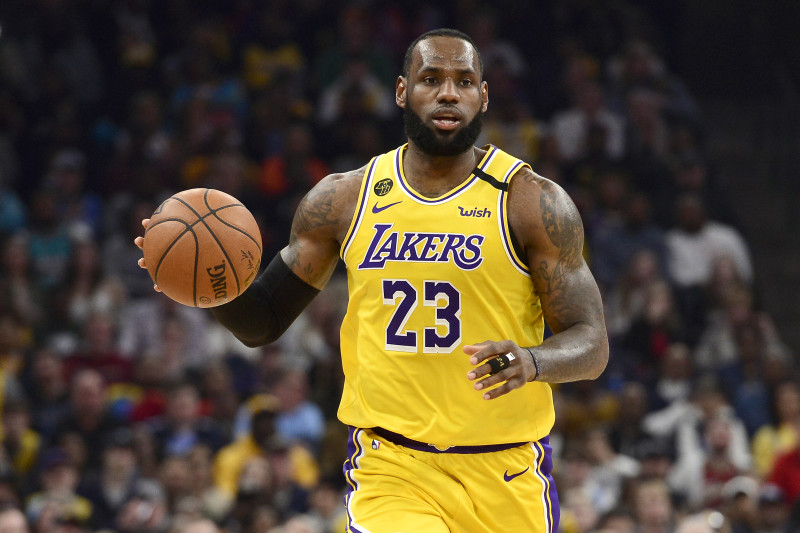
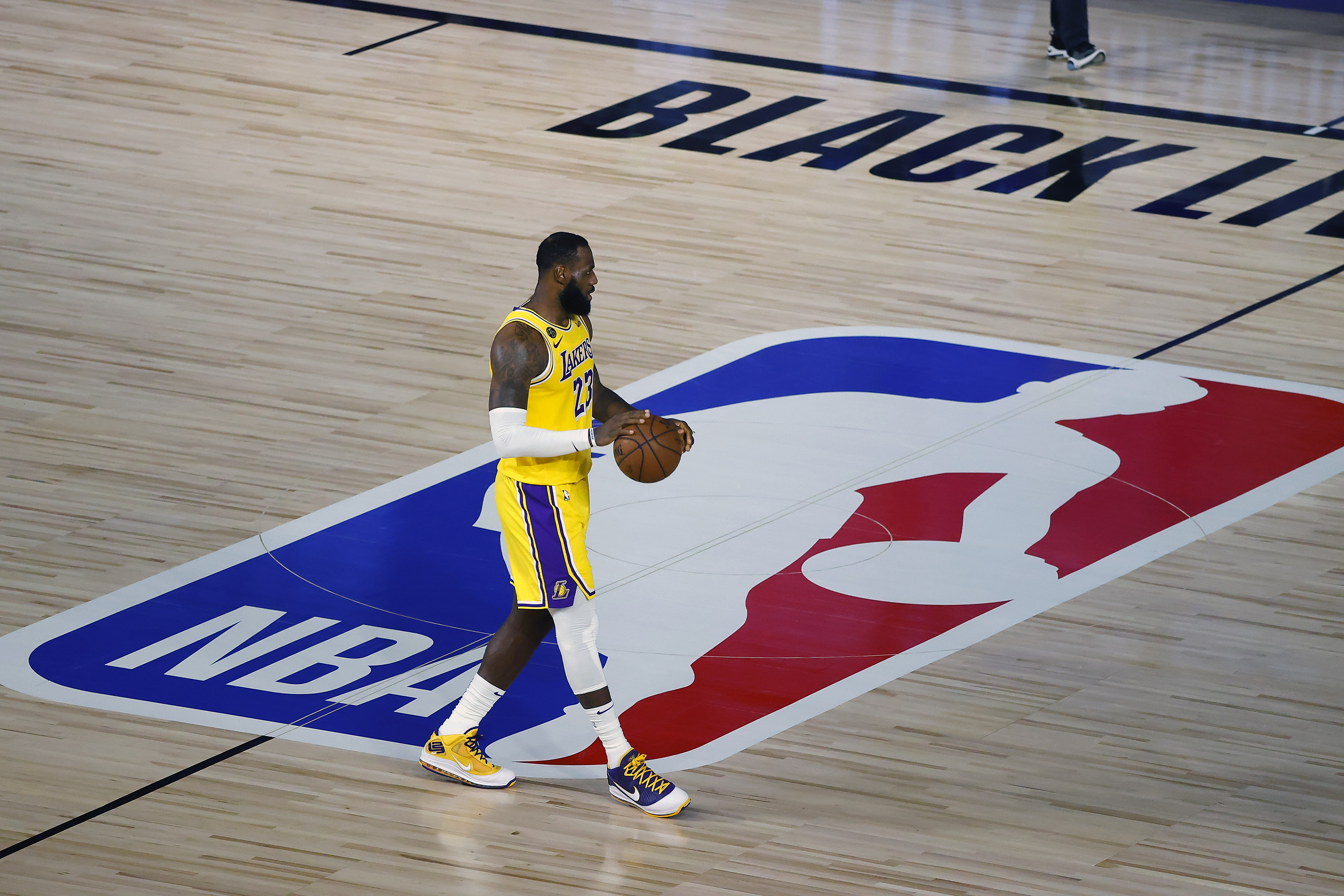
The King James in .Paak’s track (and while we’re on the subject of daftness, what’s that rogue dot all about?) refers to LA Lakers’ LeBron James – also, coincidentally, number 23 – and his ceaseless championing of America’s black community, his outspoken anger at trigger-happy policing and the tireless charity work he carries out to help the oppressed, the marginalised and the disenfranchised.
(Photo by Kevin C. Cox/Getty Images)
James follows in the footsteps of quarterback Colin Kaepernick. A football player (US variety) with the San Francisco 49ers, he began in 2016 to kneel during the national anthem – a protest – what’s so great about America, eh? – at the regular and ongoing social injustice and police brutality of African-Americans. Kaepernick wouldn’t play in the game for much longer. His actions polarised America. Donald Trump battered in as only thick bigots can by declaring that NFL owners should fire any player who refuses to stand for the national anthem. At the end of that season, Kapernick was released, free to join any club who wanted his services. He has never played again.
In solidarity, and to highlight Kaepernick’s unjust treatement from his sport’s paymasters, LeBron James began taking the knee before Lakers’ games, a powerful action that, on the back of the George Floyd killing last year, eventually led to the Black Lives Matter campaign.
Released in 2019, Anderson .Paak’s track perfectly foreshadows the BLM movement. It refers to both Kaepernick and James throughout. Its subject matter is the sort of contemporary politics that Marvin Gaye might’ve gone for had he recorded What’s Going On half a century later.
Anderson .Paak keeps the wooly bunnet and bearded handsomness but updates and reboots the Gaye protest, going less for smooth, airy soul and more for a glitchy, jerky, bump ‘n grind modern variation.
Bubbling on-the-one bass and a repeating sax motif that calls to mind the sort of breathy, freeflowing jazz that Maceo Parker was adding to Prince records when he was last untouchable carry the track, as skittering, breakbeating drums rattle the rhythm to its conclusion. Surfing somewhere inbetween is a subtle electro tick tock and a harmonising female backing vocal that adds sass and gloss, but never gets in the way of .Paak’s incredible lead vocal, part gravel, part grease, but always great. His phrasing…his control…his delivery… it’s fantastic.
A lot of the other material on the track’s parent album (Ventura) has, so far, left me kinda cold, but King James is a play-once and repeat-often modern-day stone cold classic. Worth investigating, I’d say.
Famously, The La’s hated their debut album. Where the record-buying public heard it for what it was – a great collection of well-constructed chiming, rattling and rolling songs, Lee Mavers rubbished it as a mismatch of tracks recorded at various sessions with a variety of producers over a couple of years; a guide vocal here, an unfinished guitar part there, a work in-never-ending process. Given a sprinkling of magic dust by Steve Lillywhite and released against the band’s wishes, it lacked, shouted Mavers, spontaneity, cohesion and the requisite ’60s dust. Chas Smash, once of Madness and at the time The La’s A&R guy told me recently of the band’s American tour to promote the record when Lee, faced with the wibbling and gurning jocks on ButtKiss FM – “I love your shit, man!” – would slap a beat-up C90 in front of the presenter and declare loudly and proudly, “Dis… (slap!) is da fookin’ album, la. Play dis one instead!” The record company people, with the promotional weight and might of Polygram behind them, would hold their heads in their hands in despair as, station after station, Mavers would repeat his trick until eventually, the stations stopped playing any La’s at all.
Likewise the Beta Band. They certainly weren’t the first band to disown their debut album, but they were equally as vocal as The La’s. “It’s definitely the worst record we’ve ever made,” announced Steve Mason when it was released in 1999, “and it’s probably one of the worst records that’ll come out this year. It’s fucking awful.”
Coming a year after the celebrated ‘Three EPs‘ compilation, the band took the magpie ‘n kitchen sink approach that they’d developed over those three singles and threw everything, literally and metaphorically, into the self-titled debut album proper.
They wanted to make it a double album, with each of its four sides recorded in a different continent; Asia, South America, and so on. Economics had the final say unsurprisingly, and so much of the record was put together in a shed that belonged to the grandfather of the band’s keyboard player/sampler/DJ John Maclean. An ambient companion piece was eventually shelved, trimming the intended double album to a single ten track record.
It was a difficult record to pigeonhole, and thank goodness for that. In an era when bands were defined by the trainers they wore or the records they never namechecked, The Beta Band was almost unclassifiable. It bulges and bursts with ideas; wonky Scottish raps, carnival drums, filling-loosening dub reggae bass, frazzled and meandering psychedelic guitar lines… sometimes within the one track.
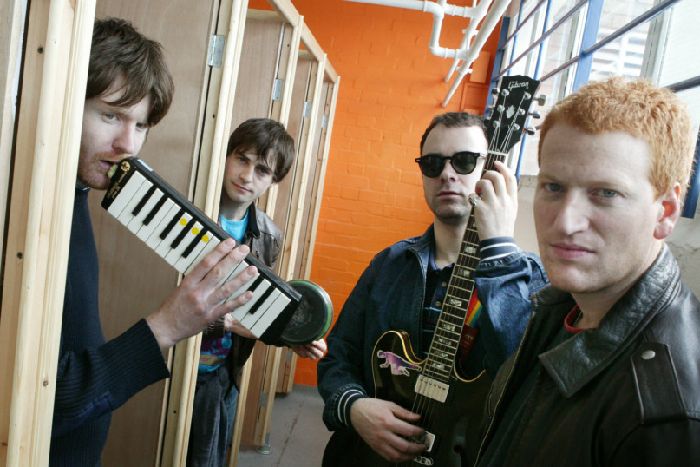
Beta Band – Broken Up Adingdong
Goat Fell and Glen Rosa on the Isle of Arran given a psychedelic makeover
Broken Up Adingdong is almost every idea considered for the album realised in miniature. Beginning on a rhythm of pattering handclaps and what might be someone playing makeshift drums with the palms of their hands on the back of an acoustic guitar, it motors along on a steady, skifflish two chord shuffle that falls somewhere between the scrubbed to the knuckles approach of The Woodentops and the measured discipline of Can or the Velvet Underground.
Tumbling waterfalls of acoustic guitar – similar to the occasional riff that permeates The Patty Patty Sound‘s ‘Monolith‘ – chime their way in and out of the tune, panning from left to right and back again (try it with headphones on for full effect) and as it builds to a crescendo of overlapping vocals, repetitive chants and frantic, double-time claps, it gives way to a collage of beats.
Calypso drums dance and weave in and out. Loosely tightened drums thunder with Bonhamesque brute force. Hairspray hi-hats hiss their way across the top, disco without the glitterball, as some sort of Donna Summerish string sweeps in and then out again just as abruptly. One of those old-fashioned bicycle horns hee-haws its squeaky guffaw between the tapestry of pots ‘n pans percussion and the whole thing rattles and rolls to a stuttering close, as dignified as the Eastenders theme tune tumbling down ten flights of tenement stairs. It’s messy, hypnotic and groovy as fuck.
Time has been kind to the Beta Band and The Beta Band. It’s certainly not the clunker the band suggested it was, and not for a minute do I believe Steve Mason when he said as much. Twenty years on, I suggest you revisit that debut album as soon as you can.
Years ago, in the grim and distant past, I was doing some supply teaching work. Back then, much like it is nowadays, permanent teaching jobs were thin on the ground as to be almost non-existent, so any call from any school was gratefully received.
“Are you able to work tomorrow…?”
“Yes!”
“…morning only…?”
“Eh, yes.”
“…in the nursery?”
“Uh… … …Yes.”
It was that bad. Imagine trying to secure a mortgage on that kinda deal. One day I was asked to go to a school and take a primary 7 class for a couple of days. The class teacher doubled-up as a member of the school management team and was on a course, so I was asked to cover.
Two things tend to happen if you’re called in as a supply teacher. Either you go into the classroom the back of eight o’clock and on the desk is a detailed plan to follow; numeracy and literacy lessons for every differentiated group and/or individual, a selection of topic-based activities that the kids can choose to do in any order, an art lesson perhaps, a short story… far more than you’ll ever need, but enough to ensure your day is action-packed with work set by a conscientious teacher at all of the learners’ abilities. Alternatively, you might find a quickly scribbled note instead. “Feel free to do whatever…as long as they’re busy…Lucy and Emma will give out any jotters you’re looking for. Don’t let Jayden sit next to Reuben or you’ll have a fight on your hands. They’ll want to sit together, and they’ll try it on with you, but I’ll have Reuben’s mother up at the school if you do and she’s a pain in the arse, so please don’t.”
As it was, this particular time fell somewhere in the middle.
“The kids are working on subtraction. They have their own work and know what to do. They have gym after the break. We’re doing gymnastics but if you want to do something else I don’t mind. For literacy, here’s a reading comprehension book. Normally I differentiate depending on the groups, but just pick one exercise and do it with the whole class if it makes it easier for you. They also have the laptops this afternoon. We’ve been learning how to set up a class database, but again, do as you please.”
I flicked through the comprehension book. It was the usual teaching aid full of book extracts, poems and made-up news reports, all with a variety of questions that, if answered correctly, would demonstrate each pupil’s reading ability. Then, jumping out at me from the the bottom corner of one page was a picture of Bob Marley, a classic shot of him in closed-eyed freeze frame, his defiant fist punching the air like the exclamation mark on a political soundbite. It accompanied a passage about the slums of Kingston in Jamaica; crime, poverty, hardship. Stone me! I’d found my literacy lesson.
When the time came, I asked the class if anyone had heard of Bob Marley. Straight away, half a dozen hands shot up. With a massive, knowing grin, one wag filled us in. “Ma br’er huz a poster a’ him oan his wa’. ‘E’s smokin’ a massive doobie in it!” Righto. So we knew who Bob was. Did we know where he grew up, I asked. No-one did. We read the passage about life in Kingston, about the shanty towns and high-rise tower blocks where people lived on top of one another and where gun crime, murder and gang warfare was a normal way of life for much of the population. Bob Marley was held up as an example of someone who’d managed to escape this life and was now one of Kingston’s most-celebrated sons. The passage carried a tale of morality; work hard, be good to others and you can make a better life for yourself. I’m not sure that message got through to the kids in the class, most of whom were still sniggering at their classmate who’d said the word ‘doobie’ to this unfamiliar teacher, but there we were.
“‘No sun will shine in my day today…the high yellow moon won’t come out to play.‘ It doesn’t matter the time of day, I pointed out, if you live in this part of Kingston, you’ll live in permanent darkness. Bob Marley wrote that.”
“‘Darkness has covered my light and turned day into night… No chains around my feet but I’m not free, I know I am bound here in captivity…’”
It’s amazing when a casually-acquired knowledge of Bob Marley’s music will come in handy.
“How d’ye ken a’ that?” they asked. For the first time in my nascent supply career, I had a classroom hanging on everything I said.
I explained about Concrete Jungle, the opening track on Bob Marley and The Wailers’ Catch A Fire album. It’s basically folk music, I explained. In Scotland, folk singers sing about fishing boats and sheep farming, about the threat of nuclear war and about people they know. Bob Marley’s music is also folk music, albeit coated in sunshine and played with a reggae beat. Much discussion of what reggae was followed, ending with me asking the kids to clap out a four-beat bar of handclaps with me emphasising the stomps of my foot on the off beat while over-egging some shonky ‘ooh-yeahs’ in an approximation of Bob Marley on Jammin‘. It did the trick. Bob sang about what he knew, and on Concrete Jungle, he’s telling you how tough his life was.
In the corner of the classroom was a smartboard. Nowdays, they’re ten-a-penny in schools and there’s nary a classroom that doesn’t have one, nor a teacher who doesn’t know their way around it, but back then, smart boards were a brand new thing. I have no doubt that the smart board was in this particular classroom because the teacher, being a member of the management team, had pulled rank to snaffle one of the few that the school had sourced. I connected it up and, this being the days when YouTube wasn’t blocked by the authority’s servers, put on the version of Concrete Jungle that The Wailers had played on Whistle Test. It was dynamite.
The kids sat in studied appreciation as Marley sang the words I’d told them previously, his band playing with effortless cool. Marley might’ve been centre-stage, but it was clearly his band who were driving it. Not only did they look great, they played great too. A practically motionless and stoned immaculate Peter Tosh barely touches the strings of his guitar yet the opening notes, all open wah and weeping pain, meander fluid and free before falling into its rocksteady chicka-chicka rhythm. The easy, soulful falsetto he contributes throughout is the perfect counterpoint to the melancholy and sadness of Marley’s lead vocal. The keys, very reminiscent of Stevie Wonder’s Superstition I noted to myself, (I hadn’t noticed that before) clack and squeak their way into the groove, never in the way but always there for requisite funk.
By the time the whole band has fallen into step, they’re cooking up quite a quiet storm. It’s easily one of my favourite music-on-TV clips. The kids in that P7 class loved it too. For the rest of that day in the classroom, we used the laptops to research Marley’s life and death and legacy. There was a steady stream of Bob tunes flowing from the iPod I’d rescued at break time from my car as we wrote, read and learned his story. Eking out all they could about the football-playing, ganja-smoking Bob Marley, the kids worked in small groups to create wonky and ropey but well-researched and honest presentations. Concrete Jungle is almost, in today’s parlance, a deep cut, but ask those kids (adults today) and I bet half of them would name it as their favourite Bob Marley tune.
Bob Marley & The Wailers – Concrete Jungle
There’s another version of Concrete Jungle, the demo that Chris Blackwell felt needed westernised to suit UK radio play. It’s a bit rough around the edges, but bereft of the shinier production of the more well-known version that opens Catch A Fire, it’s something of a beauty.
Bob Marley & The Wailers – Concrete Jungle (Jamaican Demo)
For the second day, I showed a map of Glasgow on the smartboard. “It’s Glasgow,” I pointed out unnecessarily. “But who can find anything relating to Kingston or Jamaica?” I drew an invisible circle around the Kingston Bridge and Jamaica Street and waited for their oohs and aahs.
“Bob Marley also wrote about slavery,” I said. “In fact, his song ‘Slave Driver’ is exactly about that.” We listened to that track too and discussed it before spending the rest of the day researching the Glasgow tobacco lords and the legacy they’d left the city of Glasgow. No statues were toppled, no history was rewritten. Instead, 30 or so young minds were informed and expanded in many different ways. And all thanks to a random picture of Bob Marley that was in an old book that the teacher left out for me. Stir it up, as a great man once said.
I confess to knowing not much about Broken Social Scene. A living, breathing, fluid line-up that can be anything from a 6 to a 19-piece would suggest that they’re more of a collective than a band, with members coming and going, dropping in/dropping out, releasing and touring their own solo material then rejoining again. You might know the quirky, always excellent Feist. Or Canadian crooners Stars and their brand of melodic crooning. Both acts have found themselves part of the ‘Scene at some point or other.
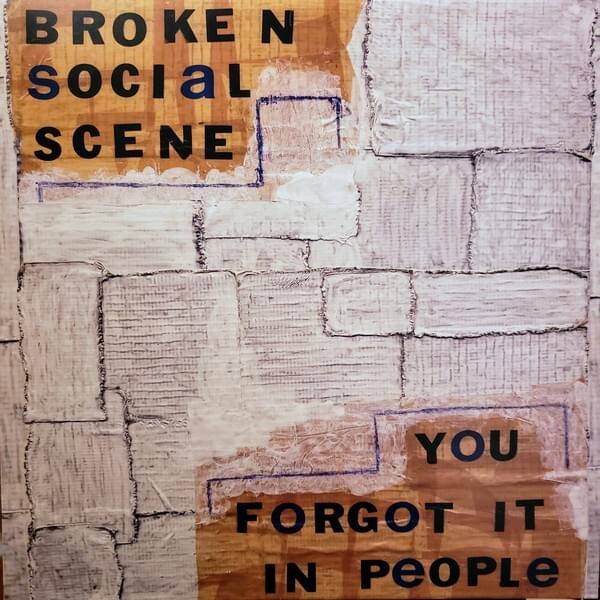
When they started, Broken Social Scene strived to make swirling, ambient, mainly instrumental indie rock; experimental, peerless and lo-fi in execution but high-fi in ambition. For reference, think of a slightly turned-down, slightly more polite Yo La Tengo. By their second album, You Forgot It In People, they’d started to employ vocals and a more straightforward approach to song-writing. The fuzzed-up ethereal electric guitars and close-mic’d acoustics are still there, but so too are brass sections, keys, banjos even, along with grand ambitions on a widescreen scale. A chance conversation with Nile Marr turned me on to the album – “I think you’d really like it,” he said presciently – and, in something of a recurring theme, I fell for a ‘new’ album that was a couple of months shy of turning twenty years old.
Like all the best albums, it’s an album that takes a handful of plays before it fully reveals itself. You’re never far from a slowly unravelling melody or a wonky Beatlish backwards bit or the sort of slow-burning, vapour-trailed outro that fellow Canadian Neil Young might accede to should he be forced to consider his other 15 band members. “You gotta turn the Les Paul down a notch, Neil. And make way for the strings ‘n trumpets now and again!” Slow burning, yes, but soft rocking too. Broken Social Scene don’t blow the doors in, they politely chap until they’re living in your head.
There are a few standouts, not least the hynotic, repetitive, melting earworm that is Anthems For A Seventeen Year-Old Girl
Broken Social Scene – Anthems For A Seventeen Year-Old Girl
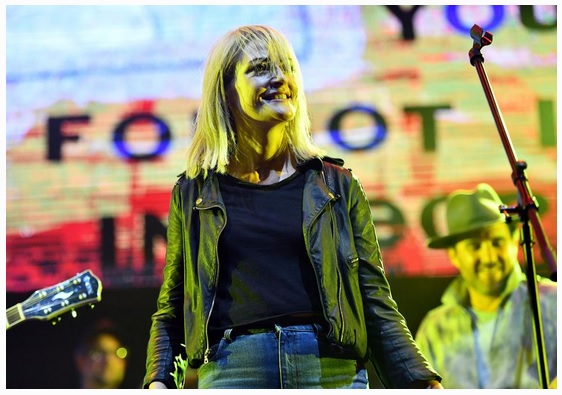
Atop a slowly building backing of back porch banjo, random thumps and long-bowed violin, singer Emily Haines has been pitch-shifted up a notch, giving her vocal the effect of a sing-songy young girl, perfect for the song’s subject matter.
Used to be one of the rotten ones and I liked you for that…
Now you’re all gone, got your make up on and you’re not comin’ back.
Bleaching your teeth, smiling flash, talking trash, under your breath, under my window
It’s a scene that’s easy to picture. It’s teen angst and country girl heartbreak set to music. It would make for the perfect soundtrack to a suitable scene in a low-budget indie film, Scarlett Johansson or Charlize Theron or whoever the teenage equivalent is these days swinging on the porch, faded jeans and checked shirt covered in oil from helping her single father fix the pick-up truck, staring into a middle distance of dancing, swaying cornfields and puffy white clouded blue skies.
The contstant, never-ending repetition of the last line – Park that car, drop that phone, sleep on the floor, dream about me – combined with the swirling, sawing almost Venus In Furs drone and the steady plonkety-plonk of the banjo is, by the end of the track, totally headswimmingly hypnotic. Circular and head-spinning, you don’t want it to end, but when it does, on a dizzy refrain of the first line and an incredibly eked out violin note, you stop. Take a breath. And play it again. It’s a great wee song from a great wee album. I think you’d like it…
I came to Hamilton Bohannon‘s Dance Your Ass Off back to front. I had no idea, back in 1987 when I first flipped That Petrol Emotion‘s Swamp to the other side (the double A side, no less) that the track was a cover. I had never heard of Hamilton Bohannon. I had no idea Dance Your Ass Off began life, not as a hard-riffing indie rock thumpalong, but as a string-swept, four-to-the-floor disco funk number.
Hamilton Bohannon – Dance Your Ass Off
In hindsight, it was obvious. In an era when Stone Roses were still a leather-clad goth band and the phrase ‘there’s always been a dance element to our music’ had yet to be uttered by plooky, bucket-hatted chancers with no end of shame-faced brass neckery, That Petrol Emotion were cross-pollinating the best of dance with loud guitars and danceable rhythms and creating their own niche in a post-Smiths, pre-Roses landscape.
Listening to them 30 or so years later, That Petrol Emotion still stand up. Not of their time, but out of time. As it turned out, there always was a dance element to That Petrol Emotion’s music, not least when they turned up to play a gig in Glasgow’s Sub Club, mecca of dance music for discerning clubbers throughout the west of Scotland and beyond.
When you learn that Hamilton Bohannon was a born-again, God-fearin’ devout Christian, Dance Your Ass Off comes as something of a surprise. Many of Bohannon’s tracks were syrupy, slow-paced love ballads to the higher order, so that he decided to kick loose with swampy, chicken scratchin’ guitar and bad ass bass nailed to bubbling, fluid on-the-one funk should be celebrated with carefree, arms aloft in the air abandon.
‘Make a lotta noise!‘ he instructs. ‘And dance all night!‘ That’s easy to do when the rhythm laid out in front of you is so single-minded in its mission to get you to move. Double-time handclaps drop in and out, see-sawing strings saw their way through the middle while the drummer – possibly Bohannon himself – holds the beat steady for a full eight minutes.
There’s some crowd pleasin’ call and response as the strings waver their way ever-closer to Mayfield territory, all Blaxploitation shimmer and underlying menace, but the groove never abates. With the thick soup of guitar, bass and drums at its core, Dance Your Ass Off comes across like The Meters transplanted to Studio 54. And there ain’t nuthin’ wrong wit dat.
That Petrol Emotion – Dance Your Ass Off
That Petrol Emotion were first and foremost a guitar band but they understood the appeal of a steady rhythm section and some wildly interlocking riffage. Swamp on the a-side would make that explicitly clear to any doubters. Their take on Dance Your Ass Off is a testosterone-fuelled, muscled-up triumph.
With sights firmly set on the indie dance floor, it locks into its groove and rocks hard in half the time of Bohannon’s original. The guitars, all feral Telecaster twang and snap, fall somewhere between hard jangle and post punk rage, concrete thick yet flab-free and linear. A gnarly, growly bassline replaces the uber funk of the original.
The little scratching noise you hear in the background under Steve Mack’s enthusiastic north-west American yelp is that of Faith No More making notes to crib the punk/funk bassline for their own end. We care a lot, indeed. It’s a groovy cover, all things considered.
Keeley Moss is a Dublin-based musician and blogger. When she’s not leaving lengthy comments to many of the blog posts round this parish, she can be found blogging at her own Keeley Chronicles where she is committed to keeping the name of German student Inga Maria Hauser at the forefront of conversation. Murdered in Northern Ireland in 1988, Hauser’s killer is still at large. Since first taking finger to keyboard and hand to fretboard, Keeley has dedicated her writing and music to Hauser. Uniquely, every song she writes is connected in some way to Hauser’s story. Not so much, ‘This record is dedicated to…‘ as ‘This record is dedicated.’
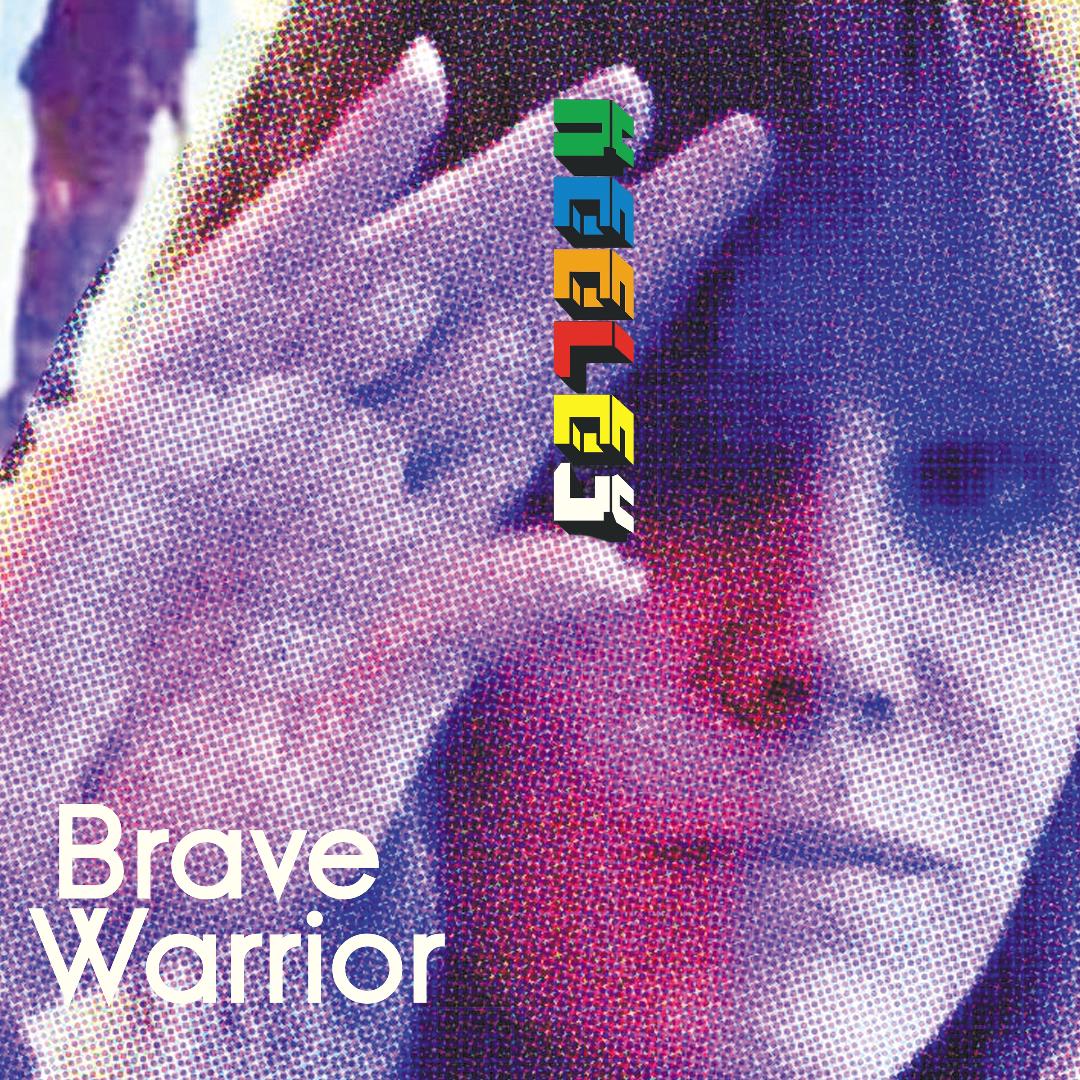
Recently signed to London-based Dimple Discs (home to a noteworthy Irish contingent including Cathal Coughlan and Damian O’Neill), Keeley’s second single, the Brave Warrior EP has garnered praise and plays from all the best corners of the internet and beyond. Features at the end of last year in the Irish press eventually trickled their way over the sea and a steady stream of postive reviews has led to a tidal wave of enthusiasm for her latest release.
Keeley – The Glitter and The Glue
Lead track The Glitter And The Glue has been playlisted by 6 Music’s Steve Lamacq and is exactly the sort of short, sharp guitar-based indie rock that Lamacq has long-nailed his thinning floppy fringe to. Glammy, trashy and instantly singable, it surfs along on the same snappy riffage that Johnny Marr has employed in recent years – more bite, less jangle, all up-stroked choppy chords and snaking counter melodies. I think you’d like it.
Elsewhere on the EP you’ll find the electronic whoosh of Last Words, Inga Maria Hauser’s story set to music, the embryonic Never Here, Always There and the effect-heavy and self-explanatory You Never Made It That Far. If y’like conscientious indie rock with its roots firmly planted in the early ’90s, you could do worse than check out the EP for yourself. Live dates – remember them? – will follow no doubt…
You can find the Brave Warrior EP at Keeley‘s Bandcamp page here.
Broadway Jungle by Toots and The Maytals is exactly the sort of incessant, insistent ska for this mid summer’s day. Clanging in on a bar of wonky barroom piano and a clatter of dustbin lid drums, it quickly starts on the front foot, gets on the good foot and never lets up for two and a half yelping, head nodding and chin jutting minutes. It’s the sort of tassled loafers ‘n suedehead knees-up that could bring a grinning smile to a jaggy-elbowed cadaver. If y’don’t like this, y’don’t like music, etc etc
Toots and The Maytals – Broadway Jungle
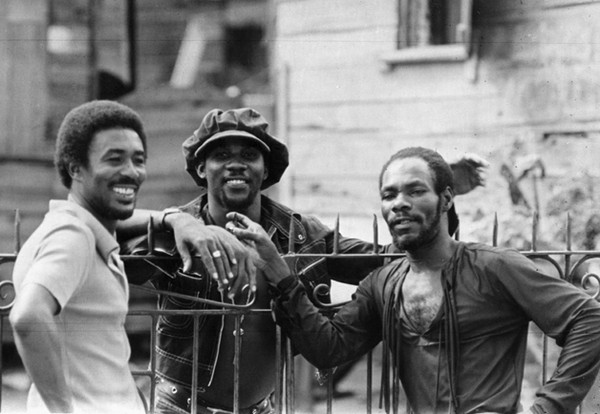
Information on this particular Toots recording from 1964 is scant, but here’s the scoop: the young Toots Hibbert recorded his early stuff with Studio One, Coxsone Dodd’s hit-making factory in Kingston.
A never-ending production line of classic ska, dub and reggae tumbled forth; alongside Studio One big hitters such as The Skatalites’ Guns Of Navarone, Horace Andy’s Skylarking and Bob Marley’s early ska-inflected tunes, Toots and his band released Six And Seven Books Of Moses, Pressure Drop, Monkey Man and Do The Reggay – the track that gave their genre of music an international name.
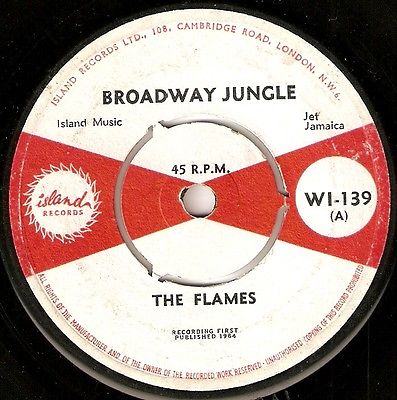
An inevitable fall-out arose over royalties, leading to Toots and his Maytals leaving the label to sign for arch rival Prince Buster. Things got confusing. Promoters, in the pocket of Studio One, ceased to bill the band as Toots and The Maytals. Prince Buster, in an attempt to starve Studio One of contract-fulfilling royalities, subcontracted the release to Island, who, unaware of the ongoing beef between Studio One and Prince Buster, released Toots’ Broadway Jungle under the moniker of brand-new group The Flames.
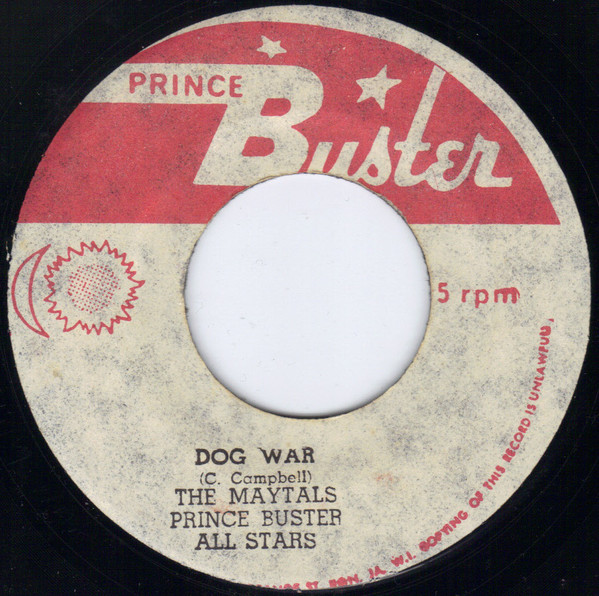
To stay one quickstep away from the lawyers and money-chasers, further re-releases saw the record released on Prince Buster’s own label, the name of the song changed to Dog War.
To further muddy the trail, the band name changed too. At one point, music fans could go to gigs and watch The Vikings play Jamaica Ska, confusingly aware that they were actually watching Toots and The Maytals play Broadway Jungle. D’you follow?!
Regardless of the name of the band or the title of the song, Toots’ (or The Vikings’. Or The Flames’) Broadway Jungle (or Dog War. Or Jamaica Ska) is nothing short of essential listening. It’s a tune about breaking free from the jungle – a metaphor perhaps for their Studio One contract – and hitting the bright lights of the big time, a prescient thought given that the Maytals’ most succesful years were still to come.
Political, danceable, joyful and as rhythmic as a steam train going full pelt, Broadway Jungle should be available on prescription. It’ll cure all ailments. Take as often as necessary and repeat.
Murmur by R.E.M. may well have been called Mumble. Or Mutter. Or just plain Mmmmmm. The young Michael Stipe, all doe eyes ‘n demi-wave was so self-aware of his voice, so self-conscious of his lyrics that he spent most of that first album being foggy, obfuscating and willfully obtuse in his delivery. Quite mmwhat he szings ommn trackszzz sssuch as Pilgrimage or 9-9 or Moral Kiosk is amnyone’szz mmm ggguess. That’s changed somewhat since the advent of the internet, but where’s the fun in that, kiddo? The mid ’80s was an anything-might-be-right approach to lyric learning, phoentics often replacing the actual words and I’m not even sure I want to know the real words nowadays anyway.
Behind the singer, the band stir up a heady swell of classic alternative American rock, as timeless as Tom Petty’s punkish jangle, as melodic as a Wilson brothers’ full-fat harmony, yet as scuffed at the knees as a dustbowl drifter. The instruments are easily identifiable. There’s no muddy mixing here – it’s all about the angle of the jangle.
Peter Buck arpeggiates away on his open-chorded Rickenbacker, all puffy sleeves ‘n waistcoat ‘n suspended 4ths until the end of time. Bill Berry holds the beat, occassionally popping up with a stone cold classic (Perfect Circle), contributing far more to proceedings than his mere title of ‘drummer’ might suggest.
Understated star though is Mike Mills, his solidly twanging Rickenbacker bass driving the songs with a toughness that’s offset by Buck’s clattering jangle. Mills also chimes in with falsettoed harmonies – just like those Wilson brothers’ hamrnonies mentioned beforehand – adding colour and commerciality to the band’s sound.
R.E.M. – Catapult
I never saw R.E.M. live until ’89, so I can’t be sure, but I imagine Catapult might’ve been quite the rocker at those early shows. On Murmur, it’s stretched as tight ‘n taut as the skin on a tom, the verses straightjacket-slim before it bursts in a glissando of glassy up and down the neck chords and Stipe-provided backing vocals. Catapult! Ca-ta-pult. It’s the sort of chorus that I imagine the band might’ve played over and over in rehearsals, grinning as they play, admiring the chord sequence, the vocals, the drive, the way it all fits… it’s one of my favourite early R.E.M. tracks.
A few years back, IRS released a warts ‘n all set of outtakes from the R.E.M. vaults; live stuff, demos, alternate versions and the likes – ideal for folks like you and I who love that phase of the band more than the mandolins ‘n stadiums years. There’s a terrific live version of Catapult to be found. Internet research shows it’s likely to be a recording from Seattle in 1984 – peak early R.E.M. in other words. As I suggested above, it is indeed quite the rocker.
R.E.M. – Catapult
The keen-eared among you might spot a second voice; grizzly, gruff, grainy. I believe that’s the drummer, once again proving his worth to one of America’s greatest alt. bands. If you haven’t played Murmur in a while or, gasp, ever, rectify that today. It still stands up as one of the band’s best.
The Euros start at the end of this week. That they’re occuring a year later than planned means nothing to my nation. My son is 14 and he’s ridiculously excited at the thought of seeing Scotland on the big stage for the first time. A former work colleague on Facebook last week was equally effervescent. “This’ll be the first time I’ve seen Scotland at a championship!” he frothed through heavily bearded face and a craft beer held by tattooed hands. Jeez! Has it really been that long?! ‘Young’ Chris must be 27 or so by now, and given that it’s 23 years since Scotland last crashed out of the World Cup Finals in France, then, yes, it really has been that long.
When I was my son’s age, Scotland was always at the World Cup. We had a glorious run of epic failures between ’74 and ’90 when we’d get an unlikely result against the big nations, get thumped by an unfancied smaller nation and miss out on progression because of goal difference. It was always the way.
Back in 1996, the Euros were in England. Just as now, England and Scotland found themselves pitted against one another. That particular big match swung on the famous penalty miss. England, somehow one-nil up through Alan Shearer were being out-played, out-fought and out-thought by Craig Brown’s superstar-free team. With just over 10 minutes to go, the Scots laid siege yet again on David Seaman’s goal, and, played through on goal, Gordon Durie was chopped to the ground.
Penalty!
Captain Gary McAllister took responsibility and a nation watched aghast as his blasted effort was punched to safety by the swashbuckling Seaman, all VO5 swish and Magnum moustache (a save that crackpot spoon bender Uri Geller claimed to have orchestrated through channelled energy and mumbo jumbo.) To rub salt into the wounds, England then ran the length of Wembley and topped off a decent passage of football with a Gascoigne wonder goal. Bastards.
Going into the final game against Switzerland at Villa Park, Scotland was still in with a chance of progressing. We had to hope England could stick 4 past the Dutch – a team that had drawn 0-0 with Scotland – while we went about our job of beating the Swiss. Four points and a decent goal difference would see us through. It’s the hope that kills you, they say…
Two nights before the game I received a call from my brother’s pal.
“We’ve a spare ticket for Villa Park….”
“I’ll take it!”
“...d’you want it?”
“I’ll take it!!”
“…’cos the thing is, our bus is full, so you’d need to make your own way to Birmingham. We’ll meet you outside the ground when you get there. Big Alan…d’you know Big Alan? He’ll be wearing a massive tartan hat and a Jimmy wig. You won’t miss him.”
Ah shite. After phoning around, I found a space on a bus that was travelling at sunrise from Paisley. It was full of headcases and hardened away-day drinkers. “Drink up, pal, there ye go…” The journey was long, with one guy rat-a-tatting on a snare drum for hours on end and at least five piss stops before we’d crossed the border. Eventually the driver pulled into a layby on the outskirts of Birmingham. “Lads, the polis’ll be on the bus a mile from here. I’m stopping so’s ye can get rid o’ yer empties and anything else you might not want them to find when they get oan. So drink up and empty oot.”
A mile up the road, two police officers wearing those tall, rounded, English police helmets – an unexpected sight, though I’m not sure why that should have been a surprise – came on board. One affable, one looking for bother, a busload of hardened, steaming Scotsmen smiling glaikitly back. “Alroight lads. There’s no booze on board this boose is there?” Naw, ociffer, naw, there isnae, came a handful of muttered replies as bad cop rummaged without success in seat pockets and luggage compartments. “Enjoi thu match, lads!” said good cop before they turned and left. You could’ve punctured the paranoia with a kilt pin.
We arrive at Villa Park. The bus parks alongside 30 or so other supporters’ buses at the Aston Leisure Centre and we pile out, blinking into the afternoon sunshine. I’m looking for Big Alan in his big bunnet and Jimmy hat, but my new-found pals, having been here the week prior when we played the Netherlands, have other ideas. The Aston Working Men’s Club is just over the road. A tiny wee building with a bar. Somehow, I’m at the front of my new gang as we enter the door. A wee old guy looks us up and down. The state of us!
“Oim sorry, lads, this is a members’-only cloob….”
He looks beyond me and my new pals at the thirty or so supporters buses alighting on his doorstep.
“…but you can join today for a pound.”
The place was quickly rammed. The snare drum rattled. The singing got louder. The cheap pints went down quickly and often. Kick off fast approached. It dawned on me that I still had no ticket. I mean, I knew all along that I had no ticket, but I knew one was waiting for me. Either my brother’s pal had it, or Big Alan did. But I had no idea where to find Big Alan. I didn’t even know Big Alan. Mobile phone? This was 1996, mate. The bar started emptying as supporters drained their pints and turrned their attentions to the game. I wandered outside, stoating about amongst hordes of Jimmy hat-wearing Scotsmen, all merrily pissed up and heading to the game, in the unlkely hope that the mysterious Big Alan might make himself known to me. I happened upon a chipshop and found myself suddenly starving. I think I was too drunk to order, but I left with food.
“Gie’s a chip!” I hear outside, and my tea is swooped upon by half a dozen blootered Scotsmen. From out of the depths of tartan hell, up pops my brother’s pal, waving something in my face. “You’ll be wantin’ yer ticket, ya fud?” The magnetism of alcohol and its ability to bring disparate folk together is a strange, brilliant thing. Let’s go!
The game was magic. My overall abiding memory was not of McCoist’s winner – a curling, outside of the foot peach right into the top corner in front of us in the Holte End – or the hairs-on-the-neck-still sight of the crowd going nuts in that same Holte End on the TV replays as McCoist runs towards Craig Brown and the Scotland dugout (I saw it played again the other day and it places me right back into that moment in time), or Scott Booth’s half chance near the end of the second half, or the excited buzz around the stands as England unbelievably went the required 4 goals up against the Dutch, or the deflated inevitability when Seaman allowed a half-shot to squirm through his legs, giving the Dutch the goal they needed and putting Scotland out, on goal difference, again.
Nope, my overrall abiding memory is one of being absolutely ten pints-bursting but not wanting to go in case I missed anything. McCoist’s goal just before half time was a relief…but the end product following a mad sprint and hellish queue at the gents’ at half time was even greater.
England’s campaign that year was soundtracked by Three Lions, a jaunty comedy double act-fronted Britpop bash that reflected on England’s failure to win anything for years. Thirty years of hurt, pal? Best make that fifty-five and counting… It was nothing compared to the unofficial Scottish ‘song’ though.
Swept up in the euphoria that comes when your country is playing at a tournament, Primal Scream joined forces with Leithite Irvine Welsh in a West Coast meets East Coast stand-off that was confrontational, self-deprecating and about as far removed from the ethos of a football song as a is humanly possible. The record may have come stickered with one of those Paul Cannell Screamadelica suns, but don’t let that fool you. The Big Man And The Scream Team Meet The Barmy Army Uptown was produced by Adrian Sherwood and foreshadowed the dubbed-out elecronica of Eko Dek.
Primal Scream, Irvine Welsh and On-U Sound Present – The Big Man And The Scream Team Meet The Barmy Army Uptown (Full Strength Fortified Dub)
Welsh is in full-on baiting mode, sticking the metaphorical size tens into Rangers fans, the metaphorical nut on the arrogance and entitlement of the English media and their football team and holding a mirror up to Scottish fans on tour.
I was sitting outside Wembley in ’79 Jock cunts in London, massive carry-out Talking to a guy in an ice cream van So drunk for weeks that we’d gone waaaay past the point of wanting tickets It’d be horrendous now if someone was to hand you a fucking ticket You’d have to leave all this bevvy outside the ground, by they polis dumpbins? No fucking way 10 minutes into the fucking game you’d be climbing up the fucking walls to get out
Behind him, the band play big slamming guitars and a repeating sample chants ‘who are ye‘, Denise Johnson wafting in and out of the electronic stew with soulful backing vocals. Three Lions it definitely ain’t.
Crossbar Challenge accepted
For what it’s worth, I think Steve Clarke will mastermind Scotland’s first-ever qualification out of the group stages. Beyond that is anyone’s guess… we have a dream, and all that. It’s taken time, but he’s fostered that hard-to-beat, no-team-is-invincible mindset that saw him take my team Kilmarnock to the lofty heights of 3rd in the league and European football. For one week we were top of the actual league too…when the news filtered across the terracing that Cetic had dropped points to Livingston, the crowd, drunk on what might be and Steve Clarke-fuelled self-belief broke into a spontaneous and lively rendition of ‘we’re gonnae win the league‘. Quite ridiculuous…and quite thrilling.
There will be, sadly, hopefully, the chance to replicate that chant at the end of this season. Killie, in a Clarke-free freefall since his departure to the national team, found themselves dumped out of the top league a couple of weeks ago. The less said about that, the better, but with luck we’ll be chanting that ridiculous chant again come the middle of May next year. Killie’s loss was clearly Scotland’s gain. I love that man and I’m sure, once we’ve gatecrashed that other exclusive members’-only club by reaching the knock-out stages, I’ll love him even more in the coming weeks.
Dr Bucks’ Letter is late-ish era Fall at their best. Taken from The Unutterable, it’s an incessant, kerb-crawling jackbooted stomp of a track; claustrophobic, indulgent and relentless, the sound of The Fall doing half-speed dub techno. The disciplined beat and fuzzed-up riff underpin a crackle of electro static and a cackle of spoken word, random keyboard outbursts that sound like guard dogs in heat and a clanging Holger Czukay bassline that fights for ear space in-between a returning signature riff. It’s not quite a kitchen sink production, but it’s getting there.
The Fall – Dr Bucks’ Letter
The cherry on the top is Mark E Smith’s spoken word vocal, the lyric referencing an unfortunate fall-out with a friend – ‘of my own making, I walk a dark corridor of my heart, hoping one day a door will be ajar at least so we can recompense our hard-won friendship.’
He may have been viewed as a grizzly, alcohol-soaked hard-heart, but Smith could write flowing sentimentality like no other, even if, perhaps to keep his image somewhat intact, he delivers it in a voice that borders on menacing. There’s the complexity of MES right there.
As the track reaches it’s conclusion, Smith bizarrely – yet thrillingly – reads aloud an abridged version of a magazine interview with superstar DJ Pete Tong, cackling to himself/at Tong’s superficial lifestyle and the vacuousness of it all.
There aren’t many folk who’d have the nerve to lift text from such disparate places – a Virgin Rail customer magazine, as it goes, but there y’go – proof, if any were needed, that Mark E Smith wasn’t yer average writer.
Dr Bucks’ Letter is a Fall track that works for all sorts of reasons. The references in the magazine article to Palm Pilots and CDs and cassettes (no vinyl, Pete?) has the track firmly dated as 2000, a portent of a new millennium with another new Fall line-up in the making and at least a further 83 albums before the fall of The Fall with MES’s untimely death in 2018.
It’s worn far better than some of its lyrical influences, has Dr Bucks’ Letter. Indeed, it never sounds anything other than ‘now’, a decent snapshot of a band who’d perhaps lost their way a wee bit at the time.