Siblings in soul is, as Tom Jones might say, not that unusual. The Isley Brothers weren’t so-called for nothing, ditto the Family Stone, with Sly fronting a band including his brother Freddie and sister Rose.
Erma and Aretha Franklin both developed singing careers from a church background. Their father was a travelling preacher, a pop star in his own right who’d go from town to town raising hell with his fire and brimstone sermons before his daughters raised the roof with their pure gospel. Big sister Erma would go on to have a hit with ‘Take A Little Piece Of My Heart‘, but it was Aretha who went on to far greater success. You may have heard of her.
Then you had the Jackson Sisters and, no relations, a whole hairy-headed handful of brothers in the Jackson 5, who had expired long before Michael would climb the charts all over again, duetting with little sister Janet.
There are loads more, of course, but to acknowledge them all would turn this article into a listathon, and who wants that?
One of the more interesting musical family rivalries was that of the Butler brothers. Big brother Jerry was a songwriter chiefly, but a decent crooner in his own right. Like many of his ilk, he found his voice via gospel and actually ended up being the lead vocalist in the Curtis-free first line-up of The Impressions. Mayfield certainly made the bigger, er, impression, as Jerry and his voice were soon dispatched to make way for Curtis and his distinct vocals.
Most of Jerry Butler’s tracks never get out of 2nd gear; shiny-suited and highly pompadoured mid-paced mushy love songs that were expertly delivered, easy on the ear and admired by many. To me, he’s a bit too wallpaper, ie, he’s there, but kinda in the background and unnoticed. This track from 1968’s ‘The Ice Man Cometh‘ LP though is a stone-cold classic.
Jerry Butler– Never Gonna Give You Up
Wee brother Billy on the other hand favoured up-tempo soul stompers. In an act of how-to-piss-off-your-brother-pettiness, his early material was produced by Curtis Mayfield. Loud, in your face, driving brass-led blasters were his speciality.
In the mid 60s, Billy had a hit with ‘The Right Track‘, a dazzling slice of Temptations-inspired northern soul. You can take any meaning you fancy from the lyrics – ‘I’m gonna keep on steppin’, never lookin’ back, I believe I’m on the right track‘ could be the rallying cry of a manifesto-wielding civil rights supporter, but it could also be the rallying cry of the weekend mod and his pals, pilled-up and looking for a good night out. Take yer pick.
‘The Right Track‘ has it all; clipped guitar, blasting horns, a piano riff absolutely ripe for sampling and, with Billy outta the traps like a talcum-covered whippet, all over and done with in under 2 and a half explosive minutes.
So, the dust has settled on RSD ’16. That’s ‘S‘ for ‘Shop‘, by the way. ‘Store‘?!? Pfffffttt. Not in my house. I celebrated this year’s event not in the queue at my local record shop (we have a decent one in our town, but I wasn’t planning on getting into a scrum at half 7 in the morning), but rather up Goat Fell on the island of Arran. It’s classed as a large hill, I believe, not even Munro status, but let me tell you – I might’ve scrambled my way up a hill, but I came down a mountain. My legs are still aching as I type. At the top there are sensational views of the west of Scotland and beyond; in one 360° sweep you could see Bute and the mouth of the River Clyde, the two Cumbrae islands, the Mull Of Kintyre (no mist rolling in from the sea on this clear day) and there, on the horizon beyond Ailsa Craig, the east coast of Ireland, faint as a bookies’ pencil line on last week’s National betting slip, but there in front of the naked eye all the same. Arran’s jagged peaks below us made us feel as though we were on top of the world, perhaps the same feeling you might’ve experienced when you landed your grubby mitts on whatever slab of black plastic you were desperate to part upwards of £15 for yesterday. I dunno, but I’m pretty sure my experience just felt a lot more cleaner and honest.
Arran from the ferry home last night.
I’m not really a fan of RSD. I’m all for the promotion of record shops and music and buying records and all that, but I find the whole thing a ridiculous cash-in by everyone involved. Why would you pay silly money for a reissued Associates 7″ when you can pick an original copy up on eBay for 75p? I don’t get it. But I’m a total music snob – I love exclusivity and uniqueness, so I do kinda get it when bands release one-off tracks especially for the day. Last week I picked up Paul Weller‘s Flame-Out (from RSD ’14) for 99p. Couldn’t get it for love nor money two years ago, but there it was, sad and unloved (and still shrink-wrapped), some unscrupulous scalper’s failed pension plan cast adrift on eBay for eagle-eyed digital crate diggers like myself.
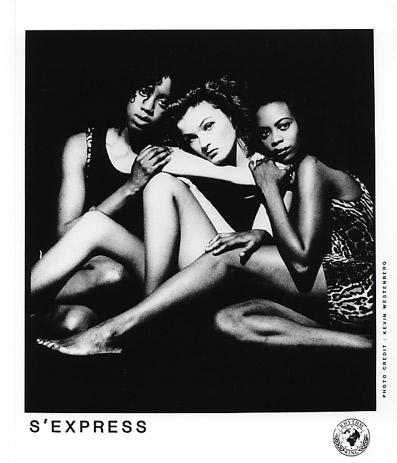
Maybe in a couple of years I’ll be able to pick up a mint copy of Primal Scream‘s offering for this year, a surprisingly good take on, of all things, S’Express’s Mantra For A State Of Mind. The original is terrific; end of the century disco music, all rinky dink Italo house piano, sugar coated in bleeps and whooshes and carried along on a wave of hysterical female backing vocals. If you listen very carefully you’ll hear the sound of Bobby G and co taking notes as they prepare to record Don’t Fight it, Feel It. How has no-one noticed this until now?
S’Express – Mantra For A State Of Mind (Elevation Mix, Parts 1 & 2)
Primal Scream slow things down rather a lot. Their version sounds like something they might’ve done 25 years ago and comes across like S’Express on Benylin. It’s got Spiritualized’s Jason Pierce on guitar duties and that very same hysterical lassie that S’Express used to beef up the original version. It‘s bloody magic, truth be told.
Primal Scream – Mantra For A State Of Mind
If you had the chance to talk to Bobby, he’d probably fix you straight in the eye and tell you straight-faced that their version was a punkrockdoowoppsychedelicatrippedoutcidhousepartycomedowngroove or other such bollocks, Little Richard jamming with Sun Ra and produced by Lee Perry, StonesWhoPistolsClash-influenced with, y’know, added bongos. But you know and I know that Bobby is now one big lanky streak of a caricatured stupidity, about as current as that Grand National bookies’ line I was talking about earlier. Primal Scream nowadays are a total irrelevance, with record sales as flimsy as Bobby’s fringe. Apart from Kasabian fans, who still likes them? If they made more records in the vein of Mantra, though, Primal Scream would still be hot property.
Right. I’m off to seek out that Radiohead 12″ from RSD ’12. I hope I get it before you.
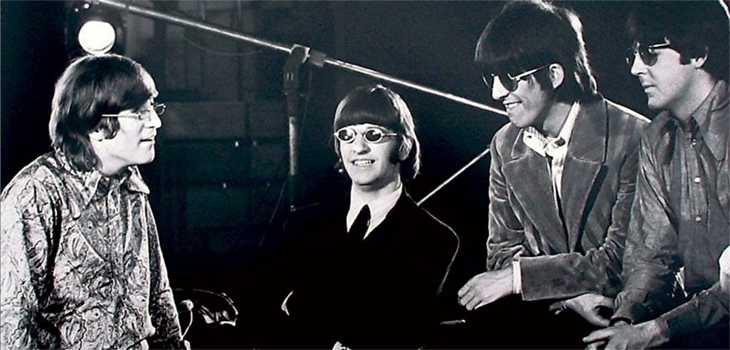
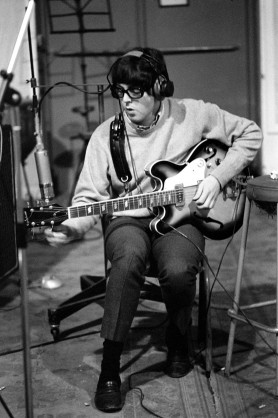
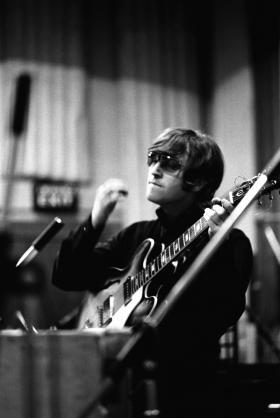
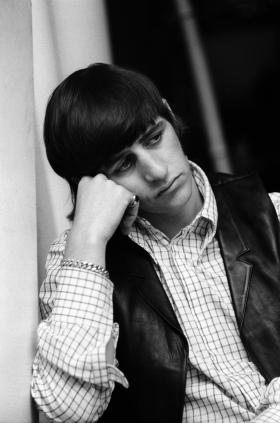
Half a century ago this week, The Beatles were in the studio recording the tracks that would make up their Revolver LP. Amazingly, the first track worked on was Tomorow Never Knows, the cut ‘n paste, experimental, looped track that still sounds futurtistic, frightening and like nothing else in the entire Beatles’ canon. It was only three short and manic years since She Loves You, but it may as well have been three million light years, such is the leap in their vision and outlook. You could be forgiven for assuming that for the session the band reconvened in Abbey Road’s Studio 3 with a handful of solo acoustic tracks just waiting to be Beatlefied. Nothing could be further from the truth.
For Tomorrow Never Knows, the band set up in the studio to jam the main backing track, with Ringo’s compressed and relentless thunk driving the track in tandem with McCartney’s droning bass. Listen with eyes closed and you’ll hear a little organ, a wonky tonk piano in the fade out, a perisitent rattling tambourine and a couple of guitar tracks; the fuzzed out one manipulated to play backwards and the other fed through a Leslie speaker to give it that widescreen swirl that would in time become synonymous with the era.
On top of it all there are sound effects that could well be the calling sound of the Great God Pan himself; Fanfaring trumpet noises. Scraping, sweeping, jarring strings and what sounds like the divebombing seagulls that bother the fish and chip eaters at Largs shorefront. It’s fairly astonishing for 2016. Imagine hearing it for the first time in 1966. Wow!
The Beatles – Tomorrow Never Knows (released mono version)
Making the track involved more than just the four Beatles – George Martin orchestrated the whole affair, ably assisted by Beatles’ engineer Geoff Emerick who’s job involved deadening Ringo’s drum sound by stuffing an old jumper inside the bass drum and shuffling it about until the right sound was achieved. The backing track took just three takes over 2 days to perfect, before Lennon’s vocals were given the requisite attention.
Famously, Lennon’s lyrics came from Timothy Leary’s LSD manifesto, ‘The Psychedelic Experience: A Manual Based On The Tibetan Book Of The Dead‘ and flowed in a stream of epoch-defining consciousness…
“Turn off your mind, relax and float downstream,
It is not dying, it is not dying.
Lay down all thought, surrender to the void, It is shining, it is shining.
That you may see the meaning of within, It is being, it is being.
That love is all and love is everyone, It is knowing, it is knowing.
That ignorance and hate may mourn the dead, It is believing, it is believing.
But listen to the colour of your dream, It is not living, it is not living.
Or play the game ‘Existence’ to the end,
Of the beginning, of the beginning.”
At the mixing desk, after hearing how the guitar track sounded through the Leslie speaker, Lennon insisted his vocals were given the same treatment. “I want to sound as though I’m the Dalai Lama singing from the highest mountain top. And yet I still want to hear the words I’m singing.”
It’s also been said that John wanted the sound of 4000 monks chanting ad infinitum in the background. I’m not certain he achieved either goal, but what was eventually committed to vinyl was brave, bold and big of beat.
Here’s the druggy, fuggy first take:
The Beatles – Tomorrow Never Knows (Take 1)
Keen-eared Beatles spotters will be aware that the first copies of Revolver were sold with the wrong mix of Tomorrow Never Knows included. These records were quickly withdrawn and recalled, although not before a good many had disappeared into the hands of unsuspecting record buyers. Discovering this a few years ago, with shaky hand I checked the matrix number on the run-out groove of my ‘first’ pressing Revolver, bought for £4 in Irvine Indoor Market in the mid 80s when the Beatles were anything but cool. Pah. One digit out. Meaning it wasn’t technically a first issue, and nor was it worth the £20,000 it might have been. I wouldn’t have sold it anyway*.
Back in Abbey Road’s Studio 3, just after half seven that evening when Tomorrow Never Knows had been expertly finished, the band veered back towards the middle of the road to tackle Got To Get You Into My Life, another drug-inspired song and another story for another day.
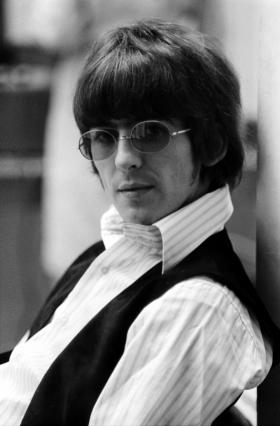
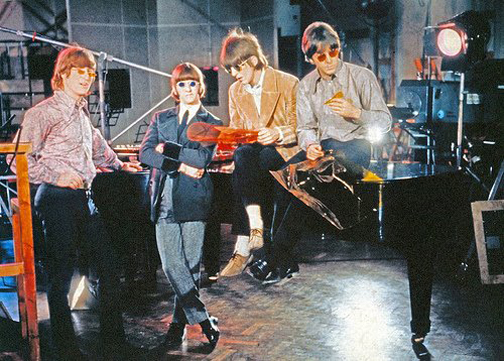
Just out of shot, a young Paul Weller, keen to rip off George’s Taxman and apparently, his entire wardrobe.
If you’re a fan of soul music, in particular the sweet, high falsetto’d restrained soul of Curtis Mayfield or Prince when he’s in a wooin’-the-laydeez kinda mood, you could do worse than discover Didn’t I by Darondo.
Darondo – Didn’t I
It‘s quite possibly the finest slice of underground soul that ever was; a sparse minor chord-led groove, all frugging bass, doo-wop intro and call and response vocals, with a gutteral grunt one line followed by that high! high!! high!!! falsetto the next. There’s a subtle string section shimmering its way through the background, the odd flute and oodles of proper soul.
It first came to my attention a few years ago when Teenage Fanclub’s Gerry Love selected it as one of his Six Of The Bestfor this very blog. It was very likely a record that in its own small way influenced Gerry’s only solo LP, the terrific Lightships album. It too has a fair sprinkling of flute and plenty of pastoral strings while spinning at a relaxed pace. Ever since Gerry mentioned it, it’s lain in that dark corner of the blog, discovered only occasionally by a few very specific Googlers or in-depth readers each month. The time is long overdue to give the record its rightful place in the spotlight.
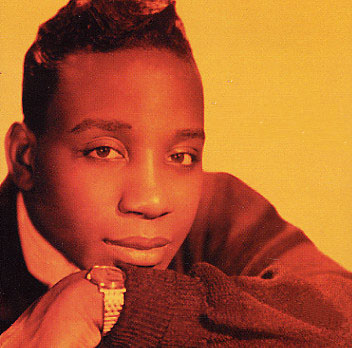
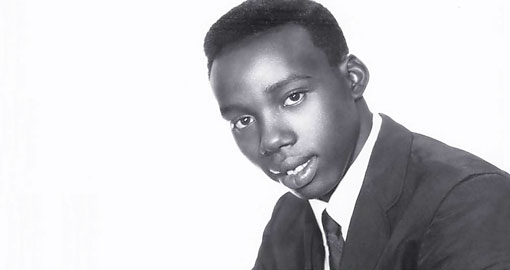
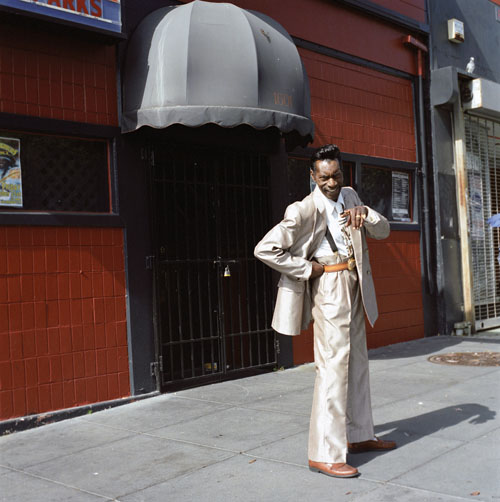
Born William Daron Pulliam jnr, the teenage William ran the streets, where he went by the name of Daron, a name soon augmented to Daron-do on account of him always having a pocketful of dough. Quite where that dough came from is anyone’s guess. There are rumours a-plenty that he was a pimp before he was a musician, and judging by the pictures above and below, you could well believe that. He certainly dressed like one, and the white Rolls Royce Silver Shadow (personal license plate not shown) adds to the notion. He gigged sparingly, was classically ripped off by his label and disappeared almost as quickly as he’d arrived. In-between having a nervous breakdown, travelling the world by cruise ship and being mistaken for Little Richard, he studied and qualified as a physiotherapist, a job he does to this day. In my house, though, he’ll always be known as the one that got away. On the evidence of Didn’t I and Legs, below, he coulda been another Sly.
Dig it, brothers and sisters. I told you you’d like it. Didn’t I?
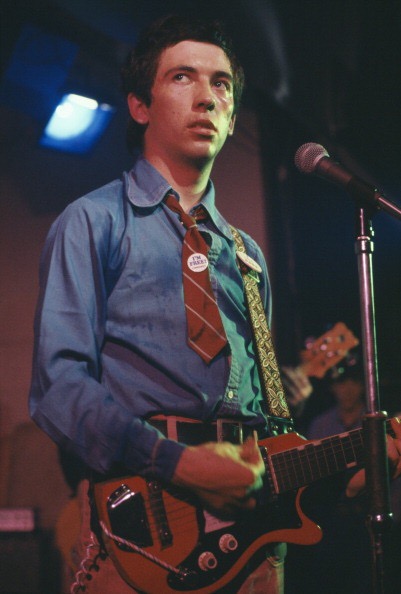
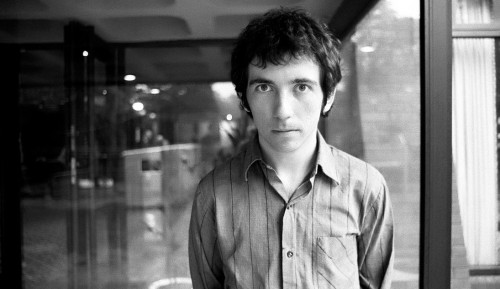
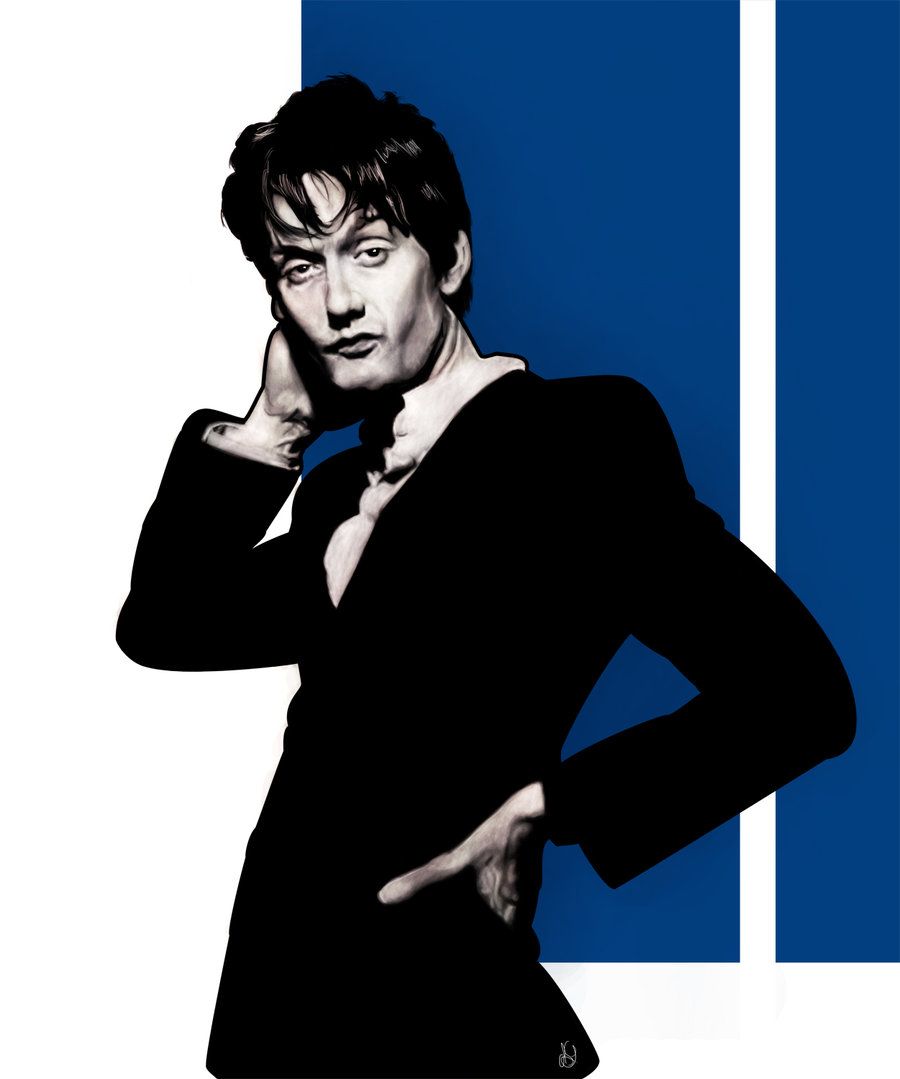
Telephone Operator by Pete Shelley gallops along like a post-punk, electro mash up of The Osmonds’ Crazy Horses and Take Me I’m Yours by Squeeze. Shelley is in full-on sneering-camp mode and as the record plays, you can just picture him looking side-on to an imaginary camera, left eyebrow slightly raised, arch and knowing.
It’s post punk and therefore post Buzzcocks, but it’s lost none of the key ingredients forever associated with his part in the punk Beatles – a nagging riff (played on synth rather than guitar), a melody with more hooks than a metre of Velcro and a sensational production courtesy of Mancunian marvel Martin Rushent. The track practically bursts out of the speakers with its room-filling throb. I think you’d like it.
Pete Shelley – Telephone Operator
There’s also a Dub Version that can be found in the darkest corners of the ‘net. I’m not certain in what capacity it was released as it doesn’t appear on the b-side of the 7″ I have. It’s hardly essential – lots of echoey guitar riffs, some bloops and bleeps and sweeping synths, but sadly, none of the magic that makes the original version such a brilliant record.
Pete Shelley – Telephone Operator (Dub Version)
Telephone Operator is taken from Shelley’s second solo LP, XL-1, a loose-concept album that originally came with a programme that allowed you to play it via your ZX Spectrum (the iPad of 1983, kids), where lyrics and graphics would appear on-screen in time to the music. Ahead of the game, then, although the record buying public failed to engage with it. Four weeks after release, XL-1 had dropped out the charts, never to be seen again. Telephone Operator was the ‘big’ single from it, crashing in at a lowly 66 before vanishing likewise.
Despite this, Shelley’s post-Buzzcocks output is quite interesting and definitely worth investigating. He knows his way around a pop melody and has a sound that is defiantly his. The Buzzcocks may be the act that keeps him in new shoes, but there’s plenty other interesting stuff with his name attached to it.
*Bonus Track!
Here‘s long-gone nobodies Big Dipper with their take on Homosapien, Shelley’s first solo single and a song that suffered from a BBC ban at the time due to some fruity lyrics and allusions to same-sex sex (‘Homo Superior, In My Interior‘).
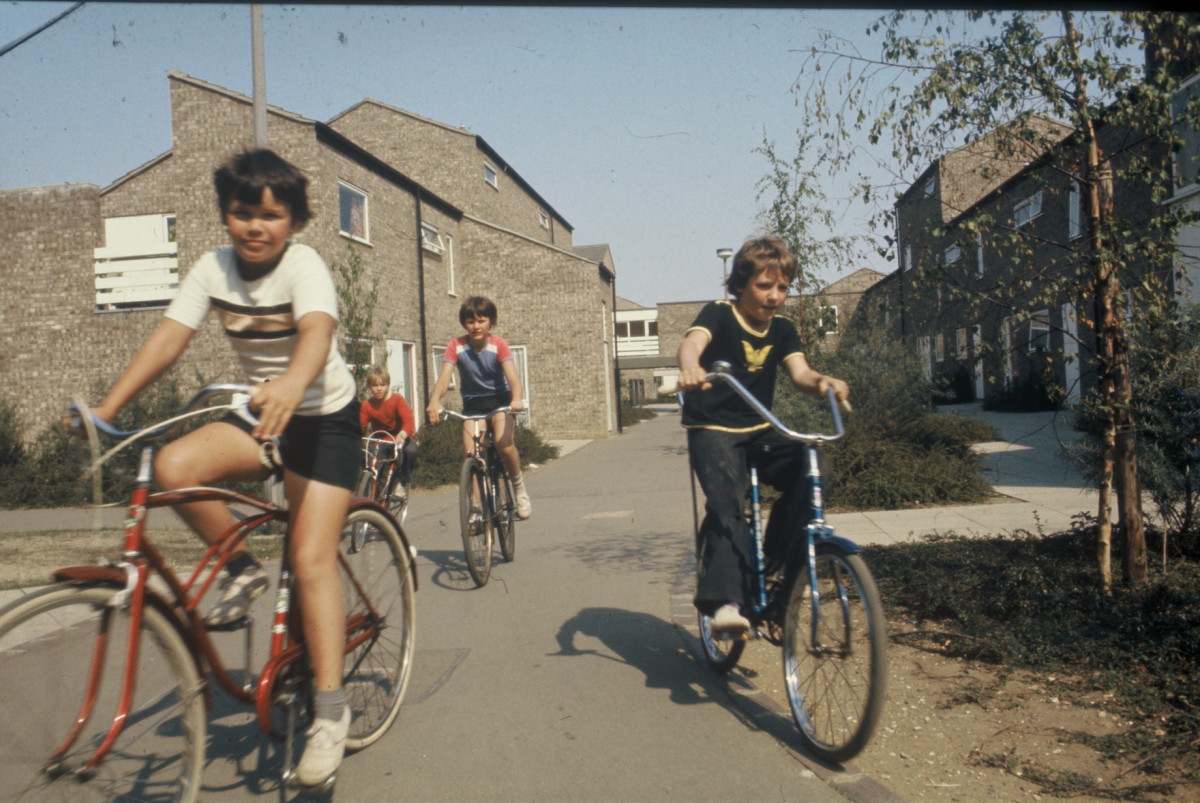
Riding a bike at top speed and slightly out of control was the greatest thrill as a youngster, the first truly independent feeling you could experience. In 1977, the Sillars Meadow speedway was where you’d mostly find me, gripping the handlebars of my Puch Mini Sprint with white knuckles, hayfevered eyes focused on the snaking path ahead, tearing into the blind corners with carefree abandon, hoping to avoid Mrs Robertson, her Thatcher do and her yappy dog on the tightest part where the path narrowed into one ‘lane’ – a particularly tricky bit. There was always a bit of a competition to see who could get round the speedway the fastest. Three things helped; Mrs Robertson not being there, having absolutely no fear and sticking half a fag packet into the spokes. Ratta-ratta-ratta! it went, adding at least 0.5 mph to the top speed of your bike. That ratta-ratta-ratta sound was something that would make a continual, welcome and comforting appearance throughout my life.
This June (16th, to be exact) sees the 30th (30th!!!) anniversary of The Queen Is Dead. There will no doubt be many reappraisals and celebrations for TQID nearer the time. I for one will no doubt change my Facebook profile pic to that of the LP cover signed by Johnny Marr. Did I ever tell you I met Johnny? I’m sure I mentioned it in passing somewhere. Hovering over the Salford Lads Club picture with my sharpie he tutted and said, “I never liked myself in that picture…I look better now than I did then…“, flipped the cover shut and signed across the iconic image of the horizontal Alain Delon. It looks as beautiful as the album sounds.
Anyway, on that very same day (16th June 1986) another landmark LP was released. It’s likely little fanfare will be blasted in its honour, but in my house at least, a wee portion of the day will be given over to it.
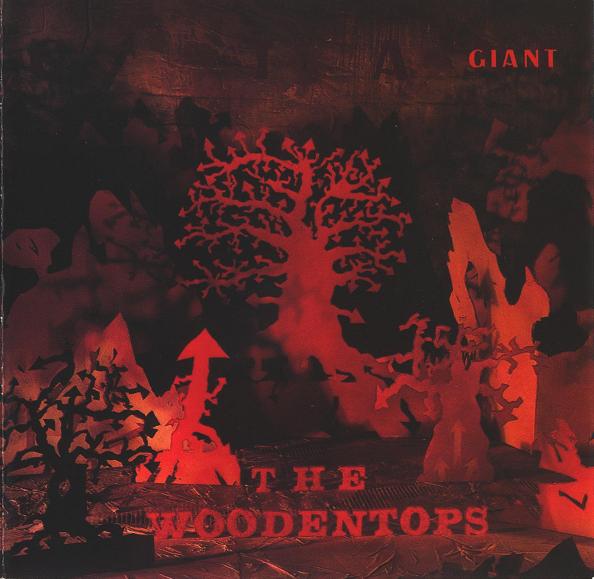
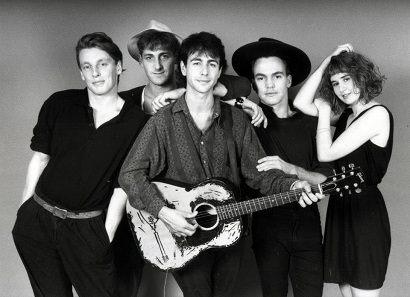
The Woodentops‘ Giant was, and still is, a terrific-sounding album. Played expertly with loose limbs and rubber wrists, it’s a giddy 100mph rush from start to finish, a downhill-without-the-brakes-on blur of ferociously-scrubbed acoustic guitars, proto dance rhythms and hypnotic, skittering drums. Ratta-ratta-ratta they go. Except for on the really fast ones, when they sound like someone’s dropped a box of steel marbles across a kitchen floor. These days I cycle to the metronomic rhythms of Underworld and their ilk, soundtracking my journeys as I pedal along the highways and byways of the west of Scotland’s cycle paths, but had the technology been available in the 1970’s, I’d have been soundtracking and breaking world records on the Sillars Meadow speedway to the frantic clatter of The Woodentops.
The Woodentops – Get It On
The Woodentops – Shout
The Woodentops – Everything Breaks
Loved by Morrissey, and ergo by the indie crowd, their tunes were later adopted by the Ibiza faithful, where DJs with eclectic taste would seamlessly mix them into their playlists with carefree abandon. A few short years later, every band within half a mile of a wah-wah pedal and a 2nd hand copy of James Brown’s ‘Funky Drummer‘ were claiming they’d always had a dance element to their music, but for The pioneering Woodentops, there was no pretence.
Their music is marvellous stuff and none of it has aged in the slightest. Giant is an album I always come back to. Maybe not that regularly any more, but at least once a year it’ll come out and get stuck on. And while it plays I do that rarest of things. I sit and listen. I don’t get the iron out or watch a soundless telly. I don’t flick through Mojo with half an ear on the music and half an eye on the crossword. I sit in the stripey chair and listen. It’s an extremely hard thing to do. Half All the tracks are super-percussive, highly danceable and totally singalongable. If you’ve never had the pleasure of the album, or any of the rest of the band’s stellar back catalogue, it’s never too late to get on board. You can find most of it in all the usual places, I’m sure.
The Woodentops are playing a few celebratory gigs around the date to mark the occasion. Having never seen the band perform, I’m keen to get to one. If they’re near you, I urge you to go too. You can check here.
Whatever happened to Bond themes? Save the fairly recent Adele effort, Skyfall (which at least attempted to recreate the 60’s heyday of lush orchestration, big vocals and bigger hair), pretty much every Bond theme since A-Ha’s The Living Daylights has been as sexy as yesterday’s Daily Mail.
Radiohead’s recent statement that the Bond franchise people had preferred Sam Smith’s idea of the Spectre theme to their own kinda sums it all up. It’s now lowest common denominator, appeal to the masses stuff, rather than edgy and out there. Perhaps this is a reflection, a metaphor for Bond himself. Once edgy and out there, he’s now lowest common denominator action hero, appealing to the masses with his suits, gadgets and beautiful women, just like yer Farrells, Damons and the rest of them.
Radiohead‘s theme is fantastic. Released for free on Christmas day without fanfare or prior warning, as is the Radiohead way, it’s edgy and paranoid, Thom Yorke’s falsetto surfing over the top of a heavily orchestrated backing track. “I’m lost, I’m a ghost. Dispossesed, taken host,” he wails, right eye no doubt twitching uncontrollably on the off beat.
Radiohead – Spectre
It fades in on a sweep of Bond-ish strings, not quite but almost playing that well-ingrained Barry motif. A piano holds the rhythm as a set of jazz drums straight outta the John Barry 7 skitter around the background. There’s the dramatic part in the middle when the strings soar and stab and jar until its brought back to earth with Yorke’s vocals about ‘bullet holes‘ and ‘mortal souls‘ and so on. Then, just as you’re getting the measure of it, it’s gone in a sudden brass stab and some wind tunnel effects. “The only truth that I can see is when you put your lips to these.” It’s by far the most Bondish of Bond themes in recent years and it was rejected.
Radiohead weren’t the only ones to fall foul of the rejection slip. Tom Jones’ brassy hip-swingin’ theme to Thunderball was chosen over a clip-clopping Johnny Cash effort. Considering the era, the producers got this spot on. Bond. Brass. Swinging London. Or the Man In Black singing roll ’em, roll ’em, roll ’em rockabilly country?
Blondie felt the sting of rejection when they submitted their theme for For Your Eyes Only. Sheena Easton’s at times out of tune and none-more-80s syrupy wallow got the nod ahead of the Noo Yoikers’ twangingly pedestrian (and frankly forgettable) mid-paced clunker. You can find it if you wish on late-era Blondie LP ‘The Hunter‘. Again, you have to say the producers got this spot on. You’re probably singing Sheena Easton’s version to yourself right now. And that’s something I never thought I’d be typing on Plain Or Pan.
By the mid 90s, anyone popular in music seemed to be draped in the Union Jack and aligned to some establishment-friendly updated idea of Swinging London. All manner of bands were discovering trumpets and strings and enhancing their weedy indie with overblown orchestration. I’m fond of some of it – Blur’s To The End, for example, and the opening track to Mansun’s debut album, but much of it was totally irrelevant.
Masters of the era were Pulp and Saint Etienne, both acts steeped in pop culture and history, with subtle nods to the unfashionable corners of the 70s, eyebrows permanently arched. Both submitted tracks for consideration as the theme to Tomorrow Never Dies. Both were rejected. Pulp’s was retitled Tomorrow Never Lies and found its way onto the b-side of the Help The Aged single. It’s not a bad tune, but alongside the stellar catalogue of existing Bond themes, it’s weedy and thin and very mid 90s indie by comparison.
Pulp – Tomorrow Never Lies
Incidentally, Help The Aged‘s parent album This Is Hardcore featured the track Seductive Barry. Either it was a song in celebration of the great arranger’s soundtracking or it was about a brown ‘n beige bri-nylon clad 2 up/2 down boy about town. With Jarvis you never know.
Saint Etienne‘s effort is more in keeping with the idea of a Bond theme; sweeeping orchestration, some wah-wah, breathy vocals, tinkling keyboards. Unfortunately it also suffers from sounding very of its time. A Bond theme should be timeless, peerless and ageless. Saint Etienne’s track most certainly isn’t. In fact, it sounds like something Dubstar might’ve rejected on the grounds of being too flimsy and wishy washy. The track has made just the most fleeting of appearances, being included only on 1999 fan club compilation Built On Sand.
Saint Etienne – Tomorrow Never Dies
The band claim that Bond du jour Pierce Brosnan owns the master tape of the track, saying it’s “seven times better than Sheryl Crow“, who’s song went on to lead the film. Really?!? Pinch of salt, surely. I’d have thought the Bond people could’ve found someone better than Sheryl Crow at the time. David McCalmont perhaps, who certainly knew a thing or two about a Bassey-inflected vocal range.
The one that really did get away though was Amy Winehouse. She was in the middle of lurching from one personal crisis to another and was passed over in favour of Jack White & Alicia Keys, who were chosen to duet the lead for the Quantum Of Solace film. Had Amy got herself together, she’d have been perfect for such a job. Composer David Arnold had worked out a contemporary orchestrated sixties-influenced piece for her and Mark Ronson sat patiently in the producer’s chair, golden touch unused. Amy’s ongoing problems meant that track was never completed.
They should’ve used Amy’s Love Is A Losing Game instead. Richly orchestrated, full of clipped guitar and bathed in pathos and heartbreak, it was the Bond theme wot got away. Amy’s voice is superb throughout.
Amy Winehouse – Love Is A Losing Game
Imagine it playing as those famous images of the silhouetted naked girls float and swim across the silver screen, then ‘see’ the camera pan downwards at the final string flourish to reveal Bond in some far-off desert or window ledge or hotel bedroom, licensed to kill and licensed to thrill. The best of the Bond themes that never were.
Cancer. Is there anyone, anywhere, who so far remains unaffected by its evil shadow? My wife’s family has been blighted by it. My father’s life changed for the worse 2 years ago because of it. And just last week, a friend I hadn’t seen since leaving school in 1987 got in touch. His father was ill through cancer, he was home from Australia and wanted to meet up to catch up. The filthy, under-the-radar stink of it is everywhere.
And now David Bowie. He was supposed to live forever, was he not? An ever-changing, omni-present lightning rod to the future, forever young and forever valid. Those wee ‘Six of the Best’ features I occasionally run? It’s no surprise when you find out that Bowie turns up in them more than any other artist. Maybe that says more about the contributors, I don’t know, but Bowie holds the record for most appearances. How great must it have been to have grown up in the 70s with a new Bowie LP and haircut to look forward to every year? He meant so much to so many. There’ll never be another like him. A true original, a true great. Hot tramp, I love you so.
Somehow, some way, Plain Or Pan has turned 9. Or, to be more accurate, is just about to turn 9. But at this time of year, when you can never be entirely sure if it’s Sunday morning or Thursday night and inspiration goes out the window along with routine and work ethic, it’s tradition that I fill the gap between Christmas and Hogmany with a potted ‘Best Of‘ the year compilation, so I’ve always made this period in time the unofficial birthday for the blog.
Not that anyone but myself should care really; blogs come and go with alarming regularity and I’ve steadfastly refused to move with the times (no new acts here, no cutting edge hep cats who’ll be tomorrow’s chip paper, just tried ‘n tested old stuff that you may or may not have heard before – Outdated Music For Outdated People, as the tagline goes.) But it’s something of a personal achievement that I continue to fire my wee articles of trivia and metaphorical mirth out into the ether, and even more remarkable that people from all corners of the globe take the time out to visit the blog and read them. From the bottom of my heart, I thank you, one and all.
Since starting Plain Or Pan in January 2007, the articles have become less frequent but more wordy – I may have fired out a million alliterative paragraphs in the first year, whereas nowadays I have less time to write stuff and when I do, it takes me three times as long to write it. To use an analogy, I used to be The Ramones, (1! 2! 3! 4! Go!) but I’ve gradually turned into Radiohead; (Hmmm, ehmm, scratch my arse…) Without intending it, there are longer gaps between ‘albums’ and I’ve become more serious about my ‘art’. Maybe it’s time to get back to writing the short, sharp stuff again. Maybe I’ll find the time. Probably I won’t.
The past 9 years have allowed me the chance to interview people who I never would’ve got close to without the flimsy excuse that I was writing a blog that attracted in excess of 1000 visitors a day (at one time it was, but I suspect Google’s analytics may well have been a bit iffy.) Nowadays, it’s nowhere near that, but I still enthusiastically trot out the same old line when trying to land a big name to feature. Through Plain Or Pan I’ve met (physically, electronically or both) all manner of interesting musical and literary favourites; Sandie Shaw, Johnny Marr, Ian Rankin, Gerry Love, the odd Super Furry Animal. Quite amazing when I stop to think about it. You should see the list of those who’ve said they’ll contribute then haven’t. I won’t name them, but there are one or two who would’ve made great Six Of the Best articles. I’m not Mojo, though, so what can I expect?
A quick trawl through my own analytics spat out the Top 24 downloaded/played tracks on the blog this year, two for each month:
Michael Marra – Green Grow the Rashes
Wallace Collection – Daydream
Jacqueline Taieb – Sept Heures du Matin
The Temptations – Message From A Black Man
New Order – True Faith
Bobby Parker – Watch Your Step
Jim Ford – I’m Gonna Make Her Love Me
Doris – You Never Come Closer
Ela Orleans – Dead Floor
Mac De Marco – Ode To Viceroy
Teenage Fanclub – God Knows It’s True
Iggy Pop – Nightclubbing
George Harrison – Wah Wah
Magazine –Thank You Falletinme Be Mice Elf Again
Future Sound Of London – Papua New Guinea
Bob Dylan – Sad Eyed Lady Of the Lowlands (mono version)
Richard Berry – Louie Louie
REM – Radio Free Europe (HibTone version)
The Cribs – We Share The Same Skies
Johnny Marr – The Messenger
McAlmont & Butler – Speed
Talking Heads – I Zimbra (12″ version)
Style Council – Speak Like A Child
Darlene Love – Johnny (Please Come Home)
And there you have it – the regular mix of covers, curios and forgotten influential classics, the perfect potted version of what Plain Or Pan is all about. A good producer would’ve made the tracklist flow a bit better. I just took it as I came to them; two from January followed by two from February followed by two from etc etc blah blah blah. You can download it from here.
See you in the new year. First up, Rufus Wainwright. Cheers!
monophonicsound;monophony, the favoured recording method pioneered in the 1960s by Phil Spector.
monolithic
[mon-uh–lith-ik]
Adjective
characterised by massiveness, total uniformity, rigidity, invulnerability, etc.
Darlene Love‘s Christmas (Baby Please Come Home) is massiveness incarnate. Invulnerable, invincible and right at the top of the Christmas tree when it comes to the best musical festive fare ever recorded. The only original track to appear on Phil Spector‘s A Christmas Gift For You LP, it’s a thumping major to minor rock ‘n roll tearjerker about lost love. Phil Spector originally put it together with the intention of having his wife Ronnie along with the other Ronettes record it. But after a few false starts and failed takes, he quickly realised she wasn’t singing it with the requisite oomph and instead drafted in Darlene Love.
Ronnie recalls her time in the studio with Specctor:
“Phil worked everybody so hard on the album and the days kind of blurred into each other, thinking about it now. But there was a real Christmas party atmosphere in the studio, even though it was the height of summer, and a lot of great musicians were involved. They weren’t that well-known at the time but so many of them went on to become famous in their own right, like Leon Russell. Sonny Bono and Cher were involved in a lot of the stuff too, so was Glen Campbell. We worked hard, though, some days we’d be in the studio for eight or nine hours just doing one verse of one song.”
Darlene was way down the pecking order with Spector. She’d sang lead on He’s A Rebel for The Crystals and had applied her Noo Yoik drawl to umpteen of Spector’s kitchen sink productions, but Christmas (Baby Please Come Home) was one of the first times she’d been allowed to fly solo and, as you’ll know if you’ve heard the record, she soars gloriously.
The song was released with high hopes ahead of Christmas 1963, but in a bizarre twist of fate found itself released on the very day JFK was assassinated in Dallas. Holiday spirit instantly ruined, the record failed to find airplay amongst the bulletins lamenting the President’s death and was quickly withdrawn from sale. What could’ve been the greatest Christmas number 1 of all time never came to be.
Darlene Love – Christmas (Please Come Home)
Spector loved the finished version. So much in fact, (and no doubt stung by the record’s withdrawal), he felt the record had year-round appeal. Such a brilliant cacophony of sound shouldn’t be kept under lock and key and only let out for one month in twelve, so he asked Jeff Barry and Ellie Greenwich to re-write it as a ‘boyfriend song’. Minus a few sleigh bells but not much else, it still sounds brilliant, yet somehow not quite right. Years of associating it with Christmas makes it a bit of a strange one.
Darlene Love – Johnny (Please Come Home)
This version was hidden away on an obscure b-side and failed to live up to Spector’s wish. Indeed, not a lot of people know it even exists. There you have it.