monophonicsound;monophony, the favoured recording method pioneered in the 1960s by Phil Spector.
monolithic
[mon-uh–lith-ik]
Adjective
characterised by massiveness, total uniformity, rigidity, invulnerability, etc.
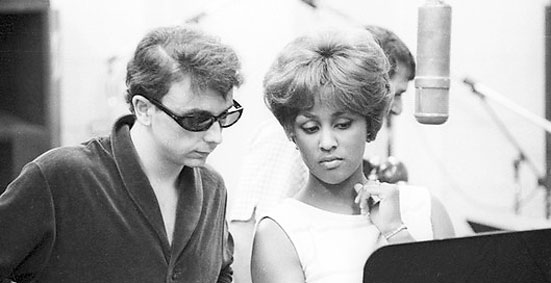
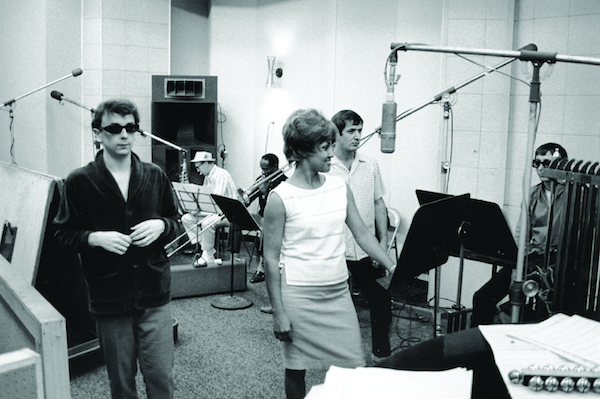
Darlene Love‘s Christmas (Baby Please Come Home) is massiveness incarnate. Invulnerable, invincible and right at the top of the Christmas tree when it comes to the best musical festive fare ever recorded. The only original track to appear on Phil Spector‘s A Christmas Gift For You LP, it’s a thumping major to minor rock ‘n roll tearjerker about lost love. Phil Spector originally put it together with the intention of having his wife Ronnie along with the other Ronettes record it. But after a few false starts and failed takes, he quickly realised she wasn’t singing it with the requisite oomph and instead drafted in Darlene Love.
Ronnie recalls her time in the studio with Specctor:
“Phil worked everybody so hard on the album and the days kind of blurred into each other, thinking about it now. But there was a real Christmas party atmosphere in the studio, even though it was the height of summer, and a lot of great musicians were involved. They weren’t that well-known at the time but so many of them went on to become famous in their own right, like Leon Russell. Sonny Bono and Cher were involved in a lot of the stuff too, so was Glen Campbell. We worked hard, though, some days we’d be in the studio for eight or nine hours just doing one verse of one song.”
Darlene was way down the pecking order with Spector. She’d sang lead on He’s A Rebel for The Crystals and had applied her Noo Yoik drawl to umpteen of Spector’s kitchen sink productions, but Christmas (Baby Please Come Home) was one of the first times she’d been allowed to fly solo and, as you’ll know if you’ve heard the record, she soars gloriously.
The song was released with high hopes ahead of Christmas 1963, but in a bizarre twist of fate found itself released on the very day JFK was assassinated in Dallas. Holiday spirit instantly ruined, the record failed to find airplay amongst the bulletins lamenting the President’s death and was quickly withdrawn from sale. What could’ve been the greatest Christmas number 1 of all time never came to be.
Darlene Love – Christmas (Please Come Home)
Spector loved the finished version. So much in fact, (and no doubt stung by the record’s withdrawal), he felt the record had year-round appeal. Such a brilliant cacophony of sound shouldn’t be kept under lock and key and only let out for one month in twelve, so he asked Jeff Barry and Ellie Greenwich to re-write it as a ‘boyfriend song’. Minus a few sleigh bells but not much else, it still sounds brilliant, yet somehow not quite right. Years of associating it with Christmas makes it a bit of a strange one.
Darlene Love – Johnny (Please Come Home)
This version was hidden away on an obscure b-side and failed to live up to Spector’s wish. Indeed, not a lot of people know it even exists. There you have it.
There were a few Whistle Test repeats on BBC4 last week, one of which jumped out at me. Nick Lowe was leading Brinsley Schwarz through a great, soulful version of Surrender To The Rhythm, a track from their 1972 ‘Nervous On The Road’ LP. I’d never knowingly heard Brinsley Schwarz before and I was getting into the song’s groove when it hit me: That wee occasional keyboard riff! The phrasing in Nick Lowe’s delivery! I’ve heard this song before!
Placed in time somewhere post glam and pre punk, Brinsley Schawrz were part of the pub-rock movement, a gritty, back-to-basics scene where ‘real’ musicians were more concerned with the make-up of their songs than the make-up on their face. Keen and earnest, the scene nonetheless spawned Kilburn & The High Roads, who would morph into the Blockheads, the 101ers (who featured a pre-Joe Strummer John Mellor on guitar) and Dr Feelgood, a major influence on the young, impressionable Paul Weller (to this day, Weller still plays From The Floorboards Up without a plectrum, choosing instead to adopt the open-handed Wilko strum whenever he plays it live).
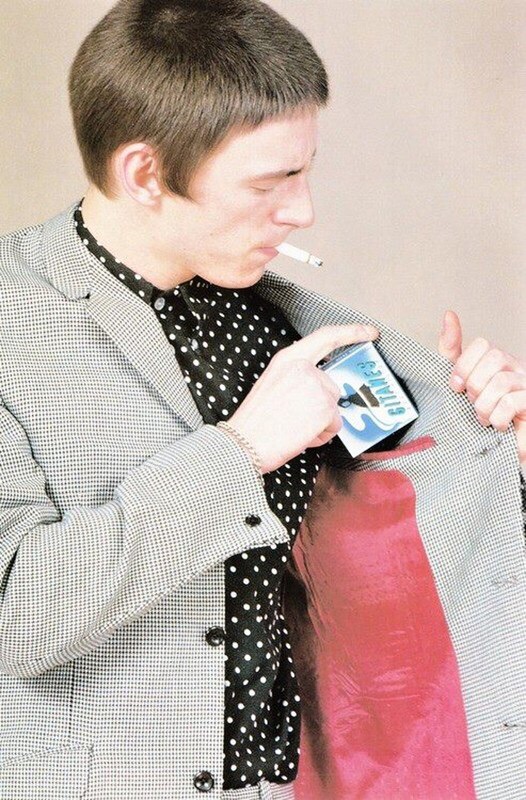
Weller, as it turns out, is more brazen about stealing things than you maybe realise. He has form – not only a strumming pattern from Wilko Johnson but also a career-long vocal delivery cribbed from Steve Marriott, a haircut half-inched from everyone from Worzel Gummidge to Muriel Gray and, more blatantly than any of this, the riff for Changingman that he heartilyappropriated from ELO’s 10538 Overture, something I’ve pointed out before. But long before the heady days of Brit Awards and Stanley Road etc, he was borrowing the mood, the feel and sometimes the chords and melody from more obscure tracks and passing them off as his own work.
Time has been kinder to the much maligned Style Council than the dissenters might have thought back in the day (C’mon! This might cause a row down in Slough, but some of those tracks are ace – pretentious, aye! Ludicrous, aye! But ace – check out Weller’s recent tour for unarguable proof!) They were a deliberate move away from the Jam’s laddism; cricket jumpers, cycling gear, blokes with arms draped around one another, Weller at the back, pastel sweater hanging off his shoulders like a C&A catalogue model. All reference points lay somewhere between Dusty In Memphis, Curtis in Chicago and tongue firmly in cheek, and you either got it or you harked back to a time when Eton Rifles was the only thing that mattered.
Their debut single Speak Like A Child (in itself the title of a Herbie Hancock LP on Blue Note) is to this day a high point in The Style Council’s back catalogue, even if (as if turns out) you really have heard it before. With its breathy vocal delivery and airy Hammond lead, it isn’t entirely a million miles away from Brinsley’s Surrender To The Rhythm. Contrast and compare:
Brinsley Schwarz – Surrender To The Rhythm
The Style Council – Speak Like A Child
Not content with pilfering blatantly from the past for his more soulful numbers, Weller went on the rampage through the more obscure parts of sunshine pop, alighting at Harper & Rowe’s 1967 bossanova boogaloo The Dweller and stealing the best bits for Have You Ever Had It Blue? This track was a highlight of the recent tour, the band kicking out the jams to play their blue notes under blue lighting, an inward-looking circle of nodding, noodling jazz-heads, but how many of the appreciative audience knew they were in effect listening to a carefully restructured cover version?
I’ve always loved The Style Council’s track, with its Gil Evans-arranged trumpet motif, the non-rock time signature and wordless Dee C Lee doo-be-doo backing vocals. As a 16 year-old, I thought Weller was a bit of a genius for having ‘written’ something so finger clickingly jazz. Great tune ‘n all that, Paul, but really, how did you manage to get away with it?
Harper & Rowe – The Dweller
The Style Council – Have You Ever Had It Blue?
*Bonus Track!
Here‘s The Style Council‘s With Everything To Lose, essentially the first version of the above track. No brass, different words, carefree flute etc etc
McAlmont & Butler will, for many, be forever known as ‘one-hit wonders’, the answer to a thousand pub quizzes thanks solely to the dynamic duo’s three octave, four minute single Yes. That it’s a sensational record is not up for debate. The full-length version is particularly thrilling, all reverb ‘n twang ‘n handclaps ‘n kitchen sink thrown in for good measure.
But they have another, far less well-known track that is almost just as skyscrapingly brilliant.
During the sessions for what would’ve been the duo’s third album, aborted after Butler teamed up with his ex Suede partner in crime, Brett Anderson, for the short-lived Tears project, they recorded Speed.
It starts off slow and measured, kinda like a soulful cousin of the Jesus And Mary Chain’s Sidewalking, but while the JAMC fling a bucket of feedback and forced Americanisms over the lot of it, McAlmont & Butler continue where they left off on Yes. If Dusty In Memphis had been Dusty In East Kilbride….
Faster than the Bullet trains in the eastit goes, before the guitar, electric and wired, zooms off out into the air and the female choir come in on the chorus.
Lazy folk might point to the fact that it seems to take its cue from the Yes blueprint – deliberately mid-paced with tumbling toms, a Spectorish percussive backbeat atop sweeping strings, Butler’s guitar heroics and up-strummed chords, that sensational triple-octave vocal, but that would be to ignore the fact that Speed is something of a masterpiece all by itself.
It may be mid-paced, but I swear that by the time it floats and flounces its way to the end, it’s slightly faster, slightly louder and slightly further burrowed into your brain. You won’t even realise you’re doing the measured handclaps until you catch a sight of yourself doing a Jagger pose into the mirror, feather boa ‘n all. At least, I didn’t.
It’s a shame that after being released on 7” and download, it managed only to scrape to a lowly number 193(!) on the charts.
Who knew the charts went that far back/down?
Had Speed been released 9 years earlier in 1995 as the follow-up to Yes, it’s a stick-onthat McAlmont & Butler would never have been left on the shelf alongside those other pub quiz answers Baha Men, Nena and 4 Non Blondes, even if they’re as far removed as possible from the talent-free lucky hit makers just mentioned – their recent tour had rave reviews every night. But you knew that already.
In ‘No Direction Home’, Martin Scorsese’s Bob Dylan bio-documentary, a twinkling-eyed Bob recounts how he stole essential folk and blues records from a friend. “Just being a musical expeditionary,” is how Bob put it. Clearly, the records had an influence on the young magpie-eyed Zimmerman, and you could argue that they helped shape his first few forays into songwriting. You could even argue that it was a good thing he liberated the vinyl – he might never have written the melody to a song like ‘Girl From the North Country’ or ‘With God On Our Side‘ without them. Someone else’s loss is everyone else’s gain. Think about that for a minute.
I’ve been living for the past few days with the latest, stupendous collection in the Bob Dylan Bootleg Series. Volume 12 (entitled ‘The Cutting Edge’ – which is exactly what it is) comes in a multitude of wallet-busting formats. Keeping in line with my purchases of the previous 11 collections, I went for the sensible 2CD version. It’ll fit snugly on the shelf next to the rest of them, a glorious potted treasure of some of the very best bits of Bob’s previously unheard work.
When this edition was first announced, there was a collective frothing of the mouth from Bobcats the world over. At the very top of the scale was the Deluxe 18 CD version, containing every note, every mis-placed harmonica parp, every cough, splutter and stumbling intro that Bob and his band had committed to tape in the whole of 1965 and 1966. A whole two years-worth of Bob outtakes from his most golden period – the alchemist at work, the ‘thin, wild, mercury sound’ in creation. A Dylanologists dream. And nightmare. Have you seen the price tag?
“A steal at $600!” remarked my pal in an email. “Which is exactly what I’ll be doing as soon as it makes its way into the darkest corners of the internet!”
And now that those 18 CDs have indeed made themselves very comfortable in a dark Dylan-shaped corner of the world wide web, steal them we did. Someone else’s loss is everyone else’s gain, and all that jazz.
What is there to say about the recordings? That they’re fantastic almost goes without saying. It’s a wonderful glimpse into Bob’s psyche, into his working process in the recording studio. The collection quickly debunks the myth that Bob was a spontaneous worker, that he pulled the songs from the air, assembled his band and recorded them in the time it took to batter through them.
Bob Dylan – Visions Of Johanna (Take 7 Complete)
There are multiple versions of every track. Some replayed as frantically scrubbed skifflish Bo Diddley rockers, some as barrel house blues worthy of a scene in Boardwalk Empire. Many sound like the versions you know and love, half-baked and not quite right but essentially the blueprints for the finished versions. The sequencing of each track takes you on a journey from first sketch to final run through, a trip that’s often wild and wandering, but never less than thrilling. Stinging electric guitars vie for your attention with honey-coated keys and rasping brass, though central to the mix is always Bob’s voice; close-miked in the acoustic ones, bawling like a garage band rocker in the fast ones, all the time (to quote David Bowie) that perfect mix of sand and glue. Anyone who says that Dylan can’t sing is a moron, right?
Bob Dylan – Just Like A Woman (Take 16)
Now and again a favourite track will pop up disguised as a New Orleans funeral dirge or a full-blown electric rocker. It can be good fun playing ‘name that tune‘ or spotting a lyric from one song that finds itself embedded in a different song by the end of the session. And Bob has a wicked way with a title. Whether or not he has the ‘real’ titles in his head or not, he plays merry havoc with the engineer.
“83277 Leopard Skin Pill Box Hat Take 1”
“No! No! This isn’t Leopard Skin Pill Box Hat…this is Black Dog Blues!”
“Oh…I’m sorry…Everyone’s startin’ together. Right on the beat. Black Dog Blues Take 1. I want everybody together from the top and all the way through, because one take is all we need on this, man. It’s there! Ok! We’re rollin’ on one…”
And what follows are umpteen takes of Obviously Five Believers. Obviously.
Dylan’s wild phrasing is all encompassing throughout. He runs through Stuck Inside Of Mobile With The Memphis Blues Again a gazillion times, each time the melody stretching and bending just a little bit further than the previous time, but clinging gamefully to the tune the way a rowing boat might struggle to keep course on a choppy sea. He can make whole verses fit into two lines, and he can make a couple of lines stretch to a whole verse with his eee-long-gay-ted approach. S’beautiful!
Bob Dylan – Stuck Inside Of Mobile With The Memphis Blues Again (Take 1)
The studio chatter is what you pays yer money for. You can be a fly on the wall in New York or Nashville as Bob painstakingly arranges and rearranges lyrics, verses, whole tunes. His band, while handsomely paid, remain extremely patient. During a handful of takes of Tombstone Blues, Bob continually chokes over the same line.
“Aw man!” cries Bob. “I’m sorry!”
“Would it help if you put the lee-rics on a stand, Bob?”
“Naw, it wouldn’t, man!”
And off they go once more, the beat group backing their Messiah jester until he gets what he hears in his head out his mouth and onto tape. It’s all ridiculously essential music. But you knew that already. Here’s a rollickin’ fuzz bass-enhanced run through of Subterranean Homesick Blues, never before available until now.
As fresh as it sounds, this track coulda been recorded an hour ago by some hep band of skinny-jeans ‘n slick-backs from Brooklyn. Listen again and you could be forgiven for assuming that it was spawned a decade earlier in the windswept deserts of Africa, playing out tinny AM radios anywhere between Mali and Mozambique.
The more switched-on amongst you could be forgiven for suggesting Can in one of their relatively straightforward moments; foreign chanting, infused with the groove and with nary an eye on the clock. Squint, and it could even be Happy Mondays around their first album; chiming and repetitive, a hands-in-pockets baggy-trousered circular mooch around the scuzziest parts of town. Slow down the little counter riff that plays between the chanted lines and it’s almost the later-era Loose Fit.
Truth is, it was recorded in 1979 by Talking Heads and featured on their 3rd LP, ‘Fear Of Music‘.
Talking Heads – I Zimbra (LP Version)
It’s African in origin – a twin guitar attack – one playing the incessant, loping guitar riff that rises and falls with the tide of the song, the other playing a demented desert blues somewhere beyond the 12th fret, both fighting for ear space with poly-rhythmic Afro beats pinned down by the muscle of Tina Weymouth’s solid ‘n steady bass.
It’s snake-like, enhanced somehow, someway, by sonic architect Brian Eno. He’s credited with adding guitar to the stew, but I doubt we’ll ever really know for sure. Done in the days before his oblique strategies, perhaps he told himself to play more orange, or something like that. Either way, the combination of musicians, producers, instruments and ambience created one groovy mover.
Way back in 1992 I wrote a song. Normally, ‘songs’ in our band came about through half-arsed jamming, with the ‘musicians’ supplying a loud ‘n loose back-beat ripped off from whoever we were listening to that week for the ‘singer’ to shout over while he shuffled the wee hand-scrawled bits of paper that he kept in his pocket into some sort of lyrical order. Sometimes it worked, but mostly it didn’t. In a rare fit of McCartney-esque creativity, I decided I was going to bring a fully-formed track to one rehearsal. It would have verses and choruses and a middle eight, the backing vocals would all be worked out and there’d be a bridge with a brass section (we’d add that part later in the stoodio) before the whole thing fizzed to a finish with grand guitar fireworks.
I sat in my room, chewing on a pencil and bashing out chords on my acoustic guitar. This was what songwriters did, was it not? When it was done I was fairly happy with what I’d come up with, but it was plainly obvious that it didn’t fit in with the (cough) sound of the band I was in. We (liked to think we) played a frantic ramalama somewhere between the clatter of The Wedding Present and the more controlled energetic outpourings of the Pixies, even if (as I listen with the hindsight of 20+ years of experience) most of our stuff should have been consigned straight to Ned’s Atomic Dustbin and set on fire, along with Ned’s Atomic Dustbin.
My untitled song was a funny sort of waltz time dirge that meandered nowhere for 3 or so minutes. It was a metaphor for a doomed relationship that featured the titles and occasionally the lyrics of the saddest Bob Dylan songs I knew. Yes, it sounded as awful as that appears. The opening couplet went like this:
What ever happened to Lay Lady Lay and The Girl From The North Country we always played?
There’s A Sad Eyed Lady, and I Threw It All Away
Ivor Novello would hardly raise an eyebrow at such an opener. Actually, on second thoughts, he most definitely would raise an eyebrow at such an opener, but with a bit of editing a total re-write my lyrics might’ve sounded presentable rather than plain old rubbish.
I can’t remember many other words. Which is just as well. I doubt I’d be sharing many more of them if I did. Doomed relationship!?! What the fuckdiddlyuck did I know about doomed relationships at my age?!? When I think about it now, I’m absolutely thrilled I never shared it with the band. I would’ve been laughed out of the room and back up the road. It would still be mentioned whenever we met up in the present. In short, it would have been a right riddy. I thought it was quite the trick though, name-checking other songs in my own song. I’m sure it had been done before me, although I was genuinely unaware of any such instance.
Bert from Suede and the poor man’s Bernard
Imagine then, my total jaw-dropping disbelief and mild rage in 1997, when Suede brought out their ‘Lazy‘ single. This was Suede v.2, the line-up that featured the Stars In Their Eyes Richard Oakes on doppleganger guitar in place of the departed Bernard Butler. Stuck on the b-side was a track called ‘These Are The Sad Songs‘, a mid-paced arty rocker that, get this! – name-checked other songs! The first line mentioned Lay Lady Lay! Come on! Not only were they carbon copying shit-hot guitar players from 5 years ago, they were carbon copying shit ideas from my head 5 years previously as well.
Suede – These Are The Sad Songs
I suffered in silence. I wanted to tell anyone who’d listen that I’d written a song just like this. Except I hadn’t. Suede’s track wasn’t exactly a set-the-heather-on-fire chart smash, but it was, not surprisingly, a million times better than mine, even if it was hidden on the b-side of a 3rd-off-the-album single from the arse end of the band’s career. It mentioned cool songs though, like Venus In Furs and Lazyitis and Band Of Gold as well as a good half a dozen or so other tracks that if I’m being honest I’d still need to Google in order to find out who did the original. So perhaps not such a great idea after all.
I Wish You Would by The Yardbirds is a nagging, insistent blast of garage blues from 1964.
The Yardbirds – I Wish You Would
It was their debut single, lifted hook, line and sinker from Billy Boy Arnold‘s 1955 track of the same name and re-sold as the hot new thing. It’s the sort of track that wouldn’t sound out of place on a Nuggets or Pebbles compilation.
When David Bowie heard it and/or saw The Yardbirds at the Ricky Tick or Marquee or whatever venue was most hip and most happening that week, something stuck with him. In 1973, pre-dating Lenny Kaye’s Nuggets theme by a good few years, he put together Pin Ups, a fine fine album of parochial r’n’ b stompers from his formative years; The Kinks, The Who, The Pretty Things…. all corners of the Brit beat group movement were covered, including The Yardbird’s Chelsea-booted stomper.
David Bowie – I Wish You Would
In typical Bowie fashion, his version sounds less like the original and more like a wired, paranoid blues from outer space.
Just a few short months on from the Ziggy album and tour, The Spiders From Mars band are all over it like a glam-slamming racket, Mick Ronson’s Gold Top set to boogie before wigging out in a brief Eastern ragga towards the end. I used to think it was the definitive version until I heard this…
Rod Stewart – I Wish You Would
He’s an easy target, is Rod. He’s certainly had his knockers (arf) but believe me, this is terrific from start to finish! Mock Rod at your peril.
Rod’s version is a full-on mic swinging, hip swiveling, spandex clad romp. It‘s proof that, despite the nickname he was always more rocker than mod. It recalls a prime-time loose ‘n lairy Faces. Listen to him bark out the commands in that voice that’s equal parts sandpaper and sawdust; “First verse!” “Second verse!” “Bridge!” “Sow-low!” You can picture him, strutting across some Mid-Western balloon-filled stage or other, chest puffed, leaning back into the mic the way he does.
Rod’s voice is superb, all mock cockney and nary a hint of the Scots blood that he’s so proud of. He carries the track from start to finish, his band doing the best bar-room blues that can be coaxed out of them. “And away we go!Whatever happens happens! Let’s just do it!” he instructs, his band hanging on in there right until the end, dive-bombing bass runs, runaway harmonica solo, 3-note riff and all. It’s crackin’!
What’s all the more amazing is that Rod’s take on I Wish You Would is from a long-forgotten studio session sometime in the mid 80s, when he really had no right at all to be recording stuff as thrillingly essential as this. See when he was jumping about in his videos wearing a pink tracksuit and a yellow sun visor on his head? He coulda been filing the charts with dumb rock ‘n roll like this instead. What a wasted opportunity.
REM‘s output falls into two camps – the hard jangling college rock of the IRS years and the radio-friendly unit shifting Warners years. Fans are often divided over which era constitutes the band’s ‘best era’, which is a bit like arguing over whether tomato soup or tangerines are better. Both are magic, both are different. Me? Despite the dramatic tail-off in quality towards the end of the Warners era, I like ’em both equally.
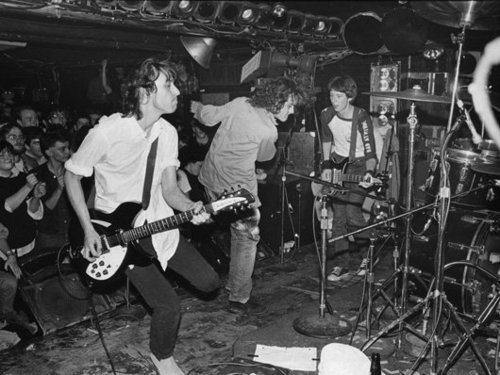
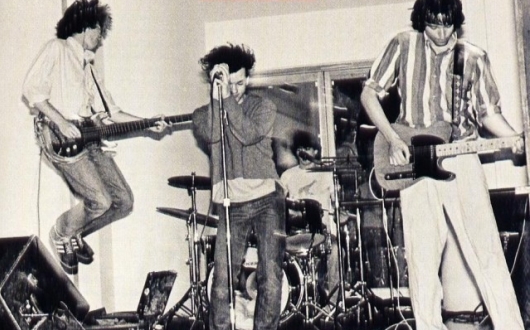
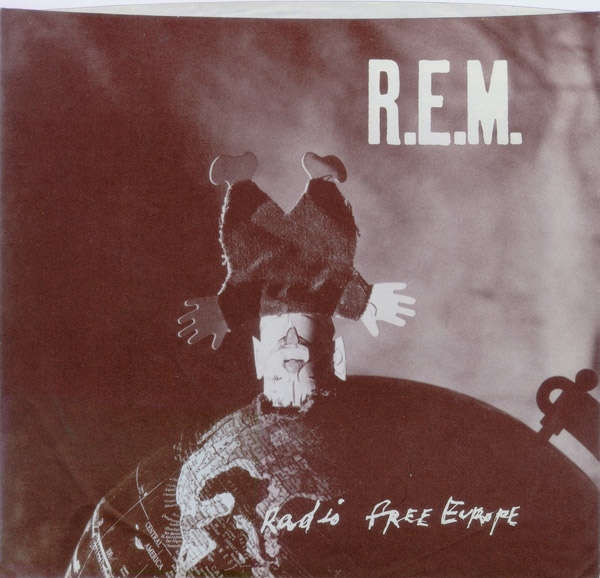
REM were born into the world on the back of Radio Free Europe, first released on their own promotional ‘Cassette Set’, of which only 400 were made. The track was pretty much fully formed from the word go. Counted in on a pistol crack snare and carried in the verses by a tightly coiled spring of a guitar riff, it explodes in a colourful burst of glassy 12 strings and up-the-frets bass.
REM – Radio Free Europe (Cassette Set version)
There’s also an extremely rare ‘Radio Dub’ version which has novelty appeal, interesting for the treated vocals and rudimentary special effects.
REM – Radio Free Europe (Cassette Set‘Radio Dub’)
*credit where it’s due – these tracks came a few years ago via The Power Of Independent Trucking blog. I think at the time they were almost shut down over the inclusion of them, so shhh!
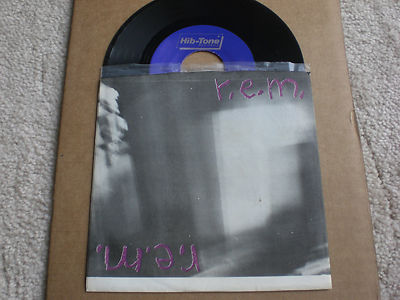
Local label Hib-Tone were suitably impressed by the demo cassette to offer the band a one single deal, and Radio Free Europe was committed to 7″.
REM – Radio Free Europe (Hib-Tone Single)
The band themselves weren’t overly impressed by the finished results, but Radio Free Europe is the perfect defining introduction to the band – great musicianship fighting for earspace with the sandpaper vocals of Michael Stipe. Stipe is clearly a passionate vocalist, but you’d need a degree in WWII code cracking to work out what he’s on about here. Even when you can make out the words and phrases, many of them make little sense.
The silent silver radio’s gonna stay,
Reason it could polish up the grey
Put that! Put that! Put that! In you wha
Badness isn’t country at all
Ray-dee-stay-shu…….
That’s not right, of course (Taking my cue from the chorus, I don’t even think I’ve got the right title for this piece), but that’s what I’m hearing. The first time I heard it, I actually stopped the record after a minute to check I hadn’t a build-up of fluff on my Grundig ‘music centre’ stylus. A quick Google of the lyrics just now (there was none of that in 1989) doesn’t help either. There are many websites offering you their definitive take on the lyrics and, like much of the internet, the information is only as good as the person who put it there. I’m not convinced any of the lyric sites have the words 100%. Just as you most certainly shouldn’t be convinced by my ham fisted attempt above. Not for nothing was REM’s first LP called ‘Murmur‘.
Radio Free Europe and the band was picked up by IRS. Re-recorded and re-released, the track also kicked off side 1 on Murmur.
REM – Radio Free Europe (Murmur version)
It was slower and less murky, perhaps on the instructions of producer Mitch Easter, but Michael’s mumblings were all over the record like the fuzz on a Georgia peach. There’s also an annoying hi-hat ‘tick tick tick’ all the way through the verses that, once heard, can never be dislodged. The best bit is still towards the end when, on one of the final choruses, all instruments bar the beat-keeping drum drop out before returning a second later.
The band played it live less and less as the years grew. In fact, you can probably chart it’s appearance in set lists in direct proportion to the introduction of the mandolin in their sound. It was something of a surprise to this audience (venue unknown) in 1992 when REM played a rare version. No doubt inspired by Nirvana and their ilk who were all the rage at the time, this version is a somewhat muscled up, balls-dropped shitkicker when compared to its original form. It brings to mind the harder sound of future LP Monster. Mike Mills plays like a demon possessed on this. Thankfully Peter Buck hadn’t yet discovered the tremelo pedal that would spoil much of the upcoming LP.
Back at the start of the 90s I was anti ‘dance’ music. It almost goes without saying that I liked Chic, Sly Stone, James Brown…all that kinda stuff, and I was fond of doing my rhythmically-challenged thang to In Yer Face and Voodoo Ray when no-one was watching. But on the whole, dance music, the one real alternative to indie music and chart music, the one true genre of music guaranteed to annoy parents and anyone over the age of 25 did nothing for me. Which is somewhat ironic given I was neither a parent nor a quarter centurion.
Thump thump thump thump thump. Soulless and repetitive, it was a four-to-the-floor car crash with all the sex appeal of a just-landed trout from the River Irvine. Given the option, I much preferred repeat-playing the b-side of the latest Chapterhouse or 5.30 single than give in to anything of a dance bent. Quite a ridiculous choice in hindsight. But in those days, if you wanted to stay out late, it was dance music that inevitably soundtracked your night. To go home early and potentially miss out on whatever I might be missing out on, I tended to stick it out, tolerating rather than enjoying the tunes.
And then I heard this.
The Future Sound Of London – Papua New Guinea
What a fantastic record! It was Future Sound Of London’s debut single and, as it turned out, one they would never better.
Here‘s a shortened version, taken from a Hacienda compilation that I like to stick on now and again while I’m cycling.
Papua New Guinea is that rare thing – an electronic dance record that’s synthetic yet soulful. It’s not just Lisa Gerrard’s skyscraping vocals (sampled from Dead Can Dance‘s ‘Dawn Of The Iconoclast‘, with thos oo-ah-oh vocals coming lock, stock and barrel from a dance track called ‘Shelter‘ by the mysterious Circuit) that go straight to the heart and it’s not just the staccato bass (sampled from Meat Beat Manifesto’s Radio Babylon, much to their displeasure) that goes straight to the feet, it’s the whole thing; the clattering breakbeat drums, the wee keyboard pings and dings, the swooshes and whooshes and the way it all drops out before revving into gear again, lead always by the ubiquitous bass and vocals.
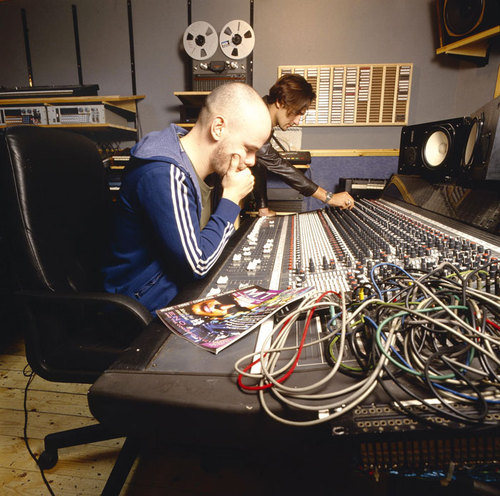
Papua New Guinea was put together by a couple of stereotypical studio boffins (the bald one and the ponytailed one) that most folk would fail to recognise as the creators of one of the best records ever.
Everything about this record is perfect. Even Lee Mavers, the bowl-cut skiffle king of 1989 rates it as one of his most favourite records. And I bet he never cared much for what constituted ‘dance’ music much either.
Here are those constituent drum parts, sampled from FuzzyHaskins‘ The Fuzz And Da Boog and Bobby Byrd‘s Hot Pants and stuck together with invisible ambient breakbeat glue:
A truly groundbreaking record, like most of its contemporaries it came in a multitude of re-releases and remixes. In fact, by the end of 2013, Papua New Guinea had been re-pressed and re-released over 30 times. Maybe you could download those tracks above and have a go at doing it yourself, though you’ll be hard pushed to better the original.
*Bonus Track!
Here‘s a longer, more ambient version, illegally remixed and released by Ozgur Ozkan.
“Vox’s fabulous new wah-wah pedal opens the door to a variety of great new sounds!”
So says this epoch-defining trade ad from 1967. “Make your guitar grrrrowl! Make it sound like a see-tar! Listen to the funky bass guitar sounds you get!”
Vox Wah-Wah Ad (5 minutes long and worth listening to every minute):
The wah-wah was created by happy accident, when Vox engineers got the circuitry mixed up in a new range of Beatles-inspired amps they were producing. Realising they’d just created an electronic version of the effect jazz trumpeters had pioneered in the 20s by muting their horn with a hat, they seized on the potential and began producing wah-wah pedals.
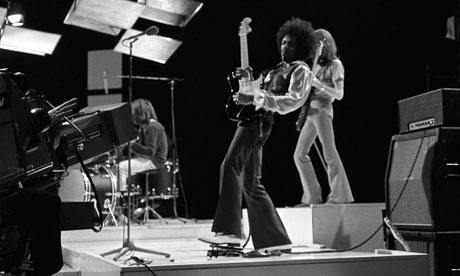
Almost immediately, guitar players saw their appeal. Jimi Hendrix was an early adopter of the effect – Up From the Skies on Axis: Bold As Love was one of the first tracks recorded with a wah-wah, and from then on in, it featured heavily in Jimi’s incendiary output. The Burning Of The Midnight Lamp, All Along The Watchtower, Voodoo Chile (of course) – all featured the screamin’ sound of the wah. There he is above, quite literally rockin’ the wah.
Before long, no self-respecting psychedelic act was without a wah-wah, and the the pedal became an integral part of the sound of the era. As a general rule of thumb, the wider the flares, the wilder the wah. The Electric Prunes even went as far as endorsing the effect.
George Harrison, newly freed from the shackles of The Beatles and with a sackful of songs he was eager to release under his own name employed Vox’s pedal on the self-explanatory Wah-Wah from 1970’s All Things Must Pass.
George Harrison – Wah-Wah
It’s a cracking track, almost throwaway pop, although it maybe buckles a wee bit under the pressure of Phil Spector’s over the top production. Sleigh bells? Aye! 35 backing singers? Of course! More brass than a colliery band? Well, it is being produced by Spector. A multitude of guitar tracks? Well, it is being played by George Harrison. The main riff is suitably Eastern-influenced, a call and response one chord groove that swaggers like Muhammad Ali in the 15th round. It soars with each key change, guitars free-forming over the top while the original riff underpins the whole thing. George even has the cheek to steal the chorus from that Vox ad at the top there. Listen again to the last 30 seconds. Who noticed?!? Kula Shaker certainly did – George’s track practically gives birth to the daft four-piece, but don’t hold that against him. Om shanti shanti shanti.
By the 70s, the wah-wah was being employed to great effect by the soul community. Curtis Mayfield….Sly Stone….The Temptations….they all had wah-heavy records out. Rather than solo, (that would be far too ‘rock’), the players created the distinctive wacka-wacka sound that’s now become the ubiquitous sound of the wah-wah. Y’know, Theme From ‘Shaft’ ‘n all that.
Temptation Dennis Edwards, far left, and cast members party at the Gordy Mansion, April 13, 1970. (Motown Record Corp.)
Here‘s the lesser-known (by Shaft standards at any rate) Psychedelic Shack from The Temptations:
Since then, the wah-wah pedal has featured on all sorts of tracks by all sorts of musicians, from Joni Mitchell and John Martyn to Metallica and The Melvins. It’s reassuring to know that in any given record collection, you’re never more than 30cm from a track featuring a wah-wah.
Here’s Fools Gold, of course….the full-length version, of course…