Cover Versions, Get This!, Gone but not forgotten, Hard-to-find, Live!

Stax O’ Soul

Eddie Floyd was the big haired, big voiced vocalist of such soul nuggets as Knock On Wood, I’ve Got To Have Your Love and Big Bird. An ode to flight, Big Bird was reputedly written by Floyd in Heathrow Airport as he waited to board a plane to Memphis for Otis Redding’s funeral. That’s how the legend goes at any rate.

 eddie floyd

Floyd was also a staff writer at Stax, and co-penned all manner of lesser known gems recorded by the likes of William Bell, the Staples Singers and Carla Thomas. You could do worse than spend an evening digging deep to uncover his work. It’s all terrific stuff, but one Eddie Floyd song stands afro’d head and shoulders above all others.

Eddie’s masterpiece is 1968’s I’ve Never Found A Girl (To Love Me Like You Do).

eddie floyd stax 7

A great little slice of call and response Southern soul, it see-saws between major and minor chords, swept along by brass and strings and carried from middle to end by the stolen melody of Percy Faith‘s Theme From A Summer Place;

Played by Floyd with the help of in-house Stax guns for hire Booker T. Jones (who played bass, guitar and keys (!)) and Al Bell, and produced by the MGs Steve Cropper, the song would eventually peak at #2 on the US R&B charts.

As a wee aside, you could do worse than spend another evening comparing Booker T’s guitar solo on this track with much of Edwyn Collin’s Memphis chording on some of those mid period Orange Juice records – the intro to I Can’t Help Myself for example.

alex chilton live

Cult hero to the stars Alex Chilton has recorded a couple of versions of I’ve Never Found A Girl, most thrillingly in Glasgow backed by a Teenage Fanclub who gamely hold steady the backbeat and offer enthusiastic backing vocals whilst he chops out gritty little riffs of electrified southern soul atop it.

Recorded at the 13th Note in 1996, in this pre (for me) internet era, I walked into work the morning after the show to hear all about it for the first time. Nowadays of course, you’d never get a ticket for this kind of thing for sticky fingered touts. But back in the day it was good old fashioned lack of information that meant only the hippest of the hip, with a finger to the pulse and an ear to the ground, got to such events. The bastards.

Alex Chilton & Teenage FanclubI’ve Never Found a Girl (To Love Me Like You Do);

*Bonus Track!

Here’s Al Green‘s version, rather tame by comparison, but nonetheless a worthy inclusion to this post.


Get This!, Gone but not forgotten, Hard-to-find

I Found The Piano Player Very Crosseyed But Extremely Solid

Few bands have gone through the mill quite like The Charlatans; Jail. Rip-offs. Death. And few bands have managed to subtly change their sound from album to album, forging new ground while sounding instantly familiar and recognisable.

 The Charlatans on Rage

If 1995’s eponymously-titled LP was the band’s stab at swaggering Sympathy-era Stones grooves, all shaky shaky maracas and rollin’ and tumblin’ bar-room piano fills, 1999’s major label debut was The Charlatans’ nudge nudge wink wink love letter to Bob Dylan.

It’s not obvious to many except the obsessive Zim-head, but its all there. The warning signs were already in place with 1997’s Tellin’ Stories LP, an album that featured the soon-to-be single and Dylanishly-titled North Country Boy.

Another track, One To Another, went on to become one of their biggest selling singles, replete with the very Bob ‘Can you please crawl out your window‘ line towards the end.

One To Another:

Can You Please Crawl Out Your Window? was a little-known Bob Dylan single from 1965, recorded with The Hawks as backing band during Dylan’s quest for the ‘thin wild mercury sound‘ that he arrived at on Blonde On Blonde. Little more than a footnote in Bob’s history, it remains groovy proof  that the Rayban’d Dylan could do beat music as well as anyone. As Tim Burgess and co. knew fine well.

Can You Please Crawl Out Your Window?:

charlatans us and us

1990’s Us And Us Only LP is, for me, The Charlatans’ absolute peak. Weird, wonky but still packed full of hummable tunes, it makes a good Anglophile companion to Mercury Rev’s Deserter’s Songs LP. But I digress.

The key to the weirdness lies in the album’s submergence in mellotron. Where previously the full fat riffs of the Hammond had directed the band’s sound, Us And Us Only is carried along by the gossamer-thin weirdness of the most unlikely of lead instruments. Not on every track, but you don’t have to listen too hard to hear it weave its magical spell throughout. Isolated out of context though, the more straight-forward tunes are secretly in debt to Dylan.

There are three in a row on the first side alone;

Impossible:

That ham-fisted bashed acoustic guitar combined with wheezing harmonica and held together by a nasal vocal singing unnecessarily elongated words – pure Dylan!

Even the lyrics could’ve come from the hand of Bob himself; “I can help you, will you only ask me kindly“, “my freedom is a vision you seek“, “this song kind lady is my only hope“, “Y’know he looks like a plastic surgeon“, “Your new friend he seems to love you, I hope he cries himself to sleep“. It’s all very Bob. I can actually hear him sing it every time it plays. In fact, Impossible might well be the best Dylan track he never wrote. It is a cracker.

Following Impossible you get the waltzing light and heavy shades of The Blonde Waltz.

The Blonde Waltz:

blond waltz

The Blond Waltz (no ‘e‘ in Dylan’s version – see above) was taken from the name of a passage (or chapter? who knows) in Dylan’s answer to the jabberwocky and stoned ramblings of Lewis Carroll. You could call it experimental prose poetry. Or cut ‘n paste stream of consciousness. Either way it’s a frustrating read – if you persevere long enough, brilliant little moments of clarity peek out from behind an amphetamine fug. The Charlatans have read it though.

Tim doesn’t quite sing A Hard Rain’s A-Gonna Fall‘s “where have you been my darling young one” at the start, but you know he wants to. There’s a good chance some of the album’s lyrics came from Tarantula. Pure speculation on my part of course….

A House Is Not A Home takes its cue from ’66 Dylan. Heavy of Hammond and rich of riff, the tune is a clever appropriation of the version of I Don’t Believe You (She Acts Like We Never Have Met) that a hot-wired Bob and the Band played to a few appalled folkies and a thousand grinning Cheshire Bob cats up and down the UK in the spring of that year. It’s electric in every sense of the word. Judas my arse.

Contrast and compare:

A House Is Not A Home:

I Don’t Believe You (She Acts Like We Never Have Met):

 dylan hawks

The track that follows is called Senses. Stealing its musical cue from the mellotron madness of the Stones in all Their Satanic Majesties Request pomp, it goes on to liberally lift lyrics from Jagger and co’s Sweet Black Angel. Elsewhere, you’ll hear a straight-forward photocopy of Only Love Can Break Your Heart in the intro to I Don’t Care Where You Live and the beating pulse of Another Brick In The Wall in My Beautiful Friend . But those are other stories for other days.

Post Script

You should dig out your copy of Us And Us Only forthwith. It’s a truly terrific album, one that still stands up to repeated plays today. It plays best when listened to as a whole. Aye, you can pick holes in the individual tracks all day long, but the album doesn’t deserve that.

If you don’t have it, on account of thinking The Charlatans were nothing but bowl-headed baggy chancers, now is the time to find out there’s more to them than that.

Post Script 2

Of course, The Charlatans have form for this kind of thing. Talent borrows, genius steals ‘n all that. Step forward Pink Floyd…

Six Of The Best

Six Of The Best – Model Aeroplanes

Six Of The Best is a semi-regular feature that pokes, prods and persuades your favourite bands, bards and barometers of hip opinion to tell us six of the best tracks they’ve ever heard. The tracks could be mainstream million-sellers or they could be obfuscatingly obscure, it doesn’t matter. The only criteria set is that, aye, they must be Six of the Best. Think of it like a mini, groovier version of Desert Island Discs…

model aeroplanes
Number 19 in a series:

Those four fresh faced youngsters above are Model Aeroplanes and with nary a hipster beard nor a tattoo in sight are just about the hottest, hippest most happening name to drop right now. Crowd pleasers at this year’s Liverpool Sound City and both the T In The Park and Wickerman festivals, not to mention the up-coming Belladrum festival, there’s a huge, expectant buzz around the Dundonian four piece.

If I was 18 and sick fed up of Arctic Monkeys’ gradual drift away from their early sound, Model Aeroplanes would be my new favourite band. Featuring the classic bass, drums and two guitars set-up, they play well-crafted, infectious songs that rattle and roll in equal parts.

Younger readers might also hear them as an updated version of a less reliant on effects pedals Foals or Vampire Weekend, with the twin guitar attack firing off chiming African-influenced chattering riffs.

Cynical old gits like me who’ve been around the block more than once (and bought the original t-shirt, not the updated Primark version) are harder to impress. You could play spot-the-influence all day if you like, but there’s no denying Model Aeroplanes are a bright ‘n breezy breath of fresh air.

You know those folk that put half a dozen Mentos into a bottle of Coke then film it for You Tube’s sake? That’s the sound of Model Aeroplanes. Put some elements of the less-precious end of post-punk in the bottle. Add equal parts Talking Heads when they discovered Africa with the expansive skittering widescreen sound of Franz Ferdinand. Dilute the mixture with the pop nous of Haircut 100, who took the Orange Juice blueprint and, with a spit and a polish, galloped with it into the charts. Shake the whole thing up and let it explode. Voila! Model Aeroplanes!

If you’ve pressed ‘play’ above, you’ll know that their whole sound, whilst rooted in the DNA of ‘proper’ indie is as polished as the shine on their smiling wee faces. Underneath the two guitars is a terrific rhythm section, all counter rhythms with tons of cowbell and pitter-pattering percussives.

They’re far too young to remember that old “there’s always been a dance element to our music” cliche, but Model Aeroplanes could say that honestly and proudly with hand on heart.

By the time they get around to releasing an album they’ll be gunning for the charts. They have proper hit-making potential and Radio 1, in particular Edith Bowman and Vic Galloway love them.

The band have built up a rabid fan base who travel to the gigs the way football supporters follow their team the length and breadth of the country and they’ve helped recent release Electricity clock up over 30,000 hits on You Tube.

ma6


Plain Or Pan asked Ben and Rory from Model Aeroplanes to lay their influences bare. I have to admit to never having heard 2 or 3 of these tracks before now, but after having MA’s tracks on repeat for the past few days, they make perfect sense. There’s a multitude of polyrhythms and bucketfuls of delay-drenched guitar interplay on almost every track. These are the tunes that make Model Aeroplanes tick;


LightspeedTwin Atlantic

We became massive Twin Atlantic fans around the time of Vivarium and are to this day. This just reminds us of being 14 and drinking White Storm Cider at our local park.

You Can Call Me AlPaul Simon

This is one of the most well known songs in existence but even if you didn’t know who it was when you were young, if you recognised it, I’ll bet you went mental at the bass solo.

F.C.P.R.E.M.I.XThe Fall of Troy

Most people, if they listen to our music, would be shocked at bands that have influenced our playing in the past. The Fall of Troy were among bands like The Mars Volta, Meet Me In St. Louis, Biffy and Twin who’s songs we’d learn then mosh out to at practice back in 2010. Anything with a weird time signature was acceptable but ‘F.C.P.R.E.M.I.X’ is in 4/4 and still rocks. We still give it a bash at most practices now so I suppose it’s a sign that playing pop music hasn’t completely taken us over.

MunichEditors

Last August we were given an amazing opportunity to support Editors at the HMV Picture House in Edinburgh. At the time it was the most people we’d ever played to at once, around 1,000 when we went on, but we’ll always remember how nervous we were walking on stage. I could have spewed, we hadn’t really felt nerves like that before and haven’t since to be honest. It’s good to remember. This song is an anthem.

CassiusFoals

One of our older friends showed us this song in 2009, we were blown away. Kieran learned how to play dance-beats and the rest is history.

Black and BlueMiike Snow

(Rory) – I saw Miike Snow on Later with Jools Holland in about 2009-2010 and, for the most part, have listened to them every day since. No joke.


Model Aeroplanes are often out and about on the road. In the Autumn they had out as support to Fatherson. Before that, on September 12th they make a *flying visit to Irvine to play the intimate environs of the town’s Harbour Arts Centre. A great place to see them before they make their inevitable climb up the ladder and into the larger venues, tickets are only a fiver. You can get them direct from the HAC 01294 274059 with no booking fee, or via http://www.ticketweb.com, with a small booking fee added. I’ll be there. You should do your best to get alongl too.

model aeroplanes live


*I couldn’t go the whole article and not make some sort of aviation-based pun.

demo, Gone but not forgotten, Hard-to-find, studio outtakes

When I Say I’m In Love, You Best Believe I’m In Love Ell Yoo Vee

new york dolls

The New York Dolls landed on British telly in November 1973; a sloppy, slutty, Stones-in-slap-‘n-stack heels assortment of misfits and ne’erdowells. Their sound was a thrillingly simple souped-up charge of re-hashed Chuck Berry licks and Noo York street-smart shouted vocals, and in this era of prog rock and ‘serious’ music, immediately divided opinions.

Mock rock!” dismissed presenter ‘Whispering’ Bob Harris as he waited patiently for his next fix of good ol’ country rock.

The Dolls gave me a sense of uniqueness, as if they were my own personal discovery,” blurted a foaming at the mouth Morrissey.

Famously, along with being President of the Dolls’ Fan Club, Morrissey had a New York Dolls biography published, which sold steadily in its one and only print. You could argue that The New York Dolls was the catalyst in getting the teenage Morrissey out of his bedroom and into society where he’d meet like-minded Mancunians and ultimately form The Smiths. Now, that may be a bit of a simplified version, but essentially that’s what happened.

On the Doll’s debut album there’s a track called Lonely Planet Boy.

The band’s one attempt (on this LP at least) at acoustic balladry, it teeters metaphorically atop one of Johnny Thunder’s gigantic silver stacked heels, forever on the verge of collapse and falling apart. Coaxed along by a rasping 50s-inspired sax, it was a particular favourite of the young Morrissey. Indeed, a decade or so later when stuck for lyrical inspiration, Morrissey went back to Lonely Planet Boy and appropriated some of the lyrics for the song that would, for some come to define The Smiths.

Oh, you pick me up
You’re outta drivin’ in your car
When I tell you where I’m goin’
Always tellin’ me it’s to far

But how could you be drivin’
Down by my home
When ya know, I ain’t got one
And I’m, I’m so all alone

 morrissey nydolls

And with that steal, Morrissey had galvanised himself into writing the lyrics to There Is A Light That Never Goes Out.

A great song needs more than great lyrics, of course. I’ve written about the Johnny’s contribution to it before. Below is the shortened version.

“If we needed some songs fast, then Morrissey would come round to my place and I’d sit there with an acoustic guitar and a cassette recorder. ‘There Is A Light That Never Goes Out’ was done that way.”

Morrissey was sat on a coffee table, perched on the edge. I was sat with my guitar on a chair directly in front of him. He had A Sony Walkman recording, waiting to hear what I was gonna pull out. So I said, ‘Well, I’ve got this one’ and I started playing these chords. He just looked at me as I was playing. It was as if he daren’t speak, in case the spell was broke.”
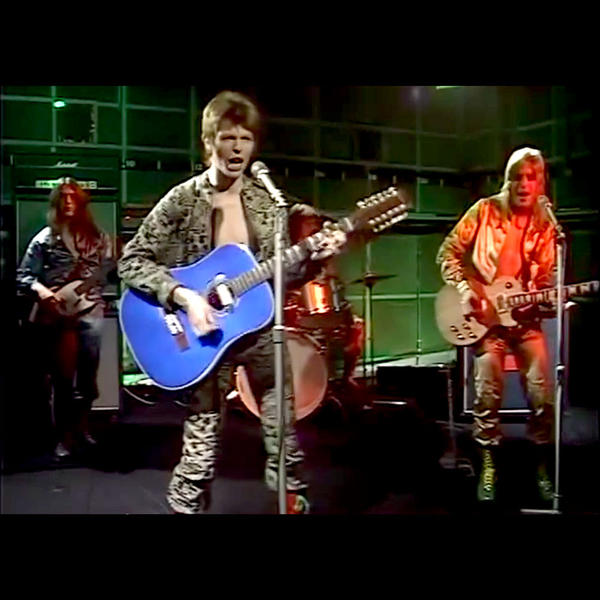
“We recorded ‘There Is A Light That Never Goes Out’ in 10 minutes. I went on to add some flute overdub and strings and a couple of extra guitars, but really, the essence and the spirit of it was captured straight away, and that normally means that something’s gone really, really right.

(Flute/strings overdubs demo below);

I have a version of that take with just the three instruments and the voice on it – it absolutely holds up as a beautiful moment in time. The Smiths were all in love with the sound that we were making. We loved it as much as everyone else, but we were lucky enough to be the ones playing it.”

I didn’t realise that ‘There Is A Light’ was going to be an anthem but when we first played it I thought it was the best song I’d ever heard.”

For some of us, it is too.


Get This!, Gone but not forgotten

Cycle Killers. Qu-est-ce que c’est?

I’ve been racking the miles up recently, pedalling up and down the West Coast of Ayrshire and beyond. When it’s wet and grey and miserable, whch is about 11/12ths of the year, it’s easy to forget that I live in a beautiful part of the world. When the sun sets over Arran and you’re on the inward trip of a 30 miler, there’s no greater view or feeling on the Earth.

I have cycling playlists set up for different journeys, mostly beat-driven pre-millenium tunes by the likes of Underworld, Daft Punk, Future Sound Of London, the odd bit of Neu and Can, you know the sort of stuff….the music that gets your cadence pushing along at the same revolutions as the music. But I was getting fed up of it all.

photo(2)

Much of my cycling this summer has been soundtracked by an old Balearic Beats compilation, downloaded from some forgotten corner of the internet and hidden in the depths of my iPod. Two tracks in particular have helped make the uphills and last miles home far more bearable.

It’s ImmaterialDriving Away From Home

Back in 1988 myself and a couple of pals went to Ibiza. This was pre-super club days, when old guys with 3 teeth and wearing bootleg ‘I Ran The World‘ t-shirts would give you free admission tickets in the street. Consequently, I have found myself in Pascha, Amnesia, Es Paradis and probably others. One memorable club had topless podium dancers gyrating on a plinth as the sun rose. But we weren’t there for the topless dancers……it was all about the music (man).

I always liked how the Balearic DJs took music from every genre and with a twist of magic could make it fit seamlessly into their set. The wee nightclub close to our hotel has probably never found itself on any list of Ibiza’s Best Clubs, but we spent half our holiday in it (which probably says more about the hipness or otherwise of me and my pals). No bigger than your average footballer’s living room, what it lacked in designer chic it more than made up for in the music played. Everything and anything was clearly a policy the DJ lived by. Here you could hear The Woodentops seamlessly followed by Chic followed by some African jit jive followed by Chris Rea followed by some anonymous Euro pop followed by Talk Talk’s Life’s What You Make It followed by Pavarotti mixed into Prince. The last record played was always The Waterboys’ Whole Of The Moon. Most forward-thinking music fans would never, ever listen to some of the rubbish played as standalone records, but as part of a whole it was somehow sensational.

its immaterialIt’s Immaterial

Driving Away From Home appears on loads of Ibiza compilations, though I can’t actually recall ever hearing it in Ibiza at the time. It is the perfect Ibizan record – subtley beat driven, lightly scrubbed acoustic guitars, whispered, half-spoken mellow vocals and, between the keyboard melody, the harmonica refrain and the lines sung, incessantly repetitive.

It’s also the perfect cycling record. It’s about driving away from home, but it could easily be about cycling;

When I was young we were gonna move out this way, for the clean air, healthy, y’know…

Away from the factories and the smoke…

Moving away from home, without a care…

Why don’t we cross the city limit….?

Your pedalling cadence naturally hits the same rhythm as the record, not too fast, but not snail slug slow either. Some of the lyrics take on new meaning. Glasgow is mentioned, and the wee Rawhide steal (‘Move ’em on, move ’em out, move ’em up!’) always makes me subconsciously increase my speed. ‘All you gotta do is put your foot down to the floor‘ they intone. I’m doin’ it, I’m doin’ it! And without a care in the world.

Driving Away From Home has been tweaked, twisted and turned inside-out by all manner of aspiring Balearic beatmasters. Here’s a couple of rarer mixes found online….

It’s Only a Dead Man’s Curve mix, vinyl crackles ‘n all;

Discomendments Edit

Joe Malenda Balearic Dub mix

les negresses vertes

Les Negresses Vertes were a multi-cultural Parissien folk/punk mish mash. Coming across like Joe Strummer fronting the Pogues or a more refined Nyah Fearties perhaps, they were all flea market fire ‘n phlegm, their scratchy tunes enhanced by trombone, accordion and any other instrument that happened to be lying around as ‘record‘ was about to be pressed.

Zobi La Mouche (Zobi the fly, if my schoolboy French is correct) rattles along beautifully and, as with It’s Immaterial before it, helps boost you along those last few miles home.

Zobi La MoucheLes Negresses Vertes

Zobi La Mouche is a different kettle of fish, but still cut from the same Ibizan cloth – super-rhythmic, repetitive, chanting vocals and frantically scrubbed acoustic guitars. Like the It’s Immaterial track, I don’t remember it being played anytime on Ibiza either…

Longer version


Alternative Version, Cover Versions

Spooktime

What’s the first song you’re gonna do for us?”

It’s The Mekons….It’s called Ghosts Of American Astronauts…

Trash Can SinatrasGhosts Of American Astronauts (Radio Session)

And off they go, the Trash Can Sinatras jangling away with an easy fluidity that comes from years of playing together. I don’t like that word ‘jangling‘. It conjours up images of spotty boys with greasy fringes singing about the unattainability of girls called Emily or whoever. But this track is the essence of jangling. It’s a beauty.

tcs live

When I first heard the Trashcans doing it, taped in the moment from (I think) a Johnny Walker BBC Radio 2 session, I thought it was the best thing they’d ever done. And it wasn’t even their song. I’d heard of The Mekons. A country-ish, new wave-ish band from somewhere in the north of England, but I’d never actually heard them. Country-ish didn’t register with me then, and to be honest, it still doesn’t register with me now. There are exceptions of course, but overall? Nah.

I played the TCS version endlessly. This was the Trashcans at their peak. Ghosts Of American Astronauts sounded great – the band perfectly captured forever. I could actually see the band in my head as it played, Paul, head bowed in his suit jacket, firing of the wee electric guitar riff. Stephen, bendy of neck and floppy of limbs, recreating the original’s tumbling drum rolls. Frank, voice coated in layers of echo, standing off-mike and taking a step forward every now and again to get the dynamics in his voice. John would be somewhere stage right, glancing now and again at Davy as they kept the rhythm rattling forwards.

Recorded around the time of A Happy Pocket (great songs written under greatly difficult circumstances), everything the Trashcans recorded at this point in time was solid gold. Every b-side that accompanied the Happy Pocket singles could’ve been an a-side in their own right. That they were displaced as b-sides is testimony to the band’s quiet belief that they were expert songwriters. A loudmouth like Noel Gallagher would’ve casually said “there’s plenty more where that came from“, but the Trashcans are not the sort of band that blow their own trumpet. At this point in time they were riding the crest of a wave. A wave that would test them somewhat for the next few years, but there and then the Trashcans were superior to anyone else putting out records. You knew that already, though.

tcs 2004

Fast forward to 2004, and the band, label-less and a some-time 4 piece found themselves in New York recording what would become the follow-up to Weightlifting (the band’s high water mark) and supplementing the cost of living by playing the odd acoustic show. The ‘Fez‘ album, available here is an excellent document of the time. Recorded at one of the Fez shows (but not released) was another version of Ghosts Of American Astronauts.

Trash Can Sinatras Ghosts Of American Astronauts (Live at Fez, New York December 2004)


You can tell a lot about a band from their choice of covers. The Trashcans have tackled a fair few in their time and they always like to add their own unique stamp to it. Imagine my surprise then, when years later I discovered The Mekons’ original version via the world wide web. The Trashcan’s version is something of a carbon copy. Why would you want to mess with anything as good as this though?

The MekonsGhosts Of American Astronauts

mekons

Cover Versions, Get This!, Gone but not forgotten, Hard-to-find

Be Fancy Free To Call The Tune You Sing

moondog

That’s Moondog, the blind composer, poet and inventor of all sorts of weird ‘n wacky instruments. For twenty or so years he lived on the streets of New York, sometimes dressed head to toe in full-on Viking garb, earning himself the title ‘The Viking of 6th Avenue‘. Moondog always composed his musique concrète from the street sounds of daily Big Apple life, turning honking traffic horns and street corner spats into snaking, rhythmic pieces of music. The most cult of cult figures, he makes Yoko Ono come across like Will.I.Am by comparison.

Moondog Do Your Thing:

1978’s H’art Songs featured Do Your Thing, a childish, reedy-vocalled, piano-led baroquish, sunshine piece of pop that wouldn’t have sounded out of place on The Kinks’ We Are The Village Green Preservation Society LP.

As a one-off curio, it’s a nice wee song. And while I can’t vouch for the rest of Moondog’s output, I suspect it’s perhaps not as accessible as Do Your Thing. One person who might know is Gerry Love, who’s Lightships project first brought Do Your Thing to my attention.

lightships blurred

Lightships Do Your Thing:

Lightships‘ version comes vibrating out of the haze towards you, shimmering softly in the July heat like a frisbee forever floating, edges morphing out of shape under the glare of the midday sun with three chords, double-tracked whispered vocals and a tinkling glockenspiel with its arm wrapped around a twanging guitar for comfort. It calls to mind the hissing of summer lawns, the far-off laughs of children and melted tarmac on the pavement. Your hayfevered eyes and nose might be flowing uncontrollably like a mountain stream but this record will surely cure you. I could listen to it forever.

One of the high points of a ridiculously brilliant project, Gerry Love’s transcendent cover of Do Your Thing first appeared a couple of years ago on the b-side (the b-side!!) of the Sweetness In Her Spark single, tucked away for the ears of only trainspotters and completists. The true sound of summer, now is the time to liberate it.


Cover Versions, Hard-to-find

Spy Stone

See this World Cup? It’s fairly playing havoc with my writing schedule. Anyway, watchin’ that Fellaini fella play for Belgium earlier on had me reaching for my Sly Stone *LPs.

Sly Stone‘s 4th album with the Family Stone was Stand!, an LP choc-full of call-and-response male/female vocals, fuzz bass, horn blasts and a swaggering pop funk that’s untouchable. When highlighting the genius of Sly, the critics will always go for the moody, lo-fi introspective paranoia of There’s A Riot Goin’ On, but if you want an album to soundtrack your summer, you need only reach for Stand!

  sly stars n stripes

As well as the title track, the LP hurtles along on a wave of prime-time Sly – Sing A Simple Song, Everyday People, Don’t Call Me Nigger Whitey, I Want To Take You Higher. All tracks I’m sure you’re familiar with. Tucked away in the middle of the first side is the album’s hidden masterpiece – Somebody’s Watching You.

Always missing from the various Sly ‘Best Ofs’ that clutter up the virtual racks of hyperspace, Somebody’s Watching You deserves your attention. It’s Sly in miniature – songbird-sweet female vocals filling the gaps between Sly’s bottom-of-a-well baritone, a horn section that parps away in happiness exelsius, a choppy, descending guitar riff, with a tasteful electric piano and organ fleshing the whole thing out. The fact that Sly had the genius to add the poetically rhythmic Shady As A Lady In A Moustache line makes it even better.

Sly & The Family StoneSomebody’s Watching You

Those songbird-sweet vocals were provided by Sly’s little sister Vaetta and her 2 gospel-loving pals Mary and Elva. They were collectively known as Little Sister and provided backing vocals on much of the Family Stone’s output from Stand! onwards.

With a bit of commercial success under his belt, Sly brokered a deal with Atlantic Records that would allow him to write and produce (and occasionally feature on) tracks by other artists.

Between the release of 1969’s Stand! and it’s 1970/71 follow-up There’s A Riot Goin’ On, he recorded and released 2 Little Sister singles. The first, You’re The One, was Sly-lite r’nb funk by numbers, all popping bass and groovy bass runs.

little-sister

The second was an astonishing version of Somebody’s Watching You. Often credited as being the first track to feature the rudimentary beat of the nascent drum machine, Little Sister’s Somebody’s Watching You is darker and moodier than the original but no less than 100% Sly. Sparse and skeletal, there’s nothing much to it at all. It starts as if half-way through, with the girls’ whispered vocals and murky instrumentation drawing you in. A guitar wah-wahs until then end of never and the Fender bass is set to ‘groovy’ once more. The whole thing is over and done with in less than 3 minutes. Hardly the perfect pop song, but highly influential – the girls’ falsettos coupled with the funk instrumentation and gentle pitter-patter of the drum machine could almost be a blueprint for Prince – you can practically hear him writing The Ballad Of Dorothy Parker as this record spins.

Little SisterSomebody’s Watching You


Click here to read more about the recording of Sly’s There’s A Riot Going On. It’ll help you make sense of the advert below…

sly 69 shelby

*Aye, OK. I stuck them on the trusty old iPod while I painted my knackered and faded garden furniture. Looks great now. If anyone would like to give me some Sly Stone vinyl, feel free to get on touch.

Cover Versions, Gone but not forgotten, Hard-to-find

“I Suffer From Asthma. The Only Drugs I Have Are For That.”

What a wheeze, Brian Jones.

rolling stones 67

1967 was The Summer Of Love, although for the Rolling Stones it was anything but. By now, Brian was an extreme liability. Totally lost to drugs, puffy-eyed footage of the time shows him incapable of doing practically anything. His knack of being able to get a tune out of any exotic instrument hadn’t quite deserted him yet. Otherwise, he’d have been kicked out of his own band earlier than he eventually was. A trip to Tangier with doppelganger girlfriend Anita Pallenberg ended with Anita returning to Britain in the arms of Keith, who’d circled the troubled couple like a shark sniffing blood. Band dynamics, unsurprisingly, were irreparably damaged forever.

brian anita

Amidst the chaos, the Stones found time to travel far and wide, not in the sense of a touring pop group, but as well-moneyed young tourists. Marrakesh became a favourite haunt. There, they’d met a dealer who introduced them to hashish, importing the drug back into Britain in the soles of custom-made shoes. At a party at Redlands, Keith’s very big house in the country, the Stones plus their girlfriends were subjected to a raid by police acting on a tip-off. The tabloids of the day set right into the Stones, with outlandish stories of a drug-taking, naked orgy. ‘Nude Girl At Stones’ Drugs Party‘ , ‘Why Girl Was Wearing Only Rug‘, ‘”Merry Nude” In Slipping Rug‘. Nothing much has changed, eh?

During the ensuing trial, prosecutors claimed that the only woman in the house, Marianne Faithful, was dressed in nothing but a fur rug that she let slip occasionally. They claimed that her lack of inhibition was a clear sign she was under the influence of drugs, specifically cannabis. Let’s face it, she probably was.  By the end of the trial, the Stones were made examples of. Mick and Keith were subsequently sentenced to jail, Mick for 3 months for possession of amphetamines and Keith for 12, for allowing cannabis to be smoked in his home. Immediately they appealed against their sentence.

keith moon free keith

Pop fans and friends in high places voiced their opinions. Keith Moon and girlfriend Kim Kerrigan joined in the protests. William-Rees Mogg, the editor of The Times famously wrote an editorial that argued the Stones’ case, saying that if Mick and Keith were jailed they’d be seen as martyrs to a cause, and that would not help the anti-drugs movement in any way, shape or form. The Stones continued to craft out half-hearted tracks for their forthcoming Satanic Majesties Request LP, the shadow of the gaoler hanging grimly upon their shoulder. It wouldn’t be until the end of July that their appeal would be upheld.

Free men by August, Mick, Keith and the rest of the Stones gathered to create one of their most astonishing pieces of music.

 Rolling StonesWe Love You

We Love You was recorded as a ‘thank you‘ to the fans who’d stood by them. Beginning with the clattering of a jail door and a nagging, repetitively hypnotic Nicky Hopkins piano line, it‘s a droning, paranoid anthem of defiance, a two-fingered salute to the establishment who’d tried and failed to squash them.

A barely functioning Brian hammers out a wonky mellotron riff that parps throughout like the wasted half-cousin of The Beatles’ All You Need Is Love and the backing vocals (featuring an uncredited Lennon and McCartney ‘conducted’ by a visiting Allen Ginsberg) slur and slide into oblivion.

They looked like little angels,” Ginsberg wrote later of the Stones and Beatles, “like Botticelli Graces singing together for the first time.”

Bill Wyman’s bassline that plays just behind the piano riff is in equal parts terrifying and extraordinary, creating a level of helpless claustrophobia that’s not been matched since. Keys jangle menacingly, gaolers’ footsteps echo throughout and the whole thing swirls down the plughole with a Made In Marrakesh fuzz guitar overload.

The band even went so far as to make a promotional video to accompany it. Aping their recent trials and tribulations, no-one at the BBC dared show it. The least poppiest of Stones singles to date (their 13th), it peaked at a disappointing number 8 in the UK.


 rolling stones butterfly


* Bonus Track!

For a brief moment in time between ’89 and ’90, my friends and I deserted the favoured local indie disco for the far more exotic charms of the Metro in Saltcoats, a sticky-carpeted former old cinema where I’d seen Star Wars in the first week of release. The Metro was packed full of brickies, bastards and jail bait but had an anything goes policy to what was loosely termed ‘dance music’. Two years later and it’d be a hell hole, but for a brief moment in time it shone as brightly as the summer sun. The Strangler’s Peaches bassline played out behind some generic four-to-the-floor dance beat one memorable night. One other time they played this…

4 For MoneyIt’s A Moment In Time

Sampling a sped-up We Love You piano riff and adding a gospelly male shouter on top was hardly groundbreaking (and these days it sounds fairly rubbish) but when first heard this track was everything we wanted. A dance beat. And the Stones. And we were sure that no-one else inside the Metro knew it was a Stones’ track. The snobs that we were.


Alternative Version, demo, Gone but not forgotten, Hard-to-find, studio outtakes

It Was Plenty Years Ago Today

A few years ago I had the notion that I’d start a semi-regular feature punningly titled ‘It Was Plenty Years Ago Today’. It would focus on Beatles‘ recordings from that day in Beatles’ history, in particular the individual takes that never made it beyond Abbey Road’s cutting room floor. Books such as Ian MacDonald’s Revolution In The Head are excellent chronicles of what happened when in Beatleland and I had every intention of building up a right good wee series on the back of it. However, lack of time and lazyitis (coupled with the fact that most of the time I just fancy writing about something else) combined to ensure this series would never quite get off the ground, but here, today, I bring you another one in this very sporadic series.

george harrison 67

Druggy, fuggy, and slightly Eastern-sounding, It’s All Too Much was born in the summer of 1967, just as an unprepared world was anticipating the release of the Sgt Peppers album. Pencilled in for inclusion on the Beatles’ next project (Magical Mystery Tour) it didn’t see the light of day until the Yellow Submarine soundtrack was released in January 1969. In Beatles terms, that’s an awful long time from written-to-released. Why? The answer is simple – it wasn’t written by Lennon or McCartney. George always had to play second fiddle to his two elder bandmates. He’d had his own Blue Jay Way appear on Magical Mystery Tour, and one George song per album was the norm.

It’s All Too Much

One of George’s best compositions, composed whilst in the midst of a heavy LSD trip (and it sounds it), It’s All Too Much is a microcosm of all that’s best in Beatles psychedelia, grooving along on a one chord bed of feedback, clattering drums, stabbing keyboard and wonky sounding backwards guitars. The production is, I think, intentionally cluttered – It’s All Too Much after all – but that’s why it’s stood the test of time. Each repeated listen brings new things. Hidden depths of sound float to the surface; A full-fat fuzz bass pops itself in and out of the mix. Slightly out of time handclaps catch up with George singing bits of The Mersey’s Sorrow. Trumpets apeing Jeremiah Clarke’s Prince Of Denmark March (you’ll recognise it if you’ve ever seen the pomp and ceremony of a Royal wedding) fanfare your arrival into a higher state of consiousness. Almost half a century later, it sounds new! and fresh! and now! The Flaming Lips would give everything to sound like this.

It’s All too Much is one of the few Beatles tracks not to have been recorded at Abbey Road. Why it was recorded instead at Soho’s De Lane Lea Studios is unclear, but that’s where it was hatched. And plenty years ago today on the 2nd June 1967, those trumpet overdubs were completed.  At 8 minutes long the track fell foul of the Beatles editing process. One and a half mind-expanding minutes were chopped out of the mix, leaving the released version a shorter 6 and half minutes long. Still a trip, just not as long a trip as George would’ve liked you to have.

The full length version has been bootlegged countless times…

It’s All Too Much ( ‘Much Too Much‘ unreleased version)

george stamp

Teenage Fanclub‘s Gerry Love is a big fan of It’s All Too Much. He even went so far as to include it in his very own Six Of The Best mix for Plain Or Pan, saying “The Beatles had more than their fair share of groundbreaking productions, but this is by far my favourite.” Me too Gerry!