Cover Versions

It Is Indeed Over

If someone had told you back in 1985 that it would’ve been Elton John, or at a push Freddie Mercury who’d be the hip name to drop 30+ years in the future, while yer man of the moment Morrissey had slowly and painfully morphed into a paunchy, shitty-quiffed racist in bad jeans, you’d have struggled to believe them. As Elton’s position at the top table of pop is affirmatively reassessed via the Rocket Man movie and the resultant positive press, so too is old Stephen Patrick’s. The nadir, for this week at least, is Morrissey’s (at best) misguided and (at worst) dangerous decision to sport a For Britain badge on his lapel. To put this into context, even Nigel Farage considers the politics of For Britain a bit too extreme and right wing for his liking. It’s there in the paparazzi photos as he steps out of the car at the studio for an appearance on the Fallon TV show. It’s still there when he performs. And it’s still there a few days later when he’s snapped on some random Beverly Hills sidewalk or other. For all you know, it’s probably still there right now, a defiant and misguided symbol of knuckleheaded nationalism.

It’s a statement that’s led to Billy Bragg questioning the motives of the one-time king of the marginalised, disenfranchised and waifs and strays, referring to him as the Oswald Moseley of pop. As a result, we’ve also seen adverts for Morrissey’s brand new California Son album being ceremoniously ripped from the walls of Merseyrail train stations. The resultant fall out might’ve caused a lesser deity to back down somewhat and offer a hastily cobbled-together press release aimed at clearing up a ‘misunderstanding’, but, no. Seemingly, from his high horse in his house high in the Hollywood Hills, Morrissey has decided that For Britain is the political party for him and he wants everyone to know it.

Had he not had a new album to promote, it’s arguable whether we’d even be talking about the growing insignificance of Morrissey, although his continual shift to the far right will forever gurantee him a public profile somewhere in the corner of the internet marked ‘racist uncle’, so you could argue that the singer has played the press at their own game and won; new album released + controversial statement = increased profile + greater sales.

I’ve not properly listened to a Morrissey album since You Are The Quarry, these days considered a high point of his solo career (although back then I’d have placed it closer to the bottom of that particular list – it’s no Vauxhall And I, that’s for sure. And it’s certainly no Your Arsenal either) and I had no real inclination to hear his present-day take on a variety of off-the-beaten-track cover versions, even with the added ‘bonus’ of having one of Green Day duet with him on some old track or other.

An interview with Morrissey published last week – I still like to read what he has to say – had him reveal that his vocal delivery on his version of Roy Orbison’s It’s Over was “absolutely, hands down the best vocal delivery I have ever done.” Wow. Let that sink in. The man who’s very essence was etched into the grooves of some of the most heart-breaking records to escape the soul – Well I Wonder and I Know It’s Over, to name but two, considers his performance on It’s Over to be the very pinnacle of his singing career. Now, given that on those two Smiths’ tracks and many others (Vauxhall And I‘s Now My Heart Is Full, for example), Morrissey laid his life on the line, his very raison d’etre, like his beautiful, towering quiff, forever on the verge of collapse, I had to hear it.

It’s certainly dramatic. Harking back to the days of Ann Coats on Bigmouth Strikes Again, it begins with a comical sped-up Morrissey vocal. There’s nothing funny about the subject matter though. “Your baby doesn’t love you any-more,” he goes, as the band march out a funereal ra-ta-tat-tat. Strings sweep, bells toll, guitars crash. It rises, falls and rises again, a great wave of melodramatic emotion – “When she says to you, there’s somebody new, we’re through, we’re through!….it’s over!” As it reaches its climax, dogs for miles around begin to howl as the high-pitched warbling vocal in the background (Moz again, with the help from studio trickery?) threatens to take over. We’re at peak crescendo now, and then, suddenly, silence.

It’s Over.

It’s OK, I s’pose, a decent enough sign-off on a singing career that, for me, is now well and truly finished.

Now, off you run, Morrissey. And take your stupid political notions with you. We’ll always have Meat Is Murder, I guess.

It’s not a patch on the original, of course. For reverb ‘n twang and melodrama bathed in pathos and regret, Roy Orbison‘s tremulous voice cannot, will not, ever be matched. The end.

Roy Orbsion – It’s Over


Gone but not forgotten, Kraut-y, Peel Sessions

Kurious-ah and Kurious-ah

Dead Beat Descendant by The Fall was the first track of theirs that really piqued my interest. Until then, I’d pegged Mark E Smith’s rattling racket as irritating and annoying, the atonal sound of Regal-stained fingers slowly scraping their way down a blackboard. When it popped up in the middle of an episode of Snub TV, Dead Beat Descendant had me hooked.

It wasn’t just the stinging garage band guitar riff, played on a Rickenbacker by a sulky, peroxide shock-wigged Brix that pulled me in, or the gnarly, relentless and repetitive Stray Cats meets Stooges bass, or the occasional daft parp of a one-fingered keyboard, or the metronomic tribal tub thumping that held the whole thing in place that got me – it was the group’s leader that grabbed me by the short ‘n curlies and demanded my attention. That, and the ballet dancer. I’d heard The Fall, but I’d never seen The Fall. And that was apparently important.

Lead singer Mark E Smith of English post-punk band The Fall photographed with Scottish dancer and choreographer Michael Clark during their “I Am Curious, Orange” collaboration, 1988.

Smith is hunched over his microphone and ready to spring, the German army-issued leather greatcoat he’s wearing letting all present know who’s in charge. “Come back here!” he demands with barely under the surface menace. The omnipresent smouldering fag, more ash than cigarette, is lodged at a downwards 30 degree angle between his fingers as he delivers the vocal, a lip-curled sneer the equal of a Mancunian Gene Vincent. Between lines he delivers terrific little off-beat Supreme handclaps and chews on an invisible glob of gum whilst staring his musicians down, lest they consider veering from his well-chosen path. Maybe that’s where the “Come back here!” line comes from. The band, as slick as the gears in a Victorian workhouse, are in tune with their leader and dutifully do what’s demanded of them.

Well, stone me! It turns out there was no German army greatcoat after all. Or a shock-wigged Brix. Or long-burning Regal King-Sized ‘tween the digits. It’s funny how your 30 year-old version of events turns fiction into reality. And it’s funny how, as it turns out, it’s the music that endures rather than the vision. Those hand claps, though… And the told-you-so smug grin on Mark’s face at the end. They were real.

It’s a great clip mind you. The ballet dancer (the awkward piece of the Mark/Brix split jigsaw, if you believe what you read online) pirouettes obliviously around the studio in the middle of the racket, in practise for her stint on stage with The Fall as they prepare to provide the musical backdrop to Michael Clark’s I Am Curious, Orange ballet at the Edinburgh Festival.

American guitarist Brix Smith, of rock group The Fall, poses on a giant hamburger from the set of the ballet ‘I Am Kurious Oranj’, performed by Michael Clark and Company, with music by The Fall at the King’s Theatre, Edinburgh, 20th August 1988. (Photo by Kevin Cummins/Getty Images)

A weird pairing, it’s certainly something that’d have been worth seeing, with Brix sitting cross-legged atop a giant hamburger while Mark prowls betwixt and between the ballet dancers, spitting venom about King Billy and barking out Cab It Up and Wrong Place, Right Time amongst others. I Am Kurious Oranj isn’t the top of the list of critics’ favourite Fall albums, but it’s right up there alongside Extricate on mine.

Here’s 2 contemporary Peel Sessions versions of future Kurious Oranj tracks.

The FallDead Beat Descendant (Peel Session, 31.10.88)

The FallKurious Oranj (Peel Session 31.10.88)


Cover Versions, Dylanish

Fleetwood Smack

Courtney Love, the very epitome of trashed, home-sheared and mascara-smeared rock-star notoriously hung around the Liverpool scene of the early/mid 80s, a musician-loving, fame-hungry wannabe, desperate for success in any way. After Kurt Cobain took his life, Julian Cope famously took out a full-page ad in the NME to decry his wife’s influence on those around her.

Free us from Nancy Spungen fixated heroin a-holes,” he said, “who cling to our greatest groups and suck out their brains.”

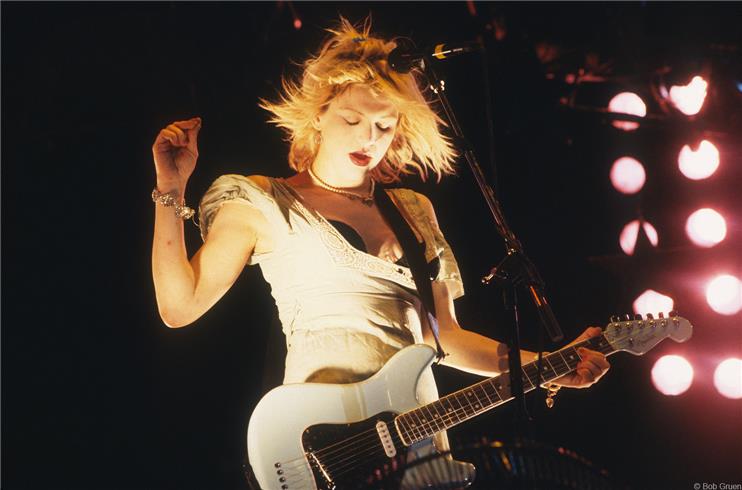
Eventually, after acting roles in the Alex Cox-produced Sid And Nancy (ironic, that, given Cope’s lambasting) and Straight to Hell movies and a short stint in the nascent Faith No More, Courtney found fame in her own right. With her band Hole, Courtney dragged the songs behind her in the way a tantrum-throwing toddler might hold onto a ragdoll. Foot atop monitor, she’d bawl and holler until hoarse, a defiant two-fingered statement that belied the baby-pink Mustang and lacy dress that might’ve hinted at the notion of submissive femininity. With lyrics addressing abuse, sexuality and chaotic living, her autobiographical songs were perfect for the misfits and misplaced in society.

Immediately left and right of her, her junkie-chic band of renegades and reprobates played a right royal lamalama of noise. Bruised, battered and bleeding, Hole songs were raw and unforgiving, brutal, relentless and very loud. Obvious really, given the reference points; the band had links to both Sympathy For The Record Industry and Sub Pop, Sonic Youth’s Kim Gordon produced their first album, and so on…

Occasionally, if she’d taken her kohl-darkened eye off the bawl, Love allowed a melody to escape into the ether. Below the rumble of bass and tumble of toms, the odd diamond might glint for those paying close attention and, by the time of third album Celebrity Skin, things had progressed musically to the point that the song became the equal of the performance. As a result, the album (steered by Smashing Pumpkins’ Billy Corgan in pseudo A&R role) is a big riffing, radio-shiny collection of alt. pop songs.

The album’s title track was the big lead-off single. Celebrity Skin flies in like a jumbo jet, a full force sonic rumination on the fickleness of fame. Love sneers ‘n snarls through the verses, elongates the ‘he-ey-eys and yeah-yeah-yeahs’ in the chorus and goes full-on Stevie Nicks in the acoustic-led middle eight. It’s a cracker.

HoleCelebrity Skin


The Malibu single is more of the same. With a guitar and vocal that a different producer might’ve smoothed into country territory, Love provides the requisite snarl in all the right places. Choruses are big, harmonised and insistent in their earworm-like tendencies. I’ve never driven down the Pacific coast freeway in a convertible Chevvy, but when I do it’ll be this track and it’s counterpart above that soundtracks the occasion.

HoleMalibu

*Extra Track

Worth a listen too is the band’s ragged take on Dylan’s It’s All Over Now, Baby Blue.

HoleIt’s All Over Now, Baby Blue

Coming in on the wrong verse, Love treats the master’s piece with little in the way of respect, but it vibrates and squeals in all the right places. More of a reworking than a faithful cover, it’s a whole lotta Love indeed.

John, Yoko and little Julian, yesterday.
Hard-to-find, Sampled

Hopping In A Barrel Is A Barrel Of Fun

Hall & Oates seem to be on a wee bit of a renaissance just now. In recent months the hip-to-the-jive stadium announcer at Rugby Park has started playing You Make My Dreams Come True at the end of every game. Plastic soul for a plastic pitch, it’s a positive nod to Kilmarnock FC’s lofty league position, where they currently occupy the European spot with one game left to play. The duo has just played the Hydro (terrible sound, by all accounts) and are currently winding their way around the larger arenas of the UK and beyond to generally sold out (and affluent) crowds. Did you see the price of the tickets? I can’t go for that, no can do, ‘n all that.

While their best songs endure as shiny FM pop/soul hits – Maneater, Out Of Touch, the just-mentioned I Can’t Go For That, they were always a bit too slick for me; it was the moustaches ‘n mullets ‘n multitude of sleeveless t-shirts that failed to engage me. The nadir was their appearance on American Live Aid. It was a forgettable performance by and large, but the images of vests and leather trousers and blow-dried Lady Diana bouffants are as burned to the retina as those of Bono clambering into the Wembley pit and Freddie Mercury leading that mass clap along during Radio Ga Ga.

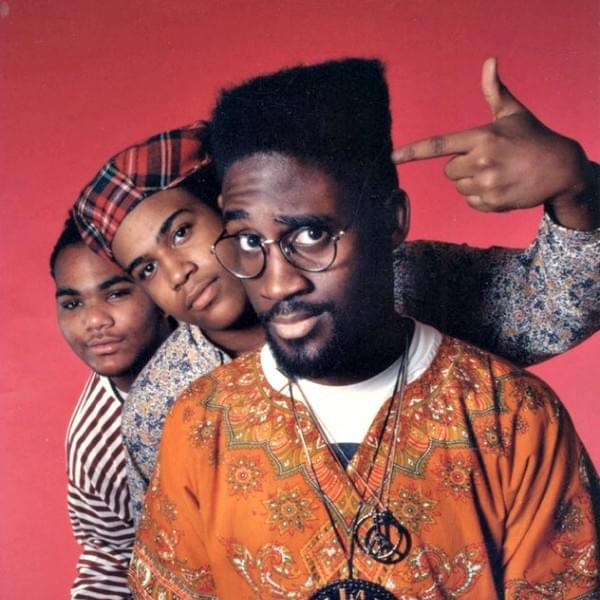
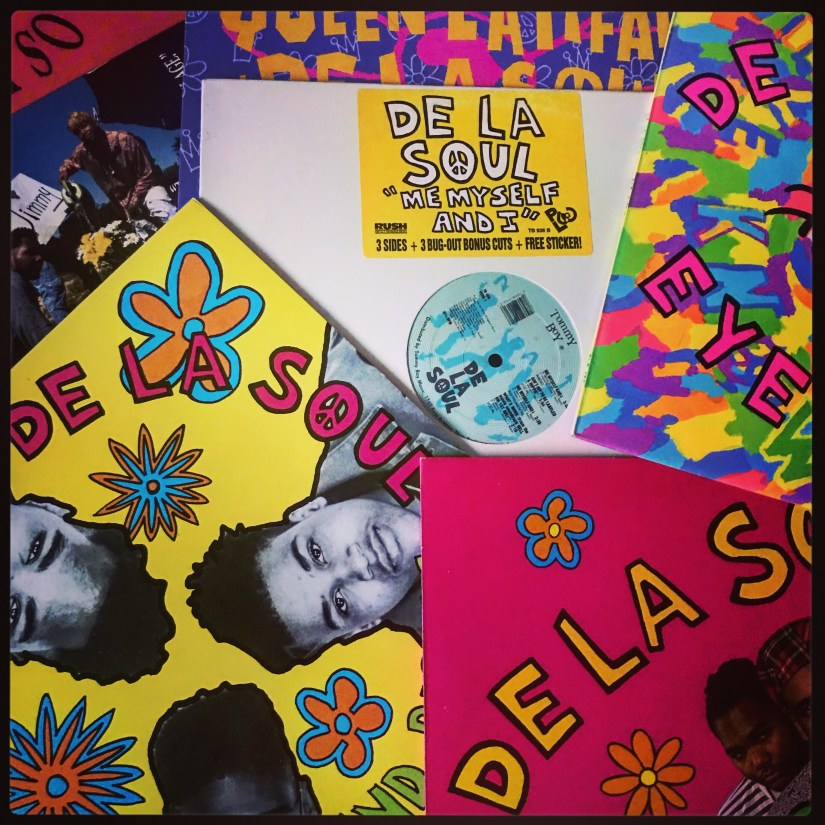
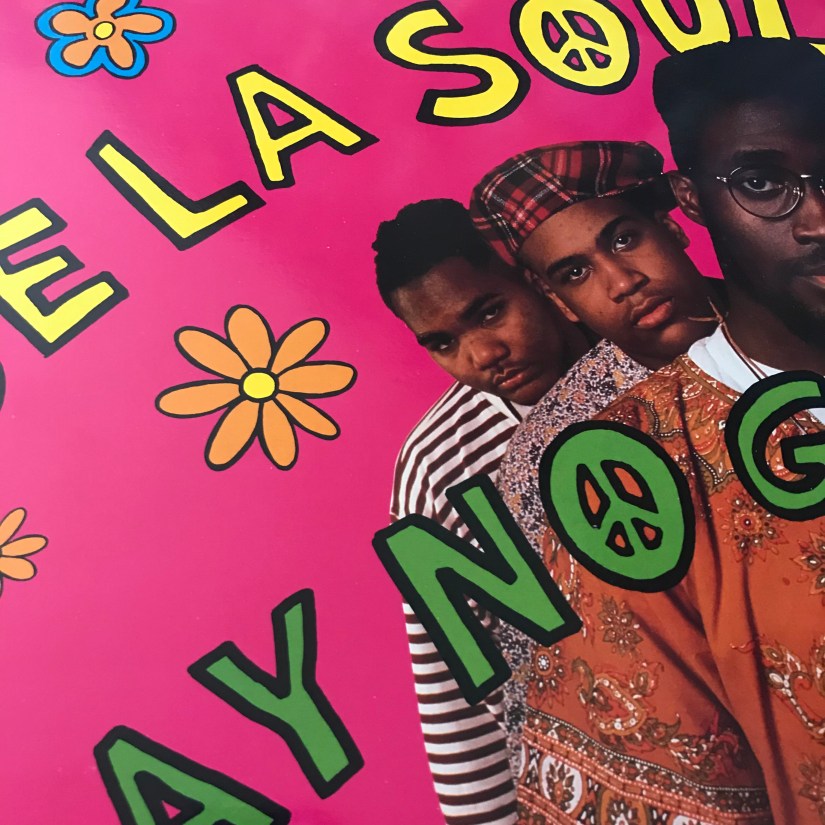
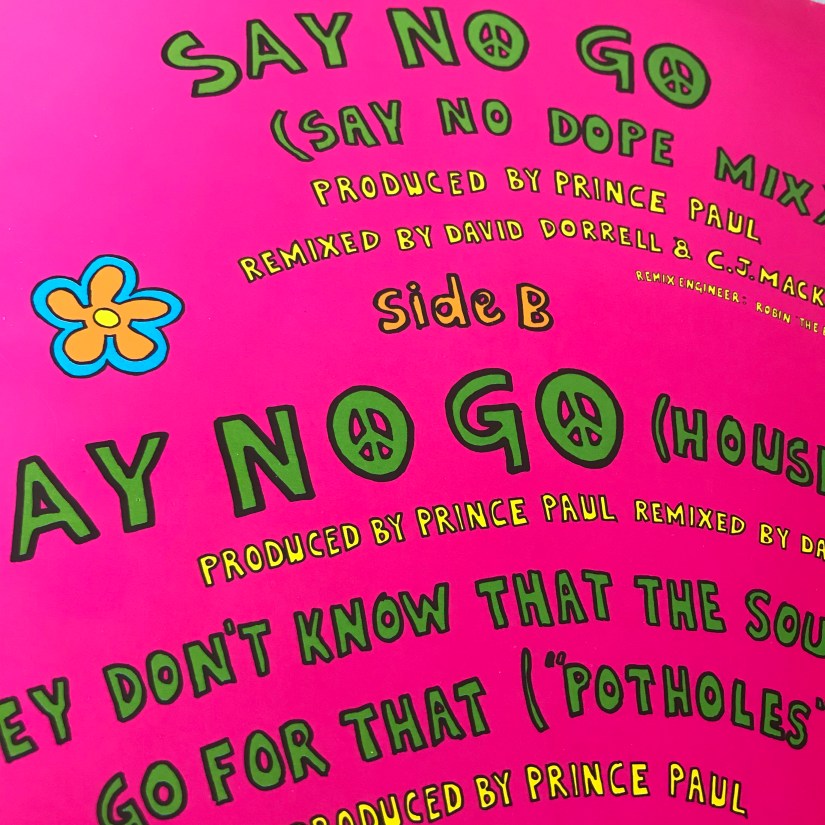
De La Soul famously copped I Can’t Go For That’s “you want my body now you want my soul” chorus refrain and used it to great effect on their own Say No Go. Hippy and trippy rather than tough and bluff, in radical, revolutionary fashion, De La Soul ripped up the accepted rules of rap and rewrote them over the course of their terrific catch-all, sampleadelic debut 3 Feet High And Rising. Out went standard outsider braggadocio about guns ‘n girls built around James Brown drum breaks and in came all-inclusive, socially-conscious, self-proclaimed Daisy Age rap constructed from all corners of the trio’s parents’ record collection; The Turtles sit happily (together) next to snippets of Sly Stone and Steely Dan, slowed down Johnny Cash vocals, sped up Detroit Emeralds guitar riffs, George Clinton keyboard parts and even Liberace adlibs.

Eclecticism runs through the grooves like the lettering in a stick of Blackpool rock. Bo Diddley maraca shakes jigsaw into Lee Dorsey drum breaks….. the hits of a sky high Michael Jackson are pushed aside by bits of a superfly Run DMC… Richard Prior skits give way to Wilson Pickett hits…. Sewn together by an inter-track gameshow, it’s an album that’s as cartoonish and day-glo and fun as the sleeve it comes (w)rapped in suggests.

3 Feet High And Rising is terrifically, brilliantly all over the place. Its carefree abandon to copyright are both a lawyer’s nightmare and dream, and a spin of the album today throws up new things still. There are websites upon websites breaking down the samples used, but as my own taste becomes increasingly catholic with each passing year, it’s much more fun to play spot the sample without over-reliance on Dr Google.

With my fairly decent knowledge of music, I could argue the case for the group renaming themselves De La Stole, but then, the sticky-fingered pilfering is what makes the album so enduring. No one, least of all the band themselves would dare dream of taking such a cavalier approach to record making again, especially when the lion’s share of all future royalties go straight to the original songwriters, ie anywhere other than the people who put it all together. It’s no surprise that since the album’s release, hip hop producers such as Dre and Pharrell have steered clear of sampling and instead created their own sounds via keyboards and computers and alchemic wizardry.

De La SoulSay No Go

Say No Go is the album in miniature. Constructed from half a dozen or so samples it manages to be hip hop and high pop, as boxfresh as a new pair of Nikes on Thanksgiving. Crashing in on the horn part from Sly Stone’s Crossword Puzzle, creating a hook by playing Detroit Emeralds’ Baby Let Me Take You In My Arms at 45 rather than 33 and employing a beat mishmashed from both Hall & Oates’ Say No Go and The Turtles’ I’m Chief Kamanawanalea (to be honest, I Googled that one), De La Soul manufactured one of their most enduring tracks.

Sly StoneCrossword Puzzle

Detroit Emeralds – Baby Let Me Take You In My Arms

Hall & Oates Say No Go


The vocal sample that lends the track its name is the icing on a cake packed full of interesting ingredients; blink-and-you-miss-‘em parts of The Emotions’ Best Of My Love jostle for ear space alongside the Dragnet theme and the Funky 4 + 1’s That’s The Joint. The sprinkle on top of the icing, the lyric is a terrific stream of (social) conscience that addresses the issues of inner city drug abuse:

Now let’s get right on down to the skit

A baby is brought into a world of pits

And if it could’ve talked that soon in the delivery room

It would’ve asked the nurse for a hit

Undoubtedly political but undeniably populist, the finished track (unwittingly, perhaps) manages to be influenced by James Brown, although not in the usual cut ‘n paste manner favoured by hip hop artists: De La Soul realign that hybrid HallnOates/Turtles’ beat so that the track kicks off ‘on the one’, lending it that driving, forward-seeking groove. It’s propulsive and insistent and downright funky. I could listen to it for ages.

Hard-to-find

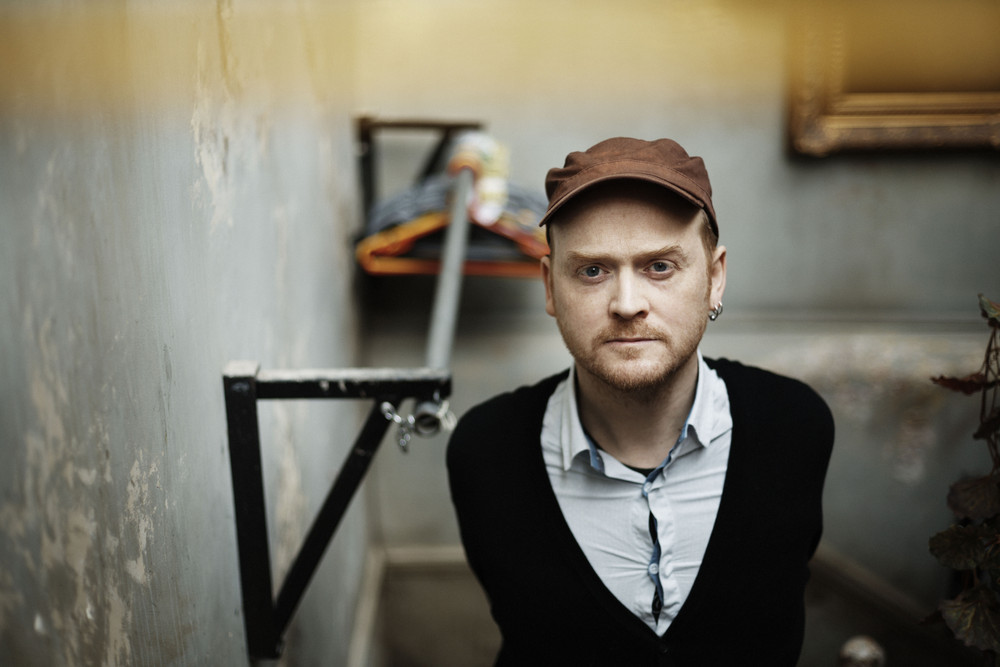
Six Of The Best – James Yorkston

Six Of The Best is a semi-regular feature that pokes, prods and persuades your favourite bands, bards and barometers of hip opinion to tell us six of the best tracks they’ve ever heard. The tracks could be mainstream million-sellers or they could be obfuscatingly obscure, it doesn’t matter. The only criteria set is that, aye, they must be Six of the Best. Think of it like a mini, groovier version of Desert Island Discs…

Number 30 in a series:

James Yorkston has been quietly making records for around 20 years. Since 2002’s Mercury-nominated Moving Up Country he’s released a dozen or so albums that draw you in and leave you breathless. Current album The Route To The Harmonium is his most ambitious and most rewarding collection of songs so far.

Championed early-on by Johns Peel and Martyn, James’ quiet way with a melody and unusual arrangement found favour with Domino, the label who continues to release his records today. A cog in the wheel of the Fence Collective, James has made his base in the East Neuk of Fife, choosing to write and record in the tiny village of Cellardyke, just up the road from the famous port of Anstruther yet close enough to smell the fish frying in the famous fish and chip shop.

It’s this environment that sets Yorkston apart from others. Unpretentious yet uncompromising, James has worked with an array of interesting names that help add colour and flavour to his songs; his debut album was produced by both Simon Raymonde (late of Cocteau Twins, now head honcho at Bella Union Records) and Fence friend Kenny Anderson, better known in music as King Creosote. Further excursions in music have found him utilising the skills of Four Tet and 6 Music favourite Jon Hopkins. Currently, there is a Vince Clarke remix of …Harmonium track Sorrow doing the rounds. Had someone such as Thom Yorke or (heaven forbid) Noel Gallagher collaborated with producers and musicians as varied and interesting as those above, it’d be hailed as brave, revolutionary and groundbreaking. James Yorkston, it would appear, has been quietly just that for years.

Often lazily labelled ‘folk’, Yorkston is arguably to that genre what The Beatles were to ‘pop’. Listen with an open mind and you’ll discover there’s far more going on than first meets the ear. It’s perhaps not immediate though, but James’ music is very investible. It takes time to get to know it, to uncover the hidden layers. If you’re looking for a quick fix, you probably won’t find it but the rewards are rich for all who bide their time. When the songs reveal themselves, they appear fully formed, melodies blown in from long ago and plucked from the ether. Add a splash of jangling Swedish nyckelharpa, wheezing harmonium, bouzouki, banjo or battered acoustic and you have a unique and individual sound.

Kick out the Jams. James Yorkston with Pictish Trail and Withered Hand at the HAC, Irvine, January 2016.

Photo (C) Paul Camlin

I’ve been following James’ career on and off since hearing Moving Up Country whilst keeping myself busy behind the Our Price counter one afternoon in its week of release. Left to my own devices, the album rotated on repeat for two or three times, worming its way into my brain, over time becoming one of my go-to records. These days I’m able to call it down from the embedded music section of my brain like an old friend. I only need reminding of the opening notes of Tender To The Blues and I’m whisked back to that empty shop, just me leaning on the counter and James Yorkston filling the silence. James’ songs endure. Since losing my dad to cancer, I can barely listen to 2104’s fragile Broken Wave, a sparse, death rattling eulogy to Doogie Paul, one of The Athletes that accompanied Yorkston on that debut album. My Life Ain’t No Bible, lead-off single from current album The Route To The Harmonium appears to be the Yorkston track of the moment, the one I’ll happily return to again and again. It features a terrific spoken-word rant atop a jangling military two step backing track, a kinda demented take on Van Morrison’s Coney Island as played by the Velvets. But more of that later…

As he begins a UK tour, James spoke to Plain Or Pan and told us the 6 things he’s most proud of having his name to. I say ‘things’ rather than ‘songs’ or ‘records’ because, well, you’ll discover as you read.

Here, then, is James Yorkston‘s Six Of The Best:


Woozy with Cider (The Year of the Leopard, 2006)

This was my first spoken word piece. I’d written it for a super limited Fence Collective album, but I liked it so much I nabbed it for my next album proper. Domino ended up getting a whole load of remixes made for it, including a beautiful piano based reworking that Jon Hopkins did.

It still gets requested, this song, so it makes the occasional live appearance still. It’s fun to do, like revisiting an old friend.

The Lang Toun (single, 2002)


We made this without any hint of record company interest, just myself and a few pals, taking our time, adding small pipes, concertina. It was the last thing on our minds that a London record company would hear it and we’d end up in Abbey Road getting it mastered.
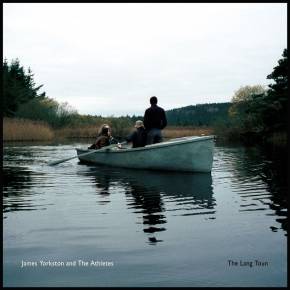
I very seldom play this live nowadays. It’s ten minutes long, so I can hardly be blamed…


My Mouth Ain’t No Bible (The Route to the Harmonium, 2019)

This album was quite a relaxed build. I was tinkering away with it in the background whilst touring with Yorkston Thorne Khan, writing some books, running my club…

This particular song took a long while to finish. It’s based on an improvised jam I recorded with my old band The Athletes, back in 2006, then I overdubbed all sorts:, autoharp, nyckelharpa, duclitone. It was surprisingly easy, tho’. It was obvious when things were working and when they weren’t and then, finally, one day it was finished.

It’s a great tribute to my record label, Domino Records, that they released it as the first single from the album – it’s a seven minute Krautrock rant, it ain’t no pop song.


Little Black Buzzer (Yorkston Thorne Khan, Everything Sacred 2016)

I love this. It’s the Ivor Cutler song, of course, but cut in with the great Irish singer Lisa O’Neill, Suhail’s sarangi playing, and finally Suhail doing some tabla mouth music.

Meeting Suhail has led to a very interesting part of my musical life. Touring India is very different from touring the UK, but every aspect of his life has been different to mine – he began learning his instrument, the sarangi, at the age of two, at his grandfather’s feet. His grandfather, Ustad Sabri Khan was a huge name in Indian classical music and Suhail’s knowledge is incredible.

Put us two together with an incredible jazz bass player, Jon Thorne and there’s this weird bond between us all. It’s not an East meets West thing, though, we’re just three pals making music.


Three Craws (Book. Freight Press, 2016)

I love this wee book. It came out, very briefly, on Freight Books, but almost immediately after publication, Freight went bust and Three Craws sank with it. I value it as highly, career wise, as any one of my albums. It’s a marker of where I am. Any more books to come? I’d certainly hope so… Watch this space etc.

Oh Choices, Wide Rivers (Unreleased)

I was over in Sweden recently and ended up in the studio with a Swedish band. We recorded half a dozen new songs and this particular one has been stuck in my head ever since. It feels good to be moving on, to keep on creating.

That moving and creating is so important. Not one to be held back by past glories, James’ trail blazes brightest when he’s collaborating with others. When will those new songs recorded in Sweden see the light of day? Under which moniker will they appear? Keep an eye out.

James Yorkston is currently on tour. Go and see him if he’s near you.

Hard-to-find

Dubby Gillespie

It’s no surprise that Primal Scream made a dub album. Back in the day, the core of musicians that constituted the band genre-hopped happily from subculture to subculture as freely as Bobby’s bob grew from curtains to bowl to boho banker and back again.

From tambourine-bashing Velvet-apers (in style, sound and subject matter) to strung-out and wrung-out Stooges/MC5/Dolls copyists, they alighted at the kaleidoscopic, stadium indie of Screamadelica within 3 albums in just over as many years. It barely needs pointing out that Bobby Gillespie and co have always worn their influences proudly on their sleeves, but point out we must. Whether those sleeves are made of denim or leather or silk or rhinestone and patterned in polkas or paisley is neither here nor there.

Today on this program you will hear gospel and rhythm ‘n blues and jazz,’ goes the sampled-from-Wattstax Jesse Jackson on the album version of Come Together. ‘All those are just labels. We know that music is music.’ Primal Scream merrily adopted that motto more than most.

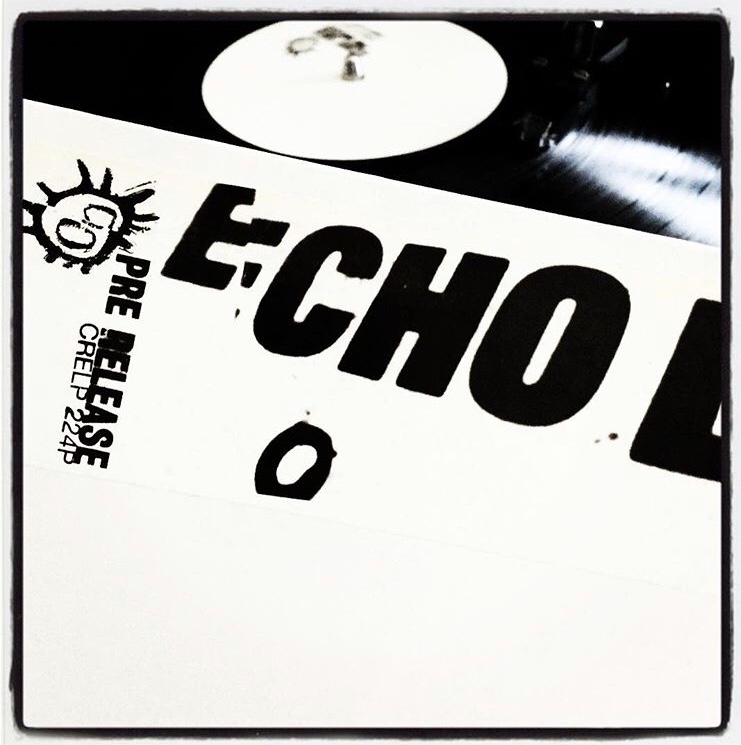
Betwixt the hiccup of the Stonesy-yet-flat Give Out But Don’t Give Up and the big beat boutique of XTRMNTR came Vanishing Point and its companion piece, Echo Dek.


Vanishing Point is where you’ll find the singles; Burning Wheel, Kowlaksi, If They Move Kill ‘Em and Star, all terrific artistic statements in their own right; other-worldly, socially-conscious, sample-happy and interesting from every angle, but Echo Dek is where you’ll hear the album tracks let off the lead, allowed to wander and take whichever turn they fancy.

Stoned immaculate, it’s an ear-opening collection of tracks, a filling-loosening window rattler put together via the combined sonic mastery of Brendan Lynch and Adrian Sherwood, who between them produce and remix 8 of Vanishing Point’s tracks to create 9 fresh cuts. VP track Stuka is on the receiving end of 2 remixes, each of which closes a side on the vinyl version.

Primal Scream Revolutionary

Taking their cue from the masters of the genre, cave-like bass guitars boom, snare drums crack away like pistol duels at dawn and modern whooshes and blips and bleeps assault the senses with refreshing regularity. Yer actual Augustus Pablo has his melodica mangled into oblivion on Revolutionary, the remix of Star, while Prince Far I’s vocals filter through the gaps in Wise Blood. Last Train, the band’s contribution to the Trainspotting soundtrack rides in on a bed of sweet Philly guitars and wacked-out dub – more melting melodicas, police sirens, a very Weatherall underbeat – and takes even longer to arrive at its tripped-out destination.

Primal ScreamLast Train

The whole album suggests long sessions at the mixing desk under the creative fug of some chemical or other. It’s long-form music, as expansive and wide as the average Primal Scream fan’s waistline 20 years down the line (sweeping generalisation notwithstanding) and simply epic to listen to. These days it may well be my favourite Scream LP.

It’s no wonder Echo Dek confused the majority of Primal Scream’s audience, waiting hopelessly in vain for Screamadelica part 2. The band would further wrong-foot their diminishing fan base by next releasing Evil Heat, an album that features guest vocals from Jim Reid and Kate Moss, deconstructs songs made famous by Lee Hazelwood and Felt and adopts another uber-cool genre to hang its hat on. “There’s always been a Krautrock influence to our music,” lied bare-faced Bobby at the time. Autobahn 66 (I mean, come on!) is a cracking track though, but one for another day.

Hard-to-find

Easter Everywhere

This is beautiful. Halfway between a Lynchian take on Disney melancholy and a string-soaked Salvation Army-sponsored wake, it’s the sound of hope over despair, of light at the end of a long, lonely tunnel, of redemption and resignation, reflection and retreat.

Jesus’ Blood Never Failed Me YetGavin Bryars featuring Tom Waits

It’s an extraordinary recording, originally put to tape in 1971, and although at that point Tom Waits wasn’t involved, serendipity certainly was. The track was created to soundtrack a documentary being made about the homeless people who lived around Waterloo Station and it’s built around the melody of a homeless man, captured Alan Lomax-style singing the titular line over and over again.

As fate would have it, when Bryars played it back in the studio he noticed that the unknown man’s voice was pitch perfect with his piano. Not only that, but his entire vocal lasted 13 bars, Bryar’s preferred length for his planned piece of music. 

The first version lasted 25 minutes, the entire side of an LP. With the popularity of cassette tape, later versions grew to 60 minutes. The granddaddy of them all though is the 74 minute version from 1993, the version that includes Tom Waits’ sympathetic and entirely perfect co-vocal, the go-to guy if you’re looking for a wine-soaked hobo to enhance your recording. The first version of the track I heard, the recording won Bryars a Mercury nomination and a new fan in me.

It’s astonishing. The sighing strings and elongated brass lines leave just enough space for the empty sadness to seep through, church organs weaving in and out of the wholly holy swill. Uplifting melancholy in excelsis, Jesus’ blood is of course both religious and metaphorical.

You wouldn’t need to travel far from wherever you’re sitting just now to find a homeless person, an embarrassing and shocking state of affairs in a world where multi millions have been pledged to save the roof of some old church or other in Paris. A quick drop of Jesus’ blood won’t fix things in this day and age, despite what the big man upstairs might have you believe.

Hard-to-find

Doin’ This, Doin’ That

Devo‘s version of Satisfaction, with its jerky, angular posturing and tight-trousered twitching is fantastic. The very antithesis of the Stones loose ‘n loud original, Devo play it like they’re trying to escape a claustrophobic padded cell, lower limbs a go-go whilst cling film-wrapped into straightjackets at least a size too small. Produced by Brian Eno, it manages to be both types of music – punky and funky.

DevoSatisfaction

Underpinned by the sort of awkward myopic groove that served Talking Heads so well, it’s kick-started by a wheezing, asthmatic guitar riff. Thankfully, gaps narrower than the hems of Franz Ferdinand’s trousers (pop group, not WW1 protagonist) allow for little in the way of any other showy-offy stuff. It’s disciplined, monotone and over in roughly the time it’ll take you to read this short piece, which, as you know is the ideal length for ideal pop music.

Otis Redding, on the other hand, turns white man blooze into a goose-stepping, knee-dropping, Southern soul belter. It’s a well-known fact that Keith Richards loved this version more than the Stones very own. Using his shitty prototype fuzz box, the Pavlov-inducing signature riff at the start is Keef setting out to emulate the sound of the Stax house band blasting seven shades of brass into the wind. Otis borrowed yer actual Stax house band and, well, blasted seven shades of brass into the wind.

Otis ReddingSatisfaction

His magnificent voice is gravel-rough, road-worn and richer than Jagger and Richards themselves. They might’ve had the fame and the money and the shared Swedish girlfriends, but Otis trumped them when it came to ground shakin, earth quakin’, heart breakin’ ess oh you ell soul music. A hey-hey-hey.


Hard-to-find

A Certain Grace-io

Early Talking Heads, with their tight, taut, highly strung guitars, meandering, fluid basslines and polyrhythmic percussion really takes some beating. I’ve written admiringly about their 4th album Remain In Light before, an album that continues to amaze and throw up new sounds even after all this time. With sonic architect Eno on ambient duties, the band are at the height of their creativity. An exercise in experimentation, the band cherry pick from the artiness of mid 70s Berlin Bowie and the disciplined grooviness of African music, Fela Kuti in particular, and weld them to the pop sensibilities of, aye, mid 70s Bowie and African music, Fela Kuti in particular. The big track from the album is undoubtedly Once In A Lifetime but dig deeper and you may find yourself with a brand new favourite album. There are many tracks that will grown on you just the same, believe me.

Like Houses In Motion, for example. The flop second and final single from the album, it’s the perfect juxtaposition of Sly Stone’s pitter pattering skeletal funk and the call and response paranoia of Talking Heads’ own Slippery People, still 3 years from release, but surely conceived in this very moment?

Talking HeadsHouses In Motion

It judders and jitters in all the right places, driven by scratchy funk guitar, an introspective vocal and honking keyboards. In Scotland, ‘honking‘ is often used in derogatory terms, especially at the football – see that big centre, he’s honkin’, so he is – but in this context I’m referring to the fact that the keyboards conjure up the sound akin to a midday traffic jam on 5th Avenue. A one chord groove that wouldn’t outstay its welcome were it twice as long, it’s the great lost Talking Heads track.

Grace Jones & ACR by Kevin Cummins. Of course.

The reason I’m turning the spotlight on it is because just last week I received an email from A Certain Ratio‘s people, letting me know about the band’s own version of the track. Dug out of the archives for a warts ‘n all box set celebrating an outstanding 40 years of ahead of the curve yet under the radar music, ACR’s version sounds terrific; timeless, relevant and, like the original, far better than much of the new music that the taste makers and shapers on 6 Music etc would have you believe is worth parting with your hard-earned disposable income for.

Recorded in 1980 with Marin Hannett, the track was intended as a collaboration with Grace Jones. Retaining the edgy, claustrophobic, insular mood and cat-scratching guitar, ACR still contrive to make Houses In Motion their own, slapping a fantastic O’ Jays For The Love Of Money rubber band bassline on it and adding a muscle that was absent from the original. If it popped up right now on 6 Music and you knew no better, you’d be gushing over a fresh, new track that’s older than Jordan Rakei or Loyle Carner or Chali 2na or any of those hip young gunslingers that pop up with dreary regularity.

Amazingly, the version that appears on the box set and the brand new video above features ‘just’ a guide vocal from ACR’s Jez Kerr, intended to give Grace an idea of how the finished track might sound. Although Jones made it to Strawberry Studios and took part in the session, her vocals were never completed and remain frustratingly undiscovered. You can only imagine how the intended version might have sounded.

You can buy that ACR Box Set direct from here.


Funnily enough, I suggested in that article linked at the top that Grace could take Talking Heads’ Seen And Unseen and make it her own, so, y’know, great minds think alike ‘n all that. Another great mind who’s also ahead of the curve is Adam over at Bagging Area. He was first out of the traps to shine the spotlight on the ACR track. It goes without saying, but Bagging Area is a blog definitely worth adding to your bookmarks and favourites and what have ye for up to the minute, finger on the pulse observations.

Hard-to-find

Super Fly

Years ago, our old Ford Fiesta swallowed an ancient Billy Connolly tape; a mixture of his greatest stand-up ‘hits’ (The Crucifixion, The Jobby Wheecher, When The Circus Came To Glasgow….. all the really brilliant stuff) and a handful of songs, one or two serious, the others daft and sweary. It was a great tape and from the day it became jammed in the car, it became jammed in our heads. On any journey, we could recite the entire compilation, over and over and over again, word by word, welly by welly and willie by fucking willie.

It soundtracked many a memorable trip to Ikea  – unbelievably, perhaps, the one near Newcastle as there wasn’t one in Scotland at that time. All that way and back again for a pine coffee table and a hi-fi unit, soundtracked by Billy Connolly and our increasingly adept impressions of him. The coffee table didn’t survive the big flit a dozen or so years ago, but the hi-fi unit has been, to use the parlance of the day, upcycled with a coat of hip to drip Annie Sloan chalk paint and still does the job to this day. I’m looking at it right now as the unit inside it plays Weatherall’s incendiary mix of My Bloody Valentine’s Soon at a volume too loud for this time of night. It’s part of a Creation playlist I’m putting together for the weekend, but more of that perhaps next week.


One of the dafter tracks on the Connolly compilation was entitled ‘Bastard Fly’. It consisted of Billy plucking his banjo on a creaky porch in some imagined mid-west state or other while an annoying fly buzzed around him. There was no visual to go along with it, but that was the premise. It went something like this;

plinky-plinky-plinky-plonk

(creak)

bzzz

plinky-plonk

(creak)

bzzz

plinky

bzzzzzzzzzzz

Gnnnshhhffff….”

(creak)

plinky-plonky-plonky-plink

bzzzz

Fknshhhh….”

(creak)

bzzzzzzzzzz

plinky-plonk-plinky-plonk-pli-twaaaannnnngggg!!!

At this point a string breaks on the banjo. There’s a slap. Brief silence. Another creak. Then Connolly’s voice, relaxed yet full of whispered menace.

Bastard fly!”

plinky-plonky-plinky-plonk

(fade to end.)

And that was it. Not one of his better-known moments. Almost surrealism, in fact. But it made me laugh every time. I’m not so sure my co-pilot felt the same way, but she laughed at me laughing in the way you do when you’re young and carefree and the owners of a honkin’ coffee table. It’s a shame that tape left us when the car did. I can’t find an mp3 of it anywhere.

Another ‘Bastard Fly’ track is surely Hot Chip‘s Over And Over.

It’s a fantastic track, nervy and twitchy and running on paranoid rhythms, goosestepping techno off-set by fuzz guitar and fuzzier analogue synths. The vocals are disciplined and repetitive – “over and over and over and over“, even offering a clipped, robotic spelling lesson in the refrain.

That annoying wee electro wobble that comes in on the back of the tinkling music box percussion and clip clopping Talking Heads polyrhythms that introduces the song and flits between the notes like a hopped-up dragonfly in mid summer though – it’s the return of Billy Connolly’s Bastard Fly, remodelled for modern times. Listen up!

Hot ChipOver And Over

It’s the kinda track that New Order should’ve been making in the mid 00s instead of falling out and in and releasing substandard fare that does nothing but dilute an imperial back catalogue. It’s the equal of the best parts of LCD Soundsystem and Underworld, techno for folk who don’t realise they’d like techno. For me, it’s Hot Chip’s defining moment. Watch this video clip over and over and over and over…