Cover Versions, Double Nugget, Get This!, Gone but not forgotten

Hang On Sloppy

Louie Louie by The Kingsmen is the basest, crassest, lowest-level, stoopidest rockist frat-boy thunk ever committed to vinyl. Which happens to make it just about the best record ever. But you knew that already. The fact that it is sloppiness in excelsis; badly played and full of mumbled, mistimed vocals only heightens its appeal.
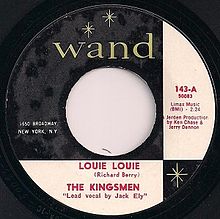
louie label

Louie Louie was written and recorded in 1955 by Richard Berry, who, along with his band The Pharaohs released it as a single to mass indifference. Shame, as it‘s a mighty fine piece of skronking, doo-wop inflected rock ‘n roll.

Louie LouieRichard Berry

The Kingsmen first became aware of Louie Louie not via Richard Berry’s original, but from another cover. Rockin’ Robin Roberts‘ version was a regular on the jukebox in Seattle’s Pypo Club where the band often gigged.

Louie LouieRockin’ Robin Roberts & The Wailers

They quickly spotted it was a guaranteed floor filler, so The Kingsmen began incorporating it into their sets of lounge standards and easy listening classics.
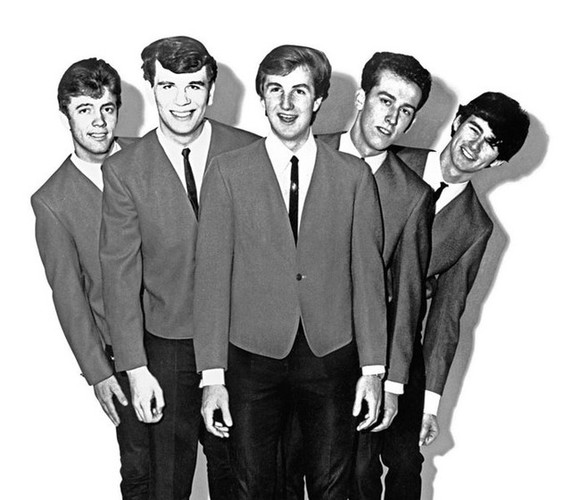
kingsmenAll the King’s horses and all The Kingsmen

To say the recorded version was a departure from their usual sound would not be an exaggeration. Look at the band. Hardly The Stooges, or even The Troggs, are they? But with this one record they unwittingly created the caveman stomp of the Garage Band movement. Three chords? Check! Farfisa organ? Check! Nagging, repetitive chorus? Check, and check! Those Troggs’ and future Stooges’ ears pricked attentively at the hot-wired sound emanating from their AM radios.

Louie LouieThe Kingsmen

In order to give the record a live feel, the one vocal mike was hung suspended from the ceiling of the small studio and singing guitarist Jack Ely was forced to shout into it over the noise of the band. Just after the scratchy solo, he comes in to the verse a bar too early, checks himself and is saved by an on-the-ball drummer who casually flings in a recording-saving drum fill.

The fact that the teenage Ely was wearing braces on his teeth meant that when he wasn’t coming in on the wrong cue, he was mumbling his way through much of the song, a point that lead to the band and record being investigated for obscenity by the FBI. They were even banned from playing live in some States. As has been proven time and time again, this is exactly the sort of promotion a record needs in order to scale the charts.

If you listen carefully, more carefully then the FBI as it would appear, at the 54 seconds mark you’ll hear the crystal clear exclamation of Lynn Easton the drummer shouting “Fuck!” as he fumbles his sticks mid fill. Check it out.

Shock, horror: the Kingsmen performing live, possibly singing Loui Louie.

The whole record took as long to record as it does to listen to – done and dusted for $50 in one imperfect take and sent to the pressing plant before the band had any time to object.

The Kingsmen hated the version that was put out, although they mellowed slightly when it finally settled in the number 2 slot of the actual Billboard Hot 100 –  a somewhat bittersweet tale, as by this point they had split up. To promote the single, drummer Lynn Easton (who named the original band and therefore ‘owned’ the name – although I’m sure a Drifter or a Bay City Roller or 2 could contest this in court) put together The Kingsmen Mark 2 for all promotional work around the single. As long as they played it with the required loose limbed sloppiness, who would even have noticed?

*Bonus Tracks!
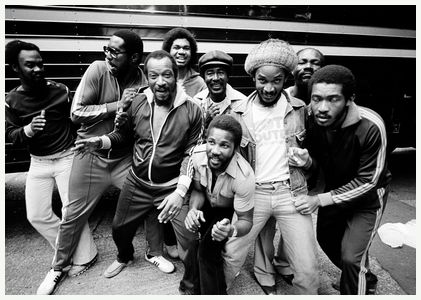
toots

Here’s Toots & The Maytals skanking take, all clipped guitars, tippy-tappy hi-hat and stoned Jamaican harmonies. At 5 and a half minutes long, it kinda outstays its welcome, but it’s beautiful all the same.

Louie LouieToots & The Maytals

oj zeke

And here, with eyebrow permanently arched, is the typographically mischievous Louise Louise by Orange Juice. Shimmering, jangling and all the way fae fey Bearsden, it‘s a totally different song. Methinks the band had the title before the song.

Louise LouiseOrange Juice

Hard-to-find

Turn On Those Sad Songs

Way back in 1992 I wrote a song. Normally, ‘songs’ in our band came about through half-arsed jamming, with the ‘musicians’ supplying a loud ‘n loose back-beat ripped off from whoever we were listening to that week for the ‘singer’ to shout over while he shuffled the wee hand-scrawled bits of paper that he kept in his pocket into some sort of lyrical order. Sometimes it worked, but mostly it didn’t. In a rare fit of McCartney-esque creativity, I decided I was going to bring a fully-formed track to one rehearsal. It would have verses and choruses and a middle eight, the backing vocals would all be worked out and there’d be a bridge with a brass section (we’d add that part later in the stoodio) before the whole thing fizzed to a finish with grand guitar fireworks. 

I sat in my room, chewing on a pencil and bashing out chords on my acoustic guitar. This was what songwriters did, was it not? When it was done I was fairly happy with what I’d come up with, but it was plainly obvious that it didn’t fit in with the (cough) sound of the band I was in. We (liked to think we) played a frantic ramalama somewhere between the clatter of The Wedding Present and the more controlled energetic outpourings of the Pixies, even if (as I listen with the hindsight of 20+ years of experience) most of our stuff should have been consigned straight to Ned’s Atomic Dustbin and set on fire, along with Ned’s Atomic Dustbin. 

My untitled song was a funny sort of waltz time dirge that meandered nowhere for 3 or so minutes. It was a metaphor for a doomed relationship that featured the titles and occasionally the lyrics of the saddest Bob Dylan songs I knew. Yes, it sounded as awful as that appears. The opening couplet went like this:

What ever happened to Lay Lady Lay and The Girl From The North Country we always played?

There’s A Sad Eyed Lady, and I Threw It All Away

Ivor Novello would hardly raise an eyebrow at such an opener. Actually, on second thoughts, he most definitely would raise an eyebrow at such an opener, but with a bit of editing a total re-write my lyrics might’ve sounded presentable rather than plain old rubbish. 

I can’t remember many other words. Which is just as well. I doubt I’d be sharing many more of them if I did. Doomed relationship!?! What the fuckdiddlyuck did I know about doomed relationships at my age?!? When I think about it now, I’m absolutely thrilled I never shared it with the band. I would’ve been laughed out of the room and back up the road. It would still be mentioned whenever we met up in the present. In short, it would have been a right riddy. I thought it was quite the trick though, name-checking other songs in my own song. I’m sure it had been done before me, although I was genuinely unaware of any such instance.

suede v.2Bert from Suede and the poor man’s Bernard

Imagine then, my total jaw-dropping disbelief and mild rage in 1997, when Suede brought out their ‘Lazy‘ single. This was Suede v.2, the line-up that featured the Stars In Their Eyes Richard Oakes on doppleganger guitar in place of the departed Bernard Butler. Stuck on the b-side was a track called ‘These Are The Sad Songs‘, a mid-paced arty rocker that, get this! – name-checked other songs! The first line mentioned Lay Lady Lay! Come on! Not only were they carbon copying shit-hot guitar players from 5 years ago, they were carbon copying shit ideas from my head 5 years previously as well.

SuedeThese Are The Sad Songs


I suffered in silence. I wanted to tell anyone who’d listen that I’d written a song just like this. Except I hadn’t. Suede’s track wasn’t exactly a set-the-heather-on-fire chart smash, but it was, not surprisingly, a million times better than mine, even if it was hidden on the b-side of a 3rd-off-the-album single from the arse end of the band’s career. It mentioned cool songs though, like Venus In Furs and Lazyitis and Band Of Gold as well as a good half a dozen or so other tracks that if I’m being honest I’d still need to Google in order to find out who did the original. So perhaps not such a great idea after all.  


Cover Versions, Double Nugget, Get This!, Hard-to-find

Rods & Mockers

I Wish You Would by The Yardbirds is a nagging, insistent blast of garage blues from 1964.

The YardbirdsI Wish You Would

yardbirds 64

It was their debut single, lifted hook, line and sinker from Billy Boy Arnold‘s 1955 track of the same name and re-sold as the hot new thing. It’s the sort of track that wouldn’t sound out of place on a Nuggets or Pebbles compilation.

When David Bowie heard it and/or saw The Yardbirds at the Ricky Tick or Marquee or whatever venue was most hip and most happening that week, something stuck with him. In 1973, pre-dating Lenny Kaye’s Nuggets theme by a good few years, he put together Pin Ups, a fine fine album of parochial r’n’ b stompers from his formative years; The Kinks, The Who, The Pretty Things…. all corners of the Brit beat group movement were covered, including The Yardbird’s Chelsea-booted stomper.

David BowieI Wish You Would

bowie 73

In typical Bowie fashion, his version sounds less like the original and more like a wired, paranoid blues from outer space.

Just a few short months on from the Ziggy album and tour, The Spiders From Mars band are all over it like a glam-slamming racket, Mick Ronson’s Gold Top set to boogie before wigging out in a brief Eastern ragga towards the end. I used to think it was the definitive version until I heard this…

glittery rod

Rod StewartI Wish You Would

He’s an easy target, is Rod. He’s certainly had his knockers (arf) but believe me, this is terrific from start to finish! Mock Rod at your peril.

Rod’s version is a full-on mic swinging, hip swiveling, spandex clad romp. It‘s proof that, despite the nickname he was always more rocker than mod. It recalls a prime-time loose ‘n lairy Faces. Listen to him bark out the commands in that voice that’s equal parts sandpaper and sawdust; “First verse!” “Second verse!” “Bridge!” “Sow-low!” You can picture him, strutting across some Mid-Western balloon-filled stage or other, chest puffed, leaning back into the mic the way he does.

Rod’s voice is superb, all mock cockney and nary a hint of the Scots blood that he’s so proud of. He carries the track from start to finish, his band doing the best bar-room blues that can be coaxed out of them. “And away we go! Whatever happens happens! Let’s just do it!” he instructs, his band hanging on in there right until the end, dive-bombing bass runs, runaway harmonica solo, 3-note riff and all. It’s crackin’!
What’s all the more amazing is that Rod’s take on I Wish You Would is from a long-forgotten studio session sometime in the mid 80s, when he really had no right at all to be recording stuff as thrillingly essential as this. See when he was jumping about in his videos wearing a pink tracksuit and a yellow sun visor on his head? He coulda been filing the charts with dumb rock ‘n roll like this instead. What a wasted opportunity.

Alternative Version, demo, Get This!, Hard-to-find

Callin’ All, Radio Transmit!

REM‘s output falls into two camps – the hard jangling college rock of the IRS years and the radio-friendly unit shifting Warners years. Fans are often divided over which era constitutes the band’s ‘best era’, which is a bit like arguing over whether tomato soup or tangerines are better. Both are magic, both are different. Me? Despite the dramatic tail-off in quality towards the end of the Warners era, I like ’em both equally.

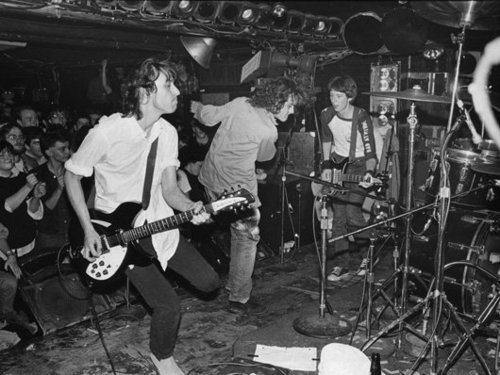
rem 81

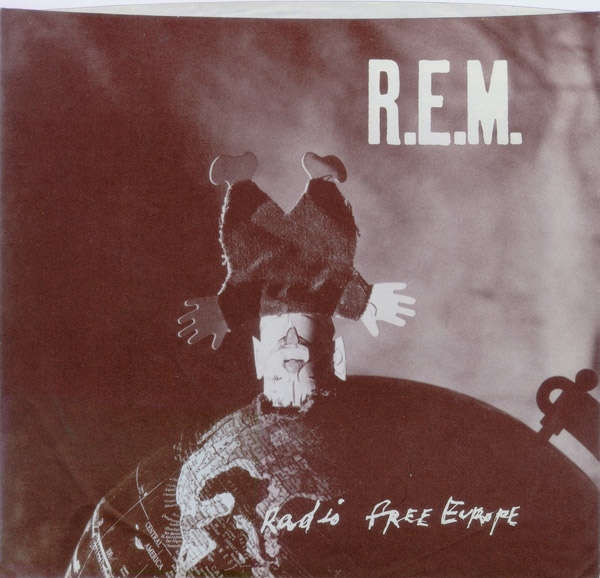
REM were born into the world on the back of Radio Free Europe,  first released on their own promotional ‘Cassette Set’, of which only 400 were made. The track was pretty much fully formed from the word go. Counted in on a pistol crack snare and carried in the verses by a tightly coiled spring of a guitar riff, it explodes in a colourful burst of glassy 12 strings and up-the-frets bass.

REMRadio Free Europe (Cassette Set version)

There’s also an extremely rare ‘Radio Dub’ version which has novelty appeal, interesting for the treated vocals and rudimentary special effects.

REMRadio Free Europe (Cassette Set ‘Radio Dub’)

*credit where it’s due – these tracks came a few years ago via The Power Of Independent Trucking blog. I think at the time they were almost shut down over the inclusion of them, so shhh!

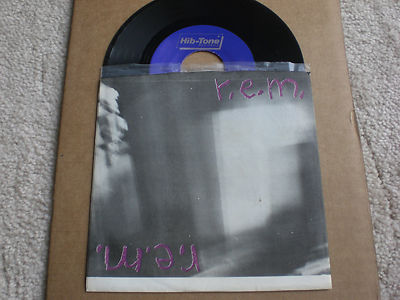
Local label Hib-Tone were suitably impressed by the demo cassette to offer the band a one single deal, and Radio Free Europe was committed to 7″.

 rem hibtone

REMRadio Free Europe (Hib-Tone Single)

The band themselves weren’t overly impressed by the finished results, but Radio Free Europe is the perfect defining introduction to the band – great musicianship fighting for earspace with the sandpaper vocals of Michael Stipe. Stipe is clearly a passionate vocalist, but you’d need a degree in WWII code cracking to work out what he’s on about here. Even when you can make out the words and phrases, many of them make little sense.

The silent silver radio’s gonna stay,

Reason it could polish up the grey

Put that! Put that! Put that! In you wha

Badness isn’t country at all

Ray-dee-stay-shu…….

That’s not right, of course (Taking my cue from the chorus, I don’t even think I’ve got the right title for this piece), but that’s what I’m hearing. The first time I heard it, I actually stopped the record after a minute to check I hadn’t a build-up of fluff on my Grundig ‘music centre’ stylus.  A quick Google of the lyrics just now (there was none of that in 1989) doesn’t help either. There are many websites offering you their definitive take on the lyrics and, like much of the internet, the information is only as good as the person who put it there. I’m not convinced any of the lyric sites have the words 100%. Just as you most certainly shouldn’t be convinced by my ham fisted attempt above. Not for nothing was REM’s first LP called ‘Murmur‘.

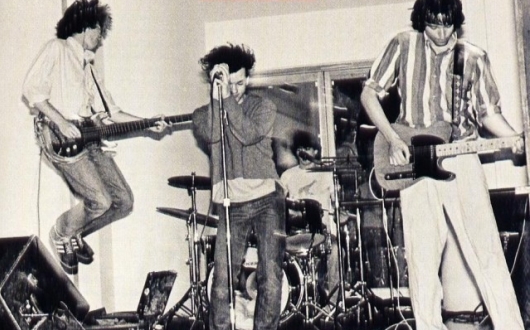
rem 83

Radio Free Europe and the band was picked up by IRS. Re-recorded and re-released, the track also kicked off side 1 on Murmur. 

REMRadio Free Europe (Murmur version)

rem irs

It was slower and less murky, perhaps on the instructions of producer Mitch Easter, but Michael’s mumblings were all over the record like the fuzz on a Georgia peach. There’s also an annoying hi-hat ‘tick tick tick’ all the way through the verses that, once heard, can never be dislodged.  The best bit is still towards the end when, on one of the final choruses, all instruments bar the beat-keeping drum drop out before returning a second later.

rem stipe

The band played it live less and less as the years grew. In fact, you can probably chart it’s appearance in set lists in direct proportion to the introduction of the mandolin in their sound. It was something of a surprise to this audience (venue unknown) in 1992 when REM played a rare version. No doubt inspired by Nirvana and their ilk who were all the rage at the time, this version is a somewhat muscled up, balls-dropped shitkicker when compared to its original form. It brings to mind the harder sound of future LP Monster. Mike Mills plays like a demon possessed on this. Thankfully Peter Buck hadn’t yet discovered the tremelo pedal that would spoil much of the upcoming LP.

REMRadio Free Europe (Live 1992)


Alternative Version, Dylanish

The Blond Waltz

Bob Dylan‘s Sad Eyed Lady Of The Lowlands is one of his very best. And with a canon of songs as rich and impressive as the one that he has casually amassed over the last 50 years, that’s really saying something. Bob Bob Shoobeedoo Wob.

Bob DylanSad Eyed Lady Of The Lowlands (Mono version)

dylan blonde outtake

It’s a love song, of course, waltzing in on a breeze of liquid organ, trademark wheezing harmonica and that thin, wild mercury sound that the Zim was eager to perfect around this time. A musical onion, it’s multi-layered, shrouded in mystery and code and jam-packed full of words and phrases I won’t even begin to pretend I understand.

It’s a straightforward paen to Sara Lowndes (Lowndes/Lowlands look quite similar, dontchathink?) who, at the time of writing it was Dylan’s wife of 6 months. If you listen to the self-explanatory ‘Sara‘ on the decade later Desire, Dylan admits that much;

Stayin’ up for days in the Chelsea Hotel

Writin’ ‘Sad Eyed Lady Of The Lowlands’ for you.”

Even this is coated in very Dylanesque ambiguities and contradictions though.

Some accounts have Bob writing the song in the studio in Nashville while his crack team of expensive sessioneers played cards and twiddled their thumbs in an adjacent room, patiently waiting for their boss to tell them the song was complete and ready to be committed to tape.

Others have insisted that the song arrived fully formed in the Chelsea Hotel and ripe for recording by the time of the Blonde On Blonde sessions.

Gonzoid speed freak Lester Bangs claims to have it on good authority that Dylan wrote the song whilst wired out of his nut on some cocktail of amphetamines or other, but then, he would say that, wouldn’t he?

Two or three half-truths don’t make the whole truth, but I’d wager the real story is an amalgamation of those accounts. What can’t be denied though is that the finished track is sprawling, majestic and epic (it fills the entire 4th side of Blonde On Blonde) and is the result of a one-take recording at 4 in the morning, Dylan’s dawn chorus for the dreamers and the doomed.

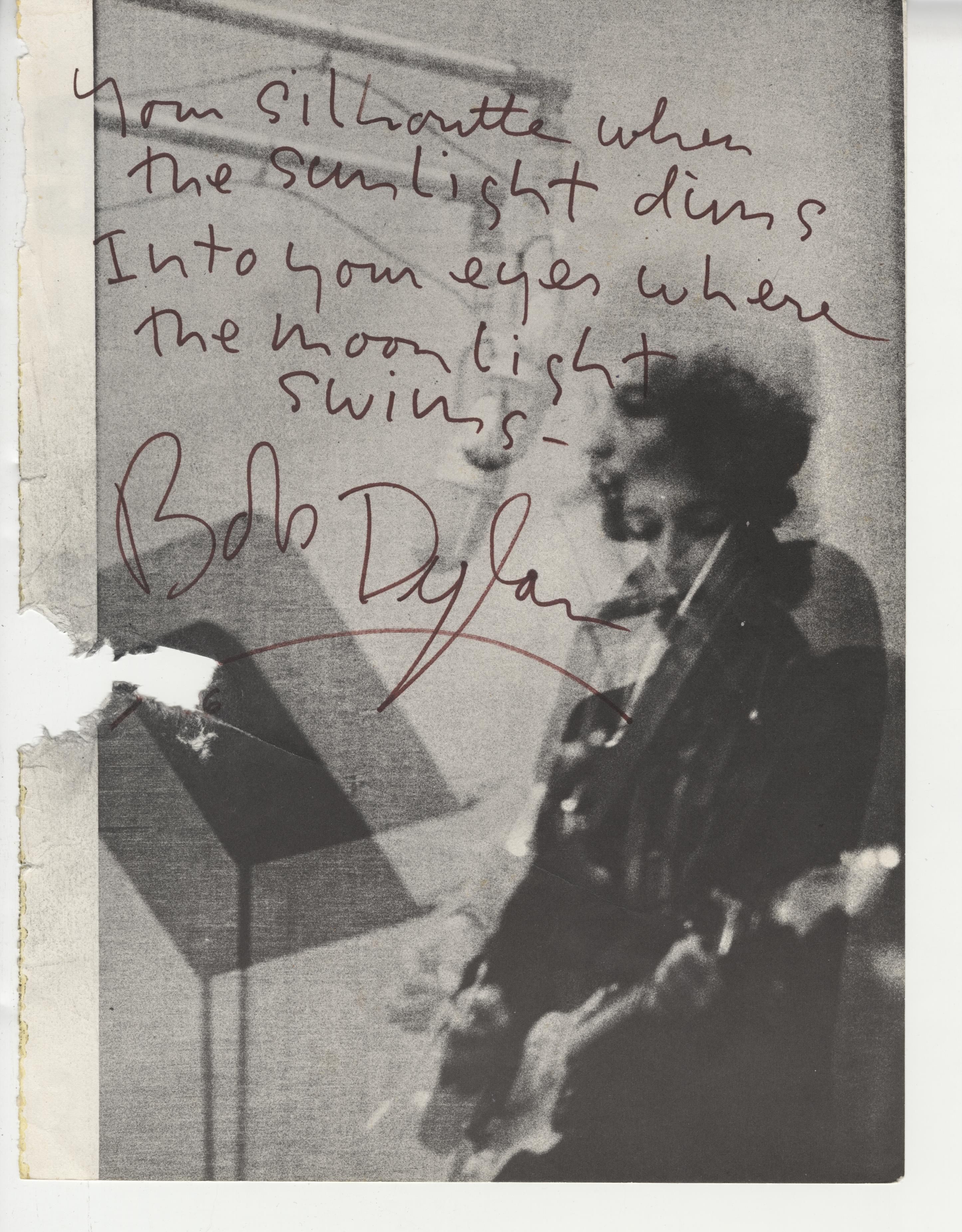
dylan sad eyed lyrics

Sad Eyed Lady Of the Lowlands has that late night/early morning feel, understated and creeping around on tip toe, as if the band are scared to hit the strings too hard and are playing quietly so as not to disturb the neighbours, with some of the chord changes coming in slightly behind the beat a result of the band listening carefully to Dylan or watching him for their cue to change.

The musicians (including Al Kooper on keys and Charlie McCoy on guitar) didn’t really know what they were in for. They hadn’t actually heard the finished song and so were understandably rather surprised to find the song clocking in at over 11 and a half minutes. With the unspoken telepathy that comes from playing with the very best of musicians, they joined the song on its journey, climaxing when the chorus came in, only to find themselves faced with verse after verse of meandering beat prose and harmonica breaks. By the 6 minute mark most were assuming the song was nearly over, which is why it builds to a crescendo on more than one occasion. Dylan must’ve had a right laugh at their expense.

dylan saraBob ‘n Sara, 1966-ish

Postscript

George Harrison was a big fan of Sad Eyed Lady… Its lilting waltz was a defining influence on The Beatles‘ under-apppreciated but eternally groovy I Me Mine……

Alternative Version, Cover Versions, demo, Gone but not forgotten, Live!

Sound Affects

The Small Faces were the perfect group; a pint-sized pocket dynamo of r’n’b and soul, windmilling guitars and swirling Hammond. They dressed the same, sported the same haircuts and were a walking, talking, living and breathing advert for Carnaby Street and Swinging London. None of the four of them stood taller than 5′ 6″ (it was the 60s, therefore imperial units of measurement counted) and were mod to the core. In the street parlance of the day, a ‘face’ was the most respected, sharpest looking mod about town. The band name wrote itself. 

small faces

With disparate roots in American blues and soul and cockney music hall (thanks in part to Steve Marriott’s training at the Italia Conti stage school), The Small Faces cooked up an original brew of heady mod pop.

As the sixties progressed and trouser legs widened, The Small Faces’ sound drifted away from the cor blimey Pearly stomp of the mid phase Faces to a more pastoral, whimsical and expansive psychedelic sound, but by 1968 the band were brought back to terra firma when Marriott penned Tin Soldier.

tin soldier 7

Small Faces  – Tin Soldier

Tin Soldier was a no quibbles return to their r’n’b roots – an off-mic count-in gives way to piano and Hammond before Marriott’s stinging electric guitar and rallying cry of “Come on!” lead into the verses. It builds and drops before building again into a wonderful crescendo of tumbling toms, grinding riffs, gritty soul adlibs and a hysterical female (PP Arnold) hell bent on raising the roof. If The Small Faces are the perfect group, this is the perfect record. If you listen really carefully, you’ll hear a little scratching noise in the background – that’s Paul Weller writing his crib notes.

Sound affects, indeed.

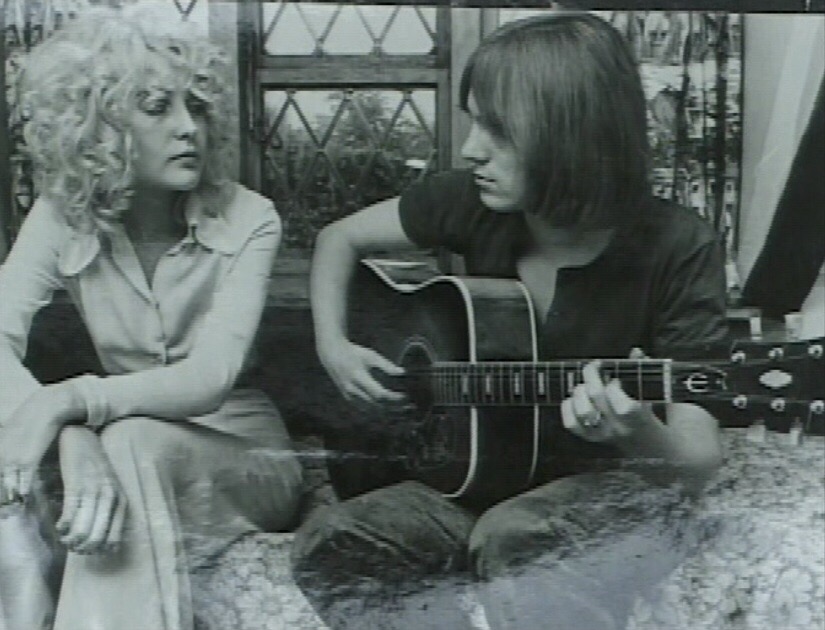
Jenny RylanceJenny Rylance. Whatever did Rod Stewart see in her?

Steve Marriott wrote Tin Soldier for the beautiful yet unattainable Jenny Rylance, a leggy model who was at the time Rod Stewart’s girlfriend. He intended to give the song to his current beau PP Arnold, but on completion, realising he’d created such a brilliant track, he gave Arnold If You Think You’re Groovy instead and kept Tin Soldier for The Small Faces. A wise move, as it turned out. When Randy Rod finished with Rylance, Marriott ended up wooing her and married her a year later. Like the Artful Dodger he once played on stage,  Marriott ended up with both the song and the girl. The perfect ending.

I usually steer clear of sticking YouTube clips in posts, but this is fantastic – a top of their game Small Faces on French telly, live vocals, mimed instruments and with a little help from a somewhat sparkled PP Arnold. Check the eyes! Oh to have seen them in concert.


* Bonus Track 1!

Here‘s a live version of Tin Soldier from Newcastle City Hall in November 1968.

I get the impression the screaming and incidental crowd noise has been mixed in afterwards to create a more ‘live’ sound, though I may be wrong. Either way it sounds like The Small Faces are playing in a cave to 20,000 appreciative ace faces, and not the sweaty box bedroom-sized r’n’b club you might’ve expected. (Newcastle City Hall being neither, as it turns out.)

* Bonus Track 2!

Here‘s PP Arnold doing If You Think You’re Groovy

pp arnold nme

Alternative Version, Get This!, Hard-to-find, Sampled

Anti Dance Music / Intae Dance Music

Back at the start of the 90s I was anti ‘dance’ music. It almost goes without saying that I liked Chic, Sly Stone, James Brown…all that kinda stuff, and I was fond of doing my rhythmically-challenged thang to In Yer Face and Voodoo Ray when no-one was watching. But on the whole, dance music, the one real alternative to indie music and chart music, the one true genre of music guaranteed to annoy parents and anyone over the age of 25 did nothing for me. Which is somewhat ironic given I was neither a parent nor a quarter centurion.

rave

Thump thump thump thump thump. Soulless and repetitive, it was a four-to-the-floor car crash with all the sex appeal of a just-landed trout from the River Irvine. Given the option, I much preferred repeat-playing the b-side of the latest Chapterhouse or 5.30 single than give in to anything of a dance bent. Quite a ridiculous choice in hindsight. But in those days, if you wanted to stay out late, it was dance music that inevitably soundtracked your night. To go home early and potentially miss out on whatever I might be missing out on, I tended to stick it out, tolerating rather than enjoying the tunes.

And then I heard this.

FSOL-PapuaNewGuinea-UK-12-Label-A

The Future Sound Of LondonPapua New Guinea

What a fantastic record! It was Future Sound Of London’s debut single and, as it turned out, one they would never better.

Here‘s a shortened version, taken from a Hacienda compilation that I like to stick on now and again while I’m cycling.

Papua New Guinea is that rare thing – an electronic dance record that’s synthetic yet soulful. It’s not just Lisa Gerrard’s skyscraping vocals (sampled from Dead Can Dance‘s ‘Dawn Of The Iconoclast‘, with thos oo-ah-oh vocals coming lock, stock and barrel from a dance track called ‘Shelter‘ by the mysterious Circuit) that go straight to the heart and it’s not just the staccato bass (sampled from Meat Beat Manifesto’s Radio Babylon, much to their displeasure) that goes straight to the feet, it’s the whole thing; the clattering breakbeat drums, the wee keyboard pings and dings, the swooshes and whooshes and the way it all drops out before revving into gear again, lead always by the ubiquitous bass and vocals.

Papua New Guinea was put together by a couple of stereotypical studio boffins (the bald one and the ponytailed one) that most folk would fail to recognise as the creators of one of the best records ever.

fsol

Everything about this record is perfect. Even Lee Mavers, the bowl-cut skiffle king of 1989 rates it as one of his most favourite records. And I bet he never cared much for what constituted ‘dance’ music much either.

Here are those constituent drum parts, sampled from Fuzzy HaskinsThe Fuzz And Da Boog and Bobby Byrd‘s Hot Pants and stuck together with invisible ambient breakbeat glue:

Fuzzy Haskins The Fuzz And Da Boog


Bobby ByrdHot Pants

A truly groundbreaking record, like most of its contemporaries it came in a multitude of re-releases and remixes. In fact, by the end of 2013, Papua New Guinea had been re-pressed and re-released over 30 times. Maybe you could download those tracks above and have a go at doing it yourself, though you’ll be hard pushed to better the original.

*Bonus Track!

Here‘s a longer, more ambient version, illegally remixed and released by Ozgur Ozkan.

Get This!, Gone but not forgotten, Hard-to-find

The Mighty Wah

Wahw-wah-wah-wahw-wah-wah-wah-wah-wahw-wahw-wahw-wah!

“Vox’s fabulous new wah-wah pedal opens the door to a variety of great new sounds!”

So says this epoch-defining trade ad from 1967. “Make your guitar grrrrowl! Make it sound like a see-tar! Listen to the funky bass guitar sounds you get!”

wah wah vox 2

Vox Wah-Wah Ad (5 minutes long and worth listening to every minute):

The wah-wah was created by happy accident, when Vox engineers got the circuitry mixed up in a new range of Beatles-inspired amps they were producing. Realising they’d just created an electronic version of the effect jazz trumpeters had pioneered in the 20s by muting their horn with a hat, they seized on the potential and began producing wah-wah pedals.

hendrix wah

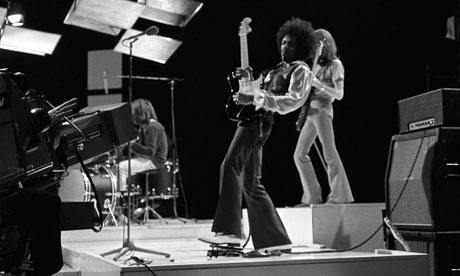
Almost immediately, guitar players saw their appeal. Jimi Hendrix was an early adopter of the effect – Up From the Skies on Axis: Bold As Love was one of the first tracks recorded with a wah-wah, and from then on in, it featured heavily in Jimi’s incendiary output. The Burning Of The Midnight Lamp, All Along The Watchtower, Voodoo Chile (of course) – all featured the screamin’ sound of the wah. There he is above, quite literally rockin’ the wah.

Before long, no self-respecting psychedelic act was without a wah-wah, and the the pedal became an integral part of the sound of the era. As a general rule of thumb, the wider the flares, the wilder the wah. The Electric Prunes even went as far as endorsing the effect.

Electric Prunes Vox Wah Wah Ad

george harrison 1970

George Harrison, newly freed from the shackles of The Beatles and with a sackful of songs he was eager to release under his own name employed Vox’s pedal on the self-explanatory Wah-Wah from 1970’s All Things Must Pass.

George HarrisonWah-Wah

It’s a cracking track, almost throwaway pop, although it maybe buckles a wee bit under the pressure of Phil Spector’s over the top production. Sleigh bells? Aye! 35 backing singers? Of course! More brass than a colliery band? Well, it is being produced by Spector. A multitude of guitar tracks?  Well, it is being played by George Harrison. The main riff is suitably Eastern-influenced, a call and response one chord groove that swaggers like Muhammad Ali in the 15th round. It soars with each key change, guitars free-forming over the top while the original riff underpins the whole thing. George even has the cheek to steal the chorus from that Vox ad at the top there. Listen again to the last 30 seconds. Who noticed?!? Kula Shaker certainly did – George’s track practically gives birth to the daft four-piece, but don’t hold that against him.  Om shanti shanti shanti.

wah wah vox

By the 70s, the wah-wah was being employed to great effect by the soul community. Curtis Mayfield….Sly Stone….The Temptations….they all had wah-heavy records out. Rather than solo, (that would be far too ‘rock’), the players created the distinctive wacka-wacka sound that’s now become the ubiquitous sound of the wah-wah. Y’know, Theme From ‘Shaft’ ‘n all that.

Temptation Dennis Edwards, far left, and cast members party at the Gordy Mansion, April 13, 1970. (Motown Record Corp.)

Here‘s the lesser-known (by Shaft standards at any rate) Psychedelic Shack from The Temptations:

Since then, the wah-wah pedal has featured on all sorts of tracks by all sorts of musicians, from Joni Mitchell and John Martyn to Metallica and The Melvins. It’s reassuring to know that in any given record collection, you’re never more than 30cm from a track featuring a wah-wah.

john squire

Here’s Fools Gold, of course….the full-length version, of course…

Stone RosesFools Gold

fools gold tab


Hard-to-find, Live!

Cook Bernard Matthews

My daughter hates Meat Is Murder, the final track on The Smiths‘ LP of the same name. The grinding slaughterhouse machines battling for ear space with distressed cows has her shouting, “TURN IT OFF!!” every time it comes on. As all good dads should do, I sometimes turn it up twice as loud and make her listen all the way to the end, which she perhaps understandably hates me for.

smiths ors

The SmithsMeat is Murder

It’s the statement that Morrissey is perhaps most well-known for, and such was his influence at the time, Meat Is Murder turned many teenagers vegetarian. It’s a brilliant track, based around Johnny Marr’s cycling Wythenshawe waltz-time riff and fleshed out (pardon the pun) on record by some understated sparkling piano work from The Smiths’ musical alchemist.

That was a riff I’d been playing around with for a few days before,” recalls Marr. “Really nasty, in open D. I didn’t know the lyrics but I knew the song was gonna be called ‘Meat Is Murder’ so it just all came together in the take.

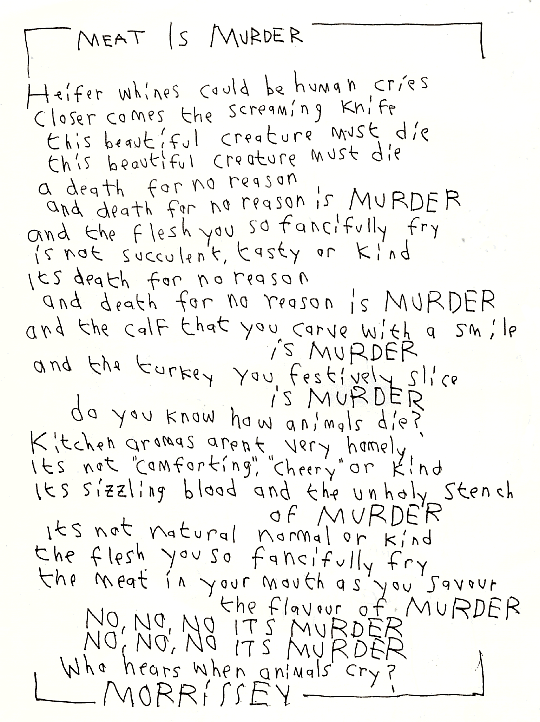
It certainly came together. Meat Is Murder favours mood over melody, and Morrissey’s lines, rhythmic, rhyming and alliterative  – ‘The meat in your mouth as you savour the flavour of murder‘ pull no punches.

meat is murder lyricsThe song was a staple of The Smiths’ live set for the next year or so, usually performed atop a tape of the abbatoir noises that so horrify my daughter. You’ll find a good version of it, recorded live by the BBC in Oxford on the b-side of the That Joke Isn’t Funny Anymore 12″.

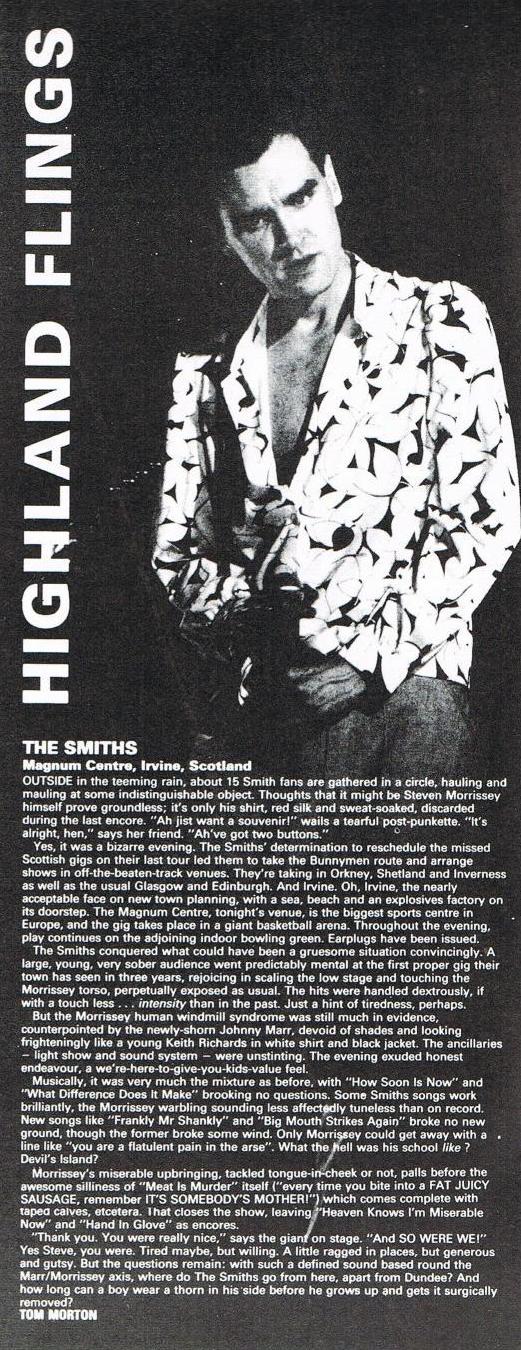
When the band played Irvine on their September ’85 tour of Scottish backwaters, Morrissey introduced it thus;

Just remember one thing, dear friends. Next time you bite into that big, fat sausage…..YOU’RE EATING SOMEBODY’S MOTHER!!

The SmithsMeat Is Murder (Irvine, 22.9.85)

I never went to this show, a fact that will haunt me until the day I die. Idiot that I was.

smiths irvine review

Playing it at the Victoria Hall in Hanley a few months earlier in March, a fan threw a string of sausages onto the stage just as the song began, smacking Morrissey on the mouth.

They hurled it so accurately that I actually bit into it in the action of singing the word ‘murder'”

Known for walking off stage at the slightest thing these days, I’m not so sure the old grump would be quite as frivolous about such an act nowadays:

no meat*Cook Bernard Matthews

This was inscribed on the run-out groove of The Smiths’ Sheila Take A Bow single. But you knew that already.

Hard-to-find

Tapes ‘n Tapes

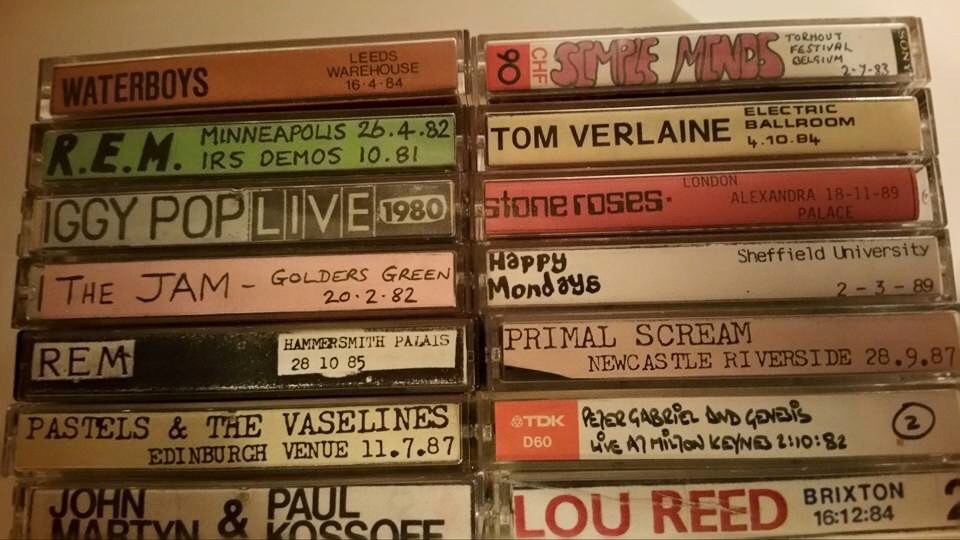
This post comes on the back of a pal’s Facebook status update at the weekend. He had been in his loft and brought down a box of tapes. Not just any tapes, but a collection of live bootleg tapes. Bought at record fairs and market stalls, under the counter in independent record shops and from the back of the music press, they were all the rage in the mid-late 80s. I had tons of them. Some of my own might also be in the loft, but I suspect I gave the better ones away and skipped the rest when I moved home a decade or so ago. Sacrilege, I know. And a wee bit stupid too.

Not Iain. He’s kept his, and there they were, proudly on display, neatly filed and cared for (out of sight in the loft, but clearly cared for), preserved in all their glory for 30+ years.


The spines, all faded primary colours and badly photocopied typeset were like a post-punk hall of fame; Wire. Josef K. The Fall. Pete Shelly (sic). The gigs, long-since faded memories, lived on in the ferrous oxide therein.

Bootleg tapes tended to come in two forms – ‘audience quality‘ or ‘excellent quality‘. ‘Audience quality‘ was exactly that. Taped on a portable dictaphone from under the lapels of a donkey jacket, they had a sound akin to the band playing underwater 60 miles away. On playback, sometimes the only clue you’d have as to the song being played would be the fevered shouts from the audience as the band played one of their biggies. Unless you’d been there though, 9 times out of 10 you couldn’t be certain that you were listening to the track in question.


My one brief foray into bootlegging began and ended with The Stone Roses. I taped their now legendary Glasgow Rooftops show, just as the band were on the cusp of going massive. Stuffed down the front of my jeans until the lights went out, my dad’s clunky old dictaphone was called into action. The wee blinking red light meant it was recording. Looking furtively to the side I noticed a guy about the same age as me looking at the machine in my hand. He nodded conspiratorially and gave me a wee thumbs up. At the end of the gig he found me and gave me his address, with a promise to send me some bootlegs in return. The Stone Roses were absolutely on fire that night, a terrific gig. I couldn’t wait to get home to play the tape.

“Pffffffffff….Sccczzzzzzzz………Adored……..vmmmmmm……..Adoooo–ooored….’Over here Steven!’……sell my soul……’Here!’……’Steven! Here!’…..skkkkkkshhhhhh…..IwannarIwannarIwannar I Wanna Be Adored……”

It sounded shite.

Sorry if it was you who gave me your address. Your memory of a great gig would’ve been ruined forever. I truly did you a favour. Home Taping Is Killing Music indeed.


A tape marked as ‘Excellent Quality‘ was nearly always misleading. This usually meant the taper had found a quiet spot away from the whirling masses, away from flying elbows and shouts for ‘Hand In Glove‘ or ‘Feeling Gravity’s Pull‘ every other song. The tape still sounded like the concert was playing underwater and 60 miles away though. And get this! It was actually a considered theory that the best way to listen to a bootleg such as this was to play it in one room while sitting in another! Imagine that! I did it, too! Listening to Dylan mangle ‘Visions Of Johanna‘ in the living room while I cooked the tea in the kitchen. Sounded great as well!


These tapes are a whole subculture, a forgotten relic from the days of yore. Young folk nowadays, with their video phones and social media and whathaveyou just wouldn’t understand the lengths you had to go to obtain a crappy memento from the best gig of your gigging life. But I bet if you’re of a certain age, they’re still great to get out and look at, and dare I say it, play them, now and again.

One of Iain’s tapes was of Magazine. Before I knew the band, before I had heard ‘Shot By Both Sides‘ and was bitten by their music, I had heard of Howard Devoto only through reading NME. He was distinctive to look at, a bit weird I thought, and not really someone whose music I presumed I’d like. I wish I hadn’t been so stubborn and narrow-minded as a teenager.


The saddest thing I have ever seen was in the Virgin Megastore on Glasgow’s Union Street. It must’ve been 1987/88. There, sat at a table in the front of the bay window and facing inwards to a crowd of no-one was Howard Devoto. He was surrounded by a sea of books and/or LPs (I can’t quite remember) that no-one wanted to buy or get signed with a personal message. He noticed me noticing him and he gave me the saddest expression – his mouth may have been upturned into a smile, but his eyes were pleading. ‘Help!’ “Me!’ ‘Now!’ Of course, I ignored him and went back to looking for the New Order section. I’ve felt bad about this to this day. I wish I’d gone up and at least said ‘Hello‘.

I’d love to think that if I ever met Howard and told him this story, he’d reply the same way he does when he makes his cameo in ‘24 Hour Party People‘ – “I have absolutely no recollection of this ever having taken place.” You never know.

Anyway, here‘s Howard and the rest of Magazine giving Sly Stone‘s ‘Thank You Falettinme Be Mice Elf Again‘ a good post-punk going over. S’all about the bass, ’bout the bass….

MagazineThank You Falletinme Be Mice Elf Again

And here‘s Sly’s original, all finger poppin’, booty shakin’, dripping, brooding funk. If you don’t like Sly there’s just no hope for you. None at all.

Sly & the Family StoneThank You Falletinme Be Mice Elf Again