Alternative Version, Get This!, Gone but not forgotten, Peel Sessions

Jukebox Dury

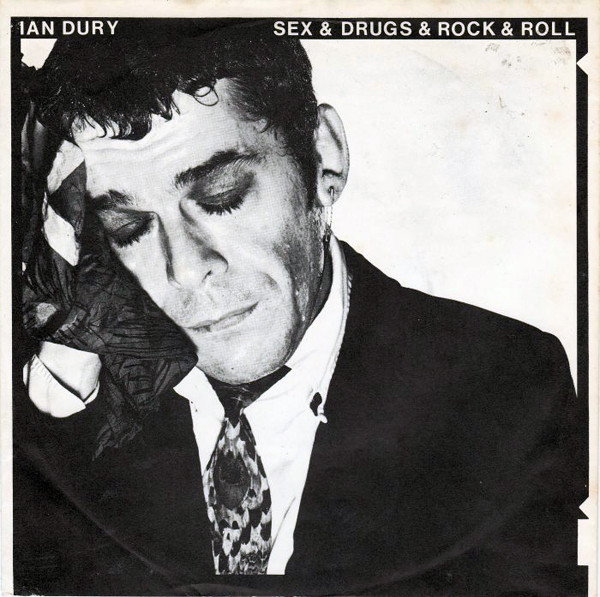
Released in 1977 at the height of Year Zero (or would this be Year1?), Ian Dury‘s Sex & Drugs & Rock & Roll was, suprisingly, not a hit. Given its familiarity, I’d always thought of it as something of a late 70s monster smash, but apparently not. Neither was it an Ian Dury & The Blockheads record. Despite both Chaz Jankel and Norman Watt-Roy playing on it, Dury’s first single was credited to him and him alone.

Ian DurySex & Drugs 7 Rock & Roll (7″ version)

The low sales can be attributed to a couple of factors: it was wrongly thought of as a celebration of everything that punk was set on destroying, as bloated and offensive perhaps as anything by The Eagles or Rod Stewart. It just wasn’t cool to be seen buying a copy. Due to its title, the record found itself on the BBC’s banned list too and, unlike the unintended consequence of appearing on such state-sponsored naughty lists (see Relax, Je t’aime et al), this time round, the banning actually worked, snuffing out any possibility of Dury having a hit single. With less than 20,000 sales and next to no airplay, it was swiftly deleted. 

Sex & Drugs & Rock & Roll opens up side two of my charity shop-rescued, ‘previously loved’ copy of New Boots And Panties. Not on the original version (Dury had a strict ‘no singles on the album’ policy), but all future pressings of the album contained the non-hit following the Bockhead’s chart success with What A Waste and Hit Me With Your Rhythm Stick. And just as well.

It’s a great tune.

The Peel Session take from a couple of years later might be even better…

Ian Dury & The BlockheadsSex & Drugs 7 Rock & Roll (Peel Session, 12.12.79)
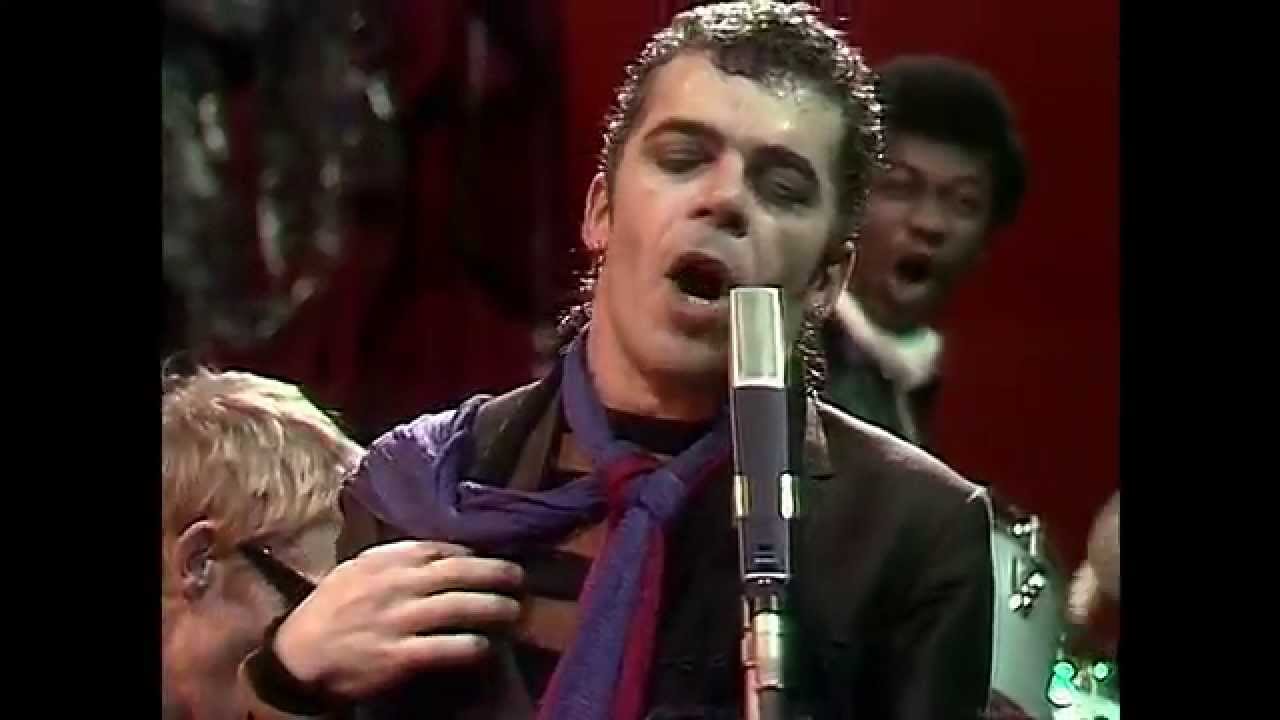
There’s a tin pot rattle of percussion and we’re off, all superfast snakehip slink guitar and a riff that’s slightly different, slightly further up the strings or frets or whatever than the single version you already know and love.

Coming a couple of years after its release, the Peel version finds the band dextrous to the point of muso, stretching out beyond the tight-trousered confines of their original take, because, well, just because they can.

Bopping along for a full minute longer than the original version, there are fruity keys on the offbeat, phased and flanged, thick and syrupy guitar in the bridge and a chittering, chattering guitar in the verse, clattering away like the false teeth on a couple of old chimney-smoking fishwives on the top deck of the number 37 up Kilburn High Road, surely an unintentional influence on those wee clang-a-langs that punctuate the singing in the verses of Orange Juice’s Rip It Up.

Then there’s the Hammond solo, a wonderful warm and cosy sound that predates Mick Talbot’s role in the Style Council by a good 36 months. Lovely stuff, all in.
It’s also a clear influence on the Merseyside Magpie himself. Lee Mavers cocked one ear at that riff and that clanging percussion and thought, ‘I’m ‘avin’ that.’ So he did.

Tha La’sCome in Come Out

And talking of Liverpool…

The Blockheads were great, great players. When Trevor Horn was constructing Relax and becoming increasingly exasperated at the technical limitations of Frankie Goes To Hollywood, he roped in The Blockheads to fix Frankie’s botched job. Not for the first time in history did a band barely play on their big hit record. I’m fairly certain you knew that already though.
 

demo, Get This!, Gone but not forgotten

Iggypedia

Raw Power, Iggy & The Stooges 3rd album, the first to be credited to Iggy and… and featuring a slightly different line-up to the late 60s version is a loud, abrasive, violent album. Danger lurks around every panther-snarled verse and every slash of razor blade guitar. It’s uneasy listening and totally essential.

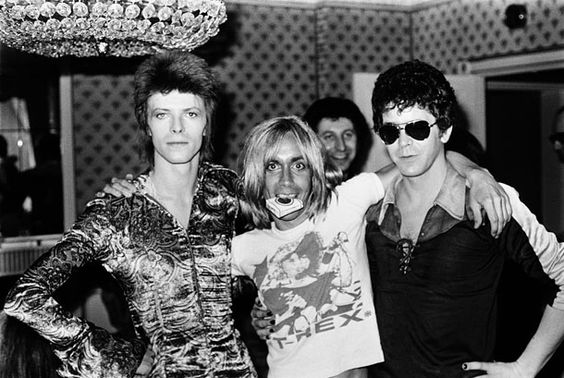
Bowie and Pop, Berlin drug buddies, relocated to Germany in a failed attempt to kick their habits and, in Bowie’s case, help kick-start his pal’s solo career. They even did so in matching outfits.

You can say what you will about the drugs, but they certainly made for prodigious times. Bowie crammed in an insane amount of work over this short period of time. His Berlin trilogy of albums with Eno notwithstanding, as well as manning the mixing desk for Iggy he regularly found time to be out on the randan with a visiting Lou Reed, a combined weight of 8 stones and a generous handful of grams.

Dave, Iggy and Lou. There’s your Berin trilogy right there.

One of the first tracks Bowie and Pop tackled was Tight Pants.

Iggy PopTight Pants

From the enthusiastic count-off and in, Tight Pants is overloaded gutterpunk blooze straight outta 1972; nagging, insistent, a proper primal scream of snakehip guitars with needles ramped round in the red.

There are Supremes handclaps perhaps, or maybe just a heavily slapped snare – it’s hard to tell from the cardboard box production – alongside riff upon riff of juddering guitar, vying for earspace with the Iggy barks and yelps, but far as garage band rockers go, it’s a whole lot of don’t-give-a-damn snarling fun, with a guitar solo in the outro that sounds like a wheezing tramp running over broken glass.

Tight Pants was eventually redone, louder, clearer, less murk and maybe perhaps less menace, renamed Shake Appeal and ended up on Raw Power, with Bowie firmly at the controls to ensure those needles (on the monitors not intravenously) stayed as far into the red as they could go.

Iggy & The StoogesShake Appeal

It’s oft-considered a sloppy production, out of step with the musical landscape of the era, but it certainly captures a proto-punk spirit that would, within a few years, be omnipresent in the underground.

Most of your favourite bands have listened to Raw Power back to front and inside out in an attempt to capture its flying majesty. James Williamson’s guitar in particular is a beautiful maelstrom of whirling feedback and ear-splitting, jagged riffing, the real star of the show in spite of Iggy’s hang-dog American drawl. Fantastic stuff. Play loud, as they might say.


Get This!, Gone but not forgotten

Make Me Up Before You Go Gio

In 1974’s embryonic form, Japan were a glam rock band. They had the peroxide and the platforms and the plastered-on foundation to prove it.

Vocalist David Batt, forever with an ear on the pulse and an eye on the future twisted his name into an approximation of the New York Doll’s Sylvain Sylvain. His guitar/keyboard playing brother Steve became Jansen in dyslexic homage to the Doll’s vocalist David Johansen. And to go with the name change, the music underwent an identity change of its own too. Out went the chipped polish sneer – check out their Adolsescent Sex single and album for proof – and in came a decadent and louche new sound, European in outlook and ice-cool in ethos. Dropping glam rock and the tail end of the second wave of punk like the lumpen crock of cack it had become, Japan instead took the stylings of Roxy Music and David Bowie and created a run of arty, obtuse and fantatstic tunes.

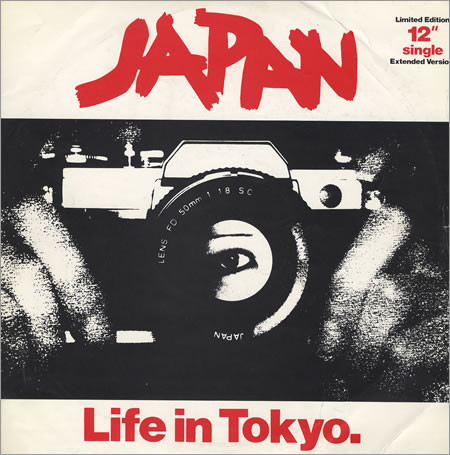
Life In Tokyo was the big one.

JapanLife In Tokyo (12″ version)

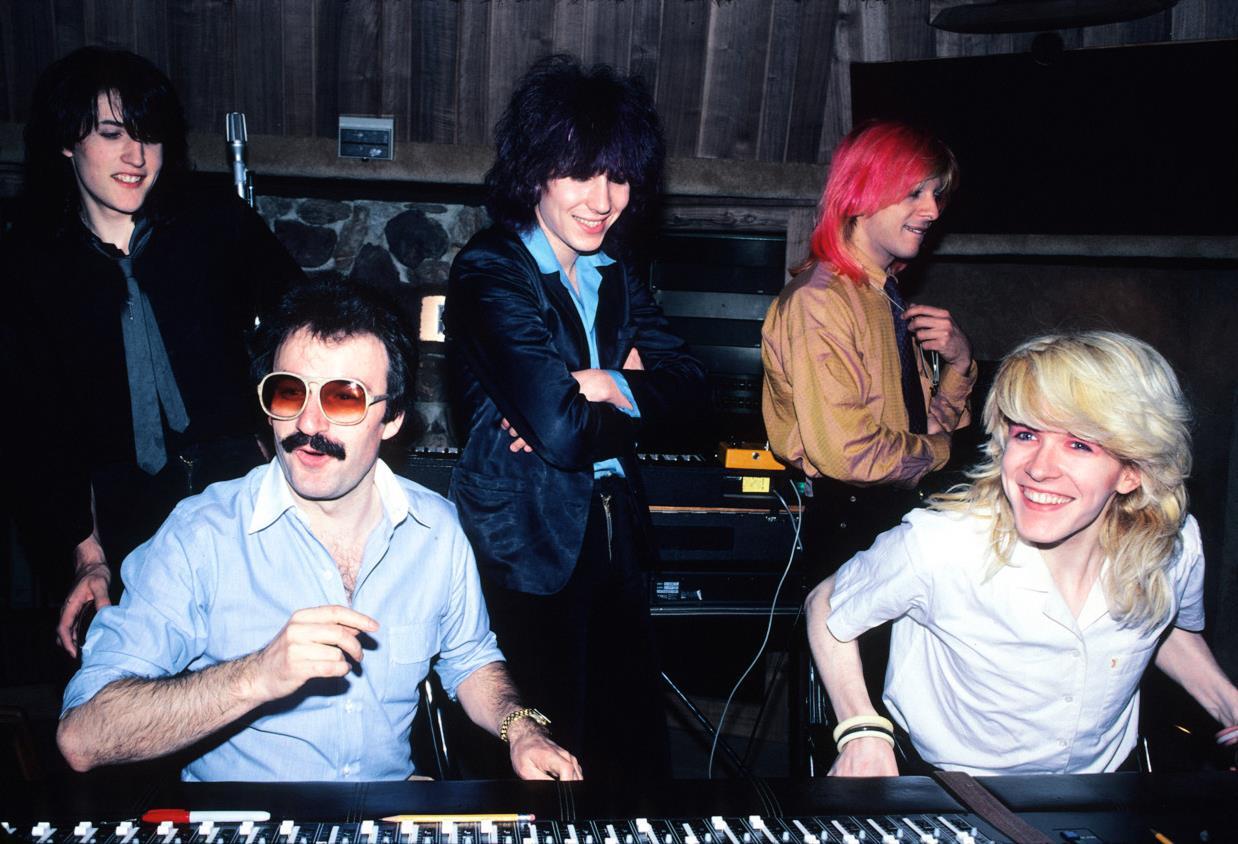
With a golden touch production courtesy of Giorgio Moroder, Life In Tokyo is the sound of cruising Jetstreams and elongated, curved aerodynamics, the decadent sound of a high society 80s that was still a year away, with helicoptering synth lines and slink-funk serpentine basslines wandering between the steady 120bpm disco beat with all the sashaying grace of a Bond girl in a Monaco casino.

Moroder got the band to play live in the studio, deconstructed it and then added his magic touch. Chrome and mirrored synth washes, spacey and linear, horizontal and widescreen, percussive pulsing with blasts of Mini Moog… a production as razor sharp as the cheekbones and jawlines on its principal players, Life In Tokyo is something of a masterpiece. 

Sylvian’s vocals, yawning yet urgent, are the finishing touch, pitched somewhere between Roxy’s vocalist and the Thin White Duke but instantly recognisable as Sylvian in his own right. Hero worship, yet true to himself.

He might’ve had the hair and complexion that Lady Di would, er, die for, but crucially his style transferred to record. He sounds as he looks. As it spins, you can almost picture him in baggy, high-waisted Bowie breeks, a wee thin microphone held at 270 degrees and a flash of blue eye shadow beneath a blow-dried fringe of Pearl Platinum.

It’s a great record.

That 12″ version above goes on for maybe a wee bit too long, but it’s noticeable for the background noises halfway through that you’ll maybe only spot after 2 or 3 closely-monitored plays.

It isn’t, as Moroder would want you to believe, the bleeding of the track’s reference pulse, and isn’t actually the sound of David Sylvian applying another layer of Elnett either (that’s the hi-hat you’re mishearing). It is in fact Nick Rhodes and the rest of Duran Duran frantically firing up the synthesizers and cribbing notes on how to have a glamorous-sounding hit single. Felt fedoras off to them too, for they made a good fist of it, and the rest. You knew that already though.


Get This!, Gone but not forgotten

14

The record books show that this week Plain Or Pan turns 14. That’s about 800 articles and a whole lot of words on a whole lot of music that a whole lot of people have never read. If you’re a regular, please accept 14 years worth of thanks for adding to the wee electronic turnstile on the side there every time you visit. If you’re relatively new, welcome! Hopefully you’ll stick around.

Wonder Y by A Certain Ratio has been spinning regularly over the past few days. If you’re a neighbour you’ve probably heard its faint thump permeate your personal space. As you disentangle the Christmas lights from your garage guttering and wrestle the real tree out to the bins, that supersmooth fluid groove that you can hear pulsing through my living room wall is the very tune. You might even have caught me sillhouetted behind the blind on New Year’s Eve as my hips succumbed to its bubbling funk and forced me into some sort of spasmodic movement you’d have the nerve to call a dance. Great tune, innit? 

A Certain RatioWonder Y

In the grand, expansive and eminently investigatable ACR discography, Wonder Y and its parent album, Up In Downsville, signifed the band’s era-defining move from clattering, industrial, grey-painted post-punk funk (Joy Division with better clothes, to slightly misquote Tony Wilson) to the smoother-edged, electronically driven and chemically enhanced variant.

If it were a picture, early ACR would look like the jagged peaks of the Alps. By 1992, their sound was as smooth and rolling as the landscapes of Ibiza. Sequencers and samplers take prominence over scratchy guitars. Relaxed, whispered vocals replace urgent shouty ones. The bass is more rounded, less an assault weapon and more a rhythmic dictator. The jerky elbows and awkward jut of the 80s ACR have relaxed and grown into themselves. It’s a good look.

Wonder Y takes its lead from a spoken word sample and a Kraftwerk-inspired rippling rhythm, electronic stones making concentric circles when flung into rivers of fluid mercury, and floats off downstream from there. It’s a cracker.

ACR is joined on Wonder Y by the much-loved and instantly recognisable Denise Johnson. One of the defining voices of the Manchester music scene, Denise finds her spot in the track and surfs across the top, breathy and low one moment, skyscraping and divaesque the next.

By the time Wonder Y is halfway through, man and machine are as one, melded and welded together in holy head-nodding abandon. With Denise gradually taking control of vocal duties, the track is propelled further out into the stratosphere, its analogue bubbles and synth washes, keyboard stabs and nagging, three note bass giving it the auditory appearance of a long-lost melted remix of Primal Scream’s Don’t Fight It, Feel It. Joy and precision in better clothes, perhaps.

Football, Gone but not forgotten

Jesus Is Just A Spanish Boy’s Name

Hearts and Celtic go head to head this weekend in last season’s delayed Scottish Cup Final, a game that both teams will want to win but one that neither probably expected to manifest.

Hearts, currently plying their trade in tier two (to coin a contemporary phrase) could do with the win, as could Celtic, for so long the dominant force in Scottish football but now a club where the manager’s jacket hangs on a decidedly shoogly-looking peg. A cup win might go some way to thwart off the vultures (and Green Brigade) who are currently gathering with furrowed brow and thunderous, entitled fury outside Celtic Park. I’m neither Celtic nor Hearts-minded (nor do I have an affiliation to the other hairy arsed Glasgow cheek of Scottish football) so while I won’t lose any sleep over who wins and who loses, I’ll maybe crack a wry smile should a maroon ribbon be tied around the cup come full time.

The real winners of Sunday’s final won’t be the happy set of supporters, or a relieved management team, or a grateful chairperson and boardroom. The real winners will be Tiny Changes, the charity formed in the wake of Frightened Rabbit‘s Scott Hutchison’s death a couple of years ago.

Named after a line in the band’s ‘Heads Roll Off’ – “While I’m alive, I’ll make tiny changes to Earth” – the line become something of a mission statement for fans in the days and weeks following the singer’s death.

Frightened RabbitHeads Roll Off

Initially launched in the Scottish Borders where the band began, Tiny Changes provides support and early intervention to young minds struggling to cope with life across Scotland.

Clearly, in an age when mental health in young people, and men in particular, can lead to the most drastic of outcomes, it’s a very worthwhile charity.

Scott Hutchsion was a lifelong Jambo, even singing The Hearts Song at the opening of the new main stand at Tynecastle three seasons ago, and the club have honoured him in the most spectacular of ways.

As they did in the semi-final – after first petitioning the reluctant dinosaurs and decision-makers who make up the Scottish Football Association – Hearts have once again teamed up with Bands FC to produce a bespoke run of warm-up shirts that the players will wear ahead of the kick off. Featuring a Frightened Rabbits-inspired club crest against the famous maroon shirt, it’s a unique football/music crossover.

Players’ jerseys from the semi-final were auctioned off after the game and all monies  – almost £35,000  – donated to Tiny Changes. Likewise, the same will happen following the final. Some serious money – especially if Hearts run out winners – will be going to a small charity with big intentions. What a brilliant thing to happen.

Click to donate to Tiny Changes
Cover Versions, Gone but not forgotten, Peel Sessions

Turn The Heater On

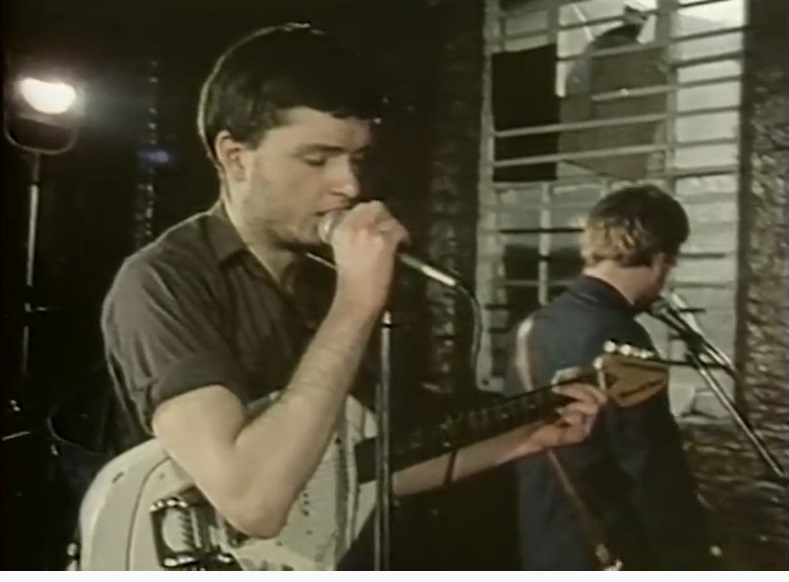
You know that timeless footage of Joy Division in their rehearsal space, when they play Love Will Tear Us Apart; Ian Curtis with the Vox Phantom Teardrop worn almost at his Adam’s apple, Bernard channeling his inner Kraftwerk, Hooky, low-slung and serious and Stephen, tongue out in maximum concentration over his hi-hats? ‘Course you do.

It was filmed in TJ Davidson’s rehearsal rooms, a converted Victorian mill on Little Peter Street, the third point of a triangle that’s formed if you draw lines between the rehearsal space and Salford and Prestwich. Like the mystical, musical ley lines that so hypnotised Bill Drummond just over the Pennines in Liverpool, you might come to the conclusion that there’s something in that cosmic hippy shit after all.  Between them, Salford, Prestwich and those rehearsal rooms on Little Peter Street have been responsible for creating some of the best music we will ever hear. But you knew that already.

British singer Ian Curtis and guitarist Bernard Sumner of post punk band, Joy Division, at TJ Davidson’s rehearsal room, Little Peter Street, Manchester, August 19, 1979. photographer: Kevin Cummins

That room didn’t half look cold though. Long, bare floorboards, damp red brick walls and a worryingly bowed ceiling, it looks a less than inspiring place. It’s got a certain feel to it, of that there’s no doubt, but I’d imagine it might take many a band a good wee while to warm up to room temperature and start producing the goods in there. Maybe, now I think about it, that’s why Ian’s hand is permanently frozen in that G chord position while he wears the guitar.

The others gamely play on, heating the blood and warming the heart, despite the subject matter in the song. While a youthful Morris lays down his signature sound with all the mechanical precision of an industrial revolution stamping machine, Hooky’s bass reflects the damp sheen from the walls, a nice metaphor for the icy keyboard lines glistening over the top. Suffering for their art, Joy Division created a piece of music that will still resonate 100 years from now.

A couple of years later, when Joy Division had become New Order, the band found themselves recording a Peel Session. In tribute to their late vocalist, the band chose to play a cover of Keith Hudson‘s Turn The Heater On. While Ian Curtis was said to be a huge fan of the roots reggae track, I like to think that the others perhaps thought back to those freezing days at TJ Davidson’s and, with a nod and a wink, set about recording their own version.

New Order Turn The Heater On (Peel Session 1st June 1982)

I’d no idea until much later on that the track was a cover version.

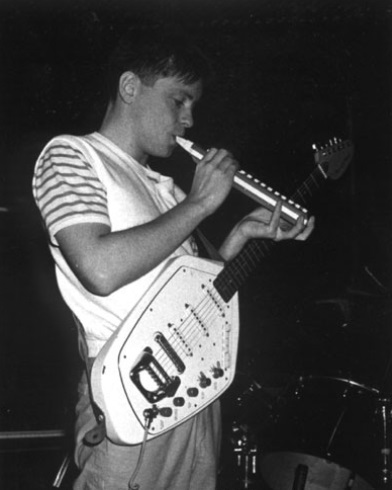
It fits that early New Order aesthetic perfectly, coming as it does midway between the glacial thaw of Movement and the spring bloom of Power, Corruption and Lies. Sad, far-away vocals, sparse, polyrhythmic drums and a mesmeric chicka-chicka head-nodding dubby exterior, what’s, as they say, not to like? The icing on the cake is the addition of the mournful melodica, gasping and wheezing the long notes, the saddest traffic jam you’ve ever heard, burrowing its way into your brain before taking up camp long after the track has spun to its conclusion. Is that why they call it an earworm?

As it turns out, if you leave the melodica aside (something Bernard had difficulty doing in 1982), New Order’s version is fairly faithful to the original.

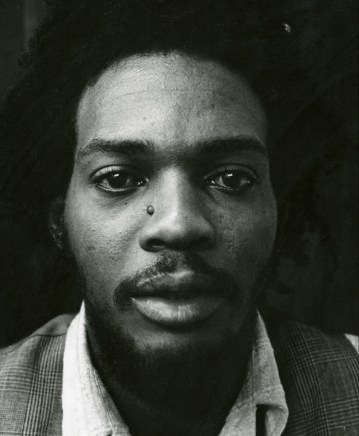
Keith HudsonTurn The Heater On

Recorded in 1975, Turn The Heater On is classic reggae; clipped guitars, thundering bass and squeaky organ vamps, topped of by a gently soulful vocal. I’ve a feeling too that while New Order might have been requesting that you do indeed turn the heater on, Keith Hudson may have been requesting a blast of heat from a different source. Perhaps not though.

It’s a great track, one I’m grateful to New Order for pointing me in the direction of. Played back to back with New Order’s reverential cover, they make for great late autumn/early winter listening. Turn the heater on, indeed.

Get This!, Gone but not forgotten

Got Scott?

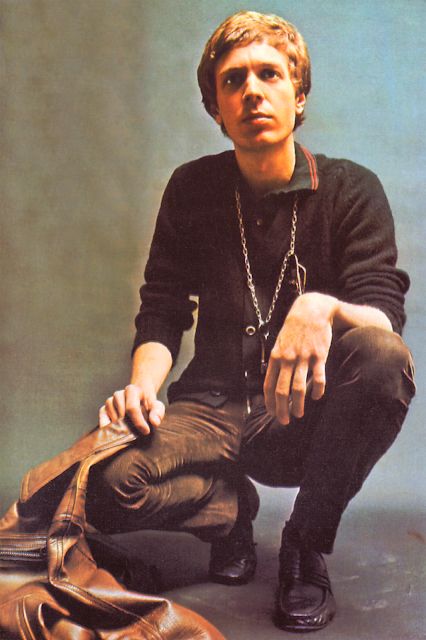
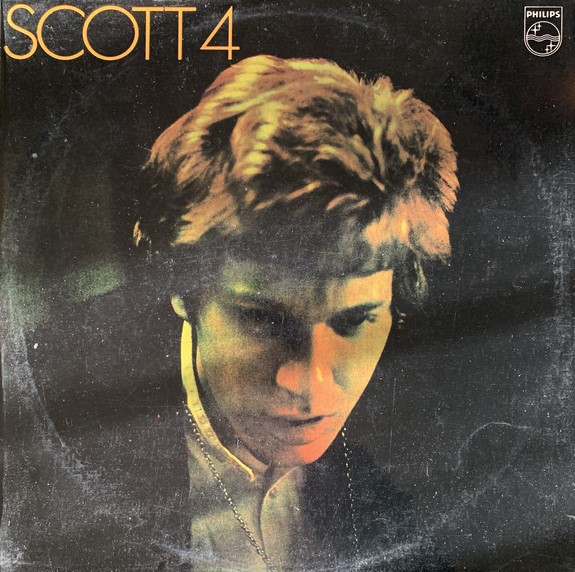
Aw man. Scott 4. A magic album slowly soaked in pathos and regret and towel-dried with inventive orchestration and outlandish arrangements. I’ve played it many a time, my old set of mp3s unearthed at the advent of broadband when the darkest corners of the internet begat a never-ending flow of everything one could ever need and plenty more besides.

I don’t have a copy. It’s easy enough to get of course, but I don’t want any old version, half-speed remastered or otherwise. It’s got to be an original ’69 copy, spinning in cavernous, timeless mono, its silver Philips label reflecting the handsome majesty of its creator on the gatefold sleeve. I keep looking, but those eyewatering prices don’t ever seem to drop. There is though a narrow space for it on the shelf next to those first three eponymous albums and one day it shall rest easy right there.

Scott 4 was the first album of all-original Scott Walker material. It was a commercial flop at the time, blamed partly on the fact Walker insisted it be promoted as a Scott Engel album, but more than likely it sank and was unceremoniously deleted due to the ‘pop’ climate of the time.

One-time teen idols didn’t release flamenco-tinged, brass ‘n string swept torch songs, especially not at the tail end of a decade where guitar solos, in direct proportion to the guitarists’ hair, were becoming longer and more outlandish with each release. As swinging London turned an autumnal burnt umber, Walker’s music was perfect, poignant and peerless, but it ultimately done for him.

Its influence is, naturally, immense. You’ll hear its echoes in the unexpected chord changes and deeper grooves of any Michael Head record. Marc Almond appropriated much of its tragedy, hammed it up and built a career around it. Bowie nicked his baritone. Leonard Cohen pickpocketed the wordy couplets and female harmonies. You could ask any number of your favourite artists and most of them would enthuse well into the wee small hours about the super soaraway Scott 4.

Scott WalkerThe Old Man’s Back Again

The Old Man’s Back Again is an extraordinary piece of music. In three and a half minutes, it takes on nylon-stringed acoustic guitars, wordless Gregorian chanting and a lyric about the repressive Czech government and melds it into a brooding piece of immense, orchestral art-funk.

The voice – we’ll get to that in a minute – takes centre stage, but its surrounded by the most disparate of collective parts. It’s the bassline you’ll notice first. An on-the-one groove, all frugging Fender, woody tone and rubbery stretch, it’s rumoured that the player is none other than Engel himself.

A veteran of the pre-Walker Brothers studio session scene, the young Scott proved to be no slouch across four strings and if the playing is indeed him, then he’s just gone up another 20 notches in my estimations. Rattling and rolling alongside the anonymous loose-limbed jazzer on the drums, it very much creates the sort of rhythm that forced Serge Gainsbourg to cock an ear, put down the Gauloises and get to work on what would become his Histoire de Melody Nelson album.

The case for the prosecution of Serge is further strengthened by the addition of a shimmering string section. Likely the work of Philips’ arranger du jour Ivor Raymonde, the strings – freeflowing and wild – give the whole thing a cinematic ambience, a feel that’s enhanced when those uhming and ahing backing vocals come creeping in from somewhere below Walker’s waistline.

Sensational stuff, and bang in the middle is the voice, as golden as its singer’s hair and effortlessly in tune. It’s the phrasing. And the pitch. And the tone. Walker’s range on The Old Man’s Back Again is actually fairly narrow, but the control he has over his singing as he tells a tale that could well have fallen from the page of a Tolstoy short story is quite the thing. Many will try, but on this form, no-one comes close. Or likely ever will. His vocal on Duchess is maybe even better. Go and find it..

Full fat voice, chicken-skinny legs


Cover Versions, Get This!, Gone but not forgotten, Hard-to-find, Sampled

Rasta-Far-Out

The ghosting season is upon us, the one time of year I truly despise. I hated it as a child. I hated it as a parent when my kids were young enough to participate. I just hate it. The dressing up… the greediness… those creeping Americanisms of going trick or treating for candy around cobweb-frosted front doors and plastic gravestone-enhanced gardens can do one.

Amazingly, brilliantly – God bless ye, Covid – this year there’ll be no drip-nosed grubbers standing at my door in their various states of grotesqueness, reeling off the same combination of tired and/or risque jokes (Q. ‘What’s the difference between the tyres on my dad’s car and a blonde?‘ A. ‘A blonde will go down quicker than my dad’s tyres.’) in return for a handful of Haribo and a “have you told your mum that joke?” telling-off from me. The wee girl who first let slip that horrorshow of a party piece four or five years ago, and every year since, might finally stop telling it for good now.

Anyway.

Reggae.

Bob Marley‘s Mr Brown is one of his earliest recordings, dating back to 1970. It just so happens to be a ghost song, written in response to local legend that told of a duppy/ghost that could be seen hurtling across Jamaica late at night on a three-wheeled coffin. Perched atop the coffin alongside the ghost were three crows, one of which could talk. The talking crow would repeatedly ask for a Mr Brown. If you ever saw this hideous and creepy apparition, the story went, then RUN!, because you didn’t have long left on this earth. 

Bob Marley & The (Wailing) WailersMr Brown

The tune itself is a gently lilting three chord skank, played at relaxed pace and featuring some sweet falsetto backing vocals. Guitars and keys lock the rhythm and never deviate, allowing Marley to tell the story of the out of control ghost-driven coffin and the talking crow. Not yer average subject matter, and all the better for it.

Mr Brown was produced by the ubiquitous Lee Perry. Lee Perry is synonymous with reggae. The more dubified the music, the more prominent his involvement. His blunted, mercurial touch has been applied to literally thousands of records from Jamaica and beyond, fried at the edges and sprinkled with madness but beating with a heart of thunderclapping echoes and cavernous bass.

As I get older, I’ve begun to appreciate his more outré work in much the same way age has allowed me to appreciate a fine malt. Slightly unpalatable at first, you quickly develop a taste and ponder how you could go an evening without it.

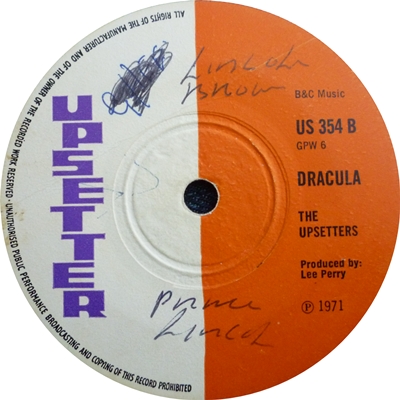
Playing around with the Wailers’ track, Perry removed the vocals, credited the instrumental to The Upsetters and manouevered it onto the flip side of the Wailers’ single. In keeping with the original’s ghostly/horror theme, it was given the title of Dracula.

The UpsettersDracula

I don’t for a second think that Bob, Bunny and Peter sat around in rehearsal saying, y’know what….what this tune really needs is a funky, alien vibration every now and again. That ever-present deep electronic shimmer that sounds like the ancient central heating pipes in a school I used to teach in was clearly the madcap work of Lee Perry. Half a century later, it’s that sound that’s become the record’s signature.

Removing Marley’s vocals also allowed Perry the opportunity to incorporate the instrumental version into his soundsystem and toast across the top of it should he fancy doing so. Forever forward-thinking.

Eco-aware long before there was such a thing, Lee Perry not only grew his own herbs, he recycled tunes for his own benefit. In a burst of foresighted creativity, and long before many a future hip-hopper or soundscaper was out of short trousers, Perry actually sampled the vibe from another record entirely and enhanced the Wailers’ and, subsequently, his own tune.

Jackie MittooPeenie Wallie

He’s lowered the pitch, from toe-tapping shuffling ska to head-nodding deep-fried reggae, but you can hear exactly where Perry welded the backing track onto the Wailers’ own easy skanking shuffle, enhancing and filling out what is a fairly straightforward run through by a band still finding their musical feet.

The track’s title – Peenie Wallie – intrigues me. Here in Scotland, if someone is unwell, pale faced, or indeed ghost-faced, we refer to them as peelie wallie. Not a million miles away from the Jackie Mittoo title. I’ve often thought the owner of Studio One might’ve been referring to such a person, albeit in slightly interpolated form. Which of course, would bring us back onto the subject of pale-faced make-up and ghouls and ghosts.

*Bonus Track!

“And for our next track….!”

Bob Marley & The WailersDuppy Conqueror

Bob and the Wailers went on to record an ‘answer record’ to Mr Brown, the self-explanatory Duppy Conqueror. Proving that there’s great mileage in reggae, it too used a variation of the same backing track as Mr Brown.

Poke your nose in and you’ll discover that reggae is full of wonderful, recycled tunes. You knew that already though.


Get This!, Gone but not forgotten

It’s A Topper

The whole of The Clash‘s Sandinista! might be almost too much to take for the first 40 years of listening, but one day you’ll wake up and it’ll all make perfect sense. It’s an exhaustive listen, a triple album that cliché would have you believe would be better off trimmed to a double, but it’s great precisely because it’s so sprawling and genre-hopping: dub reggae, punk rock, soul, rockabilly, whacked-out proto hip-hop, stadium-sized riffage, Clashified covers of Mose Allison, the Equals and The Clash themselves (how meta, the hipsters might say today)…. you name it, Sandinista! has it all.

Side 1 of 6 sets the entire stall out, spinning wildly through the perennially groovy Magnificent Seven and the take-it-to-church Supremes stomp of Hitsville U.K. via Junco Partner‘s head-nodding roots reggae before alighting on Ivan Meets G.I. Joe.

Ivan… comes at you like a rush of hot dusty, musty air from out of the westbound tunnel at Ladbroke Grove underground station, a clattering, echoing, rattling racket that arrives suddenly, hangs about for a prime-time 3 minutes then rushes off again, a blown-up trail of what the fuck was that? left in its wake. Four songs in and The Clash have merged more ideas and genres than most bands would dare to tackle in a lifetime.

The ClashIvan Meets G.I. Joe

A fantastically-arranged track and surely a blueprint for the future Rock The Casbah, Ivan Meets G.I. Joe is a Cold War dance-off that predates Frankie’s Two Tribes by a good three and a half years. Where Frankie revelled in the fight, The Clash suggest the two superpowers might be better off hitting the dancefloor than one another. The entire track is smothered in added bleeps and whooshes, Howitzer explosions and rapid-fire machine gun fire. It’s certainly dance music Jim, just not as we know it.

Joe Strummer may have written the vast majority of the words, but it’s the drummer that this track really belongs to. Arranged by Topper Headon, he incorporates pounding piano, a juddering brass section and a tight-but-loose disco drum beat that showcases his talents. In concert, the track afforded Topper his Ringo moment, the spotlight leaving the other three to jump about in the shadows for the duration. Y’can say what y’like about Topper, but you won’t hear many bad words about Ivan Meets G.I. Joe.

Forever principled, The Clash eschewed individual songwriting credits on Sandinista! Lower royalty payments would allow them to sell the album at a fan-friendly price and despite pressure from those at CBS, they were adamant that the entirety of the album they’d presented would be the album that was released. Turning money into rebellion (!) they gave up all royalties on the first 200,000 copies sold, enabling the six sided album to be sold for not much more than the price of a standard LP. Can you imagine any act suggesting this nowadays?! (Can you imagine (m)any acts selling 200,000 albums nowadays?)

Get This!, Gone but not forgotten

Lookin’ At You, Kid

There’s nary a wasted line on The PretendersKid. Lean and low-fat yet packed full of melody and mood, it still sounds out-of-the-box fresh 41 years later. Riding along on a breeze of glistening, chiming, ringing guitars, it’s a heady amalgam of countryish punky jangle and street-sussed Chrissie Hynde sass. Listen as you read, won’t you?

The PretendersKid

It’s the guitar riff that makes it, of course, James Honeyman-Scott taking his guitar for a twangin’ walk up and down the frets; bending, sliding, hammering on and pulling off one of new wave’s greatest guitar lines.

He takes a back seat during the singing, happy to answer Chrissie’s softly crooned, conversational vocals with lovely thick tremeloed chords between the gaps. First chance he gets though, and he’s back to a reprise of that riff. After the second verse there’s a crashing, tumbling middle eight before the whole band sets him up for the solo. And what a solo!

In just a dozen seconds, Honeyman-Scott fires off the perfect musical interlude. He’s further up the frets now, not too high – certainly not as high as those other uncultured guitar stranglers and string manglers who aim for the 15th fret and leap off from there – and his guitar rattles and rolls with a Mr Sheen-like Byrdsian jangle, all slurry pull-offs and bending 3rd strings, before finishing off on an audacious and perfectly executed pinging harmonic.

With little time to catch breath we’re back into the breakdown where the band drops out save for some thumping toms and accompanying bass. A high in the mix jud-jud-juddering Townshendesque acoustic chord signifies we’re on the run home. The jangle is free-form now, the band loosening their collective collar and undoing the top button of their super-tight jeans, relaxing into the multi-layered silvery mercurial brew they’ve created out of thin air as Chrissie reprises the chorus and Honeyman-Scott plays another sublime variation of the solo.

The engineer or producer or whoever it was who thought it was a good idea to fade him/them out needs their stoopid head examined, they really do. Three minutes of post-punk new wave pop joy undoubtedly deserved to stretch its skinny legs for a good half minute more, even if that meant taking it, like Chrissie’s fringe, to just about beyond the considered optimum length. I doubt anyone would’ve complained.

Flashy without being arrogant, the guitar playing on Kid is something that, given equal measures of practice and patience, any dedicated guitar player could work their way up to replicating. Just ask that other king o’ the six string, Johnny Marr…