Get This!, New! Now!

Homespun

Last year’s lockdown may have meant a temporary end to live music, but it enabled Trashcan Sinatras‘ songwriting bass player Davy Hughes to team up with his artist wife Maree to create a four track audio-visual EP, as pleasing on the ears as it is to the eyes. Part crowd-sourced and part-funded by Creative Scotland, the Homespun EP has just been released. It’s quirky, atmospheric and filmic, with multi-layered stop-frame animation videos featuring butterflies and birds, dragonflies and all of nature’s delights providing the visual wallpaper for the glossy sheen of music that plays in the background, or foreground (depending on where you sit on the audio or visual learner see-saw).

Part ambient filmscore for some imagined film and part pulsing melodic electro, at least two of the four tracks feature moonlighting Trashcans as well as Eddi Reader, her voice instantly recognisable despite the musical accompaniment sounding quite unlike the instrumentation that normally plays behind her.

Opener I Don’t Know What’s Going On (I Only Know It’s All Gone Wrong Again) is the greatest track Public Service Broadcasting hasn’t yet recorded. Carried by a plummy-voiced sample that repeats the title throughout, it glides on linear synth pulses and post-punk guitars, keyboard swells and tingaling percussion. The accompanying video features much of Maree’s signature art; felt people, leaves and flowers, fluttering creatures in flight… an audible and auditory trip.

It’s the middle two tracks that I reckon will appeal most to fans of the Trashcan Sinatras.

Sea Made is the missing link between Talk Talk and the Blue Nile that you never knew you were looking for. Ambient and gyroscopic, it eases itself in gently, wafted along by tinkling keys and the sampled autumnal breeze from Irvine harbour. Frank’s voice is sleepy and mellow, the perfect foil to Eddi’s octave-surfing harmonies. With a multi-coloured video featuring sea creatures, scooners and some backwards spelling, it’s quite the package.

Can You Hear Me? is all understated minimal techno; vibrating electro bass, sparse percussion, programmed and processed beats, on top of which the Trashcans’ Frank sleepwalks his way through a beauty of a duet with his ghostly-voiced sister, half hidden in the shadowy background.

Do.

You.

See Me?

Can.

You.

Hear Me?

Huge, wobbly, tremeloed guitars add dollops of colour to the proceedings, little arpeggios and long notes that burn off out into the ether bringing to mind the more ethereal moments in the Trashcans’ forever-underrated back catalogue. It’s a quiet, slow-building beauty that, after half a dozen plays, unravels and reveals itself to be a work of melodic, atmospheric genius. It’s music for space travel, Jim, but not as we know it.

Closer Made Up Story features a slightly sinister video, with reflected impish creatures giving the effect of multiple Rorschach inkblots that give way to a cut-out girl who seems to fall forever until the track’s end. Vocal-less, Made Up Story features a repeating bass riff and an airy high-up-the-keys hook that bring to mind any number of those old early ’90s electronic records. Papua New Guinea, Yeke Yeke, Chime… you get the idea, but unwinding, slowed down to flotation tank levels of urgency. 

As an EP and as a visual medium, Homespun urges you to slow down, take a breath, reset. It’s pretty great.

You can support the arts and buy the EP at the Homespun Bandcamp page here. All profits will go to Irvine-based music charity Freckfest.


Get This!

Brains and LeBron

I know zilch about basketball. I know the players are eighteen feet tall in their bare feet. I know they can shoot hoops cleanly from half a mile away without either the use of the backboard or the ball ruffling the interior sides of the net as it registers three points to the shooter. I know Michael Jordan – number 23, I believe – got very rich off of a particular brand of Nike sneaker training shoe and that, aside from watching the Beastie Boys play two-on-one, the Harlem Globetrotters are by far the most dazzling team to watch. I also know that when they list the scores – eg Lakers 124 v 118 Celtics, the match in question was played at the home of the team listed second, which is just daft. So yes, I know zilch about basketball. I’m much more of a football guy. And that’s Scottish football, not yer American variation. Ask me anything about a provincial team’s perennial benchwarmers or just how shoogly the manager’s jacket is at any of the lower league teams come Easter time, and I’m yer man. But basketball, or to be exact, the regular actions of one of its more prominent players, was the stimulus for one of the modern era’s greatest tracks.

Anderson .PaakKing James

For a short second, those of us in the west of Scotland and select other provinces could be forgiven for doing a double take at the title of the track in the spotlight. Here and elsewhere, King James has very different historical connotations, all of them involving battles on white horses and all of them bigoted, religion-fuelled and best-kept in the knuckle-dragging past.

The King James in .Paak’s track (and while we’re on the subject of daftness, what’s that rogue dot all about?) refers to LA Lakers’ LeBron James – also, coincidentally, number 23 – and his ceaseless championing of America’s black community, his outspoken anger at trigger-happy policing and the tireless charity work he carries out to help the oppressed, the marginalised and the disenfranchised.

(Photo by Kevin C. Cox/Getty Images)

James follows in the footsteps of quarterback Colin Kaepernick. A football player (US variety) with the San Francisco 49ers, he began in 2016 to kneel during the national anthem – a protest – what’s so great about America, eh? – at the regular and ongoing social injustice and police brutality of African-Americans. Kaepernick wouldn’t play in the game for much longer. His actions polarised America. Donald Trump battered in as only thick bigots can by declaring that NFL owners should fire any player who refuses to stand for the national anthem. At the end of that season, Kapernick was released, free to join any club who wanted his services. He has never played again.

In solidarity, and to highlight Kaepernick’s unjust treatement from his sport’s paymasters, LeBron James began taking the knee before Lakers’ games, a powerful action that, on the back of the George Floyd killing last year, eventually led to the Black Lives Matter campaign.

Released in 2019, Anderson .Paak’s track perfectly foreshadows the BLM movement. It refers to both Kaepernick and James throughout. Its subject matter is the sort of contemporary politics that Marvin Gaye might’ve gone for had he recorded What’s Going On half a century later.

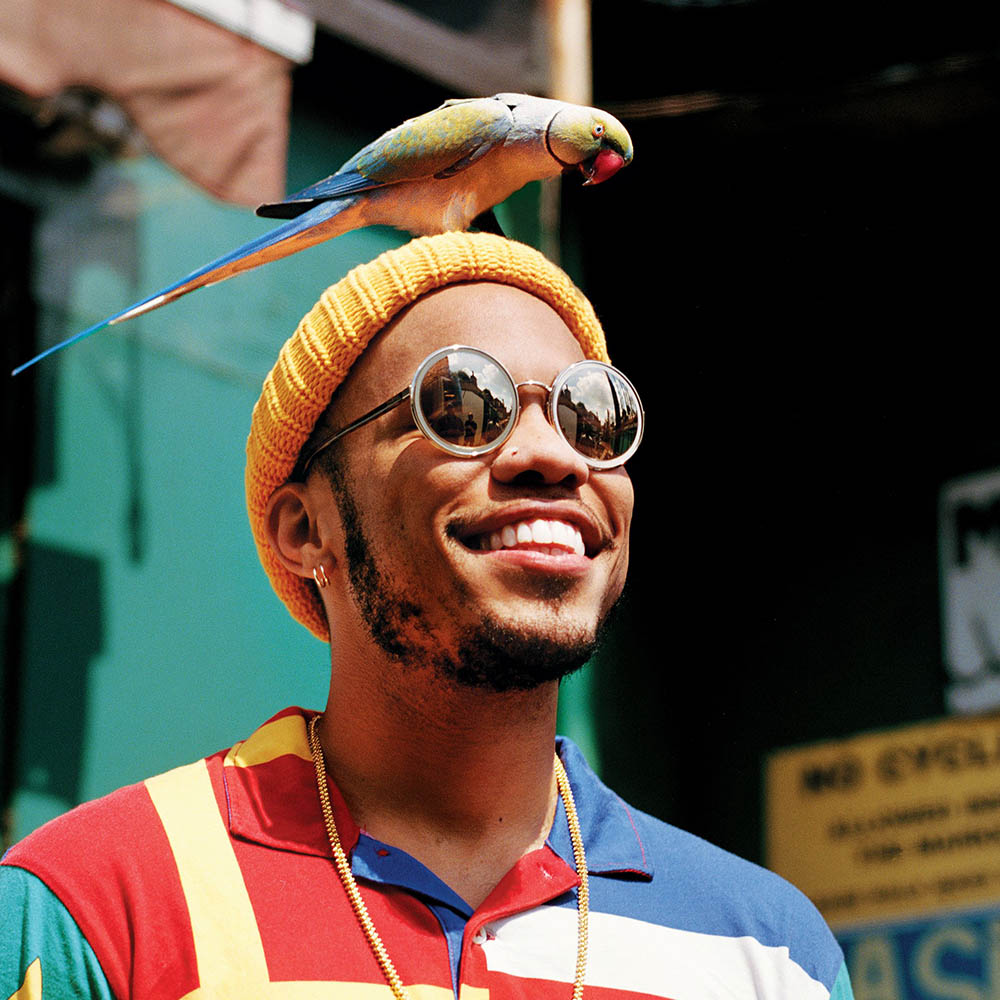
Anderson .Paak keeps the wooly bunnet and bearded handsomness but updates and reboots the Gaye protest, going less for smooth, airy soul and more for a glitchy, jerky, bump ‘n grind modern variation.

Bubbling on-the-one bass and a repeating sax motif that calls to mind the sort of breathy, freeflowing jazz that Maceo Parker was adding to Prince records when he was last untouchable carry the track, as skittering, breakbeating drums rattle the rhythm to its conclusion. Surfing somewhere inbetween is a subtle electro tick tock and a harmonising female backing vocal that adds sass and gloss, but never gets in the way of .Paak’s incredible lead vocal, part gravel, part grease, but always great. His phrasing…his control…his delivery… it’s fantastic.

A lot of the other material on the track’s parent album (Ventura) has, so far, left me kinda cold, but King James is a play-once and repeat-often modern-day stone cold classic. Worth investigating, I’d say.

Get This!

Social Media

I confess to knowing not much about Broken Social Scene. A living, breathing, fluid line-up that can be anything from a 6 to a 19-piece would suggest that they’re more of a collective than a band, with members coming and going, dropping in/dropping out, releasing and touring their own solo material then rejoining again. You might know the quirky, always excellent Feist. Or Canadian crooners Stars and their brand of melodic crooning. Both acts have found themselves part of the ‘Scene at some point or other.

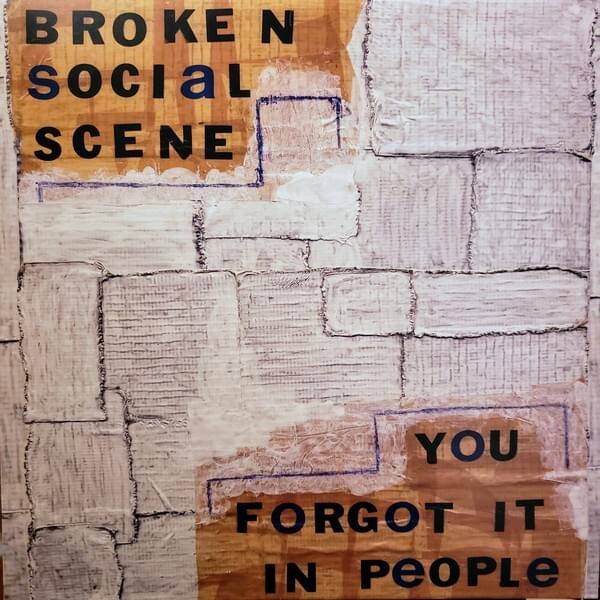
When they started, Broken Social Scene strived to make swirling, ambient, mainly instrumental indie rock; experimental, peerless and lo-fi in execution but high-fi in ambition. For reference, think of a slightly turned-down, slightly more polite Yo La Tengo. By their second album, You Forgot It In People, they’d started to employ vocals and a more straightforward approach to song-writing. The fuzzed-up ethereal electric guitars and close-mic’d acoustics are still there, but so too are brass sections, keys, banjos even, along with grand ambitions on a widescreen scale. A chance conversation with Nile Marr turned me on to the album  – “I think you’d really like it,” he said presciently – and, in something of a recurring theme, I fell for a ‘new’ album that was a couple of months shy of turning twenty years old.

Like all the best albums, it’s an album that takes a handful of plays before it fully reveals itself. You’re never far from a slowly unravelling melody or a wonky Beatlish backwards bit or the sort of slow-burning, vapour-trailed outro that fellow Canadian Neil Young might accede to should he be forced to consider his other 15 band members. “You gotta turn the Les Paul down a notch, Neil. And make way for the strings ‘n trumpets now and again!” Slow burning, yes, but soft rocking too. Broken Social Scene don’t blow the doors in, they politely chap until they’re living in your head.

There are a few standouts, not least the hynotic, repetitive, melting earworm that is Anthems For A Seventeen Year-Old Girl

Broken Social SceneAnthems For A Seventeen Year-Old Girl

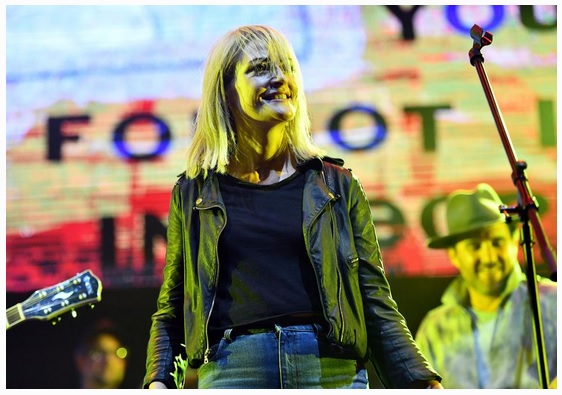
Atop a slowly building backing of back porch banjo, random thumps and long-bowed violin, singer Emily Haines has been pitch-shifted up a notch, giving her vocal the effect of a sing-songy young girl, perfect for the song’s subject matter.

Used to be one of the rotten ones and I liked you for that…

Now you’re all gone, got your make up on and you’re not comin’ back.

Bleaching your teeth, smiling flash, talking trash, under your breath, under my window

It’s a scene that’s easy to picture. It’s teen angst and country girl heartbreak set to music. It would make for the perfect soundtrack to a suitable scene in a low-budget indie film, Scarlett Johansson or Charlize Theron or whoever the teenage equivalent is these days swinging on the porch, faded jeans and checked shirt covered in oil from helping her single father fix the pick-up truck, staring into a middle distance of dancing, swaying cornfields and puffy white clouded blue skies.

The contstant, never-ending repetition of the last line – Park that car, drop that phone, sleep on the floor, dream about me – combined with the swirling, sawing almost Venus In Furs drone and the steady plonkety-plonk of the banjo is, by the end of the track, totally headswimmingly hypnotic. Circular and head-spinning, you don’t want it to end, but when it does, on a dizzy refrain of the first line and an incredibly eked out violin note, you stop. Take a breath. And play it again. It’s a great wee song from a great wee album. I think you’d like it…


Get This!, Gone but not forgotten, Kraut-y

S’all Gone A Bit Pete Tong

Dr Bucks’ Letter is late-ish era Fall at their best. Taken from The Unutterable, it’s an incessant, kerb-crawling jackbooted stomp of a track; claustrophobic, indulgent and relentless, the sound of The Fall doing half-speed dub techno. The disciplined beat and fuzzed-up riff underpin a crackle of electro static and a cackle of spoken word, random keyboard outbursts that sound like guard dogs in heat and a clanging Holger Czukay bassline that fights for ear space in-between a returning signature riff. It’s not quite a kitchen sink production, but it’s getting there.

The FallDr Bucks’ Letter

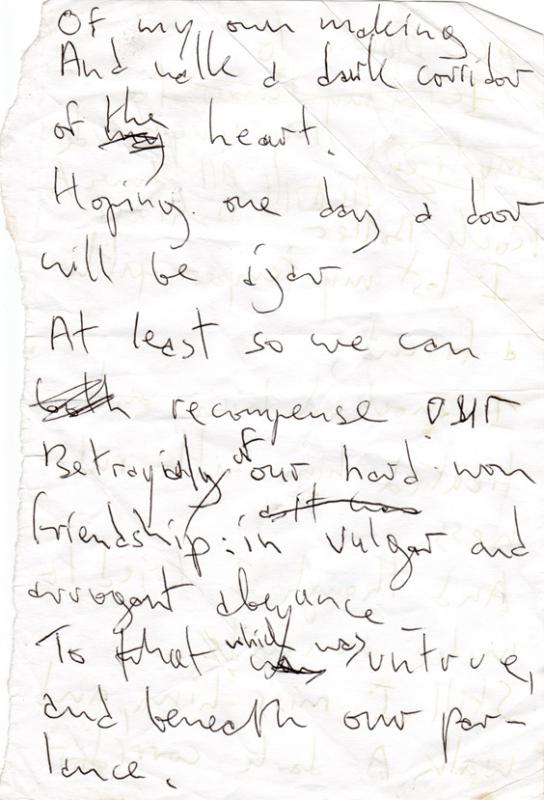
The cherry on the top is Mark E Smith’s spoken word vocal, the lyric referencing an unfortunate fall-out with a friend – ‘of my own making, I walk a dark corridor of my heart, hoping one day a door will be ajar at least so we can recompense our hard-won friendship.’

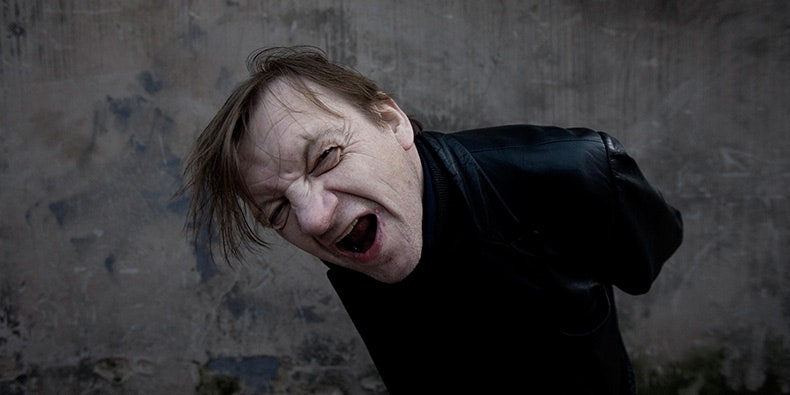
He may have been viewed as a grizzly, alcohol-soaked hard-heart, but Smith could write flowing sentimentality like no other, even if, perhaps to keep his image somewhat intact, he delivers it in a voice that borders on menacing. There’s the complexity of MES right there.

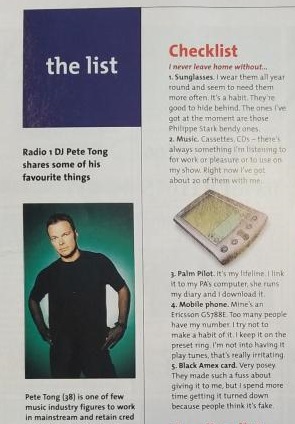
As the track reaches it’s conclusion, Smith bizarrely – yet thrillingly – reads aloud an abridged version of a magazine interview with superstar DJ Pete Tong, cackling to himself/at Tong’s superficial lifestyle and the vacuousness of it all.

There aren’t many folk who’d have the nerve to lift text from such disparate places – a Virgin Rail customer magazine, as it goes, but there y’go – proof, if any were needed, that Mark E Smith wasn’t yer average writer.

Dr Bucks’ Letter is a Fall track that works for all sorts of reasons. The references in the magazine article to Palm Pilots and CDs and cassettes (no vinyl, Pete?) has the track firmly dated as 2000, a portent of a new millennium with another new Fall line-up in the making and at least a further 83 albums before the fall of The Fall with MES’s untimely death in 2018.

It’s worn far better than some of its lyrical influences, has Dr Bucks’ Letter. Indeed, it never sounds anything other than ‘now’, a decent snapshot of a band who’d perhaps lost their way a wee bit at the time.

Get This!, Live!

Bobtogenarian

The poet laureate of rock ‘n’ roll…the voice of the promise of the ’60s counterculture…the guy who forced folk into bed with rock, who donned makeup in the ’70s and disappeared into a haze of substance abuse…who emerged to find Jesus…who was written off as a has-been by the end of the ’80s and who suddenly shifted gears and released some of the strongest music of his career beginning in the late ’90s… Ladies and gentlemen, please welcome Columbia recording artist Bob! Dylan!

These are the frenz-inducing spoken words of Dylan’s stage manager Al Santos, mic’d up and out of sight, that signify Bob’s imminent arrival on stage. They’ve been spoken for the last twenty years on the never-ending tour and will no doubt continue again, just as soon as live events become a thing once more. The words came lock, stock and barrel from a review by reporter Jeff Miers in the Buffalo News, a review that so resonated with Bob that it immediately became his adopted clarion call.

Hear these words and as sure as night follows day, ol’ Bob will come rattlin’ and rollin’ out of the traps with a lively opener. It might be a crowd pleaser – Maggie’s Farm was a favourite for a while, it might be a deliberately obtuse audience wrong-footer, or it might even be a country-punk take on an old God-fearin’ standard. No matter the first song though – it’s all about giving the sound desk one last chance at mixing to the room – it signifies the beginning of a set that, much like its creator, will be long and winding with diamonds and pearls and the odd miss-firing clunker along the way.

Bob Dylan has always been there. He was there when I first started noticing these things called ‘records’, my dad’s copy (now mine) of Bringing It All Back Home sticking out between the Trini Lopez and Buddy Holly albums, the cover alluring and just beyond the comprehension of my young years. My mum worked at Irvine Library and came in one night with a video of Don’t Look Back, the on-the-road documentary of Dylan’s 1965 tour of Britain. It more than resonated – some of the songs on my dad’s record were in the film – and as I watched and rewatched, I was wholly sucked into the world of Bob. It was the hair and the permashades, the houndstooth and polka dots, the Beatle boots and the stripey trousers that did it – a popstar as outlandish as Adam Ant but with an impenetrable depth and downright rudeness that set him apart from any popstar I’d ever taken a shine to.

In the film, Dylan sped from venue to venue being confrontational and contrary, aloof and arrogant, sneering and sarcastic…unlikeable in lots of ways, although he could be wickedly funny at someone else’s expense, (and that’s always something that anyone who tries to fit in with the gang will lap up) but then the film would cut to him singing She Belongs To Me or It’s Alright Ma (I’m Only Bleeding) and he’d be instantly forgiven, his voice; the annun-ci-a-tion,the phhhhrasssing, the barely whispered quiet parts to the rasping roof raisers delivering the songs with an intimacy I’d never heard before…and still haven’t heard since.

I went through a particularly heavy Bob phase in the mid ’90s. I’d marvel, (I still do), standing at that same spot on St Vincent St in Glasgow, just outside what is currently the Counting House pub, where, in 1966, Bob and The Band stood shoulder to shoulder with a crowd of locals watching a pipe band march past. The Americans are easy to spot; eyes hidden by shades and hair like free-growing birds’ nests while their pasty-faced Glaswegian counterparts still sport the slicked back Brylcreem ‘do of their youth.  “See the guy in the middle, twirling the thing! Do they do that in the middle o’ winter?‘ asks Bob of the swinging kilts off camera. Jump ahead to 3.17 and you’ll find it.

The back catalogue, the good, the bad and the ugly of it, would spin for days, weeks and months on end. By the turn of the decade, I had a mini disc player loaded up with hours and hours of Bob and it would shuffle endlessly, leaping from Woody Guthrie folk blues and raggle-taggle gypsy ballads to Mick Ronson-riffing alternate versions and bootleg recordings of Bob around the world.

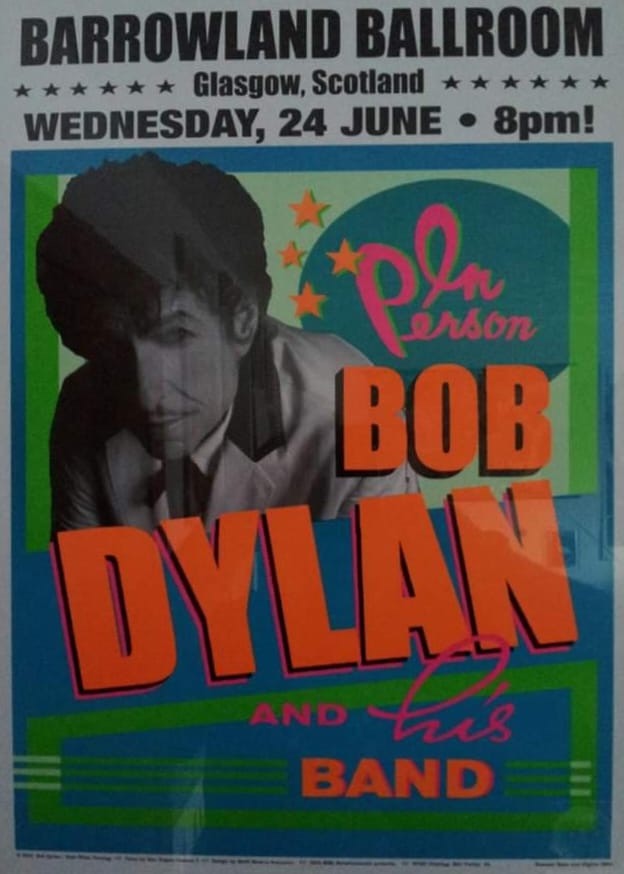
By the turn of the next decade I’d seen Bob more than a handful of times, always the same, always different, from through the drizzle at Stirling Castle as my pal pointed out, ‘that’s Bob Dylan playing Mr Tambourine Man up there,’ and the bleachers in the SECC where a spiritual, transcendental Boots Of Spanish Leather fought its way to the ears across the draughty divide, to the intimacy of the Barrowlands the very next night, not only my favourite Bob show but one that’s acknowledged as one of his very best, close enough to see him smile as his audience wrestled with Girl Of The North Country and Just Like A Woman, close enough to watch the drips of sweat fall from the brim of his hat and onto his keys as he punched out a jerky but faithful version of Ballad Of A Thin Man, close enough to witness a rare bout of audience interaction at the very end of Like A Rolling Stone. There’s something happening here indeed, etc etc.

Bob DylanLike A Rolling Stone (Glasgow Barrowland Ballroom, 24.6.04)

Somewhere in time, as my Bob fascination became a quiet obsession, Dylan turned the ripe old age of 60. Sixty! Man! I remember thinking, “That’s ancient!” That I’m currently eight and a half years from 60 myself is both shocking and sobering. And it’s got me thinking, why haven’t I created a Blonde On Blonde-type masterpiece? When do I get my Jesus phase? Will I ever near-kill myself on a motorbike? Who will call me Judas and boo me when I turn up at my place of work? Will anyone rake my bins for evidence of the life I supposedly lead? At what point do I embark on my own never-ending tour? And now, ol’ Bob Dylan is 80. Eighty! And I’m thinking, where are the book deals, the Nobel Prizes, the honorary rectorships, the Oscars? He’s packed an awful lot into those first eight decades of life.

The numbskulls will point out that he can’t sing (wrong!), that his songs are unrecognisable in concert (wrong again!), or that ‘Bob Dylan? Is he not dead?’ (wrong! wrong! wrong!) but those that know, know. He’s one of the greatest and will be forever. Here’s to the next eighty years.


Cover Versions, Get This!, Hard-to-find

Cultured

Two Sevens Clash by Culture is, to me, ubiquitous with the John Peel show. I’m probably distorting fact with reality through the wonky prism of time, but I’m sure he played it regularly throughout the mid ’80s. Entry-level reggae, if you like, for roots ‘n radicals explorers wanting to dig deeper than Bob Marley, Two Sevens Clash is everything that’s great about the genre; it’s cavernous, it features a head-nodding groove and it’s sweet ‘n soulful. You knew that already though.

Before they went by the one word moniker, Culture were known as The Cultures and cut Trod On. Released in 1977, Trod On foreshadows the constituent parts that made Two Sevens Clash such a great record at the end of the same year.

The CulturesTrod On

It features a steady Eddie one-and-two-and-three-and-four rhythm, all concrete bass and chicka-chicka offbeat guitar, a toasting singer (Ranking Trevor) backed by some lovely falsetto vocals (that’ll be The Revolutionarys, you’d have to think) and a horn refrain that carries the whole track from beginning to end. With its ricocheting rim shots and vapour trailing vocal-ocal-ocals, the extended version above nicely skirts the outer limits of dub. It’s a great wee record.

As happenstance and kismet would have it, Trod On‘s earthy groove found its way east to 185 West Princes Street, Glasgow. Or to be more precise, it found its way east to the ears of Orange Juice, resident happening band at Postcard Records, the label that championed the sound of young Scotland and whose maverick supremo Alan Horne resided in the 2nd floor flat at that very address. 

Orange Juice had barely learned to walk when they stumbled upon (trod on?) Trod On. In need of a flip side to accompany the frantic knee tremble of their debut single Falling And Laughing, the band set about deconstructing The Cultures’ mid-paced groover and appropriated the horn refrain to their own ends.

Orange JuiceMoscow Olympics

Like all early Orange Juice tracks, when the band was still learning how to play together, and doing so in full view of the listener, Moscow Olympics fairly gallops along on a rickety bed of enthusiasm and wide-eyed self belief.

Amazingly/inspiringly, it sounds no different to the dozens of rehearsal room tapes that were recorded down the years in the bands I played in; ghetto blaster facing the wall and ‘record’ depressed in the hope it might magnetise some of the magic swirling in the air (sometimes it even did) but if you are able to focus between the the gaps in the scratchy ‘production’ and the faraway racket of drums (played somewhere near Sauchiehall Street while the other three apparently thrash it out over on Argyle Street), you’ll hear that Davy McClymont’s bass line on this recording is fantastic, a proper tune within a tune. The horn-aping guitar line is supremely confident too, never out of time or tune, and with nary a bum note to be heard.

The boys are on fine form, with drummer Daly and svengali Horne (Alan Wild, indeed) enthusiastically barking, yelping and football-chanting ‘Moscow!‘ at all appropriate points. It might only be the b-side of their first single, but despite the knees-out-the-new-school-trousers approach, the shambolic seeds of something special are being sown right before your very eyes and ears. It’s there in the interweaving guitar interplay and disco hi-hats; cheeky and Chic-y.

Being Orange Juice of course; arch, wry and post-punk rule breakers, they stuck two versions of the track on the b-side. Just for good measure. Because they could. And why not?

Orange JuiceMoscow

My dad’s old SLR camera, with its Moscow Olympics logo, used to fascinate me.


Get This!

I Can’t Get Enough Of This

Zoom!, the opening track on Love Kraft, Super Furry Animals‘ 7th album begins with a SPLASH! – the sound of guitar player Huw Bunford diving into a Catalonian swimming pool in a hopeful attempt to shake off the stifling sticky midday heat.

Super Furry AnimalsZoom!

At once you’re baptised, immersed in a new rich Super Furry sound that comes steeped in an MOR AOR FM sheen; the heady sound and heavy vibes of ’70s California, of the Holland-era Beach Boys and the coke-flecked Fleetwood Mac, arranged perhaps by David Axelrod. The Super Furries’ kitchen sink approach to their writing finds interweaving melodies and harmonies coasting atop a backing of tinkling, descending keys, a sprinkle of ascending spectral chants, skittering drum breaks and crisp, electric guitars – the sort of guitars where you can hear the fingers scrape across the fretboards as the chords and riffs change shape.

Midway through, the metaphorical clouds darken and those wordless, classical chants come to the fore, bringing with them an uneasy, end-of-the-world feeling that at times recalls The Smiths’ Death Of A Disco Dancer, itself a heavy, lengthy, descending journey into the mind.

‘I can’t get enough of this,’ goes Gruff Rhys. ‘Kiss me with apocalypse.’ The lyric throughout is suitably obscure and wide-ranging. Over the course of 7 headswimming minutes, it takes in Lord Lucan and Shergar, the Virgin Mary crying blood, driving to the Kwik Save in a Ford Mustang and a dalmation whose spots have fallen off. Proof, if it were needed, that the Super Furry Animals can pack more musical and lyrical ideas into one verse than a lot of bands can manage in a lifetime.

The second track, Atomik Lust, continues in the same lush vein. Lighter, more pop, it introduces itself on a bed of electrically enhanced backwards stuff, kept in check by rhythmically jangling sleigh bells and western saloon piano. By the second verse, honeyed Bacharach horns slide into earshot, subtle strings provide the counter melodies and the whole thing grooves smoothly into outer space. It’s fantastic.

Super Furry AnimalsAtomik Lust

A Super Furry change of pace finds it moving into sludge rock in the middle and again toward the end, a super-melodic track worthy of inclusion on, say, Pacific Ocean Blue, sandwiched between a squall of Spectorish drums and squealing guitars. It’s not all smooth LA vibes round here, they say without saying.

Love Kraft is a happy product of circumstance. Following the demise of Creation, the band found themselves signed to major label Columbia. Happy with their charges, the label funded recording in Spain and mixing in Brazil. Beastie Boys and Beck producer Mario Caldato was brought in to produce, and using the label’s funds, embellished the record with strings and brass and musical decoration that the band could only have dreamed off in the years previous. The result is an album that Gryuff Rhys himself says is the band’s pinnacle to date.

If you’ve never fully investigated Super Furry Animals, you might try their debut Fuzzy Logic and it’s follow-up Radiator, but I suggest you fast forward to album number 7 and work your way outwards from there. These days, bands never really split up. They take an extended hiatus, release solo albums and side projects, produce other bands perhaps, but eventually they always find one another again. Lets hope Super Furry Animals, one of our greatest, most-inventive, unique and special bands do likewise before much more time has elapsed.

Get This!, New! Now!

My Best Ideas Are Borrowed But They’re Never Half-Baked

Yard Act may well be the most important new band of this year. Judging by all that can be found online, it’s quite possible that they’ve written just four songs, but all appear on their super-limited, super sold out debut EP, Dark Days.

D’you know those two choppy minor chords that play behind the chorus on Roxy Music’s arty, decadent and oh so European Love Is the Drug? Yard Act have nicked them, welded them to Joey Santiago’s fire-spitting Uriah hit the crapper guitars from Pixies’ Dead and, by adding a sullen, gobby vocal, half Mark E Smith and half John Cooper Clarke, have gone about creating the most thrilling of title tracks on an EP that’s bursting with originality, vim and the odd sweary word. I think you’d like them very much.

It’s a never-ending cycle of abuse, I have the blues and I can’t shake them loose, goes the singer, spitting piss and vinegar through a megaphone for good measure, choppy basslines and a no-frills drummer holding it all in place. The vocals, all northern rap and Yorkshire tang are what sets it apart. There’s no singing in the traditional sense, until the choruses, when the monotone dark days title is repeated by the rest of the band. It’s a fat-free track, bereft of any superfluous nonsense. There are no obvious overdubs, no gimmicky production, just bass, drums, one guitar and the vocals on top, all in clear separation. Repetition is discipline said Mark E Smith and on this track…this EP…Yard Act have proven themselves to be the most disciplined of all.

Peanuts is two songs welded together in a spoken-word sandwich; the noise-clash first half, all discordant, cheesegrater Telecasters and drawling vocals that sound as if they’re being orated through a mouthful of Juicy Fruit, before giving way to the spoken word second half with a weeping Disney ambience in the background. Great punchline too, before the band kicks in for the last wee bit. I can guarantee, you haven’t heard a track like this ever.

Fixer Upper takes Jarvis Cocker’s take your year in Provence and shove it up your arse sentiments to the next level. I can’t believe I’m a two home owner, proclaims our protagonist, it’s a fixer upper though. The Polish builders’ll take care of it, cash in hand like. You can be sure of that. Great wee bit of percussion at the end too.

The Trappers Pelts grooves along on a bed of fuzz bass and hip-hop drums, not a million miles away from those Pixies again, twisted electric guitar sound effects and a vocal about, what, exactly? Entrepreneurship in the 21st century? The gig economy? You’re really all so desperate. Desperate! Despera-tuh! (Subtle influence clue there). HMRC, pay as you feel! I’ve no idea what it’s about, but in a head-nodding-to-the-groove kinda way, it sounds fantastic.

You might listen to all four tracks as they play on the Bandcamp app above, but can I suggest you watch the session below. All the visual clues point to the band’s peerless influences; a set dressed like The Smiths’ This Charming Man video, a Curtis/McCulloch grey mac, a singer that’s humourous, intelligent and charismatic, leading a band where each player knows his part…Yard Act are, like all the best bands, the sum of their influences and something inexplicably more. It’ll be interesting to see where they go next.

Check the band’s Bandcamp page for merch, music and suchlike.

Get This!, Gone but not forgotten

‘king Tubby

There was a time before the first lockdown when I was approaching something that I might have considered (cough) peak fitness. The waist line was slowly reducing in inverse proportion to the kms clocked on the treadmill in the gym I’d started frequenting. Thanks to the ten minutes here and there on the rowing machine with the temperamental display and sqeaky seat, my shirt buttons no longer gaped and strained when I sat down. Even the odd punishing 3 minutes on the cross-trainer had, it seemed, its benefits. And I felt better.

By the second lockdown though, I was well on my way from 5K to couch. Before January was out, I’d smashed it. I’d tried running in the street. It was too cold, too wet, I looked daft, it made me too wheezy, whatever. Most of the time, I was gubbed and I could still see the roof of my house – and this was when it was pitch black at four in the afternoon. I went from hero to zero in one and a half lockdowns, a couch potato happily binging on McCoy’s flame-grilled steak crisps and marathon telly sessions. And it felt just as good, to be honest. Better even, if I’m being really honest.

Last week I had to return to my place of work, a roof under which I hadn’t been since the third week in December. The government’s advice of ‘if you can work from home, you should work from home’ was strictly adhered to and that work was duly done; more than normal some days, less than normal on others, just about balancing out come a Friday afternoon. But now, the frontline called. I popped the work trousers on last Monday and, oof! It was hard to believe that I’d ever managed to get the belt to the well-worn leather at the fourth notch at all. Here I was breathing in deeply and yanking it all the way to the second pathetic notch, the loose little bit of belt too short to tuck properly into the buckle. Nobody’ll notice, I figured, as the overhang obscures most of the buckle anyway. The state of me.

I hit the gym again a couple of days ago. And then again yesterday. I wasn’t quite queuing up to get in, but I did have the run of the place to myself, which was just as well. I swear my old friend the treadmill laughed at me as I eyed it up. Then it groaned as I stepped onto it. Who’s laughing now, eh, treadmill? I took it easy and slowly. After a few minutes I cranked it up to a speedy snail’s pace and then, with an extreme burst of lethargy and my aimed-for target somehow creeping up within reach, I managed to clock an impressive three kilometres. I ran three and a half yesterday, alongside 30 minutes of endurance work on the exercise bike, riding the Toblerone-shaped hills of the Swiss Alps whilst staring hollow-eyed at the playing fields of north Ayrshire.

The old trusty iPod soundtracked these sessions of pain, shuffling its way through a library of music it probably thought it would never play again. This long-forgotten rattlin’, reverberatin’ riot of dub reggae really hit the spot during the last ascent of those murderous fake alps.

King TubbyKing Tubby Dub

A whacked-out instrumental take on Rare Earth’s Motown standard Get Ready, King Tubby Dub is just about the right rhythm for pedalling up those imaginary mountainsides; hi-hats splashing in time to the wobbly legs pumping away at the pedals, horns blasting and forth as back teeth are gritted in pain, the ricocheting percussion bringing on ever-pooling beads of grotesque sweat.

The irony of a King Tubby track playing as I sweated out a year’s worth of crisps, alcohol and lockdown luxury was not lost. King Tubby? ‘king Tubby indeed.

Two sessions in and that belt is still only at the second notch though. Instant results are not forthcoming.

Get This!, Gone but not forgotten, Hard-to-find

3-5-0-1-2-5-Go!

If I crane my neck out of the window over my right shoulder where I am currently writing, I can just about see the windmills at Whitelee Wind Farm, a massive 215-turbine development that is capable of powering over a third of a million homes and is very likely the reason these words make it beyond my fingertips and out into the great beyond. The wind farm is situated on Eaglesham Moor, a windswept, sparse and barren moorland that lies on the fringes of East Ayrshire and East Renfrewshire, just to the south of Glasgow. Before the motorway was extended close-by, it was often the route used by commuters who worked in East Kilbride and Motherwell. Using it in winter time was usually fraught with danger; single-lanes, sudden snowfalls, low-lying clouds of darkness. It was an imposing, unwelcoming part of the world.

Almost 80 years ago (May 1941), Rudolph Hess, Hitler’s right hand man and orchestrator of much of the Nazis’ unforgiveable crimes against humanity, crashed his plane into the ground on Eaglesham Moor. Quite what he was doing flying solo over Scotland has never been satisfactorily explained, but common consensus would suggest that he was flying to meet the Duke of Hamilton – a well-connected figure – in an attempt to call an end to the Second World War. When his plane began running low on fuel, he began to bail out first his ammunition and then himself by parachuting before the inevitable happened.  A bang was heard as the explosives ignited, closely followed by the stuttering sound of his plane’s engine as it crashed nose-first into the peaty Scottish soil.

The locals of Eaglesham village, realising it was a German Messerschmitt that had come down, raced to get a closer look. First on-site was a pitchfork-wielding farmer, and it was he who Hess surrendered to. He was taken to the Home Guard in the nearby town of Busby, but it wouldn’t be until the following day, when military personnel began descending on the locality, that the pilot’s identity became apparent. Within a week, Hess was imprisoned in the Tower of London. He was given the Prisoner of War number 31G-350125.

As you of course know, Joy Division‘s debut release, the An Ideal For Living EP featured dubious Nazi imagery. Alongside the band’s iffy name written in Germanic font, the sleeve shows a Hitler Youth drummer boy. Call it misguided, call it punk, but when the time came for the EP to be rereleased, it’s interesting to note that the drummer had been replaced by an arty shot of some scaffolding and the band’s name – still contentious of course – was printed in a much more agreeable font. The accusations of Nazi sympathy didn’t end though.

The opening track Warsaw – the band’s original name, after the city in Poland that the Germans laid siege on at the start of the war – began with a punkish shout of numbers, but not the enthusiastic and standard 1, 2, 3, 4! that countless bands have used to herald their giddy arrival. Warsaw begins with an enthusiastic “3-5-0-1-2-5-Go!“, not quite the number of the beast, but not far from it. Joy Division laid out their statement of intent by counting off with Rudolph Hess’s Prisoner of War number. And for good measure, they repeated the 31G prefix over and over in the chorus.

Joy DivisionWarsaw

Now, the mid ’70s was a time of Warlord and Victor comics, of Commando books and Sven Hassel novels, of best man’s fall in the playground. It was an era when you could ask your grandparents what they had done in the war and they still had the grey matter and compos mentis to tell you. Many cities bore the scars of bombed-out, shell-shocked destruction. Kids played on the rubble where former factories stood. For many in ’70s UK, the memories of the war were clearer and easier to recall than what they’d eaten for yesterday’s breakfast.

That Joy Division had something of an obsession with WWII was not that unusual. In fact, it was pretty normal. To put it into perspective, less time had elapsed between the Second World War ending and Joy Division releasing An Ideal For Living than the time between New Order’s Ceremony and their return-to-form of sorts album, Music Complete. Just let that sink in.

The track that brought Joy Divison to the world is an angry blast of prime punk; insistent, exciting and real, with a great wheezing, descending riff between the choruses and the verses. Even this early on, Stephen Morris’s drums have a slight tang of electronic treatment, rattling and reverberating between Ian Curtis’s punkish shout and Peter Hook’s solid slab of bass, as far removed from his signature sound as you could possibly get.

By all accounts, Joy Division were quite the thrill in the live setting, and, as self-producers, they captured just that on Warsaw and the rest of the EP. It’s essential listening and still thrilling even after all these years. You knew that already though.