Get This!, New! Now!

My Best Ideas Are Borrowed But They’re Never Half-Baked

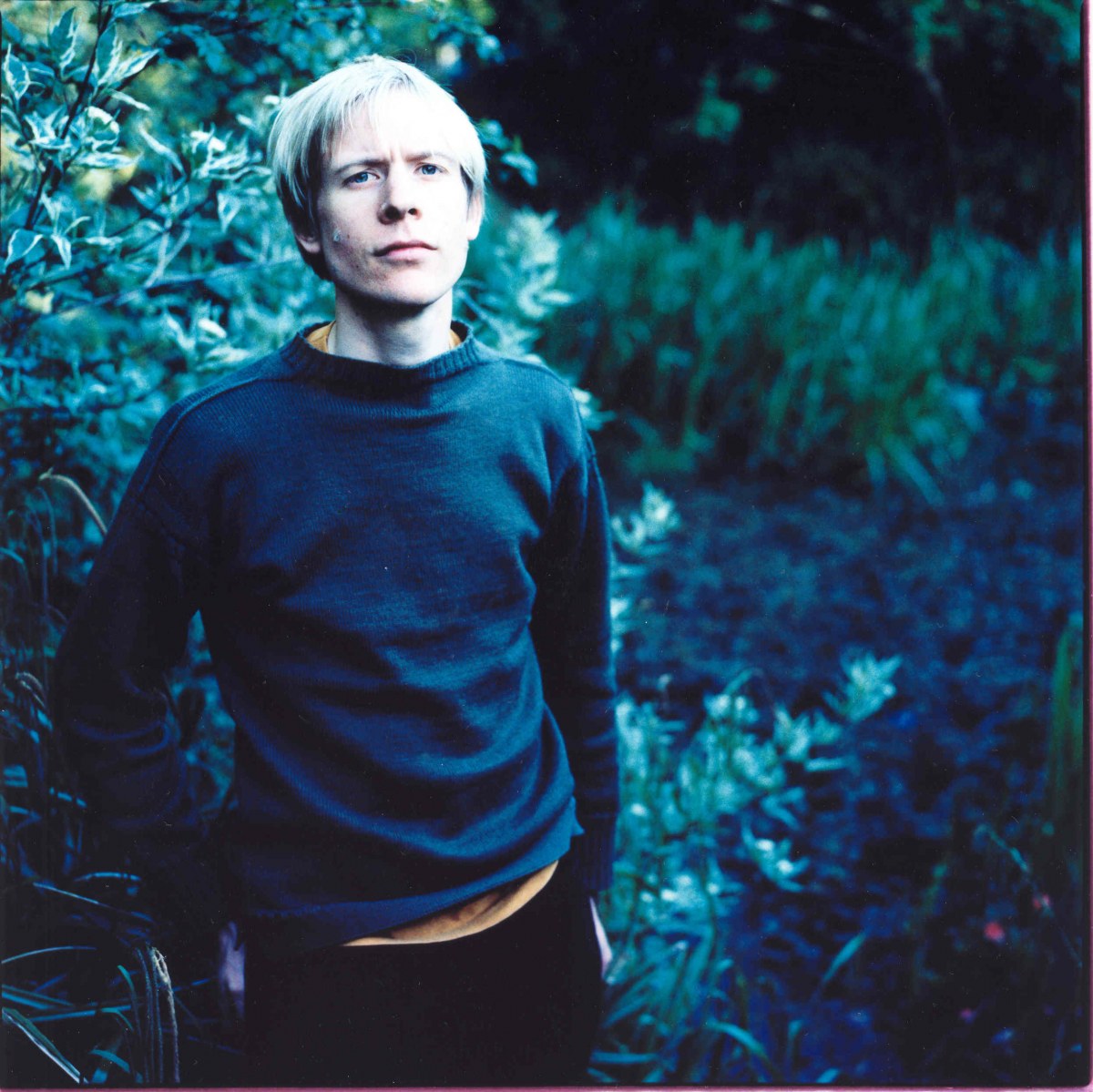
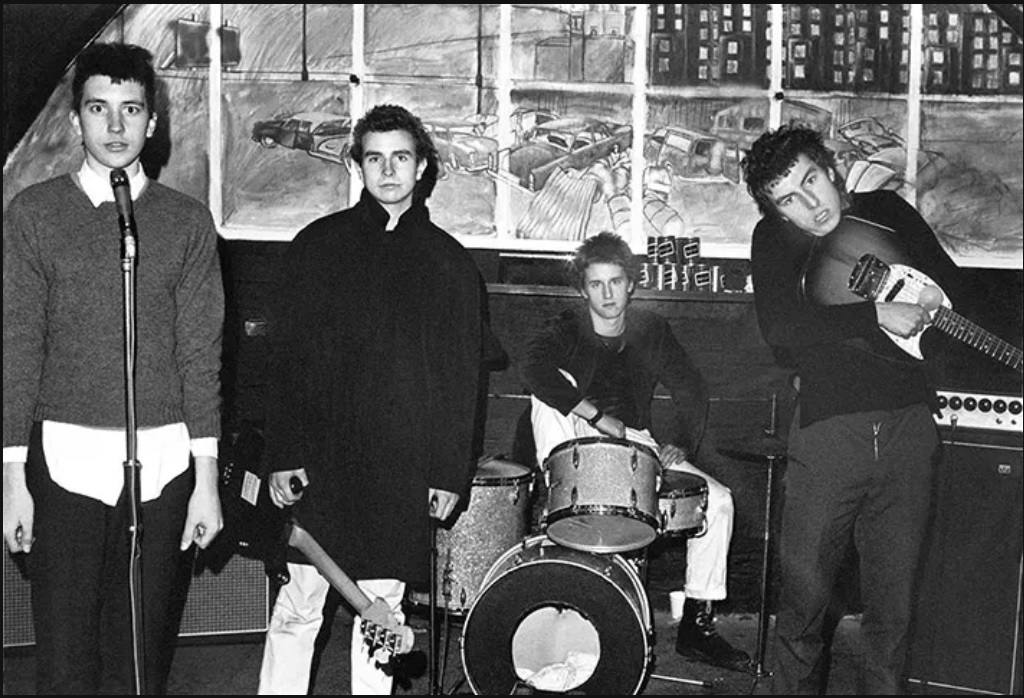
Yard Act may well be the most important new band of this year. Judging by all that can be found online, it’s quite possible that they’ve written just four songs, but all appear on their super-limited, super sold out debut EP, Dark Days.

D’you know those two choppy minor chords that play behind the chorus on Roxy Music’s arty, decadent and oh so European Love Is the Drug? Yard Act have nicked them, welded them to Joey Santiago’s fire-spitting Uriah hit the crapper guitars from Pixies’ Dead and, by adding a sullen, gobby vocal, half Mark E Smith and half John Cooper Clarke, have gone about creating the most thrilling of title tracks on an EP that’s bursting with originality, vim and the odd sweary word. I think you’d like them very much.

It’s a never-ending cycle of abuse, I have the blues and I can’t shake them loose, goes the singer, spitting piss and vinegar through a megaphone for good measure, choppy basslines and a no-frills drummer holding it all in place. The vocals, all northern rap and Yorkshire tang are what sets it apart. There’s no singing in the traditional sense, until the choruses, when the monotone dark days title is repeated by the rest of the band. It’s a fat-free track, bereft of any superfluous nonsense. There are no obvious overdubs, no gimmicky production, just bass, drums, one guitar and the vocals on top, all in clear separation. Repetition is discipline said Mark E Smith and on this track…this EP…Yard Act have proven themselves to be the most disciplined of all.

Peanuts is two songs welded together in a spoken-word sandwich; the noise-clash first half, all discordant, cheesegrater Telecasters and drawling vocals that sound as if they’re being orated through a mouthful of Juicy Fruit, before giving way to the spoken word second half with a weeping Disney ambience in the background. Great punchline too, before the band kicks in for the last wee bit. I can guarantee, you haven’t heard a track like this ever.

Fixer Upper takes Jarvis Cocker’s take your year in Provence and shove it up your arse sentiments to the next level. I can’t believe I’m a two home owner, proclaims our protagonist, it’s a fixer upper though. The Polish builders’ll take care of it, cash in hand like. You can be sure of that. Great wee bit of percussion at the end too.

The Trappers Pelts grooves along on a bed of fuzz bass and hip-hop drums, not a million miles away from those Pixies again, twisted electric guitar sound effects and a vocal about, what, exactly? Entrepreneurship in the 21st century? The gig economy? You’re really all so desperate. Desperate! Despera-tuh! (Subtle influence clue there). HMRC, pay as you feel! I’ve no idea what it’s about, but in a head-nodding-to-the-groove kinda way, it sounds fantastic.

You might listen to all four tracks as they play on the Bandcamp app above, but can I suggest you watch the session below. All the visual clues point to the band’s peerless influences; a set dressed like The Smiths’ This Charming Man video, a Curtis/McCulloch grey mac, a singer that’s humourous, intelligent and charismatic, leading a band where each player knows his part…Yard Act are, like all the best bands, the sum of their influences and something inexplicably more. It’ll be interesting to see where they go next.

Check the band’s Bandcamp page for merch, music and suchlike.

Get This!, Gone but not forgotten

‘king Tubby

There was a time before the first lockdown when I was approaching something that I might have considered (cough) peak fitness. The waist line was slowly reducing in inverse proportion to the kms clocked on the treadmill in the gym I’d started frequenting. Thanks to the ten minutes here and there on the rowing machine with the temperamental display and sqeaky seat, my shirt buttons no longer gaped and strained when I sat down. Even the odd punishing 3 minutes on the cross-trainer had, it seemed, its benefits. And I felt better.

By the second lockdown though, I was well on my way from 5K to couch. Before January was out, I’d smashed it. I’d tried running in the street. It was too cold, too wet, I looked daft, it made me too wheezy, whatever. Most of the time, I was gubbed and I could still see the roof of my house – and this was when it was pitch black at four in the afternoon. I went from hero to zero in one and a half lockdowns, a couch potato happily binging on McCoy’s flame-grilled steak crisps and marathon telly sessions. And it felt just as good, to be honest. Better even, if I’m being really honest.

Last week I had to return to my place of work, a roof under which I hadn’t been since the third week in December. The government’s advice of ‘if you can work from home, you should work from home’ was strictly adhered to and that work was duly done; more than normal some days, less than normal on others, just about balancing out come a Friday afternoon. But now, the frontline called. I popped the work trousers on last Monday and, oof! It was hard to believe that I’d ever managed to get the belt to the well-worn leather at the fourth notch at all. Here I was breathing in deeply and yanking it all the way to the second pathetic notch, the loose little bit of belt too short to tuck properly into the buckle. Nobody’ll notice, I figured, as the overhang obscures most of the buckle anyway. The state of me.

I hit the gym again a couple of days ago. And then again yesterday. I wasn’t quite queuing up to get in, but I did have the run of the place to myself, which was just as well. I swear my old friend the treadmill laughed at me as I eyed it up. Then it groaned as I stepped onto it. Who’s laughing now, eh, treadmill? I took it easy and slowly. After a few minutes I cranked it up to a speedy snail’s pace and then, with an extreme burst of lethargy and my aimed-for target somehow creeping up within reach, I managed to clock an impressive three kilometres. I ran three and a half yesterday, alongside 30 minutes of endurance work on the exercise bike, riding the Toblerone-shaped hills of the Swiss Alps whilst staring hollow-eyed at the playing fields of north Ayrshire.

The old trusty iPod soundtracked these sessions of pain, shuffling its way through a library of music it probably thought it would never play again. This long-forgotten rattlin’, reverberatin’ riot of dub reggae really hit the spot during the last ascent of those murderous fake alps.

King TubbyKing Tubby Dub

A whacked-out instrumental take on Rare Earth’s Motown standard Get Ready, King Tubby Dub is just about the right rhythm for pedalling up those imaginary mountainsides; hi-hats splashing in time to the wobbly legs pumping away at the pedals, horns blasting and forth as back teeth are gritted in pain, the ricocheting percussion bringing on ever-pooling beads of grotesque sweat.

The irony of a King Tubby track playing as I sweated out a year’s worth of crisps, alcohol and lockdown luxury was not lost. King Tubby? ‘king Tubby indeed.

Two sessions in and that belt is still only at the second notch though. Instant results are not forthcoming.

Get This!, Gone but not forgotten, Hard-to-find

3-5-0-1-2-5-Go!

If I crane my neck out of the window over my right shoulder where I am currently writing, I can just about see the windmills at Whitelee Wind Farm, a massive 215-turbine development that is capable of powering over a third of a million homes and is very likely the reason these words make it beyond my fingertips and out into the great beyond. The wind farm is situated on Eaglesham Moor, a windswept, sparse and barren moorland that lies on the fringes of East Ayrshire and East Renfrewshire, just to the south of Glasgow. Before the motorway was extended close-by, it was often the route used by commuters who worked in East Kilbride and Motherwell. Using it in winter time was usually fraught with danger; single-lanes, sudden snowfalls, low-lying clouds of darkness. It was an imposing, unwelcoming part of the world.

Almost 80 years ago (May 1941), Rudolph Hess, Hitler’s right hand man and orchestrator of much of the Nazis’ unforgiveable crimes against humanity, crashed his plane into the ground on Eaglesham Moor. Quite what he was doing flying solo over Scotland has never been satisfactorily explained, but common consensus would suggest that he was flying to meet the Duke of Hamilton – a well-connected figure – in an attempt to call an end to the Second World War. When his plane began running low on fuel, he began to bail out first his ammunition and then himself by parachuting before the inevitable happened.  A bang was heard as the explosives ignited, closely followed by the stuttering sound of his plane’s engine as it crashed nose-first into the peaty Scottish soil.

The locals of Eaglesham village, realising it was a German Messerschmitt that had come down, raced to get a closer look. First on-site was a pitchfork-wielding farmer, and it was he who Hess surrendered to. He was taken to the Home Guard in the nearby town of Busby, but it wouldn’t be until the following day, when military personnel began descending on the locality, that the pilot’s identity became apparent. Within a week, Hess was imprisoned in the Tower of London. He was given the Prisoner of War number 31G-350125.

As you of course know, Joy Division‘s debut release, the An Ideal For Living EP featured dubious Nazi imagery. Alongside the band’s iffy name written in Germanic font, the sleeve shows a Hitler Youth drummer boy. Call it misguided, call it punk, but when the time came for the EP to be rereleased, it’s interesting to note that the drummer had been replaced by an arty shot of some scaffolding and the band’s name – still contentious of course – was printed in a much more agreeable font. The accusations of Nazi sympathy didn’t end though.

The opening track Warsaw – the band’s original name, after the city in Poland that the Germans laid siege on at the start of the war – began with a punkish shout of numbers, but not the enthusiastic and standard 1, 2, 3, 4! that countless bands have used to herald their giddy arrival. Warsaw begins with an enthusiastic “3-5-0-1-2-5-Go!“, not quite the number of the beast, but not far from it. Joy Division laid out their statement of intent by counting off with Rudolph Hess’s Prisoner of War number. And for good measure, they repeated the 31G prefix over and over in the chorus.

Joy DivisionWarsaw

Now, the mid ’70s was a time of Warlord and Victor comics, of Commando books and Sven Hassel novels, of best man’s fall in the playground. It was an era when you could ask your grandparents what they had done in the war and they still had the grey matter and compos mentis to tell you. Many cities bore the scars of bombed-out, shell-shocked destruction. Kids played on the rubble where former factories stood. For many in ’70s UK, the memories of the war were clearer and easier to recall than what they’d eaten for yesterday’s breakfast.

That Joy Division had something of an obsession with WWII was not that unusual. In fact, it was pretty normal. To put it into perspective, less time had elapsed between the Second World War ending and Joy Division releasing An Ideal For Living than the time between New Order’s Ceremony and their return-to-form of sorts album, Music Complete. Just let that sink in.

The track that brought Joy Divison to the world is an angry blast of prime punk; insistent, exciting and real, with a great wheezing, descending riff between the choruses and the verses. Even this early on, Stephen Morris’s drums have a slight tang of electronic treatment, rattling and reverberating between Ian Curtis’s punkish shout and Peter Hook’s solid slab of bass, as far removed from his signature sound as you could possibly get.

By all accounts, Joy Division were quite the thrill in the live setting, and, as self-producers, they captured just that on Warsaw and the rest of the EP. It’s essential listening and still thrilling even after all these years. You knew that already though.

Get This!, Hard-to-find

Serious Drug Addict

Born out of the blues boom of the early ’60s, the Thames Estuary scene was a fertile breeding ground for the stars of the decade and beyond. Away from the distractions of London city centre, it proved the ideal training ground for the very musicians who’d help make the city swing in the coming months and years; Jagger and Richards were welded at the snake-hips as a result of a shared love of Chess Records. Alexis Korner’s blues nights in the Ealing Jazz Club brought together like-minded afficianados in the shape of Rod Stewart, Eric Clapton and Jimmy Page, and both Clapton and Page would take stints as lead guitarist in The Yardbirds, a role also filled by Jeff Beck. Amongst it all was John Mayall, his Bluesbreakers band a constantly-revolving who’s who of the movers and shakers of ’60s guitar-based music; Jack Bruce, Peter Green, Mick Fleetwood, Mick Taylor… you name them, they likely appeared on stage or on record with John Mayall in one way or other. It was a small scene, they say, but a highly influential one which helped shape the popular music of the day. You knew all that already though.

Fast forward to Lanarkshire in the mid ’80s. A short train ride away from the attraction and distraction of Glasgow city centre, a scene – let’s call it the Bellshill Boom – developed around the singular vision and concept of Duglas Stewart. Born out of a love of post-punk, sunshine pop and anything with a decent haircut (although…check below for conflicting proof), this scene was, in its own way, just as influential as that satellite scene around London 20 or so years previously. Taking their cues and clothes from the Lovin’ Spoonful, Jonathan Richman and the melancholic ache of Burt Bacharach, Stewart’s band BMX Bandits led the way, the real sound of the suburbs, a Bluesbreakers for the Bellshill beat brigade.

Cor!

Like a foppish, pointy-fingered John Mayall, Duglas curated a group of musicians that created a new sound of young Scotland – twee, perhaps, arch, certainly, and totally at odds with the Caledonian bombast currently being force-fed via commercial radio, but with an element of fun running through it like the lettering on a stick of Blackpool rock.

That the individual Bandits were free to come and go, to form other bands, to play on other people’s records only added to the looseness of it all, but every one of those players has, at one point or other, said just how formative being in the BMX Bandits was.

Once a Bandit, always a Bandit, as Duglas has said. He’s watched on, headmaster-like, as his charges have gone on to form (deep breath) Teenage Fanclub, The Soup Dragons, The Pearlfishers, The Vaselines…and all of the side-projects there-of; Hi-Fi Sean, The Primary Five, Future Pilot AKA, Superstar, Green Peppers, Linden etc etc. If Pete Frame were to produce a Rock Family Tree for the Bellshill scene, it’d be longer and more detailed than the Bayeaux Tapestry.

BMX Bandits are the very epitome of cult. As a favour to Alan McGee they took a youthful Oasis on tour with them, a mismatched yin-yang of non-macho and monobrowed mayhem if there ever was one. Kurt Cobain sported their t-shirts and was quoted as saying that if he could be in any other band, it’d be BMX Bandits. Duglas may well be the Scottish equivalent of Daniel Johnston, another of Kurt’s favourites and, like Duglas, a writer of simple, tear-soaked heart-jerkers, unpretentious and innocent.

In some quarters BMX Bandits were considered a kind of joke band, but to those in the know, their songs, in equal parts life-affirming and heart-breaking, are perfect little vignettes of proper Scottish soul, a considered mix of the fragility of sandpit-era Brian Wilson with a wide-eyed wonder at the world around them. Their 1991 album Star Wars is set for reissue on May 4th (obviously) via Last Night From Glasgow. Having received an early copy last week, I’ve been on something of a Bandits binge for the past few days; Come Clean, The Sailor’s Song, later songs like That Summer Feeling and Little Hands. All essential listening. The track though that’s really stopped me in my, er, tracks is Serious Drugs.

BMX BanditsSerious Drugs

Serious Drugs was released as a single in 1993 and appeared on the Life Goes On album. Both single and album failed to bother the charts. Nothing unusual in the world of the BMX Bandits, but in the case of Serious Drugs, it’s Serious Shrugs – the great lost number 1 hit that never was.

Voiced not by Duglas but by Joe McAlinden, Serious Drugs is a fantastic record, the sound perhaps of Teenage Fanclub respectfully tackling My Sweet Lord.

It’s there in that E minor to A major chord change. It’s there in the “ooh-la, ooh-la-la-laCome Up And See Me backing vocals. And it’s definitely there in that super-charged slide guitar part after the first bridge when Joe and Norman come over, just for a moment, all John ‘n Paul. The melding together of McAlinden’s and Blake’s voices is sublime, Joe high and keening, Norman low and honeyed. Serious love, indeed. And that spangled, high in the mix Big Star acoustic guitar…the compressed drums…the frugging bassline… Serious Drugs wears its influences proudly but politely in a way that someone like Noel Gallagher could never grasp.

By the time the saxophone solo has oozed and eased its way to the forefront and is leading the band to their rasping fadeout, you’re already thinking about playing it all again. Serious Drugs is seriously great. I suspect you knew that already too.

Get This!, Hard-to-find, Sampled

Someday We’ll Evaporate Together

One of the high points of lockdown (pts 1 and 2) has been the consumption of new music. I’m a particular fan of Bandcamp Friday, when on the first Friday of the month, Bandcamp waives their usual artist fee and, with no string-pulling middle man, the artists benefit by an extra 15%. If a record costs you twenty quid, the artist gets every penny of your twenty quid; good business for both sides in the transaction.

I took a bit of a punt on Hifi Sean‘s ‘Ft.‘ compilation – only half of those twenty notes, as it goes – and I’m glad I did. Hifi Sean is Sean Dickson, one-time vocalist with the Soup Dragons and Ft. is a double album of Sean-produced electronica where a whole gamut of disparate guest vocalists pop up to add their recognisable voices and/or playing to the music. With collaborations involving Crystal Waters, Norman Blake and David McAlmont, an elastic-band bass-popping Bootsy Collins, Alan Vega and Soft Cell’s Dave Ball amongst others, it’s quite the pick ‘n mix. But the standout in what is undoubtedly a bountiful bunch is the Yoko Ono-voiced In Love With Life.

It’s astonishing. Ambient, textured and glossy, it’s a beautiful mesh of Pet Shop Boys’ minor key minimalism and the sort of dragged-out dark beats that Underworld might choose to close an album with.

Yoko OnoIn Love With Life

A good marker for the sort of music Sean has been creating in recent years, it’s as far removed from both his old band and Yoko’s more artistic endeavours as you could possibly get. Synthetic and computerised, sterile yet soulful, it’s a juxtaposition of spoken word against synth washes and echoing snares that triggers some sort of deeply conscientious nostalgia for simpler times and clearer values. Seriously, it does.

Yoko’s vocals are lovely, taking centre stage when they need to before dropping out to let the music wring your heart dry. It’s like an audible yoga trip or something; cleansing and spiritual and, despite the subject matter, life-affirming in many ways.

I hate thinking that our civilisation and the culture that we’ve created in 5000…10,000 years, we’re trying to destroy it.

It saddens me because

I am in really in love with life

and with people

They’re beautiful.


That’s it. That’s the message. We’re destroying everything that’s sacred…and standing back watching as we do so.

Yoko’s words are almost haiku in economy. She writes simplistically yet she says it with a real, undeniable gentle love, an extension of the words she first wrote in Grapefruit in the mid ’60s when she said, ‘Listen to the sound of the earth turning.

I assumed the Yoko vocal to be a sample but part of me would love to believe that Sean and Yoko (Sean and Yoko!) sat down together in some small studio or other and recorded it together, he at the faders while she recited her simple poetry atop the glistening beats. It’s all rather cryptic, though, as Sean told me.

“Myself and Yoko decided we would not reveal how we made this track, as the mystery of it adds to the magic of it all.

All I can say is that it was based on a poem Yoko wrote and we both worked together to make it work with the music. I wrote the track around the concept of the poem, with Yoko deciding where she wanted to place the words.

She loved the finished track and in 2016 featured it as part of the Ono Lennon ‘Give Peace A Chance’ campaign.”

So there y’go.

There’s also a remix/revision (track 7, below) on Ft.’s sister album Excursions. It’s currently a tenner on Bandcamp too, and if you wait until Friday to order, Hifi Sean will receive all of what you pay. You really should buy it.

In Love With Life in both its forms is terrific. Hippy, peace-loving and pleasantly at odds with the mess of the world around us, it’s the Balearic end-of-set closer that never was. I reckon you’ll play it forever.

*You can buy Ft. at Hifi Sean’s Bandcamp page here.

Get This!

File Sharing

You know that scene in Goodfellas when Ray Liotta’s character Henry is out of his head on cocaine and convinced he’s being followed everywhere by police helicopters? Soundtracked by a fast-cut montage that jolts from Nilsson’s Jump Into The Fire to Mick Jagger’s Memo From Turner to The Who’s Magic Bus, it’s a great marriage of music and film, the trio of FM radio rockers the perfect foil for Henry’s descent into uncontrollable paranoia. As perfectly pitched as the movie’s soundtrack is, from streetcorner doo-wop standards and Italian crooners via Spector’s Wall of Sound to classic rock as the story moves through the decades, I think Martin Scorsese missed a trick. How he never thought to find a space for the Rolling StonesFingerprint File has always baffled me. For a director with such a handle on how to splice music and movies together, it would have been a perfect fit.

Rolling StonesFingerprint File

All open-tuned, phased and flanged riffing with the odd tickle of wah-wah, Fingerprint File is serpentine funk rock; Sly and the Family Rolling Stones, perhaps. It’s Mick and Keith on guitars, Mick holding down the choppy open-handed rhythm while Keith splashes multiple colours of blooze funk on top. Bill Wyman hands bass duties to Mick Taylor in what would be his last recorded input for the Stones – and, with a fluid and wandering freestyle, the boy Taylor bows out in exquisite fashion.

Wyman moves over to synth, his vamping chords ghosting in and out of the thick funk stew inbetween the ubiquitous Nicky Hopkins on piano and Billy Preston doing his best Stevie Wonder routine on the clavinet. At the back, the ever-reliable Charlie, the true boss of the Stones, is loose and louche, his brilliantly-recorded airy and alive drums a tiny half-beat behind the others – all the more important for adding that general air of flung-together grooviness that runs through the whole thing like everything else the Stones touched once their hair had grown in direct proportion to the length of their songs. What a sound!

Jagger’s vocal is pure creeping coke paranoia, confident and self-assured, but with one eye over his tiny-vested shoulder. In fact, given the stuffy nose he sings most of it with (there’s even the odd ssssniff-ff now and again), I wouldn’t be at all surprised if you told me he’d had half the GDP of Columbia stuffed up his nostrils prior to he or Keith pressing ‘record’ at the mixing desk. Over the course of the track he runs the whole range of his schtick; he sings, he drawls, he sleazeballs, he pronounces the end of every line with exaggerated comic effect (‘haaa-yee-aaa-igh‘, ‘daaa-yee-aaa-own‘, ‘ultra vaaa-hlet-laaa-eee-aa-ight‘), at one part he breaks into a wiseguy, street-smart proto-rap. It’s quite the performance.

The lyric, no doubt inspired by Watergate and Nixon and the political climate of the mid 70s is presciently on the mark for the 21st century; you know my moves…you’re listening to me…feelin’ followed…feelin’ tagged…some little jerk in the FBI keeping papers on me, six feet high….it gets me down…these days it’s all secrecy and noooo privacy… All perfect Goodfellas material too, as it goes.

Good night, sleep tight, whispers Jagger at the end, knowing full well that that’s the last thing you’ll be able to do. If you’re not wide eyed at the thought of being snooped on 24/7, that groove’ll make you want to return the needle to the start of the track and play it just one more time. As far as underplayed Stones’ classics go, Fingerprint File is one of their very best.

Get This!, Gone but not forgotten

Chas Smash

They were a joke band perhaps. Or, to be kinder, a bit of a novelty. Up here, they definitely were. Well out of step with the musical times, you were never far away from a jauntily-angled pork pie hat framing a fuzzy face, and a piano tie worn with the cut of white jacket that Gregory might’ve worn to impress his Girl. On first-name terms with both the bubble perm and bubble and squeak, Chas ‘n Dave were purveyors of raucous Knees Up Muvver Braahn, pianer-driven barrelhouse rock ‘n roll, all walking basslines and rapid-fire, machine gunning Cockernee couplets that tripped over themselves in a race to outdo one another on the way to the finish line, Top of the Pops novelty fodder that provided the jokey sandwich filling between Dog Eat Dog and Girls On Film.

And yet, and yet…

They also produced There Ain’t No Pleasin’ You.

It’s a stone-cold classic of any era. But I suspect you knew that already.

Chas ‘n DaveAin’t No Pleasin’ You

Those strings! That melancholy! It wallows in pathos and regret until, by the final verse, the poor guy who’s the subject of the song has decided to leave his insufferable partner for good. Written solely by Chas Hodges (piano, aviator shades, hair and facial sculpting by Jeff Lynn), There Ain’t No Pleasin’ You came fully formed after a conversation with his brother about his wife giving him grief for hanging a pair of curtains the wrong way.

Hodges rewrote the story, added a Just Like Starting Over by way of Fats Domino groove and a drum intro that has at least one too many beats – count them – it’s just not quite right! – and quickly went about writing a song that, had it come from the pen of McCartney, or indeed Lennon – listen to the production on that bridge, it’s pure John – would be held in far higher regard than it presently is.

Well I built my life around you, did what I thought was right
But you never cared about me, now I’ve seen the light
Oh darlin’, there ain’t no pleasing you

You seem to think that everything I ever did was wrong
I should’ve known it all along
Oh darlin’, there ain’t no pleasing you

By the time you get to the first bridge you find yourself really rootin’ for the guy, a neat mirroring of subject matter where it’s usually the woman who’s had enough and is walking out on the man.
 

You only had to say the word, and you knew I’d do it
You had me where you wanted me, but you went and blew it

Now everything I ever done was only done for you
But now you can go and do just what you wanna do
I’m telling you

That double vocalled harmony on the ‘do it/blew it‘ ryhme and then the ‘but now you!‘ line – double tracked with his best pal for moral support – is stupendous! But it’s that ‘everything I’ve ever done‘ line that does it, isn’t it? Proper soul-baring stuff. It’s no coincidence that Bryan Adams would co-opt its sentiment for his monster smash hit a decade later, but whereas Adams was all kitchen sink bluster and bombast, Chas ‘n Dave were kitchen sink drama, angry and antagonistic. Melodrama in a minor key, they meant it, maaan.
By the time Chas has had the audacity to rhyme bluffin‘ with nuffin‘ it dawns on you just how great a song this really is. Chas ‘n Dave wrote dozens of cheerful pub song singalongs that I couldn’t care less about ever hearing again, but There Ain’t No Pleasin’ You is something of a beauty in amongst all the daft stuff they are usually associated with. Structurally, it plays out like a proper classic, with a repeating bridge, a signature string sweep and a great vocal. It can happily revolve on repeat for an entire evening and I’ll never tire.
There’s a really great session from Abbey Road, here…


Get This!, Live!

Bible Belter

There was a film shown on BBC4 recently, a restored print of Aretha Franklin‘s astonishing take-me-to-church Amazing Grace concert. Filmed over two nights at the start of 1972 in the New Temple Missionary Baptist Church in Los Angeles, it captures Aretha at the absolute peak of her spiritual powers.

The accompanying album would go on to be her best-selling album ever but on film it’s even better. Originally intended to be packaged as a double bill alongside Super Fly, new technology (and the death of Aretha – she was against its release) has enabled the film to be dusted down from the archives and completed in all its intended glory. I was lost, but now I’m found, as the song goes. A-men to that.

In this little church, Rev James Cleveland leads the worshippers through condemnation and contemplation, the good book instructing all in attendance with its life lessons masked in metaphor and moral. Dressed head to toe in their Sunday finery, the audience whoop it up, amen-ing and thank the Lord-ing with increasing fervour. By the time the Gospel according to St Aretha is in full swing, the tiny room is a hootin’ and a hollerin’ free-for-all.

The cameramen can be seen in nearly every shot. Respectful of both location and occasion, they squat in the aisles, hide behind the choir, hunker down in the front row. There are numerous unflattering shots of Aretha angled from below – you know those double-chin selfies you take because you can’t actually take a selfie? Those. Miles of electrical cable wind their way around the feet of everyone in attendance. It all adds to the sense of you, the audience, being in the eye of the holy storm.

At one point, one of the guerilla cameramen swings his handheld across the front row and picks out a giddy Mick Jagger, all tousled, shoulder length hair and pout, eyes closed and lost in the heavy holy vibes. You can almost reach into your TV screen and hold it, it’s that powerful.

Aretha FranklinHow I Got Over

Ghosting in on a rolling piano riff that over-keen Name That Tune contestants might name incorrectly in 5 as Otis Redding’s Hard To Handle, How I Got Over runs the whole gamut of ‘Retha’s religious celebration. Electric organ and finger poppin’ Fender bass bring the immediate groove, dragging an excitable drummer and a smokin’ hot gospel choir along for the ride.

You know that way that the human voice, like a finely tuned racing car engine has to warm up a wee bit before it can go full pelt? Well, How I Got Over comes mid-set, so Aretha is well warmed up by this point. She starts up here…and ends waaaay up here. It’s an extraordinary vocal, sweat-soaked, calling and responding to the heavenly choir who sashay their way from start to finish in a riot of spontaneous handclaps and octave-climbing hysterics behind her.

Aretha goes all-out freeform, fucking with the unspoken rules of how secular songs should be sung. This isn’t the stuffy mid 70s Scottish church of my Boys’ Brigade past, with a meagre crowd of withering simperers mouthing the words over a creaky dust-blown and cobwebbed organ, this is mid 70s California; black, soulful and uproarious, all-out communion with a crack rhythm section flung in for good measure.

Aretha is on fire, ripping it up the way she’s done already on Rock Steady and Respect and all those Atlantic Soul benchmarks of perfection that have gone before. Live, in the house of God, she’s turned up another notch – from ten to eleven (to heaven?) – a full force gale, gritty and dirty one moment, feminine and sweet the next. Heck, if it wasn’t for the words she was belting out with wholy holy abandon, you might forget you’re actually listening to a gospel record at all.

Amazing Grace is more a truly great Aretha live album – songs of found love and acceptance rather than lost love and rejection – than the religious curio you might be forgiven for thinking it is.

It’s church music, Jim, but not as we know it. Seek it out.

Cover Versions, Get This!, Gone but not forgotten

New. Order.

In A Lonely Place first appeared on the b-side of New Order‘s debut release, Ceremony.

New Order In A Lonely Place

Unlike its flip side (a great introduction to a brand new band, but essentially (perhaps) Joy Divison’s Transmission given a fresh coat of paint), In A Lonely Place is a headswim of swirling, Hook-piloted bass and womb-like ambient atmospherics.

Continuing where he left off with Joy Division, Stephen Morris plays all manner of unexpected, inventive drum patterns; regimented and military-like in some places, free form and skittering in others, but always with a tectonic, glacial pace that might, when I stop to think about it, make him the lead instrument on the track.

Icy laters of synth coat the whole six and a half minutes in a sheen of glistening permafrost, with the warmth of a blown-in melodica and Morris’s cymbal splashes adding the requisite colour.

Turning the filters up from stark monochrome to an off-white sepia, a still-reluctant Sumner on vocals goes full-on Curtis, downbeat, downtrodden, down down down, grinding the gears of this New Order to a juddering, rumbling, fading halt. It’s bleak, it’s spacey, it’s elegant.

Caressing the marble and stone
Love that was special for one
The waste and the fever and hate
How I wish you were here with me now

Written by Ian Curtis and rehearsed by Joy Division, In A Lonely Place could well be Curtis’s eulogy to himself. In reality though, the song takes its title and subject matter from an old noirish Humphrey Bogart movie. The plot has all the ingredients of a classic pot-boiler; a down-on-his-luck writer, a murdered actress, a hard-boiled, finger-pointing cop, and presciently, as the movie poster says, a surprise finish.

It’s a year since the passing of Andrew Weatherall, and to mark the anniversary, his brother Ian has joined with Duncan Gray under the moniker IWDG to record an elegiac tribute to him. They’ve taken New Order’s In A Lonely Place and updated it for the clued-in and open-minded amongst us.

More uptempo and lighter on its feet that the original, it is nonetheless respectful of the source. The melodica is still there, dubby and ethereal. The vocal, when it chooses to appear, is synth-like and robotic, its ‘how I wish you were here with me now‘ refrain taking on new meaning. And New Order’s imperial engine room, the star of the show on the original version, has been shunted sidewards, replaced and replicated by a couple of anonymous chrome and silver machines. It’s a really great version…

(It’s four really great versions, in reality.) Spread across the other three tracks you’ll find mixes by Weatherall associates David Holmes, Keith Tenniswood and the Hardway Bros. From the brief snippet you’ll find online, that Tenniswood one, all 17 downtempo minutes of it, sounds incredible. The EP is both reverential yet forward-thinking. I think you’d like it.

If Weatherall is your kinda thang, you might want to head over to Bagging Area where you’ll find Adam and his always-authoritative take on all things Andrew.

A digital release is out now, with a vinyl release to follow in June. You’ll find more details at Rotters Golf Club.


Double Nugget, Get This!, Gone but not forgotten, Hard-to-find

Electric Soup

1966. The decade was in full swing. Skirts grew shorter as hair grew longer. Some team or other won the World Cup. Bands were beginning to realise that there might be a bit of longevity in this fleeting thing called the music business after all. The album was at the point of becoming more important than the single. At the end of the summer The Beatles put out Revolver and played their last live show in front of a paying audience, turning their attentions instead to using studio technology to realise their artistic vision.

The Stones were just warming up though. Barely four years old, they were on a phenomenal run of records. In 1966 alone, they released their fourth album Aftermath and a run of half a dozen singles/EPs, all unique, all still instantly singable 55 years on; As Tears Go By, 19th Nervous Breakdown, Paint It, Black, Mother’s Little Helper, Lady Jane and, the cream of them all, September’s Have You Seen Your Mother, Baby, Standing In The Shadow?

The Rolling StonesHave You Seen Your Mother, Baby, Standing In The Shadow?

Riding in on a snarling lip curl of droning, wah-wahd Brian guitar, Have You Seen Your Mother, Baby, Standing In The Shadow? rattles along for two and a half frantic minutes, a downhill-without-the-brakes-on clash of badly recorded trumpets, thumping, divebombing bass and hard-to-hear percussion, welded for posterity to a rhythmic piano riff, all left hand and boogie woogie blues, and topped-off by one of Jagger’s more throat-ripping vocals, slightly too high a key perhaps, but one that all adds to the urgency.

Have You Seen Your Mother, Baby, Standing In The Shadow? was indeed an urgent record. Needing a new tune to premier on the Ed Sullivan Show, the track was commited to tape almost as soon as Jagger had jabbed the last full stop on his lyric sheet. If you could pick apart its constituent pieces you might be able to spot Bo Diddley maracas and handclaps, Keith’s clipped, staccato guitars fighting for earspace with Brian’s fuzzed-out proto-punk riffage, some rattling, brain-jangling electrics in the breakdown and a brass section that pre-dates the loose ‘n louche Exile On Main Street by a good few years.

There’s an awful lot going on in its electric soup, not least a nod and a wink to the American underground, a Nuggets for the mainstream if you may. Keith Richards hated the final mix. It was muddy, he said. The trumpets sounded raspy and far-off. The track’s original groovy rhythm was buried underneath a blanket of white noise and peripheral faff and yet…and yet…Have You Seen Your Mother, Baby, Standing In The Shadow? may well be the best Stones’ track of ’em all, Keith.

Take note of those Mick ‘n Keith call ‘n response vocals. Richards especially is having a ball. “I’m glad I opened your eye-eye-eye-eyes!” he goes, rhyming eyes with ice and time and fine on every other line, filling the spaces where the band pause for the briefest of respi-ay-ay-ites.

Charlie, always the backbone of the Stones, almost always a half beat behind the others but not on this record, makes the most of these mini-breaks, pausing for a nanosecond before driving the band home to its wonderful, widescreen, barre chorded end. You can practically see the impish Jones smirking from underneath that beautiful outgrown bowl cut, the devil making work for his less-than-idle hands as it plays out in reverbed slo-mo.

The next year would bring Let’s Spend The Night Together, Between The Buttons, drug busts, Ruby Tuesday, court cases, We Love You, Who Breaks A Butterfly On A Wheel?, Their Satanic Majesties Request…. It was quite the time to be a Rolling Stone.

It’s worth highlighting too the record’s b-side, a psychedelic barrelhouse blues number titled Who’s Driving Your Plane?

The Rolling StonesWho’s Driving Your Plane?

In it’s sloppy, midpaced booming fug, all emphasised vocals and eee-long-gated vowels, I can never hear this without imagining a hunched-up Shaun Ryder singing it. It’s all rather great, an underplayed hidden gem(Stone).