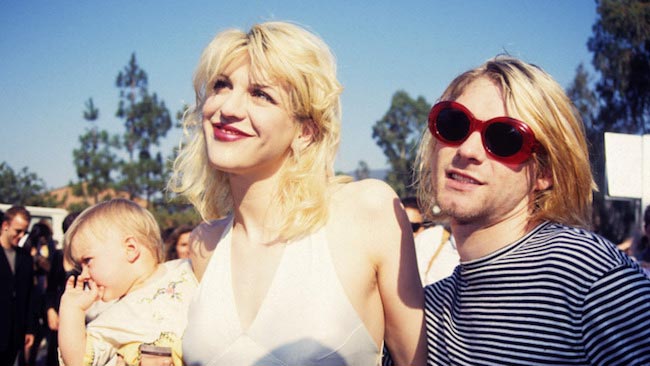
Courtney Love, the very epitome of trashed, home-sheared and mascara-smeared rock-star notoriously hung around the Liverpool scene of the early/mid 80s, a musician-loving, fame-hungry wannabe, desperate for success in any way. After Kurt Cobain took his life, Julian Cope famously took out a full-page ad in the NME to decry his wife’s influence on those around her.
“Free us from Nancy Spungen fixated heroin a-holes,” he said, “who cling to our greatest groups and suck out their brains.”
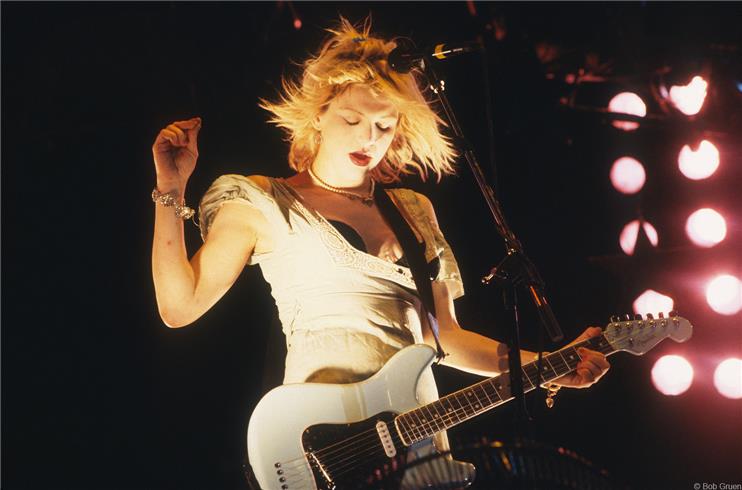
Eventually, after acting roles in the Alex Cox-produced Sid And Nancy (ironic, that, given Cope’s lambasting) and Straight to Hell movies and a short stint in the nascent Faith No More, Courtney found fame in her own right. With her band Hole, Courtney dragged the songs behind her in the way a tantrum-throwing toddler might hold onto a ragdoll. Foot atop monitor, she’d bawl and holler until hoarse, a defiant two-fingered statement that belied the baby-pink Mustang and lacy dress that might’ve hinted at the notion of submissive femininity. With lyrics addressing abuse, sexuality and chaotic living, her autobiographical songs were perfect for the misfits and misplaced in society.
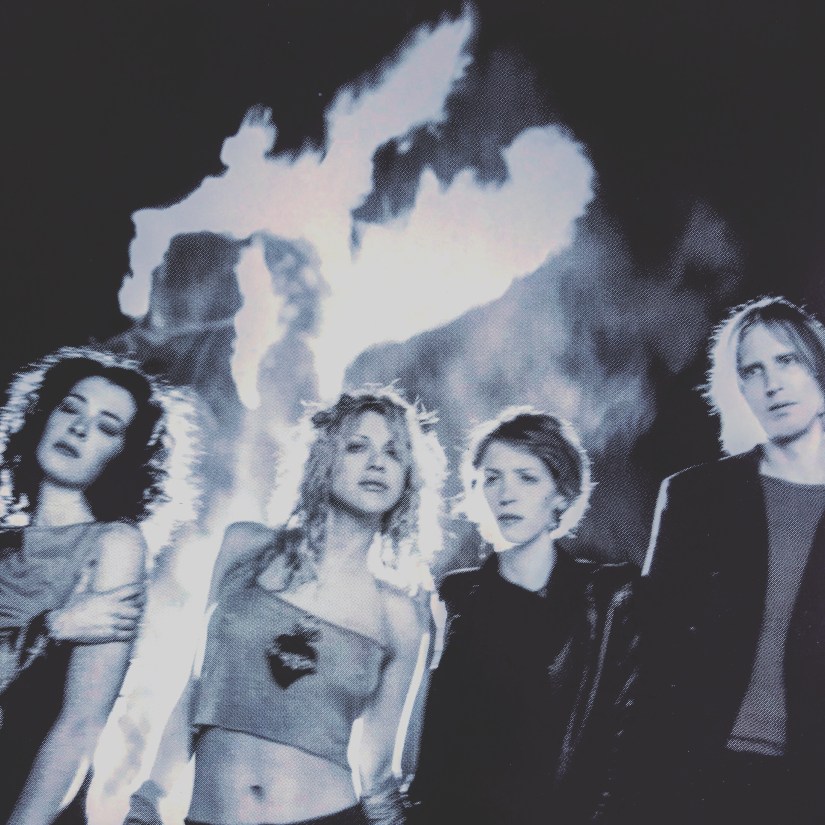
Immediately left and right of her, her junkie-chic band of renegades and reprobates played a right royal lamalama of noise. Bruised, battered and bleeding, Hole songs were raw and unforgiving, brutal, relentless and very loud. Obvious really, given the reference points; the band had links to both Sympathy For The Record Industry and Sub Pop, Sonic Youth’s Kim Gordon produced their first album, and so on…
Occasionally, if she’d taken her kohl-darkened eye off the bawl, Love allowed a melody to escape into the ether. Below the rumble of bass and tumble of toms, the odd diamond might glint for those paying close attention and, by the time of third album Celebrity Skin, things had progressed musically to the point that the song became the equal of the performance. As a result, the album (steered by Smashing Pumpkins’ Billy Corgan in pseudo A&R role) is a big riffing, radio-shiny collection of alt. pop songs.
The album’s title track was the big lead-off single. Celebrity Skin flies in like a jumbo jet, a full force sonic rumination on the fickleness of fame. Love sneers ‘n snarls through the verses, elongates the ‘he-ey-eys and yeah-yeah-yeahs’ in the chorus and goes full-on Stevie Nicks in the acoustic-led middle eight. It’s a cracker.
Hole – Celebrity Skin
The Malibu single is more of the same. With a guitar and vocal that a different producer might’ve smoothed into country territory, Love provides the requisite snarl in all the right places. Choruses are big, harmonised and insistent in their earworm-like tendencies. I’ve never driven down the Pacific coast freeway in a convertible Chevvy, but when I do it’ll be this track and it’s counterpart above that soundtracks the occasion.
Hole – Malibu
*Extra Track
Worth a listen too is the band’s ragged take on Dylan’s It’s All Over Now, Baby Blue.
Hole – It’s All Over Now, Baby Blue
Coming in on the wrong verse, Love treats the master’s piece with little in the way of respect, but it vibrates and squeals in all the right places. More of a reworking than a faithful cover, it’s a whole lotta Love indeed.
Affiliating yourself to tribal youth culture was once the be all and end all for musically-inclined teenagers, but you don’t need me to tell you that. Pre Stone Roses, the teenage Ian Brown was at various times a scooter boy, a northern soul disciple, a mod and a punk (a ‘monk’?!). When the future king of the swingers heard a local rumour that The Clash were in a Manchester recording studio he and his pal dropped any immediate plans they might’ve had and set about tracking down the only band that mattered to them. Unbelievably, they happened past a local music shop just as Topper Headon was trying out one of their kits. Even more unbelievably, after standing around watching The Clash’s heartbeat thrash seven shades from the kit, Brown and his pal were invited back to the studio by Headon to watch The Clash in action.
What unfolded was not any old recording session. The Clash were in the studio to record Bankrobber with reggae artist (and Clash support act) Mikey Dread in the producer’s chair. On the band’s timeline, the track would be released between the ubiquitous double London Calling and hotch-potch triple Sandanista! albums, a stand alone single that CBS originally refused to release. “It sounds like David Bowie playing backwards,” they argued stupidly. Only after import copies began selling in chart-bothering quantities did the label relent and release.
The Clash – Bankrobber/Robber Dub
It’s a terrific single, a million miles from the tinny, phlegm-spittled ramalama of their early stuff and a surprising left turn from some of London Calling‘s more arena-ready and FM-friendly tracks.
Bankrobber is epic, widescreen Clash; dub-inflected, full of twanging spaghetti western guitars and never-ending. Those doom-laden backing vocals went on for so long they ended up on The Specials’ Ghost Town the following year.
Bankrobber was the next logical step in dub for The Clash, coming a few months after their faithful attempt at Willie Williams’ Armagideon Time which appeared on the b-side of London Calling‘s lead single. In an unlikely instance of punk karaoke, the original plan for recording Armagideon Time involved the band visiting the famous Studio 1 in Kingston to record their vocals on top of William’s backing track. This was nixed straight away but as Mick Jones lamented, “they were happy enough to sell us the publishing for it though.”
Recorded (and renamed) with Kosmo Vinyl in London, The Clash’s version is free-form and ad-libbed after the 3 minute mark. Vinyl’s instruction for them to stop after ‘the perfect length for a pop single’ was roundly ignored, with Strummer shouting, “don’t push us when we’re hot!” Listen for Kosmo Vinyl’s voice and revel in The Clash’s musicianship and spontaneity from then on in.
The Clash – Justice Tonight/Kick It Over
Willie Williams‘ ‘original’ version was itself built around the backing track for Real Rock, an early Coxsone Dodd/Sound Dimension release (and a future posting for sure), drawing a direct line from the pioneers of roots reggae to the trailblazers of punk.
I wonder if Ian Brown and his pal were aware of that back then in that recording studion in Manchester.
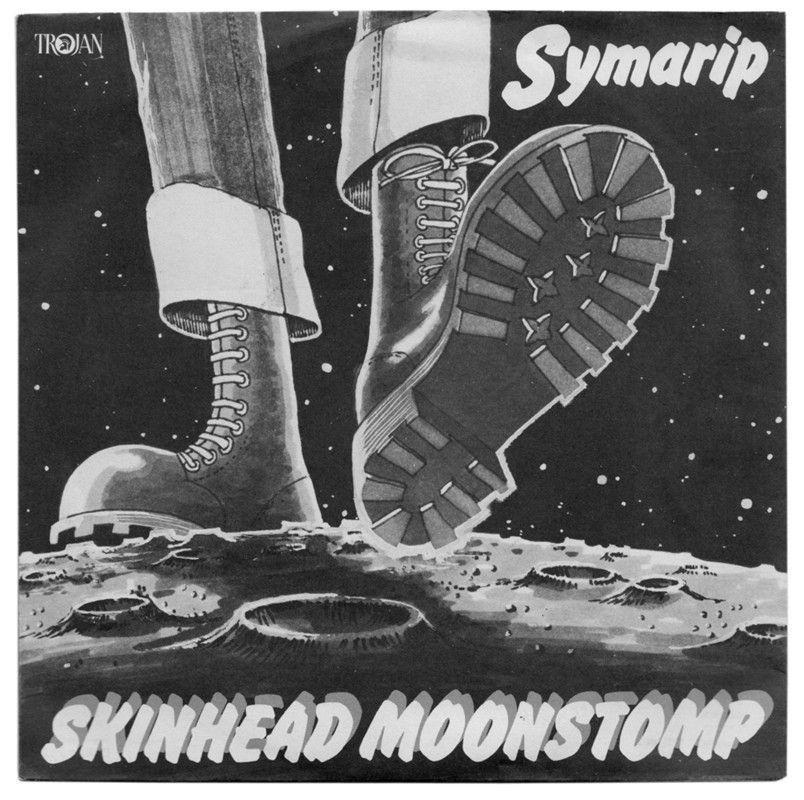
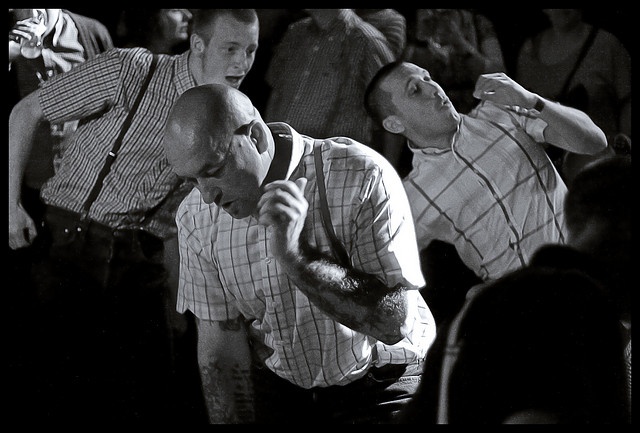
Skinhead Moonstomp by Symarip is like a rocksteady Slade; a 14 hole high bovver-booted ‘n braces metaphorical boot to the haw maws, all squeaky organ and call and response football terracing vocals. If it fails in its mission to have you skanking awkwardly from the waist down you should take yourself immediately to your nearest A&E and ask for a shot of something even more uplifting, should such a thing exist. And if you do find anything more uplifting than this terrific record, say now.
Symarip – Skinhead Moonstomp
Released on Trojan in 1970, Skinhead Moonstomp was nothing more than a cult classic, a grinding, two chord call to arms to take to the dancefloor with all like-minded brethren of the subculture. It would be the 2 Tone craze at the end of the decade that brought the record to wider attention when on its re-release the record crept inside the Top 60. It was even packaged in a suedehead-friendly picture sleeve.
Skinhead Moonstomp‘s popularity continues to this day, belying the lowly chart position and being ever-present on ska and reggae playlists. If you ever find yourself at a ska night, you can be certain you’ll hear it before the night is out. You might also hear Derrick Morgan‘s Moon Hop played immediately before it.
Derrick Morgan – Moon Hop
As is the way with many reggae hits, Skinhead Moonstomp is based around an older record. If you were being kind you might suggest Symarip recorded their version in strict homage to the original. If you were being cynical you might suggest they unearthed a hidden gem of the genre and released ‘their’ record to an uneducated public. The Specials Too Much Too Young is simply a sped-up take on Lloyd Terrell’s Birth Control, after all. You knew that already though.
The Specials – Skinhead Moonstomp
As is also the way with great reggae records, Symarip’s version provided the gateway for the next generation. Those self-same Specials on that self-same Too Much Too Young EP stuck a live medley on the b-side that was based around their take on Skinhead Moonstomp. I’d wager the more sussed and streetsmart Specials’ fans quickly tracked down those two tracks that The Specials had been listening to. Me? I was too busy getting my burgundy Sta-Prest and Y cardigan from Irvine market to consider anyone but The Specials had written such a stomping, marginally violent track. Imagine the baffled confusion of discovering many years later that Madness didn’t in fact write One Step Beyond and then the thrill of discovering Prince Buster on the back of it.
Elastica tend not to appear on many of the lists that constitute the Best Christmas Songs In The World…Ever. Back in 1995, only a year or so since they’d been ever-regulars on the covers of the music press yet long enough to have found them residing in the same ‘remember them?‘ category previously kept warm for them betwixt debut and follow-up album by the Stone Roses, they recorded a BBC Session for Mark Radcliffe that included a loose cover of Ding Dong Merrily On High.
It’s loose in all manner of the word. A band plagued by serious, secretive drug addiction could hardly put their name to a song called Ding Dong Merrily On High. And rather than run through a facsimile of the winter favourite, they instead rewrote most of the words, played the recognisable Christmas carol melody on gnarly bass and, with a nod and a wink to Patti Smith, kept the Latin chorus intact and renamed their version Gloria.
Elastica – Gloria
It’s not bad in an arty, angular sort of way. Guitar strings scrape, the drummer keeps enthisiastic metronomic precision and Justine sulks her way through it doing her best Mark E Smith impression from behind her swinging, shining indie fringe. I wonder if they’d heard The Fall’s Christmas Peel Session by this point?
That’s a rhetorical question by the way. Of course they had.
Recorded around the same time as Elastica were the hot new thing, The Fall‘s Peel Session from December ’94 was notable for two things; One: The band did not one but two faithful, in a Fall kinda way, versions of Christmas standards. Two: The expanded line-up of The Fall at the time featured the glam-tastic sight and sound of two drummers, a shrivelled liver Glitter band for old post-punkers everywhere. Karl Burns was welcomed back into the fold and onto the drum stool after a 9 year absence alongside Brix, last seen on Fall duty 6 years previously.
Like malt whisky, that other great festive favourite, I find my appreciation for The Fall grows with each passing year. I discovered them around the time of Extricate and flirted with their back catalogue from thereon in, but it never really grabbed me in the way that I know it grabbed others. I admire them greatly though, whether they’re sawing their way through Eat Y’Self Fitter or going full-on garage band for their essential take on Mr Pharmacist or keeping it sparse and minimal on Hip Priest or spitting their way through Spoilt Victorian Child or….y’get the idea. There’s a Fall that’s suitable for everyone. It just takes some folk a while to find it.
The larger line-up in 1994 fairly suits the music. They bite and snarl their way through a daft version of Jingle Bell Rock, one-fingered keyboard parping the melody, lyrics changed to suit Captain Mark’s mood, the groop bottling the Christmas spirit in barely over a minute.
Hang on a minute! Christmas song done in band style? Rewritten lyrics?! BBC sesssion?!? I wonder where Elastica got that idea? They even nicked the snappy rattle of The Fall’s drum beat for their Christmas tune. They were never the most original of bands, Elastica, but then, you knew that already.
The Fall – Jingle Bell Rock
Post Office rot in hell, Friday night on Oxford Street,
All walking with green M&S bags, join them up with old beef and sprouts,
That’s the Jingle Bell Rock.
Not quite yer finger-poppin’, frost dusted holiday hit first crooned by bobby soxxer favourite Bobby Helms. That’s the Jingle Bell Rock indeed. And who’s complaining?
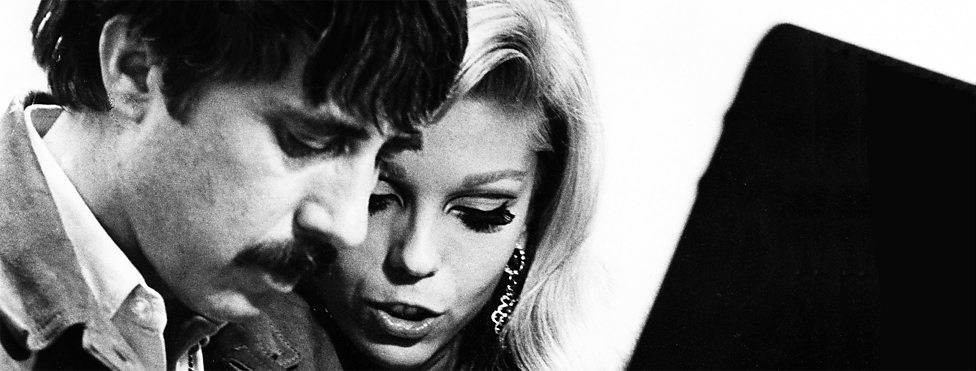
In the early days of Plain Or Pan I penned under the nom de plume of Phil Spector. I suppose it was a combination of being embarrassed to put my real name to anything that might read like a 3 year old’s best efforts and the fact that I didn’t really want anyone to know I had a sideline in writing about old music that kept me from using my own actual name. Things came to the fore when my daft pseudonym cost me the chance of an interview with Nancy Sinatra. “Why on earth would I want Phil Spector to interview me?” she growled, not quite getting the fact that it wasn’t yer actual Phil Spector who’d been in touch. “He was a strange, strange, man and I want nothing to do with him.” At the time, Nancy had been working with a still-hip Morrissey, and I was hoping to base our interview around the recordings they’d been making. Alas, it never happened.
Shortly afterwards I was contacted by someone who wanted me to interview Sandie Shaw. By coincidence, another iconic singer with connections to Morrissey, this was too good an opportunity to pass up. There and then I dropped the pretence and proudly added my own name to the by-line in every article I’d written here. The subsequent interview and article with Sandie (where she name-dropped Morrissey, Debbie Harry and Siouxsie Sioux within the first 5 minutes) became the first piece of paid writing work I’d ever done.
Anyway, back to Nancy S. I’ve had her Greatest Hits rotating recently, a scratchy, crackly 11-track best of that I picked up for 50p (!) in a wee junk shop just off of Glasgow’s Byres Road. Much of it is kitsch nonsense, the sort of stuff that, had she not been the daughter of an icon, may well never had been afforded the attention it got.
The material she recorded with Lee Hazlewood though is fantastic, a heady combination of female/male, light/shade, sweet/sour on record. Sinatra’s voice is cutesy-cute, all light and airy melodies blown in from Hit Factory central. Hazlewood rumbles in like a gothic cowboy, with a voice deeper than a well and twice as dark. Together, they make the sound of milk chocolate and dark chocolate on vinyl.
Some Velvet Morning is the one for me.
Nancy Sinatra & Lee Hazlewood – Some Velvet Morning
Druggy, fuggy and full of sexual innuendo, it’s a psychedelic pop masterpiece, miles away from the light and airy country pop that defines many of their duets.
Hazlewood takes the lead, gliding in on a bed of Barry-esque strings with a baritone that could rattle the lids on the coffins of the dead. He gives way to Nancy, fluttering in like a waltz-time muse. “Sing like a 14 year old who fucks truck drivers,” he instructed, with the blessing of ol’ blue eyes himself. Can you imagine anyone getting away with that nowadays?!?
The whole thing see-saws back and forth, a call-and-response danse macabre. Had it popped up soundtracking The Wickerman or a crucial scene in a Tarantino movie you wouldn’t have been surprised. Quentin T. may yet find a use for it in the future, I feel. Musically, the record is very rich. With instrumentation by the famed Wrecking Crew, it’s lush yet louche, wonky and weird and wonderful.
The other high point of their collaborations is Summer Wine, a track that has all the makings of a great lost Bond theme. There’s the innocent female vocal, parping brass and a not-so-subtle nod to all things Bond with the addition of John Barry’s ubiquitous 5 note signature theme midway through.
Nancy Sinatra & Lee Hazlewood – Summer Wine
The Lee/Nancy thing was done to great effect by Mark Lanegan and Isobel Campbell a few years ago. A post in the near future for sure….
As a bonus for now, here’s Lee’s version of Nancy’s signature theme. It’s a cracker.
Lee Hazlewood – These Boots Are Made For Walking
And here’s Let Me Kiss You, Nancy’s take on the Morrissey track that led them to find one another, the song I never got to ask her about. Hey ho. Morrissey has quite rightly come in for a lot of stick in recent times, and whether he still holds a place in your heart or not, you can’t deny that his performance in the background of this record is vintage Stephen.
Mabon Lewis “Teenie” Hodges is possibly not the first name you alight at when thinking about guitar heroes, yet he’s responsible for creating some of the most instantly recognisable riffs in soul music. In an era when all the focus, all the spotlight shone on the name; Isaac Hayes, James Brown, Aretha Franklin, Al Green etc etc, Teenie Hodges played out the groove in the background with a fluid anonimity that should by rights have seen him carved up there on the Mount Rushmore of soul alongside the singers he helped elevate to greatness.
Teenie began playing at the age of 12, when he and his two brothers played in their father’s band. From there, he came to the attention of legendary producer/arranger Willie Mitchell and Teenie and his brothers left life on the road to form the famed Hi Rhythm house band at Hi Records. The band would play on all the label’s releases, creating a sound and an identity that was instantly recognisable. It’s mainly his work with Al Green that he’s known for. Amongst others, Teenie co-wrote Here I Am (Come And Take Me) and Take Me To The River with the Reverend, his soulful, steady rhythm guitar underpinning two head-nodding accepted classics.
Al Green – Here I Am (Come And Take Me)
It’s the subtle flourishes and signature riffs that differentiate Hodges from other players of the era. Perhaps it was Al Green’s lack of ego that allowed his guitarist to express himself, or perhaps Green knew raw talent when he heard it, but either way, Green left plenty of space in his music for Hodges to step to the fore. Listen to any number of Green classics – Let’s Stay Together or I’m Hooked On You or How Can You Mend A Broken Heart? for example -and you’ll spot Hodges gently arpeggiating triplets cascading in the background. His playing on the Bee Ges’ cover is particularly lovely.
Al Green – How Can You Mend A Broken Heart?
Now and again, Hodges would write an all-out classic riff. Let’s Stay Together and L.O.V.E. (Love) benefit from intro riffs that define the very essence of soul music. What’s soul music? someone might ask. Point them in the direction of these tracks and it’ll all become clear.
Al Green – L.O.V.E. (Love)
Hodge was Green’s musical director by the time of the Al Green Is Love LP and his horn arrangements, understated keys and gentle riffs define the album. L.O.V.E. is a cracker. Green rightly takes centre stage, offset by a gently cooing trio of backing singers. The music allows the vocals to be the focal point but if you can look past Green’s heartfelt vocal delivery and focus your attention on the guitar playing you’ll be in awe of an incredible piece of music. I’ve tied many a finger in knots trying to get the notes and chords down pat. That’s the easy part. Hodges’ feel for the music is just terrific. I doubt it’s something I’ll ever quite get to.
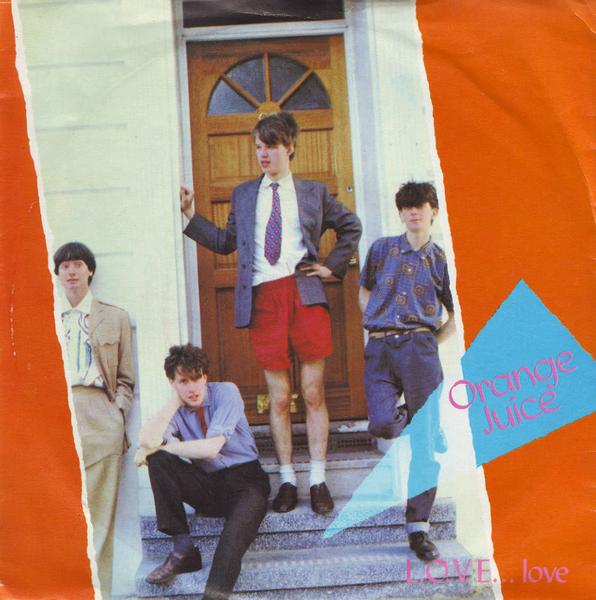
One determined west of Scotland guitar player who had a good stab at it was Edwyn Collins. On Orange Juice’s You Can’t Hide Your Love Forever LP, the band close side 1 with a sincere though slightly ragged run through of it; Hi horn parts, falsetto vocals and a terrific facsimile of Hodge’s original riff. In a post-punk wasteland where angry young men shouted angry thoughts with angry guitars, it was a brave move by Orange Juice. Forever with one eyebrow arched and never far from taking the opportunity to poke fun at machismo, it’s just perfect, even if the record-buying public thought not. Orange Juice’s brave attempt at L.O.V.E. staggered to the giddy position of number 65. There’s no accounting for taste.
Orange Juice – L.O.V.E. (Love)
Fact
Teenie Hodges made the lion’s share of his money throught his co-writing credit for Take Me To The River. It wasn’t the royalties that came via record sales of Green’s original, nor the countless covers (Talking Heads and Annie Lennox amongst them) that balooned his bank balance. That honour goes to Billy Big Bass, the singing fish that plays the track at the press of a button. The ubiquitous toy ornament that was all the rage 15 or so years ago made more money for Hodges than all his other writing credits added together and certainly helped his 3 wives and 8 children to enjoy the lifestyle they were accustomed to before Hodges death in 2014.
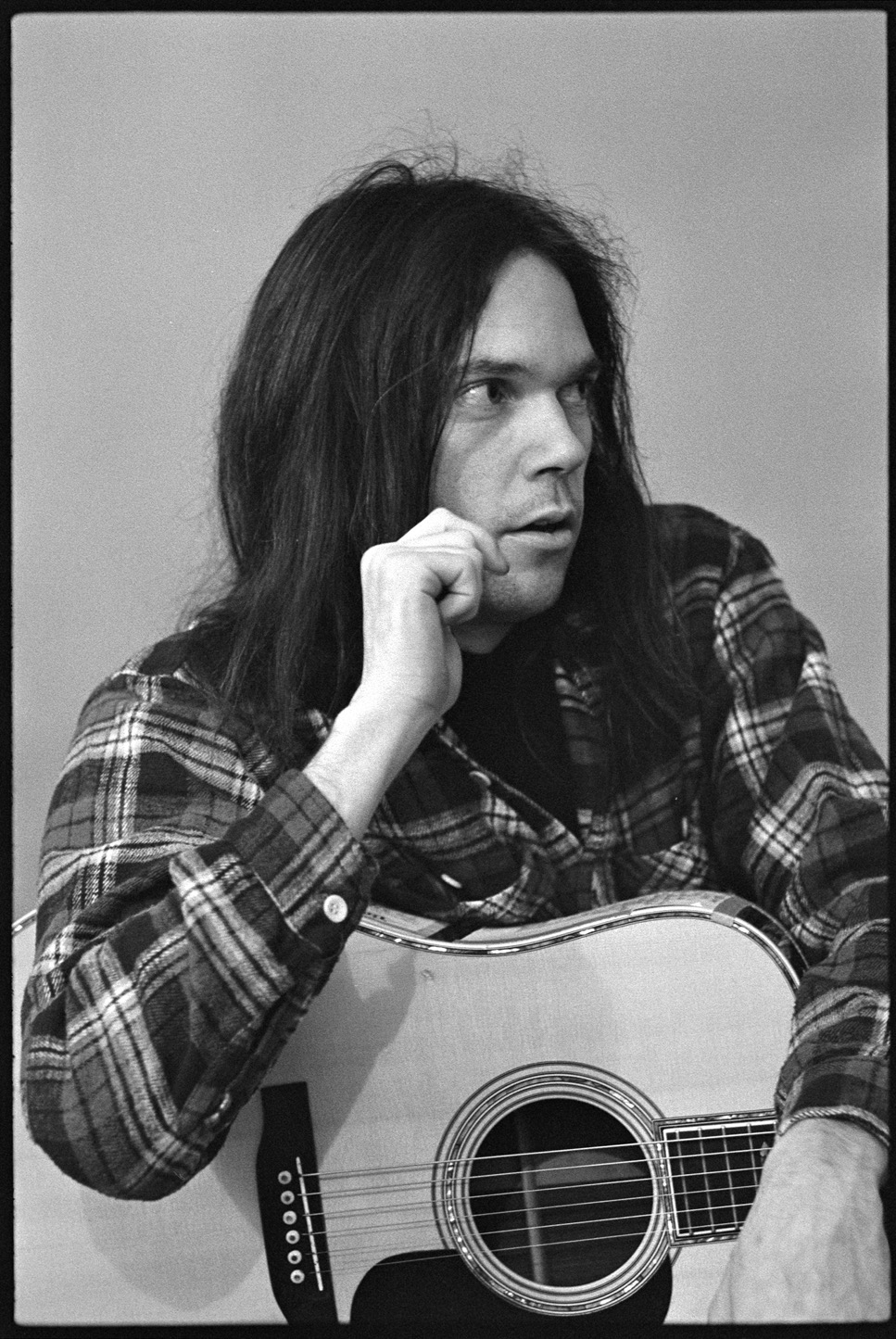
I’ve kinda lost my way a wee bit with Neil Young. I bought Le Noise, 7? 8? years ago, played it once then filed it on the shelf alongside all the other inessential Neil albums of the time. Chrome Dreams II, for example. Or the live one that came out around 2001 and included a couple of tracks as yet unavailable elsewhere (I think). Without reaching for either of them, I doubt I could tell you a single track on them. Jeez – I can’t even tell you the name of one of them. You buy things out of blind loyalty to an artist and that’s what happens.
I’m also out of touch with where his Archive series is up to. Are we still just on Volume 1 of the sprawling, all-encompassing Blu-Ray only release? Like many here, I suspect, I’m quite happy to admit I liberated the best of that release via one of the many Torrent sites that clutter up the darker corners of the internet. Some of the stuff probably ended up featured in posts on Plain Or Pan too. And those first couple of live shows he released on his more budget-friendly Neil YoungArchives Series – the Massey Hall and Filmore shows – are essential for any and all fans of raggedly-plucked acoustic rock and ragged and raucous sprawling rock music. A quick trip to Wiki tells me there are around a further half dozen such releases, no doubt all good, but I just don’t seem to have the time to invest in them. Sorry Neil, although I’ll probably get around to Hitchiker at some point soon. It does float my boat in all the best ways; vintage mid 70s material scrubbed up for these days? Sounds great.
V Festival
Why though would you want to seek out a ropey live recording featuring Neil and his International Harvesters when you could be diving headfirst instead into his self-proclaimed ‘Doom Trilogy’? Neil, never one to conform to expectations was at an all-time career high with 1972’s Harvest album. Building on the themes and musical styles of its predecessor After The Goldrush, Harvest spawned an actual hit single, with the lilting cowboy balladry of Heart Of Gold seemingly assuring Young his place at the top table of FM-friendly pop alongside other chart-bothering acoustic balladeers such as Paul Simon and Don McLean. Instead, Young yanked hard on the steering wheel and, in his own words veered into the ditch.
“ ‘Heart Of Gold’ put me in the middle of the road. Travelling there soon became a bore so I headed for the ditch. A rougher ride but I saw more interesting people there.”
Interesting right enough. Friends ravaged by drugs. Failed relationships. Death. Despair. The end of the 60s ideal. Recommending Reprise Records sign this hippyish new singer by the name of Charles Manson…..
Young took the path less travelled, wrote the songs he wasn’t expected to write and ended up with a trilogy of fantastic albums. Much of this music achieved mythical, cult status as the years grew, due in no small part to Young willfully deleting the key albums and, in the advent of the CD era, refusing to have them released on the shiny new format. Citing the poor sonic quality of the format (according to Neil, compared with vinyl only about 5% of the recorded music makes it from the CD and out of your speakers. The other 95% is a flattened, compressed version of the real thing), Neil Young hates CD with a passion. He’s analogue all the way, which is why if you can track down original vinyl copies of On The Beach, Time Fades Away and Tonight’s The Night you should buy them forthwith and revel in the tunes in the grooves.
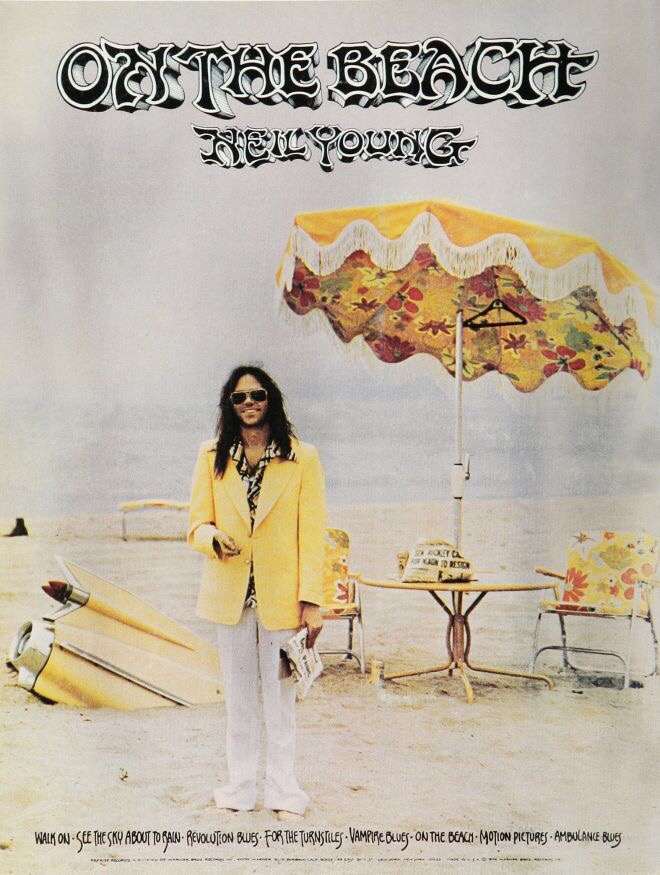
On The Beach is easily one of my favourite albums of all time. Hardly a ringing endorsment from a barometer of hip opinion such as myself, but it truly is a terrific LP. Years ago my sister went a trip to New York and when she asked if I’d like her to bring me anything back, I replied that I’d hate to think she’d find a copy of On The Beach and not buy it. She only went and did. A first issue, Reprise Records release, with the famous psychedelic printing on the reverse of the cover too. An astonishing present.
Hardly a rollicking good time, On the Beach is the sound of depression, paranoia and nervous breakdown. But if it’s self-indulgent, self-obsessed music you’re after, look no further. Charles Manson, the young hopeful he’d suggested to Reprise had by now commited his heinous murders. Young sings about it in the scratchy, jittering Revolution Blues, assisted by The Band’s Rick Danko and Levom Helm on bass and drums and David Crosby on rattly and erratic rhythm guitar.
Neil Young – Revolution Blues
It’s the sound of anti-commercialism in every way. Downbeat, downplayed and downtrodden, Vampire Blues is an eco anthem before such things were considered, Young bemoaning the way the oil industry bore into US soil with scant regard for people or place. “I’m a vampire, baby, sucking blood from the earth,” he sings, a million miles away from Heart Of Gold and the Hot 100.
Neil Young – Vampire Blues
Side 2 is even bleaker. Opening with the album’s title track, it starts in slow motion and, as the side progresses, gets slower still. To call it moody and introspective would be too kind. Dylan is moody and introspective. The Smiths are moody and introspective. Even Eurythmics can be moody and introspective. ‘Here comes the rain again’ and all that jazz. But side 2 of ‘On The Beach‘? Listen to it late at night with the lights dimmed low and a fine malt in your hand and you may just never make it upstairs to bed.
Neil Young – On The Beach
The title track is a gorgeous, chiming ode to despair. “I went to the radio interview….I ended up alone at the microphone.” sighs Neil. “I think I’ll get out of town.” This is the same optimist who, only a few months earlier, had been singing “I want to live, I want to love, I’ll be a miner for a heart of gold.” Not now daddy-o. By the time you reach ‘Ambulance Blues‘, the album closer, Neil’ll be informing you that we’re all just wasting our time, “pissing in the wind“. Apparently, side 2 was originally to be side 1 and only at the last minute was Neil convinced to switch it around, something he immedialtely regretted. It means though that the album opens with the jaunty Walk On, a curveball as it turns out, before the mood of the album takes hold. If the album had been released as Young had intended, how many folk would’ve made it all the way to side 2?
*Bonus tracks!
Here’s Mercury Rev’s faithful reworking of Vampire Blues. I remember reading at the time that the band had planned to record the entire On The Beach album and add a track at a time to the b-side of future singles. Did they ever complete this? Seemingly I’ve lost my way with Mercury Rev too.
Mercury Rev – Vampire Blues
Here’s Nina Persson of The Cardigans in her A Camp guise doing a terrific version of On The Beach at the Hutsfred Festival a few years ago. I’m sure this has appeared on Plain Or Pan before, but if you missed it first time ’round…
One Artist stands head and shoulders above all others when it comes to internet presence…or lack of. Ironic really, considering he wasn’t much taller then the height of nonsense. Yet He Who Cannot Be Named held such sway over his music appearing online that websites could (and did) disappear overnight at the mere mention of his name therein. Heaven help you if you dared feature any actual music. His army of internet police swiftly and efficiently erased all trace of free music relating to their master even quicker and slicker than their boss was able to rattle off one of his insanely flash guitar riffs. Even the use of purple font, they say, was considered a risky business.
I write all this in the past tense as since the artists’s death, the ‘net has seen a subtle relaxation and/or bending of the rules when it comes to him. You’d still be a fool to put any old mp3 up for grabs, and wobetide you if you’ve considered YouTubing shaky mobile footage of the maestro at work on a stage gone by. As the ancient proverb goes, never, ever try to steal from a man who dances in kitten heels. There seems to be an unspoken agreement though that we writers can now write about him without fear of reprisal. So here goes.
If I Was Your Girlfriend is the artist in question in microcosm. Produced, Composed, Arranged and Performed by it says on the sleeve notes of Sign O’ The Times, the single’s parent album. It’s a monumental album in every way; a double, for starters, it takes in funk, soul, rock, rap, jazz, blues and gospel, genre hopping with effervescent fizz like a hyperactive child who’s overdosed on sugar. It also sounds as fresh today as the day in 1987 when it was born.
Almost everything is played by just the one musician. The skeletal shards of white-hot house on Housequake are played and sung only by him. The pseudo-psychedelia of Starfish & Coffee is created only by him. If I Was Your Girlfriend, with its metronomic yet strange rhythmic beat and on-the-four computerised thunderclap was built up from scratch by one person. Add a sparse keyboard signature riff, a gloop of slap bass and a collage of backing vocals featuring multilayers of the one voice sped up and slowed down and you’re in the presence of greatness. Stick a risque and pervy lyric on top, of the sort that no-one else would get away with, and you have yourself a weird ‘n wonky pop classic. The way the vocals weave in and out is magic. He harmonises with himself, deep and gritty one moment, falsetto flash the next. Just as you’ve pegged him for a god-fearin’, tear-soaked and on his knees James Brown, he goes all spoken word, like a pervier and more grooved-up Gainsbourg, if that is at all possible.
He Who Cannot Be Named – If I Was Your Girlfriend
Like all great artists, his best work could often be found tucked away on the b-sides. He may have been considered an ‘album artist’, easy to see why with a golden run stretching from 82’s ‘1999‘ to 87’s ‘Sign O’ The Times‘ and many of his other 39 (39!!!) studio albums unarguably solid gold, stone cold classics, but the multitude of singles and remixes that spat forth with every release contained their fair share of underheard greatness. Shockadelica was a left-over from the Camille phase, an alter-ego project that never really got going. The music was too good to waste though, and much of it ended up on other releases, such as the b-side of If I Was Your Girlfriend. This is classic He Who Cannot Be Named Music – call-and-response vocals, computerised on-the-one rhythms, casually tossed-off squealy guitar solos, underpinned by a 7th add 9 chord, the chord that colours any music the colour of funk.
He Who Cannot Be Named – Shockadelica
Early 90s girl group TLC made a decent stab at covering If I Was Your Girlfriend, the original providing the blueprint for the trio’s sassy but rough round the edges r’n’b. They even have a go at some of the spoken word section, although no doubt in order to appeal to their legions of teenage fans, they’ve left out some of the saucier words.
TLC – If I Was Your Girlfriend
And here’s Creep, one of their biggest hits. This actually sounds like a track that He Who Cannot Be Named might’ve been inclined to record himself; horn samples, synthetic rhythms, multilayered vocals with falsettos aplenty, hooks galore….s’a cracker!
Back in 1990, when I provided shaky lead guitar and wobbly vocals in a promising local band that would soon cease to be, myself and two of my bandmates, deep in the midst of a songwriters’ block, visited the local market where an old guy sold older records at knock-down prices. We went specifically to look for records no-one had ever heard of in order to rip off a chord change here or a melody there. It would be the nail in the coffin of our creative process and we limped into insignificance shortly after.
Last week I was flicking through my records, looking for something different to play, when I chanced upon one of the albums we’d bought. Quite what ‘Try To Be Mensch‘ by Element Of Crime brought to the world of guitar-based music is anyone’s guess. I’d picked it up after spotting John Cale credited with keyboard duties. Whether or not it’s THE John Cale is open for debate. A quick Google has proven fruitless and the record, if my 27 year-old memory serves me well bore little resemblance to anything like the Velvet Underground. At 99p it proved to be a waste of money. However….
…when I pulled it out to look at it the other day, wedged inside was my copy of Black Market Clash, an album I’d long-since assumed to be lost forever. How The Clash album had managed to find its way inside the sleeve of a record I’ve never ever played all the way through is a mystery, but when it fell out, it was greeted like a long lost pal. And ever since, it’s been spinning on heavy rotation.
I love Black Market Clash. It’s a pot pourri of everything The Clash were; rare mixes, re-recordings and interesting cover versions, all helped along by a generous sprinkling of filling-loosening reggae basslines. It’s as far-removed from the spitting, snarling, rabid dog of punk as is possible. You might go so far as to say that with all their eclecticism, yer Clash were rock’s answer to Brian Wilson; ideas fully realised, gung ho experimentation, risk-taking, rule-breaking, chart-making hits. The full version of Bankrobber/Robber Dub is nothing short of sensational. Crucially, the version on vinyl is a full minute and a half longer than the slightly edited but still superb CD edit. Technology being what it is in my house, you’ll need to make do with the shorter take though…
The Clash – Bankrobber/Robber Dub (CD edit)
Elsewhere, there’s a version of Booker T‘s Time Is Tight that somehow failed to make the cut on Sandinista! and a faithful reworking of Willi William‘s Armagideon Time that first saw the light of day on the b-side of the London Calling single.
The Clash – Time Is Tight
Booker T and the MGs – Time Is Tight
The Clash – Armagideon Time
Willie Williams – Armagideon Time
These days you can buy Super Black Market Clash on CD (although it’ll be missing (Armagideon Time as well as the extra 90 or so seconds from Bankrobber) a turbo-charged version of the original 10″ EP/LP, but if it’s a quick fix of eclectic Clash you’re after, that midi-sized slab of vinyl with a police-defying Don Letts on the cover is all you’ll need.
The previous post (on Elliott Smith, below) was written on the back of the Sgt Pepper anniversary/reissue jamboree. By coincidence, so is this one.
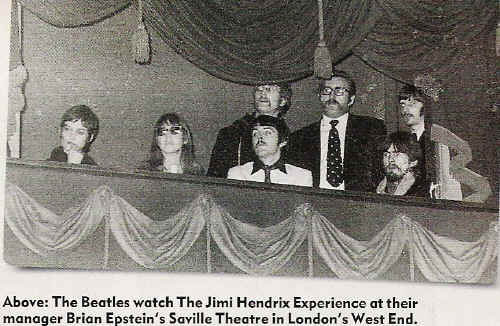
Sgt Pepper turned the world on its axis. The day it was released, the 60s went from the monochromed mundanity of a smog-filled Britain with wee men in bowler hats running the country to a cosmic technicolour planet where anything was possible. And anything was possible. On the 4th June 1967, just two days after Pepper came out, Paul and George found themselves at The Saville Theatre for a Jimi Hendrix Experience show. Hendrix, perfectly aware that half of The Beatles were in attendance had the mother of all aces up his silken batwinged sleeve.
Hendrix had appeared from nowhere, brought to Britain by The Animals’ Chas Chandler, immediately establishing himself as a top fixture in all the right clubs in swinging London. He was a top-heavy hippy in military garb, supported by sparrow-narrow legs with hair as wild and electric as the upside-down Strat he toted. Jaw-dropping in both sound and ability, Jimi could play lead and rhythm concurrently, his big right thumb working the bass notes the way a conventional guitarist might use his first finger. With black-as-coal hamster eyes permanently sparkling he sent multicoloured notes of amplified electric greatness out into the ether. He was untouchable.
To open The Saville Theatre show, Jimi and his Experience worked up a version of Sgt Peppers‘ lead track, slow and sludgy, loose and on the edge of falling apart, unmistakeably Hendrix and super-thrilling. Jimi replicated the whole thing, even playing the brass section as guitar riffs. A guitar-heavy track to begin with, Hendrix made it his own. A thrilled Paul and George watched from the balcony as Jimi caught their eye and smiled his knowing, lopsided, stoned grin.
Jimi opened, the curtains flew back and he came walking forward, playing ‘Sgt. Pepper’, and it had only been released on the Thursday so that was like the ultimate compliment. It’s still obviously a shining memory for me, because I admired him so much anyway, he was so accomplished. To think that that album had meant so much to him as to actually do it by the Sunday night, three days after the release. He must have been so into it, because normally it might take a day for rehearsal and then you might wonder whether you’d put it in, but he just opened with it. It’s a pretty major compliment in anyone’s book. I put that down as one of the great honours of my career. I mean, I’m sure he wouldn’t have thought of it as an honour, I’m sure he thought it was the other way round, but to me that was like a great boost. (Paul McCartney)
Jimi Hendrix Experience – Sgt Peppers Lonely Hearts Club Band (Saville Theatre, London, 4.6.67)
One of the best Beatles’ covers? Quite possibly. You’ll have your own ideas, no doubt. Beatles’ covers are ten-a-penny. We all know that. The Sgt Pepper album was treated to the full monty in 1987 when the NME, back in the days when it was still a barometer of hip opinion, released the whole album in cover form. It’s a fairly stinking album, all truth be told. It did raise money for charity, getting Wet Wet Wet’s version of ‘With A Little Help From My Friends‘ to number one in the process, and it did give Billy Bragg a back-door entry to the top of the charts (the barking bard from Barking’s version of ‘She’s Leaving Home’ was on the b-side) but, 30 years on, it’s best forgotten about.
In contrast to Jimi’s spectacular take on the title track, Three Wize Men (Google won’t help) bravely attempted a none-more-80s hip hop version of the same track. Perhaps at the time it was a radical thrill (I doubt it) but nowadays it sounds about as edgy as something Age Of Chance might’ve left lying unloved on the studio floor.
Three Wize Men – Sgt Pepper
The album closer, by that most NME of bands The Fall, is a bit better, this album’s saving grace, even, even if Mark E Smith sounds totally bored by the whole concept. He probably was.