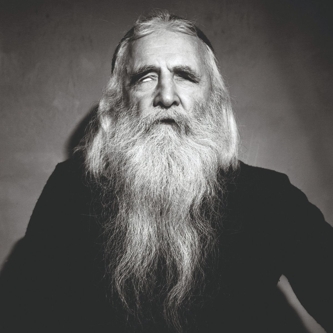
That’s Moondog, the blind composer, poet and inventor of all sorts of weird ‘n wacky instruments. For twenty or so years he lived on the streets of New York, sometimes dressed head to toe in full-on Viking garb, earning himself the title ‘The Viking of 6th Avenue‘. Moondog always composed his musique concrète from the street sounds of daily Big Apple life, turning honking traffic horns and street corner spats into snaking, rhythmic pieces of music. The most cult of cult figures, he makes Yoko Ono come across like Will.I.Am by comparison.
MoondogDo Your Thing:
1978’s H’art Songs featured Do Your Thing, a childish, reedy-vocalled, piano-led baroquish, sunshine piece of pop that wouldn’t have sounded out of place on The Kinks’ We Are The Village Green Preservation Society LP.
As a one-off curio, it’s a nice wee song. And while I can’t vouch for the rest of Moondog’s output, I suspect it’s perhaps not as accessible as Do Your Thing. One person who might know is Gerry Love, who’s Lightships project first brought Do Your Thing to my attention.
LightshipsDo Your Thing:
Lightships‘ version comes vibrating out of the haze towards you, shimmering softly in the July heat like a frisbee forever floating, edges morphing out of shape under the glare of the midday sun with three chords, double-tracked whispered vocals and a tinkling glockenspiel with its arm wrapped around a twanging guitar for comfort. It calls to mind the hissing of summer lawns, the far-off laughs of children and melted tarmac on the pavement. Your hayfevered eyes and nose might be flowing uncontrollably like a mountain stream but this record will surely cure you. I could listen to it forever.
One of the high points of a ridiculously brilliant project, Gerry Love’s transcendent cover of Do Your Thing first appeared a couple of years ago on the b-side (the b-side!!) of the Sweetness In Her Spark single, tucked away for the ears of only trainspotters and completists. The true sound of summer, now is the time to liberate it.
See this World Cup? It’s fairly playing havoc with my writing schedule. Anyway, watchin’ that Fellaini fella play for Belgium earlier on had me reaching for my Sly Stone *LPs.
Sly Stone‘s 4th album with the Family Stone was Stand!, an LP choc-full of call-and-response male/female vocals, fuzz bass, horn blasts and a swaggering pop funk that’s untouchable. When highlighting the genius of Sly, the critics will always go for the moody, lo-fi introspective paranoia of There’s A Riot Goin’ On, but if you want an album to soundtrack your summer, you need only reach for Stand!
As well as the title track, the LP hurtles along on a wave of prime-time Sly – Sing A Simple Song, Everyday People, Don’t Call Me Nigger Whitey, I Want To Take You Higher. All tracks I’m sure you’re familiar with. Tucked away in the middle of the first side is the album’s hidden masterpiece – Somebody’s Watching You.
Always missing from the various Sly ‘Best Ofs’ that clutter up the virtual racks of hyperspace, Somebody’s Watching You deserves your attention. It’s Sly in miniature – songbird-sweet female vocals filling the gaps between Sly’s bottom-of-a-well baritone, a horn section that parps away in happiness exelsius, a choppy, descending guitar riff, with a tasteful electric piano and organ fleshing the whole thing out. The fact that Sly had the genius to add the poetically rhythmic Shady As A Lady In A Moustache line makes it even better.
Sly & The Family Stone – Somebody’s Watching You
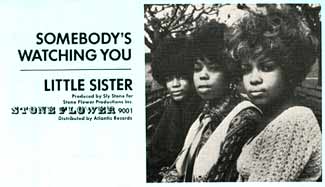
Those songbird-sweet vocals were provided by Sly’s little sister Vaetta and her 2 gospel-loving pals Mary and Elva. They were collectively known as Little Sister and provided backing vocals on much of the Family Stone’s output from Stand! onwards.
With a bit of commercial success under his belt, Sly brokered a deal with Atlantic Records that would allow him to write and produce (and occasionally feature on) tracks by other artists.
Between the release of 1969’s Stand! and it’s 1970/71 follow-up There’s A Riot Goin’ On, he recorded and released 2 Little Sister singles. The first, You’re The One, was Sly-lite r’nb funk by numbers, all popping bass and groovy bass runs.
The second was an astonishing version of Somebody’s Watching You. Often credited as being the first track to feature the rudimentary beat of the nascent drum machine, Little Sister’s Somebody’s Watching You is darker and moodier than the original but no less than 100% Sly. Sparse and skeletal, there’s nothing much to it at all. It starts as if half-way through, with the girls’ whispered vocals and murky instrumentation drawing you in. A guitar wah-wahs until then end of never and the Fender bass is set to ‘groovy’ once more. The whole thing is over and done with in less than 3 minutes. Hardly the perfect pop song, but highly influential – the girls’ falsettos coupled with the funk instrumentation and gentle pitter-patter of the drum machine could almost be a blueprint for Prince – you can practically hear him writing The Ballad Of Dorothy Parker as this record spins.
Little Sister – Somebody’s Watching You
Click here to read more about the recording of Sly’s There’s A Riot Going On. It’ll help you make sense of the advert below…
*Aye, OK. I stuck them on the trusty old iPod while I painted my knackered and faded garden furniture. Looks great now. If anyone would like to give me some Sly Stone vinyl, feel free to get on touch.
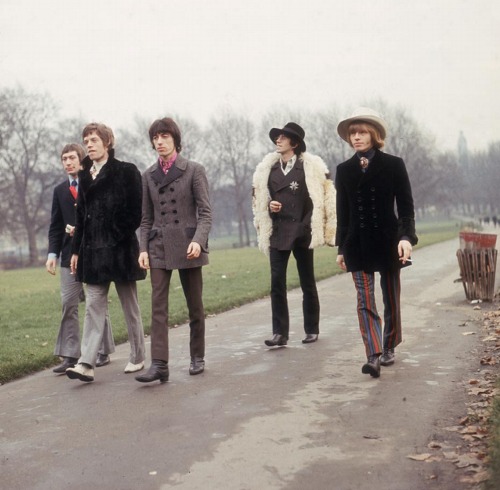
1967 was The Summer Of Love, although for the Rolling Stones it was anything but. By now, Brian was an extreme liability. Totally lost to drugs, puffy-eyed footage of the time shows him incapable of doing practically anything. His knack of being able to get a tune out of any exotic instrument hadn’t quite deserted him yet. Otherwise, he’d have been kicked out of his own band earlier than he eventually was. A trip to Tangier with doppelganger girlfriend Anita Pallenberg ended with Anita returning to Britain in the arms of Keith, who’d circled the troubled couple like a shark sniffing blood. Band dynamics, unsurprisingly, were irreparably damaged forever.
Amidst the chaos, the Stones found time to travel far and wide, not in the sense of a touring pop group, but as well-moneyed young tourists. Marrakesh became a favourite haunt. There, they’d met a dealer who introduced them to hashish, importing the drug back into Britain in the soles of custom-made shoes. At a party at Redlands, Keith’s very big house in the country, the Stones plus their girlfriends were subjected to a raid by police acting on a tip-off. The tabloids of the day set right into the Stones, with outlandish stories of a drug-taking, naked orgy. ‘Nude Girl At Stones’ Drugs Party‘ , ‘Why Girl Was Wearing Only Rug‘, ‘”Merry Nude” In Slipping Rug‘. Nothing much has changed, eh?
During the ensuing trial, prosecutors claimed that the only woman in the house, Marianne Faithful, was dressed in nothing but a fur rug that she let slip occasionally. They claimed that her lack of inhibition was a clear sign she was under the influence of drugs, specifically cannabis. Let’s face it, she probably was. By the end of the trial, the Stones were made examples of. Mick and Keith were subsequently sentenced to jail, Mick for 3 months for possession of amphetamines and Keith for 12, for allowing cannabis to be smoked in his home. Immediately they appealed against their sentence.
Pop fans and friends in high places voiced their opinions. Keith Moon and girlfriend Kim Kerrigan joined in the protests. William-Rees Mogg, the editor of The Times famously wrote an editorial that argued the Stones’ case, saying that if Mick and Keith were jailed they’d be seen as martyrs to a cause, and that would not help the anti-drugs movement in any way, shape or form. The Stones continued to craft out half-hearted tracks for their forthcoming Satanic Majesties Request LP, the shadow of the gaoler hanging grimly upon their shoulder. It wouldn’t be until the end of July that their appeal would be upheld.
Free men by August, Mick, Keith and the rest of the Stones gathered to create one of their most astonishing pieces of music.
Rolling Stones – We Love You
We Love You was recorded as a ‘thank you‘ to the fans who’d stood by them. Beginning with the clattering of a jail door and a nagging, repetitively hypnotic Nicky Hopkins piano line, it‘s a droning, paranoid anthem of defiance, a two-fingered salute to the establishment who’d tried and failed to squash them.
A barely functioning Brian hammers out a wonky mellotron riff that parps throughout like the wasted half-cousin of The Beatles’ All You Need Is Love and the backing vocals (featuring an uncredited Lennon and McCartney ‘conducted’ by a visiting Allen Ginsberg) slur and slide into oblivion.
“They looked like little angels,” Ginsberg wrote later of the Stones and Beatles, “like Botticelli Graces singing together for the first time.”
Bill Wyman’s bassline that plays just behind the piano riff is in equal parts terrifying and extraordinary, creating a level of helpless claustrophobia that’s not been matched since. Keys jangle menacingly, gaolers’ footsteps echo throughout and the whole thing swirls down the plughole with a Made In Marrakesh fuzz guitar overload.
The band even went so far as to make a promotional video to accompany it. Aping their recent trials and tribulations, no-one at the BBC dared show it. The least poppiest of Stones singles to date (their 13th), it peaked at a disappointing number 8 in the UK.
* Bonus Track!
For a brief moment in time between ’89 and ’90, my friends and I deserted the favoured local indie disco for the far more exotic charms of the Metro in Saltcoats, a sticky-carpeted former old cinema where I’d seen Star Wars in the first week of release. The Metro was packed full of brickies, bastards and jail bait but had an anything goes policy to what was loosely termed ‘dance music’. Two years later and it’d be a hell hole, but for a brief moment in time it shone as brightly as the summer sun. The Strangler’s Peaches bassline played out behind some generic four-to-the-floor dance beat one memorable night. One other time they played this…
4 For Money – It’s A Moment In Time
Sampling a sped-up We Love You piano riff and adding a gospelly male shouter on top was hardly groundbreaking (and these days it sounds fairly rubbish) but when first heard this track was everything we wanted. A dance beat. And the Stones. And we were sure that no-one else inside the Metro knew it was a Stones’ track. The snobs that we were.
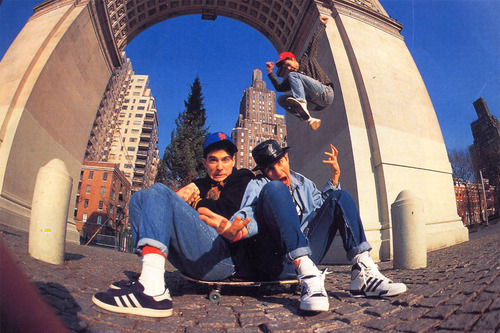
She’s On It was the Beastie Boys’ third single. A big, dumb, frat-boy rock/rap crossover, it provided the Beastie Boys with an instantly identifiable sound.
Prior to She’s On It, the Beasties had played tinny, rattly 150mph thrash punk with all the melodic appeal of Courtney Love’s fingers being scraped down a blackboard. She’s On It transformed their outlook towards music and was essentially the blueprint for the Beastie’s early career from thereon in, setting the stall out for what would follow until the end of the 80s – a trio of shouty/whiny/immature white boys’ voices hot-wired to a primitive beat box with a lowest common denominator rock riff welded underneath. Utterly fantastic, of course.
With all the unspoken telepathy of a bickering old married couple finishing one another’s sentences, from She’s On It in ’85 all the way to the band’s 40th and final single, 2011′s Don’t Play No Games, what I really like about the Beastie Boys is that almost every couplet they ever wrote is SHOUTED! for added emphasis;
There’s no conFUSION in her conCLUSION!
She wants to waste my TIME and that’s no deLUSION!
She’s On It has the mercurial hand of Rick Rubin all over it. The guitar riff that underpins the whole thing, something I’d always thought to have been an unlicensed sample from some straight up 70s rock anthem or other, appears to have been written and played by Rubin himself. I’m happy to be corrected, but if you ch-ch-check the credits on the record, that’s what it looks like.
By the time the solo has kicked in, you could be forgiven for thinking you’re actually listening to Fight For Your Right. All that’s missing is a sticky-fingered Volkswagen badge around your neck and the ‘KIIIIIICCCCKKKKK IIIIITTT!’ at the start. Considered too low-brow even for the Licensed To Ill LP, She’s On It was only ever released as a stand-alone single, although it appeared on the soundtrack to pseudo Def Jam biography Krush Groove and subsequent Beastie’s Best Ofs. But if you want the real Best Of the Beastie Boys, you need to buy Check Your Head. The critics might say Paul’s Boutique, but the smarter among us know differently. Don’t we?
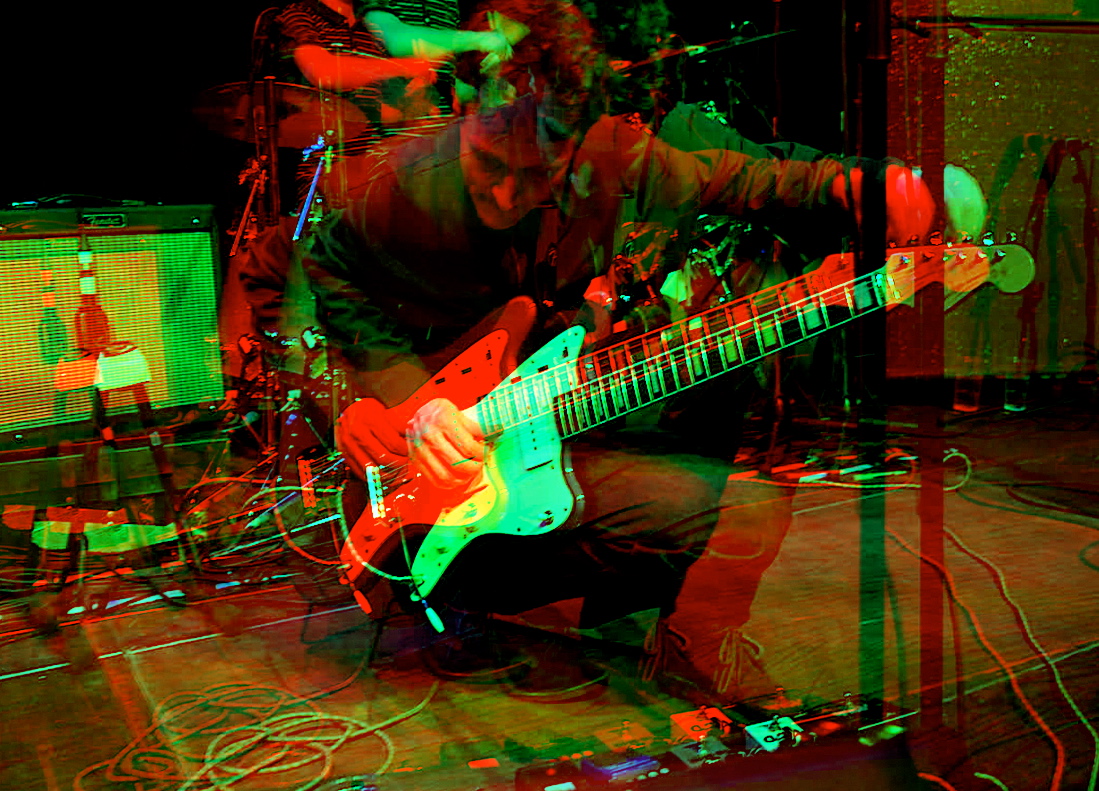
Around 1993 I saw the Jon Spencer Blues Explosion open for the Beastie Boys at the Barrowlands. I can’t say I remember too much about their show except that Spencer kept hollerin’ “Bloooze Explozhun!” through one of those distorting 1950s bullet mics like a hooch-soaked preacher from the deep south. That and the fact I ordered then waited about 2 months for the band’s Afro 7″, which, at that point in time was just about the most exciting thing I’d ever heard.
By some strange quirk of coincidence, the JSBX recorded a version of She’s On It for this year’s Record Shop Day.
A group playing sans bass can go one way or t’other, but the Blues Explosion nail She’s On It to the floor, staple it to r’n’b standard Jack the Ripper and give it a good Chelsea-booted, skinny-legged kicking, Big Muffs on overdrive, bullet mics in the red. All that’s missing is that “Bloooze Explozhun!” shout repeated more than once.
By another strange quirk of coincidence when I first heard this, I thought it was just about the most exciting thing I’d heard this year. Not now though. That honour goes to Frank Ocean’s Hero track. Hip hop doo wop with half the Clash on backing instrumentation. You should seek it out.
Bo Diddley. Doesn’t/didn’t get the credit he deserved when it comes to the foundations of rock and roll. Yer Chuck Berrys and Little Richards are undeniable founding fathers of the thing that brings us all here, but so too was Bo. It’s amazing how many bands/records have been influenced by his flat scrubbed approach to the blues. (Off the top of my head) without Bo no Not Fade Away. No Willie & the Hand Jive. No I Want Candy. No Magic Bus. No How Soon Is Now? The list is endless, and some proof at least that Bo was a giant among mortals.
Bo’s 2nd single Diddley Daddy had a track called She’s Fine She’s Mine on the b-side;
She’s Fine She’s Mine is all reverb, shimmer and twang, a three chord blues carried along by rudimentary maraca percussion and a wailing harp. Borrowing heavily from it, Willie Cobbs‘ cut his own hollerin’ dustbowl blues version, re-titling it You Don’t Love Me. The young Brian Jones was certainly listening closely by this point, as was Buddy Guy who re-wrote it as You Don’t Love Me Baby in 1965.
By the late 60s, with The Kinks, Beatles and Who reaching a creative peak, the sticky-fingered garage bands were listening closely enough to appropriate the best bits, with not one but two bands taking You Don’t Love Me and creating terrific slices of angst-wridden melodramatic teen pop, allowing their efforts to escape the confines of the dusty garage long enough in order to be commited to the confines of 7″s of dusty vinyl. Vinyl that would ultimately be unloved and for the main part vastly unheard by almost everyone.
Kim And Grim‘s swingin’ alley cat version of You Don’t Love Me adds Hannah Barbera-style backing vocals and replaces all brass riffs with the same melody played on scratchy twangin’ guitar. Richard Hawley must surely be a fan of this record. Great music to sweep floors to as well;
The Starlets‘ version is wee a bit rougher around the edges, and a whole lot more thrilling for it. A pre Glitter Band caveman stomp of handclaps and brainless tub thumping it adds some terrific ear-splitting guitar that would appear almost note-for-note one year later on The Other Half’s Mr Pharmacist (later done in almost note-for-note fashion by The Fall. But you knew that already).
Fast forward into the next decade and the song had grabbed the attention of the Stax recording studio. In 1971, Barbara & the Browns cut a fine southern soul version, incorporating both twanging guitar riffs and brass underpinned by electric keys and a backing section (The Browns) that shoo-be-doo and ad-lib like a low-rent end of the pier Supremes tribute act. Which is a compliment, obviously.
20 or so years later and the song hit the charts once again, this time as a dubby, skanking Jamaican reggae track. Dawn Penn took her version to the Top 10 of umpteen countries around the world, doing the decent thing by ensuring Willie Cobb received an equal writing credit (though not Diddley). As he should. Although, while the skeleton of Penn’s version is undoubtedly based on Bo’s original and Cobb’s arrangement, musically it is on another plain.
I wonder if, back in the 50s, Bo Diddley knew just how far his wee song would travel. I doubt it. That’s the power of music folks. And it just goes to show that nothing’s original, no matter how much you might believe it is.
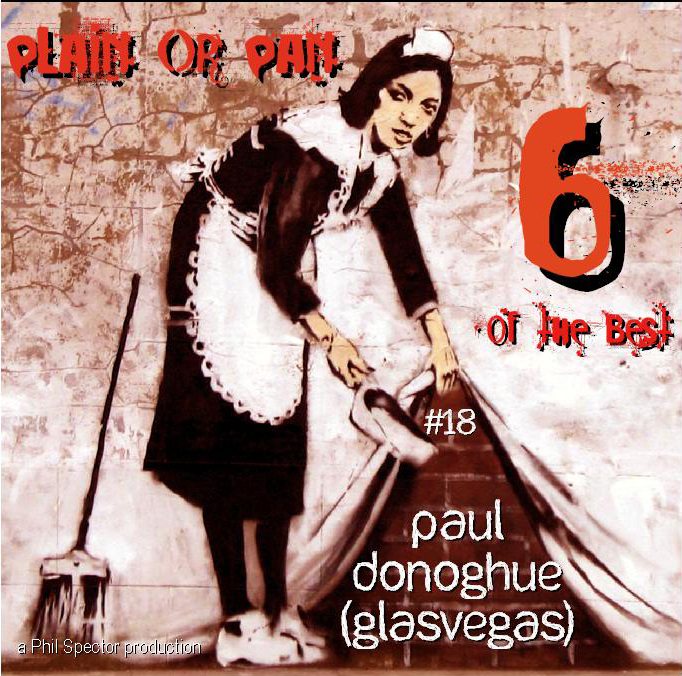
Six Of The Best is a semi-regular feature that pokes, prods and persuades your favourite bands, bards and barometers of hip opinion to tell us six of the best tracks they’ve ever heard. The tracks could be mainstream million-sellers or they could be obfuscatingly obscure, it doesn’t matter. The only criteria set is that, aye, they must be Six of the Best. Think of it like a mini, groovier version of Desert Island Discs…
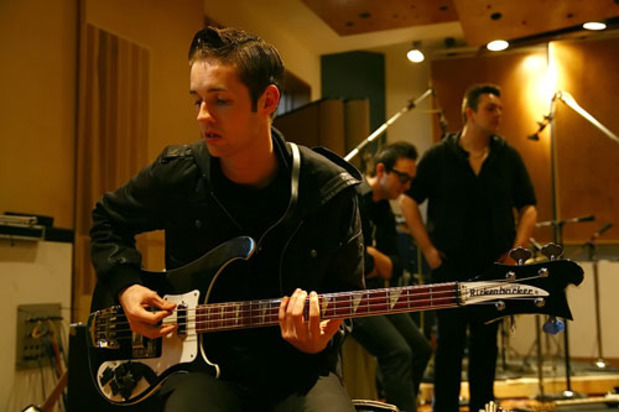
Paul Donoghue is the Clash-obsessed bass player with Glasvegas. No stranger to a large tub of Brylcreem and seemingly always dressed from slicked-back bequiffed head to pointy-booted toe in none-more-black, he looks like a big drip of a Simonon-silhouetted oil slick, all monochrome mood and menace. Don’t be deceived by the image though. Get talking to him and you’ll quickly discover an eloquent speaker, one who loves music just as much as you or I.
I’ve liked Glasvegas since the first LP. The raybans, the hair, the pillaging of rock ‘n roll sound and vision. ‘My name is Geraldine and I’m your social worker’, ‘Your da’, he’s gone’, ‘No sweeping exits, no Hollywood endings’. It’s modern folk music for retro-looking music fans.
Of course, Glasvegas kinda divide many people. “Derivative,” they say. “Nothing original“. It’s easy to play ‘name that tune’ with some of their records, their influences are wide and fairly obvious, but I think that familiarity is what makes them an enjoyable listen. The many people who like them might never have consciously listened to a Ronettes track or any random album from Creation Records back catalogue. Equally, the many people who like them could just as well own every album on the Creation label and the Phil Spector Back To Mono box set. There’s nothing wrong with familiarity in music. Throbbing Gristle are unlistenable. With Glasvegas, the listener doesn’t have to try too hard. You know when the solo is going to come in on early rock ‘n roll records. You know when that third chord is going to appear on a Ramones track. You know when Iggy will grunt ‘n growl between Stooges lines. Likewise, you know exactly when James Allan will ad lib ‘yea-ah, yeah!’ between Glasvegas lines. You know that their records will sound like a big bucket of Phil Spector has been flung over them. It’s familiar and it’s good. And who can argue with three albums and umpteen pan-global tours sharing stages with some of the biggest bands on the planet?
A tremendous raconteur, Paul has a wealth of totally unpublishable tales featuring Noel ‘n Liam ‘n Ian McCulloch. You’d like him. Just back from a successful tour of America’s far-flung places and looking ahead to the summer festivals, Paul took time out to tell Plain Or Pan six of his favourite tracks. They might not be obvious influences, but all make sense if you are familiar with the music Paul plays. The first track, for instance, has a bass line that Paul could have written. Maybe he nicked it…
Pink Glove by Pulp.
This is probably my favourite song, and has been for a while. I have loved Pulp for a long time. When I first started listening to music it was 1994 and Britpop was in full swing. Oasis were the best band in the world to me, as I’ll mention later, but Pulp were a band I liked, but didn’t listen to a lot. Looking back now, I think that Pulp have by far the best songs of that time. They tell stories of a side of Britain that not a lot of people talk about. A seedier, almost macabre side that lies beneath the stiff upper lip and suburban doors. This song is a great example of this, the lyrics telling a story of dressing up and the pitfalls that brings. At least, that’s what it says to me. Maybe that’s more a vision into my psyche than a view of the song!
Supersonic by Oasis.
This was the first song I ever learned to play on the bass. It’s a very simple bass line, but when I learned it, it made me realise that I could be a musician, that it wasn’t out of reach and for people who were maestros. I think Oasis did this for a lot of people who joined bands or picked up a guitar. When they first came out, they forced their way into almost everyone’s attention. I have friends who don’t listen to much music just now, but will always listen to Definitely Maybe and What’s The Story. This is a great testament to what this band meant to people.
Chelsea Hotel #2 by Leonard Cohen.
I never listened to Leonard Cohen until about a year ago, but since then he has become one of my favourite artists. The poetry in his lyrics is amazing, and the variation of the different styles he has made songs in is astounding. Listening to songs like “Hallelujah” and “First, We Take Manhattan” are like listening to two different artists. This is one of the very few songs that have almost made me cry. Especially the line “we are ugly but we have the music”. Another great love song.
I’m Going Slightly Mad by Queen.
Another band that I love. I remember watching live at Wembley and being blown away by how much energy they put into their live show. For the first twenty minutes they didn’t stop, and worked the audience up into a frenzied state. This song is a departure from that. The lyrics are perfect for the song too, they are out there enough to make you believe this is madness. I love the line “the kettle is boiling over ; I think I’m a banana tree”. Genius.
Perfect Day by Lou Reed.
This is a song that makes me very emotional every time I listen to it. Even before the great man died, every time I listened to it, it made me feel sad and happy at the same time. I also really connected to the lyric, “I thought I was someone else, someone good”, for reasons I won’t go into here. I think most people can relate that to their own life at some point. It’s such a simple song too, but to do that it takes true genius, like Lou Reed had in abundance.
Absolute Beginners by David Bowie.
When my wife and I decided to get married, one of the easiest things to organise was our first dance. We chose this song because it is one of the greatest love songs ever written. Bowie always impresses me with his lyrics, both the abstract and the objective. It tells you that if you love someone, then it makes the hard times that much easier.
BONUS TRACKS!
Here‘s Glasvegas (or rather, just James, an end-of-the-prom twangy guitar and minimal keyboard washes) doing Queen’s I’m Going Slightly Mad, from a 2011 session on Minnesota Public Radio.
Just an observation, but the vocal ad libs at the end recall Lee Mavers’ ad libs as The La’s Looking Glass collapses in on itself and swirls frantically down the plughole.
No mention of Glasvegas is possible without referring to their best track, I’ve written about The Prettiest Girl On Saltcoats Beachbefore. Here’s a snippet:
It begins with gentle waves crashing on the shore. Clearly a sample from some long-forgotten sound effects album, cos if you’ve ever been on Saltcoats beach you’ll know that the waves don’t break gently on the sand.
There are 2 kinds of waves in Saltcoats: 1. The big ones you get when it’s the middle of winter, blowing a gale, snowing and freezing and the TV cameras are there. And 2. The splashback from the Arran ferry as it comes into dock in Ardrossan, just up the beach.
So, sound effect waves.
The band provide the drama as the track unfolds in melancholy fashion, all vibraphone, reverb, shimmer and twang. It reminds me a lot of those early Trashcan Sinatras b-sides (like ‘Skindiving‘ – go seek it out). It ebbs and flows like the tide on the Firth of Clyde, crashing to a fade once again with those lapping waves on the Saltcoats shore. ‘The Prettiest Girl On Saltcoats Beach’ is truly bathed in melodrama and pathos.
It makes Saltcoats sound like the most (cough) romantic place on Earth.
Clearly it isn’t.
If you’ve ever been to Saltcoats during the Glasgow Fair Fortnight you’ll know what I’m talking about. Dressed head to toe in Rangers or Celtic regalia, they come down to our bit of the world armed with crappy-ringtoned mobiles and plastic footballs, to eat our ice cream and litter the beach with empty bottles of Buckfast. And that’s just the women. To be called the prettiest girl on Saltcoats beach is a bit of hollow praise. But Glasvegas must’ve been down on a good day.
‘The Prettiest Girl On Saltcoats Beach’ does for Glasvegas what ‘The Boys Of Summer’ does for Don Henley. It’s a Scottish love song of the highest order. Burns would’ve been proud. In fact, I’d say it’s right up there on a par with Morrissey’s best work. He’d do a great version of it. And that would be something, wouldn’t it?
And after that build up…if you’ve never heard it, here it is…
Green and Brown. My colour blindness wasn’t apparent until Primary 7 when, as you do in Ayrshire schools, the class created a Robert Burns Tam O’ Shanter frieze. My job was to do the tree next to the bridge where poor Tam’s horse has her tail yanked off by the pursuing witch. My tree had, yes, brown leaves and a green trunk and I had no idea why I was the laughing stock of the school for the next few weeks. An official colour blindness test proved this a few months later. Now I know.
Here I Am (Come And Take Me) was a top ten hit for Al Green in 1973. A brilliant piece of tight ‘n taut southern soul, producer Willie Mitchell has the uncanny knack of making it sound as if the drums are playing right there in the room with you. A warm Hammond vamps throughout, mixed in just behind the brass section while the Reverend’s vocals flit across the top, emotion squeezed out of his voice the way you or I might wring the last remaining drops of juice from a real lemon when following a Jamie Oliver pasta recipe to it’s fat-tongued conclusion. Got. To. Get. Every. Last. Drop. Out. Of. It. Cost. Me. Forty. Nine. Pee.
Green
Al Green’s track is terrific. Of course.
Here I Am Baby was a superb rocksteady version of Green’s track by his skankin’ namesake Al Brown. My version comes from one of those excellent Soul Jazz Records Dynamite compilations (300% Dynamite, I think) that really ought to be in everyone’s record collection. Many of the tracks featured are rubadub reggae versions of popular soul hits – the Jamaican musicians tuning into US radio would hear the originals, get the band together, roll a fat one, play it at half speed and claim it as their own. Al Brown was no different. Dubby bass, chukka-chukka backbeat and a Casio keyboard player with his (or her) own idea of what constitutes a meandering solo, it’s a rather spliffing made-in-the-shade perfect partner;
Brown
Ironically, Al Brown would go on to make a name for himself in The Paragons, whose The Tide Is High would somehow filter its way back across the airwaves to New York where Blondie were fortuitously tuning in. And that folks is how the music world goes around.
10538 Overture was the debut single by the Electric Light Orchestra. It was written by Jeff Lynne and produced by Roy Wood when he was still in The Move, pretentiously given the ‘Overture‘ title and prompted the split of the band. Released in 1972, it was the love child of I Am The Walrus and The Who’s more bombastic moments; a Heinz 57 variety pack of swooshing synths, see-sawing cellos, minor key breakdowns, ELO’s trademark multi-tracked vocals….and a terrifically cod-psychedelic, eastern-tinged descending guitar riff.
10538 Overture
10538 Overture would eventually appear on ELO’s self -titled debut LP, with it’s big, ambitious sound a portent of things to come. In America, the same album was released as ‘No Answer‘, after the man from the US record company phoned the band to get the name of the LP. No one picked up, the under-assistant west coast promo man wrote ‘no answer‘ on his paper, left his desk, and someone picked up his note and ran off to the printers where the sleeve was being assembled. True story, that.
Perhaps drawn in by the backwards Beatlish bits and the windmilling Townshend chords and Moonisms on the drums as 10538 Overture drags itself to a bloated end, Paul Weller‘s magpie-like antennae pricked up. “That descending guitar riff,” he thought. “I’m having that.”…..
Welding it on to a mid-life crisis of a lyric, Weller gave birth to The Changingman, lead single from the epoch-defining Stanley Road LP. Named after a picture his son had drawn – “Who’s that?” “It’s the changingman, daddy,” the single reached number 7 in the charts, at the time a career best for the solo Paul.
This is where it gets a wee bit muddled. On the LP, the track is credited solely to Weller, but if you consult that last bastion of credibility Wikipedia, you’ll see that Weller shares the writing credits with 3 others – Brendan Lynch, his producer of choice at the time who added the ambient textures and wonky noises (his remixes from this time are terrific) that lift the track above bog standard r’nb fare, a certain R. Wood who we now know all about, and, most interestingly of all, forgotten cult hero and Syd Barrett for the Brit-Pop genearation, Lee Mavers.
The Changingman LP/Single version:
Quite what Mavers’ involvement in the writing of the song was is unclear (if any), although around that time he was in a bit of a sorry state through drugs. It’s been suggested that Paul Weller took one of Lee’s unreleased tunes and built Changingman on top of it. Some of the lyrics (‘the more I see the more I know, the more I know the less I understand‘) are kinda La’s-ish as well. Weller, on Go! Discs, as was Mavers at the time (or was he still, in 1995?), also had Lee open a few shows for him. Maybe he was just trying to help him out, a support slot here, a writing credit there, but as you’ll know already, Mavers is pretty comfortably well-off thanks to the regular royalties he receives for There She Goes (between £5000-£10000 a month, depending on where you read). Maybe Bo Diddley nut Lee contributed the percussive backbeat that gives the track it’s mid 60s swagger towards the end. Who knows? I need to investigate further…
The Changingman Radio1 Evening Session 8th May, 1995 (Exactly one week before the album release);
Rod Weller
Around the same time as Weller was releasing Stanley Road, an ill-advised Rod Stewart was assembling a catalogue of contemporary tracks of the day that would make up a covers LP. When I first heard about this album, I immediately thought of it as similar in spirit to Bowie’s Pin Ups LP. Primal Scream’s Rocks. Cigarettes And Alcohol. Skunk Anansie’s Weak. All would be filtered through the Rod voice and into the Mondeos and family saloons of 40-something Britain. There was even space for a (terrific) track by Scottish underachievers Superstar that would make writer Joe McAlinden very wealthy. At the sessions, Rod tackled The Changingman with all the gusto of a prime time Faces, although the finished version comes across as a highly polished piece of session musician rawk and nothing like the raggedy arsed Faces it could’ve been. Consequently, it never made the final cut.
The Changingman Rod Stewart version;
Never has a singer betrayed his talent quite like Rod.
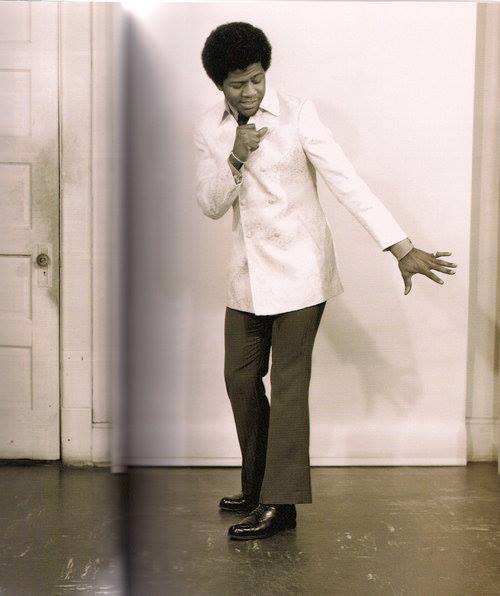
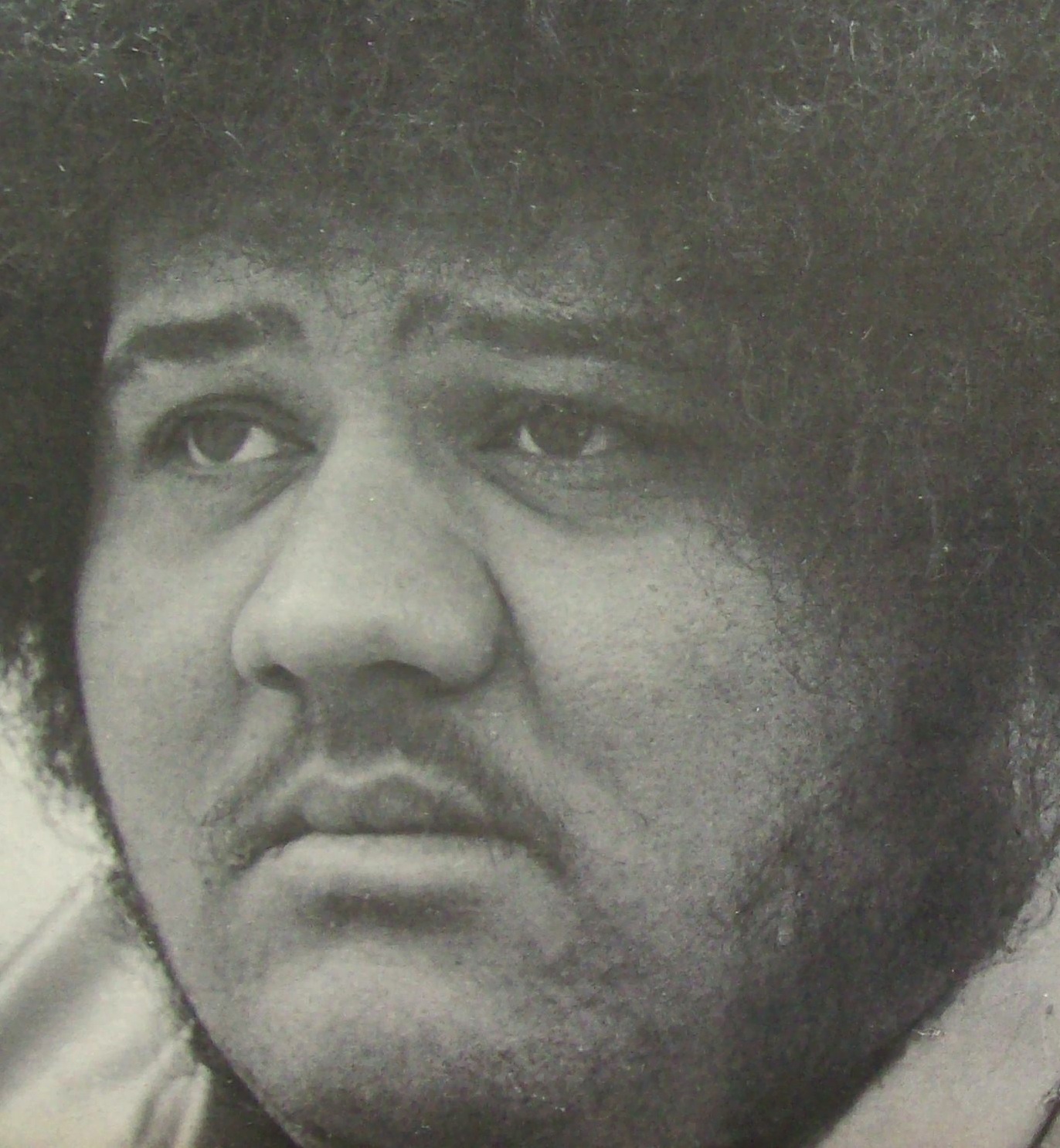
Baby Huey is one of the forgotten stars of 70’s soul, mainly because he died in October 1970 and it wasn’t until much later on, when his music was discovered by the hip-hop community that he gained any sort of acknowledgment.
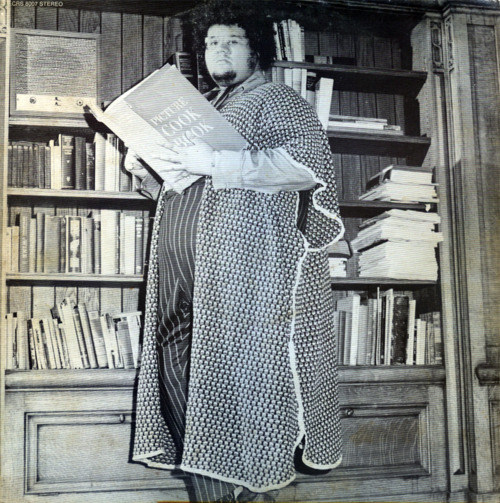
Named after a 1950s cartoon duck, the ironically-monikered Huey was massive in every way – he was massively overweight (between 25 and 28 stones (or 350-400 lbs if you’re that way inclined), he wore his hair in a massive afro, he had a massive voice and used it to create massive tunes. He was a massive drinker. He even had a massive heroin addiction to go with it all.
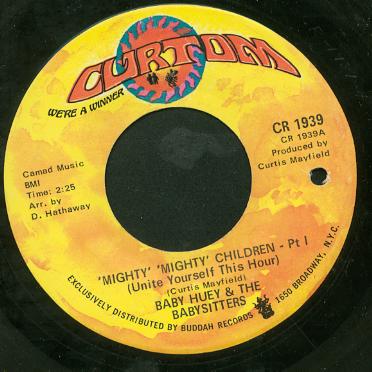
He came to the attention of Curtis Mayfield and signed to his Curtom label. Mayfield became something of a mentor to him and gave him the songs that would make up the A and B sides of his first single. Mayfield also suggested he get rid of his band The Babysitters, forever stuck in a mid 60s Motown rut. Curtis wanted Huey to expand (no pun intended) his sound towards the more politicised, psychedelicised sound of the times, which, sacked band or otherwise, he achieved. Huey’s tunes are packed full of riffs, refrains and drum breaks galore. Huey liked his music to ebb and flow, bringing the band down so he could throw in a social commentary or two, before letting the band soar in a riot of bass and brass. His songs regularly stretch out beyond the 6 minute mark and (I’d wager) are a sampler’s delight.
First single Mighty Mighty Children is a one-chord groover, held together by stabbing Blaxploitation brass, wah-wah ripples and pseudo live vocals. Mighty indeed.
Mighty Mighty Children (Part 1)
Here’s Listen To Me, Baby Huey’s 2nd (and final) single release. A stone cold lost classic, it‘s terrific! Beginning with a taught guitar riff and Huey’s big voice careering between balls-out soul belter and Is It Real Or Is It Memorex glass-shattering falsetto, it fairly gets carried along on a tidal wave of trumpets and electric keys, clattering cowbell and ‘Have Mercy Brother!’ soulful paraphrasing. I think you’ll like it;
Listen To Me
On the other hand, Huey’s version of Sam Cooke’s A Change Is Gonna Come is downbeat, treacle-thick and just shy of 10 long minutes. By the end you’ll be praying that a change is indeed gonna come. His wee spoken word part reminds me of James Brown or Isaac Hayes – all social conscience dressed up in occasionally trippy echoed sound effects. Settle in for the ride…
A Change Is Gonna Come
Most of these recording didn’t come out until after Huey was dead. An album, The Baby Huey Story was released to general indifference in 1971 and quickly forgotten about. My tracks come from the 1999 CD reissue that’s probably since been quickly forgotten about. You could do worse than track it down.
Imagine the pop landscape in 1967. It wasn’t just the trousers that were starting to get expansive. Everything’s got that slightly psychedelicised and trippy, frazzled edge to it. Itchycoo Park. Heroes and Villains. Penny Lane. Purple Haze. See Emily Play. Even The Temptations and other wide-lapel wearers on the Motown roster were abandoning their sure-fire recipes for success. Psychedelic Shack anyone? A future post for sure. Records became longer, more free-form and stretched out. Less structured, with not so much emphasis on the tried ‘n tested verse/chorus formula. But still pop. That bit’s important. The time was ripe for Sly and the Family Stone.
In 1967, Sly Stone didn’t like his record company. In fact, he didn’t trust them one iota. Sly had a bit of leeway though. He’d just had a top ten smash hit both sides of the Atlantic with Dance To the Music, a tune that did exactly what it says on the tin. So when Clive Davis at CBS asked Sly to follow it up with more of the same, the ever-willful and awkward Sly did just that.
Sly decided to follow up Dance To The Music with a garage punk/funk version of the exact same track, stripped of all vocals save a tiny spoken word part and the chorus…..which this time was to be be sung entirely in French.
Naturally, he chose to call it Danse à La Musique. Released under the nom de plume of French Fries,it was terrific. The same du-du-du-dumb four-to-the-floor caveman stomping beat and growling fuzz bass drives it along. Street corner jazz scat vocals ping-pong back and forth, trying to be heard above the din of a joyfully fuzzed up, wasp-stuck-inside-your-car guitar track, clearly being played by a guitarist who’s just wired up a fuzzbox for the very first time. There’s precious little brass, replaced instead by a primitive keyboard that plays random Eastern-tinged phrases like a snake charmer on acid. The champion of a tambourine player never once stops throughout. His/her arm must’ve ached like a teenage boy’s with a Meaty, Beaty, Big ‘n Bouncy bargain Box Set for company. The whole thing is over and done with in three freaked-out flare-flapping minutes. I think you’ll like it.
BONUS TRACK!
Here‘s a demo of Sly and co turning The Kinks‘ You Really Got Me into a piece of proto Acid Jazz. Not sure if I like this or not, but it’s a curio right up Plain Or Pan’s street. And yours…














 Plain Or Pan