In their early days, Low were known to obtusely turn the volume down at gigs rather than up, so that their audience was forced to listen to them. Perhaps that’s why they’re so called, named in a defiant, low-volumed protest to the ramshackle, turned-up-to-11 grunge bands of the day. Or perhaps it’s because the audience would often sit on the floor at their shows, again in defiance of the crowd surfing and body slamming that was commonplace on their circuit. I imagine though that they’re called Low simply because they have the knack of mentally bringing you down.
Low inhabit an arcane, sepia-tinged world where time slooooooows down, crawls to an eventual halt and, with a lethargic burst of lung-bursting effort, rolls into creaky reverse. Not for them the modern day currency of of a sampler or sequencer or ProTools production. Heck, they’ve only just discovered electricity. Low’s is a world where Gram Parsons and Emmylou Harris are king and queen, where major chords segue into minor chords over the course of marathon-lengthed songs that belie their actual three and a half minutes and where an Everly Brothers harmony aces all. Listen carefully and you might hear the faint whirr of an old tyme 78 cranking up ethereally in the background.
They’re hard work, are Low. Their current album Double Negative has wormed its way quietly into the critics’ ‘Best Of 2018′ lists but I found it a bit slow, a bit samey and as tortuous as a month of Sundays. Perhaps I need a second listen. Perhaps I need to listen to it once, in all honesty, all the way through without feeling the need to tap my watch face and check that time was indeed moving forwards before giving up at track 3? 4? 9? I dunno. Perhaps I’ll do so after removing this pencil from my eye. Their Christmas album is a bit cheerier, the go-to hipster choice for those seeking a Mariah and Slade-free festive period, but it still has its treacly moments.
If you want to indulge in a little Low, may I point you in the direction of their slo-mo, downbeat shuffling take on The Smiths’ Last Night I Dreamt That Somebody Loved Me. Soaked in reverb, bathed in pathos and moving majestically between Johnny Marr’s majors and minors, it’s fantastic. Gothic cowboy music at its very best.
Low – Last Night I Dreamt That Somebody Loved Me
Or you might want to try their achingly hearfelt take on George Harrison’s Long Long Long. The quiet Beatle’s original was never the most upbeat of tracks to start with but Low take it somewhere new. It sneaks under the radar and ebbs and flows, falls and rises and falls again with double vocal dynamics, scrubbed acoustic guitar and a droning keyboard that gently noodles it off and out into the ether.
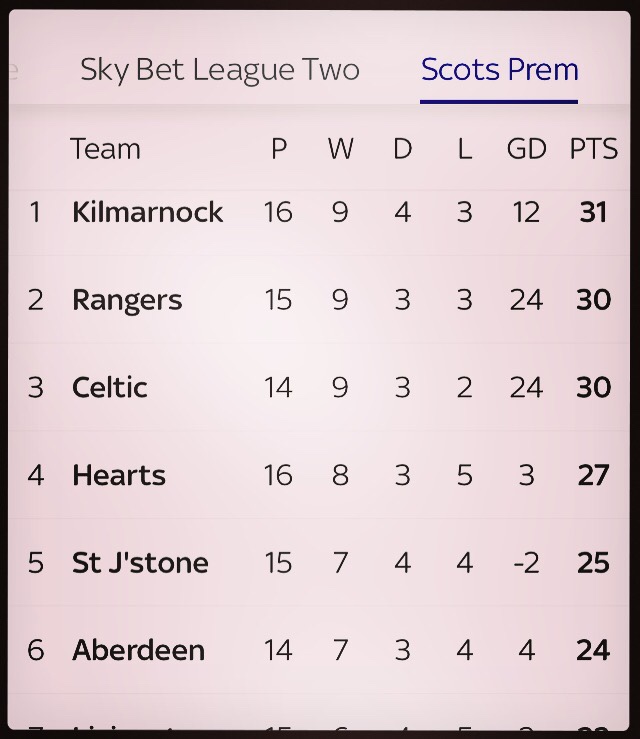
My team went to the top of the league last night. No mean feat in a league dominated by the two Glasgow giants and their financial clout, the Edinburgh clubs with their large swells of season ticket holders and Old Firm-splitters Aberdeen, for too many times the bridesmaids but never the bride.
The achievement is a culmination in consistency. The record shows that in the calendar year, from January until now, Kilmarnock, a team who plays in a less than half empty stadium every other week, a team with less season ticket holders than most other teams in the league, a team who pays less to their top earners than an average bench warmer at Tranmere Rovers might earn in a week, has somewhat incredulously gathered more points than their competitors and is now the best team in the country. Today we sit at the top of the pile, looking towards a genuine top of the table box office clash at Celtic Park on Saturday.
If you’d suggested this a year ago, you’d have been laughed out the room. By then, our previous manager, Lee McCulloch, had fallen on his wobbly sword with the team rooted to the bottom of the league we’re now winning. Relegation, even at that stage in the season, was looking very likely. The appointment of the ‘correct’ manager was absolutely key to our team’s survival, not only in the top flight but also to our very existence. Enter Steve Clarke. A one season wonder at West Brom, he’d taken them to their highest-ever Premiership position before starting the following season poorly and paying the ultimate price. With family ties to the club (brother Paul was a stalwart in defence at Kilmarnock in the 80s), Clarke was enticed to take over the reins from McCulloch.
The difference between the two managers is there for all to see. The team is currently on a short but impressive run of 4 (or is it 5 now?) clean sheets in a row. Of the starting 11 in these games, 9 of the players played under our previous manager. Clearly, our success is down to Mr Clarke. At the club’s open day last season, I found myself face to face with his predecesor.
“Hi Mr McCulloch. What d’you think – top 6 this year?”
“Whit?!? Hahahaha!” (nudges one of the other coaches standing next to him. “Peter! Get this guy!” (looking back to me) “Tell him what you just asked me…..top 6! TOP 6!!! Hahahahahaha. Aye, right!”
Now. Even if you’re the manager and you think there’s zero chance of achieving the frankly average position of ‘Top 6’, you don’t go around laughing at the suggestion, let alone laughing your season ticket holders out of the room, especially with the season yet to kick off. The opening to a season, when a ball has yet to be kicked in earnest and all possibilities are endless is the best of times for a fan, especially for a supporter of one of the wee clubs. “This might be our year,” and all that. Yet here was the team manager (the team manager!) pissing on those dreams before our first game. McCulloch should’ve been saying, “Top 6? Nah, mate, we’ll be top 3 this season. Just wait and see.” Instead, our season was over before it had begun. Or, it was until the board saw sense, found some loose change down the back of the sofa and sent the diddy packing. I wonder what he’s thinking now.
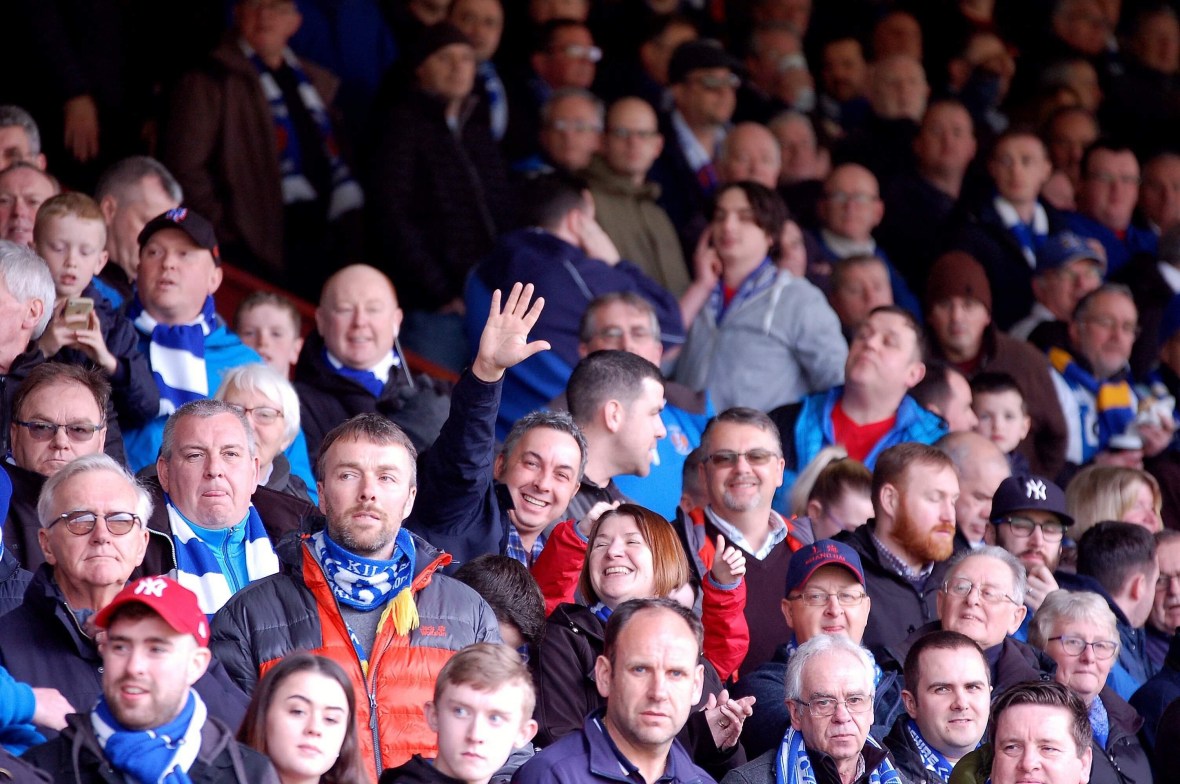
Where’s Wally? (Firhill edition)
The last 14 months have been the best of times for Kilmarnock supporters. Even in defeat, we competed. There was a thrilling midweek game against Hibs where we applauded our team off the pitch, despite shipping three goals. This proved to be the turning point in our fortunes. There was an incredible run of games this time last year where we dispensed of The Rangers, Celtic and Dundee in three of the best matches I’ve ever seen. One nil down to Rangers, Boyd scored a quick one-two and turned the final score in our favour. Youssouf Mulumbu, a player who’d shone in Clarke’s West Brom side slotted the winner in the Celtic game and inevitably earned himself a move to the champions in the process. Best of all was the Dundee game, a match we were winning then losing and, thanks to an anti-footballing Dundee team and some shoddy refereeing, found ourselves a man down as well as a goal down. As the game wore on, the character of the ten-man team came to the fore and, backed by a noisy, partisan and aggrieved home support, an equaliser was dug out before a thrilling winner was scored at the death. As the games, weeks and months rolled by, the team kept on winning from unwinnable positions, picked up points in the most difficult of away fixtures and gave us our best season in many a year. It was fantastic.
And it continues to be so. We’re top of the league. The words ‘Leicester City’ have started popping up in relation to our achievements and the potential this brings, whispered at first but now just that wee bit louder. No team out-with the ugly sisters has won the top league in Scotland since Paul Hardcastle’s ni-ni-ni-19 was top of the charts when, in May 1985, Alex Ferguson’s Aberdeen reigned supreme. Of course, at least one of the two slighted Glasgow giants went straight out the following season and spent far more than they could afford on players in a vulgar display of money over merit in a bid to wrestle the title back from the daring Dandy Dons, an arrogant and self-entitled manoeuvre which we in Scotland are sick of by now.
Much of Kilmarnock’s fate in the coming months depends on how they survive the January transfer window. A winning team features winning players and it wouldn’t be the first time one of the big boys from just up the M77 has chapped our door waving offensively woeful figures under the noses of impressionable young players and their agents. More worryingly, a winning manager such as Clarke will have made chairmen up and down the country sit up and take notice. Should any of their charges have a wobble and their coathook becomes a bit shooglier than normal, Steve Clarke must be one of the names in the frame. So we’re dreamers, yes, yet we’re also realists. It’s a nail-biting time and it can all change in an instant. The two teams immediately behind us have games in hand and it’s quite possible we’ll have slipped to ‘only 3rd’ by the close of the weekend, by which time, if you’re only just getting around to reading this article, this blog will read like virtual chip paper.
Here’s Dizzy Dizzy by Can, a track as thrilling, unpredictable and meandering as one of those Greg Stewart runs that leaves baffled defenders toe-tied in his wake.
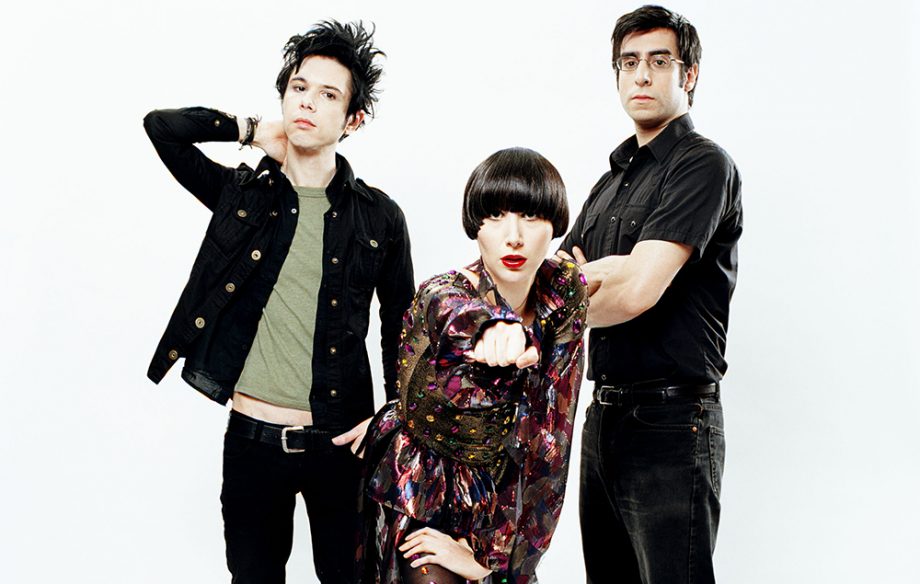
In an era of artificial style over actual content, of press, publicists and pushy people foisting all manner of rubbish into yer blogs and onto yer airwaves, we should appreciate Yeah Yeah Yeahs. The New York three piece have more fire in their collective rake-thin bellies than most. A riot of shiny shiny bobbed hair, caustic barbed wire guitars and neanderthal tub thumping, they’re a welcome and necessary interruption to yer Slaves and Sleafords and whoever else is flavour of the month. They rarely appear on any ‘Best Of…’ and ‘Essential’ lists, they hardly ever pop up in the 6 Music playlists and I can’t remember the last time they toured anywhere near here, but it’s perhaps for those very reasons that when I listen to them they suddenly sound more vital and necessary than any other band around.
Their Is Is EP from 2007 (11 years ago already. Jeez!) is the one to go to. Five tracks long, it’s a snotty, arty and pretentious distillation of all that is great about the band. Vocalist Karen O drawls like the hipper, more street-smart sister of Chrissie Hynde with eye-bothering fringe to match. Brian Chase’s drums are loud and mighty in a John Bonham kinda way and perhaps the most vital ingredient in the band’s art attack.
Yeah Yeah Yeahs – Rockers To Swallow
On opener Rockers To Swallow he manages to sound like Adam & The Ants playing When The Levee Breaks. Elsewhere, his cymbal splashes and gut-punching floor toms provide a suitably tribal back beat upon which Nick Zinner’s guitar(s) shine. A genuine original, he wrings seven shades of hell from his machine, with a cheesegrater-thin ear-splitting riff here, a feedback-soaked squeal there and a filling-loosening slab of Sabbath in-between.
Yer actual Johnny Marr rates him as one of the current greats, having heard the band blasting noisily from his son Nile’s stereo. A couple of years ago I tried to swap a beautiful Yeah Yeah Yeahs’ tour book, signed by Zinner himself, for one of Nile’s dad’s guitars. He relented of course, but still left with the book. What did I expect?
In football parlance, a passenger is someone who, for one reason or other, isn’t giving their all for the team. “See that Jones? Nothing but a passenger the day. He’d be better aff oan the bench so he would.” The way a bus carries its passengers to their destination, so a passenger’s 10 team mates will carry him through the game’s 90 minutes. A passenger is a shirker, half-arsed and unprepared to put in the hard graft to help the others shine. No one likes a passenger.
In the early 90s, U2 were spearheading a post-modern zeitgeist. Their most recent albums, Achtung Baby and Zooropa had been toured globally featuring all manner of interactive stuff – TV channels flickering through the static behind the drums, phone calls to world leaders live on stage, stage sets featuring eastern European cars, giant lemons and papier mache versions of the band that were even better than the real thing…. the sort of stuff that in more recent times acts such as Coldplay and Arcade Fire have developed for their own means and which is now the standard in arena-sized rock shows. The Glasgow Zoo TV confession box was a particular highlight, with one devious wee guy announcing to 50,000 of us that there was a party following the show at his pal’s flat in Shawlands. He gave out the address too. Anyway…
Those two albums. Eno worked his magic on them, weaving an underbelly of atmosphere, ambience, and abstract artiness that allowed the tunes to shine with just the right level of weirdy wonkiness. Effectively, he rescued U2 from disappearing up their own cowboy-hatted backsides, dragging them back from mass-market mid America to rebrand them as cool European soundscapers. While Achtung Baby is undoubtedly the better of the two albums, Zooropa has its merits. Not so much the ‘follow up’, the never-quite admitted to third in the trilogy, Passengers Volume 1 album.
Just like those half-arsed footballers, the Passengers album was let down by tunes bereft of ideas and suffered from being an exercise in indulgent steps too far. Following a shelved plan to record music for a low-key film by director Peter Greenaway, the concept was for U2 to write the themes for a dozen or so imaginary films – United Colours Of Plutonium, Ghost In The Shell, Always Forever Now, and so on – and to use the exercise as a way of expanding the work they’d been doing with Brian Eno. Nowt wrong with that of course, but the results proved to be less than essential listening. Indeed, such was Island Records bewilderment with the finished result, they suggested U2 released it under an assumed name. If the record company didn’t ‘get it’, it stood to reason the record-buying public, those same millions who’d bought the band’s last 2 albums, would also struggle with the music therein. The album was released with muted fanfare to general indifference and has since found its rightful place on the margins of the U2 catalogue.
However…
One track on the album stood out as a stone-cold classic.
Passengers – Miss Sarajevo
Miss Sarajevo fades in on a bed of crackling vinyl and lush Edge guitar, all shimmering reverb and gentle delay. Its stoned beatbox groove allows a close-miked Bono to croon all manner of throw-away lines; Is there a time for keeping a distance? A time to turn your eyes away? Is there a time for kohl and lipstick? A time for cutting hair? Is there a time for first communion? A time for East 17? Here she comes…
It’s beautiful. Stupid and meaningless, but in the middle of an album hell-bent on self-indulgence and abstract expression, it hits you between the eyes like The Ramones gatecrashing the 70s. And just when it can’t be any better, the Edge greases his guitar upwards, Craig Armstrong’s string arrangement swells fit to burst and none other than Pavarotti pops up, bathed in pathos and regret and sounding like gentle thunder. Ah, you think, Bono’s voice was deliberately quiet so that when Luciano arrived on the scene you’d sit up and take notice. Clever that, both the production and the surprise of hearing Pavarotti blow Bono’s voice into the abyss with little more than a gentle sneeze. Incredible stuff.
If Miss Sarajevo were to soundtrack a film, it’d be for the slo-mo shoot-out scene in a Scorcese restaurant, where most of the main protagonists and a couple of unfortunate waiters meet their untimely and very bloody end as Pavarotti’s tremulous tenor washes over them. Think of this as you listen. It makes perfect sense.
Not surprisingly, U2 aren’t blind to the beauty of Miss Sarajevo, featuring it at least twice on subsequent Best Ofs, proving I suppose that a good track is a good track, no matter how it first makes itself known. “There’s a thin line between interesting music and self-indulgence,” pointed out an insightful Larry Mullen a decade on from Passengers’ uneasy release. So said the drummer who didn’t get to play on the one stand-out track.
Such is the depth of his catalogue, Johnny Marr can put together a 20 song set that has something for everyone. From the opening new wave sheen of Tracers, all electrified twang and icy synths via a giddy, galloping Bigmouth Strikes Again and a choice selection of Smiths tracks that, let’s be honest, is what the majority of the audience came to hear, a Johnny show is wholly entertaining and, in an era of triple-figure ticket prices, reassuringly recession-friendly and value for money.
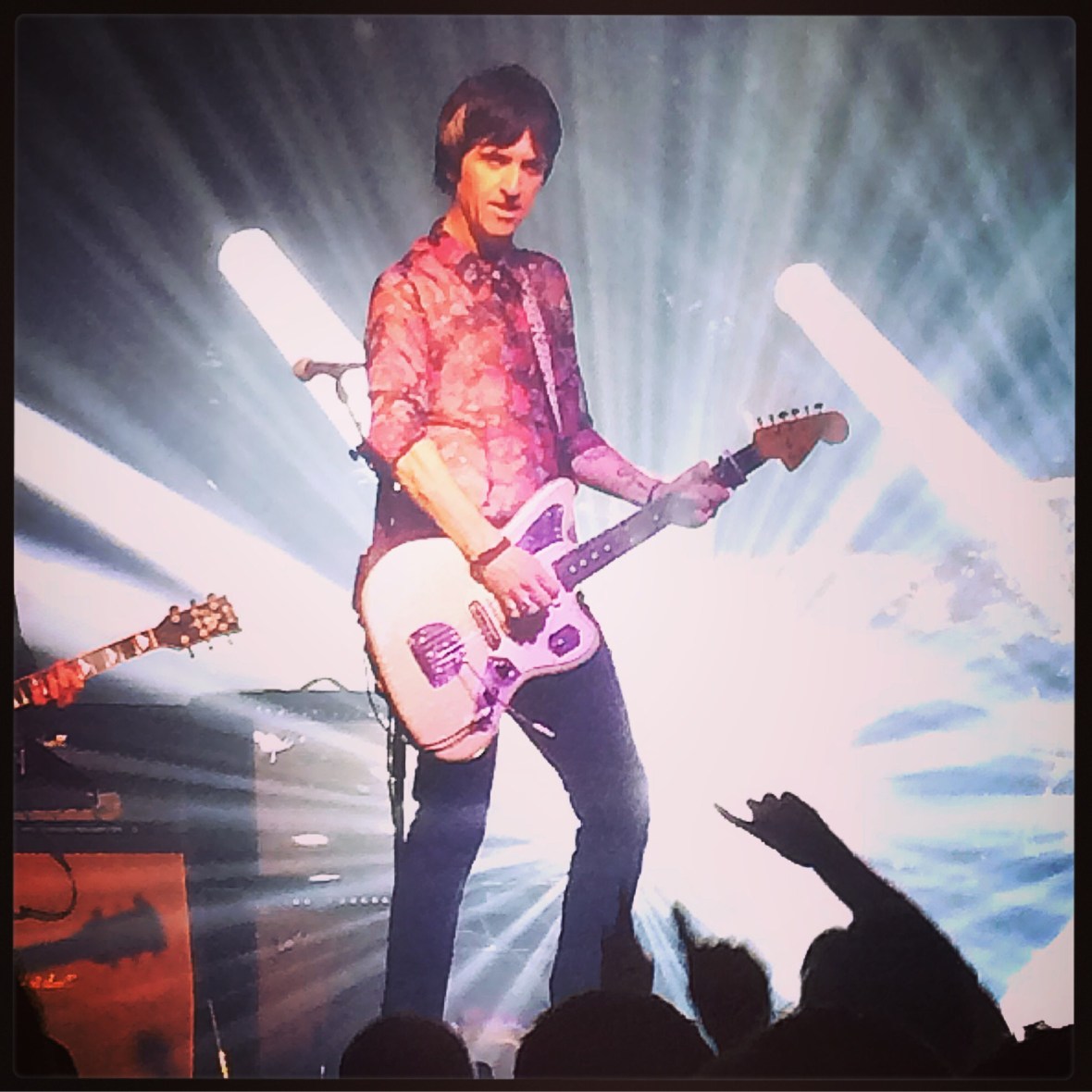
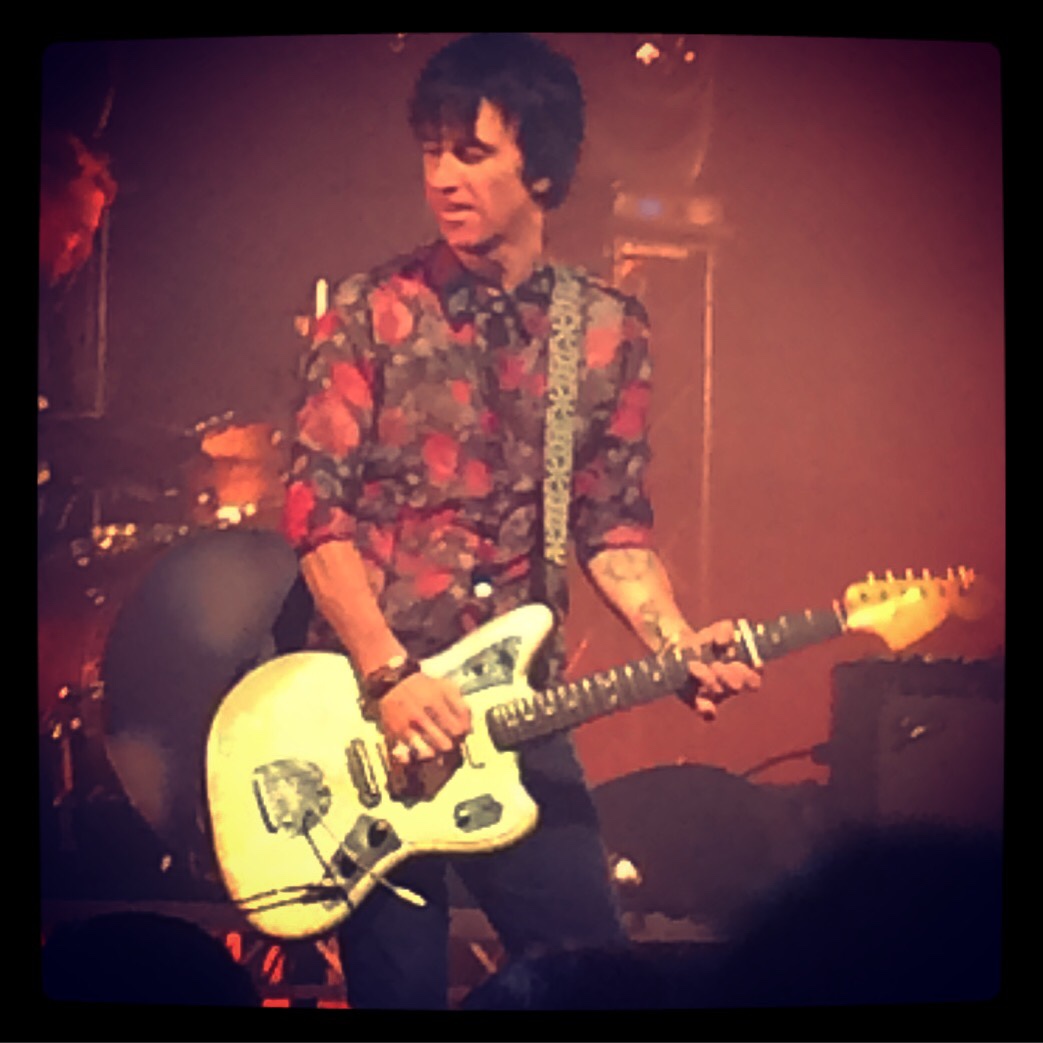
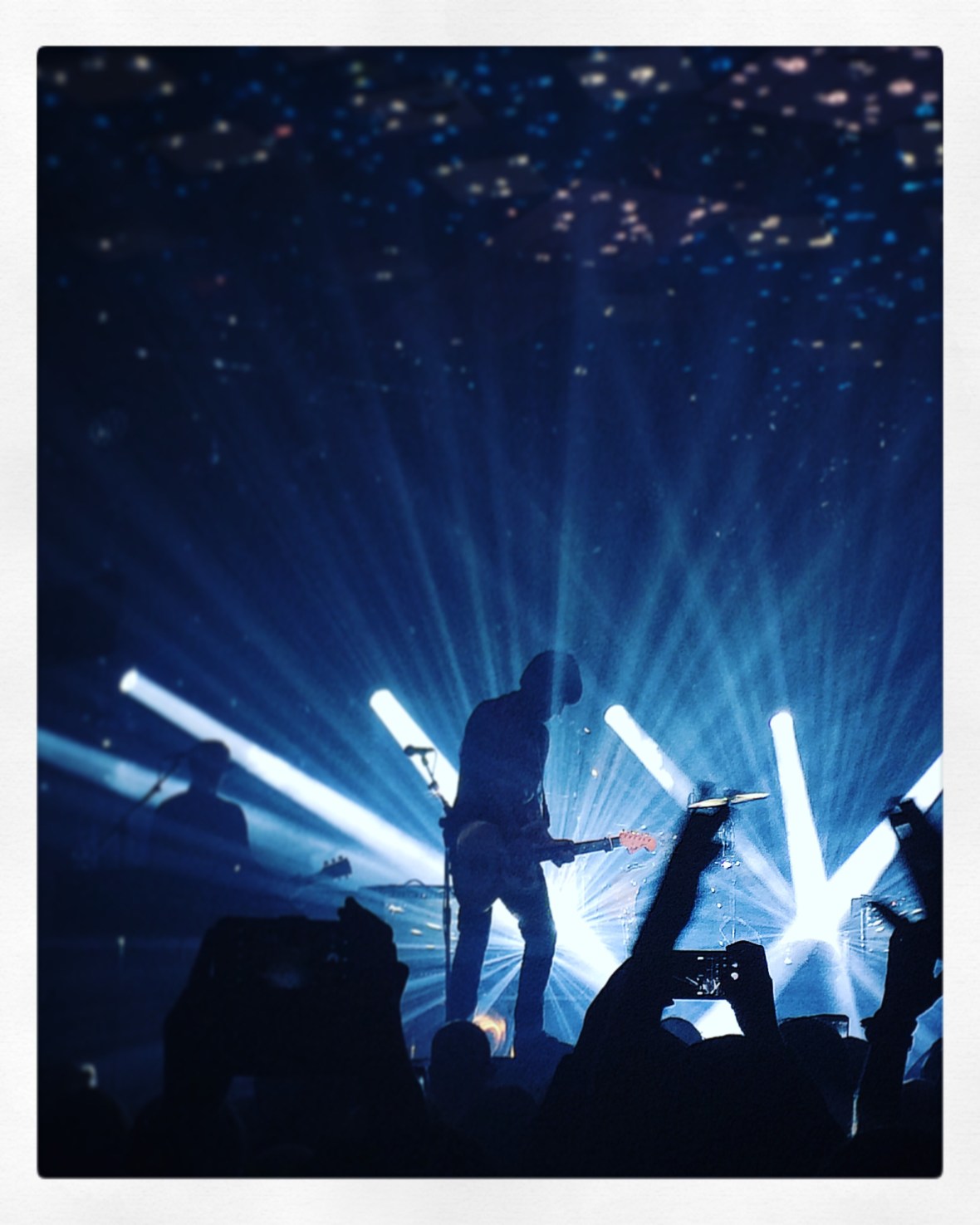
An early set dip focuses too closely on tracks from current album Call The Comet but when he breaks into the perennial evergreen Getting Away With It – “a disco song from England,” – the show goes into orbit. Mid-way through, white hot strobes switch to sparkling glitter ball, perfect given the Barrowland’s history, and the band’s electro disco throb gives way to Marr’s chiming guitar, little arpeggios of untamed joy ricocheting out across the heads of an ecstatic audience. He gives good face, does Johnny. Whether he’s pulling guitar hero poses from atop the monitor or fixing his eyes on the array of smartphones in the audience or leaning back with his eyes closed as his fingers coax unstoppable melody from his fretboard, he does so knowing full-well his image will be shared on social media platforms the world over.
“Any requests?” he teases before he leads his band into an impromptu run-through of Kylie’s Can’t Get You Out Of My Head. A snippet of the riff from This Charming Man causes 1800 folk of a certain age to go heart-stoppingly weak at the knees before he slides into an imperial take on Electronic’s Get The Message. On this tour, Marr is fast becoming the indie version of his good pal Nile Rodgers, building a set of crowd pleasing hits and choice cuts from across his back catalogue and it’s the second hour of the show that truly sparkles; A brooding, gothic Last Night I Dreamt Somebody Loved Me. A trippy How Soon Is Now?, bathed in a blue and green fug with Marr wringing merry hell from his vintage Jaguar.
More Smiths follows in the encore, ensuring no-one goes home disappointed. A beautiful, lilting Please Please Please Let Me Get What I Want harks back to the heady days of Smithdom, the entire audience wrung out and hung out to dry. It’s followed by an incredible There Is A Light That Never Goes Out, Johnny dedicating it to “everyone in here and no-one else” before leading a euphoric call and response mass communion in the chorus. He rounds things off with a breakneck run-through of You Just Haven’t Earned It Yet, Baby, pulls another guitar pose, holds his hands aloft like a prize fighter– a featherweight, in his case, and skips off stage to rapturous applause. For generations who never saw and will never see The Smiths, this is as close as it gets. Spectacular stuff.
*this article was intended for publication in a national newspaper who were happy to run it but informed me there’d be no payment. It’s on here instead.
I’ve Been Watching You by The Southside Movement is exactly the sort of record that could have even the most conservative of Sunday drivers pick up the pace to an even 32 mph and cruise the streets while Detroit leaning like a Fedora’d pimp in heat-hazed Harlem. Its mid 70s groove, a head-nodding amalgamation of on-the-one funk bass lines and metronomic kick drums is tailor-made for the job. One look at the band responsible for putting such a groove together should give you an idea of what it’s like, should you be lucky enough to be listening to the track for the first time.
The Southside Movement – I’ve Been Watching You
The mid-paced care-free groove belies that fact that underneath the funk there’s a mildly stalkerish theme going on, essentially the tale of a married man watching unseen as the (married) woman of his desires goes about numerous clandestine affairs. Spy and the Family Stone, if you will.
Its four-to-the-floor funkiness wasn’t at all lost on the Beastie Boys. Where other rap acts take a huge chunk of something groovy and loop it forever in the foreground, I’ve Been Watching You was ‘bitten’ (the band’s term for underhandedly borrowing a desirable part of a record that could be played by the band themselves) and used as the basis for So What’cha Want, one of the Beastie Boys’ greatest tracks.
Starting with the sound of the Southside Movement’s bass drum spinning in full effect on an old Technics turntable, Ad Rock jumped on board, adding extra kicks and snares and building layer upon layer of that huge dunk, kack, da-dunk, kack… rhythm. It’s Trampled Underfoot While The Levee Breaks, the sound of John Bonham playing loudly in a cave. Slightly sloppy but very massive.
Beastie Boys – So What’cha Want
Once the beat was in place, Ad Rock looped it ad infinitum and called his Beastie bandmates in to hear what he’d done with the sample. The vocals came quickly, the trio weaving in and out in trademark fashion, their voices distorted by happy accident through the cheap karaoke mics they were using in place of the more sophisticated microphones normally found in a recording studio. When the track began taking shape, Adam Yauch suggested the band throw away the sample and play the whole thing themselves, which they ultimately did.
So, not quite sampled then (there’s no writing credit at any rate, which wasn’t uncommon in 1991), but if you strip away the layers of noise on top, disregard the whacked-out distorted vocals, dismantle the incessant guitar riff, the squeaky Hammond and the cinematic atmospheric fade-ins, the genesis of the whole record breaks down to that simple kick drum beat. Kick it!, as someone once said.
From the album Check Your Head, So What’cha Want is the product of the band’s relocation to LA, where they built a studio and furnished it with vintage equipment. Such was the era, the studio-based musicians of the day favoured more portable keyboards and digital equipment over bulky, fragile and unreliable vinatge gear from the 70s. The Beasties were eagle-eyed scanners of the classified ads and would be first to react when any listing for Fender Rhodes or Moog synth jumped out at them – a sad irony they said, as the musicians selling the equipment were usually doing so because they’d ‘failed’ to ‘make it’. Here were the Beastie Boys though; forward-thinking, vintage-loving musical magpies.
There’s a terrific Beastie Boys Book out just now, a chronological telling of the band’s history through eye-witness accounts, whacked-out recipes and mix-tape suggestions. Packed full of brilliant candid shots of the band plus associates (and NYC), it goes without saying you should have it on your Christmas list. Expect more Beastie-related stuff in the coming weeks as I work my way through it.
In 2005 the Berlin based Scottish artist Douglas Gordon came up with the idea of creating a film about Zinedine Zidane. Zidane was at the time arguably the finest football player on the planet; an attacking midfielder who played the free-roaming number 10 position while wearing the number 5 shirt for Real Madrid, playing with equal measures of flair, balance, vision and aggression. Zizou could make things happen and had the ability to change games with an ambitious pass or turn of speed or selfish zig-zagging run. His unpredicatable Gallic temper that simmered just below the surface added the extra edge that set him apart from his peers.
Gordon and his film-making partner Philippe Parreno set up 17 cameras in strategic points around the pitch before a league game at the Bernabeu between Real Madrid and Villareal. They were designed to capture every facet of Zidane’s game over the 90 minutes and didn’t disappoint.
With precious little fanfare the film begins as the game kicks off and ends on the referee’s final whistle. It’s relatively low on budget yet high in concept. The excitable Spanish TV commentary tells the story of the game, but really, that takes second place. Zidane is on screen for (almost) the entirety of the match, sometimes without the ball and sometimes with. You get a real feel for the speed of the game as the ball flashes on screen and just as quickly off again, set on its way by the outside of Zidane’s right boot or acutely richocheting as the number 5 clatters meaningfully into an oncoming opponent.
Those 17 cameras miss nothing in Zidane’s game; the awe-inspiring strength and skill, the disgruntled shouts to less tuned-in teammates, the occasional stroppy spit, the dirty looks to the referee, to the temper-flaring fight that leads to a red card and Zidane’s premature end to the match. If the filmmakers had written a script it wouldn’t have been any less perfect.
For the entirety of the film, the Spanish commentator and ambient crowd noise generated by 80,000 fans compete with a superb understated score by Mogwai. Film maker Gordon was a huge fan of the band and to get them on board he showed them a rough cut of the film soundtracked by their remixed Mogwai Fear Satan EP. Blown away by the concept and the clash of football and music, Mogwai agreed to get involved and set about creating an instrumental soundtrack.
The finished result plays underneath the film. It’s slow, quiet and understated, the polar opposite of the film’s subject matter, yet it works brilliantly. Sometimes you’ll forget it’s playing only for a ghostly thrumming guitar or phased out section of white-hot feedback to melt back into earshot. Pick of the bunch for me is the brooding Black Spider where vibrating clean-amped six strings allow ample space for a glockenspiel to pick out a simple melody as a lazy drummer half-heartedly adds percussive splashes in the background. Like its subject matter, it’s a beauty.
There are things I want to do, goes the opening line on Teenage Fanclub‘s evergreen Alcoholiday. But I don’t know if they will be with you…
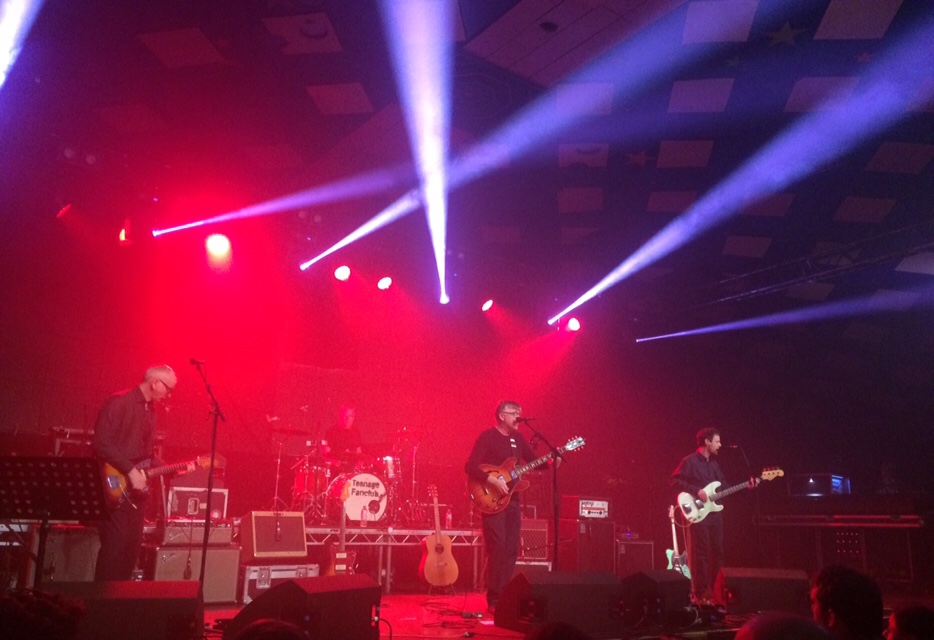
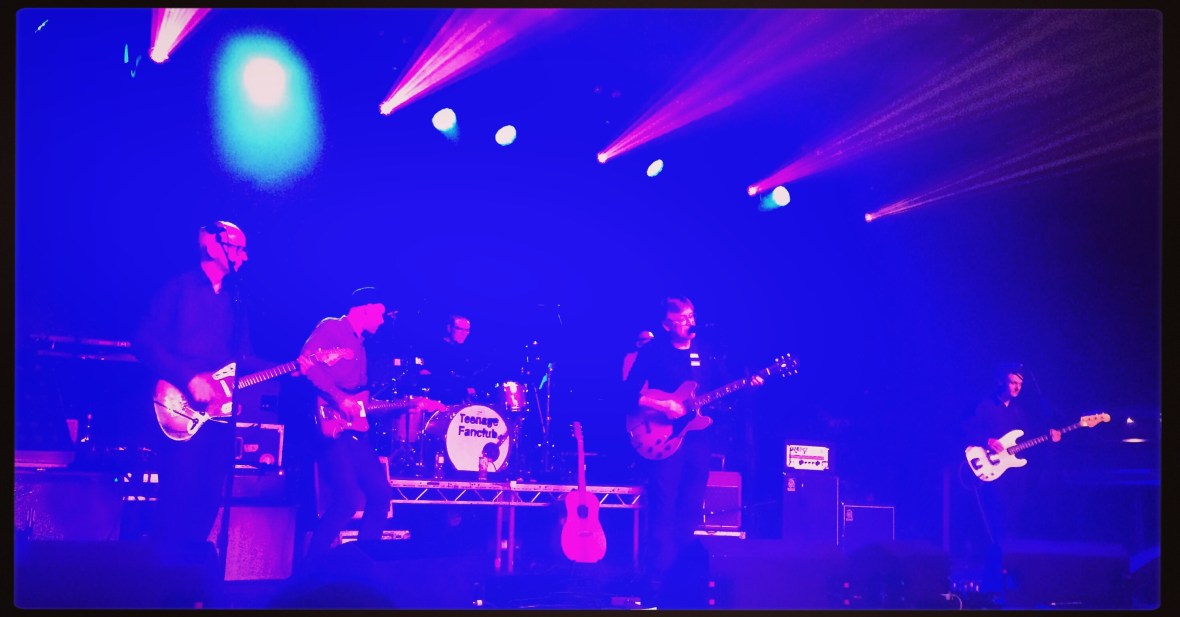
When, back in April, the greatest band of the last 25 or so years (and I’m up for a fight if you disagree) announced a run of shows to mark the re-release of their Creation Records era, only the quickest off the mark were fortunate to bag the recession-friendly season ticket deal. The rest of us – myself included – had to make do with the scramble for individual tickets, a moderately costly affair when taking into account the surprising but welcome “me too!” from both Mrs POP and daughter. Night 2 was the wallet-buster for me, but as it would turn out, a priceless one also.
What was initially billed as a celebration of the band’s glory years turned into something else entirely when, out of the blue, founding Fanny Gerry Love announced he was leaving the band. Social media was filled with tear-soaked declarations and outpourings of grief. The world briefly stopped spinning on its axis. Candles were lit. Posters torn down. Records (yer original Creation pressings, natch – those re-releases were still in production) were spun. The only thing missing was a digital book of condolence. It seemed that Teenage Fanclub fans were just Take That fans in denim and desert boots. “Gerry! No! How could you?!?” scans just as easily as “Robbie! No! How could you?!?” does it not?
The three shows were marvellous. I say this as a veteran of Teenage Fanclub shows since 1990. They were right up there as some of the best TFC shows I’ve seen; King Tuts dressed in Elvis impersonator gear around Christmas of ’91, the Grand Ole Opry show in ’97 (?) and the Bandwagonesque revisted show from 12 years ago where, as they did this week, they played 2 excellent sets on the same night.
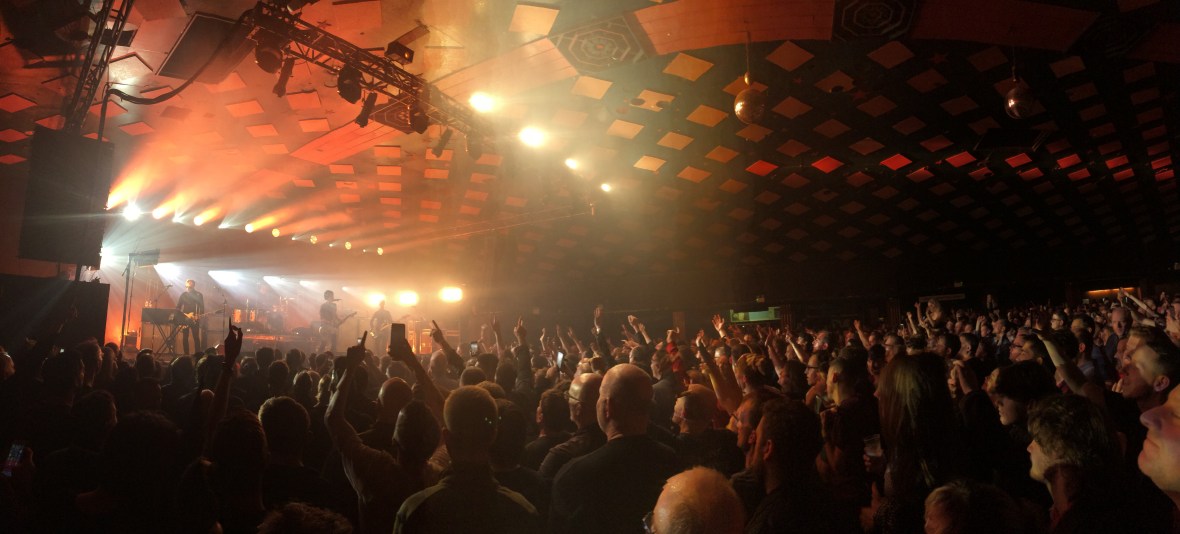
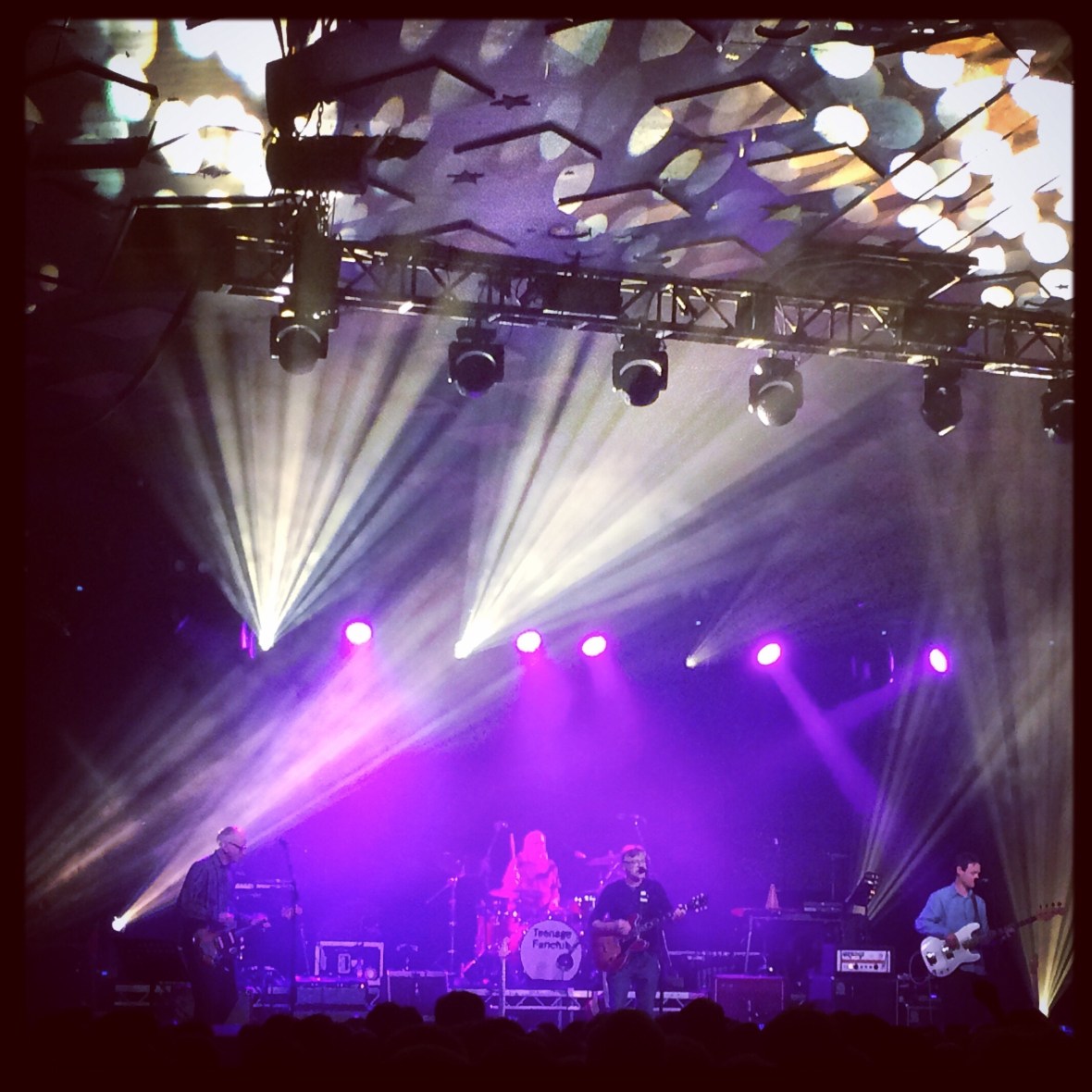
The triptych of shows this week featured Bandwagonesque and Thirteen on Monday night, Grand Prix and Songs From Northern Britain on Tuesday before Howdy! and a set of rarely-played b-sides brought the proceedings to a clanging close on Wednesday. Five albums played in chronological order plus a set of Fanclub curios. 75 songs all in, as Norman announced before the final song on Wednesday. It’s no wonder that the bulk of the crowd was made up of the same folk each night. This was more one big gig with a few hours sleep between sets than 3 individual shows. In football parlance, Monday night was the first half, Tuesday the second, with extra time on Wednesday.
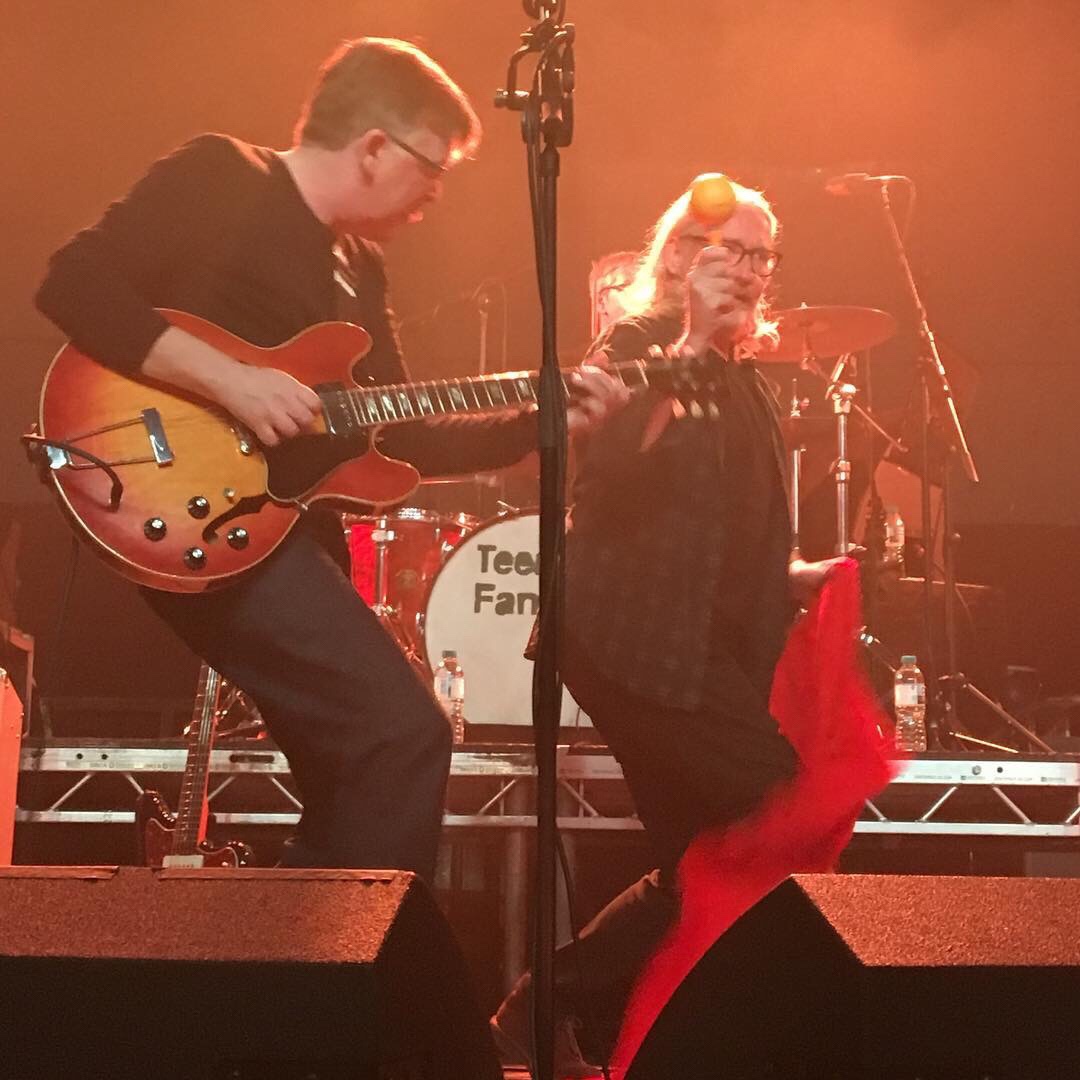
The re-released albums have seen much reappraisal for the old stuff. Thirteen in particular has gained real favour amongst the band’s faithful. Originally considered a mis-fire between the long-haired riffing on Bandwagonesque and the classicism of Grand Prix, it’s now seen as the equal of those early albums, the second one in in a 4 album run the equal of Bowie, The Beatles and all the very best. Played hot on the heels of a fizzing Bandwagonesque – highlights undoubtedly being a trippy Star Sign, the world-weary heavy sigh of Alcoholiday and a crystaline Guiding Star that wouldn’t have sounded out of place on The Velvet Underground And Nico – the tracks from Thirteen fired and fizzed, little napalm bombs of amped-up pop. Back on drums for the night, band jester Brendan O’Hare mimicked a heart attack as he worked his way into the count for the frantic knee tremble of Radio. Escher and Fear Of Flying ramped up mid-set proceedings, 1800 sillhouted heads bobbing in time to the steady throb coming from the stage. It’s the set closer though that sends everyone home on a high. Gene Clark has steadily become the hidden gem in the Fanclub’s stellar back catalogue; a chugging, riffing Neil Young workout named after The Byrds erstwhile maverick with Raymond McGinley pulling sounds from his guitar that J Mascis would willingly give his strumming hand for. To paraphrase Nigel Tuffnell, it’s all about the sustain, man.
“Avec l’orange” expertly captured by Andy Cummings
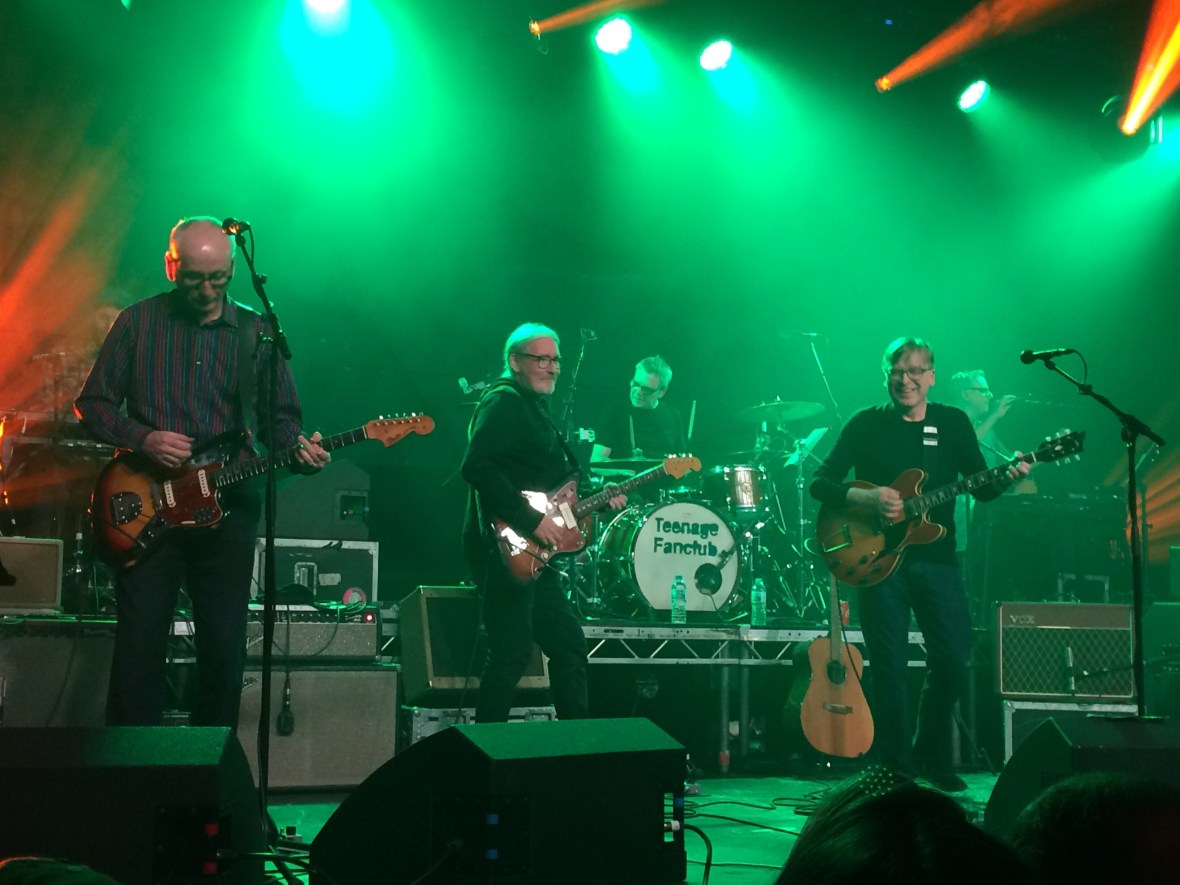
Night two was more of the same. If early TFC is the sound of a band skirting around its influences in an attempt to nail a definitive sound then Grand Prix and Songs From Northern Britain are the Rubber Soul and Revolver of the band’s ouvre; essential, defining and destined to still be spinning centuries from now. Everything; the playing, the singing, the writing stepped up a gear. “It’s the album where we started using capos, for fuck’s sake!” relays Norman as the band ease their way in to Don’t Look Back, a song that has suddenly taken on a whole new meaning. Don’t Look Back manages to be both melancholic and uplifting, Gerry’s lamenting vocals giving way to terrific three part harmonies from Blake, McGinley and a moonlighting Francis MacDonald who’s given the drum stool to Paul Quinn for the night while he augments the swell of sound from the stage with all manner of keys and stringed instruments. Is there any finer sight in music than when the principal members of Teenage Fanclub step up to their respective microphones and let forth their honeyed tones? Clearly, that’s a rhetorical question. A massive, riffing Neil Jung and a killer Going Places are the pick of a particularly bountiful first set.
When they return twenty minutes later – on paper this would appear quite a short break but the Fanclub demographic – more Middleaged Manclub – is such that the queues for the gents’ is longer than the solo on the aforementioned Neil Jung and mild panic sets in until needs are met – the band launches into what is arguably their finest sety of songs. Start Again. Ain’t That Enough. I Don’t Want Control Of You. Planets. Take The Long Way Round. Speed Of Light. It’s an obscenely rich set of songs, expertly played as faithfully as the recorded versions. By the end of night two I’m emotionally drained. My ankles are also the size of average-sized Ayrshire smallholdings, again another side effect of the Middleaged Manclub and given that I’ll be back for the next night, a self-inflicted by-product of attending three shows in a row.
Howdy! has also benefited from positive reappraisal. It signals the band’s autumnal years, where pace slowed, hair regressed and the comfort of a trouser was more important than the cut of the trouser. Love’s songs (again) may well be the pick of the bunch. I Need Direction with its spiralling riff and Hammond-heavy break. Near You‘s electric frug. The Town And The City, all woo-whoos and 60s sunshine pop. A groovy Cul De Sac that points the way towards Gerry’s Lightships project. Every one a crucial component in making the set as enjoyable as the previous two nights, something I might’ve considered impossible had I not been there.
It’s the second set that has the Fanclub fanclub all in a tizzy. It’s the only set of the shows that remains a mystery, so when they emerge and ease into Norman’s misty-eyed Did I Say, expectations are high for a set of rarities, curios and lesser-played gems from years gone by. No-one is disappointed. Long-forgotten b-sides Thaw Me, The Shadows, Some People Try To Fuck With You and a terrific The Count (where, in classic Fanclub style, the band members struggle to end it together) all pop up, totally unexpected and greeted like returning heroes. He’d Be A Diamond flies past, a sugar-coated rush of pop harmonies and ringing guitars. Then we get Broken. Stuck on the b-side of Ain’t That Enough, Broken was a track that waited patiently for the world to catch up. It’s a simple song. Wistful guitar plays out the melody. The band yawn and stretch and feel their way into it. Norman repeats the same line over and over and over and over again until the band fade out to silence. The Barrowlands crowd continue singing softly until Norman smiles and we stop. It’s now a folk song, our song, the unofficial anthem on the night when Gerry played his last Glasgow show. Brendan is in tears. His heart has been broken again. We get one more song – the 75th – and Gerry leads the band through a ragged rousing take on the Flying Burrito Brothers’ Older Guys, Norman providing enthusiastic woo-hoo-hoos above Raymond’s effortless Fender bending.
Suddenly it’s over. House lights go up slightly. The crowd cheers for more. The stage crew appears. Lights go down. The crew hang back. Whispers of Everything Flows and God Knows It’s True find their way between the bootstomps and cat whistles. Guitar George cuts across the stage carrying Gerry’s bass. He stops stage centre and shrugs apologetically. The crew come on and start dismantling equipment. The lights go up. There are more than a few boos, directed at whoever decided there’d be no encore, be that the management, the promoter or the band themselves. A slight tarnish on what was an extraordinary set of shows. To use football parlance again, everything but the penalty shoot out but a brilliant home win.
There have been many instances of musicians appearing on records without credit or fanfare; Eric Clapton noodling across the top of While My Guitar Gently Weeps on The Beatles’ sprawling White Album. Lennon and McCartney themselves singing backing vocals on the Stones’ version of their own I Wanna Be Your Man. Mick Jagger somewhat ironically providing backing vocals on Carly Simon’s You’re So Vain. Lennon trading vocals with Bowie on the latter’s Fame, itself a track cribbed from James Brown (or perhaps it was the other way around). David Bowie surfing low under the radar on Arcade Fire’s disco stomping Reflektor…….. these examples are the tip of a very deep and very incestuous iceberg.
Whether it be for contractual reasons, record label conflicts or just plain mischieviousness, it’s likely your favourite musicians pop up on many more records than they’d like to let on.
One of the first examples of musical skullduggery though must surely be the case of James Brown and the recording of (Do The) Mashed Potatoes. In 1959, Brown was coming to the fore as a sweat-soaked, soul-wracked, heart-bleeding bawler of gospel-tinged r’n’b. The darling of King Records, it seemed Brown and his Famous Flames band could do no wrong, until that was when Brown tried to cash in on the dance craze that was currently sweeping his neck of the woods. Despite his burgeoning fame it was apparent that no-one wanted to hear his stomping 12 bar instrumental espousing the joys of the doing the Doodle Bee. When the trend moved on to a new dance, James went to his label boss and suggested they cash in by recording (Do The) Mashed Potatoes.
Once bitten, twice shy, King Records refused to put it out so Brown took his idea to the rival Dade Records. They agree, on the condition that it was recorded under an assumed name (Dade boss Henry Stone was terrified of King Record’s Syd Nathan, the Peter Grant of the deep south soul scene), which is why along with seeing the track credited to James Brown and the Famous Flames you’ll also find it credited to Nat Kendrick & The Swans. The same band, the same line-up, the same record.
Nat Kendrick & The Swans – (Do The) Mashed Potatoes
(Do The) Mashed Potato is nothing you’ve never heard before; a standard 12 bar r’n’b instrumental, it’s a 3-button mohair suit kinda record, punctuated now and again by whoops and hollers and ridiculous potato-themed war cries;
Mash’ Pa-Tay-Das, yeah!
Hash Brown Pa-Tay-Das, yeah!
French-Fried Pa-Tay-Das, yeah!
I’ve no idea what they shout in the last part, but they sure sound excited.
It is, of course, thrillingly terrific. A primal slice of tribal us v them floorshakin’ soul. You’re either with us or against us is Brown’s underlying message and by the end of Part 1, I, you, us and them are definitely with him, one nation under a groove. Frustratingly I don’t have a version of Part 2 but I can imagine exactly how it goes.
Of course, when the record proved a success, the steely Syd Nathan insisted on future copies being issued on his label. He also bowed to Brown’s superior knowledge of fads and fashions by allowing him and his Famous Flames to record such future ‘classics’ as Wobble Wobble and The Dish Rag. Good throwaway pop records, it should be said, but neither as thrilling nor as plain daft as (Do The) Mashed Potato.
The duo of Nicolas Godin and Jean-Benoit Dunckel have been making music as Air since 1995. Like Brian Wilson, but with access to all manner of analogue synths and samplers rather then the Wrecking Crew and the cream of the L.A. studio set, they’ve created a unique and focused sound, part space-pop, part ambient electronica, that is instantly recognisable.
The ubiquitous Moon Safari album might’ve brought them to the mainstream – you can find discussions on its merits in places as disparate as MumsNet and the Steve Hoffman music forum – but before it and since you’ll find some of their best work. Top of the pile is Playground Love, the track they recorded for Sofia Coppola’s The Virgin Suicides.
Air – Playground Love
Built around a beautiful chord progression, it starts off with four clicks of the drumsticks before slowly morphing into a stoned and luscious groove. A sleepwalking Fender bass pads softly down the frets. Real drums lollop with all the energy of a fat-tongued dog in front of a Christmas fire. Vibraphones tip toe around the edge of your consciousness, flowing hypnotically like the oil in that old Castrol GTX ad from the 70s. The vocals (provided by Phoenix’s Thomas Mars) are breathy, close-miked and forever on the edge of asleep. Out of the blue, with an extreme burst of lethargy a lazy saxophone meanders in and out of the words and music, sprinkling the track with the same sort of magic dust that was first found on Pink Floyd’s Us And Them.
Playground Love wouldn’t at all sound out of place on Dark Side Of The Moon. Its slow-motioned timelessness is just right for these Autumnal days and dark nights we’ve suddenly found ourselves in, an aural blanket for lost souls and late-night listening sessions. Listen carefully and you can just about see the blue curl of Gauloises snake around the melody of those understated cooing backing vocals like the crumpled ghost of Serge Gainsbourg on heat. It’s terrific stuff.










 Plain Or Pan