Devo‘s version of Satisfaction, with its jerky, angular posturing and tight-trousered twitching is fantastic. The very antithesis of the Stones loose ‘n loud original, Devo play it like they’re trying to escape a claustrophobic padded cell, lower limbs a go-go whilst cling film-wrapped into straightjackets at least a size too small. Produced by Brian Eno, it manages to be both types of music – punky and funky.
Devo – Satisfaction
Underpinned by the sort of awkward myopic groove that served Talking Heads so well, it’s kick-started by a wheezing, asthmatic guitar riff. Thankfully, gaps narrower than the hems of Franz Ferdinand’s trousers (pop group, not WW1 protagonist) allow for little in the way of any other showy-offy stuff. It’s disciplined, monotone and over in roughly the time it’ll take you to read this short piece, which, as you know is the ideal length for ideal pop music.
Otis Redding, on the other hand, turns white man blooze into a goose-stepping, knee-dropping, Southern soul belter. It’s a well-known fact that Keith Richards loved this version more than the Stones very own. Using his shitty prototype fuzz box, the Pavlov-inducing signature riff at the start is Keef setting out to emulate the sound of the Stax house band blasting seven shades of brass into the wind. Otis borrowed yer actual Stax house band and, well, blasted seven shades of brass into the wind.
Otis Redding – Satisfaction
His magnificent voice is gravel-rough, road-worn and richer than Jagger and Richards themselves. They might’ve had the fame and the money and the shared Swedish girlfriends, but Otis trumped them when it came to ground shakin, earth quakin’, heart breakin’ ess oh you ell soul music. A hey-hey-hey.
Early Talking Heads, with their tight, taut, highly strung guitars, meandering, fluid basslines and polyrhythmic percussion really takes some beating. I’ve written admiringly about their 4th album Remain In Light before, an album that continues to amaze and throw up new sounds even after all this time. With sonic architect Eno on ambient duties, the band are at the height of their creativity. An exercise in experimentation, the band cherry pick from the artiness of mid 70s Berlin Bowie and the disciplined grooviness of African music, Fela Kuti in particular, and weld them to the pop sensibilities of, aye, mid 70s Bowie and African music, Fela Kuti in particular. The big track from the album is undoubtedly Once In A Lifetime but dig deeper and you may find yourself with a brand new favourite album. There are many tracks that will grown on you just the same, believe me.
Like Houses In Motion, for example. The flop second and final single from the album, it’s the perfect juxtaposition of Sly Stone’s pitter pattering skeletal funk and the call and response paranoia of Talking Heads’ own Slippery People, still 3 years from release, but surely conceived in this very moment?
Talking Heads – Houses In Motion
It judders and jitters in all the right places, driven by scratchy funk guitar, an introspective vocal and honking keyboards. In Scotland, ‘honking‘ is often used in derogatory terms, especially at the football – see that big centre, he’s honkin’, so he is – but in this context I’m referring to the fact that the keyboards conjure up the sound akin to a midday traffic jam on 5th Avenue. A one chord groove that wouldn’t outstay its welcome were it twice as long, it’s the great lost Talking Heads track.
Grace Jones & ACR by Kevin Cummins. Of course.
The reason I’m turning the spotlight on it is because just last week I received an email from A Certain Ratio‘s people, letting me know about the band’s own version of the track. Dug out of the archives for a warts ‘n all box set celebrating an outstanding 40 years of ahead of the curve yet under the radar music, ACR’s version sounds terrific; timeless, relevant and, like the original, far better than much of the new music that the taste makers and shapers on 6 Music etc would have you believe is worth parting with your hard-earned disposable income for.
Recorded in 1980 with Marin Hannett, the track was intended as a collaboration with Grace Jones. Retaining the edgy, claustrophobic, insular mood and cat-scratching guitar, ACR still contrive to make Houses In Motion their own, slapping a fantastic O’ Jays For The Love Of Money rubber band bassline on it and adding a muscle that was absent from the original. If it popped up right now on 6 Music and you knew no better, you’d be gushing over a fresh, new track that’s older than Jordan Rakei or Loyle Carner or Chali 2na or any of those hip young gunslingers that pop up with dreary regularity.
Amazingly, the version that appears on the box set and the brand new video above features ‘just’ a guide vocal from ACR’s Jez Kerr, intended to give Grace an idea of how the finished track might sound. Although Jones made it to Strawberry Studios and took part in the session, her vocals were never completed and remain frustratingly undiscovered. You can only imagine how the intended version might have sounded.
Funnily enough, I suggested in that article linked at the top that Grace could take Talking Heads’ Seen And Unseen and make it her own, so, y’know, great minds think alike ‘n all that. Another great mind who’s also ahead of the curve is Adam over at Bagging Area. He was first out of the traps to shine the spotlight on the ACR track. It goes without saying, but Bagging Area is a blog definitely worth adding to your bookmarks and favourites and what have ye for up to the minute, finger on the pulse observations.
Years ago, our old Ford Fiesta swallowed an ancient Billy Connolly tape; a mixture of his greatest stand-up ‘hits’ (The Crucifixion, The Jobby Wheecher, When The Circus Came To Glasgow….. all the really brilliant stuff) and a handful of songs, one or two serious, the others daft and sweary. It was a great tape and from the day it became jammed in the car, it became jammed in our heads. On any journey, we could recite the entire compilation, over and over and over again, word by word, welly by welly and willie by fucking willie.
It soundtracked many a memorable trip to Ikea – unbelievably, perhaps, the one near Newcastle as there wasn’t one in Scotland at that time. All that way and back again for a pine coffee table and a hi-fi unit, soundtracked by Billy Connolly and our increasingly adept impressions of him. The coffee table didn’t survive the big flit a dozen or so years ago, but the hi-fi unit has been, to use the parlance of the day, upcycled with a coat of hip to drip Annie Sloan chalk paint and still does the job to this day. I’m looking at it right now as the unit inside it plays Weatherall’s incendiary mix of My Bloody Valentine’s Soon at a volume too loud for this time of night. It’s part of a Creation playlist I’m putting together for the weekend, but more of that perhaps next week.
One of the dafter tracks on the Connolly compilation was entitled ‘Bastard Fly’. It consisted of Billy plucking his banjo on a creaky porch in some imagined mid-west state or other while an annoying fly buzzed around him. There was no visual to go along with it, but that was the premise. It went something like this;
plinky-plinky-plinky-plonk
(creak)
bzzz
plinky-plonk
(creak)
bzzz
plinky
bzzzzzzzzzzz
“Gnnnshhhffff….”
(creak)
plinky-plonky-plonky-plink
bzzzz
“Fknshhhh….”
(creak)
bzzzzzzzzzz
plinky-plonk-plinky-plonk-pli-twaaaannnnngggg!!!
At this point a string breaks on the banjo. There’s a slap. Brief silence. Another creak. Then Connolly’s voice, relaxed yet full of whispered menace.
“Bastard fly!”
plinky-plonky-plinky-plonk
(fade to end.)
And that was it. Not one of his better-known moments. Almost surrealism, in fact. But it made me laugh every time. I’m not so sure my co-pilot felt the same way, but she laughed at me laughing in the way you do when you’re young and carefree and the owners of a honkin’ coffee table. It’s a shame that tape left us when the car did. I can’t find an mp3 of it anywhere.
Another ‘Bastard Fly’ track is surely Hot Chip‘s Over And Over.
It’s a fantastic track, nervy and twitchy and running on paranoid rhythms, goosestepping techno off-set by fuzz guitar and fuzzier analogue synths. The vocals are disciplined and repetitive – “over and over and over and over“, even offering a clipped, robotic spelling lesson in the refrain.
That annoying wee electro wobble that comes in on the back of the tinkling music box percussion and clip clopping Talking Heads polyrhythms that introduces the song and flits between the notes like a hopped-up dragonfly in mid summer though – it’s the return of Billy Connolly’s Bastard Fly, remodelled for modern times. Listen up!
Hot Chip – Over And Over
It’s the kinda track that New Order should’ve been making in the mid 00s instead of falling out and in and releasing substandard fare that does nothing but dilute an imperial back catalogue. It’s the equal of the best parts of LCD Soundsystem and Underworld, techno for folk who don’t realise they’d like techno. For me, it’s Hot Chip’s defining moment. Watch this video clip over and over and over and over…
Last summer, just as the schools broke up and we were baking in weather the envy of southern Europe, I mentioned to a colleague that it’d be brilliant to be a wide-eyed P1 pupil again, stopping for the first summer holiday of many where the gap between the end of June and middle of August was a whole lifetime, where the sun was constantly out and where each new day was filled with the promise of do-what-you-like adventure.
Nostalgia’s a funny thing. The summer of 1976 is forever-burned on my memory for two reasons:
I’d just finished primary 2 (thinking about it, it might actually have been primary 1 – It was a long time ago…) and I was beginning to make sense of my position in time and space. Young Sandy Davidson, a 3 year-old from the being-built Bourtreehill area of Irvine had disappeared around Easter time, never ever to be found. Whispers of bad men and concrete burials in house foundations could be heard between the gaps in the Action Man battles we waged in Chrissy Longmuir’s back garden; sombre, understated and in the background but there nonetheless.
Plenty of theories abounded, but to this day, no-one knows for certain what happened to him. Tensions were understandably high amongst our parents, but for the most part my pals and I were oblivious to it, even after witnessing a helicopter land on the field next to our houses and seeing half a dozen frogmen go in and under the River Annick in their fruitless search for Sandy. For many years this remained the most exciting thing I’d ever seen.
Days later, when, walking home from school, my two pals and I continued past our road end and onwards to collect frogs from the big concrete pipes that would service the next phase of the estate where Sandy had vanished from. We were met on our eventual return by 3 distraught, frantic mothers, given far more than a quick skelp (out of relief and love, y’understand) and kept inside for the rest of the day.
So, ye can keep yer Pistols and yer punk and yer political unrest – it’s these Sandy-related incidents that are the events that burn brightest on my mind whenever I see or hear any mention of the year 1976.
When the school stopped, that summer really did seem to last forever. It was, to borrow a tired old cliché, the warmest since records began. A slint of sunlight creeping between the gap in my curtains and onto my face on the top bunk was my daily alarm clock and I was up and at ’em from its first warm rays until I’d been dragged in, scrubbed clean in the kitchen sink and put to bed with the sky not yet quite dark enough for my liking.
I also have a distinct memory of cycling my bike in nonstop circles on the back grass, the piece of cardboard from my mum’s old Silk Cut box clack-clack-clacking away happily on the back spokes, while my dad made French toast in the kitchen. It must’ve been a Sunday, for I can remember the signature sax of Gerry Rafferty’s Baker Street playing loudly as Radio 1’s Hit Parade counted down on the wee radio on the windowsill, wafting from the kitchen and out the open back door into the sweltering early evening sky, carried by plumes of unwanted smoke from the French Toast my dad was crucifying at the time.
Another year and then you’d be ha-ppy
Just one more year and then you’d be ha-ppy
I remember my dad scrape-scrape-scraping the worst of the toast over the sink and telling me it was fine before I ate it.
But you’re cryin’, you’re crying now.
It really was the best of times.
Nostalgia’s a funny thing right enough….
A quick check reveals that Baker Street wasn’t released until the 3rd of February 1978!
So not only am I two years early, the chances of being out the back door in the baking early evening February heat while my Dad merrily burnt French toast in the kitchen are non-existent. Man! I’ve lived with this notion for 43 years and it’s been wrong all that time. This is seismic, believe me. Jeez.
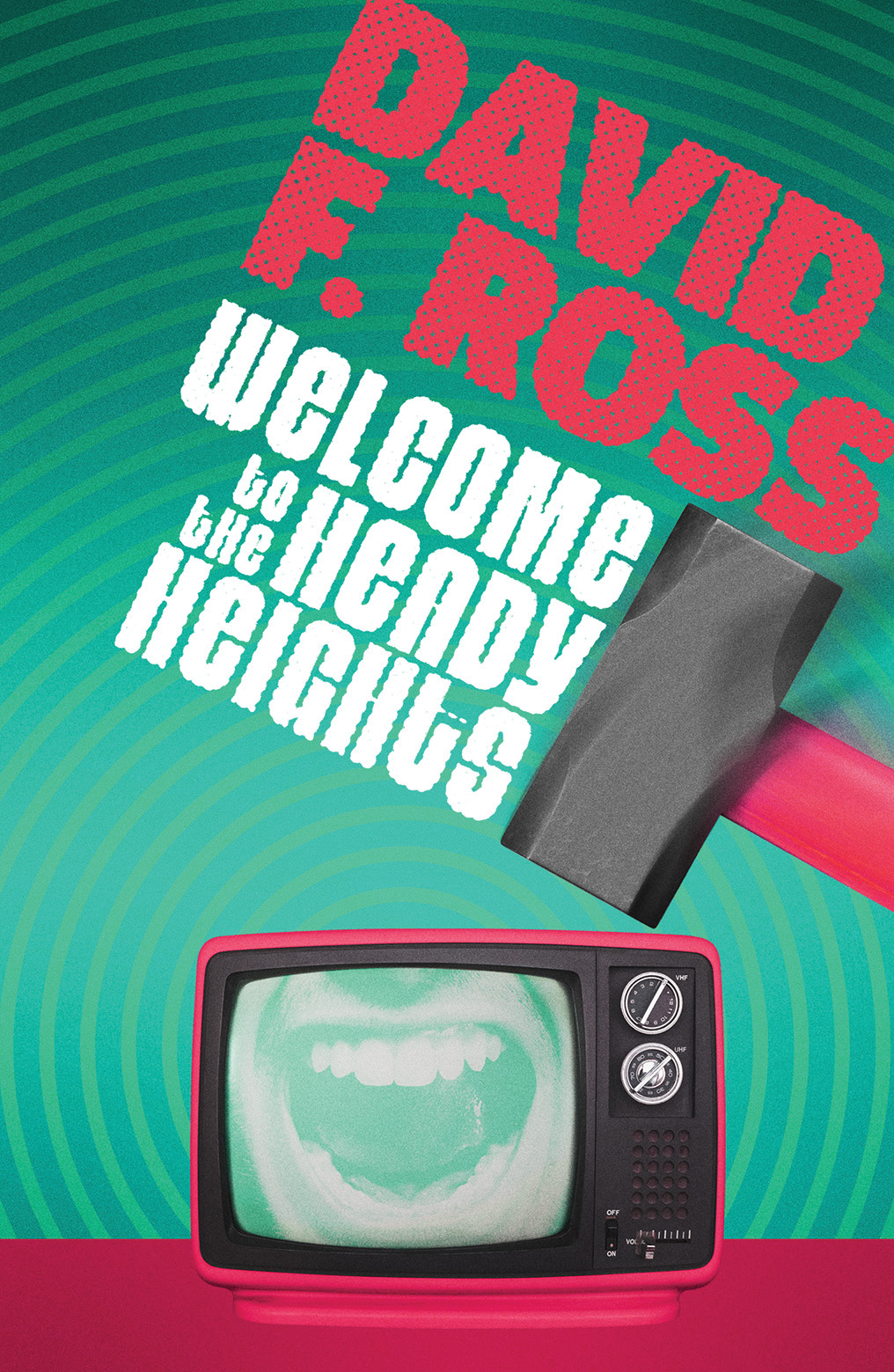
Thankfully David F. Ross has a better grasp of the times. The Ayrshireman has form when it comes to entertaining crime noir that comes gift-wrapped in cultural reference points from the past. You might be familiar already with his Last Days Of Disco trilogy. If not, you might want to get acquainted with it. For his latest offering, David has once again looked to the past for inspiration.
Set in the summer of ’76, Welcome To The Heady Heights features a rum cast of dodgy TV personalities, iffy politicians, misogynistic polis and shonky boy bands. It’s a great read; equal parts hilarious and hideous, devious and disturbing. Without wanting to give too much of the plot away, the story revolves around Glaswegian bus driver Archie Blunt. Recently unemployed, Archie falls in with some of the city’s criminal fraternity and ends up embroiled in all sorts of goings-on. When he unwittingly saves the life of Hank ‘Heady’ Hendricks, a prime time TV personality (a thinly-disguised amalgamation of career makers/breakers Hughie Green and Simon Cowell), his life takes a turn for the better. Seizing his chance, he forms a boy band, gets them on the telly and, to twist a phrase, obscurity (rather than opportunity) knocks. Keen observers will spot a friendly nod to fellow Ayrshiremen the Trashcan Sinatras here.
Being set a decade or so away from Glasgow’s reinvention as a City Of Culture, the grime and soot of a buckled and bent city stick to the pages, unwelcome reminders of Glasgow’s recent past as anything but cultured. References are made to the Great Eastern, the hostel a mile or so from Glasgow Cross in the city’s East End that provides accommodation for homeless men. In the story, a highly influential group of movers and shakers exploit the situation to their own ends. Recent scandalous cases involving Jimmy Saville, Max Clifford and the topical-once-more Michael Jackson should give you some idea of what goes on.
Blunt finds himself in the position of being able to blackmail the group but his amateur status in a world of hardened criminals and ne’er-do-wells means that oor Airchie is always going to be up against it. The band he puts together – a living room-pleasing take on the Bay City Rollers – receives the highest score on the epoch-defining on-stage clap-o-meter and are destined for great things – the Heady Heights, indeed, but, just as things are looking up, the Sex Pistols appear on Bill Grundy’s show, Archie’s band decide on a drastic new direction and predictable chaos ensues.
Grab a hold of the book from here or here or maybe an actual bricks ‘n mortar book shop and read the whole story for yourself. I think you’d like it.
Many thanks to David (above) and Anne Cater at Orenda Books for asking Plain Or Pan to be a stop-off on the book’s world tour that’s been zig-zagging its way across all manner of blogs for the month of March. Being one of the last is tricky as by now, I’d imagine, most reviewers will have said everything that needs to be said. For this reason, I’ve intentionally not read the other reviews to date (although I’ll be going back later on to compare what I’ve written with all of the others). Apologies then (and damn you!) if this review has appeared in similar form elsewhere, French toast and wonky Baker Street references notwithstanding.
It’s fairly easy to join the dots from Prince‘s records to their source; a Sly-inflected baritone vocal here, a sky-scraping, lightnin’ fast Hendrix solo there, a band whipped into shape with an iron rod-discipline that James Brown might’ve considered ‘a bit much’… Since his passing, there has been a dribbling of Prince-inflected records making their way into public conscience – records that continue where Prince’s incredible run abruptly ran out. Certainly, there won’t ever be another Prince but that leaves the door wide open for any artists brave enough to attempt to fill the void.
Superbowl
Like Harriet Brown. His track Paper is currently finding its way onto the lower reaches of the 6 Music playlists and it’s all but Prince in name; skeletal electro funk, multi-tracked, self-duetting vocals, a Wendy and Lisa-style female backing that might actually be Brown himself, everything, in fact, save the processed, squealing Hendrix-aping solo.
I really love this track. Its itchy, claustrophobic, paranoid funk manages to be both west coast LA cool yet sounds like something a musically-gifted bedroom boffin cooked up on his laptop. Having had a quick run through his Bandcamp page, I don’t imagine the rest of his album will be my kinda thing, but Paper most definitely is. I think I wanna dance now…
Those looking for more Prince-indebted music could do worse than seek out Janelle Monae‘s Dirty Computer album. Released almost a year ago, it’s covered in dollops of Prince-infused funk. Lead single Make Me Feel was essentially Kiss updated for the Spotify generation (and there’s nowt wrong with that of course) but dig deeper and you’ll find all sorts of pervy, sweary stuff, filthy funk that manages to mess with the mind while moving the feet.
Some songs can transcend time and place to the point where, without fuss or fanfare, they turn up nestling in the canon of the great popular songbook, having you believe they’ve always been there. Back To Black, the title track of Amy Winehouse’s second, final album is such a song.
Amy Winehouse – Back To Black
I don’t know anyone who doesn’t like the song. I’m assuming it’s your kinda thing too.
Its measured, metronomic, minor to major and back again four chord progression is perfect. Bathed in pathos and regret, it harks back to the sound of those great girl groups of the sixties; spectral (and Spector-al) multi-tracked ooohs and aaahs, four to the floor tambourine percussion, gently sweeping strings, subtly stinging guitar, finger clicks, band drop-outs and a fantastic vocal around which everything loops and repeats. It’s the entire contents of the melodramatic songwriter’s handbook committed to tape, but clever rather than cliched.
Part of the cleverness lies in the lyrics delivered in the vocal. More than just a ‘can’t-live-with-him, can’t-live-without-him’ teen angst throwaway pop song, Back To Black is the sound of Amy Winehouse’s relationship with long-term beau Blake Fielder-Civil unravelling messily on record. He’s left her for an old girlfriend and a bitter but proud Amy – head high, tears dry – can’t cope.
Full of finger-pointing and philandering, it’s brutally honest; he’s getting more of what he needs with the ex while she’s a mess, developing an ever-increasing dependency on the stuff that would prove her undoing. Those words Back To Black might metaphorically suggest a return to dark days, but it’s no coincidence that black is also a street name for heroin. Boyfriend Blake is hardly a stranger to drugs either, the synonymical ‘you love blow and I love puff’ outlining exactly that. Perhaps unsurprisingly, the lyrics arrived quickly to Amy. What you hear is word for word what she wrote at the song’s conception, a love letter to the death of a relationship. In the video, she even went as far as having a funeral for it.
There was a great documentary on the making of the album on BBC4 last week, where a combination of old home movies of Amy in the sound-booth and clips of producer Mark Ronson playing early takes tracked the development of the song. He really managed to work it up from its jazz beginnings, where Amy’s phrasing of the vocals fluttered and flitted between the notes, the words elongated, rhythm and meter stretched like rubber bands to snapping point.
Roping in the Dap Kings was Ronson’s masterstroke. A modern-day take on the Stax house band, it was they who came up with the track’s definitive boom b’-boom chick finger clickin’ rhythm and helped the song’s metamorphosis from troubled torch ballad to Shangri-La shimmy.
God bless you, Amy. You left us with many good songs and a handful of great. Back To Back is your greatest of all.
Y’can keep yer Jonis ‘n Pattis ‘n Debbies ‘n Kates ‘n Amys ‘n ‘rethas ‘n what have ye. If I were to pick just one woman to soundtrack International Women’s Day, it’d be PJ Harvey. Strong, powerful and always in charge, she’s the perfect role model for right-thinking people of all sexes. There’s no better time than now to share something I wrote originally for the Vinyl Villain blog a couple of years ago. James (the VV himself) runs a regular imaginary compilation feature where a guest contributor will open his and perchance his readers’ minds to new, previously unheard music. I chose to write about PJ.
Following a recent post on Plain Or Pan, JC wrote me a lovely and flattering begging letter, asking if I’d contribute a piece on PJ Harvey for The Vinyl Villain. Now, just to qualify, I’m no expert on Polly Jean. I’m a huge fan and I have most of her back catalogue (the odd collaborative effort aside) and while there are other artists that I obsess far more over and go to first when choosing something to play on the rare occasion I have the house to myself, PJ is always somewhere in the background, shuffling up unannounced but always welcome on my iPod during the commute to work, or peeking out at me in-between my George Harrison and Richard Hawley albums. The bulk of her music still thrills and amazes and stands up to repeated listens long after the time of release, which is surely the mark of a true artist.
It’s incredible to think that PJ Harvey has been making records for nigh on a quarter of a century. From the lo-fi scuzz of Dry via the Patti Smith-isms of Stories From The City, Stories From The Sea and the stark, piano-only White Chalk right up to her most recent collection of WW1-themed songs on Let England Shake (not forgettting the one-off single in support of Guantanamo Bay prisoner Shaker Aamer), she’s one of our most consistent musicians. Daring, unpredictable and true to herself, she’s right up there with the best of ’em.
Excitingly, she has a new LP in the offing. April, I believe (it was – 2016’s The Hope Six Demolition Project). The first fruits are spinning heavily on BBC 6Music every day just now, and they’re sounding terrific. As a primer, JC asked me to collate a compilation for the uninitiated, put together any way I saw fit.
I begin with the caveat that the tracks I’ve chosen today might not necessarily be the ones I’d chose tomorrow, but I’ve chosen one track from each of her 8 studio LPs (excluding the 4 Track Demos stop-gap LP or those collaborative efforts mentioned earlier). Some of the tracks were singles, some were hidden away in the darkest corners of the album from whence they came. All are classic PJH; garagey, bluesy and occasionally down right dirty. There’s the odd bit of cello and throw-away sweary word. But there’s always the voice, her primal moans sexy as hell one moment, skyscrapingly stratospheric the next.
This slideshow requires JavaScript.
Sheela Na Gig
Sheela Na Gig was PJ’s second single and also appeared on Dry, her debut LP. She sets her stall out early here, singing about ‘child bearing hips‘ and ‘ruby red lips’. Hearing this for the first time as a 21 year old, I had no idea what a Sheela Na Gig was (Google it), so I listened to this thinking “Oh! Aye!” From then on I always harboured faint hopes that she might take a mutual shine to me, should our paths ever cross. S’too late now though, Peej. Sorry.
50ft Queenie
50 ft Queenie was the lead single from 2nd album Rid Of Me. Rid Of Me is such a quiet record, which has always irked me. For an artist who apparently revels in creating a whirlwind of chaotic noise, the album seemed so quiet and tame by comparison. I’m sure there must be some sort of audiophile reason for it, subsonic frequencies and the likes, but who knows? When you play it next to something like, oh, I dunno, Definitely Maybe (like comparing jam with cheese, I know), PJ’s album sounds limp and flimsy next to the sonic boom of the monobrowed magpies.
Anyway. 50ft Queenie. The drum track sounds like the Eastenders theme falling down the stairs, a right royal ramalama of tumbling toms and clattering cymbals all underpinned with a bluesy riff and topped off with those sexy/skyscraping moans and screams. “You bend ovah, Casa-nova…” Indeed. Great one note guitar solo too.
I have a clear memory of seeing her perform this in the Barrowlands, wearing a pink feather boa, knee high boots of shiny, shiny leather, a Gretsch Country Gentleman and not much more. A spectacular sight and sound. If you’ve never heard this before, make sure you strap yourself in first.
Come On Billy
Come On Billy can be found on the Mercury-nominated To Bring You My Love LP. Featuring some frantically scrubbed acoustic guitar and see-sawing cello, it’s PJ’s Nick Cave (aye, him again) moment. There’s a terrific, understated string section playing below the whole way through, the first evidence that PJ had more to her arsenal than bent blues notes screaming through a tower of Marshall stacks. I’ve always liked how she hiccups her way through the adlibbed chorus at the end.
The Wind
The Wind (from the Is This Desire? LP) is a slow-burning cracker. For such a slight ‘n skinny woman, PJ’s tune packs more muscle than it has any right to. It‘s her Barry Adamson moment; filmic, bass-heavy and full of brooding menace.
It fades in on a ripple of marimba and a stutter of just-plugged-in guitar, with PJ’s vocal quickly taking centrestage. Whisper-in-your-ear sultriness one moment, understated falsetto the next, it tells the story of St Catherine of Abbotsbury who built a chapel high on a hill near to where PJ lives.
The whole track is carried along by the bassline. When it comes in, after that second ‘noises like the whales’ line, it brings to mind some New York street punk, hands deep in the pockets of his leather bomber jacket, docker’s hat pulled hard and low over his forehead, eyes shifting from left to right and back again, looking to start trouble, looking to avoid trouble, but, looking for trouble.
It’s produced masterfully by Flood who brings an electro wash to the finished result. In fact, it wouldn’t sound out of place on any given recording by Harvey’s fellow West Country contemporaries Tricky and Massive Attack. There’s subtle tingaling percussion, quietly scraping cello and layers of synthetic noise. When the vocals begin their counter-melodies in the chorus, it’s pure Bjork.
Kamikaze
Kamikaze is taken from Stories From the City, Stories From The Sea, PJ’s second Mercury-nominated LP. Her most straightforward pop/rock album, most of the tracks had the knack of sounding like Patti Smith on steroids.
Kamikaze is terrific, a down-the-hill-with-no-brakes-on, headlong rush of close-mic’d guitars, polyrhythmic drums and yet more skyscraping hysterics. It’s a close cousin of 50ft Queenie, only with far better production and mastering.
If you’re new to PJ and any of these tracks have so far piqued your curiosity, I’d start with this track’s parent album and take things from there.
Who The Fuck?
Now we’re talking! PJ’s angry. Someone’s pissed her off and she can’t wait to tell us. Coming across like a demented Jon Spencer Blues Explosion, WTF? kicks like an angry mule, a fuzztoned, vocally distorted, brilliant mess of a record.
It’s a sloppy, stroppy, brilliantly sweary track. If you took ten wasps in a jar and stuck them in a food blender with the short-lived RRRRRiot Grrrrrrl movement, it would sound something like this.
The Devil
The White Chalk LP is a difficult listen. Very difficult. I listened to it once then filed it away. For the purposes of this article I dug it out again and spent one dreary afternoon (it’s only about 35 mins long, but honestly, I’d rather stick pencils in my eye than have to listen to it again) waiting patiently until I ‘got it’. I still don’t.
I chose The Devil as it’s the lead track, and from experience, the lead track is usually a statement of intent from the artist. Well, PJ sets her stall out early with this one. The whole album is funereal in pace, delicate, flimsy and abso-fucking-lutely boring. PJ coos and woos and plays her piano with all the deftness of a concert pianist, but damn, there’s nothing there that grabs. No balls-out rockers, no dirty, sweary, innuendo-filled garage band fizzers. Nothing. For all its gossamer-thin lightness, it’s an extremely heavy listen. Maybe you think differently. For me, it’s the one clunker in a stellar back catalogue. And every artist is allowed the occasional clunker, aye?
The Glorious Land
Following the stark, piano-led White Chalk, Let England Shake was PJ’s triumphant return to the guitar. Much of the album is loosely concept, relating to the atrocities of WW1. If this seems a bit heavy, the music therein was often light and airy; gone for the most part were the blooze blunderbuss guitars, replaced with lightly chiming 6 strings, clean and pleasant on the ear. Radio 2 music, even.
The Glorious Land begins with such a guitar, playing atop a rallying military bugle. Without getting too ‘muso’ about it, the chord changes are sublime and the vocals are always to the fore. There’s almost a male/female duet in the verses, between PJ and (I think) a moonlighting Mick Harvey, which comes across like a 21st century Lee ‘n Nancy on helium, while PJ duets gloriously with herself in the chorus and outro. You might want to discover the rest of this album for yourself. It’s one of her best.
And there you have it, 8 tracks o’ PJ. A cross-album introduction I’d be happy to pass on to anyone with a PJ curiosity.
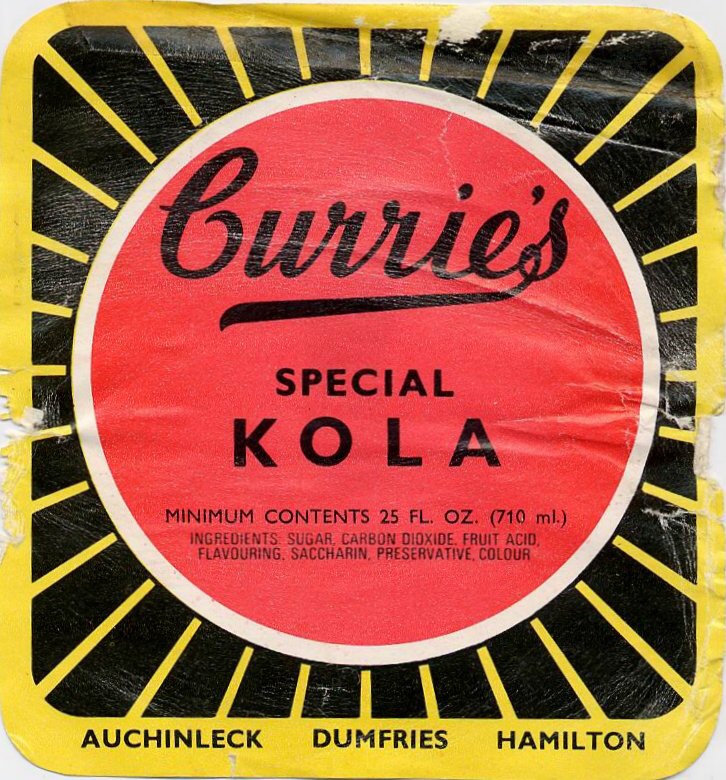
It’s oft suggested that our other national drink here in Scotland is Irn-Bru, the mysteriously-flavoured bright orange beverage brewed by Barr’s. I’d like to argue the case for Red Kola though.
The crimson ‘sparkling fruit juice’ was concocted years ago by Curries of Auchinleck in deepest East Ayrshire. With a similarly closely-guarded secret recipe, and marketed as ‘Special Cola’, Red Kola has in recent times, I suspect, also undergone a slight recipe redesign. Unlike the hoo-ha created when Barr’s bowed to the combined pressures of the sugar tax and healthy eating campaigns by lowering the sugar in Irn-Bru (reducing both its flavour (bad thing) and waiting times in dentists across most of Scotland (good thing)), Red Kola’s subtle shift in taste seemed to bypass even the most sugar-fuelled soft drinkers. And unlike the Facebook racketeers and profiteers who advertise ‘original’ glass bottles of Irn-Bru at prices not too dissimilar to what you’d pay for a decent Jura malt, no one (as yet) has found a stockpile of Curries ‘Special Kola’ at the back of the cupboard just waiting to be ‘Pepsi Challenged’ against a just-off-the-shelf plastic-bottled Red Kola from the Spar. Trust me though, as the bottle I’m currently guzzling – for research purposes of course – proves, as with Irn-Bru, it’s still the same drink….just different.
Red Kola has been championed in song by another of East Ayrshire’s best-kept secrets, Nyah Fearties. Brothers Stephen and Davy Wiseman have a rare way with an arrangement; take an acoustic guitar and batter it furiously until it sounds like it’s being assaulted by a Brillo Pad then weld it on top of a backbeat held together with clanging pipes, hob nailed stomps and a wing and a prayer and play at 100 miles an hour until out of breath. The regularly likened-to Pogues might’ve had flowing Streams Of Whiskey but the ‘Fearties noisily and beautifully romanticised Red Kola.
Nyah Fearties – Red Kola
(Oor) guts are dyed wi’ Rid Kola.
That’s a line the equal of Burns, that is.
Nyah Fearties debut album, A Tasty Heidfu‘, was re-released after 30-odd years to little fanfare at the tail end of 2018. A clattering, caterwauling sound clash it is, like our national drink(s) an acquired taste. It’s also something that gets under your skin and flows through your veins, the very nectar of life itself. You should head here toute de suite and give them your hard-earned.
Horace Andy‘s Skylarking is, hands down, the finest song written about horseplay and high jinx. An old 17th century term, a skylarker was someone who preferred low-level carrying on and procrastination to the actual completion of a work-related task. Yer commonly-used verb ‘to lark about’ comes from it, dontcha know. Had the song been written by a Scotsman it may well have been called Cairryin’ Oan or Fannyin’ Aboot, but then it’s unlikely the recorded item would have been the quietly lilting, sqeaky-organed, roots reggae track that it is. That one and two and three and four rhythm could bring even the most diligent of workers to a wasteful half hour on the company’s time.
Horace Andy – Skylarking
Horace Andy outside Rough Trade Records London 1985
From Kingston, Jamaica, Andy carved out a solo career to varying degrees of success. Skylarking harks back to 1972. Released on the ubiquitous Studio One label, it found the singer in fine form. The album is an ever-present in those ‘Greatest Reggae Albums You Should Hear’ lists and, yes, you really should try to have a listen.
For many, certainly this writer and no doubt some of you reading, Horace Andy first came to prominence via the work of Massive Attack, his distinctive, reedy vocals enhancing both Blue Line‘s One Love and Angel from Mezzanine, to name but two.
Confusingly, an album also called Skylarking was released in 1996. Building on his popularity and new-found fame as a member of the extended Massive Attack family, Virgin released a catch-all compilation of hits, misses and everything in-between. If you buy one album called Skylarking though, you’re best tracking down that superb debut from ’72.
Right. (stretches…..yawns…..eases himself out of his chair….) Where did I put that report for work?
A couple or so years ago I found myself wading through the flotsam and jetsam of virtual music that lies like a nasty trip hazard on the Plain Or Pan doormat. All manner of Scandinavian thrash, whispering, sensitive acoustic troubadours, bedroom techno wizards, anarcho ska punk and identikit Oasis-lite tribute acts, heavy on attitude but not so much on actual songs were there, just waiting to trip me up. It’s great getting free music sent, but it’s even better when the music sent is exactly the kinda music you’d buy. One of the acts who escaped the recycle bin that day was WH Lung, a rather mysterious Manchester-based group of musicians who came out of the traps sounding like one of those mid 70s German bands that yer hip reviewers get themselves all in a lather over. Their track Inspiration ticked a lot of boxes and found its way onto here as a result.
WH Lung – Inspiration
Played a gazillion times then filed away for future reference, I promptly lost sight of WH Lung and forgot all about them. Such is the way of things.
As if by magic, an email arrived last week heralding the return (for me) of the band. Headed ‘London Oslo Hackney‘, their press release was keen to point out the slow, considered, gestation period for their forthcoming album. Unlike other acts who receive a bit of favourable early press and rush-release their music as a result, WH Lung has taken the longer route, allowing the music to simmer and stew and flavour and ferment for the past 24 months. A tweak here, a re-touch there. The finished results are staggering.
Lead-off single (and free download, freeloaders!) Simpatico People continues the propulsive, linear, motoric groove that made such an impression back then.
10 minutes of whooshing synths and clean chiming guitars zooms past, the sound of Public Service Broadcasting going 15 rounds with LCD Soundsystem. When the vocals arrive, David Byrne and Reflektor-era Arcade Fire pops into the mix. This is proper joyous, hands-in-the-air celebratory music. The band may be out and about in the more intimate venues of the British Isles come May, but really, this is Saturday night on the Pyramid Stage at Glastonbury music.
The album that follows is just as forward-thinking, just as widescreen and just as good. When it escapes into the ether on 5th April, Incidental Music should by rights be a shoe-in as one of the albums of the year. Keyboard washes and sequenced synths conjure up Power, Corruption & Lies-era New Order. Guitars chime heavenwards. Tracks bleed into one another and the whole thing ebbs and flows and twists and turns. It’d make great cycling music. When the better weather comes in it’ll be soundtracking my gasping wheeze along the cycle-friendly routes of Ayrshire, that’s for sure. The beat is omni-present and relentless, perfect for pushing yourself to the limits. Extremely disciplined, there are no flash solos, no flourishes across the keys. It’s a heads-down and boogie album, no nonsense stuff from a band who are locked into one another’s groove. Classic stuff, in other words.
WH Lung are out and about in May;
11th May—Liverpool, The Shipping Forecast
13th May—Glasgow, The Garage (Attic Bar)
14th May—Nottingham, The Bodega
15th May—Brighton, Green Door Store
16th May—Bristol, The Louisiana
17th May—Southampton, Heartbreakers
The debut album – Incidental Music – follows on 5th April.
For what it’s worth, I reckon you’d like it a lot.














 Plain Or Pan