Cover Versions, Get This!, Gone but not forgotten, Hard-to-find

Happy Birthday Rabbie

Some of you may have read this before (2009 and 2011, to be exact).

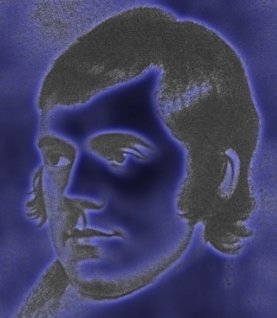
254 years young today. I love Burns. Had him drummed into me at school. In fact, anyone who goes to school in the West of Scotland knows all about him. And as a teacher, I love banging on about him to my class. Here’s a brief potted history for any uninitiated out there…

robert-burns

Born on the 25th January, 1759 in Alloway (now a posh part of Ayr). Scrawny boy, wasn’t expected to live long. Helped his dad on the farm. Wasn’t cut out for it. His dad, though poor, paid for Robert to go to school. Robert excelled in academia. Began writing poems to go along with the folk songs his mother had sung to him. People liked them. Drifted around Ayrshire. Had a reputation as a ladies man. Loved them and left them. Made plans to go to Jamaica as a slave driver (they don’t tell you that in school). Was just about to go when someone in Kilmarnock published the first edition of his poetry. This edition made it’s way to Edinburgh and Robert followed. The Edinburgh high society loved him. He loved Edinburgh life. He loved Edinburgh women. He loved entertaining Edinburgh women. In less than a year he spent the equivalent in today’s terms of £170,000! That’s £170,000 pissed against a wall. Made a hasty retreat, skint, to Dumfries when he was caught having an affair. Married Jean Armour, the love of his life they say and went back to the farming. Hated it. Became a tax man. Hated that. Died of a heart condition, possibly brought on by syphilis, on 21st July 1796, aged just 37. At the time of his death he had fathered at least 13 children to various women throughout Ayrshire, Edinburgh and Dumfries. Stick that in yer pointy boots, Russell Brand.

Happy Birthday, Mr Burns‘, by The Ramones on The Simpsons.

Ane, twa, chree, fower!

That reminds me. Prince Charles was on a visit to Crosshouse Hospital, just outside Kilmarnock a couple of years ago. One of the Hospital big wigs was accompanying him round the wards, steering old Charlie clear of the wasters, winos and swine flu sufferers that were using up valuable bed space. Walking into one ward, The Prince stopped at one of the first beds and asked the young man how he was feeling. The bedridden patient replied;

“Wee, sleekit, cowrin, tim’rous beastie,
O, what a panic’s in thy breastie!
Thou need na start awa sae hasty
Wi bickering brattle!
I wad be laith to rin an’ chase thee,
Wi’ murdering pattle.”

Charles mumbled something under his breath, smiled at the distressed patient and walked on. He stopped at another bed and asked the next patient how he too was fareing. The patient looked up and shouted out,

“My curse upon your venom’d stang,
That shoots my tortur’d gooms alang,
An’ thro’ my lug gies monie a twang
Wh’ gnawing vengeance,
Tearing my nerves wi’ bitter pang,
Like racking engines!”

Somewhat shaken, Charles walked on. Stopping at the last bed  he looked at the patient. Being the future King and all, it was only polite of him to ask this patient how he too was progressing. With a froth of the mouth patient number three barked out,

“When Chapman billies leave the street,
And drouthy neebors neebors meet,
As market-days are wearing late,
An’ folk begin to tak the gate;
While we sit bousing at the nappy,
An’ getting fou and unco happy,
We think na on the lang Scots miles,
The mosses, waters, slaps and styles,
That lie between us and our hame,
Whare sits our sulky, sullen dame,
Gathering her brows like a gathering storm,
Nursing her wrath to keep it warm.

This truth fand honest Tam O Shanter,
As he frae Ayr ae nicht did canter:
(Auld Ayr, wham ne’er a town surpasses,
For honest men and bonie lasses.)”

A visibly bemused and perturbed Charles turned to his guide and inquired, “Where are we man? Is this some sort of mental ward?”

No Sir,” came the reply. “This is the severe Burns Unit.”

You can have that one for free….

Here’s lo-fi acoustic folk Scottish supergroup-of-sorts The Burns Unit doing a brand new song called Tupperware Pieces for last week’s Marc Riley show on BBC 6 Music. S’a cracker. (I stole the mp3 from Peenko – ta!)

And here’s the Trashcan Sinatras‘ ode tae Rabbie, I Hung My Harp Upon The Willows. It tells the story of Rabbie’s time in Irvine. Aye, Alloway made the man, but Irvine made the poet. As an Irvine boy, I make sure I tell them that in school. It gets right up the snooty noses of those South Ayrshirites, so it does.

Cover Versions, demo, Get This!, Hard-to-find, Peel Sessions, Sampled

Victoria Wood. Morrissey Did.

Rusholme Ruffians is The Smiths at their sticky-fingered peak. From the alliteratively-alluring Ealing comedyesque title down, it’s a masterclass in Morrissey’s stolen kitchen sink observations backed by a Johnny Marr riff flat-out filched from Scotty Moore via Elvis Presley’s (Marie’s The Name) His Latest Flame 1961 single.

smiths bw tumblr

By the time they came to record Rusholme Ruffians for second album Meat Is Murder, The Smiths were at the top of their game. As was usually the way, Johnny would present the band with a cassette demo. The musicians would go off and shape Marr’s ideas into a band performance while Morrissey would twist and turn what lyrics he had into the new tune, writing and re-writing as he went along until, between band and bard, they had the genesis of a song.  “Let’s do a song about the fair,” suggested Morrissey. “For some reason my association was to pull out that Elvis riff,” explained Marr.

His appropriation of the riff as a frantically scrubbed rockabilly knee-trembler alongside Mike Joyce’s rattlin’ and rollin’ percussion is in stark contrast to Andy Rourke’s slap happy elastic band of a bassline. Played at half the speed, it wouldn’t have sounded out of place on any mid-period Sly and the Family Stone record. Played as it was, it gives the tune that certain je ne sais quoi; the essential ingredient that turned an average Elvis pastiche into an undeniable Smiths’ tune. To use what is surely by now a cliche, Andy Rourke really was the unsung musical hero in The Smiths. And by the time the vocal went on top, well, an undeniable Smiths’ tune had become an undeniable Smiths’ classic.

As a child I was literally educated at fairgrounds. It was a place of tremendous violence and hate and stress and high romance and all the true vital things in life. It was really the patch of ground where you learned about everything simultaneously whether you wanted to or not.”

waltzers

The lyrics that poured out of Morrissey for Rusholme Ruffians are pure 24 carat gold. Every line features classic Morrisseyism after classic Morrisseyism; perfectly executed observations on what happens when the fair comes to town;

The last night of the fair, by the big wheel generator…a boy is stabbed and his money is grabbed and the air hangs heavy like a dulling wine…she is famous, she is funny…..an engagement ring doesn’t mean a thing to a mind consumed by brass (money)….and though I walk home alone…..I might walk home alone ….but my faith in love is still devout…..From a seat on a whirling waltzer …her skirt ascends for a watching eye …it’s a hideous trait on her mother’s side…someone falls in love, someone’s beaten up…..the grease in the hair of the speedway operator is all a tremulous heart requires…how quickly would I die if I jumped from the top of the parachutes….scratch my name on your arm with a fountain pen, this means you really love me….

Classic Morrisseyism after classic Morrisseyism.

Or are they?

victoria-wood

Morrissey was, and remains, a fan of slightly posh, slightly batty northern comedienne Victoria Wood. Her dry ruminations and reflections clearly struck a  chord with him, mirroring as they did his own skewed and melodramatic views on life and living. Sonically, she’s about as far removed from The Smiths as Take That are from the MC5, but her skits and sketches have proven a rich seam for mining lyrics and snippets that pop up across many Smiths recordings – ‘ten ton truck‘, ‘singing to the mentally ill‘, ‘not natural, normal or kind‘, the list goes on….

Wood’s 1983 concert album Lucky Bag was a big favourite of Morrissey’s. On the LP was a track called Fourteen Again. A track featuring a spoken-word intro, including a line proclaiming “they didn’t even know what drugs were” that the eagle-eared amongst you will recognise from the title track of The Queen Is Dead, Fourteen Again includes such lyrics as;

I want to be fourteen again, tattoo my self with a fountain pen….free rides on the waltzer off the fairground men for a promise of a snog….. the last night of the fair…..French kissing as the kiosks shut…..behind the generators with your coconut…..the coloured lights reflected in the Brylcream on his hair…..when I was funny, I was famous

OK, so he didn’t steal them all, and he came up with some genuine crackers of his own  – tremulous hearts and minds consumed by brass (money) and jumping from the tops of parachutes (the ‘skirt ascends‘ line is my favourite) but old Morrissey certainly utilised his love of Victoria Wood to full extent, that much is clear. And just in case you still aren’t convinced, the ‘my faith in love is still devout‘ line was taken from another Wood song, Funny How Things Turn Out, where she proclaims ‘my faith in myself is still devout’.

Hear for yourself:

Elvis Presley (Marie’s The Name) His Latest Flame

Victoria WoodFourteen Again

Victoria WoodFunny How Things Turn Out

The SmithsRusholme Ruffians (demo, first take recorded with John Porter July 1984)

The SmithsRusholme Ruffians (Peel Session 9th August, 1984)

The SmithsRusholme Ruffians (Meat Is Murder LP version, February 1985)

…and, acknowledging their debt to The King….The SmithsHis Latest Flame/Rusholme Ruffians (Rank LP version, recorded October 1986)

morrissey marr face 1985

Like This? Try these…

The Smiths How Soon Is Now explained

The Smiths A Rush And a Push explained

The Smiths There Is A Light That Never Goes Out explained

Johnny Marr’s Dansette Delights


Hard-to-find

River Euphrates Double Whammy

Every school had their own Billy Bullshit and Alan Harper* was ours. Harper was quite a quiet guy, but when he talked, he talked about 3 things – fishing, going fishing with his uncle, and just how great his uncle was at fishing and other pursuits. “My uncle caught a salmon that was bigger than my gran’s Collie but he had to throw it back in the river cos he said we wouldn’t be able to eat it all in one go and the rest of it wouldn’t have fitted in my auntie’s freezer.” Aye?!

“My uncle scored a one-four-seven against Hurricane Higgins in a challenge match at the snooker last year and Steve Davis refused to play him after that so he got a bye into the final against Ray Reardon but Ray Reardon beat him.” Oh aye?!

My uncle used to play for Irvine Meadow and Rangers wanted to sign him as a winger but he wouldn’t sign for them unless they played him instead of Derek Johnstone at centre forward so they signed Davie Cooper instead.” Aye?! Really?!

Phil Lynott asked my uncle to play lead guitar in Thin Lizzy after they played at the Magnum but my uncle was playing bass in a wedding band at the time and didn’t want to let them down.” Aye?! Right! You know the sort of talk…equal parts riveting and ridiculous.

Alan Harper was also quite a sturdy guy. We used to laugh at the outlandishness of it all behind his back, but one day, just before physics, Harper caught me laughing at his latest claim and BANG!, he thumped me clean on the nose. There were tears and blood and I never again laughed at the utter pish he spoke.

*name changed to protect the innocent (me).

pixies fountain

River Euphrates was the first track I ever heard by the Pixies. It arrived like that Harper left hook; from outta nowhere, brutal and like a no-nonsense hard smack to the coupon. It was shouty and guitary and, by now, being fed up with my Wedding Present LPs, immediately became my new favourite record. I went Pixies daft, buying Surfer Rosa and Come On Pilgrim on vinyl in one fell swoop, played them to death and waited patiently for about a year until Doolittle and all the other subsequent albums/singles/eps came along. Surfer Rosa, with it’s hubba-hubba sexy cover and more-tunes-to-the-groove ratio than their other LPs remains my favourite. And River Euphrates still remains my favourite Pixies track.

Not your normal guitar band, Pixies wrote songs differently. Their whole quiet/loud/quiet/loud schtick was adopted to great effect by Nirvana (you knew that already), but a quick flick through their back catalogue will reveal a whole host of very sweary and disturbing songs about slicing up eyeballs, broken faces (Harper again), tattooed tits and sending bloodied dresses to boyfriends in prison – subject matter that contemporaries then and now were not tackling. God only knows what they were singing about when they burst into Spanish. For the record, River Euphrates is a song about sailing down the actual River Euphrates on a giant tyre after running out of petrol somewhere on the Gaza Strip between Egypt and Israel. Nothing more, nothing less. River Euphrates is practically a quiet/loud/quiet Pixies template-by-numbers, with a breathy Kim Deal vocal struggling for space behind a loop of  3 barrre chords that musicians (pah!) like Roddy Frame would never consider putting together, and a larynx-loosening Frank Black vocal almost as big and ugly as his girth. He whispers one minute and barks like a dog the next and I love it. I used to try and play the siren-like riff by bending two strings together until my fingers bled (to paraphrase Bryan Adams) but it was only about a month ago that I discovered why my version sounded nothing like the original.

pixies river euphrates guitar

On Pixies’ Facebook page, guitarist Joey Santiago posted a picture of a beautiful Gretsch guitar (above), all silver sparkles and chrome. It belonged to Cocteau Twins’ Robin Guthrie and it was this guitar, said Joey, that he played when the band recorded River Euphrates. The distinctive siren sound was created by manipulating the guitar’s Bigsby whammy bar though a torrent of feedback from a Marshall stack, two key ingredients that I don’t have. That’ll be why my version sounded like Lonnie Donegan jamming with Lee Mavers, I reasoned. It’ll also be why, I reasoned again, Pixies rarely played River Euphrates live. Look through any Pixies bootleg list and, while it makes an appearance here and there, River Euphrates was never really a staple of the Pixies live set. Later on on Facebook, someone pointed out that the guitar Joey had pictured didn’t actually have an on-board Bigsby, which kinda spoiled the story a wee bit for me, so we’ll just have to take his word for it.

Pixies recorded two studio versions of River Euphrates. The first appeared on the b-side of their Gigantic EP. The second, shorter version was recorded by Steve Albini and appeared on Surfer Rosa. Both, like, rock.

River Euphrates (Gigantic ep version)

River Euphrates (Surfer Rosa version)

Bonus Track!

Arch satirist Chris Morris did a Pixies parody called Motherbanger for Select magazine a few years ago. Spot on, as you’ll hear…..

Chris Morris – Motherbanger

Gone but not forgotten, Hard-to-find, Most downloaded tracks, Studio master tapes

A Helium-Enhanced Happy Christmas

It’s the annual, token Plain Or Pan Christmas posting. And this year it’s a cracker. Boom, boom!

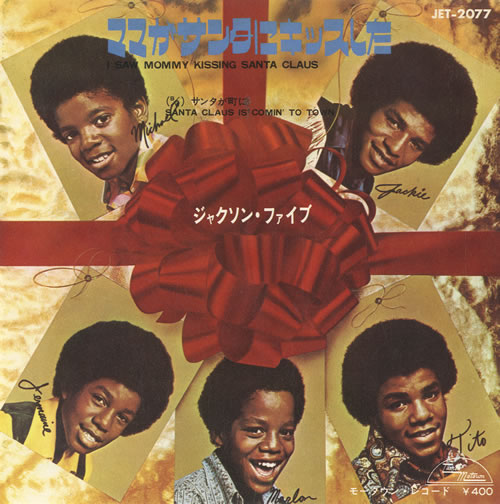
The-Jacksons-I-Saw-Mommy-Kissi-567946

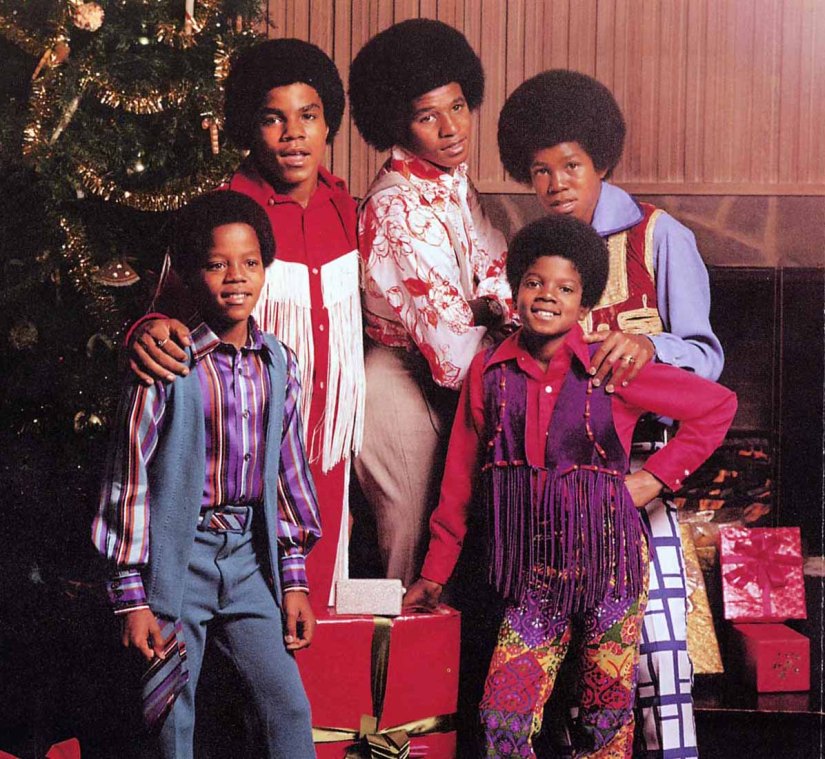
At the televised Michael Jackson funeral/tribute on the telly after his death there was a piece of slo-mo footage that was absolutely dynamite, and it’s stuck with me ever since. I can’t seem to find it on the You Tube (copyright, Rob Bryden) so you’ll need to make do with my 3 and a half year old memories. In it, a barely into double figures Michael, wearing an eye-poppingly bright tank top and very pointy collared shirt, body pops up and down, left and right, back to front, with all the carefree abandon of someone so young and foolish and happy. Watching it was almost tear-inducing, to see what he once was like when faced with the grim reality of what he had become. His wee tailored checked flares flap around the top of his cuban heeled boots in time to his and his elder brothers choreographed moves, their afros bobbing up an down in funky unison. Yeah, the brothers played the music and laid down the groove, but all eyes were on Michael. Without him, they were nothing. Ten years old and he owned the stage, looking right down the lens of the camera and into the homes of millions when he was singing, desperate for the musical interlude to arrive when he could break out the shackles and into his total, uninhibited dance as though his life depended on it. That his bastard of a father was probably standing just out of shot with brows furrowed and fists clenched makes the piece of film all the more amazing.

jackson 5 xmas colour

Michael Jackson turned out all wrong, but for a few moments at least, he is worth remembered as the wee boy who lit up the stage. It’s worth listening to the voice too. I mean, really listening to the voice. You know he can dance. And you know he can sing. But strip the music away, isolate the vocals and what do you have? Perfection, that’s what. I Saw Mommy Kissing Santa Claus is not a track I’ll freely run to when I need to hear the Jackson 5. Who does? But listen to this – the vocal-only track.

The control in his voice. The sheer joy he sings it with. The range of notes he can reach. That last note he hits, and holds, right at the end, is sensational. Anyone who tells you they can sing should be made to listen to this then asked to reassess their position on the matter forthwith. And here‘s wee Michael giving Santa Claus is Coming To Town the same sort of high-octane, helium-voiced treatment. A pocketful o’ dynamite!

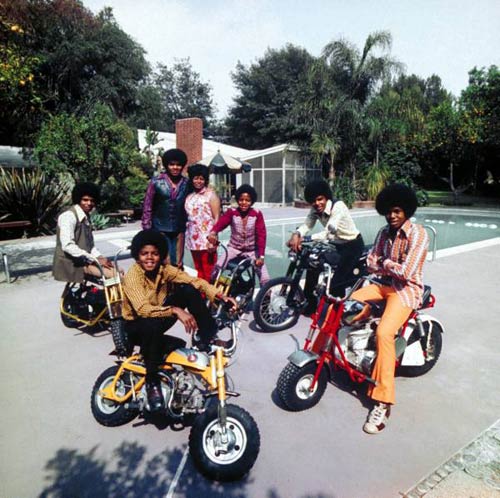
jackson-5-scooters

*Bonus Track!

Here‘s that vocal-only track of Michael singing the Jackson 5’s I Want You Back – One of Plain Or Pan’s most popular downloads ever.

Deleted by The Man. Pfffft.


That’ll probably be me till after Boxing Day. See you on the other side….

demo, Hard-to-find, Six Of The Best, Yesterday's Papers

Yesterday’s Papers – Bums, Punks and Old Sluts On Junk

Yesterday’s Papers is my way of infrequently getting new life out of carefully selected old posts. It’s terrific that new readers seem to find Plain Or Pan on a daily basis and often request particular pieces of music which, for one reason or another no longer have working links. There’s also some stuff on here that I, being vain and narcissistic, still enjoy reading and, even though I would like to take an editor’s pen to the text and re-write much of it, I think new and not so new readers might enjoy reading it too.

Every Yesterday’s Papers post is presented exactly as it was written when it first appeared on Plain Or Pan, apart from the odd spelling mistake or grammatical error that escaped my editorial eye first time around. Oh, and the links to the music have all been updated too.

First Appeared December 13, 2011

This time last year I read an article in one of Mrs Plain Or Pan’s magazines about Christmas. The article asked a carefully selected sample of celebrities to describe their perfect Christmas Day. “A long walk in the woods with my fiancé,” cooed Kathryn Jenkins, “before curling up in front of the log fire with a glass of mulled wine.” “We always start the day with a champagne breakfast,” revealed Maureen Lipman. “Traditionally, we open presents after dinner, then the whole family settles down to watch The Snowman.” Christmas Day seems just peachy round at her’s, eh? I don’t know about your house, but mine on Christmas Day is nothing like that at all. “Those carrots are mushy…and the sprouts are still raw! You useless bleep!”(whispered of course,  so the relatives can’t hear us arguing, 3 feet away on the other side of the wall). “You told me when to put them on!” “Could you not tell the carrots were ready? Couldn’t you use your bleeping brains for once?” etc etc etc. Like I said, I don’t know about your house, but I’m inclined to think it’ll be more like mine than Kathryn Jenkins’ or Maureen Lipman’s come a week on Sunday.

Still Alive! Todd Marrone did this, the talented so-and-so.

You know this already, but just for the record, Fairytale Of New York is the best Christmas song of all-time. It doesn’t matter what’s gone before (the Phil Spector album, Bowie ‘n Bing’s Little Drummer Boy, the glam slam of Slade and Wizzard) or what came after (East 17? Cliff Richard? Kylie Minogue panting her way through Santa Baby with all the sex appeal of an asthma attack?) Some of these records are better than others, but none of them come close to capturing the essence of Christmas (raw sprouts, useless husbands and all) quite like The Pogues.

A Fairytale Of New York is almost unique amongst Christmas songs in that it tackles the ‘C’ word with none of the blind enthusiasm or misty-eyed schlock normally reserved for such events. Slade set their stall out before a bell has even been clanged in excitement. “It’s Christmaaaaas!!” yells Noddy, and you know from then on in you’re in for a rollicking yuletide ride. Wham drown that thinly-disguised same-sex love song of theirs in a gazillion sleigh bells and suddenly everything in George Michael’s garden is rosy.  “All I Want For Christmas,” enthuses Mariah Carey, “is yooouuuuooooouuu!” Yeah, and an X-Box, an iPod and a flat screen TV, Mariah. We’re all materialistic over here. And while you’re at it, could you get me a job too? And maybe find someone who’ll give us a mortgage? Aye, bah humbug ‘n all that jazz. The Pogues have gone for none of that. Fairytale Of New York is still romantic, but it’s also raw, real and ragged, full of remorse for past misdemeanours while hoping for a better future. Nicely gift wrapped of course in a Pogues-punk waltz-time, with added BBC ban-defying swearing.

It’s a terrific arrangement, put together quite masterfully by Steve Lillywhite. Initially written as a duet between Shane MacGowan and Pogues bass player Cait O’Riordan, then scrapped when she left the band, it was Steve Lillywhite who suggested getting the missus in to duet with MacGowan instead. Listen to the demos below and hear how he transformed The Pogues’ half-finished ideas into the final record, with its peaks and troughs and instrumental breaks. Hear too how he gets the best out of Shane, who at this point in his life was eating tabs of acid the way the Fonz eats gum (all the time, if you didn’t know), whilst washing them down with enough brandy to drown a whale. Lillywhite somehow coaxes him out of the famous fluent Macgowanese mumble and into that raucous final take.

The Music:

  • Ennio Morricone’s Overture from Once Upon A Time In America, from where Shane pinched the melody. Play it (above) – you’ll spot it immediately!
  • One of the first takes. Fluffed lines, missed cues….and the band played on.
  • Shane ‘n Cait almost full-length run-through duet with alt. lyrics, missed cues, forgotten words………and the band played on.
  • The ‘blueprint version‘ – Starts with Shane ‘n James Fearnley on accordion. Different lyrics again. Shane struggles with the concept of singing in tune. Band in top form as usual. After listening to this you can begin to appreciate the contribution Kirsty MacColl made to the finished record.

Tell yer pals:

Cover Versions, Gone but not forgotten, Hard-to-find

I’m Shakin’ Triple Whammy

t and j

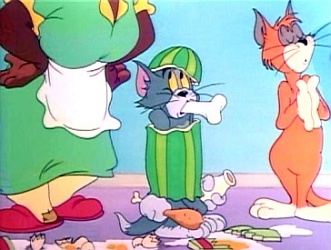
Y’know the maid from the old Tom & Jerry cartoons? The one with the broom and the wrinkled up stockings and the shrill, accusing “Thomas!” voice and the face you never saw? I think she’d have loved swinging that big ol’ Mammy ass around to Little Willie John‘s I’m Shakin’.

William Edward John, as he was known to his own Mammy, is an important figure in the development of R&B in the 50s and 60s. Like many of his ilk, his muse came from gospel music, alcohol abuse and the concurrent loving arms of many women. He did the original Fever (selling over 1 million copies in the process),  later covered ‘n claimed as signature tune by Peggy Lee. Little Willie John was also the originator of Need Your Love So Bad, a track so beloved of Peter Green’s blues-obsessed Fleetwood Mac. Even The Beatles were touched by John’s tunes. In the early days in Hamburg, they regularly included Leave My Kitten Alone as part of those backbreaking put-Springsteen-to shame length sets.

LittleWillieJohn

Little Willie John didn’t write I’m Shakin‘, that would be Rudy Toombs (who’s version seems to be forever out of the reach of these typing fingers) but it was Little Willie John’s version that pounded out of the juke joints and jive houses on the other side of the tracks, the same juke joints and jive houses that Keith Richards writes so fondly of in his autobiography. I’m Shakin’ is big, bold, bluesy and brassy and swings sweeter than Sinatra at The Sands.  If you’ve never heard it, rectify that now!

….although you may well have heard at least one version of it by now. It’s that traditional time of year when all and sundry chip their tuppence worth in to give you a rundown on the year’s most essential movers and shakers. Lists are drawn up all the way from Lerwick to Land’s End and dismantled and debated for all their worth by every 2-bit self-appointed music expert with an opinion and the ability to voice it. Folk like me love ripping those lists apart. Wilfully pretentious or missing the glaringly obvious, its easy to do.

jack white portrait with guitar

Mojo’s Album of the Year went to Jack White‘s Blunderbuss, which was kinda a return to White Stripes territory. Riff-based, part guitar, part keyboard and featuring a whole lotta whoopin’ and a hollerin’, God-fearin’ Jack, it featured a version of I’m Shakin’ that turned Little Willie John’s Memphis Horns riff into a Led Zeppelin funk of a record, squealy guitar solo ‘n all. The genius part of it all is when Jack takes the original ‘I’m jittery‘ lyric and replaces it with ‘I’m Bo Diddley‘, replete with a perfectly-timed Jerome Green-inspired maraca rattle. For a rhythmically-challenged Ayrshireman like me, Jack’s I’m Shakin’ is manna from heaven.

4.1.1

Best known for their raucous mix of R&B, country and blues, The Blasters version from 1981 is actually pretty tame in comparison. Maybe it’s the 80s production or the fact that The Blasters sound anything like their name would have you believe, but to these ears it’s more of an I’m Shruggin’ than I’m Shakin’. Is that the best you can do? Really? Perhaps you had to be there. In 1981 I was doing the dandy highwayman dance to Stand & Deliver, so I’m probably not the most qualified to comment.


Get This!, Gone but not forgotten, Hard-to-find

The Madness of King Robert George

Robert George Meek was better known as Joe Meek. A maverick record constructor, sonic architect and visionary of what was possible from the seemingly impossible, he led a turbulent life, permanently perched on the line right between madness and genius. Many of the main protagonists in the Joe Meek story went onto bigger and more successful things (though not necessarily better), but equally, many of the characters who crossed paths with Meek during his quest for sonic perfection ended up troubled, broke (mentally, physically and financially) and even dead. By comparison, Joe Meek’s story makes Phil Spector’s look almost insignificant.

joe-meek

From his rented flat above a handbag shop on London’s Holloway Road (Number 304 – there’s now a wee unobtrusive plaque there for anyone with a keen eye and musical trainspottery tendencies), and with financial backing from a somewhat eccentric ex-army major who made his fortune from importing children’s toys, Joe crafted a selection of minor hits, major hits and million-sellers, all sewn together from an unlikely array of self-built echo chambers and a Health & Safety Officer’s wet dream of spaghettied electrical cables across landings and staircases via the bathroom and bedroom to the wee cupboard/control room where it all came together. Windows were covered up for sound-proofing. It could be the height of summer but no-one inside the ‘studio’, least of all Joe, could have known. To the piano keys Joe added drawing pins to give it a more sparkly sound. Vocals were nearly always recorded in the tiled bathroom, where there was a better, more natural reverb.

Joe couldn’t play a note of music, so he would hum and sing the tune he was wanting to the musicians, who would then be instructed to play it back note perfect. Often, in the search for perfection, they would be asked/encouraged to play the same tiny fragment of a song over and over again, way into the wee small hours if necessary, until they captured the essence of what Meek was hearing in his tortured head (sometimes even at gunpoint, when Joe’s demons got the better of him – more on them in a bit). It’s quite clear that Joe was not like any of the other 9 to 5 shirt-and-tied record producers of the day. Lee Mavers would’ve loved him.

joe meek studio

Joe’s personal life was significant for two reasons. One: He had an interest in the spiritual world and the occult. He regularly channeled the spirits for guidance and inspiration. On meeting Buddy Holly, Joe told him he had foreseen his death. “February 3rd,” said Joe. “That’s today,” replied Buddy. A year later, on February 3rd 1959, Buddy Holly hopped on board a light aircraft in Iowa and died when the plane crashed.

Joe, like many people in the early 60s, had a huge interest in space travel and the possibility of civilisations on other planets. Watching the launch of the Telstar satellite and mesmerised by it’s capabilities for beaming live television and audio around the world, Joe began working on his most famous record. The music for Telstar came to Joe in a dream. Re-creating the drama of lift-off and the other-worldliness of outer space, Telstar was like nothing that had been before. A combination of twanging minor key surf guitar and distorted clavioline it has since had the dubious distinction of being known as Margaret Thatcher’s favourite record. But don’t let that put you off. Telstar was also one of the catalysts for Joe’s descent into madness. But more of that in a moment.

Have a listen to Telstar by The Tornadoes:

The other significant aspect of Joe’s life was that he was homosexual. Still illegal in early 60s Britain, Joe was forced to keep his true self under wraps. Surrounding himself in his studio with eager young boys, Joe was on a mission to find the next Billy Fury, a singer he nearly ‘got’ before showbiz giant Larry Parnes snapped him up, and who’s success Joe found hard to cope with. Joe began managing a young German-born hopeful called Heinz. Heinz had little talent and minimum appeal but Joe spent the major’s money on far too many promotional shoots in an attempt to hype him into the charts. He lavished clothes, cars and even a boat on him and began a very one-sided love affair that was doomed to failure from the start.

No hits were forthcoming and the major was starting to ask for a return on his money. So too was Joe’s landlady, a woman who put up with much and to a point had allowed Joe to defer payment on his rent. But Joe had no money to give them. Around this time, Joe was arrested, George Michael style, for soliciting an undercover policeman in a public toilet. Named and shamed in the newspapers, friends stopped calling and Joe slipped into a spiral of drugs and the unpredictable madman/genius behaviour he has since become known for – waving guns around the studio, sacking the session musicians who had played on all his tracks and constantly checking for hidden bugs around his studio/flat when he became wracked with paranoia thinking Decca Records and even Phil Spector were somehow stealing all his ideas.

Still from the excellent 'Telstar' Joe Meek Biopic.
Still from the excellent ‘Telstar’ Joe Meek Biopic.

Hey Joe! Where you goin’ with that gun in your hand?

The success of Telstar should have eased the situation. It spent 5 weeks at Number 1 in the UK. It was the first British record to reach Number 1 in the USA. It won an Ivor Novello award. More importantly, it sold millions. It should’ve made Joe and everyone involved very comfortable. However, as the record grew in success, Jean Ledrut, a French composer decided that Joe had taken the melody for Telstar from his track La Marche d’Austerlitz.

Contrast and compare with Ledrut‘s tune:

Royalty payments were subsequently frozen and a lengthy courtroom case began. This deprived Joe of much-needed income. Perhaps, more significantly, along with the public toilet episode and the subsequent hushed-up blackmailing of him, it robbed Joe of any dignity he had left. Joe maintained his innocence, that the tune had come to him in a dream, but by now the people doubted his talent. Joe spiralled even further into madness. With his studio dismantled and possessions confiscated following a court order for non-payment of bills, he got into an argument with his landlady over his over-due rent. Pulling the gun on her, he shot her before turning the gun on himself. The date? February 3rd. Albeit 8 years apart, the same date as Buddy Holly’s death.

joe meek newspaper 2

The Music:

John LeytonJohnny Remember Me.

John Leyton was the original actor-turned-singer, long before Simon Cowell trawled the karaoke bars of Blackpool in search of the inspiration required in order to turn a couple of ugly actors into million-selling chart stars, and make himself a fortune in the process. Along with The Shangri-La’s Leader Of The Pack, Johnny Remember Me is all you really need for sides 1 and 2 of  Now That’s What I Call Melancholic Teen Angst. Like a spaghetti western theme, all galloping Spanish guitars and teen heart throb vocals, Meek’s trick is to add a gallon of reverb, a ghostly female wail and enough pathos to soften the collective hearts of every spiv, shyster and Kray Twin who flirted with the music business in the early 60s. Wee Alex Turner and Miles Kane, when doing their Last Shadow Puppets album had this on constant rotation, I’d bet.

The OutlawsSwingin’ Low.

A post-Shadows, pre-Beatles twang affair, this is neither rock nor roll. On account of all the wee bits where the musicians get to showcase their individual talents, it falls into the almost novelty record category – the sort of record Benny Hill might have sequenced one of his dolly bird chases to. The Outlaws were Meek’s backing band of choice and various combinations of them played on many of Joe’s sessions. Given the chaotic nature of Meek’s recording, and the sheer volume of un-labelled tapes in the Meek archive, no-one knows for sure exactly who played on what. Bass player Chas Hodges went onto greater fame in his own right as Chas from Chas ‘n Dave. Guitarist Richie Blackmore went on to join Deep Purple, form Rainbow and live more recently as a 17th century mandolin playing medieval minstrel. Occasional drummer Clem Cattini went on to do sessions for The Kinks, Tom Jones and played un-credited on any number of  1960s hit singles.

The HoneycombsHave I The Right.

Stealing the chorus from the Everly Brothers Walk Right Back, Have I The Right is yer classic stomping 60s smash. The stomp was created by banging brooms, boots and all manner of bangable things on the studio’s wooden floor, much to the annoyance of everyone in the handbag shop downstairs. It’s just my opinion, but I think the Sex Pistols based their jackboot stomp on this record when they recorded Holidays In The Sun.

The TornadoesTelstar.

Other-wordly, of its time, yet still contemporary sounding today, Telstar is Meek’s legacy. In an ironic post-script to the Joe Meek story, just 3 weeks after Meek’s death, a judge ruled in favour of Meek, citing the fact that Ledrut the Frenchman’s music hadn’t been played outside of France and that Meek could not possibly have heard it. Given that Meek spent every hour cooped up in his little flat/studio, he does have a point. Had the judge’s ruling been made earlier, perhaps Joe might still be with us today, kicking against the pricks and doing something interesting. We’ll never know.

joe meek plaque

Cover Versions, Gone but not forgotten, Hard-to-find

Under The Covers With Sarah Cracknell

Cor! Eh? You beauty! (Nudge, Nudge). Knowotoimean? (Adopts Sid James cackly wheeze). I mean, ‘oo wouldn’t? Eh? Eh! Ow’s yer father? Eh? Eh? She’d get it! And no mistake! Let’s slip into sumfink more comfortable, shall we?

Yeah, let’s slip into something more comfortable. Like the honeyed tones of La Cracknell and her backing band of boffins and beard strokers tackling some of the finest moments in thinking man’s pop. With mixed results. Saint Etienne annoy me. Not in the way that wasps annoy me. Or paper rustlers in the cinema. Or blue-blooded ‘n bigoted Rangers fans. Or those paranoid green-tinted Cel’ic supporters and their uncouth manager after a decision goes against them. But Saint Etienne get my goat. I can’t put my finger on it or tell you exactly why. There’s no one reason. I’ve got tons of their stuff, vinyl and CD, bought in faithful chronological order as and when released, up to a point around How We Used To Live. I’ve always liked their way with a sixties-inspired piece of London pop and the sly wink of an eye towards the reference points therein. They’re a true ‘record collection’ band, that’s for sure, but with that comes a feeling that they’re just a wee bit too hip for their own good, just a shade too arch for those in the know and slightly smug in the knowledge that no-one is quite like them. Suffering from something of an identity crisis, they’re too ‘indie’ for pop when they themselves’d probably consider themselves too pop even for pop.

That said, they probably wet their collective knickers when asked to produce a version of Kylie covered Nothing Can Stop Us with a coolness that even Sarah would find difficult to cultivate. This was Kylie BH (Before Hot Pants), the Kylie of mid 90s hell, when only Nicky Wire and ironic students paid her any attention. And here she was, covering obscure, non-charting singles built around old Dusty Springfield samples. Of course. Great version, Kylie! Really!

Saint Etienne’s best known cover is surely Only Love Can Break Your Heart, a pre-Cracknell track where they dismantled whiny old Neil Young’s campfire strumalong of angst and re-tooled it as a Soul II Soul-styled shuffler for the dancefloor. But you knew that already. Dig deeper into the Saint Etienne ouvre and you’ll find all manner of cover versions. Available on the rare-as-can-be fanclub-only Boxette, you’ll find their version of David Bowie‘s Absolute Beginners. I saw them do this live, at the Mayfair in Glasgow, with a pre-fame Pulp supporting. I’ll need to dig out the ticket some time, as the band’s name is written as St Etiene, with one ‘n’. Anyway, their version was rubbish that night (no Bowie aping bap-bap-ba-ooos, surely the best bit?) and the studio version, despite the inclusion of the aforementioned bap-bap-ba-ooos, remains kinda rubbish to this day. Some shouty sampled bit or other by the boys whilst Sarah sounds like a Dalek on downers. Not their finest moment. Maybe they should’ve tackled The Jam track of the same name instead.

On the Deluxe Edition of So Tough, you’ll find them having a go at Teenage Fanclub‘s Everything Flows. A staple of TFC’s live set since their first gig, Fannies fans froth at the mouth for its meandering Neil Youngesque solos and melancholic ruminations on life. Saint Etienne, surely having a laugh at our expense, render it practically unlistenable. Now, some folks say that the best cover versions are when the band takes the song and makes it their own (see, for example, Only Love Can Break Your Heart), but when the heart and soul of the track (in this case the insistent, wailing guitars) are replaced by synth washes and a politely skittering drum machine so bland a yoga teacher would have trouble chilling out to them, well, you can imagine….

Going some way to redeem themselves, this year found Saint Etienne taking a shot at the holiest of holies, The Beach BoysWouldn’t It Be Nice. It‘s not bad – starting acapella before morphing into a soft focus mush of warm harmonies, ticking clocks and half-speed backing tapes, keen scholars of Wilson pop will easily spot the odd nod to the Smile-ear Barnyard amongst the mix. See – they’re too fucking smart for their own good, that Saint Etienne.

I love ’em really. Wrinkles ‘n all…

Cover Versions, Gone but not forgotten, Hard-to-find

Turtle-y Magic

Field Music are a real enigma. Nominees for this year’s Mercury Music Prize, like most who appear on the list they occupy a strange place somewhere between cult band and the mainstream. A hotchpotch of clanging riffs with prog leanings, their music isn’t all that original. Their music isn’t all that groundbreaking either. Plenty of other artists have used similar instruments to similar effect. And their music, like plenty of artists before them, is not that well-known outwith those in the know (think this generation’s XTC). But their music is colossal. And tuneful. And therefore radio-friendly. And by rights they should be a whole lot more successful (whatever that is these days) than the latest hastily assembled ‘gang’ of skinny-jeaned, stupid-haired, stage school stooges armed with various combinations of the same tune and not much else. Despite the best efforts of those in positions of influence, such as 6 Music’s Marc Riley, who plays them and enthuses about them ALL THE TIME, Field Music aren’t so much under most folks’ radar as completely off it.

A few weeks ago they released a very limited (and now sold out) covers LP. Featuring their versions of Robert Wyatt, Pet Shop Boys, Roxy Music etc etc songs, it has the uncanny knack for a covers album of sounding like the band who made it, not the band who wrote it. Not for Field Music a faithful run through of Ringo’s plodding country ‘n western heartache ‘Don’t Pass Me By’. Instead, they turn what is undeniably a Beatles clunker into something that could sit happily on 2010’s Measure LP. Warm, metallic and with added Beatles riffs/references for those in the know.

Best track to these ears is their version of Syd Barrett‘s Terrapin. Barely recognisable from Syd’s whimsical off-kilter psychedelic sketch, Field Music add riff upon riff to doubletracked vocal upon doubletracked vocal. The outrageous falsetto breakdown in the middle reminds me of an old Beatles bootleg I have where you get to hear John and Paul working out the harmonies to Taxman. It really does sound terrific – incredibly well-produced, tight, taut and with perfectly-executed sudden stop silent bits – and normally I wouldn’t post something as box-fresh as this. However, given that the LP is already sold out and never to return, well…..

Syd, of course, is very much a musicians’ musician. The great and the good all dig Syd and for many The Pink Floyd of the mid 60s are far more credible than the stadium-hogging Floyd (Man) of the mid 70s. The Trashcan Sinatras created a luscious and bluesy 6 and a half minute paen to Syd, choc-full of nudge, nudge, wink, wink references to Syd and his music. Emily. The UFO Club. Painting. Hand in hand with The Eskimo. Even the title, Oranges & Apples is Syd-like and a play on The Pink Floyd’s Apples & Oranges. But you knew that already. Give it a listen. It’s one of the best things the Trashcans ever did. Quite something when you consider the embarrassment of riches in their back catalogue.

*Bonus Track!

Field Music‘s Them That Do Nothing from their Measure LP. The perfect introduction to the sound of Field Music, it‘s XTC-esque in its pastoralism, sonically-rich with its chiming guitars and tight-knit harmonies and unexpected left-turn wonky bits. Jeez. That’s a sentence I doubt I’ll ever write again.

Gone but not forgotten, Hard-to-find, Sampled

It’s Chic Co. Time

Jeez! Plain Or Pan used to be all about Beta Band outtakes and multiple versions of La’s demos, the odd foosty soul survivor and long-forgotten obscurios by long-forgotten oddballs. It still is, of course, but just not today.

I have a long-time love of disco. To these ears, it doesn’t matter that it’s considered kinda naff and uncool, which, when placed next to any amount of other musical bits n’ pieces, it may well be. In the mid-late 70s, when straddled by the ugly, oiky twin-headed monster of glam and punk, it was certainly the musical choice for the straight-laced amongst society. Folk who bought one single a year bought Saturday Night Fever. Folk who bought one single a week owned the entire back catalogues of The Sweet and Sham 69. What I like about disco is the musicality of it all. If the Floyd (man) and Can (man) are head music, disco is most definitely music designed for below the waist. Rock music is, they say, ‘proper’ music. But so is disco! Made on proper instruments and played as well as or even better than the patchouli-smelling long hairs in afghan coats from bygone eras, disco is all about a slick riff, a fluid bassline and a four-to-the-floor, hi-hat enhanced beat that never lets the lyrics get in the way of a good groove.

The difference between rock and disco is that rock music has the virtuosos, the soloists and the guitar heroes. Who’s Pink Floyd’s guitarist? Easy, eh? But if I asked you to tell me who played the slick riffs on Night Fever or Rock Your Baby, chances are you’d be struggling. You could probably have a good stab at naming half the members of Can. But asked to tell me who played the fluid basslines on Car Wash or Young Hearts Run Free and chances are you’d be asking the audience or phoning a friend who answers to the name of Mr Google. Disco, for one reason or other has been ridiculed and put in its place as someway unimportant. Of course there are exceptions to the rule.

Nile Rodgers was developing serious Class A substance abuse at the age most of us are just getting to grips with the technicalities of Eagle-Eyed Action Man. Passed back and forth at a young age from East Coast to West Coast on a succession of Greyhound buses between his drug-addicted prostitute mother and far-off, far-out aunts and uncles on the other side of America, it’s a wonder he thrived at all. But thrive he did. Playing in a variety of  covers acts, reputation enhanced by his ability to read music, fate lead him to Bernard Edwards and eventually Chic were born. It was watching an early Roxy Music show that gave Nile his band’s manifesto: The clothes were as important as the music. The women on the record sleeves would give the band glamourous identity. Chic would be a company. An organization. Singers would come and go, but the core of Rodgers and Edwards would remain the constant. They’d write songs for other artists. They’d discover knew ones. Like an East Coast Family Stone, in sharp suits rather than hippy garb, but fuelled by the same high grade white powders, Chic and their music would rule the world. You know the songs. You know the stories. You can read all about it in Nile’s excellent ‘Le Freak‘ autobiography.

It’s worth noting that the Nile Rodgers’ guitar sound has been appropriated by the musos that form white rock’s guitar untouchables. Edwyn Collins’ blatant homage to the sound can be heard all the way from the opening bars to the fade out of Orange Juice’s Rip It Up (perhaps even more so on the strangulated none-more-80s 12″ mix). Johnny Marr was so enraptured by Nile that he based his guitar line on the second verse of The Boy With The Thorn In His Side on those wee choppy rinky-dink Chicisms. Johnny turned up earlier on in the year playing Le Freak on stage with Nile. And just in case you missed the point, he even named his son Nile. Dance records over the past decade or so, proper dance records, made by machines and everything, often stray close to the Chic sound. Modjo’s Lady for one. Spiller’s Groovejet another. And Stardust’s The Music Sounds Better With You. Chicesque, the three of ’em. Even Da Funk by Daft Punk is built around that clipped guitar sound. Ubiquitous. Is that not what they say?

Here are some of the Chic Organization’s wonderful world-ruling results. Every one features Bernard’s ripe-for-sampling, slap-happy, fluid-as-mercury bassline and Nile’s trademark 3 string rinky-dink guitar, chattering away incessantly in the background like a couple of old ladies clacking their false teeth at one another down the Mecca on a Saturday night. It might just be my favourite sound in music.

ChicGood Times

Norma JeanSorcerer (12″ mix)

Diana RossUpside Down (original Chic mix)

Sister SledgeThinking Of You (Dimitri From Paris mix – officially sanctioned by Chic, it’s a cracker)

Carly SimonWhy (12″ mix)

And the influence of Good Times et al lives on, seemingly forever…