demo, Hard-to-find

Telly Addict

The name Television has popped up here a couple of times recently. James Brooks from Land Observations name-checked them in his Six Of The Best article and a couple of weeks ago I was comparing the laconic vocals and snaking guitar sound of Charlie Boyer & the Voyeurs latest single to that of Tom Verlaine and Richard Lloyd. All this has coincided with the old iPod (well, it’s not that old – 3 and a half years – but I suppose that’s ancient in tech-speak) refusing to sync any new additions to my iTunes library and, worse than that, wiping itself clean of all the 140+GB of crap that was on there originally and deciding it’s just not going to work any more. Even the (cough) ‘Genius’ at the Apple store in Glasgow had to somewhat disappointingly concede defeat. As the iPod goes everywhere with me at all times this has proven nothing short of a disaster. So much so that I’ve gone all end-of-the-millenium retro and started playing CDs again. Real, shop-bought CDs in the car and on the stereo at home (I had to dust it  a wee bit first, I’m ashamed to admit). Having exhausted the Can Lost Tapes box set that fell into my hands for less than £18 in a destined-to-die HMV store, the one album I’ve had on constant repeat for a fortnight is Marquee Moon, the debut album by Television.

Television, First Avenue NYC 1977

Terrific photo, aye? More about it here.

It’s now considered something of a (yawn) seminal classic or something, so far out of step/ahead of the pack when first released that it sounds fresh, ageless and timeless when you listen to it now. But you knew that already. In mid 70s America, Television found themselves roped in with the NYC punk lot, seemingly by virtue of having a regular gig at CBGBs. Original bass player Richard Hell, with his penchant for ripped jeans, safety pins and  home-made spiky haircut is considered the true originator of the punk style, but by the time of Marquee Moon‘s release, he had long since left the band to form The Voidoids and invent the Stray Cat Strut with their I Belong To The Blank Generation single…

Anyway. Where were we? Oh aye, Television. Where did they fit in? Not for them the 3 chords-in-platform-heel Stonesy glam slam so beloved of the New York Dolls. Not for them the legs akimbo cartoon buzzbomb of the brothers Ramone. Not for them the high-brow beat poetry set to the low-brow beat music of Patti Smith. Television set themselves apart from the off. With an approach to their individual instruments bordering on muso, and a healthy disregard for the two and a half minute pop song, they were so far out of step/ahead of the pack that they still sound fresh, ageless and timeless today. Guitars intertwined like psychic snakes, riffing off one another creating astonishing Fender Jag ‘scuse me while I kiss the sky melodies and counter melodies seemingly at will. Not quite free jazz, but certainly free from the straight-jacketed constraints of their 3 chord loving peers. Learn an F chord, barre it and move it up and down the frets. Play it loud, play it fast, there you go, you’re a band.  Television were so far ahead of this, it’s not hard to understand why, 35 years later they were 1) seen as misfits and 2) sound as now as the latest daft haircutted, snake-hipped gang of teenagers straight off the cover of the NME.

First single (not on the album) Little Johnny Jewel was a taste of things to come. 7 minutes of art rock, all cheese-grater strings and rake-thin bass, slightly out of tune chords, random blips and blops and clattering, carefree jazz drumming, with a more spoken-word than singing approach to the vocals, the pre-pubescent seeds for Marquee Moon were sown. After an aborted session with Brian Eno, and balls duly dropped, the band started fashioning the music that would grace the album. Tougher, meatier, more aggressive yet airy, effeminate and even effete when compared to the band’s contemporaries, the alt. mix of the title track is the aural equivalent of watching Picasso sketch Guernica. Or something less pretentious than that. Friction, with its galloping elastic band riff and  ‘Eff! Are! Aye! See! Tea-Eye-Oh-Enn!’ refrain is a personal favourite amongst an LP full of personal favourites. If you’ve never heard Television, rectify that now!

television

Just as The Velvet Underground before them and The Beta Band since (I digress, but believe me, one day The Beta Band will come to be as revered as the truly great originators they were. They will!), Television never really got their dues at the time. But their influence is writ large in any twin guitar band with a penchant for razor-sharp riffs and meandering solos. Scratch just under the surface of all the usual suspects (you know who they are) and you’ll find a well-worn copy of Marquee Moon rotating ad infinitum between the grooves. The coolest part of it all? Well, rumour has it that around the time of recording the Blue Sky Blue album, Wilco’s Jeff Tweedy received the ultimate birthday present from his wife- a guitar lesson from Richard Lloyd. Not the first band that springs to mind at the mention of meandering solos and disregard for a well constructed pop song, Wilco did indeed adopt a more Verlaine/Lloyd approach on some of Sky Blue Sky‘s less structured tracks. Impossible Germany, for example, features a pair of clean, chiming guitars wrapping themselves around one another for 6 shimmering minutes. The solo alone is pure Lloyd. Or Verlaine. I can never tell the difference. If you’ve never heard it, rectify once more.
Get This!, Gone but not forgotten, Hard-to-find

There’s No Money Beyond The 5th Fret

Tommy Tedesco said that.

Tommy who?

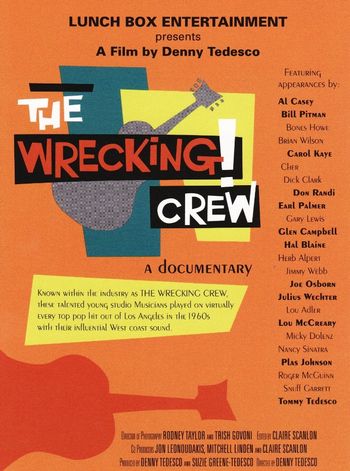
wrecking crew movie

Last summer I went to the Glasgow screening of the above film about The Wrecking Crew, the crack bunch of LA sessioneers who played anonymously on a whole host of things, from film and TV scores via advertising jingles to some of the biggest-selling and best-loved songs of that golden period in early-mid 60s pop music. Tommy Tedesco was a jazz guitarist, and somehow found himself part of that inner-circle of session men and women. Made by Tommy’s son Denny, the film is a celebration of the life and work of his father and The Wrecking Crew. It’s terrific. Denny has, for the past couple of years, been touring the world showing his movie at Film Festivals and special screenings in a bid to drum up the finance required to support the publishing rights of the film. It’s impossible to make a movie about such great music without actually featuring that same music, and seemingly it costs a whole lot of money to negotiate the publishing minefield that the lawyers and money men have put in front of him. If you ever win the lottery and want to help someone out, I’m sure Denny would be more than happy to take your call. If you ever get a chance to see his film, grab it with both hands. Much of the music featured throughout the years on Plain Or Pan is a product of The Wrecking Crew, so if you’re a regular on here, I’d even go so far as to say it’s right up your street.

wrecking crew elvis

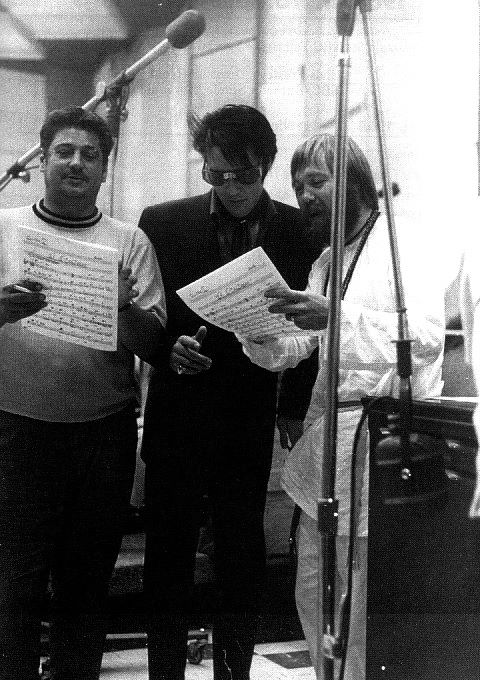
The Wrecking Crew were the go-to guys in the LA recording industry. Slicker than the Brycleem covering Bing Crosby’s bald bits and packing more swing than Sinatra with a six iron, they swept aside the old shirt ‘n tied brigade with little regard for history or unwritten rules.

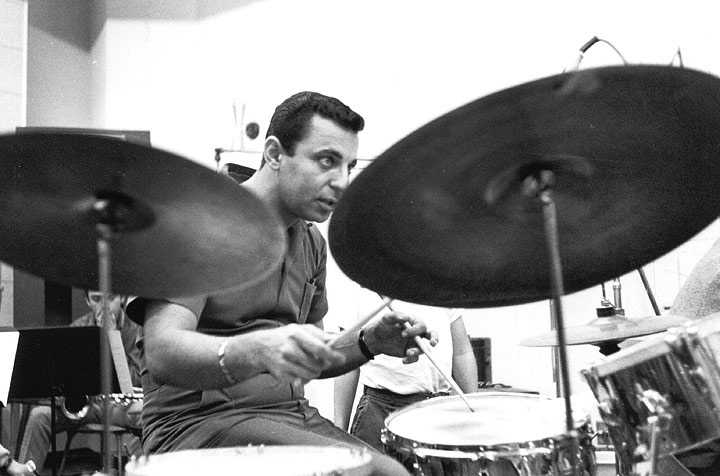
I coined the name The Wrecking Crew,” explains ace drummer Hal Blaine. “We came into the studio with our Levis and t-shirts, smokin’ cigarettes, and the older guys were sayin’ ‘They’re gonna wreck the music business!'”

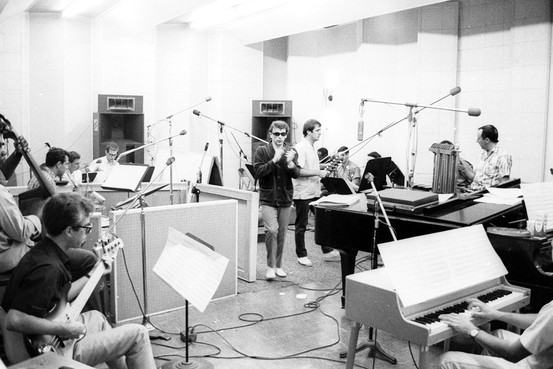
Working quickly and cheaply, and with the ability to read charts and scores of music at the drop of a cocked hat (they had backgrounds in jazz and classical) they were able to turn their hand to anything at all. Often, they came up with the licks and riffs that we all still whistle and hum today. Uncredited. The intro to Wichita Lineman? The intro to These Boots Were Made For Walkin‘? Plucked from thin air by The Wrecking Crew. Working on flat union fees rather than the gamble of percentage royalties, each musician knew that if they played more than one session a day, by the end of the week after they’d multiplied up the standard session fee, they’d be rich. They were so much in demand that playing only one session a day was not ever likely. Producers would request The Wrecking Crew, then hold off the recording session until the Crew could fit them in. The Wrecking Crew did them all. In and out the studio in the time it took to learn the part and record it before going off to the next one. And the next. And the next.

wrecking crew studio

Without the benefit of hindsight of course, they had no idea that this music they were playing would shape the sound of popular music forever. The roll call of records and groups bearing The Wrecking Crew’s stamp is a super-long embarrassment of riches. Off the top of my head – all of Phil Spector‘s epoch-defining Wall Of Sound records, many Beach Boys records, including the sessions that would produce Pet Sounds and Smile, the Elvis ’68 Comeback Special for TV, The Byrds first album (only Roger McGuinn was considered good enough to play on it. The other Byrds sang, but the rest of the music was provided by The Wrecking Crew), a ton of Dean Martin stuff, Frank Sinatra‘s Summer Wind, the Pink Panther theme, Aquarius by the 5th Dimension, most of The Monkees records (Mike Nesmith was The Monkees’ version of Roger McGuinn), Somebody Groovy, California Dreamin’, Monday Monday and countless other Mamas And Papas tracks, Harry Nilsson‘s Everybody’s Talkin‘, Sonny & Cher‘s And the Beat Goes On. And on. And on. And on. You get the idea?

wrecking crew hal blaine

The Wrecking Crew were seemingly involved in everything. Hal Blaine alone estimates he’s played on 35,000 sessions. Thirty five! Thousand! Playing 3 sessions a day for 7 days a week, that’d take him about 30 years going by my calculations. At the height of their activity, I reckon The Wrecking Crew must’ve been doing 50 sessions a week, easy. One day alone might produce The More I See You for Chris Montez and Coconut Grove for The Lovin’ Spoonful before lunch, Dizzy with Tommy Roe and It Never Rains In Southern California with Albert Hammond in the afternoon and a longer session with Simon & Garfunkel in the eveningHomeward Bound and off to tuck the kids into bed. (In the chronology of it all, doing these 5 particular records might’ve been impossible, but you know what I mean). Not a bad day’s work, and, it seemed, every day in The Wrecking Crew calender was like that.

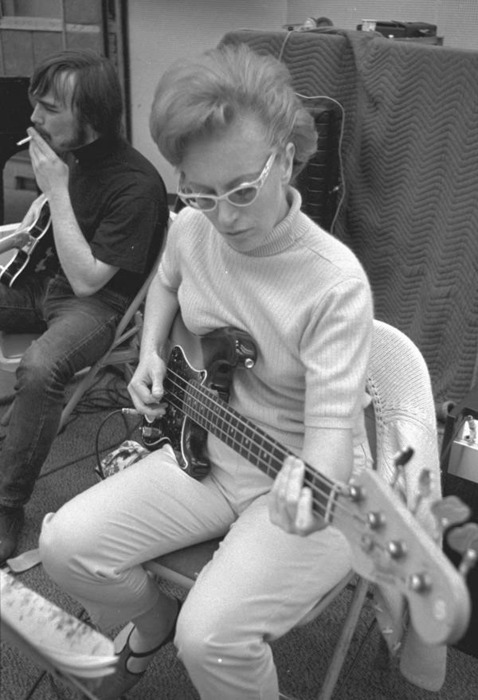
Of course, sadly, frustratingly sadly for some, without the benefit of hindsight, who knew that they’d be involved in so many solid-gold standards? Taking the gamble of percentage royalties would clearly have been the smart thing to do. Every member of The Wrecking Crew would still be a millionaire now. Hal Blaine knew the value in working hard and to paraphrase from the film wanted to make the ride to success as quick as possible and the inevitable decline as slow as could be. By the mid 60s, artists would want to play on their own records. Crucially, the record companies would allow them to play on their own records, and the slow demise of The Wrecking Crew was set in motion. But at the time, The Wrecking Crew were coining it in. As super-cool bass player Carol Kaye points out, “I was making more money than the President of the United States!” Hal Blaine was also earning enough to have a huge house and a yacht, but divorce saw to the end of that. When the sessions dried up, he ended up taking a job as a security guard, spending his days listening to the radio blaring out the countless hits he had played on. The irony was not lost on him.  Go and see the film when you get the chance, it’s all in there. Check the website for details: http://www.wreckingcrewfilm.com

wrecking crew carol kaye

The Music

You know all the biggies, so here’s  a few less well-known selections from the absolute embarrassment of Wrecking Crew riches…

Carol KayeBass Catch.

Ridiculously funky, even for a white man from the West Coast of Scotland. That’s Carol in the picture above.

5th DimensionAquarius.

The hippy dream set to the most fruggable bassline since the word ‘frug’ was invented.

The Mamas and The PapasSomebody Groovy.

The hippy dream sang beautifully. Michelle Philips. Aaaaaaah.

Sonny & CherThe Beat Goes On.

Written by Sonny Bono, the title is inscribed on his gravestone. Later covered in a big band jazz stylee by Buddy Rich, with his 10 year old daughter doing the Cher parts.

Lee HazlewoodThese Boots Are Made For Walkin’.

Kind of a post-demo, if there is such a thing, Lee’s version takes the same backing track from Nancy Sinatra’s hit single, but he tells the story of how they recorded it. Essential listening!

—————————————————————

The Curios (neither of these were recorded wham! bam! thank you, maam!, that’s for certain)

Brian Wilson haranguing Hal Blaine and co. during the recording of Wouldn’t It Be NiceQuiet please, genius at work.

Phil Spector haranguing Hal Blaine and co. during the recording of Be My Baby. Wonderful!

wrecking crew spector

Cover Versions, Hard-to-find

Aye, Spy!

Focus. Surely the reason punk had to happen. They’re not a band I’ve ever mentioned on these pages before. And they’re not a band likely to ever feature on these pages again. Hoary old 70s prog rockers, with their fuzzy faces and parted-curtains hair-dos, Focus might’ve looked like any one of those uber-cool purveyors of the German Kosmische Musik, but they eschewed that minimal motorik groove in favour of an altogether less savoury sound. Technically super-proficient players, Focus had an alarming  tendency to fling 94 ultra-slick 2 bar arpeggios in the space where most contemporaries would rattle out a blues riff copied from any old Chuck Berry record. Focus would also regularly yodel like castrated cats on their records, records that careered from a post-blues/pre punk squealing guitar abandon to neo-classical and medieval lampoonery, by way of a side order of jazz fusion. In many ways then, a Dutch Spinal Tap…

The Be-de-le-be-de-le-be-de-le-be-de-le-be-de-le-be-de-le-scree lead guitar in Focus was provided by Jan Akkerman. Jan is something of a hero to 60-year old physics teachers who wear their hair a wee bit too long at the back and still harbour hopes of making it with their band. He tours regularly and mentions of his name in the right circles can elicit the same sort of reaction you’d get when talking about Johnny Marr to half the folk who are reading this now.

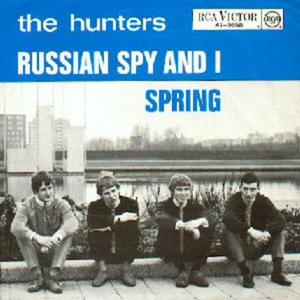
hunters - russian spyHe  began playing in The Hunters, a beat-boom inspired garage band from the Netherlands who had one minor hit in 1966 with Russian Spy And I. A terrific record, it sounds equal parts Yardbirds, Animals and (really) The Ukrainians, the short-lived world music off-shoot of the Wedding Present. All hand-claps, shouty “oi!s” and chicken dance-inspiring rythym guitar,  Russian Spy And I is a record you could happily smash plates to, Greek wedding-style. Listen to it and underneath the frenzied stomp of it all you just might spot Jan Akkerman’s ever-so subtle and understated guitar parts.

the stairs

The Stares

Russian Spy And I first came to my attention not from The Hunters but via The Stairs and their Woman Gone And Say Goodbye single. A band forever out of sync with the times (too late for the 60s, too early for that mid 90s boom in guitar bands), the Merseyside revivalists did a faithful version of Russian Spy… on the b-side, for extra authenticity recording it in mangled mono glory and unwittingly inventing The Coral in the process, who took The Stairs sound and polished it up until it was shiny and chart friendly. Nothing wrong with that, of course. The Stairs were a magic wee band. They had soul and funk and the riffs and could play like delta bluesmen and swing like Sinatra at the Sands. I’ve written about them and their genius leader, Edgar ‘Jones’ Jones before. Take 5 minutes and reacquaint yourself with them here. And listen to their version of Russian Spy And I while you’re at it. Oi!

Photo 24-02-2013 16 52 34

I Spy the heir to the Plain Or Pan throne

demo, Gone but not forgotten, Hard-to-find

Hot Rod

Over Christmas a pal on Facebook posted a video of Boogie Nights by Heatwave. With it’s super-slinky bass sound and below-the-bell-bottoms baritone “got to keep on dancin’, keep on dancin‘” backing vocal, it’s the sort of record that could have me Dad dancing for ages. (*Just to clarify – I’m not a Yorkshire man. I’m from further oop north than that – when I say me Dad dancing, I don’t mean it could get my own father on his feet. Although it probably could. I mean that Boogie Nights makes me dance in my own rhythmically-challenged Ayrshireman fashion. Like I said – just to clarify).

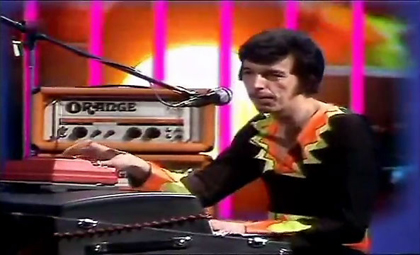
When the Heatwave video appeared I mentioned that the track was written by the same guy who wrote Thriller for Michael Jackson, Rod Temperton. I also rather glibly suggested he was now dead, when in fact it was pointed out that he’s very much alive and kicking and sleeping on a bed of crisp, fresh $100 bills every night in his Bel Air mansion. Probably. There’s nothing that unusual about songwriters who write one or two massive hits, but have a look at the picture below. You shouldn’t judge a book by its cover and all that, but……

rod temperton

Rod Temperton, the man who re-invented slick dance floor disco and wrote just about the most recognisable track of the 80s and beyond is a skinny-arsed, geeky white man with a rubbish pencil moustache and pre-perm footballer’s haircut. All the way from Cleethorpes in the north of England. A town with about as much musical pedigree as a squeaky dog toy. Yet there he is – the not-quite-invisible man to the side, goofing and gurning his way through three minutes of proper 70s American black man funk. And he wrote it. On top of a pile of dirty washing in a tiny flat. No wonder he’s laughing. All the way to the bank, he’s laughing.

Rod’s story is perfect Plain Or Pan fodder. Here follows a brief catch-up if you’re new to his name.

Beginning his musical apprenticeship in the working mens’ clubs around Tyneside and the north east of England, by the early 70s Rod had left the glamour of the frozen food factory where he worked in Grimsby and sought out his chance on the German club circuit. Like most bands who did this tour, he played long-into-the-night sets and his playing improved ten-fold. Rod and his Hammond organ were much in demand. An ad in Melody Maker led to him joining Heatwave and it was from there that Rod’s talents took him to the toppermost of the poppermost. Not quite the token honky (Heatwave’s drummer looked out of place also), Rod was the driving force behind the multi-cultural group’s success – Stateside million sellers, the whole shebang, before his work brought him to the attention of Quincy Jones.  He’d go on to write three tracks for Michael Jackson’s debut Off The Wall LP and was retained by Jones and Jackson to work on the difficult-second-album follow-up, Thriller.

Originally, when I did my Thriller demo, I called it Starlight. Quincy said to me, ” You managed to come up with a title for the last album, see what you can do for this album”. I said, “Oh great,” so I went to the hotel, wrote two or three hundred titles, and came up with the title Midnight Man.  The next morning, I woke up, and I just said this word…Something in my head just said, this is the title. You could visualise it on the top of the Billboard charts. You could see the merchandising for this one word, how it jumped off the page as Thriller.

Quick! Grab these! They’ll probably be gone faster than you can say Beat It!

StarlightMichael Jackson‘s demo of Thriller

Vincent Price spoken part for Thriller (first run-through)

Billie JeanMichael Jackson‘s demo

As well as the title track, Rod wrote Baby Be Mine and The Lady In My Life, both more derivative of the kind of smooth soul tracks that he can seemingly knock out in his spare time. Difficult second album? Thriller has since become The Biggest Selling Album…Ever!, selling in excess of 60 million copies along the way. But you knew that already. Buy maybe you didn’t know that the wee skinny guy from unfashionable Cleethorpes had a huge hand in it. He still makes me laugh whenever I see Boogie Nights on any of those old TOTP repeats:


Cover Versions, Hard-to-find

O Superman

Life’s Rich Pageant was the first REM album I heard and, when push comes to shove, it’s still my favourite of theirs. Borrowed from Irvine library and duly taped, it soundtracked much of my late teens. From Begin The Begin‘s acid rock feedback ‘n twang via the alt. American Rickenbacker riffage of These Days and I Believe, to the Beach Boys backing on Fall On Me and Cuyahoga, it’s a terrific LP. All killer, no filler, you might say. It captures the band at the highest critical trajectory in their career – still hip enough to be considered underground, yet big enough to have worldwide sales (and actual big-hitting chart singles just around the corner with their next LP and beyond), being in REM around this time must’ve been great.

rem 86

Tucked away at the end of Life’s Rich Pageant was Superman. A twin-vocaled throwaway bit of bubblegum pop that showcased the extraordinary backing vocals of Mike Mills, it was the track I played again and again and again and again ad naseum. Which, given it was on cassette, led to some frustrating rewind sessions where I’d zero the wee digital tape counter as Superman started, and try and stop the tape bang on zero zero zero when the song had finished and I’d began to rewind it. There was none of this stop/start/skip/repeat stuff going on back then. But you’ll know that already. Anyway, I did this 1000 times until the tape stretched and eventually, catastrophically snapped, leaving ribbons of TDK wrapped around the tape heads on my none-more-80s music centre. The soft-eject door may have been the most aesthetically-pleasing one in the shop (you tried them all out, didn’t you) but it was impossible to take off to get the chewed bits of tape back out. So that was that. Down to the wee record shop at the back of RS McColl’s at the cross to buy the actual record. Up the road, and reading the sleevenotes it was then that I realised Superman was a cover. With no internet at my fingertips or music-geek big brother to grill, I waited literally years until finding out that the REM track I loved so much was by a band called The Clique.

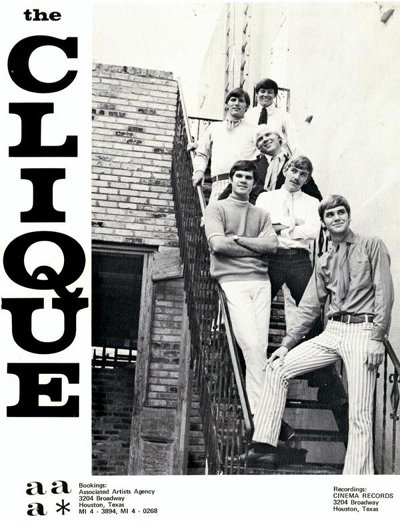
the clique promo

Pardon the pun here, but there are lots of Cliques in the music business. The Clique that released Superman in 1966 were from Texas. There was also a pilled-up ‘n purple hearted mod band from England called The Clique doing the circuit at the same time. And in the 90s, a band called The Clique (also of modish persuasion) were on the go. A few years back I featured one of their tracks. Very good it was too. But anyway…

The Clique’s version of Superman was a b-side. Given his trainspottery love of obscure and underground music, it was no doubt Peter Buck who brought it to REM’s attention. REM’s version actually turns out to be pretty faithful. The original is indeed a piece of throwaway bubblegum pop, with a high backing vocal and a highly fruggable bassline. Handclaps, little bits of chanting and a weird, trippy vocal, not unlike the effect you get when you hear backwards guitar on one of those 60s records, complete what is an excellent wee record. Although I still prefer REM’s.

Contrast and compare:

SupermanThe Clique

SupermanREM

Sadly, perhaps, I don’t have to hand the recording my wee band did at our first ever gig. I did the Mike Mills bits. Badly.

demo, Hard-to-find, Live!, Peel Sessions

Guy Chadwick Once Tried To Kick Me Full In The Face But I Deserved It So I Did.

I liked tons of other contemporaries, but The House Of Love were, for me, the band that perfectly filled that post-Smiths/pre-Stone Roses void. They were terrific. A classic twin guitar and bass and drums indie rock band, they wore their influences proudly on their leather-jacketed sleeves; the twang and reverb. The stripey jumpers and black jeans. The semi-acoustic Gibsons. The rows and rows of effects pedals. The sheer bloody distorted racket they could morph into at the drop of a well-timed drum stick click before coming back as one to the melody – Guy Chadwick sooo wanted to be the new Lou and his band a Velvet Underground for the late 20th century. At a time in music when many bands were posturing in ponytails on political platforms, The House Of Love were always more Nico than Biko. That they blatantly added a female singer with high cheekbones and a 60s bowl cut who happened to be German only hammered the point home to those less observant than yer average muso geek.

house of love classic

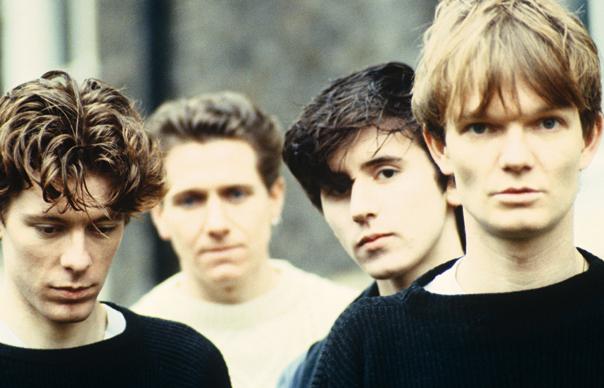
By the time the band had had a modicum of success, Andrea Heukamp, she of the bowl cut and high cheekbones, had gone her own way. With her in their ranks, The House Of Love had cut their original version of Shine On. Not the over-produced, radio-friendly, siren-led version that, backed by their major label Fontana’s money gave the band their highest chart placing (20), but the far superior played-in-a-tunnel original version. This version was all reverb ‘n twang punctuated with a stratospheric guitar interplay provided by Guy Chadwick and Terry Bickers, a bonkers but brilliant guitarist who’s hedonism for the excesses encouraged by the music industry could make Bez and Shaun Ryder seem like Smartie-guzzling Boy Scouts in comparison. (He’s the angelic looking one 2nd from the right). At one stage Bickers’ erratic behaviour-via-drug use got so full-on the band elected to throw him out of their van halfway up some motorway or other between last night’s venue and tonight’s. Bickers left the band around this point, but would return to the fold a few years later. But you probably knew that already.

Shine On was followed up by one more equally sonically-brilliant but anonymous-to-the-public single. Real Animal came and went in a real blink-and-you’ll-miss-it moment. Had you heard it, you’d have been telling anyone who’d listen just how good The House Of Love were. I know I did. John Peel had played it on occasion and, as recording it to a C90 had escaped me at the time, I had to wait until a few years later to own it when I picked up a German import compilation of the band’s first few singles.

house of love live

Having an ear glued to Peel was good news for the House Of Love fan. Peel was a fan as well, which meant they regularly popped up in session (7 in all, between 1988 and 1992) and he always seemed to have first play of the next single. The first single to be released as a four piece, Christine was the one that put the band in the spotlight. All tough as nails guitars and ba-ba-ba-da-ba vocals, Christine once again failed to make the ‘real’ charts, despite being a creatively marketed Creation Records 99p no-risk disc. But the band’s next single (and last for Creation) was their best yet. Fading in on an instantly recognisable guitar riff, Destroy The Heart was a heady mix of shimmering chords and pistol-crack drums, Bickers’ anti-solos confirming him as the next indie rock hero to follow in Johnny Marr’s footsteps, although John Squire was just around the corner, ready to pop up with his band and change the rules and define an entire epoch. As I said earlier, betwixt and between The Smiths and Stone Roses. But you know all that already too.

Destroy The Heart

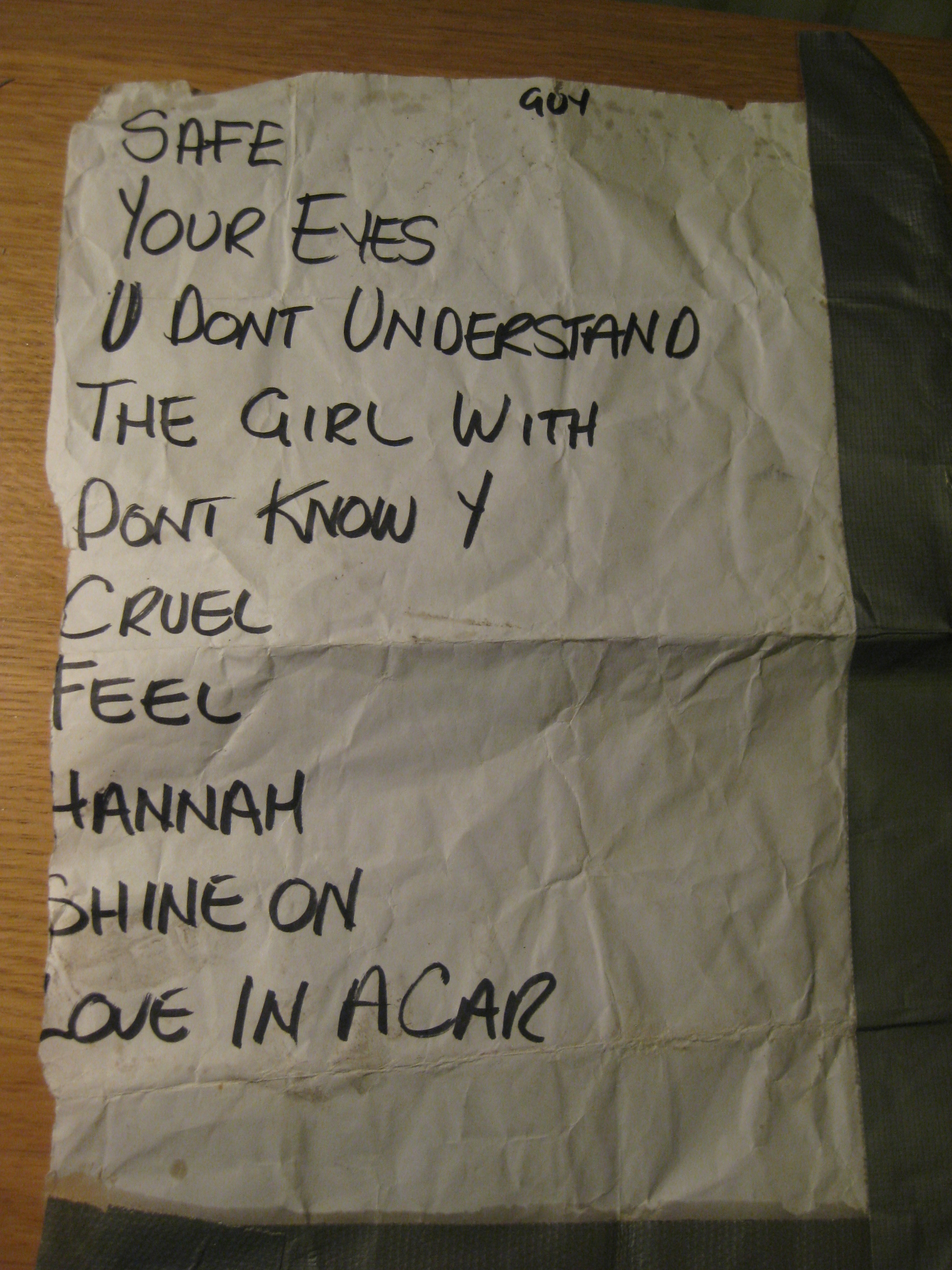
As you’ll see from the video, The House Of Love were more frantic, more fuzzed, more furious than on vinyl. They played King Tuts three nights running, with a different set each night. Gigs weren’t that expensive back then and I don’t know why we didn’t go to them all, but we chose the Friday night only. Full of spirit (and beer and wine) I managed to squeeze my way to the very front of the stage and, being a little shit, managed to annoy Guy Chadwick at one of the last songs by grabbing the base of his microphone stand and twisting it away from his mouth just as he was about to sing. This forced him to turn his head to the side slightly and remain in an awkward stance until he’d finished the verse or chorus or whatever he was singing, before heading the end of the mic like a crap footballer (“Thuuunk!”) back to his favoured position. As you might imagine, he wasn’t in the least amused by any of this. The second time I did it, he looked down from his lofty King Tuts stage position and scowled witheringly at me. When I did it for a third time, he aimed a well placed Doc Martin at my face which only just missed. Punk’s not dead! I suppose I deserved it. It did give me a bit of a fright, but as they finished, I made sure Guy wasn’t watching and I managed to detach the heavily-gaffer taped setlist from the stage and folded it into my pocket:

hol setlist

Afterwards we went to The Arches. (Bouncer, frisking me. “What’s that?” “It’s my House Of Love setlist.”) Still full of spirit (and more beer and wine), we made idiots of ourselves dancing to the anonymous doof-doof-doof house music of the time before heading home – by taxi? by bus? did we stay on someone’s floor until the first light of morning? – I can’t actually remember. Anyway, guess what? In a bizarre turn of events, look who’s due to play at those very same Arches in April this year. It’s only Guy Chadwick and whoever else constitutes The House Of Love these days. I’ll be there, but taking up my more customary back of the room position that I’ve come to appreciate in my advancing years as a gig goer. If you’re coming, I might need hawners. You up for it big man?

Cover Versions, demo, Hard-to-find, studio outtakes

Three Little Birds

I’m just about finished Neil Young‘s autobiography, Waging Heavy Peace. It’s an annoying read, but now I’ve come this far, I need to finish it. I love old whiny Neil, I really do, but his book goes about dispelling the myth behind the man faster than the man himself was able to hoover up the white stuff backstage during The Last Waltz. The chapters jump from one time and place to another time and place and back again with random abandon (which I don’t mind) but the content therein just bores me. There’s just not enough background information on the kind of stuff I’d expect most Neil Young fans to be interested in.

 young høyde

For every “The day I wrote Cinnamon Girl…” you get half a dozen finger-pointing one-sided arguments on the benefits of the electric car Neil’s been designing for the past 390 or so years. For every “We had a lotta fun, I got another STD” tale of woe you get a step-by-step account of his shopping trip to Costco. Really! For every “Oh man! Let me tell ya about this one time in the Springfield…” you get seventeen lectures on the rubbishness of mp3s.  Indeed, ol’ Neil’s got a big shout for himself. He’s offered to help Apple improve the sound quality of their music files and much of his book reads like a particularly crass advertorial. He takes folk out to his car (always a ’51 this or ’67 that, never a B-reg Cortina) and plays them music through his self-designed PureTone/Pono audio system that he hopes will become the leading portable audio player on the market. Whatever, Neil. Just tell us more about the Ditch Trilogy and your guitar sound on Weld, and much, much less about the movies for Human Highway and Prairie Wind.

Much like his music, where great album is followed by mediocre shelf clutter (for every pearl, there’s a Pearl Jam, perhaps?), so too his story alternates between revelation and exasperation. He does admit that he shelved too many good albums in the 70s at the expense of at-best average ones. Maybe he should’ve got himself an editor who could’ve told him likewise about the output of his writing.

neil young shades

Young wearing yer actual After The Gold Rush jeans.

Press ‘Play’ to hear groovy 60s Reprise Records radio promo ad.

At the end of the 60s, Neil Young found himself living in Topanga Canyon, overlooking the Pacific Palisades in the Santa Monica Mountains. A liberal, boho-rich 60s community of artists, actors and assorted creative types, it lent itself perfectly to Young’s own creative, carefree spirit. Here, he would pen many of the songs that would later become staples of his catalogue and live set. Sugar Mountain. I’ve Been Waiting For You. Helpless. Tell Me Why. Only Love Can Break Your Heart. All materialised in some form or other in this period. Not bad going for a 24 year old song writer. Amongst his ouvre during this time was Birds.

neil young wasted

Birds  (Neil Young early version from Topanga Canyon)

Birds is not that well regarded in what is undoubtedly a gold-standard catalogue, but it should be. Eventually appearing on his 3rd solo outing, 1970’s After The Gold Rush, Birds found itself sequenced mid-way through side 2, sandwiched between acoustic Neil nugget Don’t Let It Bring You Down and the electric Neil ‘n Nils Lofgren guitar duellin’ When You Dance You Can Really Love. Birds is a great wee song; downbeat, introspective and yearning with a terrific backing vocal from the assembled Danny Whitten (who’d be dead from heroin in 2 short years), Crazy Horse’s Ralph Molina, old partner in rhyme Steven Stills and the afore-mentioned 18 year old wunderkid Nils Lofgren.

Birds (After The Gold Rush album version)

Hands down even better is the mono single released to promote the Gold Rush album. A markedly different version from the piano-led album version, the single places greater emphasis on shimmering electric guitars and richly plucked acoustics without losing the soaring, whisky-soaked, weed-smoked 4-part harmonies in the chorus. And it’s all over in barely more than one and a half extraordinary minutes. Most folk know Birds from the album, but the mono single is where its at…

Birds (mono single version)

A few weeks ago, when the news of HMV’s decline was made public, I found myself shamelessly plundering their website for keenly priced booty. Top of my wish list was Neil Young’s Archives Project, the catch-all, multi-disc labour of love that had been assembled by Young himself after trawling years of tapes from his own archives. At £200+ a pop it was one box set I could never justify purchasing. I’d already acquired it via other means (I’m sure you know what I mean) but the real deal offers updates via the web and enough interactive material to satisfy even the keenest of Rusties. Sadly, HMV had none to sell, so the mp3s above are taken from my own slightly more dodgy archives. Be careful not to play them too loud, though, or old Neil will be round in his car, the ’62 Chevy perhaps, or the ’78 Jensen, to make you listen to how they should sound on his latest hi-spec audio player. And he’ll probably charge you $250 for the meet-and-greet privilege. Hippies, eh?

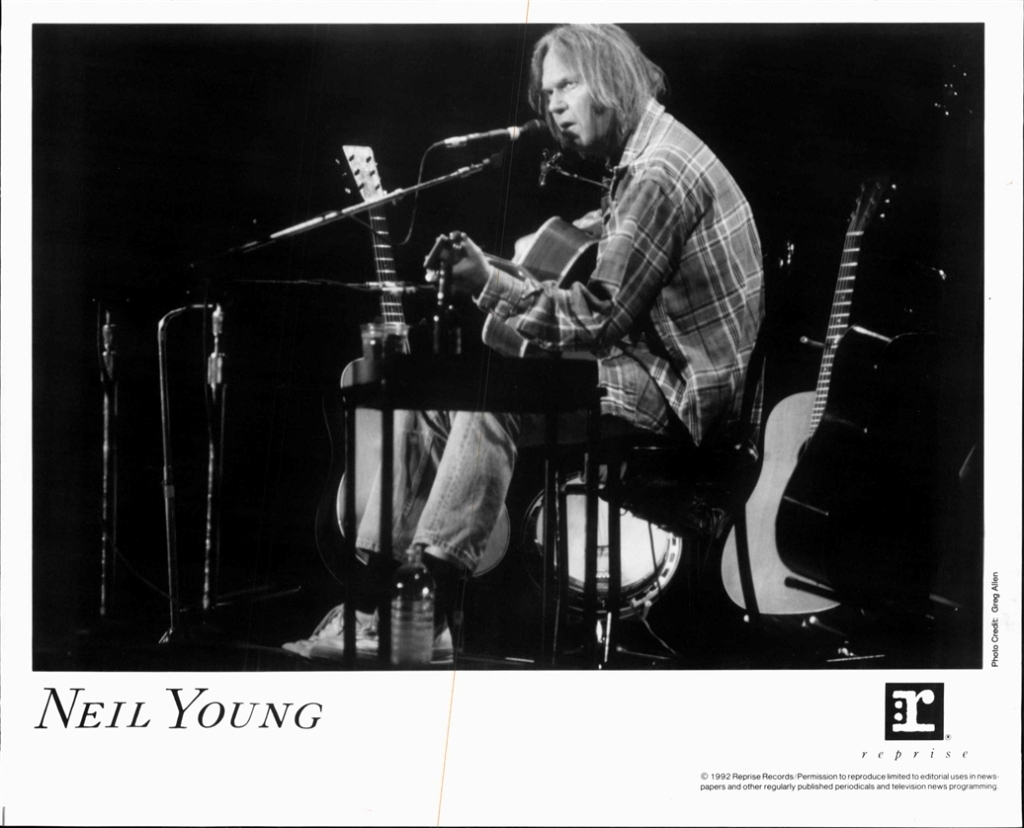
Neil Young reprise promo

*Bonus Track!

From the throwaway and listened-to-less-than-once-before-being-filed-away-waste-of-his-time-and-my-money Studio 150 covers LP (phew!), here’s Paul Weller, in full-on white man sings Otis guise doing a fine version of Birds. Perhaps a reappraisal of Studio 150 is required.

Cover Versions, Get This!, Gone but not forgotten, Hard-to-find

Born To Be With You Triple Whammy

chordettes

Born To Be With You was an American top 5 single for The Chordettes in 1956. A largely forgotten piece of bobbysox balladeering, it’s a proto doo wop, proto girl group paen to a just-out-of-reach romance, all minor key melodrama and vocal harmonies. It was quite clearly an influence on the young Phil Spector a few years later. A few short calendar years maybe, but it might as well have been several lightyears, given what happened in the intervening years betwixt and between The Chordettes and the golden touch of Phil Spector. 1956 was Year Zero for rock ‘n roll. The year that Elvis and his gyrating pelvis appeared on television screens with the dual effect of horrifying the moral majority of Americans whilst galvanising youths everywhere into action.

Before Elvis there was nothing.”

John Lennon said that. And after Elvis there was everything. I’ll say that. Firstly, Tin Pan Alley songwriters and their ‘moon in June‘ blandfest of lyrics were given a huge boot up the arse and out the door. As they were leaving, in came bands who played their own instruments, wrote their own songs, presented themselves as a gang and dressed accordingly. In a few short years, the thrill of rock ‘n roll and all its attendant detritus was well in motion. But you knew that already.

Phil Spector was a bit of a throwback to that pre-Elvis era. The auteur of teen angst, he used assorted songwriters to pen the hits, before introducing the song to the musicians who would bend and shape it into Spector’s vision of a 3 minute symphony, before finally introducing the singers to the song and pushing them to the very edge of their limits in order to create pop perfection. Goffin & King. Ellie Greenwich. Jeff Barry. Writing for The Ronettes. The Crystals. Darlene Love. I’m sure you know them all. Phil even got himself a writing credit for coming up with the “woah-woah-woah” part at the end of Mann & Weill’s ‘You’ve Lost That Loving Feeling‘. Clever man, that Phil Spector. Well, he was at one time…

dave edmunds

Spector’s influence reached far and wide, as far even as that hotbed of rock action, south Wales. In 1973, following the huge success of I Hear You Knocking (a favourite of John Lennon, coincidentally), and after a part in David Essex’s Stardust, Dave Edmunds combined his love of early 50s rock ‘n roll with the technique of Phil Spector and produced his own version of The Chordettes’ Born To Be With You. It’s terrific! A wall of 12 string guitars, stratosphere-scraping vocals and galloping, clattering rat-ticky-tat percussion. It’s measured. Precise. Perfect. By the time the brass ‘n slide guitar part comes soaring in, you’ll already have convinced yourself this is the best record you’ve heard all year. Someone like Glasvegas could waltz in and do it in the same style and make it sound even huger. “Coz ah wiz borrrrn…tae be wi’ yooo!” But for the moment, content yourself with Dave Edmund’s 40-year old version. I think you’ll like it a lot.

Pop Quiz Interlude

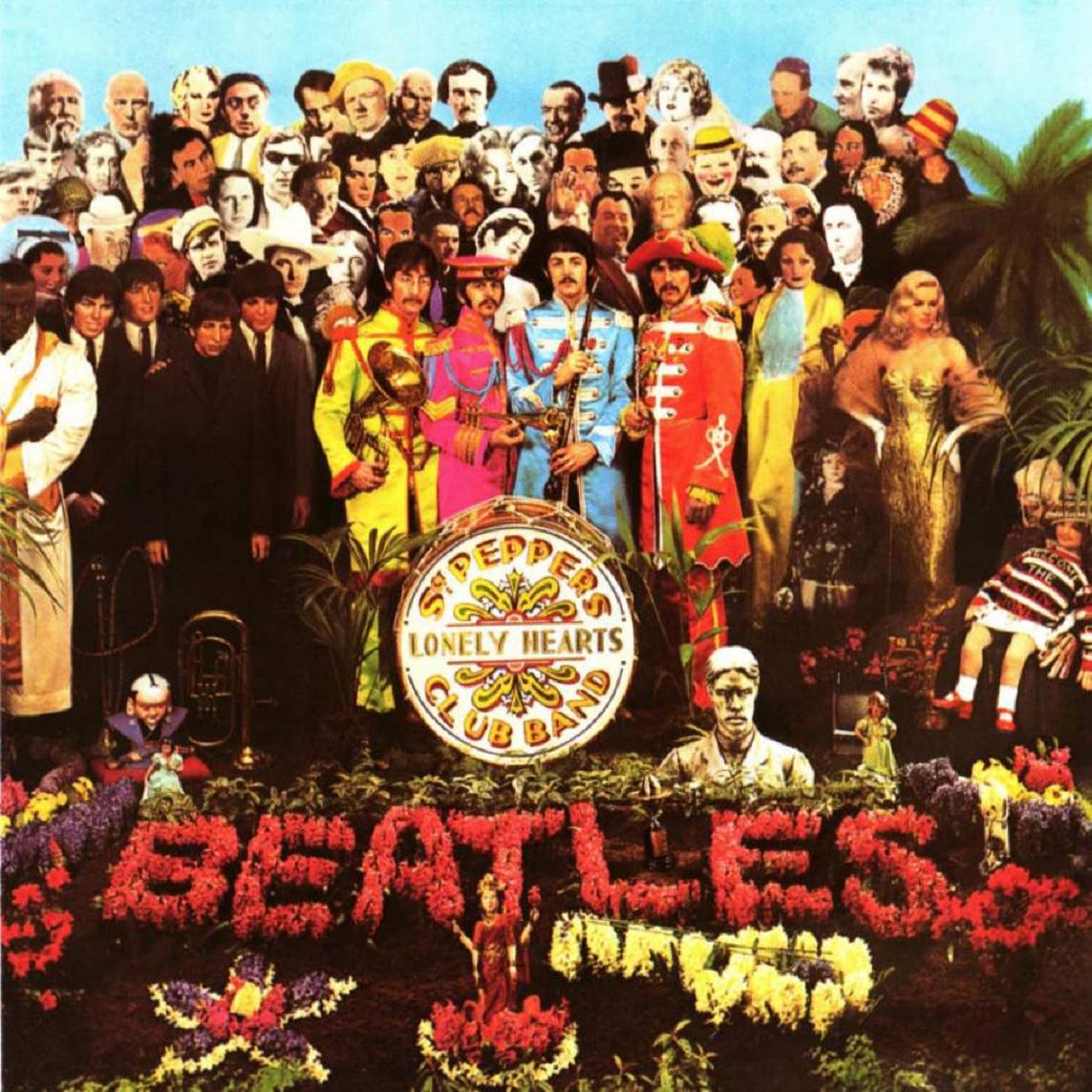
Q. Aside from The Beatles, name the only other rock/pop artists on the cover of the Sgt Peppers LP.

sgt pepper

A. Bob Dylan (top right, back row) and Dion (7th from left, 2nd back row. Just next to Tony Curtis and behind a wee bit from Oscar Wilde).

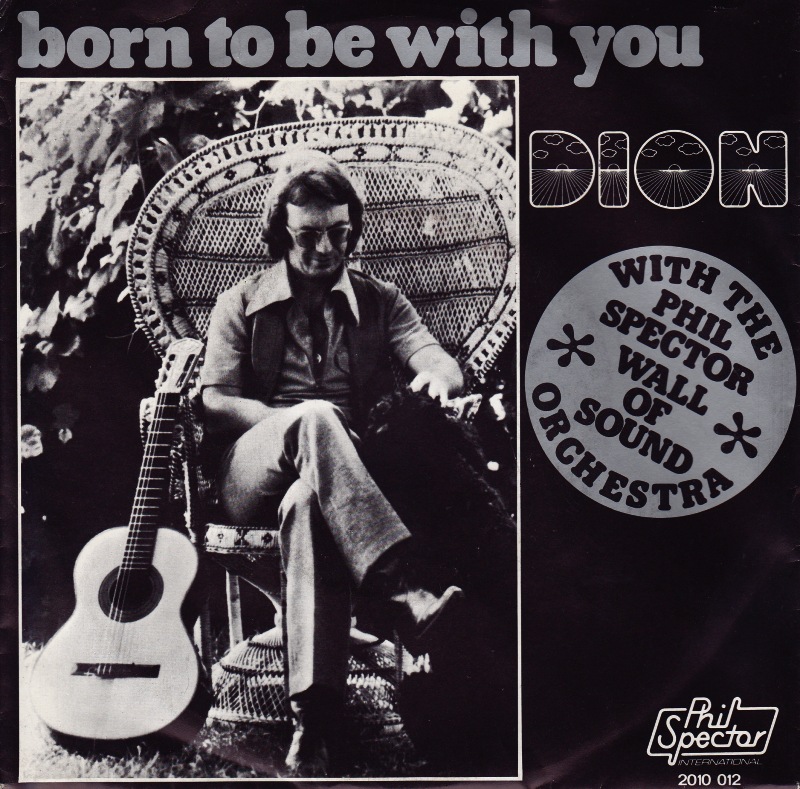
Dylan you’ve probably heard of. Dion too, for that matter. Dion was a duh-duh-duh-d’-duh-duh duh dude. His rasping, doo-wopping Noo Yoik Bronx vocal created monster hits. The Wanderer. Runaround Sue. A Teenager In Love. I’m sure you’re singing them now, ingrained as they are in the very fabric of rock ‘n roll.  Dion was also the Marti Pellow of his day – pop idol on the outside whilst rattling to the bones with heroin on the inside. When the hits dried up, Dion found himself label-less, friendless and definitely down and out in New York City. Following a religious epiphany (c’mon! what did you expect?!?) and subsequently ditching the drugs, 1975 found Dion working with Phil Spector on his own version of Born To Be With You.

dion 7

Ironically, it’s less Spectorish than Edmunds’ rollin’ and tumblin’ version. Dion’s is downbeat, introspective and melancholy, sounding exactly like the kind of record an artist makes when they know they’re in the last chance saloon; measured (again) and majestic. At just short of 7 minutes, it’s something of an epic. Jason Pierce of Spiritualized is said to be a huge fan of this record, which makes perfect sense. It’s almost Spiritualized in template, with it’s steady, pulsing riff and inter-woven sax breaks. And the background drugs story was no doubt the icing on the cake for our Jason.

Good records. That’s what they are. Play them. Enjoy them. Pass it on.

Cover Versions, Get This!, Gone but not forgotten, Hard-to-find

Happy Birthday Rabbie

Some of you may have read this before (2009 and 2011, to be exact).

254 years young today. I love Burns. Had him drummed into me at school. In fact, anyone who goes to school in the West of Scotland knows all about him. And as a teacher, I love banging on about him to my class. Here’s a brief potted history for any uninitiated out there…

robert-burns

Born on the 25th January, 1759 in Alloway (now a posh part of Ayr). Scrawny boy, wasn’t expected to live long. Helped his dad on the farm. Wasn’t cut out for it. His dad, though poor, paid for Robert to go to school. Robert excelled in academia. Began writing poems to go along with the folk songs his mother had sung to him. People liked them. Drifted around Ayrshire. Had a reputation as a ladies man. Loved them and left them. Made plans to go to Jamaica as a slave driver (they don’t tell you that in school). Was just about to go when someone in Kilmarnock published the first edition of his poetry. This edition made it’s way to Edinburgh and Robert followed. The Edinburgh high society loved him. He loved Edinburgh life. He loved Edinburgh women. He loved entertaining Edinburgh women. In less than a year he spent the equivalent in today’s terms of £170,000! That’s £170,000 pissed against a wall. Made a hasty retreat, skint, to Dumfries when he was caught having an affair. Married Jean Armour, the love of his life they say and went back to the farming. Hated it. Became a tax man. Hated that. Died of a heart condition, possibly brought on by syphilis, on 21st July 1796, aged just 37. At the time of his death he had fathered at least 13 children to various women throughout Ayrshire, Edinburgh and Dumfries. Stick that in yer pointy boots, Russell Brand.

Happy Birthday, Mr Burns‘, by The Ramones on The Simpsons.

Ane, twa, chree, fower!

That reminds me. Prince Charles was on a visit to Crosshouse Hospital, just outside Kilmarnock a couple of years ago. One of the Hospital big wigs was accompanying him round the wards, steering old Charlie clear of the wasters, winos and swine flu sufferers that were using up valuable bed space. Walking into one ward, The Prince stopped at one of the first beds and asked the young man how he was feeling. The bedridden patient replied;

“Wee, sleekit, cowrin, tim’rous beastie,
O, what a panic’s in thy breastie!
Thou need na start awa sae hasty
Wi bickering brattle!
I wad be laith to rin an’ chase thee,
Wi’ murdering pattle.”

Charles mumbled something under his breath, smiled at the distressed patient and walked on. He stopped at another bed and asked the next patient how he too was fareing. The patient looked up and shouted out,

“My curse upon your venom’d stang,
That shoots my tortur’d gooms alang,
An’ thro’ my lug gies monie a twang
Wh’ gnawing vengeance,
Tearing my nerves wi’ bitter pang,
Like racking engines!”

Somewhat shaken, Charles walked on. Stopping at the last bed  he looked at the patient. Being the future King and all, it was only polite of him to ask this patient how he too was progressing. With a froth of the mouth patient number three barked out,

“When Chapman billies leave the street,
And drouthy neebors neebors meet,
As market-days are wearing late,
An’ folk begin to tak the gate;
While we sit bousing at the nappy,
An’ getting fou and unco happy,
We think na on the lang Scots miles,
The mosses, waters, slaps and styles,
That lie between us and our hame,
Whare sits our sulky, sullen dame,
Gathering her brows like a gathering storm,
Nursing her wrath to keep it warm.

This truth fand honest Tam O Shanter,
As he frae Ayr ae nicht did canter:
(Auld Ayr, wham ne’er a town surpasses,
For honest men and bonie lasses.)”

A visibly bemused and perturbed Charles turned to his guide and inquired, “Where are we man? Is this some sort of mental ward?”

No Sir,” came the reply. “This is the severe Burns Unit.”

You can have that one for free….

Here’s lo-fi acoustic folk Scottish supergroup-of-sorts The Burns Unit doing a brand new song called Tupperware Pieces for last week’s Marc Riley show on BBC 6 Music. S’a cracker. (I stole the mp3 from Peenko – ta!)

And here’s the Trashcan Sinatras‘ ode tae Rabbie, I Hung My Harp Upon The Willows. It tells the story of Rabbie’s time in Irvine. Aye, Alloway made the man, but Irvine made the poet. As an Irvine boy, I make sure I tell them that in school. It gets right up the snooty noses of those South Ayrshirites, so it does.

Cover Versions, demo, Get This!, Hard-to-find, Peel Sessions, Sampled

Victoria Wood. Morrissey Did.

Rusholme Ruffians is The Smiths at their sticky-fingered peak. From the alliteratively-alluring Ealing comedyesque title down, it’s a masterclass in Morrissey’s stolen kitchen sink observations backed by a Johnny Marr riff flat-out filched from Scotty Moore via Elvis Presley’s (Marie’s The Name) His Latest Flame 1961 single.

smiths bw tumblr

By the time they came to record Rusholme Ruffians for second album Meat Is Murder, The Smiths were at the top of their game. As was usually the way, Johnny would present the band with a cassette demo. The musicians would go off and shape Marr’s ideas into a band performance while Morrissey would twist and turn what lyrics he had into the new tune, writing and re-writing as he went along until, between band and bard, they had the genesis of a song.  “Let’s do a song about the fair,” suggested Morrissey. “For some reason my association was to pull out that Elvis riff,” explained Marr.

His appropriation of the riff as a frantically scrubbed rockabilly knee-trembler alongside Mike Joyce’s rattlin’ and rollin’ percussion is in stark contrast to Andy Rourke’s slap happy elastic band of a bassline. Played at half the speed, it wouldn’t have sounded out of place on any mid-period Sly and the Family Stone record. Played as it was, it gives the tune that certain je ne sais quoi; the essential ingredient that turned an average Elvis pastiche into an undeniable Smiths’ tune. To use what is surely by now a cliche, Andy Rourke really was the unsung musical hero in The Smiths. And by the time the vocal went on top, well, an undeniable Smiths’ tune had become an undeniable Smiths’ classic.

As a child I was literally educated at fairgrounds. It was a place of tremendous violence and hate and stress and high romance and all the true vital things in life. It was really the patch of ground where you learned about everything simultaneously whether you wanted to or not.”

waltzers

The lyrics that poured out of Morrissey for Rusholme Ruffians are pure 24 carat gold. Every line features classic Morrisseyism after classic Morrisseyism; perfectly executed observations on what happens when the fair comes to town;

The last night of the fair, by the big wheel generator…a boy is stabbed and his money is grabbed and the air hangs heavy like a dulling wine…she is famous, she is funny…..an engagement ring doesn’t mean a thing to a mind consumed by brass (money)….and though I walk home alone…..I might walk home alone ….but my faith in love is still devout…..From a seat on a whirling waltzer …her skirt ascends for a watching eye …it’s a hideous trait on her mother’s side…someone falls in love, someone’s beaten up…..the grease in the hair of the speedway operator is all a tremulous heart requires…how quickly would I die if I jumped from the top of the parachutes….scratch my name on your arm with a fountain pen, this means you really love me….

Classic Morrisseyism after classic Morrisseyism.

Or are they?

victoria-wood

Morrissey was, and remains, a fan of slightly posh, slightly batty northern comedienne Victoria Wood. Her dry ruminations and reflections clearly struck a  chord with him, mirroring as they did his own skewed and melodramatic views on life and living. Sonically, she’s about as far removed from The Smiths as Take That are from the MC5, but her skits and sketches have proven a rich seam for mining lyrics and snippets that pop up across many Smiths recordings – ‘ten ton truck‘, ‘singing to the mentally ill‘, ‘not natural, normal or kind‘, the list goes on….

Wood’s 1983 concert album Lucky Bag was a big favourite of Morrissey’s. On the LP was a track called Fourteen Again. A track featuring a spoken-word intro, including a line proclaiming “they didn’t even know what drugs were” that the eagle-eared amongst you will recognise from the title track of The Queen Is Dead, Fourteen Again includes such lyrics as;

I want to be fourteen again, tattoo my self with a fountain pen….free rides on the waltzer off the fairground men for a promise of a snog….. the last night of the fair…..French kissing as the kiosks shut…..behind the generators with your coconut…..the coloured lights reflected in the Brylcream on his hair…..when I was funny, I was famous

OK, so he didn’t steal them all, and he came up with some genuine crackers of his own  – tremulous hearts and minds consumed by brass (money) and jumping from the tops of parachutes (the ‘skirt ascends‘ line is my favourite) but old Morrissey certainly utilised his love of Victoria Wood to full extent, that much is clear. And just in case you still aren’t convinced, the ‘my faith in love is still devout‘ line was taken from another Wood song, Funny How Things Turn Out, where she proclaims ‘my faith in myself is still devout’.

Hear for yourself:

Elvis Presley (Marie’s The Name) His Latest Flame

Victoria WoodFourteen Again

Victoria WoodFunny How Things Turn Out

The SmithsRusholme Ruffians (demo, first take recorded with John Porter July 1984)

The SmithsRusholme Ruffians (Peel Session 9th August, 1984)

The SmithsRusholme Ruffians (Meat Is Murder LP version, February 1985)

…and, acknowledging their debt to The King….The SmithsHis Latest Flame/Rusholme Ruffians (Rank LP version, recorded October 1986)

morrissey marr face 1985

Like This? Try these…

The Smiths How Soon Is Now explained

The Smiths A Rush And a Push explained

The Smiths There Is A Light That Never Goes Out explained

Johnny Marr’s Dansette Delights