Get This!, New! Now!

2020 Vision

Trashcan Sinatras fans are used to playing the patient game, so when a few weeks ago their I’ve Seen Everything album featured on one of Tim’s Twitter Listening Parties, the group found themselves back at the forefront of the collective conscience of a fanbase who remain fiercely loyal and proud. That same fanbase went into something of a restrained lockdown meltdown when, a couple of weeks later, close-cropped, half-chopped words atop pixelated dots began appearing across the group’s social media feeds. What does it all mean? everyone speculated. Some eagle-eyed fans pointed out the relationship between some of the jumbled letters that captioned an image with one of the lines on an eye test chart and before you knew it, the rumour was that I’ve Seen Everything was set for imminent and long-overdue release on vinyl. An original version will easily relieve you of a three-figure sum, should you be fortunate enough to uncover one in the first place, so, what with the Trashcans themselves selecting the album for the spotlight-shining Tim’s Listening Party and everything, it made for perfectly logical reasoning that this was what was coming our way.

This slideshow requires JavaScript.

Except, as you, I and everyone else affiliated to the hardest working band in slow business will atest, the words ‘logical’ and ‘Trashcan Sinatras’ rarely appear in the same sentence. What we got was not the reissue of an album that surely deserves just that, but instead a brand! new! track!, recorded, as is the group’s way these days, by pinging electronic files back and forth across the Atlantic until steady patience cooks the mix and it rises to perfection. D’you know how Paul McCartney and Stevie Wonder recorded the metaphorical and groovy Ebony & Ivory without ever being in the same room? Well, that.

Trashcan Sinatras  – The Closer You Move Away From Me (Buy it here)

Beginning with a gentle electronic keyboard buzz that springs to mind an effect-treated take on that feedbacking, AC30-conduited open A string that introduces The Beatles’ I Feel Fine, The Closer You Move Away From Me is a slow-burning, knowing and yearning mini masterpiece.

Like the keyboard swell that carries the melody, it comes to you in waves. It’s not instant in the way Obscurity Knocks gatecrashed itself into your hippocampus 30 years ago. Nor does it have that sheen of undeniable hit hit hit! quality (if only) of a Hayfever or a Twisted & Bent or an All The Dark Horses.

It’s one of those records that requires one or two slightly apprehensive, fingers-crossed listens before, by the third rotation you begin to notice the slightly trippy guitars, lifted straight offa the grooves of Bette Davis’ Eyes…the lyric, a rumination on the big ideas of life and living…the spoken word section (has there ever been a bad record with a spoken word section?) …the perfect marriage of melancholy and melody…and by the time you’re tangled in the backwards guitars that weave their way through the fading outro you finally come to the acceptance that, yes!, this is one of the Trashcans’ finest moments indeed. It’s well worth your time.

The video that’s currently being shared by the more discerning social media surfer in your friends list is the perfect accompaniment. Here are the five principal members – the classic line-up, they herald in the publicity material – stuck in five living rooms somewhere between the west coasts of America and Scotland, backdropped by bay windows and bodacious bookshelves. It’s so goddam NOW!, the perfect summation of life in the first half of 2020. There’ll be artists that follow of course, and probably with greater impact, but read this here and now – out of circumstance rather than concept, the Trashcans did it first.

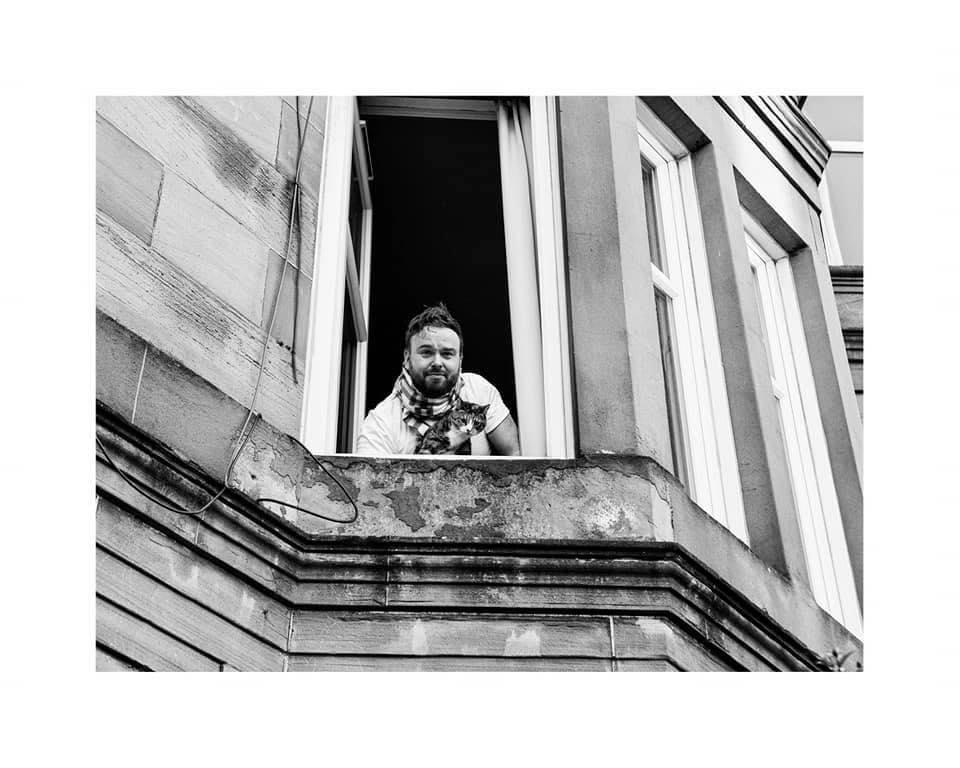
As I watched it for the first time, a sudden face-slapping realisation smacked me right across these lockdown-fattened jowls –  with lines such as ‘the more intricate the build, the deeper the foundations‘ and ‘the harder the realisation, the deeper the love that stays‘ playing out over wistful monochrome images of five life-long friends playing together yet apart, The Closer You Move Away From Me is principally the group’s own love song to one another.

It’s there in the way they peer hopefully out of their windows, hoping perhaps that a fellow Trashcan will come skipping up the street at any moment, new tune in hand in need of a melody to unfold. It’s there too in the watery pictures of yore that float up to the surface, punctuating the monochrome with faded coloured memories of the past; pictures of the TCS in a different era, when the group looked to the future with excited hope rather than looking back with the melancholic regret of a life in music that should’ve gained them far more kudos and success. I don’t for a minute think the Trashcans regret anything – that’s just not them, but the visuals of a young group floating between the crows feet and worry lines and grey hair and nae hair that define the group currently make for a good yin-yang of the Trashcan Sinatras.

For a group that has survived everything thrown at it by an eventually-disinterested record label, studio-seizers in grey suits, serious ill health and the impracticalities of being a band whilst recording transatlantic-style, it’s hard to deny them the luxury of a song where they themselves may be the subject matter (see also Weightlifting‘s It’s A Miracle).

That The Closer You Move Away From Me exists at all in both song and video is fairly incredible if you stop to consider it. It may be some time until an album creeps out – I’m told that, such are the high standards set by themselves, half an album was thrown out with the bathwater at the start of the year – but I know, you know, those in the know know that whenever that may be, it’ll be well-worth waiting for.

You can buy The Closer You Move Away From Me here.


Alternative Version, Get This!, Live!

This Ain’t No Foolin’ Around

Notwithstanding a title that could easily apply to the mess the UK government is currently making of things, Life During Wartime is the greatest-ever Talking Heads track, and here’s why.

Their first two albums – ‘77‘ and ‘More Songs About Buildings And Food‘, good as they are, were mere amuse-bouches for what would follow. On those albums, Talking Heads developed an out of step sound far removed from the shouty three chord ramalama of the bands of the day. They flirted with wired, claustrophobic paranoia, the vocals delivered with one-eye-over-the-shoulder nervous energy, the music transmitted via guitar strings as tight and tense as a head-to-head on Hart To Hart. Hints of the funk bubbled underneath, suppressed perhaps, or maybe subdued due to a lack of confidence. By 1979’s Fear Of Music though – that’s three albums in three years, Radiohead! – they’d hit their stride.

Fear Of Music was a conscious decision by the band to make an album that ran deeper than the standard two or three singles plus filler model that was prevalent at the time. With an eye for Duchamp and an ear for disco, they set up in a New York loft, transmitted their sonic ideas via extra-long cables out of the windows and into a mobile studio parked outside, and went about creating a record that was equal parts cerebral and celebratory.

With Eno again at the controls and a supporting cast including The Slits’ Ari Up and some wild guitar Frippery from the former King Crimson soundscaper, the band stretched out to great effect. Polyrhythmic African beats and twin chattering desert guitars carry I Zimbra to the fringes marked ‘far out’. Police sirens, scratchy no-wave guitars and body-popping bass propel Cities to great, new uncharted territories. The breathy relief of ‘Air’, all bing-bonging keys and guitar riffs and tones that surely made the young Johnny Marr reach for his six string and crib some notes is as wired and weirdly funky as Funkadelic, and deliberately so, you’d have to think.

It’s the penultimate track on side 1 that hits the sweet spot between art and dance. Just two chords from beginning to end (Am and E, should you fancy riffing along with it) Life During Wartime begins on a funky gutteral groove, a combination of on-the-one grinding guitar, bass, keys and drums. No countdown, just Bam! and we’re into it. It’s magic.

Talking Heads – Life During Wartime

There’s hardly time for the band to develop the theme before Byrne announces himself on vocals. His flaky, jittery performance is less singing, more acting, the way Christopher Walken, say, might deliver the plot-defining lines of a particularly tense thriller, Mad Max as scripted by Stephen King.

Heard of a van that is loaded with weapons,
Packed up and ready to go

Heard of some grave sites, out by the highway,
A place where nobody knows

The sound of gunfire, off in the distance,
I’m getting used to it now
Lived in a brownstone, lived in a ghetto,
I’ve lived all over this town
This ain’t no party! This ain’t no disco!
This ain’t no fooling around!
No time for dancing, or lovey dovey,
I ain’t got time for that now!

Talking Heads – Life During Wartime (alternative version)

The alternate version that was considered then rejected for the album is worth hearing too. There’s more emphasis on the guitar, with little staccato morsecode signals that are quickly drowned out by a freeform, freeflowing freakout that may well be the work of Fripp himself. Whoever is playing it is certainly going hell for leather with a guitar line that wouldn’t be out of place on Bowie’s Lodger album or Eno’s Here Come The Warm Jets, even if the player does run out of steam roughly three quarters of the way through the track. As interesting as it is, the released version remains definitive; urgent, insistent, incessant and never anything less than vital when it comes on.

While Byrne’s lyrics suggest an uneasy tension, part Baader-Meinhof reportage and part first-hand experience of NYC’s Alphabet City, the band compenasate with the groove. The subject matter might be uncomfortable, they say, but you’ll feel better after shuffling that skinny white boy ass of yours across whichever sticky dancefloor is nearest. It ain’t the Mudd Club or CBGB’s, it’s not even the Attic anymore, but as far as advice goes, it sure works.

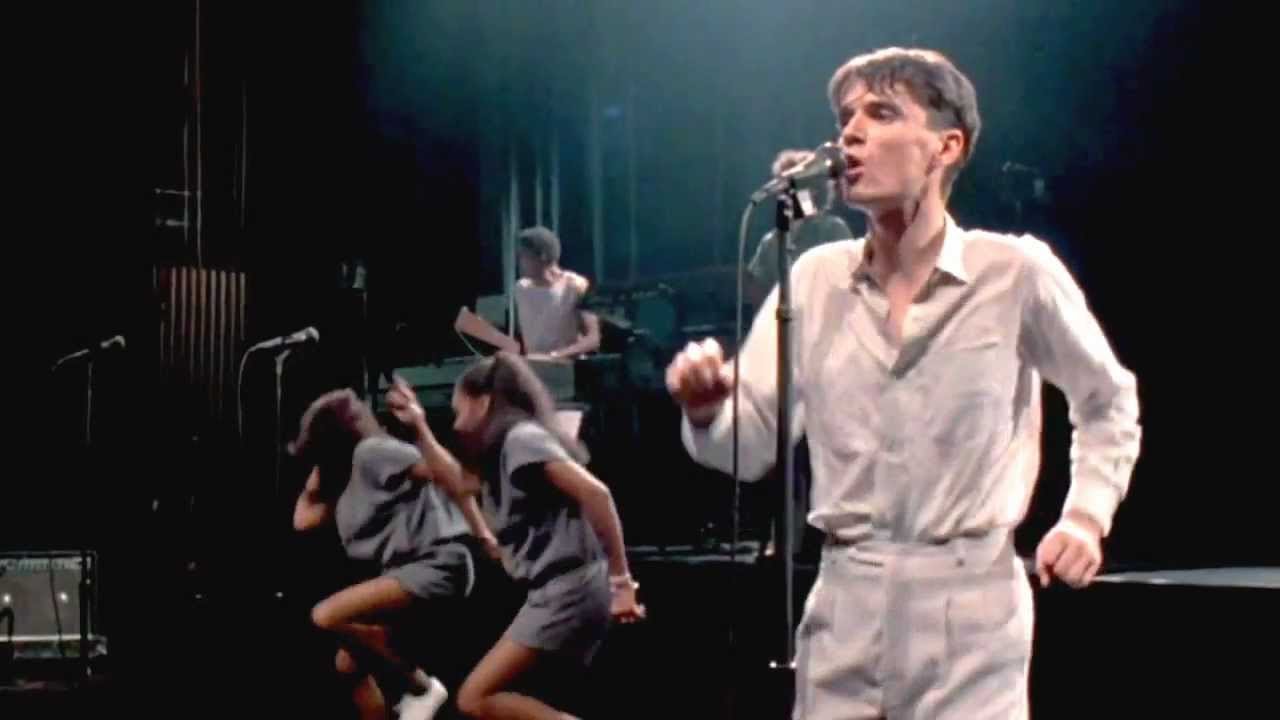
Talking Heads – Life During Wartime (live Central Park, NYC 1980)

In the live setting, the track morphed even further into the funk. You’ll find it of course, in perhaps definitive form, on the ubiquitous and well-played Stop Making Sense, but it also appears (as above) on the second record of the double The Name Of This Band Is Talking Heads, arguably a more accurate representation of the band at two points in time.

On the second record, the extended ten-piece version of Talking Heads, including soul singers and multiple multi-instrumentalists and living and breathing actual funk merchants in the shape of Bernie Worrell delivered a sped-up version of Life During Wartime that positively grooves with a cross-pollination of punk’s edge and funk’s sheen. No concept, no arty angle, just a band playing their stuff on stage. Close your eyes though and you can see those ten musicians moving as one to the infectious stew they themselves are cooking up. It is a party, and it is a disco. They’re definitely not fooling around though.


Cover Versions, Get This!, New! Now!

Chant Number 1

I don’t need this pressure on indeed. Isolation remains very much a part of Scottish life. Johnson was wittering on at some point over the past week – I can’t remember exactly when as it’s been a wee while since anyone’s seen him, and when he is there, we tend to tune out until he veers sharply and unexpectedly from that rigid scrolling script to venture dangerously off-piste. Usually then he’s worth listening to, if only for the made up rubbish he upchucks then contradicts before anyone’s had a chance to tell him. Here he was, having a go at oor ain Nicola Sturgeon for daring to defy his relaxed approach to the Great British Lockdown, saying that Scotland was out of step with the rest of the UK. It was quickly pointed out that with Wales and Northern Ireland still to fully embrace this brave new world of the Prime Minister’s, it was in fact his own country that was out of step with everyone else. Telt, as they say.

Leaving political point scoring aside and eschewing BawJaw’s bumbling, stuttering, fuckwittery in continually putting profit over people, our own leader has made it clear; isolation continues for as long as it needs to be in place, and if that means another few weeks without an overpriced coffee or a long queue at the recycle centre, then so be it.

It’s good that we have the music. During these locked down and locked in, working from home times, I’ve been getting to grips with new albums I might never fully have invested the time in. Much of this new music has come courtesy of Last Night From Glasgow, the co-operative, not-for-profit label that aims to give the artists as great a share of the takings as possible whilst still investing in new bands and new projects. The music is a catch-all eclectica of scuffed at the knees indie, leftfield electronica, beat groups, studio projects and just about everything else you can think of. If you’re a member you’ll receive new releases well in advance of the launch date and in the years B.C. (before Corona) you’d get to attend the album launch party too.

Their forthcoming Isolation Sessions project may well go on to be the jewel in a particularly sparkling crown. Pre-sales have already led to thousands of pounds being pumped back into struggling local venues and it’s on course to be quite the release of 2020. Conceived, written and recorded between March and April, it sees all the acts on the label tackle a song by one of their labelmates. Recently, I raved about Close Lobsters’ fantastic version of Cloth’s Curiosity Door, fragile etherea reimagined as a propulsive head nodder straight outta 1970s West Germany. In the time since, more and more tracks have appeared; recorded, wrapped and ready for imminent release.

In conjunction with the record, esteemed photo journalist Friar Brian Sweeney, coincidentally the label’s creative director, has rather beautifully documented these strange times. Closely observing social distancing rules, the photographer has zig-zagged his way up and down the country to take candid shots of the movers and shakers and members that combine to make one of the very best record labels around. Reproduced in silvery black and white, the images perfectly capture the uncertainty and new-found relaxed approach to personal appearance that this period in time has allowed. Right down to the untied shoes (who cares?) and four days-old shorts (who cares?) and a hairdo that’s long overdue a visit from some scissors (I mean, who cares?), he’s bottled my three chins (compresion, I’m assured) and me, ladies, for eternity.

Jowly author/Plain Or Pan by Friar Brian Sweeney

The visuals are terrific, the perfect atmospheric accompaniment to what’ll be going on and in the grooves. Broken Chanter, the nom de plume of Kid Canaveral’s David MacGregor released his self-titled debut album via Olive Grove towards the end of last year. Melodic, ambitious, grand (in every sense of the adjective) and (in a very good way) weird enough to maintain interest to this very day, it includes Don’t Move To Denmark, a cry of loss and longing that implores a recent love to not move abroad but not to stick around on his behalf either.

Broken Chanter – Don’t Move To Denmark

David MacGregor/Broken Chanter by Friar Brian Sweeney

Autobiographical? Quite possibly. MacGregor certainly means every word he sings. Mixing trad with tech, scratchy acoustic guitars and plucked ‘n sawed strings are carried along by ricocheting percussion and a welcome hint of underlying laptop electronica. One of the album’s finest moments, it’s a good introduction to his rich musical world. If it’s piqued your interest you could do worse than get a hold of his album via the link in the third paragraph above.

Lesley McLaren/Lola In Slacks by Friar Brian Sweeney

On the Isolation Sessions, Glasgow’s Lola In Slacks, newcomers to the label but not to the local music scene, transform Broken Chanter’s already wonderful original into a shimmering cinematic beauty, a skyscraping track of restrained majesty that recalls the understated yet uplifting sound of Natalie Merchant and Stevie Nicks having a go at recreating the soundtrack to Twin Peaks at 45rpm. Somewhere in a parallel universe, this version spins eternally.

Lola In Slacks – Don’t Move To Denmark

Brushed drums shuffle the groove, twanging and reverberating hollow-bodied electric guitars lift the whole thing up and out into the clouds where it floats forever… it’s casually fantastic and currently playing for the 95th time since the weekend, another triumph on an album that seems certain to be packed full of them .

Don’t move to Denmark or stay on my behalf, it goes. The brass on my neck made you laugh. Why, that’s almost Johnson-esque in its prescience. Given the Scandinavian country’s tight handle on Covid, and education, society, lifestyle and just about everything else, why wouldn’t you want to move there just now?

Isolation Sessions can be bought at the LNFG shop here. Get down on it.
Get This!

Howson Is Now

Around 10 years ago, as part of a class topic on the human body, I introduced an unsuspecting class of 9 year-olds to the work of Peter Howson. Howson’s characters, all exaggerated muscles and bulging veins, hard-grafting hands and tortured eyes that told a thousand stories and asked as many questions were ripe for stimulus and so, over the course of a couple of art lessons, we used Howson’s paintings for reference and had a go at doing our own versions of them.

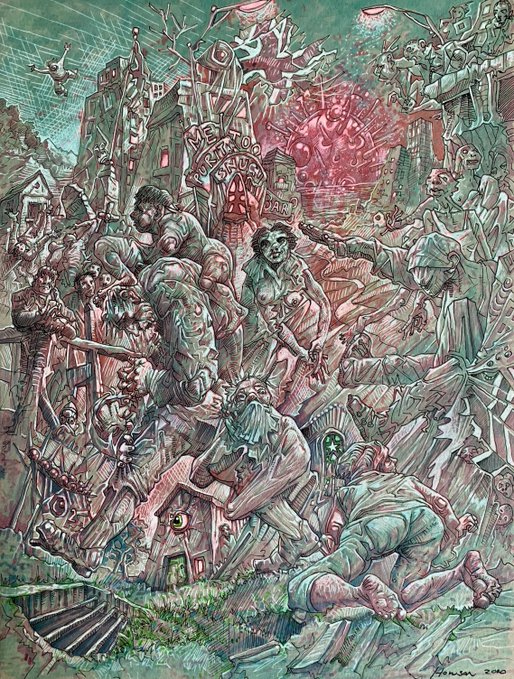
When The World Changed, Peter Howson 2020

As they drew, I told the kids what I knew of the artist. At their age, I told them, he’d lived in another Ayrshire mining community just up the road from here, so there was an instant connection with that. Many of his paintings feature masculine, working class men, buckled and bent but never beaten by the forge or factory. There was still, at the time, a working forge in the town, not far from the school, where some of the children’s fathers worked.

Look at one of his pictures for long enough, I suggested, and you begin to hear the clang and clatter of their continual industry leaping forth from the thick, swirling oils. Not only that, but the pictures worked on different levels too. Howson had grown up in a religious family and lots of his paintings were full of hidden religious symbolism. Look at how many of his pictures, I pointed out, had flashes of brilliant light in the corner. The light from the forge, perhaps, or the moonlight, or the daylight poking out from underneath a bridge…or perhaps the light from God the saviour? The artist made no secret of his beliefs and the kids instantly understood the multi-layered meanings in the paintings we were studying, marvelling that painters could be so clever and devious and secretive.

Slowly but surely they all got drawn into Howson’s world, pastelling and painting their own versions as they listened to what I could tell them. As a teacher, it’s the greatest feeling in the world when the young people in front of you just get it and run with an idea as their own. I told them more, that he’d been the official war artist in Bosnia, seeing first-hand then painting the horrors of a war that never quite made it onto the front pages of our newspapers. He’d gone through difficult periods in his life but had made it through, scarred but intact. His work, the ‘real’ versions of the pictures we were using as stimulus sold for hundreds of thousands of pounds – (gasp!) – and, d’you know that singer David Bowie that I sometimes go on about? – well, he owns some of them.

By the end of the week, I had 25 or so fantastic pieces of art of a truly excellent and age-defying standard. I decided after school to seek out Howson online to tell him how his work had inspired this wee class of working class kids from the Ayrshire backwaters, reasoning that by including ‘Ayrshire’, it might pique his interest. It turned out that Howson was a bit of an internet recluse, but after a fair bit of searching – and this was Friday night with a good hour’s commute ahead of me – I did find a gallery in Glasgow that had his name attached to it, so I sent off a speculative email – “I wonder if you could perhaps let Mr Howson know,” etc etc and fired it off, unsure if I’d ever get a reply. On the Monday morning an email was waiting for me. It was from Howson’s PA.

‘Peter is delighted that his work has insipired the children. He’d love to see what they’ve done. If at all possible, can you send him their work?‘

So, a selection of the children’s work was sent to the man who’d inspired me/them. A week or so later a reply came with a picture attached. It showed Peter Howson kneeling in his studio, a massive orangey-red work-in-progress behind him. Laid out in a semi-circle in front of him was the children’s artwork. Howson had a huge smile on his face and his hands open wide, as if to say, “Would you look at that?!” It was marvellous. A total thrill for the teacher and an even greater thrill for the kids.

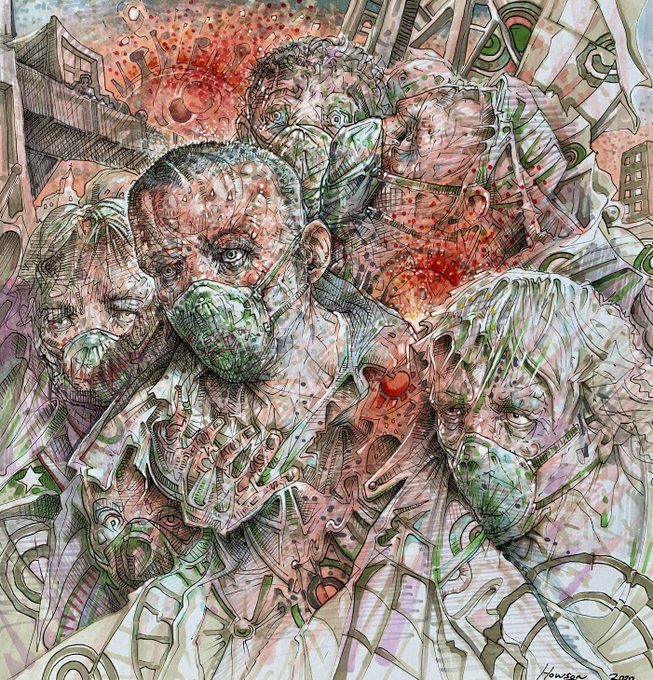
Those same children will now be 19/20 years old, maybe working in the forge if it’s still there, maybe perhaps with issues and problems and religious beliefs of their own. They’ll now be more able, more mature to cope with the difficult nature of much of Howson’s work. His current work, inspired by Covid-19 is spectacular; coming thick and fast, it’s undeniably Howson – it’s in the eyes, and in the tangled Hieronymous Boschisms of the descent-into-hell scene. Bodies meld into one another, limbs and lines becoming blurred. To these eyes (I might be wrong though, I’m no Brian Sewell) there’s no clear religious symbolism this time around: where there were forges and streetlights in every corner there are now unmistakable Corona splodges, spreading ever-inwards to the people at the centre.

The series of paintings called, topically, Thursday At Eight is political, questioning, horrifying… all the things that great art needs to be. I’d love a couple of sessions in a classroom with those kids again – adults now – and we could really get to grips with the imagery, symbolism and messages (collapsing European Union stars, battered, tattered and torn Union Jacks, ‘Me Too’ slogans) that are embedded in these important works of art. Stirring stuff, eh?

Here’s The Pogues‘ Turkish Song of the Damned.

Listen while you process the art.


Get This!

It’s Dance Music Jim, But Not As We Know It

Man. Life is unfolding in slow motion just now. Days blur into nights, nights turn into TV or reading marathons, the mornings become afternoons and we’re back to chopping red peppers with the 5 o’clock government briefing playing out in the background. The sense of displacement, of unreality, isn’t helped by the nightly dissemination from the Government stooge at the middle lectern. It’s quite a skill to stand there and say nothing at all for a whole hour, to bat and deflect any difficult questions, to go against your own principles and celebrate the NHS after voting against health workers getting a pay rise then cheering the result when it was overwhelmingly rejected, but that’s what they do. It’s what their pal did the day before and it’s what some other insipid flunky with a home counties accent and a degree in talking pish is going to have to do tomorrow evening as well. And it’s all reactive – because of this, we’ll do that. It’s never proactive. The other constant is the continual anonymity of the Prime Minister. At the first opportunity of escape, he was off. Ah-tchoo, he went, and he was nowhere to be seen, what little reputation he may have had rapidly sliding into negative numbers. Distressingly, the only thing that does change daily is that ever-rising death count. The highest in Europe, they’re expecting. They can see it coming, but they don’t know what to do. Worrying times indeed.

It’s music we always return to, the instant fix in a world gone wrong and this slow pace in life has been sound-tracked by all manner of great stuff recently. With more time on my hands, and more phone in my hand, I’ve been digging deeper into corners of the world wide web I may have previously by-passed. The ever-reliable Adam over at Bagging Area has created a trio of terrific Isolation Mixes, seamlessly ambient pick ‘n mixes of stuff you may be familiar with, woven in-between previously unheard beauties. Jack Kerouac samples over Joe Strummer records, Eric Cantona versus Daniel Avery, plenty of Weatherall and David Holmes, the odd slice of Durutti Column…. not always the sort of stuff I’d feature regularly here, they’re great mixes and you could do worse than head over to Bagging Area and find them there.

The Orb – Blue Room

Listening to Adam’s mixes has had me reaching back to The Orb, in particular Blue Room, their long-form 40 minute single that led to one of Top Of The Pops more esoteric moments. It‘s an astonishing piece of music; groovy, arch, out there and created purely for the benefit of exploiting chart rules. Up until 1992, CIN rules dictated that chart singles could be no longer than 25 minutes long. A change in the rules, a reaction to dance culture when singles came backed with multiple remixes, allowed singles of up to 40 minutes to chart. The Orb took this as a challenge and created the 39:57 Blue Room.

Blue Room grooves along on windswept ambience. It bubbles and bleeps, dives and soars. One minute it’s flotation tank otherworldliness, the next it’s cosmic time travelling through the galaxies. An ethereal female vocal drifts in and out. Spacey whitewashed whooshes leave vapour trails floating out into the ether. There’s an occasional half-hearted beat, a sparse drumkit recorded in a far-flung place, the Gobi desert maybe, that eventually creeps into the foreground of your conscience.

It’s around 7 and a half blissed out minutes before the beat properly kicks in, kept in time by a combination of drums and congas and coloured by the sort of looping, circular dub bass that hasn’t been heard since Screamadelica the year before. It’s dance music Jim, but not as we know it. For 40 minutes it ebbs and flows, the key elements coming and going like actors in a West End play – lead role one act, supporting cast the next – until it fades out on a mangled sample of Marilyn Monroe singing Happy Birthday to JFK.

Entering the singles chart at number 12, Blue Room rose to number 8 the following week and earned itself a slot on the nation’s favourite TV pop show. A very edited version of the track was played while a bemused production team and audience watched on.

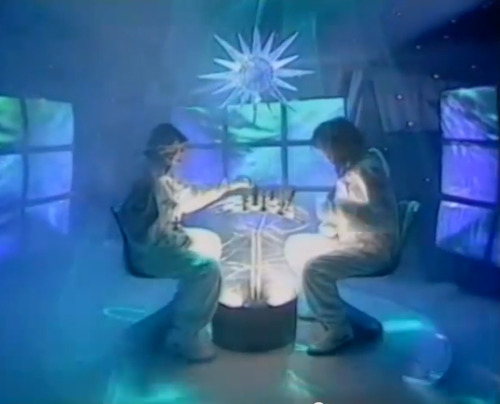
Bathed in green and blue light, the two principle members, Alex Paterson and Thrash, sat side-on to the cameras, heads down, practically silhouetted, and played out a game of futuristic chess dressed in exactly the sort of suits the government should be providing for every health worker in the land at this time. Not quite the epoch of Bowie and Ronson but for comedown clubbers everywhere, this was their moment.


Dylanish, Get This!, Live!

Cliff Richard Was Never Like This

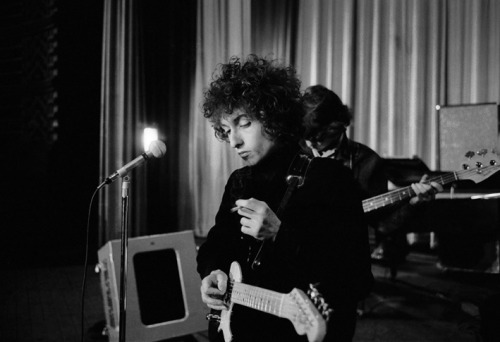
I always thought he looked like he was about to topple over, the mid 60s Bob Dylan. With the stripy pipe cleaner-thin spindles he called legs carrying the weight of that fantastic dark blue suede military jacket, the Ray-Bans stuck high up that hooked nose and the wildly exploding crow’s nest ‘fro, not to mention the ideas constantly forming and reforming in that speed-addled super-brain of his, it’s amazing that the top-heavy troubadour never once fell flat on his face. On the contrary, mid 60s Bob was The Man, one step ahead of his manager and his band and his audience, barely giving consideration to anyone willing and able to catch up with him.

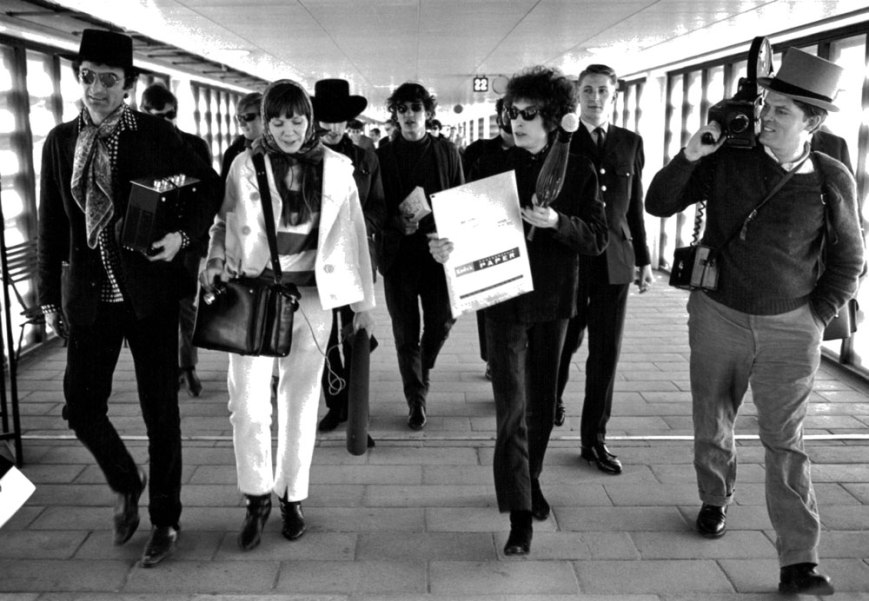
Dylan et al (DA Pennebaker in the top hat) at London Airport, May 6th 1966

By the time he’d hopped over from Dublin in May 1966 to commence his tour of the UK, Dylan was 4 drummers in with the previous three, including Band legend Levon Helm, jumping the good ship Bob in favour of a quieter life. Incessant nightly booing, it seemed, wasn’t what any of them had signed up for. Dylan arrived here a bona fide superstar, the voice of a new socially-conscious generation, every show sold out in advance. Aloof, arrogant and quotable in abundance, The Zim riled the stuffy British press. He didn’t play their expected game. His one press conference, at London’s Mayfair Hotel, was a testy affair. Music journalists were sat side by side with the more straight-laced journalists from London’s press establishment and so questions came from a bristling mix of the informed and the ignorant; What d’you like? What d’you loathe? There seems to be an electric element creeping into your sound…. What d’you think of England? Are you married? (Answer: I’d be a liar if I answered that, and I don’t lie.)

When the Melody Maker’s Max Jones suggested that he didn’t hear protest songs any longer, a weary Dylan shot back.

“All my songs are protest songs! You name something, I’ll protest about it! All I do is protest!”

Even Keith Altham, the most cutting-edge, most well-respected music writer of his time and the golden boy at the NME to boot, found himself on the wrong end of Dylan’s surreal wit. “Why is it,” he asked, “that the titles of your recent singles, like ‘Positively 4th Street’ and ‘Rainy Day Women #12 & 35’ bear no apparent connections with the lyrics?”

‘It has every significance,’ returned Dylan. ‘Have you ever been down in North Mexico?’

Bob Dylan, press conference at the Mayfair Hotel in London in 1966.

Dylan batted everything off with an abstract absurdness that came easy to him. He treated the journalists like morons, prompting one to complain that “Cliff Richard was never like this,” firing back the funniest, most-perfect answers you might ever read.

Q: What do you own?
A: Oh, thirty Cadillacs, three yachts, an airport at San Diego, a railroad station in Miami. I was planning to bus all the Mormons.
Q: What are your medical problems?
A: Well, there’s glass in the back of my head. I’m a very sick person. I can’t see too well on Tuesdays. These dark glasses are prescribed. I’m not trying to be a beatnik. I have very mercury-esque eyes. And another thing—my toenails don’t fit.

With everything being captured for posterity by DA Pennebaker’s shoulder camera, Dylan and an unwitting press played their part well. It’s all there in the wired, messy travelogue Eat The Document if you didn’t know already. If only for the brief clip of Dylan and his band standing at the corner of George Square in Glasgow, tapping their toes to a passing pipe band right outside where the Counting House pub stands these days, seek it out.

It was this backdrop that informed the charged nature of the shows. Playing the same two sets each night, Dylan opened with a set of acoustic songs, just him, his guitar and a selection of harmonicas. They were generally very well-received, as rightly they should’ve been. Dylan was on top form, rolling out fantastic versions of some of his best-loved recent songs; She Belongs To Me with its slightly altered lyric, the eee-long-gat-ed phrasing in It’s All Over Now, Baby Blue, the lean, mean and near 12 minute Desolation Row, the definitive Mr Tambourine Man, its clearly enunciated words and perfect clarity sticking two fingers up the naysayers who’d sneer that Dylan couldn’t sing. It was the perfect set that would prove to be Dylan’s concession to the accepted notion of folk for the night.

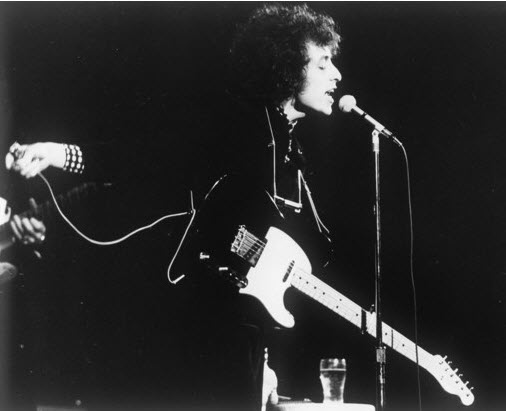
After a short break he’d return, leading his band, a clobbering riot of Cuban heels and mohair suits and unkempt hair and electric guitars who’d plug in and play loud. Dylan too strapped on an electric, a Telecaster, wearing it over the shoulder the way a huntsman might take his gun out to shoot deer, a suitable metaphor given what would unfold. The second set always started with Tell Me, Momma, a gutterpunk garage band blooze that was the unholy sound of Pete Seeger and his axe and his high and mighty ways about folk music au-then-ti-ci-tee being blasted far and high over the Grand Coulee Dam. Never released as a studio version, the only official release comes via the Albert Hall 66 Official Bootleg – which was actually recorded in the Free Trade Hall in Manchester a week or so beforehand. But you knew that already.

Bob Dylan – Tell Me, Momma (Manchester, May 17th 1966)

The start of this recording, with the band clattering across the wooden stage to take position, the muffled and hushed, expectant audience, Dylan’s off-mike harmonica trills and the boot stomp count in that leads to the slap-in-the-face pistol crack snare never, ever fails to excite.

And then, when the band comes in…oh aye! They cook up a terrific howling storm; loud, raucous and in your face. Dylan looks his audience straight in the eye, takes aim and fires.

“But I know that you know that I know that you show, something’s tearing…up…your…mi-ii-ii-ind.”

If this fails to thrill you, if this fails to make you jump up and punch the air and shout, “Go Bob!” as loud as you can, then I can’t help you. No-one can. It’s his voice. He’s stoned or speeding or upping or downing or something, but Bob’s vocal is just great. Slurred yet enunciated, sloppy yet eager, he has you right there and then. Around him, out-with the eye of the storm, merry chaos ensues. A beat group?! At a folk concert?! With keyboards and electric bass and drums and everything?! Robbie Robertson, Dylan’s cooler than ice foil on the left fires of wildly sparking, cheesewire-thin electric riffs on his own arctic white Tele, played high up in the mix so as to cut through the chaotic racket. It’s incessant 12 bar blues played with fuck you punk spirit, the greatest sound around. And, at the end, applause. Real clapping and stuff. It wouldn’t last though. In Manchester, once the audience realises this set ain’t gonna be like the last one, the applause gives way to a slow handclap after only the second number, I Don’t Believe You (She Acts Like We Never Have Met).

Bob Dylan – I Don’t Believe You (She Acts Like We Never Have Met) (Manchester, May 17 1966)

Previously cast as an acoustic blues on his Another Side Of… album, it’s reborn in ’66 as another beat-driven garage band rocker, heavy on the Hammond, always returning to its signature amped-up guitar riff. By the second song in, half his audience have chucked him for good. Those that stayed with him though had electric ideas of their own. Listen carefully to I Don’t Believe You and you’ll hear the genesis of The Faces’ Cindy Incidentally, a story for another time.

If this is your kinda thing, hunt out Jewels & Binoculars, a 26 CD bootleg of every parp ‘n fart from Bob’s harmonicas in 1966. It’s the gemme, as they say round these parts. Until then, here’s Bob and his band entertaining a confused Dublin audience. Wonderful stuff.


Get This!

Not All Ladies Love Cool J

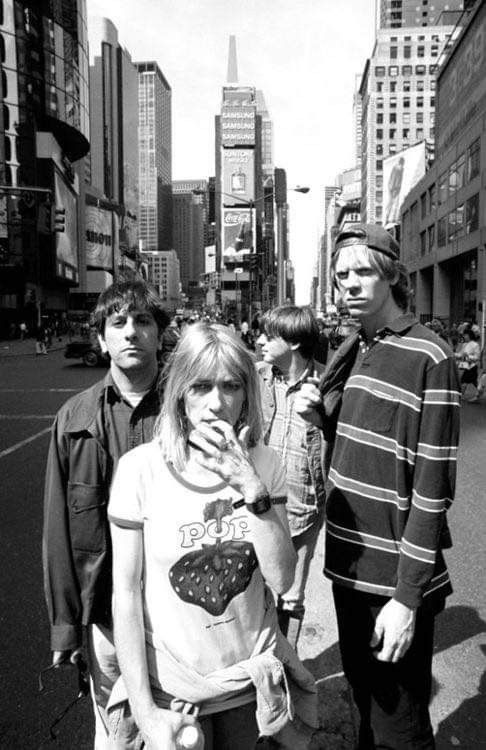
At the tail end of the 80s, Sonic Youth‘s Kim Gordon sat down with LL Cool J to interview him for a piece in US music magazine Spin. A fan of his music – she loved Cool J’s first album, Radio – the plan was to show how the artists maybe had something in common. Despite each coming from wildly differing marginalised backgrounds, Gordon, a woman from the underground punk rock scene and Cool J, a black man from the misrepresented rap scene would/should be able to empathise with each other’s experiences of prejudice in music. They had a tenuous common link in Def Jam supremo Rick Rubin who’d come out of the same scum-rocker scene that allowed Sonic Youth to grow and develop, but, really, that was about it.

Sonic Youth’s bass player quickly discovered she had very little in common with the hot to trot rapper. Indeed, it wouldn’t be out of sorts to say she didn’t really like him….and he didn’t really give two hoots in any case.

With his current album Walking With A Panther tearing up the Billboard Hot 100 and a fleet of luxury cars parked outside his brand new, furniture-free home, LL came across as very much the stereotypical big-shot rapper, a boy from the projects who had landed very much on the soles of his box-fresh sneakers, his frat-boy opinions on subjects as divisive as what made comedians funny and how to treat women drawing a clear line in the sand.

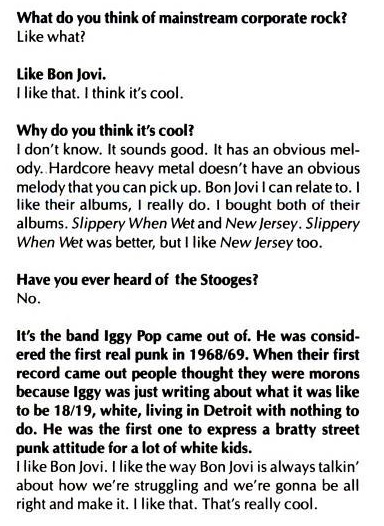
Amongst the tension, there’s a genuinely funny moment when Gordon prods Cool J into giving his opinion on contemporary rock music. As well as admitting to a love of Bon Jovi (“both their albums“), he just doesn’t get the obvious parallel between Iggy in the late 60s and his own experiences 20 years later.


The experience wasn’t a total flop though. Gordon went home and turned the meeting into song. Kool Thing is the howling sound of fringes flicking eyelids and torn-at-the-knees 501s, a dirty great tsunami of wonkily-tuned surf-punk guitar with a rhythm to ride on. It was the perfect output for expending post-interview pent-up frustration. To use that well-worn cliché, it rocks. Rawks, even.

Sonic Youth – Kool Thing

With references to Cool J (‘Kool thing, walkin’ like a panther’) and a lyric that takes exception to LL’s objectification of women, it’s fairly hard hitting. Political, pro-feminist, angry, anti-misogynist, it ramps up another level when Public Enemy’s Chuck D pops up to ‘tell ’em ’bout it. Hit ’em where it hurts.’

“Hey, kool thing!” instructs the uber-cool, street-smart Gordon.

Come here, sit down. There’s something I go to ask you.

I just wanna know, what are you gonna do for me?

I mean, are you gonna liberate us girls

From male white corporate oppression?

Tell ’em ’bout it indeed. Maybe Kim Gordon thought that by changing the ‘C’ in ‘Cool’ to a ‘K’, LL wouldn’t realise it was about him. She was probably right. I wonder if he’s aware of it yet. I doubt, with his Benz, his BM, his Audi and his Porsche lined up in the drive of the house he called Fantasyland that he’d be all that bothered. I may be wrong, but I don’t think LL Cool J ever replied in rap to Gordon’s dis. Unusual for a rapper, that.

Get This!

Disappointed. Not Disappointed

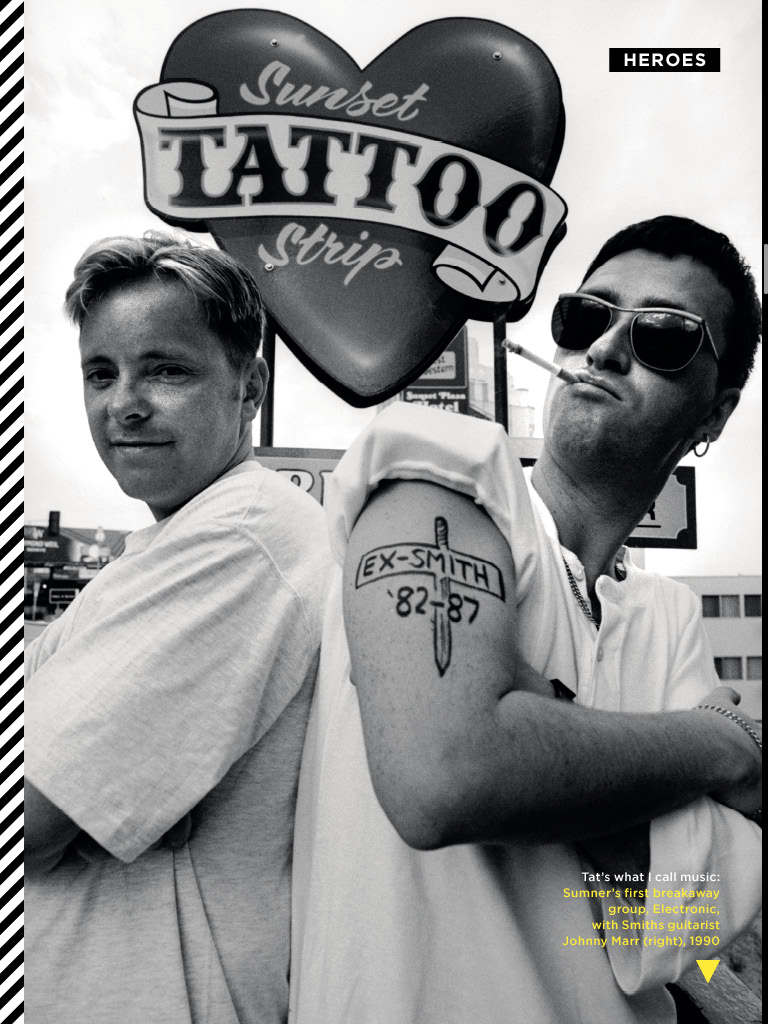
Like many of the tracks released by the constituent parts of the group that created it, Disappointed by Electronic was released as a standalone single, a gap-plugger that sated the appetite of their fans in the period between the first two albums. A fantastic gap-plugger it was too.

Bernard Sumner’s New Order were awfully fond of (perhaps even hell-bent on) ensuring singles stayed off of albums. Ceremony, Temptation and Everything’s Gone Green didn’t make it to Movement and Blue Monday, Confusion and Thieves Like Us didn’t appear on the chronologically closest Power, Corruption And Lies, although by the time of Low-Life, lead single The Perfect Kiss was a central part of the album and from then-on in, a good proportion all of their singles were used to promote a parent album.

Johnny Marr’s Smiths gave great value for money, regularly releasing one-off singles that would eventually appear as 33 rpm tracks on compilation albums further down the line; How Soon Is Now? (originally a b-side), Shakespeare’s Sister, Heaven Knows…, William…, Panic, Ask. All started life spinning at 45rpm.

Pet Shop Boys were perhaps the more conventional of the trio. On a major label they maybe didn’t have the same clout that an indie band might have on a small label (though what do I know?) and accordingly, almost all of their singles, in that imperial run from West End Girls and Love Comes Quickly through So Hard and Being Boring to 1991’s DJ Culture and Was It Worth It? were taken from their studio albums of the time.

(Photo by Kevin Cummins/Getty Images)

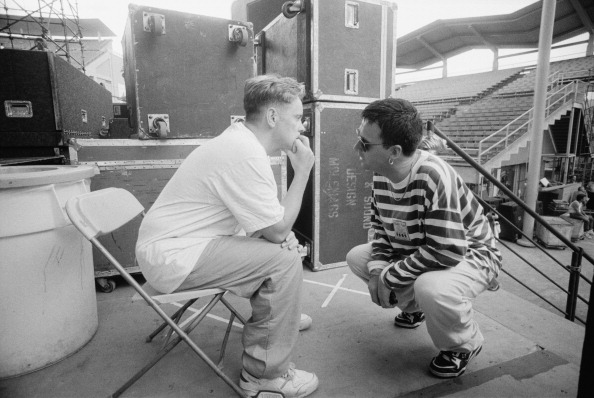
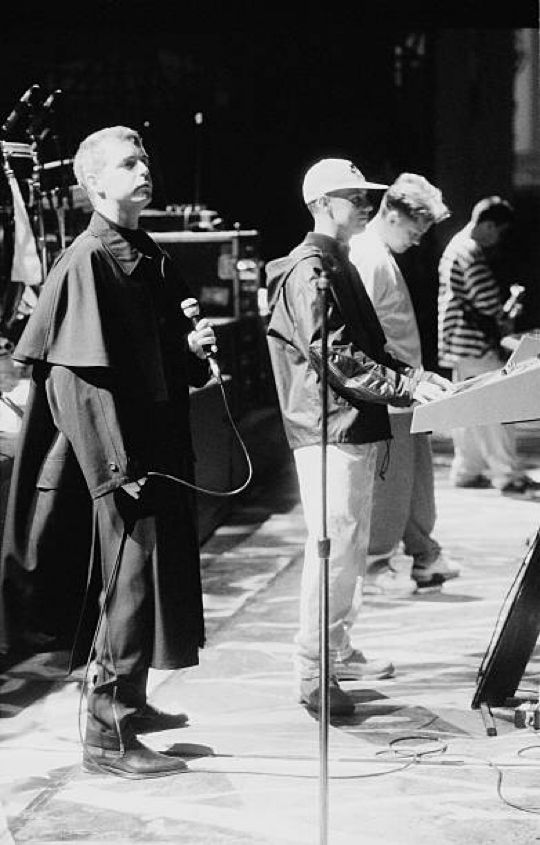
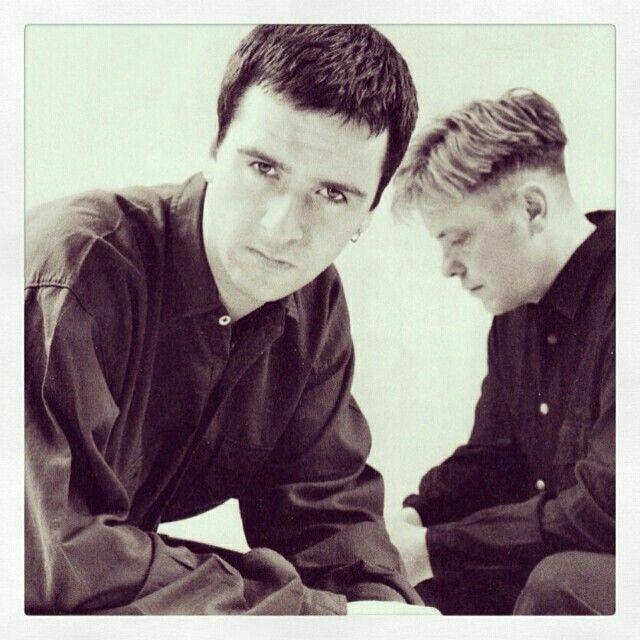
Disappointed is very much a product of its time and place. Chronologically, it was written around the end of 1991, when Johnny was between The The projects and just before Bernard returned to New Order to record Republic. Despite being patchy in parts (and that’s a whole other blog post), the last decent album in New Order’s original form gave us Regret, arguably the last truly great New Order single; soaring and melancholic, built on a bed of asthmatic guitar and hard-wired technology, and, from the negatively-leaning titles in, you can draw a straight line between that New Order track and Electronic’s 4th single.

Electronic – Disappointed (7″ mix)

By the end of 1991, Pet Shop Boys had amassed 19 hit singles to their name (pop quiz – name them!) Anything they touched turned to sold and gold. They were the masters at minor key pop, “The Smiths you can dance to,” as Tennant famously said at the time. Arriving on a bed of synth washes and era-defining Italo house piano – conceived by Johnny’s brother Ian – Disappointed‘s hookiness (not Hooky-ness) is immediate and immersive, mainly due to Neil Tennant’s cooing ah-ah-aah refrain.

Three seconds in and it sounds like the greatest Pet Shop Boys hit that never was. Tennant employed all the best PSB tricks; minor key melancholy, smoothed-out spoken word in the verses, flying like a kite in the chorus, those earworming ah-ah-aahs and pulsing glacial synths to the fore.

It worked. On release in July ’92, the single climbed to number 6 on the UK charts, kept out of the top 5 by Mariah Carey’s helium-voiced take on the Jackson’s I’ll Be There. Ironically enough, the b-side to Disappointed was a remix of Idiot Country.

If you know your Euro-pop, and I’m sure many of you do, you’ll be aware that Tennant tips more than the brim of his trilby to Mylène Farmer’s Désenchantée single, a massive hit on the continent in 1991. It’s there in the smoothed-out synthesizers and mid-paced feel, the down-played vocal delivery in the verses and restrained euphoria in the chorus. I don’t think it’s a coincidence either that Tennant ‘borrowed’ her ‘Désenchantée/Disenchanted‘ lyric for his own chorus. Most of us in the UK would’ve been oblivious of this at the time (perhaps even Bernard and Johnny too), a fact I’m sure the pop boffin Neil would’ve been banking on.

Seemingly content to take more of a back seat at the time, Johnny has an understated role in the single. He breaks into full-on Nile Rodgers funk for most of it, riffing across the top 3 strings like he hadn’t done since 1985’s Boy With The Thorn In His Side, his right hand rattlin’ the rhythm while his left shapes the funk, but contribution-wise, Disappointed is probably 45% Neil, 35% Bernard and 20% Johnny. The sum is greater than its parts though. It’s a great single, almost a lost single really, given the ubiquity of Getting Away With It and its not-quite-as-good follow-up Get The Message, but one that deserves reappraisal.

Electronic – Disappointed (original mix)

Get This!

It’s Not Unusual

When Tom Jones brought It’s Not Unusual parping and swinging into the 60s, all bold as brass confidence and knicker-dodging hip-shakes, little did anyone know that the record that introduced the lothario from the Valleys to the world was in fact a demo recording. Yes. A demo. Jones was just another struggling singer, one flop single to the good and looking for a break, when he was asked to contribute a guide vocal for what was to be the next Sandie Shaw single. When Shaw heard the demo she immediately passed, claiming that she couldn’t better the vocal on the demo and suggested Jones’ version was released instead. It was, and from it, Jones went on to meet Elvis, catch more knickers than he could dodge and turn a suspicious shade of orange with each passing year. A good career move, you’d have to agree.

Established artists being offered and turning down songs is, if you pardon the pun, not unusual. The opportunity for the songwriter is clear; big artists have big hits and generate big money. Who wouldn’t want a slice of that? The Sheerans and Swifts of this world must be batting them off on an hourly basis. They’ll have layers of management filtering out only the very best of them of course, and if a writer is lucky, maybe their chosen artist will even listen to what they have to offer. Maybe.

Occasionally though, art is more important than commerce. The tectonically-paced Blue Nile have never been motivated by anything as crass as chart position or commercial success. Sure, they’ve had a (brief-ish) taste of both but for the Blue Nile, it’s music as art that’s the important thing. Their four albums stand as perfectly-considered collections in their own right, to be played as a whole from ebbing start to flowing finish, each Linn drum and symphonic sweep, every harmonising horn line and tight ‘n taut Strat part agonised over through hours – years, even – of studio sessions. The lyrics on top are just as precious, delivered as they are by Paul Buchanan’s iconic, laconic yawning drawl, a voice as idiosyncratic and essential as Bowie’s and that’s no lie.

They’re an enigma, the Blue Nile, as insular and secretive as they come, emerging only as and when they have something worth sharing. You might be walking up the Byres Road in Glasgow’s West End and imagine you’ve just passed Paul Buchanan coming out of Fopp or, later on, do a double take at the guy in the QM who looks really like PJ Moore, more grey than you imagined, more facial hair, perhaps….and then realise that it really was two thirds of the Blue Nile that you encountered in the one day. Hidden in plain sight, the Blue Nile have managed to attain the enviable position of maintaining both healthy record sales and anonymity on their hometown streets. What your Sheerans and Swifts wouldn’t give for that…

JJ Gilmour is a great songwriter (and singer, but we’ll come to that shortly.) He shot to prominence as a member of The Silencers, played massive shows in France and Germany where the band were, perhaps unbelievably but no less true, as popular as U2 and Simple Minds, before the downward slide of sales and the inevitable end. Since then, Jinky’s carved out a niche career penning the most beautiful and perfect songs, as melodic and melancholic as McCartney at his peak (and again, that’s no lie) and regularly plays shows that are heartbreaking and uplifting in equal measure. A career in stand up awaits Jinky should he choose to hang up his guitar, but comedy’s gain would be very much music’s loss.

Jinky’s songs are terrific, equally at home as stripped-back acoustic ballads or full-band blow outs. Melody is the key and Jinky’s songs have it in spades. On his last album, 2017’s Dix, JJ took the decision to record an acoustic album, augmented by occasional strings and complementary piano. Soul baring, naked and raw, it’s an album that would spin nicely at 2am after you’ve gone through the aforementioned Blue Nile’s back catalogue, with the lights low and a glass half empty.

Midway through you’ll find the incredible Glasgow Town.

JJ Gilmour – Glasgow Town

This slideshow requires JavaScript.

Jinky wrote Glasgow Town with Paul Buchanan in mind. You can hear it in the airy space between the notes, the arrangement stripped of superfluousness, the spotlight trained on the voice hanging in the vacuum. It would’ve made a great opener on either of the first two Blue Nile albums, records that are ingrained with the grit of Glasgow’s soul, albums that shimmer within and radiate majestically at the edges.

Jinky’s Glasgow Town does likewise. If you’ve ever been lucky enough to hear him perform it live, you’ll know. Time stops, the air is sucked out of the room and all the focus is on the wee guy stage centre, baring his soul in that wonderfully expressive voice. He’s loved, is Jinky, perhaps even more than that Buchanan fella, although I’m not so sure that he’s fully aware of that.
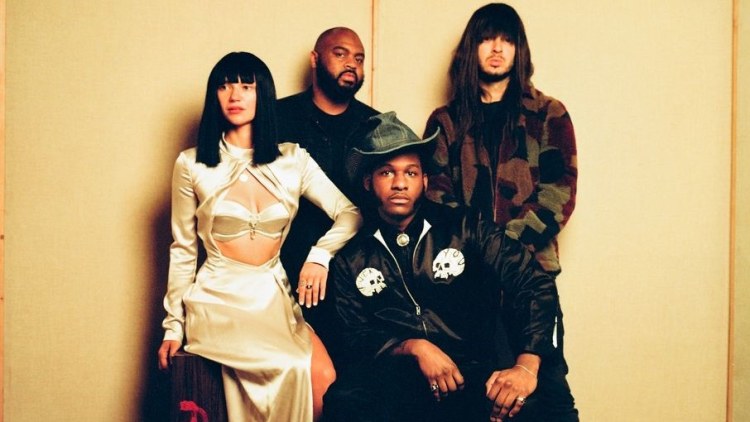
Through a network of connected friends, Glasgow Town eventually did make it to Paul Buchanan. The story goes, as Jinky heard from one of those mutual friends, that the Blue Nile vocalist, the guy with the voice as idiosyncratic and essential as Bowie’s and that’s no lie, liked it. “That’s perfect as it is,” he was heard to say. “I couldn’t do it any better.” He was right too. If you want to own a version of Glasgow Town, go for the original.

Unlike Tom Jones, Jinky hasn’t gone on to Vegas residencies and knicker-dodging global success, but then, Tom Jones will never write a song as wonderful as Glasgow Town. Who’s the real winner?

Get This!, New! Now!

Leon On Me

Currently rolling across the airwaves via your more clued-in radio presenters is Texas Sun, a heady collaboration between unlikely bedfellows Leon Bridges and Khruangbin.

Bridges is the very epitome of studied soul cool; the voice an amalgamation of Sam Cooke and Marvin Gaye, dress sense as lean and sharp as a pair of fifties Cadillac fins, and two albums into what you suspect might be a career that’s worth following.

Fellow Texans Khruangbin are also two albums to the good. Both are built around an anything-goes policy and the trio frequently magpie influences as disparate as r’n’b, psychedelia and foreign language and stir them into a heady soulful stew. 2018’s Con Tudo El Mundo should be your first point of reference if you’re unfamiliar with them.

A year in the melting pot, the 4 tracks on the collaborative EP grew out of shared tours and jam sessions and, in the shape of the title track, has yielded a modern-day stone-cold classic. Texas Sun blows like tumbleweed across a vast dustbowl landscape, big sky music that’s widescreen, expansive and wrung out on reverb and twang.


“Caressing you from Fort Worth to Amarillo,” coos Bridges, his voice a controlled ol’ King Cole croon. “Come on roll with me ’til the sun dips low.” Weeping pedal steel slides effortlessly from the beautiful glowing orange grooves and out into the ether. Ghostly falsettos provide colour and tone in the background. And the guitar, strung-out and slow-burning, carries the whole thing home. It’s only February but if a better Lone Star State-borne shuffling love ballad is released this year I’ll head on out to the nearest Joshua tree and jab a cactus in my good eye.

The rest of the EP hasn’t yet quite matched the heights of the lead track – although I suspect at least two of them are proper growers that by this time next week will be perhaps on a par with the opener – but across those other 3 tracks there are plenty of vintage soul-influenced chops – rattlin’ wah-wah, understated Fender bass, Mayfield flutes, vibes, even a smarty pants Isaac Hayes sample – and a proper old-skool analogue sound from the production to sate your inner seventies soul boy. It’s a great record. Hopefully, an album will follow…