Alternative Version, Dylanish

The Blond Waltz

Bob Dylan‘s Sad Eyed Lady Of The Lowlands is one of his very best. And with a canon of songs as rich and impressive as the one that he has casually amassed over the last 50 years, that’s really saying something. Bob Bob Shoobeedoo Wob.

Bob Dylan – Sad Eyed Lady Of The Lowlands (Mono version)

dylan blonde outtake

It’s a love song, of course, waltzing in on a breeze of liquid organ, trademark wheezing harmonica and that thin, wild mercury sound that the Zim was eager to perfect around this time. A musical onion, it’s multi-layered, shrouded in mystery and code and jam-packed full of words and phrases I won’t even begin to pretend I understand.

It’s a straightforward paen to Sara Lowndes (Lowndes/Lowlands look quite similar, dontchathink?) who, at the time of writing it was Dylan’s wife of 6 months. If you listen to the self-explanatory ‘Sara‘ on the decade later Desire, Dylan admits that much;

“Stayin’ up for days in the Chelsea Hotel

Writin’ ‘Sad Eyed Lady Of The Lowlands’ for you.”

Even this is coated in very Dylanesque ambiguities and contradictions though.

Some accounts have Bob writing the song in the studio in Nashville while his crack team of expensive sessioneers played cards and twiddled their thumbs in an adjacent room, patiently waiting for their boss to tell them the song was complete and ready to be committed to tape.

Others have insisted that the song arrived fully formed in the Chelsea Hotel and ripe for recording by the time of the Blonde On Blonde sessions.

Gonzoid speed freak Lester Bangs claims to have it on good authority that Dylan wrote the song whilst wired out of his nut on some cocktail of amphetamines or other, but then, he would say that, wouldn’t he?

Two or three half-truths don’t make the whole truth, but I’d wager the real story is an amalgamation of those accounts. What can’t be denied though is that the finished track is sprawling, majestic and epic (it fills the entire 4th side of Blonde On Blonde) and is the result of a one-take recording at 4 in the morning, Dylan’s dawn chorus for the dreamers and the doomed.
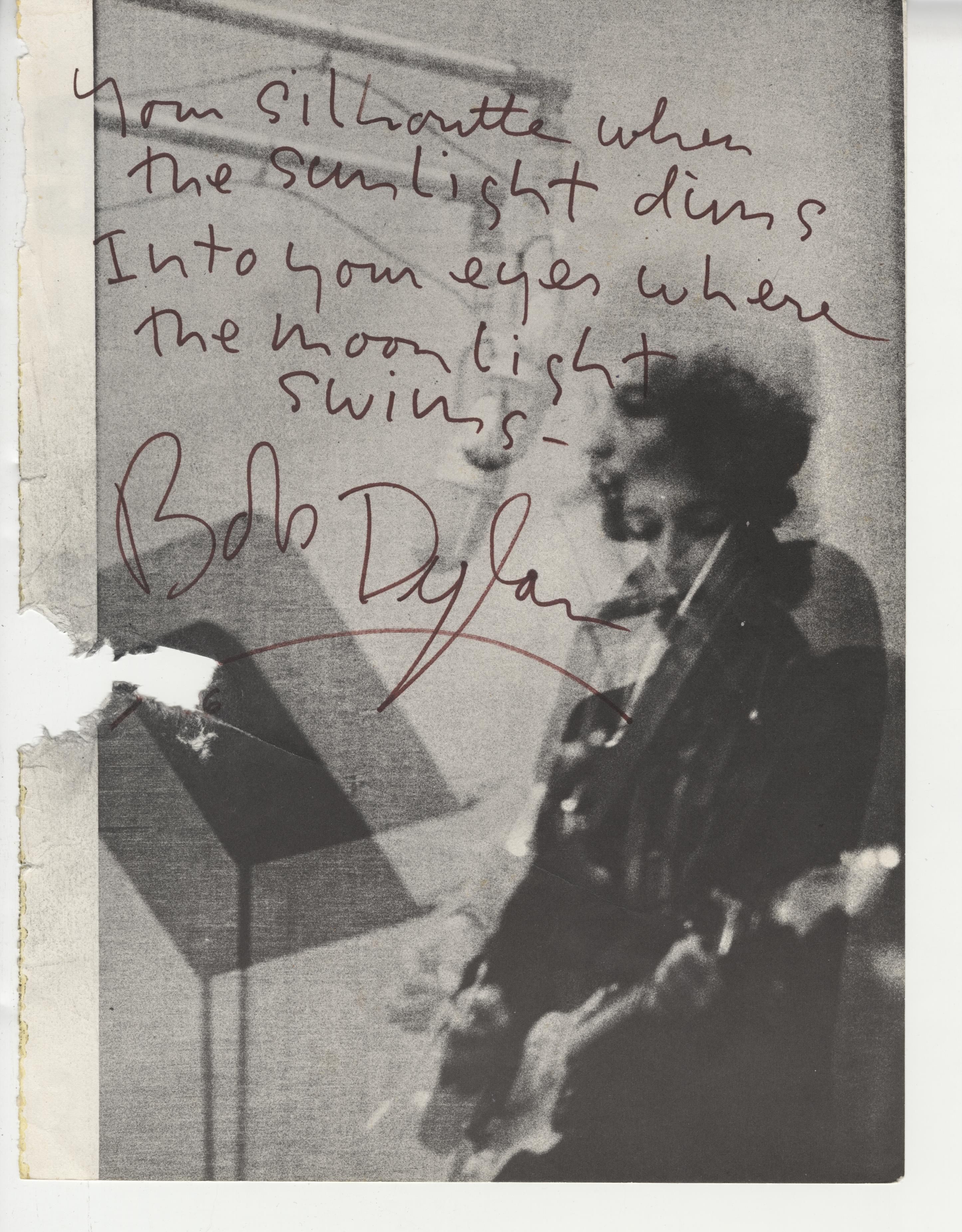
dylan sad eyed lyrics

Sad Eyed Lady Of the Lowlands has that late night/early morning feel, understated and creeping around on tip toe, as if the band are scared to hit the strings too hard and are playing quietly so as not to disturb the neighbours, with some of the chord changes coming in slightly behind the beat a result of the band listening carefully to Dylan or watching him for their cue to change.

The musicians (including Al Kooper on keys and Charlie McCoy on guitar) didn’t really know what they were in for. They hadn’t actually heard the finished song and so were understandably rather surprised to find the song clocking in at over 11 and a half minutes. With the unspoken telepathy that comes from playing with the very best of musicians, they joined the song on its journey, climaxing when the chorus came in, only to find themselves faced with verse after verse of meandering beat prose and harmonica breaks. By the 6 minute mark most were assuming the song was nearly over, which is why it builds to a crescendo on more than one occasion. Dylan must’ve had a right laugh at their expense.

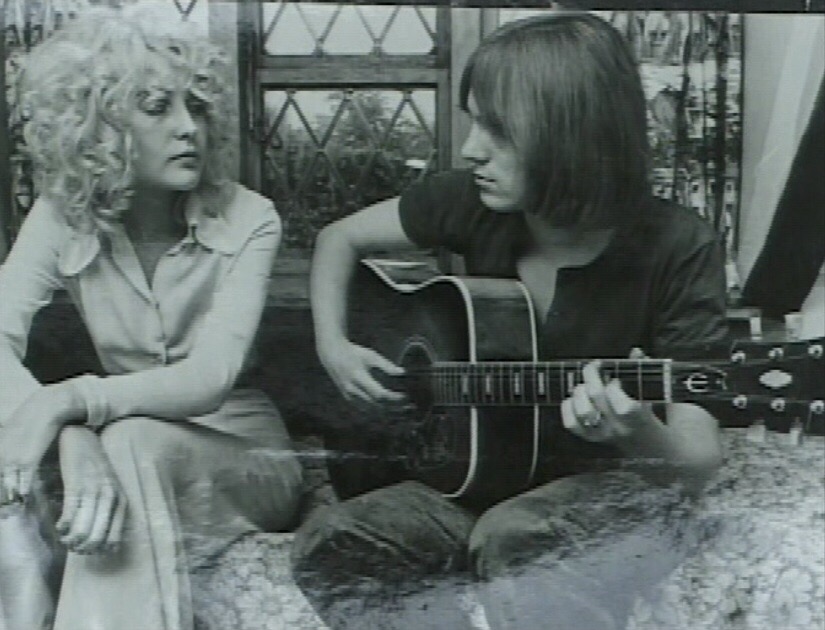
dylan saraBob ‘n Sara, 1966-ish

Postscript

George Harrison was a big fan of Sad Eyed Lady… Its lilting waltz was a defining influence on The Beatles‘ under-apppreciated but eternally groovy I Me Mine……

Alternative Version, Cover Versions, demo, Gone but not forgotten, Live!

Sound Affects

The Small Faces were the perfect group; a pint-sized pocket dynamo of r’n’b and soul, windmilling guitars and swirling Hammond. They dressed the same, sported the same haircuts and were a walking, talking, living and breathing advert for Carnaby Street and Swinging London. None of the four of them stood taller than 5′ 6″ (it was the 60s, therefore imperial units of measurement counted) and were mod to the core. In the street parlance of the day, a ‘face’ was the most respected, sharpest looking mod about town. The band name wrote itself. 

small faces

With disparate roots in American blues and soul and cockney music hall (thanks in part to Steve Marriott’s training at the Italia Conti stage school), The Small Faces cooked up an original brew of heady mod pop.

As the sixties progressed and trouser legs widened, The Small Faces’ sound drifted away from the cor blimey Pearly stomp of the mid phase Faces to a more pastoral, whimsical and expansive psychedelic sound, but by 1968 the band were brought back to terra firma when Marriott penned Tin Soldier.

tin soldier 7

Small Faces  – Tin Soldier

Tin Soldier was a no quibbles return to their r’n’b roots – an off-mic count-in gives way to piano and Hammond before Marriott’s stinging electric guitar and rallying cry of “Come on!” lead into the verses. It builds and drops before building again into a wonderful crescendo of tumbling toms, grinding riffs, gritty soul adlibs and a hysterical female (PP Arnold) hell bent on raising the roof. If The Small Faces are the perfect group, this is the perfect record. If you listen really carefully, you’ll hear a little scratching noise in the background – that’s Paul Weller writing his crib notes.

Sound affects, indeed.

Jenny RylanceJenny Rylance. Whatever did Rod Stewart see in her?

Steve Marriott wrote Tin Soldier for the beautiful yet unattainable Jenny Rylance, a leggy model who was at the time Rod Stewart’s girlfriend. He intended to give the song to his current beau PP Arnold, but on completion, realising he’d created such a brilliant track, he gave Arnold If You Think You’re Groovy instead and kept Tin Soldier for The Small Faces. A wise move, as it turned out. When Randy Rod finished with Rylance, Marriott ended up wooing her and married her a year later. Like the Artful Dodger he once played on stage,  Marriott ended up with both the song and the girl. The perfect ending.

I usually steer clear of sticking YouTube clips in posts, but this is fantastic – a top of their game Small Faces on French telly, live vocals, mimed instruments and with a little help from a somewhat sparkled PP Arnold. Check the eyes! Oh to have seen them in concert.


* Bonus Track 1!

Here‘s a live version of Tin Soldier from Newcastle City Hall in November 1968.

I get the impression the screaming and incidental crowd noise has been mixed in afterwards to create a more ‘live’ sound, though I may be wrong. Either way it sounds like The Small Faces are playing in a cave to 20,000 appreciative ace faces, and not the sweaty box bedroom-sized r’n’b club you might’ve expected. (Newcastle City Hall being neither, as it turns out.)

* Bonus Track 2!

Here‘s PP Arnold doing If You Think You’re Groovy

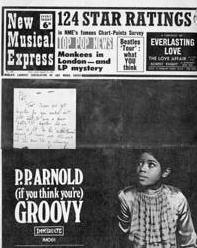
pp arnold nme

Alternative Version, Get This!, Hard-to-find, Sampled

Anti Dance Music / Intae Dance Music

Back at the start of the 90s I was anti ‘dance’ music. It almost goes without saying that I liked Chic, Sly Stone, James Brown…all that kinda stuff, and I was fond of doing my rhythmically-challenged thang to In Yer Face and Voodoo Ray when no-one was watching. But on the whole, dance music, the one real alternative to indie music and chart music, the one true genre of music guaranteed to annoy parents and anyone over the age of 25 did nothing for me. Which is somewhat ironic given I was neither a parent nor a quarter centurion.

rave

Thump thump thump thump thump. Soulless and repetitive, it was a four-to-the-floor car crash with all the sex appeal of a just-landed trout from the River Irvine. Given the option, I much preferred repeat-playing the b-side of the latest Chapterhouse or 5.30 single than give in to anything of a dance bent. Quite a ridiculous choice in hindsight. But in those days, if you wanted to stay out late, it was dance music that inevitably soundtracked your night. To go home early and potentially miss out on whatever I might be missing out on, I tended to stick it out, tolerating rather than enjoying the tunes.

And then I heard this.

FSOL-PapuaNewGuinea-UK-12-Label-A

The Future Sound Of London – Papua New Guinea

What a fantastic record! It was Future Sound Of London’s debut single and, as it turned out, one they would never better.

Here‘s a shortened version, taken from a Hacienda compilation that I like to stick on now and again while I’m cycling.

Papua New Guinea is that rare thing – an electronic dance record that’s synthetic yet soulful. It’s not just Lisa Gerrard’s skyscraping vocals (sampled from Dead Can Dance‘s ‘Dawn Of The Iconoclast‘, with thos oo-ah-oh vocals coming lock, stock and barrel from a dance track called ‘Shelter‘ by the mysterious Circuit) that go straight to the heart and it’s not just the staccato bass (sampled from Meat Beat Manifesto’s Radio Babylon, much to their displeasure) that goes straight to the feet, it’s the whole thing; the clattering breakbeat drums, the wee keyboard pings and dings, the swooshes and whooshes and the way it all drops out before revving into gear again, lead always by the ubiquitous bass and vocals.

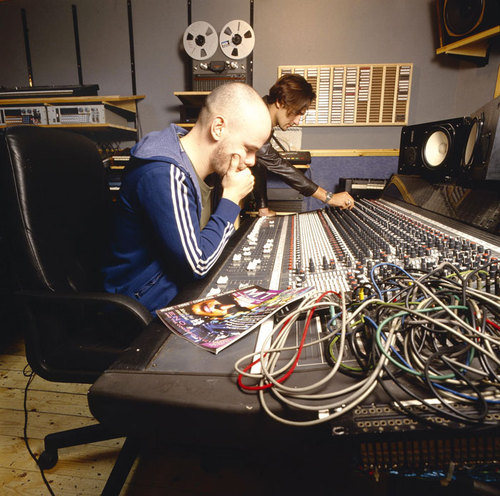
Papua New Guinea was put together by a couple of stereotypical studio boffins (the bald one and the ponytailed one) that most folk would fail to recognise as the creators of one of the best records ever.

fsol

Everything about this record is perfect. Even Lee Mavers, the bowl-cut skiffle king of 1989 rates it as one of his most favourite records. And I bet he never cared much for what constituted ‘dance’ music much either.

Here are those constituent drum parts, sampled from Fuzzy Haskins‘ The Fuzz And Da Boog and Bobby Byrd‘s Hot Pants and stuck together with invisible ambient breakbeat glue:

Fuzzy Haskins – The Fuzz And Da Boog


Bobby Byrd – Hot Pants

A truly groundbreaking record, like most of its contemporaries it came in a multitude of re-releases and remixes. In fact, by the end of 2013, Papua New Guinea had been re-pressed and re-released over 30 times. Maybe you could download those tracks above and have a go at doing it yourself, though you’ll be hard pushed to better the original.

*Bonus Track!

Here‘s a longer, more ambient version, illegally remixed and released by Ozgur Ozkan.

Alternative Version, Peel Sessions

Romantic And Square Is Hip And Aware

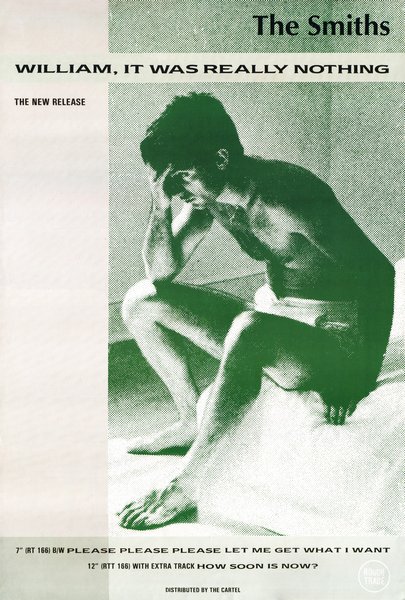
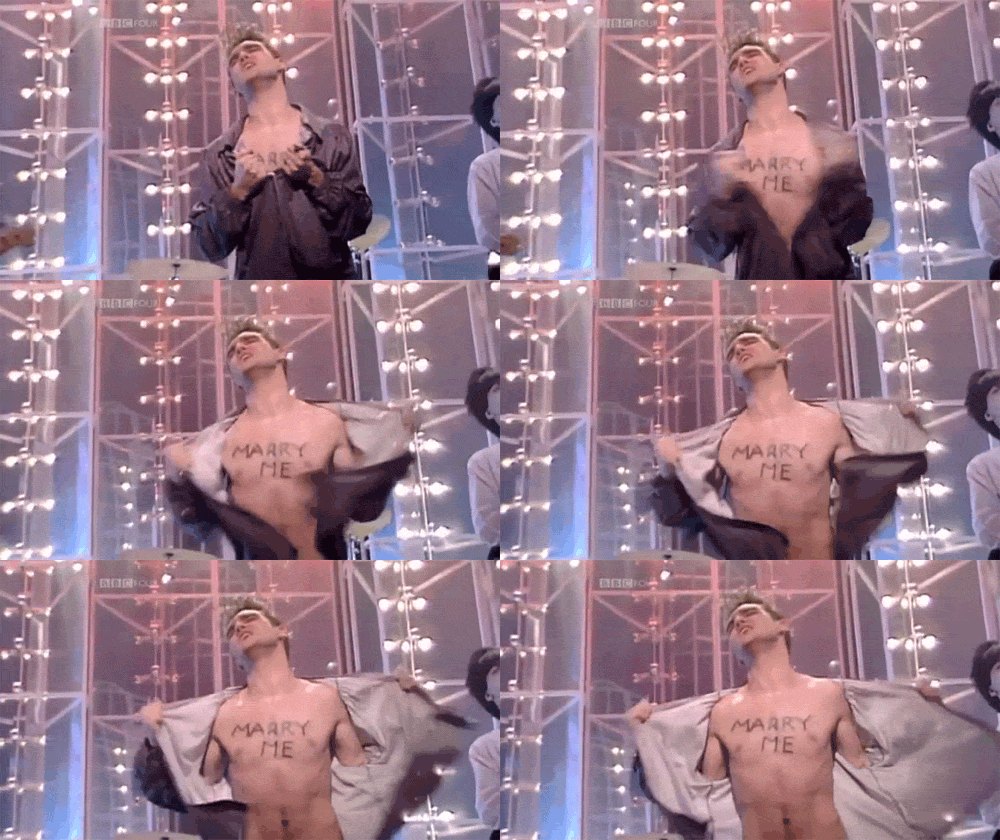
William It Was Really Nothing is the sound of The Smiths in miniature. A breathless rush of brilliantly ringing descending arpeggios, bright as brass buttons, topped off with a vocal that distills everything about Morrissey’s much-loved kitchen sink dramas into a handful of lines worthy of Alan Bennett;

‘The rain falls hard on a humdrum town, this town has dragged you down……Everybody’s got to live their life, and God knows I’ve got to live mine……….How can you stay with a fat girl who says, “Would you like to marry me? And if you like, you can buy the ring”……‘

williamitwasreallynothing

Johnny’s playing is at its most stellar, riff upon riff upon riff of layered guitars nattering and chattering away like Elsie Tanner spreading ghastly gossip about goodness-knows-who over the garden gate. He was in a rich vein of form when he wrote this, was Johnny. He worked the chords out in the back of The Smiths’ van on the M1 somewhere between Manchester and London. Arriving at his flat in Earls Court, he committed his frantically scrubbed faux flamenco  pièce de résistance to tape, where it would sit alongside his other new compositions for that weekend, vying for the attention of producer John Porter come Monday morning. That the other 2 new tracks he’d recorded were How Soon Is Now? and Please, Please, Please, Let Me Get What I Want (the tracks that would turn up on the b-side of the single itself) just goes to show how prolific a tunesmith (tune-smith! See what I did there?) the barely 21 year-old Johnny was. Frightening, if you stop to think about it.

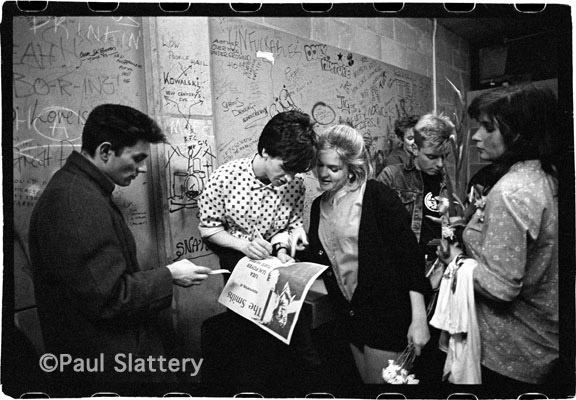
smiths autographs

William It Was Really Nothing – Peel Session (August 1984)

The Smiths clearly loved William It Was Really Nothing – they played it in concert before recording it (first for Peel, above) and continued to play it throughout the tours of 1984 and 1985. It still had its place in the ’86 setlists when the briefly 5-piece band were at their most rockist and was the second-last song The Smiths ever played live.

When John Porter got ’round to working on it from Johnny’s demo (and who knows how he chose what track to tackle first) he sprinkled a magical dusting of fade-ins and fade-outs, backwards bits and bursts of guitar that are the aural equivalent of one of those time-lapse videos of a flower blooming you see on nature documentaries. It’s just perfect, and even after 30 (gulp!) years, every listen reveals new things.

William It Was Really Nothing – Single Version

William It Was Really Nothing is over and out in little over 2 lean, mean and meat-free minutes, which, if I’ve timed it right, is just about as long as you needed to read this piece. Beat that!tumblr_mqyut7hT4l1sdytq1o1_500

Alternative Version

It’s Bjerk, To Rhyme With ‘Twerk’, Not ‘Fork’.

“Huv ye goat that record by thone wee Chinese lassie Byoing, the ‘shh-shh’ song?”

Any guesses?

Music retail could prove to be a real winner some days. The customer was looking for Bjork‘s ‘It’s Oh So Quiet‘, but you knew that already.

Since the last time I looked, Bjork has released about a gazillion albums. Some as apps. Some as super-limited thingies. And some as good old-fashioned, fully-fledged proper physical releases. She’s just rush-released her latest, Vulnicura, after, quelle surprise, it found itself all over the internet ahead of its release date. Something really should be done about that, but stone me if I know the answer.

 bjork2

I kinda lost my way with Bjork a wee bit round about her Vespertine LP in 2001 (gulp!) By then I was immersed in the world of portable digital media (a mini disc player – still brilliant, if y’ask me) and with the immediacy of it all, I suppose my attention span started to wander. No longer could I focus on subtleties and slow-burning things of beauty – I wanted melody and instant catchiness and I wanted it NOW! This is a common theme for the digital generation. Don’t like the song? Skip it. Don’t even download it. Don’t own it. Ever. Can’t play that tricky riff on Sweet Home Alabama? Pop over to ultimateguitar.com or YouTube, where someone better than you will show you how it’s done. Having trouble getting past those pesky guards in the latest Sonic the Hedgehog platform pleaser (they still have Sonic the Hedgehog, aye?) A quick Google will sort you out with a ‘cheat’. That’s why the current vogue for vinyl is pleasing – it might help slow things down a bit. Let folk take time to appreciate what they have, not what they’ve not.

Anyway, where was I?

sugarcubes live

Oh aye. Bjork. I loved The Sugarcubes. Saw them live a couple of times early on and bought all the records. Life’s Too Good is still an insanely brilliant listen, one that has easily stood the test of time. The Sugarcubes were bonkers, but in a good way. Formed out of an Icelandic arts collective, they were a kinda prog version of punk, too far away from the epicentre of pop culture to be totally influenced by fads or fashions. The band could’ve been any mid-late 80s band. Plenty of chiming guitars, polyrhythmic drums and tasteful keyboards. But there, any similarities ended. On vocals there was Bjork, a one-off singer whose vocals surfed the stratosphere somewhere between Kate Bush and Liz Fraser. On alternative vocals, when he wasn’t blasting his trumpet in any key but the right one, was Einar, a shouty, scary, skinhead of a man.

One time after a Barrowlands show we were all at Level 8, Strathclyde Uni’s indie disco. In walked most of The Sugarcubes. No Bjork though. Fuelled on cheap drink and the daft idea that the band had time for their fans, I went up to Einar and offered him my hand. “Great show!” I said. I meant it too. Einar stared me down for a good, ooh, 15 to 20 awkward seconds, my hand still out to greet him but unshaken. Looking me straight in the eye he sung to me. “We will! We will! ROCK YOU!” Eyes ablaze, he spun round and onto the dancefloor where he pogoed to Rise by PIL before disappearing out a side door, never to be seen again. I remained shaken. And stirred.

bjork

That debut album is full of weird ‘n wonky prog/punk. Anytime I found myself with a bass guitar in my hand (not very often, if truth be told), Blue Eyed Pop was my riff of choice. I love the way Bjork soars over the top of the melody towards the end – “Something wonderful’s about to happen,” she sings. Magic.

Sugarcubes – Blue Eyed Pop

Better still was Coldsweat, the band’s second single. ‘Hot! Meat! Metallic! Blood!’ goes Einar. What he meant was anyone’s guess, but enough folk bought it to take it to Number 1 on the indie chart, if such a thing is a barometer of hip opinion.

Bizarrely, the band stuck a twangin’ countryfied version of Coldsweat as the last track on their patchy second LP, Here Today, Tomorrow Next Week! More Rawhide than skewed alt/pop, make of it what you will.

Sugarcubes – Hot Meat

My favourite Bjork solo track? That’s easy. All Is Full Of Love. Slow, sweeping and graceful, as cool as the land from where it was conceived. The track itself suffered from a multitude of twitchy, glitchy, contemporaneous remixes, but the straight-forward album version is the way to go.

I still say Bjork, as in ‘fork’. The same as I still rhyme Brett ‘n Bernard’s old band with ‘bread’ rather than ‘played’. It’s a Scottish thing.

Alternative Version, Cover Versions, demo, Double Nugget, Dylanish, Get This!, Gone but not forgotten, Hard-to-find, Live!, Most downloaded tracks, Six Of The Best, studio outtakes

P.O.P. B.O. ’14

Somehow, this is the end of the 8th year of this blog. 8 years! I never for a minute thought I’d be down this road for so long, but here I am, slowing down slightly, but still writing whenever the muse takes me. In the past, I used to write loads over the Christmas period and store it all up like a squirrel hiding nuts in trees, so that when I was busy with my real work I could drip-feed my wee articles online at regular intervals when time was of the essence. These days, holidays mean holidays. For the past week or so I’ve done sweet F.A. apart from sit around in my underwear eating cheese until 3 in the afternoon. Occasionally I’ve tidied up a bit, but that’s only after the Applewood smoked or Wensleydale and cranberry has run out.

This slideshow requires JavaScript.

It’ll be good to get back to the old routine in January and, along with work, get back to writing about music on a (hopefully) more regular basis. Until then, here’s the annual end of December post.

Around this time of year I employ a team of stat monkeys to sift through everything published on Plain Or Pan over the last 12 months. Numbers are fed into a specially-constructed silver machine, crunched and spat back out. Amongst the stainless steel saliva lie the 25 most listened to and/or downloaded tracks of the year.

Below is that list, a CD-length collection of covers, curios and hard-to-find classics. Download the rar file, sequence as you please and burn away.


pop8

Baby Huey – Listen To Me

The Lovin’ Spoonful – Do You Believe In Magic?

French Fries – Danse a la Musique

Oscar Brown – The Snake

Al Brown – Here I Am Baby

Radiohead – These Are My Twisted Words

Bob Dylan – Boots Of Spanish Leather

Ian Dury & the Blockheads – Hit Me With Your Rhythm Stick

Michael Marra – Hamish

Paul Weller – Flame-Out

Bo Diddley – She’s Fine, She’s Mine

Barbara & the Browns – You Don’t Love Me

Tommy James & the Shondells – Crimson & Clover

Lightships – Do Your Thing

The Beatles – It’s All Too Much (Much Too Much bootleg version)

Les Negresses Vertes – Zobi la Mouche

Trash Can Sinatras – Ghosts Of American Astronauts (Live at Fez, NYC 2004)

Eddie Floyd – I’ve Never Found A Girl

The Smiths – There Is A Light That Never Goes Out (demo)

Curtis Liggins Indications – What It Is

Them – I Can Only Give You Everything

Kim Fowley – Bubblegum

A Camp – Boys Keep Swinging

The Slits – I Heard It Through The Grapevine (demo)

Madness – Un Paso Adelante


And here’s to health, wealth and happiness to you all for 2015. All the best!

Alternative Version, Gone but not forgotten, Sampled

May Your Festive Season Be Happy And Gaye

Everyone own’s What’s Going On, right? A good chunk of folk own Let’s Get It On, aye? The more discerning amongst you might also have a copy of Marvin and Tammi Sing… Every one a 5 star slab of solid gold soul.

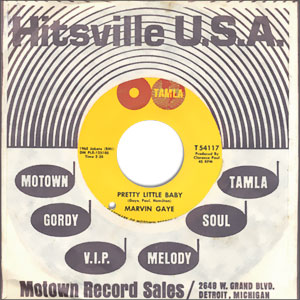
None of them though feature Marvin’s second solo single, released in 1964.

marvin gaye bw

Pretty Little Baby cascades on a waterfall of twinkling pianos, eased along by Marvin’s insistent croon as he channels his inner Nat King Cole. It’s not one of his better-known tracks, but it‘s a cracker.

Marvin Gaye – Pretty Little Baby

marvin gaye plb

As was usually the case on those early Tamla singles, the instrumentation on the track was played by the Funk Brothers. It’s understated, sympathetic to the track and hardly the in-your-face brashness that the name ‘Funk Brothers‘ implies.  What’s interesting though is that the track lies on a bed of gently rattling sleigh bells. Berry Gordy must’ve misheard the sound of ringing cash registers, as Marvin would go on to re-record Pretty Little Baby as a ‘brand new’ track, epecially for Christmas.

Purple Snowflakes uses the exact same backing track as Pretty Little Baby, adds some festive-friendly lyrics and manages to successfully pass itself off as a Christmas single. Two hits for the price of one!

Marvin Gaye – Purple Snowflakes

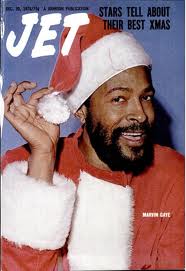
marvin gaye jet

Marvin did a few Christmas tracks for Motown. Most of them are gloopy dods of syrupy schlock, heard once and immediately to be filed in the ‘never again‘ section of your head. But he did do this, a vocal-free, gently wah-wahing spacey groove that wouldn’t sound out of place in a bedroom scene in one of those late-night movies they show on the Movies 4 Men channel. It’s called Christmas In The City, though apart from the welded-on sleigh bells, there’s nothing remotely Christmasy about it.

Marvin Gaye – Christmas In the City

That keen-eared musical magpie Paul Weller borrowed heavily from the hook for Pretty Little Baby. Yes he did! Or perhaps it was wingman Cradock who sticky-fingered it into the song. Either way, transposing the tumbling piano riff to guitar, Weller built his own Find The Torch/Burn The Plans around it. It’s buried low in the mix, but it’s there. To be fair, it’s a great track, although it’s notable mainly for the vocals being so fackin’ cockernee they should be dressed as a Pearly Queen and have Ray Winstone munching on jellied eels in the background a la McCartney on the Beach Boys’ Vegetables.

Paul Weller – Find The Torch/Burn The Plans

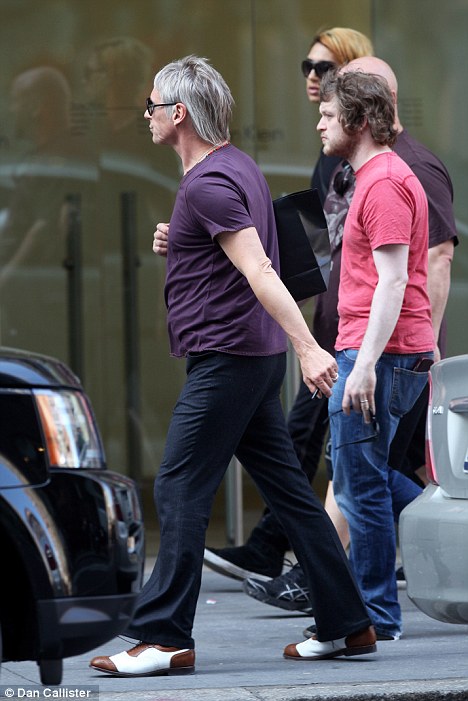
Here’s a picture of Paul Weller, fattening up for Christmas and off down Oxford Street to find that perfect Santa suit.

paul weller flab


Alternative Version, Cover Versions, Hard-to-find

Un Paso Adelante!!!

Hey you! Don’t read that, read this! This is the heavy heavy monster read! The nuttiest read around!

One! Step! Beyoooooond!

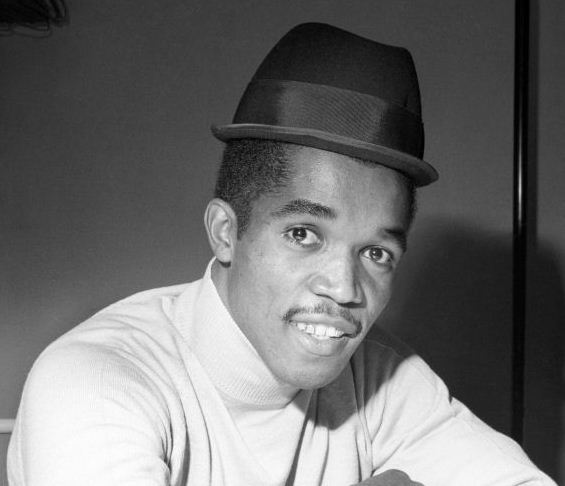
 Prince-Buster

One Step Beyond is a skankin’ slice of primo Jamaican ska written by Prince Buster. It first appeared on the b-side of his single Al Capone, itself the blueprint for The Specials Gangsters.

One Step Beyond – Prince Buster


It’s largely instrumental, a rasping saxophone-led knees-up, occasionally punctuated by some frantic chickaboom-chickaboom-chickaboom-chickaboom-chick ska-tting and Prince Buster’s titular cry.

But you knew all that already. Thanks to Madness, you’ll be more than familiar with the tune. If you’re of a similar age to myself, you’ll be well aware of how important the tune was to your formative years. It was one of the first tracks I heard that made me appreciate the power of music. It was loud, catchy and novel enough to grab the ears of young listeners everywhere. We didn’t know it wasn’t an original, we just loved doing the primary 7 approximation of the nutty dance to One Step Beyond by Madness.

madness

Madness owe a lot to Prince Buster. After a brief flirtation as The North London Invaders, they named themselves after one of his tracks, which they themselves covered on the b-side of their first single, a single they called ‘The Prince‘.

Prince Buster – Madness

To further cement the Prince Buster connection, Chas Smash’s opening vocal earthquake on One Step Beyond is hotwired and paraphrased directly from another Prince Buster track, The Scorcher.

Prince Buster – The Scorcher

The Madness take on One Step Beyond is practically a photocopy of Prince Buster’s version (why would you try and improve perfection?) but if you listen closely, really closely, you’ll maybe catch the incessant thuggish background chant of “Here We Go! Here We Go!” that plays throughout most of the track.

The released Madness version was actually a demo that originally lasted all of 70 seconds. Madness knob twiddlers of choice Langer and Winstanley looped the original track to double the length, but before they were able to mix it properly, the track had been sent off to the pressing plant and was skanking its way up the charts by the time anyone else had noticed.

Realising they had a multi-national hit on their hands, the people in charge of such things thought it’d be a good idea to have Madness release language-specific versions for various territories.

Hence the Spanish version, Un Paso Adelante


..and the Italian version, Un Passo Avanti

What a great idea! I love these versions!

two tone

*Bonus tracks!

Prince Buster – Al Capone

The Specials – Gangsters


Alternative Version, demo, Live!, New! Now!

Chain Reaction

At the end of my back garden there’s a fence. Down a steep slope behind the fence is the Ayr-Glasgow railway line. It’s a busy line, but you get used to the trains going past every 15 minutes. In  fact, you rarely hear a train. And when you do, you could set your watch by it. Scotrail. They’re getting there, or to Ayr and Glasgow at least, on time.

Now and again the silence is punctuated by the Hunterston coal train. The power station up the road needs regular feeding by coal and occasionally the train will be held up at the points while another commuter train snakes its way out of the suburbs and on into Glasgow. The Hunterston train doesn’t stop very easily. Weighed down by 35 coal-carrying containers, it starts braking 4 miles up the line in Dalry. By the time it reaches Kilwinning, and my back door, it’s making a cacophony of noise; grinding steel on steel punctuated by the odd hellish rumble, but mainly a horrible metallic screech that jars the nerve endings and sends cats and dogs running for cover. Around 9.30pm last night, it struck me that this is the wonderful sound of The Jesus And Mary Chain.

They were back on (almost) home turf over the weekend, pitched up at the Barrowlands to play the Psychocandy LP, track-by-track. It’s an album that rarely left my turntable when I was in my late teens, but not, I must admit, an album that has stayed with me in the way that other ‘Classic’ albums (insert your own here____________) have. Nonetheless, to hear it in its entirety was too good an opportunity to miss for myself and a couple of thousand other folk of a certain age.

IMG_4803

The band began the show not with Just Like Honey and the rest of the album falling after, but with the encore. “We’re contrary fuckers,” explained Jim Reid. So as an aperitif we got April Skies, Head On, a twangin’ prime Velvets take on Some Candy Talking and a couple of tracks that I struggled to recognise on account of the vocals being buried so deep in the mix they were practically being sung from Australia.

At times William’s guitar was so out of tune he was practically playing jazz. Free, experimental jazz, and he knew it. I lost count of the number of times he attempted to tune up between songs. “Stop!” shouted his brother at one point, sounding uncannily like one of those early JAMC bootlegs I had from the days before they knew how to end songs, and the band came to a juddering halt, just like that train at the bottom of my garden. Recovering in time though, best of all was a head-splitting version of Reverence, replete with descending, fuzzed-up I Wanna Be Your Dog guitar riffs that went straight into a white-hot version of Upside Down. Top that, you’re thinking. And they did.

Taking no prisoners, they rattled through Psychocandy. Guitars sounded like sirens of war, or like a hundred bottles being smashed against a greenhouse wall in the middle of a violent storm. They felt like tiny hand grenades of pain on the ears. This was a full-on sonic assault and battery on the senses. Backlit by white light and strobes, at times I almost zoned out as the band, stock still in silhouette, never let up. Fast-cut film of motorbikes and 60s girls and staring eyes and melting things and swirling patterns and kaleidoscopic psychedelia played relentlessly. It was the Exploding Plastic Inevitable turned up to 11. Scratch that, it was turned up to 14 or 15. It was uncomfortably loud, perhaps just as the band intended it to be, but as I type there’s still a background screeeee to everything I hear.

IMG_4805

It goes without saying of course that if you get the chance of a ticket when it comes to your town, make sure you grab it.

A coupla tunes from the Psychocandy LP:

Taste The Floor

The Hardest Walk

Just Like Honey demo

Darklands-era b-side Everything’s Alright When You’re Down

Pop music, pure and simple.

Alternative Version, Gone but not forgotten, Hard-to-find, Peel Sessions

Keeping It Peel 2014

JOHN PEEL EADT 20 10 05

Keeping It Peel is the brainchild of Webbie, who writes the excellent and informative Football And Music blog.  An annual celebration of all things Peel (this year’s event is especially poignant, given that it’s 10 years since John died), it’s purpose is to remind everyone just how crucial John Peel was to enlightening and expanding listening tastes up and down the country; to ‘Educate and Inform‘, as was the motto of his employer. Be it demo, flexi, 7″, 10″, 12″, EP, LP, 8 track cartridge, wax cylinder or reel to reel field recording, the great man famously listened to everything ever sent his way, and if it was in anyway decent he played it on his show. Sometimes, he played the more obscure records at the correct speed. Sometimes he didn’t. And sometimes, no-one noticed.  John Peel is the reason my musical tastes expanded beyond the left-field avant-garde edginess of Hipsway and Love And Money and the reason why my mum stopped singing her own version of whatever it was I was playing (“Take a ri-ide on the Suga Trayne!”) and started asking me to “turn that racket down” whenever she passed my teenage bedroom door. Thank you, John.

This year’s Peel Session selection features Pixies from October 18th 1988.

The PIXIESThe thin ‘n hairy years

Pixies in 1988 were betwixt and between releases. Surfer Rosa (their best album, and don’t let anyone persuade you otherwise) was 7 months old and still stuck to the turntables, and Doolittle was but a sparkle in Black Francis’ eye. They were a PHENOMENAL live act around this time; full-on and feral and could do no wrong.

Their session for Peel in October was a cracker. Half of the songs were barely a minute and a half long, little blitzkrieg blasts of wonky time signatures, heavy breathing, strange chord structures and larynx-loosening primal screams from Black Francis – “Uriah hit the crapper! The crapper! Uriah hit the crapper….DEAD!” – what the devil was he on about? Who knows, but who cares? This was a thrilling taster of the new stuff still to come. Tame, Dead and There Goes My Gun would all end up on the Doolittle LP the following year. Dancing The Manta Ray would eventually see the light of day as the b-side to that LPs big single, Monkey Gone To Heaven.

I thought I still had the old TDK of this session with Peel’s introductions, but I fear it’s lost and gone forever. It’s certainly not in the first (and only) place I looked. For authenticity’s sake I was going to post those versions, but instead Tame comes from the Rough Diamonds bootleg and the other three come from the official BBC Sessions CD.

Tracks in order of broadcast;

Dead

Tame

Dancing The Manta Ray

There Goes My Gun

These tracks and a gazillion more are released shortly on the 3CD Doolittle 25 release, available at the recession-friendly price of £12. A bargain for sure. Available via Pixies’ online shop here.

pixies-doolittle-inlay