Alternative Version, Cover Versions, demo, Gone but not forgotten, Hard-to-find

By George!

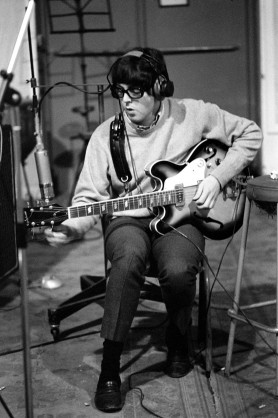
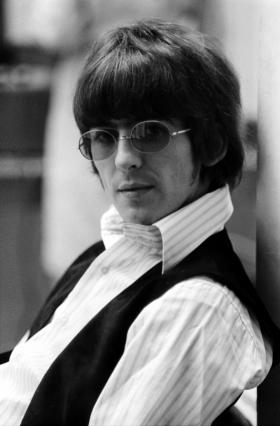
George Harrison, the youngest Beatle, bullied by John and Paul into 2nd tier status in the band, was essentially the runt of the litter yet wrote some of their most enduring songs. When writing sessions were underway ahead of a new Beatles’ recording, poor George had to bide his time while the other two writers hogged the limelight with their latest offerings. Only after they had been given careful consideration would George be allowed to show off what he’d been working on. In any other band, he’d have been the principal writer and held in higher esteem, but in The Beatles he was lucky to get more than one of his tracks onto each album.

 george_harrison_1968

By 1968’s ‘White Album’, George had a handful of future classics under his belt. Writing sessions in Rishikesh in northern India proved particularly fruitful. The Beatles plus associated wives/girlfriends along with a raggle-taggle mismatch of musicians and actors (Donovan, Mike Love, Mia Farrow and her sister ‘Dear’ Prudence) gathered at the feet of the Maharishi to find out the ways of tanscendental mediatation.

1968

The trip was not without incident;  Ringo visited a doctor due to a reaction to the inoculation he’d taken before going, John complained that the food was lousy (Paul and Jane Asher loved it) and the Maharishi, as peace-loving and spiritual as he may have been, turned out to be a randy old man, intent on bedding as many of the female guests as he could.

George was particularly taken with meditation, leading John to quip, “The way George is going, he’ll be flying a magic carpet by the time he’s forty!

Against this backdrop, John, Paul and George wrote many songs that would appear on the new Beatles’ album at the end of the year. Donovan turned John onto a new style of fingerpicking that he’d picked up from the folk clubs and Lennon put it to good use on Dear Prudence. George might’ve been equally inspired, as the descending bass run that characterises Dear Prudence makes it into a couple of his own songs on the White Album.
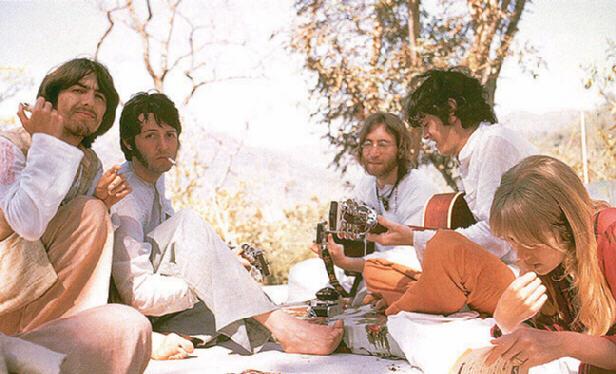
beatles-india-68

While My Guitar Gently Weeps began life as a downbeat campfire singalong; folk in a minor key, with the ubiquitous descending bass line offest by an uplifting bridge. It’s understated and simple, nothing like the album version.

George HarrisonWhile My Guitar Gently Weeps (demo)

George had to wait an agonising 8 weeks from the start of the album sessions before being given the chance to showcase it. Quite how he kept his mouth shut as John ran through days and days of tape loops creating the arty (but tuneless, let’s be clear) Revolution 9 while Paul completed dozens of takes of the reggae-lite Ob-La-Di, Ob-La-Da and even Ringo had his moment in the spotlight with his honky tonkin’ Don’t Pass Me By is very impressive, but when given his moment (“I always had to do about ten of Paul and John’s before they’d give me the break,”) he rose to the occassion.

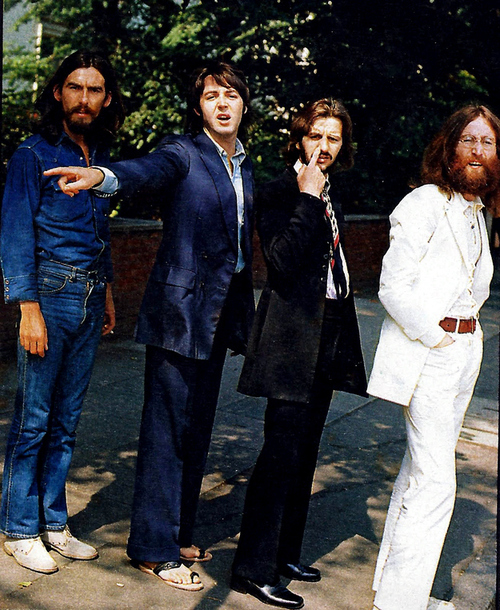
george-h-abbey-road-68

The demo of While My Guitar Gently Weeps was used as the blueprint and added to with layer upon layer of guitar and vocals through the use of an 8-track recording machine (the first Beatles’ track to do so) until it was the super-heavy version that appears on the album. An uncredited Eric Clapton was asked by George to play guitar on it. George had been bemoaning the fact that he’d spent hours aimlessly trying to recreate a weeping sound for the track and asked his pal instead to play the solo, which he did with majestic, understated aplomb.

The BeatlesWhile My Guitar Gently Weeps

It’s a perenial favourite, never bettered than when Prince put the other ‘stars’  – heavyweights Tom Petty, Jeff Lynne, Steve Winwood – firmly in their place with his outrageously brilliant cameo at the 2004 Rock ‘N Roll Hall Of Fame. Two questions, the first rhetorical. How overjoyed does Dhani Harrison look when the wee man steps up and takes the song to a whole new level?

Secondly, what happens to Prince’s guitar at the end? Watch….
Cover Versions, Gone but not forgotten

Groovin’ Up Slowly

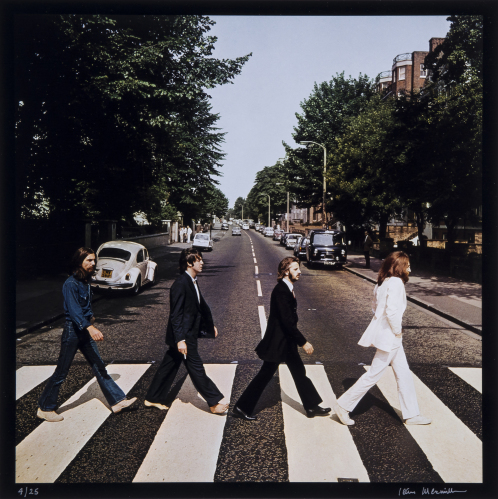
I’ve lived with The BeatlesAbbey Road for nigh on 30 years. I first heard it as a boggle-eyed (or should that be eared?) teenager via Irvine Library’s record lending service during my ‘sponge years’ when I soaked up everything and anything I thought I might like. Deep Purple? Nah. Cat Stevens? Nah. Pink Floyd? Some of it, not all of it. Status Quo? Aye! Too right! (The early ‘Quo, mind.)

Abbey Road was a whole different level of great though. It wasn’t the first Beatles album I’d heard. Or maybe it was. My dad had a compilation on cassette that played on regular rotation on the kitchen’s cassette player – it might’ve been the ‘Red’ one or the ‘Blue’ one, although I suspect it was probably a made up selection of songs someone had taped for him. Abbey Road, with it’s lack of ‘yeah yeah yeahs’ and guitar solos as long as the Fab Four’s hair seemed almost anti-pop, a grown-up album by grown-up musicians. I loved it.

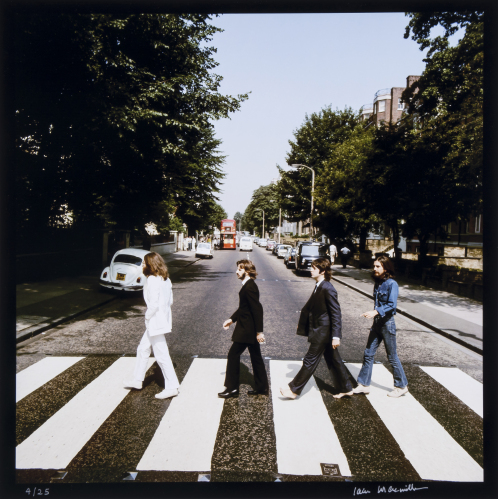
Reproduction, © Bloomsbury Auctions

The whole album didn’t quite fit onto the one side of a D90, but I taped it as far as it would go before the tape ran out. The other side of the tape probably had ‘No Parlez‘ by Paul Young or something equally horrible on it, so frustratingly, sacrilegiously, my version of the album always ran out just as Ringo’s drum solo in ‘The End‘ was reaching fever pitch.

It was only a few years later when I got the CD that I realised there was a hidden track of sorts at the very end. No doubt I’d have heard Her Majesty on the first listen of the knackered library copy I borrowed, but its misplaced positioning evaded my ears until I began buying CDs a few years later.

My CD copy of Abbey Road is as well-worn as a shiny plastic thing can get. These days you can count your plays on iTunes. Had this been the case years ago, I’d be well into triple figures with Abbey Road. I know it inside out and back to front. Or, at least, I thought I did.

abbey road 1

Over Christmas I got my old turntable working again. I’ve always had a turntable, but in the year 1997 BC (Before Children, when I was relatively flush with cash) I upgraded to a decent separates system and I stupidly neglected to upgrade the turntable. It was all about CDs by then, y’see. When the well-worn Pioneer finally gave up the ghost, I was turntable-less for the next 15 and a half years.

I liberated the Dual deck from the stock room of the Our Price I worked in on the day I left. Long-since retired, it was an unloved relic of a bygone era, an era when Our Price sold only records, and gimmicky fashion statements such as Tamagochis and mobile phones had yet to be thought of. It was built like a tank though, designed to play records non-stop from 9-5.30, 6 days a week, with 4 extra hours every Sunday. A visit to the loft to retrieve it, followed by a couple of visits to YouTube (for instructions) and eBay (for a belt and stylus) and then followed by a bit of ham-fisted tinkering around with a can of electrical contact cleaner had it working like it was 1991 again. And music has never sounded better.

I recently got around to getting Abbey Road on vinyl. Not an original, it’s one of the remastered stereo versions from a few years ago. It sounds amazing! Bass and drums especially. They’re warm, dynamic and in-the-room there. I’m no audiophile, but from what I can tell, this version of the LP is brilliant. I’m all for listening to music on whatever format is available, be that hissy FM radio or hassle-free mp3, but for all its snap, crackle and pop, I love vinyl. There are few frills with Abbey Road. There’s no gatefold sleeve or fold-out lyric sheet. But the music is all you need. That second side, the medley, sounds incredible. It’s let me hear an album I thought I knew really well in a brand new, beautiful light. I must investiagte this new-fangled vinyl thing further…

abbey road 2

Here’s Chuck Berry with You Can’t Catch Me. Lennon borrowed half a line for Come Together and found himself on the wrong end of a law suit a year or so later. But you knew that already.

Chuck BerryYou Can’t Catch Me

The BeatlesCome Together

Reproduction, © Bloomsbury Auctions

Alternative Version, Gone but not forgotten, Hard-to-find, studio outtakes

It Was Plenty Years Ago Today (50, to be exact)

Half a century ago this week, The Beatles were in the studio recording the tracks that would make up their Revolver LP. Amazingly, the first track worked on was Tomorow Never Knows, the cut ‘n paste, experimental, looped track that still sounds futurtistic, frightening and like nothing else in the entire Beatles’ canon. It was only three short and manic years since She Loves You, but it may as well have been three million light years, such is the leap in their vision and outlook. You could be forgiven for assuming that for the session the band reconvened in Abbey Road’s Studio 3 with a handful of solo acoustic tracks just waiting to be Beatlefied. Nothing could be further from the truth.

beatles revolver back

For Tomorrow Never Knows, the band set up in the studio to jam the main backing track, with Ringo’s compressed and relentless thunk driving the track in tandem with McCartney’s droning bass. Listen with eyes closed and you’ll hear a little organ, a wonky tonk piano in the fade out, a perisitent rattling tambourine and a couple of guitar tracks; the fuzzed out one manipulated to play backwards and the other fed through a Leslie speaker to give it that widescreen swirl that would in time become synonymous with the era.

On top of it all there are sound effects that could well be the calling sound of the Great God Pan himself; Fanfaring trumpet noises. Scraping, sweeping, jarring strings and what sounds like the divebombing seagulls that bother the fish and chip eaters at Largs shorefront. It’s fairly astonishing for 2016. Imagine hearing it for the first time in 1966. Wow!

The Beatles Tomorrow Never Knows (released mono version)

Making the track involved more than just the four Beatles – George Martin orchestrated the whole affair, ably assisted by Beatles’ engineer Geoff Emerick who’s job involved deadening Ringo’s drum sound by stuffing an old jumper inside the bass drum and shuffling it about until the right sound was achieved. The backing track took just three takes over 2 days to perfect, before Lennon’s vocals were given the requisite attention.

Famously, Lennon’s lyrics came from Timothy Leary’s LSD manifesto, ‘The Psychedelic Experience: A Manual Based On The Tibetan Book Of The Dead‘ and flowed in a stream of epoch-defining consciousness…

“Turn off your mind, relax and float downstream,
It is not dying, it is not dying.

Lay down all thought, surrender to the void,
It is shining, it is shining.

That you may see the meaning of within,
It is being, it is being.

That love is all and love is everyone,
It is knowing, it is knowing.

That ignorance and hate may mourn the dead,
It is believing, it is believing.

But listen to the colour of your dream,
It is not living, it is not living.

       Or play the game ‘Existence’ to the end,
Of the beginning, of the beginning.”

At the mixing desk, after hearing how the guitar track sounded through the Leslie speaker, Lennon insisted his vocals were given the same treatment. “I want to sound as though I’m the Dalai Lama singing from the highest mountain top. And yet I still want to hear the words I’m singing.”

It’s also been said that John wanted the sound of 4000 monks chanting ad infinitum in the background. I’m not certain he achieved either goal, but what was eventually committed to vinyl was brave, bold and big of beat.

Here’s the druggy, fuggy first take:

The BeatlesTomorrow Never Knows (Take 1)

Keen-eared Beatles spotters will be aware that the first copies of Revolver were sold with the wrong mix of Tomorrow Never Knows included. These records were quickly withdrawn and recalled, although not before a good many had disappeared into the hands of unsuspecting record buyers. Discovering this a few years ago, with shaky hand I checked the matrix number on the run-out groove of my ‘first’ pressing Revolver, bought for £4 in Irvine Indoor Market in the mid 80s when the Beatles were anything but cool. Pah. One digit out. Meaning it wasn’t technically a first issue, and nor was it worth the £20,000 it might have been. I wouldn’t have sold it anyway*.

Back in Abbey Road’s Studio 3, just after half seven that evening when Tomorrow Never Knows had been expertly finished, the band veered back towards the middle of the road to tackle Got To Get You Into My Life, another drug-inspired song and another story for another day.

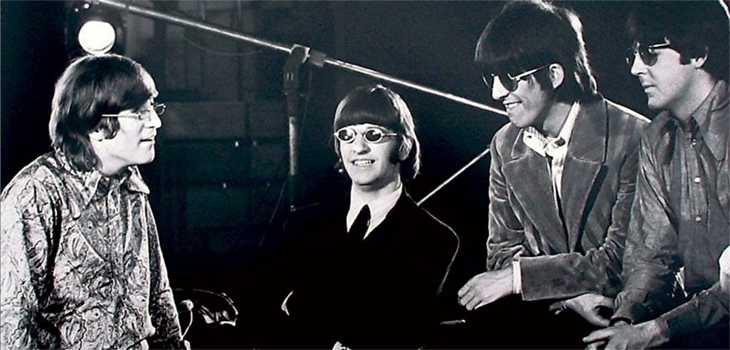
beatles revolver sessions 66Just out of shot, a young Paul Weller, keen to rip off George’s Taxman and apparently, his entire wardrobe.

*Aye, right.

Cover Versions, Get This!, Gone but not forgotten, Sampled

Step Brothers

In the latest Mojo, the one with the big piece on Physical Graffiti, Jimmy Page throws away a comment about The Beatles stealing an old r’n’b riff and fashioning it into their own I Feel Fine. Pots ‘n kettles, Jimmy! Pots ‘n kettles!

What Jimmy omitted to reveal is how the same riff more than informed Led Zep’s own Moby Dick.

bobby parker

The track in question is Bobby Parker‘s smokin’ hot 1961 r’nb stomper, Watch Your Step;

Bobby Parker’s story is the classic struggling musician versus the world tale of rip-offs, bad management and lack of recognition. Mention his name ’round these parts and folk like my father-in-law will wax lyrical about the Rangers and Everton player with the same name. The Bobby Parker we’re concerned with earned his chops tackling the music business and playing alongside Bo Diddley, Sam Cooke and Jackie Wilson. He toured extensively, sharing stages with rock ‘n roll’s founding fathers – Chuck Berry, Little Richard and Buddy Holly to name but a few. We’re all well aware of those names, but Bobby Parker? He remains niche, known only by contemporary musicians and musos, waiting to be discovered and elevated to his rightful place amongst the greats. An early b-side of his, You Got What It Takes, was recorded by Marv Johnson as one of the first singles for Motown, but upon release, to Parker’s dismay his name had been wiped from the credits and replaced, not for the last time, by that of the ever-canny Berry Gordy.

Stung by this, (“What was I to do? Fight Motown?!?“) Bobby Parker wrote what has since become his signature tune, Watch Your Step. Unlike the movers and shakers over at Hitsville USA, Parker was quick to acknowledge his references – the 12 bar blues, the similar riff and structure of Ray Charles’ What’d I Say;

and also to Dizzy Gillespie’s Manteca, a skronking, relentlessly driving riff-laden jazz instrumental;

When asked about this a few years ago, he was admirable in his honesty.

I started playing Gillespie’s riff on my guitar and decided to make a blues out of it. What came out was ‘Watch Your Step.’

john lennon ukelele

Also admirably honest was John Lennon.

“‘Watch Your Step’ is one of my favourite records. The Beatles have used the lick in various forms.”

Most noticeably, as Jimmy Page was quick to point out, Watch Your Step‘s taut, snappy riff and structure lends itself quite well to I Feel Fine.

I was flattered,” said Parker later on. “I thought it was a cool idea. But I still had, in the back of my mind, the idea that I should have gotten a little more recognition for that.”

Sound familiar?

Listen closely and you’ll hear little flashes of what could be Day Tripper too;

led zep

The big baddies in the whole thing though are Led Zeppelin. For the record, I love Led Zeppelin. For the rocking, the rolling and the riff-riff-riffing there was no-one better, but they have nowhere to hide when it comes to this sort of thing. They’re certainly no strangers to the rape and pillage of the blues. Jimmy brazenly ‘borrows’ little riffs, indeed whole songs from blues’ back catalogue. I’ve written about this before, but much of the Zep’s entire recorded career was based on long-forgotten blues standards, arriving fully formed but twisted and turned into fantastically sounding ear-crunching slabs of heavy blooze rock. But nicked all the same. If they’d been more honest in their sticky fingerdness they might have been given more leeway, but it’s the deception and the credits to Page/Plant that rankle. Anyway, there are entire books and websites dedicated to uncovering such things, but this isn’t one of them.

When Jimmy was pointing out the similarities between Watch Your Step and I Feel Fine, he might, after all these years, have admitted to basing his own riff for Moby Dick on Bobby Parker’s single.

But he didn’t. Perhaps the pangs of guilt were such that at the start of the 70s Parker was offered a paltry $2000 to record a demo for the nascent Swan Song label, but nothing came to pass of this. If Jimmy truly felt guilty, he’d have given Parker a credit on Moby Dick.

Not for the first time, Jimmy got away with it. And not for the first time, Parker missed out on the credit.

Trivial post-script!

Have you ever heard the dogs barking during the fade out of I Feel Fine? The smart money is on Paul doing the yelping, but you never know…

You can hear tons of this sort of stuff over at What Goes On – The Beatles Anomalies List. It’s great!

Alternative Version, demo, Gone but not forgotten, Hard-to-find, studio outtakes

It Was Plenty Years Ago Today

A few years ago I had the notion that I’d start a semi-regular feature punningly titled ‘It Was Plenty Years Ago Today’. It would focus on Beatles‘ recordings from that day in Beatles’ history, in particular the individual takes that never made it beyond Abbey Road’s cutting room floor. Books such as Ian MacDonald’s Revolution In The Head are excellent chronicles of what happened when in Beatleland and I had every intention of building up a right good wee series on the back of it. However, lack of time and lazyitis (coupled with the fact that most of the time I just fancy writing about something else) combined to ensure this series would never quite get off the ground, but here, today, I bring you another one in this very sporadic series.

george harrison 67

Druggy, fuggy, and slightly Eastern-sounding, It’s All Too Much was born in the summer of 1967, just as an unprepared world was anticipating the release of the Sgt Peppers album. Pencilled in for inclusion on the Beatles’ next project (Magical Mystery Tour) it didn’t see the light of day until the Yellow Submarine soundtrack was released in January 1969. In Beatles terms, that’s an awful long time from written-to-released. Why? The answer is simple – it wasn’t written by Lennon or McCartney. George always had to play second fiddle to his two elder bandmates. He’d had his own Blue Jay Way appear on Magical Mystery Tour, and one George song per album was the norm.

It’s All Too Much

One of George’s best compositions, composed whilst in the midst of a heavy LSD trip (and it sounds it), It’s All Too Much is a microcosm of all that’s best in Beatles psychedelia, grooving along on a one chord bed of feedback, clattering drums, stabbing keyboard and wonky sounding backwards guitars. The production is, I think, intentionally cluttered – It’s All Too Much after all – but that’s why it’s stood the test of time. Each repeated listen brings new things. Hidden depths of sound float to the surface; A full-fat fuzz bass pops itself in and out of the mix. Slightly out of time handclaps catch up with George singing bits of The Mersey’s Sorrow. Trumpets apeing Jeremiah Clarke’s Prince Of Denmark March (you’ll recognise it if you’ve ever seen the pomp and ceremony of a Royal wedding) fanfare your arrival into a higher state of consiousness. Almost half a century later, it sounds new! and fresh! and now! The Flaming Lips would give everything to sound like this.

It’s All too Much is one of the few Beatles tracks not to have been recorded at Abbey Road. Why it was recorded instead at Soho’s De Lane Lea Studios is unclear, but that’s where it was hatched. And plenty years ago today on the 2nd June 1967, those trumpet overdubs were completed.  At 8 minutes long the track fell foul of the Beatles editing process. One and a half mind-expanding minutes were chopped out of the mix, leaving the released version a shorter 6 and half minutes long. Still a trip, just not as long a trip as George would’ve liked you to have.

The full length version has been bootlegged countless times…

It’s All Too Much ( ‘Much Too Much‘ unreleased version)

george stamp

Teenage Fanclub‘s Gerry Love is a big fan of It’s All Too Much. He even went so far as to include it in his very own Six Of The Best mix for Plain Or Pan, saying “The Beatles had more than their fair share of groundbreaking productions, but this is by far my favourite.” Me too Gerry!

Alternative Version, demo, Gone but not forgotten, Hard-to-find, Live!, studio outtakes

33 rpm

 lennon

33 years ago today, John Lennon was shot dead outside his New York home.

When he died he was younger than I am now.

By the time I’d decided at the ripe old age of 32 that teaching might be the vocation for providing for my family, John Lennon had already lived a colourful life in Hamburg, formed the Beatles, split the Beatles, was one of the most recognisable faces on the planet and half-way through a solo career. Not bad going when you stop to think about it.

On the day he died, I came home from school to find my mum cleaning out the kitchen cupboards and crying. I shuffled about awkwardly, trying to be invisible while looking for the chocolate biscuits that weren’t in their usual place. Imagine seemed to soundtrack that whole era, Lennon’s unofficial national anthem for the world playing on every radio station across the globe.

Here’s the first take of Imagine, that other gun-wielding maniac Phil Spector at the controls and recorded at John’s house in Ascot. See when the honey-thick warm strings come in at the start with the piano……..s’beautiful, man!

And here’s a live version from 1971. Just John and his acoustic guitar in front of a politely reserved audience. Imagine wouldn’t be the song it was until Lennon’s death. Who knew?

Here’s the demo of Real Love. Lennon gives birth to Elliott Smith whilst sketching out a minor keyed spidery piano part that would never see the light of day during his lifetime.

And here’s the Jeff Lynne-produced shiny, polished-up Threetles version, released to promote the mid 90s Anthology series. Packed full of George’s slide guitar and some warm Beatles harmonies, it is (to paraphrase Alan Partridge) the band ELO could’ve been.

A few years ago, we visited New York. Just across the road from the Dakota Building in Central Park we came across Strawberry Fields. Once we’d managed to squeeze ourselves in between the hordes of quietly determined Japanese tourists hell-bent on not letting us through (Give Peace A Chance, my arse), much like that December day in my kitchen in 1980, we looked in slightly self-conscious silence at the wee tiled memorial.

I could post a picture of it, but it looks exactly the same as any one you choose to Google, although my picture has a random scattering of Autumn Central Park leaves on top of the black and white tiles, rather than the candles of eternity that were somewhat ironically missing that day.


*Bonus Schmonus!

Tis the season to be jolly ‘n all that. Here’s the rough version of Happy Xmas (War Is Over). Written and recorded in the space of a day, as was Lennon’s wont at the time, the record company failed to act quickly enough, and it missed out on being that year’s Christmas single. As with Imagine, it’s only since his death that Happy Xmas became truly popular.

lennon chapman

Lennon autographs a copy of his Double Fantasy LP for the man who would return to kill him six hours later. 

Cover Versions, Gone but not forgotten, Hard-to-find, studio outtakes

Great Cover

beatles for sale

Beatles For Sale wouldn’t be many people’s choice of favourite Beatles album, but it’s by far my favourite Beatles album cover. You can marvel at the druggy, warped close-up that heralds Rubber Soul, and  Klaus Voormann’s pen and ink collage on the front of Revolver, and it’s hard not to appreciate the vision behind Peter Blake’s Sgt Pepper concept,  but no album cover then or since probably froze the zeitgeist of a precise moment in time quite like the Robert Freeman shot for Beatles For Sale. Taken in London’s late Autumn Hyde Park, it cryogenically captures the band in the clothes they turned up in, battered, brusied and bloodied by Beatlemania, baggy-eyed and bored of it all, desperate for their beds and a bit of peace and quiet. Great hair though.

Beatles For Sale was the 4th Beatles album in 21 months. That’s four LPs. In less than two years. Coming hot on the heels of the phenomenal A Hard Day’s Night LP (their first to feature all-original material), Beatles For Sale represented something of a dip in quality for the band. And, as outlined above and below, no wonder why…

In late 1964, Beatles found themsleves in the unenviable position of requiring material to release in time for the lucrative Christmas market. EMI suddenly owned the biggest, fattest cash cow of them all and, what with this pop music lark being a short-lived affair and whatnot, were keen to milk it for all it was worth. Recording started only one month after A Hard Day’s Night was released and many of the songs were written in the studio and recorded there and then during any free days between shows.  All associated with The Beatles (including the band themselves) knew they were being somewhat exploited.

George Martin: “They were rather war-weary during Beatles for Sale. One must remember that they’d been battered like mad throughout ’64, and much of ’63. Success is a wonderful thing, but it is very, very tiring.”

Paul McCartney: “We would normally be rung a couple of weeks before the recording session and they’d say, ‘We’re recording in a month’s time and you’ve got a week off before the recordings to write some stuff.

Neil Aspinall: “No band today would come off a long US tour at the end of September, go into the studio and start a new album, still writing songs, and then go on a UK tour, finish the album in five weeks, still touring, and have the album out in time for Christmas. But that’s what the Beatles did at the end of 1964. A lot of it was down to naivety, thinking that this was the way things were done. If the record company needs another album, you go and make one.

And to think Prince had the cheek to scrawl ‘Slave‘ on his face in protest at how Warner Music treated him.

beatles i feel fine promo

Stuck for material, the band resorted to Cavern Club cover versions of yore. Indeed, almost half the LP (6 out of 14 songs) is made up of twanging country rockers and raucous rockabilly re-hashes. Not bad, all the same, just not the great leap forward you might’ve expected following A Hard Day’s Night. Of the original material, Lennon is in full-on Dylan mode (he met him around the same time in New York), harmonica wheezing like an asthmatic tramp, acoustic guitar high in the mix, and McCartney treads water slightly, looking for the inspiration to guide him towards Help and Rubber Soul. In the UK, no singles were taken from the LP, although I Feel Fine (written when Lennon riffed along to a playback of Eight Days A Week) and She’s A Woman, recorded at the same Beatles For Sale sessions were released on the one single, which duly rocketed to the toppermost of the poppermost just before Christmas. Despite the mood surrounding The Beatles at this time, I Feel Fine remains a defiant high point of early-mid period Fabness.

Ever since I heard it (and bought it) on that terrible, none-more-eighties Stars On 45 single, I’ve always had a something of a soft spot for No Reply. Maybe it’s because it reminds of BB discos when, loaded up on Kwenchy Kups and cheap maize-based crisps, I’d slide across the church hall floor from one end to the other while the ‘DJ’ played all 15 minutes of the terrible non-stop pumping Beatles karaoke just to annoy all of us who wanted Baggy Trousers and Stand & Deliver.

Contrast and Compare:

No Reply (Mono)

No Reply (Stereo)

Anyway. No Reply.  As done by The Beatles. I like how Lennon starts it straight away, before breaking into the hysterical “I nearly died!” section. And I like McCartney’s bridge, with its rush of handclaps and Little Richardisms in the backing vocals.  Over and done with in little over 2 minutes, it’s a muted melancholy masterpiece.

*Bonus Track(s)!

 Elliott Smith I’ll Be Back

Here‘s Elliott Smith‘s terrific version of A Hard Day’s Night‘s I’ll Be Back, all double-tracked vocals and sparkling electric guitar. Nice nod to John, Paul, George and Ringo at the end. Super-rare, I’ve featured it before. But it’s worth giving it the space again. And for entirely different reasons, a great cover too.

elliot-smith

Och, go on then…

(Stars on 45, all 15 minutes of it. Download available only on request. You don’t need it.)

Not such a great cover.

Cover Versions, Gone but not forgotten, Hard-to-find

Turtle-y Magic

Field Music are a real enigma. Nominees for this year’s Mercury Music Prize, like most who appear on the list they occupy a strange place somewhere between cult band and the mainstream. A hotchpotch of clanging riffs with prog leanings, their music isn’t all that original. Their music isn’t all that groundbreaking either. Plenty of other artists have used similar instruments to similar effect. And their music, like plenty of artists before them, is not that well-known outwith those in the know (think this generation’s XTC). But their music is colossal. And tuneful. And therefore radio-friendly. And by rights they should be a whole lot more successful (whatever that is these days) than the latest hastily assembled ‘gang’ of skinny-jeaned, stupid-haired, stage school stooges armed with various combinations of the same tune and not much else. Despite the best efforts of those in positions of influence, such as 6 Music’s Marc Riley, who plays them and enthuses about them ALL THE TIME, Field Music aren’t so much under most folks’ radar as completely off it.

A few weeks ago they released a very limited (and now sold out) covers LP. Featuring their versions of Robert Wyatt, Pet Shop Boys, Roxy Music etc etc songs, it has the uncanny knack for a covers album of sounding like the band who made it, not the band who wrote it. Not for Field Music a faithful run through of Ringo’s plodding country ‘n western heartache ‘Don’t Pass Me By’. Instead, they turn what is undeniably a Beatles clunker into something that could sit happily on 2010’s Measure LP. Warm, metallic and with added Beatles riffs/references for those in the know.

Best track to these ears is their version of Syd Barrett‘s Terrapin. Barely recognisable from Syd’s whimsical off-kilter psychedelic sketch, Field Music add riff upon riff to doubletracked vocal upon doubletracked vocal. The outrageous falsetto breakdown in the middle reminds me of an old Beatles bootleg I have where you get to hear John and Paul working out the harmonies to Taxman. It really does sound terrific – incredibly well-produced, tight, taut and with perfectly-executed sudden stop silent bits – and normally I wouldn’t post something as box-fresh as this. However, given that the LP is already sold out and never to return, well…..

Syd, of course, is very much a musicians’ musician. The great and the good all dig Syd and for many The Pink Floyd of the mid 60s are far more credible than the stadium-hogging Floyd (Man) of the mid 70s. The Trashcan Sinatras created a luscious and bluesy 6 and a half minute paen to Syd, choc-full of nudge, nudge, wink, wink references to Syd and his music. Emily. The UFO Club. Painting. Hand in hand with The Eskimo. Even the title, Oranges & Apples is Syd-like and a play on The Pink Floyd’s Apples & Oranges. But you knew that already. Give it a listen. It’s one of the best things the Trashcans ever did. Quite something when you consider the embarrassment of riches in their back catalogue.

*Bonus Track!

Field Music‘s Them That Do Nothing from their Measure LP. The perfect introduction to the sound of Field Music, it‘s XTC-esque in its pastoralism, sonically-rich with its chiming guitars and tight-knit harmonies and unexpected left-turn wonky bits. Jeez. That’s a sentence I doubt I’ll ever write again.

entire show, Live!

Get Back! Get Back! Get Back to where you once belonged!

You may have noticed things have been a bit quiet ’round here lately. An extreme bout of lethargy/cannae be arsedness coupled with actual real work being a bit hectic has lead to a slow down in the proceedings. But, for what it’s worth, I can safely say “I’m back“. So too, you probably noticed, is old thumbs aloft himself, the strangely auburn-coiffured Paul McCartney.

 Beatle Bum

I gulped a huge gulp back in March when I hit ‘return‘ and ordered 3x £85 tickets. I nearly refused to pay in private protest at what could only be described as extortion. A superstar going through a high profile divorce meant only one thing – in a round about way I was paying for his youngest daughter’s designer clothing and private schooling. But just as quickly as I thought this, I thought of myself moping around the house on the night of the gig and how I wish I’d just gone. My 15 year old self did this very thing when The Smiths rolled up to my hometown as part of their Meat Is Murder tour. “Oh mama, let me go!“. “OK“. “Really? I thought you’d say no.” So, just to be contrary, I didnae go. 25 years later, it still tortures me. So really, there was no way I’d miss this. And thank fuck (sorry) I didn’t.

After sitting through Sharleen Spiteri’s Asda Price Stax/Volt Revue – group dressed by Top Man, mind stopped from wandering purely by ogling the highly shaggable Spiteri (sorry again – to paraphrase one of our Scottish politicians, it must be this hot weather), McCartney came wandering onstage to huge applause. A brief malfunctioning guitar meant that he started with a hiccup rather than a bang, but once he was off and running……. oh man…..he was really off and running!

Little Beatle Paul in his little Beatle Boots

For as long as I’ve been into music, I’ve obsessed over these songs and here they were being played out right in front of me, 12 rows from the front of the stage, no need at all for that big video screen just there. I’m into double figures for Dylan gigs. Old Bob expects you to sit there and listen in reverential silence as his ever-decreasing-in-talent pub band grind their way through another 12 bar version of Maggies Farm. I’ve seen the Stones, Jagger and Richards playing some pantomime version of the ugly sisters as they karaoke their way through their back catalogue. McCartney knows exactly what his audience are here for and he stands and delivers. From backbeat boot stomping Cavern Classics (All My Loving) to White Album genius (Blackbird, Back In The USSR, Helter!! fucking!! Skelter!! (sorry again) to Wings Greatest Hits, it sounds amazing. The band replicate every last note, every last harmony and even when McCartney hits the bum notes on the piano during Let It Be, or fluffs some finger picking on Blackbird, or goes a bit flat on the harmonies of Paperback Writer (really!), it makes it somehow all the more real. Live. In front of you. It’s like going to see the Bootleg Beatles, except, well, it’s almost yer actual Beatles.

(my own video – link newly uploaded – may take a few minutes before it works)

Highlights were too numerous to list – but the whooshing jet sound at the start of Back In The USSR had the hairs on the back of my neck standing to attention. Live And Let Die‘s firework n flames display almost set fire to the same hairs a few minutes later. Even the toasted cheese on top – a pipe band marching on halfway through Mull Of Kintyre was gobsmackingly magic. The whole thing finished with the Sgt Peppers reprise before segueing into The End, complete with drum solos, rocktastic duelling guitars (no bass, as you’ll see from the video clip below – weirdly I had to upload it to YouTube before I could show it here) and the final harmonies from a croaking Paul McCartney. Really, this show was over the top brilliant. But, if you’ve read this far you knew that already.


And in the end, the love you take is equal to the love you make