Bo Diddley. Doesn’t/didn’t get the credit he deserved when it comes to the foundations of rock and roll. Yer Chuck Berrys and Little Richards are undeniable founding fathers of the thing that brings us all here, but so too was Bo. It’s amazing how many bands/records have been influenced by his flat scrubbed approach to the blues. (Off the top of my head) without Bo no Not Fade Away. No Willie & the Hand Jive. No I Want Candy. No Magic Bus. No How Soon Is Now? The list is endless, and some proof at least that Bo was a giant among mortals.
Bo’s 2nd single Diddley Daddy had a track called She’s Fine She’s Mine on the b-side;
She’s Fine She’s Mine is all reverb, shimmer and twang, a three chord blues carried along by rudimentary maraca percussion and a wailing harp. Borrowing heavily from it, Willie Cobbs‘ cut his own hollerin’ dustbowl blues version, re-titling it You Don’t Love Me. The young Brian Jones was certainly listening closely by this point, as was Buddy Guy who re-wrote it as You Don’t Love Me Baby in 1965.
By the late 60s, with The Kinks, Beatles and Who reaching a creative peak, the sticky-fingered garage bands were listening closely enough to appropriate the best bits, with not one but two bands taking You Don’t Love Me and creating terrific slices of angst-wridden melodramatic teen pop, allowing their efforts to escape the confines of the dusty garage long enough in order to be commited to the confines of 7″s of dusty vinyl. Vinyl that would ultimately be unloved and for the main part vastly unheard by almost everyone.
Kim And Grim‘s swingin’ alley cat version of You Don’t Love Me adds Hannah Barbera-style backing vocals and replaces all brass riffs with the same melody played on scratchy twangin’ guitar. Richard Hawley must surely be a fan of this record. Great music to sweep floors to as well;
The Starlets‘ version is wee a bit rougher around the edges, and a whole lot more thrilling for it. A pre Glitter Band caveman stomp of handclaps and brainless tub thumping it adds some terrific ear-splitting guitar that would appear almost note-for-note one year later on The Other Half’s Mr Pharmacist (later done in almost note-for-note fashion by The Fall. But you knew that already).
Fast forward into the next decade and the song had grabbed the attention of the Stax recording studio. In 1971, Barbara & the Browns cut a fine southern soul version, incorporating both twanging guitar riffs and brass underpinned by electric keys and a backing section (The Browns) that shoo-be-doo and ad-lib like a low-rent end of the pier Supremes tribute act. Which is a compliment, obviously.
20 or so years later and the song hit the charts once again, this time as a dubby, skanking Jamaican reggae track. Dawn Penn took her version to the Top 10 of umpteen countries around the world, doing the decent thing by ensuring Willie Cobb received an equal writing credit (though not Diddley). As he should. Although, while the skeleton of Penn’s version is undoubtedly based on Bo’s original and Cobb’s arrangement, musically it is on another plain.
I wonder if, back in the 50s, Bo Diddley knew just how far his wee song would travel. I doubt it. That’s the power of music folks. And it just goes to show that nothing’s original, no matter how much you might believe it is.
Six Of The Best is a semi-regular feature that pokes, prods and persuades your favourite bands, bards and barometers of hip opinion to tell us six of the best tracks they’ve ever heard. The tracks could be mainstream million-sellers or they could be obfuscatingly obscure, it doesn’t matter. The only criteria set is that, aye, they must be Six of the Best. Think of it like a mini, groovier version of Desert Island Discs…
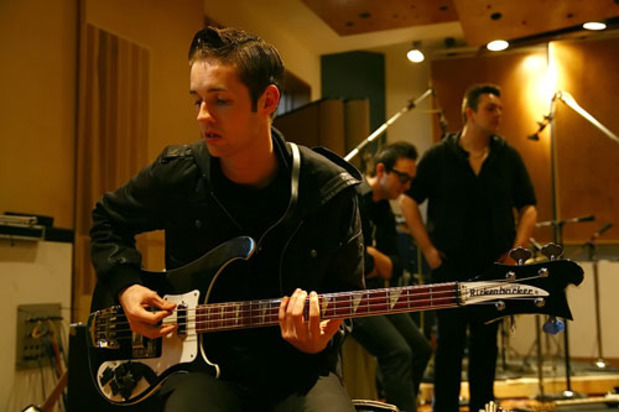
Paul Donoghue is the Clash-obsessed bass player with Glasvegas. No stranger to a large tub of Brylcreem and seemingly always dressed from slicked-back bequiffed head to pointy-booted toe in none-more-black, he looks like a big drip of a Simonon-silhouetted oil slick, all monochrome mood and menace. Don’t be deceived by the image though. Get talking to him and you’ll quickly discover an eloquent speaker, one who loves music just as much as you or I.
I’ve liked Glasvegas since the first LP. The raybans, the hair, the pillaging of rock ‘n roll sound and vision. ‘My name is Geraldine and I’m your social worker’, ‘Your da’, he’s gone’, ‘No sweeping exits, no Hollywood endings’. It’s modern folk music for retro-looking music fans.
Of course, Glasvegas kinda divide many people. “Derivative,” they say. “Nothing original“. It’s easy to play ‘name that tune’ with some of their records, their influences are wide and fairly obvious, but I think that familiarity is what makes them an enjoyable listen. The many people who like them might never have consciously listened to a Ronettes track or any random album from Creation Records back catalogue. Equally, the many people who like them could just as well own every album on the Creation label and the Phil Spector Back To Mono box set. There’s nothing wrong with familiarity in music. Throbbing Gristle are unlistenable. With Glasvegas, the listener doesn’t have to try too hard. You know when the solo is going to come in on early rock ‘n roll records. You know when that third chord is going to appear on a Ramones track. You know when Iggy will grunt ‘n growl between Stooges lines. Likewise, you know exactly when James Allan will ad lib ‘yea-ah, yeah!’ between Glasvegas lines. You know that their records will sound like a big bucket of Phil Spector has been flung over them. It’s familiar and it’s good. And who can argue with three albums and umpteen pan-global tours sharing stages with some of the biggest bands on the planet?
A tremendous raconteur, Paul has a wealth of totally unpublishable tales featuring Noel ‘n Liam ‘n Ian McCulloch. You’d like him. Just back from a successful tour of America’s far-flung places and looking ahead to the summer festivals, Paul took time out to tell Plain Or Pan six of his favourite tracks. They might not be obvious influences, but all make sense if you are familiar with the music Paul plays. The first track, for instance, has a bass line that Paul could have written. Maybe he nicked it…
Pink Glove by Pulp.
This is probably my favourite song, and has been for a while. I have loved Pulp for a long time. When I first started listening to music it was 1994 and Britpop was in full swing. Oasis were the best band in the world to me, as I’ll mention later, but Pulp were a band I liked, but didn’t listen to a lot. Looking back now, I think that Pulp have by far the best songs of that time. They tell stories of a side of Britain that not a lot of people talk about. A seedier, almost macabre side that lies beneath the stiff upper lip and suburban doors. This song is a great example of this, the lyrics telling a story of dressing up and the pitfalls that brings. At least, that’s what it says to me. Maybe that’s more a vision into my psyche than a view of the song!
Supersonic by Oasis.
This was the first song I ever learned to play on the bass. It’s a very simple bass line, but when I learned it, it made me realise that I could be a musician, that it wasn’t out of reach and for people who were maestros. I think Oasis did this for a lot of people who joined bands or picked up a guitar. When they first came out, they forced their way into almost everyone’s attention. I have friends who don’t listen to much music just now, but will always listen to Definitely Maybe and What’s The Story. This is a great testament to what this band meant to people.
Chelsea Hotel #2 by Leonard Cohen.
I never listened to Leonard Cohen until about a year ago, but since then he has become one of my favourite artists. The poetry in his lyrics is amazing, and the variation of the different styles he has made songs in is astounding. Listening to songs like “Hallelujah” and “First, We Take Manhattan” are like listening to two different artists. This is one of the very few songs that have almost made me cry. Especially the line “we are ugly but we have the music”. Another great love song.
I’m Going Slightly Mad by Queen.
Another band that I love. I remember watching live at Wembley and being blown away by how much energy they put into their live show. For the first twenty minutes they didn’t stop, and worked the audience up into a frenzied state. This song is a departure from that. The lyrics are perfect for the song too, they are out there enough to make you believe this is madness. I love the line “the kettle is boiling over ; I think I’m a banana tree”. Genius.
Perfect Day by Lou Reed.
This is a song that makes me very emotional every time I listen to it. Even before the great man died, every time I listened to it, it made me feel sad and happy at the same time. I also really connected to the lyric, “I thought I was someone else, someone good”, for reasons I won’t go into here. I think most people can relate that to their own life at some point. It’s such a simple song too, but to do that it takes true genius, like Lou Reed had in abundance.
Absolute Beginners by David Bowie.
When my wife and I decided to get married, one of the easiest things to organise was our first dance. We chose this song because it is one of the greatest love songs ever written. Bowie always impresses me with his lyrics, both the abstract and the objective. It tells you that if you love someone, then it makes the hard times that much easier.
BONUS TRACKS!
Here‘s Glasvegas (or rather, just James, an end-of-the-prom twangy guitar and minimal keyboard washes) doing Queen’s I’m Going Slightly Mad, from a 2011 session on Minnesota Public Radio.
Just an observation, but the vocal ad libs at the end recall Lee Mavers’ ad libs as The La’s Looking Glass collapses in on itself and swirls frantically down the plughole.
No mention of Glasvegas is possible without referring to their best track, I’ve written about The Prettiest Girl On Saltcoats Beachbefore. Here’s a snippet:
It begins with gentle waves crashing on the shore. Clearly a sample from some long-forgotten sound effects album, cos if you’ve ever been on Saltcoats beach you’ll know that the waves don’t break gently on the sand.
There are 2 kinds of waves in Saltcoats: 1. The big ones you get when it’s the middle of winter, blowing a gale, snowing and freezing and the TV cameras are there. And 2. The splashback from the Arran ferry as it comes into dock in Ardrossan, just up the beach.
So, sound effect waves.
The band provide the drama as the track unfolds in melancholy fashion, all vibraphone, reverb, shimmer and twang. It reminds me a lot of those early Trashcan Sinatras b-sides (like ‘Skindiving‘ – go seek it out). It ebbs and flows like the tide on the Firth of Clyde, crashing to a fade once again with those lapping waves on the Saltcoats shore. ‘The Prettiest Girl On Saltcoats Beach’ is truly bathed in melodrama and pathos.
It makes Saltcoats sound like the most (cough) romantic place on Earth.
Clearly it isn’t.
If you’ve ever been to Saltcoats during the Glasgow Fair Fortnight you’ll know what I’m talking about. Dressed head to toe in Rangers or Celtic regalia, they come down to our bit of the world armed with crappy-ringtoned mobiles and plastic footballs, to eat our ice cream and litter the beach with empty bottles of Buckfast. And that’s just the women. To be called the prettiest girl on Saltcoats beach is a bit of hollow praise. But Glasvegas must’ve been down on a good day.
‘The Prettiest Girl On Saltcoats Beach’ does for Glasvegas what ‘The Boys Of Summer’ does for Don Henley. It’s a Scottish love song of the highest order. Burns would’ve been proud. In fact, I’d say it’s right up there on a par with Morrissey’s best work. He’d do a great version of it. And that would be something, wouldn’t it?
And after that build up…if you’ve never heard it, here it is…
I got my first real six string when I was 16. Bought it second hand from a wee guitar shop in Irvine that disappeared the day after I paid my £30 for it. The guy who ran it was never seen again. About 2 days later, indulging in a spot of fat-fingered She Sells Sanctuary riffing, the pick-up gave me an electric shock and a temporary Sid Vicious haircut. That guitar was a right temperamental block of wood, but I loved it. I played it till my fingers bled. To paraphrase even further, it was the Summer of ’89. That’s when I realised I’d never be Johnny Marr.
I’ve always loved Johnny Marr. In The Smiths, he wrote an obscene number of brilliant, inventive tunes. Lazy writers would go on about his ‘chiming‘, ‘jangly’ guitar sound, but there was far more to his arsenal than that. There was always, even in the Smiths’ most tender moments a bite to his guitar. He could fingerpick. He could play inventive chord patterns. He could fingerpick and play an inventive chord pattern underneath it at the same time. With 10 fingers sounding like 25. ‘Like Lieber and Stoller piano lines playing alongside the guitar‘, to misquote him from the early days in The Smiths. Then there were the open tunings, the Nashville tunings, the hitting strings with knives to get the desired effect. He reinvented the wheel.
Johnny was (and probably still is) my idol. Even though he dyes his hair. And runs over 50 miles for fun each and every week.
Slightly on the wrong side of cocky (and so would you be if mercurial quicksilver tunes like those fell off your fingers and onto the fretboard as effortlessly as a bride’s knickers), he’s not much older than me, yet he’s done a ridiculous amount of music. Previous posts on here have gone on at length about all the non-Smiths stuff he’s done. There’s literally hundreds of things he’s been involved in. Not always up there with the vintage riffing of yore, but always fresh-sounding and never anything less than interesting. Clearly, he’s the guitarists’ guitarist, the one they call when they need a bit of magic sprinkled on top.
Last week when he broke his hand, my first thought was, “I wonder if I can play ‘Some Girls Are Bigger Than Others’ better than him now?”
Probably not, is most definitely the answer. One of my favourite non-Smiths Johnny moments is on Electronic‘s Forbidden City, from the patchy Raise The Pressure LP released in (gulp) 1996.
It runs the whole gamut of Johnny’s guitar attack. A heady rush of major and minor chords played on an acoustic guitar here and electric guitars there, Johnny picking his trademark arpeggios atop some mid-paced strumming. He plays terrific little 2-string run-downs and fills between the singing that are concise and snappy and perfect. On the chorus he lets the right notes ring out at the right times. In a lesser pair of hands, it all might sound a wee bit lumpen. But Johnny knows just how to make his guitar sparkle and sing. By the middle eight, he’s flung in a backwards bit and dooked the whole lot in a bath of feedback before coming back to the song in a ringing, shimmering blaze of glory. The whole track is, of course, carried along brilliantly by a Bernard vocal that recalls New Order at their uplifting, melancholic best. And I believe that’s Kraftwerk’s Karl Bartos on drums as well. What’s not to like?
In a typically Marresque coda to all of this, Johnny’s broken hand was put into a special sling that’ll allow him to perform his day job without compromise. Broken hand or not, no-one plays guitar like Johnny.
Boots Of Spanish Leather is Bob Dylan‘s first truly great love song. They would’ve quaintly called it ‘a ballad’ in 1964, when it first appeared on his The Times They Are A-Changin‘ LP, although it dates back to at least 1962 when the then 21 year-old Dylan recorded it along with a whole host of originals that were to be potentially offered to the more established acts of the day in the hope that this would help cement the burgeoning Bob’s up and coming talent as a writing force to be reckoned with.
Boots Of Spanish Leather (demo)
Like any other Dylan song you care to mention, Boots Of Spanish Leather is open to any number of interpretations; It’s a straightforward long-distance plea to an absent lover. It’s a metaphorical paen to Dylan’s past, the towns he grew up in and grew out of as he morphed from Minnesota Little Richard wannabee to Greenwich Village hipster. It’s sung from Dylan to his muse. It’s sung from the muse to Dylan. You could tangle yourself up in blues just thinking about it, but if you put all the messages and metaphors aside for a moment and just listen, one thing becomes clear – Boots Of Spanish Leather is timeless, ageless and peerless. And written by someone barely out of his teens. The talented bastard.
It’s very possible that it was written about Suze Rotolo, the girlfriend who’s wrapped around Bob as they walk the snow-filled Village streets on the cover of The Freewheelin’ Bob Dylan. Couldn’t live with her and couldn’t live without her, Bob and Suze had an up and down relationship. In 1962 she took off for Italy to study art. Of course. Only bohemian New Yorkers who barely had a dime to their name went to Europe to study art.
“I’m sailin’ away my own true love, I’m sailin’ away in the morning…” and off we go. Verses ping-pong back and forth between the two protagonists, Dylan’s youthful voice that strangely wonderful blend of sand and glue. “Is there something I can send you from across the sea, from the place that I’ll be landing?”
“No,” replies Bob. “I just want you back.”
“I might be gone a long time,” she says. (Or, to paraphrase, I doubt I’ll be back anytime this side of Christmas, and if I am, I won’t be rushing round.)
“I just want you back, that’s all.”
“Phhhh.Listen. I don’t know if I’ll be back, it depends how I feel.”
“Sca-roo you then. Send me a souvenir of Spain. A pair of boots or something impractical to post.”
Bob’s words are far more poetic than my ham-fisted praphrasing, but that’s about the jist of it. If he can’t have the girl, he’ll have the boots instead and metaphorically walk out of her life/away from this town/and on to pastures new. Have a listen to the LP version;
Boots Of Spanish Leather
I’ve shamefully given up on Bob a wee bit recently, what with his joint tours with Mark Knopfler and 4 nights in the Armadillo at £60 a pop, but a decade or so ago I was a card-carrying Bob Cat who went to all the gigs; the good, the bad and the ugly. It was tragic watching a once terrific backing band led by a a true maverick degenerate into Chris Rea’s backing band with a Thunderbirds puppet, back to the audience, farting about on rudimentary organ.
Much has been written of the fact that you can go and see Bob and not recognise a single song until you read the setlist the next day. That’s rubbish. It’s usually said by those who truly expect to hear a hopped-up Bob rattling off Subterranean Homesick Blues like it’s 1965 all over again before segueing into a carbon copy of Hurricane. Bob’s sets are peppered with a liberal sprinkling of mid 60s majesty. Sometimes the arrangements have been altered. Sometimes the phrasing is all over the place. But the song is always recognisable.
In June 2004, Bob played 2 nights in Glasgow. On the first night, at the SECC, he played a version of Boots Of Spanish Leather that was truly spine tingling. A small ripple of applause from those in the know greeted it like a long lost brother as Bob and the band eased into it. A guy in front of us, at the gig alone, could barely restrain himself. His right leg juddered up and down and despite the dark, you could see his knuckles were pure white as he gripped the edge of his £35 plastic seat with one hand and his long-range binoculars with the other. Lost in his own wee world, he was oblivious to the dimwits all around who used this opportunity to go to the toilet or the hot dog stand while Bob played ‘a new one’.
Boots Of Spanish Leather (SECC June 23rd, 2004)
So, there you go. The moment I first heard Bob sing Boots Of Spanish Leather in the same room as myself was somewhat spoiled, but for that guy his night was made. The next night, Bob played the Barrowlands and, well, that was outrageously brilliant. Watching the sweat drip off his cowboy hat and onto his keyboard as he cautiously felt his way into Ballad Of A Thin Man. Being swept away, feeling his joy at ours, as he conducted the audience during Just Like A Woman (which he’s played in Glasgow every time since, I think). A wee Bob speech at the end. And Bob never speaks. That’s how good he was that night. No Boots Of Spanish Leather though.
Six Of The Best is a semi-regular feature that pokes, prods and persuades your favourite bands, bards and barometers of hip opinion to tell us six of the best tracks they’ve ever heard. The tracks could be mainstream million-sellers or they could be obfuscatingly obscure, it doesn’t matter. The only criteria set is that, aye, they must be Six of the Best. Think of it like a mini, groovier version of Desert Island Discs…
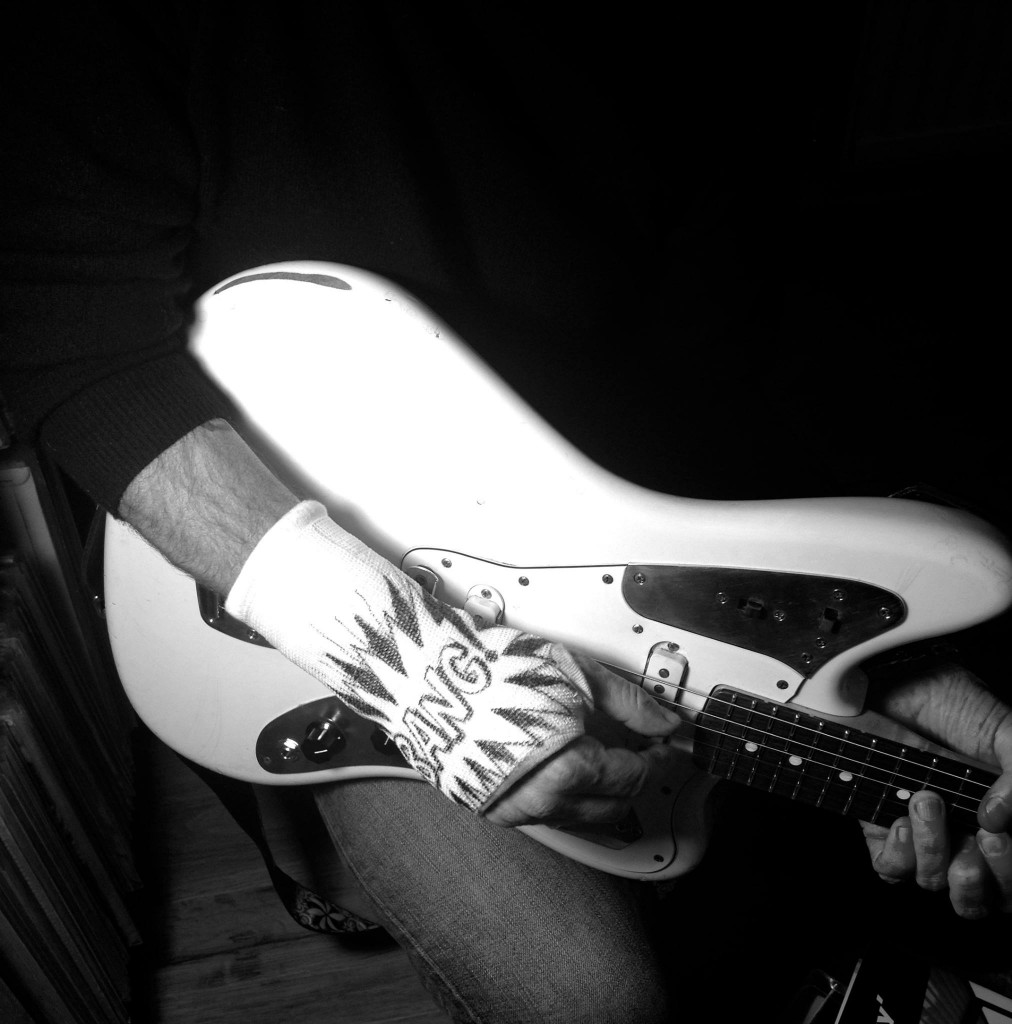
JJ Gilmour is the silver haired, silver tongued ex-Silencer from Lanarkshire*.
In a career that spans 25+ years in the business of music, he’s had his fair share of highs and lows.
But mainly highs.
With The Silencers, he was a regular concert attraction all over Europe. He’s topped the bill at some of the best-known music festivals. He’s worked with some of the top producers of the time (yer actual John Leckies and Michael Brauers for starters). He’s been managed by Miles Copeland. He’s written songs for Kenny Rogers;
I was challenged by my manager to write a song about a cowboy who fell in love with a belly dancer. So I did it! It’s called The Cowboy’s Lament and it’s the happiest I’ve ever felt after finishing a song. Kenny’s sat on it for two years. I don’t know if he’ll ever release it.
He’s sold half a million albums in numerous ‘territories’ (record company speak for ‘absolutely everywhere’). In fact, if he cared to do so, JJ would be able to fashion the walls of his house with gold discs the way a teenager might be inclined to paper their bedroom with popstar posters.
Being part of a successful band, JJ found it difficult trying to get all his ideas across. So in the 90s he took the brave step of going solo. Since then, fads and fashions have come and gone. Today’s bright young things have become tomorrow’s laughed-at losers. Entire ‘careers’ have burned briefly before being consigned to the dustbins of pop. And JJ continually ploughs his own furrow.
Five albums later and Jinky’s never sounded better. He’s a terrific live act – equal parts raconteur and wreck on tour, his milk bottle-thick glasses belying his talent. Less Buddy Holly and more bloody helly, the gaps between his songs are filled with the sort of occasionally sweary banter that wouldn’t sound out of place at the Stand Comedy Club. He’s a very funny man, but more importantly, JJ can sing like the best of them. His songs are stories and beg to be heard in the confines of a small environment. He’s all about intimate gigs and plays live regularly. If you ever get the chance, you should go and see him.
And guess what…
If you’re in Ayrshire, you should get yourself down to the Harbour Arts Centre in Irvine, as JJ Gilmour will play the HAC this Friday (7th March). There’s nothing more intimate than a gig at the HAC, and this has all the makings of an absolute cracker.
Like a tip-top athlete who’s fitness has peaked at the right time, JJ’s coming to Irvine in the best possible form. Just a week after his annual Portpatrick show(s) – acoustic one night, plugged in the next, electric both nights, he’s guaranteed to be at his very best.
JJ took time out from rehearsals at his home in Belfast to give Plain Or Pan the low-down on what records inspire him.
Take it away Jinky…..
I suppose we should start at the beginning. The first record I ever heard that made me want to spend my own money on music wasIan Dury and The Blockheads‘ ‘Hit Me With Your Rhythm Stick‘.
It was full of funny words and references to strange, far-off places. The deserts of Sudan. Japan. Milan. Yucatan. What did it all mean? It took you on a geographical journey. Eskimo. Arapaho. Two fat persons click, click, click. Fan-tastic words! Then of course you got the bonus of There Ain’t Half Been Some Clever Bastards on the b-side. The Blockheads were a terrific band. Great, great players. They could play anything. I was fortunate enough to meet them a couple of times.
Ian Dury was a true original. That whole punk scene, when Malcolm McLaren and Vivienne Westwood were forming the whole image, they took it from seeing Ian around town, his ears full of safety pins. No-one else was doing it at the time. What a leg end. (JJ pronounces this as two words).
After punk, I began listening to what you could call ‘intelligent musicians’, classically-trained folk who weren’t afraid of showing off their talents in the face of 3 chords. I loved the huge sound that ELO made.
‘Wild West Hero’ epitomises that for me. The strings. The story. It‘s a terrific sound. Jeff Lynne is someone I want to work with at some point.
My next choice is by someone who, personally takes himself far too seriously….but what a songwriter! Sting has the knack of writing really clever pop songs. The Police‘s ‘Message In A Bottle’ has it all – great rhythm, a brilliant guitar riff from Andy….
When I first heard it I thought, ‘This guy’s some writer!‘ Of course, later on he’d totally rip off Stand By Me for Every Breath You Take, but Message In A Bottle is a classic.
It has never been more finely used than when it soundtracked Jim Royle pissing into a bottle in an episode of the Royle Family;
Around this time I discoveredThe Beatles. Everyone goes through a Beatles phase and I’m no different. I came to them when I realised where everyone else was stealing their ideas from.
I’m more of a Lennon man than a McCartney man but I could pick any Beatles tune really, even the George Harrison ones that the other two tried to suppress. I huvnae much time for Ringo, but y’know, without him they weren’t truly The Beatles. If I had to choose just one Beatles track, it would have to be A Day In The Life. It’s big. It’s huge, actually. We used to use it as intro music at gigs. It built the audience up before we came on.
JJ’s last 2 choices are personal favourites of mine. I was delighted that he chose them…
I feel I must tip my hat to Scotland’s finest song writer, lyricist and poet – Michael Marra. Michael wrote brilliant songs, but my favourite of his is ‘Hamish‘, written about the Dundee United goalie Hamish McAlpine and the time when Grace Kelly came to watch Monaco take on Dundee United at a European game at Tannadice.
(Now, I could wax lyrical about Michael Marra, someone who in another time and place might’ve been considered a Scottish Tom Waits. He once turned up at Irvine Folk Club with a battered old ironing board under his arm, the sort of ironing board you might find at Irvine dump if the owner had the gall to be seen throwing such a battered old relic out in public. Michael casually set up the ironing board and used it as his keyboard stand. He’s dead now, and sometimes we don’t appreciate our best writers until they’re not there to be told. Michael was one of the very best. His song Hamish ebbs and flows in melancholy fashion, and the string swell at the end is pure Hollywood. Anyway, that’s this writer’s tuppence-worth).
Have a read at the lyrics:
Up at Tannadice,
Framed in woodwork, cool as ice,
Keeping out the wolves in his particular way,
With a smile and a wave, A miraculous save, they say,
Out runs Hamish and the ball’s in Invergowrie Bay.
Up at Tannadice,
As they gently terrorise,
Called the sentry “Oh Hamish, give us a song”,
Raising the voices as high as the bridge is long,
Nasser said ‘hello’ and did you miss him when his voice was gone?
I remember that time it was an evening game,
A European tie in the howling rain,
Gus Foy pointed at the side of the goal,
And said, there’s Grace Kelly by Taylor Brothers Coal, …at Tannadice.
Up at Tannadice,
Watching as the fortunes rise,
Smiling when he hears, ‘ah it’s only a game’, Win, lose or draw you’ll get home to your bed just the same,
But Hamish stokes young mens’ dreams into a burning flame,
Hamish stokes young mens’ dreams into a burning flame.
I’ll leave the final word on Hamish to JJ
– You should check out the Leo Sayer version on You Tube. He’s not kidding.
My final choice is absolutely The Best Pop Song Ever Written Since The Beatles. Has there ever been a song about mainlining heroin quite so beautiful asThe La’s ‘There She Goes’? No, there’s not!
We’ve heard it so many times. It never sounds tired or jaded. It always sounds fresh. There’s not a chorus in sight, just spot-on verses and a perfect guitar riff with a wee breath-catching breakdown in the middle. Absolutely perfect.
I love what wee John (Power) is doing with Cast – Walkaway and all that, but nothing he does is as close to perfection as There She Goes. Lee really should try and get himself back together again.
(I’ll not bore you with my La’s stories. You can ask me the next time you see me.)
JJ Gilmour plays the HAC this Friday, 7th March. At Jinky’s request, support comes from terrific up-and-comers The Sean Kennedy Band. You can buy tickets here. A limited number will be available on the door, on a first-come, first-served basis.
Green and Brown. My colour blindness wasn’t apparent until Primary 7 when, as you do in Ayrshire schools, the class created a Robert Burns Tam O’ Shanter frieze. My job was to do the tree next to the bridge where poor Tam’s horse has her tail yanked off by the pursuing witch. My tree had, yes, brown leaves and a green trunk and I had no idea why I was the laughing stock of the school for the next few weeks. An official colour blindness test proved this a few months later. Now I know.
Here I Am (Come And Take Me) was a top ten hit for Al Green in 1973. A brilliant piece of tight ‘n taut southern soul, producer Willie Mitchell has the uncanny knack of making it sound as if the drums are playing right there in the room with you. A warm Hammond vamps throughout, mixed in just behind the brass section while the Reverend’s vocals flit across the top, emotion squeezed out of his voice the way you or I might wring the last remaining drops of juice from a real lemon when following a Jamie Oliver pasta recipe to it’s fat-tongued conclusion. Got. To. Get. Every. Last. Drop. Out. Of. It. Cost. Me. Forty. Nine. Pee.
Green
Al Green’s track is terrific. Of course.
Here I Am Baby was a superb rocksteady version of Green’s track by his skankin’ namesake Al Brown. My version comes from one of those excellent Soul Jazz Records Dynamite compilations (300% Dynamite, I think) that really ought to be in everyone’s record collection. Many of the tracks featured are rubadub reggae versions of popular soul hits – the Jamaican musicians tuning into US radio would hear the originals, get the band together, roll a fat one, play it at half speed and claim it as their own. Al Brown was no different. Dubby bass, chukka-chukka backbeat and a Casio keyboard player with his (or her) own idea of what constitutes a meandering solo, it’s a rather spliffing made-in-the-shade perfect partner;
Brown
Ironically, Al Brown would go on to make a name for himself in The Paragons, whose The Tide Is High would somehow filter its way back across the airwaves to New York where Blondie were fortuitously tuning in. And that folks is how the music world goes around.
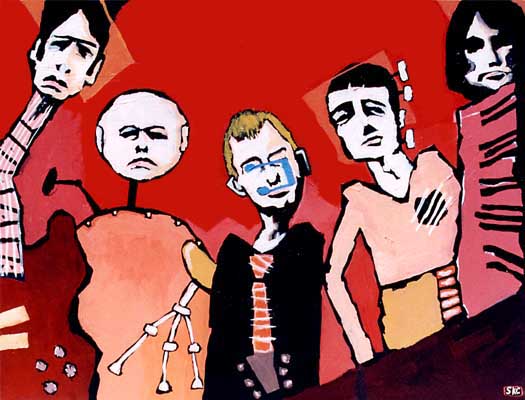
Radiohead play both types of music – arty and farty, and they’re still the band by which all others must be measured. In comparison, everyone else just doesn’t sound like they’re really trying, do they?
Radiohead haven’t stood still. The left-field rock double whammy of The Bends and its more adventurous follow-up, OK Computer would’ve been the pinnacle of many a band’s career – lesser bands would maybe even have stopped after such an explosive one-two. Other bands (hello Coldplay, we’re looking at you) took lowest common denominator Radiohead and churned out the Asda price version, to much ringing of cash registers around the world. How could you improve on two great albums? Not many could. For some people, Radiohead couldn’t either. But you know better…..
I like the experimental, itchy, claustrophobic Radiohead. The static bursts. The skittering drums. The are-they-guitars-or-are-they-keyboards? The cut ‘n paste approach to the vocals. The way everything is wrapped, womb-like in its own wee Radiohead bubble. Recent Radiohead has been all about the sonic textures. The ebbing and flowing. The peaks and troughs. The grooves rather than the grunge.
These Are My Twisted Words was put up for free download a few years back on the band’s website. I’m sure you’ve heard it;
From the warped intro via the chiming, falling-down-a-hole guitar riff that surfs across the top, the whole thing jerks and twitches away like Thom Yorke’s gammy eye whilst maintaining an actual tune – the perfect amalgamation of all that makes Radiohead great. Lots of people moan that the ‘Heid have lost their way with a tune. Sit them down and play them this. The only way it could be better was if it was three times the length.
Where I End And You Begin is all swirling ambience and one chord groove. Hip hop drums and phat bass. But still slightly wonky and weird. It’s on Hail To The Thief, a quiet contender for title of Best Radiohead Album. I’m sure you’ve heard it too;
Post-rock Radiohead remind me an awful lot of pre-rock Simple Minds, back when they were releasing arty, Eastern European influenced glacial soundscapes. Equal parts post-punk snottiness and Bowie metallic art punk with a Kraftwerk man machine-like muscle, this was not music to punch fists in the air to. It was cerebral yet danceable. It aimed for basslines rather than headlines. Perfect headphone music. Mandela Day and Belfast Child were somewhere in Western Europe, a million light years away.
Here’s a couple of early Simple Minds tracks. Note the influence on mid-period Radiohead. They won’t deny it.
Theme For Great Cities
This Earth That You Walk Upon
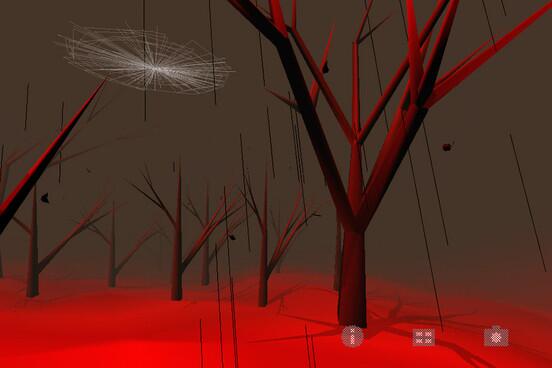
Have you got Polyfauna, the Radiohead app yet? What d’you think?
10538 Overture was the debut single by the Electric Light Orchestra. It was written by Jeff Lynne and produced by Roy Wood when he was still in The Move, pretentiously given the ‘Overture‘ title and prompted the split of the band. Released in 1972, it was the love child of I Am The Walrus and The Who’s more bombastic moments; a Heinz 57 variety pack of swooshing synths, see-sawing cellos, minor key breakdowns, ELO’s trademark multi-tracked vocals….and a terrifically cod-psychedelic, eastern-tinged descending guitar riff.
10538 Overture
10538 Overture would eventually appear on ELO’s self -titled debut LP, with it’s big, ambitious sound a portent of things to come. In America, the same album was released as ‘No Answer‘, after the man from the US record company phoned the band to get the name of the LP. No one picked up, the under-assistant west coast promo man wrote ‘no answer‘ on his paper, left his desk, and someone picked up his note and ran off to the printers where the sleeve was being assembled. True story, that.
Perhaps drawn in by the backwards Beatlish bits and the windmilling Townshend chords and Moonisms on the drums as 10538 Overture drags itself to a bloated end, Paul Weller‘s magpie-like antennae pricked up. “That descending guitar riff,” he thought. “I’m having that.”…..
Welding it on to a mid-life crisis of a lyric, Weller gave birth to The Changingman, lead single from the epoch-defining Stanley Road LP. Named after a picture his son had drawn – “Who’s that?” “It’s the changingman, daddy,” the single reached number 7 in the charts, at the time a career best for the solo Paul.
This is where it gets a wee bit muddled. On the LP, the track is credited solely to Weller, but if you consult that last bastion of credibility Wikipedia, you’ll see that Weller shares the writing credits with 3 others – Brendan Lynch, his producer of choice at the time who added the ambient textures and wonky noises (his remixes from this time are terrific) that lift the track above bog standard r’nb fare, a certain R. Wood who we now know all about, and, most interestingly of all, forgotten cult hero and Syd Barrett for the Brit-Pop genearation, Lee Mavers.
The Changingman LP/Single version:
Quite what Mavers’ involvement in the writing of the song was is unclear (if any), although around that time he was in a bit of a sorry state through drugs. It’s been suggested that Paul Weller took one of Lee’s unreleased tunes and built Changingman on top of it. Some of the lyrics (‘the more I see the more I know, the more I know the less I understand‘) are kinda La’s-ish as well. Weller, on Go! Discs, as was Mavers at the time (or was he still, in 1995?), also had Lee open a few shows for him. Maybe he was just trying to help him out, a support slot here, a writing credit there, but as you’ll know already, Mavers is pretty comfortably well-off thanks to the regular royalties he receives for There She Goes (between £5000-£10000 a month, depending on where you read). Maybe Bo Diddley nut Lee contributed the percussive backbeat that gives the track it’s mid 60s swagger towards the end. Who knows? I need to investigate further…
The Changingman Radio1 Evening Session 8th May, 1995 (Exactly one week before the album release);
Rod Weller
Around the same time as Weller was releasing Stanley Road, an ill-advised Rod Stewart was assembling a catalogue of contemporary tracks of the day that would make up a covers LP. When I first heard about this album, I immediately thought of it as similar in spirit to Bowie’s Pin Ups LP. Primal Scream’s Rocks. Cigarettes And Alcohol. Skunk Anansie’s Weak. All would be filtered through the Rod voice and into the Mondeos and family saloons of 40-something Britain. There was even space for a (terrific) track by Scottish underachievers Superstar that would make writer Joe McAlinden very wealthy. At the sessions, Rod tackled The Changingman with all the gusto of a prime time Faces, although the finished version comes across as a highly polished piece of session musician rawk and nothing like the raggedy arsed Faces it could’ve been. Consequently, it never made the final cut.
The Changingman Rod Stewart version;
Never has a singer betrayed his talent quite like Rod.
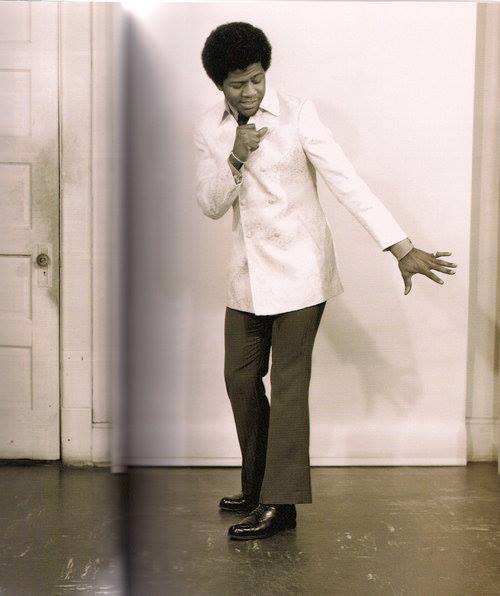
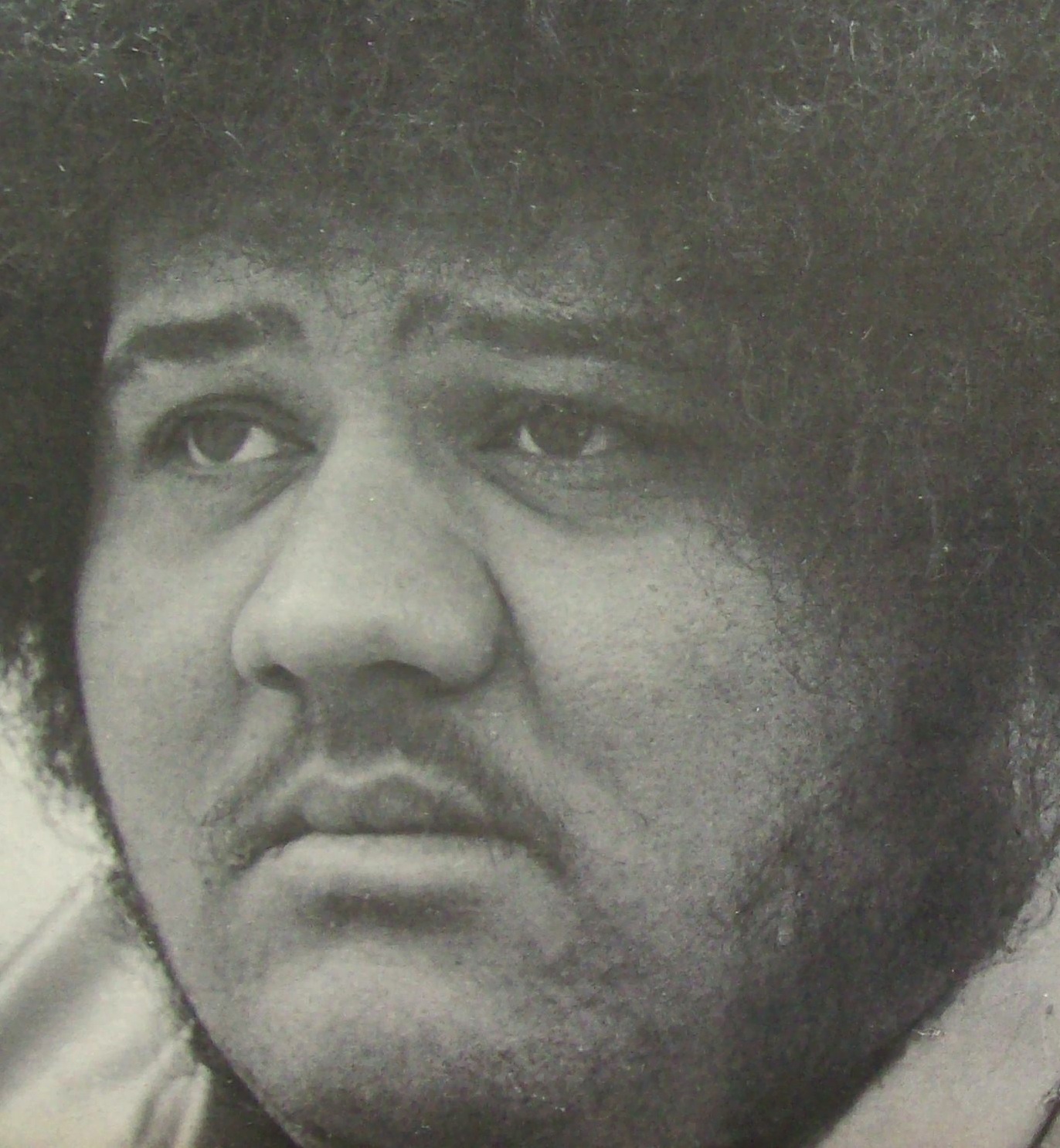
Baby Huey is one of the forgotten stars of 70’s soul, mainly because he died in October 1970 and it wasn’t until much later on, when his music was discovered by the hip-hop community that he gained any sort of acknowledgment.
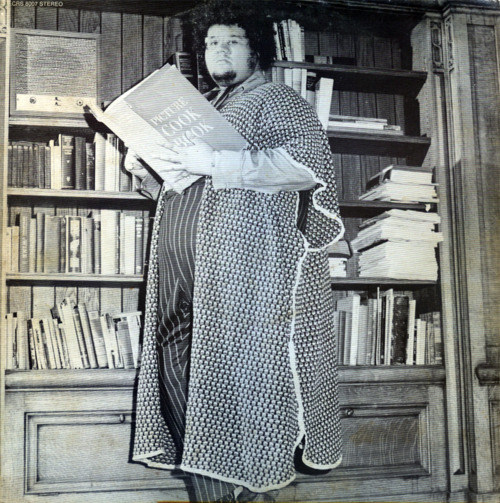
Named after a 1950s cartoon duck, the ironically-monikered Huey was massive in every way – he was massively overweight (between 25 and 28 stones (or 350-400 lbs if you’re that way inclined), he wore his hair in a massive afro, he had a massive voice and used it to create massive tunes. He was a massive drinker. He even had a massive heroin addiction to go with it all.
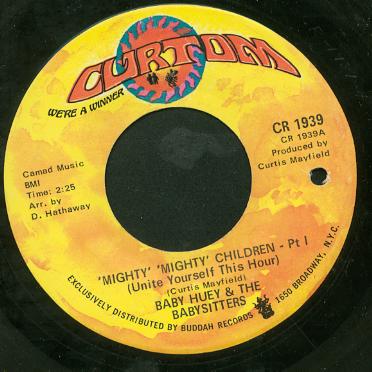
He came to the attention of Curtis Mayfield and signed to his Curtom label. Mayfield became something of a mentor to him and gave him the songs that would make up the A and B sides of his first single. Mayfield also suggested he get rid of his band The Babysitters, forever stuck in a mid 60s Motown rut. Curtis wanted Huey to expand (no pun intended) his sound towards the more politicised, psychedelicised sound of the times, which, sacked band or otherwise, he achieved. Huey’s tunes are packed full of riffs, refrains and drum breaks galore. Huey liked his music to ebb and flow, bringing the band down so he could throw in a social commentary or two, before letting the band soar in a riot of bass and brass. His songs regularly stretch out beyond the 6 minute mark and (I’d wager) are a sampler’s delight.
First single Mighty Mighty Children is a one-chord groover, held together by stabbing Blaxploitation brass, wah-wah ripples and pseudo live vocals. Mighty indeed.
Mighty Mighty Children (Part 1)
Here’s Listen To Me, Baby Huey’s 2nd (and final) single release. A stone cold lost classic, it‘s terrific! Beginning with a taught guitar riff and Huey’s big voice careering between balls-out soul belter and Is It Real Or Is It Memorex glass-shattering falsetto, it fairly gets carried along on a tidal wave of trumpets and electric keys, clattering cowbell and ‘Have Mercy Brother!’ soulful paraphrasing. I think you’ll like it;
Listen To Me
On the other hand, Huey’s version of Sam Cooke’s A Change Is Gonna Come is downbeat, treacle-thick and just shy of 10 long minutes. By the end you’ll be praying that a change is indeed gonna come. His wee spoken word part reminds me of James Brown or Isaac Hayes – all social conscience dressed up in occasionally trippy echoed sound effects. Settle in for the ride…
A Change Is Gonna Come
Most of these recording didn’t come out until after Huey was dead. An album, The Baby Huey Story was released to general indifference in 1971 and quickly forgotten about. My tracks come from the 1999 CD reissue that’s probably since been quickly forgotten about. You could do worse than track it down.
All the local town hipsters dug Orange Juice. There they were, in their collapsed quiffs and looking quite the thing in their dirty brown suede jackets, a shade on the small side but bought from Flip for a fiver. As long as you didn’t raise your arm to adjust the Rayban copies, no-one would notice the wee rip under the armpit. Irvine boys, you know who you are.
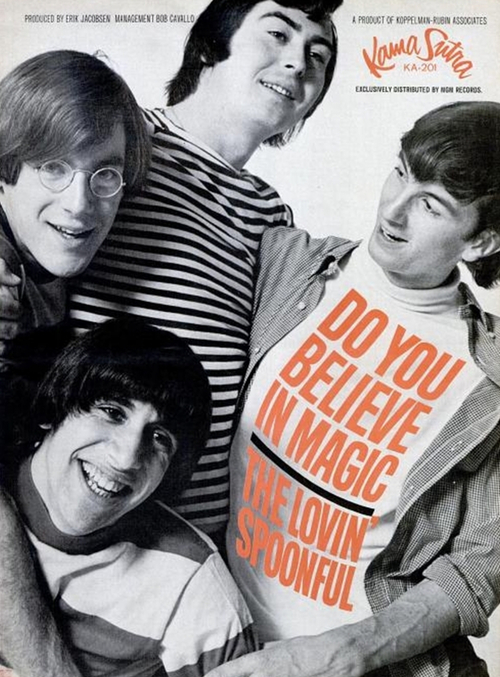
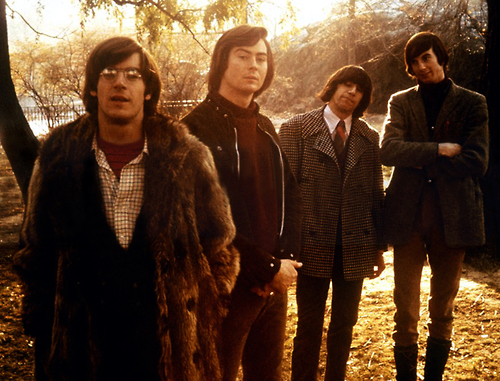
When Orange Juice did the unmentionable and had an actual bona fide Top 40 smash hit, a new band was needed. Looking backwards for inspiration, The Beatles were quickly disregarded (Paul McCartney in the 80s….). As were The Byrds (too obvious). And The Doors (Jim Morrison…). Love. Now, there was a band. Decent tunes, small back catalogue and obscure enough to deter the rest of us. As were the Lovin’ Spoonful.
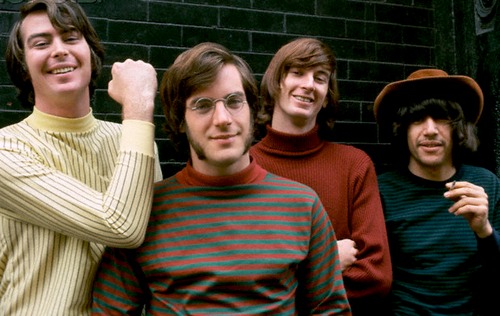
Formed from the same alumni of assorted jug and folk bands that would give birth to the Mamas and Papas, the Lovin Spoonful’s star shone briefly but brightly before the cliche of drugs split the band. Put together by Zal Yanovsky and John Sebastian, between 1965 and 1967 the Lovin’ Spoonful released a series of stripey jumpered, tight panted, pointy booted, denim jacketed pop nuggets, in equal parts sparkling 12 string blasts from heaven and soft focus introspection.
Do You Believe In Magic?
First single Do You Believe In Magic is a beauty. But you knew that already. John Sebastian was infatuated with the hollerin’, handclappin’, speaker-blastin’ energy emitted from Martha & the Vandellas Heatwave,so set about reconstructing it. Essentially, he just played the intro twice as fast as the Motown original and no-one noticed. Then he wrote a set of lyrics about how brilliant music is. Perfect.
We’ll go a dancin’ baby then you’ll see, how the magic’s in the music and the music’s in me.
It’s over and done with in 2 minutes. What more d’you need?
Summer In The City
Dig through the back catalogue and you’ll find all manner of film themes, quirky 2 minute pocket symphonies and enough looney tunes and merry melodies to soften even the hardest of hearts. Summer In The City‘s my favourite. “Cool cat lookin’ for a kitty” they sing, on top of a descending electric piano riff. A claustrophobic anthem to wilting heat and sticky summer pavements, the breakdown features honking horns, road drills and a great wee drum break/guitar riff that runs until the end. Long lost indie band Eat did a version at the turn of the 90s. Which is almost 25 years ago. A quarter of a century. Ouch. Having just listened to it, the Eat version hasn’t aged all that well. Double ouch.
Did You Ever Have To Make Up Your Mind?
This record surely gave birth to Duglas T Stewart and the BMX Bandits.
You might argue that without having heard the Lovin’ Spoonful, the whole ‘C86’ movement would’ve shambled along to a different beat, Sarah Records wouldn’t have existed, Lawrence might never have formed Felt and ‘indie’ music as it was when that sort of thing mattered would have been very different. Or perhaps not.
We’ll finish with the close-miked and breathy Coconut Grove.
D’you know how the Lovin’ Spoonful got their name? It’s from an old blues lyric actually, but the blues lyric refers to a phrase associated with the male reproductive system. It’s also how 10CC came (ahem) about their name. Google it. And then go and buy a Lovin’ Spoonful LP.














 Plain Or Pan