Get This!

‘Lake Placid

I was going to call Midlake‘s The Trials of Van Occupanther a modern classic, until it dawned on me that it’s a full fifteen and a half years old. That would have been obvious if I’d stopped to think about it, as the album provided much of the soundtrack while our youngest was bathed, breastfed and brought into this musical household in the autumn of 2006. So classic, yes. Modern, not so much. Sobering as it is, it’s a bit like calling Abbey Road a modern classic in 1985.

You don’t need me to tell you that entire bands come and go in fifteen years. Even Midlake themselves are presently anonymous, on hiatus with the constituent members working on various projects – and nothing disappoints more than bands members ‘working on other projects’ rather than sticking with the band that made so much magic, eh? Never mind, Midlake. We still have The Trials of Van Occupanther. And maybe a new album in ’22 if the rumours are correct?

…Van Occupanther is a phenomenal record, stuffed full of plaintive narratives sung atop rustic, organic instrumentation, the vocal arrangements evoking prime time Laurel Canyon and played by a shit-hot band who’ve clearly spent the months leading up to the record honing and refining every little element of their songs.

It sounds like it could’ve been recorded in the mid 1970s in one of those classic analogue studios, possibly Sound City, possibly Village Recording, with Neil Young next door, Joni Mitchell and Graham Nash smoking pot on the swing on the stoop, The Eagles working out a three-part harmony between punch-ups by the Coke machine, but much of the subject matter suggests the roots of the songs date back to the previous century; to rustic, gold rush America, of bandits and bordellos and when bearded trappers worked the land, when everything was handmade and when life in them thar hills was much harder but oh so much simpler.

Stone cutters made them from stones….mountaineers gathered timber piled high… goes opener Roscoe, all fuzzy warmth and chugging chords, a hint of Christine McVie in the into-the-ether chorus, the spectral, chiffony swirl of Stevie Nicks floating around the edges of the harmonies.

MidlakeRoscoe

Nature and hard work, it seems from the off, are the central themes of the record.

While we were out hunting for food they sing between the piano lines and bluesy runs on Bandits, a song about wishing to be robbed of your worldly possessions by bandits so that you can start life over again (with a rabbit and an ox, no less.) Not many bands write such subject matter, and fewer still manage it with melody squeezed richly from every pore, cascading piano and acoustic guitars ringing and sparkling brightly.

Bring me a day full of honest work and a roof that never leaks and I’ll be satisfied they profer on the very Mac-ish Head Home, all throbbing bass, Californian coke haze vocals and a no-note-wasted, tasteful and lightly toasted guitar break before the final chorus – exactly where the Big Book of Classic Rock Guitar Solos suggests you place it. Bonus ’70s points for the weaving Fender-bending interplay in the long drawn-out coda. FM rock reimagined.

MidlakeHead Home

My young bride, why are your shoulders like that of a tired old woman? With a face made for porridge and stew go the opening and closing lines on Young Bride‘s rootsy minor key hoedown, the bass line revving up and down the fretboard as the Appalachian mountain violin does its best creaky door impression. Trivial fact – both Tim Burgess and Paul Weller love, LOVE!, this song.

I saw she was busy, gathering wood for the fire, they sing on the woozy Americana of Branches before the payoff and clincher; We won’t get married, she won’t have me, she wakes up awfully early these days. By the end of the song, the vocals are tumbling over themselves in an overlapping rush of sepia-tinted melancholy, the piano and woodwind providing the requisite sombre arrangement while the drums batter and clatter to a subtle, banjo-enhanced fade out. The equal of anything by the similarly rustic and on-point Fleet Foxes, it’s fantastic stuff. Fleet(wood) Foxes, anyone?

MidlakeBranches

There’s not a note out of place on …Van Occupanther. Delicately plucked Martins ring out, as deftly picked as a McCartney melody then give way to lean, mean, fizzing and spitting guitar solos that are short enough to defy ‘muso’ cries, but are intricate enough that they could sit in the middle of any Abba or Steely Dan or Supertramp up-tempo number from back in the day and not seem at all out of place.

The whole album comes enveloped in an honest, pensive yet placid melancholy, the aural equivalent of one of those Instagram filters that allows you to make a Lana Del Ray video or your phone snap from an Ibizan beach look like a bleached-out Polaroid from half a century ago…exactly the ‘look’ that the band was going for, I’d wager. America was a country forged from hard work, toil, tragedy and overcoming setback. It’s all there in miniature on The Trials of Van Occupanther. A modern classic by anyone’s definition.


Gone but not forgotten, Hard-to-find

Rob a Dub-Dub

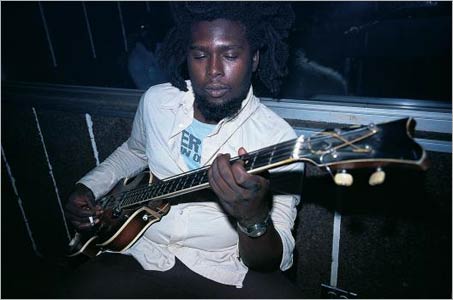
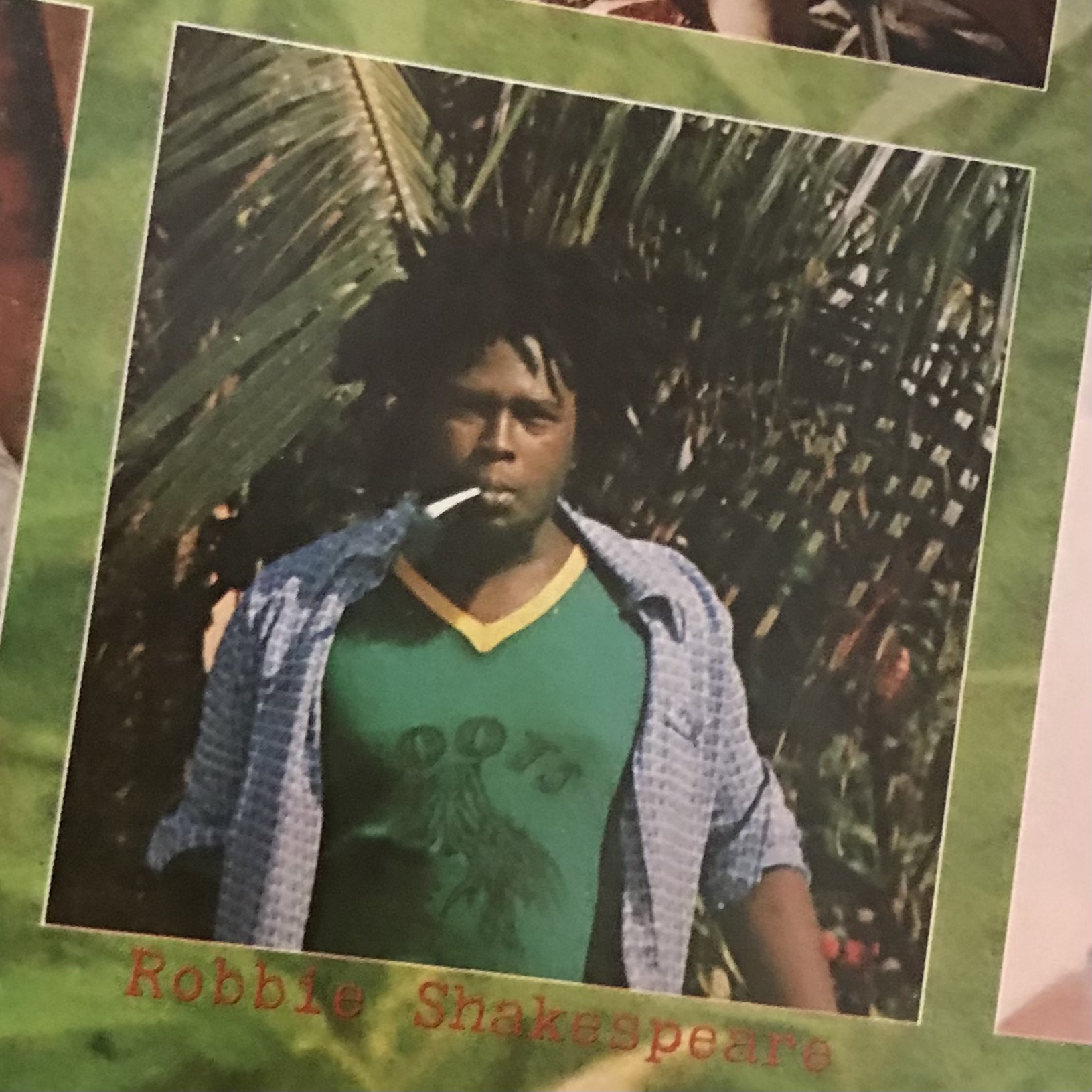
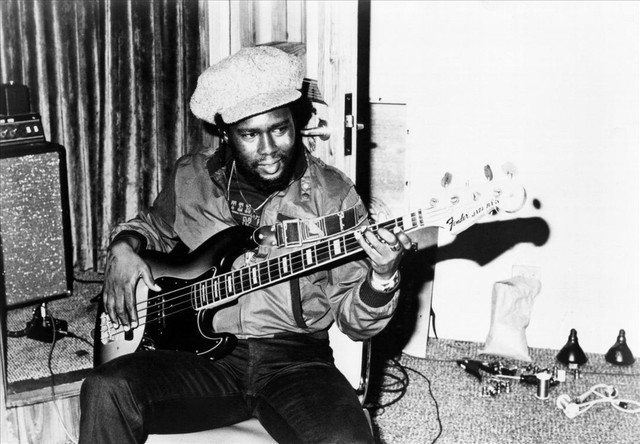
If you’re a regular reader of this parish, chances are you’ll own some music that features the basslines of Robbie Shakespeare. The bass players’ bass player, he died in Florida yesterday aged 68 following kidney complications. A pioneer of reggae and its many and varied offshoots, his basslines are as iconic as the genre itself; booming and thudding but always playing a tune within the tune.

Such is the fluid and ambivalent nature of the haphazard approach to such essential things as credit and copyright in those early, formative years of reggae, many of the recordings that Shakespeare played on remain uncredited. He’s there on Bob Marley‘s breakthrough Catch A Fire album, an honorary Wailer filling the spaces between the offbeat in Concrete Jungle, his melodic solidness providing the four stringed groove courtesy of his McCartney-inspired Hofner bass.

He’s there on Gregory IsaacsCool Ruler album, providing a steady rhythmic counterpart to Issacs’ sweet-toned lovers rock and uplifting spirituals, the noodling, head nodding, dread-shaking yin to Isaacs’ yang.

He’s there too (credited this time) on Peter Tosh‘s self-explanatory Legalise It album, a lamppost-sized spliff wedged between his teeth, his ganja-fuelled basslines meandering wide and expansive, slo-mo and steady. I’m listening to it now as I write this and his playing, in all its room shakin’, filling-loosenin’, flare-flappin’ majesty is really brilliant.

On many of the albums that will remain his legacy, he was joined by drummer Sly Dunbar, with whom he formed a formidable partnership that did as much for a fertile, ever changing but always grooveable scene as Nile Rodgers and Bernard Edwards did with Chic. Just as Nile and Bernard crossed over into unexpected territories with Madonna, Bowie and co, so too did Sly and Robbie. Bob Dylan, Mick Jagger and even Serge Gainsbourg sought solace in their rocksteady riddims. Go and listen to Dylan’s Jokerman to hear the results of what happens when ascerbic folk and loose and spacey reggae collide.

Grace JonesPrivate Life

Some of Shakespeare’s (and Dunbar’s) greatest work remains the stuff he/they did with with Grace Jones. Marrying reggae and funk basslines to new wave guitars and synths, Grace’s band created ambient, atmospheric and always revealing music, incredibly unique and stylish y’know…just like the singer who had hired them.

You’ll be well aware of the big ones – Slave To The Rhythm, Private Life, Pull Up To The Bumper, their electro-fried version of Iggy Pop’s Nightclubbing, etc etc, but it’s their little-heard take on Joy Division’s She’s Lost Control that pulls me in every time.

Grace JonesShe’s Lost Control

It’s, well, kinda boing-y, isn’t it?! A rubber band bassline, augmented by bicycle cranks, a trampolining wonky background noise and the guitar scrapin’, chain rattlin’ ghost of a horrified Ian Curtis, it’s spectacular (even if the 12″ version above goes on maybe a wee bit too much). It’s all in the production – rich and deep enough to make the heart vibrate, light and airy enough to tingle the senses. It’s cavernous and widescreen and just about as long and interesting as the career itself that Joy Division carved out. It is, you’ll notice, the bassline that carries it, played effortlessly by Robbie Shakespeare, the true root at the base/bass of roots reggae.

Live!

That’s Entertainment

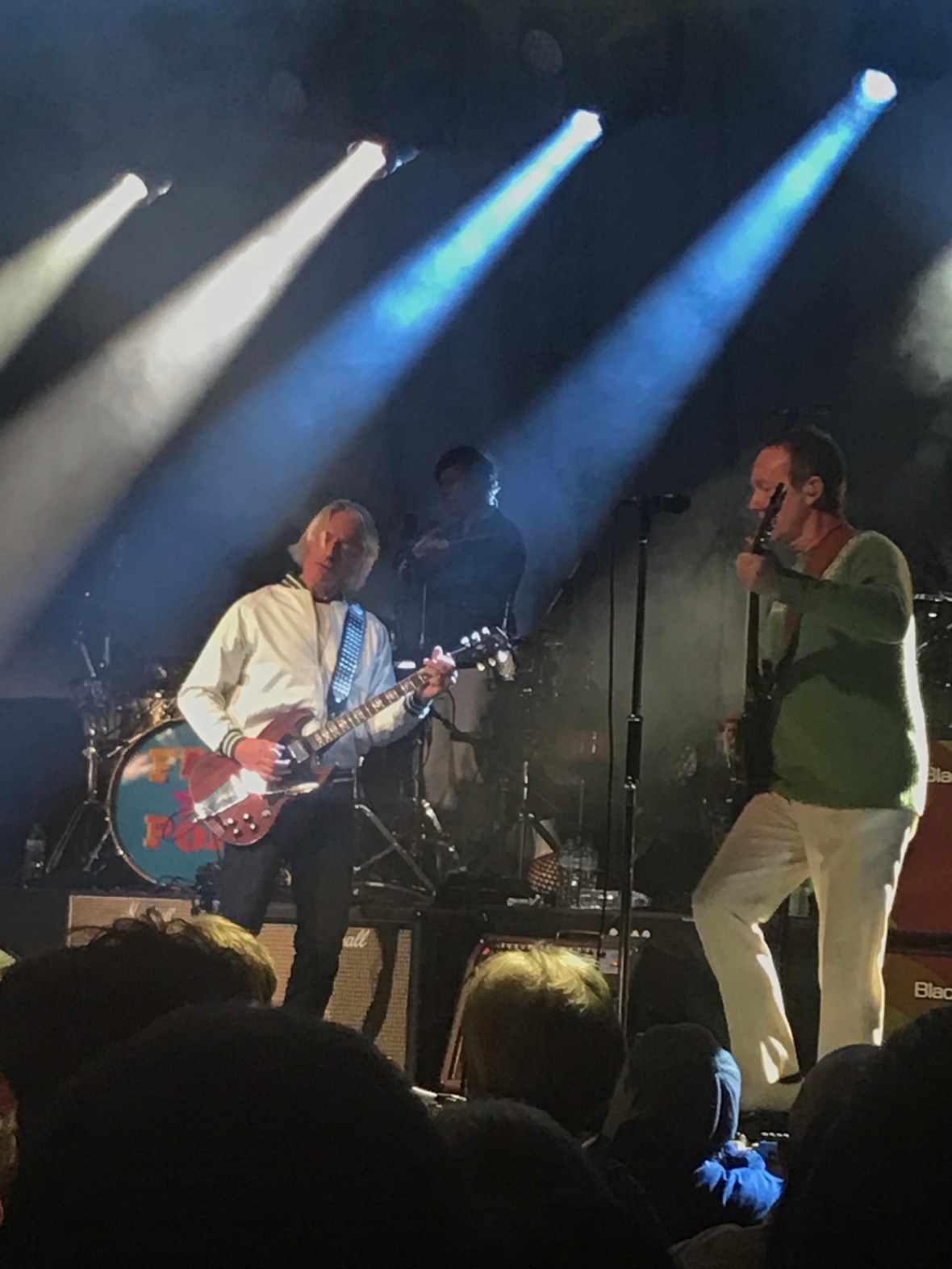
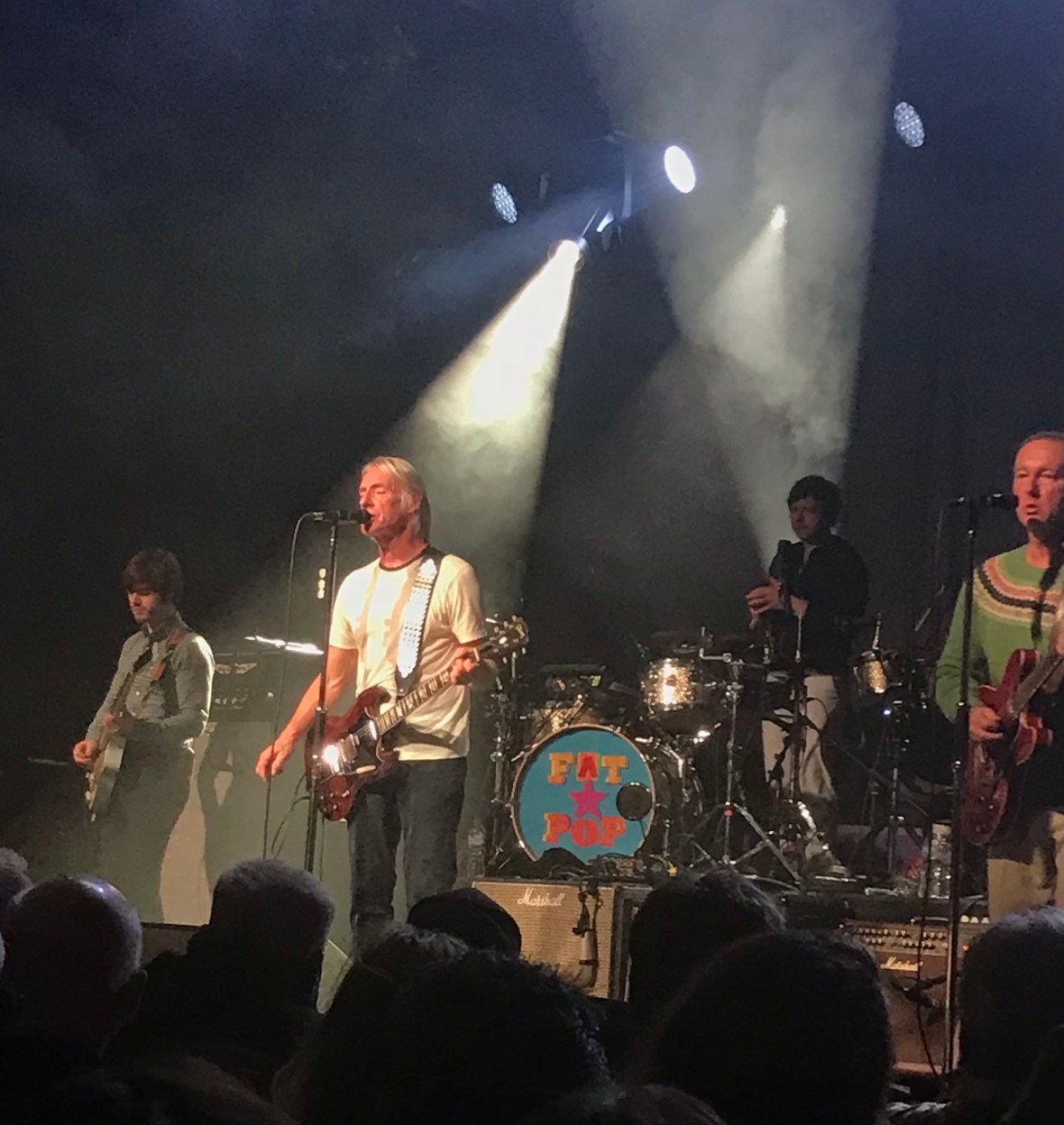
They say that if you chop down a tree, you can count the rings on the discarded piece of trunk and that will tell you how old it is, Likewise, if you count the lines on Paul Weller‘s face, his true age will be revealed. There’s a few lines around the eyes there, ones that first appeared after he split The Jam. Another couple on the brow courtesy of those record company people who misunderstood the Style Council’s brave new steps into house music and refused to release the bulk of it. Yet more around his mouth, the product of worrying over a slow-starting solo career. At the last count, PW had 63 such lines etched onto a face that at times resembles a cartographical ordnance survey map. Last night in Glasgow though, the wizened auld Weller looked trim and tanned, a spritely grandad with a 40+ year collection of songs at his fingertips and a two and a half hour slot on the Barrowlands stage in which to breeze through the back catalogue and play like a man half his age.

Yes! Yes! Yes! Oh, fackin’ yes!” he shouts down the mic by way of introduction, the sound-clash of The Beatles’ retro-futuristic Tomorrow Never Knows still ringing in our ears, clearly as excited to be here as the heaving throng of fey hairs and nae hairs in front of him. “We’re gonna play some noo ones and old ones, so ‘old tight!

A quick one-two of White Skies and Fat Pop‘s Cosmic Fringes give way to a career-spanning set that’s almost as long as the outgrown lockdown curtains that frame his grinning face; My Ever Changing Moods, Shout To The Top, Peacock Suit, Hung Up, Brand New Start, Sunflower… it’s incessant and breathless, sung perfectly (yet with a gubful of Wrigley’s on every line), played expertly by a 6-piece band that includes Steve Cradock, his now-regular guitar foil, alongside the brass-totin’ Jacko Peake, the go-to guy on the Acid Jazz scene, and The Strypes’ Josh McLorey on stand-in bass duties.

The set ebbs and flows between old ones and new ones, fast ones and slow ones, guitar ones and piano ones. Heck, even the songs themselves ebb and flow with well-rehearsed breakdowns and meandering codas. Above The Clouds is still great white-boy soul; effortless, cool and sounding as if it might have floated in off the grooves of What’s Going On. Wild Wood is pastoral and bluesy, an on-the-one rootsy stomp that prompts mass singalong. Main set closer Into Tomorrow – the grooviest live version he’s played yet, transforms smoothly into the parping That Spiritual Feeling, all military-tight snare, Coltrane-ish sax melodies and noodling bass, before returning and ending as it began.

There’s lots of this. Amongst the give ’em what they wants and give ’em what they needs, there are moments of pure self-indulgence where the song choices allow the guitars to wander, as wide and expansive as Steve Cradock’s white slacks but with requisite clanging echo or pseudo-psychedelic swirl. On the caustic, carbolic Brushed, a violently furious Weller thrashes his guitar like the punk wars never happened, falling into step with a grinning Cradock as they provide some sort of mod-friendly twin axe attack, a mere Telecaster ‘n double denim away from full-on Quo. It’s all very brilliant, and topped off in dramatic, crowd-pleasing fashion.

After a short speech where Weller sings the praises of the Glasgow Apollo and the old guys who’ve been with him from the start, he looks to the younger members in the audience and with a this-is-for-you wink of an eye, he’s into the wham-bam (Jam) of That’s Entertainment and Town Called Malice. A one-two that slays any remaining doubters that Paul Weller is still vital, relevant and one of our greatest-ever songwriters,


Get This!, Hard-to-find, New! Now!

Sunset Boulevards

There’s a great little authentic soul scene bubbling just under the surface, a handful of artists who’ve strode proudly in on the back of Michael Kiwanuka’s door-opening wide lapels and wormed their way into the more discerning listeners’ ear space thanks to their abilities to take the best of those late ’60s/ early ’70s soul pioneers (Stevie, Curtis, Marvin) and re-present them as shiny new things, played and produced with effortless majesty. At the forefront are the excellent Black Pumas, previously featured here, along with the also-featured Curtis Harding and Leon Bridges.

The newest cool chops on the block belong to Boulevards, the name by which North Carolina’s Jamil Rashad preferes to go by. He’s not new to this. Bandcamp throws up some self-released tracks that are a good five years old, but in the interim he’s thankfully thrown off the questionable and gadsy Kravitzesque approach to what constitutes ‘retro’ and reimagined himself as a pimped up, cooled out Blaxploitation soundtracker.

His fourth album – Electric Cowboy: Born In Carolina Mud, due out in February ’22 will perhaps be one of the early go-to albums of next year. If you like the references above, I think you will, as Shaft was wont to say, dig it.

Better Off Dead floats in on a lush tapestry of whacked-out wah wah and paranoid orchestration, pistol crack snare and movie-esque synths. Boulevards takes the first verse – sumthin’s wrong wit’ me, I can’t barely breathe – singing the tale of the after-effects of a week-long bender and, just as you’re falling into hungover step with him, guest vocalist (New West labelmate) Nikki Lane eases her way in on a shimmer of silver strings to tell her side of the story – noses start to bleed…when can I take a seat?…I need a hit you see…tell me I’m alive… It’s Lee ‘n Nancy ‘n Isobel ‘n Mark for the strung-out post-millenials in your life and it’s utterly fantastic.

Those chords are great; luscious and creamy major 7ths with just the right amount of echo and reverb, and when they make way for the slow burning solo, it’s exactly what you were wishing for; a string bent, multi-phased, morphine-dripping long-lost cousin of the Isleys’ That Lady. You can practically see the technicolour flow from the speakers as it floods the room. Reading the credits alongside the press release here, it would appear that it’s the work of Black Pumas’ talented Fender bender Adrain Quesada, a neat way of squaring the circle, of passing the baton on to the latest trailblazers in the soul underground.

Fill yr Boulevards boots at New West Records here. You should also take the time to investigate Nikki Lane. A bit country, a bit Southern Soul, she is, apparently, the real deal.


Get This!, Hard-to-find

The Milk-It Marketing Board

Reissues. Man! All those albums you bought 10, 20, 30, 40, 50 (even) years ago are back out again in a dazzling array of coloured vinyl, with extra sets of alt. takes, outtakes and half-arsed half-takes, all boxed up in tactile packaging, with hardback coffee-table books to accompany almost every one of them (yes, the irony is not lost on this particular author of one of those very books). The music fan – not yr Spotify streaming, playlist loving, iPhone blasting freeloader – but yr forever record-buying, empty walleted polyvinyl addict is being mugged on a weekly basis.

Let It Be. Screamadelica. Nevermind. New Adventures In Hi-Fi. Sunflower/Surfs Up. Urban Hymns. All have recently been afforded (afforded being something of an oxymoron) the privilege of the deluxe treatment. ‘kin Urban Hymns?!? At what point is an album considered such a classic that it needs a 6 LP box set? Urban Hymns is a good album ‘n that, but only good, and very of its time; Spandau Ballet in a bucket hat – some killer, some filler, hey ho. How they’ve managed to fill 6 LPs – 12 sides! – is dazzlingly baffling.

Even Radiohead are at it. When they recorded the tracks that made up Kid A and Amnesiac back in the early ’00s, they chose to release them as two separate albums, with Amnesiac following Kid A by six months or so. A brave new direction for the band, Kid A took a while to grow on many and, just as it was beginning to unravel and make sense, along came Amnesiac which, despite being recorded at the same time, is a very different record. Together they would have made for a very sprawling and very difficult double album.

Many would argue that this is exactly what these brave new pioneers of music should’ve done at the time, so they must now be thrilled that Radiohead have repackaged both records as one, and not as a double album, but a triple – on white or red vinyl if you were quick enough (and plenty of you were, as it’s now all over eBay at silly prices) – with a third record of alternative versions, forgotten oddities and the odd dangly carrot of an unreleased beauty to hook you in. Madness, silliness and of course, you need it all. The record companies know it. They buff it up. You shell it out. And everyone’s a winner.

That lost Radiohead track is a beauty, right enough. Sparse, atmospheric and unravelling, If You Say The Word is neither electronic enough for Kid A nor obtuse enough for Amnesiac. Folk who tell you they liked Radiohead until they got weird (yawn) will love it. It sounds as if it was recorded in the big, airy Capitol Studios in LA, Sinatra at the lectern, Hal Blaine playing jazz paradiddles on the kit and the ghost of Nelson Riddle arranging it all behind the scenes.

RadioheadIf You Say The Word

Forget strings and orchestration though. The ‘Heid do things differently. Where Nelson Riddle might write a string line, Jonny Greenwood plays understated, minimalist Fender Rhodes. Where Sinatra might look to the brass for the melody, Radiohead ride in on the back of Ed O’Brien’s complex, wonkily-timed guitar arpeggios. Where a sweeping orchestral line can pick you up and carry you off, Radiohead coat their symphonies in icy blasts of Radiophonic Workshop found sound and arctic ambience.

Underpinned by subtly wandering bass lines (think Holger Czukay playing Andy Rourke on Stars In Their Eyes) and layer upon layer of counter melodies, a centre-stage Thom sings his angsty, existential lullaby in a swirl of space dust and atmosphere. You must wonder what other beauties Radiohead have hidden in the vaults, queuing up to be drip-fed with every subsequent super-deluxe release. The crafty bastards.


Get This!, Gone but not forgotten

Plant-Based Diet

How are your eating habits these days? With COP26 taking place a couple of farmers’ fields and a few country miles over the horizon from my back window, I, like everyone else I suppose, should be making more of an attempt to cut out the red meat. Our eldest is full-on vegetarian, something I’m proud of her for having the conviction to stick to, but it does make dinner time a mess of multi-cooking. As a family we try and have a couple of meat-free meals a week, but we could be doing more. Mike Joyce (clang) told me that when Morrissey (clang!) pointed out to the other Smiths one day that you wouldn’t eat a dog, so why would you contemplate eating a cow, he had no answer to it and turned vegetarian there and then. I nodded earnestly while in a non-preachy way Johnny Marr (clang!!) outlined the benefits of veganism and urged me to “give it a try for a bit“, but an hour later I was in a chip shop stuffing a smoked sausage supper down my brass neck. Shamefully and with a side dollop of regret, I must say, but still…

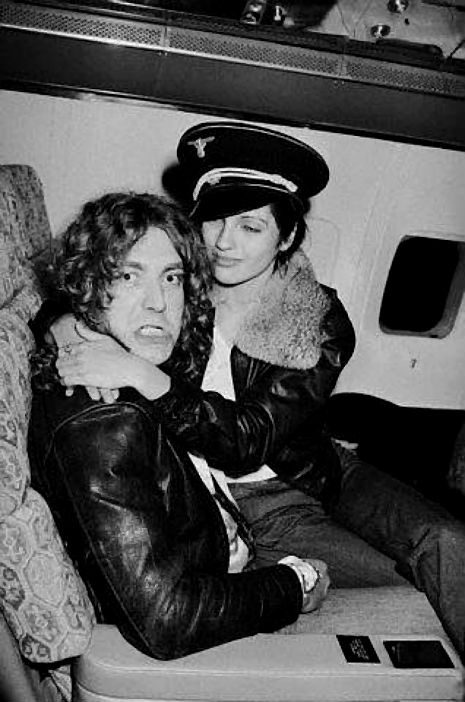
Someone I doubt very much who, in their early days, gave much thought to being carbon neutral and eco-aware is Robert Plant. Led Zeppelin came galloping into town like the four horsemen of the apocalypse, cruising on the jetstream of The Starship – their own private Boeing 720, crash-landing only to pillage and plunder and play some rock and roll before gallivanting out again in a haze of hennaed hair and the sighing swoons of every female within radius. Simpler times the ’70s, so they say. Eco-schmeco.

I met Robert Plant once. July 1995. I was working for Our Price, helping train the counter staff to use a new-fangled barcode scanning stock control system we’d invested in. The job took me everywhere from Inverness to Leeds and many places in-between. I travelled mainly by rail, read a ton of books as I did so and spent the duration of the job finding out where my £15 a night meal allowance would stretch to best. (The Qismat Tandoori in Elgin, if you’re interested.) In the July I was to go to our new shop at Glasgow Airport and begin training the staff on the ins and outs of our new payolla-proof system. Emptying my bag at my mum’s, I dumped most of the stuff I now deemed unnecessary for my time at the airport, including, crucially, my well-thumbed copy of Hammer Of The Gods, the infamous, unauthorised Led Zeppelin biography that dug the dirt on groupies, snapper fish and the physical and metaphorical muscle of Peter Grant. Of course, the first customer – the first customer! – through the door was only yer actual Robert Plant. As he arrived at the counter and the wee stack of CDs he was buying were being rung through, I engaged him in conversation.

I’ve just being reading a book about you.”

Oh yeah?” he said, genuinely interested.

Yeah… Hammer Of The Gods…” I offered.

Oh!” he said, with a wry smile, looking straight at me. He didn’t quite twirl those golden curls through his fingers the way he absent-mindedly did mid set in ’73, but he might as well have done. He was still a bit of a looker. The light from the Albert King CD he had been inspecting glinted in his clear blue eyes – rock god eyes that have seen more than you or I will ever see – and he spoke his words of wisdom.

Yeah… Jimmy didn’t come out of that one looking too good, did he now?!

It was at this point I was wishing I could get him to sign a CD, but with the counter being small, narrow and unpassable, there was no opportunity to squeeze past the most famous rock star I’d ever met and pick one from the racks. And by now I was cursing myself for having dumped the book from my bag. Then, out of the blue, the girl serving him presented him with the shop’s autograph book. “Yeah, sure,” he smiled, taking the pen she had offered.

Whoever had the foresight to stick an autograph book at the till in an airport record shop deserves a medal for quick thinking. It was full of all sorts – Bjork, Keith Floyd, Robert Downie Jr. There was even a wee Rolfaroo in there. Can we still mention that? Anyway, Robert happily obliged, adding his name in a large, swooping, blue inked signature. I noticed at the time (and can still picture in my head now) that it looked very similar to the ‘ZOSO‘ logo on Led Zep IV. A neat coincidence.


I’m not a rock fan by any means – all that pillaging and plundering and bare-chested daftness and whathaveye – but I do love a good amount of Led Zeppelin; those first four albums mainly, plus selected parts of Physical Graffiti. They’ve had their shameful moments, well-documented in that (genital) warts ‘n all book, but sometimes – most of the time? – it’s OK to separate the art from the dubiously-moralled artist. And shallow as I am, I am a sucker for a sloppily-played, turned up to 10 guitar riff. Sometimes, when the urge strikes, and usually only if the house is empty, nothing other will do than a proper baws oot blasting of Led Zeppelin.

Led Zeppelin Custard Pie

Custard Pie is the perfect example of that tight-but-loose label that Led Zep acquired, Jimmy’s guitar to the fore, slapdash and funky but ultra-together, propelled by a wall of thunder behind, the drums almost leading on the off-beat, John Paul Jones riffing around on a clavinet or something similar in the gaps in-between. Robert opts for a restrained guttural croon, rockin’ yet soulful. Swathes of wah-wah and wailing harmonica carry the song to its conclusion, a no-frills, no nonsense rock and roll boogie, Jimmy up the frets and playing to the very limits of his abilities.

Custard Pie is the riff my fingers fall into whenever I pick up a guitar these days. It’s a beauty, ideal for stretching the pinky and working on the timing of the right hand, although I usually give up sometime around the first notes of the lightning flash solo. I’ve no patience for cock rock wizardry such as that. Nor have I much truck with the outdated and iffy subject matter (a Plant-based diet of a very different sort). Great rockin’ tune but.

Hard-to-find

Jelly Wobbles

A lone, mournful mariachi plays out the last fading notes of a late night lament and gives way to an elastic band fretless bassline that slurs its way throughout the opening bars, the half-cut twin brother of any of those bending, wandering basslines from Tom Waits’ Nighthawks At The Diner. A Mancini Moon River harmonica ghosts between a vocal that’s up-front and centre-stage and singing guilty thoughts about infidelity and hard drugs. Nylon-stringed guitars scrub out a rhythm straight outta Brazil 1970 as the percussion plays on the off-beat; an itchy, scratchy güiro maybe, some congas perhaps, some metallic tingaling thing or other, slow and steady and as bossanova-tastic as the percussion function on an old Bontempi, but played for real by a group of super-talented musos with not only a keen ear for detail but the ability to execute it exactly.

JellyfishBedspring Kiss

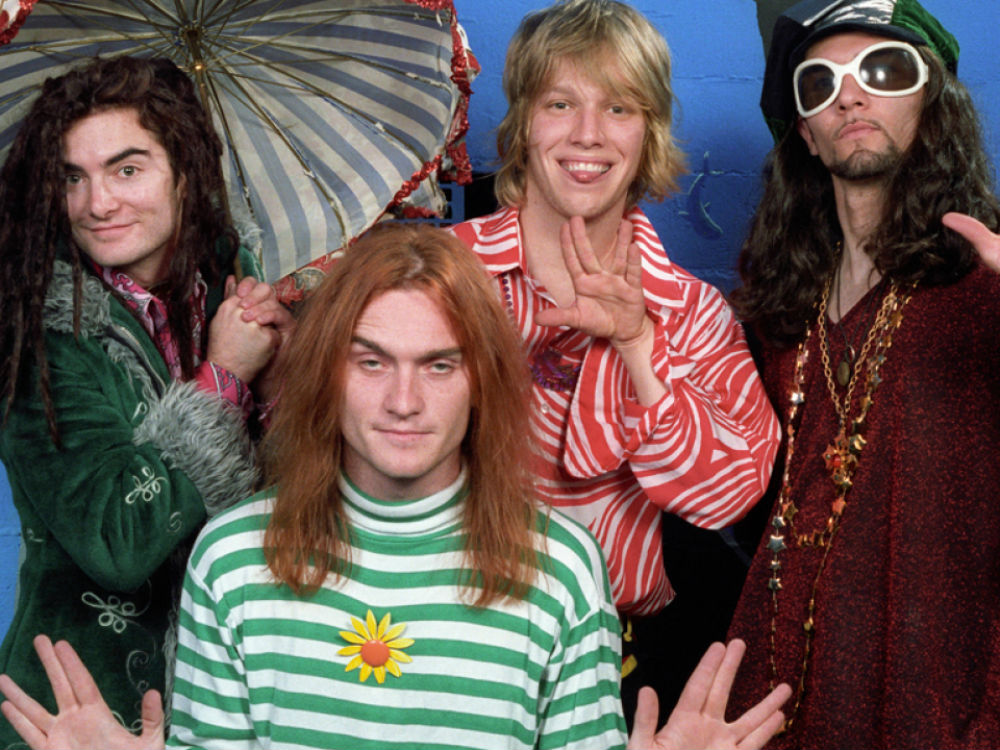
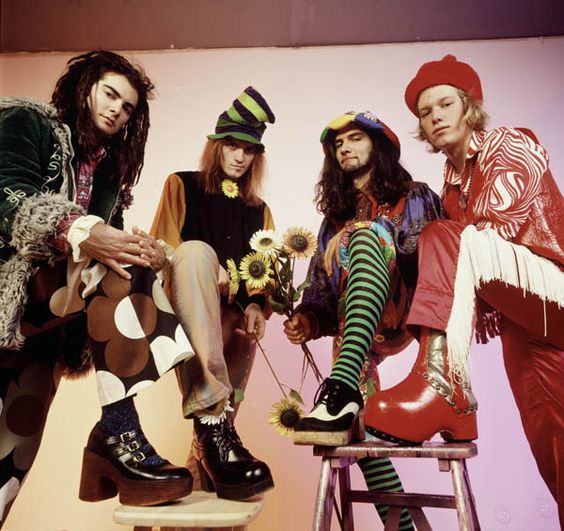
In their promo pictures they may have masqueraded as happy-go-lucky Haight-Ashbury hippies; in reality Jellyfish put just as much (and even more) effort into the finer details of their music as they did with their day-glo clothes and cartoon schtick.

You might be surprised to know they had less than little time for one another. Recording sessions were seemingly a non-stop round of arguments between singing, standing drummer Andy Sturmer and principal songwriter Roger Manning. That they created one terrific album, let alone two, is nothing short of amazing. The perfect amalgamation of Beatlish melancholy with XTC wonkiness and the Finn brothers’ ear for an unravelling melodic hook, Jellyfish on Bellybutton were especially great.

Bedspring Kiss, that track at the top, is sequenced in third-last place on its parent album. The worst place for a song to be perhaps, it’s often the track you brush over in your impatient haste to get to the big closers at the finish line  – Baby’s Coming Back and Calling Sarah in this case, multi-layered stacks of kaleidoscopic harmonies, handclaps and ringing, stinging guitars that reveal new things yet, thirty years later – but just for once, focus your attention on Bedspring Kiss and headswim in its depth and substance.

They’ve better songs, Jellyfish. Loads of ’em. But there’s something about this track that pulls you in, It’s not immediate in the way the other tracks on Bellybutton are. It forsakes much of the stuff that makes Jellyfish instantly likeable – the out of control Big Star-ish ramalama, the upbeat singalongasixties melodies, the ‘I’ve heard this before‘ Beach Boys by way of Queen (let that sink in) arrangements. In its own way, Bedspring Kiss is something of a forgotten mini-masterpiece. As is the whole album, for anyone who’s never indulged it.

Now, who has an old vinyl copy they’d be willing to donate to the Plain Or Pan Museum of Records?

Get This!, Hard-to-find, Kraut-y

Weirder Bremen

My Bloody Valentine damn-near bankrupted Creation to make an album only a fraction as exciting, as intense, as self-indulgent as Faust‘s Krautrock, a track so good they named an entire genre after it. Julian Cope, in his worth-stealing Krautrocksampler book, called the track ‘a continuation of (Faust’s) whole trip‘. He’s right, of course. A dozen minutes of head music; expansive, noisy and pretty, pretty essential. Kosmische!

Faust – Krautrock

It lurches in on a slur of stretched 3″ studio tape…or perhaps a divebombing whammy bar…and layered fuzz guitars, overlapped and saturated to white noise levels of intensity, fall into a snaking groove pattern, panned from left speaker to right and back again, an instant head trip.

Der-der-derder-der-duuh…Der-der-derder-der-duhh. From underneath the blanket of restrained, compressed noise creeps a tambourine, its steady rattling jangle enhancing the drumless, beatless rhythm that’s unfolding in front of your ears.

Here comes the bass…woody and electric, looped and repetitive, recorded in an era long before Ed Sheeran and KT Tunstall and even loopers themselves were a thing. Disciplined, repetitive and worming its way into your consciousness, it’s now the lead instrument, a counter-rhythm to the relentless guitar noizzze that came before. Dum-deh-dehdeh-deh-dum…Dum-deh-dehdeh-de-dum.

But wait…is that a vocal? Is it? A sort-of chanted, Tibetan monk-influenced calling from some far-off metaphorical mountaintop? Remember when John Lennon had this idea – and he had it first, by a good eight years – for Tomorrow Never Knows? This is what I think he had in mind, if indeed a vocal is even here at all. I mean, I think there is. I’m sure of it. I think I am.

And now there’re drums. It’s Keith Moon tripping up and falling down the stairs, landing the right way up and falling straight into the beat; propulsive, steady, not in your face but driving the whole thing ever-forwards.

That guitar ambience that kicked it all off? You’d forgotten about that, hadn’t you? It’s still there, of course, aural background wallpaper, the splashes of colour in an otherwise steady and unshowy room. But as soon as you remember the guitars, there they are, suddenly at the fore again; fizzing static bursts of beamed-in-from-the-outer-edges art rock and long, howling notes bent out of shape by distorted wah-wah and studio trickery. Just as your mind alters to the staggered groove – are we at the end of a bar or midway through? – a keyboard floats in, keeping time with its Farfisa parp. Or is it actually a manic Velvet’s violin, noise-as-art aesthetic, screeching/keeping time like John Cage on Black Angel’s Death Song, trying painfully to be heard above the apocalyptic din? Maybe it’s both. Who knows? Who cares?

Shh! Listen! That quiet, respectful popping noise you hear near the end is the sound of Stereolab crying into their Rice Krispies, totally defeated. We’ll never be as good as this, they admit, though they’ll continue to give it a good try.

Get This!

Ezra Pounding

This time a dozen years ago I was a gape-mouthed, goggle-eyed, free-spending tourist in New York City. Look up, look down, look all around, as the song goes. There’s something happening all the time no matter where you rest your eyes, although you should never rest your eyes in the one place in New York for very long. “Get outta the road ya freakin’ jerk!” shouted a commuting cyclist as I stepped into the cycle lane on the Brooklyn Bridge in an attempt to snap the most perfectly symmetrical of shots. I needed two goes, on account of the fact the cyclist damn-near killed me during my first attempt. Wow. Even the locals make you feel like you were a bit-part player in some never-ending, ever-changing movie.

One afternoon we took a trip on the Staten Island Ferry. We’d missed our chance at an actual trip to the Statue Of Liberty, but this ferry ride, the Rough Guide book assured us, afforded close-ups of the iconic landmark as the ferry shuttled across the Hudson River on its short journey between New York’s most out of the way borough and Manhattan. In the event, those close-ups weren’t all that close, but we dutifully snapped and posed and what have you like the tourists we undeniably were, the statue a Lego-sized symbol of freedom in the hazy background.

The greatest thing about the ferry ride was happening outside the terminal back on the Manhattan side. A group, a posse if you will, of breakdancing b-boys, all baggy pants and backwards Mets and Giants and Rangers caps were blasting proper old-school electro hip-hop from the largest ghetto blaster you can possibly imagine and were taking it in turns to breakdance; a wee gang of headspinning, robot-walking, toprocking and freezing show-offs. They were terrifc and they knew it. A memory of it will sometimes flash into my mind and I will kick myself for not taking a video clip – or even a solitary snapshot – of the spectacle. The simpler days before camera phones, I suppose.

Anyway.

Ezra Koenig is the vocalist and focal point of Vampire Weekend, one of a slew of weedy bands who grew from the cracks in the wake of the success of The Strokes in the early millenium. If you wore a guitar and size 28 inch jeans and lived within fringe-flopping distance of New York State, chances are you’d be offered a record contract by a label desperate to find the next guitar band to die for. I don’t mind Vampire Weekend in the slightest, but they inhabit that era in time for me when bands seemed to appear from nowhere and by the time they’d played the Barrowlands were onto their third or even fourth album. Where the fuckdiddilyuck did they come from? I’d often remark to no-one in particular. I’m too old, too lazy and too stuck in my ways to catch up. Oxford Comma though. Good tune with funny words. I like that. And Sunflower Bean. I like that too. I bet I’d be properly into them if I allowed myself.

SBTRKT is the shouty and vowel-shy nom de plume of Aaron Jerome, remixer to acts as diverse as Radiohead, MIA and Underworld. Sometimes glitch-itch-itchy and t-t-t-twitchy and sometimes turbo-charged, hi-gloss electronica, his music, much like those bands of the early noughties has pretty much passed me by too. This track has made its mark though.

SBTRKT featuring Ezra KoenigNew Dorp. New York.

IT’S BTY, WTH LYRC FROM ZR BTNW DRP, TWN N STTN SLND THT TKS T NM FRM TH DTCH PHRS FR NW TWN.

Damn! That’s impossible to keep doing.

Fading in on a whoosh of ambient New York traffic (though not on my version above, for some reason!), it’s the bass that hits you first, a proper subwoofing tectonic plate-mover. Almost immediately, the lyric threatens to fall into The Sweet’s …’and she thinks she’s the passionate one‘, but just as quickly falls into its own pattern. The vocals are flat and electronically treated, SBTRKT and an un-named female vocalist doing some sort of spoken word duet about New York and Manhattan and gargling gargoyles (tourist tip: always look up in old Gotham) and Ezra taking over with crisply annunciated words about cities to run and keys to the kingdom and the colour (or is that color?) yella.

My girl got a limousine, it’s a full-time job just to keep it clean,’ he says. ‘Got a speaker in the trunk y’know it weighs a ton…

Ezra, mate. Play this at any volume while you’re driving and you’re liable to stall and blow the windows in and blow the tires out, or at the very least be travel sick into your lap. I was once sick after a very loud band practice in my kitchen, the subfrequencies from the bass guitar bouncing off the tiles and zapping straight into my recently-eaten lunch, lying dormant in my stomach. Not for long…

I doubt Ezra ever practiced in a kitchen. An Ivy Leaguer from NYC, he’ll have got that record deal without too much bother. I’m glad he and SBTRKT found one another for that tune. Percussive, catchy and the creeping, claustrophobic cousin of David Essex’s Rock On, it’s the very definition of a banger; top of the Rock, top of the pops.

Get This!

Hello. I’m Harry.

I found myself drawn into Dirty Harry the other night. I channel-hopped my way into it during a hunt for some decent music telly just as it was starting and watched through eyes that hadn’t seen it for so long that watching it seemed like I was doing so for the first time.

It’s an accepted classic, of course, the loosely-based-on-a-true story of the Zodiac Killer – the pscychopathic Scorpio, a blackmailing maniac with a Van Morrison/Astral Weeks haircut – and you can’t get it out of your mind as you watch – who shoots women, hits school kids and extracts teeth from teenage girls, being hunted down by maverick cop Harry Callahan (no ‘g’). “Why do they call you ‘Dirty’?” his colleagues repeatedly ask, and Harry, played brilliantly by Clint Eastwood will stare them down into quiet, intimidated submission.

Harry lives by a set of police rules made for bending and frequently breaking, and has a list of against-the-book demeanours longer than the barrel of his Magnum. He’s forever being called into a supervisor’s office (or even to receive a fist-banging dressing down from the Mayor- wherever there’s a non-conformist ‘70s cop, there’s always a haranguing, popularity-infatuated mayor) where he’ll! be! shouted! at! with! incrEASING!! VOLUME!!! that culminates in a chewed “GETTHAHELLOUTTAHERECALLAHAN!!!!”, both Harry and his boss left under no doubt that Harry – Dirty Harry, remember, is off to bring justice to Scorpio by any means necessary.

Filmed in ‘70s San Francisco, the cinematography has a bleached-out, sun-kissed and almost-Instagramatic haze to it all; long, tracked shots of Lombard Street winding forever, the Golden Gate Bridge looming large, Alcatraz an unreferenced yet ominous permapresence out in the bay.

The night time scenes are so oily black as to be genuinely tense whenever the clock creeps around to the wee hours. Of course, homicidal maniacs as off-kilter as Scorpio only work under the grainy shadow of the moon, so whether Harry is running the gauntlet through a midnight wood full of propositioning perverts or he’s running breathlessly through a tunnel where you know – just know – that criminal elements lurk within or he’s running (again!) across neon-lit rooftops as bullets permanently alter the fascia of the building he’s conducting his stakeout from, Callahan spends a lot of his time in semi-darkness, semi out of breath and only ever a half-step away from life-threatening danger.

Dirty Harry is brilliantly scored by Lalo Schifrin. Knife stabs of brass puncture the murky silence whenever Harry and Scorpio’s eyes meet. Fingers-down-blackboard strings scrape across the more violent scenes. And all that running is scored by breathless, alarming, pitter-pattering percussion; frantic hi-hat action and rattling toms that replicate exactly the sound made by two sets of Cuban heels in pursuit of either freedom or justice, depending on who the camera is focused on, as they batter at full pelt down a San Franciscan sidewalk.

When are these people – the goodies as well as the baddies – going to realise that sneakers are so-called for that very reason?! A clomp of Harry’s boot heel on bare floorboard is always Scorpio’s cue to make a run for it, the tinkling, ringing vibraphone that helps build the tension giving way to full-blown percussive bombast. But then again, no Cuban heels, no highly-tense soundtrack.

Dirty Harry ThemeLalo Schifrin

‘I know what you’re thinking…” Harry says to Scorpio at the finale. ‘”Did he fire six shots or only five..? Well, to tell you the truth, in all this excitement, I’ve kinda lost track myself. But being this is a .44 Magnum, the most powerful handgun in the world, and would blow your head clean off, you’ve got to ask yourself one question: ‘Do I feel lucky?’ Well, do you, punk?’” 

A film that looks great, sounds great and has instantly quotable lines in it…they don’t make ’em like that anymore, do they?