Cover Versions, Double Nugget, Hard-to-find, Sampled

Van Go!

Van Morrison has the dubious honour of being the most boring, souless, bum-numbing act I’ve ever had the misfortune to endure live in concert. Sometime in the mid 90s (94? 95? I can’t quite remember) we went to see him at the Royal Concert Hall in Glasgow. It’s a terrific venue, unlike the vastness of the SECC it’s built for purpose, and everytime I’ve been there I’ve left wishing all my favourite arena-sized acts would play there. Van’s show that night was memorable for two reasons.

Firstly, Van was playing two nights in Glasgow on this tour. Our tickets, bought and paid for months in advance had gone missing in transit. By the time admin had caught up with this fact, the night we’d planned to attend was sold out. We were offered tickets for the next night instead, in prime middle of the house seats. Problem was, this night clashed with the football, and as a season ticket holder at Kilmarnock FC, I was torn between the big match with Rangers at home or the Van Morrison concert, an act I’d never yet seen live. I chose Van.

Secondly, and more crucially, Van had a bloody cheek to bill his show as a ‘Van Morrison‘ concert. His co-vocalist (I’d say backing vocalist, but as it transpired as the night unravelled, backing vocalist would have been a label more suited to Van himself) was Brian Kennedy, a Butlins’ Red Coat version of Marti Pellow, a Mr Darcy of a plank with flowing locks ‘n red suede coat ‘n cheshire cat grin ‘n all. To say Brian loved/loves himself would be a massive understatement. He posed and he preened and whenever Van gave him the nod, which was often, he’d let his Irish tenor’s warble loose on the best bits of Van’s back catalogue. It was criminal. Van seemed content to scowl and scat and hang onto his saxophone for comfort. Housewives’ favourite Brian performed his expensive take on karaoke for nigh on two hours and we all went home thoroughly underwhelmed. To put the tin lid on it, I think Killie secured a rare victory over the lavishly bonused tax dodgers from the Southside.  Ever get the feeling you’ve been cheated, as someone once quipped.

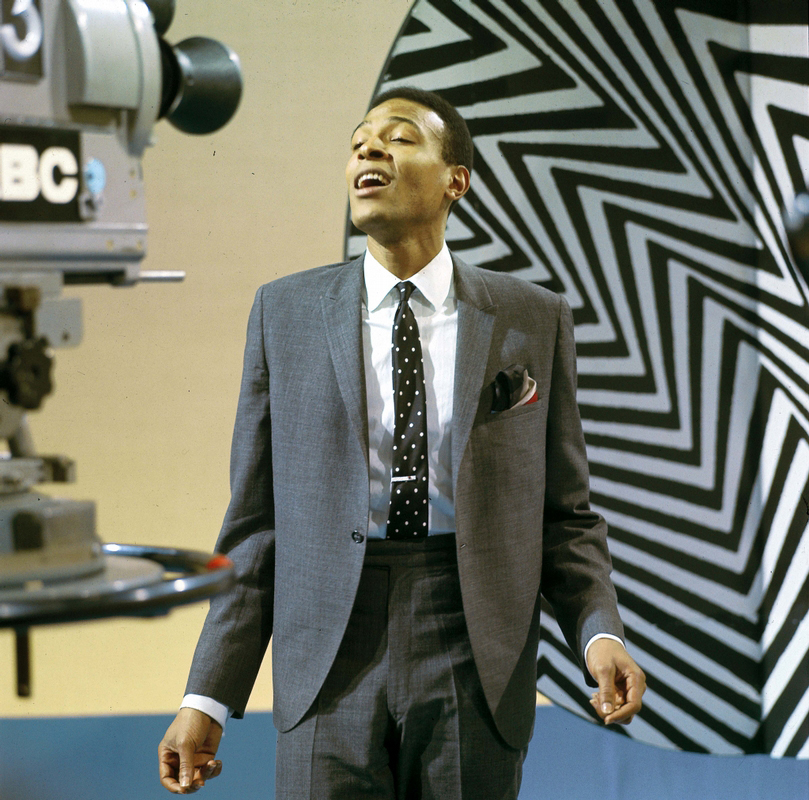
Anyway, long before Van was singing about brown eyed-girls or reminding us how much he loved us, he was Ivan Morrison, vocalist in Belfast’s Them.

van them

A Northern Irish equivalent to The Animals or The Troggs, Them played thumping caveman rhythm and blues with a snap and a snarl. On their second LP you’ll find I Can Only Give You Everything.

Them I Can Only Give You Everything;

A feral Van welds his vocal to a nagging fuzzed-up garage punk stomper. It‘s crazed, demented and absolutely magic; a glorious Cuban-heeled clattering racket, the sort of record that makes me want to throw Jaggeresque handclapping poses, grow my hair into a bowlcut and squeeze my fat feet into snooker cue-thin Chelsea boots.

Talking of haircuts, Beck sampled the riff for his own Devil’s Haircut tune, but you probably knew that already. Actually, he may have played the riff live, rather than merely sample it. Either way, Beck built his record around the riff.

I Can Only Give You Everything is everything you need in a record – it’s just over two and a half minutes long but you know how it goes after two and a half seconds. The fuzz guitar riff NEVER changes at all. A Farfisa (?) organ appears during the second verse before leading the inevitable instrumental break and key change halfway through. Throughout, Van sings with a soul and passion much missing in action that mid 90s Glasgow night. The whole thing kicks like a mule.

*Bonus tracks!

Here’s Patti Smith doing Them‘s Gloria, no doubt at the insistence of Lenny Kaye, guitarist in the Patti Smith Group and also the compiler of the terrific Nuggets LP, the Bible of garage rock.

lenny kaye

I like to think that Lenny discovered Them as a wide-eyed teenager and it was this that prompted him to learn guitar. Who knows?

Patti Smith Group Gloria

Jimi Hendrix Experience Gloria

Van Morrison and Them Gloria

Gone but not forgotten, Sampled

Miracle Worker

I’m a total sucker for 60s-70s soul. If you visit these pages from time to time you’ll know that already. I’m more of a Stax man than a Motown man. I’ve always considered Stax to be the rough ‘n tumble, snotty nosed version of its more well-known big brother. If Stax and Motown started school on the same day, it’d be Stax who came home with the knees out his new trousers, while brother Motown’s hair would look the same as it did at 9.00am and the creases in his trousers would still be sharp enough to put new life into an old pencil.

It’s amazing to think that at Stax, it was a relatively small band of musicians who played on much of the stuff. And it was the same at Motown. The Funk Brothers were the go-to band if you needed a recording in a hurry. Between 1959 and 1972 they added their signature breaks, beats and bouncing rhythms to many a radio standard – Baby Love, My Girl, Please Mr Postman, You Keep Me Hangin’ On, Let’s Get It On….the list is practically endless. They were in many ways Detroit’s answer to LA’s Wrecking Crew; seasoned studio pros who went about their business with the minimum of fuss and the maximum of funk.

marv tarplin

Marvin “Marv” Tarplin was never considered one of the Funk Brothers. You might never have heard of him, but you’ll certainly be familiar with his music.

Marv was Smokey Robinson‘s guitar player of choice, discovered when he accompanied a brand-new girl group called The Primettes at an audition for Smokey, then working in his capacity as in-house Motown producer. Smokey encouraged the girls to change their name to The Supremes and helped them on their way to stardom, but at a price – he nicked their guitar player for his own group.

It’s Marv’s clean, chiming picking that opens The Tracks Of My Tears and carries it to the heartbroken crescendo;

(Michael Caine voice) Not a lot of people know this, but Marv’s inspiration for The Tracks Of My Tears came from playing along to Harry Belafonte’s Banana Boat Song at 33rpm. That wee drop in the middle, when it’s just Marv playing a couple of chords? Until I’d heard Steely Dan’s Peg, I was convinced De La Soul had nicked it for Eye Know. (I know, I know…I can practically hear the ‘tut tut tuts‘ from a gazillion sample-spotting soul boys ‘n girls). Someone else should probably nick Marv’s bit. Thinking about it, somebody else probably has.

Back in my days of music retail, I had a loooong conversation with a regular customer over Charlie Parker’s playing style. The customer swore that Parker added little fluttering riffs at the end of the phrases he was playing and that, once he’d pointed it out I’d be able to spot a Charlie Parker solo a mile off. D’you know what? He was right.

As a guitar player, Marv was the polar opposite of Charlie Parker, with seemingly no distinctive style of his own. Clean and clipped, equally at home chopping out barred riffs or picking little runs, Marv’s style could best be described as The Ubiquitous Sound of Motown, which is not a bad playing style to have at all.

His playing graced a gazillion Motown hits – Going To a Go-Go, I Second That Emotion (above), but mainly Motown misses – I’ll be Doggone, Cruisin’, Still Water and many other minor tracks I’d need to Google. He loved a hammer-on with the pinky, he loved a simple-yet-effective running riff up and across the bass strings, and he was part of the reason Smokey Robinson and The Miracles made heartbreak sound so life-affirmingly uplifting. A real Miracle worker, if you will.

It wasn’t only Smokey who benefited from Marv’s guitar…

Marvin GAYE

Marvin Gaye‘s finger poppin’, hand clappin’ Ain’t That Peculiar features Marv’s ringing riffs and clipped guitar. A belter of mid 60s pop/soul, all pistol crack snare, stabbing brass and coo-cooing, doo-be-doo female backing vocals, Ain’t That Peculiar was a favourite of Phil Spector, who heard something in the piano breakdown midway through and went on to model the main riff for River Deep, Mountain High around it. S’true!


Cover Versions, demo, Gone but not forgotten, Hard-to-find, Sampled

Massive Attack

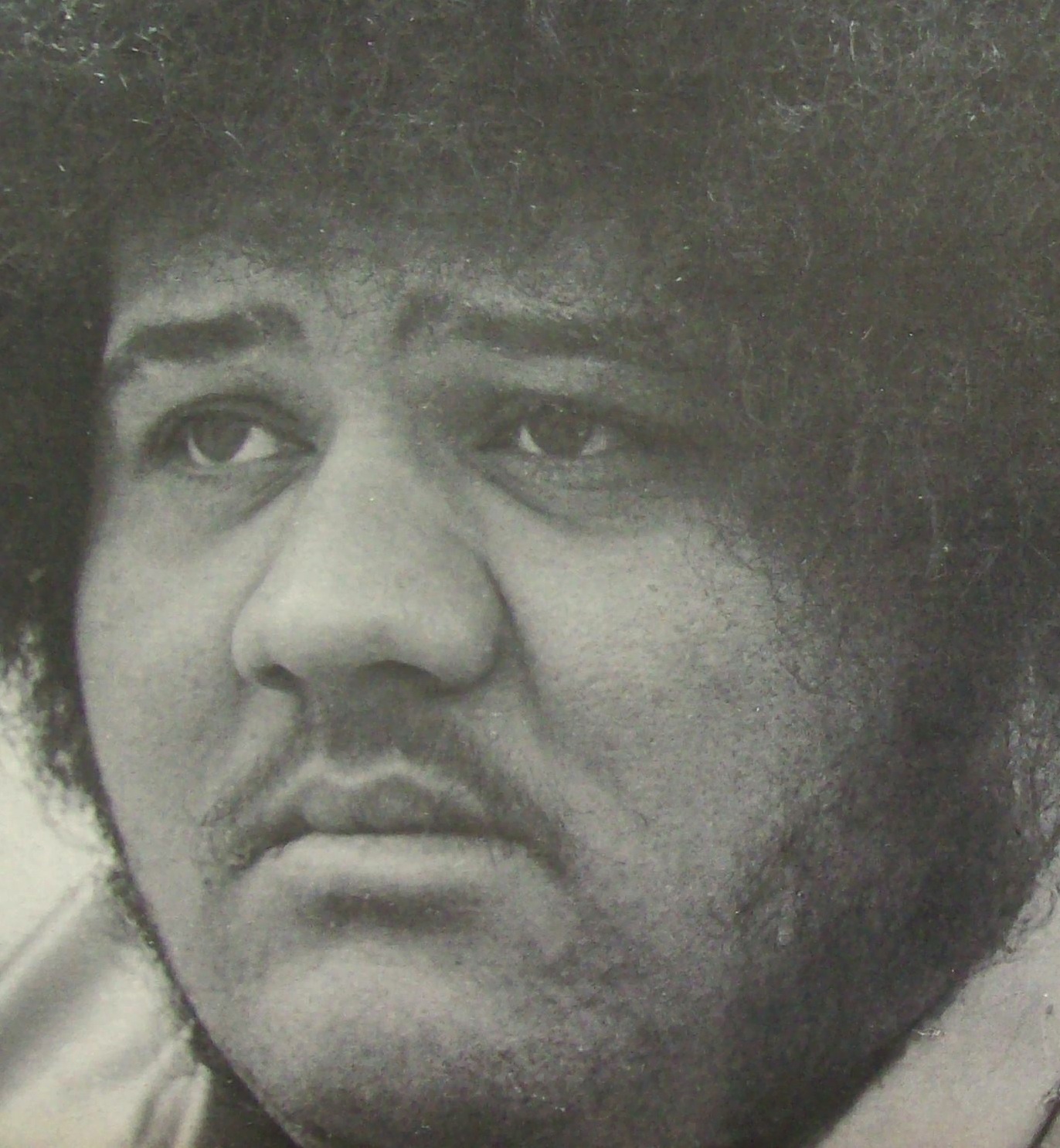
Baby Huey is one of the forgotten stars of 70’s soul, mainly because he died in October 1970 and it wasn’t until much later on, when his music was discovered by the hip-hop community that he gained any sort of acknowledgment.

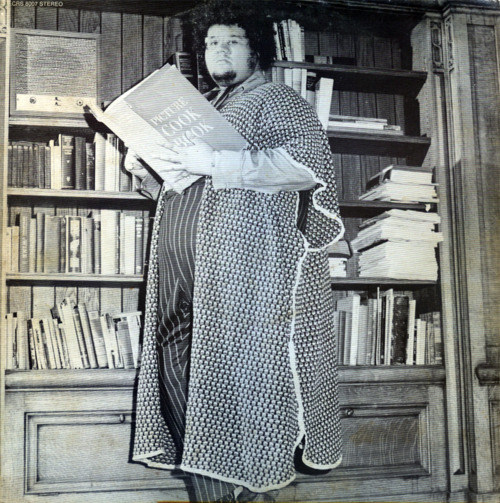
baby huey lp

Named after a 1950s cartoon duck, the ironically-monikered Huey was massive in every way – he was massively overweight (between 25 and 28 stones (or 350-400 lbs if you’re that way inclined), he wore his hair in a massive afro,  he had a massive voice and used it to create massive tunes. He was a massive drinker. He even had a massive heroin addiction to go with it all.

baby huey

He came to the attention of Curtis Mayfield and signed to his Curtom label. Mayfield became something of a mentor to him and gave him the songs that would make up the A and B sides of his first single. Mayfield also suggested he get rid of his band The Babysitters, forever stuck in a mid 60s Motown rut. Curtis wanted Huey to expand (no pun intended) his sound towards the more politicised, psychedelicised sound of the times, which, sacked band or otherwise, he achieved. Huey’s tunes are packed full of riffs, refrains and drum breaks galore. Huey liked his music to ebb and flow, bringing the band down so he could throw in a social commentary or two, before letting the band soar in a riot of bass and brass. His songs regularly stretch out beyond the 6 minute mark and (I’d wager) are a sampler’s delight.

baby huey 7

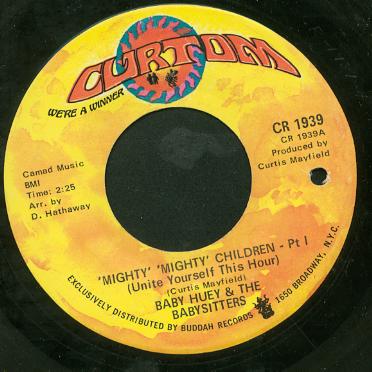
First single Mighty Mighty Children is a one-chord groover, held together by stabbing Blaxploitation brass, wah-wah ripples and pseudo live vocals. Mighty indeed.

Mighty Mighty Children (Part 1)

Here’s Listen To Me, Baby Huey’s 2nd (and final) single release. A stone cold lost classic, it‘s terrific! Beginning with a taught guitar riff and Huey’s big voice careering between balls-out soul belter and Is It Real Or Is It Memorex glass-shattering falsetto, it fairly gets carried along on a tidal wave of trumpets and electric keys, clattering cowbell and ‘Have Mercy Brother!’ soulful paraphrasing. I think you’ll like it;

Listen To Me

On the other hand, Huey’s version of Sam Cooke’s A Change Is Gonna Come is downbeat, treacle-thick and just shy of 10 long minutes. By the end you’ll be praying that a change is indeed gonna come. His wee spoken word part reminds me of James Brown or Isaac Hayes – all social conscience dressed up in occasionally trippy echoed sound effects. Settle in for the ride…

A Change Is Gonna Come

Most of these recording didn’t come out until after Huey was dead. An album, The Baby Huey Story was released to general indifference in 1971 and quickly forgotten about. My tracks come from the 1999 CD reissue that’s probably since been quickly forgotten about. You could do worse than track it down.

baby huey 2

Cover Versions, Sampled

Nick Wire

With their jagged, juddering, short, sharp, post-punk riffs, Wire were always ripe for rip-off. And so, along came Elastica

Three girls, one guy and a couple of borrowed Wire tunes:

  • Justine Frischmann. Brash, floppy-fringed, posh-parented and on/off squeeze of both Damon Albarn and Brett Anderson simultaneously. Charmingly, one would leave love bites on her backside for the other to find. But you knew that already.
  • Donna Matthews. Pouting, doe-eyed indie-boy poster girl who’s guitar always looked a bit too big for her.  Partook in way too much heroin.
  • Annie Holland. Razor-cheekboned bass player. The quiet one.
  • Justin Welch. Clem Burke-esque drummer who belched his way through Top 20 hit Line Up. Also partook in too many pills ‘n powders.

elastica signed

With their classic 2 guitars, bass and drums set-up and songs pilfered from post-punk’s recent past, Elastica were no different at all from any other provincial rehearsal room band. They were formed by Frischmann after she advertised for musicians ‘influenced by The Fall, The Stranglers, and Wire’, (something that would come back to haunt them) and when they came on the scene, the London-centric media held them up as the next big thing, helped in no small way through an endorsement by King Steve of Lamacq, Radio 1 DJ, label boss and indie uberlord. Elastica received far more column inches in the music press than any new band really had the right to. Rave review followed rave review. Cover followed cover. The public bought it and before you knew it, Elastica were the next big thing.

elastica

They couldn’t handle it though.  The simple ratio of too many drugs and not enough songs caused the band to implode. For Elastica, it would be a long stretch (aye!) before their second, long-since forgotten about LP.  5 years it took them to release it (a lifetime in the fickle, fad-dominated world of pop music), hot on the heels of a gap-filling mini LP of sorts. Then nothing.

elastica connection

Back to the debut album though. It fizzes with gay punk-pop abandon. Choc-full of those jagged, juddering, short, sharp post-punk riffs. Connection was the biggy. Number 17 with a bullet and proof, if any were needed, that Elastica were a bona fide chart success.

Proof, too, that Wire‘s Pink Flag LP was a regular rotator on the Elastica turntable. Here’s Three Girl Rhumba. The thieving mapgpies.

elastica line up

The belching drummer-enhanced opener Line Up was another.

Ever heard I Am the Fly by Wire? (Wait for the chorus…)

Elastica certainly had. The thieving magpies.

stranglers

Another crime was committed in the name of biggest hit single Waking Up, it’s twanging see-saw riff and chord structure totally ripping off The StranglersNo More Heroes.

Elastica just about stopped short of adding a bouncing Farfisa, but they were fooling no-one.

elastica waking up

And there are others. The album’s S.O.F.T. somehow manages to sound like most of The PixiesDoolittle LP in less than 4 minutes.  Vaseline‘s chorus could be Debbie Harry’s finest moment. Pop pilferers who got lucky. That just about sums Elastica up. Both The Stranglers and Wire secured out-of-court settlements for all of Elastica’s sticky-fingered troubles. Quite rightly too. it just goes to show, recycle any old tosh from the past and if it’s presented as the best thing ever since the last best thing ever, the gullible will buy it. You should seek out Wire’s Pink Flag if you haven’t heard it, though. You’d like it. S’a cracker.

Wire-1977-Pink-Flag

*Elastica Trivia!

Countdown fans may be able to work this out quicker than others, but who d’you think played keyboards on half the tracks on the first album? T’was none other than Dan Abnormal. Think about it…


Cover Versions, Gone but not forgotten, Sampled

James Brown Samples

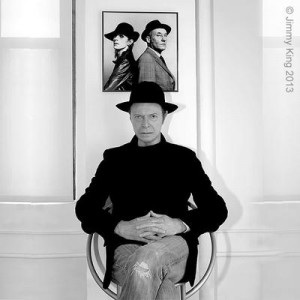
So, the most surprising, genuinely uplifting and fist-pumping pop moment of this week was, of course, the sneaking-out of the new David Bowie single with all the silence and stealth of a top-secret Radiohead campaign. And with an album to follow too! I like Where Are We Now?, it kinda reminds me of Wild Is The Wind or Loving The Alien or Always Crashing In The Same Car or any other of those other slow-burning beauties of his that appear fully-formed and worm their way into your head forever.

image

By sheer coincidence, about 10 minutes after hearing the Bowie single on 6 Music, the iPod threw up an old James Brown tune as I drove grudgingly to face the day. Not a tune that I had played very often (never?), I had to check as I drove what it was actually called. Turns out it was called Hot (I Need To Be Loved, Loved, Loved) and by the sounds of it was a classic example of mid 70s funk-period Brown. Y’know, not the pop-soul James Brown of Sex Machine or Papa’s Got A Brand New Bag, rather the big girl’s blousey James Brown of velvet flared suits and Rumble In The Jungle moustache. Less than a minute into it and I was asking myself where I’d heard it before. A classic stabbing Blaxploitation brass intro replete with Brown grunts before breaking down into the instantly recognisable groove – all super-slinky rinky-dink riffing and fluid, four-to-the-floor bass, conga breakdown and electric piano. Had I been trying to sleep, this would have caused me a sleepless night. Where had I heard it before? Where?

image

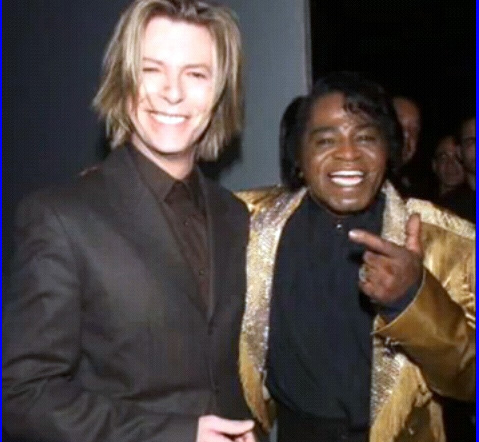
It came to me in the middle of the afternoon. Bowie! Fame! Fay-yame! Fay-yame, makes a man think things over. Fame fame fame fame fame fame fame fame fame! Bully for me! Bowie had nicked the riff to Hot (I Need To Be Loved, Loved, Loved), added some bitchy lyrics with the help of John Lennon (who sang the backing vocals and may or may not have played additional guitar, depending on what and where you read), changed the melody and passed it off as one of his own. Even the wee high chord that punctuated the verses was there. Bowie, in his mid 70s plastic soulboy incarnation had appropriated every tiny bit of it from James Brown! He even had the nerve to go on Soul Train and sell coals back to Newcastle.

Or so I thought…..

Checking the credits later on that night, I notice that Bowie’s Fame is credited to Bowie, Alomar and Lennon, and following some detective work on that last outpost in truth, the whole truth and nothing but the truth, Wikipedia, I discovered the track was built around a Carlos Alomar riff. Aye right, I thought. James Brown is the most sampled man in music. You’ve just gone one further, Bowie and ripped the whole thing off. Then I dug deeper. Turns out Carlos Alomar was in James Brown’s band for a bit in the mid 60s. Not only that, but that last outpost in truth, the whole truth and nothing but the truth claims that James Brown based Hot (I Need To Be Loved, Loved, Loved) on David Bowie’s Fame. He ripped off Bowie! There’s no mention of a Bowie credit on the James Brown version (not on my Star Time, Disc 4 info at any rate), so if Wiki is to be believed, James Brown turned from funky gamekeeper to funkier poacher. And got away with it.

brown bowie

Both tracks, it turns out, were recorded sometime in 1975 at Electric Lady Studios in New York, Bowie’s in January and Brown’s later on in the year. Carlos Alomar, having played with many of the band still backing James Brown at this time was, by all accounts, absolutely livid by the steal. Bowie was a bit cooler, agreeing to sue if the track became a hit, which it never did. It’s interesting to note that in the fully comprehensive booklet that accompanies the James Brown Star Time Box set, where recording personnel are meticulously listed, under Hot (I Need To Be Loved, Loved, Loved) it just says ‘backing by unknown personnel’, which, for me, is just about as good an admittance you’ll get that James Brown took the original Bowie track, dubbed out his voice and sang his own melody across the top. Just my theory, at any rate.

Contrast and compare:

David Bowie Fame

James Brown  Hot (I Need To Be Loved, Loved, Loved)

Some content on this page was disabled on November 22, 2016 as a result of a DMCA takedown notice from International Federation of the Phonographic Industry. You can learn more about the DMCA here:

https://wordpress.com/support/copyright-and-the-dmca/

Cover Versions, demo, Get This!, Hard-to-find, Peel Sessions, Sampled

Victoria Wood. Morrissey Did.

Rusholme Ruffians is The Smiths at their sticky-fingered peak. From the alliteratively-alluring Ealing comedyesque title down, it’s a masterclass in Morrissey’s stolen kitchen sink observations backed by a Johnny Marr riff flat-out filched from Scotty Moore via Elvis Presley’s (Marie’s The Name) His Latest Flame 1961 single.

smiths bw tumblr

By the time they came to record Rusholme Ruffians for second album Meat Is Murder, The Smiths were at the top of their game. As was usually the way, Johnny would present the band with a cassette demo. The musicians would go off and shape Marr’s ideas into a band performance while Morrissey would twist and turn what lyrics he had into the new tune, writing and re-writing as he went along until, between band and bard, they had the genesis of a song.  “Let’s do a song about the fair,” suggested Morrissey. “For some reason my association was to pull out that Elvis riff,” explained Marr.

His appropriation of the riff as a frantically scrubbed rockabilly knee-trembler alongside Mike Joyce’s rattlin’ and rollin’ percussion is in stark contrast to Andy Rourke’s slap happy elastic band of a bassline. Played at half the speed, it wouldn’t have sounded out of place on any mid-period Sly and the Family Stone record. Played as it was, it gives the tune that certain je ne sais quoi; the essential ingredient that turned an average Elvis pastiche into an undeniable Smiths’ tune. To use what is surely by now a cliche, Andy Rourke really was the unsung musical hero in The Smiths. And by the time the vocal went on top, well, an undeniable Smiths’ tune had become an undeniable Smiths’ classic.

As a child I was literally educated at fairgrounds. It was a place of tremendous violence and hate and stress and high romance and all the true vital things in life. It was really the patch of ground where you learned about everything simultaneously whether you wanted to or not.”

waltzers

The lyrics that poured out of Morrissey for Rusholme Ruffians are pure 24 carat gold. Every line features classic Morrisseyism after classic Morrisseyism; perfectly executed observations on what happens when the fair comes to town;

The last night of the fair, by the big wheel generator…a boy is stabbed and his money is grabbed and the air hangs heavy like a dulling wine…she is famous, she is funny…..an engagement ring doesn’t mean a thing to a mind consumed by brass (money)….and though I walk home alone…..I might walk home alone ….but my faith in love is still devout…..From a seat on a whirling waltzer …her skirt ascends for a watching eye …it’s a hideous trait on her mother’s side…someone falls in love, someone’s beaten up…..the grease in the hair of the speedway operator is all a tremulous heart requires…how quickly would I die if I jumped from the top of the parachutes….scratch my name on your arm with a fountain pen, this means you really love me….

Classic Morrisseyism after classic Morrisseyism.

Or are they?

victoria-wood

Morrissey was, and remains, a fan of slightly posh, slightly batty northern comedienne Victoria Wood. Her dry ruminations and reflections clearly struck a  chord with him, mirroring as they did his own skewed and melodramatic views on life and living. Sonically, she’s about as far removed from The Smiths as Take That are from the MC5, but her skits and sketches have proven a rich seam for mining lyrics and snippets that pop up across many Smiths recordings – ‘ten ton truck‘, ‘singing to the mentally ill‘, ‘not natural, normal or kind‘, the list goes on….

Wood’s 1983 concert album Lucky Bag was a big favourite of Morrissey’s. On the LP was a track called Fourteen Again. A track featuring a spoken-word intro, including a line proclaiming “they didn’t even know what drugs were” that the eagle-eared amongst you will recognise from the title track of The Queen Is Dead, Fourteen Again includes such lyrics as;

I want to be fourteen again, tattoo my self with a fountain pen….free rides on the waltzer off the fairground men for a promise of a snog….. the last night of the fair…..French kissing as the kiosks shut…..behind the generators with your coconut…..the coloured lights reflected in the Brylcream on his hair…..when I was funny, I was famous

OK, so he didn’t steal them all, and he came up with some genuine crackers of his own  – tremulous hearts and minds consumed by brass (money) and jumping from the tops of parachutes (the ‘skirt ascends‘ line is my favourite) but old Morrissey certainly utilised his love of Victoria Wood to full extent, that much is clear. And just in case you still aren’t convinced, the ‘my faith in love is still devout‘ line was taken from another Wood song, Funny How Things Turn Out, where she proclaims ‘my faith in myself is still devout’.

Hear for yourself:

Elvis Presley (Marie’s The Name) His Latest Flame

Victoria WoodFourteen Again

Victoria WoodFunny How Things Turn Out

The SmithsRusholme Ruffians (demo, first take recorded with John Porter July 1984)

The SmithsRusholme Ruffians (Peel Session 9th August, 1984)

The SmithsRusholme Ruffians (Meat Is Murder LP version, February 1985)

…and, acknowledging their debt to The King….The SmithsHis Latest Flame/Rusholme Ruffians (Rank LP version, recorded October 1986)

morrissey marr face 1985

Like This? Try these…

The Smiths How Soon Is Now explained

The Smiths A Rush And a Push explained

The Smiths There Is A Light That Never Goes Out explained

Johnny Marr’s Dansette Delights


Get This!, Gone but not forgotten, Sampled

Rapped. Rapt.

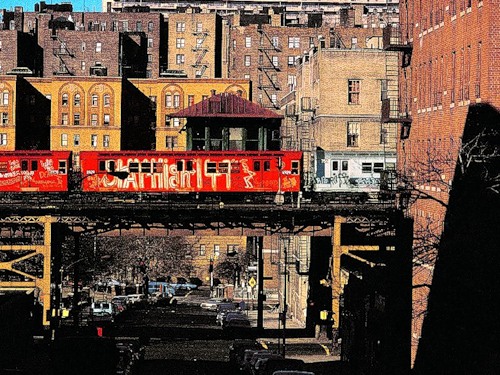
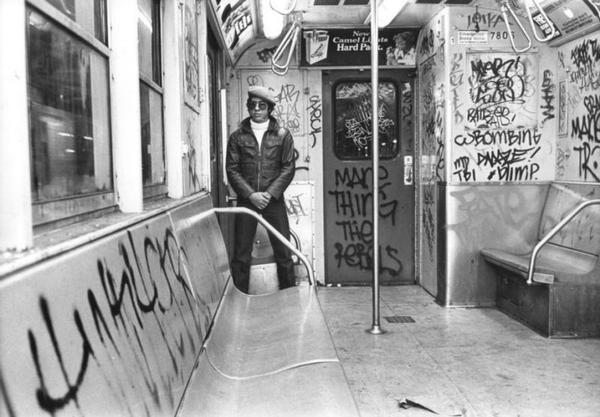
A fuggy haze hangs low over the East River between Manhattan’s Financial District and the brownstones of Brooklyn. Clattering like one of those wooden toy snakes across the Williamsburg Bridge weaves a long, low train, lazily rolling its way along the J line. Sprayed in a dulling array of  pinks, greens and primary colours, tagged to within an inch of illegibility to those over 35, its contents sit in silence, oblivious to the multi-coloured carnage in which they are cocooned. Inside is not much different. It looks violent. It feels violent. Doors, windows, seat coverings; every available surface space is thick with the same chunkily inked shout-outs to whoever is reading. Every passenger finds a point in front of themselves and focuses, daring not to lift their head and avert their gaze lest they happen to catch the eye of someone close by. Women clutch their bags and count the stops until they can get off. Men, the good ones, the ones who’d like to think of themselves as the have-a-go hero when something bad kicks off in here, try to look both non-threatening  yet tough. The bad ones just look threatening. And tough.

One of the good guys

If this was the start of a movie, it’d be soundtracked by this, Shambala from The Beastie BoysIll Communication LP. Purveyors of the finest gravel-throated shouty hip hop since 1981, Beastie Boys also did a mean line in often-overlooked instrumentals. Shambala is spacey, droney and built upon a bed of Buddhist chants and brooding wah-wah. Kinda vegetarian funk, I suppose. There’s a nice drop out where the hi-hat does its best Theme From Shaft impersonation before the clipped wah-wah brings us back to the incidental music in a 1976 episode of Starsky And Hutch. That wee scratchy noise you can hear in the background isn’t authentic vinyl hiss – it’s the sound of the Stone Roses taking notes in preparation for their next set of ker-ching! comeback dates.

Also on Ill Communication is Bobo On The Corner, another fantastic slice of Beastie funk. More clipped wah-wah and droney bass, this time the sampled Stubblefield-aping shuffle beat comes from, presumably, one of those New York street musicians who can make 3 oil drums and an empty can of vegetable oil from Chinatown sound like a particularly funky octopus playing Give It Up, Turn It Loose. A bit like this guy…(maybe he’s the real Bobo on the corner. Or maybe not)….

“Gimmefidollahs!”

If you prefer yer Ad Rocks ‘n MCAs ‘n Mike Ds rrrrrrappin ‘n rrrrrrhymin’, ch-check this out- Ch-Check It Out from 1997’s Hello Nasty, devoid of loops, samples and other assorted musical flim-flam. Just the 3 voices a-riffin’ and a-goofin’ off one another, like Benny and the Top Cat gang recast as super-bratty teenagers. And, bringing us back to where we came from, a vocal-only Stop That Train. Hot cuppa cwawfee and the do’nuts are dunkin’, Friday night and Jamica Queen’s funkin’. Essential!

Ach. Y’know you’re gettin on a bit when Beastie Boys start dying round about you. Rap on, MCA!

Gone but not forgotten, Hard-to-find, Sampled

It’s Chic Co. Time

Jeez! Plain Or Pan used to be all about Beta Band outtakes and multiple versions of La’s demos, the odd foosty soul survivor and long-forgotten obscurios by long-forgotten oddballs. It still is, of course, but just not today.

I have a long-time love of disco. To these ears, it doesn’t matter that it’s considered kinda naff and uncool, which, when placed next to any amount of other musical bits n’ pieces, it may well be. In the mid-late 70s, when straddled by the ugly, oiky twin-headed monster of glam and punk, it was certainly the musical choice for the straight-laced amongst society. Folk who bought one single a year bought Saturday Night Fever. Folk who bought one single a week owned the entire back catalogues of The Sweet and Sham 69. What I like about disco is the musicality of it all. If the Floyd (man) and Can (man) are head music, disco is most definitely music designed for below the waist. Rock music is, they say, ‘proper’ music. But so is disco! Made on proper instruments and played as well as or even better than the patchouli-smelling long hairs in afghan coats from bygone eras, disco is all about a slick riff, a fluid bassline and a four-to-the-floor, hi-hat enhanced beat that never lets the lyrics get in the way of a good groove.

The difference between rock and disco is that rock music has the virtuosos, the soloists and the guitar heroes. Who’s Pink Floyd’s guitarist? Easy, eh? But if I asked you to tell me who played the slick riffs on Night Fever or Rock Your Baby, chances are you’d be struggling. You could probably have a good stab at naming half the members of Can. But asked to tell me who played the fluid basslines on Car Wash or Young Hearts Run Free and chances are you’d be asking the audience or phoning a friend who answers to the name of Mr Google. Disco, for one reason or other has been ridiculed and put in its place as someway unimportant. Of course there are exceptions to the rule.

Nile Rodgers was developing serious Class A substance abuse at the age most of us are just getting to grips with the technicalities of Eagle-Eyed Action Man. Passed back and forth at a young age from East Coast to West Coast on a succession of Greyhound buses between his drug-addicted prostitute mother and far-off, far-out aunts and uncles on the other side of America, it’s a wonder he thrived at all. But thrive he did. Playing in a variety of  covers acts, reputation enhanced by his ability to read music, fate lead him to Bernard Edwards and eventually Chic were born. It was watching an early Roxy Music show that gave Nile his band’s manifesto: The clothes were as important as the music. The women on the record sleeves would give the band glamourous identity. Chic would be a company. An organization. Singers would come and go, but the core of Rodgers and Edwards would remain the constant. They’d write songs for other artists. They’d discover knew ones. Like an East Coast Family Stone, in sharp suits rather than hippy garb, but fuelled by the same high grade white powders, Chic and their music would rule the world. You know the songs. You know the stories. You can read all about it in Nile’s excellent ‘Le Freak‘ autobiography.

It’s worth noting that the Nile Rodgers’ guitar sound has been appropriated by the musos that form white rock’s guitar untouchables. Edwyn Collins’ blatant homage to the sound can be heard all the way from the opening bars to the fade out of Orange Juice’s Rip It Up (perhaps even more so on the strangulated none-more-80s 12″ mix). Johnny Marr was so enraptured by Nile that he based his guitar line on the second verse of The Boy With The Thorn In His Side on those wee choppy rinky-dink Chicisms. Johnny turned up earlier on in the year playing Le Freak on stage with Nile. And just in case you missed the point, he even named his son Nile. Dance records over the past decade or so, proper dance records, made by machines and everything, often stray close to the Chic sound. Modjo’s Lady for one. Spiller’s Groovejet another. And Stardust’s The Music Sounds Better With You. Chicesque, the three of ’em. Even Da Funk by Daft Punk is built around that clipped guitar sound. Ubiquitous. Is that not what they say?

Here are some of the Chic Organization’s wonderful world-ruling results. Every one features Bernard’s ripe-for-sampling, slap-happy, fluid-as-mercury bassline and Nile’s trademark 3 string rinky-dink guitar, chattering away incessantly in the background like a couple of old ladies clacking their false teeth at one another down the Mecca on a Saturday night. It might just be my favourite sound in music.

ChicGood Times

Norma JeanSorcerer (12″ mix)

Diana RossUpside Down (original Chic mix)

Sister SledgeThinking Of You (Dimitri From Paris mix – officially sanctioned by Chic, it’s a cracker)

Carly SimonWhy (12″ mix)

And the influence of Good Times et al lives on, seemingly forever…

Get This!, Sampled

It’s Written In The Stars

It’s Written In The Stars was a Simon Dine-orchestrated piece of 21st century mod-pop, all sampled horns, chugging guitars and stuttering Beatles ending that Paul Weller managed to drag into the Top 10, the one shining light on the ironically-titled Illumination album. In the desperate hope that it might be a return to form, Weller fans’ll buy anything he’s done, hence the Top 10 success of the single and the Number 1 achievement of the LP. But that doesn’t mean they’re all good. It’s Written In The Stars should’ve probably been included in the Weller post below, but fell outwith the criteria set by not being on any of the last 3 LPs in the Weller canon.

Anyway. It’s Written In The Stars. A modern idiom, a fancy phrase for ‘fate’. Think of it what you will. Celestial intervention that brings two people together. Unseen influences that affect the supposed outcome of a situation. Cosmic forces that align at just the right moment. I’m thinking 18th March 2012. You’ll have your own ideas, I’m sure.

Born Under A Bad Sign was written by Booker T and William Bell in 1967 and is now something of a (yaaaawn) blues standard. You may be familiar with Albert King‘s stinging Stax original, or Cream‘s rollicking version a couple of years later. Perhaps you know it in mind-melting space-blues style from the posthumous Jimi HendrixBlues‘ album. Or maybe you grew up listening to your Dad playing Rita Coolidge’s surprisingly soulful 1971 take on events. Her version reminds me a wee bit of the Taggart theme tune. Google it if you’re not from the West of Scotland….

But I digress. I honestly find hoary old blues standards a great big bore. All that widdling about on the guitar, 25 lightning-slick notes when 4’ll do doesn’t really do much for me. Luckily, Born Under A Bad Sign also happens to be a track by everybody’s favourite modern-day retro guitar man, Richard Hawley. My blues-fearing heart skipped a beat when I first read the tracklist of 2006’s Coles Corner, an album that on first play had so much pathos and introspection seeping from every gilt-edged chord change I couldn’t believe Hawley would go and spoil it all by letting rip on something so pub rock. Panic over! As the descending guitar riff and glockenspiels kicked it off, and Hawley began channelling his inner Duane Eddy I could rest easy. Not a blues standard at all, but a brilliantly crooned piece of art. With real depth to the sound of it all, this track and the rest of the Coles Corner album deserves to be heard through good old-fashioned big fuck-off hi-fi speakers. Not yer bog standard iPod excuse for a set of headphones. Not yer in-built laptop speakers. Not even on the speakers I have attached to my PC, and they’re actually pretty decent. Nope. Proper music should be heard on proper speakers. But you knew that already.

The ying to Richard Hawley’s yang, Born Under A Good Sign is a track you can find on Teenage Fanclub‘s Man-Made album. I’ll be honest with you here as well. Teenage Fanclub are just about my favourite band on the planet but I never really ‘got’ Man-Made. Too downbeat. Too introspective. Muddy production. Not enough of those trademark 3 part harmonies and chiming guitars. There are some good moments on it, just not enough great ones. Don’t shoot me – it’s not my fault the band have set their own ludicrously high standards. But one of the great moments, not just on this album, but in the whole TFC ouvre is Born Under A Good Sign. A breathlessly frantic knee-trembler of a record, it was written by Gerry Love long before he mellowed out (Mellow Doubt, hey!) and recorded 2012’s Album Of The Year with his Lightships. All garage fuzz guitars and looping 2 chord verses, it comes across like a fast version of Patti Smith’s Dancin’ Barefoot, until the acid-fried solo kicks in and it begins to sound like something Love might’ve recorded around the time of Da Capo. Truly a 2 minute thing of beauty, it would force a three-way photo-finish along with Sparky’s Dream and Radio in a sprint to the end. Born Under A Good Sign also deserves to be heard through the best speakers you can find. Maybe I should take this approach and try listening to Man-Made again.

While I’m doing so, I might even read Gerry’s ‘6 Of The Best‘ once again. I urge you to do likewise.

Cover Versions, Dylanish, Sampled

Rods And Mockers

Like many people of a certain age (and that includes you, you! and YOU! reading this, judging by the profiles of those of you who so far have ‘liked‘ us on Facebook – thanks!), I grew up with the sound of my Dad’s record collection playing regularly in the background.  With no insider knowledge of what was hip or otherwise, I’d happily hum along to any old rubbish if it had a good tune and a catchy melody. When I started making my own friend-influenced choices about music, my dad’s record collection suddenly became something to be embarrassed about and I’d do my best to steer clear of it with all the gusto normally reserved for a smelly old man approaching with a big shitty stick. More fool me, as that meant an almost teenage-long love affair with Hipsway whilst living in denial of anything Beatles, Stones, and Dylan related. A few years down the line, of course, I nicked all the good bits and they now sit happily on the shelves behind where I’m currently typing. Nowadays, I tend not to play many Beatles, Stones or Dylan LPs. They’re all there (taps head), stored on my own limitless hard-drive and can be accessed wherever and whenever required. Better not being played here than not being played at my Dad’s, I could ration quite easily.

Another of the sounds regularly playing in the background of my formative years was that of Rod Stewart. Cooking, car journeys and Christmas. Rod was always around. When I first heard him, he would’ve been in his ridiculous late 70s disco pomp, a walking fire hazard dressed in skin tight black satin pants and flouncy Bet Lynch blouse, blow wave topped off with enough hair spray to choke a horse and asking if you thought he was sexy. Even at the age of 9 I knew he wasn’t, although my Mum would perhaps have disagreed. Rod was an easy target at the tail-end of the 70s and right through the 80s. A crucial half-step behind the sounds and styles of the day, he was never too far away from a leopard-skin print or a tartan travel rug. He could often be found in day-glo lycra and wearing sun visors and pixie boots.  For uncultured wee boys like myself he was the pink satin tour-jacketed guy with the daft haircut. To the new breed of post-punk musicians, he was the enemy. The champagne swilling playboy, stoating’ out of nightclubs with a wee stoater on each arm. Film stars, models and all manner of  beautiful people dangled off him like the ridiculously sparkly earrings that fell from his lobes.

Winner of The Britt Awards, 1975

But despite the obvious distractions, he made some great records.

As I was getting stuff together for this piece, a thread on the Word magazine blog suggested that had poor old Rod died in 1975, he’d have been held up as one of the greats. A Syd Barrett or a Nick Drake or whoever. As he’s still with us however, he’s just Rod Stewart. Kinda irrelevant in this day and age but more than capable of selling out venues across the planet without any decent new material (but a phenomenal back catalogue) to back him up. Of course, as I know now, early 70s Rod was where it was at. In his prime he was magic. In tandem with The Faces  he made some of the finest records of the time, records that still stand up today. The Faces was all about the feeling, the vibe, the playing, man. I kinda get the feeling that, no matter how much I love those records, The Faces had to be seen live to really be appreciated. And not with Mick Hucknall on vocals either. (C’mon Rod, what’s the problem?) When you listen to solo Rod, it’s all about the writing and the arranging. Rod’s a terrific writer. Ballads, blues or ballsy rockers, he writes them all. He’s also a terrific arranger, a master at taking other people’s songs and turning them into radio-friendly unit shifters. Tom Waits, Crazy Horse’s Danny Whitten, half of Motown and that guy from Scottish also-rans Superstar have all felt the clink of coins in their pocket following a Rod recording session. But you knew all that already.

Easily my favourite Rod arrangements is his take on Bob Dylan‘s Mama You Been On  My Mind. Bob’s original is essentially an unfinished demo, a sketch of an idea of a song written around the time of ‘Another Side of Bob Dylan‘. It coulda been a classic in the Dylan canon, but Dylan in 1964 was spewing out songs of this quality seemingly at will and his own version fell mostly by the wayside. Rod gives it the kiss of life. He takes the demo by the scruff of the neck and reinvents it as a Maggie May-esque 12 string and pedal steel classic. The phrasing! Rod is incredible on this record. It’s available on 1972′s ‘Never A Dull Moment’. My Dad doesn’t know it, cos he only has the Greatest Hits and whatever studio albums Rod was releasing at Christmases 79-85. After that it was a post-Live Aid Queen that rocked his world.  Do yourself a favour and download it here.

*Bonus Track!

See that Da Ya Think I’m Sexy? Have a wee listen to Bobby Womack’s If You Want My Love, Put Something Down On It and see where crafty old Rod got the inspiration for the hook. Got the inspiration? That should read ‘stole‘. And as far as I can tell, nary a writing credit either. Shame on you Rod.

Rod ‘n Elton ‘n Lana Hamilton, Studio 54, 1978