Live!

The Cavern-ous Club

There’s a dilemma whenever a superstar rolls into town. Do you suck up the high ticket price in order to be in the same room as one of the greats or do you steadfastly refuse to pay over the odds to be sat in a seat so far from the stage that they share different post codes? Let’s face it. Paul McCartney is never going to play King Tuts. And bar the highly unlikely event of there being a BBC-endorsed ticket-ballot for a gig at the Barrowlands, the only way you’ll get (cough) up close and personal with McCartney is at a venue like the vast Hydro, the 3rd busiest concert venue on the planet. So, earlier in the year when the McCartney show was announced, I grouched and grumbled about the venue and the ticket prices…..then grouched and grumbled when I was placed on a waiting list to get on the pre-sale list and grouched and grumbled some more when I received an email to tell me due to ‘unexpected demand’ I’d been unlucky in securing tickets. In other words, it was sold out and I wasn’t going.

Thanks then to the unexpected bonus of a pal being invited to a family wedding the same night. His tickets were snapped up quicker than you can say “Fab!“, even if his seats were in the actual back row of the highest tier in the largest indoor venue in the land. The High-dro, as I nicknamed it for the night. We were so high up, the fake snow that fell on the audience during the seasonal Wonderful Christmastime fell from below us. Really! I’m sure I caught site of McCartney’s private helicopter at one point, hovering underneath us as the last loving notes of The End faded off and out into the ether.
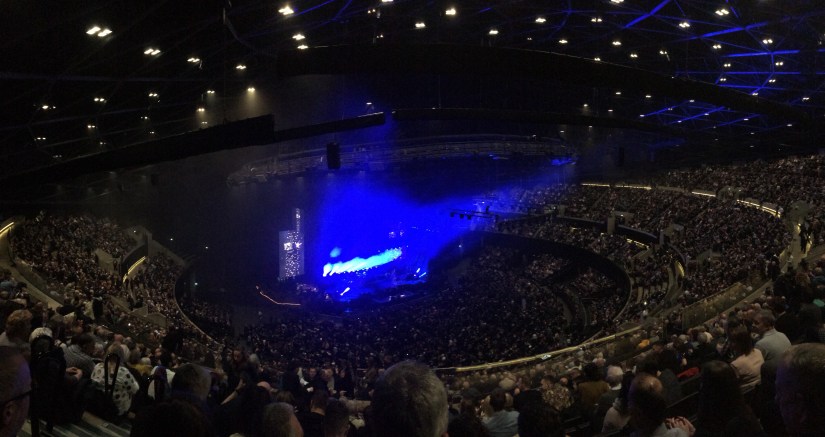
Had it been an all-standing affair on the ground floor, it might’ve been very different. I’d hatched a plan to blag my way into the standing area by fair means or foul, a ‘plan’ that involved waiting until the ticket checker(s) on the door of the ground floor were distracted before dashing in and vanishing amongst the crowd. In the event, we were able to saunter through to the ground floor area unhindered (and man, once clear inside did we swagger with gallus abandon), only to be met with the surprising site of the whole area covered in seats. There was no standing area at all, not even a golden circle-type affair at the very front. A hike to the third floor it was.

Photo copyright of Stuart Westwood*, used by permission.

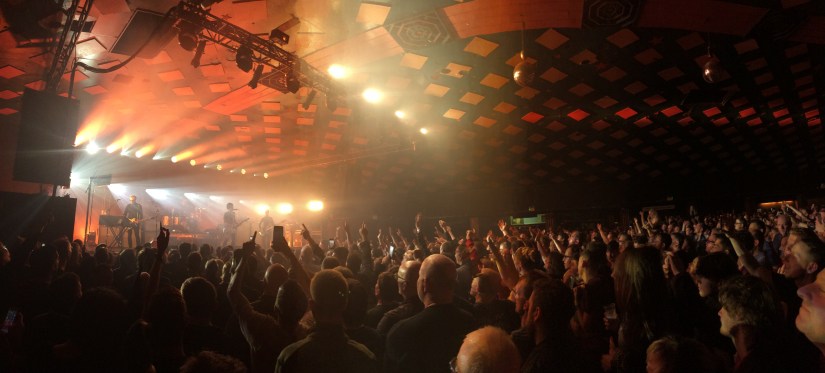
Not to matter. As Beatle Paul in his Beatle boots stomps his way through a rattlin’ and rollin’ A Hard Day’s Night, he doesn’t seem that far away. With his ‘tween song patter; all Beatles memories and moist-eyed tributes to his former bandmates, and video projections; a mix of goofy Beatles moments, swirling psychedelics and the occasional Rock Band graphic, he has the uncanny knack of making you feel he’s right there in front of you. Well, he is, but not actually right there. He’s down there. Waaaaay down there. We’re in the Cavern(ous) Club and he’s more Small McCartney than Paul McCartney, but man!, he’s on such great form that it hardly matters.

I know you’re here for the Beatles’ numbers,” he says mid set. “…as the venue goes all twinkly with yer mobile phones. When we play our new stuff…..” he pauses for comic effect, “Black hole!

McCartney indeed knows exactly what his audience is here for and for 3 hours, he unwraps a 39-song set that’s heavy on the hits from all eras of his career. His band is basically a beat band; two guitars, keys and drums, with occassional augmentation from a brass section, and they’ve got those Beatles harmonies and Beatles riffs down to a tee. They share mics, Beatles-fashion on Can’t Buy Me Love. They trade bluesy licks and John and Paul call-and-response vocals on a fantastic I’ve Got A Feeling. They huddle around a small drum kit for a mid-set run through of Love Me Do, sounding as fresh as the besuited moptops did on the day they recorded it. There’s a surprising, excellent In Spite Of All The Danger, the track demoed by The Quarrymen that ignited the Lennon/McCartney partnership. And there’s tons more; mid-period Beatles is represented by a sprightly Got To Get You Into My Life and a faithful Eleanor Rigby. Then there’s Blackbird…..We Can Work It Out….Lady Madonna…..Being For The Benefit Of Mr Kite…..Back In The USSR…..Birthday……a majestic Something, started on one of George’s old ukeleles and finished in arena-friendly soft rock fashion…….an incredible selection of songs, all played exactly as you’d expect them to sound. McCartney’s voice may be a little shot here and there (and gone completely on the odd high note) but his band (and audience) more than cover with warm harmonies and killer musicianship.

McCartney in Glasgow. Photographer in Ayrshire.

Arguably, the Wings material is even stronger. The band The Beatles coulda been indeed. Longer, drawn out and more suited to arena rock than those early days Beatles’ numbers, they sizzle. Literally in the case of Live And Let Die whose indoor fireworks caused great excitement. The slow-creeping firework smoke finally found us midway through Hey Jude‘s na-na-na-nana-na-nas, a welcome smokescreen for the sudden tears that had caught me off-guard midway through a rollicking Band On The Run and hadn’t quite abated. Who knew ol’ 76 year old Paul, the groovy grandad in tight-fitting bespoke denim jacket with double thumbs aloft after every song could have such an effect?!? The effect continues through the spectacular ending. Following a rockin’ Sgt Pepper’s Reprise and a rollin’ Helter Skelter, McCartney returns to the piano for a heartstring-pulling Golden Slumbers. The Abbey Road medley follows, McCartney pulling on his Les Paul for a rocktastic triple guitar salvo in The End. It’s the perfect finish to a perfect show.

McCartney in Glasgow. Photographer still in Ayrshire.

Given his age and given the fact that entire bands’ careers have come and gone since the last time he played Glasgow, it’d be a brave person who’d suggest they’ll see another Paul McCartney show in Scotland any time soon. It was a thrill to be present last night. Haste ye back, Paul.

Paul’s back!

* Unlike me, Stuart Westwood takes some of the best gig photos you’ll ever see. He was permitted to snap during just the first two songs last night then had to leave to get his shots to the agency who syndicates them around the world. That’s dedication for ye. He has been nominated for a Gold Award by the Society of Photographers in their Photos of the Year category. Look out for his name in the credits whenever a great gig shot grabs your attention.
Live!

Choose Your Guitar Heroes Wisely And They’ll Never Let You Down


Such is the depth of his catalogue, Johnny Marr can put together a 20 song set that has something for everyone. From the opening new wave sheen of Tracers, all electrified twang and icy synths via a giddy, galloping Bigmouth Strikes Again and a choice selection of Smiths tracks that, let’s be honest, is what the majority of the audience came to hear, a Johnny show is wholly entertaining and, in an era of triple-figure ticket prices, reassuringly recession-friendly and value for money.

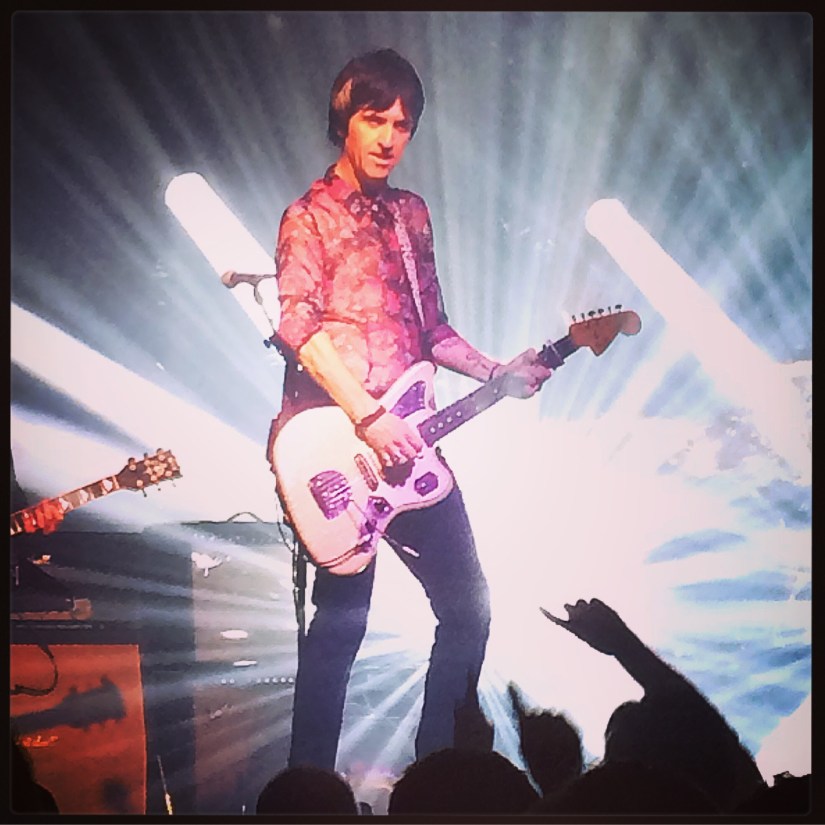
An early set dip focuses too closely on tracks from current album Call The Comet but when he breaks into the perennial evergreen Getting Away With It – “a disco song from England,” – the show goes into orbit. Mid-way through, white hot strobes switch to sparkling glitter ball, perfect given the Barrowland’s history, and the band’s electro disco throb gives way to Marr’s chiming guitar, little arpeggios of untamed joy ricocheting out across the heads of an ecstatic audience. He gives good face, does Johnny. Whether he’s pulling guitar hero poses from atop the monitor or fixing his eyes on the array of smartphones in the audience or leaning back with his eyes closed as his fingers coax unstoppable melody from his fretboard, he does so knowing full-well his image will be shared on social media platforms the world over.


 “Any requests?” he teases before he leads his band into an impromptu run-through of Kylie’s Can’t Get You Out Of My Head. A snippet of the riff from This Charming Man causes 1800 folk of a certain age to go heart-stoppingly  weak at the knees before he  slides into an imperial take on Electronic’s Get The Message. On this tour, Marr is fast becoming the indie version of his good pal Nile Rodgers, building a set of crowd pleasing hits and choice cuts from across his back catalogue and it’s the second hour of the show that truly sparkles; A brooding, gothic Last Night I Dreamt Somebody Loved Me. A trippy How Soon Is Now?, bathed in a blue and green fug with Marr wringing merry hell from his vintage Jaguar.

More Smiths follows in the encore, ensuring no-one goes home disappointed. A beautiful, lilting Please Please Please Let Me Get What I Want harks back to the heady days of Smithdom, the entire audience wrung out and hung out to dry. It’s followed by an incredible There Is A Light That Never Goes Out, Johnny  dedicating it to “everyone in here and no-one else” before leading a euphoric call and response mass communion in the chorus. He rounds things off with a breakneck run-through of You Just Haven’t Earned It Yet, Baby, pulls another guitar pose, holds his hands aloft like a prize fighter– a featherweight, in his case, and skips off stage to rapturous applause. For generations who never saw and will never see The Smiths, this is as close as it gets. Spectacular stuff.


*this article was intended for publication in a national newspaper who were happy to run it but informed me there’d be no payment. It’s on here instead.

Live!

All You Need Is Love

There are things I want to do, goes the opening line on Teenage Fanclub‘s evergreen Alcoholiday. But I don’t know if they will be with you…

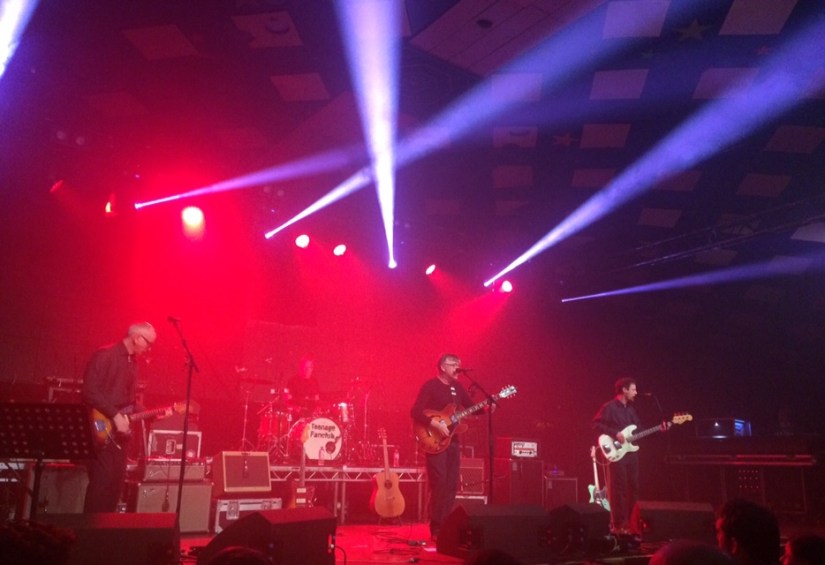
When, back in April, the greatest band of the last 25 or so years (and I’m up for a fight if you disagree) announced a run of shows to mark the re-release of their Creation Records era, only the quickest off the mark were fortunate to bag the recession-friendly season ticket deal. The rest of us – myself included – had to make do with the scramble for individual tickets, a moderately costly affair when taking into account the surprising but welcome “me too!” from both Mrs POP and daughter. Night 2 was the wallet-buster for me, but as it would turn out, a priceless one also.

What was initially billed as a celebration of the band’s glory years turned into something else entirely when, out of the blue, founding Fanny Gerry Love announced he was leaving the band. Social media was filled with tear-soaked declarations and outpourings of grief. The world briefly stopped spinning on its axis. Candles were lit. Posters torn down. Records (yer original Creation pressings, natch – those re-releases were still in production) were spun. The only thing missing was a digital book of condolence. It seemed that Teenage Fanclub fans were just Take That fans in denim and desert boots. “Gerry! No! How could you?!?” scans just as easily as “Robbie! No! How could you?!?” does it not?

The three shows were marvellous. I say this as a veteran of Teenage Fanclub shows since 1990. They were right up there as some of the best TFC shows I’ve seen; King Tuts dressed in Elvis impersonator gear around Christmas of ’91, the Grand Ole Opry show in ’97 (?) and the Bandwagonesque revisted show from 12 years ago where, as they did this week, they played 2 excellent sets on the same night.

The triptych of shows this week featured Bandwagonesque and Thirteen on Monday night, Grand Prix and Songs From Northern Britain on Tuesday before Howdy! and a set of rarely-played b-sides brought the proceedings to a clanging close on Wednesday. Five albums played in chronological order plus a set of Fanclub curios. 75 songs all in, as Norman announced before the final song on Wednesday. It’s no wonder that the bulk of the crowd was made up of the same folk each night. This was more one big gig with a few hours sleep between sets than 3 individual shows. In football parlance, Monday night was the first half, Tuesday the second, with extra time on Wednesday.

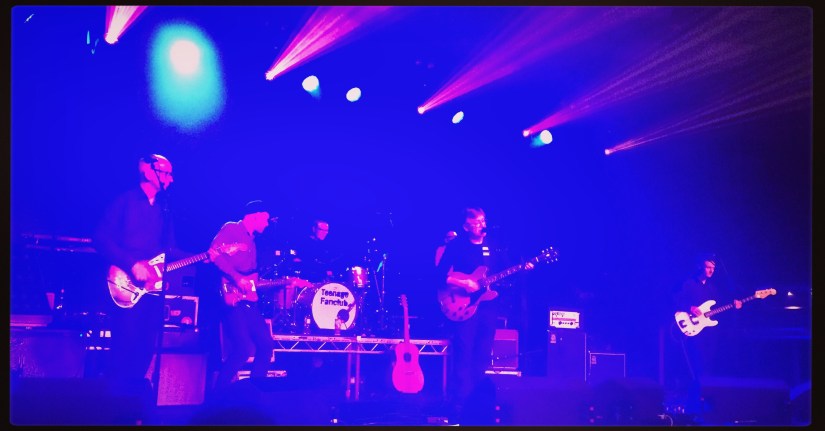
The re-released albums have seen much reappraisal for the old stuff. Thirteen in particular has gained real favour amongst the band’s faithful. Originally considered a mis-fire between the long-haired riffing on Bandwagonesque and the classicism of Grand Prix, it’s now seen as the equal of those early albums, the second one in in a 4 album run the equal of Bowie, The Beatles and all the very best. Played hot on the heels of a fizzing Bandwagonesque – highlights undoubtedly being a trippy Star Sign, the world-weary heavy sigh of Alcoholiday and a crystaline Guiding Star that wouldn’t have sounded out of place on The Velvet Underground And Nico – the tracks from Thirteen fired and fizzed, little napalm bombs of amped-up pop. Back on drums for the night, band jester Brendan O’Hare mimicked a heart attack as he worked his way into the count for the frantic knee tremble of Radio. Escher and Fear Of Flying ramped up mid-set proceedings, 1800 sillhouted heads bobbing in time to the steady throb coming from the stage. It’s the set closer though that sends everyone home on a high. Gene Clark has steadily become the hidden gem in the Fanclub’s stellar back catalogue; a chugging, riffing Neil Young workout named after The Byrds erstwhile maverick with Raymond McGinley pulling sounds from his guitar that J Mascis would willingly give his strumming hand for. To paraphrase Nigel Tuffnell, it’s all about the sustain, man.

“Avec l’orange” expertly captured by Andy Cummings

Night two was more of the same. If early TFC is the sound of a band skirting around its influences in an attempt to nail a definitive sound then Grand Prix and Songs From Northern Britain are the Rubber Soul and Revolver of the band’s ouvre; essential, defining and destined to still be spinning centuries from now. Everything; the playing, the singing, the writing stepped up a gear. “It’s the album where we started using capos, for fuck’s sake!” relays Norman as the band ease their way in to Don’t Look Back, a song that has suddenly taken on a whole new meaning. Don’t Look Back manages to be both melancholic and uplifting, Gerry’s lamenting vocals giving way to terrific three part harmonies from Blake, McGinley and a moonlighting Francis MacDonald who’s given the drum stool to Paul Quinn for the night while he augments the swell of sound from the stage with all manner of keys and stringed instruments. Is there any finer sight in music than when the principal members of Teenage Fanclub step up to their respective microphones and let forth their honeyed tones? Clearly, that’s a rhetorical question. A massive, riffing Neil Jung and a killer Going Places are the pick of a particularly bountiful first set.

When they return twenty minutes later – on paper this would appear quite a short break but the Fanclub demographic – more Middleaged Manclub – is such that the queues for the gents’ is longer than the solo on the aforementioned Neil Jung and mild panic sets in until needs are met – the band launches into what is arguably their finest sety of songs. Start Again. Ain’t That Enough. I Don’t Want Control Of You. Planets. Take The Long Way Round. Speed Of Light. It’s an obscenely rich set of songs, expertly played as faithfully as the recorded versions. By the end of night two I’m emotionally drained. My ankles are also the size of average-sized Ayrshire smallholdings, again another side effect of the Middleaged Manclub and given that I’ll be back for the next night, a self-inflicted by-product of attending three shows in a row.

Howdy! has also benefited from positive reappraisal. It signals the band’s autumnal years, where pace slowed, hair regressed and the comfort of a trouser was more important than the cut of the trouser. Love’s songs (again) may well be the pick of the bunch. I Need Direction with its spiralling riff and Hammond-heavy break. Near You‘s electric frug. The Town And The City, all woo-whoos and 60s sunshine pop. A groovy Cul De Sac that points the way towards Gerry’s Lightships project. Every one a crucial component in making the set as enjoyable as the previous two nights, something I might’ve considered impossible had I not been there.

It’s the second set that has the Fanclub fanclub all in a tizzy. It’s the only set of the shows that remains a mystery, so when they emerge and ease into Norman’s misty-eyed Did I Say, expectations are high for a set of rarities, curios and lesser-played gems from years gone by. No-one is disappointed. Long-forgotten b-sides Thaw Me, The Shadows, Some People Try To Fuck With You and a terrific The Count (where, in classic Fanclub style, the band members struggle to end it together) all pop up, totally unexpected and greeted like returning heroes. He’d Be A Diamond flies past, a sugar-coated rush of pop harmonies and ringing guitars. Then we get Broken. Stuck on the b-side of Ain’t That Enough, Broken was a track that waited patiently for the world to catch up. It’s a simple song. Wistful guitar plays out the melody. The band yawn and stretch and feel their way into it. Norman repeats the same line over and over and over and over again until the band fade out to silence. The  Barrowlands crowd continue singing softly until Norman smiles and we stop. It’s now a folk song, our song, the unofficial anthem on the night when Gerry played his last Glasgow show. Brendan is in tears. His heart has been broken again. We get one more song – the 75th – and Gerry leads the band through a ragged rousing take on the Flying Burrito Brothers’ Older Guys, Norman providing enthusiastic woo-hoo-hoos above Raymond’s effortless Fender bending.

Suddenly it’s over. House lights go up slightly. The crowd cheers for more. The stage crew appears. Lights go down. The crew hang back.  Whispers of Everything Flows and God Knows It’s True find their way between the bootstomps and cat whistles. Guitar George cuts across the stage carrying Gerry’s bass. He stops stage centre and shrugs apologetically. The crew come on and start dismantling equipment. The lights go up. There are more than a few boos, directed at whoever decided there’d be no encore, be that the management, the promoter or the band themselves. A slight tarnish on what was an extraordinary set of shows. To use football parlance again, everything but the penalty shoot out but a brilliant home win.

Teenage FanclubBroken

Live!

‘O Hare-Brained Schemes: Brendan 2

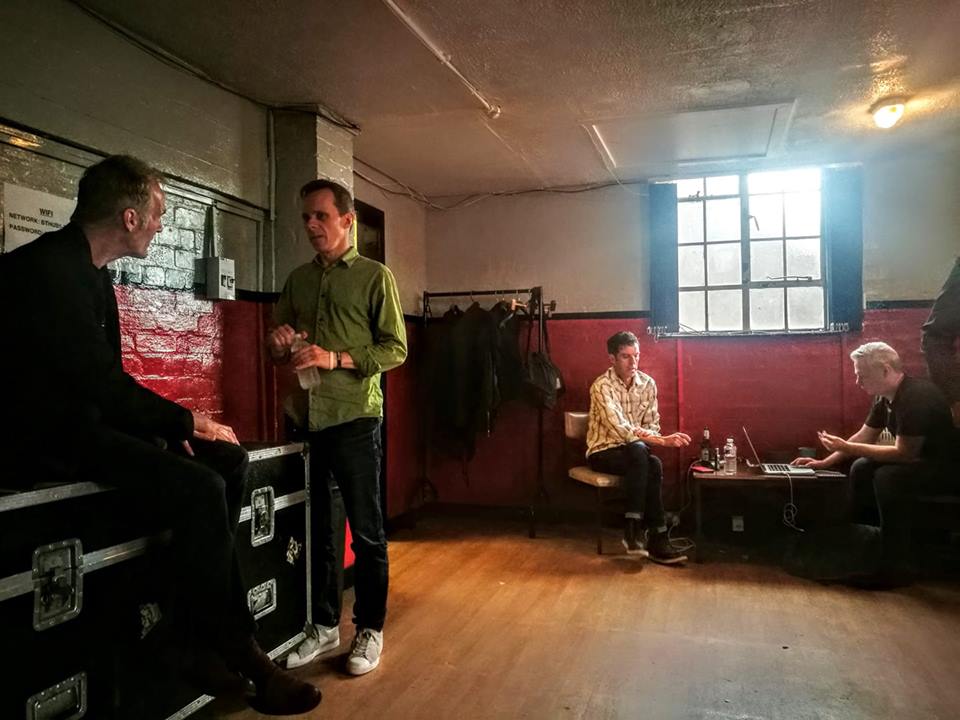
I suggested to Brendan that we needed selfies behind the kit and candid snaps of our fab four goofing around in the studio like The Monkees, stories of false starts, forgotten parts and flare ups over wrong chords. He encapsulated the whole rehearsal experience in one genius cartoon.

(The shorter the sweeter, right?)

Live!

It Was A Game Of Two Halves, Frank

Rarer than a sighting of the blood moon in the middle of a thunderstorm, perennial favourites Trashcan Sinatras were out and about for a couple of weeks there. You might’ve been lucky enough to catch them. If you did, you’ll wholeheartedly agree that their performances were the very essence of understated and self-conscious beauty, masterclasses in the art of rich and melodic songwriting that comes giftwrapped in just the right level of scruffy punkish undertones. Invited to support fellow Scots Del Amitri around the UK, the band found themselves playing the sort of venues that, in a right and just world, they’d be headlining themselves. For the Trashcans though, they’ll maybe always be the bridesmaids and never the brides and in a funny, mildy elitist way, that’s just the way myself and their fiercely dedicated family of followers like it. Us diehards were also rewarded with a select offering of headline gigs, some where the Trashcans played as an acoustic three-piece and others where the full augmented line-up turned on, tuned up and rocked out. But more of that later…

I was fortunate to see the band twice in the space of a week. Last Sunday I was invited to see them open for Del Amitri at the Barrowlands. This wasn’t the first time the Trashcans had played here. A short 28 years ago they provided support for Prefab Sprout, a gig most memorable for Frank doing an Iggy on the PA system before we (myself, my pals and select Trashcans) hot-footed it back to Irvine for a night in The Attic. To my regret I didn’t even stay for Prefab Sprout, but when you’re young and daft and your popstar pals want to share tour stories and dance to their own records in their hometown, that’s what you do.

TCS Barrowlands, 29.7.18

For the Dels shows, the Trashcans built a 45 minute set of their greatest shoulda been and coulda been hits; Got Carried Away, All The Dark Horses, Hayfever, Obscurity Knocks. How Can I Apply, Easy Read….it’s an endless list, really. They sounded fantastic. There’s a rich chemistry between them, honed on their recent three-piece zig-zag across America that transfers easily to the six-piece they are at the moment. The playing is spot on and the singing is sublime. Frank’s voice is richer than it ever was. Listen to Cake and at times he sounds almost helium-enhanced by comparison. These days, he’s an effortless crooner, using the dynamics of the microphone to great effect. He’ll step away from it to holler. He’ll lean in to it to whisper. He’ll spit and snarl when he has to then sooth your ears when he wants to. Make no mistake, he’s a soul singer, is our Frank.

At the Barrowlands the band looked nervous. Most eyes never left the frets and audience participation was sporadic and rehearsed rather than free-flowing and spontaneous. Perhaps it was the not-so-subconscious realisiation of playing in front of home fans that brought about a mild case of the stage frights, I dunno, but the band remained rooted to the spot, with no chance of any Iggyisms at all. It’s not a criticism, it’s just the way I saw it. Perhaps I’m comparing them to Del Amitri, an act who were slicker then the Fonz’s quiff. Bang! Bang! Bang! came the hits, each song starting before the last one had truly fizzed out. The Trashcans shambled on, played a song, looked a wee bit apologetic about it and with a shrug of the shoulders dragged themsleves into the next one. The Ramones could’ve played side 1 of Rocket to Russia in the gaps between the songs. They sounded great ‘n all, and while the Trashcans have never been the slickest of bands – that’s half the appeal, after all – a wee bit of oil in the engine wouldn’t have done any harm. For me, the highlight of the night was realising a lifetime’s ambition by securing a Barrowlands AAA pass for all of 20 minutes. The dressing room was just as I’d imagined….

The Kosmo Vinyl of the TCS, Big Iainy talks Bowie with Stephen.

Davy and John ponder the lack of brown M&Ms.

That Barrowlands show was the Trashcans’ last on the Del Amitri tour, following which the semi-skimmed 3-piece version of the band skipped across to Dublin for an acoustic show before returning to home turf for a trumphant, full fat, headline appearance on the Thursday night. Anticipation was ridiculously high for this one. Rave reviews of their support slot gigs were ubiquitous across all social media platforms. The word was the Trashcans would play a blinder.

And so it (eventually) proved to be.

The venue was rammed. A total sell-out, and with it being a local affair and what not, I suspect the guest list was rather longer than normal, so by the time Michael Marra’s Hermless had ushered the Trashcans on to the homely stage, we were standing sweaty shoulder to shoulder with friends and strangers in a venue designed for far less people.

Most bands like to make a statement of intent with their opening number, a Maiden-type ‘we’re here and we’re in your face’ sonic assault. The Trashcans roll out Got Carried Away and from the off, something isn’t quite right. You can see them looking at one another, checking capo positions as they strive to switch into gear. Someone is apparently very badly out of tune. The song stumbles to a stop and everyone fiddles with guitars, capos, pedal tuners and so on until the culprit is outed as John. He fiddles with the tuners on his guitar. Stomps on his pedal tuner. Fiddles again. “Sorry ’bout this,” he offers meekly. “Gimme an E, Paul.” There’s a joke to be had in there, but despite the heckles and good-natured banter, no-one thinks of it quickly enough. Those gaps in the Barrowlands set now seem miniscule. Indeed, yer Ramones could’ve played an entire show in the time it took to put the tuning gremlins to bed.

Once they’re off, though, the Trashcans proceed to bring the house down. On record, Got Carried Away is enhanced by Norman Blake’s warm harmonies. Live, the Douglas brothers provide a great alternative. It’s a terrific opener, all mid-paced chiming melancholy and gently tumbling toms. “Hey, it doesn’t matter,” it goes. Frank croons. Girls swoon. And the world is alright.

The songs that follow are pretty much the ones that warmed up the Del Amitri audiences. The uplifting All The Dark Horses (played half a key lower, trainspotters), a fluid How Can I Apply, a wonderful Freetime that’s carried along on a melody an early 70’s Brian Wilson would’ve been proud of and a frantically scrubbed run-through of Obscurity Knocks, the chorus spat with a furious venom. All in all, a pretty great opening.

Things then got interesting as the band dug deep into their endlessly rich back catalogue. Songs last heard when Scotland could be bothered to qualify for World Cups popped up, totally unexpected and gratefully received; The Genius I Was, Thruppeny Tears, Bloodrush, Only Tongue Can Tell, January’s Little Joke. All were played with reverance and wide-eyed wonder at the love they received. By now condensation was running down the walls. The band were wilting, melting. All the band that is, with the exception of Davy Hughes. The bass player has always been the coolest Trashcan and standing there stoically against the elements he looked like Mount Rushmore, a faced carved from the offspring of Mick Jones and Keith Richards. “Y’know that way when it’s so hot your trousers start to slip down?” he told me later on….

On this form, the Trashcans would be advised to get straight back on the road and bowl ’em over from Land’s End to John O’Groats and everywhere in-between. The likely reality though is that Frank and Paul will return to their homes in the States and it’ll be a good couple of years before we see them once more, which, again, is frustratingly half the appeal.

Here’s the slightly hippy, slightly trippy The Genius I Was, for no reason other than it’s a cracker.

Trashcan SinatrasThe Genius I Was

And here’s a terrific version of A Coda from an anonymous US Radio session. Years ago at the TCS merch stall I recommended Billy Sloan play it on his Radio Scotland show that weekend and he did.

Trashcan SinatrasA Coda (session)

Gone but not forgotten, Live!, Six Of The Best

Six Of The Best – Richard Jobson

Six Of The Best is a semi-regular feature that pokes, prods and persuades your favourite bands, bards and barometers of hip opinion to tell us six of the best tracks they’ve ever heard. The tracks could be mainstream million-sellers or they could be obfuscatingly obscure, it doesn’t matter. The only criteria set is that, aye, they must be Six of the Best. Think of it like a mini, groovier version of Desert Island Discs…

Number 28 in a series:

Richard Jobson is best-known as the vocalist and focal point of Skids. Between 1977 and 1982, Skids’ flame burned briefly but brightly over 4 abums – including two in one year (beat that, young pretenders!) and a handful of well-loved singles that are as instantly recognisable as Jobson’s lantern jaw and idiosyncratic stage moves. Working For The Yankee Dollar, Masquerade and Into The Valley put the band firmly in the anthemic post-punk bracket, paving the way for yer U2s and Alarms and Manic Street Preachers and the likes.

We never really got the credit we fully deserved,” remarks Richard. “With each release we evolved, changed and stuck our heads above the parapet. We weren’t cartoonish like the Damned or overly political like The Clash. Our peers over in the west of Scotland were Velvet Underground copyists, art-school cool, but we did our own thing. We never thought of what it was we should be doing. We just did. Skids were never cool, really. I wrote abstract lyrics. Our records came in abstract sleeves. (Debut album) ‘Scared To Dance’ was considered subversive, which is nonsense. ‘Days In Europa’, released in the same year (1979) was actually remixed and reissued with a new sleeve a few months later – years before your Deluxe Versions and remastered reissues were even thought of. We were incredibly hard-working and incredibly self-assured.”

In 1982, founding member William Simpson left Skids, shortly followed by Stuart Adamson, who’d take Skids’ blueprint and use it to great success with Big Country. And that, by and large was seemingly the end of Skids.

Jobson then joined forces with guitar great John McGeoch in the short-lived super group of sorts Armoury Show (half Skids, half Magazine, one album then over and out) before leaving music behind to focus on, amongst other things, modelling, poetry, television presenting and film making. You might’ve seen his 16 Years Of Alcohol, a terrifically intense film with a killer soundtrack. You might even have seen the video for Arab Strap’s Speed-Date. Richard produced that too.

Richard Jobson photographed by Ross Mackenzie, Night Moves, Glasgow, 1st March 1983

I see my art as everything I do. Whether it’s music or film or writing, it’s all me. I don’t like being pigeonholed.

A decade or so ago Skids reunited to play in tribute to Stuart Adamson. Sporadic shows followed; a T In The Park appearance here, a hometown gig there, before, “following a proper dust-down” at the tail end of last year, Skids returned with a brand new album. Burning Cities briefly outsold Noel Gallagher before settling comfortably inside the Top 30. On the back of the album, a rejuvenated Jobson and co hit the road and played dozens of shows the length and breadth of the UK. Reviews were generally ecstatic, focusing on the youthfulness of Jobson and his band’s ability to turn the clock back to those heady days when Skids first meant something to people. As the band found out, they clearly still hold a special place in the hearts of people for whom music is everything.


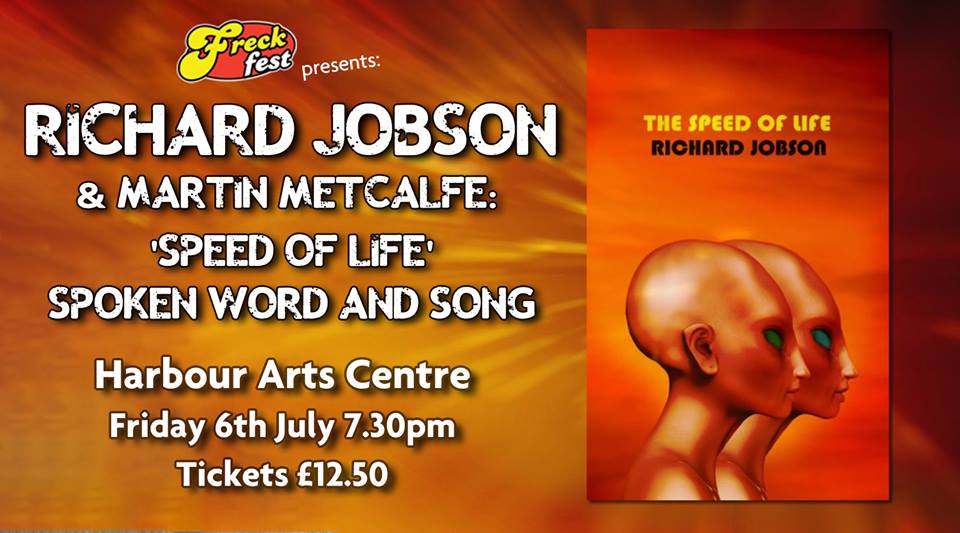
Somewhere along the way, Jobson found the time to write. Echoing the productivity of those early Skids’ days, he’s recently published not one but two books; his autobiography Into The Valley and The Speed Of Life, a story told through the eyes of two aliens who travel to Earth and discover the songs of David Bowie.

I wanted to write a book about what it’s like to be a fan. What does fandom mean? Essentially, it’s a love affair with the music and the people who make it. You end up having this life-long, long-distance friendship with the person who inspires you. It’s a holistic thing being a fan. The fashion, the music, the lifestyle are all wrapped up in the one package. We all have our own heroes.

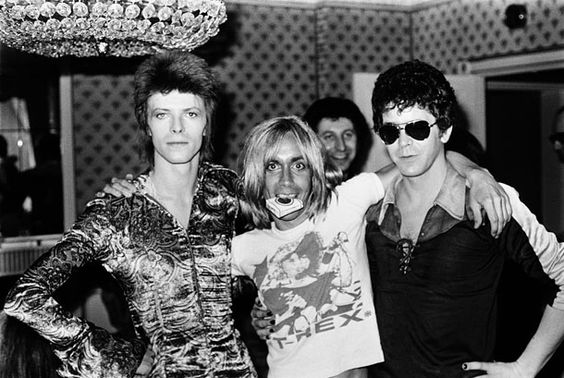
All the artists I admire, Lou and Iggy for example, were my poets. Tom Verlaine and Patti Smith! They wrote lyrics like mini movies. Their songs were metallic, urban, real. David Bowie inspired me to be better, more creative, to read literature, to watch particular movies. He told me not to be afraid of failure. Never be a coward! He taught me never to rest on my laurels, to keep trying to evolve. You’ll see that in my music, my films.

David Bowie instilled in me a work ethic that, sadly, is missing in most bands today. This instantaneous Instagram generation who seek fame over everything else, it’s idiotic. The real work gets in the way of becoming famous. We don’t have any more Bowies coming through. It’s all fake. All of it.”

Which seems as good a time as any to ask Richard to consider his 6 favourite Bowie tracks.

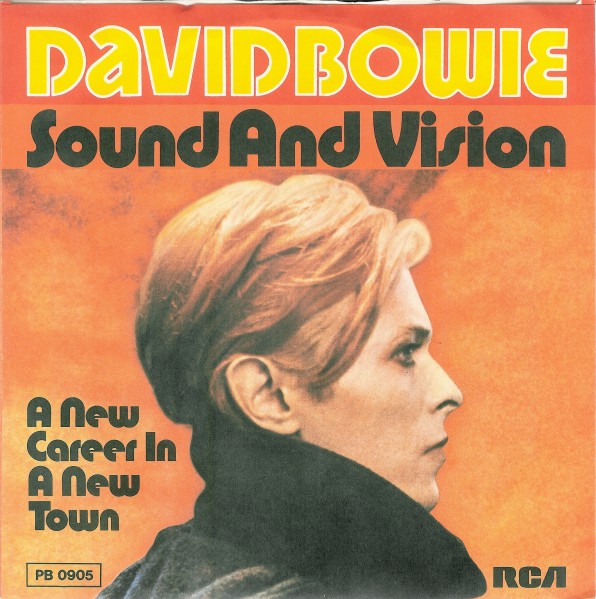
It’s better to be asked cold about these kinda things and not have the time to think about it. This way you’ll get the real answer and not the one I think people will want me to say. Although I dare say if you asked me tomorrow I might pick a totally different six. For now, straight off of my head I’ll say Sound & Vision.


David BowieSound & Vision

It reminds me of where I live. It’s the sound of Bowie reinventing himself, from near-suicidal drug addiction in L.A. to a man reborn in Berlin. It’s such an inspiring song. Who doesn’t love it?!?

David BowieWhere Are We Now

There’s some really great stuff in Bowie’s later New York period. The albums from this time really need to be given more attention. They’re almost lost in this vast back catalogue of greatness, but they’re all great in their own right. The Next Day might well be one of his very best. From it, Where Are We Now makes me cry every time I hear it. Until then I hadn’t cried that much since I first listened to Leonard Cohen. 

David BowieStation To Station

Station To Station was the first Bowie album that really made me sit up and listen. There’s a whole new depth of richness on this album that Bowie hadn’t gone for before. The songwriting is fantastic. The opening track, with its train noises and slow, steady, mechanical plod is a brilliant opener.

David BowieQuicksand

That run of albums, from Ziggy through Aladdin Sane to Diamond Dogs is brilliant. And growing up with each of them was a very fortuitous thing. How lucky I was to be of the age to appreciate Bowie first-hand! Hunky Dory though is a perfect album. And Quicksand is a perfect track.

David BowieThe Jean Genie

I like the pop Bowie. Let’s not forget that as well as being a ‘serious’ artist, he wrote these incredible pop songs. The Jean Genie just reminds me so much of having fun as a wee guy, dancing around the living room as it played.

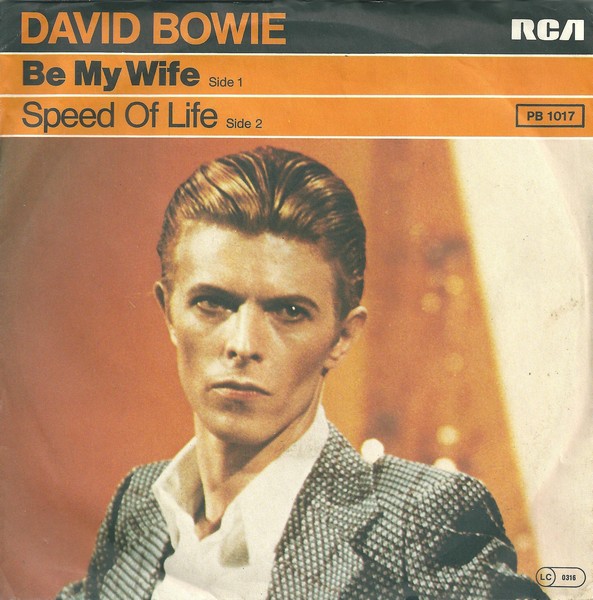
David BowieSpeed Of Life

I love this track to bits. I enjoy listening to ambient music while I read. Brian Eno, of course, All the German bands. The whole of the second side of Low as you know is ambient, instrumental music. The opener is inspired. It’s the new sound of Bowie, a glimpse into what the other side of the record holds in store, yet it still captures the essence of pop. These cowards today, afraid of trying anything new really should take a leaf from Bowie’s book.

Richard Jobson will play a couple of special east coast/west coast shows in Edinburgh and Irvine to promote The Speed Of Life. He’ll be accompanied by former Goodbye Mr MacKenzie frontman Martin Metcalfe who’ll play “natural sounds and drones……cool, dramatic music” whilst Richard reads extracts from his book. Unbelievably, there are still a handful of tickets left for both shows. You should probably go to at least one of them.

Cover Versions, Get This!, Live!

Beach Bummer

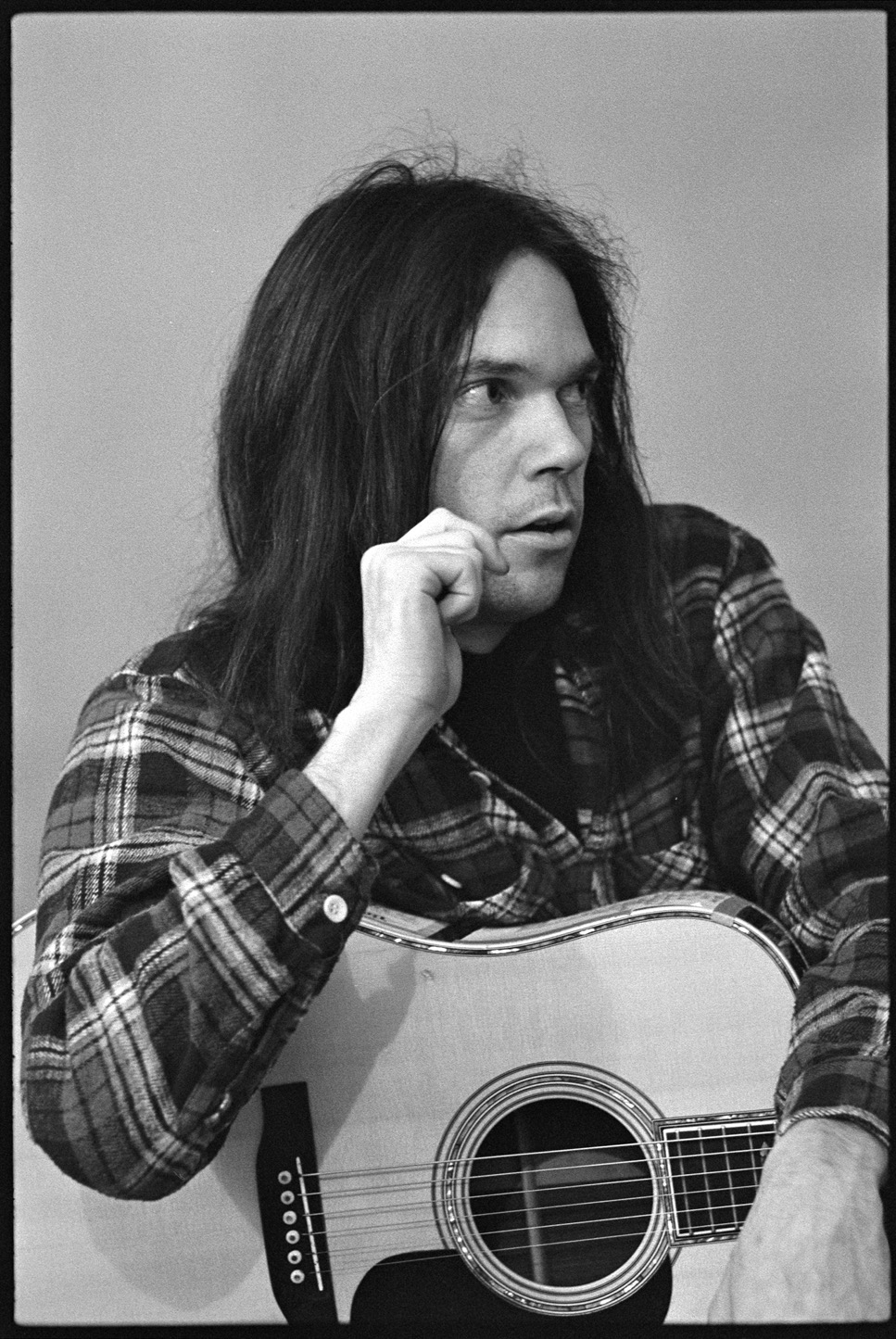
I’ve kinda lost my way a wee bit with Neil Young. I bought Le Noise, 7? 8? years ago, played it once then filed it on the shelf alongside all the other inessential Neil albums of the time. Chrome Dreams II, for example. Or the live one that came out around 2001 and included a couple of tracks as yet unavailable elsewhere (I think). Without reaching for either of them, I doubt I could tell you a single track on them. Jeez – I can’t even tell you the name of one of them. You buy things out of blind loyalty to an artist and that’s what happens.


I’m also out of touch with where his Archive series is up to. Are we still just on Volume 1 of the sprawling, all-encompassing Blu-Ray only release? Like many here, I suspect, I’m quite happy to admit I liberated the best of that release via one of the many Torrent sites that clutter up the darker corners of the internet. Some of the stuff probably ended up featured in posts on Plain Or Pan too. And those first couple of live shows he released on his more budget-friendly Neil Young Archives Series – the Massey Hall and Filmore shows – are essential for any and all fans of raggedly-plucked acoustic rock and ragged and raucous sprawling rock music. A quick trip to Wiki tells me there are around a further half dozen such releases, no doubt all good, but I just don’t seem to have the time to invest in them. Sorry Neil, although I’ll probably get around to Hitchiker at some point soon. It does float my boat in all the best ways; vintage mid 70s material scrubbed up for these days? Sounds great.

                                  V Festival

Why though would you want to seek out a ropey live recording featuring Neil and his International Harvesters when you could be diving headfirst instead into his self-proclaimed ‘Doom Trilogy’? Neil, never one to conform to expectations was at an all-time career high with 1972’s Harvest album. Building on the themes and musical styles of its predecessor After The Goldrush, Harvest spawned an actual hit single, with the lilting cowboy balladry of Heart Of Gold seemingly assuring Young his place at the top table of FM-friendly pop alongside other chart-bothering acoustic balladeers such as Paul Simon and Don McLean. Instead, Young yanked hard on the steering wheel and, in his own words veered into the ditch.

“ ‘Heart Of Gold’ put me in the middle of the road. Travelling there soon became a bore so I headed for the ditch. A rougher ride but I saw more interesting people there.”

Interesting right enough. Friends ravaged by drugs. Failed relationships. Death. Despair. The end of the 60s ideal. Recommending Reprise Records sign this hippyish new singer by the name of Charles Manson…..


Young took the path less travelled, wrote the songs he wasn’t expected to write and ended up with a trilogy of fantastic albums. Much of this music achieved mythical, cult status as the years grew, due in no small part to  Young willfully deleting the key albums and, in the advent of the CD era, refusing to have them released on the shiny new format. Citing the poor sonic quality of the format (according to Neil, compared with vinyl only about 5% of the recorded music makes it from the CD and out of your speakers. The other 95% is a flattened, compressed version of the real thing), Neil Young hates CD with a passion. He’s analogue all the way, which is why if you can track down original vinyl copies of On The Beach, Time Fades Away and Tonight’s The Night you should buy them forthwith and revel in the tunes in the grooves.


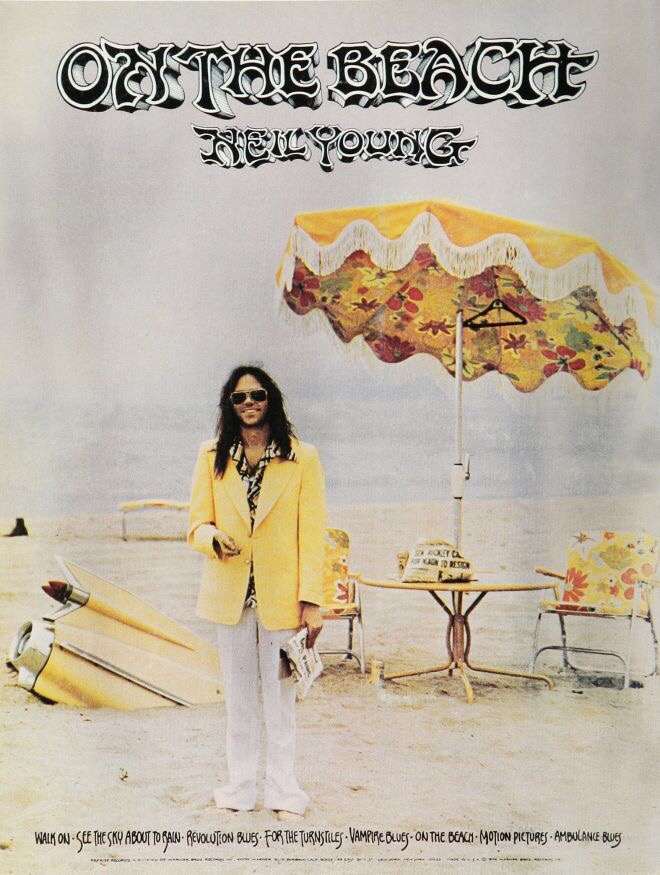
On The Beach is easily one of my favourite albums of all time. Hardly a ringing endorsment from a barometer of hip opinion such as myself, but it truly is a terrific LP. Years ago my sister went a trip to New York and when she asked if I’d like her to bring me anything back, I replied that I’d hate to think she’d find a copy of On The Beach and not buy it. She only went and did. A first issue, Reprise Records release, with the famous psychedelic printing on the reverse of the cover too. An astonishing present.

Hardly a rollicking good time, On the Beach is the sound of depression, paranoia and nervous breakdown. But if it’s self-indulgent, self-obsessed music you’re after, look no further. Charles Manson, the young hopeful he’d suggested to Reprise had by now commited his heinous murders. Young sings about it in the scratchy, jittering Revolution Blues, assisted by The Band’s Rick Danko and Levom Helm on bass and drums and David Crosby on rattly and erratic rhythm guitar.

Neil YoungRevolution Blues

It’s the sound of anti-commercialism in every way. Downbeat, downplayed and downtrodden, Vampire Blues is an eco anthem before such things were considered, Young bemoaning the way the oil industry bore into US soil with scant regard for people or place. “I’m a vampire, baby, sucking blood from the earth,” he sings, a million miles away from Heart Of Gold and the Hot 100.

Neil YoungVampire Blues

Side 2 is even bleaker. Opening with the album’s title track, it starts in slow motion and, as the side progresses, gets slower still. To call it moody and introspective would be too kind. Dylan is moody and introspective. The Smiths are moody and introspective. Even Eurythmics can be moody and introspective. ‘Here comes the rain again’ and all that jazz. But side 2 of ‘On The Beach‘? Listen to it late at night with the lights dimmed low and a fine malt in your hand and you may just never make it upstairs to bed.

Neil YoungOn The Beach

The title track is a gorgeous, chiming ode to despair. “I went to the radio interview….I ended up alone at the microphone.” sighs Neil. “I think I’ll get out of town.” This is the same optimist who, only a few months earlier, had been singing  “I want to live, I want to love, I’ll be  a miner for a heart of gold.” Not now daddy-o. By the time you reach ‘Ambulance Blues‘, the album closer, Neil’ll be informing you that we’re all just wasting our time, “pissing in the wind“. Apparently, side 2 was originally to be side 1 and only at the last minute was Neil convinced to switch it around, something he immedialtely regretted. It means though that the album opens with the jaunty Walk On, a curveball as it turns out, before the mood of the album takes hold. If the album had been released as Young had intended, how many folk would’ve made it all the way to side 2?

*Bonus tracks!

Here’s Mercury Rev’s faithful reworking of Vampire Blues. I remember reading at the time that the band had planned to record the entire On The Beach album and add a track at a time to the b-side of future singles. Did they ever complete this? Seemingly I’ve lost my way with Mercury Rev too.

Mercury RevVampire Blues

Here’s Nina Persson of The Cardigans in her A Camp guise doing a terrific version of On The Beach at the Hutsfred Festival a few years ago. I’m sure this has appeared on Plain Or Pan before, but if you missed it first time ’round…

A CampOn The Beach

Gone but not forgotten, Live!

Magnum Opus

The grand old Magnum Leisure Centre in Irvine is being pulled down as I type. Local politics and whatnot has seen the building fall gradually into disrepair, an eyesore too far gone for a quick cash injection and 60 minute makeover. They’ve opened a spanking new place in the town centre. It’s impressive ‘n all that, but like for like, it doesn’t come close to what the Magnum offered.

A fixture on Irvine beach since 1976, the Magnum played a formative part in most Irvinites’ growing up. Beyond Irvine, it was known as the place where you were bussed on a school trip; to swim, to skate, to watch the latest blockbuster in its plush 300-seater theatre. If you were that awkward age between being too old to stay in on a weekend night but too young for the pub, the Magnum was your saviour. There’s no-one I know who didn’t go there. Even oor ain Nicola Sturgeon mentioned it on her Desert Island Discs, recalling Frosty’s Ice Disco skating sessions with a misty-eyed fondness.

The Magnum had something for everyone. The Scottish Indoor Bowls championships were held there. Every pedigree dog in the country was shown there at some point. Girls and boys danced at regional shows. Gymnasts tumbled and twirled and twisted their way around the main hall. 80s fitness freaks squashed while the half-hearted badmintoned. All manner of variety shows were held there and crucially, all manner of big, proper, touring bands poured through the doors as quickly as they could be accomodated.

Irvine in the 1980s was a popular place for all your favourite bands to play; The Clash, The Jam, Big Country, Thin Lizzy, Chuck Berry, The Smiths, The Wonderstuff, Madness….. the list is endless, thanks in no small part to the efforts of Willie Freckleton, the local Entertainments Officer who offered up what was at the time the largest indoor concert hall in Europe to the promoters and band managers who deigned which towns were important enough to play. Willie offered the hall rent free, which proved to be the clinching factor most of the time. Amazingly, most of the bands would include Glasgow and Irvine as part of the same tour, something that, since the building of the Hydro on Glasgow’s Clydeside is now unthinkable.

The SmithsBigmouth Strikes Again (live at the Magnum, Sept 22nd 1985)

I believe this was the first time Bigmouth was played live.

This slideshow requires JavaScript.

There are a multitude of stories connected to the Magnum, from local folk who were so familiar with the warren of corridors and passageways in the changing areas that they could sneak from the ice disco into the UB40 gig without paying, or the young fans who found themselves receiving mohawks from Clash roadie Kosmo Vinyl after they’d played a terrific London Calling-era ‘Greatest Hits’ gig, not that The Clash ‘did’ greatest hits, but you know what I mean.

I remember the day The Jam came to town. Too young for the show (I didn’t even know it was on) I happened to be at the front of my house as scooter after scooter after scooter buzzed past on their way from Glasgow to the Magnum. A multitude of mirrors, parkas and girls riding pillion, it was just about the most impressive thing I’d seen at that point in my life, something only equalled when I saw The Clash in Irvine Mall on the day of their Magnum show. Four alien-looking guys in denim and leather and black shades, surrounded by a scrum of older folk I recognised from the years above at school. “It’s The Fucking Clash!!!” is what I remember hearing, even if I was unaware exactly who The Fucking Clash were at that point in my life.

Spandau Ballet, photo by Ross Mackenzie

Thrillingly, Ross has snapped loads of bands at the Magnum.

Sadly, this is all he could find!

Willie Feckleton once told me a great story about booking Chuck Berry, his idol and the musician he was most thrilled at having landed to play in Irvine. Chuck, a musical giant who was right there alongside Ike Turner at the birth of rock ‘n roll, a man who is responsible for fashioning the DNA of the rock guitar riff was, by all accounts a thoroughly unpleasant human being. In Irvine he wouldn’t play until he’d first been handed his fee (paid in American dollars, of course) in a brown paper bag in the dressing room before going on stage.

The anonymous support band was also Chuck’s backing group and when Chuck eventually came on he played on about only six songs. He let the other guitarist take most of the solos, looked super-bored throughout and disappeared offstage fairly quickly.”


Coming off after the set Willie approached Chuck enthusiastically. “That was great Chuck! They love you out there! How about an encore?


Sure,” drawled Chuck with his hands out. “Fo’ anutha’ five hun’red dollas…


There was no encore.

It’s stories like those above that live long after the artist has left town and the gig is nothing more than a pre-smartphone blur of exaggerations and half-truths. Did Morrissey really dance with Brian McCourt’s umbrella when The Smiths played? Did Phil Lynott really nip up to George the Barber at the Cross for a quick trim of the ‘fro, mid tour with Thin Lizzy? Who can be certain if they did or didn’t? For cultural and economical terms, it’s a real shame that Irvine no longer has a venue that can be used to entice the big acts of the day to come and play and create memories for our young (and not so young) folk.

These bricks rang!

Alternative Version, Hard-to-find, Live!, New! Now!

Waltz #2

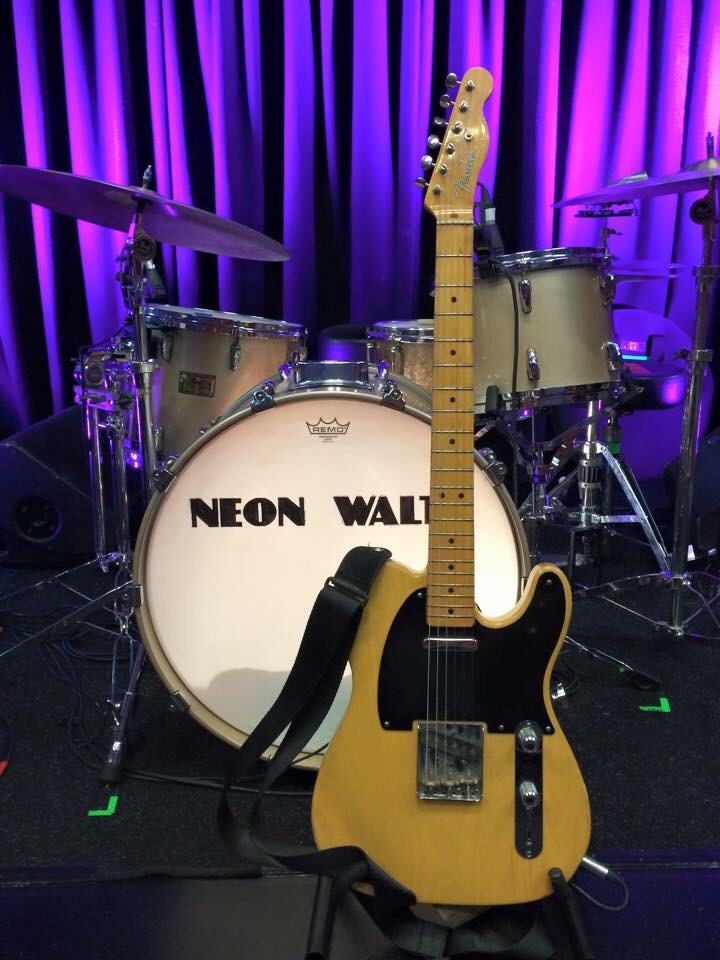
Hailing from Caithness, near John O’ Groats at the very top of Scotland, the furthest outreach on the British Isles, Neon Waltz are as far-removed from any ‘scene’ as possible. The six-piece are an insular unit; self-sufficient, self-reliant and self-absorbed.


The music they make is, if you’re of a certain age, nothing you haven’t heard before, but no less thrilling. In songs such as Dreamers and Heavy Heartless they have that unique way of creating an uplifting melancholy; world-weary vocals carried along by chiming, fizzing guitars and a heavy swell of Hammond organ. You might find comparisons with The Coral, The Charlatans or Teardrop Explodes, bands who know how to brew a heady swirl of guitar and organ that’ll lift you to giddy new heights. Lazy folk might label them ‘indie’. I prefer to call them slightlydelic.

Neon WaltzHeavy Heartless


As befits a band that is so far off the taste radar of hip opinion as to be almost non-existent, they have the freedom to come and go as they please. Regular zig-zagging across the highways and biways of the UK combined with a hermit-like lifestyle in their rehearsal space in an abandoned croft – Music From Big McPink, if y’like, has helped the band forge a sound that led them to Atlantic Records and a deal with Ignition. And a month from now, two years since first being signed, their debut album will be released. It won’t come with much of a fanfare or blustery media hype, but it will come with the guarantee of a melody-rich debut, a record that may well prove to be the year zero for future bands. You can quote me on that when the time comes.
A recent photo session on the Isle of Stroma, halfway between the very north of Scotland and the southerly tip of the Orkneys proved fruitful. Shooting the photos that will presumably appear on all promotional material for the imminent album release, the band chanced upon the long-since abandoned school house. Amazed to find it was accessible, they entered and found an old harmonium, lying dusty, untouched and exactly as it had been left when last used. More amazingly, keyboard player Liam Whittles was able to extract noise from it; eerie, ghost-like and gossamer thin, the old harmonium wheezed into life. A spontaneous version of  Penguin Cafe Orchestra’s ‘Music For A Found Harmonium’ was followed by this beautiful reworking of their own Heavy Heartless. It’s magic; understated, creaky and exactly how a harmonium-enhanced band should sound.

Neon WaltzHeavy Heartless (Stroma Schoolhouse Session)

Neon Waltz go on tour shortly. Their debut album, ‘Strange Hymns‘ is out at the end of July on Ignition Records. It  can be ordered direct from the band here and in all the usual places.

Kraut-y, Live!

“Radio(head)! Live TRNSMTN”

Dance, dance, dance, dance, dance to the Radio(head).

I saw Radiohead for only the 4th time in 24 years on Friday night. Hardly the most regular of touring bands, it was either stand in a field at day 1 of Scotland’s newest festival, TRNSMT, and wait patiently for the only band worth shelling out £60 for, or watch edited highlights on the telly later that night and mutter silently to myself that I should’ve been there. After failing to secure a coveted press pass – lack of credentials, they said – I shelled out the £60 and went. Which was the correct decision, of course.

Their Glastonbury set a couple of weeks previously fairly split my Facebook feed in half. For every friend purring over their set, there were others spitting venom.”They’re tuneless!” “They don’t play the old stuff!” “They’re just like (spit) this generation’s Pink Floyd!“, shouted as if Pink Floyd were/are the anti-christ or something. The reason John Lydon wore an ‘I Hate Pink Floyd’ t-shirt in 1976 was clear – the progressive, noodling dinosaurs were required to be extinct in order for the new musical youth to crash the party and shake things up somewhat. It’s worth reflecting on the fact that Pink Floyd were barely 10 years into a 40+ year career when Johnny first sported his shirt. And it’s worth noting that until today’s musical youth get their arse in gear and produce a musical movement worthy of shaking up the current regime, your super soaraway Radiohead is as good as it gets.

There are a number of unspoken rules when it comes to headlining a festival. A headliner should play to the crowd. Feature a generous helping of all the big hits. Engage with the audience. Maybe pull a nice-looking girl out of the crowd and dance with her. Radiohead find themselves in the enviable position of being able to do whatever they like and still remain numero uno. They are a walking, talking example of that well worn band cliche of we play what we like and if anyone else likes it, it’s a bonus. Lucky for Radiohead, hundreds and thousands and millions of folk love ’em. So they take the festival rule book and bin it. They don’t have big hits to begin with. Crowd-favourites, aye, but no real hits. And don’t for one minute think you’ll be pulled from the crowd and serenaded with Creep. Second-on-the-bill Belle & Sebastian did the honours for them when they pulled half the front row out to dance on-stage during their finale, waved off by a cheery Stuart Murdoch saying, “Thanks for coming up and dancing. You do realise you’ve lost your spot for Radiohead though?!?

And as for audience engagement, Thom is certainly not going to say much to a crowd who, for all their love of the band, are shoving Palestinian flags in his face wherever he looks. Glasgow and Scotland, currently the oppressed by the UK Government’s policies on Europe, know a political cause when they see one and they aren’t too taken by Yorke’s stance with the Israeli oppressors. Politics aside though, this was a fantastic show.

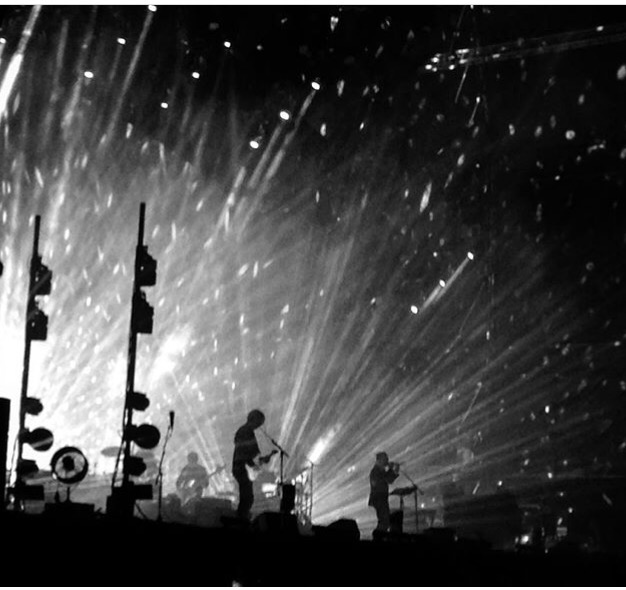
Bursts of discordant, eerie music punctuated the air for the half hour or so before Radiohead took the stage. Had one of the band left their Polyfauna app running on random through the PA? It sounded like it. When the band arrive, there’s no fanfare. They stroll on, plug in and begin with the sublime double whammy of Let Down and Lucky. Where Let Down soars, Lucky actually sounds like the slow-motion plane crash that’s sung about in the lyrics. It’s a brilliant opener and when, for the first time tonight a posse of black-clad roadies wheel on a console of the sort the BBC Radiophonic Workshop might’ve worked up some futuristic soundcscapes on, expectations are high for something special. Ful Stop careers into action, all wobbling, juddering, claustrophobic paranoia. “This is a foul-tasting medicine,” mutters Yorke and not for the last time tonight, whole sections of the crowd are looking  a wee bit lost. These’ll be the same people who were moaning about the ‘hit-free’ Glastonbury set. It’s fantastic of course.

Modern Radiohead swap instruments and whole genres as effortlessly as a magician pulling rabbits out of a hat. Ed’s additional vocals and subtle percussive touches keep the music sounding as real as the recorded versions. Johnny – we’re right in front of him and witness up close his skills on a whole array of instruments – is the one who adds splashes of exotic colour to the sound. He goes for the full Spinal Tapisms of bowing the strings on his guitar during Pyramid Song before switching to a string-based contraption played on the keyboard for the song’s coda. Elsewhere, he wrings seven shades of hell from his trusty Telecaster; white noise, chiming, echoing triplets, thunderous power chords, piercing guitar solos, often all in the same song. He’s all jaggy elbows and fringe, but go Johnny go! He’s terrific.

It’s the rhythm section though that is most impressive. Colin wrestles with his bass guitar for a full two and a half hours, noodling the sort of meandering riffs Holger Czukay might’ve employed during his time with Can. For most of the set an addditional drummer skitters along, perfectly complementing Phil’s polyrhythms. At one point, Johnny joins in for some additional percussion that drives the whole thing along towards jazz. Half the audience are thinking ‘pure Mingus’. The other half, the ones that are moving to the sides (“We’ll come back when they play ‘Creep'” I hear one man say to his partner. I hate to be the bearer of bad news, but…) are thinking ‘pure mingin”. Lotus Flower sounds immense. Thom’s got out his 3 maracas and is shaking them like the anti-Bez – if Bez was all boggle-eyed and limbs akimbo, Thom is a gammy-eyed, hunched up Albert Steptoe in a man-bun – and despite its weird time signature and stop/start clatter, the heads in the audience are bobbing up and down in time to the beat. Everything In It’s Right Place is all cut ‘n paste techno, Johnny sampling Thom’s voice and chopping it up before looping it to eternity via some fancy pants handheld gizmo, the sound skiffling across and out into the ether like some particuarly skilled flat stone skimmer on a west of Scotland beach.

When the guitars come out, the Radiohead juggernaut flies. There There, a brutal 2+2=5, a groovy Bodysnatchers, all examples of why Radiohead are like no other act on the planet. The second half of the set starts with Daydreaming, the set lit up in silvery-white lights. It’s plain and simply breathtaking. Paranoid Android is ridiculously self-indulgent and insular, yet hard rockin’. Not in a Biffy, tops off ‘n tattooes way. Radiohead rock way harder than that particular version of turned up to 11 pop music. They also do subtle. Fake Plastic Trees is understated and fragile before bursting into white noise with the ‘she looks like a ray of sun‘ bit. No Surprises receives a massive cheer right after the ‘Bring down the Government, they don’t speak for us‘ line. And, while we don’t get Creep, we do get a slightly slowed-down Bends, massive power chords ebbing out across the crowd and into the Glasgow night sky. We’re left with Karma Police, Thom and Ed staying back after the rest of the band has gone to conduct the crowd in an acapella rendition of the song’s climax. For a minute there, or two and a half hours to be precise, we lost oursleves.


Debating the setlist in the car on the way home, you could write another 20+ song set of the tracks Radiohead didn’t play. But that’s nit picking. Here’s what they did play:


1) Let Down

2) Lucky

3) Ful Stop

4) 15 Step

5) Myxomatosis

6) There, There

7) All I Need

8) Pyramid Song

9) Everything In Its Right Place

10) Reckoner

11) Bloom

12) Identikit

13) Weird Fishes

14) Idioteque

15) The Numbers

16) Bodysnatchers

17) 2 + 2 = 5

[ENCORE 1]
18) Daydreaming

19) No Surprises

20) Lotus Flower

21) Paranoid Android

22) Fake Plastic Trees

[ENCORE 2]

23) Nude

24) The Bends

25) Karma Police


*A phone catastrophe on Friday night meant I lost not only all my contacts, but also the dozen or so Radiohead pictures I’d taken for inclusion here. The images I’ve used are all borrowed from Twitter, Instagram and various news sources. If you’d prefer me not to use your image please get in touch and I’ll remove it. Also, if you would like a photo credit please get in touch and I’ll amend. Cheers.