Gone but not forgotten, Kraut-y

Expressionism

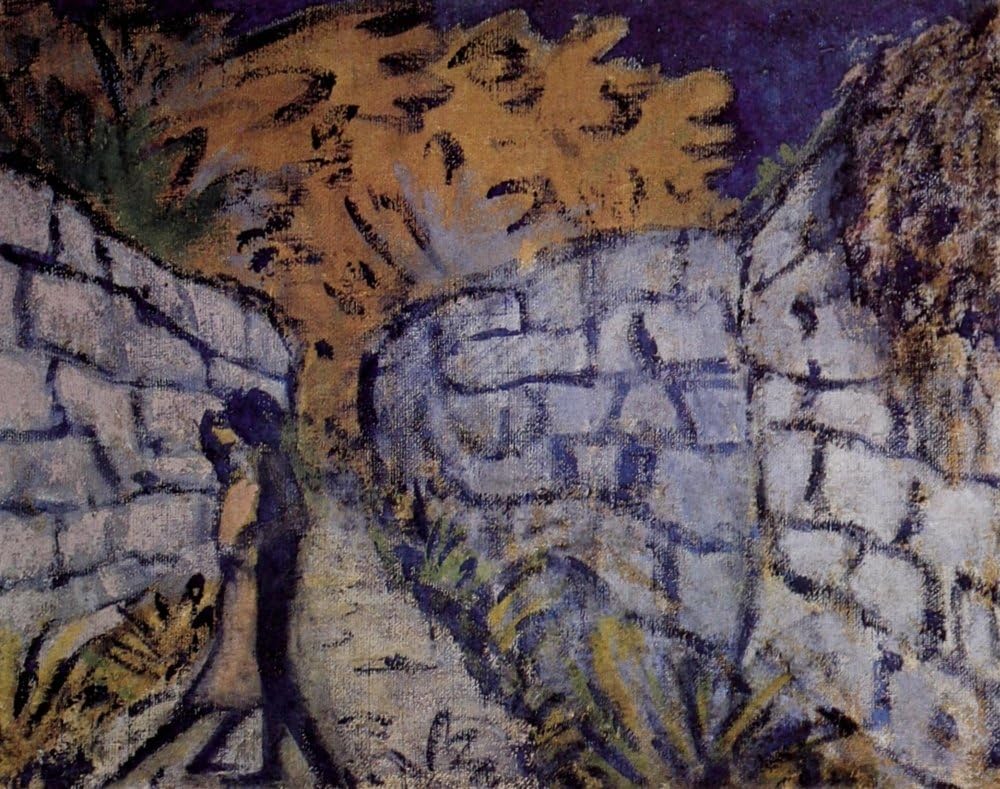
Around May/June 1977, David Bowie and Iggy Pop found themselves free of rural France and in Berlin, doing what any self-respecting culture vultures and gatekeepers of taste would do on the back of two successful (and future classic) albums (Low / The Idiot); they wandered around the city’s Brücke Museum, absorbing the Teutonic culture and getting familiar with the very fabric of Germany. Amongst the largest collection of German Expressionism on the planet, between the Kirchners and the Heckels, the Bleyls and the Schmidt-Rotluffs, they chanced upon Otto Mueller’s 1916 painting Lovers Between Garden Walls. Its loose and flowing watercolours made quite the impression on the magpie-minded Bowie and he returned time and again to soak it in, committing it to memory until a suitable use could be found for it.

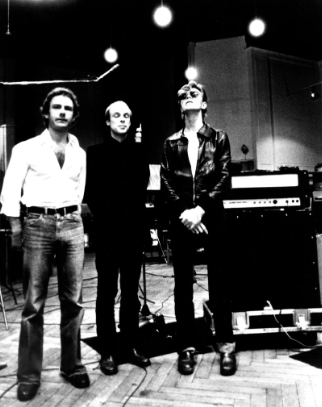
Collaborating with Bowie on the album he’d quickly release to follow Low were Brian Eno and Tony Visconti. Eno was there to add the wacky vibes, an arty farty court jester enabling and encouraging Bowie to draw on oblique strategies upon which he’d create and build his new art. ‘Once the search is in progress, something will be found’, ‘Imagine the music as a moving chain or caterpillar’, ‘Remove specifics and convert to ambiguities’.  Making sense of it all at the controls was Visconti, a level head amongst the highbrow lunacy that Eno championed, and somehow, over the course of five or six weeks, the album ‘Heroes‘ took shape.

One backing track they’d built up – ‘Use exactly five chords’ – was the pick of the bunch but remained vocal-free. It was built upon a repetitive groove, played by Bowie’s Young Americans guitarist, Carlos Alomar, with added thunk from the rhythm section of George Murray (bass) and Dennis Davis (drums).

As a backing track in this state, it was perfectly serviceable, but a fantastic layer of Robert Fripp guitar spread generously across the top of it transformed it into something wild and eerie and utterly sci-fi. Fripp had found all the sweet spots in the studio where his guitar would sing and feedback and marked the spots on the studio floor with tape. As the backing track played in his headphones, Fripp prowled the studio, coaxing elongated textures of harmonic feedback while he flitted from sweet spot to sweet spot, magnetising the results on tape forever. The resultant track had to bubble and stew and ferment before being afforded a lead vocal, but when it arrived, it landed quickly.

The official Bowie story of the time is that he happened to look out of the Hansa Studio window and there, under a gun turret by the Berlin Wall, were two folk wrapped in a romantic embrace. In later years, it emerged that the man in the embrace was Tony Visconti. His marriage was crumbling and he’d found himself entangled (in every sense) with local jazz singer Antonio Maass. Bowie wanted to immortalise the embrace in song; the romantic notion of two people kissing by the Berlin Wall, defiantly against the world around them, seemed too good to ignore. As he wrote the lyrics, his mind cast itself back to the Brücke Museum and Otto Mueller’s painting of two lovers between the garden walls. Visconti and his new girlfriend were playing the picture out in front of him. Give it a word – serendipity. Give it two – beautiful happenstance.

David BowieHelden


It is, like all the best Bowie tracks, from Life On Mars to Absolute Beginners to Where Are We Now? a proper builder, Bowie’s voice rising with each subsequent verse, the high drama unfolding as each chorus gives way to a new part, his voice hoarse and high yet in total control as it gradually plays out. “Heroes” too has that magical groove and swing, it is downbeat yet danceable. Even when sung in German (especially when sung in German?) “Heroes” is an unstoppable force.

Heroes” (those quotations are important, they suggest sarcasm; we could be heroes? Aye, right!) would be the album’s lead single, released towards the end of September, (that’s a mere 48 years ago, young man). It has since become one of Bowie’s statement pieces. Anthemic yet tender, it grew a life of its own. It was sung at Live Aid, its meaning doubling up as a metaphor for all who’d attended and taken part in the event. It blasted out at the opening ceremony of the 2012 Olympic Games in London. It was, in a sweet turn of events, played in Berlin by Bowie after the Wall came down, 15,000 reunited Berliners singing it back to him as he cried unstoppable tears.

It also forms part of a brilliant scene at the end of 2109’s Jojo Rabbit, where the young titular hero dances a very Bowiesque dance on his doorstep with the unattainable girl of his dreams. The film maker (Taikia Waititi) used the German-language version for added authenticity. As an aside, he also scores the start of the film with German-language Beatles hits, played out over fast-cut film of Hitler rallies; Beatlemania recast as Adolf-mania. Very clever stuff. If you’ve never seen it, rectify that at once.

Hard-to-find, Kraut-y

Ill-Thought-Out

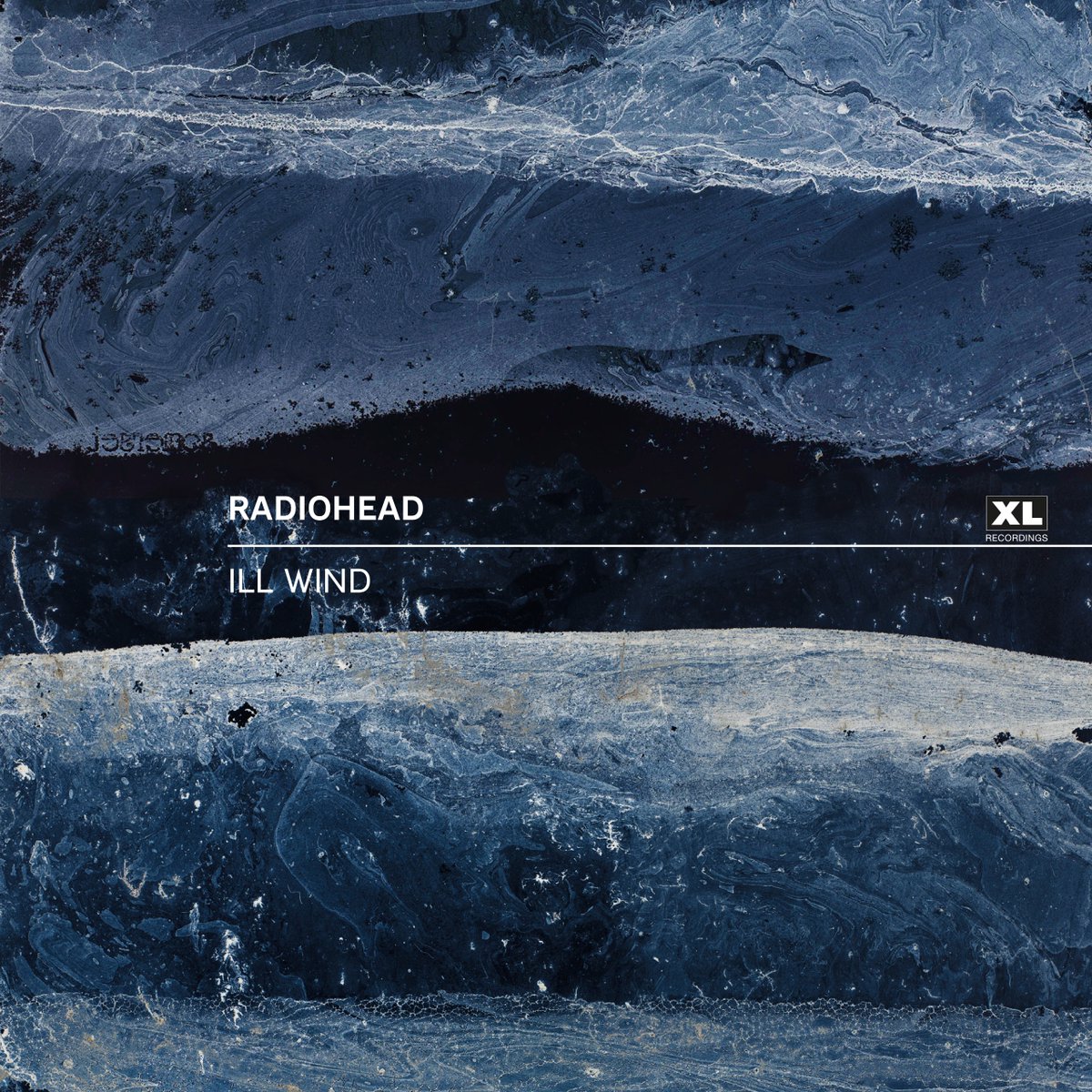
Ill Wind by Radiohead is, to use the parlance of the day, a particularly deep cut. Recorded during the sessions for what would make up the last Radiohead LP, A Moon Shaped Pool, it was ultimately shelved and saw the light only as a fleece-the-fans cash-grab bonus track on the album’s deluxe edition.

RadioheadIll Wind

It’s a pity that, out with a fervent fan base, Ill Wind isn’t wider known. Being a late-era Radiohead track, it bounces along on the jazziest Fender Rhodes ‘n Fender Tele groove this side of the Krautrock-heavy ’70s and has, in its rolling and tumbling paradiddles, a particularly spectacular and free-form drum pattern. Eerie Star Trek-y keys (or is it Ed on ambient space guitar?) and sequenced bleeps begin to to lift the whole thing skywards, Jonny’s tapestry of vintage synths fizzing to a crescendo midway through before eventually falling by the wayside as Thom’s super-falsetto maunders its way back to the fore. The Radiohead rhythm section is doing all the heavy lifting here, wee Colin wrestling with his bass and gnarling his way up and down those wide and woody frets, Phil’s drums ka-bamming and ker-planting like a stone skillfully skiffing across still waters. Great stuff.

In a statement of equity and uniformity, the tracks on A Moon Shaped Pool were, as I’m sure you know, sequenced alphabetically. Ill Wind could’ve easily slotted its way on there between the glitchy Identikit and the unspooling The Numbers without upsetting the balance or flow of an album which has, over time, slowly grown to be a far more substantive record than these ears perhaps first gave it credit for. Time for reappraisal, I think.

As if proof were needed that the Radiohead vaults harbour many of the band’s greatest tracks, here’s another session track that only saw the light of day as a, yes!, fleece-the-fans cash-grab bonus track on the album’s deluxe edition.

RadioheadIf You Say The Word

If You Say The Word was recorded in the sessions that brought the two-album wham-bam of Kid A and Amnesiac to unsuspecting masses but only appeared on 2021’s Kid A Mnesia set. Hindsight has been kinder to these albums than many of the critics at the time, but back then both records left many fans high and, er, dry at the unexpected embracing of jazz and electronica and uneasy listening effect of it all. I know this to be true as I was a foot soldier on the counter of Our Price at the time and Kid A especially saw record returns – no pun intended (it was all CD sales back then) from quizzical fans looking for yr more anthemic guitar anthem version of the ‘Head. By the time of Amnesiac, Radiohead’s audience had shrunk to the hardcore and the more open-minded of folks and those people were, of course, rewarded with some fairly spectacular music; challenging at times, hard to wrap your head around at first, but interesting in a soundscapey and proggy way and with great tunes that eventually showed themselves after a few listens. Pay yr dues as a listener and you’ll be rewarded ten-fold. Today’s instant world of skip, delete, next… would find this era of Radiohead a real challenge were it to be newly released in 2025.

I don’t know if If You Say The Word would’ve been more appealing or not to those who never bought into Kid A, but it shows itself to be a fantastic piece of Radiohead mood music. Lush, melancholic, ambient and jazzy (there’s the ‘j’ word again) it slowly envelopes itself around the lugs, worming its way in there after a few plays like all the best tracks do. And it’s a track, not a song in the traditional sense. Thom Yorke’s voice, coated in reverb and echo and sounding like it’s being sung from high and right down a wind tunnel, is an instrument here in the same way that the percussion and the strings and the ambient electronica are constituent instrumental parts of the track; understated in the verses, soaring and stretching in the chorus, wandering free and taking you to new places.

There’s a Radiohead immersion coming my way. Can’t stop it. Wouldn’t want to anyway.

Get This!, Kraut-y

Dancing With Myself

The watusi was a brief dance craze of the early ’60s, popularised through surfing music. To dance the watusi, you didn’t need a partner. You planted your feet firmly on the ground as if standing carefully yet confidently on your surfboard and then, with arms outstretched and palms facing down, flailed those upper limbs as if drowning in time to the beat of the music. The more carefree watusi dancer might also bob their head or even shake their hair as the beat continues. If you’re hearing “Wwwwwwipe-out!!!” and picturing half a dozen enthusiastic teenagers windmilling wildly on a palm-tree lined beach, you’ve got the idea.

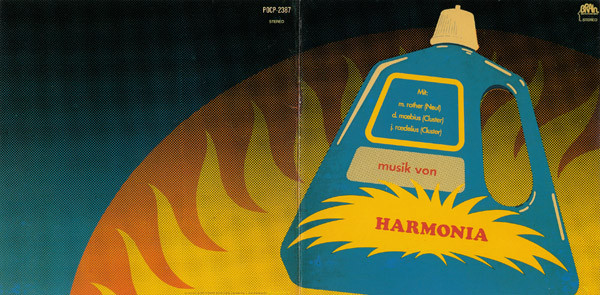
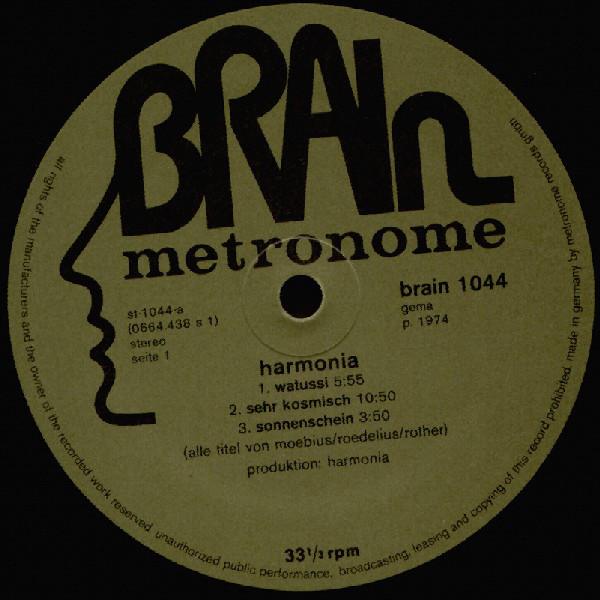
Watussi (with 2 Ss) is also the name of the opening track on Harmonia‘s Musik Von Harmonia. Quite how you’d dance to it though is anyone’s guess.

HarmoniaWatussi

Like most experimental German music of the era (1974), Watussi ploughs a distinctly non-conformist six minute ambient path. It fades in on a looping soundbed of early pioneering synths and fuzz-heavy electric guitar, its ping-ponging melodies and skeletal processed drum beat making for a longform, hypnotic and repetitive track. In Krautrocksampler, his bible of the times, Julian Cope highlights the track’s flat-footed drum machine and otherworldly qualities as markers of true progressive spirit and derring-do.

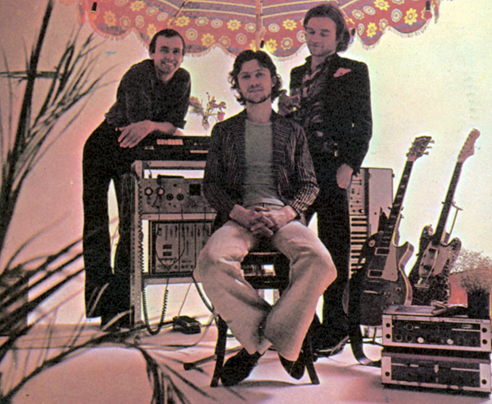
Watussi is a track you can easily get lost in, a definite marker of what is to follow on the rest of the record,  Disciplined to the max, the three musicians responsible for its woozy and otherworldly soundscape play only for one another, intuitively locked in to its steady, broken pulse. Not bad at all for a collective whom Neu’s Michael Rother pulled together with a view purely to flesh out the live sound of his band. One session in and Rother realised he had created something unique and worth pursuing.

Listen once and you may be confused. Underwhelmed even. Listen more than once and Watussi begins to make sense. You might find yourself immersed in its bubbling, propulsive bass for a bit, or the 5 note motif that loops continually while the soundbed shapeshifts disorientatingly below, or its occasional long-noted electric guitar that fades in and out between the huge washes of fuzz synth that envelope everything in a white noise fug.

In 1974’s musical landscape of Wings, Wombles and Candle In The Wind, Harmonia‘s Watussi floats alone and dances with itself; out-there rock for out-there people. A clear influence on groups such as Boards Of Canada and Stereolab, My Bloody Valentine and GLOK, it’s a near-50 year old track that sounds even now like it may have been beamed in from a far more cerebral and kosmische future. Dive in!


Get This!, Kraut-y, New! Now!

The Smile Sessions

The Smile could be considered something of a vanity project; a sideways step, an away from the day-job shaking loose and letting down of the hair until regrouping and getting down to the business of Radiohead. Just when your Spidey senses suggest the ‘Head might be due a burst of about-time-too activity, along comes Thom and Johnny’s hot new thing; guerilla gigs and sudden releases and everything.

They’ve just announced a hefty European tour that takes in the grander venues in all major cities throughout the summer months. By the time you read this it’s probably sold out and a healthy second market for over-inflated tickets at what were already over-inflated prices will be on the go and causing internet meltdown. Such is the way of life when the word ‘Radiohead’ is attached to the project.

Had the two tracks released in the past couple of weeks been done so under that day-job moniker, they may have kickstarted a media frenzy and signalled an interesting new direction for Radiohead. Instead, despite being fairly low-key releases, they point to a band that may well turn out to be something more than a distraction until the bill-paying job starts up again.

The SmileYou’ll Never Work In Television Again

The first track to emerge from the wintery darkness was the clanging, spitting You Will Never Work In Television Again, Thom Yorke snarling and swearing his way across the top of a band that sounds like The Police going toe-to-toe with Fugazi; chorus-effected guitars battling for earspace with searing feedback and a drummer that sounds like Animal from the Muppets going downhill without the brakes on.

Had this been the ‘Head and not The Smile, there’d have been a clamour of “they’ve got the guitars out again!“-type hyperbole, a feeding frenzy for the six string-starved Radiohead fan who stupidly, ignorantly lost touch round about Hail To The Thief. Here, The Smile – a power trio! – sound more guitary than yer actual Radiohead ever have.

Even better is the totally different The Smoke. Taking its cue from the skittering and skeletal repetitive beats of Jaki Liebezeit and Can, The Smoke is a bass-led noodling groove, a proper head-nodder in the vein of any of In Rainbows‘ more ambient moments.

The SmileThe Smoke

Thom swaps full force for falsetto, easing himself into the track and wafting across it, winding his way in-between and underneath the fug whenever he sees fit. Synths follow his melody, gently arpeggiated guitars ring across the sparse backing, and woozy, womb-like sounds add muted colours to the heady stew as it plays out with understated majesty. A proper grower and no mistake.

There are a handful of clips online from those guerilla gigs and more to suggest that The Smile might be making a proper go of it in the coming months. And although any notion of Radiohead perhaps releasing new music any time soon is somewhat fanciful, I for one am not complaining


,

Alternative Version, Hard-to-find, Kraut-y, Live!

15

Plain Or Pan turns 15 this week. Since publishing the first post back in January 2007, the (ahem) power of the blog has seen to it that I’ve been commissioned to interview Sandie Shaw, rewrite articles for the national press (by ‘rewrite’ I mean take out the irreverent turns of phrase and my non-fact checked opinion) and write an actual book (The Perfect Reminder) very much in the style of Plain Or Pan. I’ve charmed half of The Smiths, pissed off an angry Boy George and remain on email-friendly terms with a handful of minor movers and shakers in the world of music. My clever and generous sister even compiled a ‘Best Of Plain Or Pan’ into a physical, one-of-a-kind coffee table-sized book for a big birthday a couple of years ago. If I never wrote another word, my legacy, it seems, is long and reaching.

Writing is a funny thing – some people hate the thought of it and would wilt at the thought of putting together 1000 or so well-constructed words on the bands and records that soundtrack their life. Me? I find it relaxing. Some choose yoga. Some go running. I write. I’d write every day if I could find the time. In the old days, I used to try and write at least two articles a week. I’d time their publication for teatime – peak reading time according to Google analytics – and I’d obsess over blog traffic and stats and suchlike. These days, I aim to write one new thing a week. It’s far more manageable and still frequent enough that the blog aggregators and number crunchers know that Plain Or Pan is very much alive, unlike plenty of other blogs who’ve tailed off to the point of extinction. Writing a blog’ll soon be so retro as to be trendsetting once more. And when that happens, POP, along with a handful of those other well-written blogs on the sidebar there, will be right at the forefront.

15 years. Not bad going.

15 Step by Radiohead sounds like an entire ‘50s typing pool simultaneously clattering out the compete works of Shakespeare in a roomful of Royal typewriters. It’s jerky, juddering and in 5/4 time. Imagine a skeletal and arty take down of Dave Brubeck’s Take 5 and, even if you’ve never heard 15 Step before, you’ll know how the rhythm goes.

Radiohead15 Step

Radiohead are possibly the most-discussed band on the internet. Theories abound over 15 Step. It’s so-called, some say, because there are 15 steps from intro to vocal; a Radiohead working title that stuck.

Others maintain it relates to death – throughout the song there are lyrical references to ‘the end’ and dying. Pistol-toting duelists in the Wild West would turn back-to-back then take 15 steps before turning and firing. There are, they say, 15 steps leading to the gallows and the ‘sheer drop’ that follows. I always thought there were 13 steps to the gallows (and 13 loops of the rope on the noose) but don’t let that get in the way of a good theory.

It relates, others say, to the Bjork-starring movie Dancer In The Dark. There’s a train of thought that every track on parent album In Rainbows relates in one way or other to a movie. Google the theories if you must. The only thing so far uncovered is a mind-blowing theory correlating the listening of In Rainbows to the synchronised viewing of The Wizard Of Oz. I dare say someone’s tried it though.

Radiohead15 Step (Live from The Basement)

But back to 15 Step. It may be rhythm-heavy and death-obsessed, but it’s also groovy as fuck, the perfect Radiohead marriage of technology and trad. Guitars play in weird time signatures (that’ll be that 5/4 thing again); all tumbling arpeggios and crunching riffs. Colin Greenwood’s bass line is pure Can; hypnotic, snaking and jazz-inflected. There’s a brilliant wee breakdown midway through that holds it all together as the players around him go off into their own orbits. There are sci-fi whooshes, sampled schoolchildren shouting “Hey!” now and again and enough head-nodding noodling parts to sate even the most chin-stroking of ‘Head fans.

Like all great Radiohead tracks, it’s not an immediate hit. It has become an inescapable ear worm only over time. More than a few plays down the years and it is, like the entire album it is featured on, one of Radiohead’s very best. But you knew that already.

Get This!, Hard-to-find, Kraut-y

Weirder Bremen

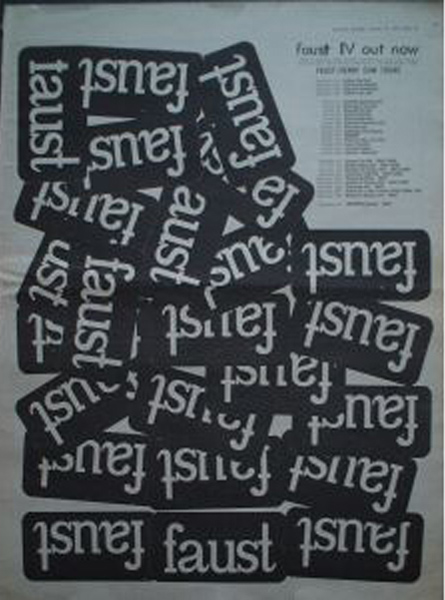
My Bloody Valentine damn-near bankrupted Creation to make an album only a fraction as exciting, as intense, as self-indulgent as Faust‘s Krautrock, a track so good they named an entire genre after it. Julian Cope, in his worth-stealing Krautrocksampler book, called the track ‘a continuation of (Faust’s) whole trip‘. He’s right, of course. A dozen minutes of head music; expansive, noisy and pretty, pretty essential. Kosmische!

Faust – Krautrock

It lurches in on a slur of stretched 3″ studio tape…or perhaps a divebombing whammy bar…and layered fuzz guitars, overlapped and saturated to white noise levels of intensity, fall into a snaking groove pattern, panned from left speaker to right and back again, an instant head trip.

Der-der-derder-der-duuh…Der-der-derder-der-duhh. From underneath the blanket of restrained, compressed noise creeps a tambourine, its steady rattling jangle enhancing the drumless, beatless rhythm that’s unfolding in front of your ears.

Here comes the bass…woody and electric, looped and repetitive, recorded in an era long before Ed Sheeran and KT Tunstall and even loopers themselves were a thing. Disciplined, repetitive and worming its way into your consciousness, it’s now the lead instrument, a counter-rhythm to the relentless guitar noizzze that came before. Dum-deh-dehdeh-deh-dum…Dum-deh-dehdeh-de-dum.

But wait…is that a vocal? Is it? A sort-of chanted, Tibetan monk-influenced calling from some far-off metaphorical mountaintop? Remember when John Lennon had this idea – and he had it first, by a good eight years – for Tomorrow Never Knows? This is what I think he had in mind, if indeed a vocal is even here at all. I mean, I think there is. I’m sure of it. I think I am.

And now there’re drums. It’s Keith Moon tripping up and falling down the stairs, landing the right way up and falling straight into the beat; propulsive, steady, not in your face but driving the whole thing ever-forwards.

That guitar ambience that kicked it all off? You’d forgotten about that, hadn’t you? It’s still there, of course, aural background wallpaper, the splashes of colour in an otherwise steady and unshowy room. But as soon as you remember the guitars, there they are, suddenly at the fore again; fizzing static bursts of beamed-in-from-the-outer-edges art rock and long, howling notes bent out of shape by distorted wah-wah and studio trickery. Just as your mind alters to the staggered groove – are we at the end of a bar or midway through? – a keyboard floats in, keeping time with its Farfisa parp. Or is it actually a manic Velvet’s violin, noise-as-art aesthetic, screeching/keeping time like John Cage on Black Angel’s Death Song, trying painfully to be heard above the apocalyptic din? Maybe it’s both. Who knows? Who cares?

Shh! Listen! That quiet, respectful popping noise you hear near the end is the sound of Stereolab crying into their Rice Krispies, totally defeated. We’ll never be as good as this, they admit, though they’ll continue to give it a good try.

Gone but not forgotten, Kraut-y

Kitchen Sink Drama

Famously, The La’s hated their debut album. Where the record-buying public heard it for what it was – a great collection of well-constructed chiming, rattling and rolling songs, Lee Mavers rubbished it as a mismatch of tracks recorded at various sessions with a variety of producers over a couple of years; a guide vocal here, an unfinished guitar part there, a work in-never-ending process. Given a sprinkling of magic dust by Steve Lillywhite and released against the band’s wishes, it lacked, shouted Mavers, spontaneity, cohesion and the requisite ’60s dust. Chas Smash, once of Madness and at the time The La’s A&R guy told me recently of the band’s American tour to promote the record when Lee, faced with the wibbling and gurning jocks on ButtKiss FM – “I love your shit, man!” – would slap a beat-up C90 in front of the presenter and declare loudly and proudly, “Dis… (slap!) is da fookin’ album, la. Play dis one instead!” The record company people, with the promotional weight and might of Polygram behind them, would hold their heads in their hands in despair as, station after station, Mavers would repeat his trick until eventually, the stations stopped playing any La’s at all.

Likewise the Beta Band. They certainly weren’t the first band to disown their debut album, but they were equally as vocal as The La’s. “It’s definitely the worst record we’ve ever made,” announced Steve Mason when it was released in 1999, “and it’s probably one of the worst records that’ll come out this year. It’s fucking awful.”

Coming a year after the celebrated ‘Three EPs‘ compilation, the band took the magpie ‘n kitchen sink approach that they’d developed over those three singles and threw everything, literally and metaphorically, into the self-titled debut album proper.

They wanted to make it a double album, with each of its four sides recorded in a different continent; Asia, South America, and so on. Economics had the final say unsurprisingly, and so much of the record was put together in a shed that belonged to the grandfather of the band’s keyboard player/sampler/DJ John Maclean. An ambient companion piece was eventually shelved, trimming the intended double album to a single ten track record.

It was a difficult record to pigeonhole, and thank goodness for that. In an era when bands were defined by the trainers they wore or the records they never namechecked, The Beta Band was almost unclassifiable. It bulges and bursts with ideas; wonky Scottish raps, carnival drums, filling-loosening dub reggae bass, frazzled and meandering psychedelic guitar lines… sometimes within the one track.

Beta BandBroken Up Adingdong

Goat Fell and Glen Rosa on the Isle of Arran given a psychedelic makeover

Broken Up Adingdong is almost every idea considered for the album realised in miniature. Beginning on a rhythm of pattering handclaps and what might be someone playing makeshift drums with the palms of their hands on the back of an acoustic guitar, it motors along on a steady, skifflish two chord shuffle that falls somewhere between the scrubbed to the knuckles approach of The Woodentops and the measured discipline of Can or the Velvet Underground.

Tumbling waterfalls of acoustic guitar – similar to the occasional riff that permeates The Patty Patty Sound‘s ‘Monolith‘ – chime their way in and out of the tune, panning from left to right and back again (try it with headphones on for full effect) and as it builds to a crescendo of overlapping vocals, repetitive chants and frantic, double-time claps, it gives way to a collage of beats.

Calypso drums dance and weave in and out. Loosely tightened drums thunder with Bonhamesque brute force. Hairspray hi-hats hiss their way across the top, disco without the glitterball, as some sort of Donna Summerish string sweeps in and then out again just as abruptly. One of those old-fashioned bicycle horns hee-haws its squeaky guffaw between the tapestry of pots ‘n pans percussion and the whole thing rattles and rolls to a stuttering close, as dignified as the Eastenders theme tune tumbling down ten flights of tenement stairs. It’s messy, hypnotic and groovy as fuck.

Time has been kind to the Beta Band and The Beta Band. It’s certainly not the clunker the band suggested it was, and not for a minute do I believe Steve Mason when he said as much. Twenty years on, I suggest you revisit that debut album as soon as you can.

Get This!, Gone but not forgotten, Kraut-y

S’all Gone A Bit Pete Tong

Dr Bucks’ Letter is late-ish era Fall at their best. Taken from The Unutterable, it’s an incessant, kerb-crawling jackbooted stomp of a track; claustrophobic, indulgent and relentless, the sound of The Fall doing half-speed dub techno. The disciplined beat and fuzzed-up riff underpin a crackle of electro static and a cackle of spoken word, random keyboard outbursts that sound like guard dogs in heat and a clanging Holger Czukay bassline that fights for ear space in-between a returning signature riff. It’s not quite a kitchen sink production, but it’s getting there.

The FallDr Bucks’ Letter

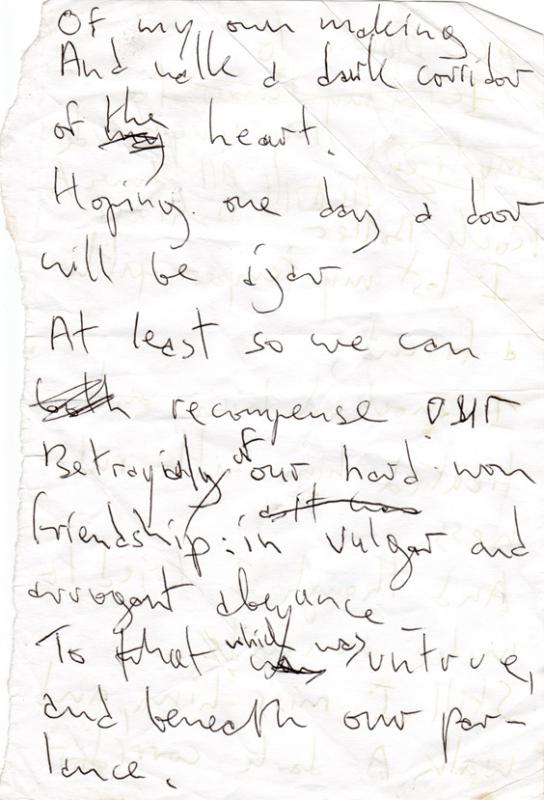
The cherry on the top is Mark E Smith’s spoken word vocal, the lyric referencing an unfortunate fall-out with a friend – ‘of my own making, I walk a dark corridor of my heart, hoping one day a door will be ajar at least so we can recompense our hard-won friendship.’

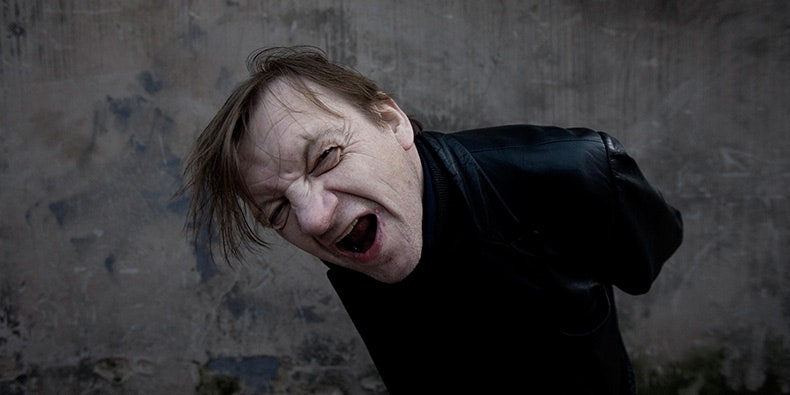
He may have been viewed as a grizzly, alcohol-soaked hard-heart, but Smith could write flowing sentimentality like no other, even if, perhaps to keep his image somewhat intact, he delivers it in a voice that borders on menacing. There’s the complexity of MES right there.

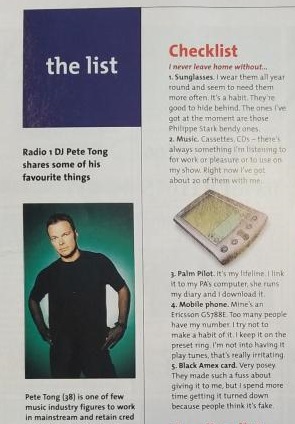
As the track reaches it’s conclusion, Smith bizarrely – yet thrillingly – reads aloud an abridged version of a magazine interview with superstar DJ Pete Tong, cackling to himself/at Tong’s superficial lifestyle and the vacuousness of it all.

There aren’t many folk who’d have the nerve to lift text from such disparate places – a Virgin Rail customer magazine, as it goes, but there y’go – proof, if any were needed, that Mark E Smith wasn’t yer average writer.

Dr Bucks’ Letter is a Fall track that works for all sorts of reasons. The references in the magazine article to Palm Pilots and CDs and cassettes (no vinyl, Pete?) has the track firmly dated as 2000, a portent of a new millennium with another new Fall line-up in the making and at least a further 83 albums before the fall of The Fall with MES’s untimely death in 2018.

It’s worn far better than some of its lyrical influences, has Dr Bucks’ Letter. Indeed, it never sounds anything other than ‘now’, a decent snapshot of a band who’d perhaps lost their way a wee bit at the time.

Gone but not forgotten, Kraut-y

Flo Motion

I’ve Seen Everything, Trashcan Sinatras‘ 1993 sophomore album (as they say over there) had the prime eight o’clock slot in last night’s #TimsTwitterListeningParty. Curated by the mushroom-heided focal point of The Charlatans, the concept, should you not know, is simple; cue up the album, pour a drink and open your Twitter feed on as many devices as you can handle (the reason for that is clear once the listening party gets underway). At the appointed kick-off time, drop the needle, press play, click the link or whatever you do to consume your music and, as the album spins forth, follow the hashtag while the band Tweet info and gossip and recount their memories of writing the tracks, all the while interacting with the fans as they go along. You’ll need multi-taskable fingers that can fire rapid text at key moments  – “that lyric!“, “that riff!” etc and simultaneously respond to comments that you find yourself tagged in. It’s a bit of a dizzy gallop to be truthful, but highly enjoyable and a great way to spend another evening in lockdown. The community spirit as it plays out is nearly as good as being at a gig. Nearly. You knew that already though.

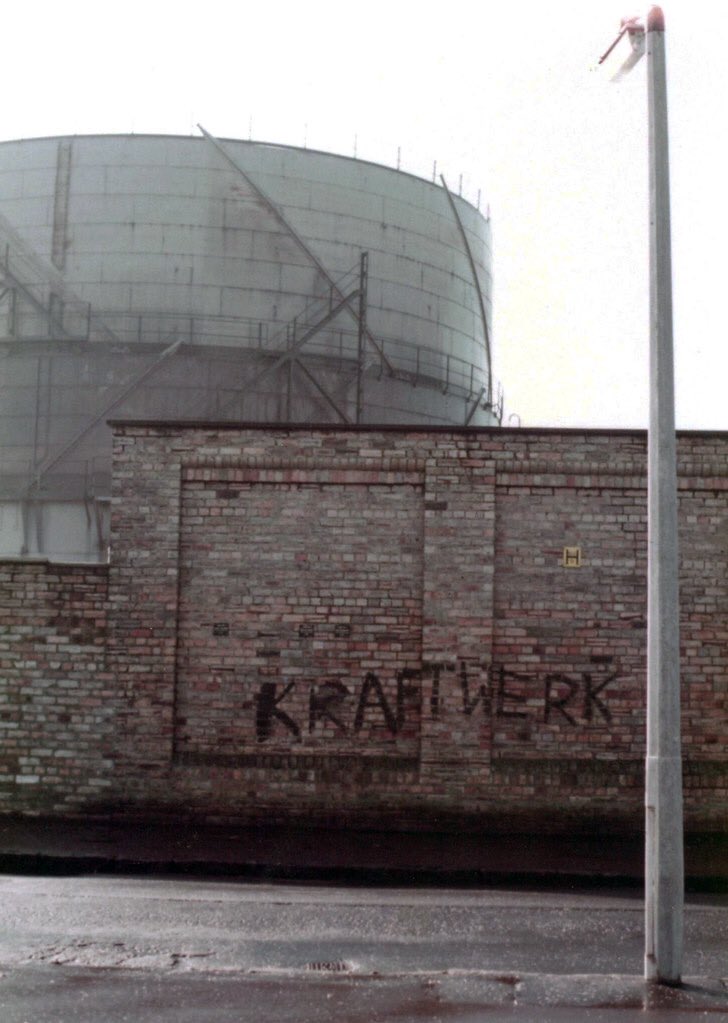
In the afternoon leading up to the evening’s big event, the Trashcans were sending out little reminders across social media and, in the midst of it all, the news broke that Kraftwerk‘s Florian Schneider had succumbed to cancer and passed away. In no time at all, the Trashcans’ Twitter feed had posted this brilliant picture;

It shows a wall in front of a gas works, the legend ‘KRAFTWERK’ splayed across its Victorian bricks in industrial spray paint. Not just any wall, though. The gas works are in Irvine (actually, were in Irvine – they’re long-gone), original home to both the Trashcans and myself, and were boundaried by the wall (also long-gone) on Thornhouse Avenue at the Ballot Road/Bank Street end, across from the old tennis courts (they’re still there).

When I was younger I lived at those tennis courts – my pal and I jumped the fence in the morning for a quick couple of sets before jumping back over in advance of the caretaker opening up at noon. We’d play all day on our £5 season ticket, run home for tea, run back again until it closed at 8 o’clock then hide round the corner (near TCS bass player Davy’s house, as it happened) until the caretaker had locked up again, then jump the fence one more time and play until it was too dark to see the luminous furry ball until it was past you.

When Wimbledon was on, the part-time tennisers turned up in their dozens looking for a game and it wasn’t unusual to find yourself without a court for an hour or more. That’s when the gasworks’ wall became handy. There were three parts to it – the picture shows two – and there was a clear yet unspoken hierarchy to using it. The section with the wee yellow sign and the ‘ERK’ part of the graffiti was centre court and was reserved for only the best players. Even if you were the only person there, you’d think twice before using it. Gary Singleton and his fierce left-handed serve might be along at any top-spinning second. So you’d stand on the opposite side of the road, aim for one of the other two sections and serve towards it. The wee curved section below was just about the same height as a net, so you could practise serving and volleying to your heart’s content, at least until the ball skited up from the curved section or pinged off the jutting edge that separated the three sections (where the edge of the ‘W’ above disappears next to the ‘E’). If the ball hit either of those parts, you’d lost it forever to either the gas works or the hosiery that was next to it.

Back to the photo though. Who took it? And why did they take it? It’ll be at least 35 years old. Back then, photography certainly wasn’t as disposable as it is these days. Spools were bought. Development paid for. ‘Quality control’ sticker removed in shame. Someone intentionally took this picture and kept it for posterity. I don’t know if it’s Davy’s photo, but I like to think he snapped it one grey day in 1981. As I’m writing, I’m beginning to wonder if Davy maybe even graffitied the wall then took the picture, cool proof that he’d adorned the wall should it be washed off within the week. Until the day it was eventually washed away or the wall was knocked down (whatever happened first), it had seemingly always been there. Back at the time, as I clobbered tennis balls back and forth from it each July, I had no idea who or what Kraftwerk was – ironic, given that it means ‘power station’ (close enough to a gas works, I’d argue) although by the time of The Model and Tour de France, it became apparent that this was uber-hip graffiti in a town that was anything but.

KraftwerkDie Roboter

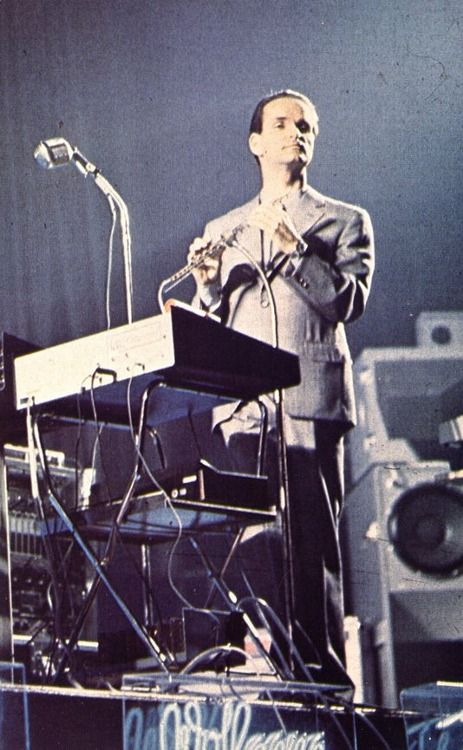
There will be people far more qualified than I that will write about Kraftwerk in the next day or two. Electronic pioneers, they’ll say, with soul at their synthetic heart. Perhaps even the most influential music makers since Lennon & McCartney – just look and listen to artists as disparate as Joy Division and Afrika Bambaataa if that sounds too far-fetched. I love love love the first side of Autobahn, its German-engineered, fan-cooled engine kicking off a wonderfully meandering road trip, and I’ve a particular penchant for the German-language versions of their better-known stuff – Die Roboter, for example. Strange, linear pop made by serious-faced boffins in matching suits, it still sounds like the future over 40 years later.

I also love how Berlin-era Bowie made no secret of the fact Kraftwerk were hugely influential to him on a trio of albums that have subsequently been hugely influential on others. Influenced by/influence on…. it’s the power that keeps the music world spinning ad infinitum. Here’s the tribute to Florian that eases you into side two of Dave’s “Heroes” album.

David BowieV-2 Schneider


Get This!, Kraut-y

Rock Goes To Collage

The Beta Band will forever be defined by Dry The Rain, the first track on their first EP that most-famously soundtracks one of the most memorable scenes in High Fidelity. That EP, Champion Versions, introduced the band’s music at a time when dumbed-down indie rock was ubiquitous, predictable and in need of a good kick square in the haw maws. The big bang of Brit Pop had long-since fizzled to a watery fart and the Big Two led the lethargic charge towards mediocrity and meaningless. Oasis was a bloated beast, cocksure with misplaced arrogance merely by being super-popular. Their music, once a glorious melding of rabid snarl and Mersey melodies – the Sex Beatles, if y’will, was now bloated, irrelevant and plain old rubbish. Blur was midway to nowhere, somewhere between slumbering, opiate-enhanced recording sessions and making cheese whilst living in actual very big houses in the country. Others limped on to ever decreasing returns; Supergrass, Gene and Elastica, for example, who’d eventually disappear down the same black hole that had claimed Marion, Menswear and Mansun before them (although some would find their way back out now and again for one last hurrah. Watch Supergrass go in 2020.)

In 1997, music was ripe for interesting change. Radiohead led the way and The Beta Band followed close behind. Dry The Rain may well be the band’s signature tune, but it’s their second EP, The Patty Patty Sound, that does it for me. Across the four tracks that constitute The Patty Patty Sound you’ll find enough weird ‘n wonky, dubbed out, clubbed up soundscapes to sate your more out-there moods. With knowing nods towards aural sculptors Can, the greats of dub reggae, the rhythms of the Stone Roses and the folky introspection of John Martyn, it’s quite something. Given its time and place, the EP really was the in-sound from way out.

It’s the opener that does it for me.

Beta BandInner Meet Me

Inner Meet Me is a solid piece of sampled and looped acoustic beat music, a cut ‘n paste sonic collage of odds ‘n sods ‘n found sounds designed to astonish and astound. It begins simply enough, with some electric bleepery and studio static before a repeating vocal plays just behind the sound of a lone pigeon cooing its way into the mix. As you might know, The Beta Band was originally going to be called The Pigeons, and after a year or so, founding member Gordon Anderson left the band soon after they relocated to London and began recording as Lone Pigeon. In a nod to their early roots, the pigeon sample is something of a band in-joke.

When it really gets going, Inner Meet Me positively swings. Acoustic guitars are played throughout with the same sort of focused gusto normally reserved for the poor soul whose job it is is to work a Brillo pad into burnt-on mince in a two day old pot. As the chord changes, the song moves into gear. The drums kick in, accompanied by percussive shakers and what sounds like a decent set of Le Creuset pots and pans being clattered on the off-beat. As you settle into it, arcade machine electro bloops and whooshes colour the mix, a reminder that Beta Band are forward-thinking retro revisionists. No-one else was doing this kinda thing in 1998 and 20-odd years later, I still think it/they sound brand new.

The EP continues with two epic sound collages – the self-descriptive House Song that, once it’s going, kicks like a mule, carried by a really great bassline and sounding like DIY lo-fi indie house, and The Monolith, a near-16 minute folktronica jam that incorporates backwards samples from their own Dry The Rain, African chanting, chiming, cascading, waterfalling guitars and plenty of birdsong. It’s not Be Here Now, that’s for sure.

Beta Band She’s The One

Closer She’s The One is closest in sound and spirit to the opener. A scrubbed acoustic jam replete with random bursts of noise and a twangin’ Jews’ harp, it’s indie hoedown relocated from a creaky porch in the deep south to a cramped St Andrews student flat. It’s all about the layers and the rhythms. Vocals and vocals, multitracked to the max create a circular, hypnotic groove, ever propulsive, ever moving forward.

Their next EP, Los Amigos Del Beta Banditos featured more of the same, a document of a peerless band ahead of their time, out of their minds and out of this world. It’s The Patty Patty Sound though that marks The Beta Band as more than just the ‘Dry the Rain‘ band.