Cover Versions, Gone but not forgotten

Girlfriend Is Better


One Artist stands head and shoulders above all others when it comes to internet presence…or lack of. Ironic really, considering he wasn’t much taller then the height of nonsense. Yet He Who Cannot Be Named held such sway over his music appearing online that websites could (and did) disappear overnight at the mere mention of his name therein. Heaven help you if you dared feature any actual music. His army of internet police swiftly and efficiently erased all trace of free music relating to their master even quicker and slicker than their boss was able to rattle off one of his insanely flash guitar riffs. Even the use of purple font, they say, was considered a risky business.
I write all this in the past tense as since the artists’s death, the ‘net has seen a subtle relaxation and/or bending of the rules when it comes to him. You’d still be a fool to put any old mp3 up for grabs, and wobetide you if you’ve considered YouTubing shaky mobile footage of the maestro at work on a stage gone by. As the ancient proverb goes, never, ever try to steal from a man who dances in kitten heels. There seems to be an unspoken agreement though that we writers can now write about him without fear of reprisal. So here goes.

If I Was Your Girlfriend is the artist in question in microcosm. Produced, Composed, Arranged and Performed by it says on the sleeve notes of Sign O’ The Times, the single’s parent album. It’s a monumental album in every way; a double, for starters, it takes in funk, soul, rock, rap, jazz, blues and gospel, genre hopping with effervescent fizz like a hyperactive child who’s overdosed on sugar. It also sounds as fresh today as the day in 1987 when it was born.

Almost everything is played by just the one musician. The skeletal shards of white-hot house on Housequake are played and sung only by him. The pseudo-psychedelia of Starfish & Coffee is created only by him. If I Was Your Girlfriend, with its metronomic yet strange rhythmic beat and on-the-four computerised thunderclap was built up from scratch by one person. Add a sparse keyboard signature riff, a gloop of slap bass and a collage of backing vocals featuring multilayers of the one voice sped up and slowed down and you’re in the presence of greatness. Stick a risque and pervy lyric on top, of the sort that no-one else would get away with, and you have yourself a weird ‘n wonky pop classic. The way the vocals weave in and out is magic. He harmonises with himself, deep and gritty one moment, falsetto flash the next. Just as you’ve pegged him for a god-fearin’, tear-soaked and on his knees James Brown, he goes all spoken word, like a pervier and more grooved-up Gainsbourg, if that is at all possible.

He Who Cannot Be NamedIf I Was Your Girlfriend

Like all great artists, his best work could often be found tucked away on the b-sides. He may have been considered an ‘album artist’, easy to see why with a golden run stretching from 82’s ‘1999‘ to 87’s ‘Sign O’ The Times‘ and many of his other 39 (39!!!) studio albums unarguably solid gold, stone cold classics, but the multitude of singles and remixes that spat forth with every release contained their fair share of underheard greatness. Shockadelica was a left-over from the Camille phase, an alter-ego project that never really got going. The music was too good to waste though, and much of it ended up on other releases, such as the b-side of If I Was Your Girlfriend. This is classic He Who Cannot Be Named Music – call-and-response vocals, computerised on-the-one rhythms, casually tossed-off squealy guitar solos, underpinned by a 7th add 9 chord, the chord that colours any music the colour of funk.

He Who Cannot Be NamedShockadelica

Early 90s girl group TLC made a decent stab at covering If I Was Your Girlfriend, the original providing the blueprint for the trio’s sassy but rough round the edges r’n’b. They even have a go at some of the spoken word section, although no doubt in order to appeal to their legions of teenage fans, they’ve left out some of the saucier words.

TLC –  If I Was Your Girlfriend

And here’s Creep, one of their biggest hits. This actually sounds like a track that He Who Cannot Be Named might’ve been inclined to record himself; horn samples, synthetic rhythms, multilayered vocals with falsettos aplenty, hooks galore….s’a cracker!

TLCCreep
Alternative Version, Cover Versions, Gone but not forgotten

Robber Dub Dub

Back in 1990, when I provided shaky lead guitar and wobbly vocals in a promising local band that would soon cease to be, myself and two of my bandmates, deep in the midst of a songwriters’ block, visited the local market where an old guy sold older records at knock-down prices. We went specifically to look for records no-one had ever heard of in order to rip off a chord change here or a melody there. It would be the nail in the coffin of our creative process and we limped into insignificance shortly after.

Last week I was flicking through my records, looking for something different to play, when I chanced upon one of the albums we’d bought. Quite what ‘Try To Be Mensch‘ by Element Of Crime brought to the world of guitar-based music is anyone’s guess. I’d picked it up after spotting John Cale credited with keyboard duties. Whether or not it’s THE John Cale is open for debate. A quick Google has proven fruitless and the record, if my 27 year-old memory serves me well bore little resemblance to anything like the Velvet Underground. At 99p it proved to be a waste of money. However….

…when I pulled it out to look at it the other day, wedged inside was my copy of Black Market Clash, an album I’d long-since assumed to be lost forever. How The Clash album had managed to find its way inside the sleeve of a record I’ve never ever played all the way through is a mystery, but when it fell out, it was greeted like a long lost pal. And ever since, it’s been spinning on heavy rotation.

I love Black Market Clash. It’s a pot pourri of everything The Clash were; rare mixes, re-recordings and interesting cover versions, all helped along by a generous sprinkling of filling-loosening reggae basslines. It’s as far-removed from the spitting, snarling, rabid dog of punk as is possible. You might go so far as to say that with all their eclecticism, yer Clash were rock’s answer to Brian Wilson; ideas fully realised, gung ho experimentation, risk-taking, rule-breaking, chart-making hits. The full version of Bankrobber/Robber Dub is nothing short of sensational. Crucially, the version on vinyl is a full minute and a half longer than the slightly edited but still superb CD edit. Technology being what it is in my house, you’ll need to make do with the shorter take though…

The ClashBankrobber/Robber Dub (CD edit)

Elsewhere, there’s a version of Booker T‘s Time Is Tight that somehow failed to make the cut on Sandinista! and a faithful reworking of Willi William‘s Armagideon Time that first saw the light of day on the b-side of the London Calling single.

The ClashTime Is Tight

Booker T and the MGsTime Is Tight

The ClashArmagideon Time

Willie WilliamsArmagideon Time

These days you can buy Super Black Market Clash on CD (although it’ll be missing (Armagideon Time as well as the extra 90 or so seconds from Bankrobber) a turbo-charged version of the original 10″ EP/LP, but if it’s a quick fix of eclectic Clash you’re after, that midi-sized slab of vinyl with a police-defying Don Letts on the cover is all you’ll need.


Cover Versions, Gone but not forgotten, Hard-to-find, Live!

Pepper (Slight Return)

The previous post (on Elliott Smith, below) was written on the back of the Sgt Pepper anniversary/reissue jamboree. By coincidence, so is this one.

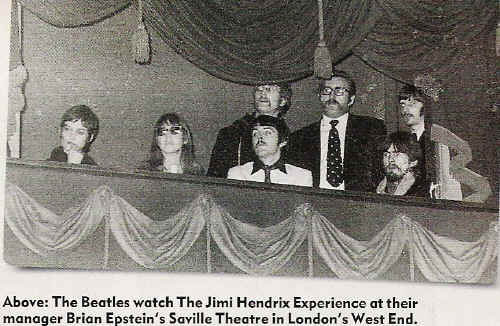
Sgt Pepper turned the world on its axis. The day it was released, the 60s went from the monochromed mundanity of a smog-filled Britain with wee men in bowler hats running the country to a cosmic technicolour planet where anything was possible. And anything was possible. On the 4th June 1967, just two days after Pepper came out, Paul and George found themselves at The Saville Theatre for a Jimi Hendrix Experience show. Hendrix, perfectly aware that half of The Beatles were in attendance had the mother of all aces up his silken batwinged sleeve.

Hendrix had appeared from nowhere, brought to Britain by The Animals’ Chas Chandler, immediately establishing himself as a top fixture in all the right clubs in swinging London. He was a top-heavy hippy in military garb, supported by sparrow-narrow legs with hair as wild and electric as the upside-down Strat he toted. Jaw-dropping in both sound and ability, Jimi could play lead and rhythm concurrently, his big right thumb working the bass notes the way a conventional guitarist might use his first finger. With black-as-coal hamster eyes permanently sparkling he sent multicoloured notes of amplified electric greatness out into the ether. He was untouchable.

To open The Saville Theatre show, Jimi and his Experience worked up a version of Sgt Peppers‘ lead track, slow and sludgy, loose and on the edge of falling apart, unmistakeably Hendrix and super-thrilling. Jimi replicated the whole thing, even playing the brass section as guitar riffs. A guitar-heavy track to begin with, Hendrix made it his own. A thrilled Paul and George watched from the balcony as Jimi caught their eye and smiled his knowing, lopsided, stoned grin.

Jimi opened, the curtains flew back and he came walking forward, playing ‘Sgt. Pepper’, and it had only been released on the Thursday so that was like the ultimate compliment. It’s still obviously a shining memory for me, because I admired him so much anyway, he was so accomplished. To think that that album had meant so much to him as to actually do it by the Sunday night, three days after the release. He must have been so into it, because normally it might take a day for rehearsal and then you might wonder whether you’d put it in, but he just opened with it. It’s a pretty major compliment in anyone’s book. I put that down as one of the great honours of my career. I mean, I’m sure he wouldn’t have thought of it as an honour, I’m sure he thought it was the other way round, but to me that was like a great boost. (Paul McCartney)
Jimi Hendrix ExperienceSgt Peppers Lonely Hearts Club Band (Saville Theatre, London, 4.6.67)

One of the best Beatles’ covers? Quite possibly. You’ll have your own ideas, no doubt. Beatles’ covers are ten-a-penny. We all know that. The Sgt Pepper album was treated to the full monty in 1987 when the NME, back in the days when it was still a barometer of hip opinion, released the whole album in cover form. It’s a fairly stinking album, all truth be told. It did raise money for charity, getting Wet Wet Wet’s version of ‘With A Little Help From My Friends‘ to number one in the process, and it did give Billy Bragg a back-door entry to the top of the charts (the barking bard from Barking’s version of ‘She’s Leaving Home’ was on the b-side) but, 30 years on, it’s best forgotten about.

In contrast to Jimi’s spectacular take on the title track, Three Wize Men (Google won’t help) bravely attempted a none-more-80s hip hop version of the same track. Perhaps at the time it was a radical thrill (I doubt it) but nowadays it sounds about as edgy as something Age Of Chance might’ve left lying unloved on the studio floor.

Three Wize MenSgt Pepper


The album closer, by that most NME of bands The Fall, is a bit better, this album’s saving grace, even, even if Mark E Smith sounds totally bored by the whole concept. He probably was.

The FallA Day In The Life

She’s Leaving Home…..

Alternative Version, Cover Versions, demo, elliott smith, Gone but not forgotten

Just A Shooting Star

There’s a wee bit of a media-fixated Beatles renaissance going just now, what with Sgt Pepper turning 50 and fortnightly reissues of their back catalogue racked up in the Spar alongside Tank Commander Monthly and Build Your Own Millenium Falcon Weekly. It’s a great time to be discovering them for the first time. Who cares if someone’s first exposure to Hey Bulldog is via De Agostini publishing?

Fast track back to the mid 90s and arguably the first flourish of serious Beatles reappraisal since the demise of the band. With their self-proclaimed monobrowed monopoly on all things Fab you could be forgiven for thinking that Oasis had cornered the market in Beatles-influenced music. Just because they shouted louder and played louder and just were louder in every sense didn’t mean they were the only ones with a fevered fascination for the Fab Four. The louder the gob, the bigger the knob ‘n all that. If you listen closely to their music these days, is it even possible to spot The Beatles’ references? Is it? Well, aye, it is. A wee bit. Some of their less-ballsy records have the ‘feel’ of late-era Beatles – All Around The World‘s universal message sounds like the sort of song a lazy advertiser might come up with if tasked with creating a Beatley tune in an afternoon, and Liam is awfully fond of doing his best Lennon sneer atop a grandly played piano. Many of their harmonies are quite clearly direct second cousins of the real deal, but after that, I’m stumped. There are far better bands who’ve dipped deep into the best back catalogue in popular music and pulled out their own skewed version of Fabness. You’ll have your own favourites.


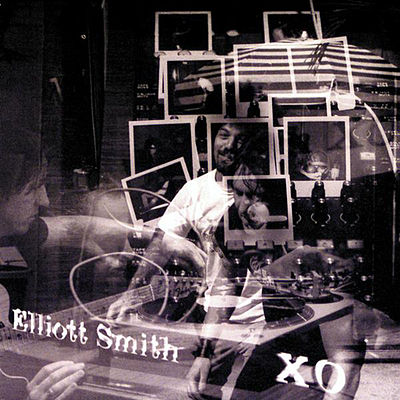
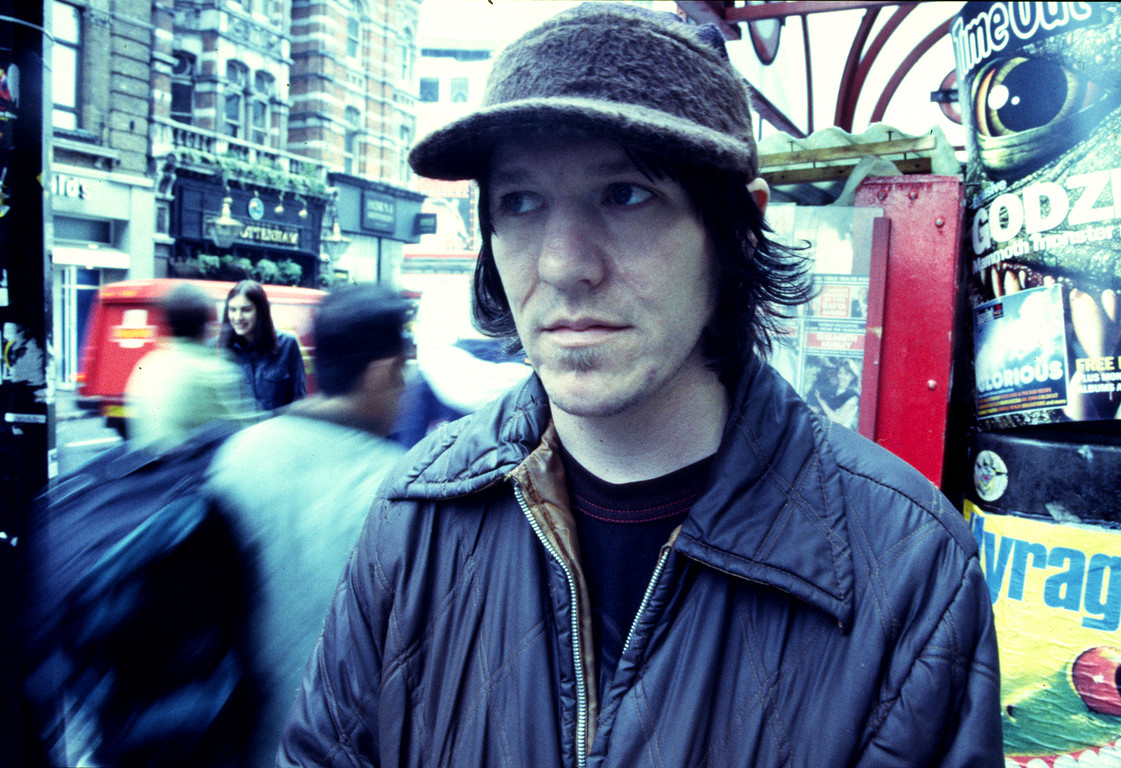
And so to Elliott Smith. If you’ve been visiting Plain Or Pan since the glory days of 2007, you’ll know he’s a big favourite round here. He still is. Indeed, his 4th album, 1998’s XO is currently spinning for ther umpteenth time this week. After years of being out of print on vinyl, it finally made it back onto wax a couple of weeks ago. My eye was off the ball when initial copies went on sale and I missed out on the very limited (500 copies, I think) marbled vinyl version, so I had to settle for the standard black 180 gram edition instead. No big deal really. Really. No, really! I’ve lived with the CD since the day of release, discovered when I was working on the counter of Our Price where it was a ‘Recommended Release‘ that week. I played it three times straight through that afternoon in a fairly empty shop, each subsequent play making my jaw drop a notch closer to the sticky carpet. His voice! Gossamer-light and as fragile as fuck. His playing! Beautifully picked arpeggios one moment, brightly ringing fancy chords the next, no solos but lead breaks that aped the vocal melody – just like Paul McCartney. His arrangements! Double-tracked and beautifully harmonised vocal effects, weird ‘n wonkily off-key pianos, little melodic runs up and down the fretboards and keys….. total Beatles! While the Mancunian magpies were belching loudly about their love for The Beatles, here was Elliott Smith very quietly and unassumingly wearing his obvious love for them, not only on his sleeve, but in the grooves inside the sleeve.

XO is a fantastic album. It was Elliott’s major label debut and followed hot on the heels of Either/Or, the undisputed ace in his back catalogue up until then. Either/Or is also packed full of introspective, whispered songs. Alameda. The Ballad Of Big Nothing. Say Yes. Between The Bars. Angeles. All are what you might loosely call ‘Greatest Hits’, had Elliott been fortunate enough to have had such things. All feature the signature double-tracked vocal (like Lennon), the melody-chasing guitar (like McCartney) and the unassuming resignation of George Harrison; always the bridesmaid, never the bride. Even at the Oscars, when a crumpled and bemused Elliott performed after the Good Will Hunting soundtrack received a nomination, he was the outsider. Celine Dion might’ve beat him to the gong, but who in their right mind would want to play that Titanic song 20 years later? Conversely, Elliott’s music endures.

What Either/Or lacks is clarity and sheen. It’s very lo-fi and indie. Coffee house music for misfits who’ve fallen on hard times and hard drugs. XO has a bright and shiny polish to it, reflected (gettit?) in the fact that much of it was recorded in California and LA.

Opener Sweet Adeline was the clincher for me. Just Elliott and his guitar, with descending riff and wonky chord included, the clouds part at the first chorus and sunlight bursts in in the form of glorious harmonies and barrelhouse piano, the drum sound not a million miles away from something Ringo might’ve strived for around 1967.

Elliott SmithSweet Adeline

I knew there and then that this was an album I was going to love. By the breakdown at the end, the whole thing sounds a wee bit like the breakdown from Sgt Pepper’s Lovely Rita. This is immediately followed by Tomorrow Tomorrow, Elliott singing counter melodies to himself while he plays the most amazing ringing guitar – a 12 string with 4 strings missing, closely miked and double-tracked (again) to sound like a whole orchestra of guitars. The songs that follow on are stellar. Waltz #2 was the album’s near hit; a piano and acoustic guitar fighting for top billing, lilting and waltzing (aye) to a cinematic end with sweeping, swooping strings. And did he really sing about ‘Cathy’s Clown‘ in the first verse? Yes! This was confirmed on the 2nd listen.

Elliott SmithWaltz #2

The only Everly’s reference I’d ever heard in song was McCartney’s ‘Let ‘Em In‘ and here was another. It was a sign. Three songs in and I had discovered an album that remains to this day an essential album, one of my very own Recommended Releases. To paraphrase Brian Clough, I wouldn’t say XO is the best album ever written, but it’s in the top one.

There’s plenty more Beatleisms throughout; Bottle Up And Explode has an ending that George Martin would’ve loved putting together, layer upon layer of vocals and guitars and strings and weird effects and kitchen sinks. It’s very Fab.

Elliott SmithBottle Up And Explode

As is Everybody Cares, Everybody Understands, a song that sounds as if it’s going nowhere until Elliott drops a clanger of a swear word and the whole thing ramps up a gear on the back of it. The ending has a great clash of sighing cellos, sighing backing vocals and a crescendo half-way between The Smiths’ Death Of  A Disco Dancer and a DIY Day In The Life.

Elliott SmithEverybody Cares, Everybody Understands

Bled White is another. Ringing guitars, electric organ and a fantastic (fabstastic?) call and response vocal. This is music made in the studio, deliberately written to sound as good as possible in recorded form.

Elliott SmithBled White

Many acts go for the feel of the music, the spontaneity that a live performance brings. Elliott live was by all accounts a very hit and miss live act, and going by the numerous bootlegs I’ve listened to over the years, this would seem true. No stranger to stopping songs midway through if he wasn’t feeling it, he’d half-heartedly and quite possibly deliberately lead his band through a lumpen car crash of a song one night then play a spellbinding acoustic version the next. Tracks like Bled White could never sound great live. But recorded for posterity on XO, they sparkle immortally.


Elsewhere, you’ll find the bedsit Beach Boys harmonies on Oh Well, Okay have the potential to induce real tears. The wee cello swell after a minute or so is your starter for ten.

Elliott SmithOh Well, Okay

Album closer I Didn’t Understand wafts in on a raft of a-cappella vocals, just like Because on Abbey Road – a track Elliott would go on to cover on the aforementioned Good Will Hunting soundtrack, funnily enough.  I could go on and on. Suffice to say, XO is well worth investing in if you’ve never had the pleasure.

To finish, here‘s Elliott doing The Beatles. Reverential and respectful.

Elliott SmithIf I Fell


Alternative Version, Cover Versions, Gone but not forgotten

How Does Bob Marley Like His Doughnuts?

Wi’ jam in, obviously.

But everyone knows that.

With an extreme burst of lethargy I managed to stretch for the laptop, determined to commit this week’s musical musings to virtual print, despite my flagging limbs and sweaty heid telling me otherwise. Outside, balls bounce-bounce-bounce to the point of major annoyance. Kids scream with excitement as water is scooshed from someplace unknown. Lawnmowers with engines in various states of poor health noisily scalp my neighbours’ front and back gardens. Not quite what Joni Mitchell had in mind when she was titling one of her albums ‘The Hissing Of Summer Lawns‘ but then, this is (nearly) Irvine, Ayrshire, and not Irvine, California.

This heat! Melting minds, slowing the pace, turning everyone wabbit. Good Scottish word, wabbit. It means extreme tiredness, unable to function, total exhaustion. Everyone though is smiling. Everyone. The good, the bad and the ugly. Out in shirt sleeves and last year’s shorts. Ill-fitting Old Firm tops, freshly inked limbs turning a pinker shade of transparent white in the Ayrshire sun. Taps aff on the building sites and sunburnt shoulders on the hard shoulders on the drive home from work. Big bellies oot and we don’t care. Summers here and the time is right for prancin’ in the street. To quote Van Morrison, wouldn’t it be great if it was like this all the time?


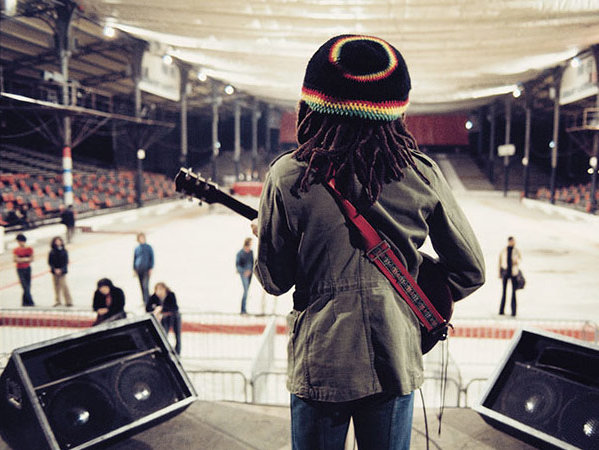
Exodus was Bob Marley‘s 9th album. The previous 8 are a fine mixture of occasionally Perry-produced bluebeat ska and herbal-infused political riddims, but album number nine was the big international breakthrough. Recorded in London following an attempt on Marley’s life in Jamaica, it’s the first truly mass-market appeal reggae album. Purists might rightly argue that it’s almost reggae lite, but the tunes therein still pack a filling-loosening bassy punch. The subtle emphasis on the Mayfieldish wah-wah pedal and the decision to push the brass section to the fore lends the album a more soulful feel. The whole thing is very laidback – there’s not a single ‘fast’ track amongst any of the ten – and it makes for a brilliant soundtrack to this heatwave we’re currently experiencing.

Side 2 is where all the big hitters are; Jammin’, Waiting In Vain, Three Little Birds and One Love/People Get Ready were all hit singles on both sides of the Atlantic. The track that gets my vote every time though is Turn Your Lights Down Low, the only track on the second side not to be released as a 45 and along with album opener Natural Mystic, the track most likely to top my non-existent list of favourite Bob Marley tunes.

Bob Marley & The WailersTurn Your Lights Down Low

It’s a cracker, isn’t it?

Bob Marley & The Wailers – Natural Mystic

If you listen carefully to this, you might just hear the scrape-scrape-scraping of Sting’s pencil as he writes out his blueprint for The Police. But don’t let that put you off.

Here’s Lauryn Hill doing one of those ghost duets that was all the rage a few years ago. Soulful, respectful and with added hip-hop flavourings. Lauryn would later go on to partner Rohan Marley, one of Bob’s sons. Broke my heart that did. I had high hopes for me ‘n Lauryn.

Bob Marley & The Wailers with Lauryn HillTurn Your Lights Down Low

To finish off, d’you know how The Wailers like their doughnuts?


I’m not sure, but, aye, I hope they like jam in too.

Jah like it? as Bob often said after one pun too many.


Double Nugget, Gone but not forgotten

In-Between Go-Betweens

No writing recently as I’ve spent the past week away on a school residential trip. Well, 4 schools’ trips to be exact. It’s the final hurrah before the P7s leave their lofty position as top dogs of their respective primary schools and enter the local secondary as the smallest fish in a much bigger pond. The trip is organised as a bonding session, as a way of getting to know the chancers and cheek merchants who’ll form your peer group for the next 4 years at least. It was a great trip, all be told, my 6th tour of duty at the same place and, as before, a trip like none of the previous ones. I sat last night like a burst baw, beer in hand and hardly bothering to drink it.

Despite the fact that you’re most definitely very responsible for these children 24 hrs a day, every day for a school week, and you’re in their company from the moment the first early riser surfaces (6.00am was this week’s record, though it was no later than 7 on the others), until the last laugh has echoed down the dormitory corridor at 11.30pm, it is a very enjoyable week. My personal highlight was yesterday morning when we went out as a school group and sped across the Firth Of Clyde on a handful of speedboats. A pod of dolphins had followed our procession and at one point, one of the dolphins swam alongside one of the boats. The kids were able to lean overboard and touch it, much to their delight (and the disappointment of the others who’d found themselves on the ‘wrong’ boat).

The instructor driving the boat asked me if we’d prefer to go and see the seals next or head further round and push the vessel to the limits of its speed. “Can’t we do both?” I was thinking, although I replied, “Whatever you think’ll be best….the kids’ll enjoy either.”

Easy come, easy go,” came the reply.

And with that, an earworm was born. And it’s been my earworm ever since.

As it turned out, we did do both; we zipped across the top of a blustery channel before thrillingly and somewhat dangerously sharply turning 270 degrees to head for the rocks where the seal colony lived. My knuckles were white but I had GW McLennan’s tune spinning in my head as we headed for the seals. “I see my friends on fire….I might even have struck the match,” And there they were, playing up to the nautical tourists like well-trained zoo animals, the wee ones appearing and disappearing from the water, heads like black Labradors, the big fat one seemingly slobbed on the highest rock until we floated closer and it belly flopped into the oily sea. “You gotta take the moon from the trees, you gotta hide it in your room…

We then turned again and our skipper edged forward into full throttle. There was an audible gasp for breath as the speedboat hit light speed, children gripping just that wee bit tighter than before. And still that tune played in my head. Weird! “You gotta hold it til it burns, you gotta make it easy come, easy go…” Even a sudden, unexpected mouthful of salt water couldn’t stop it.

When I got home last night, and the children and missus had been kissed and hugged and the dust had settled on the stories to tell and the washing had been put on and the case returned to the loft and the beer was in hand, the next thing I did was reach for Teenage Fanclub’s recent version. It was spun to within an inch of its life for about 40 minutes, one play after another, until my mind was rested. It’s a great version; faithful to the original, delivered by Gerry and wrapped in honeyed harmonies from Norman.

Sadly, no studio version remains available in mp3 format. You’ll need to have a copy of the fairly limited ‘I’m In Love’ 7″ if you want to hear it in all its warmly-produced glory. There is however, a rather good live version doing the rounds, recorded at last December’s Barrowlands show.

Teenage FanclubEasy Come, Easy Go (Live at Barrowlands, 3.12.16)

As a studio version, it could sit very easily on any of TFC’s stellar albums, especially last year’s ace ‘Here‘ LP. It could also sit nicely on a Lightships release, should Gerry decide once again to step away from Fanclub duties and go solo for a bit. He’d certainly be made very welcome to do so.

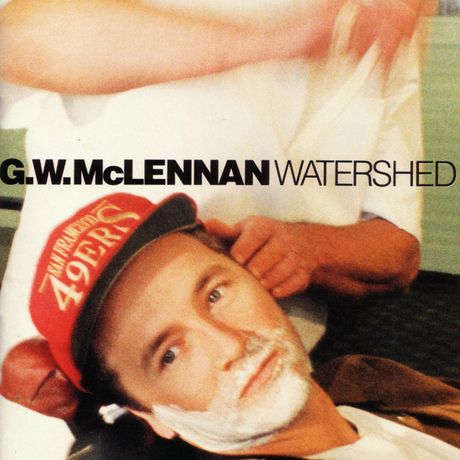
Indeed, Easy Come, Easy Go was the product of a solo record to begin with. Grant McLennan’s first output since the split of The Go Betweens (they’d reform briefly a decade or so later, before McLennan’s untimely death) was the Watershed album. It’s a record I’d never heard until I backtracked from Teenage Fanclub’s b-side and heard the original for the first time. In all honesty, The Go Betweens, as pleasant and melodic and literate as they are, didn’t really do that much for me. I appreciate them ‘n all, I just wasn’t crazy about them. For this, see also Belle & Sebastian. But I digress…. A solo record by someone from a band who I thought were just OK was never going to be high on my list of ‘must hears’. More fool me.

GW McLennanEasy Come, Easy Go

I dare say it’s a terrific LP, packed full of Antipodean jangling pop, although as I’ve reasoned above, it needs proper investigating before I’m fully qualified to really say so. In its original form, Easy Come, Easy Go sounds exactly like a Teenage Fanclub track even if, when it was written in 1991, the Fannies were still favouring Marshall stacks over Fender Twin Reverbs and were more akin to fuzzy Ravenscraig rockers than the Bellshill Beach Boys they were still to become. Certainly, Watershed as a whole and Easy Come, Easy Go in particular are clear influences on the TFC sound. And for that I really should sit up and take more notice.

Gone but not forgotten

Six-String Rule Breakin’, Rule Makin’ Music

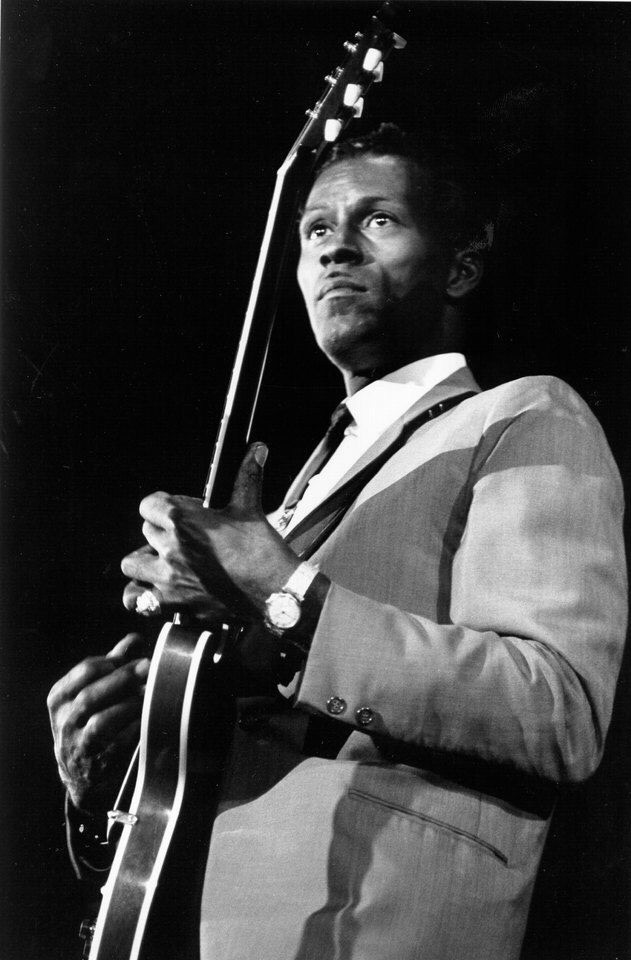
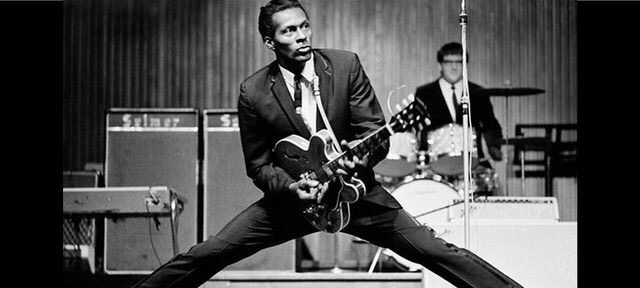
Aw man. When rock ‘n roll came kicking and screaming from the womb, Chuck Berry was right there holding the towels and hot water in one hand and a Gibson electric guitar in the other. He was the mother and the father, the granddaddy of them all, the godfather of guitar-based music.


He was the alchemist of The Riff. He was a true poet of popular culture. He was an influence on everyone who ever mattered. Every. One. Answerable to no one and master of all. Fingers longer than the route to the Promised Land itself, they dug the earth, set the foundations and built the house upon which everything followed.


I was at a gig on Saturday night (BMX Bandits. Simply wonderful) and I’d been talking with support act Joe Kane (Google him – he’s worth a feature of his own on here) about the time Chuck played in Irvine.

That was great, Chuck!” enthused the promoter as Chuck left the stage after barely half an hour. “Fancy going back on for an encore?

Sho’ thing, brother,” drawled Chuck, right arm extended, his famous red 335 still hanging freely from his neck. “…………fo’ nutha five hun’red dollars.

There was no encore.

Five minutes after our conversation, Joe ran through to tell me he’d just heard Chuck Berry had died. A bizarre coincidence.

If only we’d known an hour or so ago.. ” he continued, genuinely upset, “That would’ve been the set closer sorted.”

Someone else asked in all seriousness, “Chuck Berry? What did he sing again?” Boggle-eyed, I replied;

He sang about love.

Chuck BerryNadine

As I got on a city bus and found a vacant seat,

I thought I saw my future bride walkin’ up the street

I shouted to the driver, ‘Hey conductor!’ you must

Slow down I think I see her, please let me off the bus

Nadine, honey is that you?

He sang about life.

Chuck BerryYou Never Can Tell

They bought a hi-fi phono and boy did they let it blast! 

700 little records, all rock and rhythm and jazz.”

He sang about heartbreak.

Chuck BerryMaybelline

Maybelline, why can’t you be true?

Oh Maybelline, why can’t you be true?

You’ve just started doin’ the things you used to do.”

He sang of coolerators and automobiles and girls and goodtimes and made America sound fantastic and wonderful and like the far-off land of all your dreams. In a post-war bombed-out and still shell-shocked Britain, it’s not hard to see why Keith Richards, Jimmy Page et al were totally taken with Chuck.

Chuck BerryBack In The USA


Oh well, oh well, I feel so good today

 We just touched ground on an international runway

Jet propelled back home, from over the seas to the U. S. A.

New York, Los Angeles, oh, how I yearned for you

Detroit, Chicago, Chattanooga, Baton Rouge

Let alone just to be at my home back in ol’ St. Lou


Did I miss the skyscrapers, did I miss the long freeway?

From the coast of California to the shores of the Delaware Bay

You can bet your life I did, till I got back in the U. S. A.”

From mods to rockers, glams to punks, Chuck fuelled ’em all. Marc Bolan would go on to steal the vocal adlib of Little Queenie for Get It On. I suspect you knew that already though.

Chuck BerryLittle Queenie

It’s not just what he sang, it’s how he sung it. And it’s not what he played, it’s how he swung it. The DNA of all rock music starts right here;

Chuck BerryJohnny B Goode.

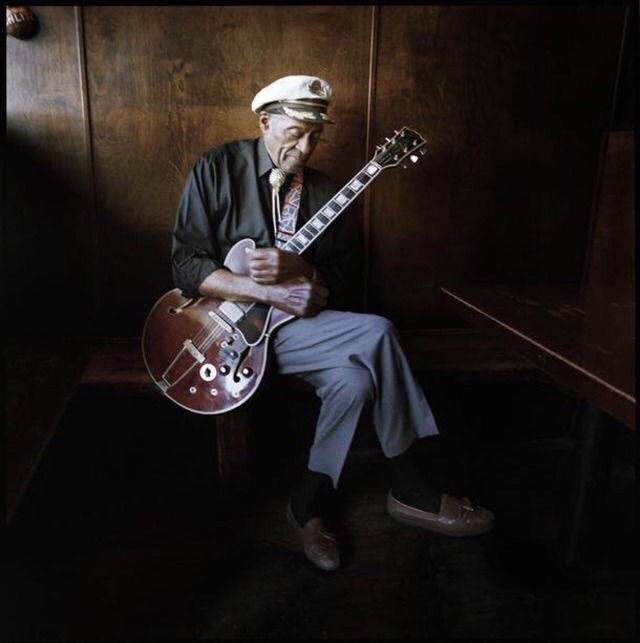
By all accounts a most unpleasant human being, remember him instead for the most beautiful and perfect two-string riffing, three-chord swinging, six-string rule-breaking, rule-making music.

Cover Versions, Gone but not forgotten

Skamla Motown

Edwin Starr‘s 25 Miles is a four-to-the-floor, solid gold soul belter, just over 3 minutes of pounding Funk Brothers rhythm and blast furnace brass that drives Starr’s phlegmy guttural grunts to the sweaty limits.

edwin-25-miles

Edwin Starr25 Miles

Released in 1969 and re-released a couple of times since, it’s gained ‘classic’ status thanks in no small way to the northern soul scene where regular spinning has seen it become a talcum-dusted dancefloor filler.

25 Miles has had its fair share of cover versions. The Jackson 5 cut a version in 1969, all Motown-lite backing, call and response vocals and a fuzz guitar break that the other Edwin (with a ‘Y’) must’ve been subliminally channelling alongside Ernie Isley’s signature sound when he was recording A Girl Like You. The Jacksons’ version stayed in the Motown vaults until the mid 80s before appearing on a rare-ish Michael Jackson compilation, but if I want this blog to remain spinning happily forevermore in hyperspace, I’ll resist the urge to post it here. You can find it on the YouTube, if that’s yer thang.

white-denim

Cult American band White Denim have a track that’s currently being used to soundtrack the latest Nintendo gaming advert. Ha Ha Ha Ha (Yeah) was the lead single from their latest album, ‘Stiff‘, and if you listen carefully, you’ll spot more than a subtle nod to 25 Miles.

White DenimHa Ha Ha Ha (Yeah)

A band that defy pigeonholing, White Denim can be both proggy and punky and Pagey and Planty and sound terrific for it. Amazing musicians, they have a unique way of trimming their tracks of excess until it’s just the bare bones of guitar, bass and drums that are left…..but what a fantastic sound they make. Definitely on the ‘to see’ list, I’ll be keeping a keen eye on any upcoming tour announcements.

But back to 25 Miles.

25-miles-tenoshi

By far the best version is the 2011 Skamla Motown (aye!) take by the mysterious Tenoshi. I’ve always thought that Tenoshi was an underground hip-to-the-jive Japanese mod/soul DJ, but it wouldn’t surprise me in the slightest if it turned out he/she was none other than someone like Paolo Hewitt or Eddie Piller (Rocksteady Eddie, anyone?), moonlighting in spectacular fashion from their regular day job. My friend and yours, Google, has proven fairly elusive, so who knows?

Tenoshi25 Miles

A scuffed-up, spliffed-up skanking take on the Motown original, this 25 Miles has been taken down to Studio 1 and given a rankin’ Rude Boy makeover. It rocks, which, if it’s playing as you read, you’ll just about have worked out for yourself by now. Anoraks will enjoy spotting the great wee nod to Prince Buster/The Specials with the horn motif at the end.

If you’re lucky enough to own a 7″ of this (long-since deleted, it’ll set you back around £40 if it ever comes up for sale) you’ll also be aware of the lightly toasted remake of a Temptations’ classic on the flip side. Papa Was Rolling Stoned indeed. Worth seeking out, I tells ye.

Gone but not forgotten, Hard-to-find

Iggy Stardust

It’s well-documented that David Bowie was something of a non-stop workaholic. That long golden run he went on, from Hunky Dory in 1971 to Lodger in ’79 – 10 amazing albums in 9 short years, all killer and no filler (’74’s Diamond Dogs might faintly be described as the runt of the litter, though it yielded Rebel Rebel as well as the album’s title track, so scratch that, naysayers) remains unparallelled, unlikely to ever be equalled, let alone beaten.

What’s all the more remarkable is that while he was on this winning streak, David was sustaining himself on little more than milk, red peppers and the finest Class As that came his way. Not only that, but when he wasn’t changing musical direction and band members and haircut and trousers every nine months, or sticking out the odd non-album track to keep the fans happy between releases (between releases! d’ye hear that, Radiohead?!?), he was still finding the time to help out other artists.

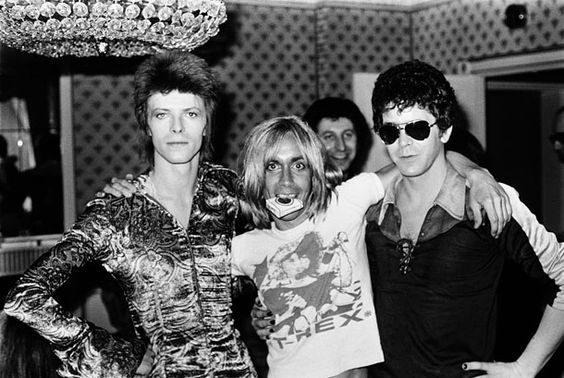
bowie-iggy-lou

An on-the-brink-of-break-up Mott The Hoople famously kickstarted their attack on the charts with their version of Bowie’s All the Young Dudes. Last time I checked, Mott were still playing the odd Hall Of Fame gig here and there, thanks in no small way to yer man Dave.

A not-quite-post-Velvet Underground but fed up Lou Reed went spinning into orbit on the back of Satellite Of Love and its parent album, Transformer. Satellite… had been written, much like Bowie’s Space Oddity, on the back of the public’s fascination with space. Reed had high hopes for the song, reckoning it was perfect hit single material. Satellite… was considered, then disregarded for inclusion on the Velvets’ Loaded album, so when Bowie entered his orbit showing an interest in his music, Lou was keen for his song to be taken seriously second time around. Both the single and album were produced and enhanced by Bowie, his uncredited vocals on Satellite… worth the price of admission alone.

Iggy Pop, careering out of control on a spiral of illicit substances and ever-decreasing sales (Stooges were hardly big-hitters to begin with) found himself on the receiving end of a post-Ziggy kiss of life when Bowie, fresh from minting his second stone-cold classic in as many years, helped produce, or rather re-produce, Raw Power, Stooges’ third album.

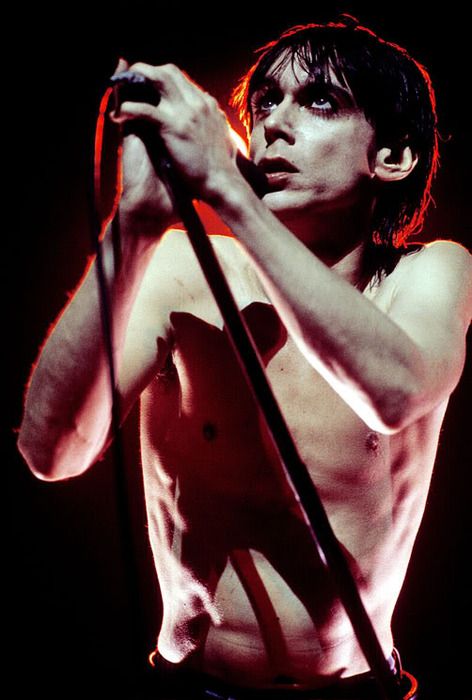
iggy-raw-power-3

Iggy himself had taken the producer’s chair, creating a chaotic mess of almost unsalvageable pre-punk rock. Of the 24 individual tracks available to him at the mixing desk, he chose to put the entire album onto just three  – the band on one, the vocals on another and James Williamson’s lead guitar on the third. When Columbia heard it, they refused to release it until it was cleaned up somewhat and made more presentable.

Cue Bowie. The man with the golden touch. Using all manner of up-to-the-minute recording technology, he twisted and turned Iggy’s 3 track raw Raw Power into something slightly more commercial and releasable. Perhaps not the radio-friendly unit-shifter that Columbia had in mind. Not that many folk bought it anyway, but those that did – cliche klaxon alert!!! – ended up forming bands of their own. But you knew that already. Listen to the album and you’ll hear the embryonic howls of The Jesus And Mary Chain, Sonic Youth, Nirvana and a million other six string stranglers. The teenage Johnny Marr was fixated by the feral guitar playing on it. His bequiffed foil was in love with Search & Destroy‘s glorious abandon and poetic lyrics; streetwalkin’ cheetahs, handfuls of napalm ‘n all.

I’m the world’s forgotten boy,” drawls the Ig at one point, poetry indeed to the ears of the bedroom bard of Salford’s Kings Road. No Stooges, no Smiths. No Iggy Pop, no indie pop. Imagine that.

Iggy & The StoogesSearch & Destroy

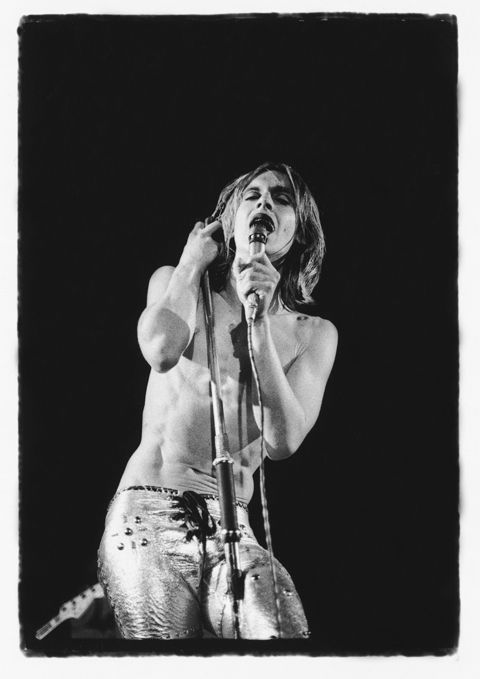
iggy-raw-power-1

In the mid-90s, ahead of a Stooges reissue campaign, Iggy himself was given the opportunity to remix Bowie’s remix – are you still following? – and used his time to unravel all of Bowie’s work, replacing every guttural grunt and primordial proclamation that had been wiped from the first release. He turned the faders up, up and away into the red until the guitars became ear-splitting, spitting shards of broken glass from both speakers.

Iggy & The StoogesShake Appeal

For much of the record, it’s a painful sonic assault on the ears, even during the two ‘ballads’, one on each side, where the guitars somehow still manage to creep into dog-bothering levels of pain.

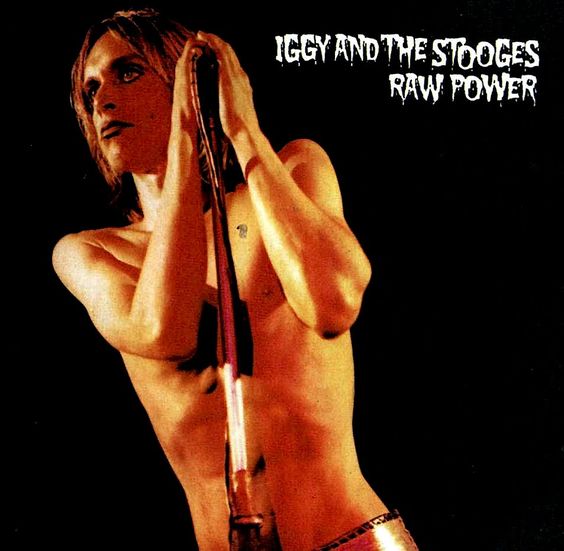
Shake Appeal, above, surfs above the racket like the noisiest garage band in the world having their first go at a Motown track, all Jagger-pouting handclaps and barking yelps, Iggy’s skinny backside (what waist size was he? 24″? A chunky 26?)  bending and jerking like  a pipe cleaner in time to the fuzz bass, the Four Tops if they were fighters, not lovers. It’s a sloppy, angry, petulant, white riot of a record. Quite fantastic, of course. Beautiful music wrapped in a beautiful sleeve. What’s not to like?

iggy-raw-power-sleeve

*Bonus Track!

Iggy Pop Wild America (Long Video Version)

Here‘s Iggy’s on take on it all.

Most likely to succeed. 9th Grade.

10th Grade, formed Iguanas! High school rawk bayund!

An audio autobiography, if y’like.

Gone but not forgotten

Unknown Treasures

One of the good things about being off work is that while you do things around the house at a Doctor’s orders sloth-like pace – cooking inventive new meals, the occasional trip to the cupboard under the stairs to retrieve the hoover every couple of days, a bit of ironing maybe, emptying the dishwasher, rearranging the record collection – you can listen to what you fancy at neighbour-bothering volume knowing that 1) the neighbours are at work so won’t be bothered and 2) the house is empty, save yourself.

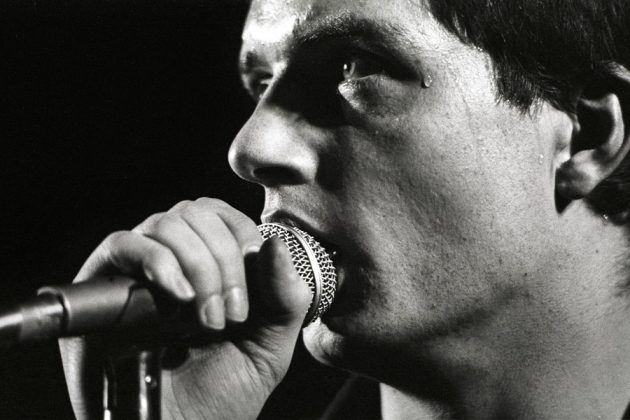
The past week or so I’ve massively rediscovered Unknown Pleasures by Joy Division. It was played that often in my late teens it became embedded in the music section of my brain, hard-wired to be heard without the necessity of having to actually play it again. Long before Steve Jobs had thought of the iPod, I had my own non-tangible music file that could be recalled at will and played wherever I happened to want to hear it. Sandwiched between the back catalogues of The Beatles and The Smiths and an occassional Dylan and Bowie, it keeps esteemed company. Super Furry Gruff Rhys has said similar things about The Velvet Underground And Nico, so I know I’m not alone. It’s been a while since Unknown Pleasures was actually played though, and played at volume at that, so the past few days have been soundtracked once again by its cold, uninviting touch.

joy-division-cummins-1

I came to the album in a very round about way. Like many, I’d wager, I discovered New Order before I’d even heard of Joy Division. It’s an age thing – while Joy Division were initially thrilling those teenagers who were outside looking inside (that’s a wee label reference for any geeks out there) with their other-worldly post-punk, I was doing the Nutty Dance and ah-ha-eh-ha-ing my best Adam Ant impressions, but once I started reading about New Order and discovered they’d been a different band in a previous life, I was curious enough to look for a Joy Division record in Irvine Library.

Simultaneously, just as I was having my moment of enlightenment, Paul Young’s No Parlez album happened to be something of a popular record in my peer group at the time. Go on! Judge us all you want…

On Paul Young’s album he did a version of Love Will Tear Us Apart, all rubberband fretless bass and other such 80s wankery. Being a trainspotter-in-training,  I noticed the writing credits on the label and put two and two together. So, if it hadn’t been for the unlikely bedfellows of New Order and Paul Young, I may never have got to Joy Division until much later in life.

joy-division-live

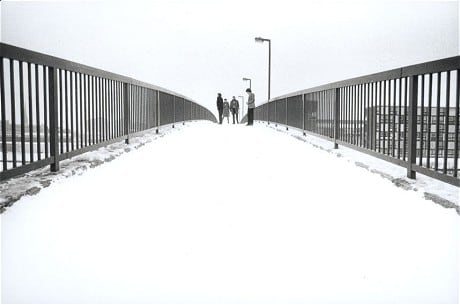
When I first heard Unknown Pleasures, it sounded other-worldly, claustrophobic and not entirely pleasant. But I stuck with it. Nowadays it’s synonymous with the record sleeve imagery and Kevin Cummins’ iconic, epoch-defining monochrome shots in the snow, graphics that mirror the cold intensity of the music created and played by these serious young men. It’s the drums that get me. While the guitar, a howl of electrified cheesewire, bites in all the right places and Hooky’s trademark bass meanders up and down the frets with determined focus, the drums sound both futuristic and olde worlde.

joy-division-steve

The rudimentary synth pads hiss like a steam-powered Victorian workhouse, military in precision, rhythmic, never losing the pace. It wouldn’t be long until Depeche Mode and Yazoo took the blueprint and ran with it in their own chart-chasing directions, but Joy Division were the originators. Or maybe that was Kraftwerk…

Eerie whirring sounds (on Insight) were the sounds of the actual lift inside Strawberry Studios, where the album was created. At one point, the density of I Remember Nothing is punctuated by a shattering glass. That used to make me jump, even after I’d heard it 10 or 15 times. The album still sounds quite like nothing else. Imitators have managed to spit out Tesco Value versions of the real thing ever since, but Unknown Pleasures is peerless.

joy-division-curtis

Every listen transports you back to the dark days of the end of the 70s. Now, to be clear, my end of the 70s was a brilliant time; Scotland had a decent football team, I was discovering pop music, I lived near a big field where we could play in safety, I was never off my bike, all my pals lived in the same street as me….being young at the time was magic. But Joy Division, a decade or so older than me captured the bleakness of their times perfectly. Set against a backdrop of social division, mass unemployment, strikes, Thatcher, the music becomes the only possible soundtrack. It’s much more sophisticated than Lydon’s “nO fUTuRe!” gobby snarl. Nothing wrong with Johnny’s war cry, but Joy Division did it far more artily. And I like my music on occasion to be arty and self-indulgent. Stick with it and it offers up greater rewards. A BBC4 documentary last year on the band had fast-cut, black and white film footage of inner city Manchester soundtracked by Shadowplay. And it was perfect.

Joy DivisionShadowplay

joy-division-bernard

The first copy I had of Unknown Pleasures was on a hissy C90 version I’d taped from that LP I borrowed from Irvine Library. For all its scrapes and scratches (every time I hear Day Of The Lords, I expect my CD or needle to skip half-way through, and it always throws me when it doesn’t), that record had real life in it. If you held it up to the light, it changed colour from black to a deep maroon. I borrowed it more than once, to play loudly – it sounded far better than the tape I’d recorded – but sometimes just to look at and impress any pals who may have shown half an interest. It never occurred to me that I could buy my own, pristine copy. It was enough for me to have a badly recorded version on tape. Certainly an original Factory release, Irvine Library’s copy would command a high fee well into triple figures if it was still around and up for sale. Makes you (or me, at any rate) wonder what other treasure – unknown treasures? – loitered unassumingly in their racks.

joy-division-hooky