Get This!, Gone but not forgotten, Hard-to-find

The Mighty Wah

Wahw-wah-wah-wahw-wah-wah-wah-wah-wahw-wahw-wahw-wah!

“Vox’s fabulous new wah-wah pedal opens the door to a variety of great new sounds!”

So says this epoch-defining trade ad from 1967. “Make your guitar grrrrowl! Make it sound like a see-tar! Listen to the funky bass guitar sounds you get!”

wah wah vox 2

Vox Wah-Wah Ad (5 minutes long and worth listening to every minute):

The wah-wah was created by happy accident, when Vox engineers got the circuitry mixed up in a new range of Beatles-inspired amps they were producing. Realising they’d just created an electronic version of the effect jazz trumpeters had pioneered in the 20s by muting their horn with a hat, they seized on the potential and began producing wah-wah pedals.
hendrix wah

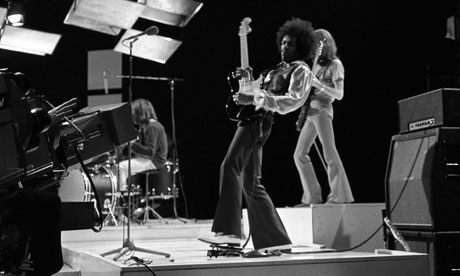
Almost immediately, guitar players saw their appeal. Jimi Hendrix was an early adopter of the effect – Up From the Skies on Axis: Bold As Love was one of the first tracks recorded with a wah-wah, and from then on in, it featured heavily in Jimi’s incendiary output. The Burning Of The Midnight Lamp, All Along The Watchtower, Voodoo Chile (of course) – all featured the screamin’ sound of the wah. There he is above, quite literally rockin’ the wah.

Before long, no self-respecting psychedelic act was without a wah-wah, and the the pedal became an integral part of the sound of the era. As a general rule of thumb, the wider the flares, the wilder the wah. The Electric Prunes even went as far as endorsing the effect.

Electric Prunes Vox Wah Wah Ad

george harrison 1970

George Harrison, newly freed from the shackles of The Beatles and with a sackful of songs he was eager to release under his own name employed Vox’s pedal on the self-explanatory Wah-Wah from 1970’s All Things Must Pass.

George Harrison – Wah-Wah

It’s a cracking track, almost throwaway pop, although it maybe buckles a wee bit under the pressure of Phil Spector’s over the top production. Sleigh bells? Aye! 35 backing singers? Of course! More brass than a colliery band? Well, it is being produced by Spector. A multitude of guitar tracks?  Well, it is being played by George Harrison. The main riff is suitably Eastern-influenced, a call and response one chord groove that swaggers like Muhammad Ali in the 15th round. It soars with each key change, guitars free-forming over the top while the original riff underpins the whole thing. George even has the cheek to steal the chorus from that Vox ad at the top there. Listen again to the last 30 seconds. Who noticed?!? Kula Shaker certainly did – George’s track practically gives birth to the daft four-piece, but don’t hold that against him.  Om shanti shanti shanti.

wah wah vox

By the 70s, the wah-wah was being employed to great effect by the soul community. Curtis Mayfield….Sly Stone….The Temptations….they all had wah-heavy records out. Rather than solo, (that would be far too ‘rock’), the players created the distinctive wacka-wacka sound that’s now become the ubiquitous sound of the wah-wah. Y’know, Theme From ‘Shaft’ ‘n all that.

Temptation Dennis Edwards, far left, and cast members party at the Gordy Mansion, April 13, 1970. (Motown Record Corp.)

Here‘s the lesser-known (by Shaft standards at any rate) Psychedelic Shack from The Temptations:

Since then, the wah-wah pedal has featured on all sorts of tracks by all sorts of musicians, from Joni Mitchell and John Martyn to Metallica and The Melvins. It’s reassuring to know that in any given record collection, you’re never more than 30cm from a track featuring a wah-wah.
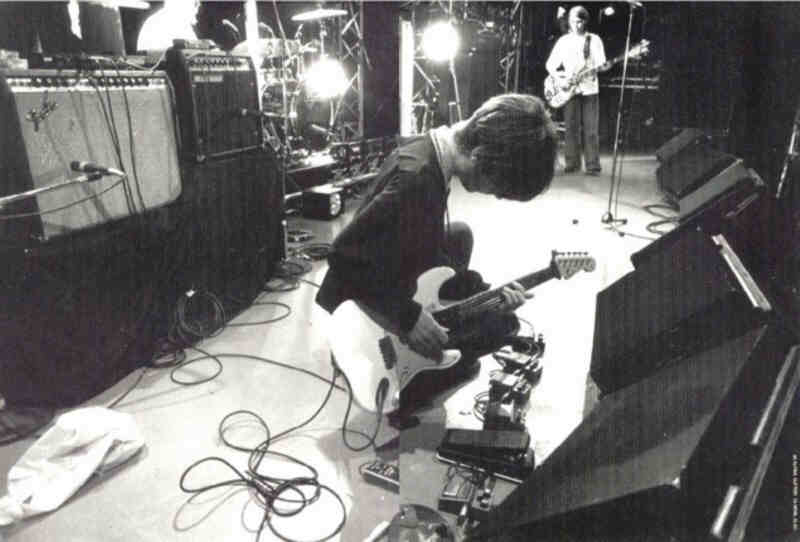
john squire

Here’s Fools Gold, of course….the full-length version, of course…

Stone Roses – Fools Gold

fools gold tab


Get This!, New! Now!

Made Of Orleans

Ela Orleans is a Glasgow-based composer of experimental electronica. She has been releasing music under various guises for ages. She’s recorded scores for theatre productions, written an opera and lived in New York where she recorded avant-garde soundscapes and was on first-name terms with Thurston Moore. She’s just about the coolest figure on the Glasgow music scene right now, with everyone and anyone from Stephen Pastel to Ian Rankin lining up to sing her praises. Her latest offering, Upper Hell, is her 6th LP. She describes her music as ‘movies for ears’, which is just about the perfect summation.

Ela Press Photo 4

Upper Hell was produced by Howie B, the mastermind behind some of the most popular leftfield albums of the past 20 or so years. Tricky’s Maxinquaye and Bjork’s Homogenic both benefited from his magic touch, wrapped in warm ‘n woozy ambient textures whilst at times still sounding darker than Black Sabbath Vol. 4. Howie is the go-to guy when mainstream acts look to reinvent themselves – U2, Annie Lennox and Everything But The Girl have all called upon his services when looking to take their music on an unexpected turn. Howie ended up working alongside Ela after his sister played him some of her stuff. Ela didn’t have to go to Howie and ask to be produced. He found her.

I need to declare some self-interest at this point. Many years ago, Ela and my sister were friends at Glasgow University, and I’ve kept a close ear to her music ever since. She was once round for Christmas dinner when returning to her native Poland wasn’t an option and we had great fun at her expense as she thought in Polish but swore in English while playing charades or some other daft game no-one plays any other time of the year. I couldn’t have forecast at the time that at some point in the future she’d be sound-tracking my commute to work and my wheezing bike runs around Ayrshire, but this week she’s all I’ve listened to.

Ela Press Photo1
Upper Hell is terrific. It’s full of glitchy, twitchy electronica, organic bass lines and cut ‘n paste beats. In fact, it’s exactly the sort of thing Radiohead have been praised and derided in equal measure for – there are no ‘tunes’ in the traditional sense, but you can easily lose yourself in its ebbing and flowing digital soundscapes. There’s even a spoken word track (2nd one in, River Acheron) that, just like OK Computer‘s Fitter, Happier… I kinda know I’m going to skip before too long. If Thom Yorke had been involved in Dark Floor, the opening track, the internet would’ve simultaneously wet itself and melted.

Ela Orleans – Dark Floor

I was playing this last night and Mrs Plain Or Pan popped her head round the door, with a screwed-up look on her face.
“This is Ela!” I said.
“Does it get any better?” asked the missus.
“No, it doesn’t,” I replied, with no hint of irony. “No. It doesn’t.”


Get This!, Hard-to-find, Sampled

Dorissey

Question: What is this record? Is it groovy jazz funk, a long-forgotten off-cut from a Blaxploitation soundtrack that never was? Is it late 60s wig-out psychedelic rock/pop, a remnant of the days when guitar solos were almost as expansive as the lead singer’s flares? Is it fuzz guitar-led, musique concrète strangeness that coulda come straight outta 1972 West Germany?

Answer: It’s all of the above!

The record in question is You Never Come Closer by Doris, from her Did You Give the World Some Love Today Baby album, released with no fanfare to total indifference in 1970.

doris

Doris Svensson was an insignificant Swedish pop singer in the 60s. Along the way she teamed up with respected Scandinavian big band composer Berndt Egerbladh and, from Aberdeen, a Scottish cellist/jazz guitarist/lyricist called Francis Cowan who’d found himself playing on cruise ships where he met his Swedish wife.

This mis-matched trio of musicians put together Did You Give the World Some Love Today Baby, an eclectic soup of funk, rock, jazz and cutting edge electronica. It’s a staggering listen, uncomfortable in places, yet totally pop. Forward thinking retro-revivalists such as Portishead, St Etienne and Massive Attack likely own original first pressings – some of the tunes are a sampler’s delight, packed full of weird strings, breakbeats and fruggable fuzz bass. You can buy reissued CDs of the album from all the usual places. It’s definitely worth further investigation.

candie payne


You Never Come Closer reminds me an awful lot of the long-forgotten post-millennium tracks produced for Candie Payne by Edgar Jones and Simon Dine. Edgar has his fingers in many a musical pie; from the r ‘n b stomp of The Stairs via the be bop-isms of his Soothing Music For Cool Cats album, to playing on stage with Lee Mavers and Johnny Marr – a real non-stop, hard-working musician.

Simon Dine, in his guise as Noonday Underground has taken the weirdest, wonkiest bits of 60s pop music and sampled and looped them into something terrific. His production is all over the last 3 Paul Weller LPs – those electronic rushes and synthesised strings are all his doing. You knew that already though, aye?

Candie Payne – I Wish I Could Have Loved You More

Candie Payne – All I Need To Hear

Anyway, my guess is that both Edgar Jones and Simon Dine also have first pressings of Did You Give the World Some Love Today Baby. The feel of that album more than permeates the work they did with Candie Payne. Nothing wrong with that, of course.

Cover Versions, Get This!, Gone but not forgotten, Sampled

Step Brothers

In the latest Mojo, the one with the big piece on Physical Graffiti, Jimmy Page throws away a comment about The Beatles stealing an old r’n’b riff and fashioning it into their own I Feel Fine. Pots ‘n kettles, Jimmy! Pots ‘n kettles!

What Jimmy omitted to reveal is how the same riff more than informed Led Zep’s own Moby Dick.

bobby parker

The track in question is Bobby Parker‘s smokin’ hot 1961 r’nb stomper, Watch Your Step;

Bobby Parker’s story is the classic struggling musician versus the world tale of rip-offs, bad management and lack of recognition. Mention his name ’round these parts and folk like my father-in-law will wax lyrical about the Rangers and Everton player with the same name. The Bobby Parker we’re concerned with earned his chops tackling the music business and playing alongside Bo Diddley, Sam Cooke and Jackie Wilson. He toured extensively, sharing stages with rock ‘n roll’s founding fathers – Chuck Berry, Little Richard and Buddy Holly to name but a few. We’re all well aware of those names, but Bobby Parker? He remains niche, known only by contemporary musicians and musos, waiting to be discovered and elevated to his rightful place amongst the greats. An early b-side of his, You Got What It Takes, was recorded by Marv Johnson as one of the first singles for Motown, but upon release, to Parker’s dismay his name had been wiped from the credits and replaced, not for the last time, by that of the ever-canny Berry Gordy.

Stung by this, (“What was I to do? Fight Motown?!?“) Bobby Parker wrote what has since become his signature tune, Watch Your Step. Unlike the movers and shakers over at Hitsville USA, Parker was quick to acknowledge his references – the 12 bar blues, the similar riff and structure of Ray Charles’ What’d I Say;

and also to Dizzy Gillespie’s Manteca, a skronking, relentlessly driving riff-laden jazz instrumental;

When asked about this a few years ago, he was admirable in his honesty.

“I started playing Gillespie’s riff on my guitar and decided to make a blues out of it. What came out was ‘Watch Your Step.’”

john lennon ukelele

Also admirably honest was John Lennon.

“‘Watch Your Step’ is one of my favourite records. The Beatles have used the lick in various forms.”

Most noticeably, as Jimmy Page was quick to point out, Watch Your Step‘s taut, snappy riff and structure lends itself quite well to I Feel Fine.

“I was flattered,” said Parker later on. “I thought it was a cool idea. But I still had, in the back of my mind, the idea that I should have gotten a little more recognition for that.”

Sound familiar?

Listen closely and you’ll hear little flashes of what could be Day Tripper too;

led zep

The big baddies in the whole thing though are Led Zeppelin. For the record, I love Led Zeppelin. For the rocking, the rolling and the riff-riff-riffing there was no-one better, but they have nowhere to hide when it comes to this sort of thing. They’re certainly no strangers to the rape and pillage of the blues. Jimmy brazenly ‘borrows’ little riffs, indeed whole songs from blues’ back catalogue. I’ve written about this before, but much of the Zep’s entire recorded career was based on long-forgotten blues standards, arriving fully formed but twisted and turned into fantastically sounding ear-crunching slabs of heavy blooze rock. But nicked all the same. If they’d been more honest in their sticky fingerdness they might have been given more leeway, but it’s the deception and the credits to Page/Plant that rankle. Anyway, there are entire books and websites dedicated to uncovering such things, but this isn’t one of them.

When Jimmy was pointing out the similarities between Watch Your Step and I Feel Fine, he might, after all these years, have admitted to basing his own riff for Moby Dick on Bobby Parker’s single.

But he didn’t. Perhaps the pangs of guilt were such that at the start of the 70s Parker was offered a paltry $2000 to record a demo for the nascent Swan Song label, but nothing came to pass of this. If Jimmy truly felt guilty, he’d have given Parker a credit on Moby Dick.

Not for the first time, Jimmy got away with it. And not for the first time, Parker missed out on the credit.

Trivial post-script!

Have you ever heard the dogs barking during the fade out of I Feel Fine? The smart money is on Paul doing the yelping, but you never know…

You can hear tons of this sort of stuff over at What Goes On – The Beatles Anomalies List. It’s great!

Double Nugget, Get This!

Yé-yé-yé!

Sept Heures du Matin is a track originally released in 1967 by French singer Jacqueline Taieb. I’m not too up on how to categorise my French Chanteusses, but I’m pretty certain Sept Heures… is a fine example of what is known as Yé-Yé music, a genre put together by pervy old men looking to exploit the naivety of the young girls in tight-fitting turtlenecks who were singing their double entendre-packed songs. And if all that sounds a bit too Serge Gainsbourg for comfort, well, any experts can correct me if I’m wrong.

jacqueline taieb 2

Sept Heures… reminds me a lot of a tamer version of Dave Berry‘s Don’t Give Me No Lip Child,

Dave Berry – Don’t Give Me No Lip Child

but where Dave’s track is a stroppy adolescent huff of a record, Sept Heures… is more feminine. It swings as carefreely as the shining bob atop Jacqueline’s head and I wouldn’t be surprised in the slightest if you told me that Bob Stanley owned all the 7″ copies of this in existence. It‘s literally a stompin’, snarlin’, finger snappin’ love letter to pop music, nothing you’ve never heard before; a trashy, garagey, walking backbeat underpinning three chords and a midly freaked-out fuzz guitar, but it’s essential listening.

Jacqueline Taieb – Sept Heures du Matin

Lyrical references to the pill-popping stutter of My G-G-Generation and Elvis’s take on Little Richard’s Tutti Frutti compete with nonsensical lines about looking for her toothbrush and fantasising about Paul McCartney – roughly translated the singer bemoans the fact that it’s 7am, she has an English homework assignment due in that day and (“Mmmmmm! Paul McCartnee! Pour m’aider!“) how she wishes the Beatles bassist were here to help her.

It’s a belter and I’m sure you’ll like it.

jacqueline taieb

à la prochaine….

Cover Versions, Get This!, Gone but not forgotten, Hard-to-find

Under The Influence

It’s 1987 in San Francisco. Or maybe L.A. Bono, atop a building, perhaps a hotel, it doesn’t really matter, his arms outstretched in messianic fashion, has just informed the crowd of unwitting gatherers below that “Rock ‘n roll stops the traffic!” If I was on my morning commute, I’d be mightily pissed off at this uncalled-for inconvenience. The traffic is indeed stopped. Lights change from red to green and back again, but the procession of buses, cabs and sedans is gridlocked. A huge crowd swells, folk in suits and ties, briefcase-carrying urban professionals, crane their necks and squint in the morning sunshine at the spectacle above them. “OK Hedge, play the blues!”

u2 roof

The Hedge, so-named because of that thick thatch of collar-baiting pony-tailed hair, thinning rapidly on top but hidden underneath a carefully perched cowboy hat rattles off one of his trademark ticka-ticka-ticka-ticka guitar riffs, and the most unbluesy guitar solo ever echoes out across California. “All you need is three chords and the truth!” spouts Bono, who by this time is halfway up a water tower and totally unaware of the long arm of the mirror-shaded law lurking behind Larry Mullen Jnr’s drum kit. It’s U2’s Saville Row moment, just one more example of them (literally) elevating themselves into rock’s lofty position as premier league players. The nitwits that they had just become.

I don’t know about the truth, but all you need is indeed just three chords. You don’t need me to tell you that. The foundations of rock ‘n roll were formed on such base ideals. Silly old Bono dressed the fact up in grandiose, wankery fashion. Punk bible, Sniffin’ Glue said it best;

sniffin glue chordsMany a band was formed with the guitarist having an arsenal of two chords, with that tricky third still in production.

eddie cochraneKing of the Swingers

Eddie Cochran was there at rock ‘n roll’s birth. If Ike Turner was pushing and grunting for all he was worth, Eddie was there at the end of the bed, holding the towels and hot water. Or more likely, he was fighting off Little Richard for mirror space as he greased his hair into that spectacular D.A. of his.

Eddie only knew three chords. “There are three steps to heaven,” he sang.

Step 1, you play a C. Step 2, you play that tricky F. Step 3, you play a G. And that sure sounds like heaven to me.

Eddie Cochran – Three Steps To Heaven

Actually, Eddie knew far more than just three chords. A quick listen to a couple of his records will tell you that. But he was an economical guitar player, never frilly, never flashy. He played what his songs demanded. A minor chord here perhaps, a 7th there, all rhythmically skirling toe-tappers. And his songs sound more honest, more soulful than the entire output of Bono and his rooftop singers.

bowie beeb

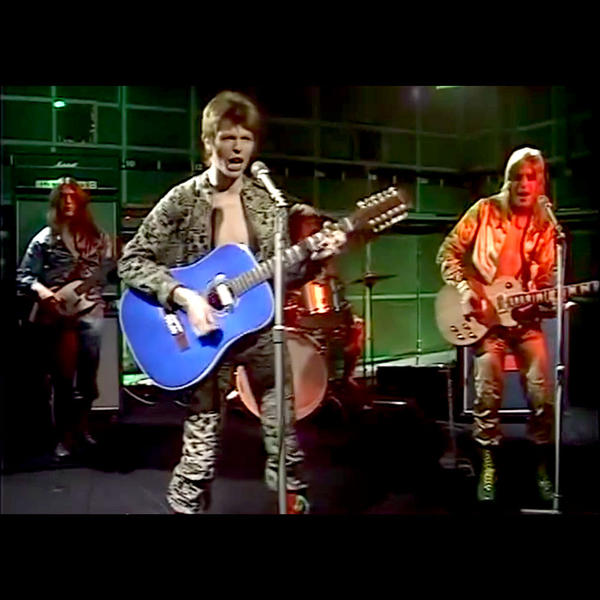
When David Bowie ditched the theatrics, the miming and the long, long hair on the road to Ziggy‘s straight-ahead guitar boogie, the spirit of Eddie Cochran loomed large.

David Bowie – Queen Bitch

Queen Bitch from Hunky Dory is Three Steps To Heaven in a funky jump suit with added sneer and a good dollop of Les Paul courtesy of Mick Ronson. Listen carefully. The moaning and groaning you hear in the background is the sound of Ziggy being conceived.

Broncho“We’ve played some right toilets in our time…”

New (wave) kids on the block Broncho know a thing or two about the simplicity of the three chord song. Their own What sounds like a glammed-up mix of Queen Bitch and Lou Reed’s Vicious, as sung by Marc Bolan. And there ain’t nothin’ wrong with that;

Broncho – What

Taken from their Just Enough Hip To Be A Woman LP, it’s an album that escaped my attention earlier last year, but one that could do with further investigation.

Rock ‘n roll – it’s dead easy, isn’t it?

Alternative Version, Cover Versions, demo, Double Nugget, Dylanish, Get This!, Gone but not forgotten, Hard-to-find, Live!, Most downloaded tracks, Six Of The Best, studio outtakes

P.O.P. B.O. ’14

Somehow, this is the end of the 8th year of this blog. 8 years! I never for a minute thought I’d be down this road for so long, but here I am, slowing down slightly, but still writing whenever the muse takes me. In the past, I used to write loads over the Christmas period and store it all up like a squirrel hiding nuts in trees, so that when I was busy with my real work I could drip-feed my wee articles online at regular intervals when time was of the essence. These days, holidays mean holidays. For the past week or so I’ve done sweet F.A. apart from sit around in my underwear eating cheese until 3 in the afternoon. Occasionally I’ve tidied up a bit, but that’s only after the Applewood smoked or Wensleydale and cranberry has run out.

This slideshow requires JavaScript.

It’ll be good to get back to the old routine in January and, along with work, get back to writing about music on a (hopefully) more regular basis. Until then, here’s the annual end of December post.

Around this time of year I employ a team of stat monkeys to sift through everything published on Plain Or Pan over the last 12 months. Numbers are fed into a specially-constructed silver machine, crunched and spat back out. Amongst the stainless steel saliva lie the 25 most listened to and/or downloaded tracks of the year.

Below is that list, a CD-length collection of covers, curios and hard-to-find classics. Download the rar file, sequence as you please and burn away.


pop8

Baby Huey – Listen To Me

The Lovin’ Spoonful – Do You Believe In Magic?

French Fries – Danse a la Musique

Oscar Brown – The Snake

Al Brown – Here I Am Baby

Radiohead – These Are My Twisted Words

Bob Dylan – Boots Of Spanish Leather

Ian Dury & the Blockheads – Hit Me With Your Rhythm Stick

Michael Marra – Hamish

Paul Weller – Flame-Out

Bo Diddley – She’s Fine, She’s Mine

Barbara & the Browns – You Don’t Love Me

Tommy James & the Shondells – Crimson & Clover

Lightships – Do Your Thing

The Beatles – It’s All Too Much (Much Too Much bootleg version)

Les Negresses Vertes – Zobi la Mouche

Trash Can Sinatras – Ghosts Of American Astronauts (Live at Fez, NYC 2004)

Eddie Floyd – I’ve Never Found A Girl

The Smiths – There Is A Light That Never Goes Out (demo)

Curtis Liggins Indications – What It Is

Them – I Can Only Give You Everything

Kim Fowley – Bubblegum

A Camp – Boys Keep Swinging

The Slits – I Heard It Through The Grapevine (demo)

Madness – Un Paso Adelante


And here’s to health, wealth and happiness to you all for 2015. All the best!

Double Nugget, Get This!, Hard-to-find

High Kimpact

Kim Fowley is a throwback to the record industry of old. A wheeler, a dealer, a mover and a shaker, he’s had his fingers in as many musical pies as he could manage at the one time. He’s done it all; manager, writer, producer, artist, promoter, you name it – a great example of a jack of all trades yet master of none.

From the late 1950s onwards he seemed determined to involve himself in as many projects as possible, in the hope that one of them might stick long enough to guarantee himself a financially secure future and his place alongside Andrew Loog Oldham, Phil Spector and Brian Epstein on the Mount Rushmore of pop.

 kym fowley 60s

Fowley might not be as well known or commercially successful as the names above and although he always seemed to be a half-step out of time with the trends of the day, his influence went far and wide.

As The Beatles were clanging their first augmented 7ths off the Cavern Club’s walls, Kim was plying his trade as a West Coast Tin Pan Alley-style in-house writer. His daft novelty pop records credited to fictitious groups like The Hollywood Argyles sold by the bucket-load, even if you’d have trouble whistling them today (Alley Oop and Like, Long Hair, anyone?) His ear for A&R led to The Rivingtons having a hit with Papa Oom Mow Mow, a slice of duh-duh-duh-duh-duh doo-wop so blinkin’ catchy it spawned Surfin’ Bird, a tune that was the catalyst for bringing the brothers Ramone into the same rehearsal room. So, (at a creative stretch) no Kim Fowley, no Ramones.

By the mid 60s, Kim was recording and releasing his own little blasts of garage punk strangeness. Selling less than zero, they quietly found their way back to obscurity before being picked up years later. Fowley’s original material has been oft-bootlegged and deserves to be heard. You’d like it.

kim fowley girls

Animal Man

1968’s Animal Man is the jewel in an off-kilter crown. A Hendrixian squall of strangulated Strats, it riffs along like the snotty-nosed big brother of the Jon Spencer Blues Explosion, a bass-less, thrilling ramalama. Kim comes across like a proto Iggy, yelping and yowling, barking and burping his way through a list of sexual desires – “I’m a pig! Oink Oink!”, getting pervier and pervier by the second until it fades out in more of that ear-splitting lead guitar.

Bubblegum

Another from 1968, Bubblegum grooves along on organ, restrained percussion and more of that wild guitar. Very of its time. But in a good way. Given that it comes out of the speakers sounding like a tank going into no man’s land, I think this version is the full-fat mono recording.

Underground Lady

66’s Underground Lady is a one chord blues stomp, the kind you’ve heard a million times before, Kim sneering like a young Van Morrison fronting Them, Cuban heels stomping out the beat on the floor below. Young bands like The Strypes would kill for this sound.

The Trip

The Trip famously appeared on the original Nuggets LP. It‘s the claustrophobic, street walkin’, jive talkin’ oral equivalent of being 3 acid tabs to the wind. Itchy, scratchy and faintly unpleasant. It’s an essential listen, obviously.

Following his failed assault on the pop charts, Kim moved into writing and producing, then management. In the 70s he wrote for artists as varied as Alice Cooper, Leon Russell, Kiss and Kriss Kristofferson. He also produced material for Jonathan Richman, although it failed to make the band’s debut LP.

runaways


He then recruited 5 disparate female musicians, dressed them head to toe in figure-hugging denim, lycra and the occasional basque, called them The Runaways and set the pulse of every 15 year old mid-Western male racing. The Runaways paved the way for future all-girl acts such as The Bangles, The Go-Gos and Girlschool, proving that for once in his musical life, Kim was a step ahead of the curve.

He’s still going strong, is Kim Fowley. In 2012 he published the first part of his autobiography and just a couple of months ago, at the age of 75, he married his long-term girlfriend. The second part of his story will be written on his death bed and published posthumously. Not your average Joe at all.

Interview, 1977

Kim Fact #1.

When a nervous John Lennon and Yoko Ono appeared at the last minute as special guests at 1969’s Toronto Rock & Roll Revival show, it was Kim’s idea for the audience to greet them by holding aloft their lighters and matches. Thus began a 70’s cliche…

Kim Fact #2

He looks a wee bit like Lou Reed, aye?

Get This!, Hard-to-find, Kraut-y

(Senti)Mental Machine Music.

Although it was actually released at the end of January, 1994, this week sees the 20th (20th!!) anniversary reissue of Underworld‘s ‘dubnobasswithmyheadman‘ LP. Given the kind of music Plain Or Pan normally features, you might be surprised to learn that I’m really looking forward to this. Indeed, my excitement might only be surpassed if The Queen Is Dead or Blonde On Blonde were to be suddenly released as 5 CD super-deluxe box sets featuring scores of previously unheard session outtakes and retailing for a tenner. Along with those two releases, dubnobasswithmyheadman holds a place in the higher echelons of my favourite albums of all-time list.

undworld dub

It’s dance music, Jim, but not as we know it.

For starters, dubnobasswithmyheadman dispenses with the notion that dance music is all about the ‘now’ – it may well be the first dance album with genuine longevity. In that respect, it opened doors for Leftfield and the Chemical Brothers. But to these ears, both those act’s various LPs now seem a tad dated. Twenty years on, dubnobasswithmyheadman still thrills.

Opening track Dark & Long is exactly that:

What is ‘Dance music’ anyway? Dark & Long could almost be Joy Division.

dubnobasswithmyheadman sounds nothing like its ‘contemporaries’. There’s none of that generic hysteric female vocal that was prevalent on every release at the time. And sure, it has it’s four-to-the-floor moments, but nothing as crass as the handbag house hits of the day that cluttered up a gazillion Ministry Of Sound compilations and their ilk. There’s not a James Brown sample or a “Baby! Baby! Baby!” anywhere near it.

At times the album sounds as if it’s running on the same sort of energy that pulses through I Feel Love. Elsewhere it sounds as if someone’s turned every knob on every keyboard all the way round as far as they’ll go, drowning the listener in a bath-full of acid squelches and road drill beats.

Occasionally it sounds stoned and other-wordly. River Of Bass could almost be Can, with its repetitive guitar riff and whispered vocals.

undworld1

dubnobasswithmyheadman is a true one-off – it’s percussive, it’s relentless and it ebbs and flows like all good albums do. It’s got guitars on it! Lovely chiming, echoing, layered guitars that fade in and out when the mood arises. The vocals are a one-off; half-spoken snippets of overheard conversations and cut ‘n paste phrases, mirroring the cut-up, random cover art.

“I see Elvis!”

“‘I’m just a waitress’, she said.’”

“Don’t put your hand where you wouldn’t put your face.”

undworld3

Cowgirl is perhaps the most instantly-accessible track.

Nagging and creeping, like a virus worming its way under your skin it’s a full-on four-to-the-floor smash, glo-stick techno at its longest, loudest and best, a precursor for sure to the band’s big Lager! Lager!Lager! breakthrough hit a couple of years later.

You can take each track in isolation and get something from them, but the best way to listen to dubnobasswithmyheadman is to bunker down and swallow the whole in one go. In amongst the rollin’ and tumblin’ sequencers and rat-a-tat percussion there’s a fluidity to it and because of that it’s been a recurring soundtrack to my cycling, speeding me up hills that I have no inclination to go up, whisking me back home when I’d rather take the last few miles a bit easier. Now and again I’ll hear the sound of the chain snake its way through the sprocket bleeding into the mix and this just adds to it.

When it comes out this week with all manner of weird and wonderful remixes, lost tracks and souped-up remastering, it’ll help me get many extra miles in on my bike.

  undworld2


Get This!, Gone but not forgotten, Hard-to-find

Wackawackawackawackawacka

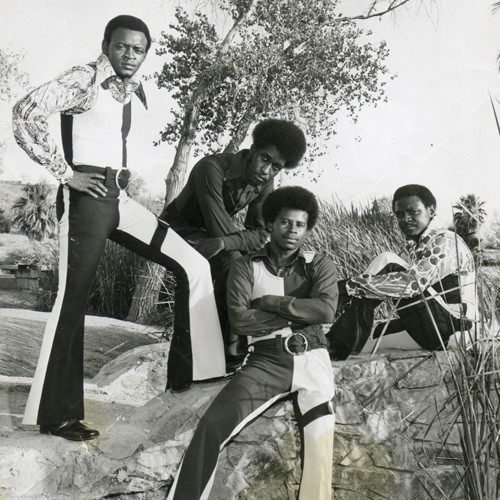
The Curtis Liggins Indications were from Kansas and only ever released one single…..but what a single!

A game of two halves on 7″ vinyl, one side drips in pseudo-Stax sweat while the other skips along like Curtis Mayfield on a summer’s day. Is it funk? Is it soul? Is it northern/funk? Who knows? Who cares?

curtis liggins indications

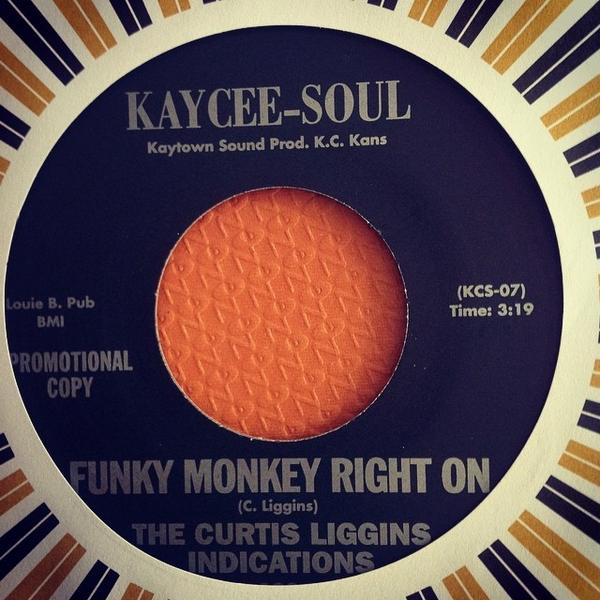
A Side Funky Monkey Right On is a magic piece of late 60s funk. Beginning with a rickity-tickity Theme from Shaft hi-hat pattern and ‘Hey! Hey! Hey! Hey!‘ crie du guerre, it quickly morphs into a soup of clattering funk.

Underneath the slightly generic vocal, there’s a great band at work. The massive bass line sounds as if it was recorded in a cave. The drummer rattles and rolls his way through a couple of key changes with all the loose-limbed dexterity of a seasoned jazz player, never once stopping to catch breath. The incessant twin guitar riff could be Happy Mondays at their most industrial. Sean Ryder and co. should’ve done a version of this back in 1990. Slowed down to half the pace and Joe Blogged to within an inch of its life. “Is your monkee foonkee? Foonkee Moonkey Riiight On!”

curtis liggins 7

The B Side is even better.

Like its partner, What It Is sounds as if it was recorded live in one take. What It Is leaves behind the frantic funk of the a side and instead grabs a hold of Curtis Mayfield’s coat tails as he heads further towards socio-politico soul. The falsetto vocal flits and floats across a bed of woo-oo-ooh backing vocals, lightly toasted bongos and the sort of chords Marvin Gaye employed on What’s Going On, all major and minor 7s  (I think), stopping now and again to allow the guitar player to play a familiar, ripe-for-sampling three note riff, bum notes ‘n all. “Right on! I heard someone yell.” Does it matter that none of the band sound as if they’re playing in time with one another? It matters not a jot.

What It Is is truly life-affirming and beautiful, the sort of record I could play over and over. Which I have been doing as I write this. Not the actual record, sadly. Given away by the band at their shows at the end of ’69, start of ’70, only 50 copies are thought to be in existence. Not long after cutting it, Curtis and the Indications died in a tour bus crash. If you’re lucky enough to unearth one of these singles, you won’t get much change out of £250.

Curtis Liggins - What it is

Someone who probably has a copy of this record is Paul Weller. He MUST have a copy of it. To these ears, he modelled much of the musical manifesto of the Style Council on it. Close your eyes while you listen and you can ‘see’ for yourself. Just imagine a guitar-free Weller backed by his pop-soul playing multicultural band, cricket jumper thrown over his shoulder as he forces his white-man-sings-Otis vocals into one of those none-more-80s skinny microphones. Good for you if you can listen to this record without hearing this. And sorry if I’ve now spoiled it by saying so.