Dylanish, Get This!

Strait Up

In the future, historians of popular culture and those who gatekeep the ancient art of music blogging will point to this date – the 9th of February, in the year of our Lord two thousand and twenty-five – as the day that Plain Or Pan, that once-great leading music blog, began its slow but steady and inevitable terminal decline. The reason? Dire Straits.
There was a great old Top Of The Pops episode on BBC4 the other night. Presented by a smug ‘n smooth Simon Bates, it featured the hits of this week from 1981; a jumpin’ and’ jivin Stray Cats, their outrageous quiffs riding the crest of the rockabilly revival wave; Blondie’s Rapture on video, a blue eye-shadowed Debbie in shorts and not much else, her mile-wide smile bordered in bright red lipstick and stirring something in me even then as an 11 year old; the much-lampooned (’round here at least) Spandau Ballet, dressed ridiculously – jackets worn over the shoulders, layers and layers and layers of fabric, billowing blouses and baggy breeks and what looks like Hunter wellies and woolly socks turned over the top of them – a proper fashion student’s juxtaposition of NOW!, transplanted straight from the Blitz club direct into your suburban and beige living room.

The highlight of the Ballet? The Spands? is, as always, The Hadley. He’s got a bit of a beard going on here, highlighting his (admittedly impressive) razor-sharp jawline. His hair though is a disaster; teased, lank and greasy it’s swept to one side like an unfortunate outgrown Adolf do, (Spandau, eh? Makes y’think), his skinny mic technique and gritty voice cementing his pure soul credentials to those lapping it up at crotch level in the studio’s front row. Behind him, the band – his band –  pose and preen and pretend to play like it’s the last time they’ll ever be allowed on the telly…which really should’ve been the case. It’s quite an astonishing performance. Should you wish to see it, here y’are:

Daft one hit wonder Fred Wedlock comes and goes, thankfully, in the short time it takes to fix yourself a top up before the hard-rockin’ Rainbow show up on video; tight tops, tight red jeans, bright white guitars. A splash of satin. A dash of bubble perm. Proper music for proper people, y’know.

And then there’s Dire Straits.

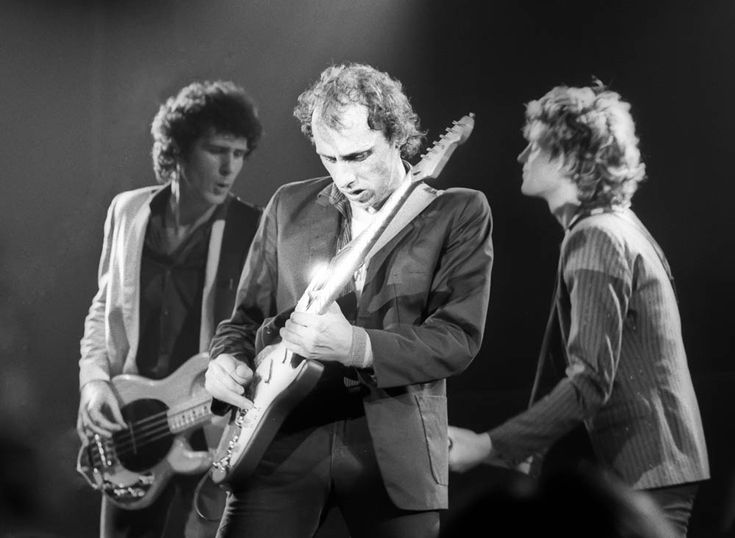
They’re a good four years from ubiquity, Dire Straits, but look! The red sweatband that would be used to hold Knopfler’s mullet in place at some point down the line is right here, right now. There it is, strapped round his right wrist as he picks the opening to Romeo And Juliet on his Brothers In Arms National steel guitar. Just as that guitar was elevated from mere Top Of The Pops studio prop to cover star on their massive hit album four years into the future, that sweatband clearly grew in direct proportion to Dire Straits’ record sales too.

They’re not a Top Of The Pops act, Dire Straits, and don’t they know it.

Someone has had the gumption to get them to a tailors before recording. For a bunch of four un-popstarry guys, they look surprisingly great. Knopfler is wearing a dark blue pinstripe suit jacket atop a white tee – he hasn’t yet found his penchant for vests – and he looks like a groovy English teacher doing a wee slot at an end of year school assembly; self-conscious, smiling nervously but with the chops in his fingers to validate his being there.

The group behind him is supremely stylish. Like, if someone showed you a picture of them and told you this was The Strokes, you wouldn’t be a fool to believe them. John Illsley on bass is tall, angular and moody. Chiselled of cheekbone and dark of brow, he wraps his massively long fingers around the neck of his massively long Fender Precision bass and plays it effortlessly, precisely even, pouting on all the right notes, looking into the middle distance for added appeal. He has slightly more buttons undone on his shirt than is exactly necessary, but then, the bass players are always the ladies’ men, are they not?

The guitar player – is it Mark’s brother David? – plays a hot Strat that may well have been borrowed direct from that there Rainbow. His vivid blue suit jacket sleeves are rolled up, Crockett and Tubbs-style, his large triangular collar mirroring the sharp edges of his Illsley-rivalling cheekbones. He too seems to have forgotten that shirts button all the way to the Adam’s apple.

The drummer? He’s in a capped sleeve t-shirt. Clearly, the band budget stretched to the three Straits who’d be standing directly in front of the camera. There’s a piano player stuck somewhere in the shadows too, but who’s bothered about him? Not the Top Of The Pops cameraman, that’s for sure.

Romeo And Juliet, but.

There used to be that ‘guilty pleasures’ trend a few years ago, y’know, where uber-cool folk – or, rather, folk who thought they were uber-cool, admitted to liking Rock Me Amadeus and Eye Of The Tiger and stupid stuff like that. I blame Brett Easton Ellis for his irony-free fashioning of Huey Lewis And The News in American Psycho for giving sensible folk the idea of ‘the guilty pleasure’. What nonsense! Music is music. It’s either good or bad, right? Soft rock, never fashionable amongst any demographic, is well represented in guilty pleasures circles. Anything by Stevie Nicks (Rooms On Fire! Edge Of Seventeen!) Steely Dan’s Do It Again. Kim Carnes’ Bette Davis Eyes. They’ll never fail to hit the spot. Them….and Dire Straits’ Romeo And Juliet.

It’s a fantastic record; expectant, storytelling verses, tension building pre-choruses, heart-melting choruses. It’s also a fantastically well-produced record. Dire Straits may well be a guitar band, but listen especially to the drums! Four to the floor tambourines. Unexpected snapping snares. Rocksteady rimshots. Hi-hat ripples and end-of-line paradiddles. Those patterns are exquisite! In the verses. In the bridge. In the choruses. Subtle and inventive, they elevate Romeo And Juliet from mere singer/songwriter ballad into brave new territories. Pay attention to those drums the next time Romeo And Juliet enters your orbit.

Everyone knows that the Knopf is a fantastically idiosyncratic guitar player; strictly no plectrum, a thumb and fingers style of playing, slow and lazy chord changes, snapping and twanging solos, and it’s all over Romeo And Juliet. But it’s his vocal delivery that really does it here. In the verses, he half speaks in that languid Tyneside Dylan drawl of his, but occasionally he slips into a vocal cadence that’s pure Lou Reed. Play Street Hassle or New York Telephone Conversation then play Romeo And Juliet and tell me I’m wrong. You and me babe, how about it? Pure Lou. It’s 1981, right? Kinda makes sense, like it or not.

So, yeah. Romeo And Juliet by Dire Straits. On Plain Or Pan. You can unsubscribe on the right there, any time you like.

Cover Versions, Dylanish, Gone but not forgotten, Live!

Everyone Wants A Pop Star But I Am A Protest Singer

I feel that having a No. 1 record derailed my career. It seems to me that being a pop star is almost like being in a type of prison. You have to be a good girl. The media was making me out to be crazy because I wasn’t acting like a pop star was supposed to act.

My tearing the photo put me back on the right track.”

I thought about not posting this. There’s been a flood of Sinéad O’Connor posts since the middle of last week, and the internet probably doesn’t need another one. But her sudden death had me scrambling back to Rememberings, her fascinating and brilliantly-written autobiography, and, by association, to some of her greatest music; the time-stopping Thank You For Hearing Me, the Thatcher-baiting Black Boys On Mopeds, the dubby majesty of her collaboration with Jah Wobble on Visions Of You. Social media threw up many others – deep cuts, as they say nowadays – that shone new light on under-appreciated songs sung by an under-appreciated artist. Morrissey, so often the bigmouth who strikes again, seemingly got it right with the statement he released the following day. I could have picked any of those tunes and pulled together a decent blog post, but the book had me scurrying around for unforgotten yet buried video footage that, coupled with Sinead’s written account of the events became the only thing worthy of my words.

As she notes in Rememberings, there were two Sinéad O’Connors. The almond-eyed suedehead who cried real-time tears in the video for her definitive version of Prince’s Nothing Compares 2 U and the one who came after that; the misunderstood protestor who fought a tough war against the wrongs of the world and was condemned to hell for it.

It’s 1992 and down near the Bowery, where New York’s Avenue A meets St Mark’s Place, O’Connor frequents a ‘juice bar’ and has befriended its Rasta owner. Over time they become close enough friends that the night before Sinéad will be filming for an appearance on Saturday Night Live, he confides in her that his life will end abruptly and soon. He’s been running guns and drugs, using school kids as mules and moved his young couriers into a rival’s patch. Sinéad is horrified. “The fucking treacherous bastard,” she seethes. She draws parallels with Pope John Paul II, a far more prominenent figurehead than her Rasta pal, but one who also appears to condone the abuse of children. She thinks back to Bob Geldof ripping the poster of John Travolta and Olivia Newton-John live on Top of the Pops when the Boomtown Rats finally topple their reign with Rat Trap, and how she has always intended carrying out the same act with her mother’s photo of the pope, a photo that’s hung in the family home since John Paul’s visit to Ireland in 1982.

“(The photo) represented lies and liars and abuse. The type of people who keep these things were devils like my mother. I never knew when or where I would destroy it, but destroy it I would when the right moment came.”

For her Saturday Night Live performance, she’s wearing a dress that once belonged to Sade. It hangs ladylike, “a dress for women to behave badly in.” She hasn’t told anyone, but she’s going to change the words to Bob Marley’s War, dropping some of the lines – taken from a United Nations speech given by Haile Selassie – and replacing them with some lines of her own.

It would be a declaration of war against child abuse. Because I’m pissed at Terry (her Rasta friend) for what he told me last night. I’m pissed he’s been using kids to run drugs. And I’m pissed he’s gonna be dead on Monday. I’m also pissed that I’ve been finding brief articles buried in the back pages of Irish newspapers about children being ravaged by priests but whose stories are not believed by the police or the bishops their parents report it to. So I’ve been thinking even more of destroying my mother’s photo of John Paul II.

And I decide tonight is the night. I bring the photo to the NBC studio and hide it in the dressing room. At the rehearsal, when I finish singing ‘War’, I hold up a photo of a Brazilian street kid who was killed by cops. I ask the cameraman to zoom in on the photo during the actual show. I don’t tell him what I have in mind for later on. Everyone’s happy. A dead child far away is no one’s problem.”

Maybe now you can appreciate what was firing through her mind in the run up to the show. Clever and calculated and willfully confrontational, this wasn’t a spontaneous act. This was years of built-up rage – rage at the Catholic church, at her own mother, at authority who ignored the cold truth – and she was using her status to highlight it.

I know if I do this there’ll be war. But I don’t care.”

Afterwards: “Total stunned silence in the audience. And when I walk backstage, literally not a human being is in sight. All doors have closed. Everyone has vanished. Including my own manager, who locks himself in his room for three days and unplugs his phone. Everyone wants a pop star, see? But I am a protest singer.”

Two weeks later, Sinéad is booked to appear at New York’s Madison Square Garden, just one singer in a dazzling array of stars who will be gathered to celebrate her hero Bob Dylan’s 30 years in music. This time, she’s wearing a dress that she hates (‘bouffant, shoulder pads, Dynasty…I look ridiculous and underweight.‘) Introduced by Kris Kristofferson, the crowd turns an ugly shade of redneck, booing her from the moment her name is announced.

I actually think it’s the outfit, because in my excitement at being part of the show, I’ve forgotten about the pope-photo incident on SNL.

Then the other half of the audience begins cheering to fight off the booers. And there ensues a noise the likes of which I have never heard and can’t describe other than to say it’s like a thunderclap that never ends. The loudest noise I’ve ever heard. Like a sonic riot, as if the sky is ripping apart. It makes me feel nauseous and almost bursts my eardrums. And for a minute or two I’m not sure the audience members aren’t going to actually riot. They’re clashing so badly already with their voices. How do I know what else might happen?

She’d planned to sing an arrangement of Dylan’s I Believe In You – a song that means the world to her and on more than one occasion, her band (assorted Booker T/MGs) attempts to strike up the opening notes and lead her into it, but the ferocity of the ugly crowd in front of her has forced Sinéad to stare them out defiantly instead, arms by her side, doe eyes blinking into the vast arena, a waif-like David against the ugly Goliath of the Garden masses.

I look at Booker T’s beautiful face. He’s mouthing the words ‘Sing the song’, but I don’t. I pace awhile onstage. I realise that if I start the song, I’m fucked, because the vocal is so whispered, both sides of the audience’s battle are going to drown me out. And I can’t afford not to be heard; the booers will take it as victory.

Kris Kristofferson arrives by her side. He’s been told to get her off the stage, but looking at the film of it, you wouldn’t know. “I don’t need a man to rescue me, thanks.” As he returns empty handed, Sinéad gets her instruction instead from God. With her voice wavering then settling into something strong and powerful, she yanks out her in-ear monitors and rages once again – “the biggest rage I can muster“- into an aggressive and impassioned version of War, emphasising her own fingerpointing lines about child abuse.

She leaves, only after the briefest of defiant, eyeballing glances at the audience, her sharp exit a metaphor for what would follow, Stateside at least. It’s an astonishing, powerful, uncomfortable event, captured forever on this outtake from the official film of the concert. Outtake? There was no way this was going on the official release.

Afterwards, her father (he’d been in the audience) suggests she rethink her career prospects as she’s just destroyed the one she has. And she feels let down by Dylan. It should have been him, not Kristofferson, she reasons, who came out and told the audience to let her sing. So she gives Bob the evil eye as he sits in the wings. Bob stares back, baffled and handsome. Sinéad calls it ‘the weirdest thirty seconds of my life.’ Quite the claim in a life packed with incidents and accidents, rage and regret.

Now go and read the book. It’s fantastic.

Sinéad O’Connor. A true one-off.

Dylanish, Get This!, Gone but not forgotten

With(out) The Beatles

There’s a good argument for suggesting George Harrison‘s All Things Must Pass album is the pick of the solo Beatles’ output. In 1968, post White Album, George spent some time in Woodstock with Bob Dylan. Hearing the Zim’s stories of how The Band wrote; with equity, without hierarchy, everything considered on merit, he realised he was getting short thrift in The Beatles. Both John and Paul failed to give George’s songs the attention they deserved, instead throwing him the odd patronising scrap of encouragement when a space or two needed filled on an album. Discourteous and dismissive, Lennon & McCartney didn’t take George’s stuff nearly seriously enough and the youngest Fab, lacking clout and perhaps confidence, left many great songs in the archives.

In 1970, the floodgates opened. Spread over 6 sides of vinyl, the songs that made up All Things Must Pass showed the world – and his former bandmates – what they’d been missing.

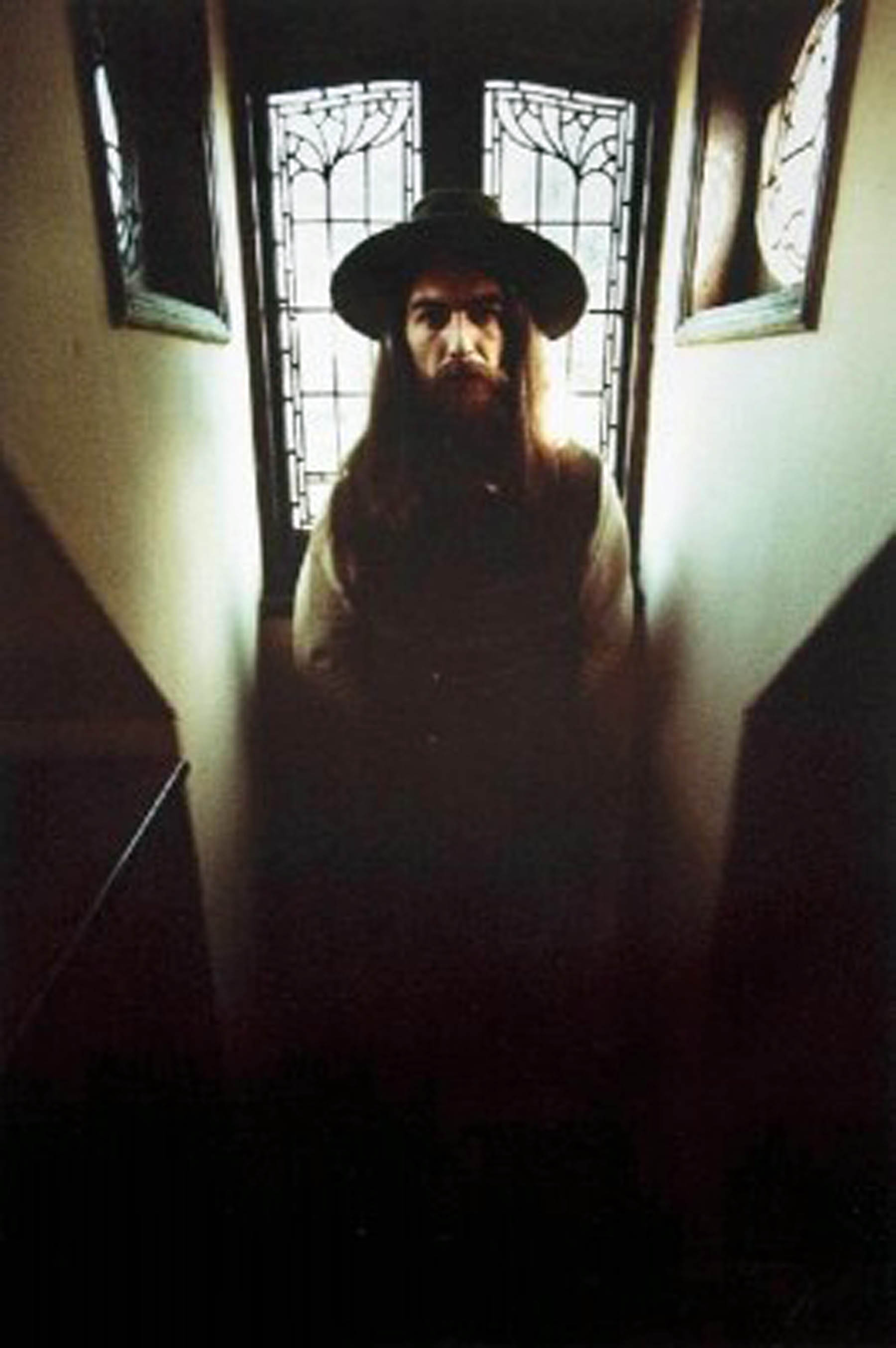
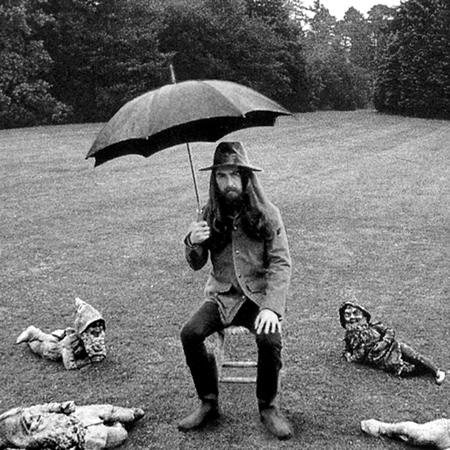
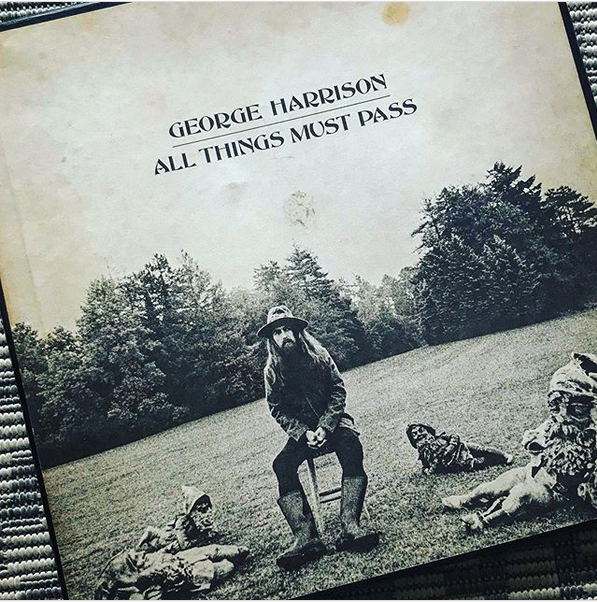
From the title in – The Beatles are finished, get over it, to the cover – a serious George, sitting in the middle of four metaphorically upturned garden gnomes (as similar to one another as The Beatles were at the height of Beatlemania), George throws open the doors to his vaults, brings in some high profile friends and adds life to songs that would’ve graced any late-era Beatles release.

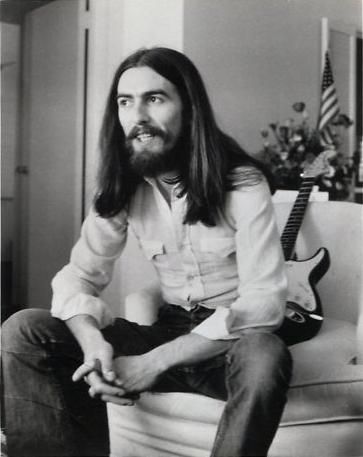
You can practically see the double denim and scratchy beards as the whole things oozes past in a haze of hash and henna. George’s trademark slide guitar is all over it, gently weeping and effortlessly gliding off of the grooves and into that corner of the world that would be known from then on as soft rock.

It’s the opener, I’d Have You Anytime that sets the tone. Co-written with Dylan at that ’68 session, it’s produced by Phil Spector and features Beatles’ friend Klaus Voorman on bass. Guitar and drums are provided by the musicians who would soon become (Derek &) The Dominoes. Ol’ Slow Hand himself plays a tasetful slo-mo guitar part which would be more than a little bit recognisable to Beatles fans. Not content with stealing his pal’s wife, in order to keep I’d Have You Anytime softly rockin’ through the ether, Eric Clapton steals most of George’s solo from Something as well.

George HarrisonI’d Have You Anytime

A decade or so ago I’d Have You Anytime was a feature on one of my in-car CDs. Segued between World Party’s All I Gave and Elliott Smith’s Bottle Up And Explode!, the three tracks, all double tracked harmonies and wistful regret, regularly re-played (again! again!) to the point where I was sick of all of them.

George’s song happened to be playing one time as I was making my way through Crosshouse and past the hospital, back to the Kilmarnock bypass that would take me home. As the road opened up ahead, from one lane to three in preparation for the big roundabout at the Brewer’s Fayre pub, I happened to glance left to the car I was overtaking.

The woman driving it  – she was about ages with me, but that’s got nothing to do with the story – was bawling her eyes out. Proper uncontrollable tears, mouth twisted and agape, lips joined by a few lines of stretchy saliva, face red and swollen. It was fairly distresssing.

I wanted to get her attention, ask if she was OK, but her eyes remained crying, her gaze on the car in front and the impending rush hour roundabout. I too had to focus on the traffic around me. Easing forward in first gear, I had a car in front of me, another behind. I was two, maybe three cars from the front of the queue, anticipating where I might be able to join the roundabout. The car on my left nudged forward simultaneously but the driver wouldn’t shift her gaze.

Ping-ponging my attention from right (is that a gap?) to left (is she OK?) I eventually zoomed onto the roundabout. The car to my left stayed. As I made my way round the roundabout, I lost her in my rear view mirror. I’ll never know if she was OK.

Had she been at the hospital and received bad news? Had she been visiting someone who’d died? Had she been dumped? Or sacked from work? I don’t know. I’ll never know. But everytime I’d Have You Anytime comes on, I’m back at the roundabout, watching a woman break down in the car next to me. Funny how music works, isn’t it?


Dylanish, Get This!, Live!

Cliff Richard Was Never Like This

I always thought he looked like he was about to topple over, the mid 60s Bob Dylan. With the stripy pipe cleaner-thin spindles he called legs carrying the weight of that fantastic dark blue suede military jacket, the Ray-Bans stuck high up that hooked nose and the wildly exploding crow’s nest ‘fro, not to mention the ideas constantly forming and reforming in that speed-addled super-brain of his, it’s amazing that the top-heavy troubadour never once fell flat on his face. On the contrary, mid 60s Bob was The Man, one step ahead of his manager and his band and his audience, barely giving consideration to anyone willing and able to catch up with him.

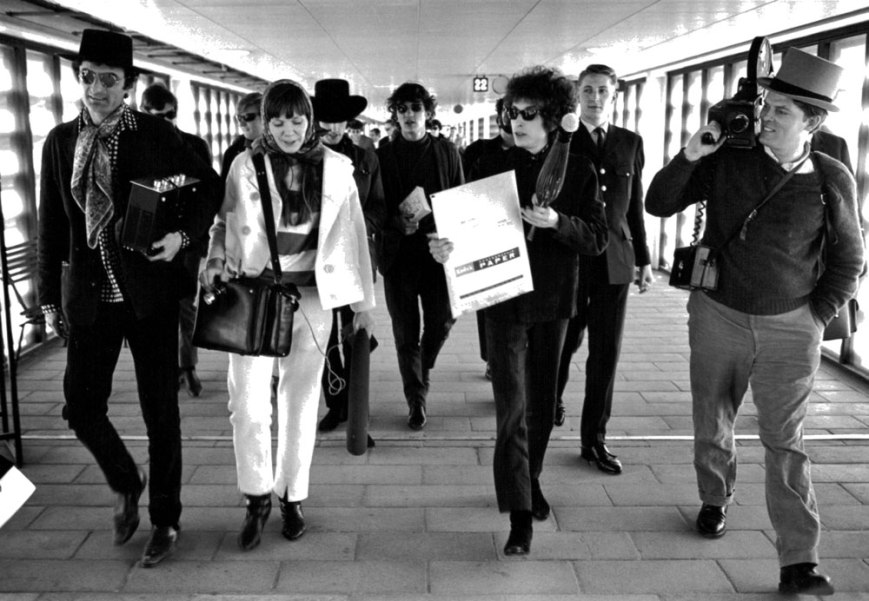
Dylan et al (DA Pennebaker in the top hat) at London Airport, May 6th 1966

By the time he’d hopped over from Dublin in May 1966 to commence his tour of the UK, Dylan was 4 drummers in with the previous three, including Band legend Levon Helm, jumping the good ship Bob in favour of a quieter life. Incessant nightly booing, it seemed, wasn’t what any of them had signed up for. Dylan arrived here a bona fide superstar, the voice of a new socially-conscious generation, every show sold out in advance. Aloof, arrogant and quotable in abundance, The Zim riled the stuffy British press. He didn’t play their expected game. His one press conference, at London’s Mayfair Hotel, was a testy affair. Music journalists were sat side by side with the more straight-laced journalists from London’s press establishment and so questions came from a bristling mix of the informed and the ignorant; What d’you like? What d’you loathe? There seems to be an electric element creeping into your sound…. What d’you think of England? Are you married? (Answer: I’d be a liar if I answered that, and I don’t lie.)

When the Melody Maker’s Max Jones suggested that he didn’t hear protest songs any longer, a weary Dylan shot back.

All my songs are protest songs! You name something, I’ll protest about it! All I do is protest!

Even Keith Altham, the most cutting-edge, most well-respected music writer of his time and the golden boy at the NME to boot, found himself on the wrong end of Dylan’s surreal wit. “Why is it,” he asked, “that the titles of your recent singles, like ‘Positively 4th Street’ and ‘Rainy Day Women #12 & 35’ bear no apparent connections with the lyrics?

It has every significance,’ returned Dylan. ‘Have you ever been down in North Mexico?

Bob Dylan, press conference at the Mayfair Hotel in London in 1966.

Dylan batted everything off with an abstract absurdness that came easy to him. He treated the journalists like morons, prompting one to complain that “Cliff Richard was never like this,” firing back the funniest, most-perfect answers you might ever read.

Q: What do you own?
A: Oh, thirty Cadillacs, three yachts, an airport at San Diego, a railroad station in Miami. I was planning to bus all the Mormons.
Q: What are your medical problems?
A: Well, there’s glass in the back of my head. I’m a very sick person. I can’t see too well on Tuesdays. These dark glasses are prescribed. I’m not trying to be a beatnik. I have very mercury-esque eyes. And another thing—my toenails don’t fit.

With everything being captured for posterity by DA Pennebaker’s shoulder camera, Dylan and an unwitting press played their part well. It’s all there in the wired, messy travelogue Eat The Document if you didn’t know already. If only for the brief clip of Dylan and his band standing at the corner of George Square in Glasgow, tapping their toes to a passing pipe band right outside where the Counting House pub stands these days, seek it out.

It was this backdrop that informed the charged nature of the shows. Playing the same two sets each night, Dylan opened with a set of acoustic songs, just him, his guitar and a selection of harmonicas. They were generally very well-received, as rightly they should’ve been. Dylan was on top form, rolling out fantastic versions of some of his best-loved recent songs; She Belongs To Me with its slightly altered lyric, the eee-long-gat-ed phrasing in It’s All Over Now, Baby Blue, the lean, mean and near 12 minute Desolation Row, the definitive Mr Tambourine Man, its clearly enunciated words and perfect clarity sticking two fingers up the naysayers who’d sneer that Dylan couldn’t sing. It was the perfect set that would prove to be Dylan’s concession to the accepted notion of folk for the night.

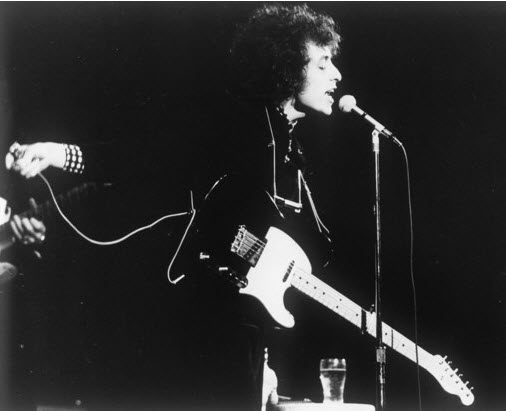
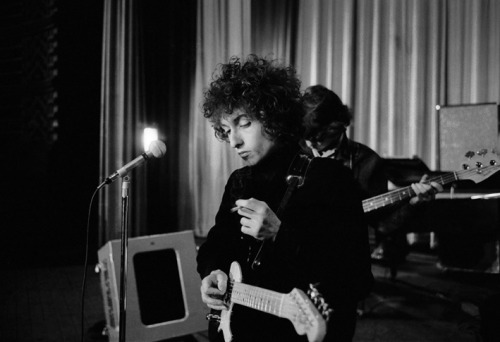
After a short break he’d return, leading his band, a clobbering riot of Cuban heels and mohair suits and unkempt hair and electric guitars who’d plug in and play loud. Dylan too strapped on an electric, a Telecaster, wearing it over the shoulder the way a huntsman might take his gun out to shoot deer, a suitable metaphor given what would unfold. The second set always started with Tell Me, Momma, a gutterpunk garage band blooze that was the unholy sound of Pete Seeger and his axe and his high and mighty ways about folk music au-then-ti-ci-tee being blasted far and high over the Grand Coulee Dam. Never released as a studio version, the only official release comes via the Albert Hall 66 Official Bootleg – which was actually recorded in the Free Trade Hall in Manchester a week or so beforehand. But you knew that already.

Bob DylanTell Me, Momma (Manchester, May 17th 1966)

The start of this recording, with the band clattering across the wooden stage to take position, the muffled and hushed, expectant audience, Dylan’s off-mike harmonica trills and the boot stomp count in that leads to the slap-in-the-face pistol crack snare never, ever fails to excite.

And then, when the band comes in…oh aye! They cook up a terrific howling storm; loud, raucous and in your face. Dylan looks his audience straight in the eye, takes aim and fires.

But I know that you know that I know that you show, something’s tearing…up…your…mi-ii-ii-ind.”

If this fails to thrill you, if this fails to make you jump up and punch the air and shout, “Go Bob!” as loud as you can, then I can’t help you. No-one can. It’s his voice. He’s stoned or speeding or upping or downing or something, but Bob’s vocal is just great. Slurred yet enunciated, sloppy yet eager, he has you right there and then. Around him, out-with the eye of the storm, merry chaos ensues. A beat group?! At a folk concert?! With keyboards and electric bass and drums and everything?! Robbie Robertson, Dylan’s cooler than ice foil on the left fires of wildly sparking, cheesewire-thin electric riffs on his own arctic white Tele, played high up in the mix so as to cut through the chaotic racket. It’s incessant 12 bar blues played with fuck you punk spirit, the greatest sound around. And, at the end, applause. Real clapping and stuff. It wouldn’t last though. In Manchester, once the audience realises this set ain’t gonna be like the last one, the applause gives way to a slow handclap after only the second number, I Don’t Believe You (She Acts Like We Never Have Met).

Bob DylanI Don’t Believe You (She Acts Like We Never Have Met) (Manchester, May 17 1966)

Previously cast as an acoustic blues on his Another Side Of… album, it’s reborn in ’66 as another beat-driven garage band rocker, heavy on the Hammond, always returning to its signature amped-up guitar riff. By the second song in, half his audience have chucked him for good. Those that stayed with him though had electric ideas of their own. Listen carefully to I Don’t Believe You and you’ll hear the genesis of The Faces’ Cindy Incidentally, a story for another time.

If this is your kinda thing, hunt out Jewels & Binoculars, a 26 CD bootleg of every parp ‘n fart from Bob’s harmonicas in 1966. It’s the gemme, as they say round these parts. Until then, here’s Bob and his band entertaining a confused Dublin audience. Wonderful stuff.


Dylanish, New! Now!

Appetite For Destruction

A few months ago I found myself driving Alan McGee – yer actual, Creation Records, King Of Indie Alan McGee – back to his hotel. With the car radio pre-set to Radio Scotland, it was the Billy Sloan show that sound-tracked our short 5 minute drive. As I drove and Alan held court I realised Billy was playing a new track by King Of Birds. My initial reaction was to interrupt my esteemed passenger’s non-stop flow of conversation to say, “Hey! I know these guys!” but a voice in my head suggested that King Of Birds might not be Alan’s kinda thing, so I stopped short of butting in and listened instead, my driver’s-side ear struggling to make out the rich music on the radio as the other battled with McGee’s non-stop enthusiastic monologue about the two seismic Oasis shows that had taken place on Irvine Beach 24 years previously, “just over that hill there, Alan.” As we reached the hotel, the song on the radio was ending and in the half gap that followed while McGee scrambled around the footwell in my car for his bag, I managed to squeeze in a quick but proud, “King Of Birds! I know these guys!” McGee nodded and cocked an ear to the radio, just, would you believe it, as the Pavlovian rush of Oasis’ Rock ‘n Roll Star barged in. “And I know these guys,” nodded McGee in the general direction of my car’s dashboard. And with that, he was out and off.

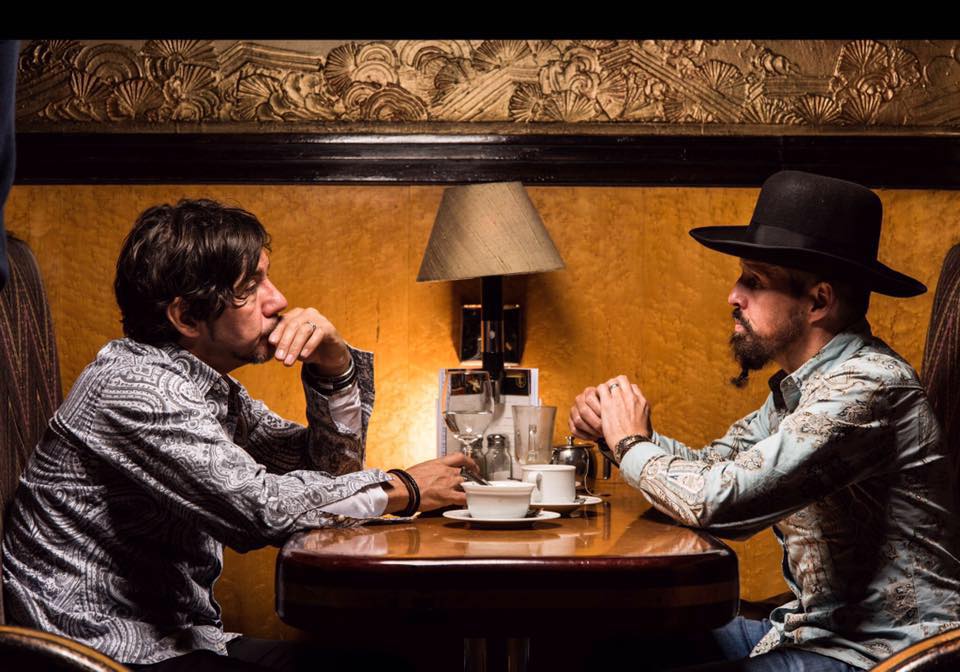
Had I been brave enough to stop the flow of rich one-way conversation, Alan would’ve heard I Hope We Don’t Fall In Love, the then current single by one of our country’s brightest talents. King Of Birds have been on the go for a wee while now. I first saw them maybe 4 years ago and was instantly taken with their knack for a good melody, a strong harmony and a seemingly never-ending run of songs that flowed as freely as water from a tap. “The McEverly Brothers,” I dubbed them at the time, a tag that sits well with the band’s principal writers. Sometimes a duo, sometimes a full piece band, King Of Birds is essentially Charlie and Stirling Gorman, two brothers with a long-standing relationship with the Scottish music scene. In recent years there have been right turns and wrong, a none-more Gallagher fall-out that threatened to derail all their good work included, but it’s from this frictious tête-à-tête that the seeds of a very fine album were sown.

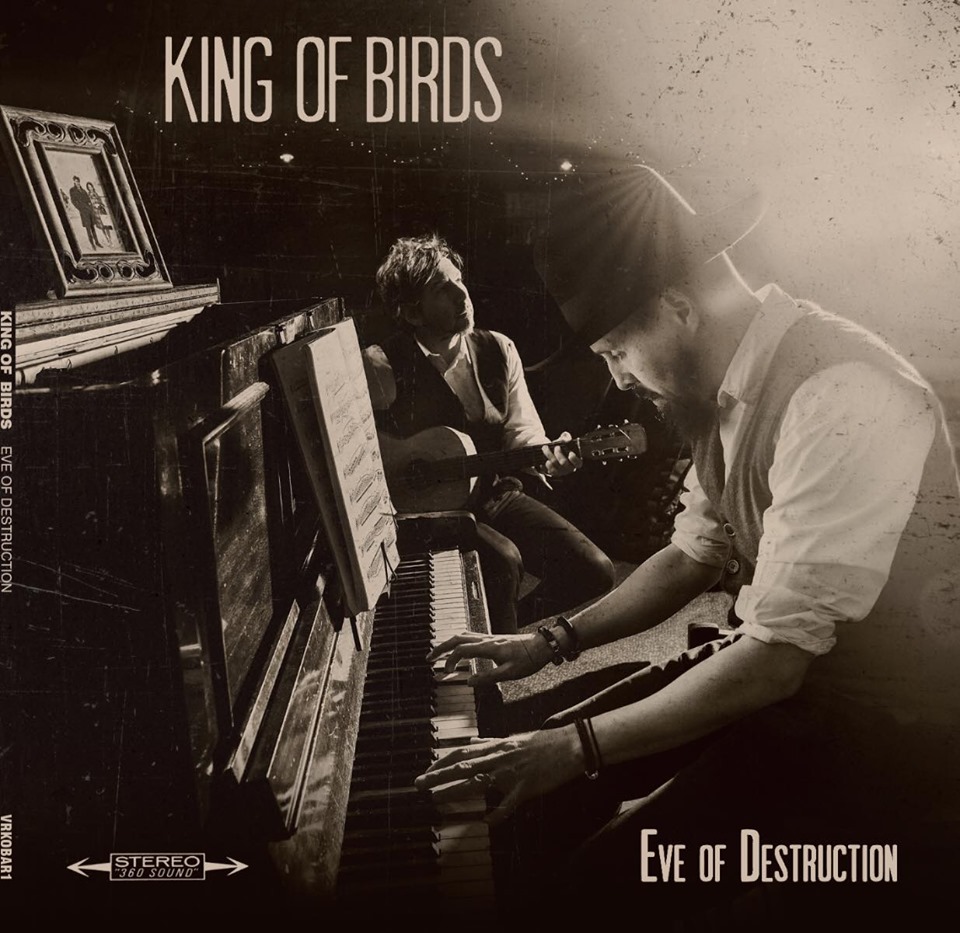
Eve Of Destruction is the result, a dozen tracks of what you might call Americana. With nods to the twin towers of Michael – R.E.M.’s Stipe and The Waterboys’ Scott, main vocalist Charlie carries the songs with a gravel-throated world weariness. Brother Stirling is the perfect foil. A Peter Buck-obsessed R.E.M. fanatic (the band’s name should be clue enough), he’s never far from a waistcoat and a ringing Rickenbacker, his six and twelve string symphonies colouring the music with the requisite amount of jangle.

Like origami in reverse, the songs take time to unravel, exposing classic melodies from the simplest of chord structures. Built on a bed of dextrously-plucked nylon acoustics, the tunes tumble as jaw-droppingly effortless as the acrobats at the Cirque du Soleil. It’s all in the carefully considered arrangements; tinkling piano, weeping pedal steel, an occasional Springsteen-esque yearning harmonica, dust-blown sweeping strings in every other coda…….it’s ‘proper’ music, played expertly.

The band’s undeniable influences are all over it, from One Horse Town‘s opening Simon & Garfunkel flourish on the nylons and lightning-fast ascending riff last heard flying off the grooves on Bob Dylan’s I Want You, to the keening, Don and Phil-influenced “tell me if you see-eeee her,” from the track of the same name. Rod Stewart could do worse than involve himself in a cover of the crashing When We Were Kings. 12 string Rickenbackers tease out a widescreen Caledonian epic that manages to be both anthemic and reflective. There’s even a drop-out in the middle where ol’ Rod can do that leaning back with the microphone pose he’s been perfecting since The Faces. It’d be the perfect song for getting him back to what he was once good at.

In an era where bands don’t really release singles in the traditional sense, tracks such as Hard Times For A Good Man and I Hope We Don’t Fall In Love were the obvious promotional tracks to release to influential radio folks, but dig deeper and you’ll find the likes of Here And Gone or Peace Of Mind, with its banjo-led hillbilly hoedown by Travis vibe the track most likely to break out the social dancing round these parts.

My favourite track is buried deep on side two. Hang Me Out To Dry, the penultimate track, has a pretty, cascading guitar riff the equal of anything Paul McCartney recorded in his first post-Beatles years. Little shattered jewels of crystalline melody float on a sea of harpsichord and woozy, wonked-out synth. The whole thing reminds me very much of Elliott Smith, and that’s no bad thing at all. It’s so unlike the rest of the album I fear it’ll be forever overlooked by those seeking potential radio-friendly hits – of which, as you now know, there are at least half a dozen. Hang Me Out To Dry though is the diamond in a field of gold.

The whole record has a terrific ambience. It’s airy and spacious and in places brings to mind Neil Young’s last great masterpiece, Harvest Moon. Much of the credit for this must go to mastering engineer Frank Arkwright. Based at Abbey Road, he’s the man Johnny Marr trusted with the task of remastering The Smiths back catalogue a few years ago. Arkwright’s magic touch is all over Coldplay’s The Scientist, Arcade Fire’s Neon Bible and a whole host of respected records. He’s an inspired choice, no doubt costly, but the results are outstanding.

Packaged lovingly in gatefold vinyl, the finished record is a thing of beauty. The brothers, you feel, have put everything into this release. From the detail on the labels themselves, to the sepia-tinted artwork, to the carefully placed picture (of their parents?) that sits atop the piano on the front cover, everything has been carefully considered. Make no mistake, this is proper heart and soul music. It may be King Of Birds’ one shot at releasing a record (I sincerely hope not), but man!, they’ve gone all out to ensure that, should this be the case, they’ve made their mark with a masterful piece of work.

Don’t take my word for it though. Get yourself along to Stereo in Glasgow this coming Thursday (26th September) where King Of Birds will launch the album in full band mode. I’ll be there. So too, no doubt, will Billy Sloan. McGee hasn’t got back to me yet, the silly man. There are far worse places he could choose to be instead.


Cover Versions, Dylanish

Fleetwood Smack

Courtney Love, the very epitome of trashed, home-sheared and mascara-smeared rock-star notoriously hung around the Liverpool scene of the early/mid 80s, a musician-loving, fame-hungry wannabe, desperate for success in any way. After Kurt Cobain took his life, Julian Cope famously took out a full-page ad in the NME to decry his wife’s influence on those around her.

Free us from Nancy Spungen fixated heroin a-holes,” he said, “who cling to our greatest groups and suck out their brains.”

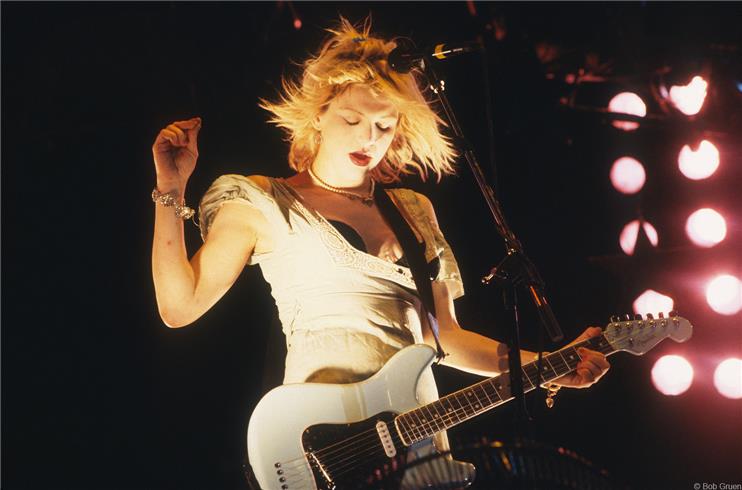
Eventually, after acting roles in the Alex Cox-produced Sid And Nancy (ironic, that, given Cope’s lambasting) and Straight to Hell movies and a short stint in the nascent Faith No More, Courtney found fame in her own right. With her band Hole, Courtney dragged the songs behind her in the way a tantrum-throwing toddler might hold onto a ragdoll. Foot atop monitor, she’d bawl and holler until hoarse, a defiant two-fingered statement that belied the baby-pink Mustang and lacy dress that might’ve hinted at the notion of submissive femininity. With lyrics addressing abuse, sexuality and chaotic living, her autobiographical songs were perfect for the misfits and misplaced in society.

Immediately left and right of her, her junkie-chic band of renegades and reprobates played a right royal lamalama of noise. Bruised, battered and bleeding, Hole songs were raw and unforgiving, brutal, relentless and very loud. Obvious really, given the reference points; the band had links to both Sympathy For The Record Industry and Sub Pop, Sonic Youth’s Kim Gordon produced their first album, and so on…

Occasionally, if she’d taken her kohl-darkened eye off the bawl, Love allowed a melody to escape into the ether. Below the rumble of bass and tumble of toms, the odd diamond might glint for those paying close attention and, by the time of third album Celebrity Skin, things had progressed musically to the point that the song became the equal of the performance. As a result, the album (steered by Smashing Pumpkins’ Billy Corgan in pseudo A&R role) is a big riffing, radio-shiny collection of alt. pop songs.

The album’s title track was the big lead-off single. Celebrity Skin flies in like a jumbo jet, a full force sonic rumination on the fickleness of fame. Love sneers ‘n snarls through the verses, elongates the ‘he-ey-eys and yeah-yeah-yeahs’ in the chorus and goes full-on Stevie Nicks in the acoustic-led middle eight. It’s a cracker.

HoleCelebrity Skin


The Malibu single is more of the same. With a guitar and vocal that a different producer might’ve smoothed into country territory, Love provides the requisite snarl in all the right places. Choruses are big, harmonised and insistent in their earworm-like tendencies. I’ve never driven down the Pacific coast freeway in a convertible Chevvy, but when I do it’ll be this track and it’s counterpart above that soundtracks the occasion.

HoleMalibu

*Extra Track

Worth a listen too is the band’s ragged take on Dylan’s It’s All Over Now, Baby Blue.

HoleIt’s All Over Now, Baby Blue

Coming in on the wrong verse, Love treats the master’s piece with little in the way of respect, but it vibrates and squeals in all the right places. More of a reworking than a faithful cover, it’s a whole lotta Love indeed.

John, Yoko and little Julian, yesterday.
Dylanish, Hard-to-find, Live!

Touched By The Hand Of Bob

For a while at the tail end of the 90s/beginning of the 00s, Bob Dylan went through a wee phase of revisiting his religious period. Not in the full-on way he had done with the ‘Christian Trilogy’ of Slow Train Coming, Saved and Shot Of Love 20 years previously, a trio of albums packed full of religious imagery, the odd gospel arrangement and a complete and utter declaration of faith. Bob likes  to wrongfoot his audience, so in a career that had thus far packed in blues and folk, electric guitars and drugs, motorcycle crashes and stream-of-conscience novels, Mick Ronson and panstick make-up, turning to the power of the Lord was as good a move as any.


dylan-camden

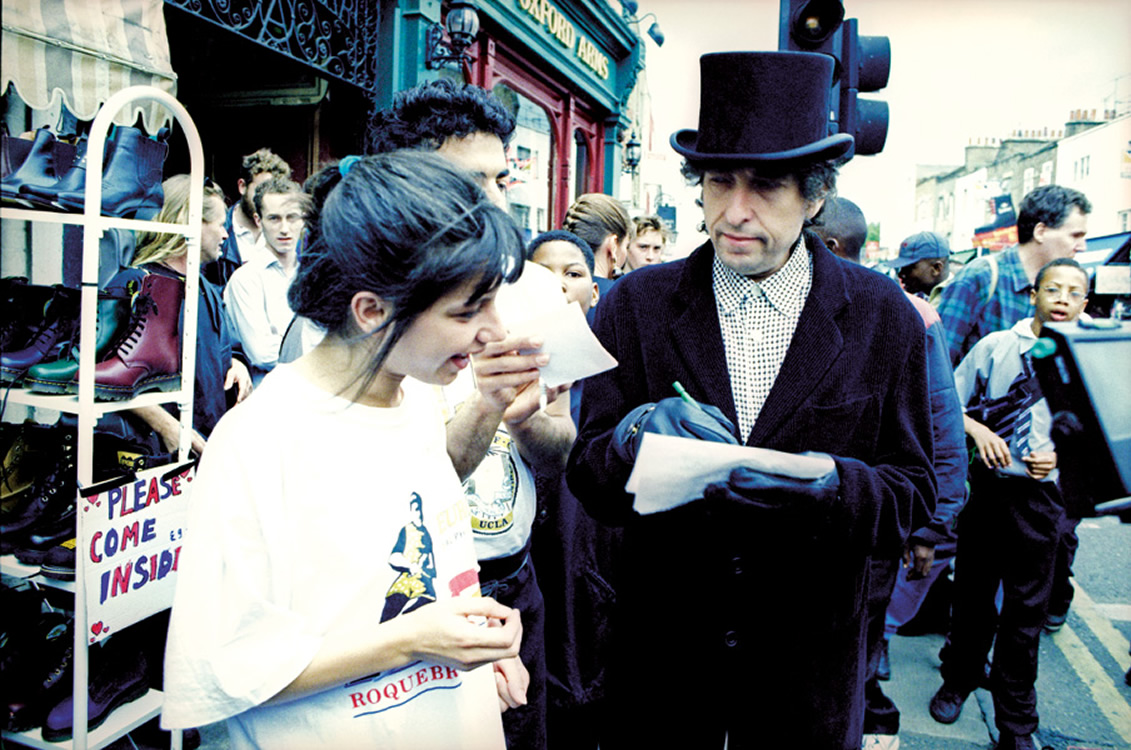
After several years in the wilderness (the leather gloves and top hat combo while wandering around Camden like some sort of Dickensian pied piper for all and sundry being the zenith of that particular phase), he kick-started his return to relevance with his Never-Ending Tour, a tour that still zig-zags across the planet to this very day. As a way of hitting the ground running, he’d often start these shows with a giddy run-through of an old Christian foot stomper. Short and sharp, they often wrong-footed the audience (again) who maybe expected a Maggie’s Farm or Dignity as the opener. They also served as a sort of second sound-check; as any sound engineer will tell you, the sound in a room changes dramatically once the audience are in. That wee two minute skip through at the start provided the engineer one last chance, as Depeche Mode might say, to get the balance right.

One such nugget he often kicked off with was his frantically scrubbed take on the Stanley Brothers ‘Somebody Touched Me‘.
Bob Dylan  – Somebody Touched Me (live, Portsmouth, England, Sept. 24th 2000)

Tight and taut, the song gives Bob maximum mic time. His band stretch their backing vocals for all they’re worth with ragged yet righteous harmonies. There’s a couple of wee breaks in between the verses for the band to break loose like Led Zeppelin III gone country, while the engineer, fingers hovering over faders and switches, fine-tuned the mix.  By the time of the second last verse in the version above, Bob is audibly breathless, high on the music and running at full pelt just to keep up with the backing band.

Having witnessed Bob in concert around this time, I can practically see his wee tip of the hat to the audience and the twinkle in his eye as he shouts ‘Thangyew!’ at the end, with an audible smile in his voice, ready to lead his band into the heavyweight double whammy of To Ramona and Visions Of Johanna, two guaranteed crowd pleasers.

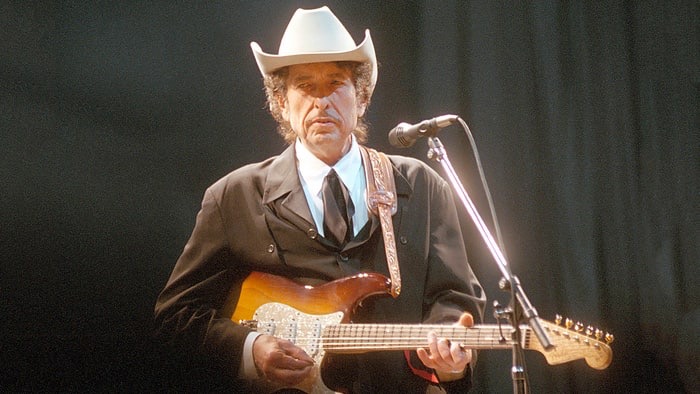
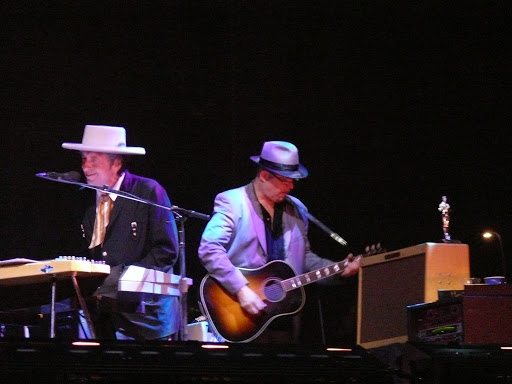
dylan-oscarBob in 2001, his Oscar perched atop the amp on the right.

That wee Oscar went everywhere with him for a while.

Lazy writers will often go on about Bob’s songs being indecipherable until, like, the last verse, or they’ll snort that they didn’t even know he’d played Mr Tambourine Man until they got talking to a knowledgeable Bobcat on the train home afterwards. Rubbish!

He may play games with the arrangements and phrasing, but his voice is as clear as it ever was. He e-nun-ci-ates perfectly. Anyone who tells you his songs are unrecognisable in concert is a moron, plain and simple.

He’s due back on these shores in a few months time. Whether I go or not remains to be seen; the last couple of times I’ve been to see him I felt he was a wee bit mechanical in places and going through the motions. Much of the night, it could’ve been any pick-up barroom band that was being let loose on one of the greatest canons in popular music, Bob stuck stage left and standing behind his keyboard like a Thunderbirds puppet hanging from invisible strings, but there were still flashes of undeniable brilliance to suggest he still has it. It’s those wee flashes that keep us hoping he’ll pull another cracker out the bag, as he did at the Barrowlands in 2004, my favourite Bob show of all.

There’s also, morbidly, a faint chance that the next time may be the last time he plays. And you wouldn’t want to miss that. Just like the tour though, I hope ol’ Bob is never-ending.

Cover Versions, Dylanish, Gone but not forgotten

Van Hailin’

Van Morrison‘s Astral Weeks is a critics’ wet dream of an album, consistently frothed over and placed at the upper reaches of ‘Best Albums Ever’ lists. It’s a particular kind of album; a heady mix of rock, folk, jazz, and soul which doesn’t always hit the mark for me, but, when it does, bullseye!


The critics considered The Way Young Lovers Do to be the stand-out track, but, they reasoned, for all the wrong reasons.

Reviewing Astral Weeks, self-styled barometer of hip opinion Clinton Heylin said it “sticks out like Spumante at a champagne buffet.

Pffffft! What does he know? Compared to the brevity and substance of the majority of the tracks, The Way Young Lovers Do is light and airy. It features a lyric that you don’t need a degree in English and/or codebreaking to decipher. It is, ‘serious’ music fans, a 3 minute pop song. For me, The Way Young Lovers Do is the stand-out track, but for all the right reasons.


It skitters along on a weird time signature of jazzy triplets played on a lightly brushed drum kit that’s doing it’s best to keep up with a frantically scrubbed acoustic guitar. The musicians on the track, all time-served jazzheads, were delighted to find they’d be given free reign to play as they fancied. The stand-up double bass player can’t quite believe his luck. He’s all over the track like a free-form be-bop rash.

Not one to labour over the small details in the studio, Van sketched out the track on his acoustic guitar and encouraged the others to fall in behind him. Going against the grain of late 60s studio work, Van didn’t prepare chord charts or musical scores. Instead, the whole thing was kept together with head nods, subtle glances and the unspoken telepathy that happens between seasoned pros. What was recorded for posterity is essentially the first run-through of the track.

Van MorrisonThe Way Young Lovers Do 

And what a track!

Van scats and scooby-dos like a hard-boppin’, finger-poppin’ Celtic Louis Armstrong, wailin’ those words with a phrasing and maturity that belies his 23 years. Stabs of brass more usually found on a primo slice of Stax soul puncture the ambience like an accusing finger in the face of a non-believer. “Whaddayamean you’ve never bin in love, ell, yoo, vee…..

A vibraphone shimmers like one of those self-same young lover’s hearts, while the strings (overdubbed later) swoon and sweep as the melody rises. This is pure joy abandon, as good as it gets, really.

On this track alone, Van really is The Man.

jeff buckley tele

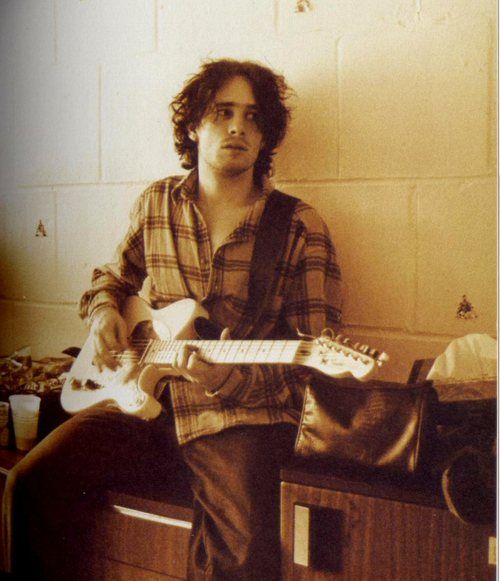
Contrast Van’s original with Jeff Buckley‘s extended, improvised take. Borne out of the cafe culture that fashioned his sound, Jeff’s version is just him with his beautifully-toned Telecaster playing through a Fender Twin Reverb amp, a combination of delicate, ringing picking, muted riffing and high intensity. A staple of his live shows, he never seemed to play it or sing it quite the same way twice. Jeff’s version often exceeded the 10 minute mark, with some versions approaching Zeppelin-esque proportions. Here’s an incredible version from the Bataclan in Paris taken from the European release of the same name. Intense, moody, stratospheric. You might even say it’s funky.

Jeff BuckleyThe Way Young Lovers Do (Live from the Bataclan)

starsailor

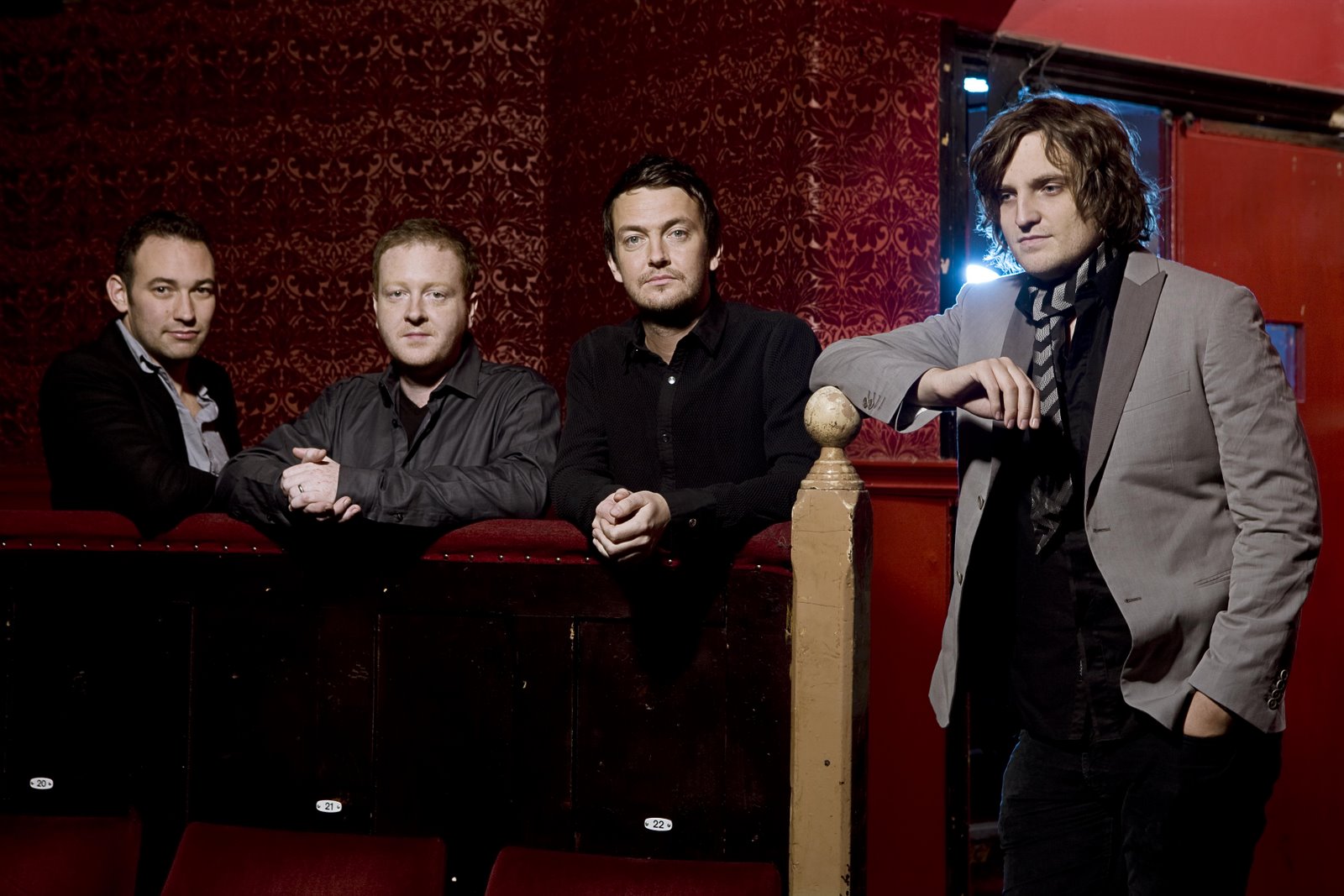
And then we have Starsailor. Currently residing alongside Toploader and Embrace in the Rewind section of Poundland, here was a band that pinned their flimsy influences to their poorly-tailored sleeves. Naming the band after an obscure Tim Buckley album, they took his vocal leaps and phrasings, welded them to the guitar stylings of the boy Jeff and had the sheer cheek to do their own version of The Way Young Lovers Do with all the grace (no pun intended), all the soul, all the nuance and style stripped from it. It’s a well-produced version, just not very good.

StarsailorThe Way Young Lovers Do

Dylanish, Get This!

Put On Your Red Shoes And Dance The Blues

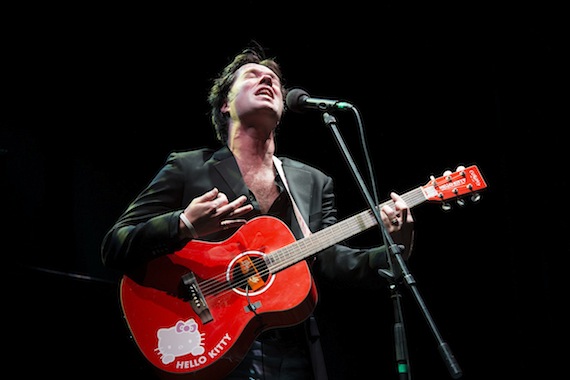
I lost track of Rufus Wainwright a wee bit after he started scoring operas and high-fallutin’ it in a dinner jacket. Including a couple of live efforts and a ‘Best Of‘ LP, his album discography is now into double figures, but for me the high water mark is the first volume of ‘Want‘. Initially sold as two separate albums, Want 1 and Want 2 were later repackaged as a double album and, as an introduction to all things Rufus, you could get no better. If you can bottle the sound of pathos, the odd high camp moment and great hair, Want 1 is the result.

rufus red shoes

Halfway through Want 1 is the incredible Go Or Go Ahead. Go Or Go Ahead is a drug song, but not a scuzzy, junkie-confessional, claustrophobic itch-fest that has you running for the shower before the last note has faded. Go Or Go Ahead drips in melody and is wrapped in harmonies sent from the heavens, ridiculously uplifting and bathed in enough arms-wide-open melodrama to make even Mount Rushmore shed a tiny tear.

Rufus Wainwright – Go Or Go Ahead

The way the songs builds and builds, from major to minor acoustic strum and brilliant tumbling “do-dn-do-be-doos”, via the middle section with a pitch-shifting guitar break courtesy of Charlie Sexton (moonlighting from his duties in Bob Dylan’s Never Ending Tour band) to the BIG “look in her eyes!” section where Rufus and his sister Martha are overdubbed a gazillion times to create that incredible Spector in stereo wall of sound is absolutely spectacular. By comparison, it makes other ‘big’ songs (McAlmont & Butler’s ‘Yes‘, The Smiths’ ‘Last Night I Dreamt That Somebody Loved Me‘, Jeff Buckley’s ‘Lover, You Should’ve Come Over‘, for example) seem almost trite and insignificant. In the grand scheme of things, Go Or Go Ahead is the daddy of them all.

rufus guitar

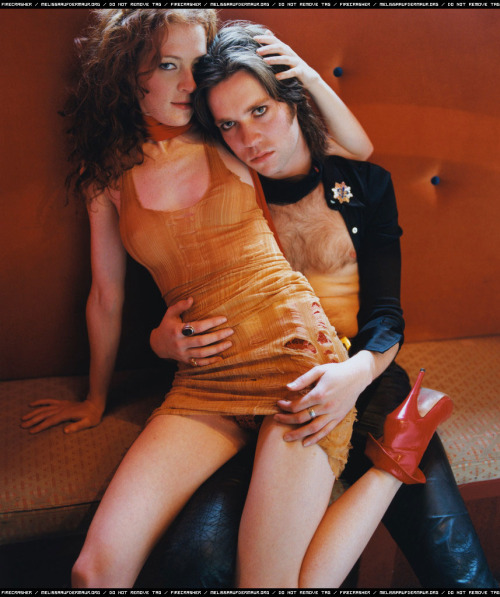
Written (“you got me writing lyrics on postcards“) while Rufus walked the streets in a less than salubrious area of San Francisco during the middle of an addiction to crystal meth, it’s lyric is full of self-loathing, celebrating the vacuousness and vanity of hollow celebrity. Or something like that. More scholarly people than myself could write pages and pages on the metaphors within each line. Sure, there are references to Judy Garland, gin and Mars, the God of War, but I suppose you take your own meanings from them. Me? I just dig the tune. It’s a belter, isn’t it?


rufus and melissa auf der maur

*Bonus Track!

Another ‘street’ song, 14th Street from the same LP is another high, Rufus’ voice on top form, his band sounding Spector-huge once more. During our one visit to New York I found myself subconsciously singing this as we crossed yer actual 14th Street on my way into Chinatown. I can see it in my head as I type right now.

Rufus Wainwright14th Street

Now. If you do one thing this week, fill that gaping hole in your collection with Want. You’ll wonder how you ever lived without it.

Alternative Version, Cover Versions, demo, Double Nugget, Dylanish, Get This!, Gone but not forgotten, Hard-to-find, Kraut-y, Most downloaded tracks, Sampled, Six Of The Best

We Are 9

Somehow, some way, Plain Or Pan has turned 9. Or, to be more accurate, is just about to turn 9. But at this time of year, when you can never be entirely sure if it’s Sunday morning or Thursday night and inspiration goes out the window along with routine and work ethic, it’s tradition that I fill the gap between Christmas and Hogmany with a potted ‘Best Of‘ the year compilation, so I’ve always made this period in time the unofficial birthday for the blog.

i am nine

Not that anyone but myself should care really; blogs come and go with alarming regularity and I’ve steadfastly refused to move with the times (no new acts here, no cutting edge hep cats who’ll be tomorrow’s chip paper, just tried ‘n tested old stuff that you may or may not have heard before – Outdated Music For Outdated People, as the tagline goes.) But it’s something of a personal achievement that I continue to fire my wee articles of trivia and metaphorical mirth out into the ether, and even more remarkable that people from all corners of the globe take the time out to visit the blog and read them. From the bottom of my heart, I thank you, one and all.

Since starting Plain Or Pan in January 2007, the articles have become less frequent but more wordy – I may have fired out a million alliterative paragraphs in the first year, whereas nowadays I have less time to write stuff and when I do, it takes me three times as long to write it. To use an analogy, I used to be The Ramones, (1! 2! 3! 4! Go!) but I’ve gradually turned into Radiohead; (Hmmm, ehmm, scratch my arse…) Without intending it, there are longer gaps between ‘albums’ and I’ve become more serious about my ‘art’. Maybe it’s time to get back to writing the short, sharp stuff again. Maybe I’ll find the time. Probably I won’t.

The past 9 years have allowed me the chance to interview people who I never would’ve got close to without the flimsy excuse that I was writing a blog that attracted in excess of 1000 visitors a day (at one time it was, but I suspect Google’s analytics may well have been a bit iffy.) Nowadays, it’s nowhere near that, but I still enthusiastically trot out the same old line when trying to land a big name to feature. Through Plain Or Pan I’ve met (physically, electronically or both) all manner of interesting musical and literary favourites; Sandie Shaw, Johnny Marr, Ian Rankin, Gerry Love, the odd Super Furry Animal. Quite amazing when I stop to think about it. You should see the list of those who’ve said they’ll contribute then haven’t. I won’t name them, but there are one or two who would’ve made great Six Of the Best articles. I’m not Mojo, though, so what can I expect?

pop9

A quick trawl through my own analytics spat out the Top 24 downloaded/played tracks on the blog this year, two for each month:

  1. Michael MarraGreen Grow the Rashes
  2. Wallace CollectionDaydream
  3. Jacqueline TaiebSept Heures du Matin
  4. The TemptationsMessage From A Black Man
  5. New OrderTrue Faith
  6. Bobby ParkerWatch Your Step
  7. Jim FordI’m Gonna Make Her Love Me
  8. DorisYou Never Come Closer
  9. Ela OrleansDead Floor
  10. Mac De MarcoOde To Viceroy
  11. Teenage FanclubGod Knows It’s True
  12. Iggy PopNightclubbing
  13. George HarrisonWah Wah
  14. MagazineThank You Falletinme Be Mice Elf Again
  15. Future Sound Of LondonPapua New Guinea
  16. Bob DylanSad Eyed Lady Of the Lowlands (mono version)
  17. Richard BerryLouie Louie
  18. REMRadio Free Europe (HibTone version)
  19. The CribsWe Share The Same Skies
  20. Johnny MarrThe Messenger
  21. McAlmont & ButlerSpeed
  22. Talking HeadsI Zimbra (12″ version)
  23. Style CouncilSpeak Like A Child
  24. Darlene LoveJohnny (Please Come Home)

And there you have it – the regular mix of covers, curios and forgotten influential classics, the perfect potted version of what Plain Or Pan is all about. A good producer would’ve made the tracklist flow a bit better. I just took it as I came to them; two from January followed by two from February followed by two from etc etc blah blah blah. You can download it from here.

See you in the new year. First up, Rufus Wainwright. Cheers!