Cover Versions, Gone but not forgotten, Hard-to-find, Live!

Baby What You Want Me To Do Quintruple Whammy

Baby What You Want Me To Do was written at the tail end of the 50s by blues guitarist Jimmy Reed.

Not that he’d have known at the time, but Reed penned something of a blues standard. In its 50+ years amongst the canon of popular song, Baby What You Want Me To Do  has been recorded in a whole range of styles by a whole range of artists. Here are some of the better ones.

elvis 68 comeback 2

Ol’ Elvis Himselvis was Jimmy Reed daft, and by the time of the ’68 Comeback Special, after he’d strapped on a guitar for the first time in ages, was intent on sneaking the Jimmy Reed riff into as many parts of the set as his band would allow. Every time rehearsals stopped, The King would find his sweaty fingers forming around the swampy tune. With quiff collapsed and lip curled high, he’d be off and running, his band of A-list sessioneers falling in behind him with a forced goofiness and much hootin’ and hollerin’.  “We’re goin’ up, we’re goin’ down…” and off they’d go once again….

 Rehearsal:

The Live Show:

elvis 68 comeback 1

Elvis, dressed head to toe in Wild Ones leather and looking like a Texas oil slick played his guitar with a twanging punk ferocity not heard since Gene Vincent Raced With The Devil almost a decade earlier. That he and his band were playing inside a boxing ring rather than a stage only added to the pugilistic undertones eminating from the Presley 6 string. Terrific. There are a couple of ’68 Comeback albums worth looking out for – the edited essentials Tiger Man and the warts ‘n all Memories; The ’68 Comeback Special album, which features more versions of Baby What You Want Me To Do than you could possibly ever need. Or perhaps not. If you buy one record this month…etc etc…
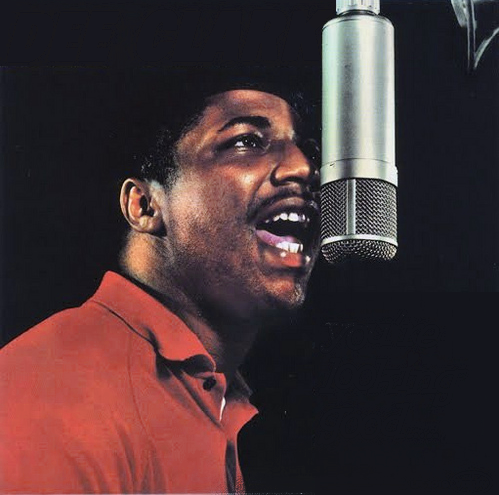
dee clark

Delectus ‘DeeClark was a ten-a-penny soul/RnB singer. Most famous for having fronted Little Richard’s band after the real Richard had his calling from the Lord, Dee Clark would’ve romped the 1958 series of Stars In Their Eyes, such are the carbon-copy facsimiles of Little Richard in his earlier records.

But Dee could turn his vocals to many styles, and inbetween the high camp quiff Richardisms and duh-duh-duh-duh doo-wop stylings, he found time to cut a version (above) of Baby What You Want Me To Do that instantly conjures up lazy images of the deep south and makes me want to pour a decent measure of sour mash, fire up a crawfish gumbo and let the good times roll. Terrific too.

everly brothers

Everyone should clear 5 minutes a week to hear an Everly Brothers record – you’ll feel better for it. Battlin’ brothers Don and Phil cut a version that is classic Everlys – a polite country-ish rockin’ guitar, some barrelhouse piano and enough good time vibes that belies the fact that they hated one another with a passion. You can imagine them in the studio sharing the mike, just as Lennon & McCartney would do a few years later, their close-knit harmonies fusing together like honeyed glue, all the while angling for greater personal share of the spoils, Don doing the low parts, Phil the outrageous highs.

Likewise Dion. Not Celine, just Dion. Clear 5 minutes a week etc. No stranger to Plain Or Pan, Dion’s take comes from the suitably named Bronx In Blue LP, a somewhat laid-back affair, all twangin’ acoustics and groin-botherin’ bass. It was nominated for a Grammy, dontchaknow? Unusually for a Dion record, his version was cut in the mid 2000s, when he wasn’t smacked off his face on Class A’s, and he doesn’t quite break into that doo-wop falsetto of his, but don’t let that put you off.

dion dimucci


Cover Versions, Hard-to-find, Kraut-y, New! Now!

Slanging Match

So the new Primal Scream album’s here and before a note had been heard, the knives in this house were already being sharpened. From the rubbish cover that looks as if the work experience boy was given a generic shot of Bobby and 10 minutes with a laptop, to the list of cliches masquerading as song titles on the back – River Of Pain, Culturecide, Tenement Kid, Invisible City, Goodbye Johnny, Elimination Blues – I had this album down as a stinker, another one of those disappointing albums the Scream have been turning out with increasingly diminishing returns since the high watermark of the double decade-old Screamadelica.

ps 2013

But y’know what……..?

It’s not all bad. In fact, some of it’s pretty good. And bits of it are really very good indeed. Opener (and lead single) 2013 seems to have split opinion amongst the critics, and at 9 minutes long, it’s not perfect radio fodder, but I like it. Bobby’s clearly determined to write an era-defining chronological anthem (think Stooges 1969, or Stooges 1970 come to that, or 1977 by The Clash). It reminds me of golden-age Psychedelic Furs, if they ever actually had a golden age, replete with a rasping saxophone line not heard since The WaterboysA Girl Called Johnny. Very similar, Bobby. Very similar indeed. Elsewhere, vocals are whispered where previously they were mangled into that accent that was more yer actual Florida then Mount Florida. Acoustic guitars flutter against a backdrop of We Love You-era Stones psychedelia. Keyboard swells and electro bloopery compete with Zeppelin drums and turned-up-to-11 Les Pauls through Marshall stacks. Textured. That’s the word I’m looking for. More Light is a textured album. A textured album that’s about 4 tracks too long, but never mind. Is it obtuse of me to say that, for me, the best tracks are the bonus tracks? They’re certainly the most interesting by far.

Nothing Is Real/Nothing Is Unreal (above) is terrific – a proper motorik, Krauty groover that really benefits from David Holmes’ polished sheen. If the whole album was like this, we may be saying it’s the best Primal Scream album since Screamadelica. Actually, the publicity surrounding the album would have you believe that, but this track is truly wonderful.

For Record Shop/Store Day this year, Primal Scream brought out a 12″ of them doing Sonic’s Rendezvous Band‘s City Slang. Sonic’s Rendezvous Band was a mid 70s alt-supergroup, formed by Fred ‘Sonic’ Smith of the MC5 and featuring Scott ‘Stooges’ Asheton amongst other garage band no-hit wonders. City Slang is a pretty intense piece of proto-punk, full of elastic band bass, cheesegrater-thin guitar solos and a stu-stu-stuttering chorus, a testifyin’ punk rock call to arms. Heard once, never forgotten. Heard for the first time, it’s one you’ll want to play again and again. Just as well the original 7″ has the same song on both sides – wear out one set of grooves and you’ve still got another to batter the hell out of. That SRB had only one track was neither here nor there, City Slang remains something of a masterpiece. It also happens to be one of Alan McGee’s favourite records, as he told Plain Or Pan a year or so ago.

Best ever punk rock single, as he so succinctly put it. You can read more about Alan McGee’s favourite records (something of a Plain Or Pan scoop at the time, though you wouldn’t know from reading it) here.

sonicrendezvous_city_front

Anyway, Primal Scream’s version  is a faithful-to-the-original, full-on heads down punk rocker. For men pushing 50 and more, this is either admirable or rather sad. I’ll let you be the judge on that one.

Contrast And Compare:

City SlangPrimal Scream

City SlangSonic’s Rendezvous Band

Cover Versions, Gone but not forgotten, Live!

Skin Tight

The Great Pyramid of Giza. The Hanging Gardens of Babylon. The Statue of Zeus at Olympia. The Temple of Artemis at Ephesus. The Mausoleum at Halicarnassus. The Colossus of Rhodes. The Lighthouse of Alexandria. The Seven Wonders of the World. You’d think that by now, the 21st Century, someone somewhere might fancy updating that list. I think I missed the appeal when they were asking folk to write in with their suggestions for the 8th wonder, but if it’s not too late, I’m putting forward the Glasgow Barrowlands for inclusion.

Barrowlands

To be more specific, I’m putting forward the Barrowlands when it’s packed-to-the-gunnels full and the band on stage is on fire. I’ve been to the Barras plenty of times. It’s always good. Often, it’s great. Other times, it’s really great. Last night, the second night of The Specials double header, it was electric; right there and then the best place to be on the entire planet. It was packed-to-the-gunnels full. The band was on fire. You didn’t want it to end. A greatest hits and more was played out to a mongrel swill of a crowd; from old suedeheads in too-tight Fred Perrys and braces, spit-shiny Docs and straining-at-the-waist Levis, to ageing mohican’d punks and punkettes, to 40-something numpties in pork pie hats, the weekend rude boys who really should know better, the same guys who take their tops off and still chant “We are the mods!” at Who gigs, to the young team in misguided Liam Gallagher feathercuts and Superdry mod parkas. Punks, teds, natty dreads, mods, rockers, hippies and skinheads, as Do The Dog says, all united on the famous sprung dancefloor that, to paraphrase that Scandinavian football commentator from way back when The Specials first mattered, took one hell of  a beating.

specials 2Grainy Terry

It’s life-affirming when you realise at the age of 43 you still want to get involved at a gig, that you’re not content standing at the side debating the merits of the setlist with yourself, but you’d rather go for it, jump right in and get into it. I lost a stone and a half in the first 20 minutes alone. My polo shirt stank of other people’s beer on the way home. As I type, I’m looking at my battered desert boots, who look like they’ve been in the trenches at the Somme. The opening four numbers came at you like a breathless, skanking Ramones – Bam! Bam! Bam! Bam!  I can’t be certain what was played, or in what order (it might’ve been Do The Dog and Concrete Jungle and Rat Race and Gangsters). One into another, a storm of ricocheting pistol cracks from the snare and Roddy Radiation’s spaghetti western twang, glued together by the Hall hangdog vocal. Then the brass section came on. Then the strings. And the band cherry-picked their way through a back catalogue rich in dubby textures and exotica flourishes. Pinch yourself for a minute. That’s The Specials! Playing International Jet Set! I took a particular shine to the three pouting string players, bobbing their heads from side to side in perfect unison whenever the dub swelled and the need for strings reduced.

specials 3

Picture courtesy of Cameron Mackenzie. Cheers!

This clearly isn’t some half-arsed in-it-for-the-money Stones tour. This is a band playing better than ever to an audience somewhat largely made up of people too young to have seen them first time around (I was 10 when I bought Do Nothing for 99p with my £1 pocket money). The Specials are on fire right now and demand your attention. We were lucky enough to get an extra, unplanned encore, a Terry-free Guns Of Navarone, played by a band who’d wandered on after the outro music had begun and some of the audience had filtered off towards the exits and Central Station. Nae luck, non-believers.

There’s no youth culture anymore. Cast your eye over the appearance of any youngster and you wouldn’t know if they were into Pink or Pink Floyd. Last night showed why tribal music matters. If you do one thing this year, go and see The Specials.

The Music

The Trojan-loving DJ at the start’ll play The Skatalite‘s Guns Of Navarone:

You might be lucky and hear the band do their own version in the encore: 

You’ll certainly get Too Much Too Young. Here‘s the slower, dubbier album version, not the more widely-known knee-trembler from The Specials Live EP.

And here‘s Lloyd CharmersBirth Control, the main influence on Too Much Too Young. It’s all in the riddim (method).

specials 1Blur? Nope, The Specials.

Cover Versions, New! Now!

Is This It?

(Subtitled What Is This Shit?)

It was those opening words of his review that got Greil Marcus fired from Rolling Stone magazine in 1970 following his slaying of Bob Dylan’s Self Portrait. A hotchpotch of bewildering cover versions, syrupy reworkings of his own back catalogue and bizarre odds ‘n sodds so far removed from the Bob of 2/3/4 years earlier as to place the 1970s Bob firmly in the ‘has-been’ category, we can, with the benefit of hindsight apprecaite Marcus’ review for what it really was – a passionate attack on an act once so revered and vital but now finding themselves in the midst of creative meltdown. If you’ve ever experienced the disappointment of your favourite band so spectacularly failing to deliver, you should take the time to read it.

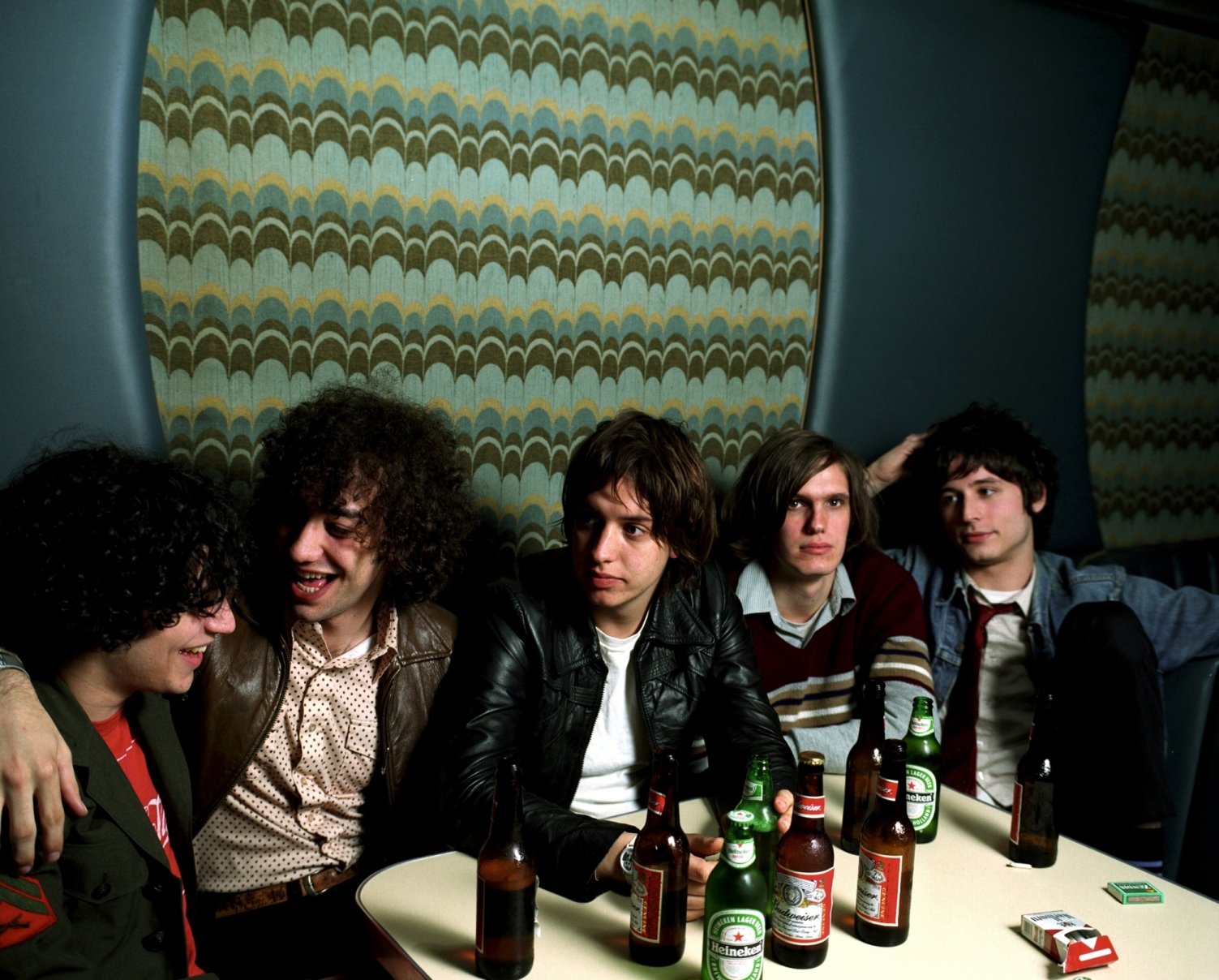
the strokes

And so to The Strokes. Is This It came out 11 and a half years ago (the day of the 9/11 bombings, same day as the Zim’s Love And Theft, if I remember correctly) and was a perfect summation of everything The Strokes had worked to by that point. NYC rich kids, a contradiction of expensive continental schooling and extensive dress-down grooming, they took the blueprint of all that was great with mid 70s Noo Yoik noo wave and ran with it in a scramble of battered Converse and 28″ waists. A garage band, a proper we-can-play-our-chops garage band, they burned their way through a handful of lean, mean, rattlin’ and rollin’ tracks, every one more vital than the previous one. Their look, their sound was nothing new. It was nothing clever. But it was terrific. Last Nite was my favourite.

Last Nite (from debut The Modern Age ep):

Last Nite came complete with the sound a million bands who’ve ever played live in front of a ghetto blaster set to ‘record’ will recognise – that of the sound of the snare drum rattling from the vibrations from the ambience in the room. It takes me right back to ear-splitting band rehearsals at Shabby Road even as I type. With doe-eyed Julian and his Benylin-through-a-bullhorn vocal and fab drummer Fab Moretti about to embark on a relationship with A-lister Drew Barrymore, they fairly set the loins alight of many an impressionable female. They had the licks. They had the looks. They had it all and the world was their oyster.

strokes

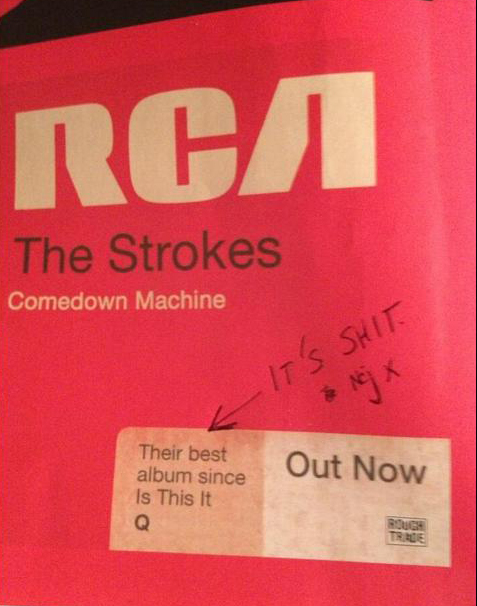
Fast forward to 2013. The Strokes’ 5th album, Comedown Machine, has just been released. I’ve lived with it since the end of March and, well, Letdown Machine would perhaps have been a more appropriate title. It’s not exactly a surprise – the last couple of albums have been nothing but weak filler propped up by the occasional FM-shiny belter, but Comedown Machine has no redeemable features. None at all. Leaving behind the myriad of 70s influences that made The Strokes what they are, they seem to have discovered the 80s. And not an 80s where demi Gods such as John McGeoch and Julian Cope and Ian Curtis and (insert your own idol here) provided a real alternative to the rubbish filling the airwaves, but an 80s of Gloria Estefan and Miami Sound Machine and Linn drums and Rubik’s Cubes and shitty day-glo socks. It wasn’t very good then and it isn’t very good now.  In short, it’s a horrible car crash of electro bleeps and synthesized drums (synthesized drums! Poor Fab – whatever happened to the Clem Burkeisms he was so good at?)

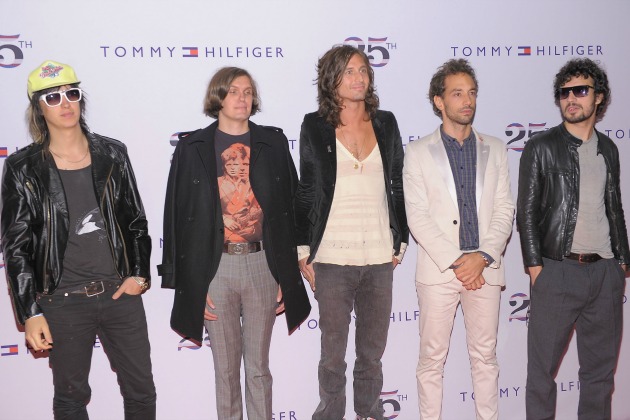
the strokes 2013

Looking at this, whatever you’re thinking, I’m thinking it too.

Before any singing starts, the opening track sounds like a demo of Beyonce’s Bootylicious, all pitter pattering drum machines, jerky Super Mario melodies and FX heavy guitars. On paper, that might sound interesting. Good, even. It’s not. Lead single One Way Trigger shamelessly appropriates the hook from A-Ha’s Take On Me and petres out in a cascade of falsetto singing and electro handclaps. Gads. Throughout, you’ll hear the sound of a band as bloated and insignificant as Duran Duran, playing Strokes by numbers with diminishing returns. I’ve tried hard to like it, I really have. But, nah, The Strokes have lost it. The most interesting track 50/50, with its backwards effects and repetitive computerised guitar parts sounds an awful lot like Penguin Cafe Orchestra’s Music For A Found Harmonium. Penguin! Cafe! Orchestra! Now there’s something you never thought you’d read. What is this shit indeed.

Contrast & Compare:

Music For  A Found Harmonium:

50/50:


Cover Versions, Gone but not forgotten, Hard-to-find, Yesterday's Papers

Revolution 9

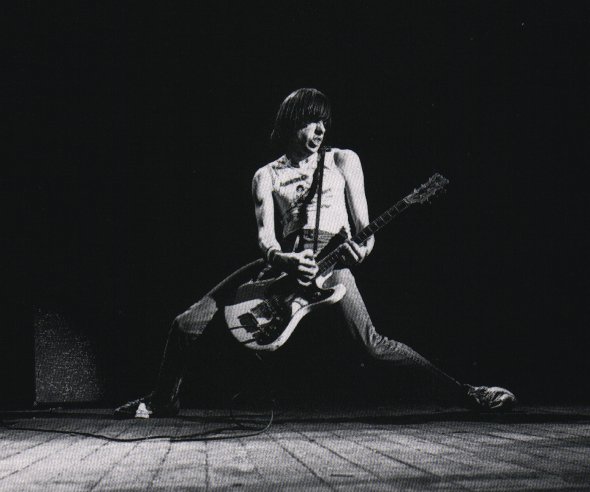
When I first picked up the plank of wood I had the cheek to call a guitar, I hadn’t yet mastered changing from a D to an A and back again before I realised something was missing. I needed something, anything, to disguise the bum notes from the badly-played chords I was trying to strangle out of my instrument at parent-bothering volume through my wee practice amp. That something was the fuzzbox. What a revelation! I could play along to most of The BuzzcocksWhat Do I Get and mangle a passable version of Everybody’s Happy Nowadays, fire off Janie Jones from the first Clash LP and play almost all of The RamonesIt’s Alive LP, riff for riff and legs akimbo, just like Johnny. Look at me, I can play guitar! 1! 2! 3! 4! Gggzzzzzssss! Hey ho and indeed, let’s go. The intricacies of Some Girls Are Bigger Than Others and Blackbird were a long, painful way off, but that fuzzbox was the thing that spurred me on to those greater things.

johnny_ramone

Nasty Punks, Funk Off

Eventually tired of the fuzz and with ears open to a wider variety of music, that wee pedal was retired from duty, to be ressurected a couple of years later by better musicians. If you listen very carefully to One At A Time on the Trash Can SinatrasI’ve Seen Everything album, that same £20 fuzzbox gets a good workout from Davy Hughes’ bass guitar. Or so they tell me.

But that’s another story for another day. After mastering the complete works of Johnny Ramone and the odd Beatles tune and sickening myself by tying my fat fingers in knots whilst trying to unsuccessfully learn Johnny Marr’s best riffs, I spent a great many hours poring over the guitar parts on James Brown records.

brown nolen

The guys who played the best of them (Catfish (brother of Bootsy) Collins and Jimmy Nolen) were as yet unknown to me, but they were just as vital and exciting and talented as the three Johns. I could sit for hours and listen to I’ll Go Crazy but I’ve never yet quite mastered the fluidity of the riff. Sex Machine was the big one. The one chord groove was a bee aye tee see aitch to learn in those pre-internet days. Starting with the top string and working backwards to the bass, I held down all sorts of permutations of strings and frets until one day the funk planets aligned and my fingers fell on the strings and frets in the correct position. For any technically-minded musicians amongst you, the chord I was playing was an Eb9 (with a hammer-on on the 8th fret), although I was yet to know that. To me, it was the chord that unlocked the funk.

eflat9

Using the 9th chord, Jimmy Nolen laid the foundation of funk. Stop/start slides from the 4th to 5th fret, pinky hammer-ons 2 frets above, muting the strings with his right hand to get the distinctive chicken-scratch sound, he’s the guitarist who anyone who’s ever played a note of funk guitar owes a debt to. James Brown changed his guitar players as regularly as you or I change our underwear, but from listening to the records you’d never know. All guitarists after Jimmy Nolen followed his distinctive chordings and ryhthm. Got a guitar to hand? Try it! Slide the same chord shape (above/below) up and down the frets and you’ll find all sorts of James Brown songs –  Papa’s Got A Brand New Bag. I Feel Good. Super Bad. Talkin’ Loud & Sayin’ Nothing. Soul Power. Persevere, you’ll find them all.

Get Up (Feel Like Being A Sex Machine)

e|--(start with an upstrum)----6-6----6---8--6----------6-6----6---8--6-----------------|
B|-----------------------------6-6----6-----------------6-6----6------------------------|
G|-----------------------------6-6----6-----------------6-6----6------(and repeat!)-----|
D|-----------------------------5-5----5-----------------5-5----5------------------------|
A|-----------------------------6-6----6-----------------6-6----6------------------------|
E|--------------------------------------------------------------------------------------|

Stick on the wah-wah pedal and you can riff your way to funky oblivion like an extra in a 1975 episode of Starsky & Hutch. Sly Stone, no stranger himself to a 3-in-a-bed romp with a wah-wah and a 9th chord, got in on the act. His Sing A Simple Song is an absolute monster of E9 riffing (see tab below. S’easy!). Booker T and The MGs did their own Hammond ‘n 9th-heavy version. And Ike Turner quite blatantly/beautifully ripped it off for his ‘own’ Bold Soul Sister, a young Tina coming across like the less-vulgar wee sister of Betty Davis. I think even Led Zeppelin used it on Houses of the Holy‘s The Crunge, such is the chicken-scratching Jimmy Nolen-ness of it all. The 9th. It’s a well travelled chord. Kick out the jams and play it, brothers and sisters. Now that’s an order.

Sing A Simple Song (Play a simple riff…..)

e|-------------------------7-7--6-7-7--6-7-7----------------------------7-7--6-7-7-|
B|-------------------------7-7--6-7-7--6-7-7----------------------------7-7--6-7-7-|
G|-------------------------7-7--6-7-7--6-7-7----------------------------7-7--6-7-7-|
D|----------5--------------6-6--5-6-6--5-6-6--------------5-------------6-6--5-6-6-|
A|--7-5---7---5-7---5/7----7-7--6-7-7--6-7-7------7-5---7---5-7--5/7----7-7--6-7-7-|
E|------7-----------3/5-------------------------------7-----------3/5--------------|
Cover Versions, Get This!

I’m Hank Marvin

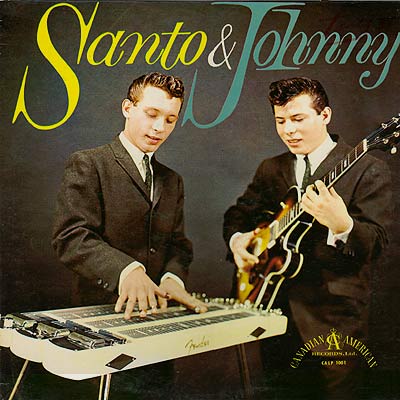
According to some so-far-unconfirmed sources, Richard Hawley, in his National Health milk bottle thick Gregory Pecks and greasy collpased 1950s quiff has Sleepwalk by Brooklyn brothers Santo & Johnny Farina playing on a constant loop inside his head, and, when stuck for inspiration, reaches out and grabs whatever twangy part happens to float past and recycles it under his own name. Cleverly, he also adds his own bottom of the bottle of whisky vocals to it, but disregard them if you can and it all becomes clear.

santo and johnny

Nothing evokes that fuzzy, fuggy end of the prom waltz into the wee small hours quite like Sleepwalk. A shuffling, twanging instantly recognisable piece of late 50s melancholia, it’s got the minor key melodrama down to a tee; The slide guitars streeeeeeeeeeetch off out into the ether. The steel guitars weep like jilted boyfriends who’ve just come off second best in the game of love to the star quarterback. There’s a tiny bit of stand-up slapback bass underpinning the soft-shoe shuffle of the brushed drums and really, that’s about it. Two brothers. Two jobbing sessioneers. Four instruments. No overdubs. Recorded at the famous Trinity Sound studios in New York for $35 during Bing Crosby’s lunch break. Quite possibly.

sleepwalk sleeve

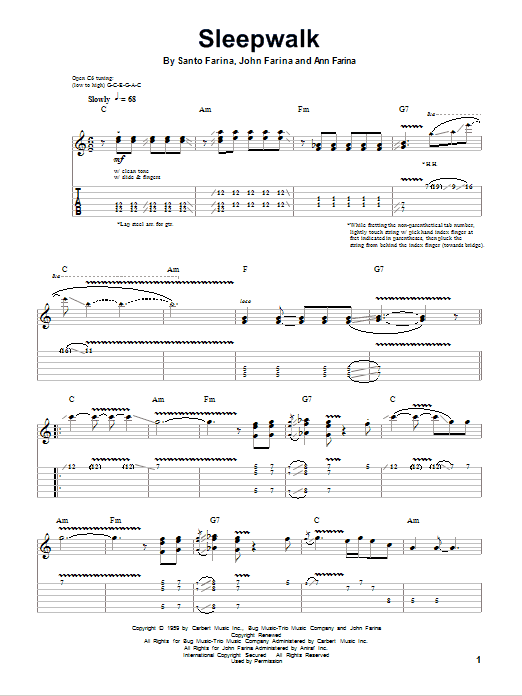
It’s since become something of a graduation piece for budding bedroom guitarists the world over. Master some chords (3 majors and a minor should do) then move onto the tricky pickin’. Sleepwalk is perfect for this, as is borne out by the number of early 60s (and beyond) cover versions by nascent young whippersnappers eager to show off their chops. The Shadows and The Ventures, between them the finest purveyors of the guitar instrumental (with apologies to Dick Dale) both released versions early into their recording careers. Chet Atkins fancy-panted his up somewhat with some jazzy-inflected country licks and none-more-50s rasping saxophone. Jeff Beck’s version is a soulful, we’re-not-worthy bow-down to the original, and even I have been known to dust off the old Telecaster, fire up the Orange amp and crank out my fat-fingered approximation of the tune. King of them all though is Brian Setzer’s respectful yet mental Grammy winning version. A man who out-Hawleys the Hawley and clearly spends even more time than the Sheffield Shinatra dreaming about the good old days of pre-TV households and cars as wide as they were long, his version knocks all others for six. Here’s how to do it:

sleepwalk tab

Bonus Track!

Santo & Johnny Sleepwalk (extended version)

Twangtastic.

Cover Versions, Hard-to-find

Aye, Spy!

Focus. Surely the reason punk had to happen. They’re not a band I’ve ever mentioned on these pages before. And they’re not a band likely to ever feature on these pages again. Hoary old 70s prog rockers, with their fuzzy faces and parted-curtains hair-dos, Focus might’ve looked like any one of those uber-cool purveyors of the German Kosmische Musik, but they eschewed that minimal motorik groove in favour of an altogether less savoury sound. Technically super-proficient players, Focus had an alarming  tendency to fling 94 ultra-slick 2 bar arpeggios in the space where most contemporaries would rattle out a blues riff copied from any old Chuck Berry record. Focus would also regularly yodel like castrated cats on their records, records that careered from a post-blues/pre punk squealing guitar abandon to neo-classical and medieval lampoonery, by way of a side order of jazz fusion. In many ways then, a Dutch Spinal Tap…

The Be-de-le-be-de-le-be-de-le-be-de-le-be-de-le-be-de-le-scree lead guitar in Focus was provided by Jan Akkerman. Jan is something of a hero to 60-year old physics teachers who wear their hair a wee bit too long at the back and still harbour hopes of making it with their band. He tours regularly and mentions of his name in the right circles can elicit the same sort of reaction you’d get when talking about Johnny Marr to half the folk who are reading this now.

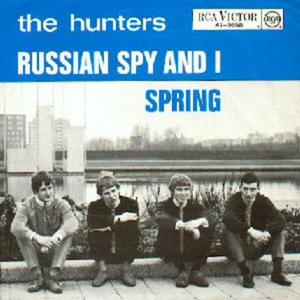
hunters - russian spyHe  began playing in The Hunters, a beat-boom inspired garage band from the Netherlands who had one minor hit in 1966 with Russian Spy And I. A terrific record, it sounds equal parts Yardbirds, Animals and (really) The Ukrainians, the short-lived world music off-shoot of the Wedding Present. All hand-claps, shouty “oi!s” and chicken dance-inspiring rythym guitar,  Russian Spy And I is a record you could happily smash plates to, Greek wedding-style. Listen to it and underneath the frenzied stomp of it all you just might spot Jan Akkerman’s ever-so subtle and understated guitar parts.

the stairs

The Stares

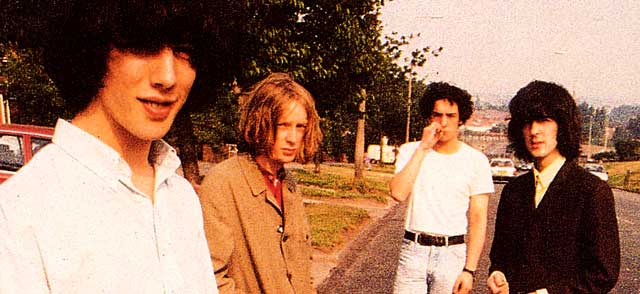
Russian Spy And I first came to my attention not from The Hunters but via The Stairs and their Woman Gone And Say Goodbye single. A band forever out of sync with the times (too late for the 60s, too early for that mid 90s boom in guitar bands), the Merseyside revivalists did a faithful version of Russian Spy… on the b-side, for extra authenticity recording it in mangled mono glory and unwittingly inventing The Coral in the process, who took The Stairs sound and polished it up until it was shiny and chart friendly. Nothing wrong with that, of course. The Stairs were a magic wee band. They had soul and funk and the riffs and could play like delta bluesmen and swing like Sinatra at the Sands. I’ve written about them and their genius leader, Edgar ‘Jones’ Jones before. Take 5 minutes and reacquaint yourself with them here. And listen to their version of Russian Spy And I while you’re at it. Oi!

Photo 24-02-2013 16 52 34

I Spy the heir to the Plain Or Pan throne

Cover Versions, Hard-to-find

O Superman

Life’s Rich Pageant was the first REM album I heard and, when push comes to shove, it’s still my favourite of theirs. Borrowed from Irvine library and duly taped, it soundtracked much of my late teens. From Begin The Begin‘s acid rock feedback ‘n twang via the alt. American Rickenbacker riffage of These Days and I Believe, to the Beach Boys backing on Fall On Me and Cuyahoga, it’s a terrific LP. All killer, no filler, you might say. It captures the band at the highest critical trajectory in their career – still hip enough to be considered underground, yet big enough to have worldwide sales (and actual big-hitting chart singles just around the corner with their next LP and beyond), being in REM around this time must’ve been great.

rem 86

Tucked away at the end of Life’s Rich Pageant was Superman. A twin-vocaled throwaway bit of bubblegum pop that showcased the extraordinary backing vocals of Mike Mills, it was the track I played again and again and again and again ad naseum. Which, given it was on cassette, led to some frustrating rewind sessions where I’d zero the wee digital tape counter as Superman started, and try and stop the tape bang on zero zero zero when the song had finished and I’d began to rewind it. There was none of this stop/start/skip/repeat stuff going on back then. But you’ll know that already. Anyway, I did this 1000 times until the tape stretched and eventually, catastrophically snapped, leaving ribbons of TDK wrapped around the tape heads on my none-more-80s music centre. The soft-eject door may have been the most aesthetically-pleasing one in the shop (you tried them all out, didn’t you) but it was impossible to take off to get the chewed bits of tape back out. So that was that. Down to the wee record shop at the back of RS McColl’s at the cross to buy the actual record. Up the road, and reading the sleevenotes it was then that I realised Superman was a cover. With no internet at my fingertips or music-geek big brother to grill, I waited literally years until finding out that the REM track I loved so much was by a band called The Clique.

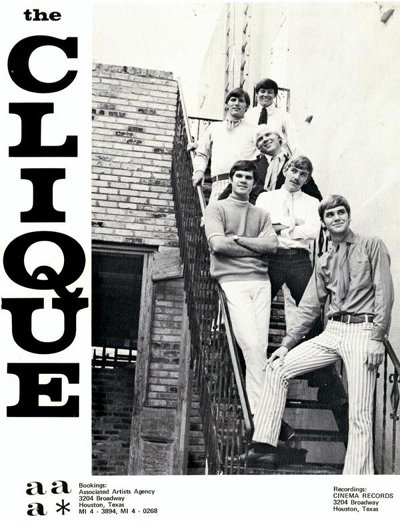
the clique promo

Pardon the pun here, but there are lots of Cliques in the music business. The Clique that released Superman in 1966 were from Texas. There was also a pilled-up ‘n purple hearted mod band from England called The Clique doing the circuit at the same time. And in the 90s, a band called The Clique (also of modish persuasion) were on the go. A few years back I featured one of their tracks. Very good it was too. But anyway…

The Clique’s version of Superman was a b-side. Given his trainspottery love of obscure and underground music, it was no doubt Peter Buck who brought it to REM’s attention. REM’s version actually turns out to be pretty faithful. The original is indeed a piece of throwaway bubblegum pop, with a high backing vocal and a highly fruggable bassline. Handclaps, little bits of chanting and a weird, trippy vocal, not unlike the effect you get when you hear backwards guitar on one of those 60s records, complete what is an excellent wee record. Although I still prefer REM’s.

Contrast and compare:

SupermanThe Clique

SupermanREM

Sadly, perhaps, I don’t have to hand the recording my wee band did at our first ever gig. I did the Mike Mills bits. Badly.

Cover Versions, demo, Hard-to-find, studio outtakes

Three Little Birds

I’m just about finished Neil Young‘s autobiography, Waging Heavy Peace. It’s an annoying read, but now I’ve come this far, I need to finish it. I love old whiny Neil, I really do, but his book goes about dispelling the myth behind the man faster than the man himself was able to hoover up the white stuff backstage during The Last Waltz. The chapters jump from one time and place to another time and place and back again with random abandon (which I don’t mind) but the content therein just bores me. There’s just not enough background information on the kind of stuff I’d expect most Neil Young fans to be interested in.

 young høyde

For every “The day I wrote Cinnamon Girl…” you get half a dozen finger-pointing one-sided arguments on the benefits of the electric car Neil’s been designing for the past 390 or so years. For every “We had a lotta fun, I got another STD” tale of woe you get a step-by-step account of his shopping trip to Costco. Really! For every “Oh man! Let me tell ya about this one time in the Springfield…” you get seventeen lectures on the rubbishness of mp3s.  Indeed, ol’ Neil’s got a big shout for himself. He’s offered to help Apple improve the sound quality of their music files and much of his book reads like a particularly crass advertorial. He takes folk out to his car (always a ’51 this or ’67 that, never a B-reg Cortina) and plays them music through his self-designed PureTone/Pono audio system that he hopes will become the leading portable audio player on the market. Whatever, Neil. Just tell us more about the Ditch Trilogy and your guitar sound on Weld, and much, much less about the movies for Human Highway and Prairie Wind.

Much like his music, where great album is followed by mediocre shelf clutter (for every pearl, there’s a Pearl Jam, perhaps?), so too his story alternates between revelation and exasperation. He does admit that he shelved too many good albums in the 70s at the expense of at-best average ones. Maybe he should’ve got himself an editor who could’ve told him likewise about the output of his writing.

neil young shades

Young wearing yer actual After The Gold Rush jeans.

Press ‘Play’ to hear groovy 60s Reprise Records radio promo ad.

At the end of the 60s, Neil Young found himself living in Topanga Canyon, overlooking the Pacific Palisades in the Santa Monica Mountains. A liberal, boho-rich 60s community of artists, actors and assorted creative types, it lent itself perfectly to Young’s own creative, carefree spirit. Here, he would pen many of the songs that would later become staples of his catalogue and live set. Sugar Mountain. I’ve Been Waiting For You. Helpless. Tell Me Why. Only Love Can Break Your Heart. All materialised in some form or other in this period. Not bad going for a 24 year old song writer. Amongst his ouvre during this time was Birds.

neil young wasted

Birds  (Neil Young early version from Topanga Canyon)

Birds is not that well regarded in what is undoubtedly a gold-standard catalogue, but it should be. Eventually appearing on his 3rd solo outing, 1970’s After The Gold Rush, Birds found itself sequenced mid-way through side 2, sandwiched between acoustic Neil nugget Don’t Let It Bring You Down and the electric Neil ‘n Nils Lofgren guitar duellin’ When You Dance You Can Really Love. Birds is a great wee song; downbeat, introspective and yearning with a terrific backing vocal from the assembled Danny Whitten (who’d be dead from heroin in 2 short years), Crazy Horse’s Ralph Molina, old partner in rhyme Steven Stills and the afore-mentioned 18 year old wunderkid Nils Lofgren.

Birds (After The Gold Rush album version)

Hands down even better is the mono single released to promote the Gold Rush album. A markedly different version from the piano-led album version, the single places greater emphasis on shimmering electric guitars and richly plucked acoustics without losing the soaring, whisky-soaked, weed-smoked 4-part harmonies in the chorus. And it’s all over in barely more than one and a half extraordinary minutes. Most folk know Birds from the album, but the mono single is where its at…

Birds (mono single version)

A few weeks ago, when the news of HMV’s decline was made public, I found myself shamelessly plundering their website for keenly priced booty. Top of my wish list was Neil Young’s Archives Project, the catch-all, multi-disc labour of love that had been assembled by Young himself after trawling years of tapes from his own archives. At £200+ a pop it was one box set I could never justify purchasing. I’d already acquired it via other means (I’m sure you know what I mean) but the real deal offers updates via the web and enough interactive material to satisfy even the keenest of Rusties. Sadly, HMV had none to sell, so the mp3s above are taken from my own slightly more dodgy archives. Be careful not to play them too loud, though, or old Neil will be round in his car, the ’62 Chevy perhaps, or the ’78 Jensen, to make you listen to how they should sound on his latest hi-spec audio player. And he’ll probably charge you $250 for the meet-and-greet privilege. Hippies, eh?

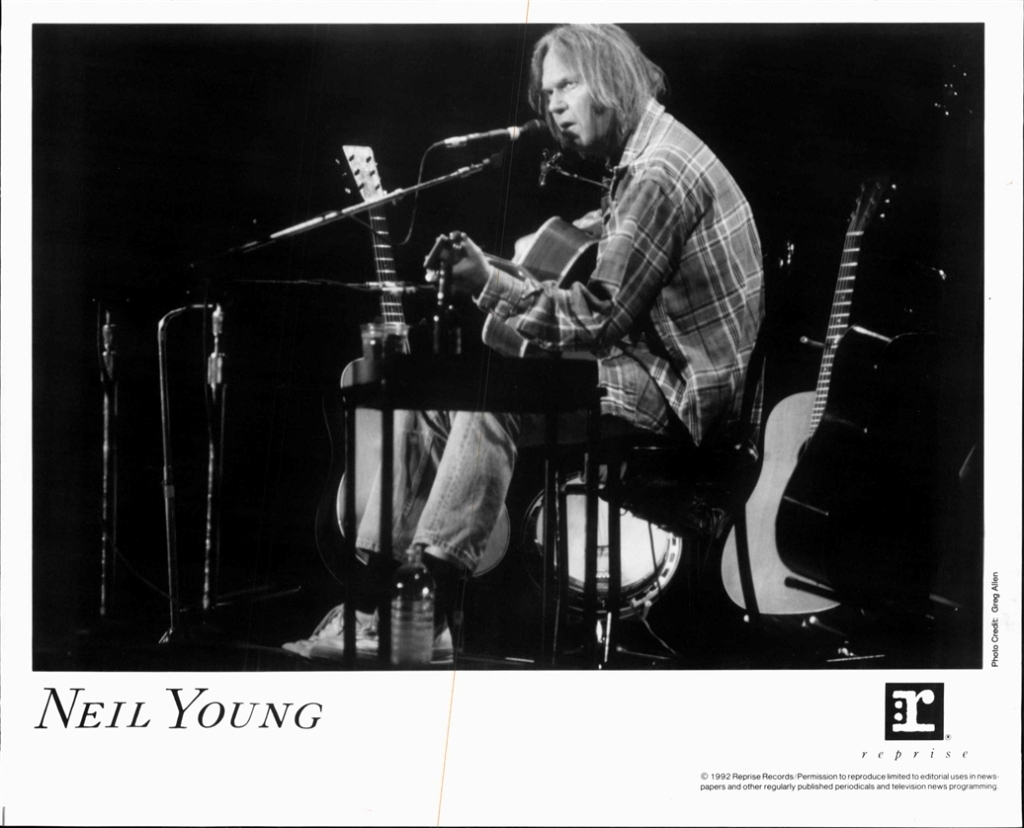
Neil Young reprise promo

*Bonus Track!

From the throwaway and listened-to-less-than-once-before-being-filed-away-waste-of-his-time-and-my-money Studio 150 covers LP (phew!), here’s Paul Weller, in full-on white man sings Otis guise doing a fine version of Birds. Perhaps a reappraisal of Studio 150 is required.

Cover Versions, Get This!, Gone but not forgotten, Hard-to-find

Born To Be With You Triple Whammy

chordettes

Born To Be With You was an American top 5 single for The Chordettes in 1956. A largely forgotten piece of bobbysox balladeering, it’s a proto doo wop, proto girl group paen to a just-out-of-reach romance, all minor key melodrama and vocal harmonies. It was quite clearly an influence on the young Phil Spector a few years later. A few short calendar years maybe, but it might as well have been several lightyears, given what happened in the intervening years betwixt and between The Chordettes and the golden touch of Phil Spector. 1956 was Year Zero for rock ‘n roll. The year that Elvis and his gyrating pelvis appeared on television screens with the dual effect of horrifying the moral majority of Americans whilst galvanising youths everywhere into action.

Before Elvis there was nothing.”

John Lennon said that. And after Elvis there was everything. I’ll say that. Firstly, Tin Pan Alley songwriters and their ‘moon in June‘ blandfest of lyrics were given a huge boot up the arse and out the door. As they were leaving, in came bands who played their own instruments, wrote their own songs, presented themselves as a gang and dressed accordingly. In a few short years, the thrill of rock ‘n roll and all its attendant detritus was well in motion. But you knew that already.

Phil Spector was a bit of a throwback to that pre-Elvis era. The auteur of teen angst, he used assorted songwriters to pen the hits, before introducing the song to the musicians who would bend and shape it into Spector’s vision of a 3 minute symphony, before finally introducing the singers to the song and pushing them to the very edge of their limits in order to create pop perfection. Goffin & King. Ellie Greenwich. Jeff Barry. Writing for The Ronettes. The Crystals. Darlene Love. I’m sure you know them all. Phil even got himself a writing credit for coming up with the “woah-woah-woah” part at the end of Mann & Weill’s ‘You’ve Lost That Loving Feeling‘. Clever man, that Phil Spector. Well, he was at one time…

dave edmunds

Spector’s influence reached far and wide, as far even as that hotbed of rock action, south Wales. In 1973, following the huge success of I Hear You Knocking (a favourite of John Lennon, coincidentally), and after a part in David Essex’s Stardust, Dave Edmunds combined his love of early 50s rock ‘n roll with the technique of Phil Spector and produced his own version of The Chordettes’ Born To Be With You. It’s terrific! A wall of 12 string guitars, stratosphere-scraping vocals and galloping, clattering rat-ticky-tat percussion. It’s measured. Precise. Perfect. By the time the brass ‘n slide guitar part comes soaring in, you’ll already have convinced yourself this is the best record you’ve heard all year. Someone like Glasvegas could waltz in and do it in the same style and make it sound even huger. “Coz ah wiz borrrrn…tae be wi’ yooo!” But for the moment, content yourself with Dave Edmund’s 40-year old version. I think you’ll like it a lot.

Pop Quiz Interlude

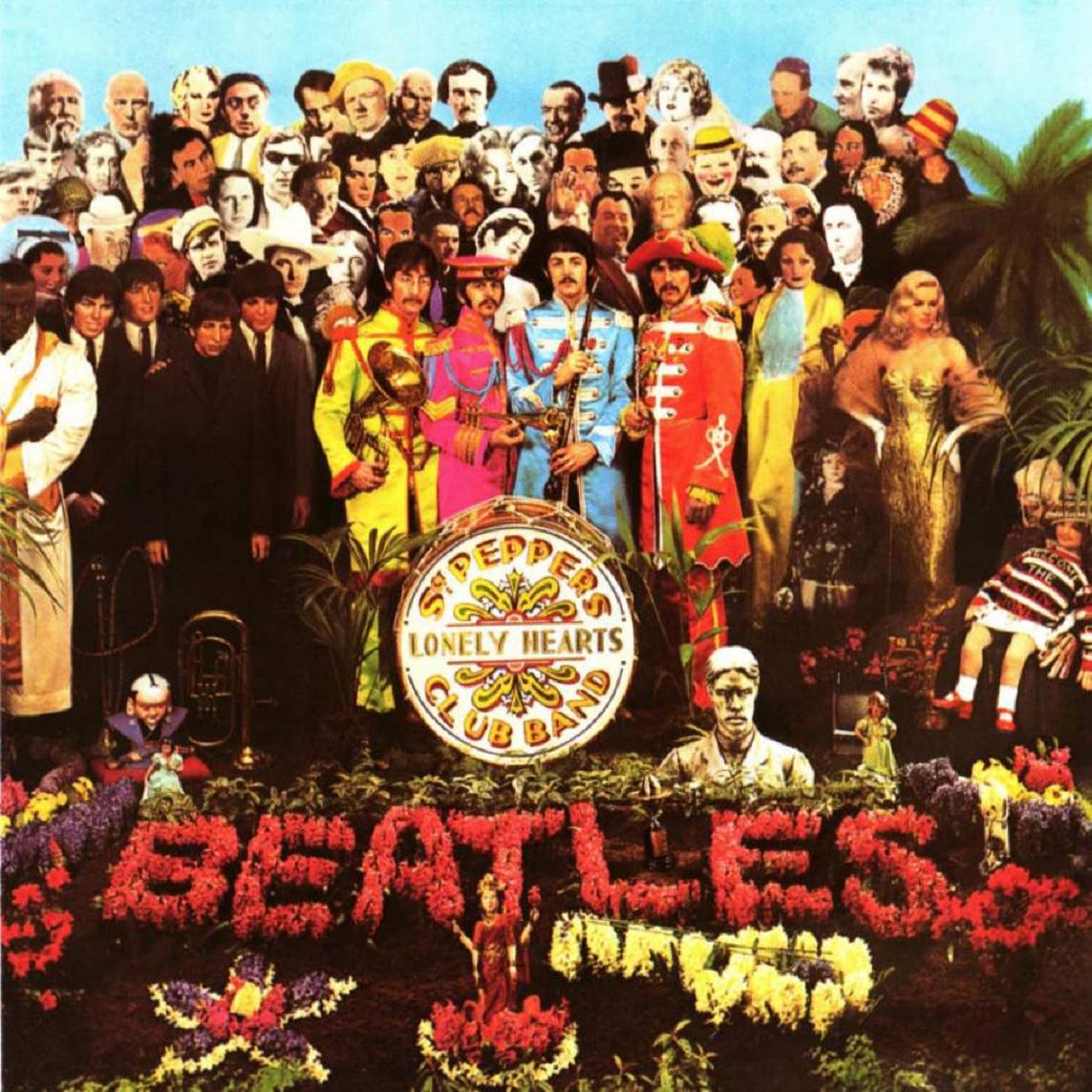
Q. Aside from The Beatles, name the only other rock/pop artists on the cover of the Sgt Peppers LP.

sgt pepper

A. Bob Dylan (top right, back row) and Dion (7th from left, 2nd back row. Just next to Tony Curtis and behind a wee bit from Oscar Wilde).

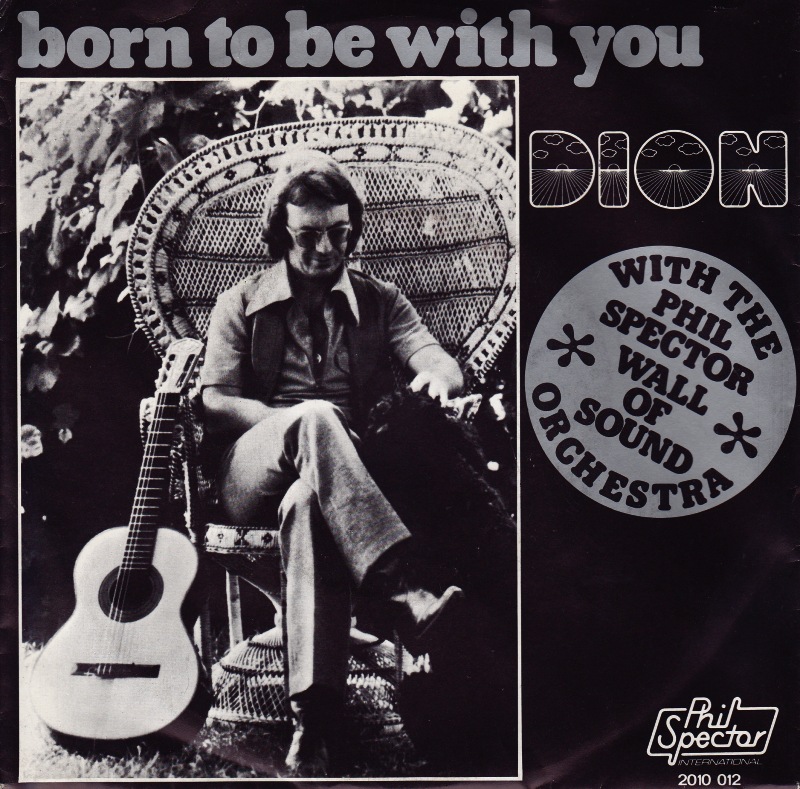
Dylan you’ve probably heard of. Dion too, for that matter. Dion was a duh-duh-duh-d’-duh-duh duh dude. His rasping, doo-wopping Noo Yoik Bronx vocal created monster hits. The Wanderer. Runaround Sue. A Teenager In Love. I’m sure you’re singing them now, ingrained as they are in the very fabric of rock ‘n roll.  Dion was also the Marti Pellow of his day – pop idol on the outside whilst rattling to the bones with heroin on the inside. When the hits dried up, Dion found himself label-less, friendless and definitely down and out in New York City. Following a religious epiphany (c’mon! what did you expect?!?) and subsequently ditching the drugs, 1975 found Dion working with Phil Spector on his own version of Born To Be With You.

dion 7

Ironically, it’s less Spectorish than Edmunds’ rollin’ and tumblin’ version. Dion’s is downbeat, introspective and melancholy, sounding exactly like the kind of record an artist makes when they know they’re in the last chance saloon; measured (again) and majestic. At just short of 7 minutes, it’s something of an epic. Jason Pierce of Spiritualized is said to be a huge fan of this record, which makes perfect sense. It’s almost Spiritualized in template, with it’s steady, pulsing riff and inter-woven sax breaks. And the background drugs story was no doubt the icing on the cake for our Jason.

Good records. That’s what they are. Play them. Enjoy them. Pass it on.