Cover Versions, Gone but not forgotten, Hard-to-find

A Good Start!

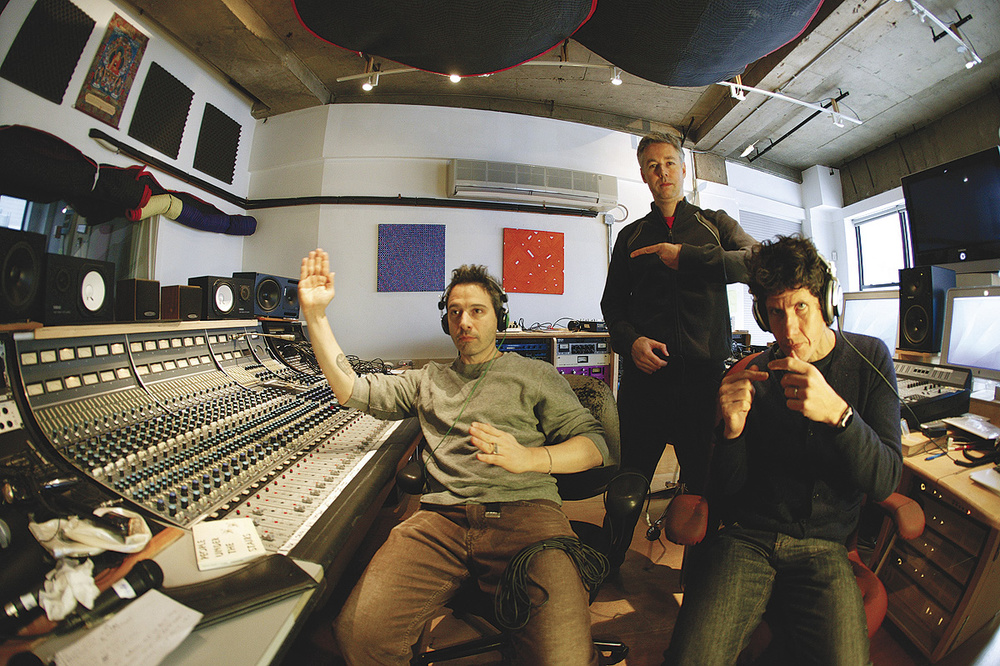
There’s a story that Adam Horowitz tells – kinda preposterous, but totally believable (it’s the Beastie Boys, right?) – where waaaay back in the early days of the Beastie Boys he’s hanging out at a friend’s rather than be at school that afternoon when, from the TV, comes the unmistakable slow ‘n low DIY beats of his group’s own ‘Beastie Revolution‘, the flip side of their debut single Cooky Puss. Somehow, some way, British Airways had picked up on the track and used it to soundtrack a TV advert. Quite what the ad executives were thinking (or were on) by adding the Beasties’ track – lo-fi-Pass-The-Dutchie-as-recorded-by-Lee-Perry – to go hand in hand with an advert for global business travel is anyone’s guess, but there it was. Ad Rock couldn’t believe it. They had to ask for permission, didn’t they?

It so happened that Mike D’s mum had a friend of a friend of a friend who worked for a Manhattan law firm, and so, a young lawyer fresh out of law school and with the bit between his teeth was assigned to take on the Beastie Boys v British Airways in his first case. The four Beastie Boys (Kate Schellenbach was still a part of the group at this point) were subsequently awarded $10,000 each, an astronomical amount for a young person in 1983. Adjusted for inflation, it’s the equivalent of over $32,000 (£30,000) in today’s money. The money would go some way to helping the group establish themselves with decent equipment, accomodation and rehearsal space.

Ad Rock did what any music-obsessed teenager would do: he took himself straight to Rogue, Midtown Manhattan’s music store. He had his eye on a black Rickenbacker, ‘the same one that Paul Weller from The Jam played‘ and had the $250 out to pay for it when, from the corner of his eye, he spied the new-to-market Roland TR-808 drum machine. Dilemma! He rationalised – he had a perfectly good guitar already…all the best, freshest records of the day were built on processed beats…here was his chance to own a real guitar…here was his chance to be cutting edge and adopt the brand new technology of the day…guitar?…beats?…guitar?…beats?… The 808 won out. Serendipitously, it would end up providing much of the backbeat for that first million-selling Beastie Boys album, after which Ad Rock could buy as many Rickenbackers as he fancied. A good decision, as it turned out.

It’s no secret that Beastie Boys have a hardcore punk thing at their roots, but when I first read the story above, I was suprprised that they were fans of The Jam. Of all the guitar-based bands to be into, they’d seem to be the most quintessentially English. The lyrical content, the suits, Weller’s undeniable accent…maybe that was the appeal.

In 2000, Fire And Skill, a tribue album to The Jam was released. It’s an eclectic (ie ropey) album and alongside the names you’d expect to be there (Liam Gallagher, Steve Cradock) were outliers such as Garbage, Buffalo Tom…and the Beastie Boys.

Beastie BoysStart!

Beastie Boys

Their version of Start! is terrific. It’s cut from the same lightly toasted cloth that many of those groovy Beastie Boys instrumentals are cut from. There’s no immediate Taxman-aping thumping bass. There’s no frazzled, trebly guitar solo. There are hardly any vocals. Instead, it’s built on a bed of bubbling Jimmy Smith organ, a woozy melodica playing Paul Weller’s vocal melody, with skittery, hip-hoppish drums and splashing cymbals nailing the groove to the floor. Miho Hatori of Grand Royal labelmates Cibo Matto pops up to sing the ‘if I never, ever see you/what you give is what you get‘ refrain, but other than that, this is Beastie Boys doing what they do best – grooving on a soul jazz soft shoe shuffle for fun and out of sheer respect for the music.

In Dancing Through The Fire, Dan Jennings’ excellent re-telling of the Weller story from pre-Jam to the present day, there’s a story of the aeroplane-averse Weller travelling six hours by car between shows, playing the Beasties’ version of Start! over and over and over again. I hope Adam Horowitz gets to read about that.

Cover Versions, Get This!, studio outtakes

So You’re Gonna Be A Singer, Well I’ll Be Goddamned

Buddy’s Rendezvous is the name of a diner, the place where the character in Father John Misty‘s song meets up with his estranged daughter after a spell in jail.

It’s an entire movie in song, FJM proud at how pretty his daughter has turned out, lying to the old soaks in the bars about what a great job he did bringing her up, she noticing that he’s wearing the same coat he had on when he was sent down and telling him she’s going to be a singer, he telling her not to try and please everyone all the time and to ‘forget that leftie shit your mom drilled in your mind…whatever happened to the girl I knew?‘ It’s a brilliant song, evocative and filmic, that in its arrangement alone stirs up notions of Hollywood’s golden age of Art Deco and smooth-rolling, shiny-spoked Lincoln Continentals.

It begins with a film noiresque saxophone bleating out the bluest of notes, climbing out of a smoky nightclub fug into the dark L.A. night, a loose, doo-wopish backing track accompanying it, the strings rising like smoke from a disgarded cigarette holder at a cocktail table. If Misty and producer Jonathan Wilson were aiming for ‘atmosphere’, you might say they nailed it.

Buddy’s Rendezvous and its parent album, Chloë and the Next 20th Century is a bit of an outlier in the FJM catalogue. For the most part, gone are the songs of syphilis and sexual proclivities, in are big sweeping Hollywood ballads, deft and ambitious in arrangement and played with an entirely straight face by a guy who’s normally happy to come across like a southern-fried Nick Cave. It wasn’t an album I immediately took to, but like much of FJM’s output, repeated plays reward the listener. Think of it as A Little Touch Of Schmilsson In The Night for Gen-Xrs and you’ll get on just fine with it too.

Released on Sub Pop, the record was presented to look like the sort of old time jazz record you might routinely shuffle past in your search for charity shop gold. The gatefold sleeve is thick and shiny, the labels on the records feature a fictitious label name and, occasionally annoyingly, fictitious song titles (and song times too). Even the publishing credits are made up. It’s a concept as grand as Misty’s musical vision and has, over time, become a real favourite.

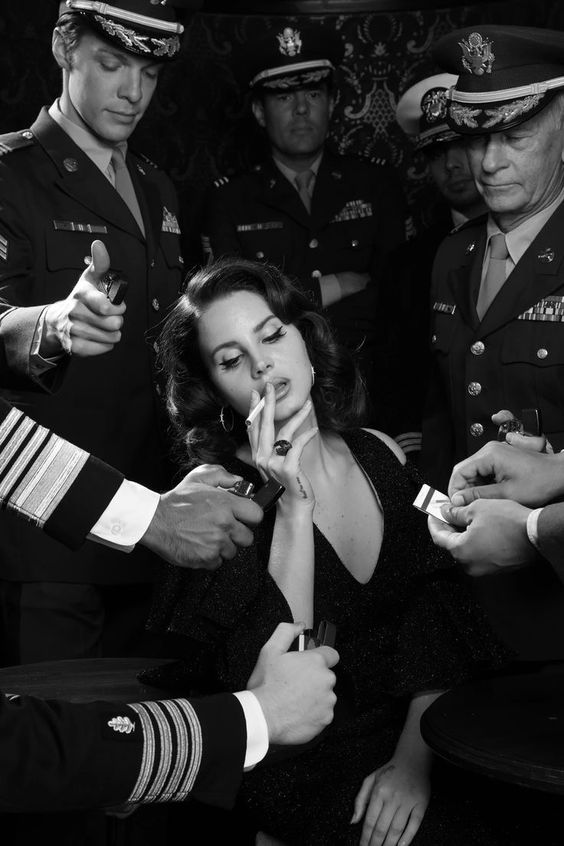
It stands to reason then that Lana Del Rey should do a cover of Buddy’s Rendezvous. Stately Hollywood glamour? Small hours and noirish? Slo-motion melodies unravelling like shook-free curls at midnight? Her version, of course, totally flips the perspective and that’s a big part of the appeal. Released as a one-off 7″ as part of the deluxe version of Chloë, it remains a sought after element of Del Rey’s expansive and exquisite catalogue.

I’m not sure of the officialness of the track below, but some enterprising and technically-minded public servant has produced a version with both Misty and Del Rey duetting on it. It seems to take FJM’s original backing track, leads off with Lana’s breathy vocal and by the end of the first verse has brought two idiosyncratic vocalists onto the one record. It’s clever and smart-arsed, but more than anything, just sounds terrific.

Buddy’s RendezvousLana Del Rey and Father John Misty

*For the record, as much as I love the quirkiness of this ‘duet’, I think FJM’s original is the superior version. You should check it – him – out forthwith.

Cover Versions, Gone but not forgotten

Don’t Argue, Buster!

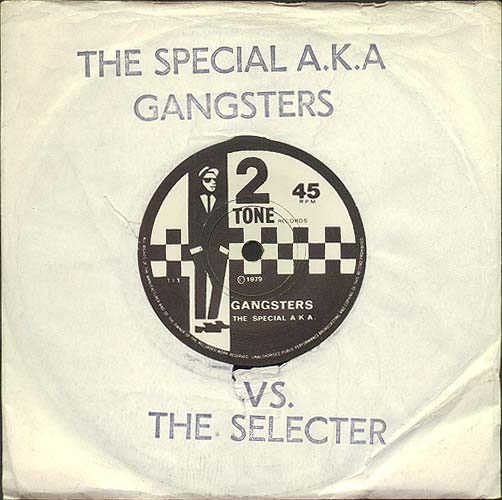
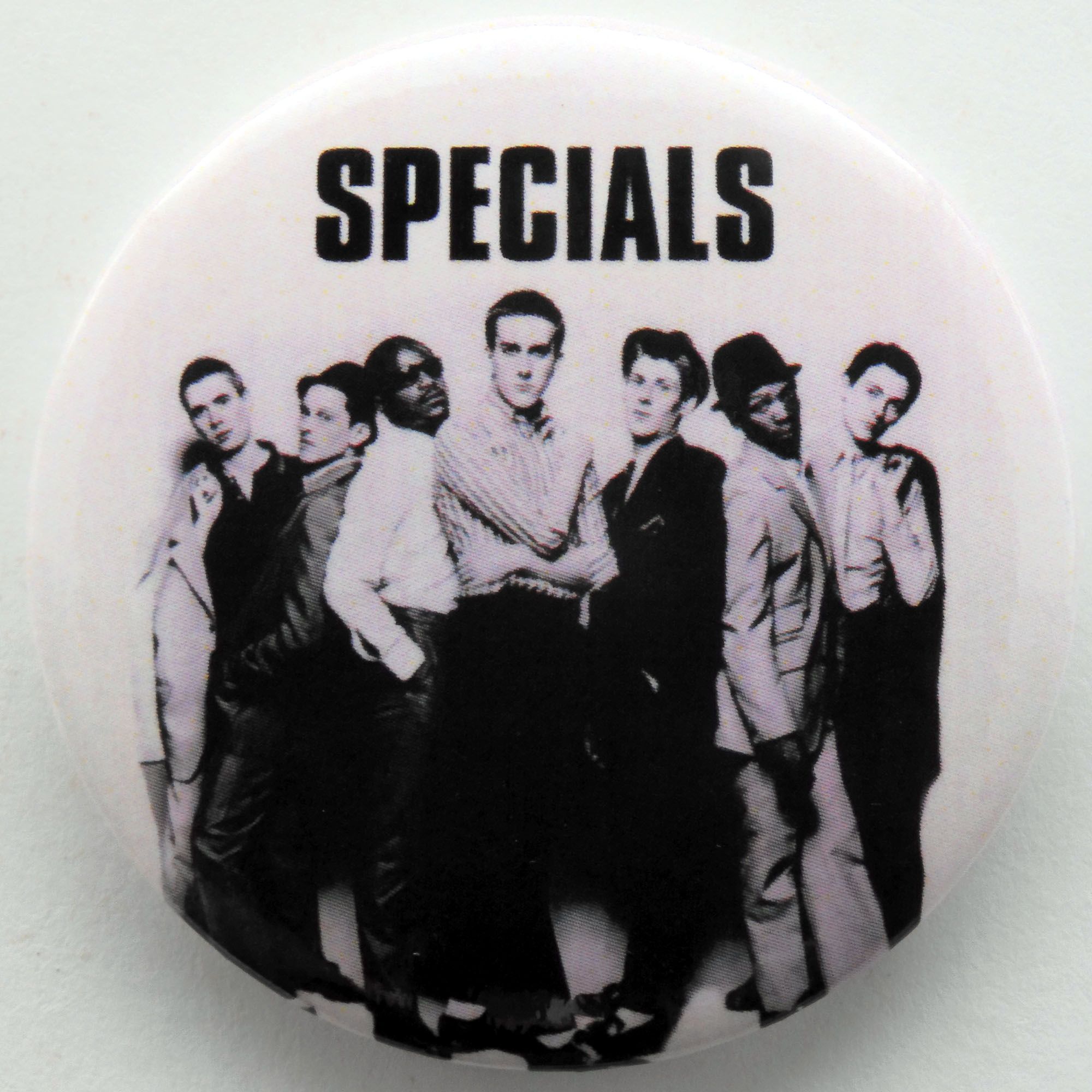
Gangsters by The Specials… (or Special A.K.A., to give them their full original name). It’s just about the most perfect distillation of its times. Punkish and idiosyncratic with a generous nod, in both sound and vision, to what had gone before, it served not only as a stall-setter but a rallying cry for 2-Tone and the many brilliant things that would shortly follow on the label. Specials’ release number one…2-Tone release number one…what an entrance.

The Special A.K.A. Gangsters

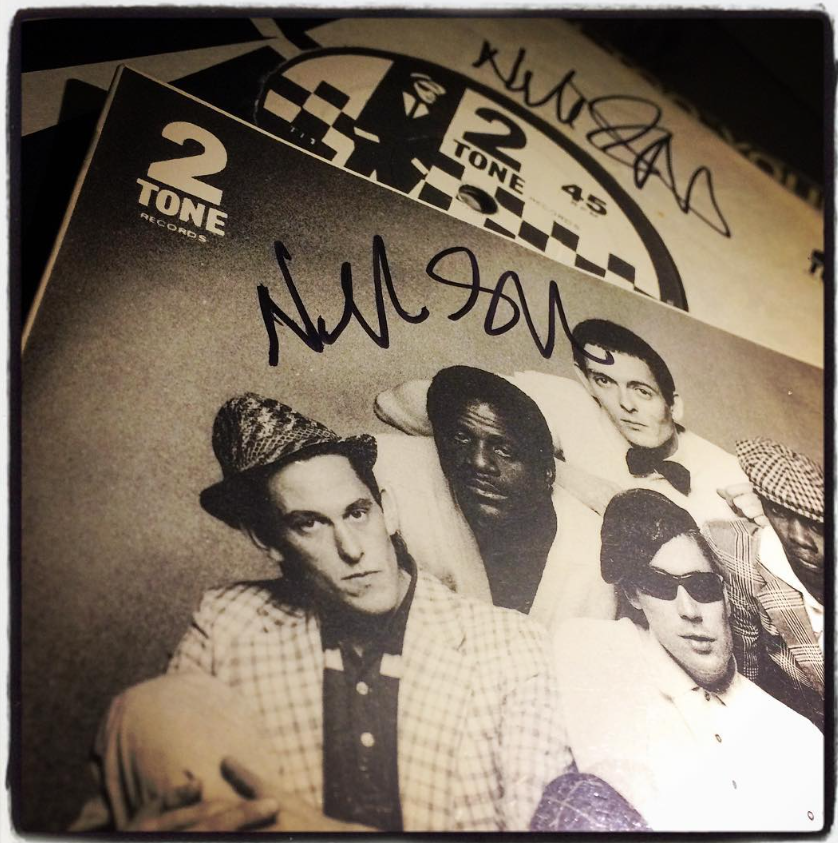
I once asked Neville Staple to sign my copy of Gangsters. My copy isn’t one of those first few thousand hand-stamped ones – of course it’s not, I was only 10 when it was first released and I wasn’t yet in the habit of skanking at 2-Tone shows where I might’ve bought one, but my pocket money stretched to a 7″ single every now and again and in amongst the Madness and Beat releases that I did buy at the time, I somehow also ended up with a copy of Gangsters, housed in the iconic 2-Tone Walt Jabsco sleeve, which no doubt attracted my magpie eyes and fertile young mind when browsing the racks of John Menzies in Irvine Mall.

Anyway, Neville.

He was appearing at Seaside Ska, an annual festival I was involved in the promotion of. I’d asked him pre-show if he wouldn’t mind signing a couple of my Specials singles and he suggested I drop in to his dressing room for a chat at the end of his performance and he’d sign them then.

Post-show, I rapped on his dressing room door.

Joost a minute, moyte,” came the shout from behind the cheap plywood exterior. And then, almost immediately, ‘S’all roight…joost coom in.”

Neville was standing in a pair of large white Y-fronts and, apart from the pork pie hat atop the dreads and the heavy gold chain around his neck, nothing else.

Where did you get that blank expression on your face, as someone once sang.

At least, I hope I managed to maintain a blank expression. I’ve walked in on musicians doing the pre-gig pray/huddle thing. I’ve walked in on smokers, tokers, sniffers and snorters. I’ve even walked in on tribute bands and their tribute groupies. Oh yes I have. But until Neville, I’d never met one of my favourites in their underwear. Not all heroes wear capes, they say, but I can reveal that some of them wear large, functional and very clean Y-fronts.

Anyway, he signed the records – ‘That’s moi fave,’ he says of Gangsters, then, looking worriedly over my shoulder, asks to the empty corridor behind me, “Where’s all me fans?” As he sauntered off to find them – still in his Y-fronts – I went off to pack my treasured singles safely into the back of my car.

You’ll need to root around for this – Facebook is your best bet – but there’s an absolutely dynamite video performance of Gangsters on American TV that catches The Specials in April 1980, just as they are hitting their stride. Broadcast by Saturday Night Live (hence the block on YouTube and here on WordPress) it shows The Specials in all their jerky elbowed, suedeheaded and suited up youthful glory. From the opening shot of Neville standing on a staircase, barking the ‘Bernie Rhodes’ intro while brandishing a Tommy gun – can you imagine that on the telly nowadays?! – to his train-track-toasting on the microphone and the rest of the group in total syncopation, it’s just about my favourite archive live video. The energy coming from the screen as the band play it just a touch faster, just a touch more frantic than the 7″ release, could power Coventry for a year.

Standing either side of a hyper-animated Terry Hall, Neville and Lynval Golding provide the metaphorical yin and yang of the performance. One black, one white, Roddy on dark guitar, Lynval playing a light-coloured one, his arms making acute angles between elbow and bicep as he chops into the chords, Roddy’s legs forming obtuse angles as he slides them waaay out to rattle off the twanging punk-a-billy solo. To the side of them, Jerry surfs the organ, directing his band with already unnecessary nods and looks. All that practice, all those live shows as the Coventry Automatics has sharpened them up as neatly as the mohair suits they sport. Behind them, Horace manages to maintain both a solid bass line and tireless dance stance. Beside him, keeping it all together is John Bradbury, his clattering kit sounding exactly like a row of garbage cans that Benny and Choo-Choo have knocked over in the alley while escaping Officer Dibble. I tried to upload a version of it here, but it won’t go. Try Facebook if you can. You won’t be disappointed.

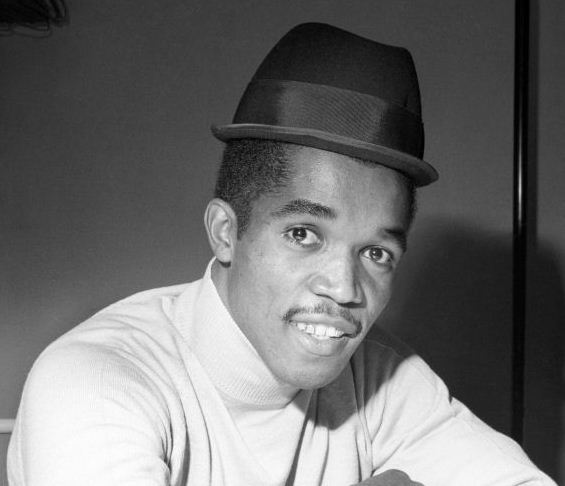
Reggae and ska has a long history of copying, borrowing, twisting and turning tunes, words and styles into brand new things. Gangsters, as you well know, was based on Prince Buster’s Al Capone. From the intro to the toasting, the repeating riff to the sheer excitement emanating from its heavy-set grooves, it’s a modern update on an old classic and something that 2-Tone acts would have a lot of success from. Not that I knew that as a 10-year old.

Prince BusterAl Capone


Cover Versions

A Date With Elvis

One of the side effects, if you like, of the current Oasis revival has been the reshining of the spotlight on the music of 30 or so years ago. Even at the time, it was clear that there were only two or three decent bands on the go. The rest of the (gads) scene was made up of skinny-jeaned, Adidas-clad chancers who’d alighted at Camden Town and grabbed hold of the corduroy coattails of the movement and ran with it. Bands with one word, two syllable names littered the gig listings, the narrower columns of the music press and, with a depressing regularity, the shelves of your local Our Price.

Sleeper. Bluetones. Dodgy. Menswear. Embrace. Oh man! That guy couldnae sing! A couple of bowlcut brothers dressed in everyman denim while continually rewriting Let It Be? Call y’rself Embra-sis and be done with it, boys. It’s all the fault of the record companies. See what people like and replicate, dilute, repeat to ever-diminishing returns, until the whole thing swallows itself up.

Those groups above are maybe even considered the ‘best’ of the lot too. Lest we forget S*M*A*S*H. These Animal Men. The Subways. My Life Story. Rialto. Gay Dad. Heavy Stereo. Marion. Longpigs. Northern Uproar. It’s an endless list, and I haven’t had to Google any of it. Those groups have all had more front covers than I’ll ever have, so really, who am I to comment? Dare I suggest each of them has a decent tune (or two?) hiding amongst whatever passed for a song in the setlists and demos that saw them signed in the first place? Full confession: I have a soft spot for Dodgy. Great players, great songwriters, great way with a harmony and a melody. See Lovebirds for full effect.

In John Niven’s Kill Your Friends, he writes an entire page or more filled only and entirely with the names of Gallagher slipstream-riding bands, most of whom never got beyond third on the bill at the Camden Falcon and demo stage, yet; ‘bands that, for a brief, tiny window, were surely going to be bigger than The Beatles. Now, when I handle these neglected, dusty objects, I sometimes feel that I am handling nothing less than the atrophied, fossilised remains of someone’s dreams’.

Ouch.

So, yeah, Oasis have gate-crashed the contemporary and millions of folk are either reliving their teens or, like my own teenage son, blagging their way into the stage-front standing area, Pep to the left, Kamara to the right, and fulfilling their dreams by seeing them live for the first time. Good luck to ’em all. I can’t wait for the next generation of Noel-inspired songwriters to start seeping their way onto Spotify.

Sleeper but.

There was a music press-coined term used to describe the anonymous males who played behind their more photogenic – and female – lead singers. Sleeperbloke. Skinny-jeaned, Adidas clad, some Fred Perry on display, maybe a Fila track suit too. The drummer was usually pretty watchable, in a Clem Burke sort of way. One of them would have a really great haircut, the sort that you’d look at in the street and think, ‘he’s in a band’.  One of them presented an image so beige they should’ve been dumped by the rest of the group at the first opportunity (but his dad owned the van though, so, y’know…). He was quite possibly the lead singer’s boyfriend and there he was on TFI Friday, barre chording grimly while the cameras shot his short-skirted girlfriend from the ankles up, watching on helplessly as she entered a whole new orbit of hipper boyfriends and short-lived fame.

SleeperWhat Do I Do Now?

Sleeper came and went and passed me by. Nnnahh. Blondie-lite and inoffensive, I had no need for them. But a good song is a good song is a good song, and What Do I Do Now? might well be their greatest (only great) moment. Sure, it has terribly breathy vocals – you can see Louise Wener and her big, brown, doe eyes giving you the come-on as you listen – and it’s got a burbling guitar break that sounds as if it’s playing at the bottom of the North Sea, but it’s a proper story song, of a relationship breaking down and how the two protagonists deal with it.

None other than Elvis Costello thought highly enough of it that he recorded his own, pared-down version. He turns it from a fizzing and clattering indie-rock track into a waltz-time acoustic ballad, his voice close-miked and enunciating perfectly the vocals that the song’s original singer wasn’t quite able to do. His vocals, reedy and high, gulping and low, perfectly toned and pitched, are brilliant on this.

Elvis CostelloWhat Do I Do Now?

Tore up all your photos, didn’t feel too clever

Spent the whole of Sunday, sticking you together

Now I’d like to call, but I feel too awkward

Some things need explaining, no-one told me it was raining.

Good lyric, that.


Coming never: Elvis Costello Sings The Greatest Hits of Britpop.


Cover Versions, demo, Get This!

Page-Turners

I’m re-reading Haruki Murakimi’s The Wind-Up Bird Chronicle just now. Along with Stephen King’s The Stand, it’s become something of a summer holiday tradition; long novels that require patience and time are best left for the days when you can neglect all other duties and fall freely into the pages. The weekend just gone was, as you know, pooled in fantastic sunshine and properly Mediterranean temperatures – perfect reading weather, as it goes. For reasons we’ll come to, no reading was done on Saturday, but I awoke early on Sunday – with more than a shade of a hangover – and plonked myself at a decent spot in the garden and, neglecting all household and husbandry duties, continued with where I’d left off in The Wind-Up Bird Chronicle. If you don’t know the story, it’s set in early ’90s Japan and follows the existential ups and downs of a lawyer’s assistant, Toru Okada. There are lost cats, missing wives, mysterious women, strange dreams and uber-violent flashbacks to the Japanese army in WWII. Told in 3 parts, I’m currently about a third of the way through, in the middle of Part 2, and although I know how the story goes, I’m enjoying re-reading Murakimi’s poetic and slow-paced way with words. Less than five minutes reading and you’ll find yourself sucked straight into the storyline – and that’s the secret to a good book.

At some point, my eyelids grew heavy and I put the Kindle to the side to ‘rest my eyes’, as my dad said before me. The toils of the previous day had caught up with me and I was soon in a deep and unflattering sleep, slouched awkwardly on the garden furniture by the back wall in full view of any neighbours who might have been looking. I’ve no idea how long I was out for (ten minutes? Half an hour? An hour or more, even?) but the only reason I woke up was because a fat dollop of rain had slapped me square on the forehead. Initially I thought it might’ve been a bird (gads), then maybe a drip from the leaf of a plant above my head, but no…it really had started raining. It was still warm, but in the time I’d fallen asleep, the sky had turned from spotless Azurian blue to dappled slate grey. Against the backdrop of the dulling sky, five midges hovered crazily at a forty-five degree angle from my resting head. I watched as they bashed wildly into one another, scattered rapidly then regrouped again, like a tiny (but no less deadly) squadron of Apocalypse Now helicopters. Just as I’m thinking that they’re sizing up both me and my alcohol sweats, from outta nowhere, a wasp streaked towards the midges. Zzzzeee-owww! Like a zip opening up the sky it flew rapidly to the centre of the five insects. Immediately they scattered, and when they regrouped there were just four of them, back in formation, hovering crazily and back to bashing into one another. Then! Zzzzeee-owww! The wasp again! Scatter…regroup…three midges left. It’s the circle of life, playing out right above my head. As I get up to begin packing away the cushions and things I don’t want getting wet, the three remaining midges scatter somewhere into a tree, a Mexican stand-off between wasp, human and midges temporarily averted.  I start to wonder – does this sort of stuff play out above our heads regularly? An insect Star Wars saga that can only be seen if you stop, look up and pay attention? Maybe it does. Maybe I have too much time to think. Or maybe I was still half-cut from the Saturday night.

Ah yes, the Saturday night.

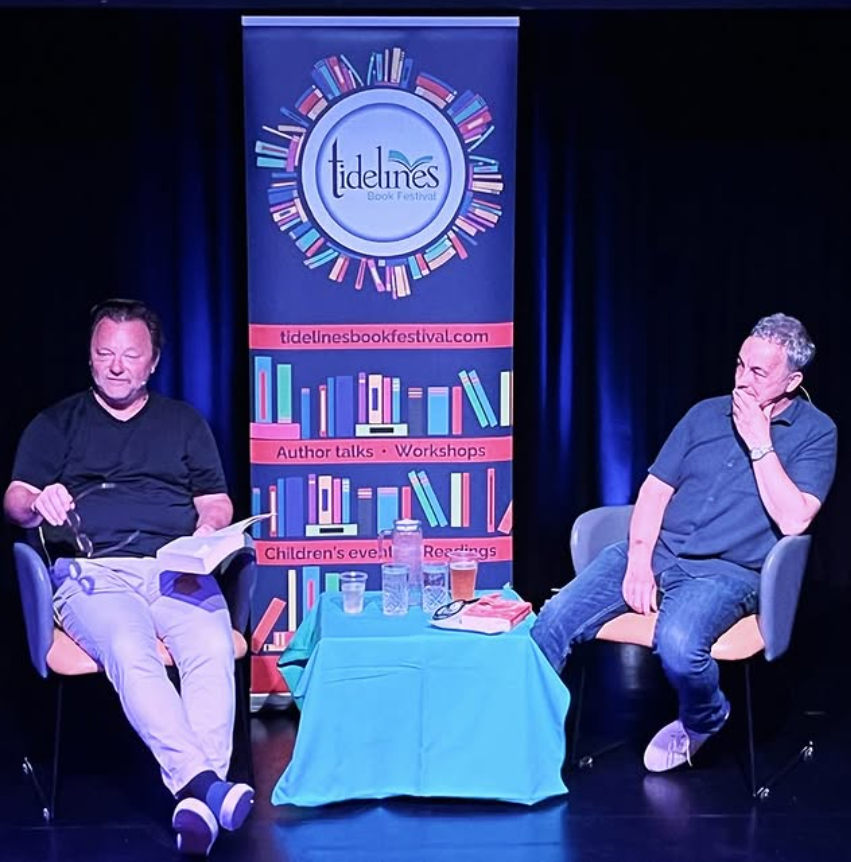
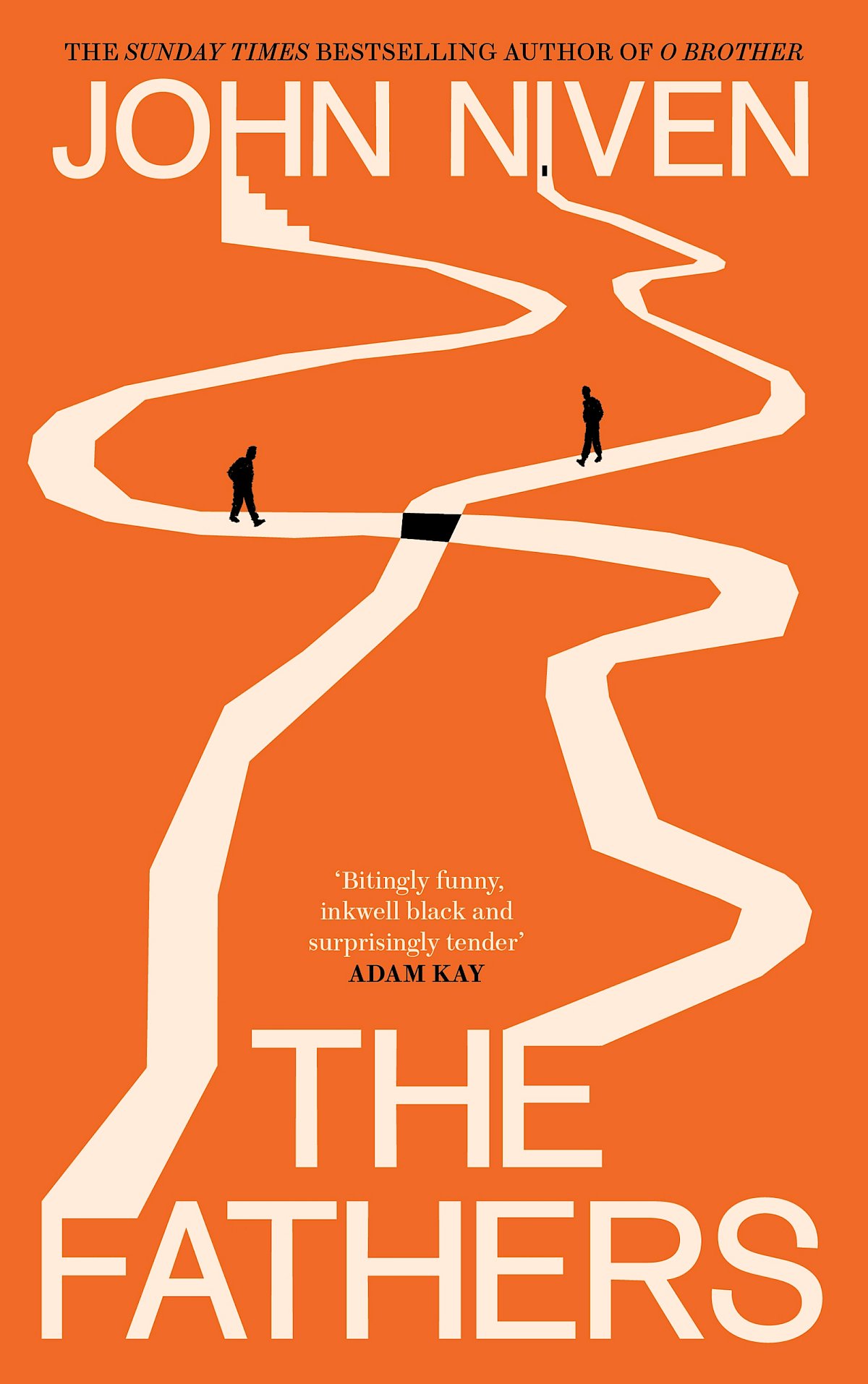
Writer, bon vivant and quick-witted antagonist John Niven was back in his home town of Irvine. Booked as part of the town’s Tidelines Book Festival, it was to be the opening night of a book tour to promote his new novel, The Fathers and he’d asked me if I’d chair the event. “You’ll be great,” he said. “It’ll just be us, talking about my book and shit. S’easy.” A proof copy of the novel duly arrived and armed with a highlighter pen and a stack of post-it notes, I jumped right in.

The Fathers tells the story of two dads who meet outside the maternity hospital as their respective partners give birth to two sons. One dad (Dan) is affluent, socially-conscious and successful (if bored) in his job. The other (Jada) is a ned, a bam, a ne’er-do-well with one eye permanently scanning for opportunity, the other forever looking over his shoulder for trouble. The two protagonists’ paths cross, the story takes a (very) dark turn (we’re reading a John Niven novel, after all) and things begin unravelling from every direction for all concerned. It’s a real page turner, as it turns out. It’d be ideal material for a three or four part TV series, something that is already being discussed, John tells us.

Very quickly I was highlighting and bookmarking words and phrases, whole paragraphs, entire pages of perfectly-scribed text. It struck me immediately how brilliantly evocative the writing in it is.

The air so fresh and cold that all you could do was sip at it.

A mouthful of ruined dentistry, of mixed nuts and raisins wreathed in blue smoke. 

If you’re a parent you’ll recognise the terror Dan feels when first putting baby and car seat into the car for the drive home from the hospital, a moment in time perfectly captured in measured prose. Or the moment when Jada bonds with his son, ‘his wee rabbit heart‘ beating fast against his chest. When writing from the perspective of Jada, Niven’s writing is laced with acerbic Scottishness.

‘Hey, some cun-‘ he remembered the baby, ‘some bastard’s goat tae pay fur aw this!’

‘Still, wi’ a wee boy, you’ve only the wan cock tae worry aboot, eh?’

If you’re from these parts, you’ll absolutely recognise the people who deliver those zingers.

Given John’s background in the music business, you’ll maybe spot one or two hidden references to groups or songs. A Teenage Fanclub lyric leapt off the pages at me. Likewise a Grant McLennan line. There’s even a nod to Status Quo at one point. The proper, loud ‘n heavy ’70s Quo, of course. You wouldn’t clog up a brilliant piece of writing with a reference to Francis ‘n Rick’s parody years, would you?

And it’s all written from experience. Dan lives in an area of Glasgow familiar to both author and reader. He uses his Notes app on his phone whenever Jada says a line that Dan might be able to crowbar into the script of the TV show he works on. As John says on Saturday night, a writer is always writin’…the reason too why this piece you’re reading has seen the light of day. How can I write about that? I was thinking afterwards. And here it is.

John Niven is a very funny guy to have at an event. He can hold court unbroken for an hour, easily. I had planned to structure our chat around some of the points above, but, of course, when John Niven is in the room, there are no plans. My notes were left untouched as Niven rightly remained the centre of attention, reading aloud sections of rib-tickling prose from the book, the audience groaning and gasping at the appropriate parts. My mum – the same mum who’d complained about every second word in Bob Mortimer’s novel being the ‘f’ word (her copy is now in Irvine’s Cancer Resarch charity shop) – queued happily for a signed copy of The Fathers at the end. Quite what she’ll make of ‘gobble’ and ‘dung funnel’ is your guess as good as mine.

The Fathers is a terrific, contemporary – and very Scottish – novel. Like The Stand it too is long enough to fill out a week or more in the sun. And like The Wind-Up Bird Chronicle, it too is set in three parts. I reckon I’ll be returning to The Fathers on an annual basis. I hope that hoped-for TV adaptation does it justice.

The Fathers is published this Thursday (17th July) by Canongate. You must read it.

Token Music:

Echo & the BunnymenRead It In Books

The Teardrop Explodes – Read It In Books

Two versions of the same song, co-written by Ian McCulloch and Julian Cope then recorded by their respective groups after the pair of them stopped working together. It’s like a post-punk Drifters. Which one’s the real deal?! They’re both great; the Bunnymen’s version is circular, nagging and insistent, an updated Dancing Barefoot for the switched-on, the Teardrops’ take swirly and Nuggetsy and garagey, an updated Iggy/Stooges for mushroom connoisseurs. Essential, obviously…just like The Fathers.

Check John Niven’s socials for details of his book tour, coming to a town near you right now!


Cover Versions, Hard-to-find, Studio master tapes

House Champion

There’s a decent case to be argued for Paul Weller being England’s equivalent to Neil Young. Both started young and both found instant success with their first real bands – Buffalo Springfield in Young’s case and The Jam in Weller’s (like you didn’t know already). Both these bands released era-defining tracks and tapped in to the consciousness of youth. And just as Young left Buffalo Springfield to forge a solo career packed full of instantly-regarded classic albums, side steps peppered with choice collaborations and sudden left turns towards new and unexpected musical directions (the ‘Ditch Trilogy‘, Trans), Weller too defiantly broke new ground, alienating some fans, richly rewarding others, side stepping his exquisitely-shod feet through the decades with interesting and quirky one-off collaborations and the odd soundtrack thrown in for good measure. Weller, like Young, lives, breathes and drinks music. He creates seemingly every day, tours regularly and (unlike Young nowadays) releases albums with a high quality control and impressive frequency that suggests if he doesn’t get them all out of his system as and when they’re ripe for recording, he’ll wither and die. Prolific? Paul Weller is the very definition of the word.

In 1989, the Style Council was coming to an end. The law of diminishing returns coupled with a changing musical climate saw to it that only Weller’s most enthusiastic fans were still with him. The pop charts may have been filled mainly with total rubbish (Jive Bunny, New Kids On The Block, Jason Donovan) but the underground was bubbling up nicely. Happy Mondays and Stone Roses were a Joe Bloggs flare flap away from ubiquity. Effect-heavy guitar bands were filling a post-Smiths void. Acid house and electronic dance music was soundtracking sweatboxes and switched-on clubs, yet still to be sanitised for the mainstream.

Weller, ever willing to embrace the new and the now, and with a perma-finger totally on the pulse of the zeitgeist, was heavily into Chicago house music. He’d heard and loved Joe Smooth’s Promised Land and recorded a faithful reworking of it before even Joe Smooth’s original had a UK release date (eventually releasing it on the same day). A song of unity and hope, it’s no different in sentiment to, say, Walls Come Tumbling Down, but whereas that was a Hammond heavy gatecrashing crie de guerre, Promised Land rode the crest of an E-kissed rolling and tumbling 808 wave. Blind loyalty pushed it to number 27 in the charts, but beyond that it failed to grasp the imagination. Hindsight of course has shown it to be a terrific mark in time.

Style CouncilPromised Land

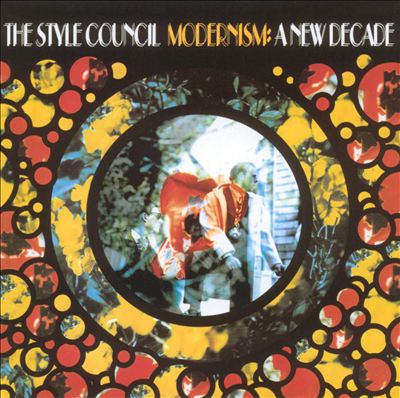
It was almost inevitable that when the Style Council presented Modernism: A New Decade to Polydor, the label would baulk at its hit-free content. There was no angry and spitting politico Weller, no Euro-continental jazz to soften the edges, none of the classic songwriting they’d come to expect from their talented young charge (Weller being just 30 at this point). Modernism: A New Decade was a pure house album, filtered through English notions and sensibilities, but a pure house album all the same. It favoured programmed rhythms and sequenced electro basslines over, y’know, actual bass and drums. It flung the guitars away and replaced them with weaving and shimmering synth lines. It was long and meandering with chants and shouts in place of a more traditional approach. Toundly rejected by Polydor, it would remain in the vaults for 20 years, only seeing the light of day when the all-encompassing, warts ‘n all Style Council Box Set was released at the end of the millennium.

And yet…

Modernism: A New Decade has its moments. Hindsight will show that its creator was frustratingly ahead of his time, that eventually Joe Public could and would groove to machine-driven, guitar-free music. Hindsight will show too that he really meant it, maaan. Just as he’d tackled the spiky Funeral Pyre with bile and aggression beforehand, and just as he’d go on to knock seven shades of shit from his guitar on Peacock Suit, Weller approached Modernism with nothing less than 100% of his cock-sure conviction.

Love Of The World‘s morse code intro and gospelish diva on backing duties…Sure Is Sure with its Italo house piano and Rotary Connection stacked vocals…a nascent That Spiritual Feeling, a track Weller would re-record as a solo artist – and a track that still finds a place in his live set to this day, usually as a refrain to the whacked-out and slightly psychedelic version of Into Tomorrow that normally closes his set, the proof – if it were needed – that its writer holds the material in high regard and that we, the listener, just need more time to appreciate it all.

The World Must Come Together is the perfect example.

Style CouncilThe World Must Come Together 

Its message of unity and hope could’ve been written specifically for the times we currently live in, and Weller’s high and soulful vocal goes a long way to conveying its idea. Channelling his inner Marvin Gaye, he chants the title in the chorus, slipping into falsetto in the verses. Synthesised strings sweep across its clattering and steam-powered rhythm. Electro hand claps punctuate the end of lines. Sampled spoken word pops up in the gaps. A jangling Roy Ayers-ish vibraphone provides the break, but we’re soon back to the titular refrain, a parping, recurring hookline coming and going as the textured cadence of the beat rolls ever forward. It’s a bit of a slow burner, but I’d suggest that, if this were to appear as a new track on a Weller solo album next week, it would be roundly applauded.


Cover Versions

S’a Twin Axe Attack!

There’s a Trashcan Sinatras video clip from many years ago that at least one member of the group would like to make disappear, so in the interests of maintaining a healthy friendship I’ll refrain from uploading it here. Google and YouTube is your friend though. The video is filmed at Japan’s 2009 Fuji Rock festival and features Paul and John from the band being asked their ideal festival line-up. The pair of them have evidently been enjoying the relaxing qualities of every musicians’ favourite – the jazz cigarette – and, grinning pleasantly and enunciating in a subtitle-necessary Ayrshire brogue, they reel off a list of cool and not so cool bands that would make for the ideal festival. “We would have King Crimson. Super Furry Animals. Supertramp! Sex Pistols…Radiohead…The Fall. The Band! We would huv The Band! Bob Dylan! And us!” It’s a very funny minute or so and you should definitely go and seek it out. Your week will be better because of it.

Of all those bands listed, it was Supertramp who popped up in my social feed this week, bizarrely enough.

We’ve recently put on a gig with Nerina Pallot. You might remember Everybody’s Gone To War, her one bona fide Top 20 smash hit from 2006? Nerina regularly fills places like the London Palladium and certainly doesn’t need to be putting a band together to play one-off gigs for 100 people in Irvine, but there she was. Needless to say, she was devastatingly brilliant, switching from electric guitar to acoustic to keys and back again, the stories between the songs just as entertaining as the music she played. I watched one man in the audience sit gape-mouthed for the entirety of her show, pinching himself that he was 10 feet from his favourite-ever artist…in our living room-sized venue…in his home town. Quite a thrill for all of us.

But back to Supertramp.

Over the Easter weekend there, Nerina shared one of those multi-cam videos of her playing all the parts to Supertramp’s Take The Long Way Home. From first clanging gothic piano chord and tension-building strings via the sweeping, sighing melody and none-more-seventies FM rock guitar solo on the vintage SG to the whispered ending, it’s a terrific version of a song I’ve (shhhh!) long held affection for.

In a world of Smiths and Bunnymen (and even Hipsway and Love and Money), you just couldn’t admit to liking Supertramp. That Breakfast In America album, ubiquitous and airbrushed and gazillion-selling as it was was just far too polished for a quiff-topped bedroom guitar player who was far more concerned with the angle of the jangle than, y’know, the art of crafting a song. The singer’s helium-coated voice was plain weird and didn’t do much to convince anyone I knew to listen closely, and the proggy/AOR stylings of the group were the very antithesis if what it meant to be a teenager in the mid ’80s…yet there they were, hanging around the album charts, selling gazillions of records and getting globally successful. Though no one would admit to liking them.

You could take a chance on Supertramp via Irvine Library, and take a chance I did. I probably asked my mum to bring Breakfast In America home after work one night (she worked there) lest I be seen with something as unhip and middle of the road on the long walk home (long way home?) through Irvine Mall. Take The Long Way Home was the one that got me. Not The Logical Song. Not the title track. And not Dreamer or the irritating It’s Raining Again (not on the same album, I know, I know…) Take The Long Way Home just stuck. Swathed in melody and tuneage, it sounded like a heady marriage of solo Lennon and solo McCartney, getting together for one last hurrah, the song’s descending/ascending tour de force of melody and melancholy the equal of Abba at their peak. The verses are hopeful, the choruses resigned, the production supreme. To these ears, it is, like Gerry Rafferty’s Baker Street and Right Down The Line, a humbly accepted stone cold AOR/FM classic. (See also Rooms On Fire and Edge Of Seventeen by Stevie Nicks…Kim Carnes’ Bette Davis Eyes…Carly Simon’s You’re So Vain...AOR clearly has its moments.) The singer from Supertramp though. That voice just won’t do…

…which is why Nerina’s version is so goddam essential. She breathes new life into a song that’s lived inside of her since the days of mix tapes and spongey orange headphones attached to the Walkman and replicates the entire thing with the sort of elan that only she can muster; majestic piano, head-swirling Wurlitzer, mellifluous bass, gorgeous multi-stacked vocals…and a twin axe attack of sorts. I do believe you’ll like it.

Watch out too for Supertramp headlining when the Trashcans get to curate Meltdown.

Meltdown indeed.

Cover Versions

Something Good

Stevie Wonder’s trajectory is quite the thing. From Little Stevie Wonder to Motown hit machine, synth pioneer and auteur of funk to socio-political commentator, God-fearing introspective soulster and syrupy ’80s balladeering duetter to his undisputed status as one of the greats, his vast (and decidedly patchy) back catalogue has the lot.

Patchy it may be, but his run of albums in the early ’70s, from ’72’s Music Of My Mind to ’76’s Songs In the Key Of Life is a collection of hard-hitting, hit-packed and ideas-filled records matched only by David Bowie’s outpouring in the same spell. We tend not to say these sort of things while the artist is still with us but wait for the clamour when Stevie passes and that incredible run – five albums in four years – will be quickly elevated to Essential Album status.

What’s all the more amazing is that during this time, Stevie was writing not only for himself but for others too. He threw Superstition in Jeff Beck’s direction before immediately realising the error of his ways and (much to Beck’s annoyance) reclaiming it for himself. He produced an album for his ex wife, Syreeta Wright, worth seeking out if only for ‘Cause We’ve Ended As Lovers; heartbreak laid bare on record (and a track that Jeff Beck would go on to reinterpret to devastating effect).

And he wrote Tell Me Something Good for Rufus.

Have a watch at this smokin’ hot live version, from American TV.

Despite Wonder being nowhere near the record, it still bears all the hallmarks of prime time Stevie; whipsmart wakka-wakka clavinet, inventive and tuneful drumming, space between the notes for the funk to brew and on top of it all, a singer who packs a proper soulful punch.

The clip above is outrageously brilliant. For one, it’s played totally live and in the moment; no overdubs, no lip synching, not a bum note in earshot. Chaka Khan sits in the pocket, metaphorically and visually, occupying the space between the guitar players, a pocket dynamo in era-defining flared jeans, her sparkly top shooting laser beams of studio light straight outta the TV screen and into young and immediately hypnotised American minds. But don’t let the clothes and the hair and the looks detract from the fact that she tackles the vocal with everything she has; gritty and low, octave-jumping, quiet and sultry, skyscrapingly dramatic – the whole gamut of soul, in other words.

The players flanking either side of her swagger with a pure coked-up arrogance. The wild-eyed guy on voicebox is playing dripping wet funk on a Fender Musicman – Fender’s budget-friendly, entry-level electric guitar, his high-waisted trousers meeting the point where his shirt begins to button. The bass player, all bicep and lip curl and eye-catching crucifix (S’OK, mom and pop, I’ll have her back before midnight y’all) plays with pure instinctive feel. He knows he’s good too. The self-assured heavy breathing in the pre-chorus is, seemingly, right up his particular street. The bass face he pulls and those little self-satisfied gurns he does when he drops in a particularly funky line completes the look. His hands barely move, yet the groove thuds out in simpatico with the tight but loose drummer in dungarees. Either side of the drummer, the keys players drive it forward, clavinet morse-coding the melody, Fender Rhodes holding down the tune. And on top of it all, Chaka, delivering the sort of blistering vocal performance you’ve maybe only heard up until now on a Family Stone track, or perhaps that PP Arnold TV performance where she duets with Steve Marriott on that great ’68 performance of Tin Soldier. Seek it out…

So, yeah, it’s a great performance of a great song. A few months beyond this, Rufus would become Rufus and Chaka Khan, testimony, should it be needed, that the vocalist was perhaps the strongest piece of an extraordinarily soulful and funky jigsaw.

Cover Versions, Get This!

I Put A Spell On You

I know nothing about Chappell Roan. I doubt I’m slap bang in the middle of her? their? demographic anyway…but I do know the one big song. It was ubiquitous for a bit there and there’s no way you haven’t heard it and fallen for its hooky charm either. Pure pop and catchier than that flu that’s been doing the rounds recently, it hangs its hookline on its spelt out titular refrain. ‘Aitch Oh Tee-Tee Oh Gee Oh-oh, You can take me Hot To Go-oh!’ It was the first great example of spelling in a pop song since Gwen Stefani Hollabacked to tell us that, indeed, that shit was bananas, Bee-Ee-En-Ae-En-Ae-Ess, back in 2025.

It’s nothing new, spelling in songs. Otis and Aretha, of course. And The Kinks. And plenty of others. From Van’s gruff Northern Irish burr wrapping its way around Gloria (“Gee-Ell-Oh-Are-Aye-Ae“) to Patti’s wired and speeding East Village take on it; From Weller’s angry young punk spitting of “Ae-Pee-Oh-Cee-Ae-El-Wy-Pee-Ess-Ee-APOCALYPSE!” at the end of ‘A’ Bomb On Wardour Street to Faith No More’s long-shorted and muscular ‘Be Aggressive! Bee-Ee! Aggressive! Bee-Eee-Ae-Gee-Gee, Are-Ee-Ess-Ess-Eye-Vee-Ee!‘; from Al (then Edwyn) serenading us with ‘Ell-Oh-Vee-Ee Love‘ via little Johnny Thunders’ drawling nod to The Shangri-Las, ‘When I say I’m in love you best believe I’m in love, Ell-Yoo-Vee!” to Hall ‘n Oates’ blue-eyed ‘M-E-T-H-O-D-O-F-L-O-V-E‘, a bit of spelling goes a long way to providing the hook. Hot Chip employed the technique on Over And Over. Len’s Steal My Sunshine includes the line, ‘L-A-T-E-R that week.’  None other than the cryptic and idiosyncratic Mark E Smith sang about a ‘C-R-E-E-P’ when the song demanded it. Even our greatest writers are under the, eh, spell.

Which brings us to Warpaint.

The oil-on-water, slow dissolve approach they take to their own Billie Holiday is supreme.

Bee-Eye-Ell-Ell-Eye-Eeh-Aitch-Oh-Ell-Eye-Dee-Ae-Wah-ay.

It’s a sparse track. Cleanly picked guitars, some ambient, soft-touch bass, understated keyboards, a gentle snowfall of toms and cymbals, the overlapping vocals stirring the dusky, twilight air around it. That’s the work of a moonlighting John Frusciante, manning the desk and capturing the band exactly as they’d hoped. 

When the singing starts on the verses proper, you – as a pop scholar with an A+ in every one of your pop scholarly exams – will have immediately noticed they’re singing the verses to Mary Wells’ My Guy. But whereas Mary’s original is all frothing teenage effervescence, rattling along on excitable handclaps and giddy, upwardly climbing girl group vocals, Warpaint take the opposite approach. Theirs is languid and soporific, breathy and downbeat. Nothing you can say can tear me away from my guy, they exhale, with all the enthusiasm of the downtrodden and disenfranchised. If someone were to tell you this was a thinly disguised plea for help in a domestically abusive situation, you wouldn’t be that surprised. Nothin’ you could do cos I’m stuck like glue to my guy. Jeez.

Surely not.

Bee-Eye-Ell-Ell-Eye-Eeh-Aitch-Oh-Ell-Eye-Dee-Ae-Wah-ay.

In comes the refrain again, four voices melded as one, the group inching the song ever forward. Unspooling and unwinding in slo-mo, it stretches for over six sleepy and bleary-eyed minutes, voices drowning in reverb, guitars swimming in chorus and phase, the percussion being tackled with a little more muscle but no less finesse. Disciplined and majestic to the false ending and beyond.

Why Billie Holiday?

Apparently, the lyric was a place holder, the five syllable phrase borrowed from a poster in the band’s rehearsal space and utilised in song until a better set of words was arrived at. Couple that with the appropriation of My Guy and you have the notion of a fledgling band landing on their sound and trying quickly to find their feet. Great record, eh?

Cover Versions

Take It To The Bridge(rs)

At this time of year I feel kinda duty bound to uphold the seasonal theme of Christmas songs, but decent ones that remain underplayed and under appreciated are as thin on the ground as a field full of living turkeys two days before Santa arrives. Who needs the anxiety of trying to appear switched-on and smart-arsed enough in a barely-read blog post when there are floors still to wash, shops still to tackle and dining tables still to be extended?

Me, clearly.

Phoebe Bridgers has made it tradition since 2017 to release a cover of a Winter/Christmas-themed song in the run up to the big day. Released primarily for charitable causes, Bridgers does a neat line in shining a light on – yeah! – the underplayed and under appreciated songs that celebrate Christmas time (or the holiday season, as she more likely calls it.) Now, what I know about Phoebe Bridgers wouldn’t fit on the back of a £1.65 first class Christmas stamp (One pound sixty five!) but I do know that she is a member of Boygenius who played a terrific Beatles-inspired set on prime time US telly a year or so ago. I also know that she’s collaborated with artists as disparate as Taylor Swift and Ryan Adams. And I do know too that she has a voice that can melt even the coldest of hearts in wintertime; honeyed, pure, American. I should really investigate more.

Phoebe Bridgers  – Christmas Song

Bridgers’ Christmas 2018’s offering was this really great take on Christmas Song by McCarthy Trenching (a band from Omaha, not an implausibly named FBI agent who doubles as a front porch strummer from the Blue Ridge Mountains of Virginia). I know even less about McCarthy Trenching than I do about Phoebe Bridgers, but I do know Christmas Song is a cracking wee country heartbreaker, jerky and waltztime, with bar room piano and brushed snare, delicate female backing vocals and an undertow of regret running through it like an electric current. “It’s Christmas, and no-one can fix it,” goes the singer at the end as you sigh into your coffee. It’s a million miles (and several gazillion sales) from Slade and Wizzard…and all the better for it.

Bridgers adds steel drums – or a guitar that sounds like steel drums – to her version; gentle and pulsing and ringing, like a perfect Hollywood snowfall; subtly Christmassy, y’know? Her voice is tender and whispered in the verses, the way the world sounds when snow is falling outside and there’s no one in the street to spoil it. It’s skyscrapingly melodic and rich in the chorus, where she’s joined by a duetting Jackson Browne. Timpanis creep in, aided and abetted by gentle strings, almost apologetic sleigh bells and something approaching a multistacked choir, yet it never goes full blown Christmas. Like the original, it’s all the better for it. If you’re new to this song, I think you’ll like it.


Christmas bonus:

If you’ve never seen it, that Boygenius Saturday Night Live/Beatles-inspired performance is here: