Cover Versions, Gone but not forgotten

Has High Blood Pressure Got A Hold On Me?

American groups – like any number of those Nuggets bands you can reel off in your sleep – or The Turtles or The Byrds (‘animal’ name, weird spelling – coincidence?!?) grew their mom’s apple pie American boy crewcuts out the moment The Beatles first yelled ‘yeah!‘ They adopted the instruments…the stance…the harmonies…everything they could that might align them with the collarless coattails of the hottest act on the planet. And good on them, for using the Lennon/McCartney approach gave the world more great records.

When John Sebastian sat down with his guitar to write a song for his new band The Lovin’ Spoonful, he looked back a year or so for inspiration, to the pop sounds that were already proven to shake and shimmy American teenagers to their core. He didn’t need to look east, across the Atlantic and towards Liverpool. I mean, he could’ve, for there was plenty there that he might chose to cop. Instead, Sebastian looked north to Detroit, to the sound of the Motor City and the hand-clappin’, finger-snappin’ giddy abandon of Motown.

And so it is that Do You Believe In Magic? wafts in on the same chords as Martha Reeves and The Vandellas(Love Is Like A) Heat Wave.

Martha Reeves and The Vandellas – (Love Is Like A) Heat Wave

Other than the chord sequence at the beginning, the two songs are poles apart, of course. The Lovin’ Spoonful come across like grassed-out, close-miked preppy stoners with the knack of making an unforgettable melody appear as natural as breathing.

Martha and The Vandellas crash in with all the urgency of a group who’ve been told that this might be the only record they make. There’s a rifle shot of snare, a cavalry charge of handclaps, deep sea baritone sax that climbs to the surface and punctuates every second beat, a hundred mile an hour poundin’ pianer, a guitar that hammers on the chords like life itself depends on it and a bass line (James Jamerson?) pinning the whole thing to the floor lest it falls off and causes an imbalance on the Richter Scale. And that’s just the first 30 seconds.

Martha introduces herself by gleefully kicking in the doors of pop. ‘Whenever I’m with him, somethin’ in-si-hide…starts to burnin’ and I’m filled with dee-za-hire…

Ah. So it ain’t about the summer weather in Detroit then. No! It is – like a gazillion Motown songs before and since, a heartfelt paean to the joys of young love, when the world’s your oyster and no-one, daddy-o, feels like you do. Holland-Dozier-Holland have captured lighting in a bottle here. Martha is beside herself with excitement and her willing Vandellas are being dragged along in her slipstream. Falsetto ‘Heat Wave!‘ backing vocals ramp it up further. ‘Yeah, yeah, yeah, yeah!‘ they go in the outro, the piano player’s fingers still locked on the groove, the sax player somehow saving enough breath to see his way to the song’s thumping, tumbling conclusion.

Motown may have billed itself ‘The Sound of Young America’, but (Love Is Like A) Heat Wave could be billed ‘The Sound Of Young Motown’ and few would counter that claim. Give it a good listen again and tell me I’m wrong.

A decade or so later, back over this side of the Atlantic, another young songwriter with a magpie approach to creation was cribbing the chords and calls and response that he could twist into his own shapes. That Paul Weller should dig black American pop music is never in doubt; from the version of Wilson Pickett’s Midnight Hour on The Jam’s second album, via the You Can’t Hurry Love bassline that drives A Town Called Malice to the smattering of choice cuts across his b-sides (Move On Up, Stoned Out Of My Mind), The Jam’s frontman knew a well-crafted pop-soul hit when he heard it.

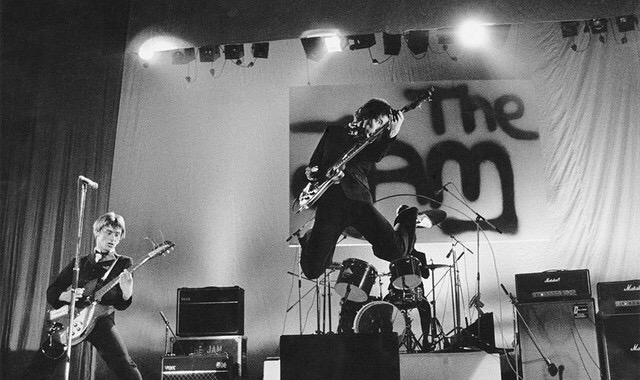
The Jam cut their version of Heat Wave for their fourth album Setting Sons. Maybe they were low on original material. Maybe they just fancied cutting loose. Either way, their ramalama take on Heat Wave closes the second side of the record in good, old-fashioned killer style. Dig it!

The Jam – Heat Wave

It’s the clang of the Rickenbacker…the call and response of Buckler and Foxton, the Vandellas to Weller’s Martha…the incessant pummelling of the drum kit…the vamping piano player…the subtle introduction of a brass section that would soon be far more prominent in the sound of The Jam…but, for now, the sheer, goddammed urgency of it all. Let’s get this album finished and let’s finish it NOW!

Yeah, yeah, yeah, yeah!


* And to answer that titular question: sadly, it has. That’ll be a job in education for ye,
Cover Versions, Gone but not forgotten, Hard-to-find

A Good Start!

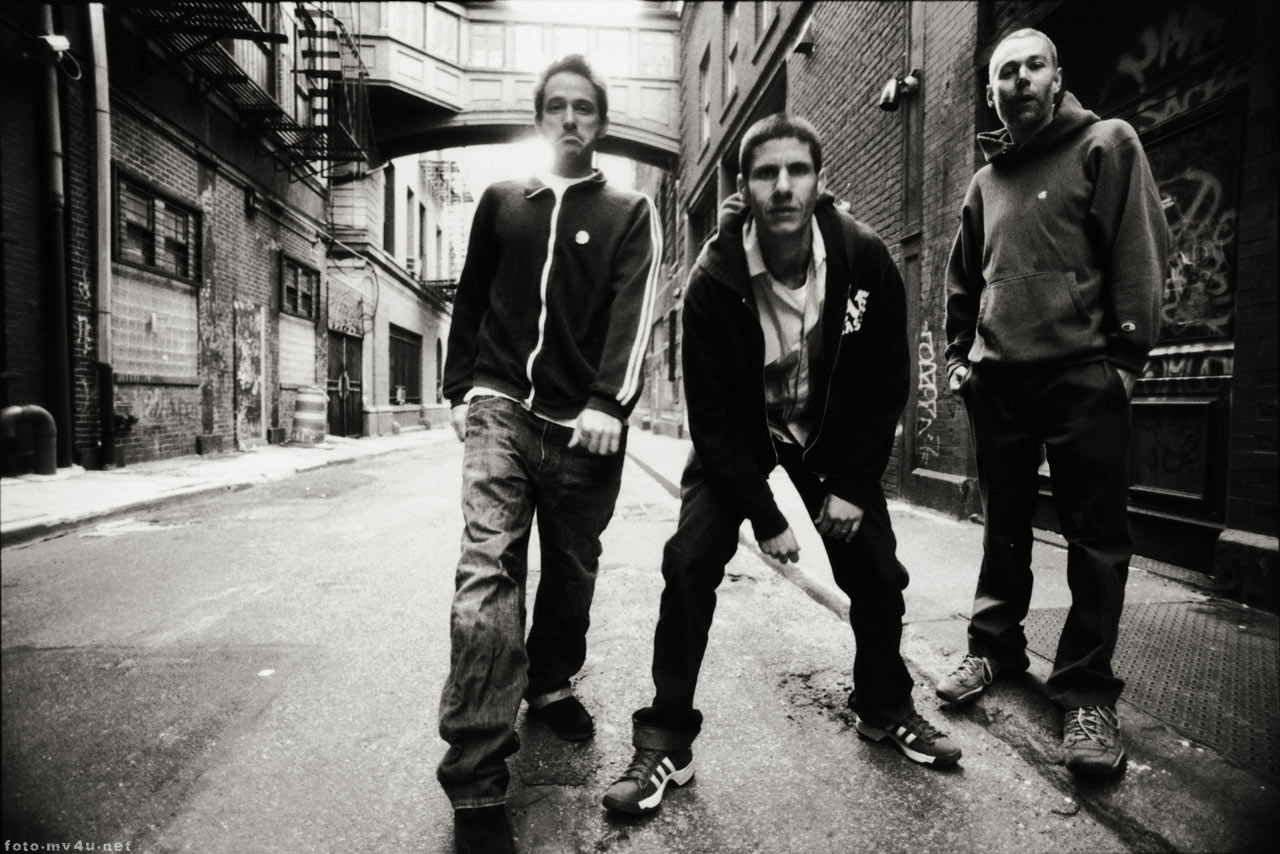
There’s a story that Adam Horowitz tells – kinda preposterous, but totally believable (it’s the Beastie Boys, right?) – where waaaay back in the early days of the Beastie Boys he’s hanging out at a friend’s rather than be at school that afternoon when, from the TV, comes the unmistakable slow ‘n low DIY beats of his group’s own ‘Beastie Revolution‘, the flip side of their debut single Cooky Puss. Somehow, some way, British Airways had picked up on the track and used it to soundtrack a TV advert. Quite what the ad executives were thinking (or were on) by adding the Beasties’ track – lo-fi-Pass-The-Dutchie-as-recorded-by-Lee-Perry – to go hand in hand with an advert for global business travel is anyone’s guess, but there it was. Ad Rock couldn’t believe it. They had to ask for permission, didn’t they?

It so happened that Mike D’s mum had a friend of a friend of a friend who worked for a Manhattan law firm, and so, a young lawyer fresh out of law school and with the bit between his teeth was assigned to take on the Beastie Boys v British Airways in his first case. The four Beastie Boys (Kate Schellenbach was still a part of the group at this point) were subsequently awarded $10,000 each, an astronomical amount for a young person in 1983. Adjusted for inflation, it’s the equivalent of over $32,000 (£30,000) in today’s money. The money would go some way to helping the group establish themselves with decent equipment, accomodation and rehearsal space.

Ad Rock did what any music-obsessed teenager would do: he took himself straight to Rogue, Midtown Manhattan’s music store. He had his eye on a black Rickenbacker, ‘the same one that Paul Weller from The Jam played‘ and had the $250 out to pay for it when, from the corner of his eye, he spied the new-to-market Roland TR-808 drum machine. Dilemma! He rationalised – he had a perfectly good guitar already…all the best, freshest records of the day were built on processed beats…here was his chance to own a real guitar…here was his chance to be cutting edge and adopt the brand new technology of the day…guitar?…beats?…guitar?…beats?… The 808 won out. Serendipitously, it would end up providing much of the backbeat for that first million-selling Beastie Boys album, after which Ad Rock could buy as many Rickenbackers as he fancied. A good decision, as it turned out.

It’s no secret that Beastie Boys have a hardcore punk thing at their roots, but when I first read the story above, I was suprprised that they were fans of The Jam. Of all the guitar-based bands to be into, they’d seem to be the most quintessentially English. The lyrical content, the suits, Weller’s undeniable accent…maybe that was the appeal.

In 2000, Fire And Skill, a tribue album to The Jam was released. It’s an eclectic (ie ropey) album and alongside the names you’d expect to be there (Liam Gallagher, Steve Cradock) were outliers such as Garbage, Buffalo Tom…and the Beastie Boys.

Beastie BoysStart!

Beastie Boys

Their version of Start! is terrific. It’s cut from the same lightly toasted cloth that many of those groovy Beastie Boys instrumentals are cut from. There’s no immediate Taxman-aping thumping bass. There’s no frazzled, trebly guitar solo. There are hardly any vocals. Instead, it’s built on a bed of bubbling Jimmy Smith organ, a woozy melodica playing Paul Weller’s vocal melody, with skittery, hip-hoppish drums and splashing cymbals nailing the groove to the floor. Miho Hatori of Grand Royal labelmates Cibo Matto pops up to sing the ‘if I never, ever see you/what you give is what you get‘ refrain, but other than that, this is Beastie Boys doing what they do best – grooving on a soul jazz soft shoe shuffle for fun and out of sheer respect for the music.

In Dancing Through The Fire, Dan Jennings’ excellent re-telling of the Weller story from pre-Jam to the present day, there’s a story of the aeroplane-averse Weller travelling six hours by car between shows, playing the Beasties’ version of Start! over and over and over again. I hope Adam Horowitz gets to read about that.

Gone but not forgotten, Hard-to-find, Sampled

Big Brown Bag

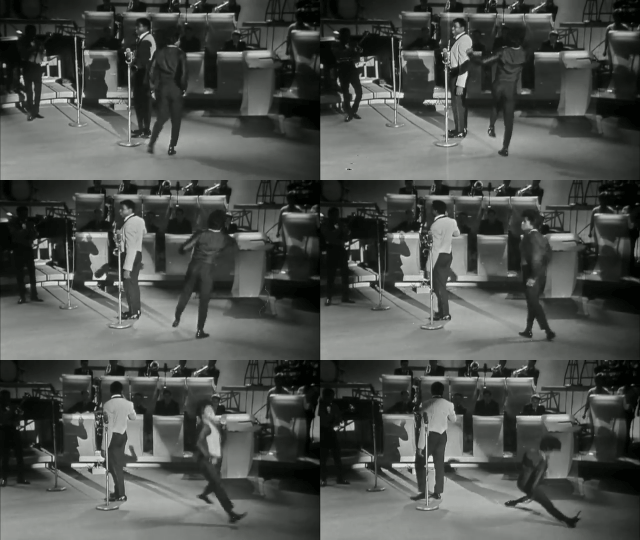
The mid 60s was an extremely fertile period for James Brown. By then he’d moved away from the tear-soaked, down-on-his-knees gospel/soul that defined much of his early career. Relatively straightforward 12 bar song structures were replaced instead by jerky, jagged one-chord grooves. Brass stabs emphasised the first beat – “On the one!” as he’d instruct his musicians, and the tracks would tick along with well-timed metronomic precision. No-one knew it at the time, but the Godfather of Soul was inventing funk.


To be in James’ band then must’ve been terrifically exciting, yet extremely stressful. Here you were, creating this new form of dance music, all the while unable to enjoy playing for playing’s sake, lest you miss the beat and risk a fine from the boss. James Brown records are littered with phlegmily barked instructions; “Horns! (Bap! Bap!) Maceo! (Toot! Toot!) Pee-ann-er! (rinky dink dink dink) – every musician hitting his part with laser precision. Miss the beat and you’d find your pay packet a wee bit lighter come the end of the week.

When you strip the records down into their component parts, they’re extremely simple affairs. Take 1965’s Papa’s Got A Brand New Bag. Individually, there’s fairly little going on; a rickety-tick drum beat played by Melvin (brother of Maceo) Parker, a repetitive, a see-sawing, octave-hopping bass line, a simple horn section, blasting ‘on the one’, a chicken scratching guitar, stuck forever on a Major 9th chord (I think it’s Db, though the released recording was sped up half a tone to make it faster and more energetic, so this, muso minds, would in effect make it an E major 9th) and James’ gravel-throated lyric about an old guy who’s discovered he likes the new dance all the kids are doing.

brown-gif

James Brown’s Star Time box set – one of THE essential additions to any serious music collection features the complete, unedited take of Papa’s Got A Brand New Bag. When the track was originally released as a single, it was edited so that ‘Part 1’ became the a-side, and the extended funk workout that followed was renamed ‘Part 2’ and featured on the b-side.

James BrownPapa’s Got A Brand New Bag (Parts 1, 2 and 3)

The box set includes James Brown’s declaration that, “This is a hit!” before a note is even played, and for the next 7 or so minutes, the band follows their leader with an unnerving mechanical rhythm. The whole recording sounds tight and taut, lean and mean, stripped of unnecessary excess and flab. It fair packs a punch.

A favourite dancefloor filler in this part of the world, it can make my pal Greg move in ways a white man from the west of Scotland has no real right to. Soul of a black man, feet of a rhythmically-challenged Glaswegian. Right on.


You know this already, of course, but James Brown’s influence goes far and wide. Early 80s DIY punk/funk collective Pigbag named their signature instrumental Papa’s Got A Brand New Pigbag in clear homage. An instantly catchy 8 note riff, it failed to chart initially.

PigbagPapa’s Got A Brand New Pigbag


Nowadays, Papa’s Got A Brand New Pigbag is ubiquitous with over-zealous, celebratory football chants and montage soundtrackers who think they’re still making yoof programmes for the TV, thanks in no small part to Paul Oakenfold’s ‘monsta!’ souped-up makeover around 20 years ago, but Pigbag’s original version took 2 or 3 goes before it went chart-bound. The Jam, in particular their keen-eared, sticky-fingered bass player Bruce Foxton, must’ve been blushing slightly when it eventually started gaining airplay.

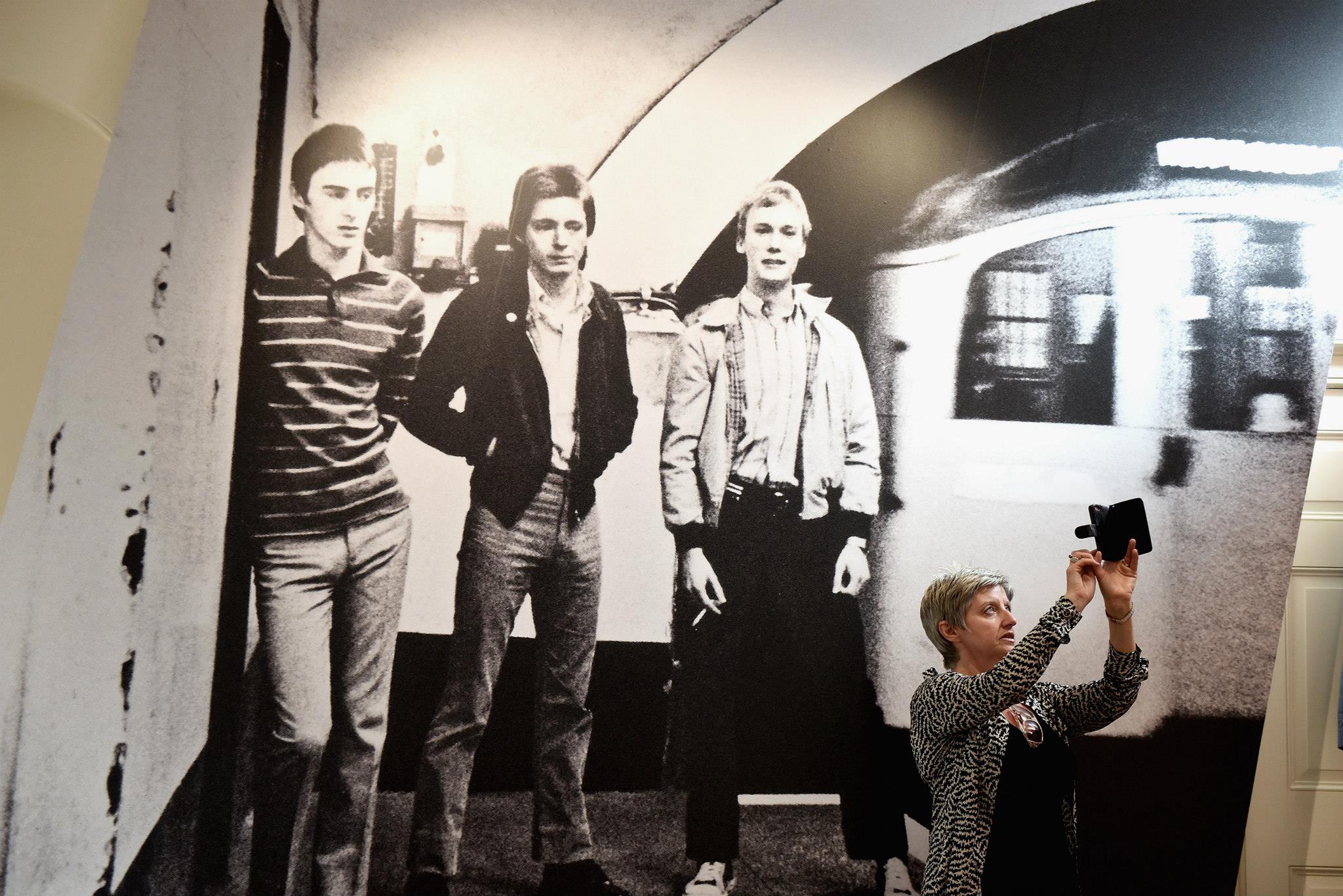
jam-selfie

By this time their own Precious, out as a double a-side with A Town Called Malice was starting to get played on the radio and you couldn’t help but notice the (cough) similarity between the two tunes.

The JamPrecious (12″ version)

The Jam even went as far as naming their posthumous live album Dig The New Breed, a line from the James Brown tune that kicks off this post. Which just goes to show, what goes around comes around.