Hard-to-find

Definitive Article

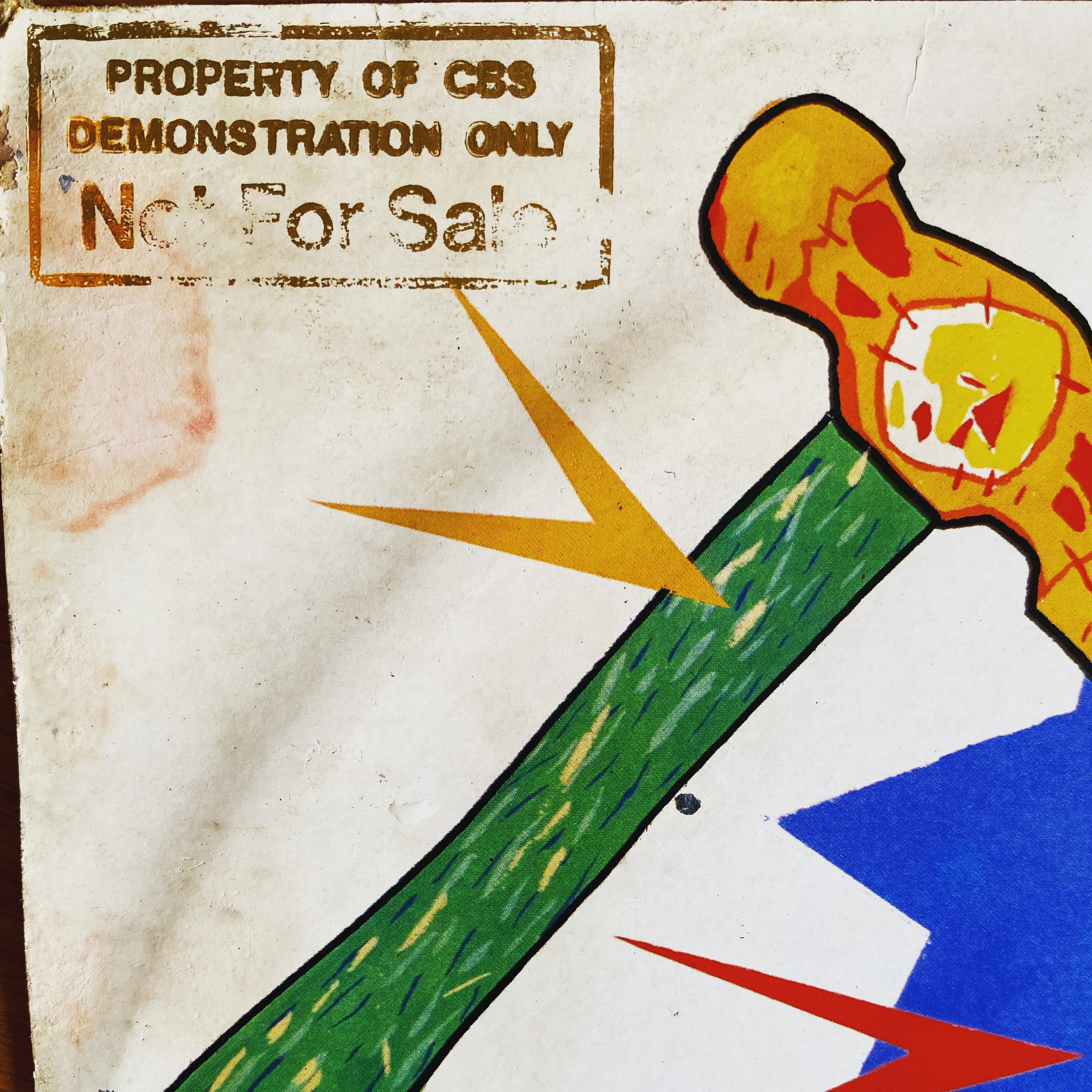
Every few years I immerse myself in Soul Mining, the debut album by The The. It’s been with me in various forms over the years – taped from the record borrowed from Irvine library, bought on cassette (since lost) for £1.25 from the back of Boots in Irvine Mall, upgraded to CD in the early ’90s and, more recently on vinyl, dug out from between the Kenneth McKellar and Marty Robbins albums in a Kilmarnock charity shop for a couple of pounds, the gold-stamped ‘Property Of CBS. Demonstration Only. Not For Sale.’ message on the back the icing on this particularly jammy cake. Re-sult, as they say.

It’s sobering to think that next year it’ll be 40 years young, its themes of existential crisis, mental state of mind and anti-government stance very much relevant to the times we currently live in. ‘I’m just a symptom of the moral decay that’s gnawing at the heart of the country,’ Matt Johnson states on side one’s The Sinking Feeling.

It’s a record that comes wrapped in claustrophobia, paranoia and fear, compounded by relentless, crashing drum machines, snaking, electrified guitars and inventive technology that dates the record, maybe almost as much as the slap/synth bass that thwacks its way in and out of the grooves, but there’s not a band currently working who is as inventive and focused and visionary as Matt Johnson/The The was at this moment in time.

Much like his better-known contemporaries, Matt Johnson is neither as productive as Kate Bush nor as revered perhaps as Mark Hollis, but is every bit as much the auteur, driven by the sonic vision in his busy head. This is a man for whom music is a slow, deliberate process, sculpture rather than slap-dashed expressionism, and we’re all the richer for it.

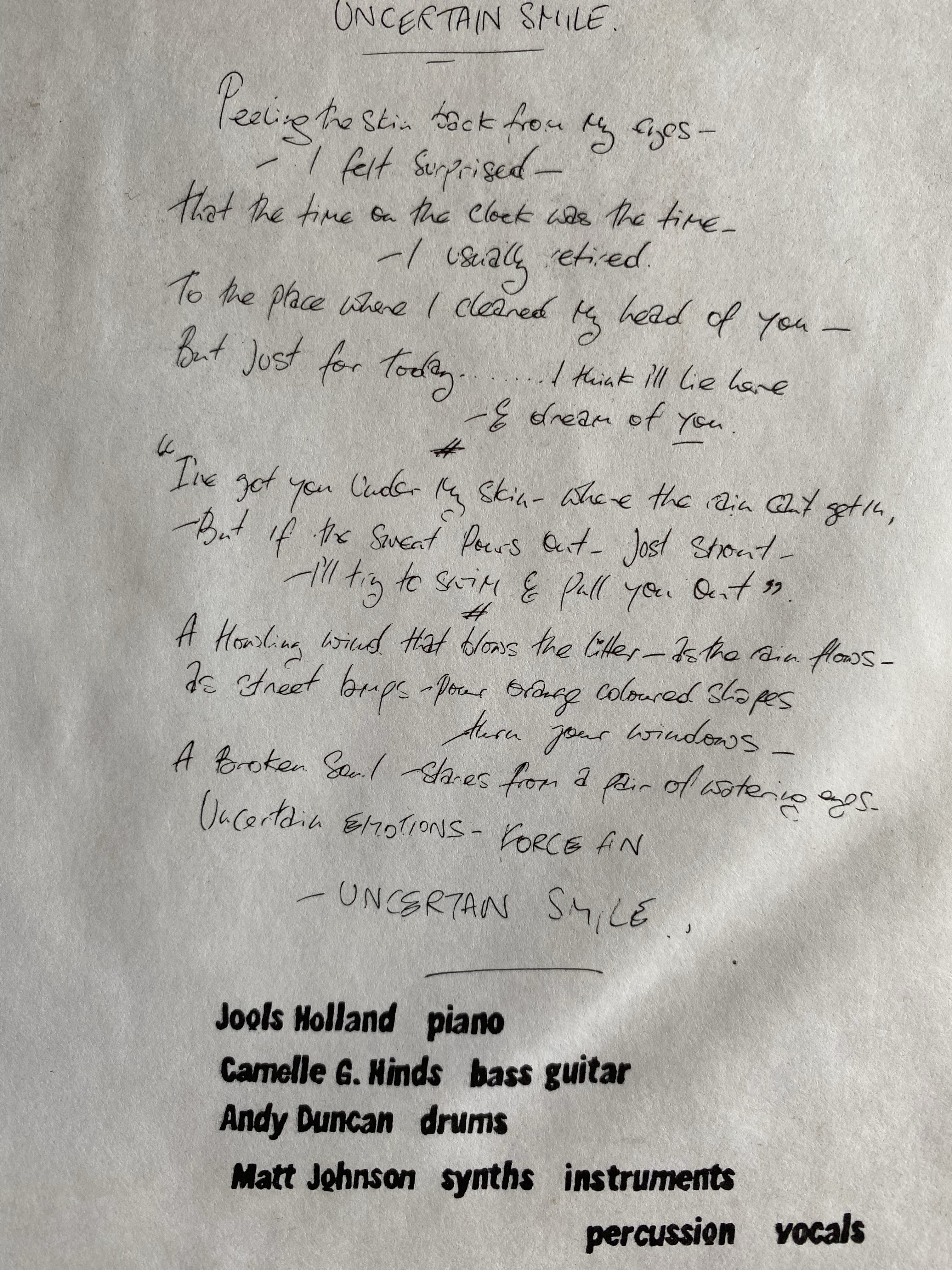
This Is The Day might have been the obvious first choice of single from the record – gorgeous, lilting French café music with a Biblical metaphor running through it – but Uncertain Smile is the one that I return to time and time again.

The TheUncertain Smile

It’s a song in two halves. In the first, Johnson delivers a crooned, close-miked vocal, all deep breaths and slightly wobbly intonation. In an era of chart-bound bands fronted by preening and pouting poseurs for whom the actual vocals were secondary to, y’know, what mascara went with the pantaloons or whatever, Johnson’s approach can be seen as both unique and brave.

Undeniably keeping a keen ear on proceedings was a pre-debut album Lloyd Cole, who would adopt the same approach when he came to record his vocals on Rattlesnakes. It’s not even up for debate. Contrast and compare Lloyd’s grinning, gulping vocal on his album’s title track with Johnson’s delivery on Uncertain Smile and see/hear for yourself.

But enough of the finger-pointing.

Uncertain Smile is a beauty. An ear-friendly acoustic guitar strums a chord pattern, swells of synth colour the melody and Johnson plunders the Big Book of Existential Angst to deliver a well-considered lyric.

And then it all takes off. A moonlighting Jools Holland, turning up at the studio on his motorbike and still in his leathers, hears the demo once, jumps on the studio piano and lays down a masterful solo.

Holland (unjustly if y’ask me) gets lots of flack for his supposed adding of The Boogie Woogie to everything he touches, but on Uncertain Smile he freeforms over the top of it like Mike Garson riffing on Aladdin Sane; jarring notes that veer on the edge of Les Dawson but pull back just in time, clanging chords that rattle the bones, trilling high notes that cascade down to bluesy bass notes and then back again, dextrous and masterful, Holland’s knowledge of jazz being put to good use. His playing transforms the track from an interesting slice of angst to a proper work of art that’s Bowie-level great.

Holland was surprised to find his contribution used as the big statement in the outro. He’d assumed that Johnson would drop his part into the middle of the track to create a piano interlude. Instead, Holland’s playing stretches the track all the way to the end of a breath-taking side one. Sometimes I never make it to side two, preferring instead to drop the needle on Uncertain Smile for just one more time…

*Bonus Track!

Here‘s the near 10 minute New York Extended Mix. Jools-free and pitched percussion crazy.

Get This!

The State That I Am In

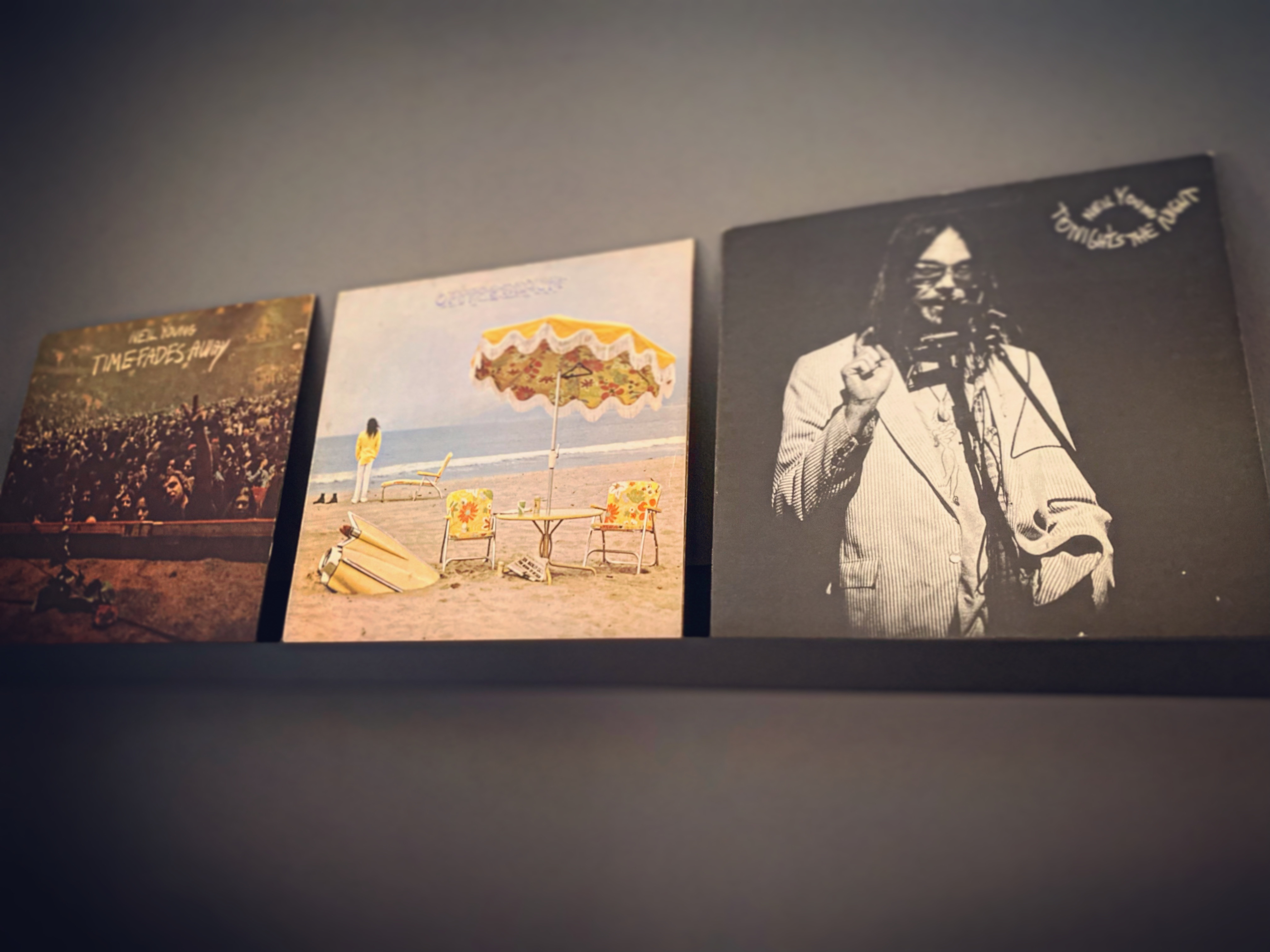
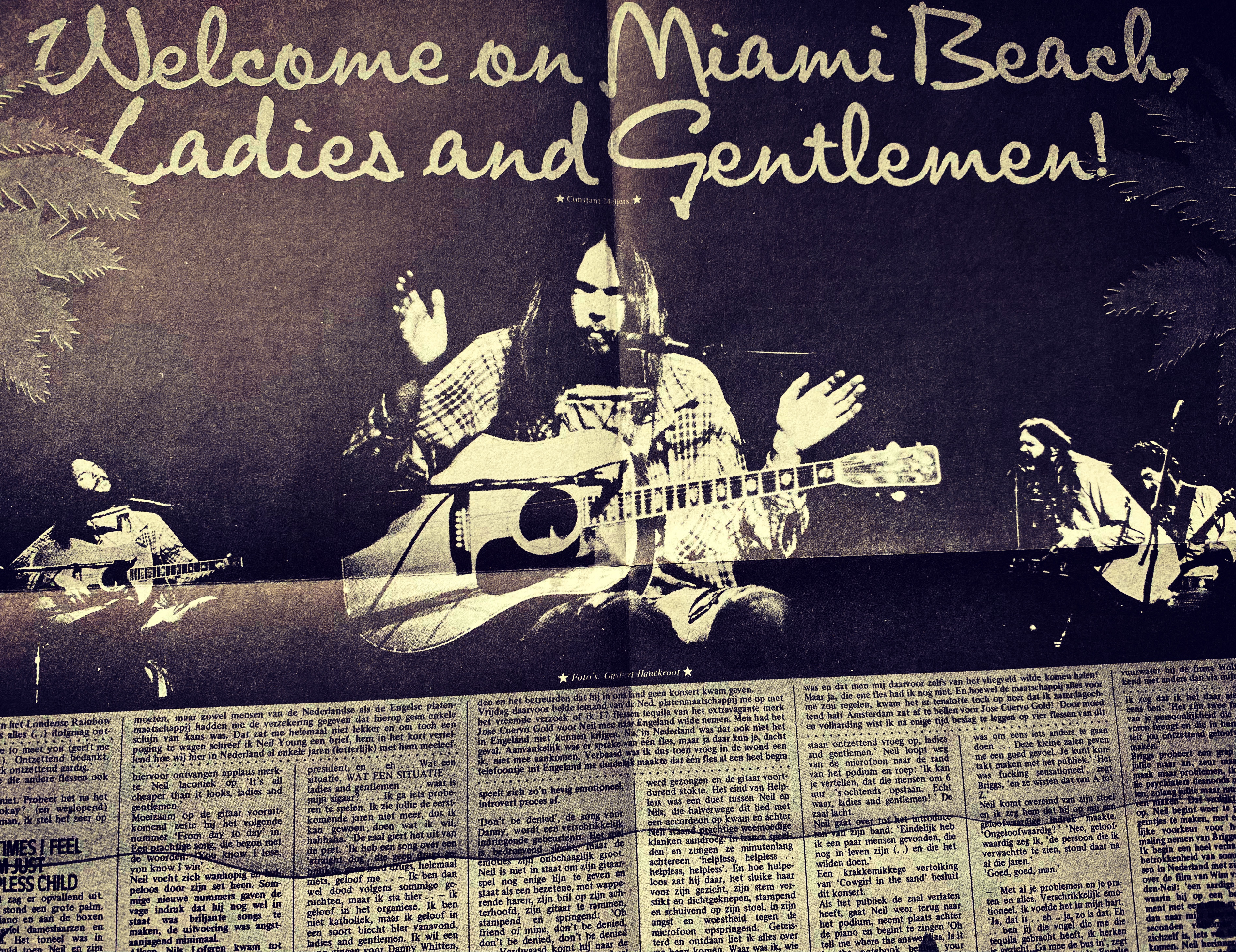
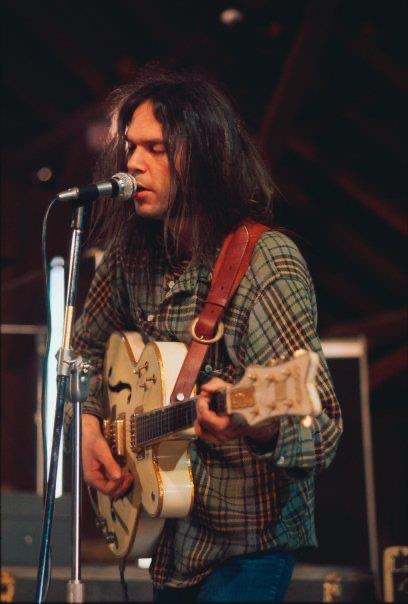
Tonight’s The Night is Neil Young‘s 6th studio album. Counting the live Time Fades Away album it’s the 7th in his discography, recorded in 1973 but shelved until 1975, by which time he’d recorded and released a whole other album in the form of On The Beach. Who says stoners ain’t productive?

The period around this time in Young’s career is well-documented: His fourth album Harvest becomes an international smash, its down-home, pastoral acoustic sketches, good time bar band boogie and occasional orchestral flourishes striking a chord with millions of people, and whiny ol’ Neil suddenly finds himself the custodian of a hit album. A record company with at least one eye on the balance sheet is understandably keen for more, but Young, in an act of bold self-sabotage steers his musical output from the mainstream to the margins, from the middle of the road to the ditch.

So began his Ditch Trilogy, a series of three albums – Time Fades Away, On The Beach and Tonight’s The Night – that displayed a single bloody-mindedness to do as he pleased at whatever cost. Time Fades Away, for example, is a live document of a tour where he played wholly new material to sold out theatres and arenas keen to hear the whole of Harvest in the live setting. ‘Here’s one you’ve heard before,’ he’d announce to a jeering then cheering audience in the encores…and he’d play ‘Don’t Be Denied‘ for the second time that night.

If y’want the true essence of the artist in microcosm, look no further than these three albums. Every facet of his personality; the peacemaker, the confrontationalist, the political commentator, the grief-stricken musician, and every facet of his musical output; the acoustic troubadour with the asthmatic Marine Band harmonica, the wind blown one note soloist, the country pickin’, banjo bashin’ hippy and ham-fisted piano botherer is amongst those grooves. You knew all that already though.

I’ve spent a few nights recently in the company of Tonight’s The Night, to the point where it’s beginning to surpass On The Beach as my favourite Neil album. It’s very much a night time album, sleepwalking from the speakers in a fug of narcotic narcolepsy, vocals whispered and cracking, the band inhaling deeply before easing their way into the chords.

Right from the off you know you’re in for the long run. The title track (reprised, not for the first time in Young’s ouvre, at the end of side 2) is a slow blues, its pulsing bass and off-kilter (and mainly off-key) backing vocals dragging it to its conclusion.

Nils Lofgren’s bluesy, spidery guitar lines tip-toe and creep their way through the heavy air, non-flash yet essential to the record’s feel, providing the ambient atmospherics that slow the whole thing down.

The theme of the record; death from heroin, mainly, is reflected in the slow-moving, treacle-thick tracks and woozy, woolly, atmospherics. Side 2’s Albuquerque is the best of Neil Young in one song.

Neil YoungAlbuquerque

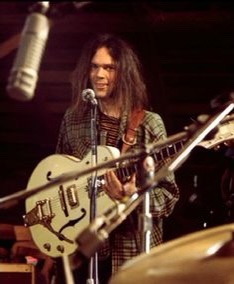
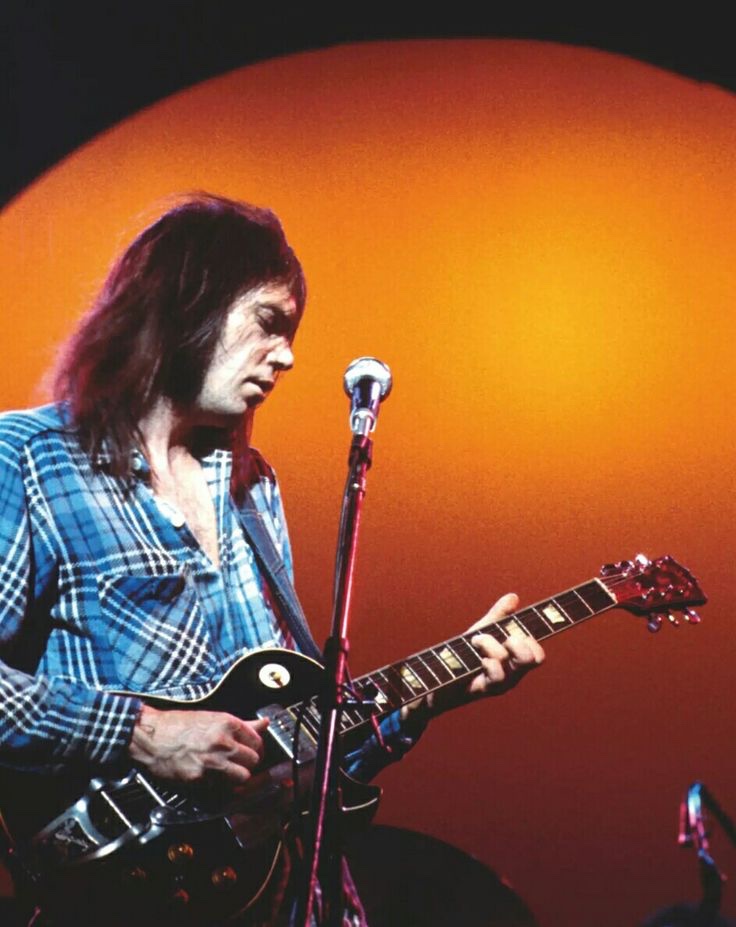
It begins with that idiosyncratic slow chugging Neil Young groove, lazy pulls-offs and hammer ons played in Young’s unique clawhammer style, valve amps cranked up to the max but the volume low on the guitar. You can feel the power in those six strings. A subtle turn of the volume knob on Neil’s Les Paul could unleash howling fury at any point, yet he keeps it restrained and under control.

Chord changes take an age to come, Young slowing the band to a pedestrian pace. When he hits the titular phrase in the chorus, its usual four syllables is stretched and eee-long-gated to an impressive ten. ‘Ah-ah-ah-ah-ah-ah-al-bu-quer-que‘.

A chrome-coated weeping pedal steel, the ghost of the Flying Burrito Brothers vamps its way across the verses as Neil sings of Santa Fe and fried eggs and country ham and getting away from it all. Fame, fame, fatal fame, as someone else would sing a decade later. Neil wants away from it so much that he allows the pedal steel to take the lead at the appropriate point in the song, its eerie sliding glissandos emerging from between wheezing harmonica squeals to flood the tune with harmonious countryfied colour and life until the end. It’s a beauty.

Non-Compulsory Follow-Up Homework

Go and listen to REM‘s Country Feedback; the mood, the feel, the slow-burning gothic country blues of it all, and compare it to Albuquerque. Uh-huh.


Get This!, New! Now!

Shaken, Stirred.

If you’re a regular tuner-inner to night-time BBC 6 Music, you’ll be no stranger to the music of Los Bitchos. Their largely instrumental pot pourri of surf guitar, fuzz bass and Columbian cumbia rhythms is pretty unique and well worth further investigation if the likes of Khruangbin or Cats Eyes or the Allah-Las are on your radar.

If you’re a garage rock aficionado whose tastes extend far beyond the mother lodes of Nuggets and Pebbles, you may well be familiar with Danny Lee Blackwell, authentic mid-’60s sound seeker and prime mover in a scene of wonderfully-named bands; his The Old Explosives and White Light Fever sound exactly as you’d expect. I’ve yet to dive into the back catalogues of Night Beats and Medicine God Box, but I can imagine what awaits.

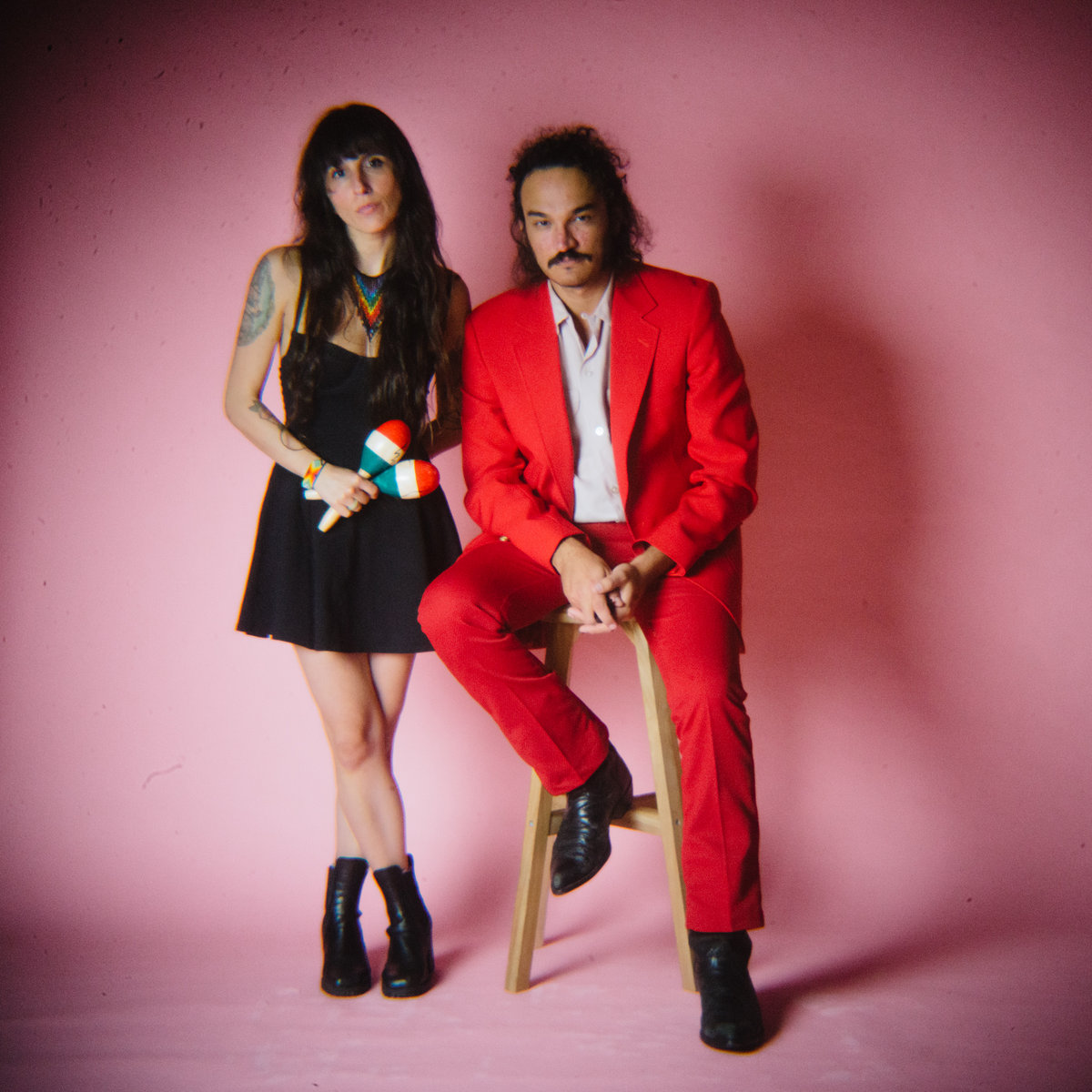
You can, then, make a good guess at what might happens when an ex-Los Bitchos – Carolina Faruolo – collaborates with Danny Lee Blackwell under the name Abraxas.

Great, isn’t it!

A minor key reggae ‘n garage-fried head nodder, it has shades of Jonathan Richman’s Egyptian Reggae and Byron Lee’s Rocksteady, a vapour-trailed late summer groover that would sound perfect played out in a melting heat haze or wherever your sun may set. It’s the perfect sound of offset Fenders, hip swinging and hair.

That Los Bitchos cumbia beat is still there, shuffling along on a bed of Os Mutantes tropicalia and the sort of lazily shaken maraca shimmy that might well stir Lee Mavers’ inner yet dormant Bo Diddleyisms. The surf guitars are still there too, aimed skywards, set to maximum whacked-out reverb and twang and happily chattering away like a couple of auld clucking biddies at the Beachcomber Bingo.

It’s the vocal though that elevates it all; Blackwell channelling Lee Perry, half-singing the effect-heavy verses, elongating the words and phrases for extra frazzled effect, echoes of key words morse-coding their way into the ether before hitting the high notes with the double tracked ear-wormy refrain. Dry my tears, ah-ye-aye. It’s a beauty!

Midway through, the guitar breaks out in a rash of heavily-delayed psychedelia, some nicely pitched wah-wah going toe to toe with a delay pedal, but it’s short lived. Before you know it, we’re back to that hip swaying desert blues shuffle, Tinariwen by way of Texas (the state, not the band), as Faruolo freeforms her way up the higher reaches of the frets and Blackwell mutters his way to a lightly toasted conclusion.

What’s amazing – but not surprising these days – is that the track was recorded not in some suitably lo-fi, low rent studio, but across the internet between Blackwell in Dallas and Faruolo in Manchester. That such great music can be created when its principal players are separated by the Atlantic Ocean and a couple of time zones is pretty impressive.

A word too about the band name. Abraxas, as you well-know already, is the title of the second album by jazz rock Latin guitar strangler Santana. It’s no coincidence that this new collaboration has named itself after an album that is packed full of interesting rhythms, experimental percussion and endless, inventive, meandering guitar playing.

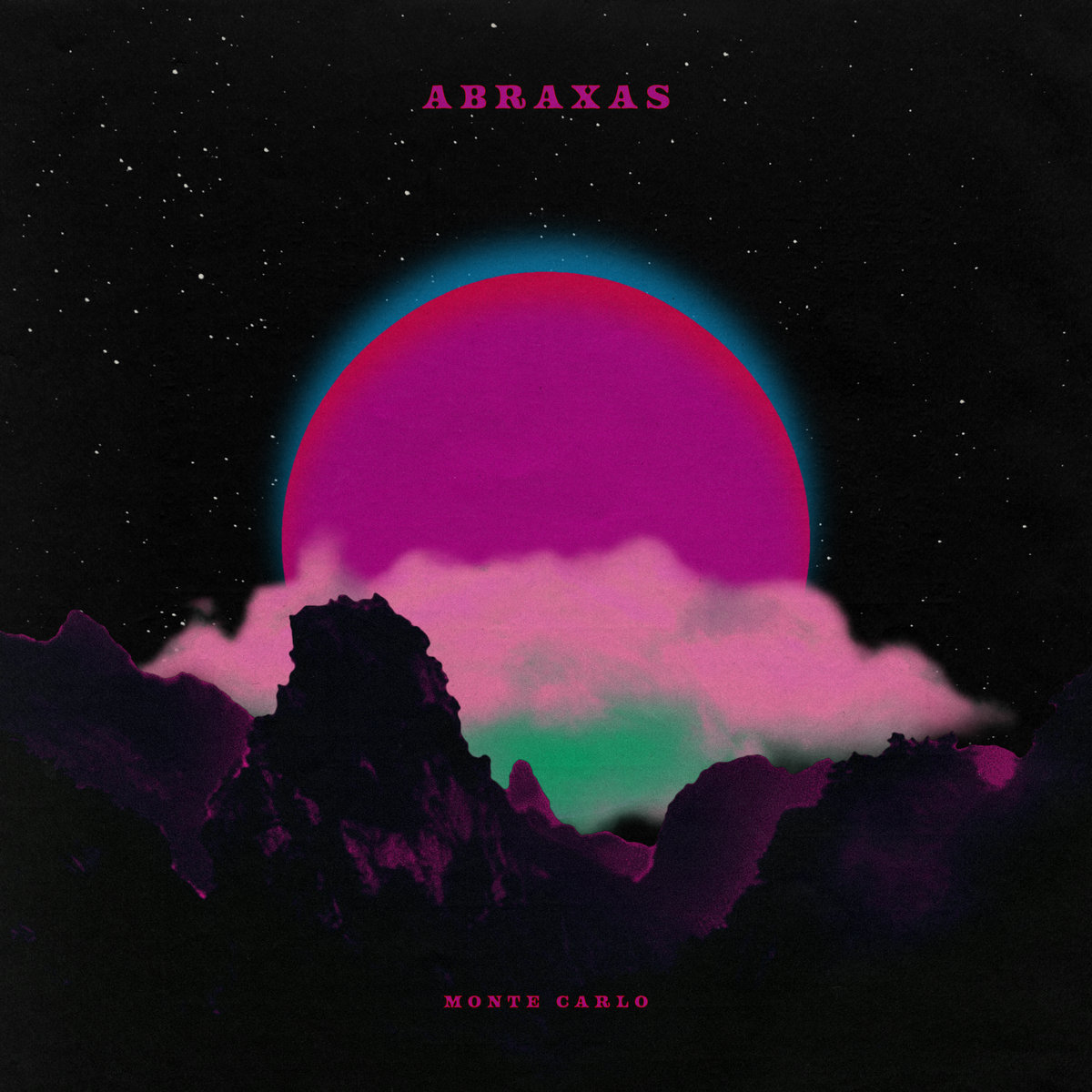
Planet Abraxas is a world filled with jungles, mist-covered rivers, panthers lurking in the night, desolate shopping malls, Neolithic citadels and sand-worn walls,’ they say. Well, of course it is. You know that just by listening to the track above. It bodes well for the album – Monte Carlo –  released at the end of October on Suicide Squeeze.

You can find Abraxas at Bandcamp and in all the usual corners of the internet. I’ll see you there.

Cover Versions, Gone but not forgotten

Melancholic Cowboy Noir

I once blew the chance of an interview with Nancy Sinatra after she took exception to the ‘Phil Spector’ handle under which I wrote.at the time. “Why on earth would I want to be interviewed by Phil Spector?” she asked aghast, failing to realise that it wasn’t yr actual wig-headed murderer that was cold calling and asking for the chance to chat about making records with Morrissey. “He was a strange, strange, man and I want nothing to do with him.” Fair point, Nancy. Fair point. Lesson learned – never use daft pseudonyms on the internet. I should have signed up to her long-gone fan forum under my real name.

Those records Nancy Sinatra made with Lee Hazlewood defy both time and pigeonholing. Often kitsch and sometimes countryish yet nearly always lush and orchestral, their parping brass and earthquaking vocal lines may well have wafted straight offa the grooves of a Tindersticks or a Cat Power record. Nick Cave and Kylie Minogue vamping it up on ‘Where The Wild Roses Grow‘? Pure Lee ‘n Nancy, The entire whispered, gothic ouvre of Mark Lanegan and Isobel Campbell? Total Lee ‘n Nancy. Their influence, committed to wax over half a century ago, still resonates.

If James Bond had been a lonesome, wandering cowboy, Summer Wine may well have been his theme tune.

Summer WineNancy Sinatra & Lee Hazlewood

This version of Summer Wine wasn’t the first one Hazlewood had recorded with a female sparring partner – the first version features little-known actress Suzi Jane Hokom – but the better-known take, using the original backing track slowed down to treacle-wading levels of sluggishness, is the one you need.

Road-worn and roughed up, yet clean and pretty, it’s the perfect summation of all things Lee ‘n Nancy. The ping-ponging vocals – she crystal clear and high registered, he singing from the soles of his grit covered cowboy boots – sound like they’ve been recorded in separate studios and miles apart, yet they’re woven together into a time-shifting storyline of mutual seduction with a twist in its tail. Lee is the silver-spurred outlaw, a stranger in town that jingles his way into the consciousness of bored local flirt Nancy. Together, (adopts Hart To Hart voiceover) it wasn’t quite moida, but (spoiler alert!) Lee awakes after a night of metaphorical summer wine to find both Nancy and his boots have gone.

It’s a great record, from the sweeping strings that droop and divebomb in direct proportion to Hazlewood’s handlebar moustache to the honeyed brass section that vamps its way towards John Barry’s signature Bond riff hoping that no-one, least of all Barry’s lawyers, will notice. The assembled musicians, most likely members of the Wrecking Crew although information on that is scant to non-existent, strum, scrape and snap their way through it, laid back and louche, melancholic cowboy noir in a clip-clopping minor key. Stirring stuff.

Summer Wine is practically a standard these days and has been recorded by many.

Lana del Ray and her then-partner, Barrie-James O’Neill (from Scots nearly-weres Kassidy) soundtracked a terrific home video of hazy Californian beaches, Laurel Canyon porches and windswept hair with their take on the track. Adding the audio to the visuals makes the video feel like some bleached-out, drawn-out Hollister advert, but don’t let that discourage you from what is a great version. Lana’s suitably femme fatale-ish vocals; sultry, close-miked and just on the right side of huffy are a good foil for O’Neill’s tobacco-coated Scots’ croon. Extra points for the none-more-Lee moustache.

Cover Versions, Live!

Punch And Judy

D’you know those stop-frame films you see of flowers coming to bloom; papery petals uncurling delicately, jerking their way outwards and skywards, opening fully at the end to reveal their true beauty? That’s exactly like the understated elegance of a Rufus Wainwright melody.

We went to see him for the first time on Saturday night. We knew his music – we’ve long steeped ourselves in those early album career highs, Want 1 and Want 2 and we’d marvelled once again at the classy major 7ths and restrained dynamics of the pocket symphony that is Going To A Town many times over as we got ready to go – so we know how his melodies start simply enough before taking a life of their own to soar upwards beyond the sun and moon, but we weren’t quite prepared for just how powerful it all is in the live setting.

Man! That Rufus can sing! At Glasgow’s Kelvingrove Bandstand it’s just him, his ruby red slippers and his piano, occasionally his guitar, so there’s nothing to hide behind. It’s open aired, the cultured audience is supping on wine and gin and craft beers and the weather is dry. They want to be entertained and Rufus’s voice wafts across the venue, ear therapy for the non-moshers of the world. The voice is the one true star. That and the piano playing. He can play the fuck out of that thing. Triplets on the bass notes, rippling runs from the very top of the scales that cascade down and up and down again, thunderous chords and jarring discordant atonalities – Rufus can do it all.

That’s a bit too Tchaikovksy,” he self-deprecates as he brings one of Cigarettes And Chocolate Milk‘s final verses to a flamboyant false ending, before proceeding to play Satie-inflected freeform jazz to close it out. Genius is an oft-overused word these days. Not so much virtuoso, perhaps, but Rufus is clearly a bit of both.

He plays Vibrate, its Britney Spears-referencing lyric resonating with the capacity crowd. The voice is crystal clear, fluttering between notes, finding in the spaces new notes that don’t exist in normal singers’ registeries. He fluffs a line in the chorus, mutters ‘fuck it‘ and keeps going. He arrives at the big, showstopping ‘Viiiii….iiii…..iiii….iii….braaa…..aaaaa…..aaaaa…..te‘ line and the audience as one holds its breath for a good 30 seconds until he reaches the end. Get a stopwatch and try it. Then imagine performing it in front of a full house on a Glasgow Saturday night, while playing a grand piano and dressed from the ankles down like Judy Garland. Balls doesn’t begin to describe it. And as for ‘showstopping’…it was third or fourth song in. There was plenty way to go before Rufus would arrive at ‘showstopping’.

The beauty and power and brilliance of the voice is even more obvious whenever Rufus picks up his guitar. He’s a rudimentary player at best, open handedly strumming open chords as if he’s only just been acquanited with six strings. Greek Song‘s clip clopping rhythm, interspersed with a stomp of the red-bowed Dorothy flats at appropriate moments, is a good example. A couple of chords in the verse, the same chords in the chorus, it’s real beginner’s guitar stuff here, yet the voice transends it all. ‘You who were born with the sun above your shoulders,’ he sings to some Greek god, real or imaginary, ‘You turn me on, you turn me on, you have to know.’ The guitar playing is primary school level, but the voice is unteachable. You don’t need to be special on the guitar when the one instrument you’ve been God-given is so divine. How exactly do you squeeze such flyaway melodies from a D chord and an A chord? Exactly where that comes from is anyone’s guess. David Gedge never managed that. I doubt even McCartney could reach some of the melodic heights Rufus reaches.

Rufus WainwrightGoing To A Town

(Pinched from Twitter)

Back for an encore, he slays us with a one-two of Going To A Town and Hallelujah. Going To A Town is stripped back, angry, beautiful and resonant. ‘Do you really think you go to hell for having loved?‘ It’s missing those high female ‘tell mes’ that colour the recorded version, but you barely notice. When he gets to the ‘I may just never see you again‘ line, his voice takes off into orbit, two thousand folk hanging on to its wispy trail. Astonishing stuff.

I can’t be doing with Hallelujah, truth be told. It’s overplayed. TV reality shows have killed that for me. Even Jeff Buckley’s peerless version hasn’t been heard within these four walls for many a year. Yet Rufus nails it, the voice off and out into the West End ether as he takes a theatrical bow and leaves us with a final glimpse of his beautiful hair, backlit in orange and red and blue, the crowd on its feet and ecstatic. I might’ve liked a 14th Street or a Go Or Go Ahead to complete the night, but I ain’t complainin’. Rufus Wainwright understands the old adage of leave ’em wanting more. A proper showman, he more than delivers.

*Bonus Track

From one golden voiced vocalist to another, here’s George Michael‘s faithful reworking of Going To A Town. A master interpreter, he knew a good tune when he heard it. You knew that already though.

George MichaelGoing To A Town

Get This!, Live!

Sound Waves

How do you pronouce certain band names? Hingmy Malmsteen? Sun O))) or just Sun? (It’s Sun, believe it or not, despite the ‘O’ and the trio of parenthesese – that’s the sun, innit?) What about !!!? And what of Lynyrd Skynyrd? Is it Suede to rhyme with Fred or Suede to rhyme with frayed? (It’s Fred, obviously, if you’re Scottish.)

What about Fatherson? Is the emphasis on the ‘Father‘ prefix or the ‘son‘ suffix?

It’s not, as you might think (or say) Fatherson, with the heavy emphasis on the end of the word, turning one word into two. It’s run together as one word – Fatherson – the way you might say Andy Robertson, or perhaps if you’re of a certain vintage, B.A. Robertson.

Liverpool lining up tonight with an unusual back four of Robertson, Richarlison, Gerry Cinnamon and Fatherson. It’ll be interesting to see how they get on against the pacey Kilmarnock wing backs….”

To my shame, I’d pegged Fatherson as Biffy-lite without knowingly listening to so much as a note by them; hairy muscle power pop in Scottish accents, I’d presumed. I’ve eaten at least one slice of humble pie in recent weeks as a result. Firstly, I was involved in the running of a brand new festival, Making Waves, and Fatherson had been booked as late afternoon performers.

Being responsible for the press and what not, and with band interviews being lined up, I dipped a hesitant toe in their back catalogue and was immediately taken by a sound distinguished by loud, anthemic, ringing guitars and proudly parochial vocals sung brilliantly. Where had they been all my ignorant life?! I lost track of time into the wee small hours one night while I found myself falling for the song that coincidentally gave our festival its name.

FathersonMaking Waves

Photo (c) Kerrin Carr. If you steal it she’ll send the boys ’round.

It starts as many Fatherson songs do, with bookish and bearded guitar-playing vocalist Ross Leighton strumming out a kind of audible preface to what follows, just Ross with his plugged-in electric and soft Scottish burr setting the scene. As the intro plays out, there’s a wee brief pause where you just know the band is going to come crashing in, all flailing limbs and howling instruments, and Making Waves doesn’t disappoint. In they lurch, all divebombing, disorientating Valentine wooze and wobble, a wave of silver and mercury effect-heavy instrumentation filling the room then dropping out just as quickly to allow the vocals back in.

The wee brief, chiming guitar riff that introduces the chorus is totally ripe for soundtracking the goals of the week on a particularly hip football highlights show, maybe even Sky if they had suitably ‘on it’ researchers. I say ‘on it’, but Making Waves is four years old, so what do I know – it may well have soundtracked the entire 2018-19 season on Soccer AM for all I know.

Photo (c) Kerrin Carr. If you steal it she’ll send the boys ’round.

Making Waves is Fatherson in miniature. Riff heavy, melody-rich and hooky, played out with a we mean it, man sturm und drang. There are some great call and response vocals in the chorus, all keening heartache and sincerity, a sign that despite the ability to turn everything up to 10, there’s a compassionate soul beating at the heart of the band.

Cut to the Making Waves festival. Live, Fatherson are terrific. Like, really terrific. They’ve got the band look sorted – orange and grey boiler suits, turned up to ankle dusting levels like some hipster, fashion-conscious, guitar totin’ Beastie Boys collective – and boy, they can talk it like they walk it. They run on stage and they’re straight into it, a downhill without the brakes on riot of hair and frets and space-age chrome ‘n steel pedal boards. Those brief wee pauses the band so-loves are well-timed and slick. Flyaway hair freezes in midair then continues its trajectory as the trio slam back into it. Drums clatter like the four horsemen of the apocalypse. The bass guitar sounds like a speeding Paul Simonon in some places, my neighbour’s non-stop nail gun in others. Ross’s enviable collection of vintage guitars take a good heavy-plectrumed scrubbing.

I hang back sidestage and experience the show from a new perspective, watching their loyal audience mouth the words back to the band, watching as the band is spurred further on by the frenzy in the crowd. It’s all thrilling stuff.

Photo (c) Stuart Westwood. If you steal it he’ll send the boys ’round.

*Bonus Track

Just when you’re thinking that Fatherson don’t, or can’t, do acoustic-based music, along comes the loveliest version of Making Waves, floated in from the furthest corners of the internet, intent on worming its way into your primed and ready for it ears. Wonderful stuff all in, it’s the unexpected call-and-response female vocal in the chorus that pushes this version towards greatness. A gently restrained take of one of the band’s best tracks. You just can’t argue with musicality, melody and properly great singing.

FathersonMaking Waves (acoustic)

Photo (c) Kerrin Carr. If you steal it she’ll send the boys ’round.

Fatherson, man, where have you been all my stupidly ignorant musical life?

Get This!

Eye Tunes

In a game of two halves, Trompe le Monde would prove to be Pixies ‘final’ album before their resurrection in more recent times. Frank Black has said that the record was made in fractuous times, the band splintering, Kim being marginalised, with all of Black’s songs making the cut at the expense of everyone else’s. Although credited to ‘Pixies’, the album foreshadowed the singer’s solo career and should probably be classed as his first such record.

It’s a patchy set of songs. It lurches from the punkish rush of Alec Eiffel via a hundred mile an hour cover of the Jesus & Mary Chain’s Head On to the ultra sweary U-Mass and half a dozen other weird and wonky rockers that would benefit from a dusting down and reappraisal at some point.

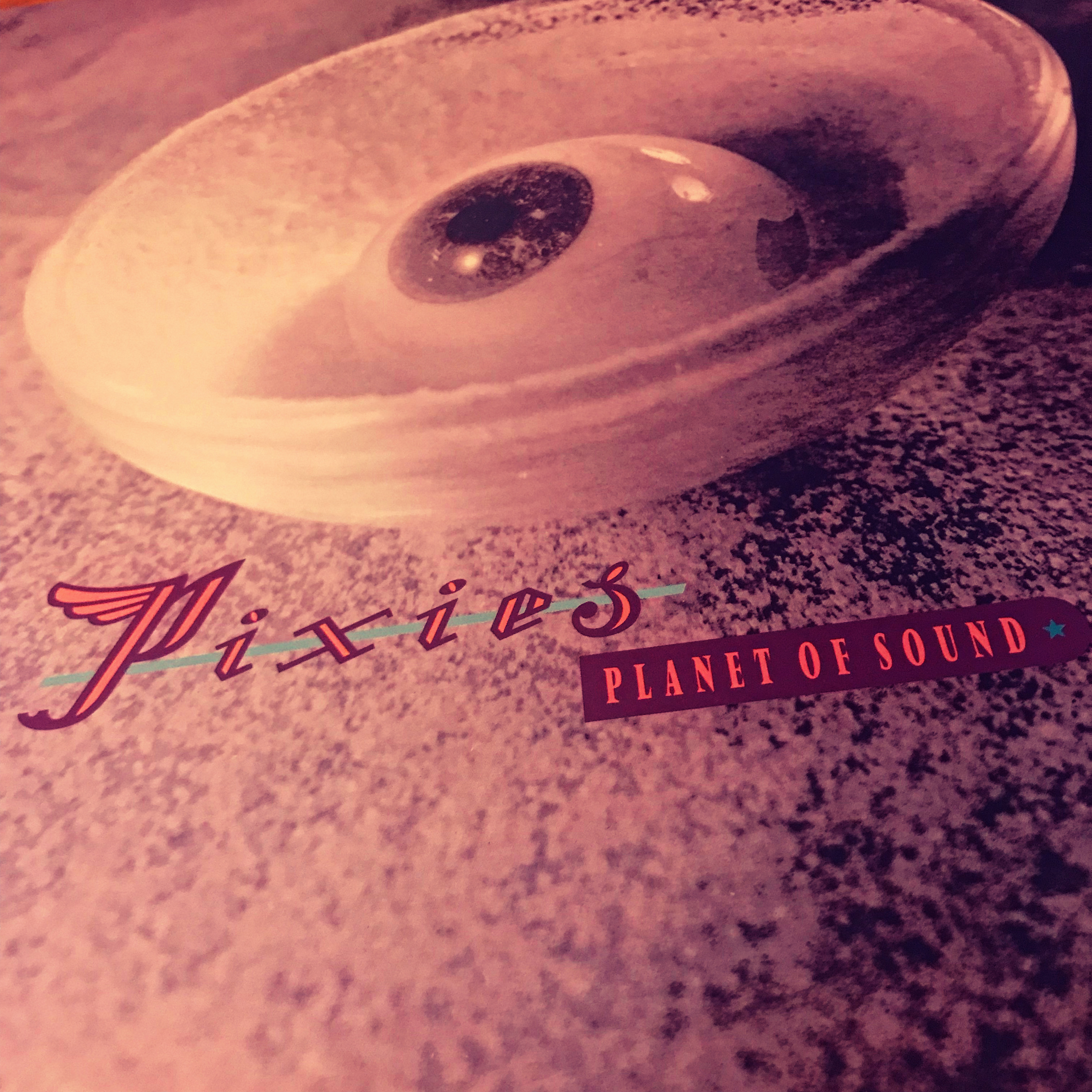
Lead single Planet Of Sound came housed in a sleeve featuring an eyeball dipped in salt, a metaphor, surely, for Pixies’ uncompromising and at times uncomfortable sound. It’s sci-fi AC/DC, a proper screaming throat loosener with blowtorch guitars, chugga-chugga bassline and a neat line in counter vocals buried under the chorus.

PixiesPlanet Of Sound

When Kurt Cobain openly admitted stealing Pixies’ quiet-loud-quiet blueprint, there’s a good chance he had this track as his point of reference. It’s all there; the semi-spoken vocal atop the bassline, the hint of Marshall-stacked guitars straining at the leash, Black singing his way to a chorus where fuzz boxes are stomped on and guitars snap free and twang their giddy way to the outer reaches of space like a hopped-up Duane Eddy auditioning for Jon Spencer’s Blues Explosion. Go and listen to the filth and the furore of Nevermind‘s Lithium or In Bloom or even Teen Spirit if you don’t believe me. Total Pixies, man!

By the second verse, the guitars are back under control, just, itching to break free once more against a backdrop of rolling bass and space-referencing lyrics: I got to somewhere unknown, with its canals and colour of red. Joey coaxes wee angry squeals from the six strings under his fingers and lets them loose again on the chorus. Somewhere along the line, the sound of a bottle can be heard dropping, shaken loose from a studio shelf by Pixies’ electric blast of rampant energy. This time the chorus is twice as long, twice as loud, the guitars pushing the vocals to the very limit of Frank Black’s larynx-ripping abilities, the vocals spurring the guitars on to even angrier retorts. I wonder if that flying ‘P’ in Pixies’ logo is a reference to the way the band flies off the grooves of this record…

A fat-free solo pops up, no frills, simple and economic, with just enough requisite bend and strangulation to sate the appetite of any indie guitar hero-loving listeners. No sooner has it flown in than it’s flown off again, and a red-templed Frank is back again to scream his head off through another verse and a chorus that stops just as suddenly as this post.

Alternative Version

Spending Warm Summer Days Outdoors

I see the golf’s on. The one and only time I’ve had the brass neck enough to go busking was in 1989 when the Open was in Troon, a decent couple of drives (and maybe a sand wedge) from where I’m typing. My folks were on holiday, so naturally my house became the go-to place beyond last orders on the Saturday night. ‘The band’ rose from couches and corners in the mid Sunday morning sunshine and someone had the bright idea of suggesting we grab a couple of acoustics, a tambourine and a whole load of nerve and go and busk at the final round.

Crammed onto the train to take the two stops from Irvine to Troon, we stuck out like an amateur’s hooked tee shot in a field of scratch golfers. Smiths quiffs that had only just started to collapse as I Wanna Be Adored‘s bassline had rumbled its way into our collective conscience stood side by side with those haircuts that only famous record producers and weekend yachtsmen and the comfortably-off seem to sport – foppish, demi-wave on top, greying at the temples, fluffy over the ears, longish at the back without being a mullet…you know the sort. Their pastels, their stiff crisp collars and their perfect creases made our battered desert boots and slept-in 501s look even scruffier than normal. We quite liked being the odd ones out though, our guitars and hangovers attracting puzzled glances, especially when we got off at Troon with everyone else.

We set up pitch far, far away from a bagpiper and his cyclical repertoire of tourist-trapping tartan tunes. We found a good spot next to a hedge, along a major walkway that connected two parts of the course and sat down to consider our plan. It was mobbed. The occasional thwack of a player’s club rattling the ball far into the Ayrshire sun drew oohs and aahs and ripples of echoing applause from the throng as we quietly emptied our combined loose change into one of the guitar cases – a busker’s trick, apparently, that showed your audience that you were a bona fide attraction – and then self-consciously began tuning up.

Then we sat and looked at one another.

Passing golf fans eyed us suspiciously.

It was Grant who started.

This isAsk’,” he said to a passing female golf fan who was doing her best to pretend we weren’t there. “It was written by The Smiths and sounded nothing like this.”

No set list had been discussed or considered, but suddenly we were off, the two acoustics scrubbing out a skiffly rhythm, Grant clattering his tambourine off his elbow as he sang. No-one stopped. No-one looked. No-one dropped any change into the guitar case.

Ask came to its rattling, jangling conclusion and we looked around at one another. A Chuck Berry riff flew out of my hands and onto the fretboard and suddenly we were busking Johnny B Goode.

No-one stopped. No-one looked. No-one dropped any change into the guitar case.

Tough crowd. I Wanna Be Adored wasn’t going to change things, but we played it anyway. It might just about get a nod of recognition around St Andrews this afternoon, but freshly minted and still underground in the summer of ’89, I Wanna Be Adored was unknown to the Calloway-clad squares of Royal Troon.

No-one stopped. No-one looked. No-one dropped any change into the guitar case.

We were midway through our second go at Ask when a wee boy shuffled up and dropped 20p into the guitar case. The four of us stopped and surrounded him with “Yes, wee man!“-handshakes and a ruffle of his wonky fringe. He ran off terrified. We played on like legends.

A woman stopped and listened. Like, actually listened. She came closer, between Grant and myself and cocked an ear to what he was singing. When we finished, she sat down cross-legged amongst us and told us it was a beautiful song.

Who wrote it?” she wondered.

It was The Smiths,” said Grant apologetically. “Not us.”

It’s lovely. Will you play it again?

For the third time we ran through Ask, getting quite good at it by this point. “Ask me, ask me, ask me!” sang Grant as we scuffed the G to C chord change with lip-curling gallusness. “If its not love then it’s the bomb, the bomb, the bomb, the bomb! The bomb that will bring us together.

Our new fan pulled an actual fiver from her purse and with a wee smile dropped it into the case. Twenty minutes in and we were suddenly making serious money. By the time the leader’s heading up the 18th fairway, Grant man, we’ll be millionaires!!

Excuse me, lads,” shouted an old fella from the other side of the hedge. He had a combover and was wearing an R&A blazer. Offical looking. “Excuse me, lads. But you’re going to have to move on…we can damn-well hear you on the greens!” He waited for a reply that wasn’t forthcoming. “I mean it, boys. You must stop now. You’re disturbing play and it’s just not on.” The bagpiper up the road was still strangling The Rowan Tree from his pipes but he was clearly exempt from it all. “Pack up now, please.”

It’s not very anti-establishment, but pack up is exactly what we did. We’d made just over £6 in our short busking career and we’d later drink our proceeds in the Crown. For now though, we cut through the hedge and found ourselves amongst the final round crowds.

Unbelievably – but entirely true – the American golfer Tom Watson appeared in front of me, surveying the landscape and eyeing up a shot up the fairway.

Can you get a toon outta that gee-tar?” he asked with a wry smile.

Aye!” I said.

Watson nodded and went back to the task in hand. Thwack! went his club against the ball as he marched his way to a very decent 4th place (I had to Google that). Ooh and aah went the crowd. “Let’s get out of here,” said us.

The SmithsAsk (June ’86 run-through)

Mike Joyce’s scattergun Moonisms on this were sadly missing in the final take. Johnny’s sparkling guitar was gratefully added. An interesting Smiths curio, if nothing else.


demo, Get This!, Live!, Sampled

Twin Reverb

Check…check…check!

A-woo-oo! A-woo-oo! A-woo-oo! A-woo-oo! A-woo-oo! A-woo-oo!

(Pause)

Trrrr-rat-at-a-tat a-tee-tee

Trrrr-rat-at-a-tat a-tee-tee

Bass. How low can you go? Actually, not that low for now. A tight ‘n taut bass guitar plays high up the frets, its woody thunk foreshadowing what will follow:

dur der-der-duh-der

dur der-der-duh-der

Nagging, inistent. Immediately earwormish. It moves through the gears a semitone and the drummer falls in with a loping, skipping, skittering beat that’s been rescued after falling from the back of a lorry last seen leaving Manchester in 1989.

A brief dropout from the bass brings another burst of rat-a-tat percussion, immediately followed by two short and teasing electric guitar riffs – bendy, wobbly, hypnotic – and then, on a surge of nagging, asthmatic guitar, the band is here. The second guitar player makes themselves known by triggering their distortion pedal and a viral squiggle of feedback bleeds from the speakers for a bar or two before plectrum meets nickle. It’s a cheap, punky trick and you love it. 

Spitting in a wishing well. Blown to hell. Crash. I’m the last splash.

As far as song intros go, Cannonball by The Breeders is so familiar, so engrained that even 29 years later, Pavlovian rushes make their way to the soles of the Doc Martens without you realising.

The BreedersCannonball

It might be the riff that moves the feet – a nagging, twanging, guitar player’s sore finger of a lick jigsawed to a monster, see-sawing tidal wave of fuzzed-out barre chords, but it’s the vocal that moves the mind.

Kim Deal, moonlighting from a by then fragmented Pixies, has the unequalled ability of sounding as if she’s constantly grinning as she sings. Not in a Marti Pellow, I-can’t-believe-I’m-getting-away-with-this dimple buster of a grin, but a proper mile-wide smile as expansive and welcoming as the Ohio of her birthplace. In the golden age of Hollywood, Kim and her cheekbones would’ve been filmed swinging carefreely around lamposts. “I’m in love…I’m in love with singing, and I want the wurld t’know!” Check the video below for proof.

Freed from the pressures of Pixies, Kim takes centrestage and ropes in her twin sister Kelley (replacing Tanya Donnelly who’d by now left and formed Belly) alongside English bass player Josephine Wiggs and Slint’s Britt Walford on drums; an alternative rock supergroup of sorts that occasionally – especially on Cannonball – surpasses much of what made them so revered in their respective day jobs.

Kim and Kelley mesh and meld and harmonise across the verses, an electrified Mamas and Papas (or should that be Mamas and Mamas?), surfing the wave where two voices become one yet sound like three. Clever stuff, you’d need to agree. A metallic clatter of muted six-strings amplified to dangerously exciting levels heralds the noisy bit and suddenly you can see why The Breeders were one of Nirvana’s tour supports of choice. Melody and mayhem – always key ingredients in a proper guitar band’s arsenal.

Cannonball rocks. From the static bursts of fuzz mic, to the spontaneous “Heys!” that appear with satisfying regularity, to the underlying breathy a-woo-oos that you’ll spot if you scratch below the surface, it’s a real beauty of a guitar track, punky yet, eh, funky too. Do they really sing, ‘I’ll be your whatever you want…the bong in this reggae song‘? Yes. Yes, they do.

*Bonus Tracks!

Here’s the demo of Cannonball, working title Grunggae. Very much a work in progress, you can hear the seeds being sown; that shuffling beat, the twin vocals, the a-woo-oos, the metallic k.o. and rattling clatter before the noisy bit. The DNA is all in place, even if the arrangement isn’t.

The Breeders  – Cannonball (demo)

Fantastically lo-fi live version here:

The Breeders  – Cannonball (Live in Stockholm, 1994)

Magpie DJs Radio Soulwax have oft incorporated Cannonball into their sets, mashed up occasionally (as was the parlance of the time) with Skee-Lo’s I Wish, intelligent rap and indie rock cross-pollinating into something wholly different.

Radio Soulwax part 0


Listen from 3 min 20, or download the whole thing and marvel at the psychedelic jigsawing of it all; Beastie Boys, Maceo & The Macks, EMF, God Only Knows, Elastica, Jack And Diane, Eye of the Tiger, Mr Oizo, Erik B & Rakim, What Have You Done For Me Lately?, Basement Jaxx, Funky Cold Medina, No Diggity…..all fed into the Radio Soulwax super-blender and served up as something brand new…. even 20+ years later. The soundtrack to every one of my barbecues for the past two decades, I can never get enough of 2 Many DJs mixes.


Get This!, Gone but not forgotten

Cramp Yr Style

What’s Inside A Girl? by The Cramps is a riot of primitive rock ‘n roll riffage and neanderthal tub thumping hooked to semi-pervy lyrics delivered in reverb-rich vocals; in short, the perfect introduction to one of The Great Bands. If you’ve never heard What’s Inside A Girl? or its parent album, A Date With Elvis, you ain’t nuthin’ but an incomplete music fan.

The Cramps – What’s Inside A Girl?

It’s Ivy’s guitar that’ll hook you first. Six strings of electroshock therapy, feral and fried and white lightning-bright, the true sound of a hollow-bodied Gretsch plugged in to an impatient amp and turned up loud, her electrified strings alive and buzzing and looking for any excuse to sneak a bit of howling feedback into the proceedings.

She shifts between rhythm and lead, her big, twangin’ countrifed chords dissolving into a creeping and snaking, Eastern-tinged wander up the frets – the very sound of anticipation and danger that The Cramps seem to project within the first bar of any of their records.

Nick Knox, eh, knocks seven shades o’ shit from his rudimentary drum kit – tom/kick, tom/snare…tom/kick, tom/snare…tom/kick, tom/snare…tom/kick, tom/snare – the jungle drums that signalled to anyone looking for a decent alternative to what passed for music in 1986 to look no further.

Straight of back and dark of shade, Knox is the tribal heartbeat of The Cramps, a drummer so skilled in repetition, metronomic swing and discpline that that guy from Rush should be laughed out of the room to a chorus of Can Your Pussy Do The Dog? It takes skill to be flashy and polyrhythmic on a drum kit as large as a theme park ride, but it takes real skill to keep it dumb and simple on a couple of upturned dustbins. Flash or trash? You decide.

Then there’s Lux. Mr Ivy. Stick-thin, wolfish eyes, hair that can be Frankenstein fringe-severe one record then Little Richard stacked and pompadoured the next, often in high heels and perhaps not much else, the length of the microphone disappearing down his throat mid-verse as he country hick hiccups his way across the vocals, a hillbilly that would be run clean outta town by every other hillbilly within eyesight and make no mistake.

A vocalist rather than a singer – and you’ll know that that’s important – on What’s Inside A Girl? he runs the gamut of his schtick; breathless and gulping, subversive and suggestive, stealing old rock ‘n roll lyrics when he thinks no-one is paying close attention. The little alliterative run he goes on in the second verse – boots, buckles, belts outside…whatcha got in there tryin’ ta hide? – tells you all y’need to know. Magic stuff, it has to be said.

Our friends Scott and Gill were married yesterday. With DJ services provided by Rockin’ Rik under his Songs Ya Bass guise (Songs Ya Bass is an occassional club night in Glasgow with a catholic music policy and friendly crowd – it’s billed as ‘the club for people who don’t go to clubs any more’ and finishes in time for the last train home) it was always going to be a wedding reception unlike most weddings north of the border. Rik’s choice of music did not disappoint and his eclectic mix of hip hop, punk, ska, soul, pop, The Clash (always The Clash) ensured the dancefloor stayed busy until the very end.

It was wonderful to see the groom, his best man and his pal twisting and contorting unselfconsciously to What’s Inside A Girl? as Lux and co twanged and banged their way across the room at a decent volume.

Pausing only to shout the occasional lyric in the faces of his friends, Scott looked like the happiest man on the planet right there and then. A wop bop a loobalop, a lop boom bam, as they say.

Not Gill & Scott, not yesterday.