Get This!

Everything Is Possible

The BAFTA-nominated Lee Stuart Evans is a comedy writer of some repute. You’ve probably laughed at his jokes as they’ve been delivered to devastating effect on Harry Hill’s TV Burp, or by Frank Skinner, Julie Walters or any number of celebrity faces you’ll care to recognise on the multitude of comedy panel shows that fill the night time slots. He’s even had the honour of one of his jokes being read aloud in Parliament. A full time writer for over 20 years, Lee’s second novel Pleasantly Disturbed was published last year.
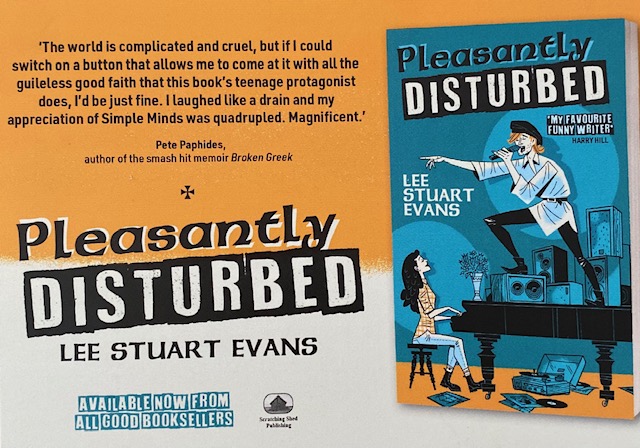
It was following a post I’d written about Themes For Great Cities, Graeme Thomson’s excellent Simple Minds biography, that Lee got in touch. Would I like to review Pleasantly Disturbed, a novel that had Simple Minds at its core?

Lee’s book arrived, along with a kind note from him, and I sat it on my ‘to read’ pile – you know that ever-growing tower of books on the bedside table? And there it sat for ages. And ages.

And ages.

And eventually I started to read it.

Then I dived head-first into a work-related Open University course which was extremely reading-heavy….and Lee’s book went back to the ‘to read’ pile again.
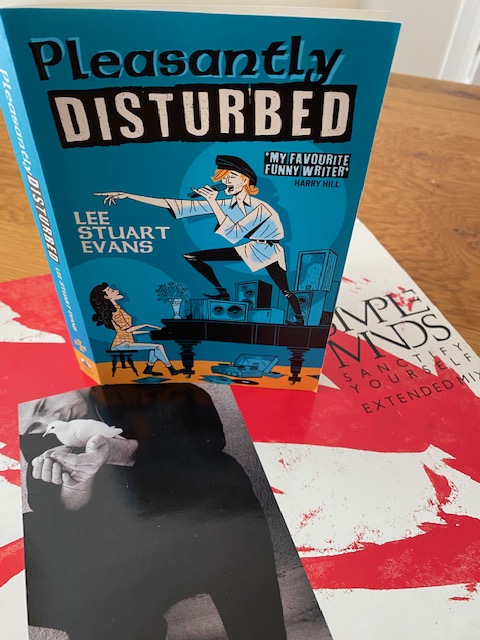
But this week, off work but now well enough to function on basic tasks, I picked up Pleasantly Disturbed, slightly ashamed at myself for neglecting it for as long as I had, and restarted from the beginning. I tore through it in two days. It was, to quote the Trashcan Sinatras, an easy read. The review that follows is my attempt at one of those 200-word Mojo/Uncut/Q reviews from the back of the magazine – this ain’t music, per se, they suggest, but it has music as a central theme and with you being of a particular demographic, it’s something you might enjoy reading.

Pleasantly Disturbed by Lee Stuart Evans

There’s more to life than cars and girls, as someone once sang. But not much for our protagonist Robin. Only Simple Minds gets the better of them in the holy hierarchy of life’s staples, yet all three are intertwined in a story that takes in organised crime, reality TV and the foibles of the equestrian set.
Set in the English Midlands, it finds late teen Robin Manvers (and possibly our author himself) dreaming of being Jim Kerr. ‘Divorced’ from his dad and living with his mum and sister in a shabby house, Robin needs a way out. Knowing that even the most kohl-eyed and esoteric of rock stars have to start somewhere, malleable Robin takes on an apprenticeship at a local garage. This gives him the necessary funds to buy clothes, records and tickets to Simple Minds Mandela 70th Birthday show at Wembley, a show he plans to take in with girlfriend Fliss.

Fliss comes from the other side of the tracks; she’s horsey, she comes from an extremely wealthy family and she has a Kate Bush obsession the equal of Robin’s hero worship of Jim Kerr. It turns out too that Fliss has a buried musical talent not heard since Wuthering Heights first fluttered its way into the nation’s collective consciousness – a talent that everyone but Fliss herself can see, but a talent that, should the stars align, might well take her all the places Robin can only dream of.

Fliss’s father, a golf clubbing Rotarian happens to be friends with Robin’s boss at the garage…they are similar people…they have similar business interests…a shared interest in cars… and gathering pace quicker than you can shout “Speed your love to me!”, the storyline unspools, shoots off in unexpected directions and gathers together again neatly at the end.

All the correct cultural reference points are here; the allure of Susannah Hoffs, Minder, nods to up and coming bands, the unspoken kinship with Gregory’s Girl and the films of John Hughes, and the story is told with the same fast-paced humour that Evans has developed across his numerous TV scripts. I particularly liked how the final chapter time-jumped to the present day, so we found out how everyone’s lives turned out.

If you’re looking for a page turner to while away the Easter holidays or read and re-read until Simple Minds hit their run of UK summer shows, you might want to find a copy of Pleasantly Disturbed.

You can Pleasantly Disturbed by Lee Stuart Evans in all the usual places, but especially from here.

Hard-to-find

Sample Minds

Lagging behind the curve again, I’ve only recently read Themes For Great Cities, Graeme Thomson’s exquisitely researched and expertly written account of Simple Minds‘ early years. The book stretches from the band’s formation on Glasgow’s southside through their infatuation with Eastern Europe and closes on Don’t You Forget About Me, the Once Upon A Time album and imminent ubiquity, and, like all the best music books, it has you scurrying back to the music with new perspectives.

It’s those early albums that are most interesting to me and, I’d assume, you too, and Thomson leaves nothing unturned in his quest to unravel the song writing secrets. How exactly does a post-punk act from Glasgow arrive at I Travel? Or the Teutonic goosestep of This Fear Of Gods? Or Sweat In Bullet‘s chrome-coated punk-funk? While their peers constructed traditional verse/chorus/solo songs, Simple Minds preferred instead to coax and tease free-flowing soundscapes from straight out of the ether, seemingly structure-free, but yet not.

Singer and de facto leader Jim Kerr freely admits he can’t play an instrument, so he’d sit in the corner as the band jammed on a riff for hours at a time, a turned-to-the-wall ghetto blaster recording it all. When the band downed tools, his work would truly begin. He’d pore over the tapes, listening out for an interesting section or bass run, guitar riff or drum beat, hone in on it and return the next day with instructions for the band on what to play. While they got on with re-learning the tune, Kerr would sketch out a lyric and the songs would slow-boil their way into being. Painstaking and longform, it’s about as far away as possible from, say, someone like Ian McCulloch turning up to the Bunnymen’s rehearsal rooms with his ego and a near-complete Killing Moon.

Kerr’s jigsawing of parts reaped rewards. Much of New Gold Dream – the thinking man’s favourite Simple Minds album and you know it – was pieced together from snippets of extended jams, not that you could necessarily tell from listening to its sinuous, gossamer textures. Charlie Burchill might be the band’s guitar player, but he barely plays two chords in a row the entire time. Instead, he conjures up a light coating of feedback here, a sequence of sustained notes there, a Chic-inspired half riff or, as on the pop-smart Glittering Prize, a wobbling Jazz Chorus-ed refrain. Like no other guitar player before or since, Charlie leaves whole blank spaces of nothing, the band’s melody carried instead by shimmering synth or inventive drumming, Kerr’s hooks or, especially, Derek Forbes’ formidable, fluid bass. With the focus always on Kerr and Burchill, Forbes was left to quietly get on with his job away from the spotlight and it is he, when placed front and central to the mix, who is Simple Minds’ secret ingredient.

Simple MindsPromised You A Miracle

On Promised You A Miracle, the band’s specifically written for the Top 20 hit, Charlie dazzles with echoing snatches of guitar in the verse before a sparkling and fizzing (and rare for him) solo, but it’s Forbes’ quivering and magic mushroom-powered playing that provides the song’s bedrock. After every chorus he judders and jolts the verse back into being, the band holding on to his higher than high coattails for dear life, the song’s keyboard motif grounding the listener with its familiar motif. Just how familiar though would depend on how clued up you were on your House music at the time.

Bad GirlsToo Through

In October ’81, Simple Minds found themselves in New York and listening to Kiss FM. Recently-recruited drummer Kenny Hyslop became obsessed with the slap-happy and frequently-aired Too Through, recording it on his Walkman and playing it non-stop on the tour bus. Seeking more jamming inspiration, the band played along to it at their next writing session and, latching on to its keyboard hook while ignoring Jocelyn Brown’s self-assured vocal, constructed Promised You A Miracle around its disciplined yet funky framework.

Although you’ll spot Miracle-ish parts to Too Through (or should that be Too Through-ish parts to Miracle?), the end result is nothing like the inspiration. Proof, should it be needed, that that the very best bands take disparate influences and turn them into something that is uniquely them.

If you too are slow to catch on to the best music books, you’ll probably now want to read Graeme Thomson’s Themes For Great Cities. You can find it in all the usual places, but especially from the link via here.


Hard-to-find

GяEaT MiИdS

Before the bombast and bluster of Waterfront and its parent album Sparkle In The Rain, before Don’t You Forget About Me‘s omnipresence in top tens the world over, before they looked to the tiered arenas of the American midwest and long before they’d even thought about possibly considering property investments in Tuscany, Simple Minds made sonically-interesting and stubbornly European music; cold, glacial and filmic, music that suggested movement and travel by Eastern European train rather than by air conditioned limo the length of the Eastern Seaboard. Even their pseudo Cyrillic logo at the time, all thin and sparse and fat-fee, was a nudge-nudge wink-wink to the twin influences of the Iron Curtain and the Cold War. Those reversed Rs. The backwards Ns. Ask James Dean Bradfield about it the next time you see him.

As much as Simple Minds became a great Scottish export around the mid ’80s, it’s those earlier records where, for me, the magic really happens. Indeed, as the switched-on amongst us know, early Simple Minds was where it was truly at. That band, that line-up, that creative vision, not to mention the inspired choice of producers – John Leckie! Steve Hillage! –  has a rare essence about it that makes those great, danceable post-punk records sound futuristic still, even 40 years on.

Simple MindsTheme For Great Cities

The eerie keyboard motif that signifies Theme For Great Cities’ start is all over those Minds’ records from the era. Part Eno and part Magazine’s Dave Formula, it’s the singular instrument that hints at melody and song form in the band. Married to a punchy rhythm section, it made for a spatial and atmospheric sound, a sound that was unmistakeably Simple Minds.

Theme For Great Cities is the perfect example of the group, the juddering bassline and whip-smart electro backing conjuring images of speeding landscapes as you rattle through foreign lands. The band is precision-perfect in timing, metronomic and pinpoint in accuracy. Even Charlie Burchill is in on the act. He plays almost not one chord, almost not one sustained note. The disciplined post-punker that he is plays the track’s scratchy rhythm almost the entire time without so much as a tendon-resting break. Nile Rodgers in eye liner, he breaks free at one point to simply crash a minor chord with all the charm of a glass bottle being smashed against a wall, then slips into a little effect-heavy sustained glissando before once again taking up the chicken scratch. Arty? Yep. European? Yep. Roxy Music if played by Glaswegian tenement kids? Yep. It’s a beauty. That well-worn cliche about an old record sounding like it could’ve been recorded yesterday rings true with Theme For Great Cities.

Likewise This Earth That You Walk Upon.

Simple MindsThis Earth That You Walk Upon

It’s so disciplined, so ethereal, it might’ve launched itself straight from The Orb’s mixing desk in 1993. Its pitter-pattering drum machine springs to mind Sly Stone, but where Sly would close-mike himself and drawl coolly about baybees makin’ baybees, Simple Minds smother the pitter-patter in a soundscape of treated electric guitar and thumping slapped bass, synth washes and echo-laden keyboards. Spacey and flotation tank-light, This Earth That You Walk Upon is a bit of a year zero for the electro acts that would follow.

In movie making terms, the trajectory of Simple Minds is a bit like your favourite art house director foregoing the grit and grain of monochrome and throwing their lot in with the surround sound and widescreen epicness of the Hollywood blockbuster studio set. There’ll still be good bits in the movies, but as a whole, they’re too crowd pleasing and calculated. In the old days, the creatives at the helm knew the cost of nothing and the value of everything. When they make that move into the big leagues, the bottom line becomes the single most important factor, and undoubtedly the music suffers as a consequence. Thankfully, we can go back any time we like. Outdated music for outdated people? You bet it is.

Get This!, Kraut-y

Travel Agents

I met Charlie Burchill once. Tiny and comically round, he looked like a pantomime pirate who was missing his beard; the tight black jeans, pointy boots and dazzling white blousy shirt that probably cost more than my monthly mortgage repayment brought to mind Captain Pugwash on shore leave. While my 5ft 8″ towered over him I was instantly enlightened as to why that white Gretsch Falcon he was fond of playing in those Simple Minds videos always looked ridiculously over-sized on him.

I’m being a wee bit cruel though; Charlie was very smiley, extremely chatty and, in the same way that he and Jim Kerr had moments earlier been gushing over the Roxy and Bowie 7″s that filled the Wurlitzer we happened to be leaning against, he listened enthusiastically to my stories of how Simple Minds had played a major part in my formative years.

I came to Simple Minds around the time of Glittering Prize and Promised You A Miracle – the New Gold Dream album is an incredibly-produced LP – stick it on at some point and lose yourself in the textures – and while it was Don’t You Forget About Me that brought them to the attention of my mum and the rest of the world, it was I Travel that melted my mind to the possibilities of music.

By the time I’d first heard I Travel, the band had just played Live Aid and were chronologically closer to Belfast Child, Mandela Day, Biko and the posturing, political pap that disenfranchised an entire generation of fans who’d been by the band’s side since the days of the Mars Bar in Glasgow, the knowing Chelsea Girl single and the Empires And Dance album. The New Gold Dream album though had me scampering backwards to see what else the band had done, and it was on a scratched copy of Empires And Dance from Irvine library that I first encountered I Travel. Listening to it as I type, I’m still waiting on a skip that doesn’t happen. Europe has a lang….oblem. It’s funny how music lodges in your head like that, eh?

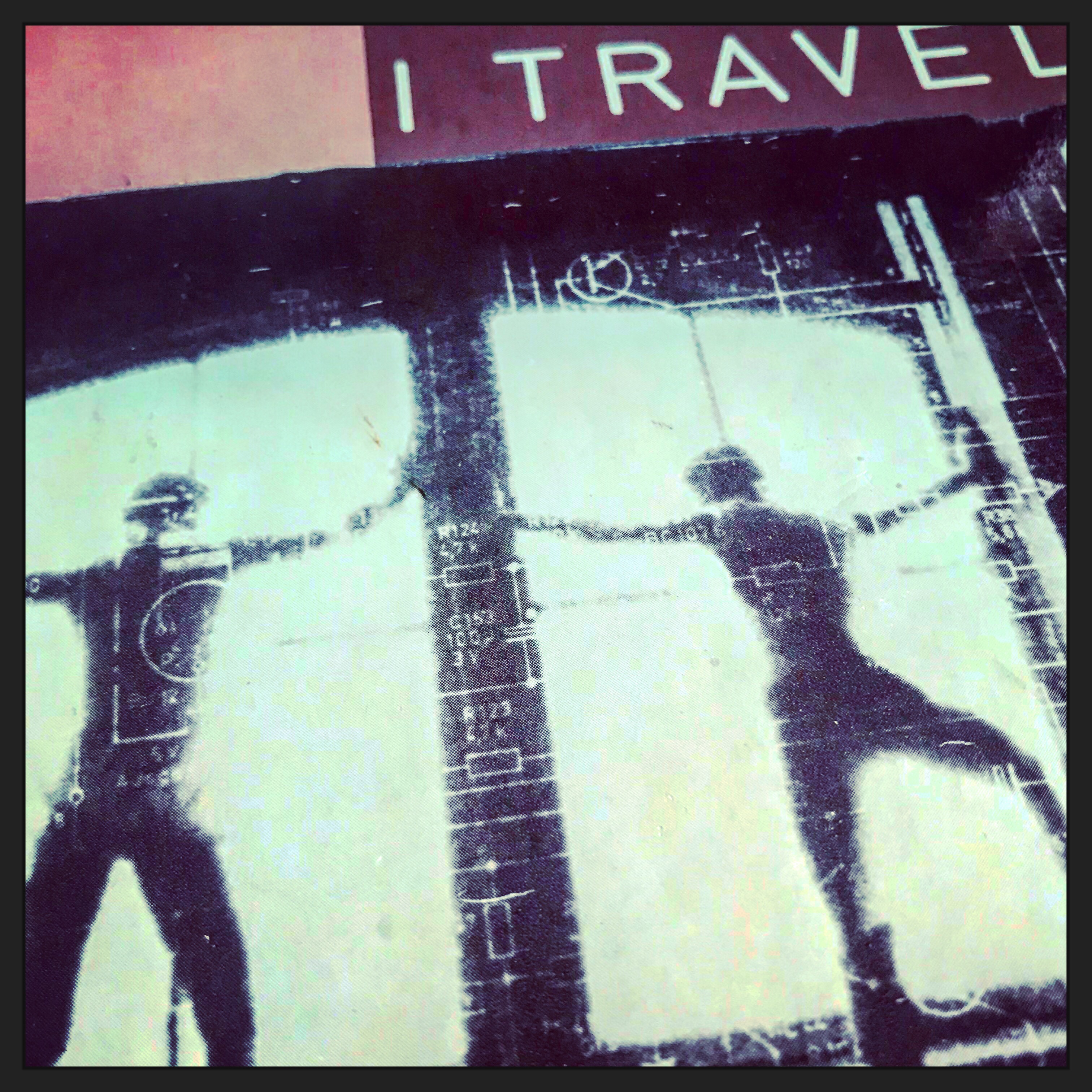
I Travel was the first track on that album and signalled a brave new direction for the band. Its clattering, steam-powered industrial funk is propulsive, futuristic (still) and highly infectious. It’s the sound of industrial Victorian Glasgow breaking free of its chains, the sound of the shipyard welders’ blow torches set to scorch, the sound of Donna Summer’s I Feel Love as played by art punks from the south side of Glasgow.

Simple Minds I Travel (extended)

I have two copies of I Travel. There’s the original, 12″ version, bought on a rare outing to the Virgin Megastore on Union Street, back in the days when folk still smoked behind the counter and you darenae go up the stairs to the second floor on account of all the scary-looking punks and their brothel creepers blocking the way. I also have a reissued 7″ found whilst rummaging through a box of Gene Pitney and Sonia 7″s in a Lake District charity shop. I was scared to leave it there, unsure of what fate would befall it should I put it back. The 12″ is a well-played piece of vinyl. It was often the soundtrack to drunken teenage stupidity, stuck on at filling-loosening volume as soon as someone’s parents had reversed out the drive for a week in Wales. It’s a great record.

How did they write it? It’s not a guitar tune in the traditional sense. You won’t find the chords on your favourite tab site. Wee Charlie adds occasional textures here and there, and there’s a fantastic blink-and-you’ll-miss-it Nile Rodgers-esque flourish midway through, but the song’s genesis must lie somewhere between Derek Forbes’ groovy never-ending bass, the sequenced synths and that head-nodding, rattling rhythm. Imagine being there while the band jammed it, working all its nuances out?! Played live, it’s a cracker;

With the benefit of acquired musical knowledge, it’s clear that Simple Minds had been listening to the right sort of European records. Kerr’s baritone echoes the more esoteric moments from Bowie’s Berlin phase and he sings of culture; decadence and pleasure towns, tragedies, luxuries, statues, parks, galleries. He might even be singing of Glasgow – the lyric certainly ticks all of that subject matter.

Strip everything else away – the 8 note keyboard motif, Burchill’s splashes of colour and Jim Kerr’s vocal and you have a record that sounds like its made by machines with soul. A bit like Kraftwerk, I suppose. In fact, if it popped up vocal-free on 6 Music tomorrow, you could be forgiven for assuming its retro-futurism was the latest Underworld release.

Expertly glued together by John Leckie, I Travel hints at a group of musicians growing into themselves. Hindsight shows that Simple Minds went on something of an imperial run around this time. Imagine if I’d never looked back and instead fell for the stadium shows and the hey hey hey heys. There’s an axis-turning thought.

Kraut-y, Live!

Kerr In The Community

My formative teenage years were soundtracked by a holy trinity of 12”s – Talking Heads’ Slippery People, New Order’s Blue Monday and Simple Minds’ I Travel. Before the age of trying to get into pubs, my pals and I would spend a few hours each Saturday at Andy’s house, where his more liberal parents allowed us to play snooker in their loft and listen to music whilst hiding our grimaces from one another as we drained a couple of cans of razorblade-sharp Holsten Pils, before negotiating the loft ladder down into reality and the mazy walk home to our unsuspecting parents. They were great times.

Fast forward the best part of 30 years. Did I (shhhhh! – don’t tell anyone!) want to go to a one-off, top-secret, intimate Simple Minds gig? It was guest-list only and my name was on it. The address would be given to me on the day of the concert itself. My teenage self would’ve spontaneously combusted at the thrill of it all. Nowadays, after their years of bloated bombast and my changing musical tastes, Simple Minds mean much less to me, but of course I was desperate to go. My lips were sealed.

Now. Plenty of bands have done intimate gigs. There’s something fantastic about seeing the big acts up close and personal, even if you’re maybe really not that close. The stadium bands like Foo Fighters sometimes pop up in the smallest of places at the shortest of notice. Arena bands downsize now and again to play club gigs – I’ve seen Bob Dylan do his ‘club’ gig in the Barrowlands, close enough to see the sweat drip from the brim of his cowboy hat and onto his keyboard during Ballad Of A Thin Man. I nearly saw Prince do his after-show thing in The Garage many years ago, but a huge, house-sized American bouncer counting loudly along the line stopped a few folk in front of me and my pals, sliced the line with a chop of his arm and loudly declared, “Anyone behind this line will not get in. Repeat. Anyone behind this line will not get in.” We were behind the line. We did not get in. Repeat, we did not get in. I’ve seen Blur, Radiohead, Manic Street Preachers….countless big names in King Tuts, but these weren’t intimate gigs as we know them – the venue was the venue because that’s the number of tickets these bands could sell at the time.

  IMG_4683

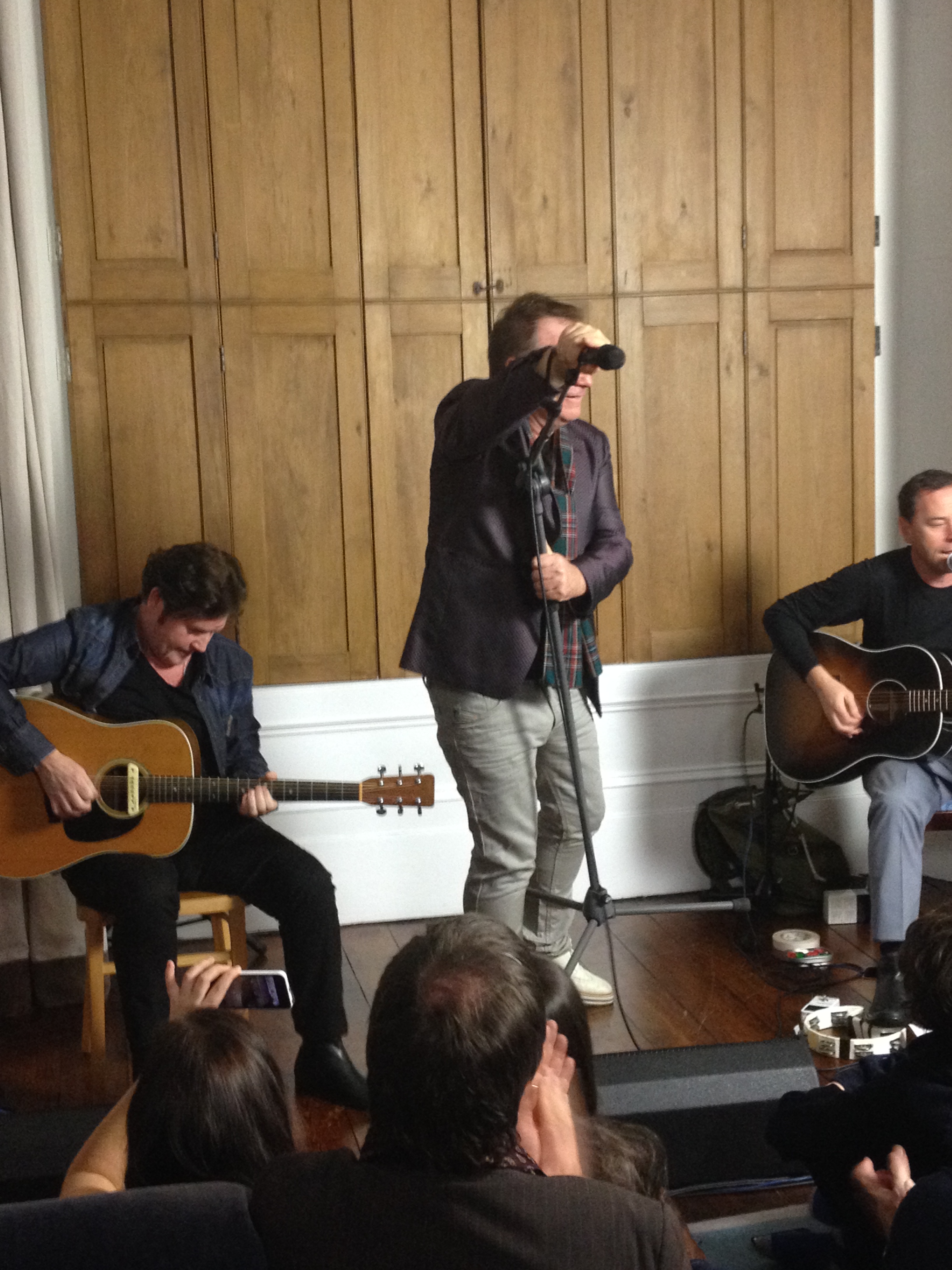
Simple Minds were playing in a 3rd floor tenement flat in the west end of Glasgow. A nice flat. A big flat. But still a flat, with neighbours to the side and below. It belonged to John Dingwall, hot shot music writer at the Daily Record and Sunday Mail. The guest list was comprised, said John, of 48 of the coolest people on ‘the scene’. Evidently there was some mistake. At the very best, I had somehow wangled my way onto the list of cool at number 48, but I was there. A venue-sized PA was manhandled up three flights of winding stairs and the living room transformed into what can truly be described as an intimate gig. It had all the makings of a decent New Year’s party with added volume.

The band (Jim, Charlie and Jim’s brother Mark on additional guitar) played only 5 songs, but what a thrill! They were here to promote Big Music, their new album out on the same day. The gig was being filmed for broadcast on the Record’s website. They could’ve chosen to play 5 tracks from the album and scarpered. But no. We got a bite-sized version of a stadium show instead. It was incredible.

IMG_4671

When we first started out, there was a club in London called Dingwall’s,” explains Jim Kerr. “We aspired to play there but we never got the chance. Now the club is gone, but we’re still here, finally playing Dingwall’s! We used to play lots of covers at first because people didn’t want to hear our own songs. So we’ll start tonight with a cover.”

And off they went, playing their way through a stripped-back version of The Doors’ Riders On The Storm, surprising myself at least, as I expected maybe a Bowie or an Iggy or a Roxy cover. Charlie on the left is firing off little lead acoustic solos. Mark on the right is keeping the rhythm. Jim centre ‘stage’ is loving it. He’s pulling off the rock star poses. Leaning into the mic. Pointing to people sitting on the floor. Playing as if he’s doing a normal gig at some enormodome stadium in the mid-west of America. He doesn’t know how to do anything different. He can make a stadium seem like a living room, but he can make a living room seem like a stadium. A true performer.

IMG_4669

A weird thing happens during the second song. The band are playing Alive And Kicking when I get a Pavlovian rush; a knotted stomach, an intense feeling of guilt. The 14 year old me told his mum he was going to buy the new Simple Minds single with his paper money. His mum told him that he spent far too much money on records and, no, he wouldn’t be buying it. 14 year old me bought it anyway, which I’d have gotten away with if I hadn’t actually played the bloody record.

As soon as the first bars wafted from my bedroom and downstairs, my mother was up like a shot, mad that I had “wasted” even more money on vinyl. Every time after, when I pulled the record out to play, I got a rush of guilt and I always played the record at a low volume, so as not to incur the wrath of my mum. And here I am, 30 years later, feeling that same rush of guilt. It’s the knotted stomach all over again. I half expect my mother to barge into the crowded room and demand the band stops playing. It’s really weird. I actually find myself laughing nervously to no-one during the second verse. “You lift me u-up…ho!” Weird. Much later in the evening I find myself face to face with Jim and I tell him the story. I get a pat on the shoulder and a wee hug for telling him. I’ll never hear that song in the same way anymore.

IMG_4678

Introducing the one new track played, Honest Town, Jim has genuine tears in his eyes. It’s a song about life and death, about close ones dying – Both Jim and Mark’s mum and Charlie’s dad passed away during the recording of the album. It’s the one sombre moment of the night. As soon as the last notes of the track have faded, the band are into Don’t You Forget About Me, played with all the energy and passion of the glory years Simple Minds. More memories of spinning the vinyl on my wee record player come flooding back. If anyone had told me when I bought it that 30 years later…etc etc…blah blah blah.

We get an option for the last track – “What d’you want to hear?” asks Jim. And in the split silence before the audience make their suggestions I manage to blurt out “I Travel!” It’s an acoustic gig, I have no chance of that and Jim knows it, arching an eyebrow and fixing me with an unspoken grin. “You can have a Bowie song orThe American’,” he replies. The wee crowd votes unanimously for The American and the Minds are off and running for the last time, playing a stripped back version of a song I never expected to hear performed.

IMG_4680

Regardless of your thoughts on Simple Minds, they are still a great, great band. What a unique gig to have had the fortune to be at.

Here’s 3 of the post Krauty, pre-stadium Simple Minds. Still sounding as fresh as the day they were committed to wax.

The American (Original Version);

I Travel (12″ Version);

Love Song (Album Version);

IMG_4684There’s Wally!

I’m at the back in the orange jumper. Ooft. That wide angle really accentuates the man boobs. I’m off out for a run…

(last photo (c) Daily Record)

Get This!, Hard-to-find, Kraut-y

‘Head Music

Radiohead play both types of music – arty and farty, and they’re still the band by which all others must be measured. In comparison, everyone else just doesn’t sound like they’re really trying, do they?

Radiohead haven’t stood still. The left-field rock double whammy of The Bends and its more adventurous follow-up, OK Computer would’ve been the pinnacle of many a band’s career – lesser bands would maybe even have stopped after such an explosive one-two. Other bands (hello Coldplay, we’re looking at you) took lowest common denominator Radiohead and churned out the Asda price version, to much ringing of cash registers around the world. How could you improve on two great albums? Not many could. For some people, Radiohead couldn’t either. But you know better…..

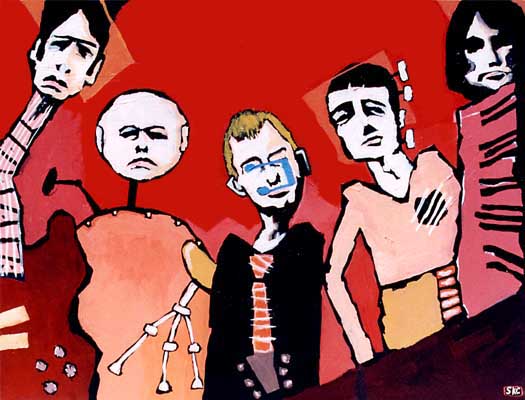
radiohead2

I like the experimental, itchy, claustrophobic Radiohead. The static bursts. The skittering drums. The are-they-guitars-or-are-they-keyboards? The cut ‘n paste approach to the vocals. The way everything is wrapped, womb-like in its own wee Radiohead bubble. Recent Radiohead has been all about the sonic textures. The ebbing and flowing. The peaks and troughs. The grooves rather than the grunge.

These Are My Twisted Words was put up for free download a few years back on the band’s website. I’m sure you’ve heard it;

From the warped intro via the chiming, falling-down-a-hole guitar riff that surfs across the top, the whole thing jerks and twitches away like Thom Yorke’s gammy eye whilst maintaining an actual tune – the perfect amalgamation of all that makes Radiohead great. Lots of people moan that the ‘Heid have lost their way with a tune. Sit them down and play them this. The only way it could be better was if it was three times the length.

yorke

Where I End And You Begin is all swirling ambience and one chord groove. Hip hop drums and phat bass. But still slightly wonky and weird. It’s on Hail To The Thief, a quiet contender for title of Best Radiohead Album. I’m sure you’ve heard it too;

simple minds early

Post-rock Radiohead remind me an awful lot of pre-rock Simple Minds, back when they were releasing arty, Eastern European influenced glacial soundscapes. Equal parts post-punk snottiness and Bowie metallic art punk with a Kraftwerk man machine-like muscle, this was not music to punch fists in the air to. It was cerebral yet danceable. It aimed for basslines rather than headlines.  Perfect headphone music. Mandela Day and Belfast Child were somewhere in Western Europe, a million light years away.

Here’s a couple of early Simple Minds tracks. Note the influence on mid-period Radiohead. They won’t deny it.

Theme For Great Cities

This Earth That You Walk Upon


Have you got Polyfauna, the Radiohead app yet? What d’you think?

radiohead app