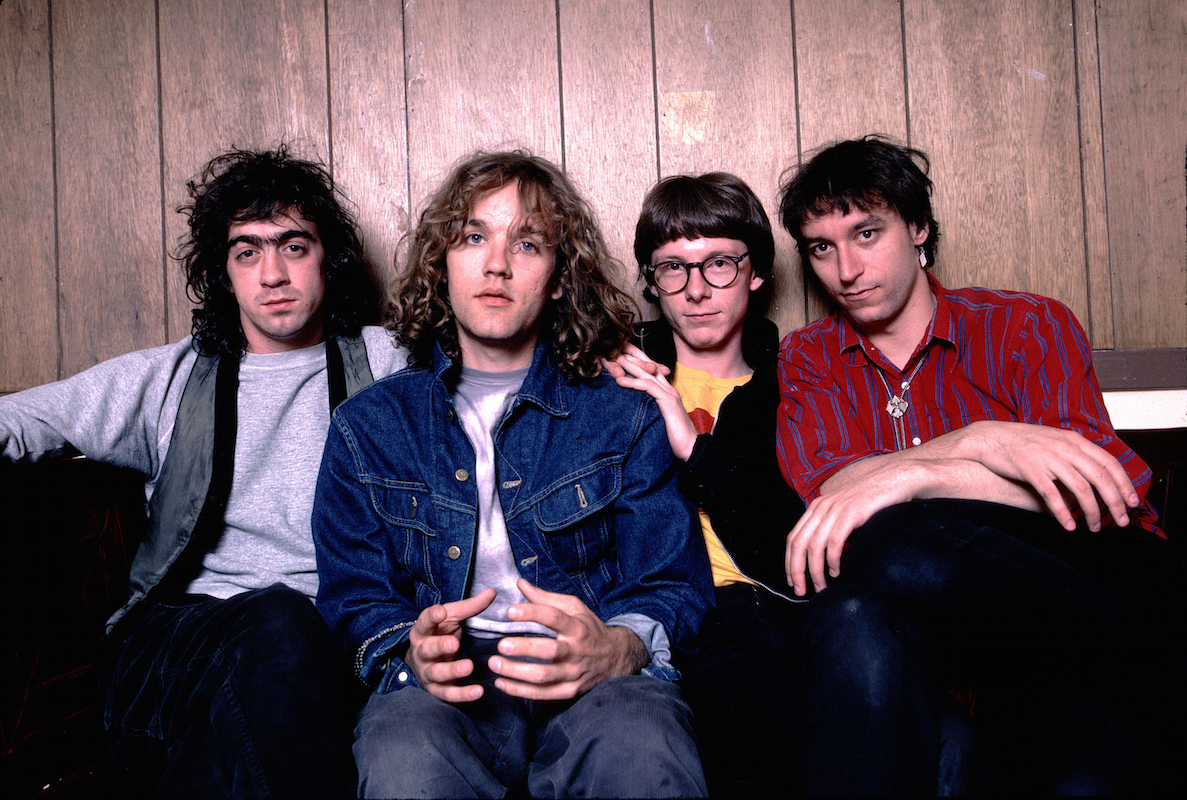
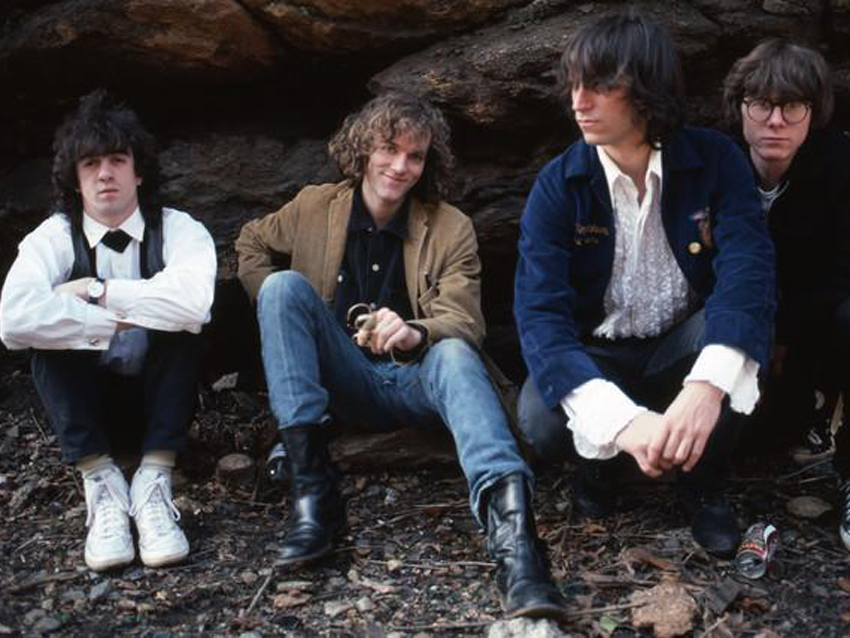
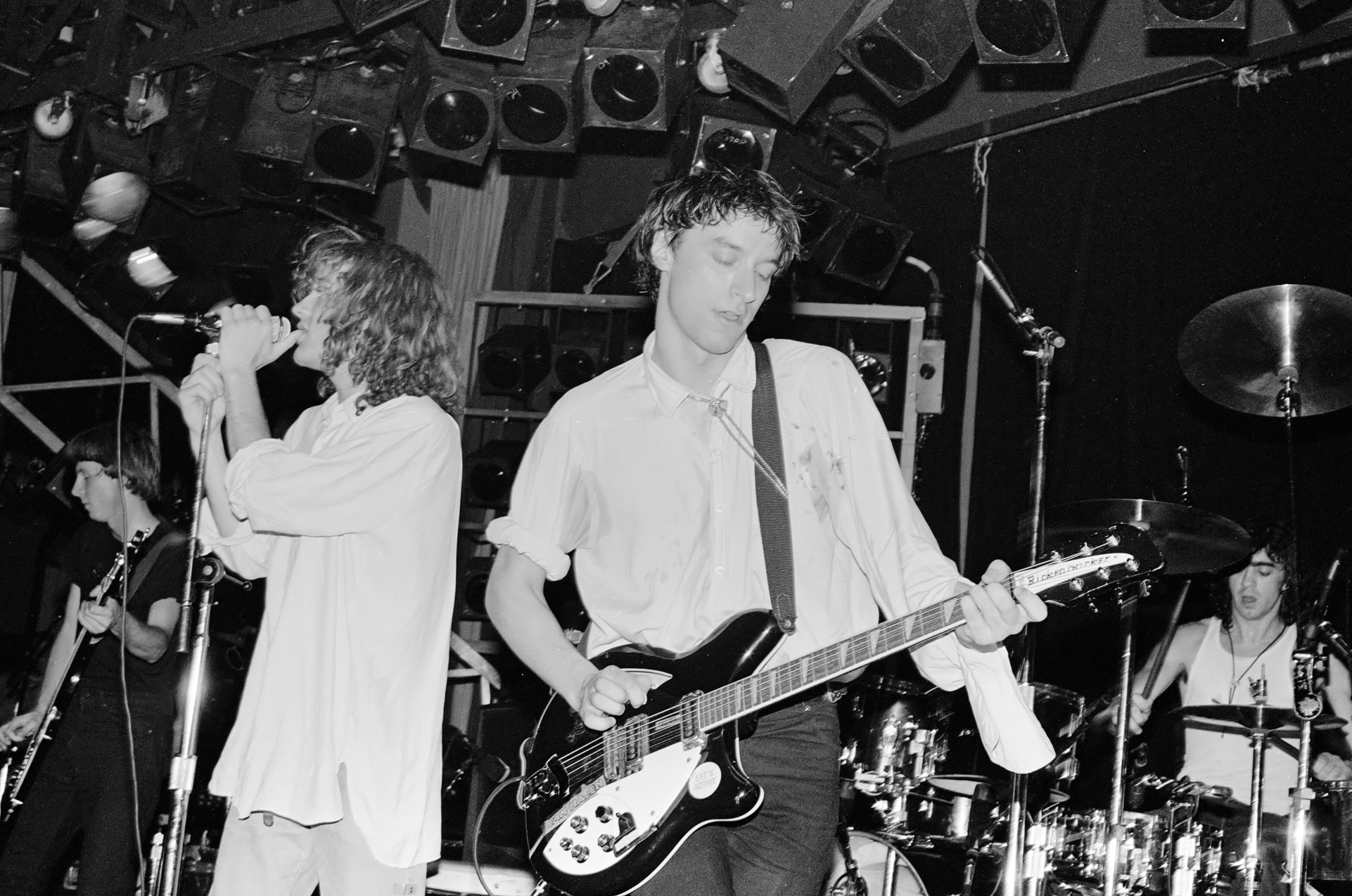
Cover Versions, Get This!

Strange Couple

Wire‘s Pink Flag is, as you know, essential listening. Twenty one tracks in little over half an hour trip over themselves in a rush to the finish line, skinny-waisted, free of flab, fighting fit at flyweight…or I Am The Flyweight, if y’prefer. Drums, bass, guitar and vocals meld as one; shouty in parts, pseudo-menacing in others, the group sounding fragile one moment then like the apocalyptic big bang of post-punk the next. There’s no fancy gimmickry, no keyboard parts, no horns, nothing added that can’t be played on a stage between the four of them. A double-tracked vocal? Forget it. They’ll all sing together when volume and texture are required. Overdubbed solos? No chance. Actually…solos? Not really. That’d be muso and the Wire manifesto suggests that muso = bloated fatness. There’s neither a blues-inflected up-the-frets wig-out or a slightly-bent B or G string anywhere on the record. Where their peers unselfconsciously slipped into the sort of riffage Chuck Berry might’ve spat out had he been pointed in the direction of a Marshall stack, Wire eschew that particular boring old rule book and rewrite their own. Guitars will be loud. Incessant. Slamming like a downpour of anvils from a heavy iron sky…and it’ll all sound fantastic. The skill of Wire is that they can say all they want with just some carefully considered words and a rammy of guitars. Often, they can get their point over in well under a minute.

Saying that, half way through the second side you’ll find Strange.

Wire – Strange

Strange is just one of three tracks that breaks the 3-minute barrier on the record. Indeed, had they sustained a tiny hint of cymbal splash at the end, it would’ve passed the dizzying, nose-bleeding 4-minute mark. As it is, it’s the longest track on Pink Flag and one of the more conventional songs at that.

Here, Wire are economical and taut, sludge-rock without the pantomime of Sabbath or the self-masochism of Iggy and the Stooges. Guitars and bass military two-step their way through an electric crackle of distortion. The drums thunk their way in 4/4 time, the hi-hat crisp and clear and opening and closing with total robotic precision. Colin Newman’s sneery Thames Estuary vocals are at odds with the duh-duh, duh-duh, duh-duh-dumb vocals in the background; neanderthal and thick and totally rock, something, you have to think, that Wire would be horrified at the thought of.

Block chords slide a couple of frets up for a brief key change. ‘Refrain! Refrain!‘ comes the shout. Where they might’ve naturally ended things, the song picks up again. Crunch, crunch, crunch goes that G to C chord change. Hiss, hiss, hiss goes the hi-hat. Slam, slam, slam, they all go as one. The tempo never wavers, hovering as it does somewhere around resting heartbeat level, impressively marginally slower than you feel the band wants to play. Takes discipline, that. Lesser bands would’ve sped up and thrashed their way to an undignified and calamitous ending by now. Wire march on, keeping the tempo steady but weaving ambient and atmospheric guitar noise to flavour the stew. A bit of feedback. Wacky high notes. Strings that are hit and abused rather than plucked. Beautiful art rock from start to finish.

A version of Strange pops up on REM‘s Document album. But you knew that already. I lent my record to a pal many years ago and after he died I felt I couldn’t ask anyone for it back. Thanks to a clueless Vinted seller (£3, ya dancer!), it’s only in recent years that I’ve owned it again. Listening on Saturday morning, on the same day my social media was filled with Oasis fans sharing their happy news of securing tickets for the cash-grab shows next year, a line in the record’s imperious King Of Birds leapt right out at me. ‘Standing on the shoulders of giants leaves me cold,’ goes Michael Stipe, ten years ahead of the critics.

But back to Strange.

Strange positively bounces right off of Document‘s grooves.

REM – Strange
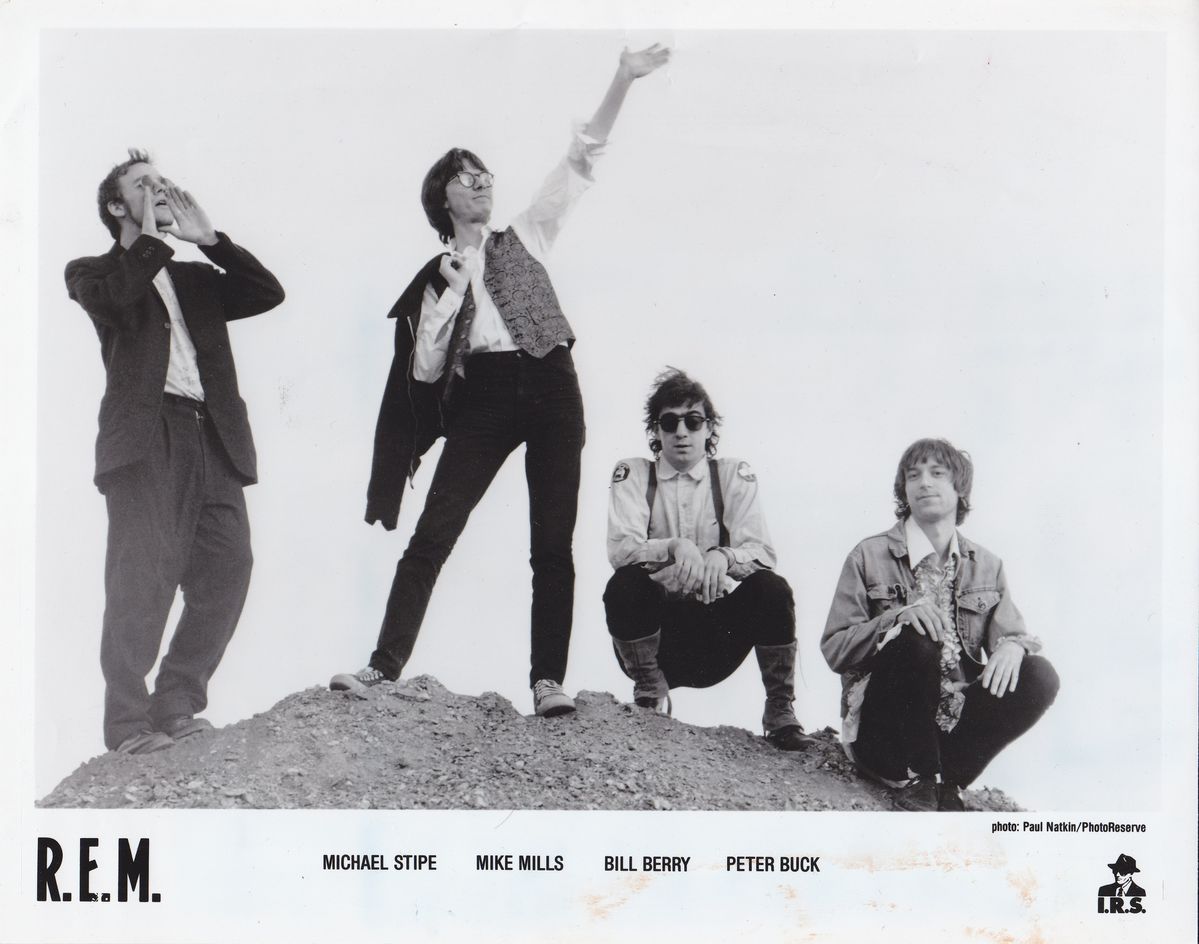
It’s faster than the original by half a minute, and, ach, there’s no ‘Refrain! Refrain!‘ part either, but then, Wire never thought to add a rollicking barrelhoue piano trill at the beginning of theirs. Michael affects a Georgian version of the Newman sneer and changes the original’s ‘Joey‘ line to sing of himself in third person, which is very Stipe. Mike Mills hits those high high high notes that he’s totally made his own as REM’s secret weapon on backing vocals. Even the duh-duh backing vocals sound effervescent and life-affirming. Peter Buck’s guitar is almost twanging with joy. ‘Thanks, Pete,’ it goes, ‘for dropping the open-stringed jangle just this once and letting me power chord my way to the end. I can’t, however, let this moment pass without a wee, mangled solo half way through. You don’t mind, do you?‘

REM’s band-in-the-backroom-of-a-midwest-bar version of Strange was the first version I heard. It was quite something when I finally caught up with the original. I love them both. Sometimes you want disciplined art rock. Other times you need hot-wired, countrified rockin’. But at any time, Strange will more than suffice.
Get This!

Foresight Isn’t Anything At All

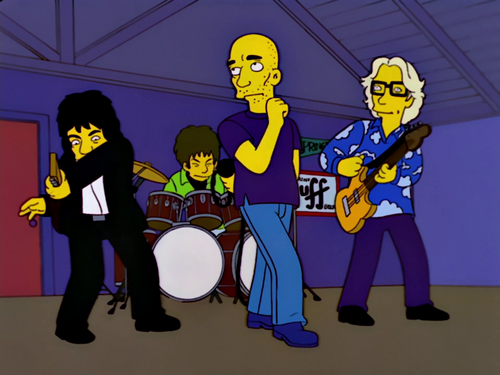
That episode of The Simpsons with R.E.M. in it never tires. For whatever reason, the group are playing live in Homer’s garage – spoken to rhyme with Farage, Scottish readers – and tearing through a rockin’ version of It’s The End Of The World As We Know It… until they realise that they’re not actually in the private bar of some tech-bro millionaire like they thought they were, but in a hastily converted addendum to the Simpson family’s house. Momentarily enraged, Michael Stipe smashes a beer bottle, ready to attack poor Homer, until he is held back by Mike Mills and Peter Buck.

“No, Michael! That’s not the R.E.M. way!”

“You’re right. Let’s recycle the shards and get out of here,” says a remorseful Stipe, already on his knees and sweeping up the broken glass.

By 2001, when this Simpsons episode aired, R.E.M., despite their global ubiquity and mass appeal without creating mass market music, had something of a sniggered-at image. They were vocal and active in environmental conservation and recycling issues. Their CD sleeves (no vinyl in ’01!) came printed on recycled card. They played Adam Yauch’s Tibetan Freedom concerts. They donated to the World Wildlife Trust. They aligned themselves to any cause that promoted peace, equality and the non-destruction of the only planet we have to live on… which are all totally admirable and worthy causes, as you know, but causes nonetheless that musicians hadn’t really got behind before.

You’ve gotta kick against what’s gone before in music, so while no act was entertaining the notion of Led Zeppelin’s ‘Starship’ as a means of travel between shows, no-one other than R.E.M. (and maybe Neil Yong) was giving the issue much thought. Nowadays, they’re all at it. Radiohead are extremely vocal on environmental viability. Thom Yorke has played benefit concerts for the Green Party. Coldplay are advocates for sustainable touring, keen to reduce their carbon footprint wherever possible. You won’t find any single-use plastics or meat products at a Billy Eilish show. The 1975 – The 1975!! –  teamed up with Greta Thunberg to release a track, with all profits going to Extinction Rebellion. A cynical marketing opportunity? Possibly, maybe, (definitely!), but one that causes a small ripple of positive effect across the planet.

For all things eco, you can go back to 1989 with R.E.M. Not for nothing is that year’s album called Green. No-one was green in 1989 except R.E.M. and, among a handful of barely-heard – and barely heard of – organisations, Greenpeace, the grandaddy of them all, who themselves only really brought these issues to the mass market once they started sponsoring Glastonbury in 1991.

In fact – and yeah, you were about to point this out – you can go even further back with R.E.M. all the way to 1986 and Life’s Rich Pageant. On this album – R.E.M.’s greatest (fight me, unless that’s not really the R.E.M. fans’ way either) you’ll find Fall On Me, a song which has its lyrical roots in the effects of acid rain. What is it up in the air for indeed.

R.E.M. – Fall On Me

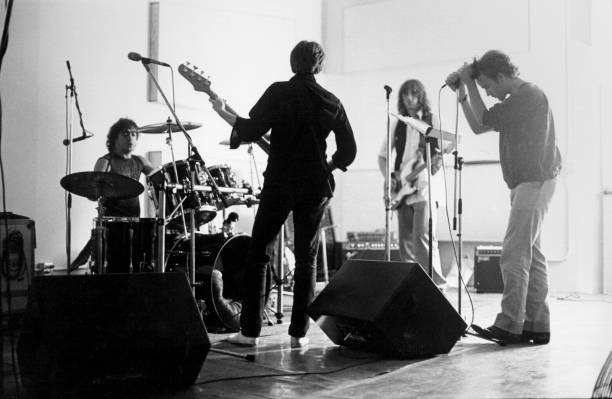
UNITED STATES – CIRCA 1986: Photo of REM (Photo by Stephanie Chernikowski/Michael Ochs Archives/Getty Images)

I’ve been hammering Life’s Rich Pageant this past week. I’d guess everyone’s favourite R.E.M. record is tied up with memory from the first time you heard it – the people and places and things that were going on in your life as it soundtracked it – and so just as Hunky Dory is my favourite Bowie album and Bringing It All Back Home is my favourite Bob Dylan album, My Aim Is True my favourite Elvis Costello record and A Hard Day’s Night my favourite Beatles album – not their best, but my favourite, Life’s Rich Pageant will always be R.E.M. record numero uno. It’s the first album I heard by them and it’s their best record too. Easily. It just is.

On LRP, the group is heading from the underground to the overground. In fact, by now they’ve probably done so, but there’s still enough mystery and obfuscation in their sound, still enough angle in their jangle to keep them independent, or college rock, as they’d say in Athens, GA, that the weirdos haven’t deserted them and the man in the street isn’t quite sure yet of what to make of them. On Life’s Rich Pageant, R.E.M. are flying. They’re tight and muscular (Begin The Begin), they’re esoteric (Underneath The Bunker), they’re heads-down and rockin’ (These Days) and they have a keen ear for a pop super-hook within a murky melody (I Believe).

On Fall On Me, Michael Stipe’s vocal is stately and focused, lending gravitas to a song about the effect of gravity. Mike Mills’ backing vocals soar with a Wilsonesque melancholy, and Peter Buck’s Rickenbacker jangles like the Stateside cousin of Johnny Marr on those early Smiths records, all sad-eyed minors and widescreen major 7ths. As a song, it’s perfect. As a recording, it’s a major tour de force. And, just like the issues it addresses, it’ll never get old.

Live!

Catapulted Into Conscience

Murmur by R.E.M. may well have been called Mumble. Or Mutter. Or just plain Mmmmmm. The young Michael Stipe, all doe eyes ‘n demi-wave was so self-aware of his voice, so self-conscious of his lyrics that he spent most of that first album being foggy, obfuscating and willfully obtuse in his delivery. Quite mmwhat he szings ommn trackszzz sssuch as Pilgrimage or 9-9 or Moral Kiosk is amnyone’szz mmm ggguess. That’s changed somewhat since the advent of the internet, but where’s the fun in that, kiddo? The mid ’80s was an anything-might-be-right approach to lyric learning, phoentics often replacing the actual words and I’m not even sure I want to know the real words nowadays anyway.

Behind the singer, the band stir up a heady swell of classic alternative American rock, as timeless as Tom Petty’s punkish jangle, as melodic as a Wilson brothers’ full-fat harmony, yet as scuffed at the knees as a dustbowl drifter. The instruments are easily identifiable. There’s no muddy mixing here – it’s all about the angle of the jangle.

Peter Buck arpeggiates away on his open-chorded Rickenbacker, all puffy sleeves ‘n waistcoat ‘n suspended 4ths until the end of time. Bill Berry holds the beat, occassionally popping up with a stone cold classic (Perfect Circle), contributing far more to proceedings than his mere title of ‘drummer’ might suggest.

Understated star though is Mike Mills, his solidly twanging Rickenbacker bass driving the songs with a toughness that’s offset by Buck’s clattering jangle. Mills also chimes in with falsettoed harmonies –  just like those Wilson brothers’ hamrnonies mentioned beforehand – adding colour and commerciality to the band’s sound.

R.E.M. – Catapult

I never saw R.E.M. live until ’89, so I can’t be sure, but I imagine Catapult might’ve been quite the rocker at those early shows. On Murmur, it’s stretched as tight ‘n taut as the skin on a tom, the verses straightjacket-slim before it bursts in a glissando of glassy up and down the neck chords and Stipe-provided backing vocals. Catapult! Ca-ta-pult. It’s the sort of chorus that I imagine the band might’ve played over and over in rehearsals, grinning as they play, admiring the chord sequence, the vocals, the drive, the way it all fits… it’s one of my favourite early R.E.M. tracks.

A few years back, IRS released a warts ‘n all set of outtakes from the R.E.M. vaults; live stuff, demos, alternate versions and the likes – ideal for folks like you and I who love that phase of the band more than the mandolins ‘n stadiums years. There’s a terrific live version of Catapult to be found. Internet research shows it’s likely to be a recording from Seattle in 1984 – peak early R.E.M. in other words. As I suggested above, it is indeed quite the rocker.

R.E.M. – Catapult

The keen-eared among you might spot a second voice; grizzly, gruff, grainy. I believe that’s the drummer, once again proving his worth to one of America’s greatest alt. bands. If you haven’t played Murmur in a while or, gasp, ever, rectify that today. It still stands up as one of the band’s best.