Cover Versions, Gone but not forgotten, Hard-to-find

A Good Start!

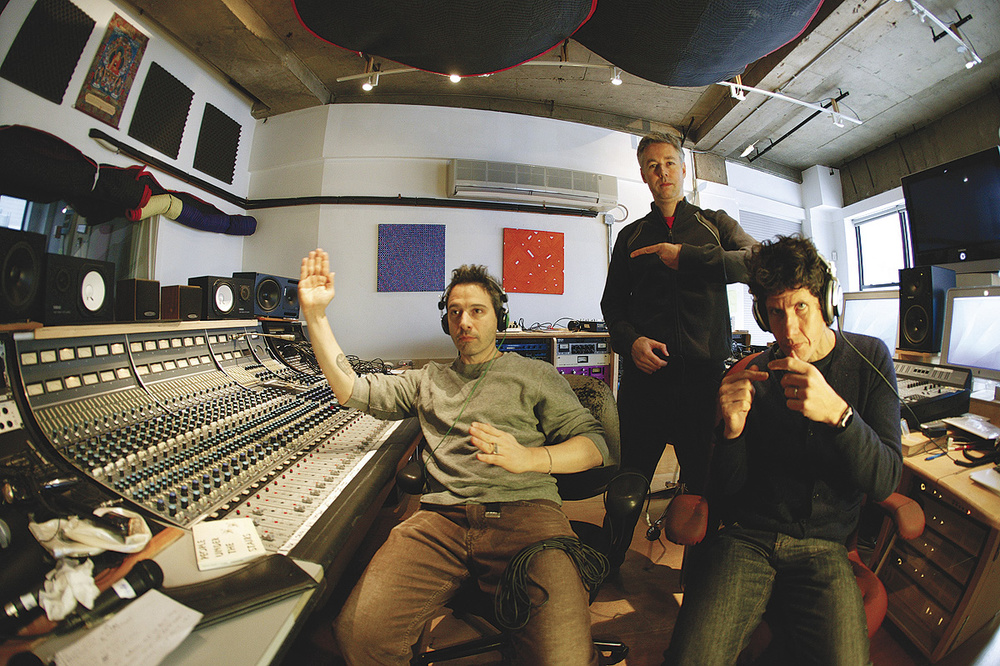
There’s a story that Adam Horowitz tells – kinda preposterous, but totally believable (it’s the Beastie Boys, right?) – where waaaay back in the early days of the Beastie Boys he’s hanging out at a friend’s rather than be at school that afternoon when, from the TV, comes the unmistakable slow ‘n low DIY beats of his group’s own ‘Beastie Revolution‘, the flip side of their debut single Cooky Puss. Somehow, some way, British Airways had picked up on the track and used it to soundtrack a TV advert. Quite what the ad executives were thinking (or were on) by adding the Beasties’ track – lo-fi-Pass-The-Dutchie-as-recorded-by-Lee-Perry – to go hand in hand with an advert for global business travel is anyone’s guess, but there it was. Ad Rock couldn’t believe it. They had to ask for permission, didn’t they?

It so happened that Mike D’s mum had a friend of a friend of a friend who worked for a Manhattan law firm, and so, a young lawyer fresh out of law school and with the bit between his teeth was assigned to take on the Beastie Boys v British Airways in his first case. The four Beastie Boys (Kate Schellenbach was still a part of the group at this point) were subsequently awarded $10,000 each, an astronomical amount for a young person in 1983. Adjusted for inflation, it’s the equivalent of over $32,000 (£30,000) in today’s money. The money would go some way to helping the group establish themselves with decent equipment, accomodation and rehearsal space.

Ad Rock did what any music-obsessed teenager would do: he took himself straight to Rogue, Midtown Manhattan’s music store. He had his eye on a black Rickenbacker, ‘the same one that Paul Weller from The Jam played‘ and had the $250 out to pay for it when, from the corner of his eye, he spied the new-to-market Roland TR-808 drum machine. Dilemma! He rationalised – he had a perfectly good guitar already…all the best, freshest records of the day were built on processed beats…here was his chance to own a real guitar…here was his chance to be cutting edge and adopt the brand new technology of the day…guitar?…beats?…guitar?…beats?… The 808 won out. Serendipitously, it would end up providing much of the backbeat for that first million-selling Beastie Boys album, after which Ad Rock could buy as many Rickenbackers as he fancied. A good decision, as it turned out.

It’s no secret that Beastie Boys have a hardcore punk thing at their roots, but when I first read the story above, I was suprprised that they were fans of The Jam. Of all the guitar-based bands to be into, they’d seem to be the most quintessentially English. The lyrical content, the suits, Weller’s undeniable accent…maybe that was the appeal.

In 2000, Fire And Skill, a tribue album to The Jam was released. It’s an eclectic (ie ropey) album and alongside the names you’d expect to be there (Liam Gallagher, Steve Cradock) were outliers such as Garbage, Buffalo Tom…and the Beastie Boys.

Beastie BoysStart!

Beastie Boys

Their version of Start! is terrific. It’s cut from the same lightly toasted cloth that many of those groovy Beastie Boys instrumentals are cut from. There’s no immediate Taxman-aping thumping bass. There’s no frazzled, trebly guitar solo. There are hardly any vocals. Instead, it’s built on a bed of bubbling Jimmy Smith organ, a woozy melodica playing Paul Weller’s vocal melody, with skittery, hip-hoppish drums and splashing cymbals nailing the groove to the floor. Miho Hatori of Grand Royal labelmates Cibo Matto pops up to sing the ‘if I never, ever see you/what you give is what you get‘ refrain, but other than that, this is Beastie Boys doing what they do best – grooving on a soul jazz soft shoe shuffle for fun and out of sheer respect for the music.

In Dancing Through The Fire, Dan Jennings’ excellent re-telling of the Weller story from pre-Jam to the present day, there’s a story of the aeroplane-averse Weller travelling six hours by car between shows, playing the Beasties’ version of Start! over and over and over again. I hope Adam Horowitz gets to read about that.

New! Now!

Wynderful

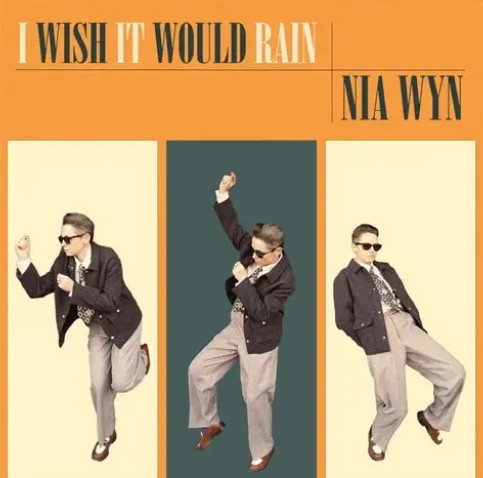
I’ve been following Nia Wyn on the various social media platforms for most of this year and just last week she’s gone and released the track that I can confidently predict will sit unchallenged at the top of the pile of my favourite singles of 2025. Given that this blog, and by association me, myself and I, is supremely influential on a global scale, you can expect that everyone and their talc-dusted granny will have joined the bandwagon before the middle of January, proclaiming the greatness of the track to anyone who’ll listen. For the record: you read it here first.

Nia WynI Wish It Would Rain

The cynical here (and I know who you are) might point to the obvious reference points – Amy, Duffy, (Alabama Shakes, even) – on a record that’s a perfectly pitched amalgam of old gold and nu soul… and they wouldn’t be wrong – but that’s not the point.

I Wish It Would Rain is flawless in its quest for authenticity, and if you have even an ounce of soul in that tired and flabby middle-aged body of yours (yeah, I know my readership), then you’ll know that it’s simply undeniable. A warm record for cold nights, I Wish It Would Rain will be played long and often on repeat in the more perceptive households up and down the country….maybe even yours.

Rasping brass stabs, shuffling pistol crack snare, shimmering Hammond, tasteful guitar licks…and the ghostly vamping of a certain P. Weller esq will ensure this record reaches a far wider audience than it might otherwise have done, Plain Or Pan endorsement notwithstanding.

With a brilliant sandpapery voice that falls somewhere between Macy Gray and Marge Simpson, Nia Wyn has spent the past couple of years refining a style that is ripe for crossover success. In moving from Llandudno to London, Nia has left behind the anarcho-punk, shaved-at-the-sides and centre-parted hair. Gone too is the angular fringe that was part suedehead and part Bananarama. In is a shortish new blow-dried crop, as sharp and smart as the tailoring she presents herself in. In too is a welcome friendship with Paul Weller, which can’t do any harm at all you’d have to think. What has remained – and is now stronger than ever – is a commitment to mining the best ideas from soul music, be that Motown, Philly, Stax or northern, and re-presenting them for these genre-blurring modern times.

Nia Wyn has the look to go with the tunes (seek out Can’t Get No Love Round Here for further evidence) and is poised, I dare say, for real commercial success in 2026. Don’t miss the boat.

*If anyone close to Nia is reading – I Wish It Would Rain would really benefit from having its own 7″ release. Go on! You’d be daft not to.


Hard-to-find

Hopelessly Devoted

I was chatting to big Greg a couple of months ago about the lasting legacy of Paul Weller, the pair of us soft shoe shuffling to Shout To The Top as it blasted at ear-pleasing volume in Glasgow’s Buff Club. One of these shores’ greatest-ever songwriters, the shouted (to the top), garbled consensus we arrived at seemed to confirm that PW has undeniably earned his place at the top table with that other Paul (McCartney)…and possibly, contentiously, seated at a table set just for two. Drink had been taken in the lead-up to this conversation, but I ask you – who else has had the craft, the clout and, indeed, the cojones to form not one, but two celebrated – idolised – groups whilst ploughing a distinct and unique solo career with added sideways steps? Take a minute to ponder and add your silly suggestions in the comments below. You’ll be wrong though*.

Musical Magpie

The great thing about Paul Weller’s back catalogue is that, unless you’re a buy-everything-on-day-of-release fiend for his stuff (and that may well be you – I was up until a point), you’ll occasionally come across a previously unheard track the likes of which drives home that notion, that theory, of PW’s mega-greatness. Last summer I came into a small fortune and so naturally bought some new (ie not second hand) records, including Will Of The People, his 3-album companion set to Fly On The Wall (his triple-plattered gathering of assorted b-sides from the first few albums) and steeped myself in its heady pot pourri of odds and sods; Pet Shop Boys remixes, reworkings of album tracks, way-out excursions in African-inflected dub-laden psychedelia…it’s all there and available to slowly digest as an album (rather than a collection of b-sides) in its own right. It’s a right great listen.

It was the pastoral and sprightly Devotion that, for a long time, was my go-to Weller tune.

Paul WellerDevotion

A planned co-write with Richard Hawley that never happened, Devotion seems to arrive and land in the time it takes its writer to put hand to chord, pen to paper. It skips its way across the verses sounding like the very thing McCartney might’ve written when he was recording Ram, just Weller and an acoustic guitar strummed brightly and with purpose…but augmented in the studio with oohing and aahing backing vocalists, unexpected whistling and synthesised strings that soar in direct correlation to the heart as you listen.

There’s some lovely, rootsy Ronnie Lane bass and enough going on in the background to suggest that, throwaway the track may be, its writer spent a bit of time arranging it into a perfect stand alone song. See those folk that only know Weller from You Do Something To Me and (uh) ‘Pebbles On A Beach‘… they’d love this song, so they would.

Songs are open to all sorts of interpretation, but Devotion could almost be a Weller pep-talk to himself where he outlines the reasons he’s still driven to produce great and interesting music.

Devotion is the key to the lock that holds your dreams…

Devotion gets you up on those mornings in the dark…

There you go, with your headful of ideas

It shows there’s a purpose in your feet 

And you know, that you better get it right

It shows there’s a purpose, day and night

It’s no Shout To The Top. It’s no Town Called Malice. It’s nowhere close to Hung Up‘s power and glory, but Devotion is another in a very long line of great Weller songs. If it’s a new one to you, I hope you get from it the same thrill and need to repeat that first enveloped these ears when they first heard it. I’ve listened to it a dozen times since beginning to write this piece. It never tires.

*Yeah, yeah. Bowie. I hear ya.

Live!

Rocket Boost

In a massively popular band. Breaks them up and forms misunderstood follow-up group. Subsequently begins third phase of career and releases everything under his own name. There are side projects, guest appearances, mentoring roles with younger musicians, low-key soundtrack work…all the while maintaining a very decent public image.

Are we talking about Paul McCartney here, or are we talking about Paul Weller?

The statement applies to both, of course, but there’s inarguably a considered difference that whereas McCartney’s solo work is – and will always be – massively overshadowed by his first band’s output, Weller’s solo output is nothing less than the equal of – and possibly even greater than – what’s gone before. Yeah! Fight me! I’m talkin’ to you, you with the tragic, balding feathercut and too-tight Gabicci top. Let’s clear the air ya silly auld mod.

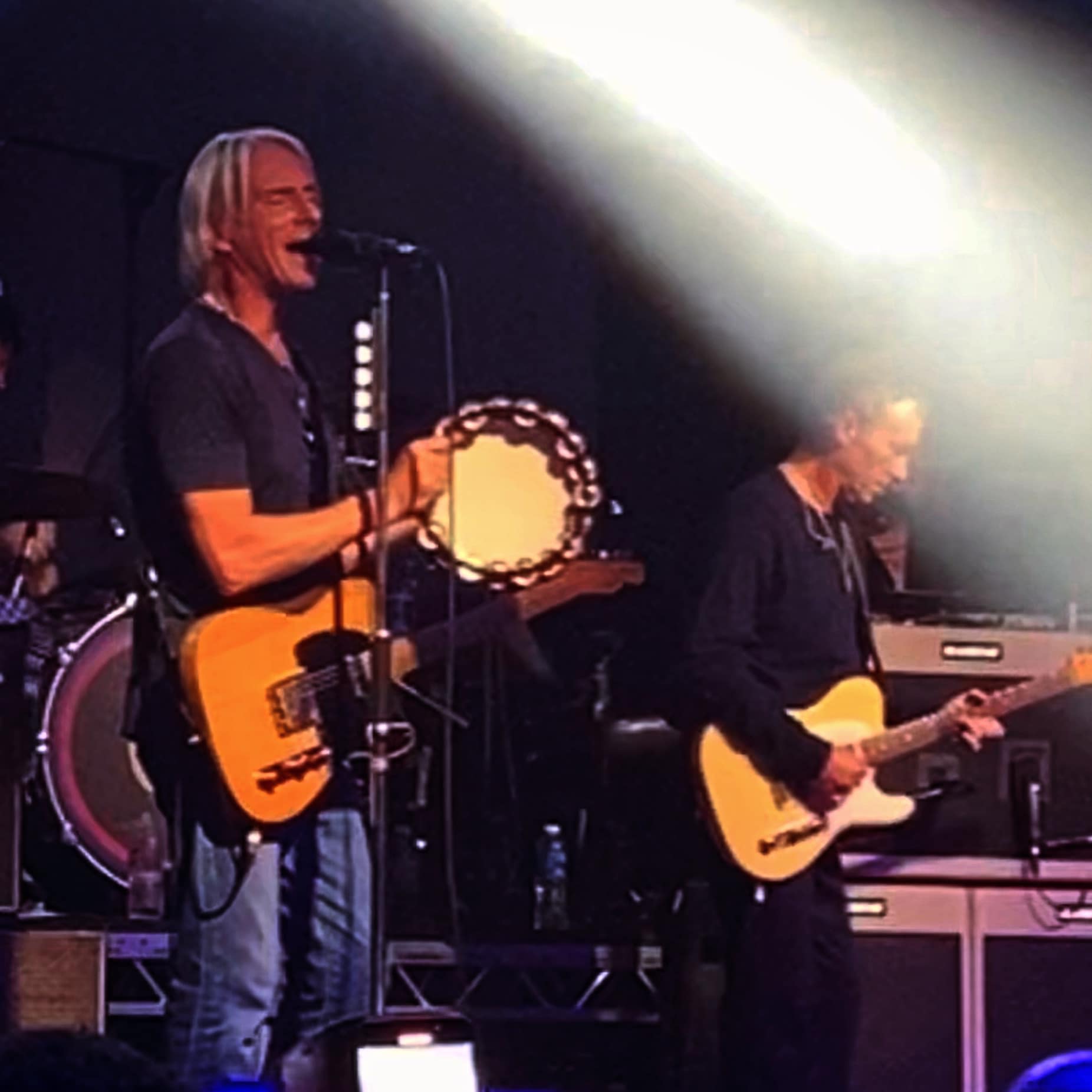
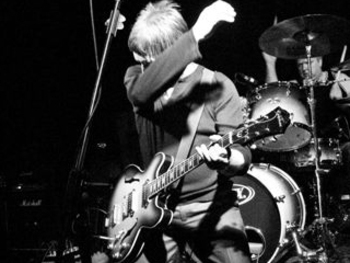
Never was this clearer than mid-set in the Barrowland Ballroom last night, when in a quadruple wham-bam, thank you ma’am, Weller reeled off Hung Up into Shout To The Top into Start! into Broken Stones – two of his finest solo works bookending two of the finest releases in his first two groups’ recorded output, all played to within an inch of their note-perfect lives. You don’t need me to tell you how great Welller’s Small Faces infatuation makes itself known in Hung Up‘s soulful and gospely middle eight. You don’t need reminding of the joy of living breeziness that burls Shout To The Top to its stabbing and symphonic conclusion. You already know how tough-sounding and razor-sharp his SG sounds on Start!, its Beatlesy psychedelia never more obvious than when shoved in your face at maximum volume. Or how Broken Stones as it’s played tonight could have been arranged with a prime time Aretha in mind.

Weller is a magpie. He takes all the good stuff, boils it into a groovy stew and makes something new and equally vital from it. He started like that, way back when, when nicking Motown riffs for Jam songs. He continued this with the all-in policy of the Style Council; Blue Note to new note, whether you liked it or not. And he continues to this day, releasing with unbelievably metronomic regularity interesting and unique records; records stuffed to the gunnels with crackling electronica, frazzled guitars, deep house grooves, neo-classical ambience and whatever the fuck he likes. He surrounds himself with proper players who can help him achieve his sonic vision. He tours relentlessly. He’s one of our very best and we should never take him for granted.

I was going to review last night’s show but, to be honest, I’d already written the review three years ago, when Paul Weller was last at the Barrowlands. On early and off right at the stroke of curfew, back then he played the sort of back-cat trawling and sprawling set that might have Springsteen looking over his shoulder in apprehensive appreciation. Old favourites sat shoulder to shoulder with new stuff, guitar wigouts sat next to piano ballads, smash hit singles made way for indulgent jams. The set then was perfectly paced, as it was last night; Have You Ever Had It Blue? sounds terrific in the old ballroom. Headstart For Happiness, Changingman, Village, the old, the new, side by side and never sounding better. A gnarling, spitting Peacock Suit has, like the singer himself, proper bite. There’s political charge. A pro-Palestine speech garners a healthy swell of solidarity from the never less than right-minded Glaswegian audience.

But it’s the encore that floors me.

We’re expecting That’s Entertainment and Town Called Malice, his chosen double knock-out show-stoppers for the past couple of tours, but before he gets to these, Weller breaks into Rockets, the closing track from On Sunset, an album that’s already four years old and, as I’ve began to appreciate, matured nicely since being released. Rockets, it transpires later, isn’t on the set list. Weller, in a fit of spontaneity rarely present in live shows these days, pulls it out of the air for the first time on this tour. As it unspools, it dawns on both Mrs Pan and I that Rockets is Weller’s Bowie moment.

Paul WellerRockets

It’s slow and acoustic, the singer accompanying himself in front of some tastefully understated percussion. He shifts from major to minor key and a churchy organ shimmers its way in, Weller’s voice woody and hollow and powerful. Man, it’s powerful! By the second verse, Steve Cradock has joined in, his clipped fuzz guitar accentuating the beat. The bass player is all eyes a-closed and playing by feel, lost in the music as the Barrowlands’ glitter ball shoots little diamonds of light across a gobsmacked audience. Jacko Peake eases in, his bah-bah-bah-baritone sax punctuating the pauses in the vocals. The strings  – synthetic in the Barrowlands, full-on symphonic on record – glide in, carrying us home. Weller’s melody is slowly unravelling towards a coda where the Bowie feel is total and wonderful and complete. Singing over, the track swells to a long and stately close, little Stevie Cradock playing some cracking morse code notes and, between furtive gasps of his vape (!), some lovely elongated slide guitar parts. It was all fairly breathtaking, it has to be said, and that’s before Weller’s sock it to ’em one-two encore that followed immediately afterwards.

I seem to write this every time I review Paul Weller, but I’ll say it again; if he’s within 200 miles of where you live, find a ticket and go, go, go! Paul Weller is at the absolute peak of his game right now and you don’t want to miss him.


Get This!

Some Mothers Do ‘Ave ‘Em

In what might be a discarded Only Connect question, as a starter for 10 can you tell me who links Paul Weller, Sylvester and Joe Satriani?

Anyone?

A clue: he’s the same guy who links Whitney Houston, Starship and the odd Disney soundtrack or two.

No?

Bongo Bob is your answer. Bongo Bob.

A Latin Jazz aficionada, Bob worked out of San Francisco’s Bay Area in the ’80s and beyond and was the percussionist of choice for anyone needing a polyrhythmic smattering of exotica across their music. But don’t let the nickname fool you, for Bob was also the go-to guy when it came to programming computers once studios began moving from analogue to digital. One Step Ahead Bob, that’s what they shoulda called him.

That’s Bob’s computerised percussion smoothly rattling away in a none-more-’80s fashion behind Whitney as she glides through the octaves getting “so emoshunal, baybee.” His programming is all over much of Joe Satriani’s output, the sympathetic and understated backing that allows Joe to flow to his ear-bleeding max. There he is too on Starship’s perennial ‘Nothing’s Gonna Stop Us Now‘, his fairground ride sequencing giving the track its signature feel. Forgotten what it sounds like? Stick on Heart ’80s or Greatest Hits Radio and it’ll be with you very shortly.

Check out Bob’s extensive CV and see for yourself. If all you ever listen to is oldies radio, retro FM-blasting non-stop hits and/or classic AOR rock, there’s a chance you’ve heard Bob’s work far more than you realise.

You though – yeah, you. You don’t listen to oldies radio. Not all the time anyway. And you wouldn’t be seen dead with a Satriani album. Sylvester? Yeah, you like his stuff. Well, the early stuff, obvs. You Make Me Feel Mighty Real, really. And (trainspotters ahoy!) his groovy cover of Southern Man, but not the subsequently under-appreciated records that Bob added requisite danceability to. Never even knew about them, mate. (Sniff).

Imagine, then, that Paul Weller gets together with the Stone Foundation and at one point asks Bongo Bob along for the ride. How these planets collided is anyone’s guess, but there they are. PW and the Stone Foundation are no strangers to one another. Weller has played guitar with them on stage, laid down guitar parts on their recordings and generally elevated the status of the soul collective whenever they need it. Bongo Bob though? Weller is no slacker when it comes to collaboration. (There’s another good Only Connect question: who connects Amy Winehouse, Graham Coxon and Suggs?) But Bongo Bob? He travels a lot, does Paul, musically as well as globally. I can only think his studious knowledge of music in all its various genres somehow led him to the Californian bongo maestro and they took it from there.

A strange pairing, perhaps, but one which produced a minor Weller instrumental stomper.

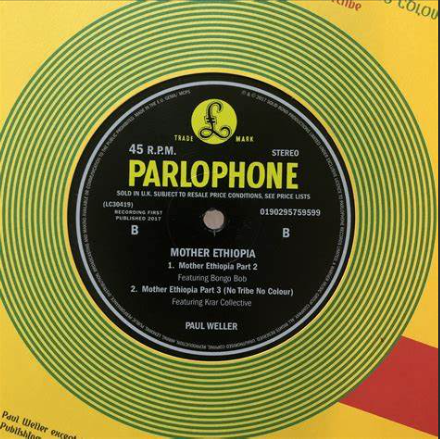
Paul WellerMother Ethiopia (Part 2)

Perhaps in no small part to a lifelong love of the fluid riffing of Frame and Marr, I love my African music when the guitar splashes all over it like an uncontrollable fountain of joy. Mother Ethiopia is Weller’s contribution to Ethiopique Series, a long running (est ’97) thing which shines a spotlight on the music of Ethiopia. As the 30+ releases in the series will attest, lots of Ethiopian music is mainly all rhythm and horns. A very heavy thing at times. And very groovy too.

Weller’s track (particularly its part 2, above) conjures up the dusty spirit of an Addis Ababa taxi driver’s cab at peak rush hour, its tinny radio blasting warm sounds into your sweaty face. Bluesy desert guitar gives way to that great African rhythm, Bongo Bob palm slapping his instrument and fighting for ear space with an ancient wobbly synth line. There’s chanting of some sort, more sand-blown guitar, more synth, now twisting itself into weird African scales…and then the horns. They’re on the one, half James Brown, half Fela Kuti and lead a brief and funky charge. A sinewy slither of sax and trumpet weaves and winds its way between Weller’s loafered foot stomps and clipped, staccato guitar and, blown by the prevailing Westerly winds, vanishes in a dust cloud of Afrobeat. Or is it Afrojazz? The incessant rhythm only just about lets up. Magic stuff.

It’s not Changingman. It’s not Broken Stones. It’s niche Paul Weller. Worth a proper listen in your own time.

Get This!, Live!, Sampled

Hidden In The Back Seat Of My Head

That triptyich of ’90s solo albums which spawned the rebirth of Paul Weller deserves to be looked at again. 1992’s self-titled debut was the result of the artist being given free reign to reinvent himself, with no great expectations from a record company (Go! Discs) simply keen to offer one of our greatest songwriters the platform on which to start afresh. By 1995’s Stanley Road, Weller had entered his third imperial phase; once again a regular botherer of the charts and the elder statesmen to whom the leading lights of the day looked for validation and support. The record in the middle, 1993’s Wild Wood, is perhaps the most interesting – and best – of those three releases.

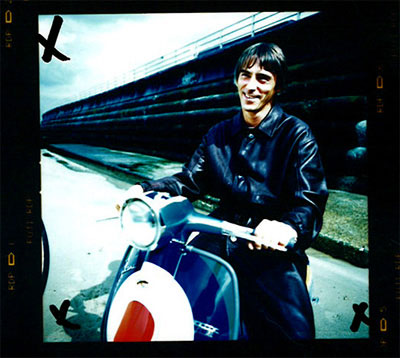
Having ‘done’ inner city angry young man and broadminded European mod, Weller looked to the English countryside for inspiration. Still unsure of who his ’90s audience was, the singer decamped to the Manor, a residential studio in the leafy Home Counties and, surrounded by trustworthy people and a handful of his favourite records, holed up to hang out, play, write and record the tracks that would become the Wild Wood album. The inner sleeve photos on the record suggest the perfect scenario for making a classic record; family and kids on the lawn, footballs, a grinning Weller astride a scooter, a home-from-home environment where inspiration flourished.

Much has been made of Weller’s listening habits during the making of the album, and the acoustic influence of Traffic and Nick Drake has oft been quoted as a source of influence, but I’d consider Wild Wood to be Weller’s Neil Young album. Loud in-the-mix acoustics ring throughout the record, attacked by Weller’s uncompromised strumming and finger picking. He might be playing a Martin, but he’s attacking it with all the fervour he normally reserves for his Casino. This is apparent on Foot Of The Mountain, its minor chord balladry giving way to an ebbing and flowing, sprawling and ragged electric outro, the rest of the band riding his coat tails for dear life. The Young influence is there too in Country‘s close-miked pastoral picking and whispered vocal. ‘Where only love can heal your heart,’ he sings, one eyebrow arched in a knowing nod to whiny old Neil as a woozy Mellotron adds a Fabbish, late sixties hue to the mix.

Wild Wood is an album that, augmented by subtle Hammond, delicate woodwind and thunking great gospel piano, showcases the best of Paul Weller. It’s there in the ferocious riffing of Sunflower and The Weaver‘s thrilling hammer-ons, the pastoral campfire soft shoe shuffle and two note dubby bass of the title track (it’s no wonder Portishead highlighted it as something to twist and turn and send into orbit), to the handclapping and roof-raising Can You Heal Us (Holy Man) and the jazz inflections of album closer Moon On Your Pyjamas.

My absolute favourite from the era though isn’t actually on the initial album release.

Paul WellerHung Up

As is his forever forward-thinking way, Weller had barely finished the record when he embarked upon another lap of writing. Too late for the album, Hung Up was released as a stand alone single. All the best bands, as you well know, release magnificent stand alone singles and Hung Up is undoubtedly Paul Weller’s addition to that list (even if, at some point, it was clunkily tacked on at the end of the record when Weller’s popularity began to soar.) It’s a fantastic single, Weller self-assured and riding in on a great chord sequence (C – Fm – Am – Fmaj7) before the band joins him on a chugging, descending Beatlesy progression, crisply distorted and fluidly played. The pace, the playing; perfection.

It’s the song’s bridge though that elevates the track from merely great to simply outstanding. It’s a real cracker, all loose piano and finger-squeezed guitar couplets – pure Small Faces mod-gospel with the vamping ghost of a PP Arnold-alike oozing in on the second line, her sky-surfing vocal lifting the track into orbit. Then we’re into the guitar solo. No fancy pants pedal boards here, it’s simply vintage guitar into vintage amp and the strangulation of a nimbly-rifled solo that’s halfway between Marriot (Steve) and May (Brian – really). And there’s still time for Steve White – there’s always time for Steve White – Wild Wood‘s secret, unsung hero to rattle seven shades of Gene Krupa from his kit with the mother of all drum fills, before it all ends with the singer and his acoustic guitar once again, wrung out, hung out and Hung Up in under three thrilling minutes.

*Bonus tracks!

Paul Weller Hung Up (Live at the BBC)

Lovely wee bit of studio chatter on this version.

Paul WellerWild Wood (Portishead Remix)

Pistol crack snare, clacking, clipped guitar, murky dub. The drunk wasp guitar riff is a beauty. Weller had some great remixes around this period and this is one of the best. Never ever outstays its welcome.


demo, Hard-to-find

Solid Gold

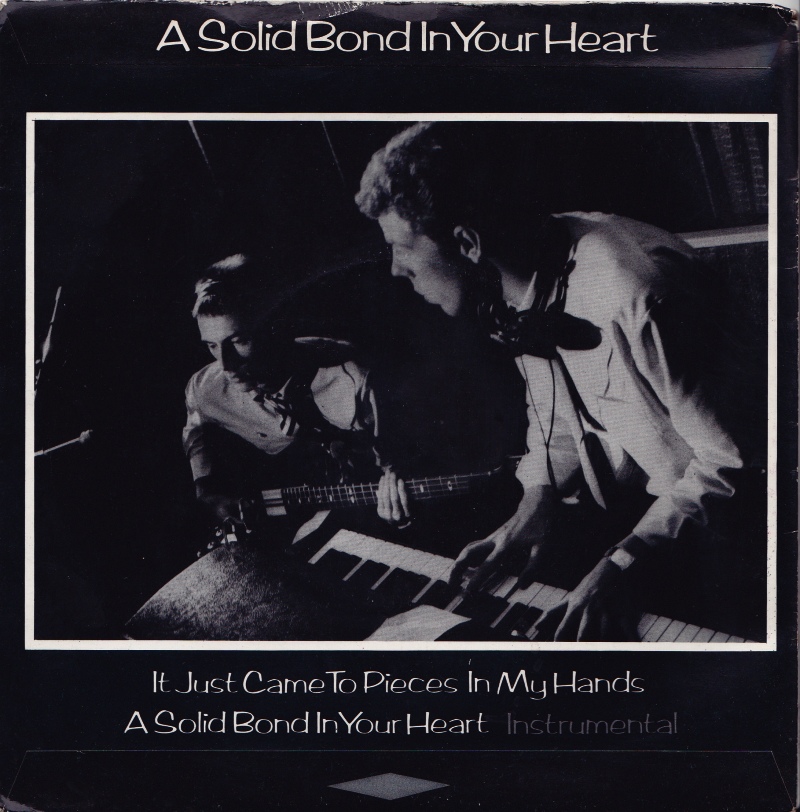
Paul Weller chose to bring the curtain down on The Jam – 6 studio albums and 18 singles in 5 era-defining years – with the anthemic yet wistful Beat Surrender, a piano-driven soul stomper that put a full stop on The Jam’s perfect discography and hinted at an unexpected new direction. It might have been different had their intended final released made it beyond demo form.

The JamA Solid Bond In Your Heart (demo 1)

A Solid Bond In Your Heart is the unstoppable yin to Beat Surrender‘s resigned yang. In demo form, it froths and rattles like a speed-driven floorfiller from the Wigan Casino, all floating vibraphone, four-to-the-floor incessant drums and tinny breathlessness, a talc-dusted homage to that most exclusive of subcultures. Employing the brass that served them well on The Gift and associated singles, Solid Bond flips and flaps its way to its giddy ending, Dee C. Lee’s tumbling vocal pushing Weller to the very limits of his white man does soul vocals as Bruce Foxton sprints the length of his fretboard like Duck Dunn on uppers. It’s a rush in every sense of the word.

There’s a second version from The Jam’s vaults that adds a middle eight which would ultimately disappear again by the time the track was ripe for release. Listening to it, you might spot the seeds of the dropdown in Beat Surrender. Weller certainly thought this little vignette was worthy of working on, even if it wasn’t right for Solid Bond. A bit of a rewrite and it would slot right into the epochal final release.

Extra points too go to whoever the assembled hand-clappers were on this version. Their palms would’ve been raw by the last note.

The JamA Solid Bond In Your Heart (demo 2)

Solid Bond is, though, far too upbeat and happy for such a milestone record. Paul Weller did the right thing by holding it back.

By the time A Solid Bond In Your Heart appeared for real, it would be as The Style Council‘s 4th single. Released in 1983 between the woozy haze of Long Hot Summer and the evergreen You’re The Best Thing, Solid Bond (and its accompanying video) would go some way to cementing The Style Council’s reputation as soul revivalists. In an age of synthetics – instruments… clothes… hair products… – The Style Council’s stance had to be admired, even if it was much maligned (or so they say) at the time.

Without the same attachment to The Jam that those boring older ‘mods’ (by it’s very definition, ‘mod’ should be forward thinking, no?) may have had, I found The Style Council nothing less than fantastic. Arty, pretentious and comical, yes, even to these young teenage eyes and ears, but with a mean streak in writing unforgettable hit singles. If you say you didn’t like them I don’t believe you.

The Style CouncilA Solid Bond In Your Heart

Funnily enough, it starts in almost the same way as Beat Surrender. Where that track has a tension-building piano flourish before the crash and release, Solid Bond vamps in on a teasing combination of six note piano and saxophone then slides itself into the stratosphere.

‘Feel’ is a word I can’t explain…” goes Weller from the very top, as the music proceeds to give you all the ‘feels’ you need; a wet slap of funk guitar, a skirl of strings and that same driving beat, muscled up through the addition of a moonlighting Zeke Manyika, no stranger to soul-inflected hit singles himself. The crowning glory is the brilliant duetting vocal that tops it off. All moves from The Big Book of Soul Tricks are duly cribbed; the ‘uh-huhs’, the ‘ooh-yeahs’ and the high high high falsetto; there aren’t enough ‘woo-hoo-hoos’ any more in music. I believe that’s because they were all used up on this record.

Solid Bond is handclappin’, finger-clickin’ ess oh you ell soul – Marvin and Tammi for Thatcher’s children, the joy of life preserved in seven inches of grooved vinyl. If I could do that gliding northern soul move that looks so blinkin’ effortless to those who have clearly kept more faith than myself, I’d be doing it right now while I contemplated getting myself a midlife-crisis inducing ’80s Weller wedge. Push it to the limit, as the man himself sings.

Live!

That’s Entertainment

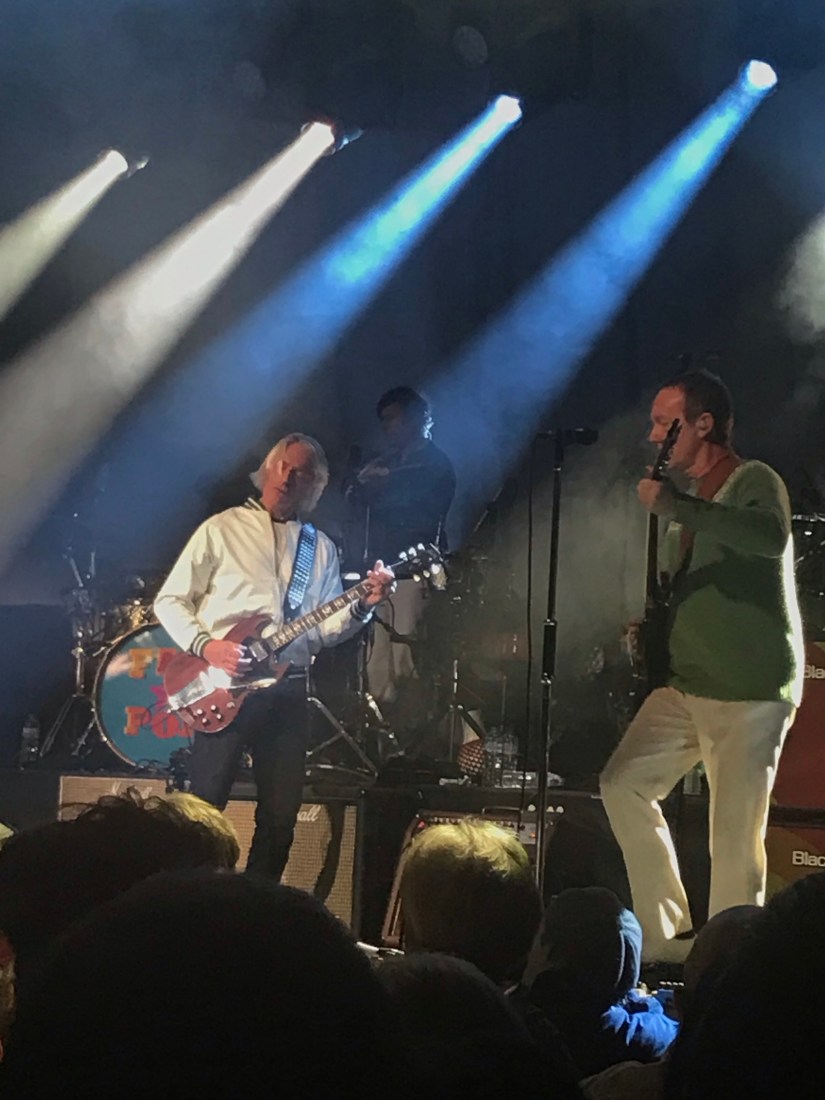
They say that if you chop down a tree, you can count the rings on the discarded piece of trunk and that will tell you how old it is, Likewise, if you count the lines on Paul Weller‘s face, his true age will be revealed. There’s a few lines around the eyes there, ones that first appeared after he split The Jam. Another couple on the brow courtesy of those record company people who misunderstood the Style Council’s brave new steps into house music and refused to release the bulk of it. Yet more around his mouth, the product of worrying over a slow-starting solo career. At the last count, PW had 63 such lines etched onto a face that at times resembles a cartographical ordnance survey map. Last night in Glasgow though, the wizened auld Weller looked trim and tanned, a spritely grandad with a 40+ year collection of songs at his fingertips and a two and a half hour slot on the Barrowlands stage in which to breeze through the back catalogue and play like a man half his age.

Yes! Yes! Yes! Oh, fackin’ yes!” he shouts down the mic by way of introduction, the sound-clash of The Beatles’ retro-futuristic Tomorrow Never Knows still ringing in our ears, clearly as excited to be here as the heaving throng of fey hairs and nae hairs in front of him. “We’re gonna play some noo ones and old ones, so ‘old tight!

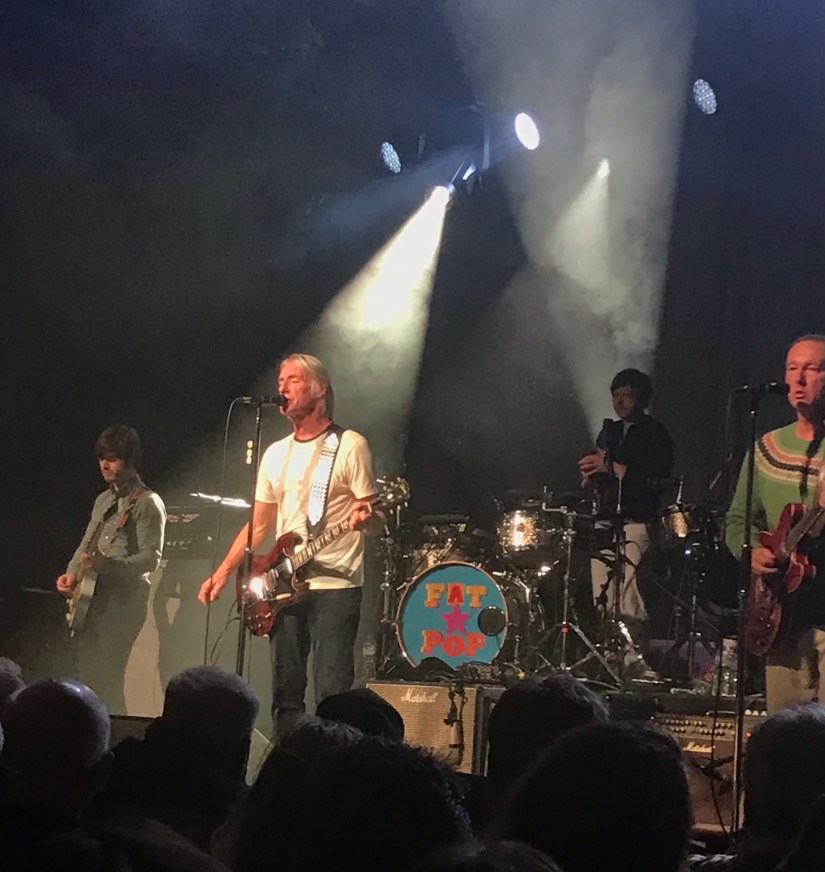
A quick one-two of White Skies and Fat Pop‘s Cosmic Fringes give way to a career-spanning set that’s almost as long as the outgrown lockdown curtains that frame his grinning face; My Ever Changing Moods, Shout To The Top, Peacock Suit, Hung Up, Brand New Start, Sunflower… it’s incessant and breathless, sung perfectly (yet with a gubful of Wrigley’s on every line), played expertly by a 6-piece band that includes Steve Cradock, his now-regular guitar foil, alongside the brass-totin’ Jacko Peake, the go-to guy on the Acid Jazz scene, and The Strypes’ Josh McLorey on stand-in bass duties.

The set ebbs and flows between old ones and new ones, fast ones and slow ones, guitar ones and piano ones. Heck, even the songs themselves ebb and flow with well-rehearsed breakdowns and meandering codas. Above The Clouds is still great white-boy soul; effortless, cool and sounding as if it might have floated in off the grooves of What’s Going On. Wild Wood is pastoral and bluesy, an on-the-one rootsy stomp that prompts mass singalong. Main set closer Into Tomorrow – the grooviest live version he’s played yet, transforms smoothly into the parping That Spiritual Feeling, all military-tight snare, Coltrane-ish sax melodies and noodling bass, before returning and ending as it began.

There’s lots of this. Amongst the give ’em what they wants and give ’em what they needs, there are moments of pure self-indulgence where the song choices allow the guitars to wander, as wide and expansive as Steve Cradock’s white slacks but with requisite clanging echo or pseudo-psychedelic swirl. On the caustic, carbolic Brushed, a violently furious Weller thrashes his guitar like the punk wars never happened, falling into step with a grinning Cradock as they provide some sort of mod-friendly twin axe attack, a mere Telecaster ‘n double denim away from full-on Quo. It’s all very brilliant, and topped off in dramatic, crowd-pleasing fashion.

After a short speech where Weller sings the praises of the Glasgow Apollo and the old guys who’ve been with him from the start, he looks to the younger members in the audience and with a this-is-for-you wink of an eye, he’s into the wham-bam (Jam) of That’s Entertainment and Town Called Malice. A one-two that slays any remaining doubters that Paul Weller is still vital, relevant and one of our greatest-ever songwriters,


New! Now!

Paul Well-ooh-arr

An extended period of working from home has allowed me to indulge in the wee pile of new releases I’ve never quite got around to giving my time to. Paul Weller‘s On Sunset is this week’s Home Office Record of the Week. It’s mainly terrific – the emphasis on mainly – a well-produced collection of tracks that finds Weller continuing to stretch and reach further than a man of his vintage should ever need to. He could easily be sitting back in his Chesterfield, admiring the reflection of his grown-out feathercut in the satisfying glow of his numerous gold discs, Patrick Cox-ed feet up and taking it easy, but no, he’s gone all out to create an album that’s soulful, full of substance and sonically brave.

The opener Mirror Ball is kinda the album in minature.

Paul WellerMirror Ball

A seven and a half minute epic, it starts understated – Disney-by-way-of-Mercury-Rev – before, curtains thrown open, it bursts into 21st century sunshine soul, taking in Beatleish mellotron, Isley Brothers guitar, Curtis Mayfield strings and rinky dink Philly riffing.

It’s essentially his Starlite single from a few years back, filtered through a late Summer heat haze and laid out on a bed of scorching white Californian sand. No bad thing at all, especially when it shimmers towards its grandiose end on a bed of overlapping vocals, random radio bursts and the funky squelch of Dre G-Funk keyboard lines. As far as album openers go this year, I can’t see it being bettered.

The album continues in similarly grab-all manner, Weller’s autumnal voice wrapping itself around Faces Hammond, honeyed Stax horn blasts, pastoral folk, a nod and a wink to Slade’s Coz I Luv You, and Gil Evans wandering piano lines. It’s easy to play spot the reference, wrapped up and re-positioned somewhere north of the Style Council and just to the left of those first couple of solo albums, glistening in state-of-the-art production and flying with confidence. Weller wears his influences proudly on his sleeve but makes them into his own thing. Always has done, always will do.

As it continues to spin, On Sunset builds itself up to be quite the classic…until the runt of the litter makes its appearance.

A right clunker and no mistake, Ploughman pops up near the end and it’s unintentionally hilarious.

Paul WellerPloughman

Channeling his inner Wurzel, Weller eschews the tailor-made pinstripe suit and cashmere sweater for a boiler suit and flat cap, ditches the classic open-top for a John Deere and climbs aboard. He flicks his 20th Benson & Hedges of the day to the side, jams a sheaf of wheat between his teeth in replacement and, with balls of steel, begins to sing in a full-on zider drinkin’ West Country accent about ploughing his earth and living a menial but honest living. The subject matter is fine. The musicianship  – even the flown-in Inspiral Carpets demo that masquerades as a hook line – is fine. The delivery though is unintentionally hilarious.

Who at the record company let this pass muster? Are the folk around Weller too scared to point out when his quality dips? With a career such as his, you are of course excused the odd faux pass – whole albums in some instances, but Ploughman finds our hero aimlessly ploughing a ridiculous furrow all of his own, less Modfather and more Modfarmer. What were you thinking Paul Weller? This aberration just knocked a potential 10/10 album down to a 9.

(That opening track though…. that’s a cracker.)

Weller this evening. Tractor not pictured.

Get This!

Don’t Matter What I Do

There’s a new Paul Weller album out today. He’s clearly a prolific, unflinching, bloody-minded writer, an English version of someone like Neil Young. You can certainly draw parallels between the length of their hair these days, let alone the length of their careers. Both started out in successful bands, both went solo, both still steadfastly plough their own furrow, their generally considered ‘greatest albums’ far behind them.

It wouldn’t be unfair to suggest that Weller’s output can be grouped into four distinct categories: 1) The Jam, 2) The Style Council, 3) The solo years up until Stanley Road and 4) everything else since. This isn’t intended to be disingenuous. There are plenty of PW fans who will point to The Jam’s progression from angry, besuited punks to the soul-obsessed Beat Surrender that hinted at Weller’s next move, and from that soulful start to their misunderstood house-obsessed finish, The Style Council certainly rode the zeitgeist of musical movements. Plenty too will cite Wake Up The Nation as just as relevant an album as Wild Wood. I’d even agree – and Sonik Kicks too for that matter. But I have to admit to a slackening off in my engagement over the past couple of albums. Partly, that’s been down to the crazy prices he can charge for a deluxe version of the latest album and partly because the lead tracks from those albums kinda passed me by. If I had the money and time to invest in them, I daresay I’d have a different opinion. Maybe I should just steal them online like everybody else and form a considered opinion. The new album – On Sunset– has been trailed with an interesting set of 70s-inspired fonts against bleached-out orange, pink and yellow graphics. It looks like the sort of thing I should investigate, even if his hair these days is part Agnetha from Abba and Brian Connolly from The Sweet.

Weller has always been about moving forward – Start, Dig The New Breed, My Ever Changing Moods, Push It Along – but haud the bus, Paul. Rewind, look over your shoulder, listen again to some of your finest moments. The best bits easily still stand up today. Like Long Hot Summer

The Style CouncilLong Hot Summer

Long Hot Summer has it all. In a lineage that begins with The Young Rascals’ Groovin’ and continues through to Jazzy Jeff’s Summertime, it’s one of the truly great mid-tempo summer tracks. Its awkward shoe-shuffling electronic beat might be difficult to dance to but it’s essential for conjuring up the feel of, well, a long hot summer. It’s the bass synth that carries it. Instantly recognisable – I’ll name that tune in one, Paul! – when he played it quite unexpectedly mid-set at the Hydro a couple of years ago, I was beyond myself with excitement. Fuckin’ Long Hot Summer! I shouted to Fraz. Long Hot Fuckin’ Summer moaned the old punk to his pal on my left at the same time. The placement of the sweary word is important here. Said at the start, it’s generally a positive thing. Placed midway through the sentence, it makes for quite the opposite. So there y’go. Paul Weller, still polarising his audience all these years later.

It’s a great production, Long Hot Summer. Along with that bass line, Weller’s vocal comes across as something that might’ve flown straight off the grooves of What’s Going On. Low and spoken in places, floaty and falsetto in others, it runs the range of what makes soul music soul music. When used to transport the lyrics of loss and longing, well, it makes for quite the thing. There’s a chord structure to match too, right up to the major 7ths in the bridge. Then there are the handclaps, the shiddy-biddy-do-wap-waps and the bubbbling analogue synths. If the Isley Brothers or Chi-Lites made a better record, I’ve yet to hear it. Weller, amazingly, was barely into his 20s when he wrote it.

I’ve been playing The Style Council Á Paris EP a lot this week. Long Hot Summer is the lead track and the needle has gone back and forth across the A-Side a zillion times since I first rediscovered it on Monday. That line – the long hot summer just passed me by – is bothering me though. It’s a sign, a clue, a plea from the writer himself that I really should get to his more recent albums. A visit is in order.