Gone but not forgotten

Rickety Lou

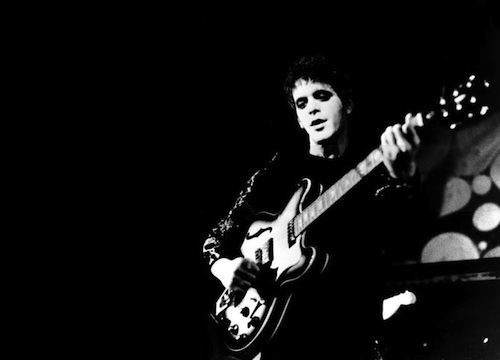
It begins with a riff as rickety as the Coney Island Cyclone, a clattering, knuckle-dusted, steel-wound nickel on wood bone-shaking rattle. Lou Reed sounds like he’s just about made it to the mic on time for those first coupla words, like he’s been so transfixed by his own instantaneous riffing that he’s momentarily tuned out of anything else and hastily ran up to it marginally late for his cue. Most other bands would clatter to a sudden halt, shout ‘Take Two!’ and fall into action again. This though, being the Velvet Underground, can be passed off as art; you noticed, yeah? Yeah! It’s deliberate and obtuse and deliberately obtuse, so what, huh? To Lou, mistakes are for lesser groups who worry too much about what their audience thinks of them. ‘You know it’ll be alright,’ as he sings in the chorus

The Velvet UndergroundWhat Goes On

An organ drone wheezily fades its way in at the start of the second verse, subtle to begin with, vamping the simple chord changes, then a bit more prominent in the mix as the angle of Lou ‘n Sterling’s highly-strummed agit-jangle takes proper hold.

There’s a fab! u! lous! feedbacking twin guitar break – of course there is, this is the Velvet Underground – that rises from the beat group clatter like Scotch mist and surfs its way across the continuing stramash below, landing itself like a set of bagpipes being trampled to death in a crowded Turkish souq bazaar. I’m sure that’s exactly the sound the Velvets were chasing, as they say.

Elongated mid notes meld between high and low counter notes, Lou ‘n Sterling’s floating frequencies weaving as one for longer than most groups of the time would dare, but still not nearly long enough here. It’s a trippy and hypnotic garage band tour de force, What Goes On. It really is.

Then we’re back to the chorus, the easy, woozy harmonies adding late era Beatlish warmth to the ice-cool New York art rock. From then on in, it’s a no nonsense, heads down boogie between guitars and organ drone. The twin guitars are high in the mix, trebly and piercing, rattling away like a Warhol hopeful behind the bins at the Factory. The organ is simple and slo-mo, a relaxing counterpoint and very much the antithesis to the manic, never-ending jangle out front.
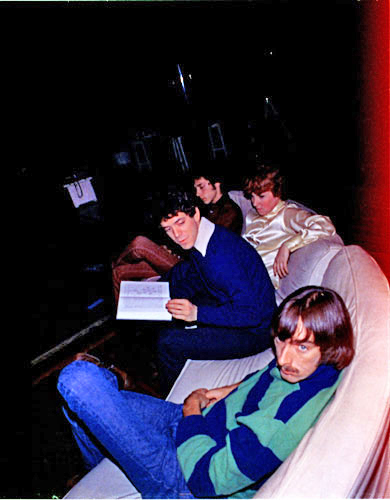
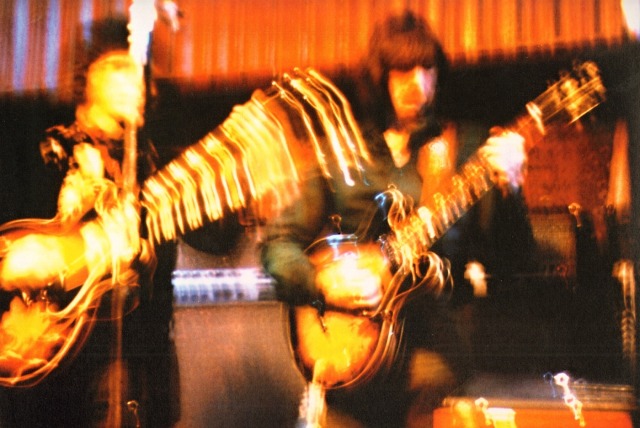
VU outtake pic by Billy Name

Somewhere, amongst all of this heady art-rock splendour, must be bass and drums. They must be there, right? If you listen closely – really closely – you might hear them, but you’ll need to tune out of that other strange noise in the background – that’ll be the frantically scratching pencils, as Collins ‘n Kirk and a handful of other magpie-minded guitar stranglers make sense of this motherlode of all blueprints and run with it all the way to 1980 and the land known as indie.

Influential…and then some.

Post-Script

Interesting Point 1: There’s an internet theory that the organ on Talking Heads’ Once In A Lifetime is directly lifted, if not actually sampled, from What Goes On. When you listen to both songs, there’s a compelling case for it, but I’ll leave it to you to play them back to back.)

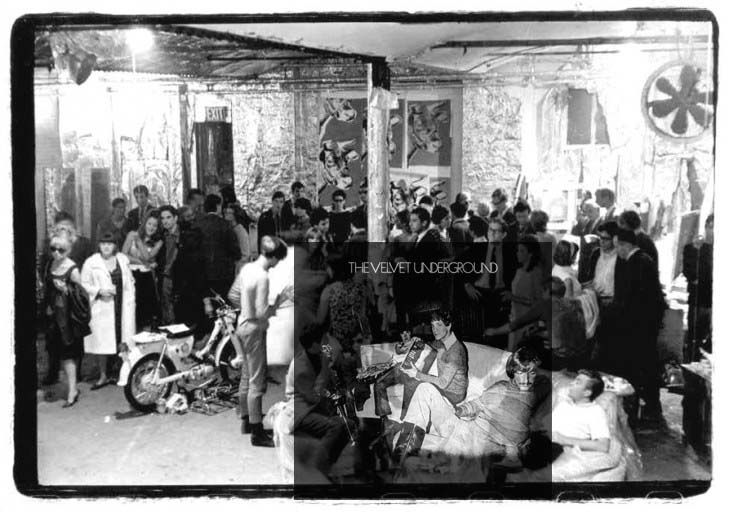
Interesting Point 2: PopSpots, that essential guide to placing your old band shots of yesterday onto the NYC streets of today has a whole section on Lou/Andy/VU’s New York. That couch that appears on the sleeve of What Goes On‘s parent album, the self-titled VU’s third, was seemingly a feature of Warhol’s factory as much as the Velvets themselves.
Hard-to-find

Lou Read

It’s a fact that, at the age of 54 and a half and having lived half my life (or two thirds of it, most likely…) I find myself getting increasingly nostalgic, and especially for the ’70s. I have no particular affiliation with the ’70s other than I lived the most carefree years of my life in that period. I genuinely had no worries whatsoever other than would I ever have that elusive Teófilo Cubillas sticker that would complete my Argentina ’78 sticker book. (I did…and it eventually went in a skip when I moved house in 2006. Regrets, I’ve had a few, as someone once sang). It’s a decade I remember only with fondness; endless summers of tree-splitting sunshine, track-suited pals and balls and bikes and Jimmy Hoolis, the actual bona fide Johnny Ramone bowl-cut New Yorker cousin of a neighbour who showed up mid-decade in his tube socks ‘n satin shorts ‘n skateboard to loudly rename me Craigee Baybee for the duration of his vacation before tipping his oversized baseball cap in my direction one last time and disappearing out of my sheltered Irvine life forever. What a whirlwind! I wonder where Jimmy is now.

Nostalgia hits hard.

Whenever I hear Gerry Rafferty’s Baker Street, I’m back in the garden of the old house, my dad frying French toast in the kitchen as the Hit Parade forces its way through the sizzling cloud of airborne fat and into my ears by the carrot patch.

Whenever I hear Walk On The Wild Side, I’m straight back in my ‘aunt’ Susan’s battered 2CV, squashed in with apparently 17 other kids as we barrel our way downhill to a bout of hayfever in Eglinton Park.

Whenever I hear an Abba track or a quiet and sensitive singer songwriter – Melanie, maybe, or Joni Mitchell – I have a vision of my ‘aunt’ Eveline in a floaty orange and brown Biba dress and large tan-tinted sunglasses leading us out of Mr Hynd’s corner shop with a handful of chocolate tools for my brother and Graeme and I (my sister would’ve been too wee) and a couple of Fry’s Turkish Delights for her and my mum – the added extras to go with the picnic my mum was rustling up in the kitchen on a particularly spontaneous mid ’70s summer day.

Gimme Big Yellow Taxi and tell me to close my eyes and I’m right back there. Except that both my dad and Eveline are no longer with us. Nor, as it goes, is Gerry Rafferty or Melanie. Or Lou. Lou Reed? Deid, as they say in Ayrshire. Joni? She’s just about hanging in there by all accounts.

Slap bang in the middle of the decade, Lou released Coney Island Baby. Do yourself a favour (or favor, as Lou would have said) and look it up. If you’ve gone no further than the Velvet Underground and Transformer (and maybe Berlin if you’re feeling dangerously outré), treat yourself and be surprised.

Coney Island Baby is a really great record. In that most fertile of decades, when hair grew longer in direct proportion to the guitar solos and keyboard suites of the rock stars of the day, Lou surrounded himself with some of the era’s finest players and rattled off a straight-up soft rock album; no left turns, no arty edginess, no atonal cheesegrater guitars or disturbing lyrical content. Given that ol’ Lou was the godfather of punk and that the CBGB’s scene was already in full effect, it’s possibly the most punk thing he could’ve done.

From the album cover onwards – Lou in camply-tilted bowler hat and bow tie – you get the idea that Lou is more than comfortable in the skin he’s in. It’s an album of love songs birthed from his relationship with his transvestite romantic partner Rachel Humphreys. Nostalgia packed, in lyrical content as well as musical style, it’s Reed’s most straight-up record.

Hot on the heels of the baffling (make that unlistenable) Metal Machine Music, you can’t help thinking that Lou was having real fun at the expense of his exasperated audience. Anyone who’d stuck by Lou though was richly rewarded.

Wheezing, countryish slide guitars ease their way off the grooves like the Eagles themselves. Floaty Beach Boys arrangements pepper the most melodic sections. Brooklyn stoop doo-wop arrangements waft across the choicest parts. One chord grooves and chugging, meandering Velvets guitars pop up at the end of side 1. No candy floss indeed.

I’m just a gift to the women of this world,” he croons modestly at the start of A Gift, the track that opens the second side.

Lou ReedA Gift

It’s a doe-eyed, soporific beauty. With its ringing guitars and lazy, relaxed groove, it’s proto-Pavement or Mac DeMarco, out of step slacker rock in a world not yet fully conversant in speed freak punk. Reed half sings, half talks – Gift rapped? – slowly enunciating and phrasing the words as only he can, and the whole thing wanders to a lovely ending.

The faint noise you can hear behind its steady beat and sprinkling of ocarina (or is it flute?) is that of New York’s punk scene rushing up to boot its sepia-tinted nostalgia rudely into touch. Lucky for me, I can find myself back in the mid ’70s just by looking at this record. Seek it out.


Get This!, Gone but not forgotten, Hard-to-find

Rimbaud 2: It’s A Pay Check, Jack

A dozen or so years ago, a concert celebrating the life and work of Robert Burns took place at Culzean Castle on the South West coast of Scotland, not far from where I’m typing. I’m quite into Burns, in an enthusiastic amateur kinda way. I get involved when it’s that time of year in the schools and organise the school Burns Supper. I’ll put together wee groups of kids who’ll eagerly sing Green Grow The Rashes (the Michael Marra arrangement) while I get to rock out gently with some well-rehearsed finger picking on my guitar. At home, we’ve done Burns Suppers celebrating the bawdier side o’ Rabbie that they don’t teach at school, helped along by the sort of food and drink you’d be hard-pushed to find in a school dinner hall. There are tons of Burns scholars out there who take it far more seriously and who could bore the breeks off most of us with their ability to recite his most obscure work which is why, when the concert was announced at Culzean  – with headliners Lou Reed and Patti Smith – I thought I’d give it a miss. “I don’t really fancy hearing Lou ‘n Patti pretend they know the inner workings of Burns’ songbook when they could be doing their own stuff instead,” I reasoned. Big mistake as it turned out, as Lou and Patti by and large did their own stuff, regardless or not of what the promoters had signed them up for. Patti even made the Scottish news on TV the next night for gobbing on the side of the stage, offending those stuffy, ancient scholars I’ve just mentioned. Old punks, eh. What’re they like?

Oor ain Eddi Reader, herself a mad Burns fanatic, was on the bill and in the encore she sang the famous ‘doot-di-doo’ backing vocals for Walk On The Wild Side alongside Patti Smith. I know people who’ll be reading this that have wide-eyed stage-side footage of the moment. Why did I not go? Why?

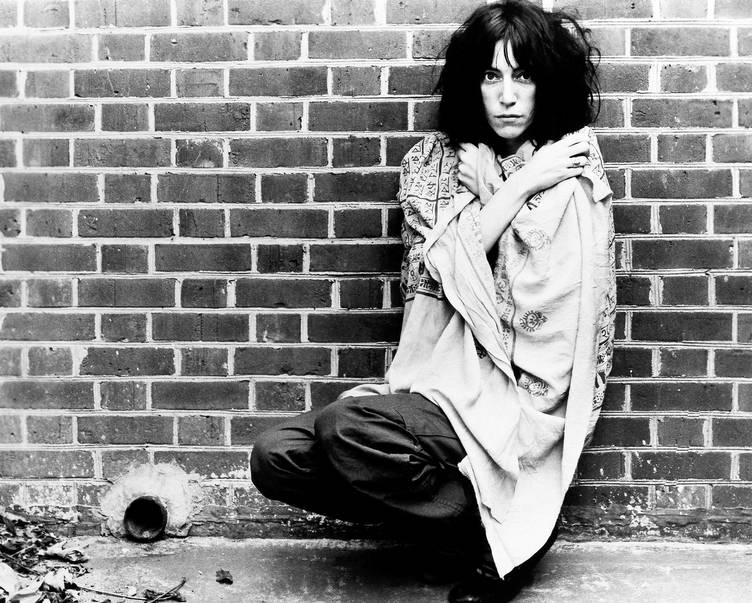
I’ve grown into Patti Smith in a big way. She was always there, a trailblazer for the strong, bloody-minded women from Chrissie Hynde to PJ Harvey who have a place in my record collection, but in recent years I’ve really come to acknowledge her as one of the greats. Morrissey, Michael Stipe and any Maconie-voiced BBC4 documentary will all tell you this of course, but unless you were lucky enough to be there at the time, I’m not sure her importance shines through for generations of mine and since.

Horses is her biggie, of course. A raucous brew of poetry set to music, it’s the sound of flared nostrils and itchy, twitchy jangling nerves riffing on French existentialists, Jesus and the futility of existence – the big stuff, in other words. Wrapped in monochrome with bird’s nest hair, it’s a challenging listen, certainly more difficult to get into than, say, Patti’s contemporaries The Ramones and Blondie who were street suss enough to add some pop to their schlock. The centrepiece of the album is, wonkily, mid way through side 2.

Patti SmithLand

Land is a free-flowing example of all that Patti does best, over 9 carefully metered minutes of what musicologists might call a triptyche, with 3 parts of music played under the one theme. Every word is enunciated precisely and clearly, given equal gravitas. She howls, she whispers, she duets with herself. She’ll rap on something deeply esoteric one moment and then she’ll be singing about the watusi and Bonie Moronie the next. The words come in floods; pretentious, populist and pure. I can’t pretend to know exactly what she’s on about and I’m not certain that the young Patti in 1975 could’ve told you either. It sounds fantastic though.

Patti has a crack band behind her, rising and falling, ebbing and flowing in time to her carefully-written prose, yet for the entire track they keep it simple. At any moment, Richard Sohl on keys could break into the most heart-stopping piano run, but he doesn’t. Lenny Kaye could easily let fly with an electric burst of pop/punk bloooze, but he doesn’t. There’s ample opportunity over 9 minutes for an Animal-esque freak out on the drums, yet Jay Dee Doherty reigns himself in. With Patti Smith, it’s all about the vocal. The words are everything.

Here’s Piss Factory, her early b-side documenting her time working a crappy job for crappier money.

Patti SmithPiss Factory

Just Kids, Patti’s autobiography about her life with Robert Mapplethorpe continues this theme. It’s a literary ride on the A Train, taking the reader right into the centre of a mid 70s New York that most of us can only imagine. Their story is played out against a backdrop of the Chelsea Hotel, Max’s Kansas City and Coney Island and features walk-on parts from Andy Warhol, Alan Ginsberg and William Burroughs. Art, music and fashion explode and fuse together and everything and anything is possible, doable and done. Mapplethorpe struggles with a sexual identity that would eventually tear the couple apart but (or perhaps because of this) it’s a beautiful read;  a love letter to and for Mapplethorpe and the city that brought them together. There they are up there, an androgynous Keef ‘n Mick for the Blank Generation. Even without the music, Patti’s words are powerful. Read it.

Footnote

It was a conversation with Johnny Marr a few years ago that made me go home and re-evaluate Patti Smith until her genius really sank in. I was charged with taking photos of Johnny and his fans after a gig. The waiting line snaked around long enough that half the folk in it ended up missing their last connection home. At the front of the line was a girl who might’ve been 13 and might’ve been 33. Small, disheveled and unkempt, she’d been first to queue outside the venue at lunchtime on the day of the show and as soon as the doors had opened she’d ran for the front of the stage where she stood holding onto the barrier and never letting go until it was time to meet Johnny at the end. Johnny recognised her straight away. “Hello again darlin’!” he greeted with a hug. “How are we today? Listen – hey, listen! – make sure you get a bed tonight, eh? No more sleeping in doorways, eh?

Once, I bunked off the school,” he told me afterwards, “and skipped the train to Liverpool to catch Patti Smith. Sneaked in the stage door! That night I slept in Liverpool Bus Station and it was the most terrifying night of my life. That girl at the front comes to all the shows. She comes alone, leaves alone and always turns up the next day. I kinda worry for her, y’know?

If artists have such a hold on folk that they’re prepared to forfeit a roof over their head for the night so that they can see them in concert, they’re worth listening to.

Alternative Version, demo, Gone but not forgotten, Sampled

Factory Record

Walk On The Wild Side is perhaps Lou Reed‘s best-known song.

Lou ReedWalk On The Wild Side

Its languid vocal and lazy shuffle conjurs up images of stifling summer New York heat; sticky tarmac on pavements (or should that be sidewalks?), teenage girls singing with carefree abandon on street corners, a loose-limbed groove that never outstays its welcome. Listen closely though and you’ll hear a tale of the New York underbelly, the New York that was off the beaten track yet a daily experience if you were part of the Warhol ‘Factory’ set; Hustlers hustling. Drugs and dealers. Pimps and prostitutes. Females who were shemales. This is girls who are boys who like boys to be girls long before it was a Britpop soundbite. Not for nothing was its parent album called ‘Transformer‘.

Here’s an early version, with very different lyrics and Lou pointing out the girls’ parts….

The released version is a radically re-written homage to the Factory set; the scenesters and teensters who orbited around Andy Warhol’s Manhattan Studio. There were actually 3 Factories, but that’s another story for another day.

Holly who shaved her legs was Holly Woodlawn, a transgender actress who ran away from home in Florida at the age of 15 and by the act of shaving her legs on the way literally changed from man to woman.

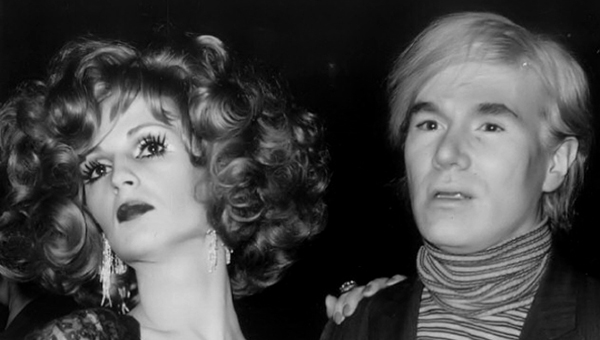
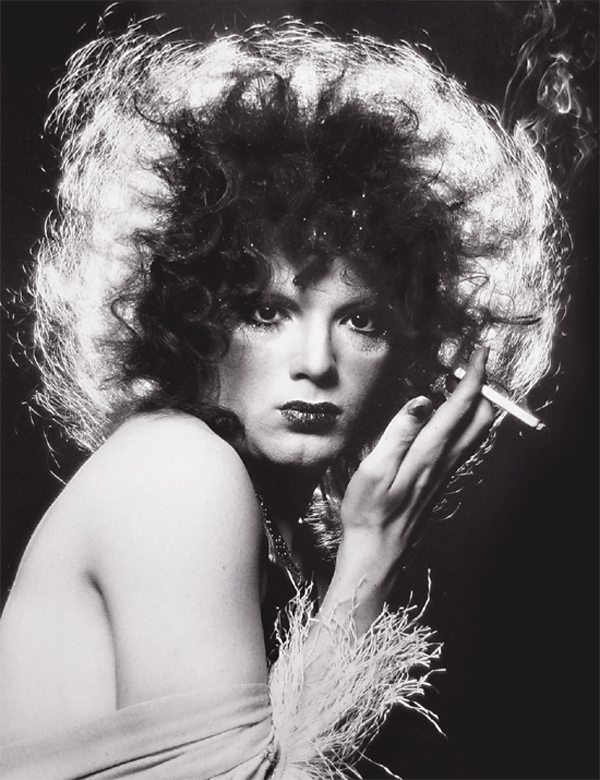
Candy was Candy Darling, also a transgender actress. The subject of the Velvets’ Candy Says, she grew up in Long Island – the island – and was known to perform favours in the back room of Max’s Kansas City, the hipper than hip venue/hangout that was central to the scene. That’s Candy (above) with Andy. It’s her face who’s on the cover of Sheila Take A Bow, The Smiths’ 14th single. But you knew that already.

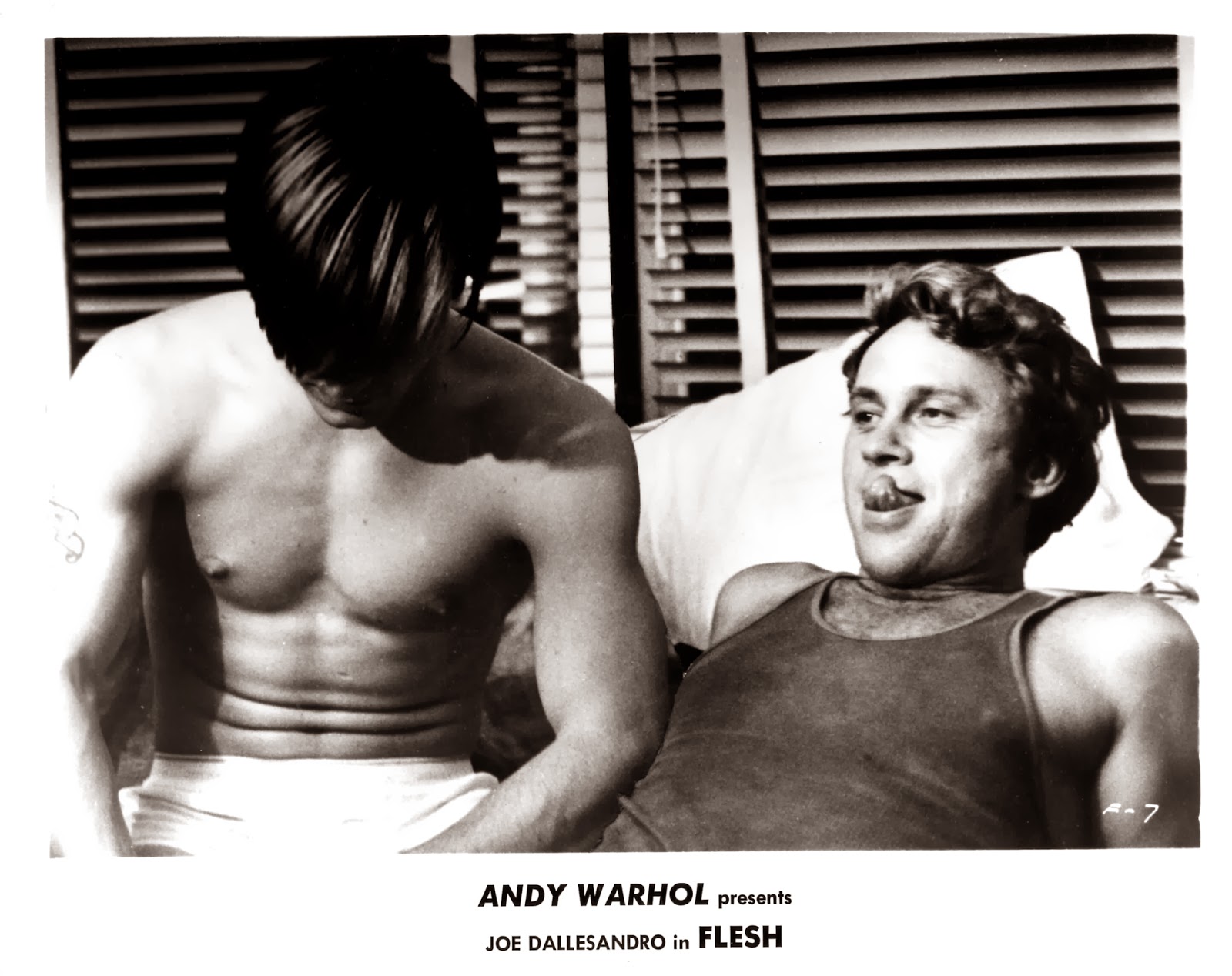
Little Joe was Joe Dallesandro, Warhol actor best known for his role in Flesh, where he played a teenage hustler. Coincidentally, that’s Joe on the cover of The Smiths’ debut album. But you knew that already too.

The Sugar Plum Fairy was another Flesh reference, this time to the name of a drug-dealing character in the film.

Jackie was Jackie Curtis. To say the least, an interesting person, she performed bizarre cabaret dressed sometimes as a woman and sometimes in drag. With overdone glitter, big lipstick, heavily kholed eyes, brightly dyed hair and ripped stockings, Jackie’s combination of trash and glamour was considered the catalyst for the glam rock movement. Certainly, she wouldn’t have looked out of place in the New York Dolls. At one time, Curtis was mooted to play James Dean in a biopic of Dean’s life. This never came to fruition, hence the thought she was James Dean for a day line. So now you know.

Perhaps not surprisingly, such a parade of characters and subject matter fell foul of the US censors. On the released single, they removed the references to the colored girls and giving head and the record peaked inside the Top 20. In the UK, the lyrics remained as Lou had intended and Walk On The Wild Side peaked at number 10. Make of that what you will.

Walk On The Wild Side was put together by Lou alongside co-producers David Bowie and Mick Ronson.

Walk On The Wild Side – hissy outtake with David Bowie on backing vocals

It’s said that Bowie plays guitar on WOTWS, although no credits exist to back this up. Considering at this point in time (August ’72) Bowie was spreading himself between Ziggy tours, Mott The Hoople handouts and Lou Reed production duties, given his propensity to eschew all form of food for music-related activity, it’s not unlikely to suggest he did play on it. It was quite an era for Bowie when you stop to think about it.

One person who definitely did play on WOTWS was seasoned sessioneer Herbie Flowers. Later to find fame in 70s instrumental prog/jazz group Sky, the fly Flowers played two bass lines on the song, thus ensuring himself twice the fee. He played that great defining slinky rubber band bassline and double tracked it with a more traditional Fender bass part, doubling his fee from the industry standard $17 to a more eye-watering $34. Quite how he must feel these days, now that the record is a radio standard and that his part is instantly recognisable, not to mention that the bassline was liberally sampled to form the hook on A Tribe Called Quest’s Can I Kick It? is anyone’s guess, but I bet he wishes he’d gambled on taking the royalties instead of the session fee.

Hard-to-find

You Are Night Club People, Ain’tcha?

A double whammy of night club tracks…

dancers

Iggy Pop‘s Nightclubbing is a fantastic product of its environment. It was written by Iggy and Bowie during a particularly decadent period in time, when they hung with Lou Reed in the off-beaten spots of Berlin and and took all manner of pills, powders and potions just to keep themselves alive and creative. It pulses with a creeping electro throb, a jack-booted mechanical goose-step that never changes tempo, never changes rhythm but always sounds menacing. It’s louche, sleazy and vaguely sinister and to this day is just about my favourite Iggy track.

Iggy PopNightclubbing

bowie iggy lou

It was written after one of their many Berlin benders, when Bowie suggested the ‘We walk like a ghost‘ lyric. The Thin White Duke pounds out the skewed honky tonk blues on the upright piano while Iggy half-sings, half-narrates the tale of an average night out in Berlin for the three of them. You can see them, can’t you, a trio of messed up, pale-faced druggy rockstars stalking the city like a gang of up-to-no-good alleycats seeking their next kick.

Nightclubbing, we’re nightclubbing……we’re what’s happening…….we meet people, brand new people….

The SpecialsNite Klub (the spelling is important) on the other hand is as far removed from Iggy et al as Venus is from Mars. A frantic punky, jerky and ska-based, exotica-tinged knee-trembler round the back of The Ritz, one eye over your shoulder on the lookout for a bouncer or her pals or her actual boyfriend or something, it tells the tale of Friday/Saturday in N.E. Town in late 70s/early 80s provincial Britain.

The SpecialsNite Klub

The-Specials

Most nite klubs in those days were big and cavernous and left-over relics from a bygone age when times were simpler and people had more disposable income. The local Scala or Locarno or Roxy or Palais or whatever had seen better days and bigger crowds as a dancehall and might’ve by now been doubling up as a bingo hall. It may well have been on its way to becoming  a cinema. The Specials sing of a club fraught with tension and the notion that at any time soon, you might get your head kicked in, either by a local who doesn’t like the fact that you went to a different school/grew up on a different estate/looked funny at him or by one of the bow tied neanderthal bouncers employed to keep (cough) order in the place.

I won’t dance in a club like this,’ bemoans Terry Hall. ‘All the girls are slags and the beer tastes just like piss.’

We’ve all been to those places. Some of the best nights of my life were in them. And some of the worst.

Gone but not forgotten

Lou Reed

Deid.

Poor Lou.

lou reed

In the vein of “I’m Hank Marvin” = “I’m Starvin‘”, so a new rock rhyming slang is born.

Shane MacGowan? Is he no’ Lou Reed?”

We used to indulge in Lou Reed before our nights out at The Attic in Irvine. Set you up nicely for the night ahead. Best wee disco on the planet, it was.

Poor Lou.

Here’s Lou featuring his drug buddy Bowie on those ping pong backing vocals. Not Perfect Day. Just perfect.