Hard-to-find

Heavy. Lifting.

This post comes half on the back of a Facebook share the other day, with a posting of a great clip featuring some of this country’s greatest Lanarkshire-based songwriters, musicians and hip young gunslingers playing together as a sort of supergroup for an early 90s BBC Scotland show. The group, led by an unusually instrument-free Norman Blake tear their way through a faithful and loud version of The Kinks Till The End Of The Day. It had me quite rightly scampering back to the original version and for today at least, it’s been blaring out the patio windows and entertaining any neighbours within earshot.

It’s a proper Kinks stomper.
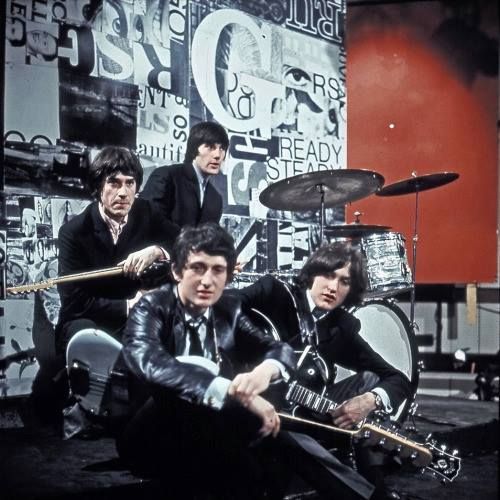
In those early-ish days, you could roughly categorise yr Kinks recordings into two distinct camps. On the one side you had the slashing, F-shaped proto-punk riffing, made more menacing and crucial with Dave Davies’s unplanned razor blade attack on the speaker cone of his Elpico amp. In those feral, thrilling early Kinks stompers – You Really Got Me, All Day And All Of The Night, I Need You et al – you can hear in their livewire guitars and monophonic thunk the birth of the Stooges and all that followed. They are undeniably influential, but more important than that, they are extremely exciting records.

On the other side you had the more reflective songs. Waterloo Sunset, Well Respected Man, Dead End Street and Dedicated Follower Of Fashion ring with brightly scrubbed major-to-minor acoustic guitars behind whistleable electric riffs, shifting the mood with their descending woody basslines and carefully worked out whimsical backing vocals. It’s these songs – every one of them a solid gold standard – that set Ray Davies apart from the leaders of any other beat groups bar The Beatles.

Some of their songs straddle both sides. The choppy riffing and wistful reflection of Set Me Free and the meaty yet melancholic Where Have All The Good Times Gone? spring straight to mind. The Kinks had the golden touch of fusing muscle with melody. Till The End Of The Day, as you well know, falls firmly into the former camp.

The KinksTill The End Of The Day

Three lightly vibratoed guitar chords, almost at the edge of Vox-ish breaking point, almost in tune, precede a Ray Davies line that’s totally at odds (as it turns out) with his actual frame of mind. “Baby I feel good!” he announces brightly, before the other Kinks fall in behind him like the beat group to end all beat groups. Guitars clang and buzz and see and saw, their choppy rhythm held in place by the tumbling of heavy furniture and silver cutlery that announces the drums’ arrival. The band gives it their all from start to finish, playing as if this might be the last time anyone allows them inside a recording studio, and it’s a riot.

The Kinks – and this being the murkier end of showbiz, so that might mean Clem Cantini or Jimmy Page or Nicky Hopkins as well as/instead of the actual Davies brothers and Quaife and Avory – do their fair share of the heavy lifting. It’s all in the incidentals. The drum fills are spectacular, ride and crash cymbals splashing golden metallic sunshine on the high end before taking the whole thing to heaven in double time for the closing seconds. The electric guitars are supremely disciplined, squeezing out chunky chords in the verses then galloping at a hundred miles an hour at the end of each fourth line. Dave Davies (?) rattles off a fat-free solo, the thin single coils of his Telecaster cutting through the stew for a dozen ear-splitting seconds.
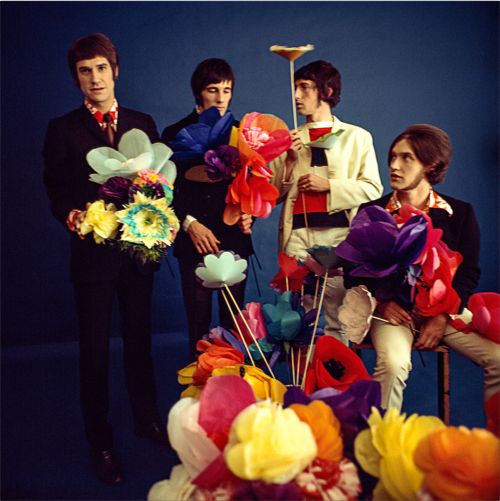
If you can shake free of the heavy riot that’s unfolding around them, then it’s the backing vocals that are especially worthy of your undivided attention. Ray sings those opening lines – “Baby I feel good…right through from…” and then immediately, someone – Dave, I think, as he has that Davies family tone to his voice (and surely Ray won’t have double tracked himself on the 4 tracks, or however it was they recorded this holy riot) harmonises with a perfect “mo-or-ning“…and at the same time, the other two Kinks underpin the harmony with an almost buried descending “oooh-ooh-ooh” harmony. Four Kinks, doing their equal share of the heavy lifting. Here they come again in the bridge…and again at the end of the first verse…and anywhere else they can fit a harmony or a double-tracked key word to the proceedings. The Kinks: a beat group who can arrange the fuck out of a simple set of chords.

So, yeah, it’s essentially the band’s own All Day And All Of The Night recast as if the group had continued playing long after the needle had buried itself in that single’s dead wax, but man! It’s a ripper, a properly great modish stomper that’s as electric as The Who, as melodic as The Beatles but with a beating r’n’b heart the equal of anything the mid ’60s Stones put out. What’s maybe surprising is that it was written to order. The Kinks’ management had no sympathy for a writer suffering a rare bout of writer’s block and sent American songwriting heavyweight Doc Pomus to his door in an attempt to shake him out of it. It seems to have worked. A song that ended up with a lyric about someone feeling trapped and frustrated in a relationship was essentially Davie’s autobiographical dig at his management.

And that Bellshill Beatles Norman Blake-fronted cover that’s had me digging out my old Kinks Kompilation these past few days? I like to think that particular supergroup tackled The Kinks track purely because their hero Alex Chilton was such a fan. Chilton was certainly around that circle of musicians at the time and his influence can’t be underplayed. Should you wish, you can find Big Star’s version of Till The End Of The Day on the expanded CD of Third/Sister Lovers, but – heresy!- I much prefer the late 00’s version that Alex recorded with Ray Davies.

Alex Chilton & Ray DaviesTill The End Of The Day 

Some shimmering Hammond, some great Alex ‘n Ray harmonies, a rockin’ Chilton solo that maybe even outdoes the original; it’s a great cover.

Cover Versions, demo, Get This!, Hard-to-find

Vive le phonq

Imagine the pop landscape in 1967. It wasn’t just the trousers that were starting to get expansive. Everything’s got that slightly psychedelicised and trippy, frazzled edge to it. Itchycoo Park. Heroes and Villains. Penny Lane. Purple Haze. See Emily Play. Even The Temptations and other wide-lapel wearers on the Motown roster were abandoning their sure-fire recipes for success. Psychedelic Shack anyone? A future post for sure. Records became longer, more free-form and stretched out. Less structured, with not so much emphasis on the tried ‘n tested verse/chorus formula. But still pop. That bit’s important. The time was ripe for Sly and the Family Stone.

In 1967, Sly Stone didn’t like his record company. In fact, he didn’t trust them one iota. Sly had a bit of leeway though. He’d just had a top ten smash hit both sides of the Atlantic with Dance To the Music, a tune that did exactly what it says on the tin. So when Clive Davis at CBS asked Sly to follow it up with more of the same, the ever-willful and awkward Sly did just that.

sly keyboard

Sly decided to follow up Dance To The Music with a garage punk/funk version of the exact same track, stripped of all vocals save a tiny spoken word part and the chorus…..which this time was to be be sung entirely in French.

Naturally, he chose to call it Danse à La Musique. Released under the nom de plume of French Fries, it was terrific. The same du-du-du-dumb four-to-the-floor caveman stomping beat and growling fuzz bass drives it along. Street corner jazz scat vocals ping-pong back and forth, trying to be heard above the din of a joyfully fuzzed up, wasp-stuck-inside-your-car guitar track, clearly being played by a guitarist who’s just wired up a fuzzbox for the very first time. There’s precious little brass, replaced instead by a primitive keyboard that plays random Eastern-tinged phrases like a snake charmer on acid. The champion of a tambourine player never once stops throughout. His/her arm must’ve ached like a teenage boy’s with a Meaty, Beaty, Big ‘n Bouncy bargain Box Set for company. The whole thing is over and done with in three freaked-out flare-flapping minutes. I think you’ll like it.


sly kathyBONUS TRACK!

Here‘s a demo of Sly and co turning The KinksYou Really Got Me into a piece of proto Acid Jazz. Not sure if I like this or not, but it’s a curio right up Plain Or Pan’s street. And yours…

Get This!, Hard-to-find, Yesterday's Papers

Kinks, Konkers and Kids in Kasualty (slight return)

Slightly recycled from Plain Or Pan’s back pages, this article is adapted from one that first appeared 5 years ago…

Autumn. The nights are drawing in and the curtains are drawing shut. The heating comes on a bit earlier than normal and stays on that wee bit longer. You can smell winter coming in the air. The leaves are turning red and yellow. Conkers are on the ground and in the playground. Kids are off to the medical room for a good dose of TCP and a telling off.

kinks rsg

It’s round about now that I like to dig out ‘Autumn Almanac’ by The Kinks, a song that so perfectly sums up this time of year. You don’t even have to be quintessentially English to appreciate lines such as, “I like my football on a Saturday, roast beef on Sundays, alright! I go to Blackpool for my holidays, sit in the open sunlight.”

No doubt about it, it’s one of my all-time top 5 favourite songs ever. Just ahead of ‘Ally’s Tartan Army’  by Scotland’s 1978 World Cup Squad, though just behind ‘There She Goes’  by The La’s.

Lee Mavers once lectured me on the brilliance of Autumn Almanac  for a good 10 minutes. “From the dew-soaked hedge creeps a crawly caterpill-ah!” he offered, in his sing-song Mersey twang. “How good a line is that, La!?! ‘Friday evening, people get together…hiding from the weather…’ The chords, the feel, the melancholy…….it’s not as good as Waterloo Sunset, though, is it?”

kinks autumn almanac ad

The single version of Autumn Almanac was recorded in September 67 and released 3 weeks later. No great strategic marketing campaign with focus groups, target audiences and avoidance of any other big act’s single being released at the same time. Get in the studio, cut the record, release the record. Times being simpler then, Autumn Almanac climbed to either number 3 or number 5 on the charts, depending on which music paper you were reading.

Recorded for Top Gear just a few weeks after, on October 25th 1967 at the BBC’s Maida Vale Studio 4 and broadcast 4 days later, the above track is taken from a well-known Kinks bootleg* called ‘The Songs We Sang For Auntie’, a 3 CD set that compiles most of (or all?) the unreleased BBC session stuff from 1964-1994. A must-have for any fan of a band who were matched surely only by The Beatles in terms of high quality output.

Ask anyone to name 3 Kinks singles and they’ll give you all the usual suspects, but I bet it’d be unlikely Autumn Almanac would feature in too many lists. It’s an under appreciated classic, that’s for certain. Just ask Lee Mavers.

*Since writing this article, there’s been an official Kinks BBC release. But you probably knew that already.

Yes, yes, yes! It’s my Autumn Almanyac!

Hard-to-find

Kinks, Konkers and Kids in Kasualty

Autumn. The nights are drawing in and the curtains are drawing shut. The heating comes on a bit earlier than normal and stays on that wee bit longer. You can smell winter coming in the air. The leaves are turning red and yellow. Conkers are on the ground and in the playground. Kids are off to the medical room for a good dose of TCP and a telling off. It’s round about now that I like to dig out ‘Autumn Almanac’ by The Kinks, a song that so perfectly sums up this time of year. You don’t even have to be quintessentially English to appreciate lines such as, “I like my football on a Saturday, roast beef on Sundays, alright! I go to Blackpool for my holidays, sit in the open sunlight.” No doubt about it, it’s one of my all-time top 5 favourite songs ever. Just behind ‘There She Goes’ by The La’s and just ahead of ‘Ally’s Tartan Army’ by the Scotland World Cup Squad 1978. Lee Mavers once lectured me on the brilliance of Autumn Almanac and Waterloo Sunset for a good 10 minutes, but that’s for another time. “I wish I’d written Waterloo Sunset,” is one of the things he said.

Autumn Almanac

David Watts
Sunny Afternoon
Susannah’s Still Alive

Mr Pleasant


My computer’s playing silly buggers. Can’t get the spacing to work out. You don’t mind? Recorded for Top Gear on October 25th 1967 in BBC Maida Vale Studio 4 and broadcast 4 days later, the above 5 tracks are taken from a well-known Kinks bootleg called ‘The Songs We Sang For Auntie’, a 3 CD set that compiles most of (or all?) the unreleased BBC session stuff from 1964-1994. A must-have for any fan of a band who were matched only by The Beatles in terms of high quality output. But that’s just my opinion.


The voice between tracks is Brian Matthews (I think), who still presents the Sounds of the 60s show on Radio 2 every Saturday morning. The time really is ripe for a Kinks re-appraisal. The single version of Autumn Almanac was recorded in September 67 and released 3 weeks later. No great strategic marketing campaign with focus groups, target audiences and avoidance of any other big act’s single being released at the same time. Get in the studio, cut the record, release the record. Times being simpler then, Autumn Almanac climbed to either number 3 or number 5 on the charts, depending on which music paper you were reading. But ask anyone to name 3 Kinks singles and it’d be unlikely Autumn Almanac would feature in too many lists. It’s an under appreciated stone cold classic. Just ask Lee Mavers.

Yes, yes, yes! It’s my Autumn Almanyac!