Get This!

Movin’ On With My Very Best Friend

See if you’re going to crawl around on top of a slag heap in yr birthday suit, with only a giant turtle shell on top of your back to protect you from the elements, you don’t really need to signpost your everyday state of mind to the uninitiated. For emphasis though, you might, should a camera appear, ignore the allure of the lens and hone your focus solely on a once-scarlet Tonka truck with missing tyres. You might call your album Fried. You might even, for added emphasis, stick the name of the album to the side of the wonky Tonka the way Eddie Stobbart might splash his livery across his fleet of motorway mile guzzlers. Julian Cope is Fried, says the picture in not so many words. Well, duh, points out the audience.
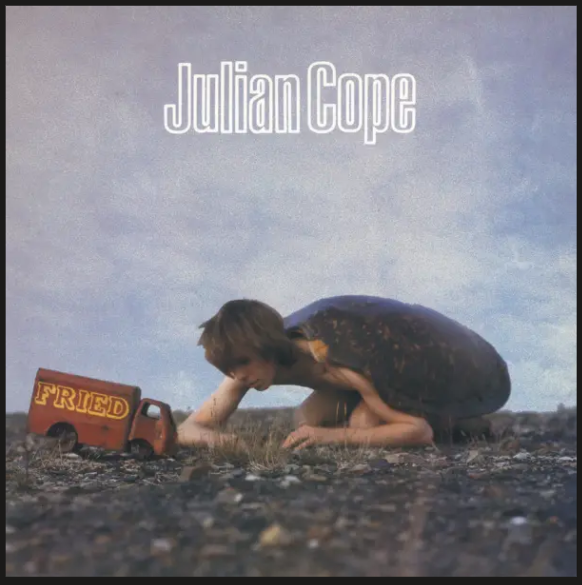
Fried was Cope’s second solo record. Following World Shut Your Mouth and his earlier work in the Teardrop Explodes, he continues to channel his undeniable pop chops; the knack of knowing where to stick a hookline in a simple three or four chord progression, the understanding that an understated brass section can elevate everything to Beatles-great levels of enjoyment, the tightrope drama of an acid-drenched guitar – too much and the pop has gone out of it, too little and the acid heads think you’ve lost your fizz. Cope has that balancing act down to perfection.

Check out Sunspots, the only single that would be grudgingly released by an amazingly stupid record company to promote Fried.

Julian Cope – Sunspots
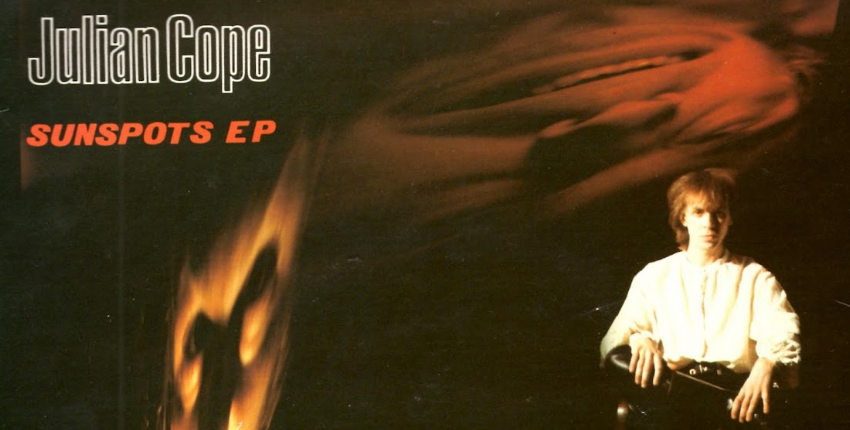
Simple four chord progression? You betcha. Oom-pa-pahing Beatle-ish brass that stomps all under the verses like a drunk elephant? By golly, aye. A hooky yeeeoooow vocal line in all the right places? Wow. Yeah…right on, as the vocalist himself might’ve said during its first play back.

Sunspots is terrific. Forty years later, it’s lost none of its potency in the slightest. From its sharp, lysergic guitar intro onwards, it’s pure, hazy psychedelia for Gen Xers with a penchant for Nuggets and the outer fringes of the sixties counter culture. The organ (Farfisa? Vox?) stabs ‘n sustains ‘n swirls in all the right places. Glassy twelve string guitars pop in and out of the mix. There’s even a reedy Wild Thing-aping ocarina solo should you need to place it in context. And the dopey, walking bassline? It plays the part of trip sitter, holding the tuba player’s hand until it all wears off.

Cope is on very good form, overlapping his vocals to great effect -‘Way! Waaay! Way! Wuh-ay!‘ – singing about his very best friend…he’s in love with his very best friend, dontchaknow. Whether he’s singing about his actual best friend or whether he’s metaphorically alluding to, y’know, drugs, is anyone’s guess, but I know where I’d be sticking my money if it was an option with Paddy Power.

The outro too – all 90-odd seconds of it – is slow burning sunshine in a jar. Is that a xylophone towards the end there, just between the elephant stomps and the kitchen sink? I think it is, y’know. A fitting way to end a single that would peak at number 76. We’ve been here before, but really, what is wrong with people?

Sunspots‘ parent album fared even worse, limping itself to number 87 with a bullet. A bullet might’ve been kinder. Mercury Records decided enough was enough, and Cope’s time at the label was, eh, Fried.
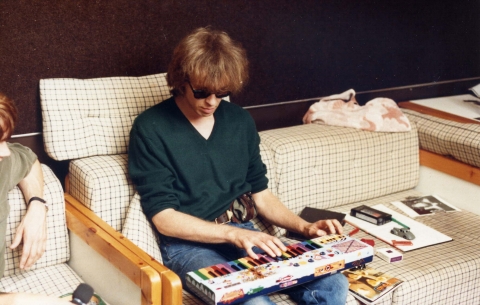
“Julian Cope? The difference between me and him is I’m a character from Shakespeare and he’s a cartoon out of the Beano.”

That’s a quote attributed to Ian McCulloch in 1985.

The fact it’s taken directly from Cope’s ‘Repossessed‘ memoir would suggest that Julian kinda likes it. Can you imagine your image-conscious guitar-totin’ popstars saying that about one another nowadays? That lad from Fontaines DC getting hardcore bitchy about the singer in Westside Cowboy? Nathan Shepherd would probably get a three-part 6 Music podcast from the fallout.

But back to Cope.

I’m sorry Mac the Mouth, but given the choice of Shakespeare or the Beano, I’d take Minnie the Minx every day of the week. As great a singer as McCulloch is was, Julian Cope is just far more interesting.
Alternative Version, Cover Versions, Peel Sessions

Book Makers

If ever there was a short-lived group with an ego overload as wide as the Mersey, it’d be The Crucial Three. Birthed in Liverpool, the not ironically-named at all trio was the fertile product of Julian Cope, Ian McCulloch and Pete Wylie, students in the city and punk rock foot soldiers with the battle scars from Eric’s and Probe Records to prove it. Destined to meet and create and disband in a whirl of uncontainable ideas, The Crucial Three lasted no longer than six weeks, burnt out on a combined love of New York punk and the inevitability that each group member couldn’t be boxed and compromised within its confines.

In his book Head On – essential reading, if y’didn’t know – Cope is both catty and complimentary towards McCulloch. He’s already been nicknamed Duke after Bowie’s Thin White persona by the time they meet, and the nickname provides Cope with much bitchy ammunition, but St Julian has nothing but praise for McCulloch once he dares to peek beyond the fringe and start to sing. Cope bands about McCulloch’s name in the same breath as Lou ‘n Iggy and he genuinely means it.

Amongst the nonsensical jams and Velvets rip-offs that constituted The Crucial Three’s flimsy ouvre –  one song about zits and one about drugs that was a great Cope-y title in need of an actual song (I’m Bloody Sure You’re On Dope), Cope and McCulloch (or ‘Duke McCool‘, as Julian has now christened him after mishearing the shortened McCull) dragged out an actual, bona fide post-punk classic.

Read It In Books surfs along on a cyclical riff very reminiscent of Patti Smith’s Dancing Barefoot, the product of one of the trio’s living room sessions where someone would stumble on a set of chords and the others would fall in and see if something stuck. If you’ve ever played in a shambling and under-rehearsed band, you’ll recognise this scenario immediately. In this instance something did indeed stick. Cope claims McCulloch was playing the chords to The Fall’s Stepping Out (it also has, in the main, two chords and is a bit shouty, but these ears can’t really find the similarity – which is good, I suppose), but by the time the band had reconvened for their next session, McCulloch had a set of lyrics to go with it – including a cheap steal from The Impressions – and before they knew it, The Crucial Three had a song of their own. People get ready, there’s a train a-comin’… and it’s a beauty.

Read It In Books was credited as a Cope/McCulloch co-write, and both artists would go on to record versions with the bands with whom they found success.

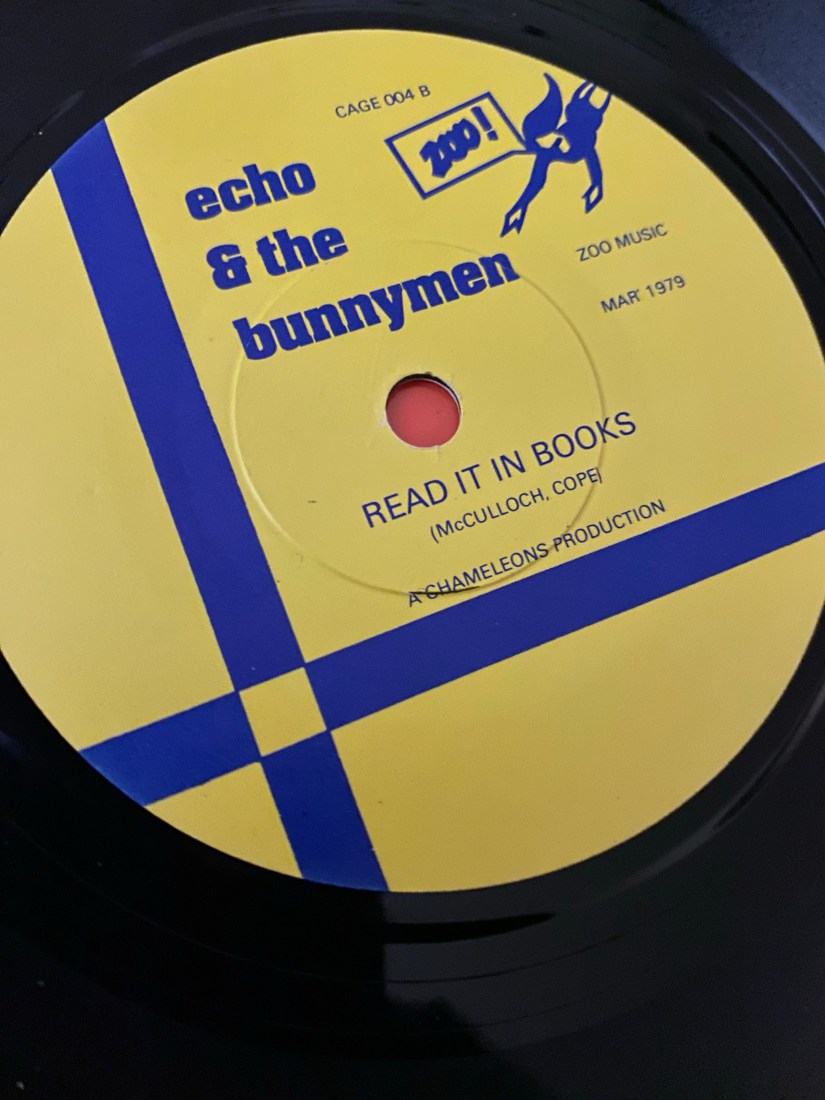
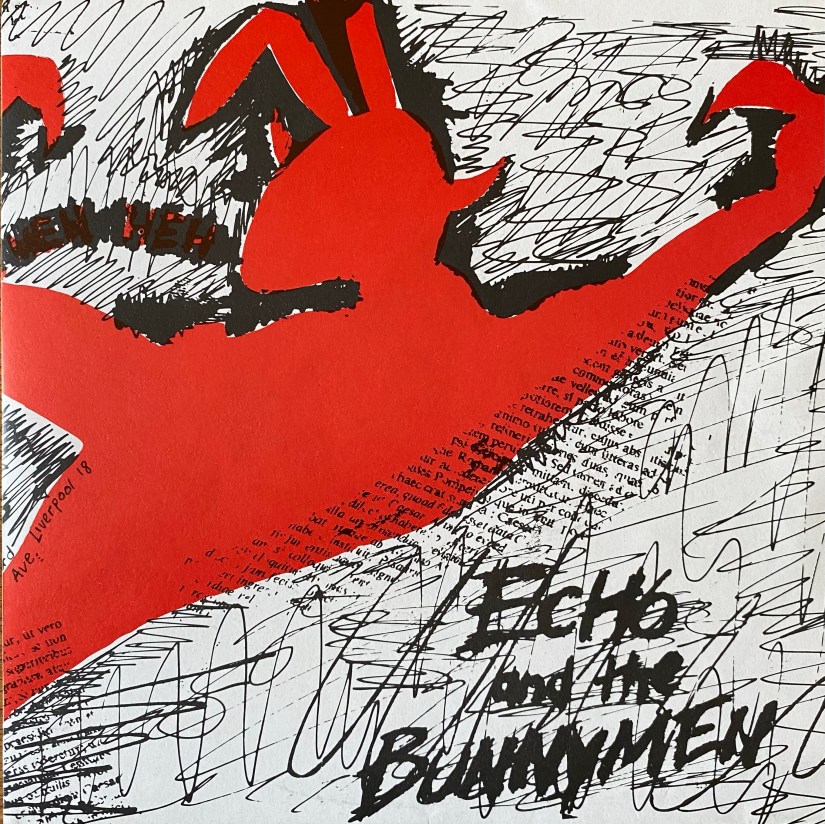
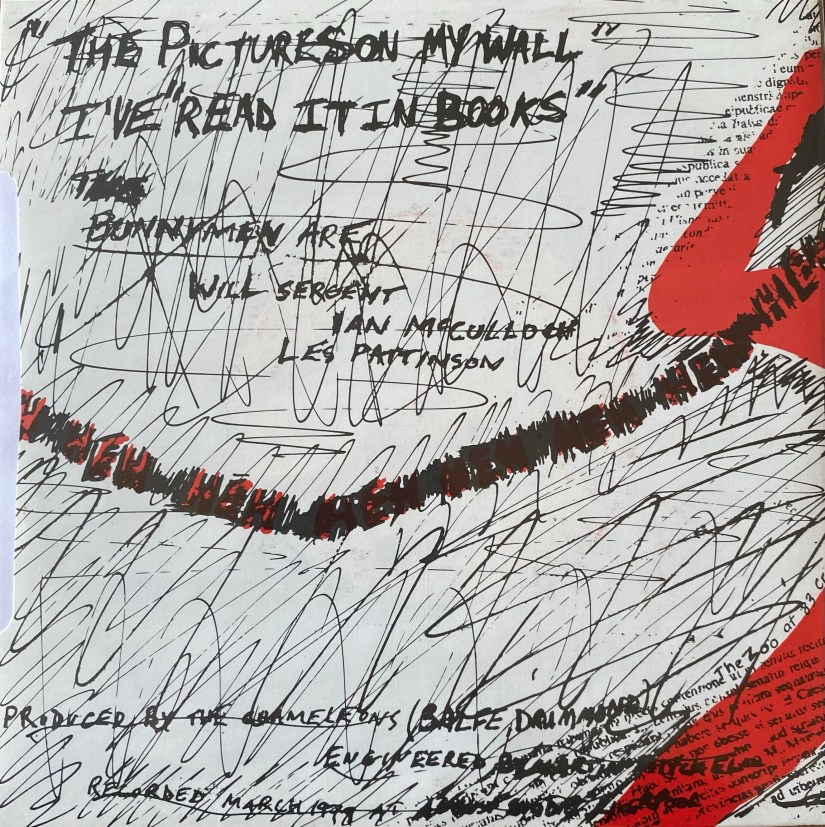
Echo & The Bunnymen‘s version appeared as the b-side to their debut single The Pictures On My Wall (credited to McCulloch, Cope, of course).

Echo & The Bunnymen – Read It In Books


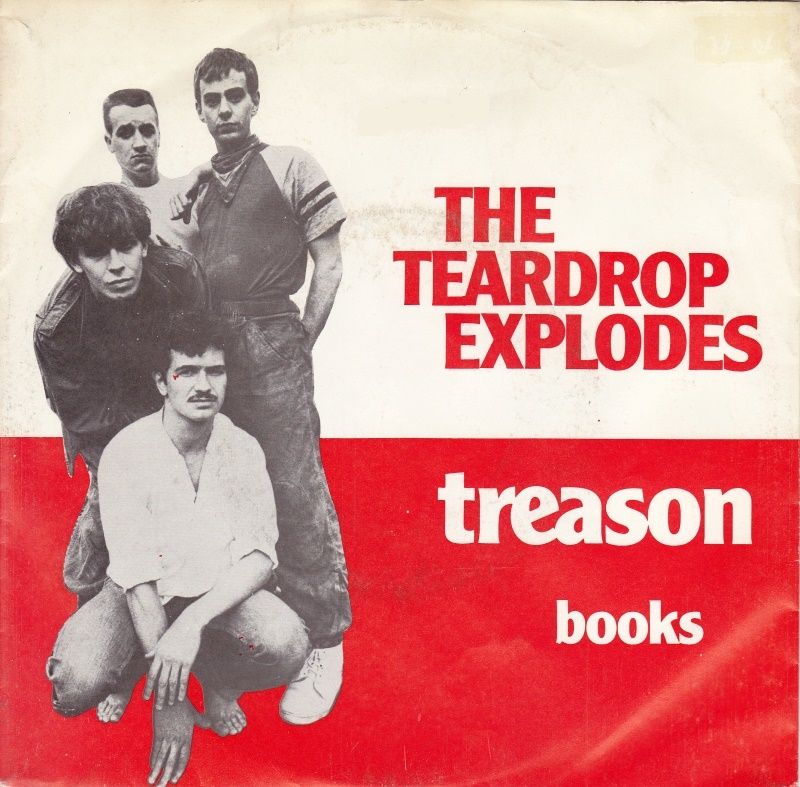
Cope’s Teardrop Explodes would record it for the b-side of their third single Treason.

You don’t need to dig too deep below the surface of the internet to find multiple versions of the song but, for me, the best version of all of them is the Bunnymen’s imperial take that they recorded for the John Peel show in 1979, watery guitar solos, incessant drum machine rhythm, McCulloch’s restrained croon ‘n all. Within a few years their sound would evolve, with skyscraping, effect-rich guitars and a towering symphonic backing adding gravitas and state to the McCulloch vocal, but that early Bunnymen sound – man, I’ll never tire of this.

Echo & The Bunnymen – Read It In Books (Peel Session 15th August 1979)

The Teardrops’ version is fairly similar, acknowledging that both writers created the structure and arrangement. Guitars clang, drums are pummelled, a stabbing organ shimmers in and out like the ghost of Ray Manzarek moonlighting in The Seeds and the whole thing rattles its way to garage band heaven. Add some sleigh bells to its nagging piano background and it could almost be The Stooges’ I Wanna Be Your Dog. Perhaps an obvious, leather-trousered step too far for the Iggy-headed Julian.

Teardrop Explodes – Read It In Books

This one is credited, naturally, to Cope, McCulloch.

The ego had well and truly landed.

Hard-to-find

Neu! Beginnings

Negativland, from Neu!’s first, self-titled album is a near ten-minute odyssey of prog-infused Krautrock.

Beginning with the sound of juddering road drills fighting for ear space with electronically-treated voices and crowd effects, it creeps up on you in a rush of linear feedback that gives way to its simple, steam-powered groove. Bringing to mind Bowie’s title track from Station To Station, it’s all repeating bass lines and simple drum patterns; long, straight and endless – proper head music for the cross-legged longhairs and wispy beard-strokers of the world.

Over the course of the track, the rhythm rarely changes. There’s a brief spell in the middle and again towards the end when the rhythm section hits downhill without the brakes on and moves into second and what might even be third gear, but just as things seem like they might be getting out of control, they reign it all in again and bring us back to the groove. It’s not repetition, as self-confessed Neu! fan Mark E Smith might’ve said, it’s discipline.

The melody on top, the colour, is provided by wind-tunnel effect guitars redolent of that whooshing Leckie-produced ambience that colours much of the Stone Roses’ debut album. There are no vocals. Vocals, clearly, are for wimps. Featuring just two members – Michael Rother on guitar and bass and Klaus Dinger on spartan drums – with heads down and minds locked, there was never going to be anything as conventional as a vocalist, at least, not until the closing track on the album, if indeed sporadic, whispered, strangulated mutterings are your idea of vocals. Rother and Dinger had left an early incarnation of Kraftwerk to form Neu! and where their former band would go on to pioneer the use of synths, so too would Neu! push the boundaries of what was possible with guitars.

As Julian Cope says of the band in his essential reference Krautrocksampler,

‘The sound that replaced the hectic stop/start of the Kraftwerk trio was an ambient bassless White-light Pop-rock mantra that steadied itself directly between the two extremes of Bubblegum music and the extreme German experimental music.

Neu! was the product of two young Master-magicians who had so grabbed hold of the creative ‘moment’ in the studio as to create a true jewel of an LP.’

It’s a record that’s not for everyone, Neu!’s debut, but if you get it, you really get it. Minimal, with clean lines and no clutter, from its day-go logo sleeve in it’s the very antithesis of the bloated, overblown, hobbits and goblins musical landscape of the era. You’ll hear its influence ring true in the records of the aforementioned Bowie as well as the ambient scrapings of PIL – check out Albatross – and the electro-fried stylings of Stereolab.

Negativland and the rest of Neu! (with a side order of Sister Ray) is clearly to art-rock what Black Sabbath (and a side order of Blue Cheer) were to metal – gate-opening, trailblazing and quite unique.

You knew that already though.