Clever band, Blur. They hit the zeitgeist with Parklife, followed it up with The Great Escape (more of the same, but written to prescription) then, when the wheels started coming loose on the Britpop bus, aimed for the ditch last navigated by Neil Young and released an album that couldn’t be further in sound from the ones that put them in the charts, on the evening news and onto teenagers’ bedroom walls. This approach – wilful and stubborn and intent on freshening things up – means that they continue to release records well into this century, playing massive, celebratory shows while remaining arty and interesting at the same time. They have, as Depeche Mode once advised, got the balance right.
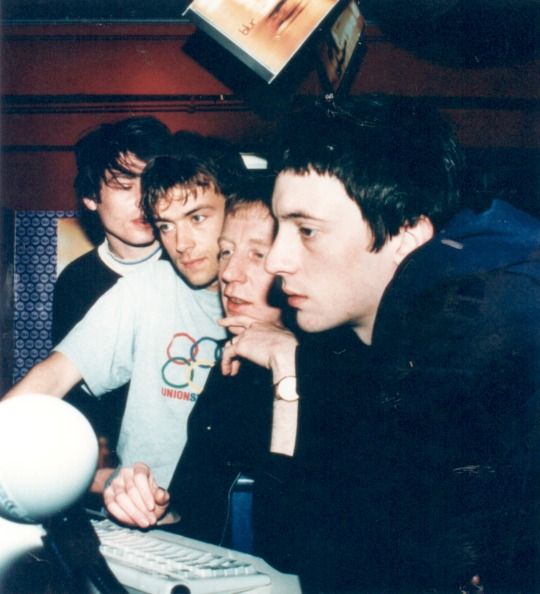
Gone are the fresh faces and considered haircuts. Gone are the forced grins. Gone is the joy of popstardom. Five albums in and Blur look slightly less box-fresh than The Beatles do on that great, bleary-eyed sleeve that houses Beatles For Sale. Blur, the group’s lazily/eponymously-titled offering to their fans made little sense to many of them at the time, but as history has proven, it’s just one in a long list of albums in a year which seemed to have a properly great, must have album released every other week.
Had those queuing at midnight for the latest, bloated Oasis release (Be Here Now) swatted the grease from their shitty mod cuts and looked elsewhere, they might’ve seen what they were missing out on; Mogwai Young Team, Elliott Smith’s Either Or, Homework by Daft Punk, In It For The Money by Supergrass, Portishead’s self-titled second, Homogenic by Bjork, Tellin’ Stories by The Charlatans, Super Furry Animals’ Radiator, Primal Scream’s Vanishing Point, Dylan’s Time Out Of Mind…OK Computer… Urban Hymns… Heavy Soul…Dig Your Own Hole…The Fat Of The Land…Ladies And Gentlemen We Are Floating In Space…. Ladies and gentlemen, we were spoiled for choice.
Blur tips its cocked and wonky hat to America. Graham Coxon breathes a welcome sigh of relief and dusts down his pair of Rat distortion pedals, for the most part mothballed for the last couple of albums. They’re all over Song 2‘s hairdryer-in-a-cement-mixer ramalama, and sports stadiums Stateside subsequently went apeshit for it. Netted a 3-pointer? Woo-hoo! Smacked a home run? Woo-hoo! Steamrollered an opponent on the gridiron? Woo-hoo! Oh yeah. Gone are the rinky dink Kinksisms and cor blimey guvnor knees ups. Blur is scuffed and scarred, and listeners who’ve stuck by its insular ambience will know how terrific it sounds even to this day.
The lead single, Beetlebum, was – in a nod to the heroin of its subject matter, a heavy-eyed and down-tempo slow-burner. Hard drugs had entered the orbit of the band and their periphery – Elastica, mainly – and it seems that Blur’s lead singer wasn’t immune to their temptation. Beetlebum is intentionally woozy, the come up from heroin’s knock down and drifts in, enveloped in pathos, regret and cotton-woolled vocals.
Get nothing done, Beetlebum. Just get numb, Beetlebum
And when she lets me slip away, she turns me on then all my violence is gone,
I just slip away and I am gone
Blur – Beetlebum

Some reviewer at the time said that Blur had taken all of what made the White Album so great and boiled it down (or cooked it up) into a four minute pop song, and, man, whoever said it was kinda right. The vocals in the chorus waft in on a breath of Beatlesish harmonies, overlapping and intermingled, Damon sounding like Graham and Graham sounding like Damon, the whole band sounding pleasantly horizontal. Happiness Is A Warm Gun sung to Revolution‘s fuzzed guitars and Birthday‘s compressed drums – that smart-arsed critic was astute.
The record’s real beauty lies in the chunky rhythm fired up by Coxon’s guitar playing in the verses. His opening riff sounds like a zip tearing through sandpaper – derr dur-dur-dur, derr dur-dur-dur – before opening up on a properly clanging, open-chorded chorus. The trick to Coxon’s playing here is in not just one, but both of his hands. His left plays an unexpected chord sequence while his right intentionally scuffs it up with discordant, ringing open strings and idiosyncratic flashy parts. If it’s unique and interesting guitar players yr after, look no further.
Blur could have easily fallen into the trap marked ‘formulaic’, but with Coxon continually doing his damndest to put a metaphorical hole in the knee of their collective strides, you have the perfect push and pull that makes all the great bands tick.
















 Plain Or Pan