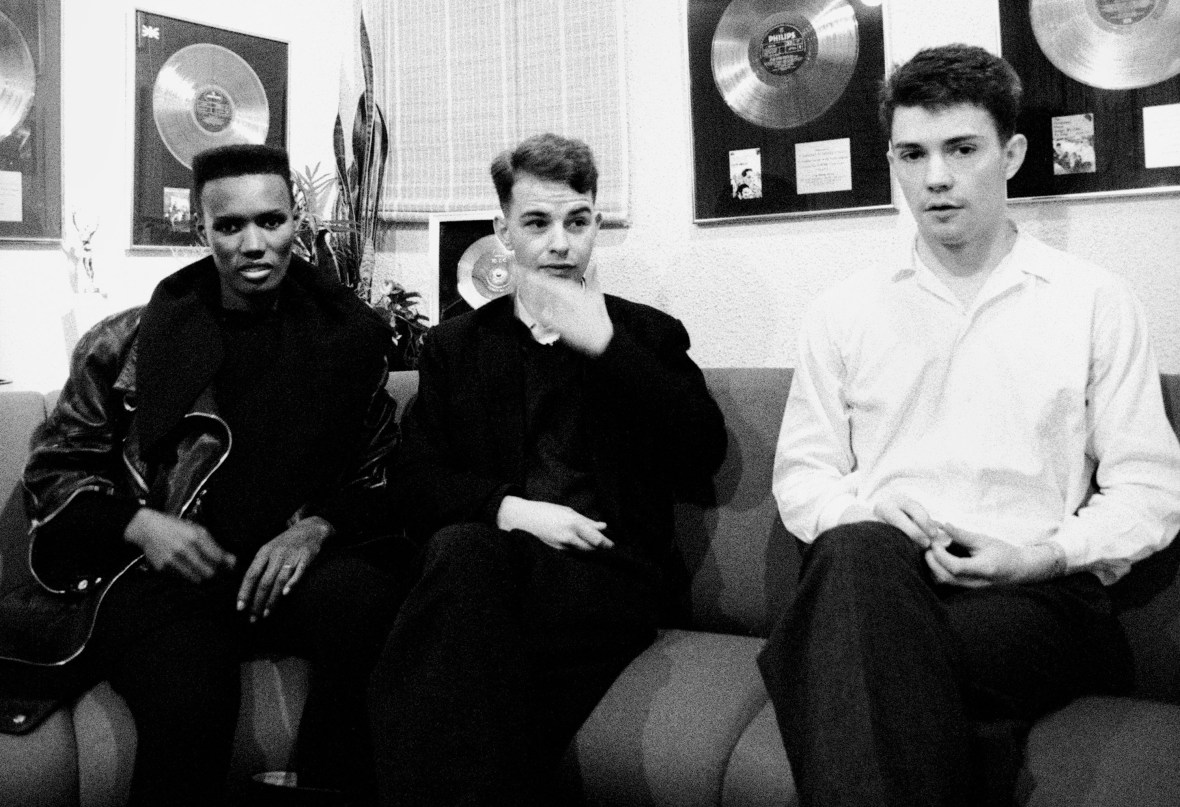
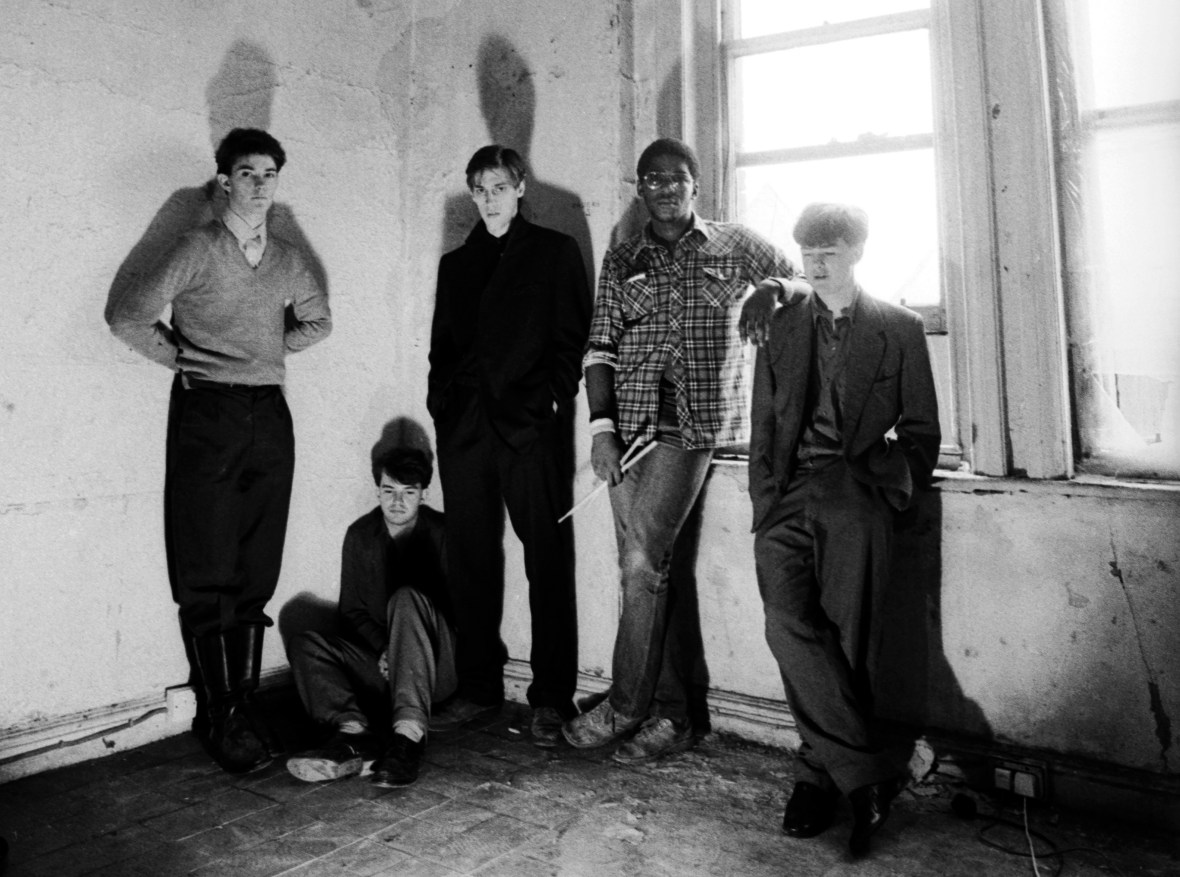
What’s not to like about this! It’s A Certain Ratio, covering Talking Heads, on a track intended for Grace Jones, that features a guide vocal from the band’s Jez Kerr that ended up being on the released version. Mined from the band’s archives a couple of years ago and represented in new light on their all-encompassing 40-year anniversary box set, Houses In Motion bears all the hallmarks of classic ACR.
A Certain Ratio – Houses In Motion
(Mute Records/Kevin Cummins)
It’s the bassline that hits you first. A fluid and chrome monster, it falls halfway between the mercurial slink of the O’Jays’ For The Love Of Money and an on-the-one makeover of the theme to Cheggers Plays Pop. The vocal, deadpan and spoken, apes David Byrne’s original, a hollowed-out shell of existential pondering and angst. Caught in the eye of his own storm, Kerr seems nonplussed as his band knock several shades of post-punk funk from the track.
(Mute Records/Kevin Cummins)
Rattling, metronomic, beatbox percussion keeps the beat slow and steady before the guitars, scratchy and metallic, creep their way into the mix, dropping out and in again at the end of the lines, filling in the vocal-free sections. Echoing trumpets, heavily filtered through the mixing desk help to date the track – think Pigbag and Teardrop Explodes, even the Jam… any band from the era that saw out the ’70s and saw in the ’80s with an ‘anything goes’ approach to instrumentation. Off it flies, the brass section heralding the intent to take the track upwards and skywards. I’m glad ACR discovered they had it during that archival archaeological dig of theirs.
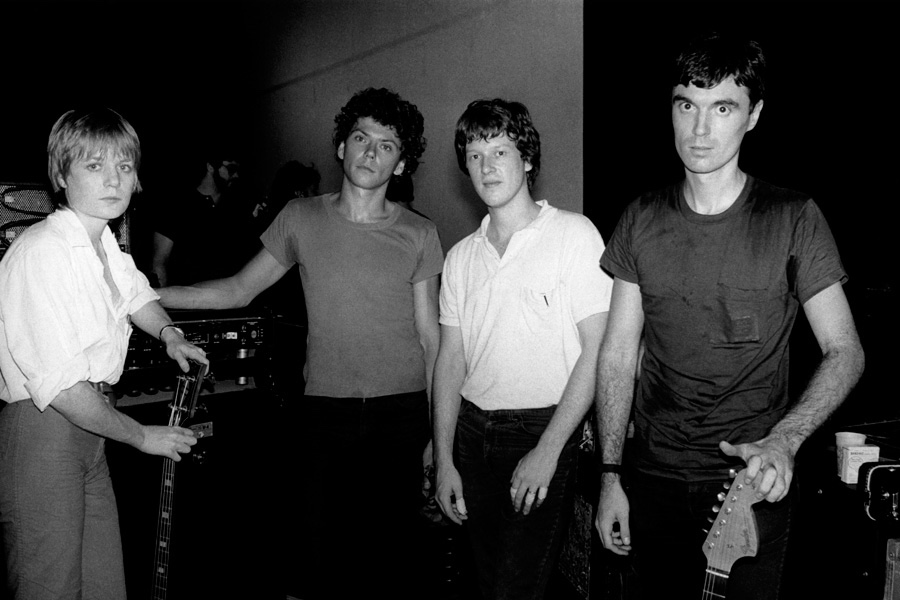
Talking Heads‘ original is, of course, also a beauty.
Talking Heads – Houses In Motion
It’s total claustrophobic funk that, with its bubbling bass and car horn keyboards, brings to mind Prince’s ridiculously pervy Lady Cab Driver. It’s more out there in places than ACR’s cover – those scatter-gunning, free-flowing trumpets, for example – and Byrne’s call-and-response vocals that almost fall into Slippery People‘s ‘Whats a-matter witchu?‘ hook; no bad thing, clearly…like the rest of Remain In Light, the track’s parent album. But you knew that already.
There was a terrible version of You’ve Got The Love a few years ago, a windswept and earnest cover that was drama school in delivery and hive-inducing in reception. Florence & The Machine had chosen to close their festival slots with it and there were enough enthralled and taste-free people giving thumbs up around the band that their record company rush-released a version. It was all over the radio like a rash in need of antihistamine, its Asda-priced Kate Bushisms making me almost crash the car more than once. Sting. King.
The source (aye!) of Florence’s version was the deep throb of The Source‘s track, recorded with finger clickin’ soul survivor Candi Staton on vocals.
The Source feat. Candi Staton – You’ve Got The Love
Taking her vocal line from the motivating commentary on a keep fit video – ‘sometimes I feel like throwing my hands up in the air…sometimes it feels the going is just too rough…I know I can count on you‘ – Staton’s delivery ensured something of classic cut status for the track.
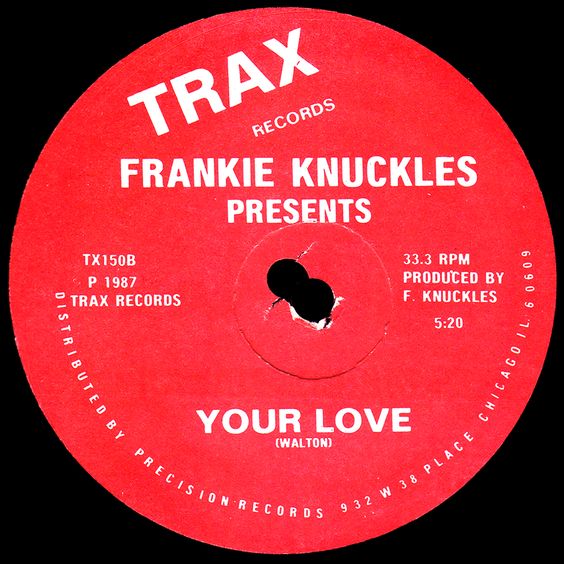
Many people wouldn’t have realised the record was essentially a cover. Indeed, for most chart music-buying folks, the record’s 5-note bassline and viralish, ear-worming keyboard motif would be their first unknown introduction to Frankie Knuckles.
Waaaay back in the years when house music was first thumping and throbbing its way from the sweaty basements of Chicago to the switched-on fringes of the mainstream, New Yorker Knuckles teamed up with Chicago soul singer Jamie Principle and hotwired his original soulful vocal to a tune that was at once progressive, deep, emotional and zeitgeist-riding.
In an era when (Stateside especially) hair metal was the mainstream’s thing, when The Smiths were putting out The Queen Is Dead and every other guitar band in the country was hanging on to their jangling coat tails, Knuckles was busy programming sequencers and drum machines – MC80s, 303s, 707s and 808s – to create a record that still resonates today. If How Soon Is Now is, as was said, the indie Stairway To Heaven, Frankie Knuckles’ Your Love is dance music’s She Loves You.
Frankie Knuckles – Your Love
The record kicked doors down. It gatecrashed the notion of what ‘dance music’ was, and what it was not. It wasn’t a hundred mile an hour electro pogo. It wasn’t base and derivative. It wasn’t (always) an anonymous guy hiding behind a rack of technology while a lip-synching beauty mimed her way atop the caterwaulings of a session singer. This particular brand of dance music was forward-thinking, cerebral and deeply soulful. As it turned out, it was pretty much timeless too.
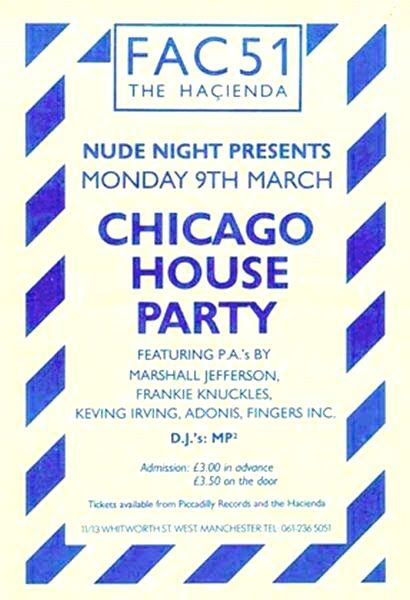
Your Love‘s rattling, reverberating snare must’ve sounded wonderful clattering off the walls of the Hacienda, even on a half-empty Wednesday night in February. Me? I wouldn’t know. I was too busy twisting my fingers into Smiths riffs and worrying about the length of the sleeves on my cardigan. I caught up in time though.
The sequenced keyboard line that formed the melodic hook of The Source’s cover is, at source (ha, again) hypnotising and trance-inducing, the Jungle Book’s Kaa and his spiralling snake eyes set to music. Its bassline is massive; instantly recognisable and capable of inducing Proustian rushes in even the most pasty-faced of guitar band-lovers when heard unexpectedly. It builds beautifully, from sparse electro through keyboard swells and man/woman gospelish harmonising to deep-breathing backing vocals, tasteful foreplay to the wham-bam of Lil’ Louis’ French Kiss, if you will.
‘I can’t let go’, sings Principle, as the song builds to its steamy-windowed climax, a notion that I wholeheartedly subscribe to. Your Love is a great record, propulsive and soulful house in the vein of Promised Land, both Joe Smooth’s original and the Style Council’s faithful reworking. I can’t let go indeed.
It’s the time of the year when the world falls into two camps: those who like to dress up in fright wigs, cake their face in plaster of Paris and smudge some tomato sauce around their dad’s old ripped shirt to wander the street for sweets from strangers…and those who think it’s all a load of nonsense.
I’m firmly in the second camp. I hated Hallowe’en as a child and I hate it just as much as a parent. Our kids are older now and they wouldn’t be seen dead (no pun intended) in a skeleton costume or a zombie outfit, yet we still persevere with entertaining doorsteppers and (euch!) ‘trick or treaters’ – like Hallowe’en itself, an Americanism too far- because, as my selfless wife points out, our kids benefited from the neighbours when they were younger, whether those neighbours had young children or not. Fair enough, I suppose.
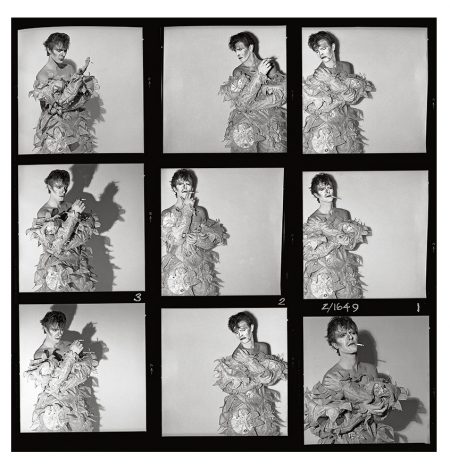
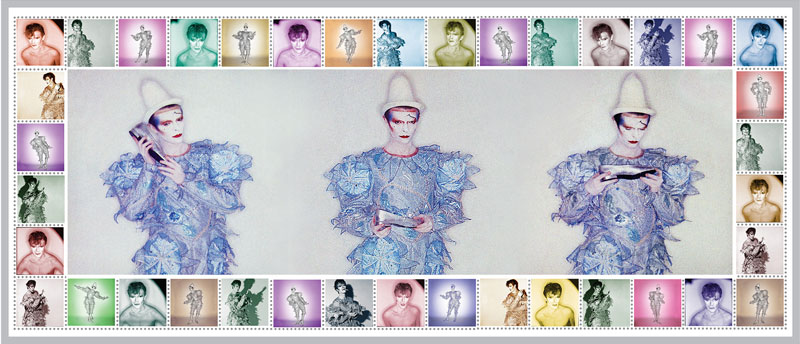
Someone who loved dressing up, who made a whole 40+ year career of it, was David Bowie. After he died, everyone I know went on some sort of back catalogue pilgrimage, reappraising the seemingly ‘weak’ records and finding previously disgarded or misunderstood gems within their grooves. One such album was Scary Monsters (And Super Creeps). One step on from his holy ‘Berlin’ trilogy, Scary Monsters… found the magpie-ish Bowie stepping into the ’80s and embracing the nascent New Romantic scene, taking the most interesting parts and presenting them as his own. Everything on the record, from the clown costume on the front cover to the synthetic squall and squeal of Robert Fripps’s wandering guitar parts deals in artifice and pretence.
David Bowie – Scary Monsters
Interestingly, the title track got its name from the blurb on a Corn Flakes advert. ‘Scary Monsters and Super Heroes‘ were the novelty toys of the time and the singer, forever switched on, adapted it for his own needs. It’s a beauty, Bowie in full-on Anthony Newley, his cockernee vocalisms cutting through the racket of the band, hellbent on bashing out their own take on post-punk and sounding not a million miles away from some of those more straightforward Joy Division records. The drums, repetitive, clattering and full of interesting fills, sound like they could’ve been played by Stephen Morris himself. And the pedal-stomping Fripp is all over the track like a free-riffing rash; outrageous and discordant, the grit in the groove. Violent, aggressive, and straight-up avant garde rock, I doubt the track would’ve been half as colourful or interesting without him.
You can compare it to this 1996 bootleg version, recorded in Atlanta.
David Bowie – Scary Monsters (acoustic)
Stripped back and acoustic, it’s presented in a no-frills blues arrangement, Bowie introducing it with very tall tales of his time spent with Johnny Cash, a subtle nod to Rick Rubin perhaps, to get in touch and make Bowie his next unplugged vanity project. Mere speculation, of course. And something we’ll never know.
New York grooves to two soundtracks. The first one, everybody hears. It’s the sirens, low and wailing and ever-present. It’s the angry and restless horn honk from a gridlocked car, the thudda-thudda-thudda as a low-flying chopper arcs overhead, the filling-loosening sub-bass from a low-riding Subaru (‘Mercury and Subaru!‘) as it jumps the midnight lights on 42nd Street, the in-your-face hustle of the street vendors intent only in hoovering the dollars from your pockets. Even in the more tranquil areas like Central Park and Greenwich, you can’t quite escape the perma-noise.
The second soundtrack is internal. New York is a music fan’s mecca, and from the moment you arrive, you are reminded of the city’s rich musical heritage. It wasn’t quite a ‘cold and wet December’s day as we touched the ground at JFK‘, but a sign for Rockaway has me stupidly and excitedly chewin’ out the rhythm on an imaginary bubble gum. On the way into Manhattan from the airport, we must’ve passed half a dozen Rockaway signs and every one of them triggered the same response. ‘Rack-rack, Rackaway Beach!…..we can hitch a ride to Rackaway Beach!‘ I was still singing it on the road back to the airport last Thursday. The cab might have been idling along in rush hour sludge at less than 5 miles an hour, buckled bumper to buckled bumper with the traffic around it, but having just hitched my own ride (at a flat $70) my brain was speeding away like The Ramones themselves in ’77.
Over from Queens and into Manhattan and a sign next to one for the Lincoln Tunnel jumps out. ‘Lower East Side’ it informs, and Debbie Harry’s girl-group swoon has shifted Joey Ramone momentarily to the margins. ‘Went walkin’ one day on the Lower East Side, met you with a girlfriend, you were so divine…‘ There’s also one for the Manhattan Bridge at 59th Street and, uh-oh, stone me if Simon & Garfunkel’s Feelin’ Groovy doesn’t float into the ether all on its ownsome too! Music, music everywhere.
All the neon lights are bright on Broadway.
Some folks like to get away, take a holiday from the neighbourhood…I’m in a New York state a’ mind.
The Only Living Boy In New York.
Noo York City cops ain’t that smart.
I sang them all as I pounded the sidewalks of Manhattan, their tunes worming their way into the ear whenever the relevant stimulus triggered the line.
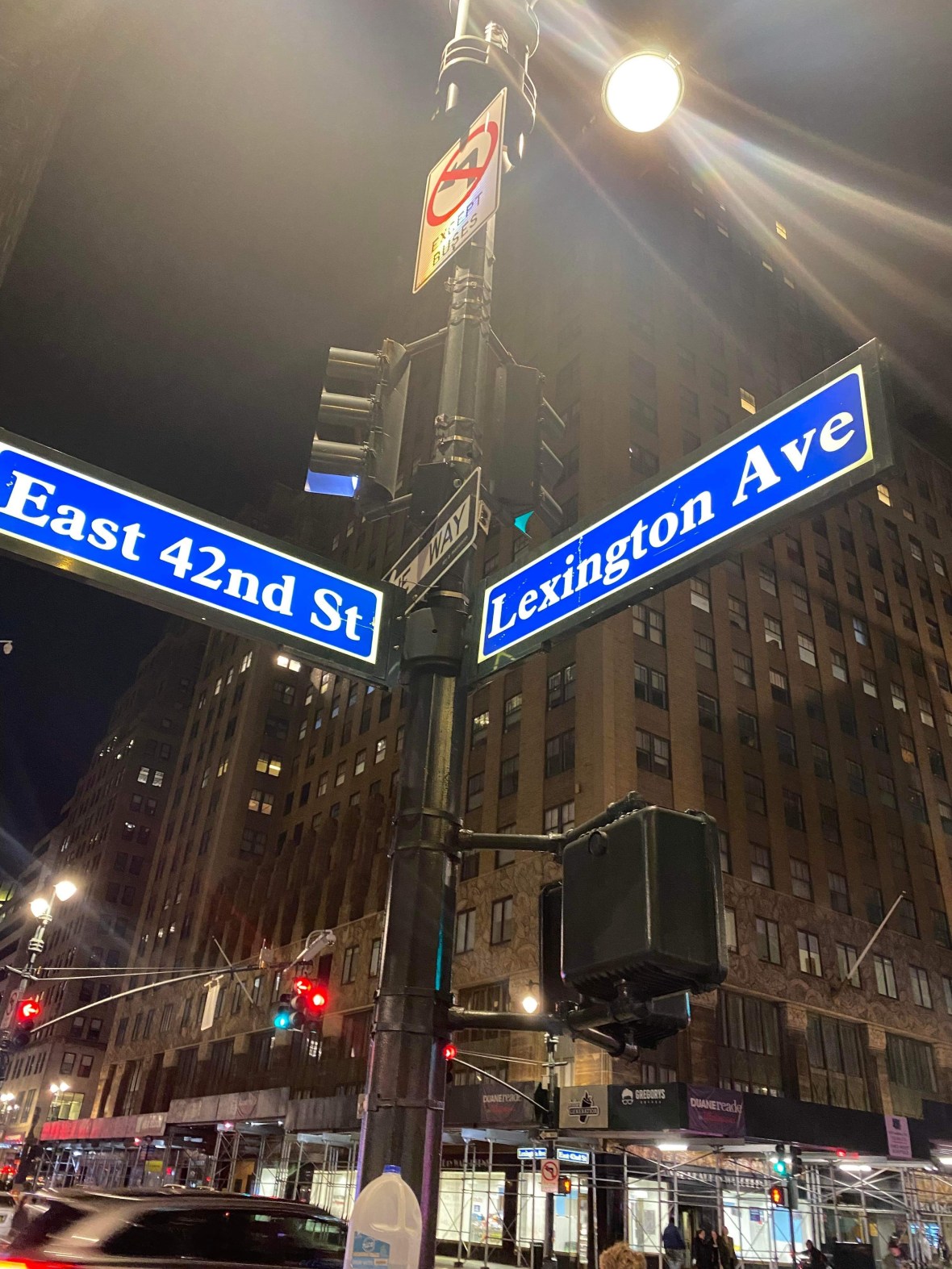
We are staying on 3rd Avenue and every day we pass the ‘Lexington Avenue’ sign on our way to wherever, so of course, unknown to the others, a pounding piano soundtracks my walk for the next couple of blocks. We’re nowhere near Harlem’s 125th Street, but it doesn’t stop me singing. ‘Down to Lexington one-two-five, feel sick and dirty more dead than al-ive. Ahm waitin’ for ma man.’ Even the boy was doing it by the Tuesday, oblivious to where it came from or what he was singing about.
We go to Chelsea Market and although the famous hotel isn’t too far away, we’ve walked 30,000 steps already by then and I can’t be dragging a disinterested family to the site of a place steeped in rock history just so I can snap a quick ‘I was there’ photo. Instead, Dylan’s line about writing Sad Eyed Lady Of The Lowlands in the Chelsea Hotel repeats for a bit as we browse the delights of the food stalls in the former meatpacking warehouse. Leonard Cohen’s reference to Janice Joplin and an unmade bed also makes an uninvited but welcome appearance as we stop by a Japanese noodle bar.
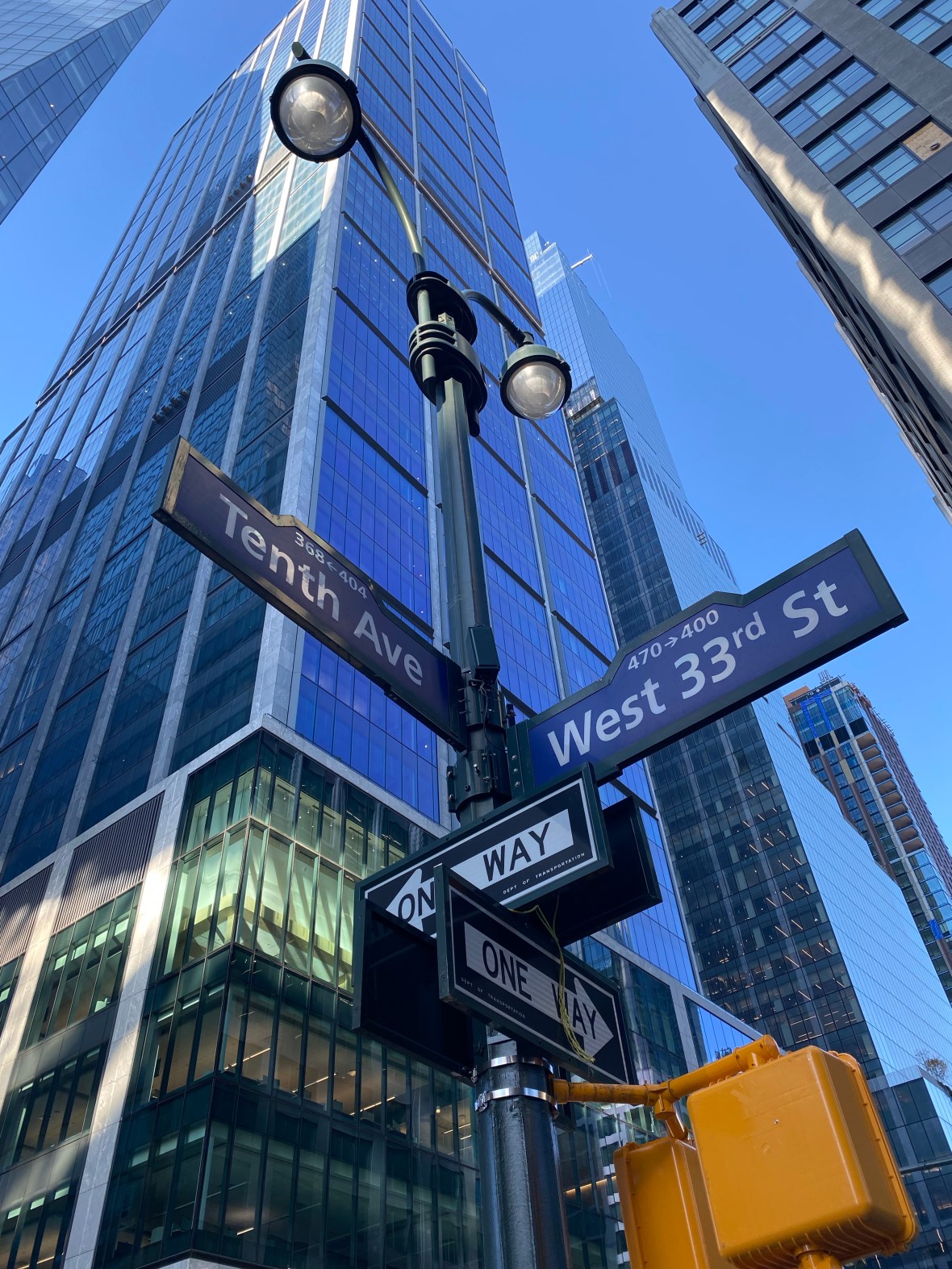
“10th Avenue Freeze Out!” I shout in my best gravelly Broooce voice when we cross 33rd street on the west side of Manhattan for a cross-borough walk home. I think Springsteen’s particular 10th Avenue is actually across the Hudson there in Jersey, but it doesn’t stop me singing it on at least a further two occasions when our wanderings unexpectedly find us over that way again. I even hear the jangling barroom piano and Clarence Clemons’ sax whenever I see the street sign.
Grand Central Station has signs for the A Train and so Duke Ellington’s rousing jazz standard, full of promise and anticipation of what Manhattan has to offer the upwardly-mobile urbanite, wafts into the internal iPod…before being rudely shunted aside by the New York Dolls rattlin’ and frantic Subway Train. Ever since I been ridin’, ride on the subway train… Songs, man! They just barge their way into your head without even asking. How very New York.
New York! Concrete jungle where dreams are made of. There’s nuthin’ you can’t do.
You mo-ove it to the right. Yeah, yeah, yeah, do the Harlem Shuffle.
Oh-oh-oh! You’re a Native New Yorker!
They got cars big as bars, they got rivers of gold. When the wind blows right through you it’s no place for the old…
New York, I Love You, But You’re Bringing Me Down. James Murphy, are you serious?! Really?!
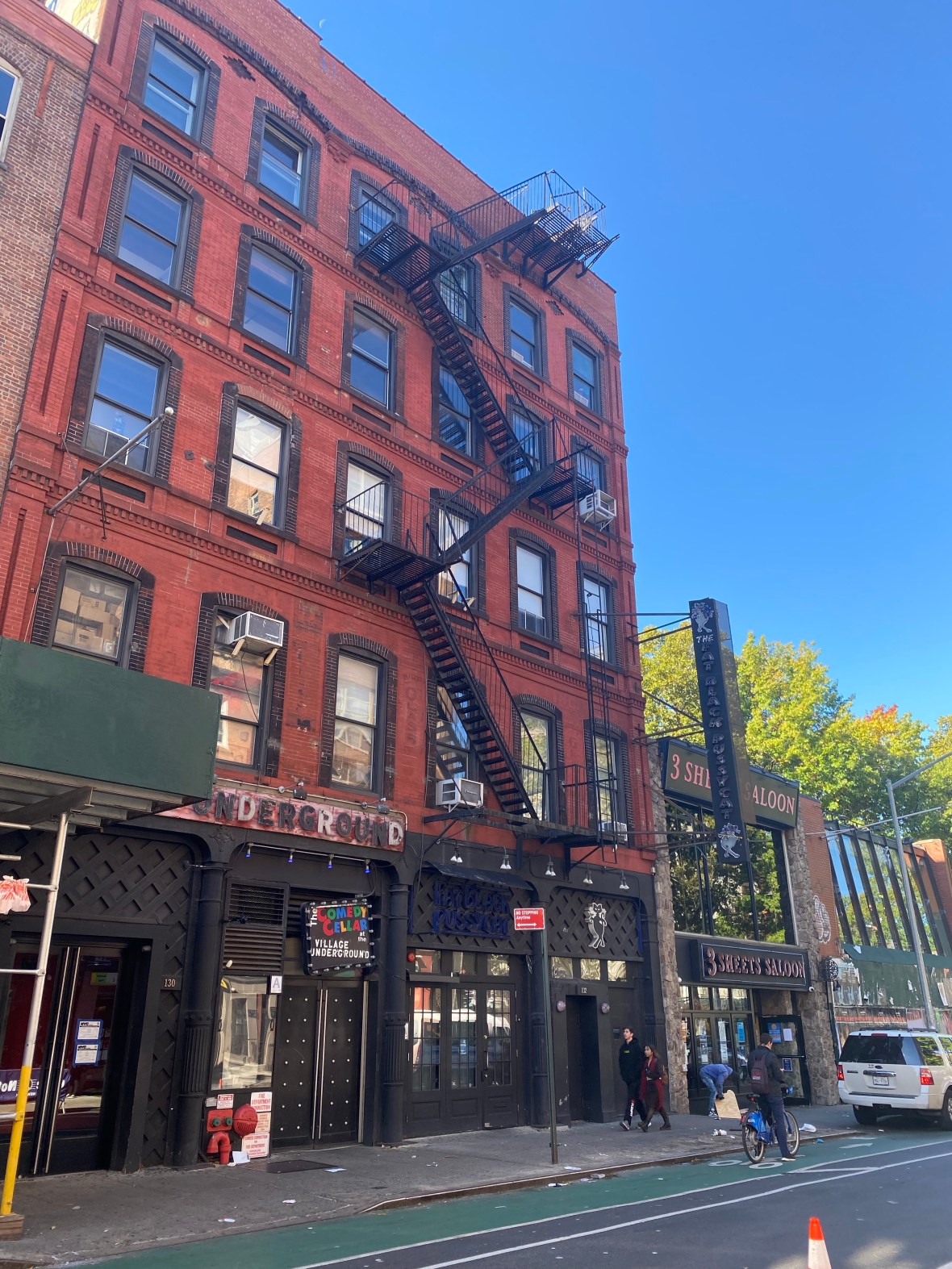
The internet tells me that Bob Dylan wrote Blowin’ In The Wind in Greenwich Village’s Fat Black Pussycat, a nightclub long closed down but still visible if you know where to look, so off we trot.
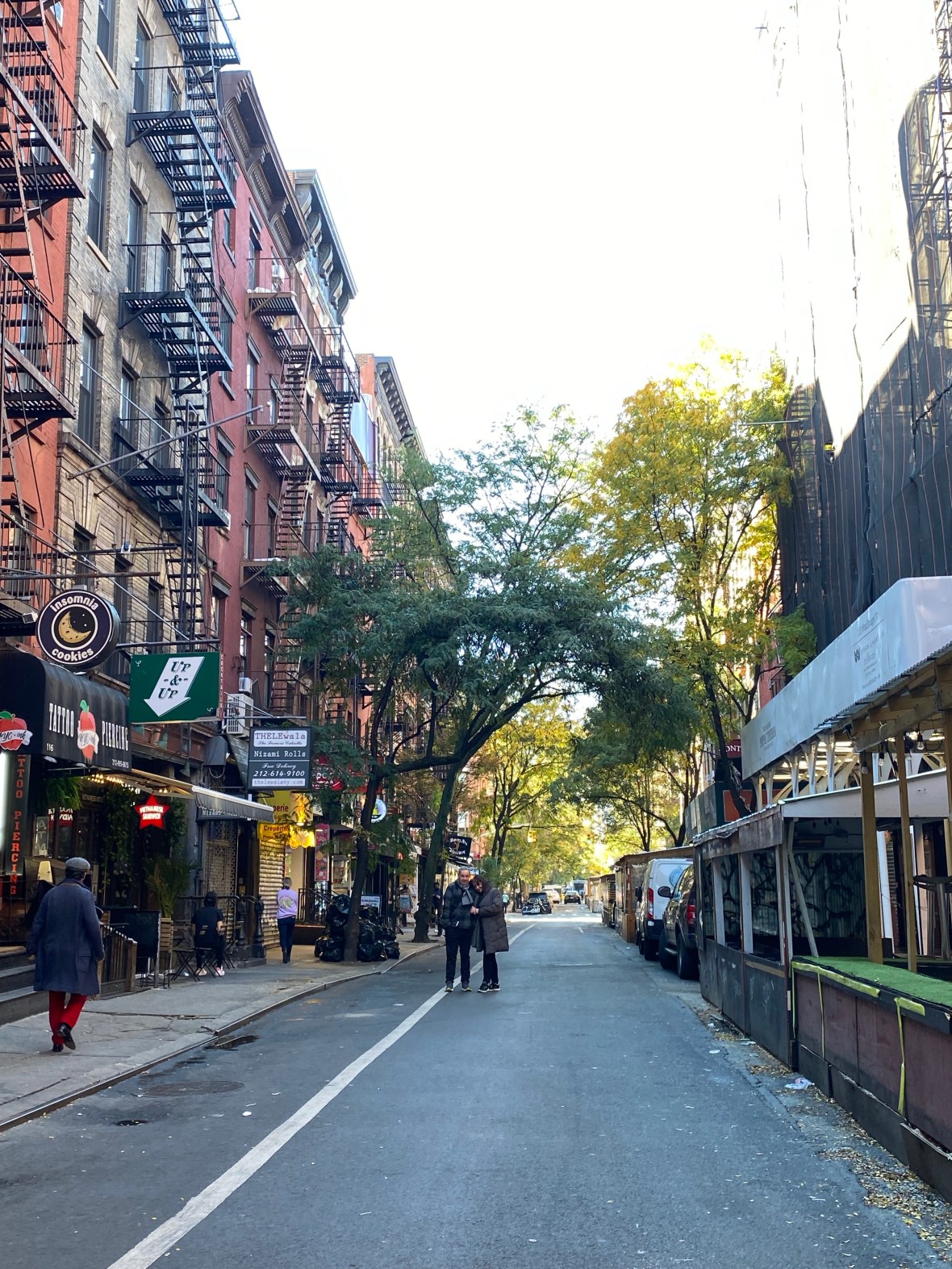
There are numerous Dylan-related spots to find throughout Greenwich. My wonky internal Bob radar tells me that the iconic shot for Dylan’s Freewheelin‘ album was taken in Macdougal Street, so off we trot again. I was a bit ticked off when I realised all too late that the spot where we had tried to replicate Bob ‘n Suze’s trudge in the snow was in fact one parallel street away from the actual spot in Jones Street, although I also found out that we inadvertently stood right outside what was Bob’s house at the end of the ’60s, so not all was lost.
In TV world, the facade that was used for the outside shots of the ‘Friends‘ house is just up the road and round the corner – just about the fanciest neighbourhood in all of Manhattan as it goes, and hardly the place you’d expect to find half a dozen twenty-somethings with barely a career between them, let alone the $3000 a month required for rent, but there y’go. That’s the magic of telly for you.
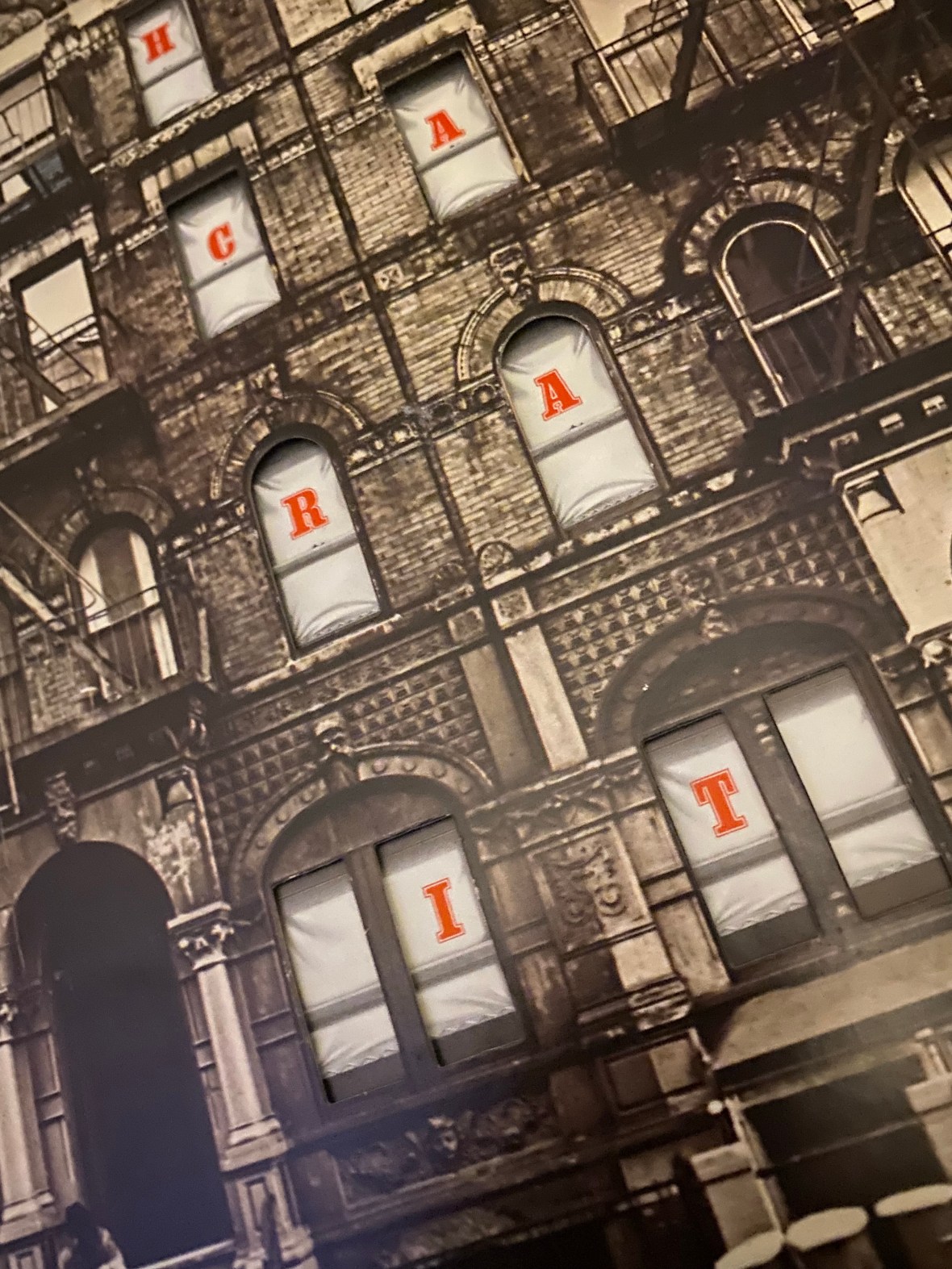
Had we made it further east, we’d have – or I’d have – looked for the site of CBGBs, Max’s Kansas City and the tenement on St Marks Place that featured on the sleeve of Physical Graffiti. I’ve always loved the look of that sleeve and had fancy ideas of sticking my own photo in the space right below this paragraph. Next time…
Physical Graffiti is a sprawling, eclectic and at times treacle-heavy record. A double album that encapsulates Led Zeppelin’s entire ouvre over four sides of vinyl, it cemented the band’s reputation as a stadium-filling hot ticket in the mid ’70s, and as it did so, unwittingly provided the necessary catalyst for those punks in the Bowery and lower east side to explode in retribution; until then, hair was growing longer in direct proportion to the solos played, trousers were as wide and outlandish as the tales of excess that filtered from the backstage to the front page and music was all about ‘look at us!’ rather than ‘be like us!’ Richard Hell chopping his hair to bits changed all that. You knew that already though.
Back to the Zep for now.
Physical Graffiti kicks off with Custard Pie, essentially a facsimile of Led Zeppelin’s recorded output in miniature. It’s got a rockin’ great guitar riff, blues in style if not in sticky-fingered origin – although that is surely up for debate. It’s got Bonham’s piledriving drums; a shuffling, juddering raising the dead racket that creates unexpected jolts in all the right places. It’s got John Paul Jones multitasking on a highly funky, Wonder-ish clav line and a stoic bassline that follows the lead guitar, sometimes. And it’s got one of Robert Plant’s finest vocals, a guttural, primal moan that begins at the soles of his moccasin’d feet, travels like quicksilver through his Greek God torso and comes out of his mouth like the four horsemen of the apocalypse riding on Valkyrie themselves. With a shake of the golden curls and a wink of the twinkling blue eye, Plant has you under his spell.
Led Zeppelin – Custard Pie
Jimmy’s Les Paul is all over the track, a low-slung, panther-prowling masterclass in rock guitar playing. Throughout, he stirs up a hard blues crunch that takes in lip-curling riffage, lightning-fingered Wah-enhanced soloing in the middle and rounds off with the groove tightly locked-in, Page and Bonham in simpatico as Plant blows a metaphorical hoolie on the mouth organ. Or harp, as he’d no doubt prefer you say.
I love how Robert makes his voice fade in on that first moan, standing away from the mic and gradually getting closer until the singing gets underway. The singing is great; loud and soulful and packed full of all those trademark Plant high notes and adlibs – it’s not hard to picture him holding the stand-free mic across his bare chest, his head tilted back, his demi-wave trailing down his back – as you listen. It’s just a pity that, given the era and circumstances around its writing, Custard Pie‘s lyric is pretty dubious. Even if it was the seventies! There’s no excuse, Plant. There’s no excuse at all.
“…and he was buh-leeding awl ovah the apartment…I dunno, John, it cawsts a lotta dough…Then he jumped on the window display and pretended to be a mannequin! Hur hur hur!!!…I can do dat forya, shoo-wa…It’s like, 40 degrees in they-ur…Whadda fuggin’ joke…Is everyone in the West Village ho-mo-sex-you-al nowadays?!…”
You can spend fortunes going up tall buildings and sailing down the Hudson, eating in or dining out, but in New York the streets give you all the free entertainment you need.
New Yorkers slalom through crowds with an impatient arrogance that borders on Olympic levels of skill. They gots ta be somewhere and they gots ta be there fast. I think that’s maybe why the bankers and wankers of Wall Street pair their expensive suits with pristine white sports shoes. They conduct their telephone business as they zip around, shouting, mostly, into the ether as their wee white ear buds transmit the conversation to their recipient…and everyone else within two blocks of earshot.
“…they was nuthin’ like THESE rats, though…All I want is to be successful and live in a nice apartment in TriBeCa…The Yankees last night! Huh? Huh!!…I can give it to ya straight or I can suga’coat it in a little bullshit if you’d prefe-uh…Way da go, Amir…Have you noticed those shoes he we-uhs?…Fuck you, asshole…”
It makes for great entertainment. Stand with your back to the sandstone wall of a fancy department store or a graffitied bodega or a tacky Times Square tourist trap and watch and listen. Tune in and you’ll hear languages from all corners of the globe; hand-gesturing rat-a-tat-tatting South Americans, vowel-spitting Italian tourists, slow talkin’ African-Americans. Even in the jammed aisles of Macy’s, the odd Scottish tourist’s voice will cut through the stew.
“Yer da’ telt me tae try them oan, bit ah thought they wir bogging’, bit they’re actually no’.”
God knows what those whispering Japanese make of it all. A half-heard snippet here and a half-heard snippet there makes for interesting listening.
“…extra bacon? Fo’ a tip?…She’s playin’ the long game, man…I was like, I DON’T THINK SO…y’only tell me y’love me when y’fuggin’ me…I used t’be afraid of the Bronx…I heard chow chows are adorable…My social life is a gawd-damned diz-ass-tuh…”
Every one of them could be an opening line from a movie; a voiceover perhaps, or maybe the main character in conversation with their co-star.
They tell you that New York looks like a movie set, but believe me, it sounds like one too.
“…can you buh-lieve it? Can you?!…Nah. They-ur bagels taste shitty. You-uh bettuh awf going ta…The Nets? Ugh. Dead to me…I’m kinda fed up wit dat place…I dunno, Joe. Whadda YOU think?…They-ah was a lotta laughin’ and A LOTTA flirtin’, y’know?……Dis city is fuckin’ alive, man. Alive!”
Beastie Boys – An Open Letter To NYC
If this Beastie Boys video doesn’t make you want to visit NYC post haste, there’s clearly sumthin’ wrong witchu. Fast cut, metaphorically fast-paced and full of the sights the five boroughs has to offer, it’s almost got me misty-eyed for a city I’m still very much wandering around in. Kennedy Airport can wait a couple more hours.
An Open Letter To NYC is the Beasties’ post-9/11 love letter to their city of birth, and its ‘Brooklyn, Bronx, Queens and Staten, from the Battery to the top of Manhattan…’ refrain has been playing in a continual internal (and occasional external) loop as I’ve walked the hard miles this past week. At some point or other, the boy has picked up on it too. I’ve caught him rapping it with unselfconscious gusto when he’s unaware anyone is listening. It has a great lyrical message running through it, and with every othuh WORD! being empha-SIZED!, it’s SHOUTY! and OBNOXIOUS! and AmericanIZED! – just like those snippets of conversation that have also worked their way into the internal hard drive the last few days.
We’re in New York. We’ve been before, for my 40th – just the two of us – and the kids were apoplectic to say the least that we’d chosen to leave them behind with the grandparents while we hot-footed it across the Atlantic like the pair of goggle-eyed tourists we were. This year has seen/will see a number of family milestones – 50ths, 21sts, big anniversaries and the likes, and the kids weren’t letting us away with it this time. So here we are.
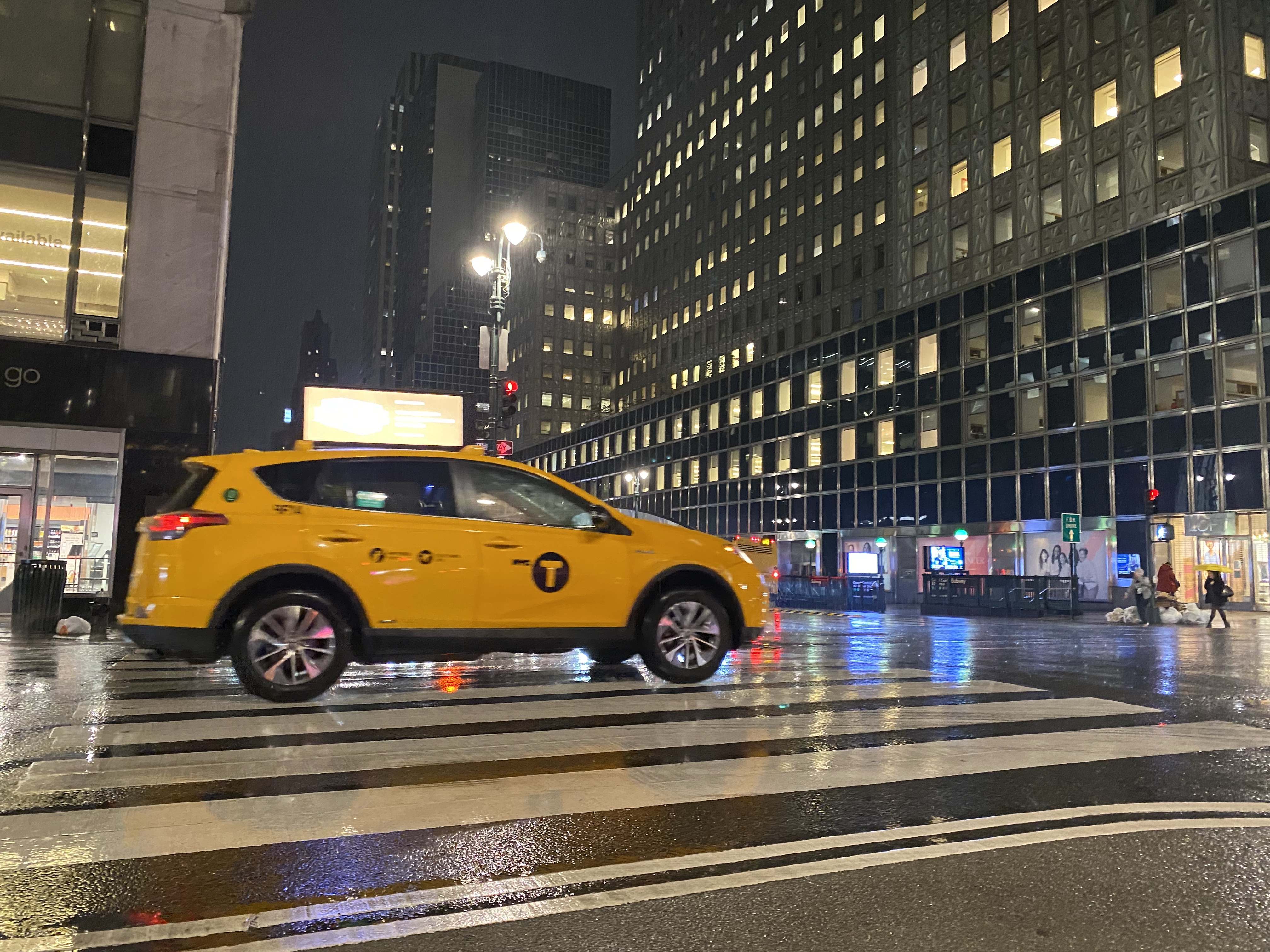
The first thing you notice in New York these days is the sickly sweet smell of weed. Now decriminalised (legal?) in NYC, its omnipresent smell overpowers even the heady wafts from the street food sellers that line the streets. The yellow cab driver that delivered us shaken and slightly stirred from JFK was reeking of it, his low-pulled hoody blanketed in a thick fug of the stuff.
“I’ll have you in Midtown in no time, man,” he smiled through glassy eyes, one hand on the wheel, the other scrolling through the satnav on the phone wedged between his knees, and true to his word, he put the foot down the moment we were on the Van Wyck expressway.
“Asshole!” he shouted indiscriminately. “Goddam she-it!” Fingers flipped, lanes were cut, horns were honked and, after he’d cheerfully told us that he’d been “up in front of the goddam judge for two traffic misdemeanours this week – speeding, and maaan, I wasn’t goin’ that fast! – and dangerous drivin’ – that’s fair ’nuff. Two fifty penalty later and I’m back on the roads. Shit! There’s the cops…” (and so on and so forth), the Manhattan skyline gracefully swept into view and, like the boggle-eyed tourists we were, Ramon’s cartoonish patter faded into the background.
On our first full day, we walked 35,000 steps, spent eye-watering amounts of money on (admittedly good food) in diners and pizza joints that, back home would’ve taken us by golden chariot to our favourite ‘fancy’ restaurant and left us enough change for a night in the Crown to wash it all down. You gotsta eat, though, as they say ’round these parts.
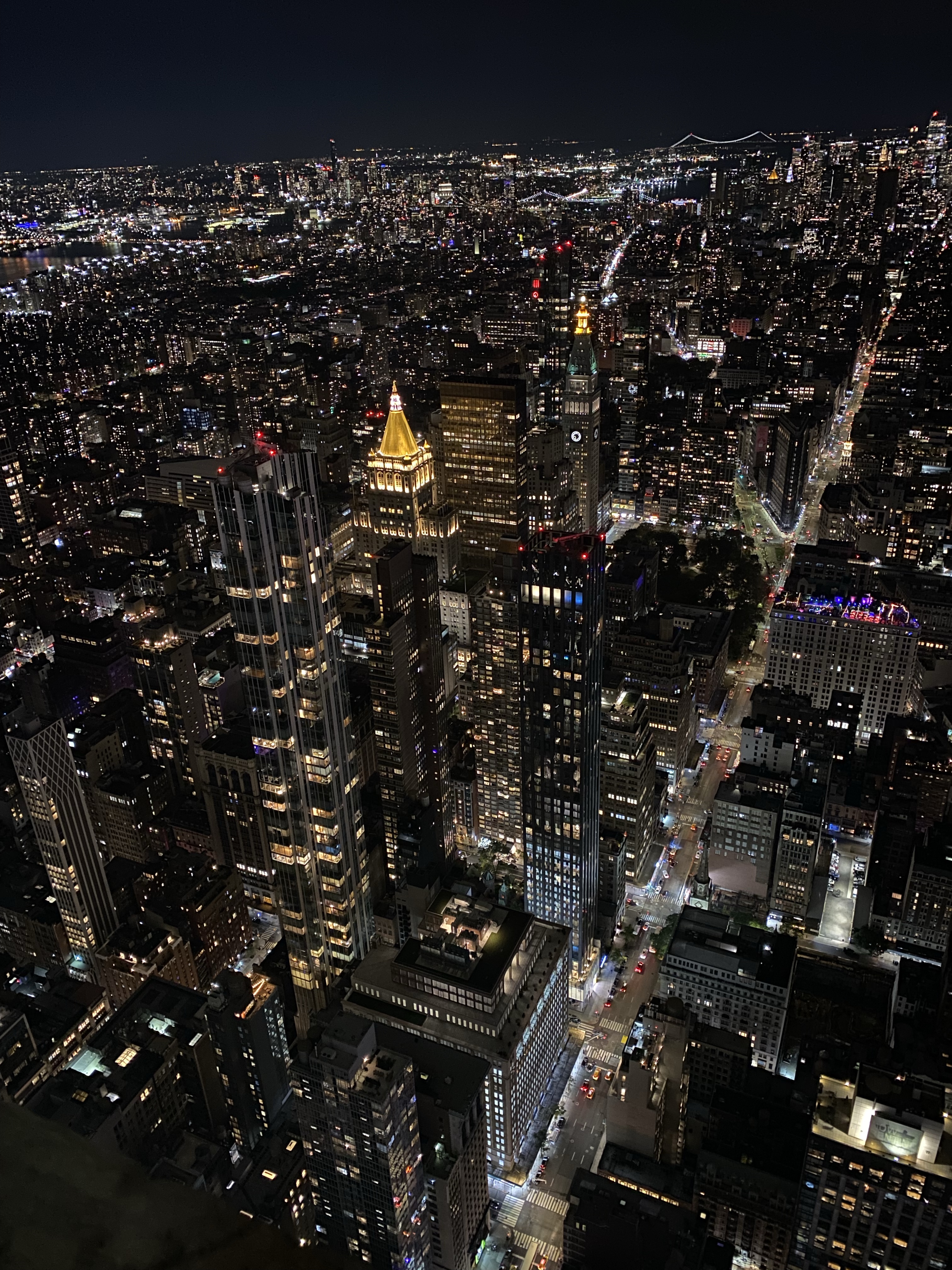
The view from the Empire State Building at night was spectacular, a movie scene come to life right in front of us. All the neon lights are bright on Broadway, indeed.
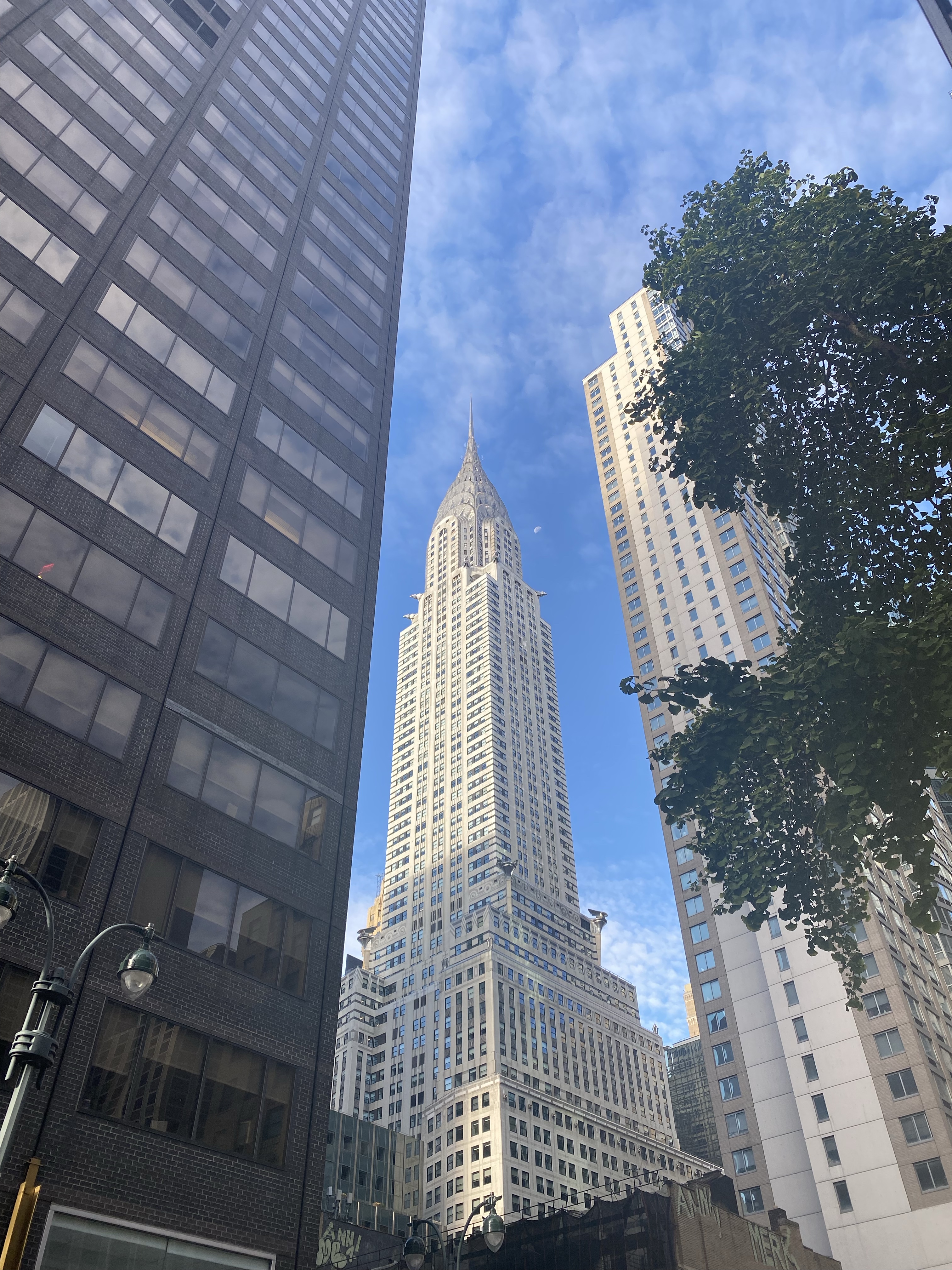
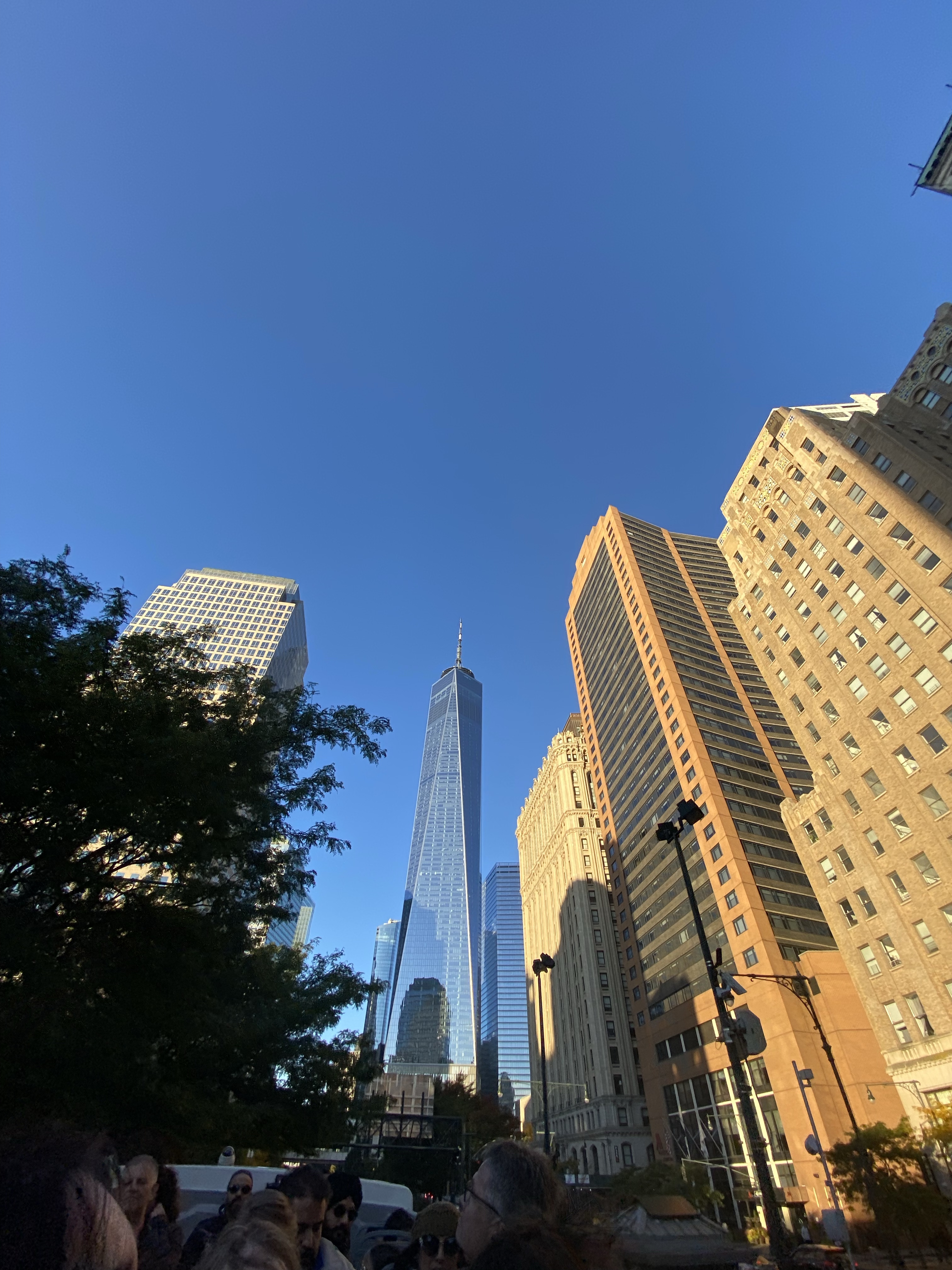
The endless walking…the people-watching…the snippets of conversation overheard as they bullet their way around the streets in expensive trainers and mismatching clothes because, frankly, they don’t give a rat’s ass what anyone thinks of them…the endless walking… the scene-seeing bus tour…the stiff necks from looking up, down, all around…the endless walking…the Staten Island ferry – just about the only thing in NYC that’s totally free – with its close-up views of the Statue of Liberty and Manhattan’s iconic photo-friendly skyline kept everyone snap-happy and excitable.
Today we chose to brush aside Ramon’s advice about the subway – full of loonies, with frequent muggings and people-pushing seemingly the latest craze, he warned – and survived to negotiated the complexities of the city’s underground system and make our way downtown. Overshooting our stop (of course) meant a 15 minute amble back to our intended destination at the 9/11 memorial, its long queues forgotten about once inside. It’s a fascinating exhibition and one which brought memories of watching it unfold on TV 21 years ago, with our two-week old daughter being sick on our laps.
This afternoon into tonight we really enjoyed a walk back along the Hudson Park walkway and then on the appropriately-named High Line after eating in Chelsea Market. Sadly, for me, we never found the famous Chelsea Hotel though. On the High Line, a reclaimed railway track that snakes it’s way above street level and between warehouses, commercial units and some spectacular apartments, I was, given how lightly toasted much of Manhattan seems to be, particularly tickled by the ‘Keep Off The Grass’ signs every few metres.
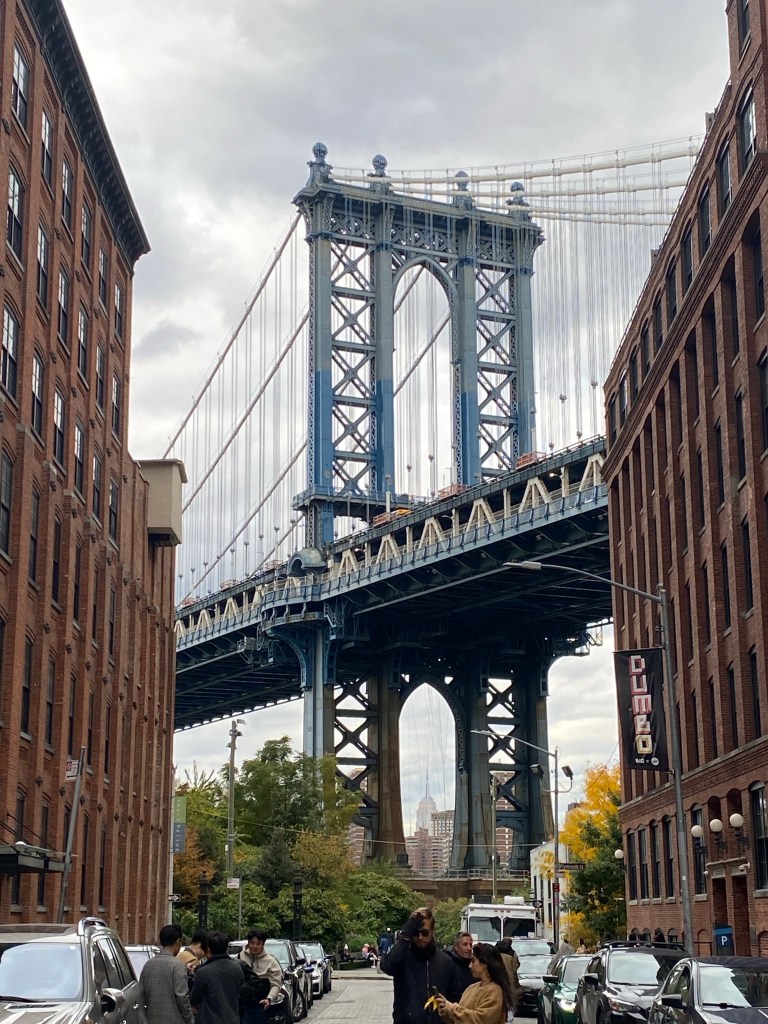
Next stops will be Central Park, a boat trip around lower Manhattan, a visit to latest high-rise tourist trap The Edge, a walk over the Hudson to Brooklyn and later that night a visit to the Brooklyn Nets’ season opener against New Orleans Pelicans (“Go Nets!” as we likely won’t be saying). With luck, I’ll maybe find some spare time (and money) to smoke out the record shops and musical landmarks of Greenwich Village. Pictures no doubt will follow.
Here’s NYC’s Beastie Boys with So What’cha Want; a stroppy and thumping, squeaky-organed racket where each of the 3 Beasties takes their turn on the mic; Yauch gruff, MCA whiny and Ad Rock the epitome of a NYC don’t-give-a-damn cool.
To have been even a peripheral cog in that late ’60s/early ’70s Laurel Canyon songwriting wheel would have been quite something, I’d imagine. In houses tucked deep into the lush Californian flora and fauna, bands shared players and partners – of both the writin’ and romantic kind – and created a stoned immaculate co-operative of epoch-defining music.
The beautiful and not so (hi, David Crosby) plucked all manner of floaty harmonies straight out of the west coast ether and entangled them in gently strummed 12 strings and carefully picked alternatively-tuned Martin guitars and, with the help of a passing drummer or two – Buffalo Springfield’s Dewey Martin perhaps, or maybe crack sessioner Eddie Hoh, or, if he was looking for a quick gig in-between sessions, Hal Blaine (the drummers’ drummer) – commited to vinyl tracks that still ring and resonate half a century and more later.
Crosby’s If I Could Only Remember My Name album – check it out! – reads like a Wikipedia who’s who of the era’s Californian singer/songwriter scene. Graham Nash, Neil Young, Joni Mitchell and assorted Grateful Deads and Jefferson Airplanes show up to add their lightly toasted harmonies and frazzled, sloppy guitar playing to the record. The result is something of a one-off, recorded spontaneously (mostly) and sent to the pressing plant before anyone had the bright idea of tinkering with it. As rough ‘n ready albums go, it’s hard to beat.
I’m a sucker for the meandering and hippy Laughing, a track written in memory of the time Crosby met George Harrison at the height of Beatlemania and they bonded over Eastern philosophy and Ravi Shankar. It’s a tapestry of highly strung guitars, weeping pedal steel and overlapping, multi-stacked harmonies and it just might soothe your troubled post-millenial soul.
David Crosby – Laughing
Recorded while Crosby was in the heavy depths of grief following his girlfriend’s death in a car crash, those in attendance would often find the singer curled up on the studio floor, overcome to the point of uselessness. Yet, when he made it to the mic, you’d never have known.
With a voice coated thick in heavy drugs and alcohol, he sang his melody-rich songs; some entirely wordless, their meaning conveyed by multi-stacked Eastern-tinged vocal-less harmonies, others thinly disguised accounts of life as a free lovin’, easy ridin’ Laurel Canyon troubadour.
Cowboy Movie, for example, is the sprawling musical story of the end of Crosby, Stills, Nash and Young, with Young himself riffing on a loose ‘n funky guitar duel with Jerry Garcia. It’s Down By The River by way of Cowgirl In The Sand, while Crosby outlines (via lyrical aliases) how Rita Coolidge came between he and Graham Nash, to the detriment of their band. You should seek it out.
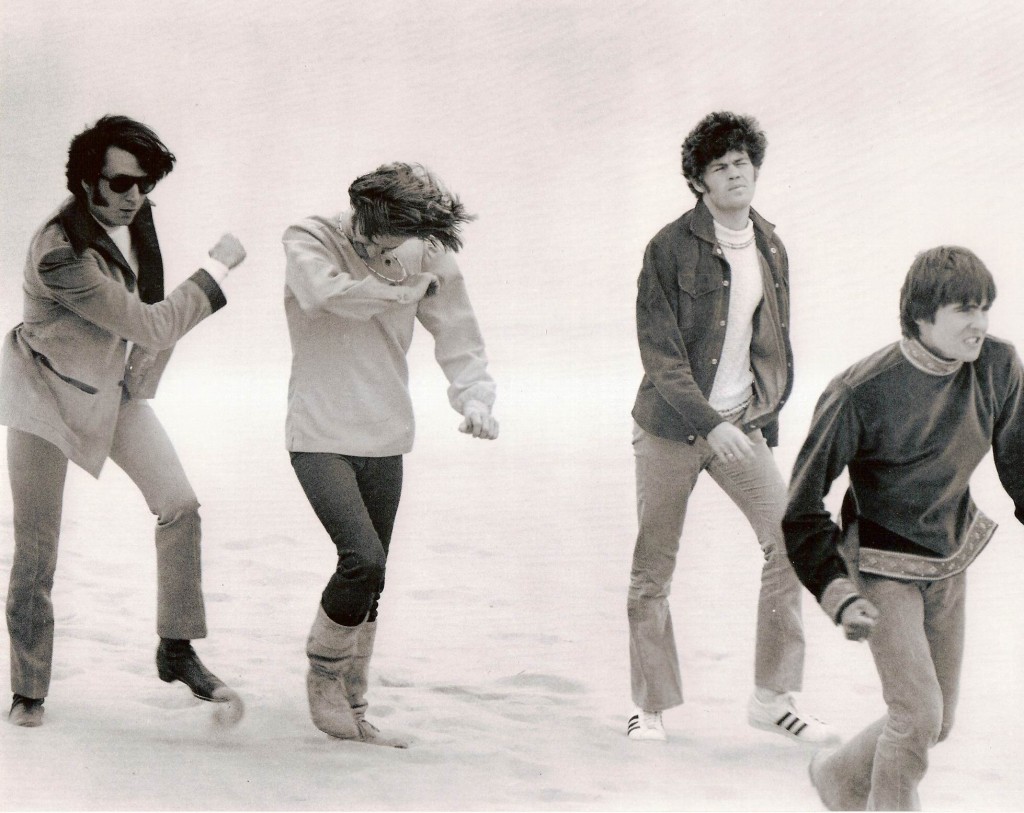
Just out of the eye of the storm, and slightly more peripheral to the machinations of the scene were The Monkees. Desperate to be seen as credible and serious, they employed the best writers, the best sessioneers and called in the best favours to ensure their records sparkled and soared like the best of ’em. Dig beneath the hits – and there are plenty – and you’ll discover a catalogue rich in introspective melancholy and sef-deprecating balladeering.
The Stone Roses, yesterday.
Written by Carole King and sung by Micky Dolenz, As We Go Along first appeared in the film Head and then crept out on the b-side of the movie’s lead single, the trippy and non-hit Porpoise Song – a track that probably requires a blog all of its own at some point.
The Monkees – As We Go Along
As We Go Along is so un-Monkees. There’s no obvious poppy hook. It’s downbeat, languid and loosely strummed, a raggle-taggle Rod and The Faces soundalike played on gently scrubbed acoustic guitars and thunking, woody bass. Carole King’s embeded melody eventually finds its way to the fore between the skirling acoustic strings and flutes, electric guitars riffing off into the Laurel Canyon sunset. You’ll want to play it again and again. It’s a beauty.
The old iPod shuffled up this wonderfully anonymous curio tonight. So enamoured with it, I was forced to break into something of a treadmill sprint so that my arms could get close enough to my trusty wee portable friend resting on the machine’s control panel and replay it. This I managed without breaking stride, which is something of a record. As indeed is this (something of a record).
I couldn’t place it. It swings like Ella ‘n Louis, but there’s no high parping trumpet or any of Armstrong’s sandpaper vocals, so it ain’t Ella Fitzgerald. It’s too cultured to be Big Mama Thornton but not stately enough to be Nina Simone. Bessie Smith? Do I even own any Bessie Smith? The darkest corners of my iPod are crammed with music from those heady days when the combined joys of wireless broadband and a decent file sharing site allowed you to download the entirety of The Beatles’ back catalogue faster than you could shout, “Yeah, yeah, yeah!” – all very silly and unnecessary, as we all know nowadays – but back then I was a fiend for the stuff I thought I should have but didn’t, so Bessie Smith was a good guess. By the second play though, I’d convinced myself it wasn’t bluesy enough to be her either.
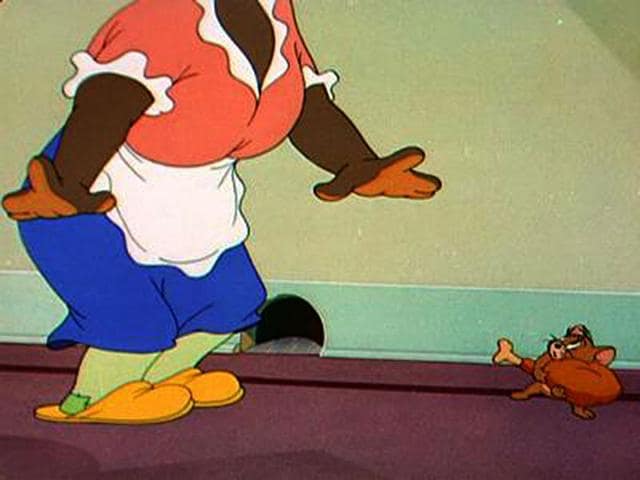
What I could picture as it played was, annoyingly, Jools Holland’s Big Band easing into a 12 bar blues at his Hootenanny, seasoned old pros shuffling to that wonderfully infectious backing, with perhaps Alison Moyet or Beverley Knight getting ready to let rip at the mic. Then, when the vocals began, I could imagine that headless, broom-wielding cleaner who chased Jerry around the kitchen in endless Tom & Jerry cartoons. I know she could scream, but I bet she could sing too; a big, housekeepin’ mama with a voice as deep as the south but as clear as the air in the cotton fields.
‘It’s an old blues singer I haven’t paid attention to before now,’ I rationalised, majorly annoyed by now that I couldn’t place her voice. ‘I’ll find out who she was when I stop.’ And on I ran for eight, maybe nine more steps and stopped. And checked the iPod.
Stone me if it wasn’t Little Richard!
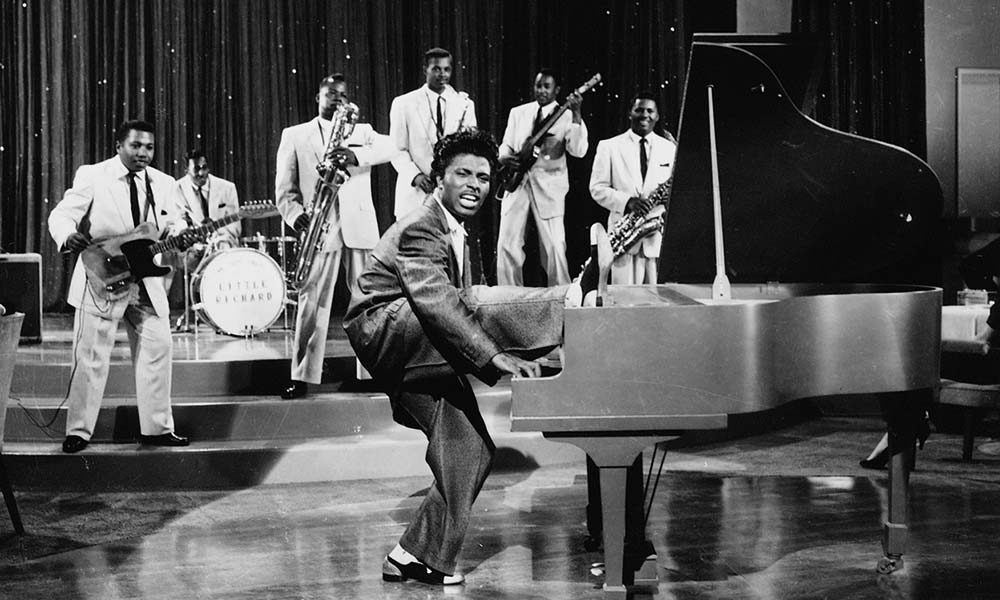
Of course it is! I mean, it’s not one of his better-known tunes (you can name them all, so I don’t need to be doing that). There’s none of the high camp screaming that’s as outrageous as the oil slick-thick conk that’s plonked atop his head. And there’s none of the mad eyed hootin’ or a-hollerin’ that so lit a spark in the teenage McCartney, but The Most I Can Offer (Just My Heart) is a beauty. Here’s another take…
Little Richard – The Most I Can Offer (Just My Heart)
Richard’s voice is both feminine and tinged with the same burnt umber of the saxophone that provides the descending backing. The high barroom piano shifts from major to minor in the bridge – of course – and then, well! – there’s Richard right there. A little rasp at the back of the epiglottis, an unseen shake of the quiff, an imagined James Brownish drop to the knees. It’s Little Richard all right.
And then he’s back to being the vampish torch singer, his band playing out their chops with regal grace and understated beauty.
Without Little Richard there’d be no ______ (fill in the blanks) or ________ , or even ______ , or perhaps even, bizarrely, Dolly Parton’s I Will Always Love You. Another thing that had been bugging me as I clattered the flat-footed kilometres on the treadmill to nowhere was, ‘where have I heard those opening lines before?‘ Now I know. And you do too. Check them out!
It was very easy to dislike Damon Albarn back in the day. The gurning, mock-cockernee affectations and bow-legged, Fila-sporting lad about town look of the ’90s were more than enough to ensure he’d be pinned to the bullseye of many a pub dartboard the length and breadth of northern Britain for many a month. And yet, and yet… He was the creator of some of his era’s most wistful and melancholic moments; the creeping paranoia of The Universal, the shoegaze blues of No Distance Left To Run, the stadium swoon of This Is A Low (have you ever stood in a field and experienced that in the moment?) the double-hitting lo-fi sighs of Sad Song and Sweet Song… strip back the bravado and bluster of Blur and at the heart you’ll find a wee bit of soul, with Albarn the master of his band’s mass-market melancholia.
In the days since, he’s released about 32 gazillion albums. Some, like Everyday Robots, are solo affairs. Others – The Good, The Bad And The Queen – are magpie-gathering collaborative efforts featuring the cream of musicians across the genres. Others still – his Gorillaz project – brought him to a whole new audience for whom Blur meant absolutely nothing. Then there are the Chinese State operas, the Michael Nyman soundtracks, the Africa Express foundation… By the time you’ve read this paragraph he’s probably laid down a brand new track stuffed full of phat beats and analogue synths and sent it off to Idles or Loyle Carner or maybe even Taylor Swift to add a vocal line that he can twist and manipulate into a Novello-garnering hit. Say what you like about his music, but unlike the punchable cheese-making fop that played bass in his old band, Albarn has a work ethic that’s second to none.
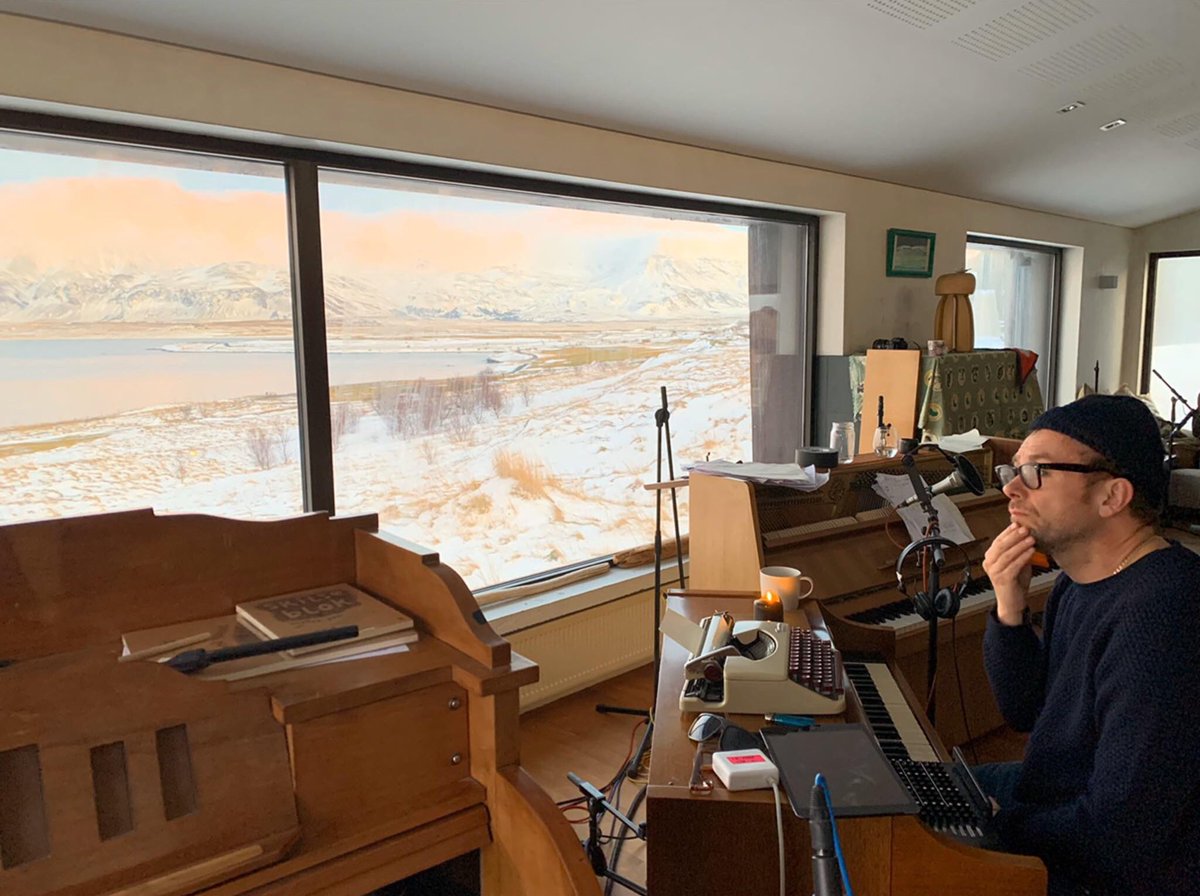
His most recent album, The Nearer The Mountain, More Pure the Stream Flows, may sound like it took its title from a badly translated haiku, but it was recorded in his now-native Iceland, with Albarn using the view from his Reykjavik studio window (above) as insipiration.
Originally planned as a grand orchestral album, the 2020 lockdown instead forced Albarn’s hand, and the album came out last year in a much more stripped back, lo-fi form. Elements of jazz raise their nodding heads, with autumnal clarinets or maybe oboes – I’m no woodwind expert – meandering for as long as that questionable mullet of his between tinkling Fender Rhodes and wheezy melodica on many tracks. It’s a good late night/early morning album, the close-miked vocals and processed beats of Royal Morning Blue fighting for earspace with its wooden thunk of bass and woozy synth, the Bowie-esque Polaris leaving you momentarily disorientated before unravelling in a flood of Blackstar-ish sax and counter melodies. Worth investigating.
Damon Albarn –Darkness To Light
I’m a sucker for a street-corner lament though, and the waltzing, lilting doo-wop of Darkness To Light is the track I like to hit repeat on the most. Recorded, I’m only speculating, quietly and during one of Iceland’s never-ending daylight, darkness-free nights, it’s the whole album in miniature; vintage synth, brooding instrumentation and free-flowing, tumbling melodies where Albarn manages to sound both sad and relieved within the same 3 minutes.
If y’like the Trashcan Sinatras’ quieter moments, or Andrew Wasylyk’s way with an analogue synth, or indeed David Bowie’s more introspective moments, Darkness To Light might just be for you. Add it to a playlist including half of the latest record plus some of those Blur tracks mentioned above and you’ve got yourself Now That’s What I Call Melancholy Vol. 1.
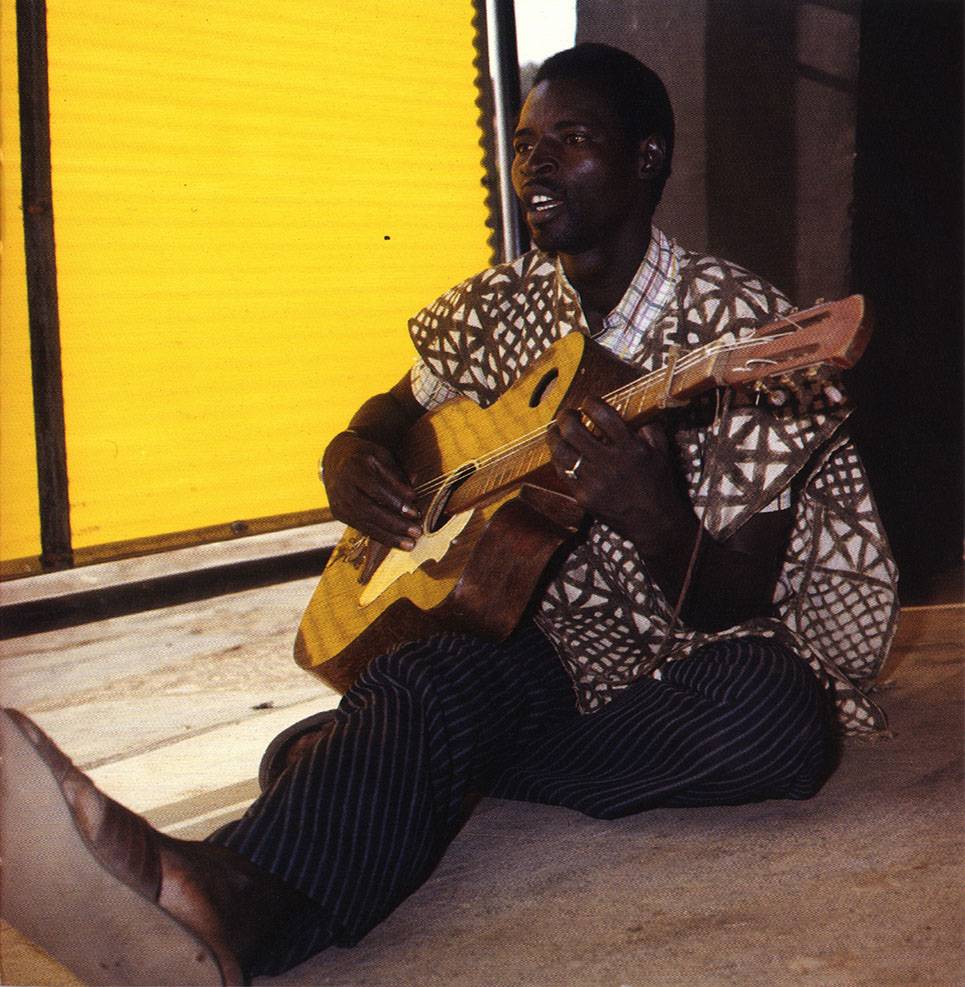
Ali Farka Touré was the guitarists’ guitarist, his bony-fingered multi-flowing rhythms sending chattering and cascading African blues out into the dusty ether. His speciality was in finding the sweet spot in which to riff, his band of tribal-robed desert bluesmen laying down and locking in to the steady groove to allow him the freedom of expression on top. His playing was nothing short of breath-taking; dextrous and elastic, primal yet boundary-pushing, a Saharan sand-coated John Lee Hooker, flash but without the player himself being flashy. When Ali took off, you took off with him.
Out this week is something of a tribute record to his songs and legacy. Ali’s son Vieux has teamed up with everyone’s favourite Texan guitar artists Khruangbin and, in what’s becoming something of a habit with the trio, created an interesting and highly musical collaboration.
Named simply Ali, the album is a real beauty, with Vieux taking the essence of his father’s music and passing it over to Khruangbin to add their respectful and reverential twist.
Midway through you’ll find the effortless Tongo Barra, five and a half minutes of clean and chiming, freeflowing high line guitar, an ever-moving, shape-shifting enigma with more melody per mile than the entirety of your record collection combined.
It’s a magnificent example of what happens when two worlds collide. Vieux, with his chanting, expressive Malian vocals and peerless guitar playing surfing atop a glorious gumbo of Khruangbin magic. Drums and bass are locked tight but loose, verging almost towards Fools Gold territory in places; solid and repetitive, driving forward but with space to breathe, to stand aside and admire.
Touré’s guitar is non-stop and continual, intertwined with Mark Speer, his Winkleman-fringed six string foil in Khruangbin, gushing like a burst and overflowing NYC fire hydrant in the sun. Hammer ons, pull offs, double and triple stops, spidering up the frets and slinking back down again, a funky one chord head nodding groove, powered, if these old ears don’t deceive me, by a cranked-up Roland Jazz Chorus and played with nary a hint of effort.
Right now, Tongo Barra hangs above all other music like an omnipresent and fluid dust cloud. I can’t get enough of it.

 Stripped back and acoustic, it’s presented in a no-frills blues arrangement, Bowie introducing it with very tall tales of his time spent with Johnny Cash, a subtle nod to Rick Rubin perhaps, to get in touch and make Bowie his next unplugged vanity project. Mere speculation, of course. And something we’ll never know.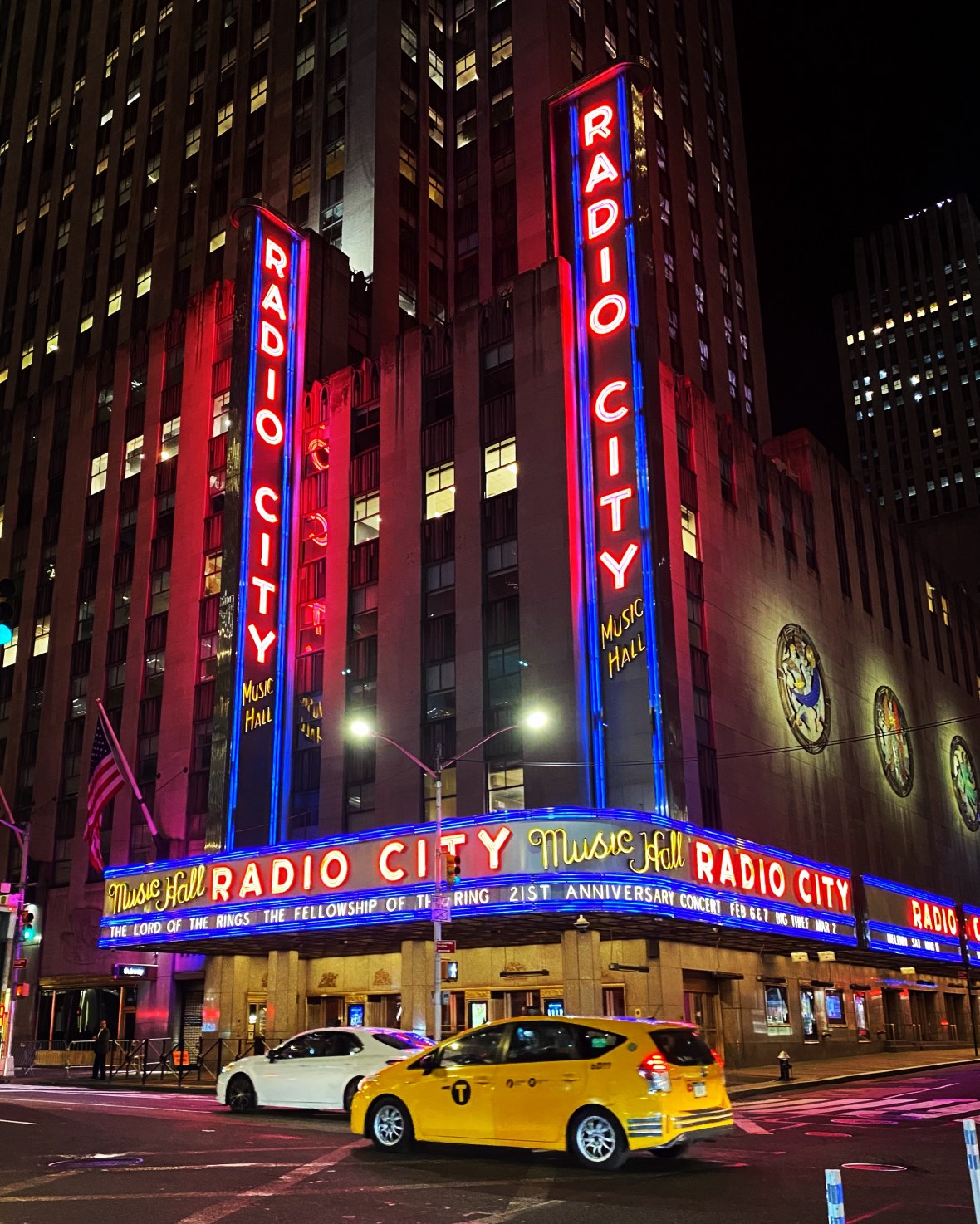
 In TV world, the facade that was used for the outside shots of the ‘Friends‘ house is just up the road and round the corner – just about the fanciest neighbourhood in all of Manhattan as it goes, and hardly the place you’d expect to find half a dozen twenty-somethings with barely a career between them, let alone the $3000 a month required for rent, but there y’go. That’s the magic of telly for you.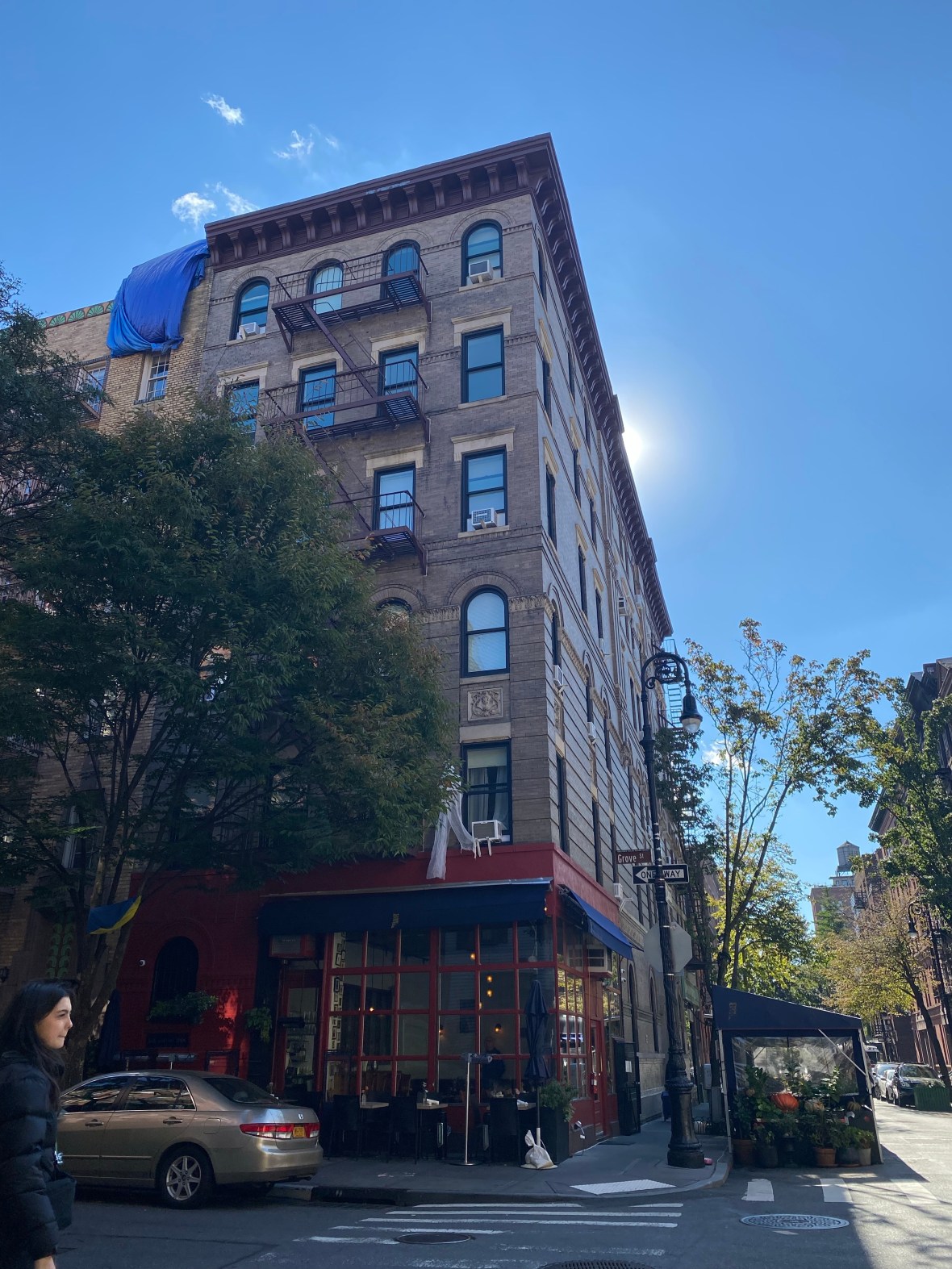










 Plain Or Pan