In this house at least, it’s very probably I Am Kurious Orange, but This Nation’s Saving Grace is often universally acknowledged as The Fall‘s greatest album. It is simultaneously accessible yet acutely obtuse in its weirdness; the concrete bass slam that drives Bombast into yr skull and the bone-shaking shouty skitter of Spoilt Victorian Child (surely the greatest Fall song title of all)…Couldn’t Get Ahead‘s skewed rockabilly and Gut Of The Quantifier‘s proto rap…My New House’s off-kilter poppish sheen…Paintwork‘s wonky balladeering…I Am Damo Suzuki‘s claustrophobic and descending head music…something for all tastes, you might say.
Released in 1985, it is, in a year of Brothers In Arms‘ (and even Psychocandy‘s and Meat Is Murder‘s) ubiquity, very much an outlier. Much like a decent measure of ancient malt, the first taste might leave you unsure, the residual after taste unpleasant even, but the ability to stick with it will slowly but surely establish it as a go-to when the moment calls. It is very much a rich and varied listen.
The Fall – L.A.
I’ve been playing L.A. a lot recently. From its helicoptering bass riff in, it’s a bruising and repetitive soundscape that defies you not to listen more than once. Listen and repeat…listen and repeat. That’s been me the past week.
The Fall rhythm section, earthquake-proof and chiseled from the same bedrock as the track’s titular city, keeps everything solidly four to the floor. Mark barks, yelps and sing-speaks the song’s title in the background. Brix oohs and coos, the Californian Cher to his Salford Sunny, the additional leverage that comes from being the boss’s missus affording her the space to dust the whole thing in the abrasive yet hooky circular guitar riff that settles in your brain from first bar to last. The pop fly in the group’s gritty ointment, Brix was ably supported by producer John Leckie, mixing desk manipulator who rode that fine line between art and accessibility and helped make This Nation’s Saving Grace one of The Fall’s very best.
Perhaps even better is the session version The Fall recorded for John Peel, worth it especially for the added dose of Mark’s uncalled for abrasion in the intro where he declares that “Lloyd Cole’s brain and face is made out of cowpat…we all know that!“
Are you ready to be heartbroken, Lloyd? Listen on:
Ever since the Electric Prunes mixed their mojo and told us they’d had Too Much To Dream Last Night, licence was given to your more outré groups – the ones who perhaps make a riot of layered noise with a pop sensibility at the core – to mess with your mind and get all psychedelic on yr eyes ‘n ears.
Yo La Tengo come, like Frank Sinatra before them, from Hoboken in New Jersey, but they’ve as much in common with Ol’ Blue Eyes as I do. Sinatra croons. Sinatra swings. Yo La Tengo swoons. And occasionally, Yo La Tengo stings. The groups’ group, they have a tidy way with minimalist backing and a bah-buh-bap backing vocal. They can weave silk worm-like tendrils of unwinding melody, gossamer-thin and stretched out for miles, and they know how to hook you in with a Bacharach-like parping horn and finger-clicking beat, but it’s when they’ve ingested the good stuff – when they’ve had too much to dream last night – that Yo La Tengo becomes a different beast entirely.
Yo La Tengo – I Heard You Looking (Peel Session)
I first came to I Heard You Looking via Teenage Fanclub in the mid ’90s. Theirs is a faithful interpretation that had me scampering backwards to see what I’d missed out on, and as much as I really like YLT tracks such as My Little Corner Of The World (the Bacharach one) or the locked-in groove of Autumn Sweater (like Spacemen 3 writing for St Etienne), I always return to their original version of I Heard You Looking.
Maybe it’s because they’ve spent their time looking across the Hudson at Manhattan’s skyline that the tune – and it is a tune, in all senses – is massive. It builds from the very foundations like a skyscraper itself being constructed. A hesitant electric guitar creeps in with an upward-moving riff, all sliding chords, open strings and nerve-jangling expectation. Splashes of ride cymbal wash across crackling, electrified, open-miked airwaves. The drummer scratches his Noo Joisey ass and yawns his lazy way in. The bass player falls in line with both his drummer and the riff-playing guitarist and the group lock in to begin their slow jam.
Subtle shifts in the ambience – there’s two guitars interplaying by now, one sticking to the motherlode riff, the other wandering gaily up the frets, free-soloing and feedbacking and pulling the group ever-northwards – lift the volume and the intensity to the max. One guitarist has enough of the straightjacket approach and breaks loose in vivid technicolour, John Coltrane with an offset Fender and seemingly free reign to do whatever. The group surges and pulses in waves of electric guitar, pushing and pulling, ebbing and flowing, tearing the ears and the heart and the head in an unspooling of structure and frame. Then, an unseen nod of the head between the assembled musicians and the shards of white-hot noise and scattergun Moonisms are brought crashing back to earth by the anchor that is the riff.
And the group goes again.
And again.
For almost ten headswimmingly magic minutes.
…..
Another group who are no strangers to the effect of a noisy and epic jam is Mogwai.
When Stuart Braithwaite’s book came out a couple of years ago, the chapters fell into easy chunks;
I formed a band. I got really wasted. I listened to The Cure.
I rehearsed with the band. We got really wasted. We went to see The Cure.
We got really good. We got reeeally wasted. The Cure asked us to support them.
We got really, reeeally wasted. We got really, reeeally wasted with Robert Smith.
Life is complete.
C’mon Stuart! Life might be great cos you get to get up to shenanigans with Robert Smith every once in a while, but life is really complete because you happened to record, amongst a back catalogue of well-thumbed and well-spun albums, the most perfect track somewhere along the way.
For all of Mogwai’s loud/quiet/hailstorm of anvils that they’ve committed to record, none of it – none! – sounds so thrilling as The Sun Smells Too Loud. It really is the greatest track Mogwai have stuck their name to.
Mogwai – The Sun Smells Too Loud
Electro pulse. Shimmering twang. Whammy bar action. A great second chord. And a great third chord. A fantastic sliding up and up and down guitar riff, the group surfing the action in the background. The Sun Smells Too Loud is a hazy, woozy end of the night beauty. Great for cycling to too.
Repeated listens (and there’s been more than a few since parent album The Hawk Is Howling first appeared) throw up new melodies and counter-melodies within the spaces, not to mention tinkling milk bottle percussion and vintage, droning synths, but more importantly, The Sun Smells Too Loud throws up an aching melancholy. It’s all heart, all soul and all good. It might simply be non-organic electric guitar music played atop a rudimentary beat box, but The Sun Smells Too Loud is as soulful as Sam Cooke. It just is.
Sometimes, as on nights like this, the electric guitar, in all its variances and guises, is all y’need. Turn up to 10, as they used to say on the run out grooves.
I’ve got a strained relationship with The Cure. They are, unarguably, one of our greatest singles bands; poppy, hooky and melodic yet strange and idiosyncratic, a band out of step with everything around them, stubbornly unique and brilliant because of it. Just Like Heaven…Hot Hot Hot!!!…Caterpillar…Close To Me…Lovecats…In Between Days…Lullaby…Why Can’t I Be You?… Friday I’m In Love…The Walk…Pictures Of You…A Forest…there’s a perfect playlist right there.
It’s the albums I struggle with. If the singles are 10 second hundred metre sprints, the albums are triathlon levels of endurance by comparison. Meandering, dark, twisty, self-indulgent – all the things I like, as it goes – I find it’s too much of an effort to properly enjoy a Cure album. There’s nothing light and airy about them, and I say that as someone who’ll listen to Radiohead until the day I die. I just slowly detach and find myself drifting off. ‘Is this nearly finished?’ I’ll ask myself as Robert and co sleepwalk their way, treacle-like, into into only the third track. It makes the thought of a live show almost too much. Even Springsteen, I bet, would find himself yawning at the two hour mid-point. My loss, I dare say.
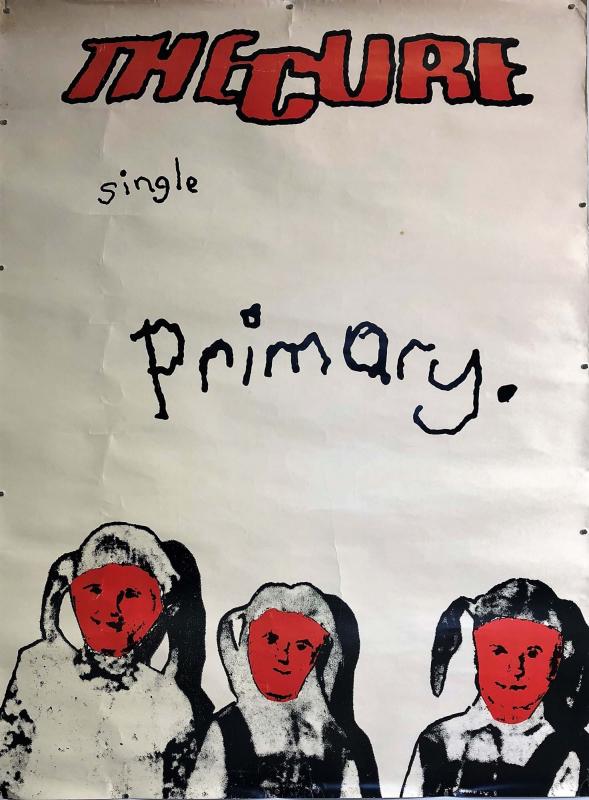
Primary though. There’s a great track. The sole single release from 1981’s Faith album, Primary starts with a rattling, ear-splitting snare drum, played with all the finesse of a ham-fisted one-armed man. Bash! Bash! Bash! Bash! Bash! Bash! Bash! Ker-bash! If you can separate the individual instruments and voices on the record, you’ll hear that from first bash to last, the drummer never wavers from his incessant 8-bar beat.
The Cure – Primary
Backing firmly in place, Robert makes excellent use of his chorus and phase pedals, coating the track in a thick metallic swamp of rapid, scraping downstrokes and swirling chunky notes. It might sound just like his National guitar set to stun, but on this track Smith actually plays bass. As does Simon Gallup. Being unique and idiosyncratic sorts, two bass guitars on the one record is perfectly normal. While Smith maintains the song’s rhythm and muscle, Gallup wanders up and down the frets like Peter Hook in eyeliner. Perhaps surprisingly, there are no guitars on Primary at all.
It’s an intense sound, Primary. Shouty, swirly and relentlessly clattering, it finds The Cure out of step with their peers, and not for the last time. 1981 was the year when the synth became the de facto pop instrument of choice. End of year lists were populated by the Human League and Soft Cell. OMD were making inroads towards household name status. Ultravox’s Vienna was ubiquitous. Kim Wilde was doing her English version of Blondie while Clem Burke jumped drum stool to moonlight with Eurythmics. Esoteric and different, The Cure stick out as stubbornly as the Dennis the Menace haircuts they employed at the time.
The Cure – Primary (Peel Session)
Two bass guitars, one snare drum, a double-tracked voice and a whole load of imagination across three minutes – or six if you can track down the elusive 12″-only mix. Primary is a weird wee single, not afforded the status of anything in that stellar list in the opening paragraph above, but something that’s just as deserving of a place at The Cure’s top table.
If ever there was a short-lived group with an ego overload as wide as the Mersey, it’d be The Crucial Three. Birthed in Liverpool, the not ironically-named at all trio was the fertile product of Julian Cope, Ian McCulloch and Pete Wylie, students in the city and punk rock foot soldiers with the battle scars from Eric’s and Probe Records to prove it. Destined to meet and create and disband in a whirl of uncontainable ideas, The Crucial Three lasted no longer than six weeks, burnt out on a combined love of New York punk and the inevitability that each group member couldn’t be boxed and compromised within its confines.
In his book Head On – essential reading, if y’didn’t know – Cope is both catty and complimentary towards McCulloch. He’s already been nicknamed Duke after Bowie’s Thin White persona by the time they meet, and the nickname provides Cope with much bitchy ammunition, but St Julian has nothing but praise for McCulloch once he dares to peek beyond the fringe and start to sing. Cope bands about McCulloch’s name in the same breath as Lou ‘n Iggy and he genuinely means it.
Amongst the nonsensical jams and Velvets rip-offs that constituted The Crucial Three’s flimsy ouvre – one song about zits and one about drugs that was a great Cope-y title in need of an actual song (I’m Bloody Sure You’re On Dope), Cope and McCulloch (or ‘Duke McCool‘, as Julian has now christened him after mishearing the shortened McCull) dragged out an actual, bona fide post-punk classic.
Read It In Books surfs along on a cyclical riff very reminiscent of Patti Smith’s Dancing Barefoot, the product of one of the trio’s living room sessions where someone would stumble on a set of chords and the others would fall in and see if something stuck. If you’ve ever played in a shambling and under-rehearsed band, you’ll recognise this scenario immediately. In this instance something did indeed stick. Cope claims McCulloch was playing the chords to The Fall’s Stepping Out (it also has, in the main, two chords and is a bit shouty, but these ears can’t really find the similarity – which is good, I suppose), but by the time the band had reconvened for their next session, McCulloch had a set of lyrics to go with it – including a cheap steal from The Impressions – and before they knew it, The Crucial Three had a song of their own. People get ready, there’s a train a-comin’… and it’s a beauty.
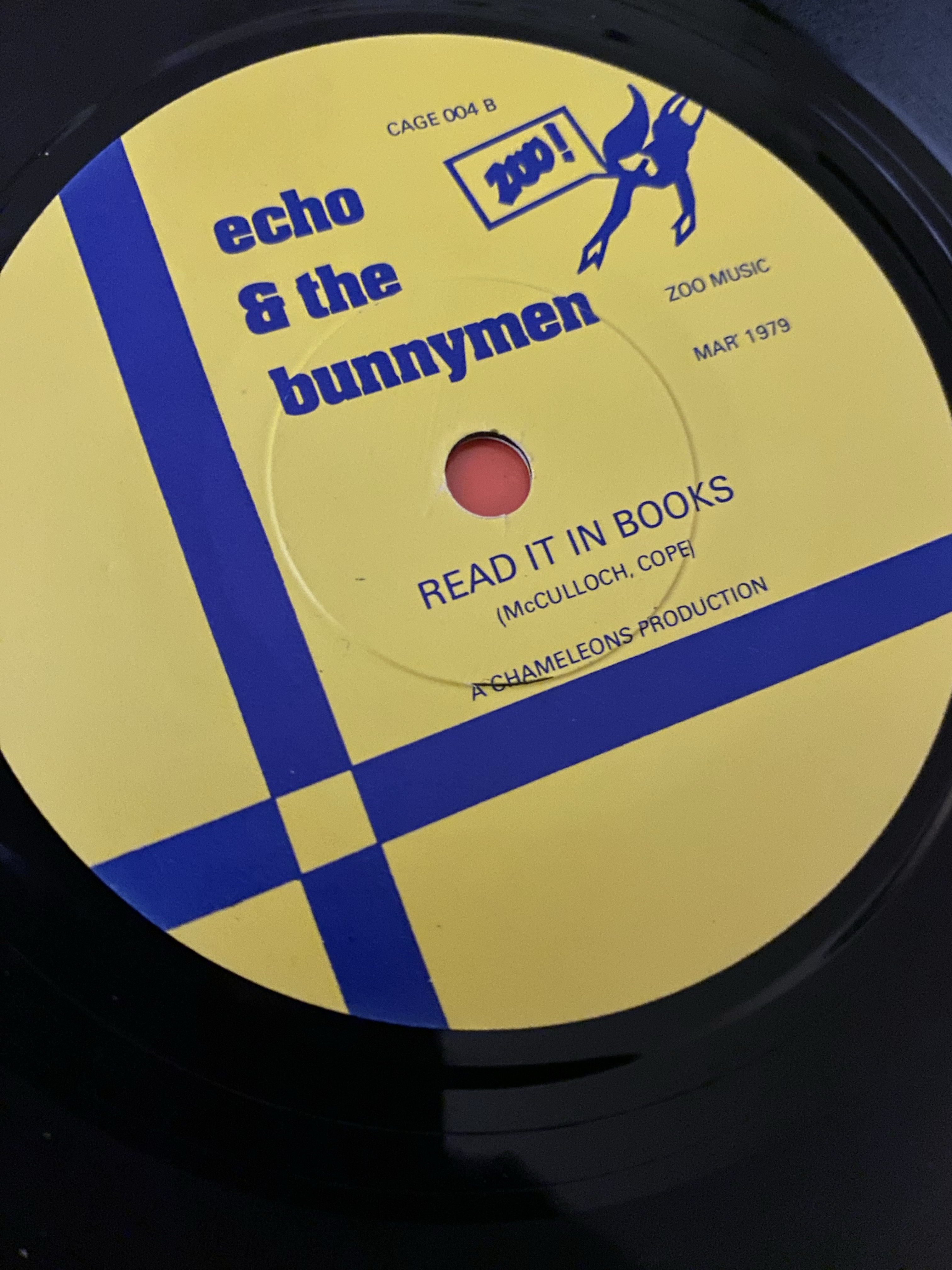
Read It In Books was credited as a Cope/McCulloch co-write, and both artists would go on to record versions with the bands with whom they found success.
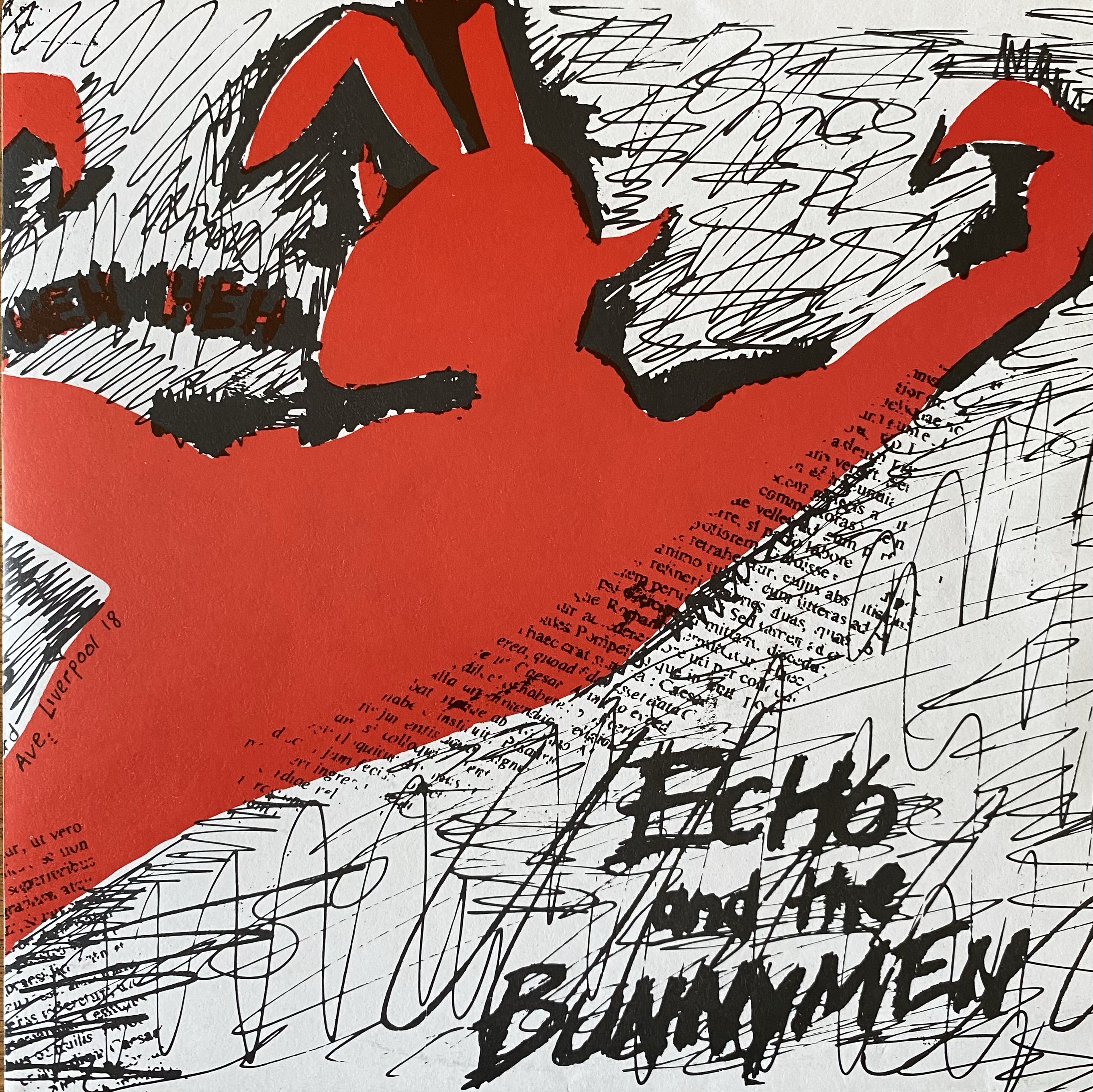
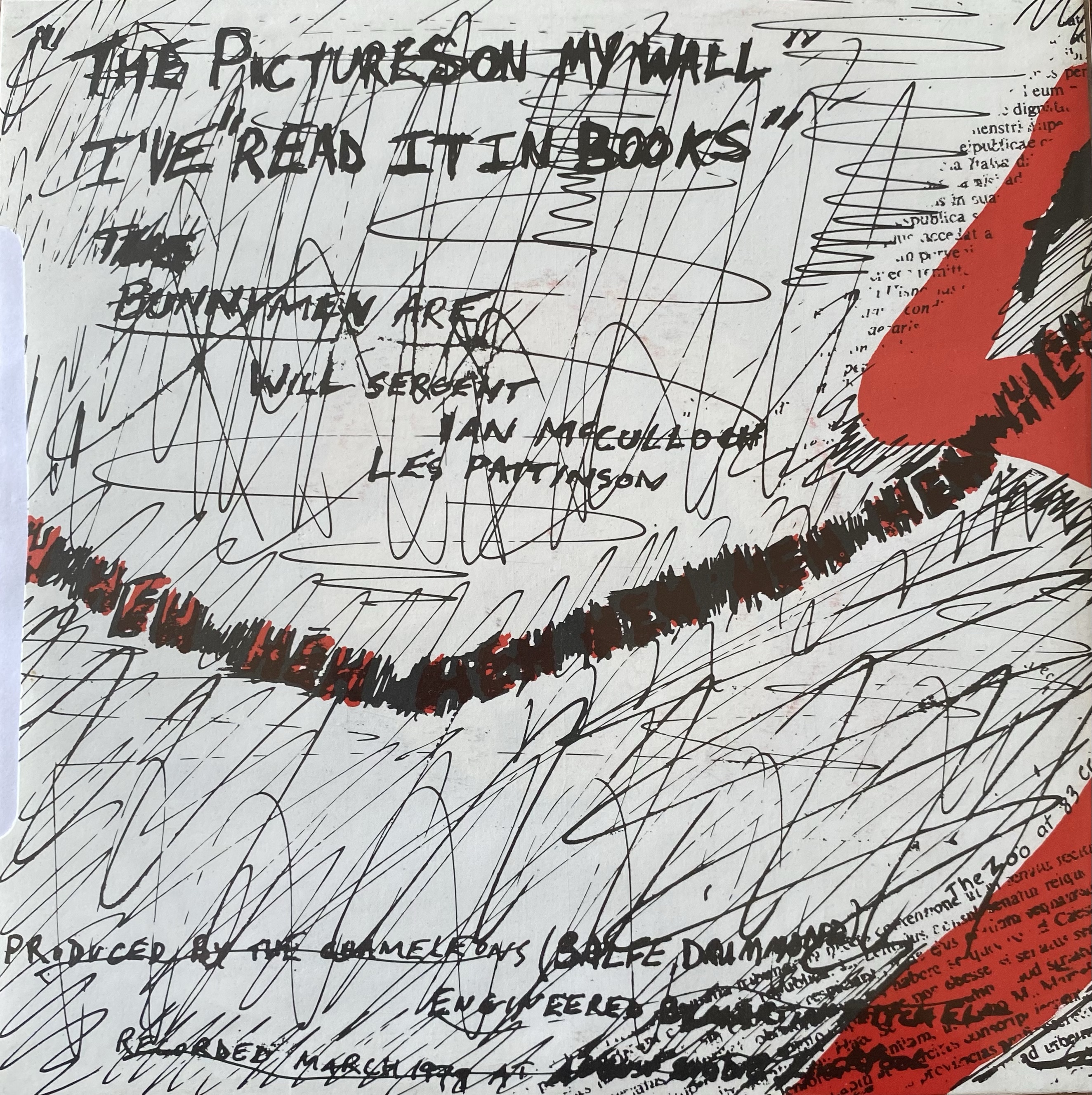
Echo & The Bunnymen‘s version appeared as the b-side to their debut single The Pictures On My Wall (credited to McCulloch, Cope, of course).
Echo & The Bunnymen – Read It In Books
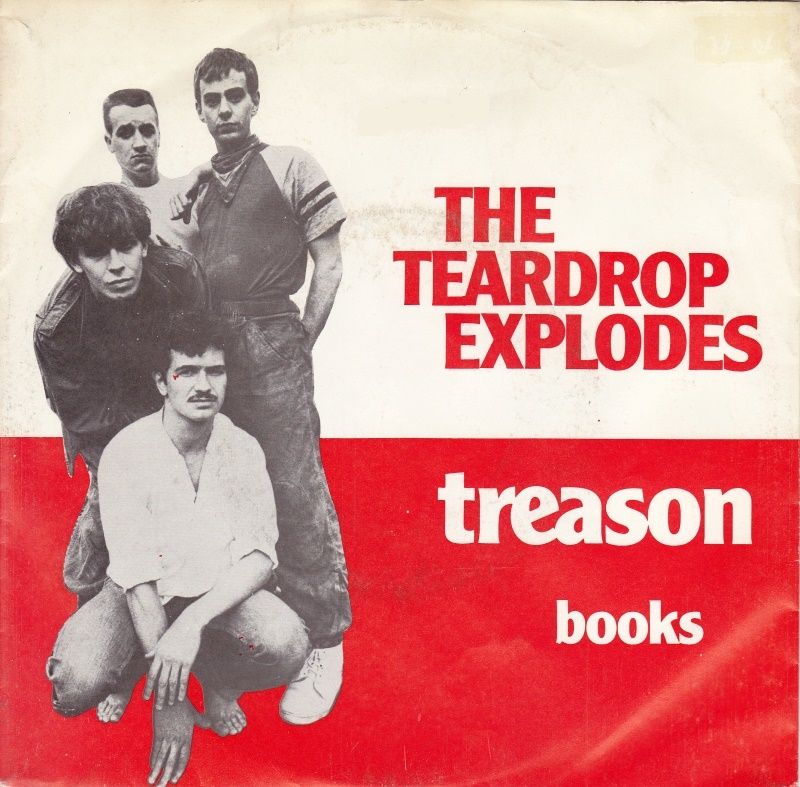
Cope’s Teardrop Explodes would record it for the b-side of their third single Treason.
You don’t need to dig too deep below the surface of the internet to find multiple versions of the song but, for me, the best version of all of them is the Bunnymen’s imperial take that they recorded for the John Peel show in 1979, watery guitar solos, incessant drum machine rhythm, McCulloch’s restrained croon ‘n all. Within a few years their sound would evolve, with skyscraping, effect-rich guitars and a towering symphonic backing adding gravitas and state to the McCulloch vocal, but that early Bunnymen sound – man, I’ll never tire of this.
Echo & The Bunnymen – Read It In Books (Peel Session 15th August 1979)
The Teardrops’ version is fairly similar, acknowledging that both writers created the structure and arrangement. Guitars clang, drums are pummelled, a stabbing organ shimmers in and out like the ghost of Ray Manzarek moonlighting in The Seeds and the whole thing rattles its way to garage band heaven. Add some sleigh bells to its nagging piano background and it could almost be The Stooges’ I Wanna Be Your Dog. Perhaps an obvious, leather-trousered step too far for the Iggy-headed Julian.
Teardrop Explodes – Read It In Books
This one is credited, naturally, to Cope, McCulloch.
There was a brief period at the tail end of the ’80s when two music cultures collided to create an exciting new sub-genre. Partly brought on by Happy Mondays’ in-print enthusing of Detroit techno and partly by the Stone Roses’ approach of playing dance music before they took to the stage, a movement of youth who’d lapped up their own Stones and Beatles dared to cross the divide between guitars and grooves and, arms aloft and flying high, wholeheartedly embraced the best of both scenes. In Irvine’s Attic, you could dance yourself dizzy to Pacific State and State Of The Nation in the same thrilling ten minute sequenced spell, our own Saturday night fever soundtrack that was absolutely replicated in provincial towns up and down the country.
The bands that sprung up around this ideal took the cross-pollination of clashing cultures and ran with it, for as long as the record companies were happy to throw their money northwards in the vain hope they’d land themselves another Mondays or Roses. Some of the acts – The Charlatans, obviously, broke out in their own right. Some of the others had one or two good songs, one great song, even – The High’s Box Set Go, Mock Turtles’ Can You Dig It – and some of the acts might even have managed to squeeze out a decent album – World Of Twist’s kaleidoscopic and swirling Quality Street springs to mind, but many of them burned briefly then fizzled out, shrinking back to the suburbs as the dirty exhaust fumes of American grunge spewed forth in Nirvana’s Converse-trod trail. ‘Baggy’ or ‘Madchester’ (eugh) or ‘Indie Dance’ was, then, a placeholder in time…but those great songs live on.
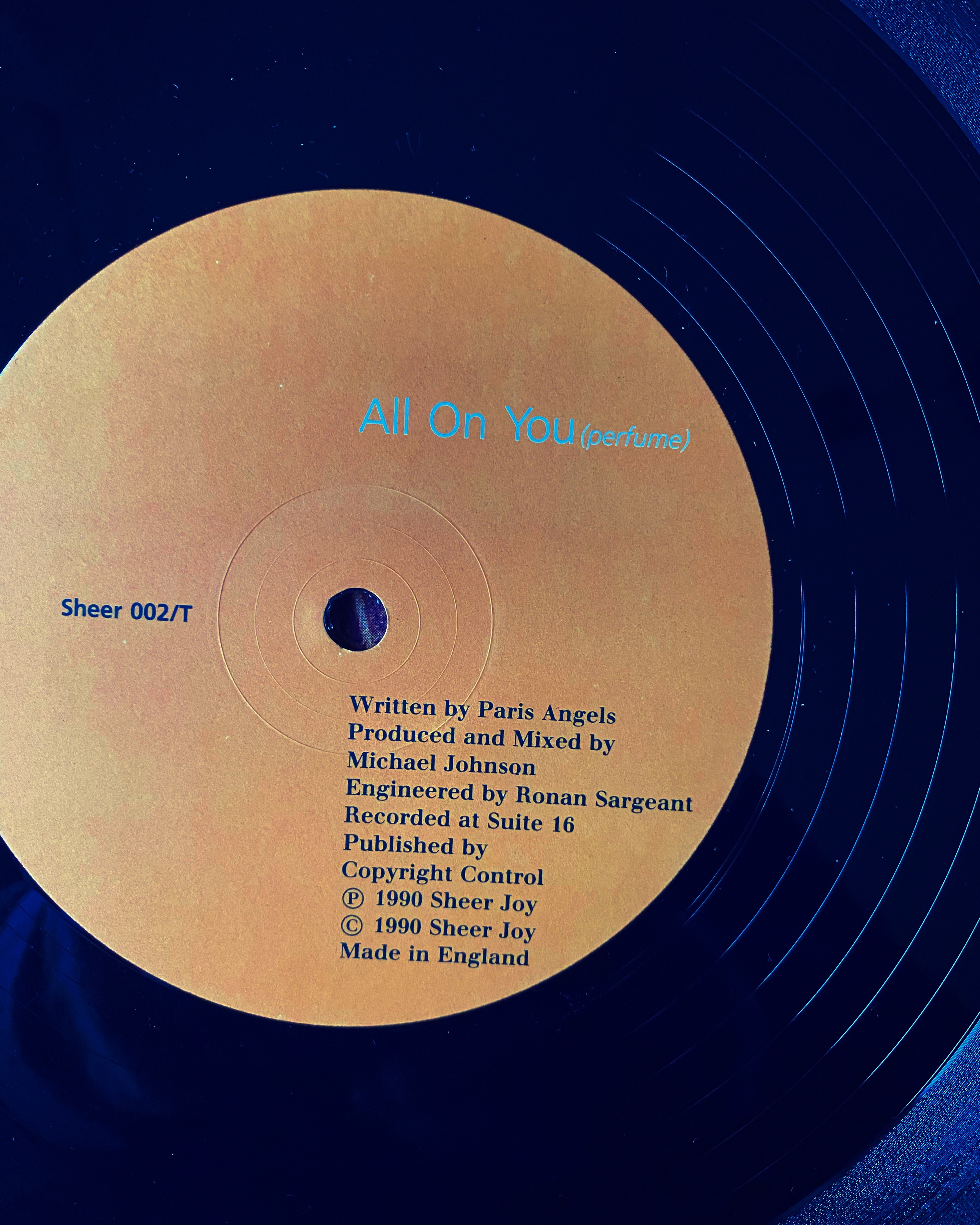
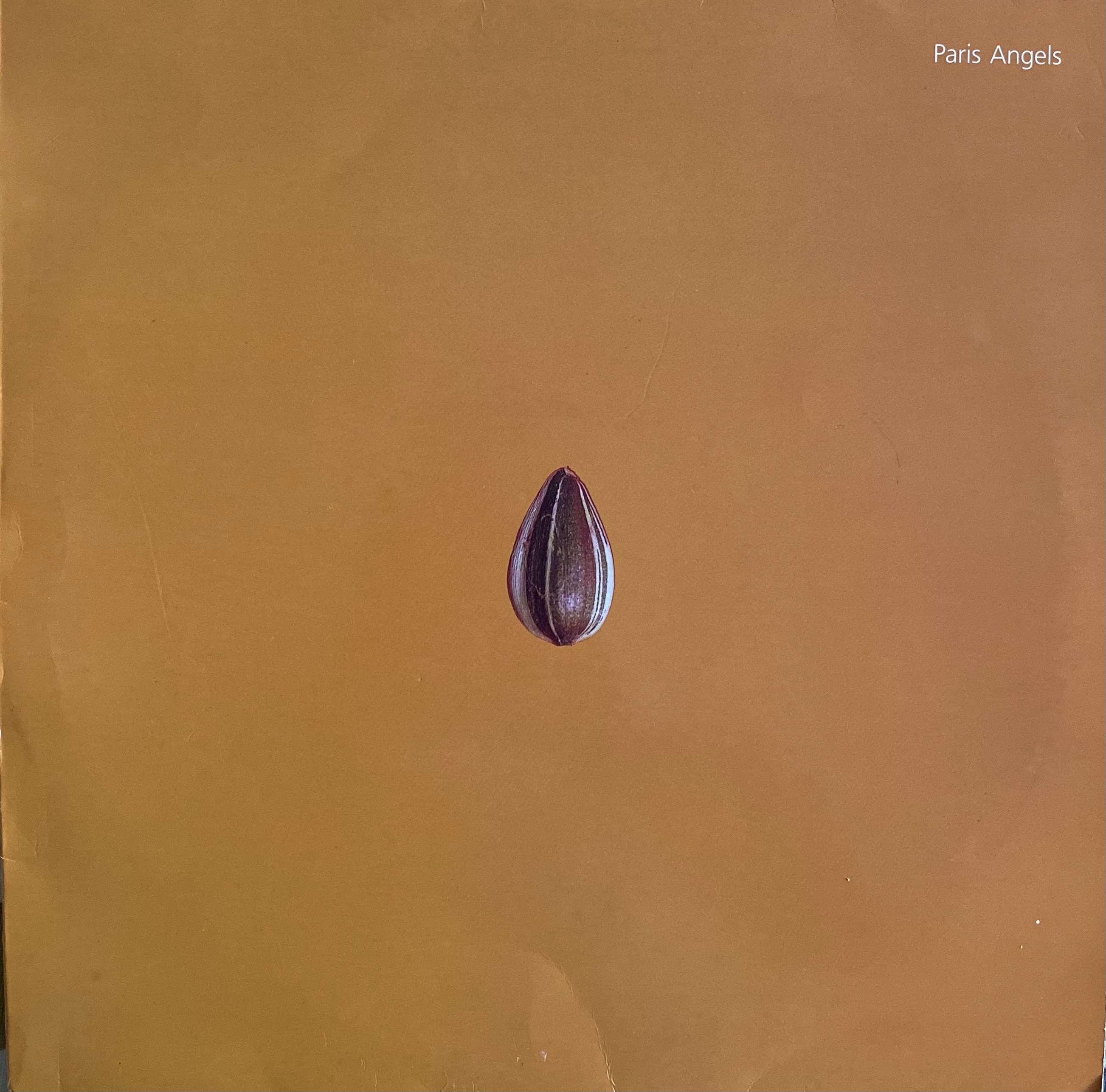
The best of all is arguably Paris Angels‘ All On You (perfume). A track, I think, rather than a song, it magpies the best of everything into one era-defining single that still thrills over 30 years later. Take a monochromed Curtis-ish vocal and team it with the sort of girlish adlib that’s floated straight off an anonymous house stomper. Stick them atop some chiming, Marr-esque guitars. Throw some sequenced acidy squelches across it and then polish the whole thing to a see-your-face-in-it brilliance; All On You (perfume) is a proper rush.
Paris Angels – All On You (perfume) – with added John Peel at the end.
Quite how they managed to sow the shiny seeds of All On You from the unholy clatter that represented the band’s sound at the time must be down to the producer, so kudos to Michael Johnson (engineer on no less than Blue Monday) for coaxing such an airbrushed sound from the band’s grizzled indie.
The band’s roots are easy to identify from the swirling slab of industrial Mancunian twist and shout below. Very of its time, it rattles and ricochets like a stretching out ACR or Happy Mondays at their esoteric best. Dark, dense and serious, with the tentacles of the baggy beat and a wandering electric guitar – all bent 3rd strings and chorus pedal – creeping through its cracks, it’s a signpost of where they’d come from and where they’d briefly be going…
Paris Angels – Stay (Peel Session)
Should such things matter to you (and of course they do), it’ll have you double-checking the label on the record for a Factory logo or catalogue number that isn’t there. Yes, despite all necessary Factory ingredients being present; a clattering, enthusiastic rhythm, hot-wired chicken scratch guitar, a shouty Mancunian frontman oozing oodles of effort over ability – all housed in a subtle and arty sleeve, considered typeface ‘n all – Perfume was released on the perfectly-named Sheer Joy label. All bands have one great song to their name. Perfume (All On You) was Paris Angels’.
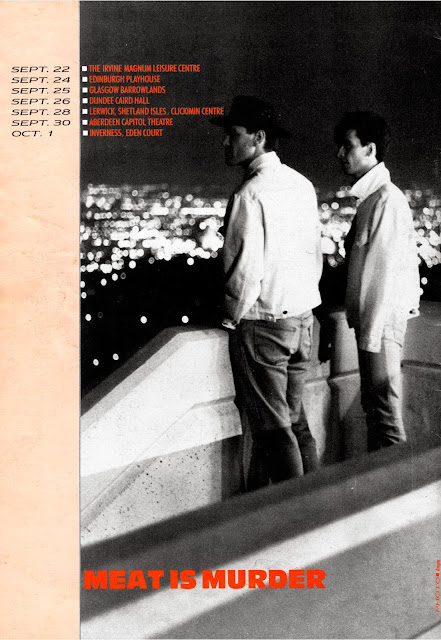
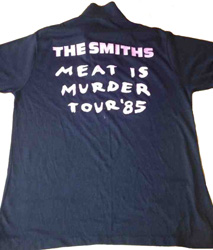
Let’s call it here and now: Meat Is Murder is The Smiths best album.
It’s certainly not the debut, the band’s unsatisfactory attempt to chase a sound worthy of the songs. Compared to the Brasso-bright, spit ‘n polish, ring-a-ding-ding of those early Peel versions, the debut album weighs heavy; lumpen, and one-dimensional. The drums sound leaden and lifeless. The guitars – it’s always about the guitars with The Smiths – sound as if someone has taken a fat thumb to their edges and rubbed the sparkle clean off. Flat and uninspiring, the production doesn’t do those fabulous riffs any justice at all. Unique, extraordinary songs, but assembled badly.
Don’t even consider The Queen Is Dead. Those songs…man, great, great songs…but whoever signed off the running order needs their head examined. The title track aside, every other song is misplaced. Side one collapses from the music hall titter of Frankly, Mr Shankly into the death doublet of I Know It’s Over/Never Had No One Ever – undeniably serious mood music pieces, yes, but totally misplaced. Stick I Know It’s Over at the end of side 1 instead and you’ve got a great closing track. Never Had No One Ever? That’s totally ripe for the graveyard slot of second last track on side 2. Pick any ten records from your collection and look at the running order and then tell me that the second-to-last track isn’t the weakest on the album. It’s certainly not where There Is A Light That Never Goes Out should be hiding. That should be sitting up front with Bigmouth… and the big boys, or maybe even afforded the honour of being the big statement closing track. Good as Some Girls Are Bigger Than Others is – and it’s one of their very best – go out on a romantic, swaying high, Smiths. Don’t relegate your best songs to the twilight zone.
Yeah, and the smart money (even Johnny’s, they say) might be on Strangeways Here We Come, but for every crashing gothic masterpiece (Last Night I Dreamt...) there’s The Smiths-by-numbers (Stop Me If You Think…), for every barely-disguised love letter from singer to guitarist (I Won’t Share You) there’s the instantly skippable Death At One’s Elbow. It’s a good album, Strangeways, probably even great, but it isn’t their greatest. That honour goes to Meat Is Murder. Here are half a dozen reasons why.
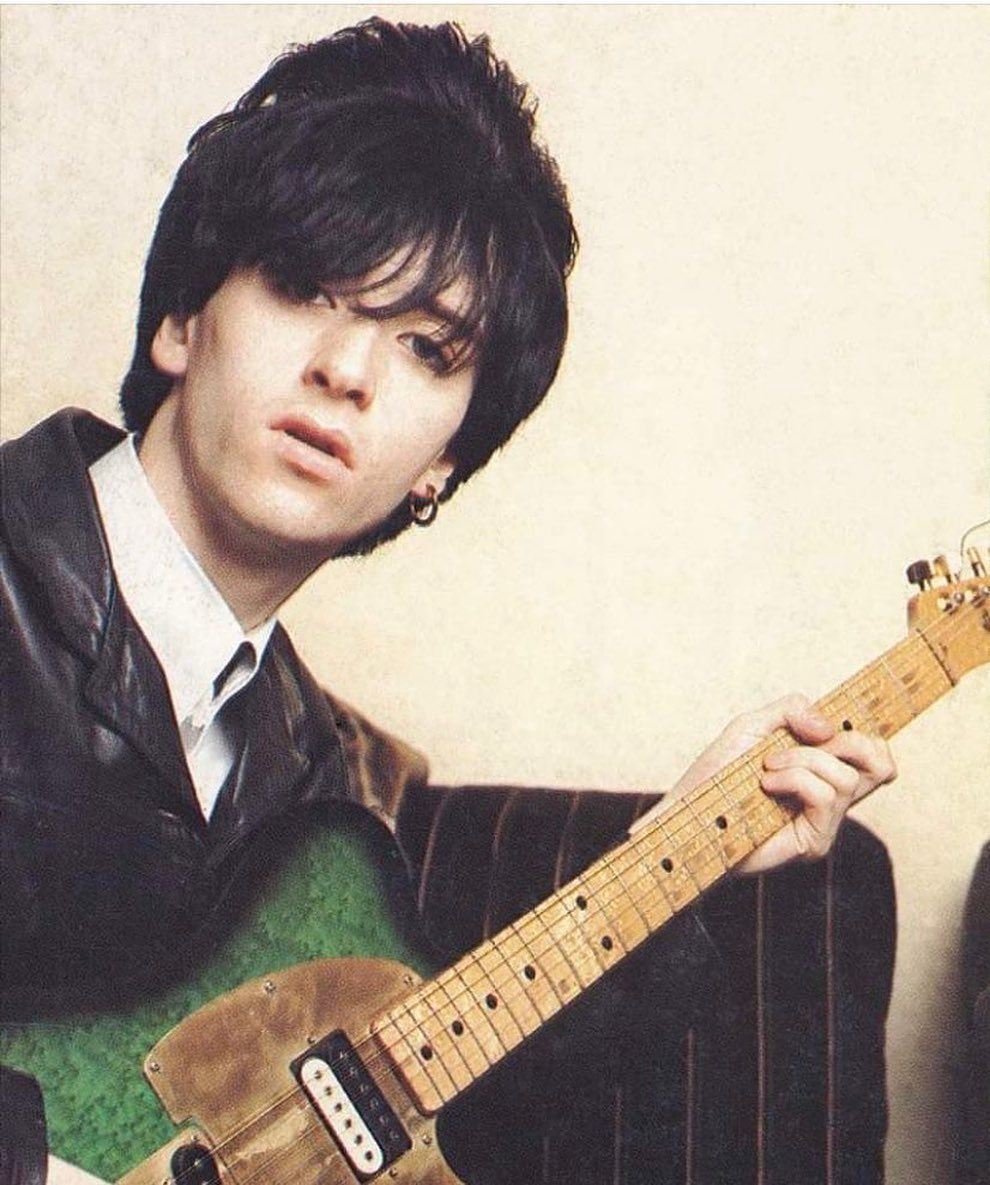
Reason 1. Little elfin Johnny, in his blown-up Keith Richards hair-do and diamante clutter, is on fire across every bit of Meat Is Murder. He runs the whole gamut of his nimble-fingered arsenal; alternative tuning on the title track…alternative tuning and Nashville tuning on the cosmic and zinging Headmaster Ritual…that fine, layered coating of acoustic liquid mercury across Well I Wonder…the Stooges Metallic KO of What She Said, the rockabilly knee-tremble of Rusholme Ruffians…the proud Chic-isms that give way to those great, ringing discordant jazz chords near the end of Barbarism Begins At Home…the clattering chatter he conjures up across Nowhere Fast‘s multiple overlapping tracks and kaleidoscope of chords…
Johnny came up with them all. On Meat Is Murder he is barely 22 and he’s not yet reached a peak that his peers, never mind his guitar-strangling lessers in bedrooms up and down the country, can only dream of.
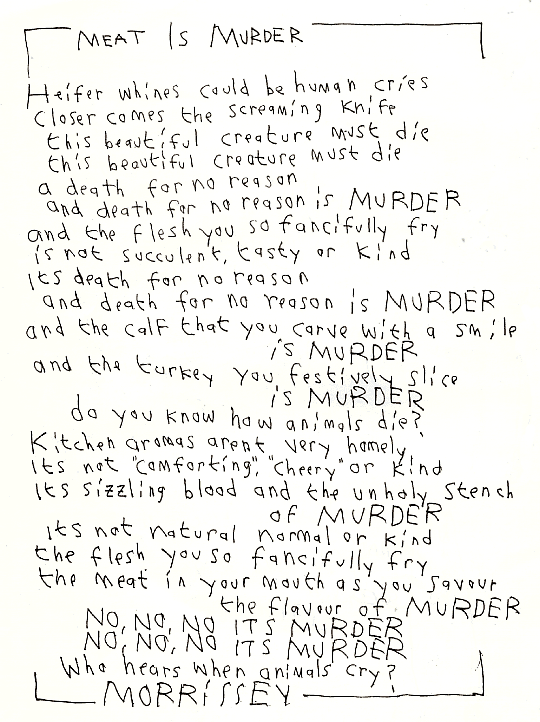
Reason 2. Morrissey. Separating the art of the 26 year-old singer from the 63 year-old artist is necessary here. Look, not at what he’s become, but at what he was once capable of. With every lyric on the album, he’s extremely funny and articulate and political and opinionated and principled and, above all else, loveable. ‘I’d like to drop my trousers to the Queen,’ ‘heifer whines could be human cries,’ ‘belligerent ghouls run Manchester schools, spineless bastards all,’ ‘What she read, all heady books, she’d sit and prophesise, it took a tattooed boy from Birkenhead to really, really open her eyes.’
Even if he pinched large chunks of Rusholme Ruffians from Victoria Wood, no one was crowbarring lyrics like this into pop songs in 1985. Arguably, no one has crowbarred stuff as unique and searing and insightful and right-on since.
Reason 3. That Joke Isn’t Funny Anymore is one of The Smiths’ finest torch songs. From its bright-as-brass-buttons opening to its layered and textured false ending, it’s a beauty. It’s the perfect marriage of Morrissey’s moping introspection and Marr’s guitarchestra, the singer identifying with those who are kicked when they are down, the guitarist going to town with studio effects and multi-layered riffs.
The Smiths – That Joke Isn’t Funny Anymore
Those little echoing triplets that fall from his fingers to create rippling pools on still pond water still tingle the back of my neck when they come in (around the minute mark at first, then forever after) – an ear-opening epiphany in 1985 when I realised that guitar players enhanced their electric sound with gizmos and wizardry to create the sounds they imagined in their heads. The haunting (and haunted) backwards effects he weaves through the ‘happening in mine‘ section before the fade out are ace.
Johnny has since said (OK, he told me, right?) that The Smiths never quite managed to do it justice live, but with the technology available today, That Joke Isn’t Funny Anymore would have undoubtedly been the centrepeice of The Smiths live experience. We’ll never know.
Reason 4. The Smiths changed lives. Saved lives, even. Like, literally. The title track is responsible for a whole swathe of impressionable teenagers – and at least two Smiths besides Morrissey – to forego eating meat and adopt vegatariansim as a way of life.
“As soon as we had recorded this song, I became a vegetarian,” Mike Joyce told me in 2017. “Morrissey’s argument was rock solid. I couldn’t even be that bullish to say, ‘…but I like meat.’ The cruelty involved is reason enough. You wouldn’t eat your cat or your dog, so why eat a sheep or a pig? Whatever Morrissey argued, you could only reply with, “You’re right, you’re right.” There was no counteract to it. It should be illegal, there’s just no argument for it. ‘Meat Is Murder’ is a sheer political statement. It shaped my life and my kids’ too, who’ve all been brought up vegetarian.
Accompanying the lyric, all sorts of magic is going on. Suitably doomy and disconcerting for the words being sung, Johnny plays around on an open D riff, cyclical and repetitive, hynpotic and ethereal.
The Smiths – Meat Is Murder
It’s matched by a jangling piano – not noticeable on first listen, buried as it is underneath the abattoir grinding and cattle cries, but it’s there, tinkling along like springtime Manchester rain while studio-treated guitars echo and scrape and scratch their way through the murk, Andy’s bass as elastic and stretchy as tendons.
Reason 5. Ah. Andy’s bass. The unsung hero of the band, the thinking man’s favourite Smith, Andy Rourke can play the fuck out of that thing. While Johnny gets all the spotlight, Andy quietly goes about creating tunes within tunes, fret-surfing melodic runs that could easily stand on their own two feet (or four strings).
The Smiths – Nowhere Fast (Peel Session, 1984)
The trampolining rubber bandisms that carry the aforementioned Rusholme Ruffians…the counterparts he plays to Johnny’s guitar in The Headmaster Ritual…the driving force in Nowhere Fast that allows Johnny to fly off-piste and back again…Andy is a key ingredient here.
The rather-too obvious track to highlight is the extreme funkability of Barbarism Begins At Home, all slap ‘n thunk, an old tune of his and Johnny’s from pre-Smiths days that wouldn’t have worked on that debut album, but here, on Meat Is Murder‘s inclusive, catholic patina, it shines brightly.
Reason 6.The Headmaster Ritual. Rusholme Ruffians. I Want The One I Can’t Have. What She Said. That Joke Isn’t Funny Anymore. Nowhere Fast. Well I Wonder. Barbarism Begins At Home. Meat Is Murder.
Perfectly sequenced, perfectly pitched, it is, rare for the era, an album of few single releases; Headmaster and Barbarism in foreign countries only, That Joke in the UK (a chart-busting number 49 with a bullet). The Americans couldn’t handle an album with no hit singles though, so they crassly wedged How Soon Is Now? right before Nowhere Fast at the start of side 2. They have form for spoiling perfectly perfect albums, the Americans – look at what they did to some of The Beatles’ catalogue for proof – and while How Soon Is Now? is an undoubted Smiths classic, it should remain standing alone as the greatest 3-track Smiths single ever. But that’s an argument for another time.
I interviewed Martyn Ware once. It was 5 days after Paul McCartney’s show at Hampden Park, should you wish to date it, and I was still flying high, buzzing on seeing a two and a half hour benchmark set of hit after hit after hit, faithfully and loudly reproduced to within an inch of the songs’ original sound and feel.
“Yeah, to us, The Beatles were shit,” he sniffed in his mellow Yorkshire accent. In the mouth open, dead air gasp of disbelieving shock that followed, he continued. “They meant nothing to my generation of musicians. Nu-thing. We looked to Germany, to Kraftwerk and beyond, for our inspirations. Guitars were dead to us, even with the influx of punk groups that were springing up everywhere. To us, the guitar stood for excess and Led Zeppelin and private jets and symbols of phallic insecurity. Not all of The Beatles music was rubbish, but I wasn’t a fan and they certainly weren’t year zero for any of the people I was making music with. Punk, and the possibilities it threw up, was our point of reference. In Sheffield especially, we chose keyboards over guitars…and I think we all made a pretty good go of it.”
Had this conversation been carried out on Zoom – still a twinkle in some Silicon Valley digital developer’s eye – I’d have seen the wry, upturned smile that followed. Ware and his pals certainly made more than a good go of it. His DIY, learn-as-you-go aesthetic, first with the Human League and then with Heaven 17 and later with BEF, saw him involved in the production of some of his generation’s most well-known yet decidedly idiosyncratic tunes.
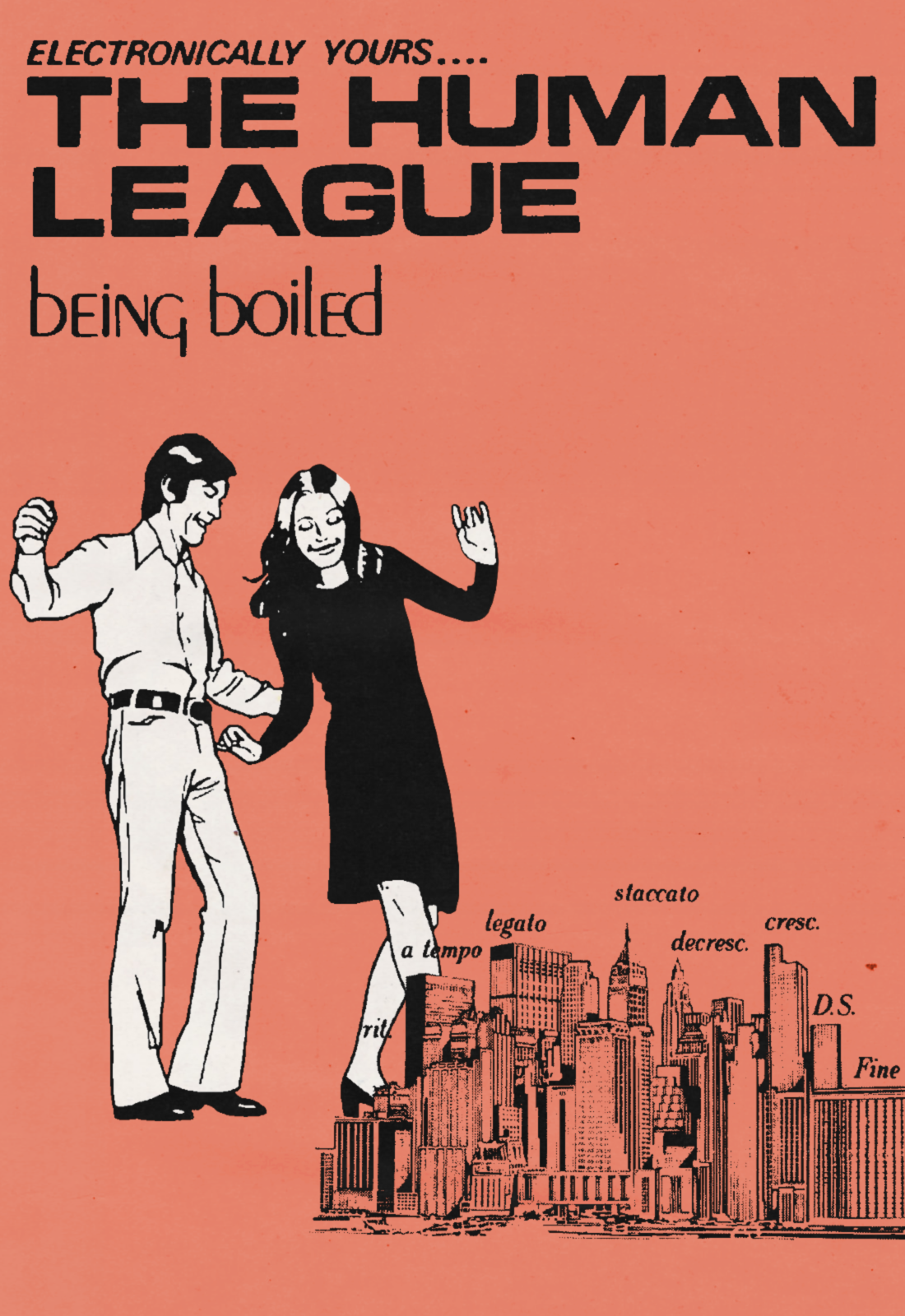
The Human League’s first single, released way back in 1978, is a case in point.
The Human League – Being Boiled
It’s futuristic sounding, even now. A hissing, spitting, fizzing, electronic groove, all metronomic synthesised hi-hat and piston-powered forward propulsion that’s as industrial-sounding as the city from whence it came. Its rubberised electro bassline, part Bootsy Collins, part Larry Graham, adds requisite pop charm, offset somewhat by Phil Oakey’s monotoned vocal.
‘Listen to the voice of Buddha‘ he deadpans, while the rest of the band make music from anything they can plug in. Morse code dots and dashes of synth ping pong and teleprompt their way across the electrified airspace. The clickety-click of computerised clockwork maintains the tempo – slow and steady, never speeding up, never slowing down – while gently popping bubbles of Prophet and Korg and Moog coalesce nicely in the ether, the ghosts of Kraftwerk and side 2 of Bowie’s Low hanging heavy in the analogue fug. It’s a brilliant debut single, some would say never bettered, by a band who, with a different approach and new line up, would go on to ubiquity and massive chart success.
Being Boiled has long-been a favourite of mine, right up there with the nothing-like-it-at-all Mirror Man and its Supremes-ish ‘Ooh-ooh – ee-oohs’ that take me right back to a time and place. If I was a betting man, I’d wager that Steve Strange was a big fan of Being Boiled too. There is, obviously, in Visage’s Fade To Grey, more than a whiff of similarity in those vibrating, humming chord changes.
*Bonus Track!
For maximum hard boiled analogue thump, you need the Peel Session version from August ’78. It’s, like, out there!
The Human League – Being Boiled (Peel Session 8.8.78)
By the way, never trust anyone who says they don’t like The Beatles. It’s all for show. Whether it’s the throwaway Yellow Submarine or the avant gardisms of Revolution 9, The Beatles have a tune for everyone. You knew that already though.
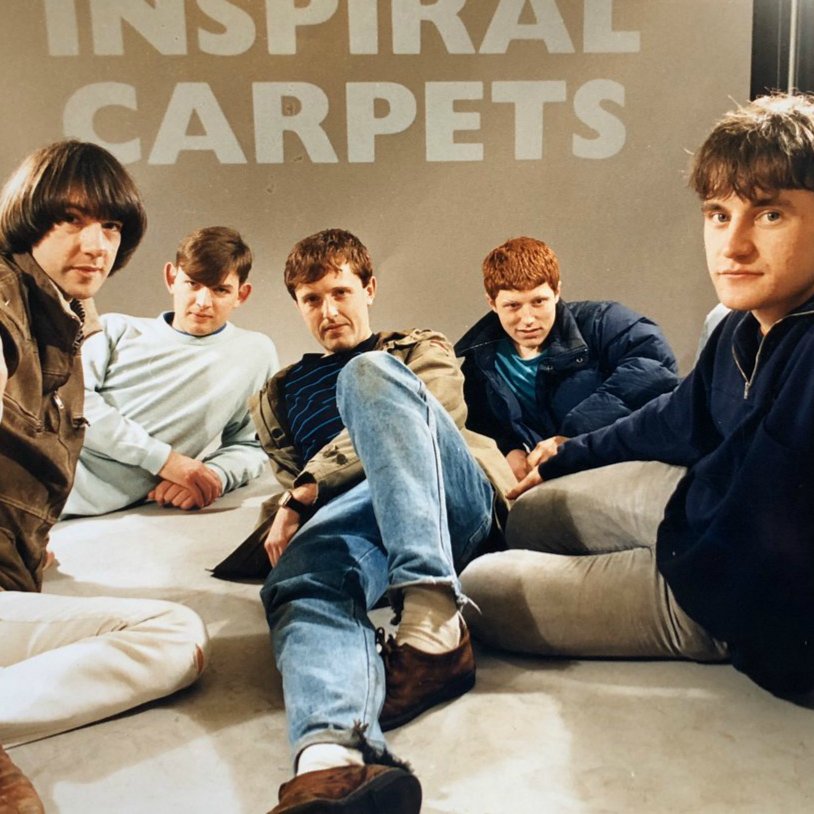
There’s something about those early Inspiral Carpets records that’s really great. And by early I’m talking about the pre-Tom Hingley, pre-chart, pre-baggy (eugh) records; tunes formed and fermented in garages, coated in a dusty Nuggets-inspired layer of authenticity and woven together through sheer punkish energy over anything resembling finesse.
Well, yes, Clint Boon was undeniably a whizz on the Farfisa and, given that he was at least 42 years older than the other Inspirals, it’s perfectly logical reasoning that he should be skilled on his instrument of choice whilst the others faffed around with open chords and one-finger bass lines played through the same sort of Peavey amps that my very own garage band would use to blast our own hamfisted first attempts at songwriting out into the neighbourhood, but what those early Inspirals perhaps lacked in subtlety led them to create a sound that was unlike anything I’d heard. I know now about Nuggets and what have ye, but back in 1988, the Inspiral Carpets were something of a revelation. To these ears, they were dynamite.
Lazy naysayers would often point to The Doors as the obvious point of reference. For me, though, Inspiral Carpets had much more in common with Teardrop Explodes. It’s there in the second-hand ’60s references fed through an anything-goes indie attitude, the organs and rat-a-tat drumming…the over-arching sense of melancholy that’s created in their maelstrom of noise.
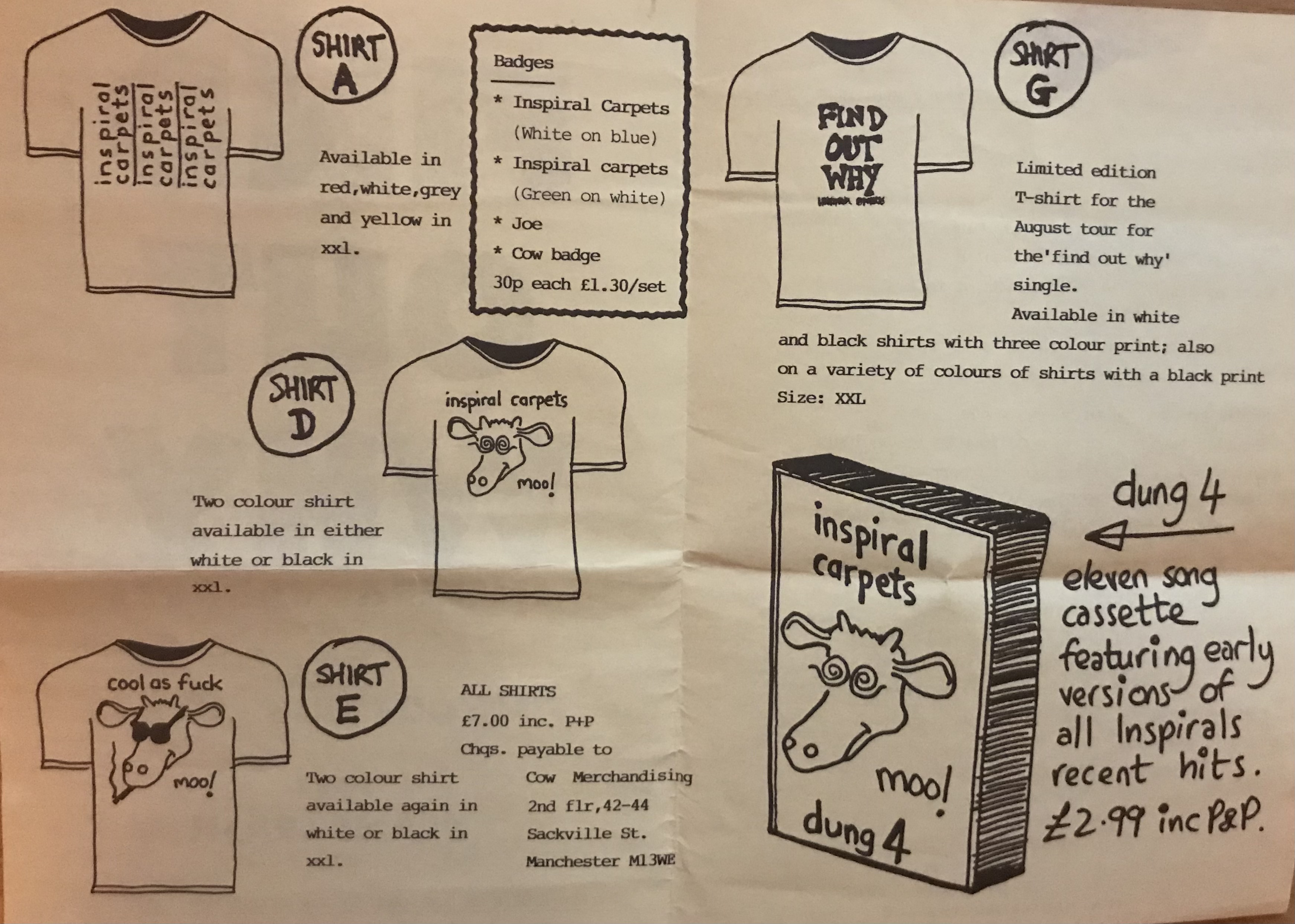
I saw them live a handful of times in those pre-Hingley days and they were always worth catching. And the early records always came with wee folded flyers -‘Moos-letters‘ they were eventually called, with a pudding-bowled nod of the head to the trippin’ cow that would become their logo and record label. You could send away for tapes and t-shirts, proper cottage industry stuff, a product of the fanzine scene of the mid ’80s and a precursor to today’s Bandcamp era. Handily, each Moos-letter charted the band’s rise to success, from Glasgow Tech to Strathclyde University to Barrowlands to the SECC, that Dung 4 cassette steadily rising in price to a giddy £4.49 before being finally unavailable by the time of Moos-letter 5.
Like many of you reading this, I sat with a tape permanently ready to record anything of interest on the John Peel show. Peel loved the Inspiral Carpets. Between 1988 and ’91, they recorded four sessions for his show – that’s the same number as The Smiths in about half the time, although only a mere 20 sessions short of the total set by his beloved Fall.
Not long after seeing Inspiral Carpets open for the Wedding Present, they did their first Peel Session (August ’88) and I sat itchy-fingered by the Grundig music centre, expertly de-pressing the pause button in the exact moment between each track fading and Peel’s warm voice of encouragement announcing the name of the track just played.
“That’s Inspiral Carpets in session tonight with ‘So Far’. Mighty fine stuff indeed. And we’ll be hearing more from them later on. Which I’m rather looking forward to.” I wish, in hindsight, that I’d thought to leave the tape running and capture more of his iconic voice.
Inspiral Carpets – Greek Wedding Song (Trainsurfing EP version)
One particular track on that session stood out. With a title that screamed ‘working title’, Greek Wedding Song is the perfect microcosm of that early Inspirals’ sound; shouty vocals atop that urgent, Teardrop Explodes-ish bassline and fizzing guitars buried deep in a swirl of ’60s-inspired swelling keys that fall somewhere between wasp-in-a-jar stylophone and noodling Ray Manzarek classicism.
In just a minute and a half, the band lays out their punkishly amateur stall, only for the tune to come waltzing back in after the false ending on a ne-ver a – never a frown Golden Brown coda. ‘It’s a bit short for a Peel Session, lads‘, Clint Boon might’ve said beforehand. ‘Let’s stretch it out by going full-on Stranglers for another minute or so.’ Influences worn proudly on sleeve, it’s a cracker.
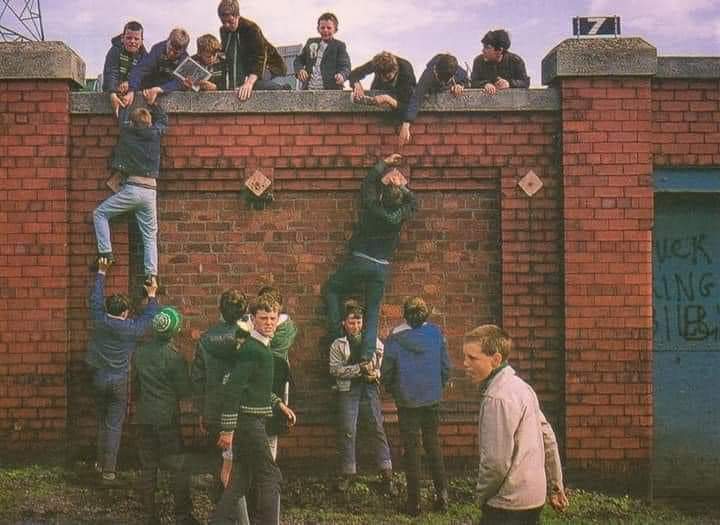
This great picture of young Celtic fans storming the Hampden Park barricades and getting themselves into the big match is a real look back in time, to an era when showpiece games at the national stadium weren’t always ticket-only, when brass neckery and opposable thumbs gave you and your pals just as much right to take your place on the ash and pish-coated terracing as anyone else.
This picture has everything; it’s in colour, so it’s not that old. It comes from an era in football somewhere beyond rollups and rattles and record attendances, from a generation deeply entrenched in brutal tribalism and Rangers Ends and Celtic Ends (check out the wee scribble of casual sectarianism graffiti in the picture), with the EBTs and biscuit tins and the Big Two’s unfounded entitlement that they win everything not yet quite in full view.
The clothes would suggest very late 70s or the early 80s. I vividly remember my mum asking me if I wanted ‘flares or drainpipes‘ when she was ordering my new school trousers from the catalogue. “What are flares?” I asked in all innocence, before, once she’d shown me the picture, I very quickly ensured she ordered drainpipes, and only drainpipes. In an era of 2 Tone and Madness and, yes, Baggy Trousers, if you wanted to avoid merciless slaggings and a lifetime of misery, drainpipes were the only obvious choice.
The wee guy side-on at the front, in his grey Harrington and grown-out suedehead is, I’d imagine, no stranger to the back catalogues of both the Nutty Boys and The Specials. His pal, a dead ringer for a young Roy Aitken as it happens, in the home-knitted Celtic jumper has pulled a proper ‘whityegauntaedaeabootit?‘ sneer on his face, purely for the benefit of the photographer, a gaffer ensuring every one of his troops makes it safely over to the other side. Wee bams, and brilliant with it.
The Hampden terracing was quite the place. For someone small like me, it could be exhilarating and terrifying in equal measure. Glimpses of the pitch, let alone the actual ball, could be few and far between, the abstract and abrupt swearing, the aw ayes and aw naws providing you with the necessary running commentary in lieu of the actual game. “Great ball Souness that’s shite!” is the one I remember the most, remonstrated from the North Stand during a Scotland V Wales qualifier sometime around 1985. The smell of cigarettes and alcohol and piss hung heavy in the nostrils while your feet hung hopelessly in the air. From first whistle to last, the Adidas Kicks would rarely touch the ash. If there was a goal – and in the 80s, when Scotland fielded teams of world beaters there were always goals – there’d be a massive surge; a tidal wave that started from front and back and all sides simultaneously, and you’d be swept along in its soup-stirring free-flow, down ten or more rows before being jarrred swiftly to the right or left or both then back again, like a giant man-made spin cycle that always, always, returned you to where you’d been standing (floating) before the goal had been scored. You might lose your pals temporarily, but everyone’s your pal when Kenny Dalglish has just swerved in Scotland’s third of the night v Spain.
By the mid 80s my pals and I were going to Hampden ourselves. I say ourselves, but the truth was, Irvine Rugby Club ran a minibus to Hampden and, organised by someone our dads knew, we’d get to go to the game on the bus with them. What our parents never knew was that the bus would park somewhere near the Church On The Hill pub, and while all the men nipped in for a quick pint before the game, we’d get all gallus and, visibly growing a couple of inches, swagger the mile or so to Hampden by ourselves, take in the game then swagger back along the shadowy streets of Glasgow’s southside to the bus again. Semi-free small-towners from the Ayrshire sticks, we’d never have had the nerve to loup the wall like those boys in the photo. Let’s not kid anyone on here.
One particular game (v Romania possibly) stood tip-toed on the North Stand is memorable not for the box-to-box penetration happening on the pitch in front of us but for the ball games happening behind. “Stephanie, Stephanie…c’moan, it’s ma turn!” said the guy in the tight Souness perm, moustache ‘n all, as he and his two pals took turns at disappearing down the ash path and behind the stand with a young woman wearing a tartan scarf and a Crombie and quite possibly nothing else.
He shouts, he scores, to paraphrase.
Like those wee boys in the photo at the top, or or those wee blue disabled cars behind the goals, not the sort of thing you’ll see at the football anymore.
Echo and the Bunnymen – Over The Wall (Peel Session 22.5.80)
From a similar time and place, here’s Echo and the Bunnymen‘s Peel Session version of Over The Wall. Del Shannon via The Doors, filtered through era-defining hair and total self-belief. A bit like that Scotland squad of the times…and the wee guys in the picture at the top.
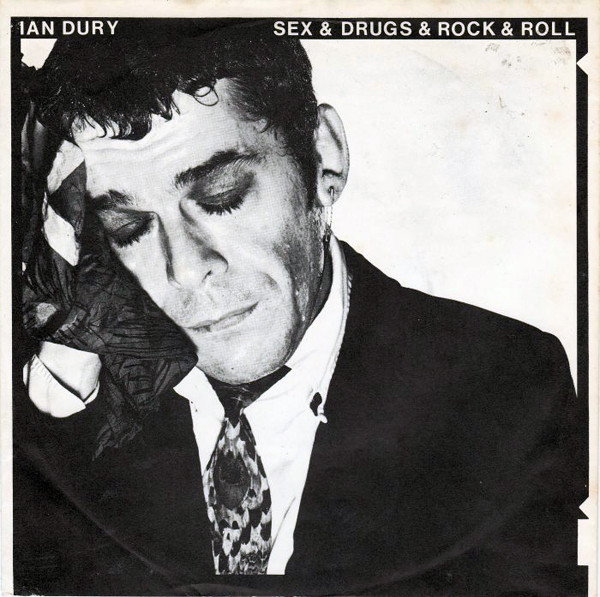
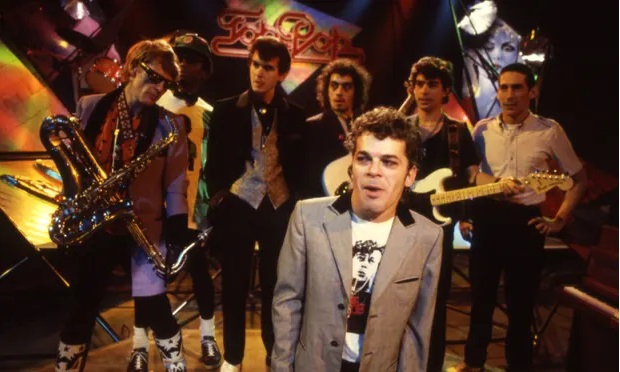
Released in 1977 at the height of Year Zero (or would this be Year1?), Ian Dury‘s Sex & Drugs & Rock & Roll was, suprisingly, not a hit. Given its familiarity, I’d always thought of it as something of a late 70s monster smash, but apparently not. Neither was it an Ian Dury & The Blockheads record. Despite both Chaz Jankel and Norman Watt-Roy playing on it, Dury’s first single was credited to him and him alone.
Ian Dury – Sex & Drugs 7 Rock & Roll (7″ version)
The low sales can be attributed to a couple of factors: it was wrongly thought of as a celebration of everything that punk was set on destroying, as bloated and offensive perhaps as anything by The Eagles or Rod Stewart. It just wasn’t cool to be seen buying a copy. Due to its title, the record found itself on the BBC’s banned list too and, unlike the unintended consequence of appearing on such state-sponsored naughty lists (see Relax, Je t’aime et al), this time round, the banning actually worked, snuffing out any possibility of Dury having a hit single. With less than 20,000 sales and next to no airplay, it was swiftly deleted.
Sex & Drugs & Rock & Roll opens up side two of my charity shop-rescued, ‘previously loved’ copy of New Boots And Panties. Not on the original version (Dury had a strict ‘no singles on the album’ policy), but all future pressings of the album contained the non-hit following the Bockhead’s chart success with What A Waste and Hit Me With Your Rhythm Stick. And just as well.
It’s a great tune.
The Peel Session take from a couple of years later might be even better…
Ian Dury & The Blockheads –Sex & Drugs 7 Rock & Roll (Peel Session, 12.12.79)
There’s a tin pot rattle of percussion and we’re off, all superfast snakehip slink guitar and a riff that’s slightly different, slightly further up the strings or frets or whatever than the single version you already know and love.
Coming a couple of years after its release, the Peel version finds the band dextrous to the point of muso, stretching out beyond the tight-trousered confines of their original take, because, well, just because they can.
Bopping along for a full minute longer than the original version, there are fruity keys on the offbeat, phased and flanged, thick and syrupy guitar in the bridge and a chittering, chattering guitar in the verse, clattering away like the false teeth on a couple of old chimney-smoking fishwives on the top deck of the number 37 up Kilburn High Road, surely an unintentional influence on those wee clang-a-langs that punctuate the singing in the verses of Orange Juice’s Rip It Up.
Then there’s the Hammond solo, a wonderful warm and cosy sound that predates Mick Talbot’s role in the Style Council by a good 36 months. Lovely stuff, all in.
It’s also a clear influence on the Merseyside Magpie himself. Lee Mavers cocked one ear at that riff and that clanging percussion and thought, ‘I’m ‘avin’ that.’ So he did.
Tha La’s – Come in Come Out
And talking of Liverpool…
The Blockheads were great, great players. When Trevor Horn was constructing Relax and becoming increasingly exasperated at the technical limitations of Frankie Goes To Hollywood, he roped in The Blockheads to fix Frankie’s botched job. Not for the first time in history did a band barely play on their big hit record. I’m fairly certain you knew that already though.






 Plain Or Pan