Gone but not forgotten, Live!

Gabba Gold

Wunchewfreefo’! I listened to my 38 year old copy of RamonesIt’s Alive today and it reminded me just how much of a force the live Ramones were. From the first wunchewfreefo’! onwards, they blast forth from the stage a tidal wave of lightning-quick chord changes and precision drum breaks and concrete slabs of bass, the strange and unique voice of Joey – kinda strangled in some parts, grizzled in others, Queens-heavy accent ever-present – riding the musical surf and hanging on to its leather-jacketed coattails for dear life. To face Ramones in full flight was akin to standing in front of the biggest, loudest hairdryer in existence and letting it blast you full on. It’s Alive captures this over four sides of loud-cut vinyl that should be required listening at least once a year.

Wunchewfreefo’! Recorded in London’s Rainbow Theatre as 1977 rolled into 1978 (with crowd noise flown in from the Glasgow Apollo show 12 days earlier) it captures the group at a very early peak. Still just a band and not yet a brand, It’s Alive gathers the songs – all of them, I think…every last one – from their opening trilogy of albums (Ramones, Leave Home, Rocket To Russia) and adds a handful of Ramonesified ’60s radio standards to take the set closer to the hour and a half mark they were expected to play.

Wunchewfreefo’! Punk’s strike quick before anyone notices attitude saw to it that Ramones would release their first three records in a heady 20 month spell between April ’76 and November ’77. That’s a strike rate of one album every 27 weeks…and every one a greatly influential record at that. By the time they were touring the UK in December ’77, Ramones knew those songs better than they knew the backstreets of the Bowery and had honed a live set that was loud and fast, breathless and relentless, yet as choreographed – in hair and costume as much as movement – as anything Legs ‘n Co might’ve put together for Top of the Pops.

Wunchewfreefo’! Johnny and Dee Dee step forward in the verse, right foot first. Step back in the chorus, left foot first. Crossover here. Head-down boogie there. And they never miss a beat or drop a note or fluff it up. Ah, they say, but that’s cos what they’re playing is easy. Simple. Dumb. Dumb songs with dumb chords and dumb delivery. Anyone can do that.

Wunchewfreefo’! No they can’t. It’s hard being dumb in music, trust me. If you’ve ever played in bands you’ll know what I mean. Even the worst of bands can’t sound dumb. There’s always one flash Harry in the group who wants to be heard that wee bit longer, that wee bit louder than the others. Spoiler alert: it’s usually the guitar player. Any guitarist knows their way round a couple of barre chords, but no guitarist is happy churning out barre chords on stage for half an hour. Even Bonehead felt the need to fling in a teeny tiny wee widdly bit somewhere, and he got nosebleeds whenever he ventured beyond the bottom three strings. Ramones were genius. Bass plays this part, guitar plays the same. The exact same. Disciplined and regimented, they come at you like a denim and leather tank. Brutal and unforgiving. For every song. It’s Alive is the perfect distillation of all that was great about them.

RamonesSurfin’ Bird

Weeeelll! Ev’rybudyzHurdAbatThaBurd’! I’m a total sucker for Ramones’ take on The Trashmen’s Surfin’ Bird. A bona fide garage band classic, Ramones take the bucket punk of the original and hotwire it with a blowtorch scorch, a pummelling A chord hammered relentlessly to the face of the listener with nary a change in the song’s first minute. Thunka-thunka-thunka-thunka-thunka-thunka-thunka-thunka. Ba-ba-bird, bird iz tha wurd, ba-ba-bird, bird iz tha wurd. Over and over and over and over. Until the breakdown.

Sur-fin-baaaard! A ba-ba-ba-ba-ba-ba-ba-ba-ba-ba...A mam-mam, ba-ba…mam-a-mam.

Terrifically goofy stuff.

Wunchewfreefo’! Now do yourself a favour and block off half an hour of your time to watch the surviving footage of the Rainbow gig. As much a social history document as a film of a gig, look out for parka-wearing schoolboys in the front row, balding proggers in cheesecloth and beards and clenched-fist pumping bucket-hat-wearing pogoers…all youth tribes present and correct and getting off on the uncontrollable electricity flying from the stage. Not many girls, you’ll note.

Get This!, Live!

Monkey Business

Imagine the music. Skittering, pistol shot Axelrod drum breaks. Staccato Fender bass. Thelonious Monk piano trills. Elegant woodwind and sweeping strings that swoop to an unresolved Bacharach chord and hang motionless in expectant dead air.

Now picture a scene sound-tracked by the music above. A private jet at high altitude. Only two passengers and a pilot. One of the passengers is greying at the temples. His sandpaper stubble is silvery against his Mediterranean complexion. He has a laptop open and is logged in to an official-looking government intranet. His much younger companion leans in to take a closer look at the data on the screen, perhaps even to afford him a peck on the cheek. In one swift move – and as the music moves up a subtle gear – she injects him with a poison, sees that he’s immediately dead and copies the laptop’s information onto a memory stick. Before the pilot knows what’s happened, she’s kicked open the jet’s emergency exit and – as that Bacharach chord hovers around the emptiness – jumped, her parachute billowing out high above a sparkling ocean and a waiting yacht far below. As a pair of tripleted musical stabs jar the senses, the camera cuts back to the inside of the jet, first to the passenger, a trickle of blood coursing thinly from his mouth and around a dimple on his square jaw, then to the pilot caught in the terror of knowing he has a dead VIP and no door on the side of his jet.

The music levels out and the singing begins.

Don’t get emotional, that ain’t like you…”

The camera is back on the female assassin, now on board the yacht, shaking her hair free and embracing another man – similar age, similar ethnic origin to the man she’s just murdered – as the jet lazily spirals out of the background sky and straight into the ocean, a discarded silken parachute the only sign that anything might be amiss.

Back in the mid ’90s, at the height of the easy listening fad, any group who could name you two Andy Williams’ numbers was busy lobbying the Bond franchise in the hope that they’d be asked to provide the next Bond theme. Pulp, St Etienne and Blur were just three of the acts of the time who embraced strings, clever arrangements and space for the brass to breathe and recorded Bond-esque songs, clearly with an eye on the prize. The tracks though would ultimately end up on b-sides, the none-less-Bondish Sheryl Crow coming up on the outside as the rank outsider to take the spoils. Now, I don’t know if someone has tipped Arctic Monkeys the nod that the Bond people might be looking for submissions, but you’ve got to think that Alex Turner and co had Bond (and Bowie – a lot of Bowie) on their collective minds when Arctic Monkeys recorded There’d Better Be A Mirrorball and released it as the, eh, trailer for their current album The Car.

Here, listen again…

Arctic MonkeysThere’d Better Be A Mirrorball

You’re getting cynical and that won’t do…

Arctic Monkeys took a whole load of flack over the weekend for having the nerve to fill most of their Glastonbury headline set with music from their two most recent records, records oozing with melodies that spool slowly outwards from the backing music as freely as the loose threads on the designer suits they’ve taken to wearing nowadays. Records jam-packed with AOR sophistication and adult arrangements, nuance and nods to grown-up influence: Bowie’s Station To Station, Serge Gainsbourg, Scott Walker, the aforementioned David Axelrod. Records that will still provide fresh listening experience a year, three years, ten years from now. But records nonetheless that have outgrown the thrashed out rock riffs and knee-trembling rhythms married to rapid-fire observational lyrics of the band of yore.

Brilliant as those records and that band was, Arctic Monkeys have gone and grown up, and many of their fans – the casual fans, you’d have to say, the ones who like the debut album and a couple of singles and were looking forward to seeing them for the first time – just didn’t get it. And nor did some of the ‘real music fans’ online who only the day previously had been applauding brave Peter Gabriel for filling half of his current live set with brand new material. You can debate the ‘correct’ way to headline Glastonbury but I for one am delighted that Arctic Monkeys have chosen to self-indulgently plough their own rich furrow with nary a thought for their doubters. Where to next?

Gone but not forgotten, Live!

Fab Fortress

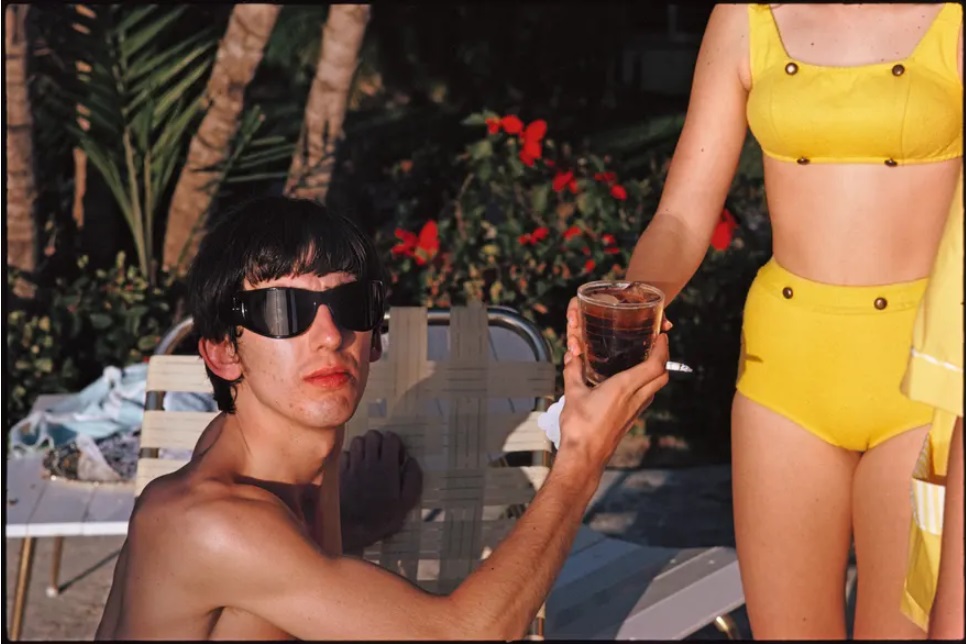
This photo of George Harrison appeared last week, initiating from Paul McCartney’s private collection and whizzed onto the internet, never to be private again.

It comes from an unseen collection of Beatles photographs, lost and found and gathered together in a new book – and later in the year, to be an exhibition at the National Portrait Gallery – all taken by McCartney over a 3 month period as Beatlemania took hold in Liverpool, London, Paris and during their life-changing US tour in ‘64; the limousine chases, the Ed Sullivan Show, the girls outside the hotels, all of that.

McCartney calls it a Beatles’-eye view of the world and it certainly places the viewer in the epicentre of what must’ve been a fucking great time for four virile and desired young men with the entire planet orbiting around them.

The picture of George was taken in the Miami sunshine. The use of colour film is no mistake, McCartney wanting to impress just how welcome the Florida sun was on the back of the harsh and monochrome New York winter. The composition too is deliberate, George’s female companion framed from the neck down, perhaps to protect her identity, but more to shine the spotlight on George.

Even in his shades and bare chest and surrounded by palm trees, George is still very much a Beatle. He might’ve shorn the Douglas Milling Beatle suit but the hair and enigmatic expression remains. Being a Beatle is a full time job, it says, even when mysterious young bikini-wearing women are bringing you generous measures of scotch and cola as you smoke yourself silly.

Is it any surprise that Paul would later write about flying in from Miami Beach, BOAC and not getting to bed last night? In Paul’s photo, George has a slightly self-aware ‘I can’t believe I’m getting away with this’ look on his young face. I bet he quickly got used to it.

The shot of the cameramen in Central Park is interesting, McCartney the hunted turning hunter to capture two of the press guys who’ve chased him and his three pals around New York City non-stop since they landed.

I love poring over period-defining photos of New York. Since being there last October, I’ve had a bit of a thing for bleached out and grainy Polaroids of Greenwich and Brooklyn in the ‘70s and ‘80s. From the buildings in the background, I can tell that the photo of the press above is taken next to the Central Park pond at the East 59th Street entrance. It’s a famous photo shoot stop-off location. Both Dylan and Mick Jagger have had their pictures taken here. Coincidentally too, it’s not far from the Dakota Building where Lennon would live out his final years.

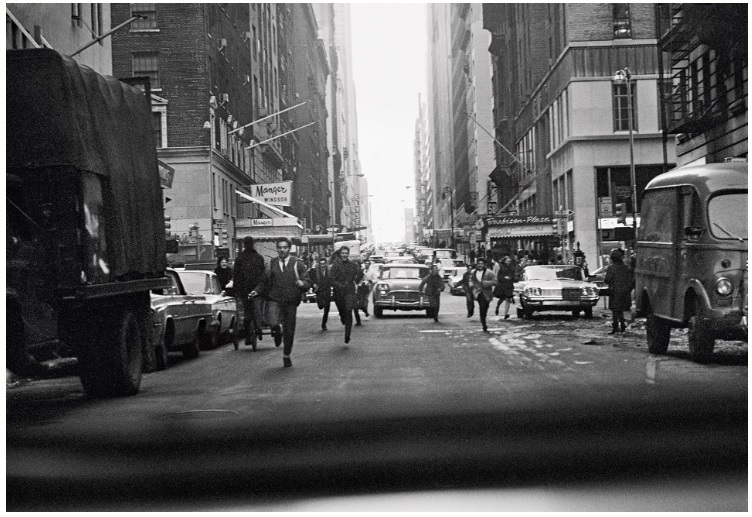
I’ve found myself somewhat obsessed over the photo taken out of the back window of The Beatles’ limousine, a photo snapped from literally inside the Eye of the Storm, as the book is called. It shows the Beatles chased by a handful of determined fans as they speed away from the Plaza Hotel on New York’s Fifty-Eight Street, cutting across 6th Avenue, just a stone’s throw from that Central Park photo shoot.

Chased by winter coat-wearing youngsters, all mile-wide smiles and mad intent, The Beatles zip away, up a slight incline and never to be glimpsed in the flesh by these admirers again. Looking back over his shoulder at the scene The Beatles have somehow found themselves involved in, McCartney clicks the shutter on his camera. A great photo. The wide-grilled and chromed cars are a portal to a time gone by, the purpose of the buildings they drive past now different – trust me, I’ve checked. ‘I’ve been there!’ I think, and straight away I’m Google-mapping the exact location. ‘I wonder if I’ve stepped on the exact spot where that Beatles car was?’ Anything to align you in anyway at all with the Fabs, y’know? Turns out I haven’t. Next time I’m in New York I must try and remedy that.

The BeatlesAll My Loving (Ed Sullivan Show, 9th Feb 1964)

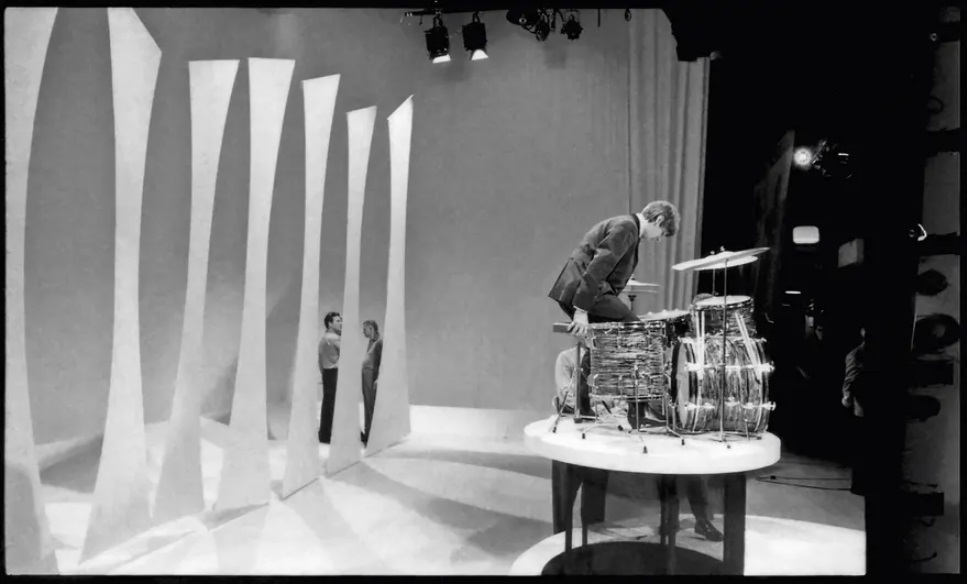
Ringo sets up on the Ed Sullivan show, Feb 9th 1964. Photo by Paul.

McCartney counts us in with a “One, Two, Three, Four, Five!” and off we go, 73 million Americans hearing – seeing! – The Beatles for the first time. Despite the hysterical screams anytime the three front Beatles step up to sing in close harmony, there’s a spectacular melding of voices around the 1.16 mark, just after rockin’ George’s twanging guitar break. Two voices (Paul and George), one golden moment, the protagonists not distracted in the slightest by the madness unfolding around them.

Buy the book, support the artist.

Cover Versions, Live!

Two Johns

It’s required listening, at least once a year, to submerge yourself in all things Nuggets. The Lenny Kaye-curated double album that became a box set and a franchise (and ended up an ever-decreasing dilution of the original) should be mandatory in every record collection. Kaye’s crate digging (to coin a now-cliched phrase) ensured the low hits and no hits of the day were immortalised alongside their rattlin’, rollin’, fuzz-friendly peers forever.

Without Nuggets, most of us would never have heard the giddy rush of The Knickerbockers‘ totally Beatles Lies or Mouse & The Traps thin wild Dylanisms, or fallen off their chairs at the sheer cheek of David Bowie nicking the Shadows Of Knight‘s Oh Yeah for the glam slam of ‘his own’ Jean Genie. Nuggets is jam packed full of, eh, nuggets; enough riffs and beats and organ motifs to keep most garage-influenced bands in material for the entirety of their career.

The PremiersFarmer John

Farmer John by The Premiers is classic Nuggets. It’s built around a simple lyric and three stomping chords that fall somewhere between Louie Louie and Wayne Fontana’s Game Of Love; a ramalama of clanging guitars, tub thumping drums and double-time handclaps. The live-in-the-studio feel, with its ad-libbed count-in and hoots ‘n hollers ‘n screams ‘n shouts between the lines has the whole thing sounding like some sorority house frat boy party.

Has anybody seen Kosher Pickle Harry?” asks the host. “Tell him that Herbert is looking for him.” And the band fall in and hit their stride. You can imagine them in matching cardigans and side sheds, Mighty White mile-wide smiles, instruments all held up at the same 30 degree angle, a crowd of bobbysoxers in front of them jerking and jiving to the head-bobbing teenbeat being played out.

Farmer John,’ they sing. ‘I’m in love with your daughter.’

Woah-woh,’ goes the backing, as innocent and wholesome and American as apple pie.

When Neil Young got a hold of the song, he ground its gears until it was slow and slothlike, a sludgefest played by old men with heavy guitars and heavier worldly problems. The antithesis of The Premiers’ version, Neil Young’s plays up somewhat to his alliteratively descriptive Godfather Of Grunge moniker and sucks all the joy from it in the process. In fact, Neil’s version is mildly threatening.

Neil Young & Crazy HorseFarmer John

Chug-thump-chang-clump, wham-djam-flam-flump, jack-hammer-smack-bammer, thwack-crack-flack-nyack, whine-grind-whine-grind, woah-woh.

I love the way she wiggles when she walks,” smirks old Shakey, done up in his best clean dungarees, his crosseyed gang of knuckle-trailing village idiots lurking goofily behind him. Uh-hur-hur-hur.

If I was Farmer John and Neil and his plaid-bedecked backing band showed up telling me that they were in love with my daughter, I’d be reaching for the ol’ double barrel and my best ‘You best git goin’ mister, we don’t want no trouble ’round here‘ line. At least The Premiers, for all their inferred frat boy up-to-no-goodness had the good grace to look Mr Farmer in the eye and give him the impression that she’d be in safe hands.

It’s no concidence that you could chop an axe in time to that slow ‘n steady Crazy Horse rhythm. You might be chopping logs. Or firewood. Or Farmer John’s daughter’s head, her champagne eyes finally giving up their sparkle just as the turned up to ten Les Pauls give up their howling feedback to the night.


Get This!, Live!, New! Now!

CK Maxx

“So I was playing at a party in Rod Stewart’s house and Rod is up singing with us. The band is doing a rockin’ version of Ooh La La...Kenney Jones on drums…the whole shebang…the place is going crazy. We’re in this massive living area…it’s more like a ballroom, really…all these folk are there…Gordon Strachan is playing tambourine…and suddenly these doors at the back of the room burst open and this mass of crow-black hair runs the length of the room, leaps onto stage, jumps on Rod’s back…and it’s Ronnie Wood! Fashionably late as ever. He starts to join in, so pecking order dictates I hand him my white Telecaster and he begins to play along. Problem is, Rod sings Ooh La La in the key of B, but Ronnie assumes it’s being played in the usual key of D…and my guitar is blaring, right…and Ronnie is shouting above the din, “Wot fackin’ key is this in?!?” He keeps playing…and because my Tele is the lead instrument, it’s full on red hot, right, so no-one can hear Ronnie, but he keeps on shouting, “The key! Wot fackin’ key are we playing in?!?” What a mess! I’ve got a video of it and it’s very funny. Eventually, I step back onto the stage and casually press my tuner pedal while Ronnie is distracted, and I mute my – his – guitar – and Ronnie. He doesn’t seem to notice though, he’s pulling shapes and jumping around and having the time of his life playing this song silently in the wrong key. Wee Gordon Strachan is still banging away on the tambourine, oblivious to it all. And I think to myself. as David Byrne might say, how did I get here?”

Joe Gallagher is one of our best-kept musical secrets, but chances are you’ve unwittingly seen or heard him at work. He’s worked with The Magic Numbers and Deacon Blue, been a guitar roadie for the Grim Northern Social and the Go! Team, supported The Proclaimers on an arena tour, supported and written with Turin Brakes and Martha Wainwright – “people like that” he says, inferring there are plenty others – and has been a reliable guitar slinger for hire in any number of ‘solo’ acts’ live shows (see above for proof). He’s played gigs and recorded music under a handful of names, notably Toy Tin Soldier, where his album ‘Yield‘ nestled inside the iTunes Top 10. Currently, in the post-lockdown musical sphere, he goes by the pseudonym of Concrete Kid, a project put together by Joe with help from Turn Brakes’ Olly Knights.

Concrete Kid, HAC Irvine

In Concrete Kid, Joe has created a one-man stage act that recalls Beck at his least hip hop and most melancholy. Think Sea Change for reference. His bassy and richly-ringing acoustic guitars interplay with processed beats and electronic flourishes. Joe’s voice is killer; whispered and close-miked, crystal-clear but with a wee bit of grit at the back, coming across like a cleaned-up Mark Lanegan or a Lanarkshire Lee Hazlewood. Not for nothing does he brand himself The Psychedelic Cowboy.

Concrete KidThe Colour Green

Concrete Kid, HAC Irvine by Kerrin Carr Photography

Most importantly, he has the songs. Only a handful at present, but great tunes that can stand with the best of them. Whether in full-on studio production or played as stripped-back acoustic torch songs, they have the melodies, the craft and the strength to take Joe places in his own right.

Forthcoming single Summer Pearl should hopefully find its way onto the playlists of the more discerning radio shows – yr Gideon Coes and Billy Sloans and Jim Gellatlys and what have you.

Concrete KidSummer Pearl

Concrete Kid, HAC Irvine by Kerrin Carr Photography

I’ve seen Joe/Concrete Kid live a couple of times in the past year and already he has a handful of serious ear worms in his set. There’s a song called Sail Away, all strummed melancholy and skyscraping chorus, that would sound perfect wafting across the fields as the Glastonbury afternoon fizzles its way towards twilight.

I like the way Joe eases into his songs; there’s no knock-kneed rush to get through the chord changes or speed through the chorus. He relaxes both you and he into his world. His phrasing is cool and easy to the point of languid, curling its way around the chord changes like blue tendrils of Gitanes knitting their way through Simone Signoret’s fingers. Joe is in music for the long run, an ethos reflected in the time it takes for his songs to unravel before finally hitting you,

A portent of things to come, the so-far under wraps Colour Green EP, with its dynamic mix of music and melody suggests that Concrete Kid is a name worth looking out for in the coming months. You can thank me come the end of the year when, by then, he may well be your new favourite artist.

You’ll find Concrete Kid on Soundcloud and Spotify and all the usual places that cloth-eared muppets like Chris Moyles never think to visit to go…


Keep an eye out on who the support act is at the next gig you go to. If it’s Concrete Kid, get there in time to catch him.

Live!

And The Beat Goes On (And On)

At the start of the ‘90s, Postcard Records put out The Heather’s On Fire, an essential collection of early Orange Juice material, much of which was presented in a form far more ragged than the better-known versions. Two words on the rear of the sleeve are key markers.

Buffalo Underground’ they say, stamped unobtrusively in the corner, but a pair of words, a phrase, which will have even the most amateur of sleuths making sense of the reference.

Those post-punk bands of the late ‘70s and early ‘80s – the Postcard, Pop Aural and Fast Product groups particularly, hopped up on pure self belief following the barrier-breaking Clash shows at the Glasgow Apollo and Edinburgh Playhouse – looked far beyond the obvious draw of mop-topped Liverpool and drew their entire influence (style and song) from America. No Elvis, Beatles or the Rolling Stones in 1977, remember?

Buffalo Springfield encouraged, demanded even, ringing guitar lines played on fat, semi acoustic guitars, held chest high by musicians in checked shirts, fringed suede and worn-in denim, boot-lace ties ‘n all. The young Roddy Frame took keen notes.

The Velvet Underground offered up chic style, unrivalled attitude and an innocence masked as aloofness. Take three chords, fall in together and keep going without stopping until the song is over. Look like you mean it and folk’ll believe you. There’s the ethos of Postcard in a nutshell. No pun intended.

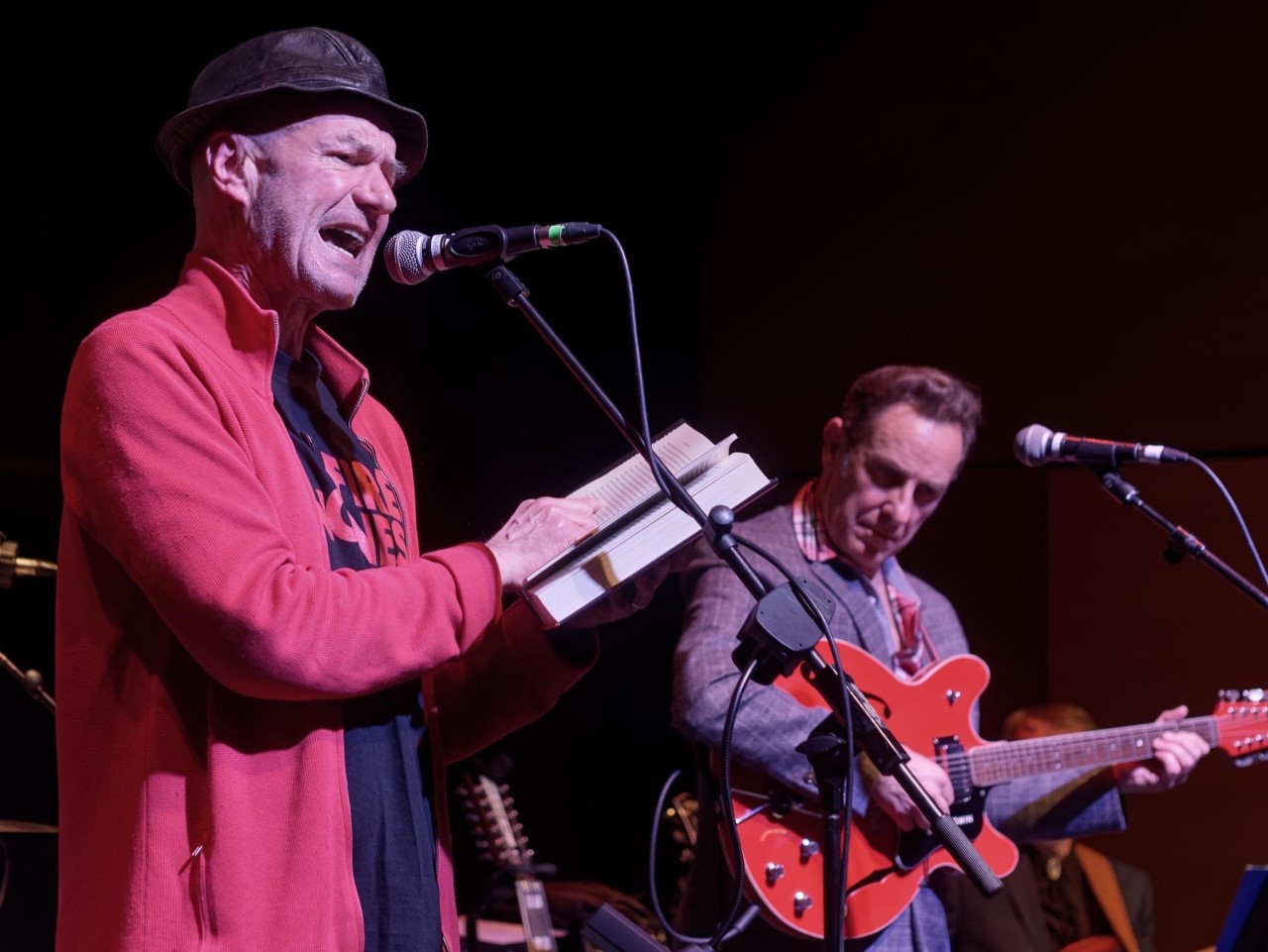
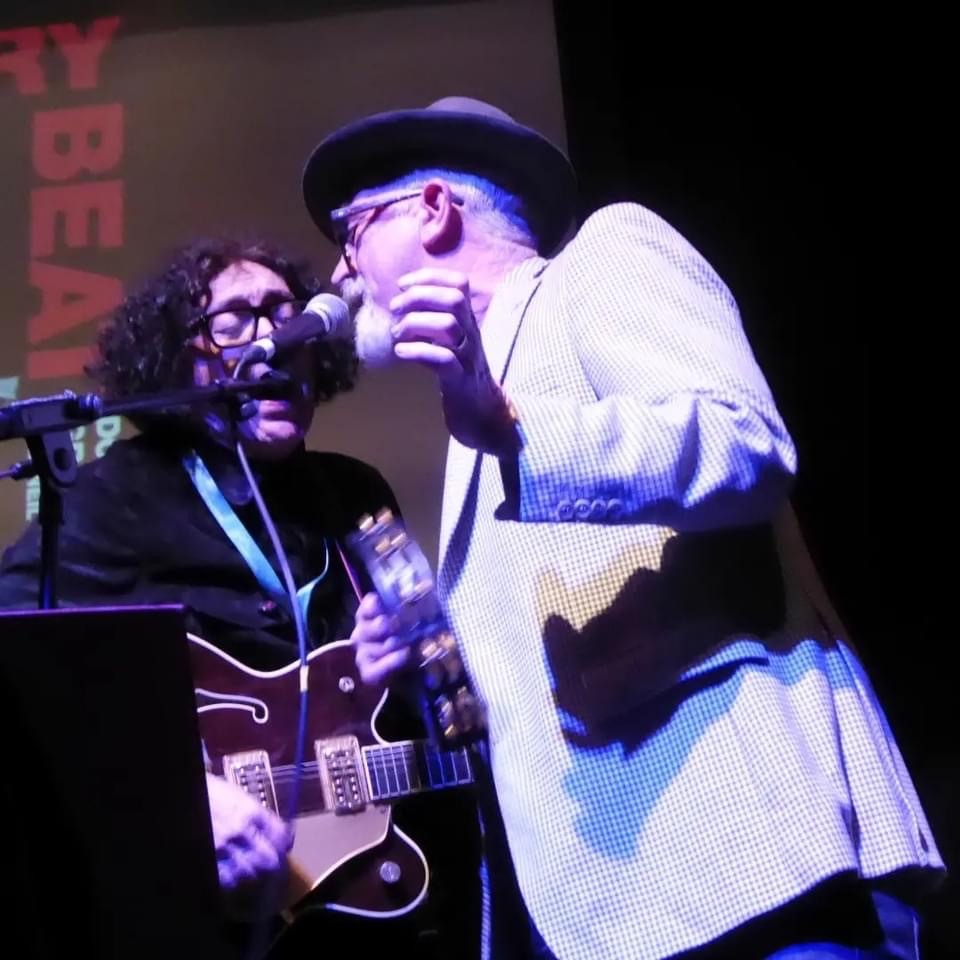
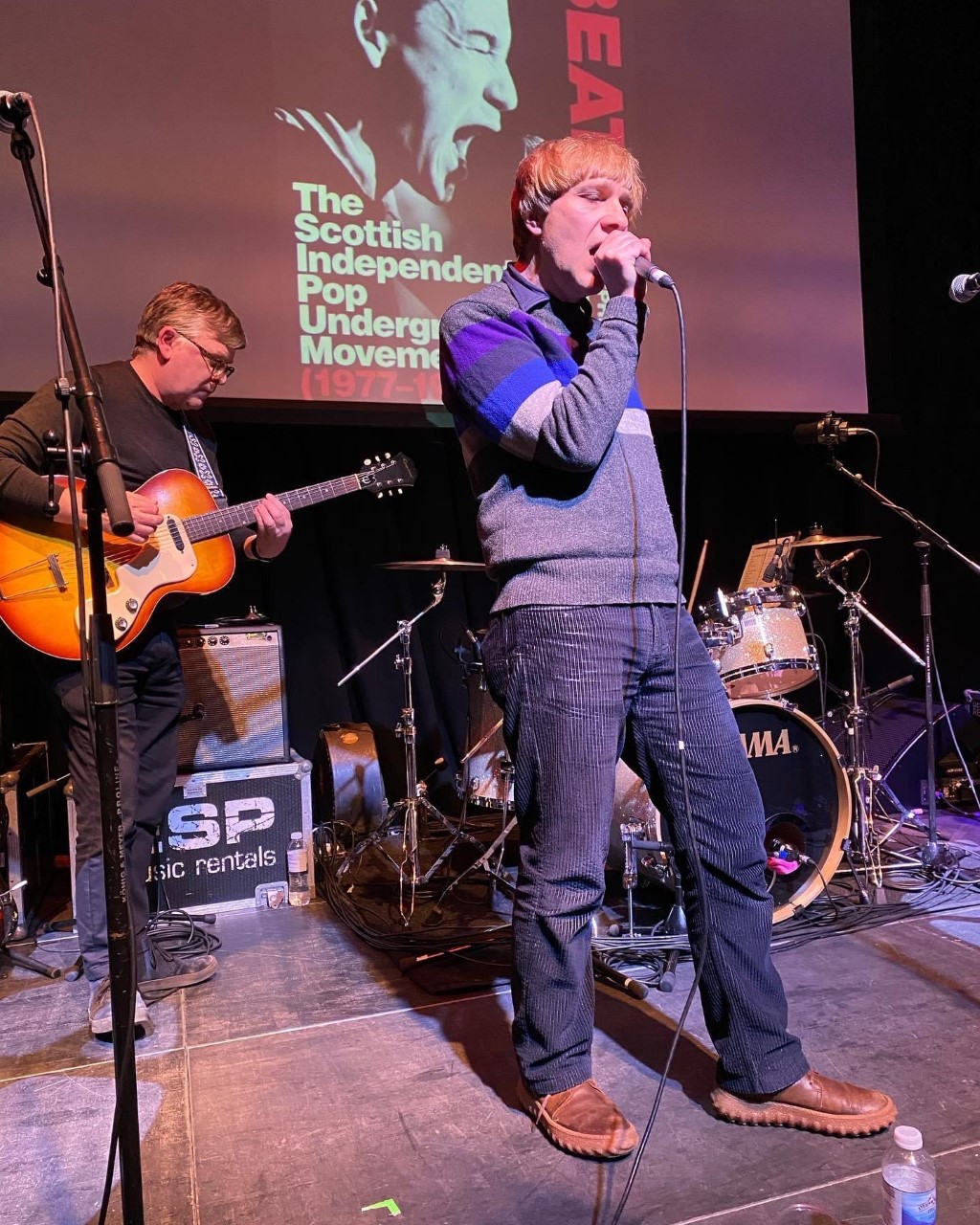
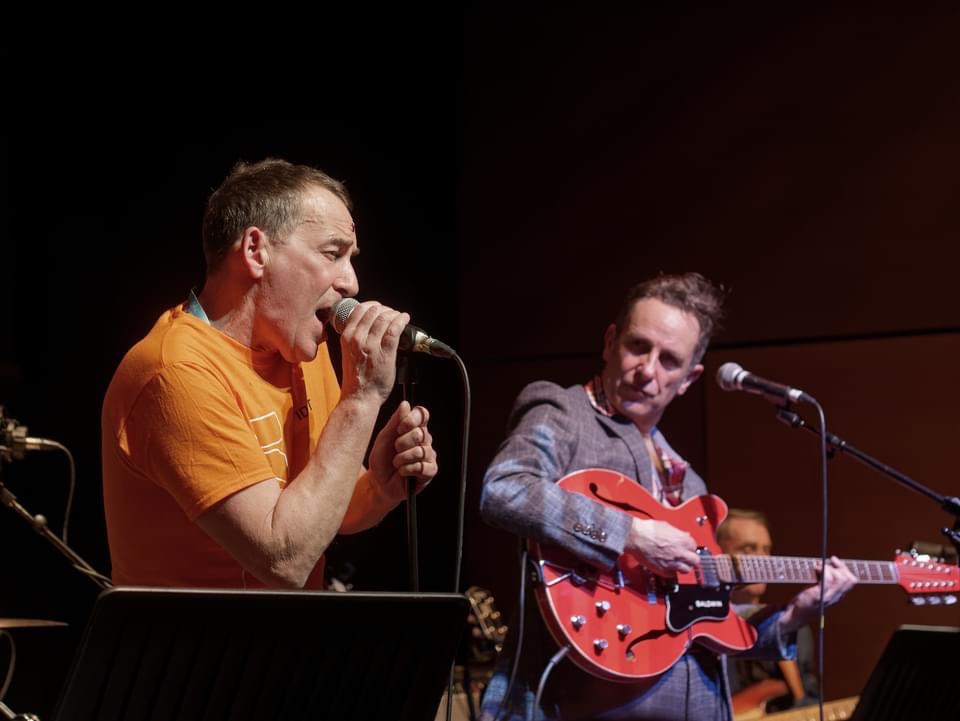
The entirety of the Scottish post-punk music scene was in thrall to the Velvet Underground especially, and most of the acts – Orange Juice and Aztec Camera, obviously (“it’s ob-vious”), but also Scars, The Fire Engines, Josef K, James King and The Lone Wolves, even Bourgie Bourgie and Jazzateers, achieved just about their 15 mins of fame. This became totally apparent at Saturday night’s Hungry Beat event at the CCA in Glasgow, a mammoth 5 hour-long music ‘n chat extravaganza, put together by the people responsible for the era-defining book of the same name.

The main driver is Douglas MacIntyre, guitar totin’ scenester, label boss (Creeping Bent) and owner of the hippest address book in the land. Draw one of those Pete Frame family trees with his name at the centre and you’ll finish with a messy and jigsawed who’s who of 20th Century Scot-pop.

James T Kirk. Malcom Ross. Davy Henderson. Campbell Owens. Bobby Bluebell. Mick Slaven. Ken McCluskey. Tam Dean Burn. James King. Monica Queen. Norman Blake. Grahame Skinner. Katy Lironi and others all branch out in interconnected ways. Some of the musicians shared groups or rehearsal rooms or labels or bills, and all of them did exactly this at the weekend when they joined forces for two 70+ minute sets that played out like one gigantic, rolling encore, The Last Waltz for the children of the Velvets, each section registering one notch higher on the thrill-o-meter than the previous. In the future, suggested Warhol, everyone will be famous for 15 minutes. For the bands and songs who have stayed under the radar all these years, Saturday night was their night.

This slideshow requires JavaScript.

Douglas, playing mainly cool, clean 12 string jangle on a vintage Burns (of course) guitar led a band made up of Mick Slaven and/or Malcolm Ross on sparkling, searing lead, Campbell Owens on bass and Stuart Kerr on drums. With each guest vocalist or guitarist (or both), the big hitters and back catalogues of all those wonky, individual and inventive groups of yore were played out to a wholly appreciative (and minor celeb-studded) crowd.

Was that Eddi Reader pogoing down the front as the assembled group jerked their way through a rubberised take on Gang Of Four’s Damaged Goods? Yes. Yes, it was. As backing vocalist on Gang Of Four’s live shows, perhaps she should’ve been up there with them. Not that there was much space for pogoing on the CCA’s busy stage. “There wisane enough women up there,” she complained later.

Monica Queen is a highlight, stomping and prowling as she takes control of Altered Images’ Dead Popstars. A lilting, countryish run through of Strawberry Switchblade’s Trees And Flowers segues without ceremony into a rich ‘n twanging version of, yes!, the aforementioned Velvet Underground’s Sunday Morning. It’s a beauty.

Ken McCluskey and Bobby Bluebell play their own Everybody’s Somebody’s Fool, the song they created after Alan Horne at Postcard challenged them to write a song as good as The Monkees’ Last Train To Clarksville.

Fay Fife owns the stage for two sharp blasts of Rezillos, with the frantic, hundred mile an hour racket of Can’t Stand My Baby just pipping Top Of The Pops to the post.

James King pulls low a pair of VU Ray-Bans and delivers a marvellous, Byrdsy Fly Away. High on jangle, reverb and twang, it’s one of the era’s great forgotten singles. Sensational stuff. 

Norman Blake joins on guitar as the forever hangdog Stephen Pastel turns back the years with a couple of Pastels songs, a chugging, disciplined, and Krauty Baby Honey raising an already high bar. “Alan Horne suggested we be a synth pop group,” says a smiling Pastel to a tickled crowd.

Norman will be back later, unusually guitarless, to take vocals on two deep and emotional Josef K tracks. Downbeat but intense, Norman provides a real show stealer.

But back to the big hitters. Roddy’s Oblivious flies past in a blur of Malcom Ross fretboard wizardry, the lightning quick runs of the original flying tightly from his frets. Orange Juice’s Felicity rattles past in a giddy rush of whoa-whoas and well-rehearsed endings. Rip It Up, played by both Malcolm Ross and James T Kirk is slinky and chrome, its Chic-isms causing heads to bob and hips to sway.

Fire Engines’ Candyskin produces more shambling Velvetisms before Davy Henderson himself joins proceedings for a giddy You’ve Got The Power and a superstar karaoke blast of Iggy/Bowie’s Success. “Here comes success!” the group shout/sing in unison, a marker for how the evening has gone.

The ‘encore’ – no one has left the stage but we’re well over time and many an anxious ticket holder has begun the quick march for the last train home – is, as Bobby Bluebell describes by way of introduction, ‘the best single ever written and recorded in Scotland.’

Orange JuiceBlue Boy

A rattling, galloping run through of Blue Boy follows. Orange Juice’s original perfectly straddles that sound of the ‘Buffalo Underground’- clean and jangling and melodic, with a needles-in-the-red, cheese-grater guitar solo to sharpen the senses. Yer actual James T Kirk is on hand to kick out the jams, coaxing the ear-piercing main offender from his fingers – the kind of solo that electrifies the fillings in your teeth and leaves you wanting more, more, more. 


*My photos were rubbish, so most photos here are ‘borrowed’ from the social media feeds of Lauren Bacall, Iain Wilson, Andrew Thomas, Trevor Pake and Vivienne Wilson. I hope you don’t mind, and thanks in advance 

Live!

Love In

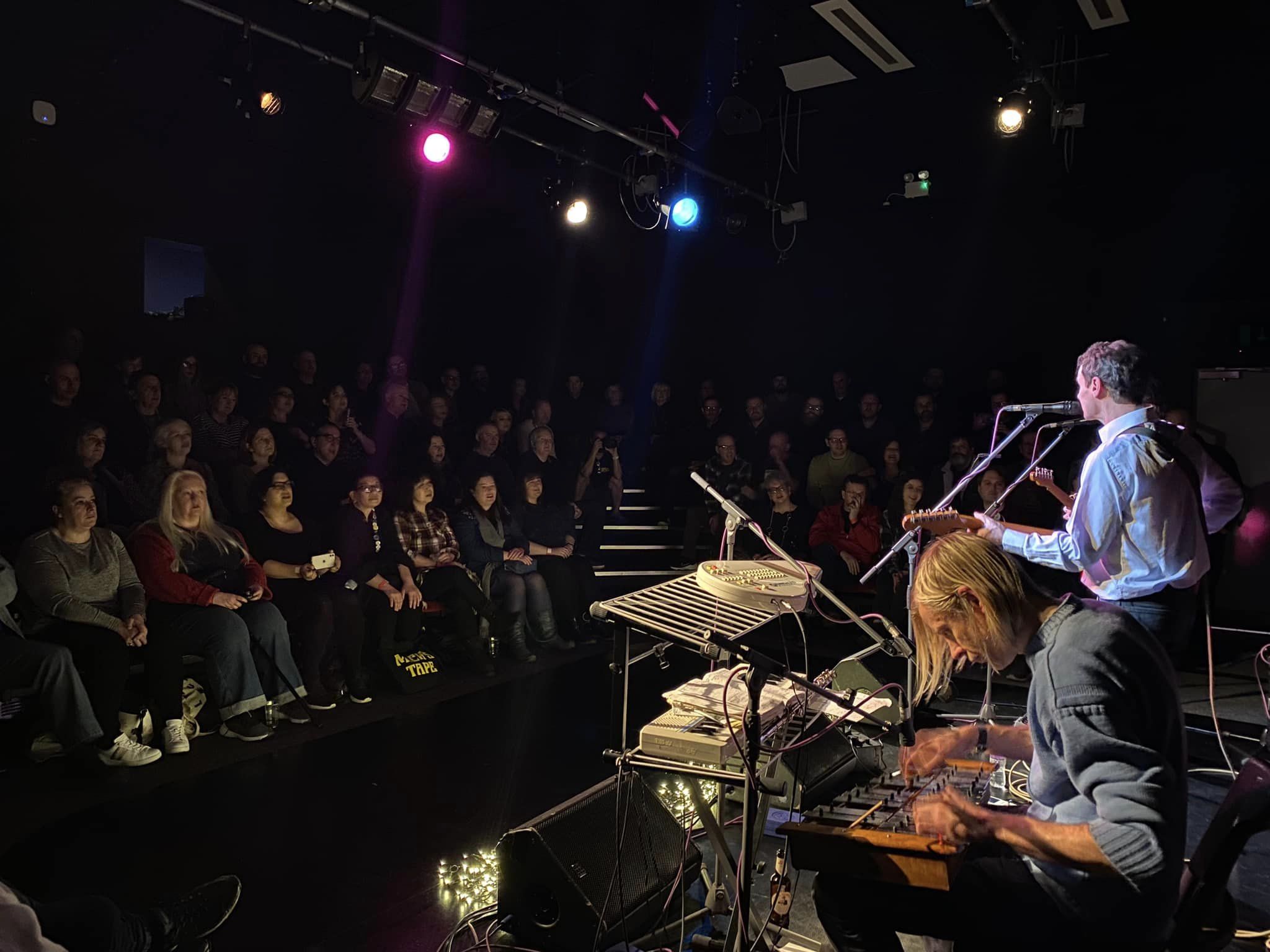
You may or may not know that I am involved in promoting gigs. Some pals and I do a job of booking acts to play the Harbour Arts Centre in Irvine, a tiny 100-seater venue that is, humbly, the greatest wee venue in the country. We do this unpaid. We’re volunteers and do it all for the love of bringing music to our town. When we were younger we had the Magnum Leisure Centre. Any band you care to mention played there (Thin Lizzy, The Jam, Chuck Berry, The Smiths, The Clash, Madness….) and we grew up thinking that every teenager in every town had this sort of stuff on their doorstep. For the more clued-in Irvinite, it was quite normal to go to the skating or the swimming and then negotiate the labyrinth of tunnels and squeaky leisure centre corridors within the Magnum in order to sneak into that week’s gig; UB40, perhaps. Or The Human League. Maybe even Spandau Ballet. That smell of Charlie Classique and chlorine – a potent combination.

Magnum gigs eventually spilled outside onto the bit of ‘beach’ next to it. The Radio One Roadshow was a regular attraction. Oasis famously played two spectacular shows one summer weekend in 1995 just as they were about to go stratospheric. The following year saw Bjork, Supergrass, Julian Cope and a raft of others roll into our town and entertain the locals and out of towners who’d packed the trains from Glasgow for the half hour journey to the Ayrshrie coast. Big touring bands turning up in Irvine were as regular as Bruno Brookes’ weekly chart countdown…until Willie Freckleton, the fella who booked all the bands, retired and died and the council left his position unfilled. There’s just no place for culture if there’s a saving to be had.

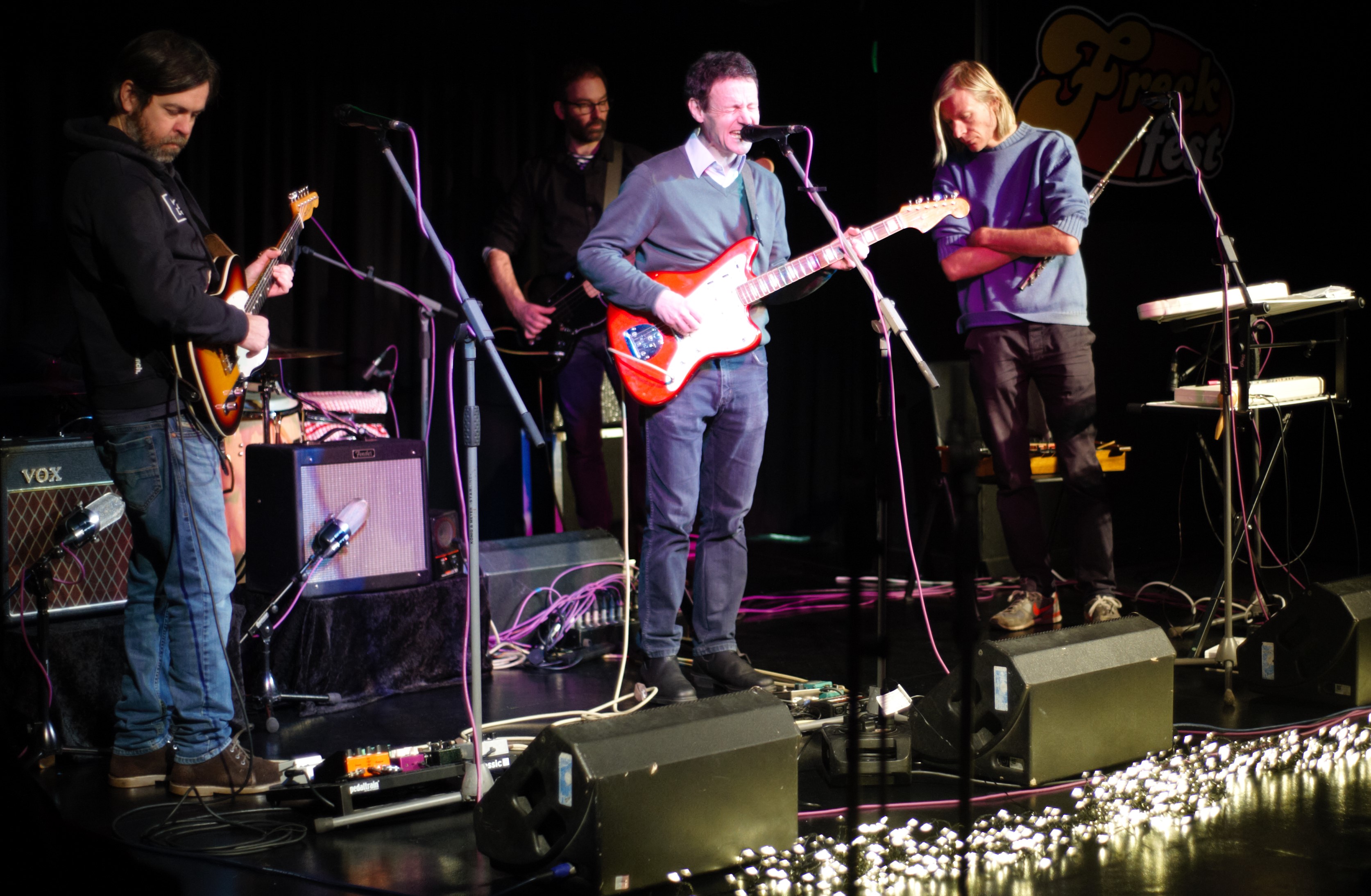
So we volunteers put on a one-off show. Called Freckfest in Willie’s honour, held in that self-same Magnum and headlined by The Magic Numbers, it led to the council asking if we’d like to programme events once a month in the town’s tiny arts centre. Almost ten years later, here we are, bringing all manner of ‘names’ back to Irvine; Glasvegas… Glenn Tilbrook… Nik Kershaw… BMX Bandits… Alan McGee… all have performed on the wee area we quaintly refer to as ‘the stage’… and all have loved every minute of performing in such a unique space.

Saturday night was a particularly lofty peak in the proceedings. We’d booked Gerry Love, the mild mannered and unassuming ex-bass player with Teenage Fanclub, the best third of a prolific songwriting team, the curator of some of the finest songs written in the last 30 years. Since leaving TFC he’s played at most a handful of shows but, with recording sessions imminent, he was keen to grind the gears into action, and coming through on a promise made to us almost four years ago, he arrived ready for action, a hastily assembled four piece band by his side.

One of the absolute pleasures of putting on gigs is that I am afforded the chance to sit in at soundchecks. Ordinarily pretty dull affairs – ‘Can I have less vocal in my monitor? Can I hear more guitar in mine? A bit more reverb on the snare, thanks...’ – Gerry’s followed a similar pattern, until we got chatting about effects pedals (I know, I know) and he absent-mindedly played the twanging intro to Sparky’s Dream while we talked. As I tried not to make it obvious I was picking my giddy jaw back off the floor, he and his band then fell into a lopsided run through of Bandwagonesque‘s December, its two chord arpeggiated riff triggering 30-year-old Proustian rushes of joy. Slightly under-rehearsed, they debated the length of the ending, flute solos ‘n all, before turning and asking me what I thought. “Stretch it out all the way to January,” I suggested, much to the amusement of the band. My finest moment.

Teenage FanclubDecember

Another beezer follows, with Gerry suggesting they try and sort out the arrangement that opens Don’t Look Back, the wistful mid-paced harmony-fest that helps elevate the Grand Prix LP from being merely great to undeniably outstanding. A couple of false starts led to Gerry – Teenage Fanclub’s bass player, lest we forget – playing the opening guitar riff for the others to fall in behind. Now, Don’t Look Back is a song I’ve heard hundreds of times, dozens of those in concert, but apparently nothing had prepared me for the possibility that it might ring out loud and true in the tiny environs of ‘our’ venue while the band soundchecked to an audience of just me. I won’t say I cried, but, damn! From straight out of nowhere I totally welled up. Don’t Look Back has a great melody welded to its fizzing guitars and as it clattered to a ragged end, I was a wee bit overcome.

Oh man,” I said to Gerry. “I was almost crying there.”

We weren’t that bad, were we?

Au contraire.

The actual gig saw more of the same, Gerry and his band alternating the set between one of Gerry’s stellar TFC songs; Star Sign, Ain’t That Enough, Speed Of Light, Thirteen‘s Hang On (replete with its note-perfect T Rex-inspired intro), bloody Going Places! and some of the tracks that made up his Lightships project from a few (make that ten) years ago; Sweetness In Her Spark, Silver And Gold, Girasol… pastoral and autumnal tracks one and all, the seeds of which were first sown through Gerry’s songs on those later TFC albums.

LightshipsGirasol

It was a wonderful show, Gerry’s band understated and nuanced, playing sympathetically and quietly. For all the impressive backline of Vox and Fender and what that suggested, the show was not at all sore on the ears.

We used to play these radio things in the states, acoustic things they’d be billed,” said Gerry earlier on. “Norman had the full-on beard at the time, so we’d get our mandolins and acoustic gear out and totally look the part, y’know…and all the other bands would turn up with their full electric set-up. No-one could ever hear us. This set-up is electric, but we’re gonna play subtly.” Which, in a ‘Teenage Fanclub Have Lost It‘ kinda way, they more than did.

D’you know those ’70s rock documentaries you see, where hairy guys in bell bottoms are standing behind Marshall stacks, or hanging around the fringes of the stage and you think, ‘Who are these people? Why are they allowed up there?‘ – well, that’s me at HAC gigs, ready to jump in and plug in a pedal or hand someone a misplaced capo, but mainly just standing there with the best view in a house where there isn’t a bad view at all.

I watched intently as Gerry and his band played their quiet storm of chiming electrics and butterflying flutes, Paul Quinn’s tasteful percussion ‘n all, shifting my gaze from band to audience and back again as the dust motes in the HAC air shifted slightly in time to the music. I may also have joined in to enhance proceedings with a Norman-aping vocal harmony or two of my own, much to the displeasure of the guy seated an arm’s length from where I was standing. Ain’t That Enough, he might’ve thought. Glock ‘n roll, I remarked, as the tinkling percussion was lost in the roar of 100 voices showing appreciation for the gig of the year.

Cover Versions, Live!

Punch And Judy

D’you know those stop-frame films you see of flowers coming to bloom; papery petals uncurling delicately, jerking their way outwards and skywards, opening fully at the end to reveal their true beauty? That’s exactly like the understated elegance of a Rufus Wainwright melody.

We went to see him for the first time on Saturday night. We knew his music – we’ve long steeped ourselves in those early album career highs, Want 1 and Want 2 and we’d marvelled once again at the classy major 7ths and restrained dynamics of the pocket symphony that is Going To A Town many times over as we got ready to go – so we know how his melodies start simply enough before taking a life of their own to soar upwards beyond the sun and moon, but we weren’t quite prepared for just how powerful it all is in the live setting.

Man! That Rufus can sing! At Glasgow’s Kelvingrove Bandstand it’s just him, his ruby red slippers and his piano, occasionally his guitar, so there’s nothing to hide behind. It’s open aired, the cultured audience is supping on wine and gin and craft beers and the weather is dry. They want to be entertained and Rufus’s voice wafts across the venue, ear therapy for the non-moshers of the world. The voice is the one true star. That and the piano playing. He can play the fuck out of that thing. Triplets on the bass notes, rippling runs from the very top of the scales that cascade down and up and down again, thunderous chords and jarring discordant atonalities – Rufus can do it all.

That’s a bit too Tchaikovksy,” he self-deprecates as he brings one of Cigarettes And Chocolate Milk‘s final verses to a flamboyant false ending, before proceeding to play Satie-inflected freeform jazz to close it out. Genius is an oft-overused word these days. Not so much virtuoso, perhaps, but Rufus is clearly a bit of both.

He plays Vibrate, its Britney Spears-referencing lyric resonating with the capacity crowd. The voice is crystal clear, fluttering between notes, finding in the spaces new notes that don’t exist in normal singers’ registeries. He fluffs a line in the chorus, mutters ‘fuck it‘ and keeps going. He arrives at the big, showstopping ‘Viiiii….iiii…..iiii….iii….braaa…..aaaaa…..aaaaa…..te‘ line and the audience as one holds its breath for a good 30 seconds until he reaches the end. Get a stopwatch and try it. Then imagine performing it in front of a full house on a Glasgow Saturday night, while playing a grand piano and dressed from the ankles down like Judy Garland. Balls doesn’t begin to describe it. And as for ‘showstopping’…it was third or fourth song in. There was plenty way to go before Rufus would arrive at ‘showstopping’.

The beauty and power and brilliance of the voice is even more obvious whenever Rufus picks up his guitar. He’s a rudimentary player at best, open handedly strumming open chords as if he’s only just been acquanited with six strings. Greek Song‘s clip clopping rhythm, interspersed with a stomp of the red-bowed Dorothy flats at appropriate moments, is a good example. A couple of chords in the verse, the same chords in the chorus, it’s real beginner’s guitar stuff here, yet the voice transends it all. ‘You who were born with the sun above your shoulders,’ he sings to some Greek god, real or imaginary, ‘You turn me on, you turn me on, you have to know.’ The guitar playing is primary school level, but the voice is unteachable. You don’t need to be special on the guitar when the one instrument you’ve been God-given is so divine. How exactly do you squeeze such flyaway melodies from a D chord and an A chord? Exactly where that comes from is anyone’s guess. David Gedge never managed that. I doubt even McCartney could reach some of the melodic heights Rufus reaches.

Rufus WainwrightGoing To A Town

(Pinched from Twitter)

Back for an encore, he slays us with a one-two of Going To A Town and Hallelujah. Going To A Town is stripped back, angry, beautiful and resonant. ‘Do you really think you go to hell for having loved?‘ It’s missing those high female ‘tell mes’ that colour the recorded version, but you barely notice. When he gets to the ‘I may just never see you again‘ line, his voice takes off into orbit, two thousand folk hanging on to its wispy trail. Astonishing stuff.

I can’t be doing with Hallelujah, truth be told. It’s overplayed. TV reality shows have killed that for me. Even Jeff Buckley’s peerless version hasn’t been heard within these four walls for many a year. Yet Rufus nails it, the voice off and out into the West End ether as he takes a theatrical bow and leaves us with a final glimpse of his beautiful hair, backlit in orange and red and blue, the crowd on its feet and ecstatic. I might’ve liked a 14th Street or a Go Or Go Ahead to complete the night, but I ain’t complainin’. Rufus Wainwright understands the old adage of leave ’em wanting more. A proper showman, he more than delivers.

*Bonus Track

From one golden voiced vocalist to another, here’s George Michael‘s faithful reworking of Going To A Town. A master interpreter, he knew a good tune when he heard it. You knew that already though.

George MichaelGoing To A Town

Get This!, Live!

Sound Waves

How do you pronouce certain band names? Hingmy Malmsteen? Sun O))) or just Sun? (It’s Sun, believe it or not, despite the ‘O’ and the trio of parenthesese – that’s the sun, innit?) What about !!!? And what of Lynyrd Skynyrd? Is it Suede to rhyme with Fred or Suede to rhyme with frayed? (It’s Fred, obviously, if you’re Scottish.)

What about Fatherson? Is the emphasis on the ‘Father‘ prefix or the ‘son‘ suffix?

It’s not, as you might think (or say) Fatherson, with the heavy emphasis on the end of the word, turning one word into two. It’s run together as one word – Fatherson – the way you might say Andy Robertson, or perhaps if you’re of a certain vintage, B.A. Robertson.

Liverpool lining up tonight with an unusual back four of Robertson, Richarlison, Gerry Cinnamon and Fatherson. It’ll be interesting to see how they get on against the pacey Kilmarnock wing backs….”

To my shame, I’d pegged Fatherson as Biffy-lite without knowingly listening to so much as a note by them; hairy muscle power pop in Scottish accents, I’d presumed. I’ve eaten at least one slice of humble pie in recent weeks as a result. Firstly, I was involved in the running of a brand new festival, Making Waves, and Fatherson had been booked as late afternoon performers.

Being responsible for the press and what not, and with band interviews being lined up, I dipped a hesitant toe in their back catalogue and was immediately taken by a sound distinguished by loud, anthemic, ringing guitars and proudly parochial vocals sung brilliantly. Where had they been all my ignorant life?! I lost track of time into the wee small hours one night while I found myself falling for the song that coincidentally gave our festival its name.

FathersonMaking Waves

Photo (c) Kerrin Carr. If you steal it she’ll send the boys ’round.

It starts as many Fatherson songs do, with bookish and bearded guitar-playing vocalist Ross Leighton strumming out a kind of audible preface to what follows, just Ross with his plugged-in electric and soft Scottish burr setting the scene. As the intro plays out, there’s a wee brief pause where you just know the band is going to come crashing in, all flailing limbs and howling instruments, and Making Waves doesn’t disappoint. In they lurch, all divebombing, disorientating Valentine wooze and wobble, a wave of silver and mercury effect-heavy instrumentation filling the room then dropping out just as quickly to allow the vocals back in.

The wee brief, chiming guitar riff that introduces the chorus is totally ripe for soundtracking the goals of the week on a particularly hip football highlights show, maybe even Sky if they had suitably ‘on it’ researchers. I say ‘on it’, but Making Waves is four years old, so what do I know – it may well have soundtracked the entire 2018-19 season on Soccer AM for all I know.

Photo (c) Kerrin Carr. If you steal it she’ll send the boys ’round.

Making Waves is Fatherson in miniature. Riff heavy, melody-rich and hooky, played out with a we mean it, man sturm und drang. There are some great call and response vocals in the chorus, all keening heartache and sincerity, a sign that despite the ability to turn everything up to 10, there’s a compassionate soul beating at the heart of the band.

Cut to the Making Waves festival. Live, Fatherson are terrific. Like, really terrific. They’ve got the band look sorted – orange and grey boiler suits, turned up to ankle dusting levels like some hipster, fashion-conscious, guitar totin’ Beastie Boys collective – and boy, they can talk it like they walk it. They run on stage and they’re straight into it, a downhill without the brakes on riot of hair and frets and space-age chrome ‘n steel pedal boards. Those brief wee pauses the band so-loves are well-timed and slick. Flyaway hair freezes in midair then continues its trajectory as the trio slam back into it. Drums clatter like the four horsemen of the apocalypse. The bass guitar sounds like a speeding Paul Simonon in some places, my neighbour’s non-stop nail gun in others. Ross’s enviable collection of vintage guitars take a good heavy-plectrumed scrubbing.

I hang back sidestage and experience the show from a new perspective, watching their loyal audience mouth the words back to the band, watching as the band is spurred further on by the frenzy in the crowd. It’s all thrilling stuff.

Photo (c) Stuart Westwood. If you steal it he’ll send the boys ’round.

*Bonus Track

Just when you’re thinking that Fatherson don’t, or can’t, do acoustic-based music, along comes the loveliest version of Making Waves, floated in from the furthest corners of the internet, intent on worming its way into your primed and ready for it ears. Wonderful stuff all in, it’s the unexpected call-and-response female vocal in the chorus that pushes this version towards greatness. A gently restrained take of one of the band’s best tracks. You just can’t argue with musicality, melody and properly great singing.

FathersonMaking Waves (acoustic)

Photo (c) Kerrin Carr. If you steal it she’ll send the boys ’round.

Fatherson, man, where have you been all my stupidly ignorant musical life?

demo, Get This!, Live!, Sampled

Twin Reverb

Check…check…check!

A-woo-oo! A-woo-oo! A-woo-oo! A-woo-oo! A-woo-oo! A-woo-oo!

(Pause)

Trrrr-rat-at-a-tat a-tee-tee

Trrrr-rat-at-a-tat a-tee-tee

Bass. How low can you go? Actually, not that low for now. A tight ‘n taut bass guitar plays high up the frets, its woody thunk foreshadowing what will follow:

dur der-der-duh-der

dur der-der-duh-der

Nagging, inistent. Immediately earwormish. It moves through the gears a semitone and the drummer falls in with a loping, skipping, skittering beat that’s been rescued after falling from the back of a lorry last seen leaving Manchester in 1989.

A brief dropout from the bass brings another burst of rat-a-tat percussion, immediately followed by two short and teasing electric guitar riffs – bendy, wobbly, hypnotic – and then, on a surge of nagging, asthmatic guitar, the band is here. The second guitar player makes themselves known by triggering their distortion pedal and a viral squiggle of feedback bleeds from the speakers for a bar or two before plectrum meets nickle. It’s a cheap, punky trick and you love it. 

Spitting in a wishing well. Blown to hell. Crash. I’m the last splash.

As far as song intros go, Cannonball by The Breeders is so familiar, so engrained that even 29 years later, Pavlovian rushes make their way to the soles of the Doc Martens without you realising.

The BreedersCannonball

It might be the riff that moves the feet – a nagging, twanging, guitar player’s sore finger of a lick jigsawed to a monster, see-sawing tidal wave of fuzzed-out barre chords, but it’s the vocal that moves the mind.

Kim Deal, moonlighting from a by then fragmented Pixies, has the unequalled ability of sounding as if she’s constantly grinning as she sings. Not in a Marti Pellow, I-can’t-believe-I’m-getting-away-with-this dimple buster of a grin, but a proper mile-wide smile as expansive and welcoming as the Ohio of her birthplace. In the golden age of Hollywood, Kim and her cheekbones would’ve been filmed swinging carefreely around lamposts. “I’m in love…I’m in love with singing, and I want the wurld t’know!” Check the video below for proof.

Freed from the pressures of Pixies, Kim takes centrestage and ropes in her twin sister Kelley (replacing Tanya Donnelly who’d by now left and formed Belly) alongside English bass player Josephine Wiggs and Slint’s Britt Walford on drums; an alternative rock supergroup of sorts that occasionally – especially on Cannonball – surpasses much of what made them so revered in their respective day jobs.

Kim and Kelley mesh and meld and harmonise across the verses, an electrified Mamas and Papas (or should that be Mamas and Mamas?), surfing the wave where two voices become one yet sound like three. Clever stuff, you’d need to agree. A metallic clatter of muted six-strings amplified to dangerously exciting levels heralds the noisy bit and suddenly you can see why The Breeders were one of Nirvana’s tour supports of choice. Melody and mayhem – always key ingredients in a proper guitar band’s arsenal.

Cannonball rocks. From the static bursts of fuzz mic, to the spontaneous “Heys!” that appear with satisfying regularity, to the underlying breathy a-woo-oos that you’ll spot if you scratch below the surface, it’s a real beauty of a guitar track, punky yet, eh, funky too. Do they really sing, ‘I’ll be your whatever you want…the bong in this reggae song‘? Yes. Yes, they do.

*Bonus Tracks!

Here’s the demo of Cannonball, working title Grunggae. Very much a work in progress, you can hear the seeds being sown; that shuffling beat, the twin vocals, the a-woo-oos, the metallic k.o. and rattling clatter before the noisy bit. The DNA is all in place, even if the arrangement isn’t.

The Breeders  – Cannonball (demo)

Fantastically lo-fi live version here:

The Breeders  – Cannonball (Live in Stockholm, 1994)

Magpie DJs Radio Soulwax have oft incorporated Cannonball into their sets, mashed up occasionally (as was the parlance of the time) with Skee-Lo’s I Wish, intelligent rap and indie rock cross-pollinating into something wholly different.

Radio Soulwax part 0


Listen from 3 min 20, or download the whole thing and marvel at the psychedelic jigsawing of it all; Beastie Boys, Maceo & The Macks, EMF, God Only Knows, Elastica, Jack And Diane, Eye of the Tiger, Mr Oizo, Erik B & Rakim, What Have You Done For Me Lately?, Basement Jaxx, Funky Cold Medina, No Diggity…..all fed into the Radio Soulwax super-blender and served up as something brand new…. even 20+ years later. The soundtrack to every one of my barbecues for the past two decades, I can never get enough of 2 Many DJs mixes.