Live!

And The Beat Goes On (And On)

At the start of the ‘90s, Postcard Records put out The Heather’s On Fire, an essential collection of early Orange Juice material, much of which was presented in a form far more ragged than the better-known versions. Two words on the rear of the sleeve are key markers.

‘Buffalo Underground’ they say, stamped unobtrusively in the corner, but a pair of words, a phrase, which will have even the most amateur of sleuths making sense of the reference.

Those post-punk bands of the late ‘70s and early ‘80s – the Postcard, Pop Aural and Fast Product groups particularly, hopped up on pure self belief following the barrier-breaking Clash shows at the Glasgow Apollo and Edinburgh Playhouse – looked far beyond the obvious draw of mop-topped Liverpool and drew their entire influence (style and song) from America. No Elvis, Beatles or the Rolling Stones in 1977, remember?

Buffalo Springfield encouraged, demanded even, ringing guitar lines played on fat, semi acoustic guitars, held chest high by musicians in checked shirts, fringed suede and worn-in denim, boot-lace ties ‘n all. The young Roddy Frame took keen notes.

The Velvet Underground offered up chic style, unrivalled attitude and an innocence masked as aloofness. Take three chords, fall in together and keep going without stopping until the song is over. Look like you mean it and folk’ll believe you. There’s the ethos of Postcard in a nutshell. No pun intended.

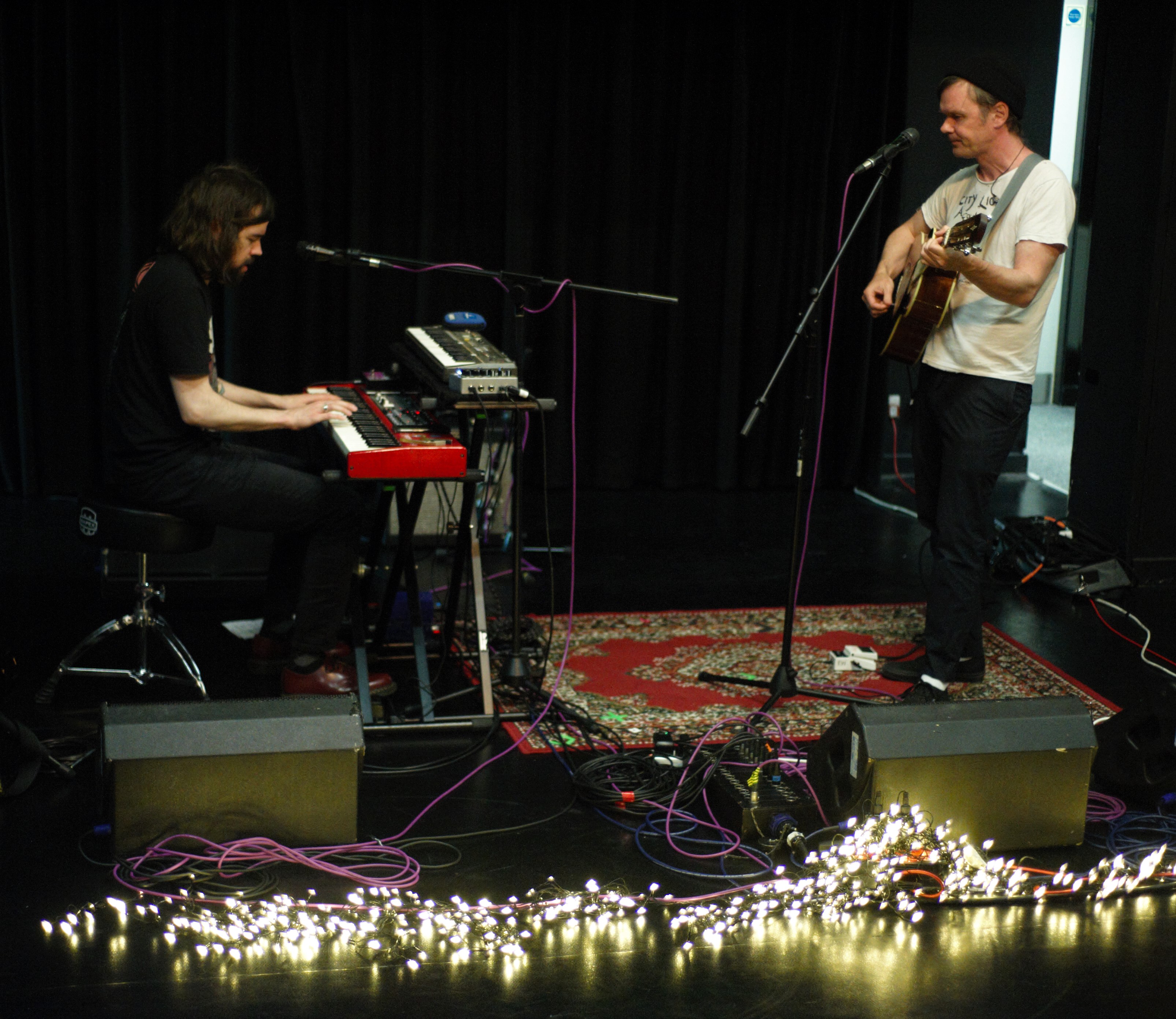
The entirety of the Scottish post-punk music scene was in thrall to the Velvet Underground especially, and most of the acts – Orange Juice and Aztec Camera, obviously (“it’s ob-vious”), but also Scars, The Fire Engines, Josef K, James King and The Lone Wolves, even Bourgie Bourgie and Jazzateers, achieved just about their 15 mins of fame. This became totally apparent at Saturday night’s Hungry Beat event at the CCA in Glasgow, a mammoth 5 hour-long music ‘n chat extravaganza, put together by the people responsible for the era-defining book of the same name.
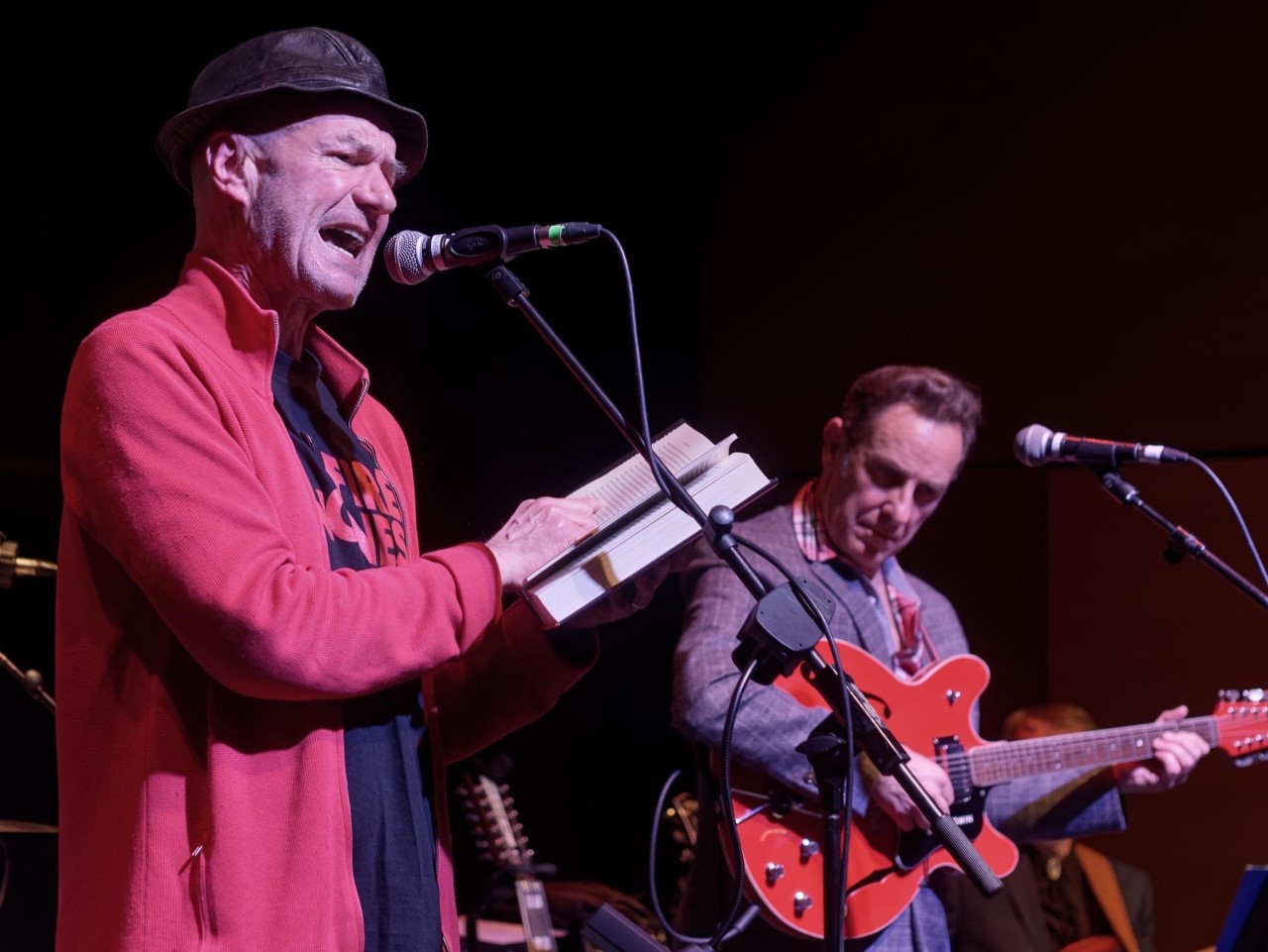
The main driver is Douglas MacIntyre, guitar totin’ scenester, label boss (Creeping Bent) and owner of the hippest address book in the land. Draw one of those Pete Frame family trees with his name at the centre and you’ll finish with a messy and jigsawed who’s who of 20th Century Scot-pop.

James T Kirk. Malcom Ross. Davy Henderson. Campbell Owens. Bobby Bluebell. Mick Slaven. Ken McCluskey. Tam Dean Burn. James King. Monica Queen. Norman Blake. Grahame Skinner. Katy Lironi and others all branch out in interconnected ways. Some of the musicians shared groups or rehearsal rooms or labels or bills, and all of them did exactly this at the weekend when they joined forces for two 70+ minute sets that played out like one gigantic, rolling encore, The Last Waltz for the children of the Velvets, each section registering one notch higher on the thrill-o-meter than the previous. In the future, suggested Warhol, everyone will be famous for 15 minutes. For the bands and songs who have stayed under the radar all these years, Saturday night was their night.

This slideshow requires JavaScript.

Douglas, playing mainly cool, clean 12 string jangle on a vintage Burns (of course) guitar led a band made up of Mick Slaven and/or Malcolm Ross on sparkling, searing lead, Campbell Owens on bass and Stuart Kerr on drums. With each guest vocalist or guitarist (or both), the big hitters and back catalogues of all those wonky, individual and inventive groups of yore were played out to a wholly appreciative (and minor celeb-studded) crowd.

Was that Eddi Reader pogoing down the front as the assembled group jerked their way through a rubberised take on Gang Of Four’s Damaged Goods? Yes. Yes, it was. As backing vocalist on Gang Of Four’s live shows, perhaps she should’ve been up there with them. Not that there was much space for pogoing on the CCA’s busy stage. “There wisane enough women up there,” she complained later.

Monica Queen is a highlight, stomping and prowling as she takes control of Altered Images’ Dead Popstars. A lilting, countryish run through of Strawberry Switchblade’s Trees And Flowers segues without ceremony into a rich ‘n twanging version of, yes!, the aforementioned Velvet Underground’s Sunday Morning. It’s a beauty.
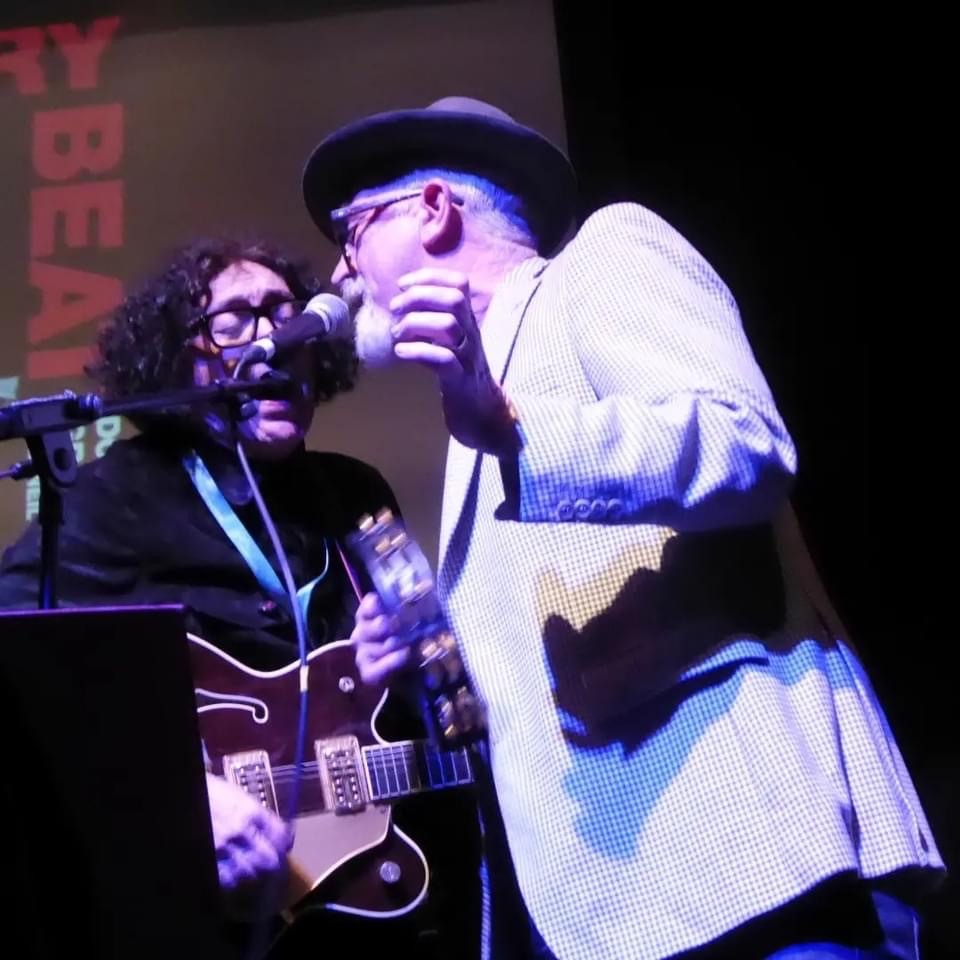
Ken McCluskey and Bobby Bluebell play their own Everybody’s Somebody’s Fool, the song they created after Alan Horne at Postcard challenged them to write a song as good as The Monkees’ Last Train To Clarksville.

Fay Fife owns the stage for two sharp blasts of Rezillos, with the frantic, hundred mile an hour racket of Can’t Stand My Baby just pipping Top Of The Pops to the post.

James King pulls low a pair of VU Ray-Bans and delivers a marvellous, Byrdsy Fly Away. High on jangle, reverb and twang, it’s one of the era’s great forgotten singles. Sensational stuff. 
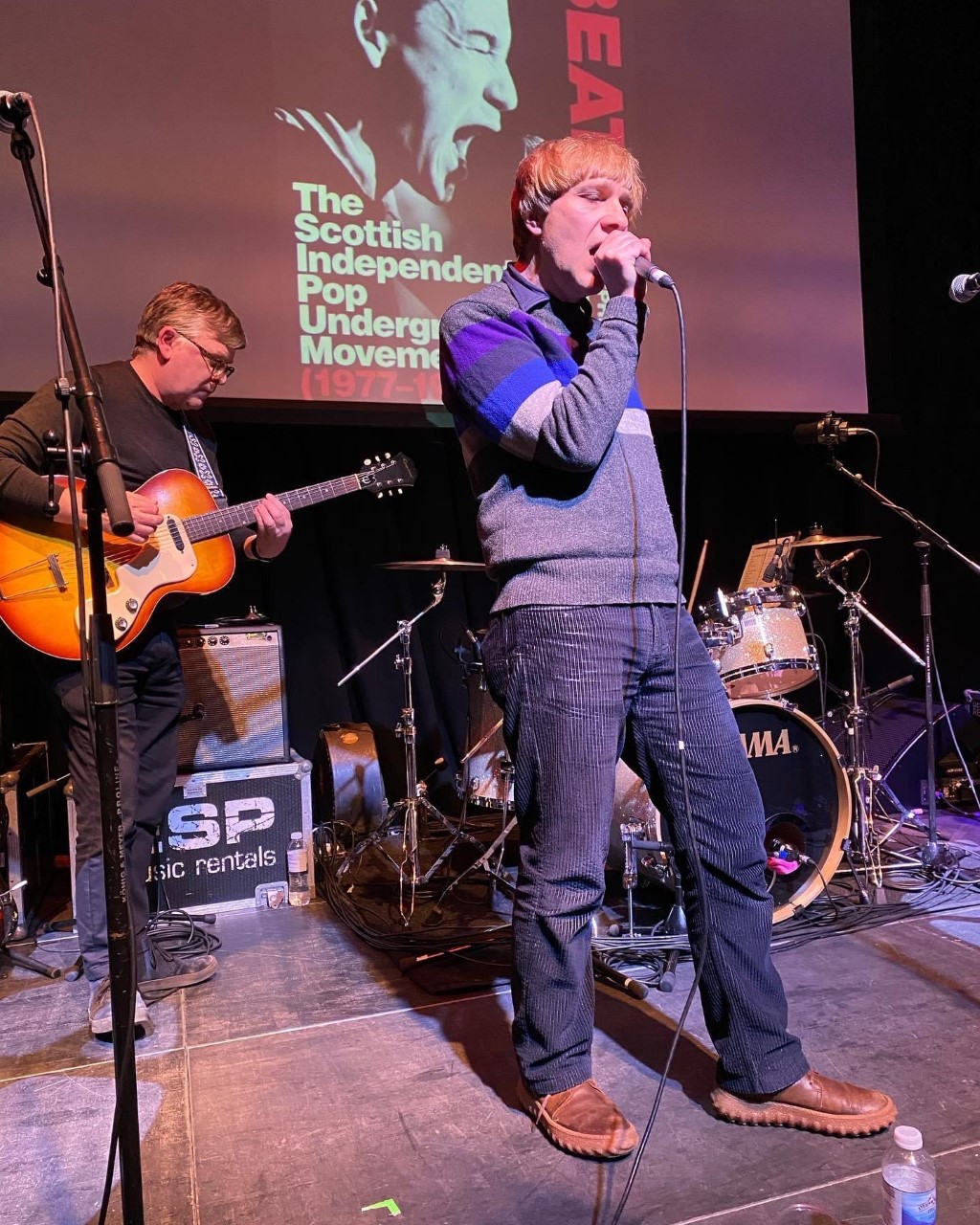
Norman Blake joins on guitar as the forever hangdog Stephen Pastel turns back the years with a couple of Pastels songs, a chugging, disciplined, and Krauty Baby Honey raising an already high bar. “Alan Horne suggested we be a synth pop group,” says a smiling Pastel to a tickled crowd.

Norman will be back later, unusually guitarless, to take vocals on two deep and emotional Josef K tracks. Downbeat but intense, Norman provides a real show stealer.
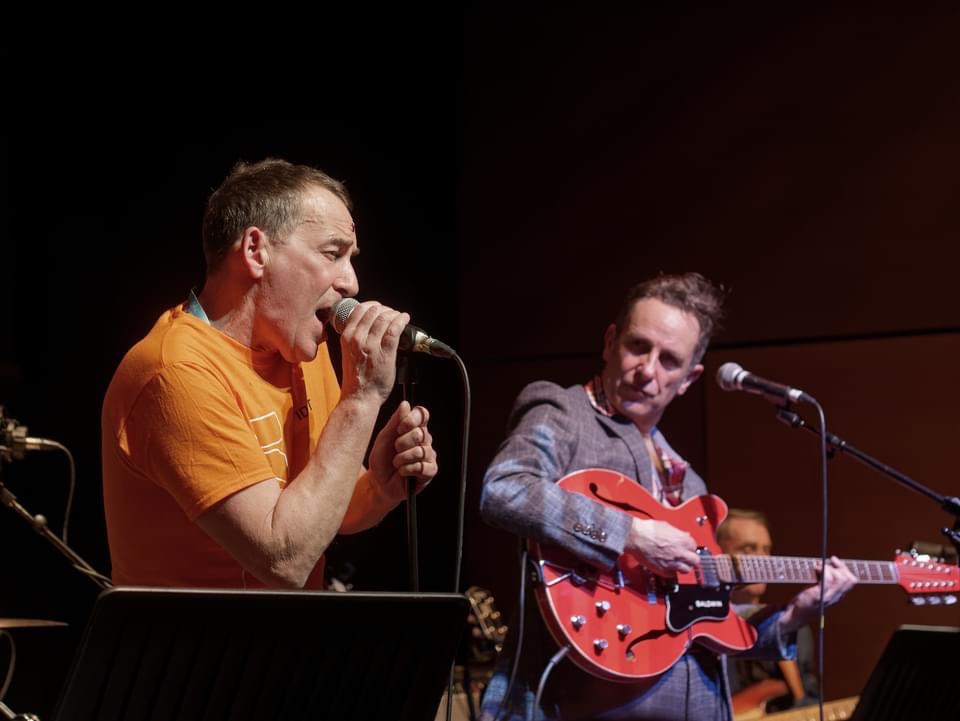
But back to the big hitters. Roddy’s Oblivious flies past in a blur of Malcom Ross fretboard wizardry, the lightning quick runs of the original flying tightly from his frets. Orange Juice’s Felicity rattles past in a giddy rush of whoa-whoas and well-rehearsed endings. Rip It Up, played by both Malcolm Ross and James T Kirk is slinky and chrome, its Chic-isms causing heads to bob and hips to sway.

Fire Engines’ Candyskin produces more shambling Velvetisms before Davy Henderson himself joins proceedings for a giddy You’ve Got The Power and a superstar karaoke blast of Iggy/Bowie’s Success. “Here comes success!” the group shout/sing in unison, a marker for how the evening has gone.

The ‘encore’ – no one has left the stage but we’re well over time and many an anxious ticket holder has begun the quick march for the last train home – is, as Bobby Bluebell describes by way of introduction, ‘the best single ever written and recorded in Scotland.’

Orange Juice – Blue Boy

A rattling, galloping run through of Blue Boy follows. Orange Juice’s original perfectly straddles that sound of the ‘Buffalo Underground’- clean and jangling and melodic, with a needles-in-the-red, cheese-grater guitar solo to sharpen the senses. Yer actual James T Kirk is on hand to kick out the jams, coaxing the ear-piercing main offender from his fingers – the kind of solo that electrifies the fillings in your teeth and leaves you wanting more, more, more. 


*My photos were rubbish, so most photos here are ‘borrowed’ from the social media feeds of Lauren Bacall, Iain Wilson, Andrew Thomas, Trevor Pake and Vivienne Wilson. I hope you don’t mind, and thanks in advance 

Live!

Love In

You may or may not know that I am involved in promoting gigs. Some pals and I do a job of booking acts to play the Harbour Arts Centre in Irvine, a tiny 100-seater venue that is, humbly, the greatest wee venue in the country. We do this unpaid. We’re volunteers and do it all for the love of bringing music to our town. When we were younger we had the Magnum Leisure Centre. Any band you care to mention played there (Thin Lizzy, The Jam, Chuck Berry, The Smiths, The Clash, Madness….) and we grew up thinking that every teenager in every town had this sort of stuff on their doorstep. For the more clued-in Irvinite, it was quite normal to go to the skating or the swimming and then negotiate the labyrinth of tunnels and squeaky leisure centre corridors within the Magnum in order to sneak into that week’s gig; UB40, perhaps. Or The Human League. Maybe even Spandau Ballet. That smell of Charlie Classique and chlorine – a potent combination.

Magnum gigs eventually spilled outside onto the bit of ‘beach’ next to it. The Radio One Roadshow was a regular attraction. Oasis famously played two spectacular shows one summer weekend in 1995 just as they were about to go stratospheric. The following year saw Bjork, Supergrass, Julian Cope and a raft of others roll into our town and entertain the locals and out of towners who’d packed the trains from Glasgow for the half hour journey to the Ayrshrie coast. Big touring bands turning up in Irvine were as regular as Bruno Brookes’ weekly chart countdown…until Willie Freckleton, the fella who booked all the bands, retired and died and the council left his position unfilled. There’s just no place for culture if there’s a saving to be had.

So we volunteers put on a one-off show. Called Freckfest in Willie’s honour, held in that self-same Magnum and headlined by The Magic Numbers, it led to the council asking if we’d like to programme events once a month in the town’s tiny arts centre. Almost ten years later, here we are, bringing all manner of ‘names’ back to Irvine; Glasvegas… Glenn Tilbrook… Nik Kershaw… BMX Bandits… Alan McGee… all have performed on the wee area we quaintly refer to as ‘the stage’… and all have loved every minute of performing in such a unique space.

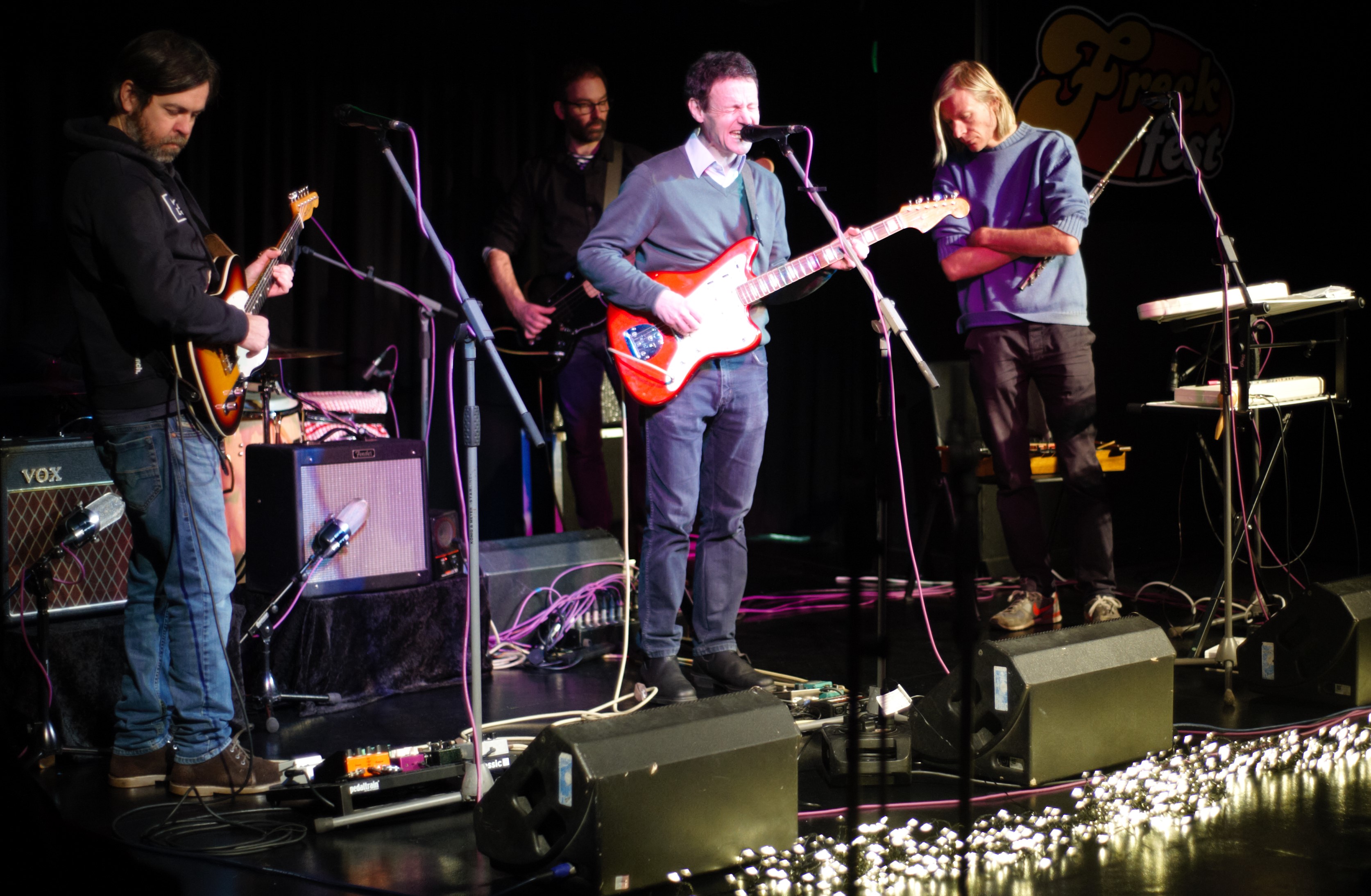
Saturday night was a particularly lofty peak in the proceedings. We’d booked Gerry Love, the mild mannered and unassuming ex-bass player with Teenage Fanclub, the best third of a prolific songwriting team, the curator of some of the finest songs written in the last 30 years. Since leaving TFC he’s played at most a handful of shows but, with recording sessions imminent, he was keen to grind the gears into action, and coming through on a promise made to us almost four years ago, he arrived ready for action, a hastily assembled four piece band by his side.

One of the absolute pleasures of putting on gigs is that I am afforded the chance to sit in at soundchecks. Ordinarily pretty dull affairs – ‘Can I have less vocal in my monitor? Can I hear more guitar in mine? A bit more reverb on the snare, thanks...’ – Gerry’s followed a similar pattern, until we got chatting about effects pedals (I know, I know) and he absent-mindedly played the twanging intro to Sparky’s Dream while we talked. As I tried not to make it obvious I was picking my giddy jaw back off the floor, he and his band then fell into a lopsided run through of Bandwagonesque‘s December, its two chord arpeggiated riff triggering 30-year-old Proustian rushes of joy. Slightly under-rehearsed, they debated the length of the ending, flute solos ‘n all, before turning and asking me what I thought. “Stretch it out all the way to January,” I suggested, much to the amusement of the band. My finest moment.

Teenage Fanclub – December

Another beezer follows, with Gerry suggesting they try and sort out the arrangement that opens Don’t Look Back, the wistful mid-paced harmony-fest that helps elevate the Grand Prix LP from being merely great to undeniably outstanding. A couple of false starts led to Gerry – Teenage Fanclub’s bass player, lest we forget – playing the opening guitar riff for the others to fall in behind. Now, Don’t Look Back is a song I’ve heard hundreds of times, dozens of those in concert, but apparently nothing had prepared me for the possibility that it might ring out loud and true in the tiny environs of ‘our’ venue while the band soundchecked to an audience of just me. I won’t say I cried, but, damn! From straight out of nowhere I totally welled up. Don’t Look Back has a great melody welded to its fizzing guitars and as it clattered to a ragged end, I was a wee bit overcome.

“Oh man,” I said to Gerry. “I was almost crying there.”

“We weren’t that bad, were we?”

Au contraire.

The actual gig saw more of the same, Gerry and his band alternating the set between one of Gerry’s stellar TFC songs; Star Sign, Ain’t That Enough, Speed Of Light, Thirteen‘s Hang On (replete with its note-perfect T Rex-inspired intro), bloody Going Places! and some of the tracks that made up his Lightships project from a few (make that ten) years ago; Sweetness In Her Spark, Silver And Gold, Girasol… pastoral and autumnal tracks one and all, the seeds of which were first sown through Gerry’s songs on those later TFC albums.

Lightships – Girasol

It was a wonderful show, Gerry’s band understated and nuanced, playing sympathetically and quietly. For all the impressive backline of Vox and Fender and what that suggested, the show was not at all sore on the ears.

“We used to play these radio things in the states, acoustic things they’d be billed,” said Gerry earlier on. “Norman had the full-on beard at the time, so we’d get our mandolins and acoustic gear out and totally look the part, y’know…and all the other bands would turn up with their full electric set-up. No-one could ever hear us. This set-up is electric, but we’re gonna play subtly.” Which, in a ‘Teenage Fanclub Have Lost It‘ kinda way, they more than did.

D’you know those ’70s rock documentaries you see, where hairy guys in bell bottoms are standing behind Marshall stacks, or hanging around the fringes of the stage and you think, ‘Who are these people? Why are they allowed up there?‘ – well, that’s me at HAC gigs, ready to jump in and plug in a pedal or hand someone a misplaced capo, but mainly just standing there with the best view in a house where there isn’t a bad view at all.

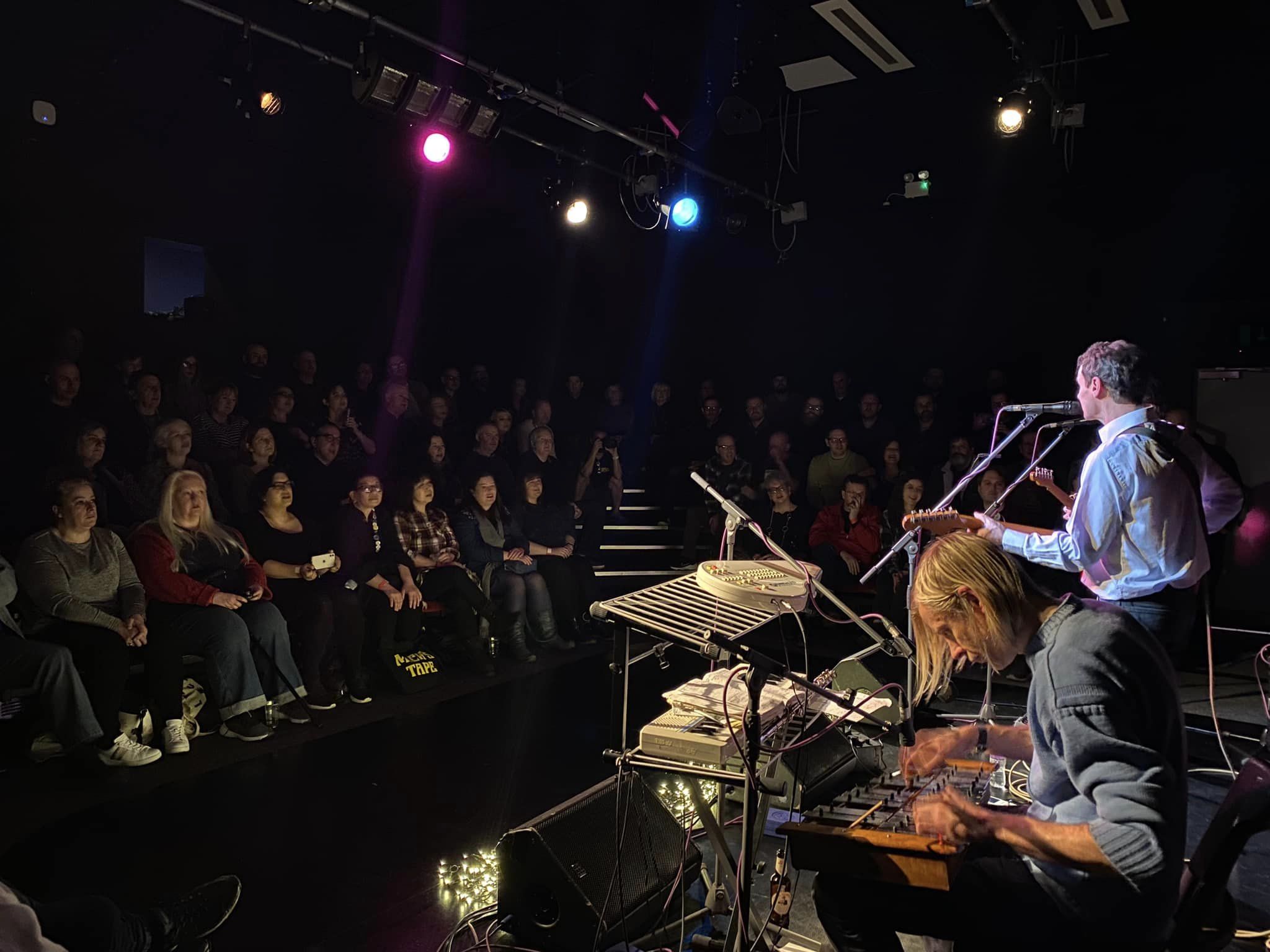
I watched intently as Gerry and his band played their quiet storm of chiming electrics and butterflying flutes, Paul Quinn’s tasteful percussion ‘n all, shifting my gaze from band to audience and back again as the dust motes in the HAC air shifted slightly in time to the music. I may also have joined in to enhance proceedings with a Norman-aping vocal harmony or two of my own, much to the displeasure of the guy seated an arm’s length from where I was standing. Ain’t That Enough, he might’ve thought. Glock ‘n roll, I remarked, as the tinkling percussion was lost in the roar of 100 voices showing appreciation for the gig of the year.

Cover Versions, Live!

Punch And Judy

D’you know those stop-frame films you see of flowers coming to bloom; papery petals uncurling delicately, jerking their way outwards and skywards, opening fully at the end to reveal their true beauty? That’s exactly like the understated elegance of a Rufus Wainwright melody.

We went to see him for the first time on Saturday night. We knew his music – we’ve long steeped ourselves in those early album career highs, Want 1 and Want 2 and we’d marvelled once again at the classy major 7ths and restrained dynamics of the pocket symphony that is Going To A Town many times over as we got ready to go – so we know how his melodies start simply enough before taking a life of their own to soar upwards beyond the sun and moon, but we weren’t quite prepared for just how powerful it all is in the live setting.

Man! That Rufus can sing! At Glasgow’s Kelvingrove Bandstand it’s just him, his ruby red slippers and his piano, occasionally his guitar, so there’s nothing to hide behind. It’s open aired, the cultured audience is supping on wine and gin and craft beers and the weather is dry. They want to be entertained and Rufus’s voice wafts across the venue, ear therapy for the non-moshers of the world. The voice is the one true star. That and the piano playing. He can play the fuck out of that thing. Triplets on the bass notes, rippling runs from the very top of the scales that cascade down and up and down again, thunderous chords and jarring discordant atonalities – Rufus can do it all.

“That’s a bit too Tchaikovksy,” he self-deprecates as he brings one of Cigarettes And Chocolate Milk‘s final verses to a flamboyant false ending, before proceeding to play Satie-inflected freeform jazz to close it out. Genius is an oft-overused word these days. Not so much virtuoso, perhaps, but Rufus is clearly a bit of both.

He plays Vibrate, its Britney Spears-referencing lyric resonating with the capacity crowd. The voice is crystal clear, fluttering between notes, finding in the spaces new notes that don’t exist in normal singers’ registeries. He fluffs a line in the chorus, mutters ‘fuck it‘ and keeps going. He arrives at the big, showstopping ‘Viiiii….iiii…..iiii….iii….braaa…..aaaaa…..aaaaa…..te‘ line and the audience as one holds its breath for a good 30 seconds until he reaches the end. Get a stopwatch and try it. Then imagine performing it in front of a full house on a Glasgow Saturday night, while playing a grand piano and dressed from the ankles down like Judy Garland. Balls doesn’t begin to describe it. And as for ‘showstopping’…it was third or fourth song in. There was plenty way to go before Rufus would arrive at ‘showstopping’.

The beauty and power and brilliance of the voice is even more obvious whenever Rufus picks up his guitar. He’s a rudimentary player at best, open handedly strumming open chords as if he’s only just been acquanited with six strings. Greek Song‘s clip clopping rhythm, interspersed with a stomp of the red-bowed Dorothy flats at appropriate moments, is a good example. A couple of chords in the verse, the same chords in the chorus, it’s real beginner’s guitar stuff here, yet the voice transends it all. ‘You who were born with the sun above your shoulders,’ he sings to some Greek god, real or imaginary, ‘You turn me on, you turn me on, you have to know.’ The guitar playing is primary school level, but the voice is unteachable. You don’t need to be special on the guitar when the one instrument you’ve been God-given is so divine. How exactly do you squeeze such flyaway melodies from a D chord and an A chord? Exactly where that comes from is anyone’s guess. David Gedge never managed that. I doubt even McCartney could reach some of the melodic heights Rufus reaches.

Rufus Wainwright – Going To A Town

(Pinched from Twitter)

Back for an encore, he slays us with a one-two of Going To A Town and Hallelujah. Going To A Town is stripped back, angry, beautiful and resonant. ‘Do you really think you go to hell for having loved?‘ It’s missing those high female ‘tell mes’ that colour the recorded version, but you barely notice. When he gets to the ‘I may just never see you again‘ line, his voice takes off into orbit, two thousand folk hanging on to its wispy trail. Astonishing stuff.

I can’t be doing with Hallelujah, truth be told. It’s overplayed. TV reality shows have killed that for me. Even Jeff Buckley’s peerless version hasn’t been heard within these four walls for many a year. Yet Rufus nails it, the voice off and out into the West End ether as he takes a theatrical bow and leaves us with a final glimpse of his beautiful hair, backlit in orange and red and blue, the crowd on its feet and ecstatic. I might’ve liked a 14th Street or a Go Or Go Ahead to complete the night, but I ain’t complainin’. Rufus Wainwright understands the old adage of leave ’em wanting more. A proper showman, he more than delivers.

*Bonus Track

From one golden voiced vocalist to another, here’s George Michael‘s faithful reworking of Going To A Town. A master interpreter, he knew a good tune when he heard it. You knew that already though.

George Michael – Going To A Town

Get This!, Live!

Sound Waves

How do you pronouce certain band names? Hingmy Malmsteen? Sun O))) or just Sun? (It’s Sun, believe it or not, despite the ‘O’ and the trio of parenthesese – that’s the sun, innit?) What about !!!? And what of Lynyrd Skynyrd? Is it Suede to rhyme with Fred or Suede to rhyme with frayed? (It’s Fred, obviously, if you’re Scottish.)

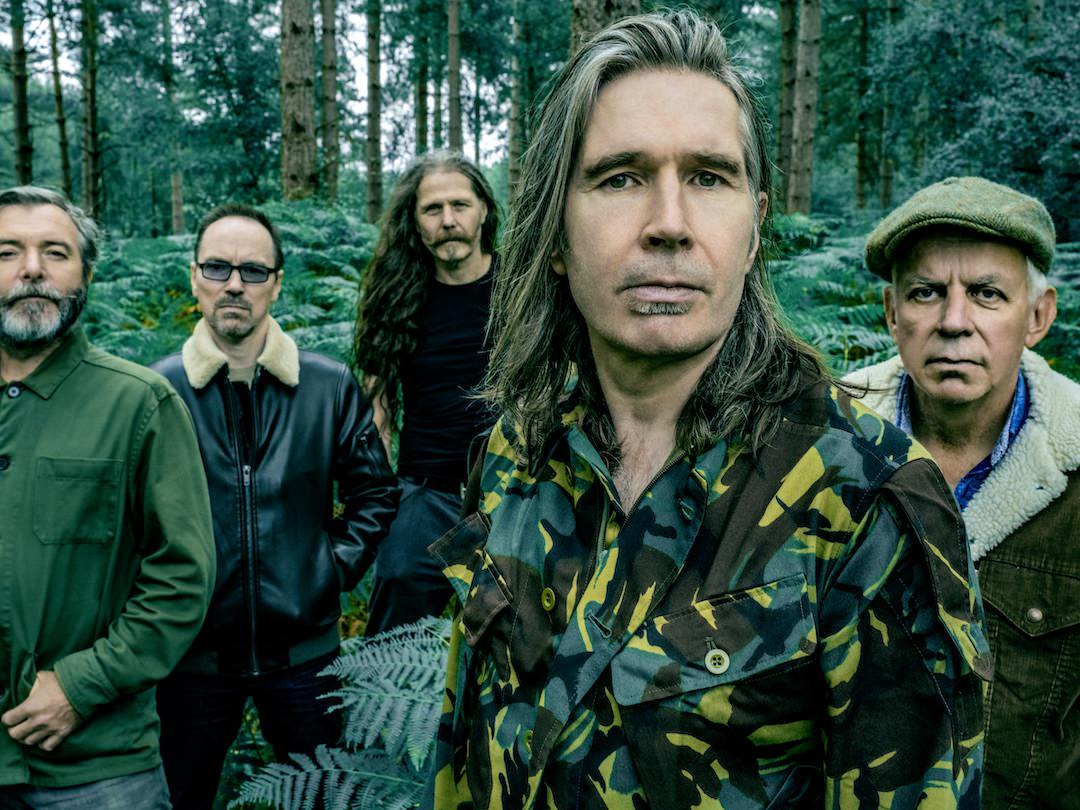
What about Fatherson? Is the emphasis on the ‘Father‘ prefix or the ‘son‘ suffix?

It’s not, as you might think (or say) Fatherson, with the heavy emphasis on the end of the word, turning one word into two. It’s run together as one word – Fatherson – the way you might say Andy Robertson, or perhaps if you’re of a certain vintage, B.A. Robertson.

“Liverpool lining up tonight with an unusual back four of Robertson, Richarlison, Gerry Cinnamon and Fatherson. It’ll be interesting to see how they get on against the pacey Kilmarnock wing backs….”

To my shame, I’d pegged Fatherson as Biffy-lite without knowingly listening to so much as a note by them; hairy muscle power pop in Scottish accents, I’d presumed. I’ve eaten at least one slice of humble pie in recent weeks as a result. Firstly, I was involved in the running of a brand new festival, Making Waves, and Fatherson had been booked as late afternoon performers.

Being responsible for the press and what not, and with band interviews being lined up, I dipped a hesitant toe in their back catalogue and was immediately taken by a sound distinguished by loud, anthemic, ringing guitars and proudly parochial vocals sung brilliantly. Where had they been all my ignorant life?! I lost track of time into the wee small hours one night while I found myself falling for the song that coincidentally gave our festival its name.

Fatherson – Making Waves

Photo (c) Kerrin Carr. If you steal it she’ll send the boys ’round.

It starts as many Fatherson songs do, with bookish and bearded guitar-playing vocalist Ross Leighton strumming out a kind of audible preface to what follows, just Ross with his plugged-in electric and soft Scottish burr setting the scene. As the intro plays out, there’s a wee brief pause where you just know the band is going to come crashing in, all flailing limbs and howling instruments, and Making Waves doesn’t disappoint. In they lurch, all divebombing, disorientating Valentine wooze and wobble, a wave of silver and mercury effect-heavy instrumentation filling the room then dropping out just as quickly to allow the vocals back in.

The wee brief, chiming guitar riff that introduces the chorus is totally ripe for soundtracking the goals of the week on a particularly hip football highlights show, maybe even Sky if they had suitably ‘on it’ researchers. I say ‘on it’, but Making Waves is four years old, so what do I know – it may well have soundtracked the entire 2018-19 season on Soccer AM for all I know.

Photo (c) Kerrin Carr. If you steal it she’ll send the boys ’round.

Making Waves is Fatherson in miniature. Riff heavy, melody-rich and hooky, played out with a we mean it, man sturm und drang. There are some great call and response vocals in the chorus, all keening heartache and sincerity, a sign that despite the ability to turn everything up to 10, there’s a compassionate soul beating at the heart of the band.

Cut to the Making Waves festival. Live, Fatherson are terrific. Like, really terrific. They’ve got the band look sorted – orange and grey boiler suits, turned up to ankle dusting levels like some hipster, fashion-conscious, guitar totin’ Beastie Boys collective – and boy, they can talk it like they walk it. They run on stage and they’re straight into it, a downhill without the brakes on riot of hair and frets and space-age chrome ‘n steel pedal boards. Those brief wee pauses the band so-loves are well-timed and slick. Flyaway hair freezes in midair then continues its trajectory as the trio slam back into it. Drums clatter like the four horsemen of the apocalypse. The bass guitar sounds like a speeding Paul Simonon in some places, my neighbour’s non-stop nail gun in others. Ross’s enviable collection of vintage guitars take a good heavy-plectrumed scrubbing.

I hang back sidestage and experience the show from a new perspective, watching their loyal audience mouth the words back to the band, watching as the band is spurred further on by the frenzy in the crowd. It’s all thrilling stuff.

Photo (c) Stuart Westwood. If you steal it he’ll send the boys ’round.

*Bonus Track

Just when you’re thinking that Fatherson don’t, or can’t, do acoustic-based music, along comes the loveliest version of Making Waves, floated in from the furthest corners of the internet, intent on worming its way into your primed and ready for it ears. Wonderful stuff all in, it’s the unexpected call-and-response female vocal in the chorus that pushes this version towards greatness. A gently restrained take of one of the band’s best tracks. You just can’t argue with musicality, melody and properly great singing.

Fatherson – Making Waves (acoustic)

Photo (c) Kerrin Carr. If you steal it she’ll send the boys ’round.

Fatherson, man, where have you been all my stupidly ignorant musical life?

demo, Get This!, Live!, Sampled

Twin Reverb

Check…check…check!

A-woo-oo! A-woo-oo! A-woo-oo! A-woo-oo! A-woo-oo! A-woo-oo!

(Pause)

Trrrr-rat-at-a-tat a-tee-tee

Trrrr-rat-at-a-tat a-tee-tee

Bass. How low can you go? Actually, not that low for now. A tight ‘n taut bass guitar plays high up the frets, its woody thunk foreshadowing what will follow:

dur der-der-duh-der

dur der-der-duh-der

Nagging, inistent. Immediately earwormish. It moves through the gears a semitone and the drummer falls in with a loping, skipping, skittering beat that’s been rescued after falling from the back of a lorry last seen leaving Manchester in 1989.

A brief dropout from the bass brings another burst of rat-a-tat percussion, immediately followed by two short and teasing electric guitar riffs – bendy, wobbly, hypnotic – and then, on a surge of nagging, asthmatic guitar, the band is here. The second guitar player makes themselves known by triggering their distortion pedal and a viral squiggle of feedback bleeds from the speakers for a bar or two before plectrum meets nickle. It’s a cheap, punky trick and you love it. 

Spitting in a wishing well. Blown to hell. Crash. I’m the last splash.

As far as song intros go, Cannonball by The Breeders is so familiar, so engrained that even 29 years later, Pavlovian rushes make their way to the soles of the Doc Martens without you realising.

The Breeders – Cannonball

It might be the riff that moves the feet – a nagging, twanging, guitar player’s sore finger of a lick jigsawed to a monster, see-sawing tidal wave of fuzzed-out barre chords, but it’s the vocal that moves the mind.

Kim Deal, moonlighting from a by then fragmented Pixies, has the unequalled ability of sounding as if she’s constantly grinning as she sings. Not in a Marti Pellow, I-can’t-believe-I’m-getting-away-with-this dimple buster of a grin, but a proper mile-wide smile as expansive and welcoming as the Ohio of her birthplace. In the golden age of Hollywood, Kim and her cheekbones would’ve been filmed swinging carefreely around lamposts. “I’m in love…I’m in love with singing, and I want the wurld t’know!” Check the video below for proof.

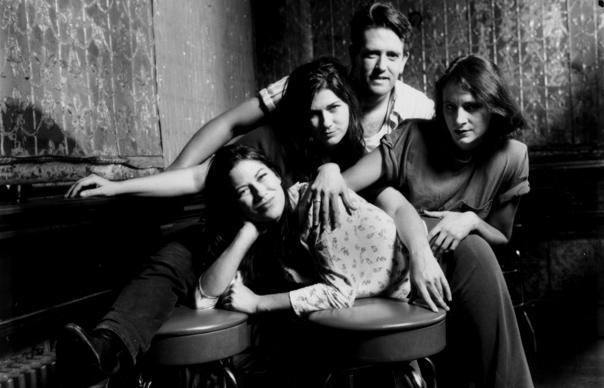
Freed from the pressures of Pixies, Kim takes centrestage and ropes in her twin sister Kelley (replacing Tanya Donnelly who’d by now left and formed Belly) alongside English bass player Josephine Wiggs and Slint’s Britt Walford on drums; an alternative rock supergroup of sorts that occasionally – especially on Cannonball – surpasses much of what made them so revered in their respective day jobs.

Kim and Kelley mesh and meld and harmonise across the verses, an electrified Mamas and Papas (or should that be Mamas and Mamas?), surfing the wave where two voices become one yet sound like three. Clever stuff, you’d need to agree. A metallic clatter of muted six-strings amplified to dangerously exciting levels heralds the noisy bit and suddenly you can see why The Breeders were one of Nirvana’s tour supports of choice. Melody and mayhem – always key ingredients in a proper guitar band’s arsenal.

Cannonball rocks. From the static bursts of fuzz mic, to the spontaneous “Heys!” that appear with satisfying regularity, to the underlying breathy a-woo-oos that you’ll spot if you scratch below the surface, it’s a real beauty of a guitar track, punky yet, eh, funky too. Do they really sing, ‘I’ll be your whatever you want…the bong in this reggae song‘? Yes. Yes, they do.

*Bonus Tracks!

Here’s the demo of Cannonball, working title Grunggae. Very much a work in progress, you can hear the seeds being sown; that shuffling beat, the twin vocals, the a-woo-oos, the metallic k.o. and rattling clatter before the noisy bit. The DNA is all in place, even if the arrangement isn’t.

The Breeders  – Cannonball (demo)

Fantastically lo-fi live version here:

The Breeders  – Cannonball (Live in Stockholm, 1994)

Magpie DJs Radio Soulwax have oft incorporated Cannonball into their sets, mashed up occasionally (as was the parlance of the time) with Skee-Lo’s I Wish, intelligent rap and indie rock cross-pollinating into something wholly different.

Radio Soulwax part 0


Listen from 3 min 20, or download the whole thing and marvel at the psychedelic jigsawing of it all; Beastie Boys, Maceo & The Macks, EMF, God Only Knows, Elastica, Jack And Diane, Eye of the Tiger, Mr Oizo, Erik B & Rakim, What Have You Done For Me Lately?, Basement Jaxx, Funky Cold Medina, No Diggity…..all fed into the Radio Soulwax super-blender and served up as something brand new…. even 20+ years later. The soundtrack to every one of my barbecues for the past two decades, I can never get enough of 2 Many DJs mixes.


Get This!, Live!

(Mc)Nabbed In The Act

“Hifff y’wanna have hhhittt zhingelzzz ‘n sell a tonna rekids,” Keith Richards once said to me, “you need’t’add a chick’s name to the song title. Th’chicksss go mad f’rit and their owld fellazzz have t’buy them…hur hur hur!”

Ian McNabb does more than a passable Keef impression. He’s midway through his second set at Irvine’s small but perfect Harbour Arts Centre and introducing Understanding Jane, the breakneck bar room thrash that first pricked these ears to the scorched beauty of The Icicle Works when I was a Tesco part-timer with £9 a week to blow on music.

“Of course,” says McNabb self deprecatingly. “Evangeline…Jane…Melanie…It never worked for me.”

The solo acoustic version of Understanding Jane that follows is a rootsy, 12 string country romp that would sit neatly between your Gram Parsons and Waterboys records, McNabb’s guitar sounding full fat and thrumming, his wheezy harmonica stirring up the dusty ghosts of yore as his scuffed boot heels (actually, make that comfy Sketchers) stomp the beat.

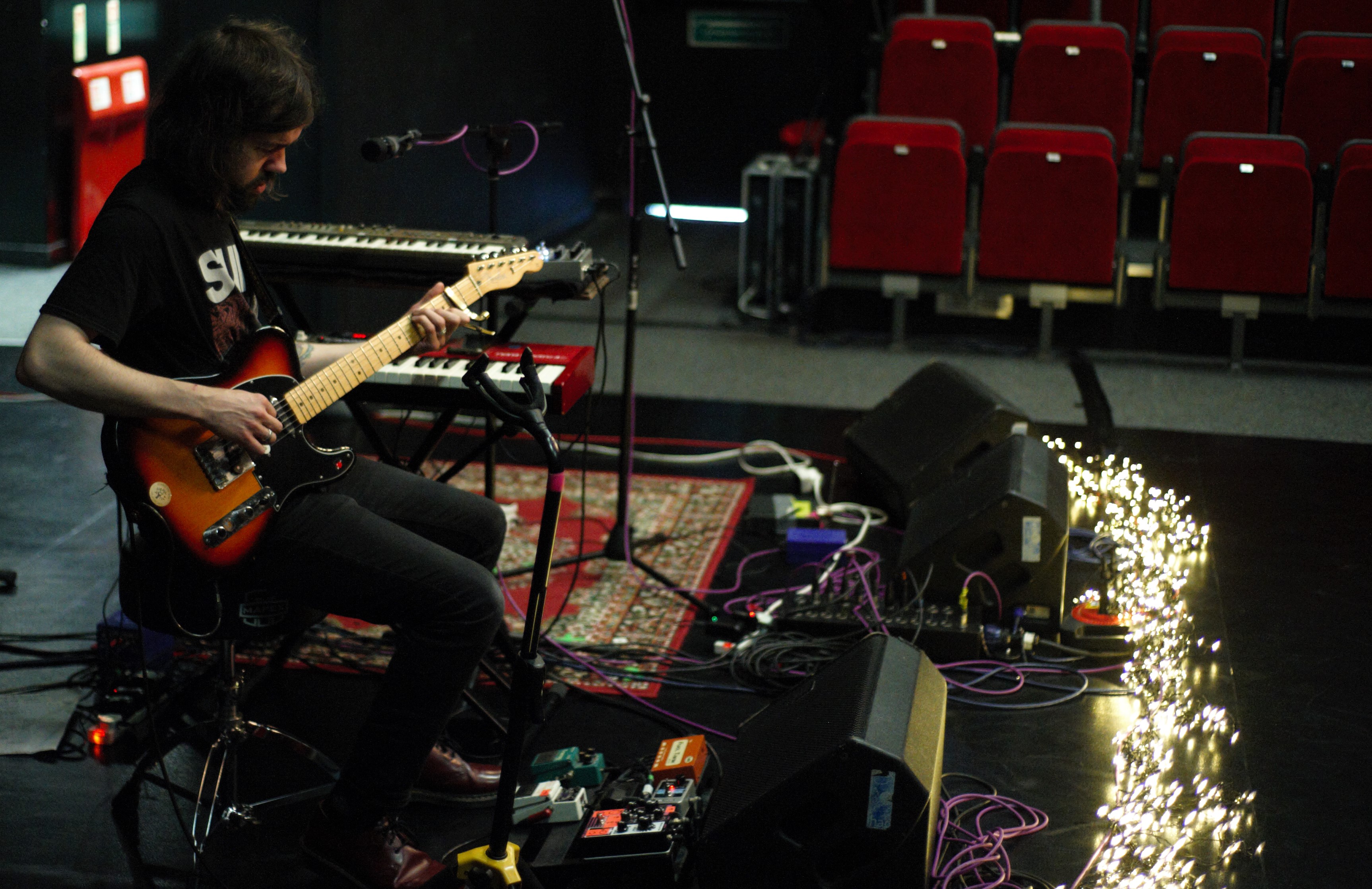
Ian McNabb, soundcheck, Harbour Arts Centre, Irvine 18.6.22

“I’m worried this one sounds a bit too much like Neil Young,” he’d winked at me at the soundcheck earlier, before embarking on a very Neil-ish harmonica-enhanced and fingerpicked downhome beauty. For good effect, and to test this listener I suspect, he throws in the odd line that keen and eagle-eared Young watchers the world over will spot from those old bootlegs now being dusted down and released with regular, wallet-emptying frequency as part of his Archives series. “I’m happy that y’all came down!” he says with a mile-wide toothy grin.

I’m happy that McNabb came down too – he’s on fine form in our wee Arts Centre and, with a vast back catalogue to draw from, he’s chosen to forego any support act in favour of playing two full-length sets the likes of which Broooce and ol’ whiny Neil himself might baulk at the length of. Indeed, a Springsteen show might appear as short and sharp as a mid ’70s Ramones run-through by comparison. McNabb has set his stall out with a selection of variously-tuned guitars and a keyboard that’s set to stun and it’s clear from the off that we’re here for the long run.

Much of the material in the first half draws from recent album Our Future In Space and the lockdown-recorded Utopian. Highlight for me was the misty-eyed Makin’ Silver Sing, played at the keyboard with lovely elongated synth pulses and hanging-in-the-air majesty.

Many of the bands that come through our venue feature jobbing musicians; the guitar player from band x also plays in band y and happens to play in a ceilidh band at the weekend when he’s not laying down the groove to I’ve got a feelin’ that tonight’s gonna be a good night in the bill-paying wedding band that keeps him in petrol and plectrums. We once had a support act turn up after driving 5 hours from the very north of Scotland, play a half hour set to a disinterested and half-empty room and turn back around again to make the long drive straight home because both the singer and drummer were starting the early shift in the local tourist trap hotel at half six the next morning.

That notion, folks, of four guys against the world went out the window long before U2 started depositing their rubbish records on your iPhones while you slept. On Makin’ Silver Sing, Ian McNabb captures it perfectly. It’s a brilliant and underheard beauty, with the bonus of a great video. Do the right thing and listen…maybe even buy it. It’ll keep the songwriter in petrol and plectrums – he favours Roger Waters-branded picks as it so happens.

The second set is jam-packed with the big ones – Birds Fly, Hollow Horse, When It All Comes Down – before finishing, of course, on a raucous and well-received Love Is A Wonderful Colour. McNabb is very funny throughout, singling out individual audience members for a dose of rapier Scouse wit, breaking into spontaneous snippets of Live And Let Die (“‘appy Birthday, Sir Paul!“) and the Neil Young aping Horse With No Name whenever it occurs to him to do so. Take your eyes and ears off him and you’ll miss something funny, I tell you.

As much as the big hits are pleasing on the ears, it is though, another keyboard-led track that further blows me away. New track Harry Dean Stanton is jaw-dropping in execution; a swirl of room-filling electric piano and enough reverb and echo on the crystal clear vocal-ocal-ocals to drown a (Crazy) horse. Wonderful stuff.

Ian McNabb plays Leaf in Liverpool this coming weekend. You know what to do.


Live!

Nothing Ever Happens…In Irvine

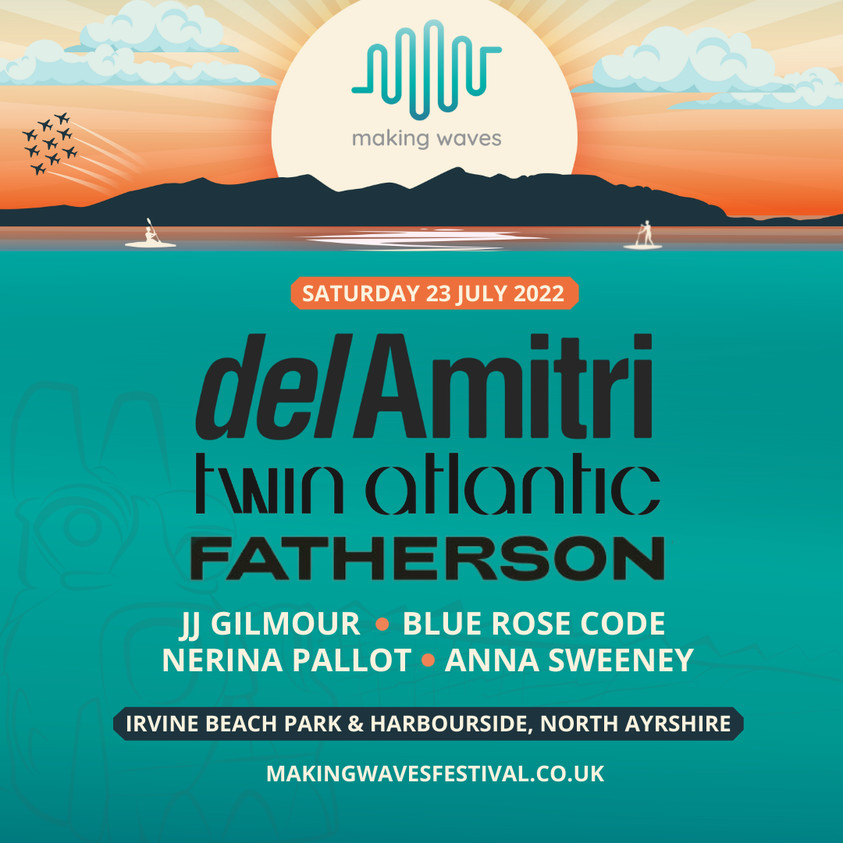
I’m involved in the organisation and what-not of a new music festival in my hometown of Irvine this summer. Irvine, a town so often a regular stop-off for the big touring acts of the day – The Jam, Madness, The Clash, The Smiths, Human League, Oasis, Bjork – has been long-starved of big events for the last quarter of a century and now the Making Waves Festival is the first step to reversing that trend.

Headlining the Saturday night is Del Amitri. I interviewed Justin Currie a couple of weeks ago and this week the Irvine Herald ran a version of the article in my semi-regular Off The Freckord column. A second, alternative article was syndicated to different newspaper groups, including one or two nationals, so there’s a chance you may have seen it pop up somewhere in the past few days. What follows here is a jigsawing of the two independent articles into the one bigger piece. Think of it as an exclusive for Plain Or Pan readers.

Headlining Making Waves Festival at the Beach Park on 23rd July is Del Amitri. The Glasgow band, formed, believe it or not, almost 40 years ago, have released seven studio albums to date and tasted chart success with 1992’s Nothing Ever Happens, the straight-in-at-number-13 smash Always The Last To Know and Don’t Come Home Too Soon, the official song that would go on to soundtrack the national football team’s ubiquitous early exit from the World Cup in France, 1998. Top of the Pops appearances, Glastonbury slots, prestigious support tours… Del Amitri has given singer and focal point Justin Currie a full and interesting life. Ahead of Making Waves, Justin took the time to chat to Off The Freckord about lockdowns, live shows and longevity.

“Lockdown was surreal, wasn’t it? There was this strange anxiety everywhere, especially during that first one. ‘Am I going to die of it? Will I kill my friends if we meet up?’ There was a collective nervous breakdown, I think. Amongst musicians there was a real worry that we’d never play again. I’m sure artists like Bob Dylan and Van Morrison had those conversations inside their heads. I really missed performing. It was the first time since I’d been 14 years old when I hadn’t played live music somewhere. My whole life until lockdown had been structured around live music – other bands as well as my own – but the need to rehearse, work up new songs, continue the process that encourages you as a musician to keep going was suddenly and cruelly taken away. Unlike many others, I chose to do nothing in lockdown. Nu-thing. I watched the telly. I read books. I would see people out running and think, ‘Nah. That’s not for me.’ I’m a musician, so I dabbled in live streams for a bit. I didn’t like doing them though. The disconnect made it feel sterile and a bit naff. I stopped doing them quite quickly. I’m a songwriter, so I then tried to write songs… about lockdown. It was all contrived rubbish. Songs should be personal, but appeal universally, not be universal in flimsy subject matter. They were all quickly binned.

It’s great to be back with the promise of playing live in front of people again. We’re gearing up for a small run of shows, most of which have been rescheduled three or four times in the past couple of years. It’s strange, rehearsing. It’s not hard to play all those big hits…but it’s difficult to play them well. We’re all rusty and out of the way of playing them, so we’ve been working hard, oiling the Del Amitri gears and making them slick and professional-sounding. By the time we’ve completed these shows, we’ll be hitting the summer festival trail and we’ll be sounding great, that I can promise. We’re not what you’d consider a festival band, but I enjoy playing those smaller ones with an eclectic line-up and an audience who are all there for the music rather than the lifestyle. Festivals where you can see a reggae band on a small stage, or a folk band in a tent, alongside the big names on the main stage are always good fun. Making Waves seems like the ideal boutique festival in which to see Del Amitri. It should be good fun.

I feel really lucky to still be doing this. When I formed Del Amitri I was incredibly fortunate. We were signed quite quickly. We were championed by people like John Peel – a hero to me – and we found ourselves in the charts on a few occasions. We’d ran out of steam a wee bit by the early 2000s, but a few years later we were offered good money to go back on the road and play the hits. Why deny yourself the opportunity of doing something that you’re good at?! Luckily – again – we had an audience who were keen to come out and see us. We appeal to people, I think, because we’re a melodic band with reasonably intelligent lyrics. Good songs are good songs, regardless of the musical fashions of the time. It’ll be good to dust them off and give them a right good airing at the Beach Park!”

Best Festival Experience?

“Del Amitri has been lucky to have been asked to play some of the biggest and best festivals out there. We’ve played Roskilde in Denmark, T in the Park, Woodstock ’94, Glastonbury… Sometimes, at the bigger festivals there can be a bit of a disconnect between band and audience. Everyone is so remote and far away. The gap between stage and audience is sometimes larger than the venues we’d ordinarily appear in! I always enjoy playing them though. There’s nothing better as a musician than hearing your own songs sung back at you from an audience full of people who know every word.

Whenever Del Amitri played at T in the Park, I made the conscious decision to drive so that I could run from stage to stage and see as many bands as possible without needing to rush away after our set. I’ve seen some great bands over the years this way. Pulp playing Common People to a field full of up-for-it punters at a mid ‘90s T in the Park will live long in the memory, the soundtrack of the era played out for all who were there.”

Worst Festival Experience?

“When I was 15, my pal and I went to Leeds for the Futurama 2 post-punk festival. There was a great line-up and, this being our first festival, we marked the occasion by downing his dad’s stolen whisky on the train on the way to Leeds. I lost my wallet, my train tickets and my ticket for the gig. The woman on the door felt sorry for me and let me in. Midway through a brilliant set by Soft Cell, my whisky hangover started to kick in. I actually fell asleep and missed the rest of that day’s music. The next day, the person on the door was not so forgiving. They wouldn’t let me in without a ticket, so I spent a day wandering Leeds until it was time to go home again. At the train station I had to beg them to let me travel back to Glasgow and they did so by forwarding a bill for my ticket to my mum and dad. Memories, yes, but not a great festival experience.

Del Amitri played Glastonbury in 1990 and we were billed to go on after James. James! One of the greatest singles bands – every track in their set at the time was a solid gold hit and every other person in the audience was wearing one of those baggy James t-shirts. No way were we going on after them! I suggested Del Amitri went on before James – that was the sensible thing to do – but our management at the time seemed keen to keep the billing as it was and, after numerous arguments, James did indeed play before us. Hit after hit after hit…they just kept coming. We then took to the stage and by the third or fourth song, the audience had deserted us. It was a long slog to the end of our set, I can tell you that. So, Twin Atlantic – I believe you’ll be on immediately before Del Amitri at Making Waves. I know you’ll be good…just don’t be that good, will you?!”

What Makes The Perfect Festival?

“Obviously in Scotland the weather is key. It poured it down at Wickerman one year. Two weeks of glorious sunshine and then, just as Del Amitri were about to go on, down it came. Anything other than rain is what you hope for, isn’t it?

Variety at a festival is important. A varied and interesting line-up with an act or two that I’ve heard of but haven’t yet heard is always good. I’m a music fan as much as everyone else. I get just as much a buzz from seeing a great new band as you do.

A nice pint is always welcome too. Watching a great band with a beer is one of life’s pleasures, isn’t it!”

Justin Currie’s Ideal Festival Line-Up

“Let’s see. Making Waves has seven bands playing, so let’s go for a magnificent seven. Obviously, you need the funk, the soul, the ingredients that’ll get you moving, so without hesitation I’d need Sly & The Family Stone, Prince and James Brown as triple-headliners. The Beatles, obviously, another band with an amazing bass-playing singer (!) and, for the filth and the fury, the Sex Pistols too. On the smaller stages I’d have Culture in the reggae tent and I’d definitely need to find a space for Pharoah Sanders in the jazz/chillout/comedown area. Oh, and Cat Power too. She’s a great vocalist. She should play at every festival there is. That’s eight? I’m sure we can squeeze them all in!

Del Amitri headline Making Waves on Saturday 23rd July alongside Twin Atlantic, Fatherson, JJ Gilmour, Blue Rose Code, Nerina Pallot and Anna Sweeney. Tickets can be bought here. It’d be great to see you there.

*Oh! The Music!

Del Amitri – Not Where It’s At

I once read a savage line about Teenage Fanclub being the Del Amitri it was OK to like, the inference being that Del Amitri and TFC aren’t miles apart in sound yet light years away from one another in terms of credibility. Who was it that said the music business was a cruel and shallow place?

Not Where It’s At is prime-time Dels; chiming, 12 string Tom Petty-ish guitar lines, crashing chords, honeyed harmonies, minor chord middle eights and enough melody packed into its three and a half minutes to keep you whistling until the cows come home. The Teenage Fanclub fan in your life would very much appreciate it, I think.

Get This!, Live!, New! Now!

Roddy (Claim To) Fame

Idlewild frontman and focal point Roddy Woomble quite often steps away from the day job to indulge the folkier side of a personality that is perhaps quashed and lost in the blustery storm that his band cooks up whenever they get together. My Secret Is My Silence, released back in 2006 is a good starting point if you like this sort of thing; the title track itself is a lovely, lilting, fiddle-driven end of the evening affair that is exactly the sort of song that sounds just right five minutes before the bells when the curtain is drawing on an old year and re-opening to a new. He’s got a great voice, pitched somewhere between Michael Stipe and Ewan McGregor, and sings in an honest, unpretentious fashion. As I say, worth checking out.

Soundcheck, Harbour Arts Centre, Irvine

Even better is his ‘current’ release, Lo! Soul. I use those inverted commas as the album is now a year old, but it’s only just come to my attention on the back of an excellent ‘solo’ show at the tiny but perfect Harbour Arts Centre in Irvine last week. I use that second set of inverted commas because, despite being billed as a solo act, he arrived with long-time Idlewild foil and current hip name to drop Andrew Mitchell.

As Andrew Wasylyk, Mitchell has released a handful of hard-to-find records that meld the intricate and jazzy compositions of prime time David Axelrod to the very best of UK library music of the ’60s and ’70s. They chime and vibe and meander tastefully like soundtracks to long-forgotten films of more innocent times; of walking lazily to school and endless hazy summers and adventurous bike rides out into the countryside where housing estates now nestle. The music of Gregory’s Girl or any of those Bill Forsyth films of the ’80s might be a good reference point for any reader struggling to make sense of this in their internal sound system as they read, but truth be told, they’re far more sophisticated, far more hip than even any of those beauties. You can imagine my disappointment when he told me he hadn’t thought to bring any of his own music to the merch stall. Seek out Fugitive Light And Themes Of Consolation for starters. And go and see him live with his 8-piece band who’ll be hitting the road anytime now. You can thank me the next time you see me.

Wonderfully, Lo! Soul combines low-key Roddy with peak-performance Andrew. Mitchell’s keys and synths are all over the record and it’s spectacular as a result. Big, clanging, minor key, grand piano chords give way to wonky and wobbly Moog, fizzing and squeaking and vintage and essential. The record has a lovely ebb and flow, Roddy’s unselfconscious croon filling the gaps left by the keys, leading the way whenever producer Mitchell reigns in the instrumentation. Pitter pattering drum machines rattle the rhythm throughout, as little soundscapes sandwiched between the beats and the vocals colour it all with a mystical sheen; synthesised ’70s Philly soul strings, spring showers of Fender Rhodes, tinkling and descending piano triplets… they’re all in there. It’s a really great wee record.

The standout track may well be Architecture In L.A..

Roddy Woomble – Architecture In L.A.

Sounding like the magpie eclecticism of peak Beck hotwired to Prince’s Lady Cab Driver, if De La Soul haven’t cut, sampled and looped that little horn motif and added a Daisy Age happy rap on top by the middle of July and conquered the world with it, I’ll be very disappointed. Even Roddy himself could be the toast of the festival season if he were afforded the opportunity of playing on the main stage as the sun sets to orange and an expectant crowd, hopped up on happy pills and expensive alcohol, look to cut a rug and get their party started. “All the ladeez do this…” (waves to the left) All the fellas do this (waves to the right)” I tells you, it’d work.

In a bizarre twist of fate, Roddy and myself actually grew up living across the street from one another, although being maybe 7 or 8 years younger than me he wouldn’t have known. His sister was ages with my sister and I’d sometimes see young Roddy running in loud and joyous circles around the front garden in his nappy when I was sent to bring her home. The Woombles then moved… to the same street we’d move to a year later. Then Mr Woomble’s job took him to Edinburgh (and then France and America, as I’d find out) and they were off.

I never forgot the name though. It’s not a common one. So, when Idlewild started making the press, I did wonder. Years later I had my thoughts confirmed when I interviewed Roddy ahead of what the local paper would bill his ‘hometown show’, when he played the first of his Harbour Arts Centre dates in 2014 or so. Funny how things come around.

Live!

Just One More Thing, Ma’am

The crumpled gumshoe Columbo would utter that phrase in the closing scenes of nearly every show, usually when snaring the perpetrator with undeniable evidence, his cleverly chosen way with words that followed, spoken smilingly and friendly, almost incidentally, triggering the draining of the colour from the face of the criminal as the realisation dawns that they’ve been caught.

The Trashcan Sinatras are all big Columbo fans and, in the spirit of Peter Falk and the weekend I’ve just had, it would be remis if I didn’t utter that famous phrase in relation to its own closing scenes. So, if I may…

…just one more thing.

Where to begin?!

I met Gideon Coe off his train in Glasgow and we walked across the city to Mono, a vegan cafe/bar/venue, attached to Stephen Pastel’s record shop. Gid (as I can now call him) was familiar with Glasgow, but I enjoyed my unofficial role as tour guide while we walked. “That’s the spot where Bob Dylan watches the pipe band in ‘Eat The Document’. This is the decaying yet still functional Panopticon theatre where, in the early 1900s, Stan Laurel performed for the first time. Over there by the Clyde was where Michael Stipe and Natalie Merchant performed a surprise show at Glasgow’s Big Day in 1990. Naturally, being oblivious to the Stipe show taking place, my pals and I went to see Wet Wet Wet and Sheena Easton instead.” And so on and so forth.

Gid is on first-name terms with all the Mono staff and happily shoots the breeze while I mooch about the racks and wish I had £500 to spend on records. We eat in the cafe. Grab a drink from the bar. “Are you having a drink drink?” Gideon asks conspiratorially, and the scene is set for the rest of the day and night ahead.

More unofficial tour guiding takes place on the walk to the hotel – it’s impossible to snag a taxi in Glasgow these days, especially when the cup final at Hampden has just reached its conclusion a couple of miles across the river – so we take in the sights. “That’s the BBC over there,” I point. “Yes, I’ve been known to work there,” replies Gideon with a knowing smile. Oh, aye. Duh.

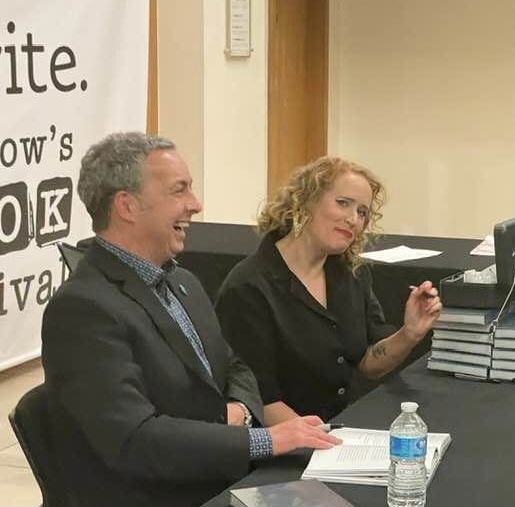
We check in, change our shirts and are quickly back out again, walking now to the Mitchell Theatre for our Aye Write slot. We chat about the order of the show, the questions he’ll ask, the parts of the book that will make for good conversation… and it all starts to get very real. Stephanie, Ian from Last Night From Glasgow and assorted Trashcans are already there. Pre-match nerves are de-jangled through red wine and whisky. Bob the promoter has allowed the show to overrun, and wonderfully, the band now has a half-hour set to play. The figure of 300 tickets sold is banded about as we walk the long walk through the Mitchell’s marble and deco-rich halls and suddenly we’re backstage, the thrum of the expectant audience wafting through the curtains as we’re fitted up with those wee Howard Jones-type head mics. The seating plan is shared and agreed, Bob goes out to introduce us and we walk out into the void.

First thoughts? Folk are clapping. It’s roasting hot. This seat is comfy. The carpet is springy. I didn’t need to bring water. Is my shirt wrunkled at the waistband? I can’t see anyone in the audience, not even a silhouette. It’s dark out there, but there’re folk out there all right. They laugh at the right parts, clap Stephanie’s photos as if she’s just declared that petrol is now a pound a litre and fail to heckle at any opportune moment when one of us pauses to gather our thoughts before answering Gid’s questions or prompts.

John is a great spokesman for his band, sometimes contradicting the version of events in the book, always engaging and positive and with a neat way with words. “Irvine was a wee town that was in a huff with itself,” he says at one point. Ian hadn’t planned on being on stage beyond the first two minutes, but there he is, allowing the story to unfold around him and sharing the odd nugget of LNFG/TCS detail when the conversation heads that way. Stephanie talks of the record’s dude-like producer Ray Shulman and the clean eye of the book’s designer, Brooklynite Chris Dooley, and she and Gideon marvel at the real-life location of the fictitious Cakebrick Road in the lyric of Earlies.

And then, after what seems like only five downhill-without-the-brakes-on minutes, our part is over. We are ushered off stage, de-headsetted and, to a smattering of rippled applause, take our seats at the front for the Trashcans’ set.

And what a set they played.

Seven songs all in, six from the album in focus and an exquisite, jaw dropping version of The Safecracker from A Happy Pocket, the follow-up to I’ve Seen Everything that was so underpromoted by the record label that it never actually received an official release in the States. The ThreeCS are on fine form, Frank stage left, eyes closed, moving away from then stepping closer to the mic to allow the dynamics in his voice to shine. He lets loose an occasional wild and carefree emphasised final line, his jaw juts in and out to the acoustic groove of his guitar, his sticky-up hair looking backlit and electrified. John, stage right and grinning wildly at the thrill of playing these great songs again is the reliable heartbeat. And Davy, seated centre-stage on Aye Write’s bespoke table and looking like the Mount Rushmore of cult band bass players is nonchalant yet focused, the woody thunk of his remarkably right playing underpinning the lot.

Naturally, the crowd laps it up.

And then, we’re being ushered, Stephanie and I, to a Waterstones-sponsored table where multiple copies of our book (our book!) sit, being eyed up by a healthy queue that snakes its way around the table and back to the venue’s stairs. We sign books. Lots of them. Some for Trashcans fans, some for Aye Write regulars who hadn’t heard of the band, let alone their music, an hour ago. I get folk to sign my own copy of the book; contributors, many of whom I’d met only across cyberspace. Stephanie chuckles a lot at the absurdity of it all and I follow suit. I realise, after 30 or so signed books, that the ‘g’ I write in Craig is a bit rubbish, so I make it better for the copies that will sit on the Waterstones display underneath the ‘Signed By The Author‘ banner. That’s a picture I look forward to taking.

Signing over, and elder/younger family members safely dispatched back to Glasgow Central, we – a healthy mix of book folk and band folk, partners and pals – spill out into the still-light streets and make our way to the CCA, where we’ve a room booked upstairs but end up taking over the two floors in any case. We’re away from the riff raff and amongst hot company, as it seems much of the great and the good of the Scottish music scene is here. Drinks and shouted conversations are the order of the day, while Gideon and Davy corner the bar, deep in post-punk conversation.

By chucking out time though, our new 6Music pal has wandered off to find a taxi, not answering his phone or replying to texts. There’s an after party party going on Gid, and you’re meant to be there. Davy and I and our respective better halves load up on chips and pakora and follow my sister and Stephanie to the unsuspecting Air B’nB that will play host to our increasingly loud conversation, until 4am when Frank suggests a taxi. It comes eventually, but it’s not our booking. The driver takes us anyway then midway tells us he’ll go only to Byres Road. We get out and walk back to our hotel – a longer walk from here than from the flat we’d left. It was that kinda night.

Trashcan Sinatras – Worked A Miracle

The Trashcans’ love of Columbo and board games is reflected in the lyric of Worked A Miracle… ‘My Reverend Green revolver…guessing game is over…nobody leaves this room! Nobody touches anything!” There’s a great bass line running through it, replicated in rich Ayrshire doo-wop – ‘dum-dum-dum-dum-dum‘, some sudden stops and a sinister undercurrent in the bridge. It’s something of an under-appreciated track that could well lend its title to the event we somehow found ourselves a central part of at the weekend.

Worked A Miracle indeed. I believe too, there are another five albums still to write about…

Get This!, Live!

Soothe Your Fear

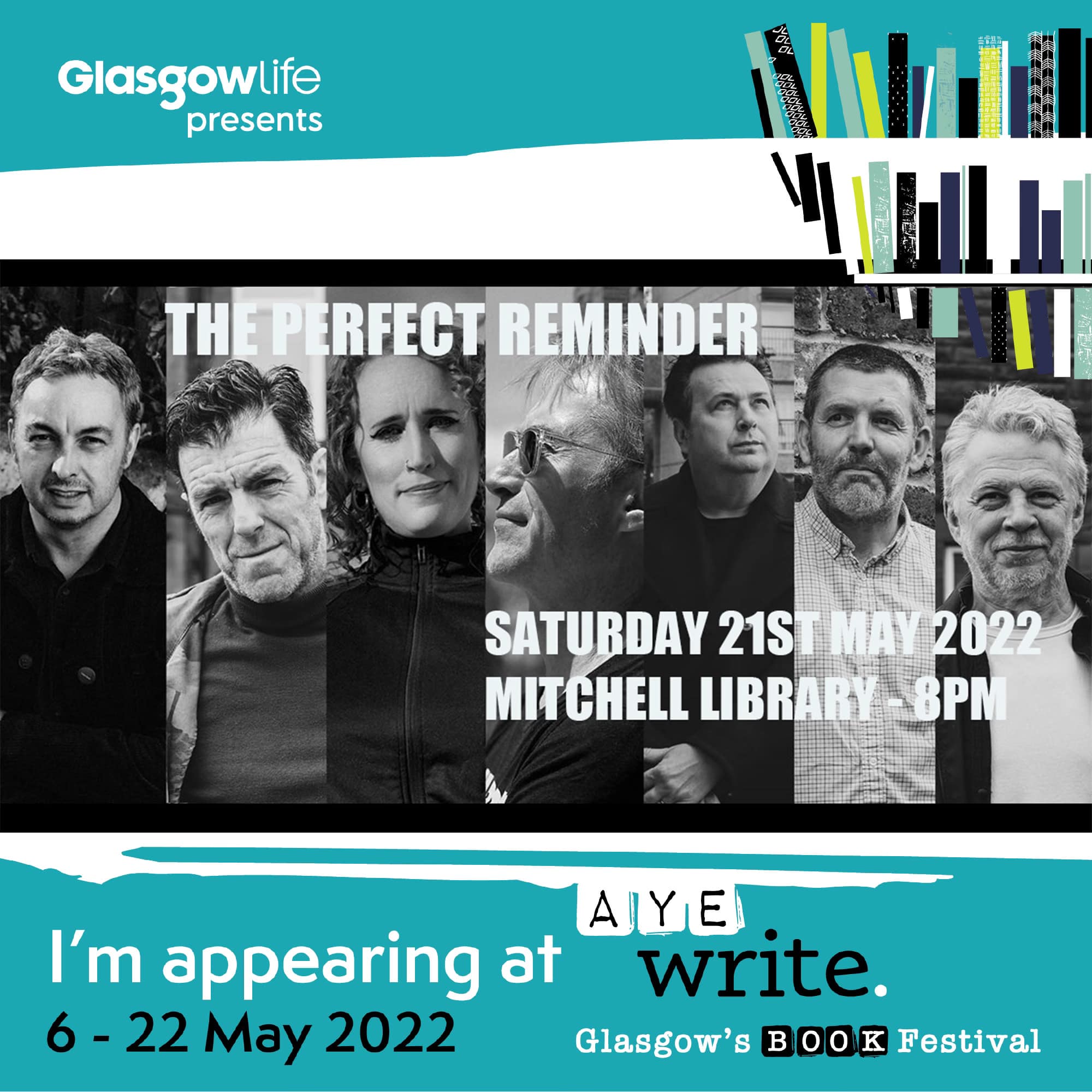
If you want to find me this Saturday night (21st) I’ll be on stage at the Mitchell Theatre in Glasgow for The Perfect Reminder‘s slot at Aye Write. In a gentle nudge to the casual reader here who may already know about the book and subsequent event and might be intrigued enough to buy it, or be tempted even to come along, I’ve taken a little section of the book and included an edited version below. Regular readers here may well spot several Plain Or Pan trademarks; conversational tone, light…funny even, with alliteration lurking inside every stuttering sentence and long-winded similes wherever one or two words would work far better instead. If it gets you a gig at Aye Write – the prime time Saturday night slot, no less – I’ll happily continue fashioning my writing in the style I do.

The book is set into sections, with each song getting its own chapter that’s kickstarted by some writing and followed by a carefully woven tapestry of Trashcans’ thoughts, theories and half-truths about how each song came to be. The section below focuses on I’ve Seen Everything, the title track of the album under the microscope.

Trashcan Sinatras – I’ve Seen Everything

The crumbling old remains of the Art Deco Ayrshire Central Hospital in Irvine. It’s pretty much seen everything, certainly every person born in Ayrshire up to a point.


I’ve Seen Everything

My wife, being both morbid and practical, regularly asks what songs I’d liked played at my funeral. I usually bat away any such questions with waffled words about such things not really mattering, when of course they totally, absolutely matter. With its world-weary sigh and joyful melancholy, I’d like to state here and now that if I pass before it’s expected of me, I’ve Seen Everything should be the tune that soundtracks the curtain drawing on my life. Here’s why.

I was in the fortunate position of being around the studio a lot when the album recording sessions were in full flow. I worked in Kilmarnock at the time and the band I played in – Sunday Drivers – had a rehearsal room at Shabby Road, so on the nights when we practised, I’d leave work and go to our room early rather than get the Number 11 bus home to Irvine to go back to Kilmarnock again. The kettle was always on (even if the chances of getting any milk, or at least milk in date, were slim) and you never quite knew who you might meet in the kitchen. It was around this time that Chas Smash once poured me a mug of proper builder’s tea. “Hey you!!!” he never said, “Don’t drink that, drink this!” No milk or sugar was offered and, overwhelmed at the idea that a bona fide popstar would make me a cuppa, I was too scared to ask. ‘This is Madness,’ I thought, as I drank a mug of undrinkable tea and plucked up the courage to tell him that Baggy Trousers was the first record I ever bought.

Shabby Road was a great place. The walls, damp as they may have been, thrummed with the dull thud of bass drums and murderous singing from the half a dozen rehearsal rooms within. The damp patches and flaking paint gradually disappeared with each and every Trashcans’ release. A huge Obscurity Knocks promo poster greeted you at the top of the stairs, Paul’s outstretched skateboarding arm hiding the worst of the offending urban decor. There was a real, tangible buzz whenever you were there. The office was filled with the ephemera of working band life – a stack of mail to be answered, a wee pile of Go! Discs artist CDs, an in tray and an out tray, two ashtrays; one dirty and full of the tell-tale signs of working band life, the other clean and full of wee badges –The Cliché Kills! I Hate Music! The formidable Nanette was in charge of things, behind her desk the framed and signed portrait of yer actual Sinatra, the chairman of the board, overseeing proceedings with his clear and beady ol’ blue eyes.

One time I was halfway up the stairs to be met by Stephen, dismantling and reassembling his drum kit in the hallway. “Better acoustics,” he smiled. 

I found myself in the control room when the band happened to be listening to a playback of I’m Immortal. I swivelled in the producer’s chair as Ray Shulman chatted with me about working with Bjork and The Sugarcubes, and the cello sound that was on the just-released debut record from PJ Harvey. He was pondering aloud about adding a similar see-sawing sound to I’m Immortal. I wonder if they ever tried it?

In our room below, we’d often hear the muffled sound of these new Trashcans tunes being twisted and turned into the masterpieces they became. I have a really vivid memory of sitting alone in our rehearsal room, waiting for the others to arrive, with a flaky sausage roll and an Irn-Bru as someone – Paul or John, but I’m thinking Paul – played a repeating guitar riff over and over and over again in the room directly above. No drums or bass or vocals, just a chiming electric guitar, pausing now and again before picking up where it had left off.

I came in one night to a cassette tape on top of my amp with a wee note from Paul. ‘Here’s some new tunes,’ he wrote. ‘The first track will likely be a single. Let me know what you think.’ When I played it back at home later on, I recognised that guitar riff, now fleshed out with happily ringing acoustics, a rootsy bass stomp and a terrific vocal, Frank seemingly duetting with himself about big mistakes and soothing your fears. By the second chorus, I felt like I’d known it all my life. By the time the trumpets parped their way down from heaven in that big, elongated outro, fighting for earspace with those ever-cascading and inter-weaving backing vocals and sounding as upliftingly melancholic as the Kilmarnock Concert Brass Band in full pomp outside the Burns Mall on Christmas Eve, I was punching the air in joy. That better be a single! I thought.

Frank: When we recorded I’ve Seen Everything we were going for that light and breezy sound. That’s quite an easy thing to capture in the studio. When it’s played live, it’s too hard to do it breezy, and our aggression and drive takes it to a whole new place.

John: Frank approached Ivor Cutler to play harmonium on the title track. He got a lovely reply from Ivor explaining why he couldn’t do it.

Frank: While we were at the Mill, I sent a note to Ivor c/o the BBC. We all love him, of course. Songs from his albums would always be coming on the van stereo, poetic relief from the rock music.

Iain Wilson: For maybe a year, we had the A5 glossy black and white promo pic of Ivor, his reply to Frank, stuck on the top of the dashboard facing the windscreen on the red van.

Frank: It was enough, really, getting a reply from him. I’m partly (actually mostly) glad that he didn’t come over to the studio, because I was so clueless then that I would have been daft enough to over-direct him and be generally overbearing. He’d have given me an Ivor tongue-lashing. There would’ve been tears.

You can catch ace photographer Stephanie Gibson and a couple of Trashcans talk about the book tomorrow afternoon around 3 on the Nicola Meighan show on BBC Radio Scotland.

You can read the full section in the book by buying it here. And you can book tickets for the Aye Write book show, featuring a TCS set at the end here.

Do it, eh?