Cover Versions, Hard-to-find

My Whole World Is Falling Down Triple Whammy

When it comes to overlooked, it’s hard to see past William Bell (no pun intended). Precious little has been written about William and his contribution to soul music, but when you poke and prod beneath the grooves and squint at the small print on the records, you’ll discover that he was a key figure in the development of Stax Records’ punkish ying to Motown’s pop yang. All music fans like Motown. All music snobs prefer Stax. That’s just the way it is. And while the stories of Holland-Dozier-Holland, Marvin Gaye, Smokey Robinson et al are widely known, William Bell’s tale could do with a leg up.

Bell learned his chops playing in Rufus Thomas’ backing band. It couldn’t have been easy. Thomas has a voice like a rooster at the break of day and liked to dress up in the sort of costumes Elton John might have refused to wear on account of them being too outlandish. Tired of doing the Funky Chicken, the Funky Penguin, the Push And Pull, the Itch and Scratch and all manner of novelty nonsense,  William made the decision to go it alone. A wise decision, as it turned out. With a series of self-penned, tear-soaked, southern soul-inflected heartbreakers, he firmly established himself alongside Isaac Hayes and David Porter as one of the go-to staff writers at Stax. You Don’t Miss Your Water. Born Under A Bad Sign. A Tribute To A King. I Forgot to Be Your Lover. All flowed effortlessly from his pen and into the R’nB charts alongside a handful of duets with Judy Clay.

Weller. On target.

I first discovered William Bell via Paul Weller, who stuck a version of Bell‘s My Whole World Is Falling Down on his You Do Something To Me single. Weller plays a terrific high in the mix guitar riff (same as the original, only grittier, rougher and much more mod) and channels his best white man sings Otis vocal. But don’t let that put you off. It was 1995 and everyone was going mental for Ray Davies. Weller was just being contrary, for which I am eternally grateful as I now own a handful of William Bell LPs on the strength of his cover. Recorded for a Radio 1 session, it’s played live without overdubs and is a fine indication of just how tight and in-tune with one another Weller’s band was back then. Essential listening, as they say in some parts.

An interesting (and totally off the wall) cover is by Jamaican Ken Parker. His uptown uptempo version was recorded at Studio One by Coxsone Dodd and skanks in all the right places. The version I have is over 8 minutes long and goes kinda dubby in the middle before making its way back to the main song and melody. Me tinks da ‘erb might be involved. Jesus. I came over all Alan Partridge there. Sorry ’bout that. Anyway, heady stuff from the son of a preacher man, as they sing in some parts.

Three very different, excellent recordings straight outta three of the most famous studios in recording history – Stax, Maida Vale and Studio One. How’sabout that then, guys ‘n gals?

Get This!, Hard-to-find

Excess All Areas

Fritter about on the margins of success. Get signed. Release a hit single. Release a hit album. Tour bigger venues. Release a small run of future classic singles with killer b-sides. Release further singles and albums with ever-decreasing returns. Implode around 5th/6th LP when key member leaves or dies. A year or so down the line, entice same member back (unless dead) for one last hurrah and pay-day, but by then the magic is gone. All this is of course played out to a backdrop of drink and drugs and guns and girls and boys and Bentleys and bad and/or bent management. The trick for all bands is to make the upward trajectory as quick as possible, plateau for as long as everyone can stand you then make the downward trajectory as smooth and pain-free (and lucrative) as you can. (cf. most of your favourite bands, even that Stone Roses lot,  – they all fit the model to some degree or other, but you knew that already).

Happy Mondays were well into the downward trajectory of their life when they decamped, in part to escape the Manchester drug scene, to Barbados to record …Yes Please!, the album that proved to be their last. Unable to secure the services of Paul Oakenfold, the uber producer who’d sprinkled their previous work with hit-making fairy dust, the band instead chose to work with Talking Heads’ rhythm section, Chris Frantz and Tina Weymouth. On paper this sounds great – a decade earlier, Weymouth’s Tom Tom Club had taken the Talking Heads scratchy funk/punk blueprint and created proper full-on dance records, of their time, yet simultaneously ahead of the game, and Happy Mondays, via Oakenfold’s magic touch, had taken their clattering industrial funk and  propelled it into the charts, the mainstream and the collective minds of most of the under 25s in the UK. In practice, however, things were not so great. Never has an album been more aptly named. Paul Ryder and his brother Shaun (suffering heroin withdrawal when he left Manchester), a pair of walking, talking Scarface caricatures who at the best of times could make any substance shoved under their noses disappear in Dyson-quick doubletime, arrived in a Barbados that was buckling under the weight of a crack epidemic. Want some? Yes, please. The cost of funding this adventure eventually broke Factory Records and Shaun spent so much time building crack dens out of sun loungers beside the studio pool, that he forgot to write a single lyric for the album, a fact only discovered back in the UK when Tony Wilson was forced to pay £50 ransom to Ryder for the return of the studio mastertapes.

When it eventually materialised, …Yes Please! took a bit of a kicking. Melody Maker posted a lazy, half-arsed review that simply said, “No thanks.” Nirvana and their ilk were in full flow and for the first time ever, Happy Mondays seemed antiquated and irrelevant. It’s right there on the shelf behind me, but I can’t even remember buying it. Like many bands once they reach a certain point in their life, I bought it out of blind loyalty rather than musical merit. However….

…listening to it again recently had me doing some sort of mini re-appraisal. First single Stinkin ‘Thinkin’, with its ringing guitars and stoned, whispered vocal still stands up to repeated listens. The very antithesis of twistin melons, callin’ the cops and all that jazz, it’s downbeat, reflective and unlike anything Happy Mondays had done before or since. Drug confessional Angel is another that still cuts the mustard. “When did the Simpsons begin?” slurs Shaun, eyelids heavy with the fug of the night before. Although spoiled somewhat by foghorn-voiced Rowetta, the big haired, big mouthed wannabe rock chick the ill-advised Mondays brought into the fold for their later stuff, it‘s still a cracker. Currently appearing in pantomime at a medium-sized arena somewhere near you, Happy Mondays seem certain to eke out a living, Drifters style, from now on in. Stinkin’, yes. But not really thinkin’. Stop! Now!
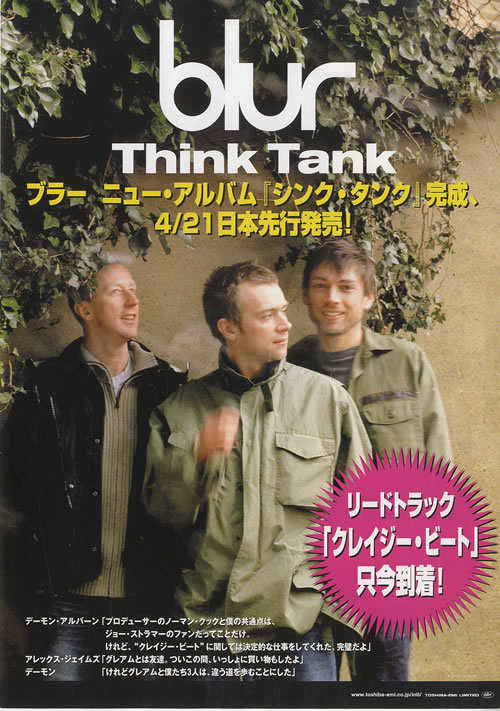
Anyway, whether he’d ever acknowledge it or not, those two Happy Mondays tracks above were a definite influence on Damon Albarn when he wrote the tracks for Blur‘s final LP, Think Tank. I’ve been playing Think Tank a lot lately, what with the Blur reunion (of sorts) and the excellent No Distance Left To Run documentary on the TV the other night. The dark horse in the Blur catalogue, Think Tank is famous for being an almost Coxon-free zone, the guitarist contributing to the woozy, wobbly Battery In Your Leg before having left after being increasingly frustrated at the (sigh) direction the band’s music was going in. Recorded in Morocco, there’s a noticeable space between the grooves that allows the album to pop open the top button of its trousers and, like, breathe. (Sadly) it’s not tied up in any of those jerky, spasticated 2 minute shouty freakouts that Coxon does so well. (Thankfully) there’s none of those terrible bleep/bang/bleep/scree tune-free bits or free-form atonal rackets best saved for b-sides or solo LPs. Think Tank as a whole is dubby, spacey and tinged with African bangs ‘n beats. Now that I think about it, it’s basically a precursor to Gorillaz, without the big-name special guests. Best track by a country mile is Brothers And Sisters, a track so clearly in debt to those two Happy Mondays tracks that Shaun Ryder would indeed call the cops if he was ever sober enough to listen to it properly. Built on a bed of elastic band bass, Albarn’s loose, stoned, vocals practically stage whisper, “Tonight Matthew, I’m going to be Shaun Ryder!” Caffeine. Codeine. Cocaine. White doves. He reels off a tick-list Paul and Shaun would’ve had no bother putting away before breakfast.

Think Tank is also notable for featuring Me, White Noise, a hidden track you can find by rewinding from the start of the first track. With a backing track sounding like a fly trapped in a bass bin, Phil Daniels mutters and mumbles and shouts and swears his way through almost 7 minutes of thrilling stuff. “Fack orff!” he snarls. “I’ve got a gun, y’know…and I’d use it!” Thanks to this and Brothers And Sisters fore-mentioned prescription list, Think Tank got one of those stupid Parental Advisory stickers.

My parental advice? Split up when you’re at your peak. Leave them wanting more. Don’t reform. Ever. You’ll come back looking like this:

You might even become a respectable, bespectacled married member of society…

Holy fuck

*Bonus Tracks!

Although a Coxon-free zone by the end of the LP, Blur as a 4-piece recorded tracks during the Think Tank sessions that were never quite finished due to the guitarist walking out. Here’s a couple of Coxon-enhanced crackers that turned up on future b-sides.

Money Makes Me Crazy

Morricone

This half-considered Damon nicking off the Happy Mondays theory of mine may have legs. On the b-side of Happy Monday’s 24 Hour Party People single, you’ll find a track called Wah-Wah (Think Tank) Call The Cops!

Punch. Repeat. Punch. Repeat. Punch. Repeat.

Why could he not have walked out instead?


Cover Versions, demo, Gone but not forgotten, Hard-to-find

Who’s Nicked

A few years back, as a mature student in desperate need of income, I ran a wee guitar group. Obviously, far better than working a shift in B&Q, I was my own boss and set my own rules. 30 folk of all ages and abilities formed 3 groups of 10 who came to the local community centre to learn the difference between a b-minor and a blues lick and play along to a wide selection of recognised classics, with the odd personal favourite thrown in. Not only that, but along the way these eager students were educated in the ways of guitarists and guitar playing. Steve Cropper was more important than Slash, I’d tell them. Johnny Marr was better than Eric Clapton. Jimi Hendrix played guitar behind his back with his teeth. Try it! First person to play an E minor gets a mini Mars Bar. The beginners loved shaking their hair to The Ramones Surfin Bird, even if they had difficulty changing from an A to a D and back again at the same speed as Johnny and Dee Dee. Over time though, they managed to do a spot-on version of These Boots Are Made For Walking, complete with their own wee choreographed foot dance when Nancy asks, “Are you ready boots? Start walkin'”. The best players in the ‘top group’ could replicate Stairway To Heaven note for note. Well, almost. But my greatest achievement was with the ‘middle group’. Accomplished enough that they could play blues licks in b minor, but not yet fluid enough to think they were Slash, I taught them to windmill like Pete Townshend through the opening bars of The Who‘s Baba O’ Riley. It was a magic sight. 10 arms windmilling round in perfect time. Wind Out -mill! here Wind in -mill! the Wind fields -mill! Some nights we played it 3 or 4 times, such was their joy at playing it. What’s that Roger? Teenage wasteland? Not in here! Happy days!

Anyway, after what I’ve just said, you may be surprised to learn that I never totally got The Who. I thought Keith Moon was pretty special, although who doesn’t? Always entertaining to watch. But the others? The Ox, in his later days wore a red leather blouson jacket that was about as close to ‘mod’ as  Alex Turner’s Olympics haircut. And he played his bass at throat height, which, no matter what you’re playing on it, is never a good look. Roger Daltrey always seems like a wee guy trying too hard to be macho. Always taking his top off and baring his chest. And he had a haircut like Barbra Streisand for about 20 years during the 70s and 80s. Which, again, is about as close to ‘mod’ as Alex Turner’s Olympics haircut. Pete Townshend? Great windmills (yeah!), great Clockwork Orange boiler suits ‘n Docs combo on the stage ‘n all that, but those child porn allegations from a few years back have tainted him forever for me. I dunno. I like the big singles that everyone likes. But as an album band, their first album excepted, they never really did it for me.  I suppose for a live album, ‘Live At Leeds‘ makes all the right noises, and The Who ‘Sell Out’ has some pretty good tracks on it, Armenia City In The Sky, to name one, and I like the pirate radio concept but really, that’s about it. The problem I have is that everything they’ve done seems to have been, aye, a ‘concept’ album. Not just ‘Sell Out’Quadrophenia is a concept album. Tommy is a concept album. Pete Townshend’s doomed Lighthouse Lifehouse project was another concept. A Quick One was a rock opera fergawdsakes! Everything seems just a bit too calculated and pre-conceived. I like my rock bands to be unpredictable and raggy round the edges. Which is why the only Who album I truly like from start to finish is their first.

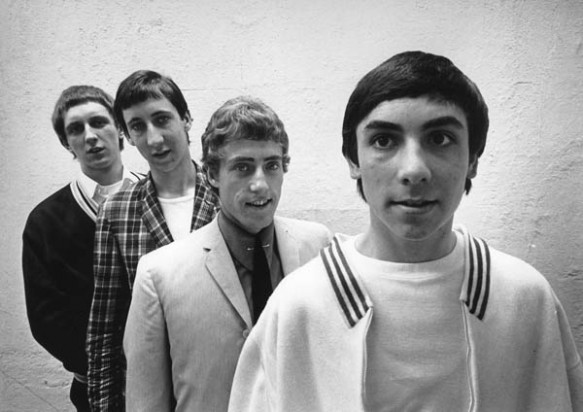
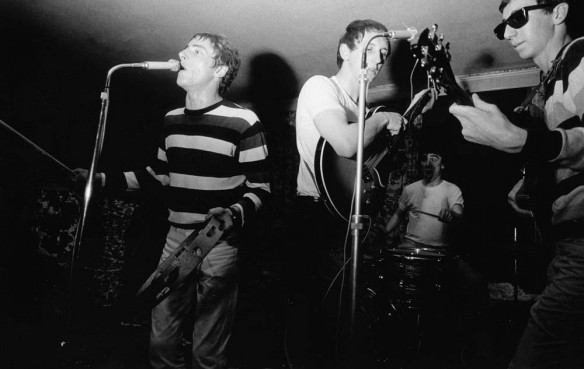
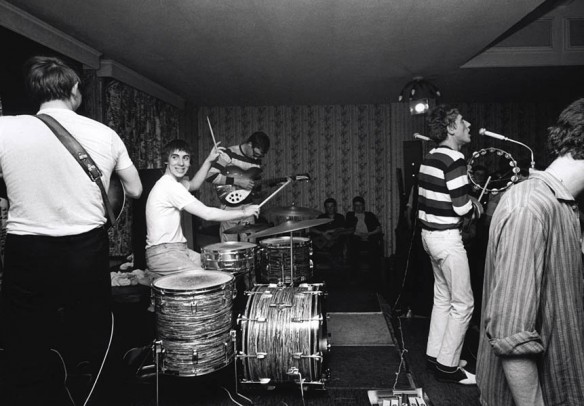
What I like even better than The Who’s first album is the few tracks they recorded as The High Numbers. They’re nothing extraordinary, really just rehashed 12 bar blues-based R’nB tunes so beloved of the early 60s mods. But the sound they made! Big, booming, compressed-sounding mono tracks that jump out the speakers. The bass sounds like it’s playing under the floorboards next door. Ironically, given the advances in technology, it’s a sound that modern studios just can’t seem to replicate. Just ask Jack White (although he’s made a good fist of it) or long-lost La Lee Mavers, if you can find him.

I’m The Face was the B-Side of The High Numbers first single, Zoot Suit. Designed, at the insistence of  manager Peter Meaden, to appeal to the local pilled-up mods who got their kicks from American R’nB, I’m The Face was practically a cover of Slim Harpo‘s I Got Love If You Want It. Actually, practically a cover is being kind. This is daylight robbery long before Jimmy Page got his first copy of Down At The Crossroads with Robert Johnson and Some Other Blues Guys No-One’s Heard Of Yet. Slim’s tune stayed the same, although the band played it with a feral garage band intensity lacking in the original’s nasal reediness. On The High Numbers’ version, the harmonica wails just that bit more out of tune. Keith Moon’s drums clatter in time to Townshend’s reverberated chords and perfectly executed solo (did the afore-mentioned Page play this part? After all, he played everyone else’s around this time) and the Entwhistle bass runs divebomb to the very centre of your purple-hearted heart.  In keeping with the A-Side (I’m the snappiest dresser right down to my inch-wide tie) manager Meaden changed the lyrics to be more mod-friendly, I’m the face baby is that clear? and referencing Ivy League jackets and wild buckskin shoes along the way.

With all this studied contriving going on you could be forgiven for thinking Zoot Suit/I’m The Face was some sort of UK smash. It wasn’t. Like a gazillion other life-affirming effervescent pieces of 7 inch 60s plastic, it flopped. A disheartened High Numbers went back to the drawing board, changed their name to The Who and tried again. This time, things seemed to work out a wee bit better. Proof? Here‘s the st-st-st-st-stuttering m-m-m-m-mono version of My Generation. Sounds like a tank. (Winks). Some of you will get that reference, some of you might not.

*Bonus Tracks!

Taken from an Abbey Road session, October 1964, here’s The High Numbers doing their re-hashed r’nb 12 bar blues again:

Smokestack Lightning  Instrumental pop-art crashing proto-Who.

Memphis Tennessee  Instrumental. Big. Booming. Bass from under the floorboards.

Cover Versions, demo, Get This!, Gone but not forgotten, Hard-to-find

Kings, Queens & Other Chess Pieces

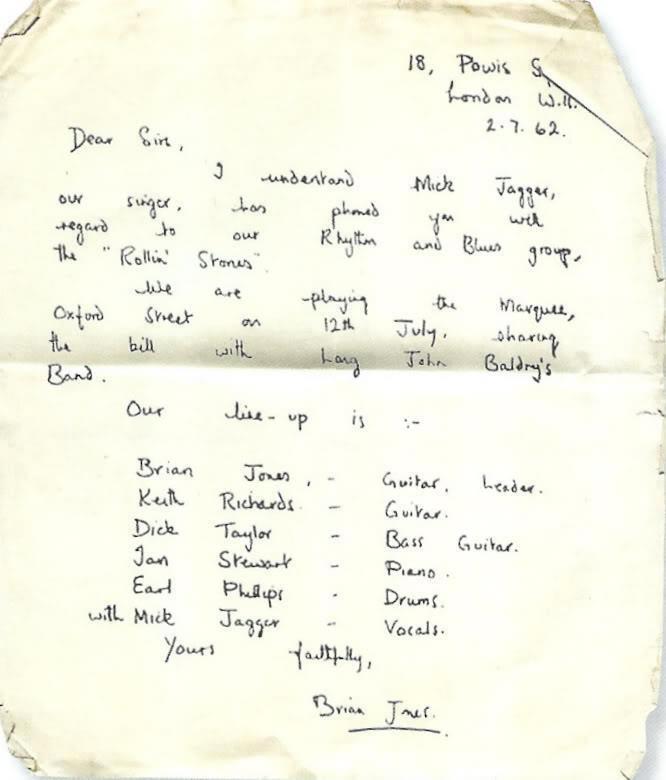
I meant to mark this occasion and put something up last week, but the RJ Ellory post (below) took over slightly. A week later, it would be churlish of me not to give a nod and a wink to that creaky old juggernaut that keeps limping on, like your smelly old dog with 3 good legs that’s deaf in one ear and blind in the only eye it has left. Aye,The Rolling Stones as a rock and roll group have now been in the game for no less than 50 years. That surely makes them one of the oldest musical acts still going strong. The Four Tops still do the odd show here and there (mainly ‘there’, in Vegas), and from 1953 until the death of Lawrence Payton in 1997 managed to keep the original line-up intact. The Drifters started in the 50s, but most (or all?) of the originals have, cough, drifted off. They probably played 5 shows last night anywhere between Blackpool Butlins and the Bermuda Triangle, so you can’t really count them. The Stones survive with 3 original members (Mick, Keith and Charlie, who actually joined after their first gig, see image at the bottom) and with Ronnie Wood having been in the band longer than The Fall have been a going concern. And how many members have they gone through in that time, eh? (Answer: about 66, at the last count).

Nowadays, they’re a bit more creased around the edges and a bit more expensive of cloth (though evidently, unlike most men of their age (and 10, 20, 30 years younger), no more expansive of waist). Sure, they’re a whole lot less vital than they once were, their live shows still trade on their Golden Era (early 60s – mid 70s, if you need to ask) and nowadays they’re a brand not a band – you can buy their merchandise in Primark if you fancy! But, as you already know, the Stones were totally, absolutely, dynamite in their heyday.

Chess Studios, 1964.

There’s a famous story (not an urban myth, as Keith goes at great lengths to point out in his autobiography) that when they turned up midway through their first US tour to record at the famous old Chess Studios, band hero Muddy Waters (he wrote I’m A Rollin’ Stone) was painting the outside of the building, whitewash streaming down his face, only stopping to help Bill Wyman in with his amplifier from car to studio. It didn’t matter that Muddy was a legend to the Stones and all those other Thames Delta blues bands, in his homeland he had yet to make that leap from unfashionable unknown to undeniable blues great. As Keith astutely notes, “If you want to stay on the payroll, get to work.”

Chess Studios, 1964

The stuff that the band recorded at Chess in 1964 was brilliant – Keith says 14 tracks in 2 days, my bootleg has 27, including their version of Bobby Womack’s It’s All Over Now that gave them their first number 1. Organic and rootsy, deep-rooted in the blues, the music has a big, booming, beefy sound, all reverb and twang and feral snap. Most of the recordings they made there for a potential album remain unreleased to this day (Google 2120 Michigan Avenue. Go on!) and it knocks spots off of anything that their sha-la-la, she-loves-me-and-I-love-her contemporaries were tossing off into the Hit Parade. But you knew that already…

The Tunes:

The Rolling StonesIt’s All Over Now

The Rolling Stones2120 South Michigan Avenue

The Rolling StonesTime Is On My Side (version 2)

The Rolling StonesDon’t You Lie To Me

The Rolling StonesStewed & Keefed

The Rolling StonesThe Under-Assistant West Coast Promotion Man

The Originals:

Bobby WomackIt’s All Over Now

Irma ThomasTime Is On My Side

Cover Versions, Gone but not forgotten, Hard-to-find, Studio master tapes

Riff Trade

Di’-di’-di’-di’    (pause)      duh-di’-di’-di’   (half pause)    di’-di’

I’ll name that tune in 4, Lionel!”

Go on then, Name That Tune!”

Obviously, it’s Hitch-Hike, the number 30 in ’63 hit for Marvin Gaye, released on the Tamla Motown label…”

Indeed it is. (Show off). Hitch-Hike was one of Marvin’s early hits and, in best Motown tradition was a family affair, featuring the singing secretaries, Martha Reeves and her Vandellas, on backing vocals. A practically perfect 2 minutes-odd ode to finding his runaway girlfriend, it‘s signature stuttering guitar riff briefly lead to a short-lived but groovy (baby) Hitch-Hike dance craze, where participants looked like demented second prize winners in a Paul McCartney impressions contest….

I like the fact that the girl at the end is dancing in her pants on live telly. Nowadays she’d probably just whip them off for shock value and hardly anyone would bat an eyelid.

A couple of short years later, The Rolling Stones put out their version of Hitch-Hike on Out Of Our Heads.  The current issue of Mojo magazine has a good feature on early Stones and listening to it made a good accompaniment to reading the article. Out Of Our Heads is the Stones as garage band; rough, feral, fast and frantic. The guitar interplay between Keith and Brian is brilliant. Who plays what at any given time is hard to work out. Riffs, power chords and super-distorted slashing freak-out leads are all in the mix. Never heard it? It’s never too late…

High on industrial strength drugs (possibly) in his Chelsea loft appartment (maybe) and with a mono copy of Out Of Our Heads spinning on the old Dansette (very likely), Lou Reed suddenly had a thought. An inspiration. A bloody cheek. “A-ha!” he shouted, Archimedes-like, and right there and then pinched the Hitch-Hike riff lock, stock and barrel for his and the Velvet Underground‘s own There She Goes Again.

Di’-di’-di’-di’    (pause)      duh-di’-di’-di’   (half pause)    di’-di’

Can you tell what it is yet?

Fast forward 18 years and we find Johnny Marr in his Kensington flat (probably), mono copy of Out Of Our Heads spinning on the old Dansette (certainly). The Hitch-Hike riff kicks in and Johnny, never one to look a gift horse in the mouth, takes the feel of it and applies it to the set of chords he’s been fiddling around with. A bit more subtle than Lou Reed, but listen to the start of There Is A Light That Never Goes Out. Ah! D’you see what he did there? Johnny was hoping he could fool the know-it-all journalists who’d no doubt point out that he nicked the riff from The Velvet Underground, the band that anyone who was anyone in a mid 80s guitar band could pilfer and steal their image or an idea or two from. That’ll be you I’m looking at, William and Jim Reid. And Ian McCulloch. And the rest of you. You know who you are.

As Johnny himself said in 1993, “There’s a little in-joke in there just to illustrate how intellectual I was getting. At the time everyone was into the Velvet Underground and they stole the intro to ‘There She Goes Again’ – da da da-da, da da-da-da, Dah Dah! – from the Rolling Stones version of ‘Hitch-Hike,’ the Marvin Gaye song. I just wanted to put that in to see whether the press would say, Oh it’s the Velvet Underground! Cos I knew that I was smarter than that. I was listening to what The Velvet Underground was listening to.”

“If we needed some songs fast, then Morrissey would come round to my place and I’d sit there with an acoustic guitar and a cassette recorder. ‘There Is A Light That Never Goes Out’ was done that way.”

Morrissey was sat on a coffee table, perched on the edge. I was sat with my guitar on a chair directly in front of him. He had A Sony Walkman recording, waiting to hear what I was gonna pull out. So I said, ‘Well, I’ve got this one’ and I started playing these chords. He just looked at me as I was playing. It was as if he daren’t speak, in case the spell was broke.”

“We recorded ‘There Is A Light That Never Goes Out’ in 10 minutes. I went on to add some flute overdub and strings and a couple of extra guitars, but really, the essence and the spirit of it was captured straight away, and that normally means that something’s gone really, really right. I have a version (get it! get it!) of that take with just the three instruments and the voice on it – it absolutely holds up as a beautiful moment in time. The Smiths were all in love with the sound that we were making. We loved it as much as everyone else, but we were lucky enough to be the ones playing it.”

I didn’t realise that ‘There Is A Light’ was going to be an anthem but when we first played it I thought it was the best song I’d ever heard.”

Andy Rourke also loved There Is A Light That Never Goes Out. He calls it the indie Candle In The Wind. Make of that what you will.

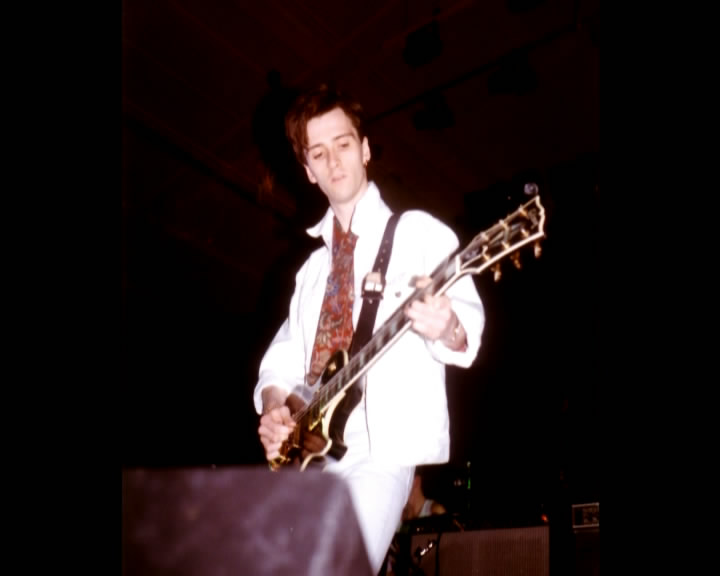
Johnny Marr onstage with The Smiths when they played The Magnum Leisure Centre in my hometown of Irvine, September 1985. It still kills me that I never went. Stupid boy.

*Bonus Track!

Get this – one of those studio outtake thingies that caused Plain Or Pan to go into meltdown a couple of years ago. It’s the vocal-only version of Marvin Gaye‘s Hitch-Hike, every broken high note, breathless fade-out, ‘hmm‘ and ‘yeah‘. Pure soul, man. Pure soul!

Cover Versions, Hard-to-find, Live!

White Hot

So I managed to find the time to watch all the David Bowie Ziggy Is 40-related stuff that was shown last weekend on BBC4. It’s almost taken for granted nowadays, but it does need re-stating: Bowie is terrific. Not was terrific. Is terrific. He’s slowed down a bit in the past few years (illness, so they say) but how I’d love to have been old enough to have been there at the start and grown with him throughout the years. New album. New direction. New image. Every year. Bands nowadays just wouldn’t (couldn’t?) get away with that. Every last drop of product is marketed to hell and presented as the greatest thing since last week’s next big thing. Bowie ploughs his own furrow, effortlessly going from mime artist to glam star to Euro-influenced electro pioneer to plastic soulboy to art rocker and whatever else takes his fancy along the way. But you knew all that already. Is terrific. Let’s get that clear.

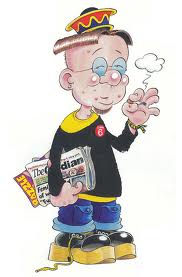
Anyway, Mrs Pan began to get a bit fed up of the non-stop Bowie fest taking place in our living room (and she had a point – if I wasn’t watching the Euros and England being humiliated by the Azzurri or taking in the tennis at Wimbledon, I’d somewhat commandered the big telly for a few good nights), so for light relief she had me watch an old Top Of The Pops 2. The Shamen were on and she asks, “Who does that remind you of?” We both laughed. “Sweenie!”  Her pal went out with this guy who, on the first night we met him, was wearing a baggy Shamen t-shirt and one of those daft wee ethnic beaded hats atop his head. He looked a bit like Student Grant from the Viz comic (above.) Despite this, they’re now happily married, kids, etc blah blah blah. “I’m gonnae text him and ask if he’s still got that hat!” and what followed was a good-humoured to-ing and fro-ing slagging match relating to how we dressed and acted 20-odd years ago. Bemoaning the fact that Saturday nights had changed forever for both of us, he mentioned that he was currently watching Jack White Live via the red button. “You’ll like it,” he said. “Stick it on,” demanded the boss. “I’m fed up watching all this music stuff.”

I smiled smugly to myself as the programme kicked in and she realised that the demented whoopin’ and hollerin’ blooos guitar player Jack White that filled the screen was not in fact Jack Whitehall, the big-haired, well-groomed skinny posh boy in shiny suit that tells sweary jokes, so she retired to bed. I watched ol’ Jack for a wee while, amazed at his intensity and ability to re-invent his back catalogue in any old style. A bit like Bowie, if you stop to think about it. The next morning I dug out an old Raconteurs BBC session and listened again, not in the least surprised it had lost none of it’s potency and power. The White Stripes were pretty special, but when Jack is backed with musicians as talented as himself, the results are pretty spectacular. See the new album, Blunderbuss,  for details. Or The Dead Weather stuff. Or, going a wee bit further back, The Raconteurs. Taken from a BBC session in 2006 (25th March, if you’re a trainspotter), there’s a fantastic take on The Raconteurs‘ first single, Steady, As She Goes, re-imagined as a Kinksy shuffle, all beat group harmonies and garage band looseness. If Lee Mavers could get his finger out, The La’s might begin to sound a bit like this. Though Bowie’s more likely to turn up unannounced in my living room and play all of Hunky Dory track-by-track than that happening. Which reminds me. Also on this BBC session there’s a faithful take of It Ain’t Easy, made famous by David Bowie on the Ziggy Stardust LP. I wrote about it many moons ago, but it’s more than worth drawing your attention to once more.

*Extra Track!

Gazillion-selling trend-bucker Adele duetted with Jack on a version of Many Shades Of Black, from the Raconteurs 2nd LP. Like some long-forgotten southern soul Stax belter, it‘s a cracker.

Cover Versions, Gone but not forgotten, Hard-to-find

Weller, Weller, Weller, Ooft!

Tell me more, tell me more….

This is old news to those in the know, but to cut a long (and a bit boring) story short, it appears that the grumpy old pipe ‘n slippers Dadrocker turned re-energised spiky-riffed angry old man with greying Limahl haircut has gone and fallen out with Simon Dine, the sonic architect-in-chief on his recent trilogy of back to form albums. Simon Dine made a name for himself a few years back under the guise of Noonday Underground, a cut ‘n paste sampler’s wet dream of a ‘band’ who made modern-sounding records from obscure skittering 60s drum breaks, forgotten horn riffs, many fluffy needle drops and found sounds. His/their best, Surface Noise is a really good album. I think you’d like it. Paul Weller liked it so much he got Simon in to work his magic on 22 Dreams, Wake Up The Nation and Sonik Kicks.

The Thieving Magpie

You know all this already, but after falling out with Brendan Lynch, his 90s producer of choice who turned bog standard album tracks into works of spaced-out magic, Weller treaded water with a fairly uninspired run of late noughties albums. I suppose when you’ve released as many LPs as Weller has (648 at the last count, if you include The Style Council) you can be let off for letting the standards slip now and again. But until fairly recently, PW was trading on his reputation and not the music. All that changed after he hooked up with Simon. Those last 3 albums are great. (The middle one shades it for me). Those filmic bits you can hear. The Moog bits. The static crackles and bursts. The Bruce Foxton bass riff. They were all down to Simon. Without him in the controller’s chair, Weller would once again have been treading water. Instead, he’s reinvented himself (or rather, Simon reinvented him) and everything’s groovy in the garden once more. Until the ugly subject of money reared its head. Knowing much of this recent success was down to him, Simon wanted a fair slice of the pie. Paul was unwilling to give him that fair slice and, well, that’s that. Weller’s loss is our gain however, as Simon is at this very moment working his magic with that most under-rated, under-appreciated and under-sold of bands, the Trashcan Sinatras. Given that vocalist Frank contributed two beautiful (man) vocals to Surface Noise, I for one can’t wait to hear the results…

But back to Mr Weller. From French cut crop on top to desert booted toe below, Weller has always modelled himself from the inside out on Steve Marriott. The cut of the cloth and the length of the hems. Those square sunglassess he wore on his first solo tour. Even the dirty old man Mac he digs out when the Summer fades and the Autumn leaves start blowing up the Thames. Cut him open and you’ll find the word ‘Marriott‘ stamped into his bones like the lettering on a stick of Blackpool rock. Watch how Weller holds his guitar. The angle it hangs. The way he attacks the chords. The way he slashes at the solos. That’s pure Steve Marriott (with a tiny bit of Wilko Johnson if you look closely). Close your eyes and listen to Weller’s white man sings with soul on Out Of The Sinking. Now go and listen to Song Of A Baker. That’s pure Steve Marriott too. He’s easy to poke fun at, Weller. He’s responsible for Ocean Colour Scene and for that alone he needs a good talking to. But he has made some life-changing, life-affirming records. But you knew that already. Here’s hoping he makes many more. Methinks It’ll be a few more years in the wilderness before he finds another Brendan Lynch or Simon Dine until he’s back on top of his game.

Tunes:

Small FacesGet Yoursef Together

The JamGet Yourself Together

Noonday Underground (feat Francis Reader) – Barcelona

Noonday Underground (feat Francis Reader) – Windmills

Cover Versions, demo, Get This!, Gone but not forgotten, Hard-to-find

Dennis, Dennis! Oh, With Your Eyes So Blue.

Poor old Brian Wilson, with his baffled, befuddled thousand yard stare, slack-jawed appearance and hang-dog melancholy, he’s rightfully earned his place atop the ‘genius‘ pedestal. Of that there can be no argument. Spare a thought, though, for wee brother Dennis. The underdog in a family full of musical prodigies, it was the Wilson boys’ mum Audree who made the other brothers find a place for him in their vocal group. Like many naturally ungifted musicians before and since, he was tasked with bashing the drums, giving The Beach Boys’ music a much-needed rock and roll backbeat that had been hitherto unplanned.

Dennis rarely sang on those early Beach Boys tracks, preferring to goof it up on stage and grow into his role as band heart throb. Image-wise, The Beach Boys were undeniably the squarest of the square, exuding about as much sexiness as a bucket of wet sand. But Dennis, with his surfer boy good looks and toned, tanned physique was the one bit of crowd-pleasing eye candy. Or so the ladies tell me. At early Beach Boys concerts, girls would scream themselves into a knicker-wetting frenzy and Dennis would reciprocate by winking at them and dazzling them with a pearly-white flash of Californian smile before pointing the hottest ones out to the roadies who would be dispatched to usher them backstage. Round round get around, he got around, you might say. As you can imagine, young Dennis had to quickly develop pugilistic tendencies as he would often find himself face-to-face with a pissed-off boyfriend or two, keen to land a punch square in the middle of those pretty boy good looks.

Somewhere towards the end of the 60s, Dennis found his feet as a songwriter. He regularly contributed terrific songs (and vocals) that deserved more recognition than they were given. By now he had somehow become a prolific multi-instrumentalist and could present fully-formed songs to his bandmates. A Dennis song would usually be found tucked in some obscure corner of the album, never  given the honour of being released as a single in its own right. If he was really lucky, he might find one of his songs stuck on the b-side of the last single to be released from the album. So, while Dennis never wrote a Heroes & Villains or a California Girls or a Don’t Worry Baby or a Good Vibrations or a (insert your favourite here), to these ears at least, some of Dennis’s songs are just as thrilling as his big brother’s million-sellers.

A selection of Dennis Wilson nuggets:

Forever (from Sunflower) If every word I said could make you laugh I’d talk forever…….If the song I sing to you could fill your heart with joy I’d sing forever. This is The Beach Boys at their most introspective and melancholic. On the day that my coffin slowly slips behind those velvet curtains, this is the song that’ll be playing. So I’m goin’ away…….but not forever. S’a heartbreaker and no mistake.

Slip On Through (from Sunflower) The opening track on the best Beach Boys LP that isn’t Pet Sounds. Slip On Through bursts in waves of technicolour Wilson harmonies and frugging Fender bass and sounds like a proper Beach Boys record for it. You’d like the Sunflower LP, you really would.

Only With You (from Holland) Another introspective cracker. Piano ‘n plaintive vocals declaring undying love. If you’re getting married in the near future you could do worse than choose this as your first dance. And if you think this is good, you should hear Norman Blake’s heaven-sent cover. Oh man! Soaring Teenage Fanclub harmonies, chiming McGuinn-esque 12 string and tasteful string section.

Steamboat (from Holland) Downbeat piano tinkler with some spot on doo-wop vocals and atmospheric spooky slide guitar. On first listen, this might not grab you (possibly why the Wilson clan relegated it to LP fodder) but repeated listens reveal previously unheard depths.

Little Bird (from Friends) This is a superb mini potted history of The Beach Boys on record – various ‘sections’ jigsawed together by Fender bass, parping brass, see-sawing cello and the odd banjo. Features a key-changing na-na-na singalong and brilliant coo-ing backing vocals near the end. Much loved by that barometer of hip opinion Paul Weller, trivia fans.

Make It Good (from Carl & The Passions) Minor key piano and cracked little-boy-lost vocal that pre-dates the minor key and melodrama of Dennis’s ‘lost’ classic Pacific Ocean Blue LP by a good 5 years. A perfect closing track to a right mixed bag of a Beach Boys LP.

Never Learn Not To Love (from 20/20) Following his skewed friendship with Charles Manson, Dennis presented The Beach Boys with a new song that bore more than a passing resemblance to Manson’s own Cease to Exist. Manson was least pleased, to say the least, when the 20/20 LP came out featuring this track with some sugar coated lyrics in place of the original‘s dark subject matter, with nary a writing credit in sight. Possibly not the smartest move Dennis ever made. Having said that, The Beach Boys track is a thing of beauty, all stop/start sections with sleigh bells and flutes and clip-clopping rhythms, soaked in a gallon of reverb.

Lady (b-side from 1970’s Sound Of Free solo single) Much-loved obscurity (if that isn’t an oxymoron) in the Dennis Wilson songbook. All reverb-heavy acoustic guitars and minor key strings, it was rejected from the final running orders of both Sunflower and Surf’s Up and has been fairly heavily bootlegged since.

*Bonus Tracks!

Carry Me Home was written for possible inclusion on Holland before, aye, it was rejected. Primal Scream did a decent downbeat Fender Rhodes ‘n pedal steel version on their Dixie Narco EP, when Screamadelica and all that jazz was just around the corner. Bobby G’s always had an eye for a good cover, even if he cannae sing it.

Everyone knows by now that Pacific Ocean Blue is the accepted Classic Album that Dennis made as he coke’d and screwed his way through the 70s. Just to fling my tuppence worth into the middle, I think it would’ve made a great bookend to this era with Rumours, even if Dennis’s sales didn’t quite match those of Fleetwood Mac. As a follow-up to Pacific Ocean Blue, Dennis recorded the Bambu (or Bamboo) LP, depending on where you read it.  Of course, it never saw the proper light of day until 2008. How very Dennis. Here‘s All Of My Love, an outtake that didn’t quite make the final cut. How very Dennis again.

That should keep you busy. An excellent wee compilation! Happy listening!

Cover Versions, Hard-to-find

Gimme Likkle Bass, Make Me Wine Up Me Waist

The sight of stick-thin youths and beer-bellied men stripped to the waist in gay abandon can only mean one thing in this part of the world. Summer. But don’t say “gay abandon” anywhere in their vicinity, or you might well end up with a sare face. Old Firm football top tucked into the back of the jeans? Check! Cheap ethnic tattoos that may well advertise the deep-fried fare on offer at the local Loon Fung? Check! Milky-white flesh turning lobster-red before your very Fabris Lane’d eyes? Check, check and check! I was cycling through Saltcoats yesterday and it was all this and more. Total, total carnage. Everyone’s out for the day, and it won’t be complete without an argument with a local in the chip shop before the last train back to Paisley or Glasgow or wherever they’re from, hoping to spot a cow or a sheep or a horse or some other such exotic animal in an Ayrshire field.

Of course, I’m  a lover, not a fighter and when the temperature gets too much for me, I like to cool off with some heaven-sent Jamaican riddims. This weekend I have been mostly listening to the Jonny Greenwood curated ‘Jonny Greenwood Is The Controller‘ compilation album that came out a couple of years ago. Featuring tons of decent reggae, dub and rocksteady, it’s a bluffer’s delight. It features ‘I’m Still In Love‘ by Marcia Aitken, a skankin’ piece of lovers rock that is itself a re-write of an old Alton Ellis track from 1967. Those of you who grew up thinking Musical Youth were the last word in reggae might recognise the melody, as it later popped up to great effect in Althea & Donna‘s’ Uptown Top Rankin’ from 1977. One hit wonders, both of them, but who needs a second hit when the first one was so good?

You’d like Luke Haines’ booksBad Vibes, Britpop And My Part In Its Downfall and the follow-up Post Everything: Outsider Rock & Roll. Witty, unforgiving and dripping in hate for the tubes, chancers and charlatans he’s met along the way in his skewed journey through pop (including his own band mates – he continually refers to The Auteurs’ cello player as ‘The Cellist‘), he’ll have you on his side in no time, wondering indeed why Black Box Recorder‘s version of Uptown Top Rankin’ wasn’t the global smash it should’ve been. Dubby, fuggy and just on the right side of Portishead, it’s nothing like the originals. Which is a good thing, aye?

Cover Versions, Gone but not forgotten, Hard-to-find, Kraut-y

Ferry Similar

Didn’t this used to be a rock song?” Out in the car yesterday and Miss Plain Or Pan had pricked up her ears, for once, at what was shuffling on the iPod. Normally she can’t stand my music (see Rod Stewart post below). When she’s out with me in the car, she usually asks for West FM or Clyde 1 or any of those terrible, repetitive chart-orientated stations playing the the usual conveyor belt of pop-dance fodder introduced by thick 20-somethings with mid-Atlantic twangs belying their West Coast roots. She is 10, after all. That’s why her statement caught me off guard.  “That‘s Mother Of Pearl by Roxy Music,” I reply. She’d been jokingly head banging to the first couple of minutes, where Phil Manzanera’s electric guitar gamely leads an Eno-free Roxy through a series of mumbled, muttering voices, “Woo-hoos” and “Yaaawees” before giving way to Bryan Ferry’s louch, laconic, lounge lizard drawl. “It’s kinda like Bohemian Rhaposdy in reverse, with the rock bit at the start and the piano bit at the end, isn’t it?” she reasoned. I couldn’t have put it better myself. Except that Mother Of Pearl isn’t the overplayed piece of ham that the Queen classic has since become.

Very much under the influence of the Eno-era Roxy Music were World Of Twist. Their star briefly shone at the tail end of whatever constituted ‘baggy’ and they very nearly threatened the charts on a couple of occasions, once with a cover of the Rolling Stones ‘She’s A Rainbow‘ and once with Sons Of The Stage. Sons Of The Stage is a monster of a record. Full of whooshing, bubbling synths and squealing guitars, it‘s almost Krautrock in delivery – motorik, repetitive and reasonably long. It was the second track on the bands ‘Quality Street‘ LP, long-since deleted but worth 5 minutes of anyone’s time tracking down an illegal copy online. Or a real one on eBay, I might add.

The more fashion-conscious of the monobrowed Mancs along with his band of Beady Eyed magpies recently covered Sons Of The Stage with all the craft and soul of a plank of wood. I won’t sully the blog by featuring it, but I’m sure you know where to look, etc etc, blah blah blah.